
CryptoRider69
127 Posts

CryptoRider69
Report
Block User
2 Following
211 Followers
632 Liked
Posts
All
Quotes
ETFs are being sold, while old wallets are accumulating. Who of them is wrong? 👀
On July 1, about $223 million left spot BTC ETFs. This is already the ninth day of outflows in a row.
Even Citi lowered its BTC forecast from $112,000 to $82,000, and its ETH forecast from $3,175 to $2,240. The reasons are clear: weak demand due to ETFs, lack of a quick positive turnaround, and regulatory delays in the U.S.
At first glance, the picture isn’t very encouraging.
But at the same time, long-term holders have started accumulating bitcoin again.
In fact, we’re seeing two different behaviors.
Some ETF capital is leaving because it didn’t get a rapid rise. And those who have held BTC for years are using the low price to accumulate.
I’m not saying this is the bottom and it’s only growth from here. If outflows continue, the pressure on the market won’t go away.
But what’s interesting is something else.
While some are selling due to the absence of a quick positive, others are calmly adding. And usually it’s exactly in these moments that money begins to flow from the impatient to those who are willing to wait.
Who of them is wrong—we’ll see later 😏
ETFs are being sold, while old wallets are accumulating. Who of them is wrong? 👀
On July 1, about $223 million left spot BTC ETFs. This is already the ninth day of outflows in a row.
Even Citi lowered its BTC forecast from $112,000 to $82,000, and its ETH forecast from $3,175 to $2,240. The reasons are clear: weak demand due to ETFs, lack of a quick positive turnaround, and regulatory delays in the U.S.
At first glance, the picture isn’t very encouraging.
But at the same time, long-term holders have started accumulating bitcoin again.
In fact, we’re seeing two different behaviors.
Some ETF capital is leaving because it didn’t get a rapid rise. And those who have held BTC for years are using the low price to accumulate.
I’m not saying this is the bottom and it’s only growth from here. If outflows continue, the pressure on the market won’t go away.
But what’s interesting is something else.
While some are selling due to the absence of a quick positive, others are calmly adding. And usually it’s exactly in these moments that money begins to flow from the impatient to those who are willing to wait.
Who of them is wrong—we’ll see later 😏
On July 1, about $223 million left spot BTC ETFs. This is already the ninth day of outflows in a row.
Even Citi lowered its BTC forecast from $112,000 to $82,000, and its ETH forecast from $3,175 to $2,240. The reasons are clear: weak demand due to ETFs, lack of a quick positive turnaround, and regulatory delays in the U.S.
At first glance, the picture isn’t very encouraging.
But at the same time, long-term holders have started accumulating bitcoin again.
In fact, we’re seeing two different behaviors.
Some ETF capital is leaving because it didn’t get a rapid rise. And those who have held BTC for years are using the low price to accumulate.
I’m not saying this is the bottom and it’s only growth from here. If outflows continue, the pressure on the market won’t go away.
But what’s interesting is something else.
While some are selling due to the absence of a quick positive, others are calmly adding. And usually it’s exactly in these moments that money begins to flow from the impatient to those who are willing to wait.
Who of them is wrong—we’ll see later 😏
3.5k
Trend 2026I came across my post that I wrote on December 31, 2025 👀
Link to the post - (telegram)
Back then, almost everyone was sure that after memecoins, the next big trend would be prediction markets, voting, Polymarket, and everything like that.
I then wrote a completely different opinion.
That the next wave won’t be about hype, but about real value.
Trend 2026
I came across my post that I wrote on December 31, 2025 👀
Link to the post - (telegram)
Back then, almost everyone was sure that after memecoins, the next big trend would be prediction markets, voting, Polymarket, and everything like that.
I then wrote a completely different opinion.
That the next wave won’t be about hype, but about real value.
Link to the post - (telegram)
Back then, almost everyone was sure that after memecoins, the next big trend would be prediction markets, voting, Polymarket, and everything like that.
I then wrote a completely different opinion.
That the next wave won’t be about hype, but about real value.
179
Why is almost nobody talking about Ethereum right now? 🧐
Not so long ago, everyone was arguing about what was better: BTC or ETH.
And now attention has scattered everywhere:
AI, meme coins, RWA, tokenized stocks, Solana.
And Ethereum seems like it simply fell out of the information field.
But does that mean something is wrong with it?
Honestly, I don't think so.
Ethereum still remains the foundation for a huge part of the crypto market. DeFi, stablecoins, tokenized assets, a lot of L2s, and a large amount of infrastructure all run on it.
It’s just that right now it doesn’t look like something new.
People always chase what sounds fresher and might be able to deliver x-es faster.
And fundamental things often become boring exactly before attention returns to them again.
I’m not saying ETH will moon tomorrow.
But it’s strange to completely write off an asset that, in fact, still holds up a large part of crypto economics.
In reality, Ethereum wasn’t forgotten.
Maybe it just stopped being fashionable, but soon everything will fall into place
$ETH
Why is almost nobody talking about Ethereum right now? 🧐
Not so long ago, everyone was arguing about what was better: BTC or ETH.
And now attention has scattered everywhere:
AI, meme coins, RWA, tokenized stocks, Solana.
And Ethereum seems like it simply fell out of the information field.
But does that mean something is wrong with it?
Honestly, I don't think so.
Ethereum still remains the foundation for a huge part of the crypto market. DeFi, stablecoins, tokenized assets, a lot of L2s, and a large amount of infrastructure all run on it.
It’s just that right now it doesn’t look like something new.
People always chase what sounds fresher and might be able to deliver x-es faster.
And fundamental things often become boring exactly before attention returns to them again.
I’m not saying ETH will moon tomorrow.
But it’s strange to completely write off an asset that, in fact, still holds up a large part of crypto economics.
In reality, Ethereum wasn’t forgotten.
Maybe it just stopped being fashionable, but soon everything will fall into place
$ETH
Not so long ago, everyone was arguing about what was better: BTC or ETH.
And now attention has scattered everywhere:
AI, meme coins, RWA, tokenized stocks, Solana.
And Ethereum seems like it simply fell out of the information field.
But does that mean something is wrong with it?
Honestly, I don't think so.
Ethereum still remains the foundation for a huge part of the crypto market. DeFi, stablecoins, tokenized assets, a lot of L2s, and a large amount of infrastructure all run on it.
It’s just that right now it doesn’t look like something new.
People always chase what sounds fresher and might be able to deliver x-es faster.
And fundamental things often become boring exactly before attention returns to them again.
I’m not saying ETH will moon tomorrow.
But it’s strange to completely write off an asset that, in fact, still holds up a large part of crypto economics.
In reality, Ethereum wasn’t forgotten.
Maybe it just stopped being fashionable, but soon everything will fall into place
$ETH
1
261
Why doesn't Bitcoin give old 10x gains anymore?Why doesn't Bitcoin give old 10x gains anymore?
In 2011, about $2.7 billion in new capital fueled BTC growth of more than 55,000%.
In this cycle, about $697 billion has already entered, and the growth is roughly 689%.
Why is there such a big difference?
Because the more expensive and larger an asset becomes, the harder it is to move.
When Bitcoin was at a conditional $1, taking it up to $10 was relatively easy. That was already a 900% increase. But to grow another 900% from a price of $10,000, it would need to reach $100,000.
Why doesn't Bitcoin give old 10x gains anymore?
Why doesn't Bitcoin give old 10x gains anymore?
In 2011, about $2.7 billion in new capital fueled BTC growth of more than 55,000%.
In this cycle, about $697 billion has already entered, and the growth is roughly 689%.
Why is there such a big difference?
Because the more expensive and larger an asset becomes, the harder it is to move.
When Bitcoin was at a conditional $1, taking it up to $10 was relatively easy. That was already a 900% increase. But to grow another 900% from a price of $10,000, it would need to reach $100,000.
In 2011, about $2.7 billion in new capital fueled BTC growth of more than 55,000%.
In this cycle, about $697 billion has already entered, and the growth is roughly 689%.
Why is there such a big difference?
Because the more expensive and larger an asset becomes, the harder it is to move.
When Bitcoin was at a conditional $1, taking it up to $10 was relatively easy. That was already a 900% increase. But to grow another 900% from a price of $10,000, it would need to reach $100,000.
1
525
The Fed kept the rate unchanged at 3.75%.
Waller's rhetoric wasn't as bullish as the market hoped.
The bottom line is:
inflation is still a problem, the situation with Iran and oil adds risks, so the Fed will be watching the data for now.
So it's not hard negative, but it's also not a doveish tone.
The Fed kept the rate unchanged at 3.75%.
Waller's rhetoric wasn't as bullish as the market hoped.
The bottom line is:
inflation is still a problem, the situation with Iran and oil adds risks, so the Fed will be watching the data for now.
So it's not hard negative, but it's also not a doveish tone.
Waller's rhetoric wasn't as bullish as the market hoped.
The bottom line is:
inflation is still a problem, the situation with Iran and oil adds risks, so the Fed will be watching the data for now.
So it's not hard negative, but it's also not a doveish tone.
1
1
2
7.1k
This week could be very interesting for crypto 😏Right now, the market is pumping on positive vibes about a possible peace deal between the US and Iran. It makes sense, because if they really open the Strait of Hormuz, oil will calm down a bit, inflationary pressure will ease, and risk assets will get some breathing room.
But for now, this isn’t the end.
The main focus this week is the Fed.
The meeting will be led by Kevin Warsh. Everyone is expecting a softer stance on rates, as Trump critically needs rate cuts right now.
This week could be very interesting for crypto 😏
Right now, the market is pumping on positive vibes about a possible peace deal between the US and Iran. It makes sense, because if they really open the Strait of Hormuz, oil will calm down a bit, inflationary pressure will ease, and risk assets will get some breathing room.
But for now, this isn’t the end.
The main focus this week is the Fed.
The meeting will be led by Kevin Warsh. Everyone is expecting a softer stance on rates, as Trump critically needs rate cuts right now.
But for now, this isn’t the end.
The main focus this week is the Fed.
The meeting will be led by Kevin Warsh. Everyone is expecting a softer stance on rates, as Trump critically needs rate cuts right now.
1
7
6.6k
USA and IranSo about the USA and Iran.
Not everyone fully understands how the market reacts to such events.
Information about the war had already been partially factored into the price. The expectation was approximately like with Venezuela: a quick 'special operation', a few days - at most a week - and that's it.
This is exactly what the market took into account.
But if this drags on for a week or a month - then the reaction will be entirely different. And then we will see another spill.
USA and Iran
So about the USA and Iran.
Not everyone fully understands how the market reacts to such events.
Information about the war had already been partially factored into the price. The expectation was approximately like with Venezuela: a quick 'special operation', a few days - at most a week - and that's it.
This is exactly what the market took into account.
But if this drags on for a week or a month - then the reaction will be entirely different. And then we will see another spill.
Not everyone fully understands how the market reacts to such events.
Information about the war had already been partially factored into the price. The expectation was approximately like with Venezuela: a quick 'special operation', a few days - at most a week - and that's it.
This is exactly what the market took into account.
But if this drags on for a week or a month - then the reaction will be entirely different. And then we will see another spill.
3
3.9k
JPMorgan believes that the adoption of the bill on the structure of the cryptocurrency market in the USA could become a positive catalyst in the second half of the year.
The bank expects that clear regulatory frameworks will enhance institutional interest and market stability.
The initiative is seen as a factor capable of supporting the influx of capital into crypto assets.
JPMorgan believes that the adoption of the bill on the structure of the cryptocurrency market in the USA could become a positive catalyst in the second half of the year.
The bank expects that clear regulatory frameworks will enhance institutional interest and market stability.
The initiative is seen as a factor capable of supporting the influx of capital into crypto assets.
The bank expects that clear regulatory frameworks will enhance institutional interest and market stability.
The initiative is seen as a factor capable of supporting the influx of capital into crypto assets.
1
4
2.7k
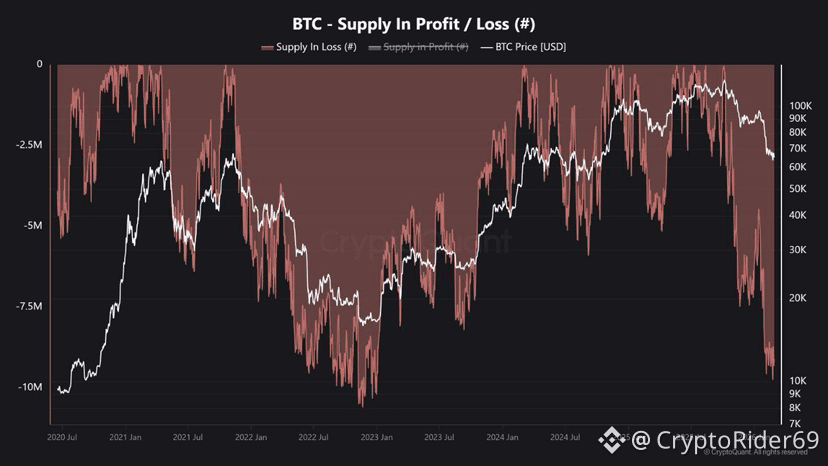
Approximately 9.09 million BTC, or about 46% of the total supply, are at a loss for their owners.
Approximately 9.09 million BTC, or about 46% of the total supply, are at a loss for their owners.
2
2.4k
Aptos is holding a vote on setting a maximum emission limit of $APT at 2.1 billion coins.
Currently, there is no strict limitation. If a decision is made that is supported by about 99% of the votes, an upper limit on the supply will be established.
Aptos is holding a vote on setting a maximum emission limit of $APT at 2.1 billion coins.
Currently, there is no strict limitation. If a decision is made that is supported by about 99% of the votes, an upper limit on the supply will be established.
Currently, there is no strict limitation. If a decision is made that is supported by about 99% of the votes, an upper limit on the supply will be established.
2
6
3.1k
·
--
Bullish
$XAG (silver) long, on recent events (war) when in the world of war, gold and silver are rising like never before
$XAG (silver) long, on recent events (war) when in the world of war, gold and silver are rising like never before
6
2.7k
·
--
Bullish
Having taken $PAXG (gold) long, the war does not stop, so one can earn a little bit.
Having taken $PAXG (gold) long, the war does not stop, so one can earn a little bit.
5
88
·
--
Bearish
I also try to short $BTC , the opinion is similar, the prolongation of the war for a week - another push down
I also try to short $BTC , the opinion is similar, the prolongation of the war for a week - another push down
5
1.8k
After all, Israel and the USA attacked Iran.
There was no strong reaction in price, but that is only because part of this scenario was already priced in.
If the conflict drags on - I expect a spill.
I have already brought part of the funds to the exchange. I plan to buy BTC in the range of 57-53k$, and I will also be accumulating ETH.
If everything ends quickly, without serious escalation - the reaction will be minimal or there may be none at all.
For now, we are just observing.
Honestly - I hope they let me buy back normally 👀
$ETH $BTC
After all, Israel and the USA attacked Iran.
There was no strong reaction in price, but that is only because part of this scenario was already priced in.
If the conflict drags on - I expect a spill.
I have already brought part of the funds to the exchange. I plan to buy BTC in the range of 57-53k$, and I will also be accumulating ETH.
If everything ends quickly, without serious escalation - the reaction will be minimal or there may be none at all.
For now, we are just observing.
Honestly - I hope they let me buy back normally 👀
$ETH $BTC
There was no strong reaction in price, but that is only because part of this scenario was already priced in.
If the conflict drags on - I expect a spill.
I have already brought part of the funds to the exchange. I plan to buy BTC in the range of 57-53k$, and I will also be accumulating ETH.
If everything ends quickly, without serious escalation - the reaction will be minimal or there may be none at all.
For now, we are just observing.
Honestly - I hope they let me buy back normally 👀
$ETH $BTC

6
4.6k
In Starknet, the launch of strkBTC is being prepared.
strkBTC is wrapped BTC with built-in privacy features. The token will operate in two modes: a standard transparent mode and a private mode, where balances and transfers are hidden from public blockchain observers.
$STRK
In Starknet, the launch of strkBTC is being prepared.
strkBTC is wrapped BTC with built-in privacy features. The token will operate in two modes: a standard transparent mode and a private mode, where balances and transfers are hidden from public blockchain observers.
$STRK
strkBTC is wrapped BTC with built-in privacy features. The token will operate in two modes: a standard transparent mode and a private mode, where balances and transfers are hidden from public blockchain observers.
$STRK
9
2.1k
·
--
Bearish
I'm trying to short $ETH , in my opinion, the war between Iran and the USA will give another push downwards
I'm trying to short $ETH , in my opinion, the war between Iran and the USA will give another push downwards
4
67
Today is the expiration of options on $BTC and $ETH .
The volume of open contracts: $7.5 billion in BTC and $975 million in ETH.
The main interest zone for BTC - $73,000.
The main interest zone for ETH - $2,200.
Today is the expiration of options on $BTC and $ETH .
The volume of open contracts: $7.5 billion in BTC and $975 million in ETH.
The main interest zone for BTC - $73,000.
The main interest zone for ETH - $2,200.
The volume of open contracts: $7.5 billion in BTC and $975 million in ETH.
The main interest zone for BTC - $73,000.
The main interest zone for ETH - $2,200.
4
2.1k
·
--
Bullish
Ethereum Foundation published Strawmap - a long-term roadmap for the network's development until 2029 with updates every six months.
Among the key goals is accelerating L1 with transaction finalization in seconds and achieving endgame finality by 2029.
Scaling is planned through the integration of zk-proofs into the protocol with a target of around 10,000 TPS and the implementation of mandatory zk-proofs and canonical zkVM.
The development of high-performance L2s with a throughput of up to 1 Gbyte/sec for rollups is also anticipated.
It is also announced that post-quantum keys will be implemented from 2026, a complete transition to new cryptography by the end of the decade, and the launch of native privacy with the possibility of private transfers $ETH at the network level.
Ethereum Foundation published Strawmap - a long-term roadmap for the network's development until 2029 with updates every six months.
Among the key goals is accelerating L1 with transaction finalization in seconds and achieving endgame finality by 2029.
Scaling is planned through the integration of zk-proofs into the protocol with a target of around 10,000 TPS and the implementation of mandatory zk-proofs and canonical zkVM.
The development of high-performance L2s with a throughput of up to 1 Gbyte/sec for rollups is also anticipated.
It is also announced that post-quantum keys will be implemented from 2026, a complete transition to new cryptography by the end of the decade, and the launch of native privacy with the possibility of private transfers $ETH at the network level.
Among the key goals is accelerating L1 with transaction finalization in seconds and achieving endgame finality by 2029.
Scaling is planned through the integration of zk-proofs into the protocol with a target of around 10,000 TPS and the implementation of mandatory zk-proofs and canonical zkVM.
The development of high-performance L2s with a throughput of up to 1 Gbyte/sec for rollups is also anticipated.
It is also announced that post-quantum keys will be implemented from 2026, a complete transition to new cryptography by the end of the decade, and the launch of native privacy with the possibility of private transfers $ETH at the network level.
5
2.2k
World Liberty Financial has brought the stake-to-vote model to a vote.
WLFI holders will be able to participate in votes only if they stake tokens with a minimum lock-up period of 180 days.
The reward will be approximately 2% per annum for active participation in votes. The weight of the vote will depend on the volume and duration of the lock-up.
There are Node and Super Node levels with additional privileges, including access to USD1 OTC conversion, direct contact with the team, and priority in partnership interactions.
$BTC $ETH $BNB
World Liberty Financial has brought the stake-to-vote model to a vote.
WLFI holders will be able to participate in votes only if they stake tokens with a minimum lock-up period of 180 days.
The reward will be approximately 2% per annum for active participation in votes. The weight of the vote will depend on the volume and duration of the lock-up.
There are Node and Super Node levels with additional privileges, including access to USD1 OTC conversion, direct contact with the team, and priority in partnership interactions.
$BTC $ETH $BNB
WLFI holders will be able to participate in votes only if they stake tokens with a minimum lock-up period of 180 days.
The reward will be approximately 2% per annum for active participation in votes. The weight of the vote will depend on the volume and duration of the lock-up.
There are Node and Super Node levels with additional privileges, including access to USD1 OTC conversion, direct contact with the team, and priority in partnership interactions.
$BTC $ETH $BNB
4
2.2k
The total volume of issued loans on $AAVE exceeded $1 trillion.
This is the first case in DeFi history.
The total volume of issued loans on $AAVE exceeded $1 trillion.
This is the first case in DeFi history.
This is the first case in DeFi history.
3
2.3k
Log in to explore more content
Join global crypto users on Binance Square
⚡️ Get latest and useful information about crypto.
💬 Trusted by the world’s largest crypto exchange.
👍 Discover real insights from verified creators.
Email / Phone number
Trending Topics
USAugustPPIRisesLessThanExpected
15,377 views
402 Discussing
🚨 US AUG PPI: Rises LESS Than Expected! Bullish for Crypto? 🚀
PPI +0.4% MoM as expected, but CORE PPI only +0.2% vs +0.3% expected - cooling!
What it means:
• Wholesale inflation softer than feared
• Fed rate hike chance now 62% - but dovish signals coming
• Core PCE revisions expected downward - bullish
• BTC usually pumps on softer PPI
Fed meeting Sep 15-16 - Market now expects pause, not hike?
Is this the green light for Q4 rally?
#Bitcoin #PPI #Fed #CryptoNews #BTC#usaugustppiriseslessthanexpected
True News
·1 Likes
·1.2k views
SECApprovesNasdaqTexasCommodityTrustRule
11,666 views
363 Discussing
ECBRaisesRatesSecondTimeTo2.5%
8,097 views
260 Discussing