

ITS ME ANJAN_09
2.9k Posts

ITS ME ANJAN_09
Report
Block User
Professional Analyst with years of experience🧠. Focus: Technical research🔍, blockchain protocols, and natural network growth✍🏻.
146 Following
9.6K+ Followers
3.7K+ Liked
Posts
All
Quotes
Live
95% of people watch the chart. Only 5% understand the market.
A beginner looks at a chart and asks, "Will the price go up or down?"
A trader asks, "Is the risk worth the reward?"
But a real investor asks, "Will this asset still create value five years from now?"
That's the difference between chasing profits and building wealth.
The biggest mistake in crypto isn't buying the wrong coin—it's following every trend without a strategy.
Which one are you: a Beginner, a Trader, or an Investor?
What's your current approach to the crypto market?
95% of people watch the chart. Only 5% understand the market.
A beginner looks at a chart and asks, "Will the price go up or down?"
A trader asks, "Is the risk worth the reward?"
But a real investor asks, "Will this asset still create value five years from now?"
That's the difference between chasing profits and building wealth.
The biggest mistake in crypto isn't buying the wrong coin—it's following every trend without a strategy.
Which one are you: a Beginner, a Trader, or an Investor?
What's your current approach to the crypto market?
A beginner looks at a chart and asks, "Will the price go up or down?"
A trader asks, "Is the risk worth the reward?"
But a real investor asks, "Will this asset still create value five years from now?"
That's the difference between chasing profits and building wealth.
The biggest mistake in crypto isn't buying the wrong coin—it's following every trend without a strategy.
Which one are you: a Beginner, a Trader, or an Investor?
What's your current approach to the crypto market?
🔹 I'm a Beginner
0%
🔹 I'm an Active Trader
0%
🔹 I'm a Long-Term Investor
100%
1 votes • Voting closed
114
🚨 $ERA USDT is leading today's market with a +72.54% surge.
Most traders see a green candle and think "I'm already late." Professional traders ask a different question:
Is this real accumulation or just FOMO-driven momentum?
If buyers continue defending higher levels with strong volume, the trend may still have room to expand. But if momentum weakens, a healthy pullback shouldn't surprise anyone.
The best trades come from confirmation, not emotions.
What's your view on ERAUSDT? Vote below and share your analysis. 👇
#BİNANCE #ERA #Altcoins #trading #cryptotrading
{future}(ERAUSDT)
📊 $ERA USDT – What's Next?
🚨 $ERA USDT is leading today's market with a +72.54% surge.
Most traders see a green candle and think "I'm already late." Professional traders ask a different question:
Is this real accumulation or just FOMO-driven momentum?
If buyers continue defending higher levels with strong volume, the trend may still have room to expand. But if momentum weakens, a healthy pullback shouldn't surprise anyone.
The best trades come from confirmation, not emotions.
What's your view on ERAUSDT? Vote below and share your analysis. 👇
#BİNANCE #ERA #Altcoins #trading #cryptotrading
📊 $ERA USDT – What's Next?
Most traders see a green candle and think "I'm already late." Professional traders ask a different question:
Is this real accumulation or just FOMO-driven momentum?
If buyers continue defending higher levels with strong volume, the trend may still have room to expand. But if momentum weakens, a healthy pullback shouldn't surprise anyone.
The best trades come from confirmation, not emotions.
What's your view on ERAUSDT? Vote below and share your analysis. 👇
#BİNANCE #ERA #Altcoins #trading #cryptotrading
📊 $ERA USDT – What's Next?
🚀 +25% More Upside
50%
📉 15–20% Pullback
17%
🔥 100%+ This Week
33%
24 votes • Voting closed
1.5k
Article
99% of Crypto Investors Are Watching the Wrong SignalEvery day, millions of traders refresh the Bitcoin chart, waiting for the next big move.
But here's the truth:
The biggest opportunities in crypto rarely appear on the price chart first.
They appear in the market's behavior.
When fear dominates social media, smart investors start building positions. When everyone suddenly becomes an expert and starts predicting "easy profits," experienced investors begin protecting their capital.
This pattern has repeated throughout every major crypto cycle.
The market doesn't reward the fastest trader—it rewards the most disciplined one.
Many new investors believe success comes from finding the next 100x coin. In reality, most long-term winners follow a much simpler strategy:
They study narratives before they become popular.
They manage risk instead of chasing hype.
They stay patient while others panic.
They think in months and years, not hours.
Today's crypto market is evolving rapidly.
Artificial Intelligence, Real-World Assets (RWAs), DeFi, Layer-2 networks, and tokenization are attracting more developers, institutions, and long-term capital than ever before.
But technology alone doesn't create wealth.
Understanding market psychology does.
Every correction creates fear.
Every rally creates greed.
The investors who can control both emotions usually outperform those who simply react to headlines.
The next bull market may already be taking shape—but most people won't recognize it until prices are much higher.
History has shown that by the time everyone agrees the bull market has started, a significant part of the opportunity has already passed.
That's why successful investing isn't about predicting every move.
It's about preparing before the crowd arrives.
So here's my question:
If the next crypto bull run starts tomorrow, are you already positioned—or are you still waiting for confirmation after prices rise?
Let's discuss your strategy in the comments
99% of Crypto Investors Are Watching the Wrong Signal
Every day, millions of traders refresh the Bitcoin chart, waiting for the next big move.
But here's the truth:
The biggest opportunities in crypto rarely appear on the price chart first.
They appear in the market's behavior.
When fear dominates social media, smart investors start building positions. When everyone suddenly becomes an expert and starts predicting "easy profits," experienced investors begin protecting their capital.
This pattern has repeated throughout every major crypto cycle.
The market doesn't reward the fastest trader—it rewards the most disciplined one.
Many new investors believe success comes from finding the next 100x coin. In reality, most long-term winners follow a much simpler strategy:
They study narratives before they become popular.
They manage risk instead of chasing hype.
They stay patient while others panic.
They think in months and years, not hours.
Today's crypto market is evolving rapidly.
Artificial Intelligence, Real-World Assets (RWAs), DeFi, Layer-2 networks, and tokenization are attracting more developers, institutions, and long-term capital than ever before.
But technology alone doesn't create wealth.
Understanding market psychology does.
Every correction creates fear.
Every rally creates greed.
The investors who can control both emotions usually outperform those who simply react to headlines.
The next bull market may already be taking shape—but most people won't recognize it until prices are much higher.
History has shown that by the time everyone agrees the bull market has started, a significant part of the opportunity has already passed.
That's why successful investing isn't about predicting every move.
It's about preparing before the crowd arrives.
So here's my question:
If the next crypto bull run starts tomorrow, are you already positioned—or are you still waiting for confirmation after prices rise?
Let's discuss your strategy in the comments
But here's the truth:
The biggest opportunities in crypto rarely appear on the price chart first.
They appear in the market's behavior.
When fear dominates social media, smart investors start building positions. When everyone suddenly becomes an expert and starts predicting "easy profits," experienced investors begin protecting their capital.
This pattern has repeated throughout every major crypto cycle.
The market doesn't reward the fastest trader—it rewards the most disciplined one.
Many new investors believe success comes from finding the next 100x coin. In reality, most long-term winners follow a much simpler strategy:
They study narratives before they become popular.
They manage risk instead of chasing hype.
They stay patient while others panic.
They think in months and years, not hours.
Today's crypto market is evolving rapidly.
Artificial Intelligence, Real-World Assets (RWAs), DeFi, Layer-2 networks, and tokenization are attracting more developers, institutions, and long-term capital than ever before.
But technology alone doesn't create wealth.
Understanding market psychology does.
Every correction creates fear.
Every rally creates greed.
The investors who can control both emotions usually outperform those who simply react to headlines.
The next bull market may already be taking shape—but most people won't recognize it until prices are much higher.
History has shown that by the time everyone agrees the bull market has started, a significant part of the opportunity has already passed.
That's why successful investing isn't about predicting every move.
It's about preparing before the crowd arrives.
So here's my question:
If the next crypto bull run starts tomorrow, are you already positioned—or are you still waiting for confirmation after prices rise?
Let's discuss your strategy in the comments
89
$BANK just delivered one of the strongest breakouts on today's leaderboard. 📈
A move like this attracts momentum traders, but experienced investors know that chasing green candles without a plan can be risky.
Volume, liquidity, and price action will decide the next move. What's your strategy?
#bank #crypto #Binance #Altcoins #trading
{spot}(BANKUSDT)
What's next for $BANK ?
$BANK just delivered one of the strongest breakouts on today's leaderboard. 📈
A move like this attracts momentum traders, but experienced investors know that chasing green candles without a plan can be risky.
Volume, liquidity, and price action will decide the next move. What's your strategy?
#bank #crypto #Binance #Altcoins #trading
What's next for $BANK ?
A move like this attracts momentum traders, but experienced investors know that chasing green candles without a plan can be risky.
Volume, liquidity, and price action will decide the next move. What's your strategy?
#bank #crypto #Binance #Altcoins #trading
What's next for $BANK ?
🚀 New ATH Incoming
63%
📈 More Upside Ahead
5%
🔄 Healthy Pullback First
32%
19 votes • Voting closed
972
·
--
Bullish
✅ Buy Now
67%
👀 Wait for Dip
22%
🤝 Hold Existing Position
11%
9 votes • Voting closed
313
·
--
Bullish
🚀 Breaks to a new high
53%
🔄 Healthy pullback first
6%
📉 Rally is over
41%
17 votes • Voting closed
2k
🔥 $B (BUILDon) is leading today's Alpha movers with a strong +51% surge.
Momentum is clearly building, but chasing green candles without confirmation can be risky. Smart traders wait for key support and volume before entering.
📍 Watch Zone: $0.160–0.170
✅ Potential Entry: Above confirmed support.
🎯 TP1: $0.185
🎯 TP2: $0.205
🛑 SL: Below $0.155
I'm watching price action closely. Is this just the beginning, or will early buyers take profits?
#BUILDon #B #ALPHA #Crypto #BinanceSquare #trading
{alpha}(560x6bdcce4a559076e37755a78ce0c06214e59e4444)
🔥 $B (BUILDon) is leading today's Alpha movers with a strong +51% surge.
Momentum is clearly building, but chasing green candles without confirmation can be risky. Smart traders wait for key support and volume before entering.
📍 Watch Zone: $0.160–0.170
✅ Potential Entry: Above confirmed support.
🎯 TP1: $0.185
🎯 TP2: $0.205
🛑 SL: Below $0.155
I'm watching price action closely. Is this just the beginning, or will early buyers take profits?
#BUILDon #B #ALPHA #Crypto #BinanceSquare #trading
Momentum is clearly building, but chasing green candles without confirmation can be risky. Smart traders wait for key support and volume before entering.
📍 Watch Zone: $0.160–0.170
✅ Potential Entry: Above confirmed support.
🎯 TP1: $0.185
🎯 TP2: $0.205
🛑 SL: Below $0.155
I'm watching price action closely. Is this just the beginning, or will early buyers take profits?
#BUILDon #B #ALPHA #Crypto #BinanceSquare #trading
🚀 New Highs Ahead
86%
📈 Healthy Pullback Then Up
0%
📉 Profit Taking Starts Now
14%
7 votes • Voting closed
494
$AKE is showing exceptional momentum today. 🚀
A breakout backed by strong buying pressure has pushed AKE to the top of the futures gainers list. Chasing green candles is risky—waiting for confirmation is often the smarter move.
Are you buying $AKE here or waiting for the next setup? 👀
#AKE #Binance #crypto #futures
{future}(AKEUSDT)
$AKE Next Move?
$AKE is showing exceptional momentum today. 🚀
A breakout backed by strong buying pressure has pushed AKE to the top of the futures gainers list. Chasing green candles is risky—waiting for confirmation is often the smarter move.
Are you buying $AKE here or waiting for the next setup? 👀
#AKE #Binance #crypto #futures
$AKE Next Move?
A breakout backed by strong buying pressure has pushed AKE to the top of the futures gainers list. Chasing green candles is risky—waiting for confirmation is often the smarter move.
Are you buying $AKE here or waiting for the next setup? 👀
#AKE #Binance #crypto #futures
$AKE Next Move?
🚀 Pump
42%
⏸️ Sideways
9%
📉 Pullback
49%
43 votes • Voting closed
1.9k
🔴 $SNXX USDT has seen a sharp pullback, and volatility is increasing.
📍 Watch Zone: $13.20–13.50
✅ Potential Entry: Around $13.30 (only if price shows strength)
🎯 TP1: $14.20
🎯 TP2: $15.00
🛑 SL: $12.70
Always wait for confirmation and manage your risk. High volatility can create both opportunity and downside.
What's your view on $SNXX ? 👇
{future}(SNXXUSDT)
#SNXX #crypto #Futures #BinanceSquare #trading
Where do you think $SNXX goes next?
🔴 $SNXX USDT has seen a sharp pullback, and volatility is increasing.
📍 Watch Zone: $13.20–13.50
✅ Potential Entry: Around $13.30 (only if price shows strength)
🎯 TP1: $14.20
🎯 TP2: $15.00
🛑 SL: $12.70
Always wait for confirmation and manage your risk. High volatility can create both opportunity and downside.
What's your view on $SNXX ? 👇
#SNXX #crypto #Futures #BinanceSquare #trading
Where do you think $SNXX goes next?
📍 Watch Zone: $13.20–13.50
✅ Potential Entry: Around $13.30 (only if price shows strength)
🎯 TP1: $14.20
🎯 TP2: $15.00
🛑 SL: $12.70
Always wait for confirmation and manage your risk. High volatility can create both opportunity and downside.
What's your view on $SNXX ? 👇
#SNXX #crypto #Futures #BinanceSquare #trading
Where do you think $SNXX goes next?
🚀 Bounce to TP
57%
📉 More Downside
29%
👀 Waiting for Confirmation
14%
7 votes • Voting closed
1.5k
💎 Buy the Dip
64%
📉 More Selling
36%
⏳ Wait for Confirmation
0%
14 votes • Voting closed
721
·
--
Bearish
🔥 $HOME is today's biggest Futures loser (-40%).
Sharp drops often create opportunity—or more downside.
What's your next move? 👇
#Home #crypto #BinanceSquare
{future}(HOMEUSDT)
🔥 $HOME is today's biggest Futures loser (-40%).
Sharp drops often create opportunity—or more downside.
What's your next move? 👇
#Home #crypto #BinanceSquare
Sharp drops often create opportunity—or more downside.
What's your next move? 👇
#Home #crypto #BinanceSquare
🚀 Strong Bounce
63%
📉 More Dump
35%
👀 Watching Only
2%
43 votes • Voting closed
1
1.4k
$1
{alpha}(560xff5d99a5c16cf2ffb4e7da1d7c42a791e70e4444)
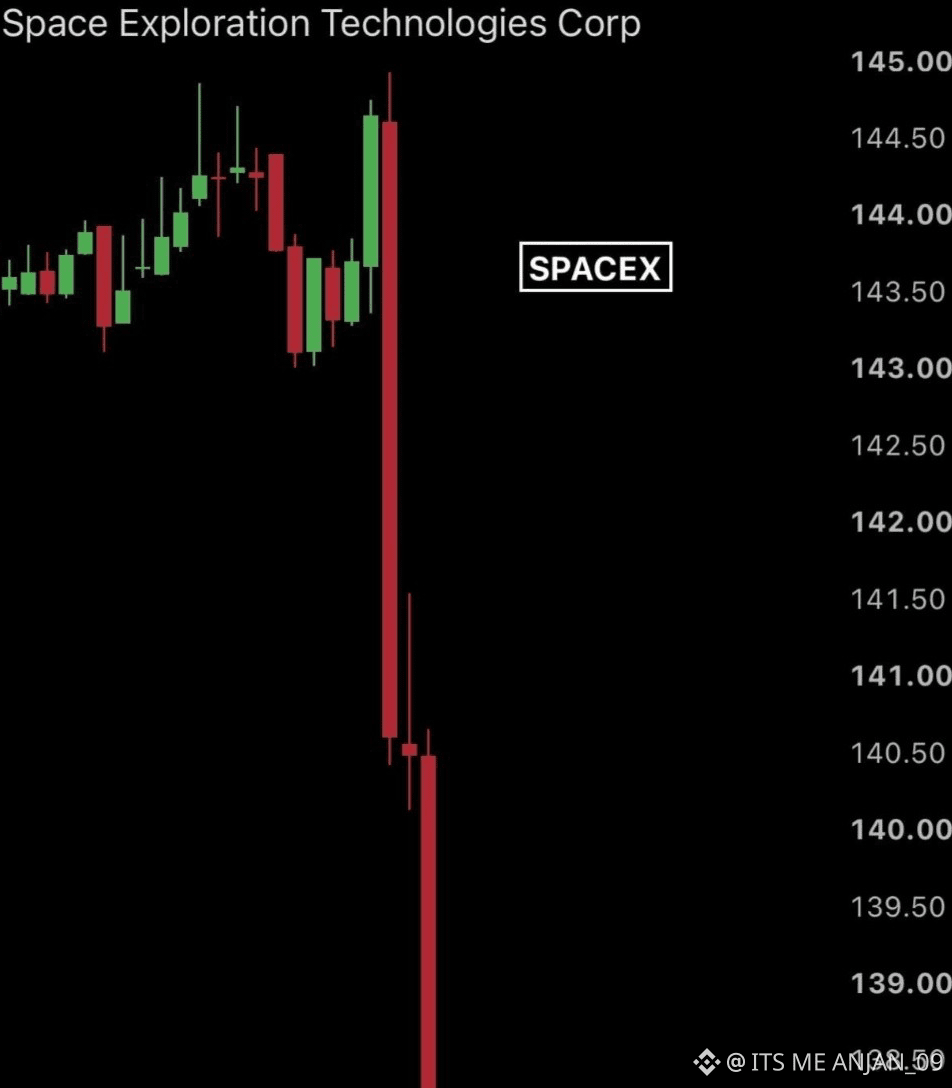
.15T erased from $SPCX in just 27 days. 🤯📉
{future}(SPCXUSDT)
An unbelievable move that caught everyone's attention. Markets can change fast, and volatility is never far away.
What do you think happens next? 👀🚀#JuneCPIFedHike20% #IBMSharesFall25% #FootballSeason2026 #ChangxinTechSetsIPOPriceAtCNY8.66 #TrumpScrapsHormuzShippingFeeAfterGulfPressure
$1
.15T erased from $SPCX in just 27 days. 🤯📉
An unbelievable move that caught everyone's attention. Markets can change fast, and volatility is never far away.
What do you think happens next? 👀🚀#JuneCPIFedHike20% #IBMSharesFall25% #FootballSeason2026 #ChangxinTechSetsIPOPriceAtCNY8.66 #TrumpScrapsHormuzShippingFeeAfterGulfPressure
.15T erased from $SPCX in just 27 days. 🤯📉
An unbelievable move that caught everyone's attention. Markets can change fast, and volatility is never far away.
What do you think happens next? 👀🚀#JuneCPIFedHike20% #IBMSharesFall25% #FootballSeason2026 #ChangxinTechSetsIPOPriceAtCNY8.66 #TrumpScrapsHormuzShippingFeeAfterGulfPressure
181
·
--
Bearish
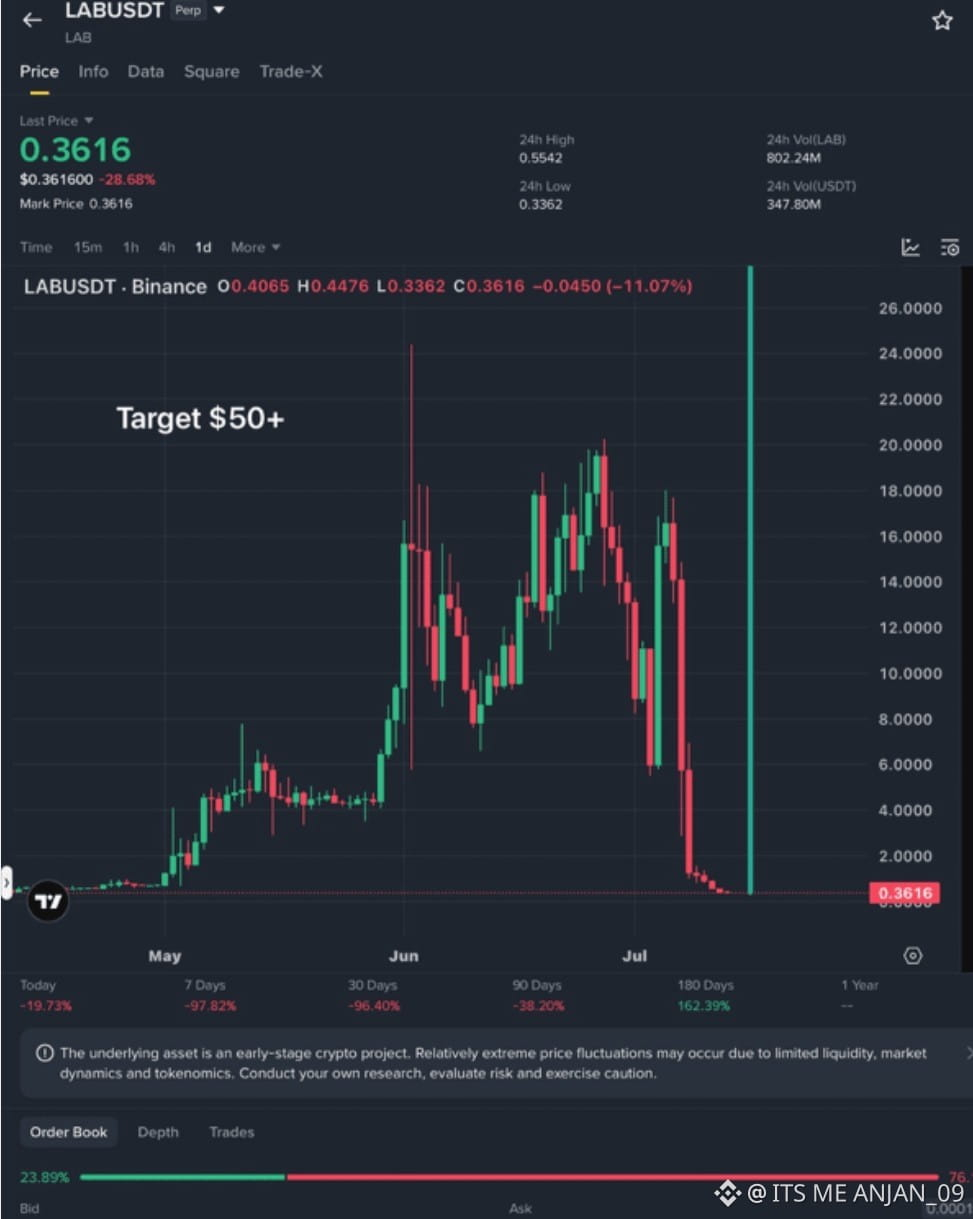
$LAB faces a major test after the July 14 presale unlock.
If sell pressure stays limited, momentum could continue and another leg higher is possible.
🎯 Short-term watch: $10
🚀 Long-term outlook: $50+ (if adoption and market conditions remain strong)
What's your view—bullish or expecting a pullback?
#BinanceTurns9 WTICrudeTouches$73
{future}(LABUSDT)
$LAB faces a major test after the July 14 presale unlock.
If sell pressure stays limited, momentum could continue and another leg higher is possible.
🎯 Short-term watch: $10
🚀 Long-term outlook: $50+ (if adoption and market conditions remain strong)
What's your view—bullish or expecting a pullback?
#BinanceTurns9 WTICrudeTouches$73
If sell pressure stays limited, momentum could continue and another leg higher is possible.
🎯 Short-term watch: $10
🚀 Long-term outlook: $50+ (if adoption and market conditions remain strong)
What's your view—bullish or expecting a pullback?
#BinanceTurns9 WTICrudeTouches$73
1
267
Log in to explore more content
Join global crypto users on Binance Square
⚡️ Get latest and useful information about crypto.
💬 Trusted by the world’s largest crypto exchange.
👍 Discover real insights from verified creators.
Email / Phone number