

CryptoFrancoARG
9.5k Posts

CryptoFrancoARG
 Square Verified+
Report
Block User
Trader specialized in crypto futures. I share real market setups, risk management strategies, and practical insights based on experience. TLgram:CryptoFrancoARG
Open Trade

SOL Holder
High-Frequency Trader
2.3 Years
192 Following
56.9K+ Followers
40.8K+ Liked
Posts
Portfolio
All
Quotes
PINNED
·
--
Bullish
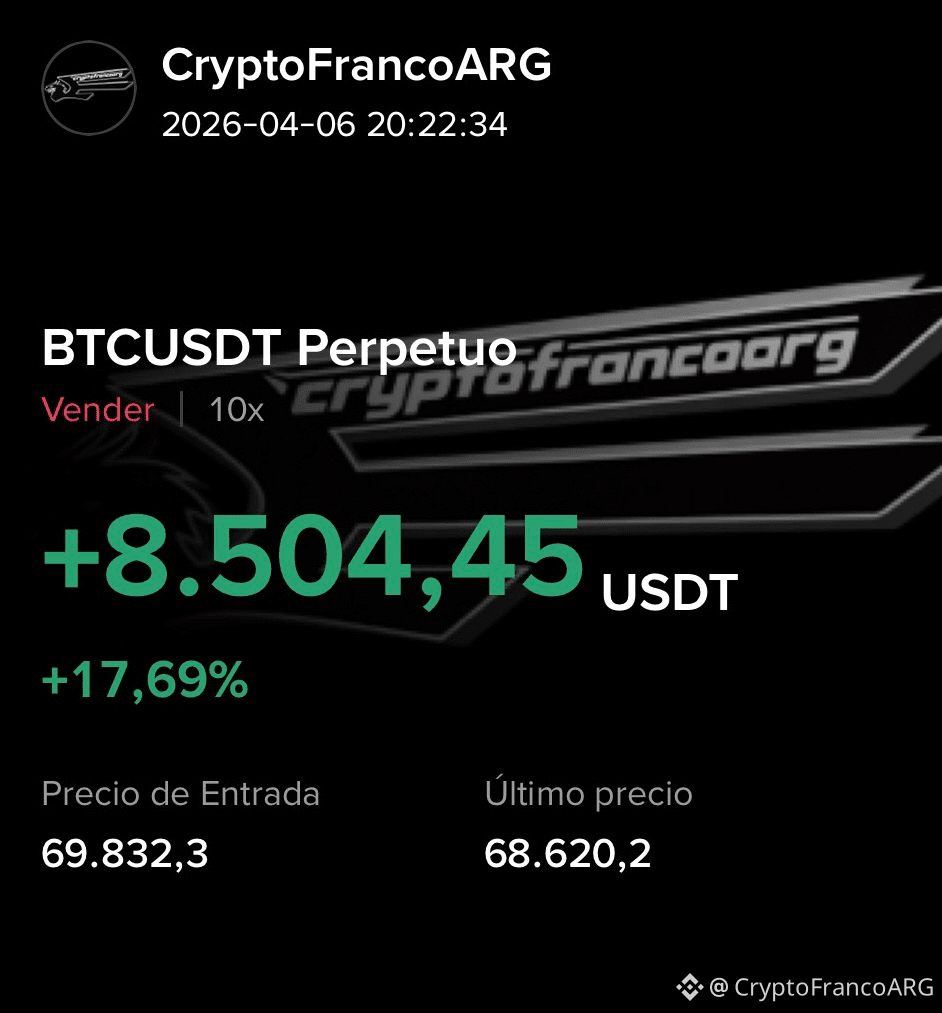
💸 I am sharing FREE signals on Telegram $BTC
Clear entries + defined objectives 📊
Some are already taking advantage of strong movements… $BTC
The difference is being or not being $BTC
💸 I am sharing FREE signals on Telegram $BTC
Clear entries + defined objectives 📊
Some are already taking advantage of strong movements… $BTC
The difference is being or not being $BTC
Clear entries + defined objectives 📊
Some are already taking advantage of strong movements… $BTC
The difference is being or not being $BTC
102
6
64
6.5k
📰 CRYPTO NEWS
The situation with Keystone is getting more serious by the day: what began as a leak of customer data turned out to be far worse than initially believed. The hackers also stole a cryptographic key used to verify the authenticity of hardware wallets, meaning they could now manufacture fake devices that pass security checks as if they were genuine. Put simply, someone could sell you a “genuine” Keystone that is actually a trap designed to steal your funds. This poses a huge risk to anyone who buys or has bought this type of hardware wallet, as trust in the verification process has been completely compromised. It’s worth asking how much incidents like this can erode overall confidence in self-custody solutions, especially at a time when more people are looking for alternatives to centralized exchanges.
What do you think? Let me know in the comments 👇
26
🔴 $SOL en 100.9 (-0.44% 24h)
Levels to watch:
🔴 Resistance: 102.7 (+1.8%)
🟢 Support: 99.8 (−1.1%)
📊 Wider range: 98.5 – 103.1
4h structure is bearish, trading below the MA50. Until it recovers 102.7, the bias remains bearish. Breaking above it opens the way to 103.1.
24h volume: 1.34B USDT.
$SOL 👇
🔴 $SOL en 100.9 (-0.44% 24h)
Levels to watch:
🔴 Resistance: 102.7 (+1.8%)
🟢 Support: 99.8 (−1.1%)
📊 Wider range: 98.5 – 103.1
4h structure is bearish, trading below the MA50. Until it recovers 102.7, the bias remains bearish. Breaking above it opens the way to 103.1.
24h volume: 1.34B USDT.
$SOL 👇
Levels to watch:
🔴 Resistance: 102.7 (+1.8%)
🟢 Support: 99.8 (−1.1%)
📊 Wider range: 98.5 – 103.1
4h structure is bearish, trading below the MA50. Until it recovers 102.7, the bias remains bearish. Breaking above it opens the way to 103.1.
24h volume: 1.34B USDT.
$SOL 👇
231
📰 CRYPTO NEWS
Injective has just launched an onchain futures market that tracks the real-time rental costs of Nvidia GPUs, specifically five different models of these highly sought-after graphics cards for artificial intelligence. This means that, for the first time, traders can use leverage to trade the price of AI-related cloud computing—something that was previously available only to major tech companies. The instrument also allows users to hedge against fluctuations in AI infrastructure costs, which is especially relevant in a context where demand for GPUs remains extremely high and volatile. In short, DeFi is beginning to tokenize real-world assets that go far beyond commodities or traditional currencies. It’s worth asking whether these kinds of markets could change how both retail investors and major institutional players manage their exposure to the artificial intelligence boom.
What do you think? Let me know in the comments 👇
3
158
🔴 $ETH en 2,325 (-1.30% 24h)
Levels to watch:
🔴 Resistance: 2,359 (+1.4%)
🟢 Support: 2,292 (−1.4%)
📊 Major range: 2,281 – 2,409
Bearish 4h structure, trading below the MA50. Until it reclaims 2,359, the bias remains bearish. Breaking above it opens the way to 2,409.
24h volume: 8.01B USDT.
$ETH 👇
🔴 $ETH en 2,325 (-1.30% 24h)
Levels to watch:
🔴 Resistance: 2,359 (+1.4%)
🟢 Support: 2,292 (−1.4%)
📊 Major range: 2,281 – 2,409
Bearish 4h structure, trading below the MA50. Until it reclaims 2,359, the bias remains bearish. Breaking above it opens the way to 2,409.
24h volume: 8.01B USDT.
$ETH 👇
Levels to watch:
🔴 Resistance: 2,359 (+1.4%)
🟢 Support: 2,292 (−1.4%)
📊 Major range: 2,281 – 2,409
Bearish 4h structure, trading below the MA50. Until it reclaims 2,359, the bias remains bearish. Breaking above it opens the way to 2,409.
24h volume: 8.01B USDT.
$ETH 👇
2
190
📰 CRYPTO NEWS
South Korea is considering postponing the implementation of its cryptocurrency gains tax yet again, this time until 2029. The policy was originally designed in 2020 and has already been delayed several times, highlighting the difficulty governments face in regulating this market without creating conflicts with investors. One reason cited is the difficulty of obtaining accurate data from U.S. authorities, which complicates effective enforcement of the regulations. South Korea is one of the world’s most active crypto markets, with millions of citizens actively participating in the sector. It’s worth asking whether these repeated delays build greater confidence in the local market or simply put off regulations that, sooner or later, are here to stay.
What do you think? Let me know in the comments 👇
5
578
📰 CRYPTO NEWS
Aviva Investors, one of the UK's largest asset managers, has just tokenized a share class of its Sterling fund, which manages no less than $29 billion, on the XRP Ledger. This is the second time Aviva has brought a fund into the tokenized world, making it clear that this isn't a one-off experiment but an ongoing strategy. The partnership aims to bring more and more tokenized funds to the XRP network, bringing traditional finance closer to blockchain technology in a practical and regulated way. Seeing institutions of this size choose the XRP Ledger as their infrastructure is no small thing, as it gives the entire network greater visibility and legitimacy. It's worth asking whether this kind of institutional adoption could finally change the market's perception of XRP's real long-term value.
What do you think? Let me know in the comments 👇
1
1
139
🔴 $BTC en 80,382 (-0.22% 24h)
Key levels to watch:
🔴 Resistance: 80,920 (+0.7%)
🟢 Support: 79,322 (−1.3%)
📊 Broader range: 79,179 – 82,035
4h structure is bearish, trading below the MA50. Until it reclaims 80,920, the bias remains bearish. Breaking above it opens the way to 82,035.
24h volume: 7.44B USDT.
$BTC 👇
Key levels to watch:
🔴 Resistance: 80,920 (+0.7%)
🟢 Support: 79,322 (−1.3%)
📊 Broader range: 79,179 – 82,035
4h structure is bearish, trading below the MA50. Until it reclaims 80,920, the bias remains bearish. Breaking above it opens the way to 82,035.
24h volume: 7.44B USDT.
$BTC 👇
1
1
240
📰 CRYPTO NEWS
India’s largest cryptocurrency exchange confirmed a $16 million loss caused by a failure in its internal processes involving a wallet that was no longer actively used. What makes the case particularly striking is that the Mumbai-based platform initially denied reports of suspicious fund movements, calling them a false alarm. Days later, it had to backtrack and admit the loss was real, while clarifying that it would cover it with its own funds without affecting users. Incidents like this show that even established exchanges can have vulnerabilities in infrastructure they considered obsolete or out of service. It’s worth asking how many exchanges around the world have “retired” wallets containing funds that no one is closely monitoring, and what this signals to the market about institutional trust in centralized platforms.
What do you think? Let me know in the comments 👇
329
🔴 $SOL at 101.4 (-0.46% 24h)
Levels to watch:
🔴 Resistance: 102.2 (+0.8%)
🟢 Support: 99.8 (−1.6%)
📊 Major range: 98.5 – 105.2
4h structure is bearish, trading below the MA50. Until it recovers 102.2, the bias remains bearish. Breaking above it opens the way to 105.2.
24h volume: 1.10B USDT.
$SOL 👇
🔴 $SOL at 101.4 (-0.46% 24h)
Levels to watch:
🔴 Resistance: 102.2 (+0.8%)
🟢 Support: 99.8 (−1.6%)
📊 Major range: 98.5 – 105.2
4h structure is bearish, trading below the MA50. Until it recovers 102.2, the bias remains bearish. Breaking above it opens the way to 105.2.
24h volume: 1.10B USDT.
$SOL 👇
Levels to watch:
🔴 Resistance: 102.2 (+0.8%)
🟢 Support: 99.8 (−1.6%)
📊 Major range: 98.5 – 105.2
4h structure is bearish, trading below the MA50. Until it recovers 102.2, the bias remains bearish. Breaking above it opens the way to 105.2.
24h volume: 1.10B USDT.
$SOL 👇
1
197
📰 CRYPTO NEWS
Anchorpoint, the joint venture between Standard Chartered and Animoca Brands, is tapping the brakes on the launch of its retail-focused stablecoin. Its CEO declined to confirm the previously discussed timeline, which had indicated that retail access would be available by the end of 2026. The company seems to be prioritizing the project’s soundness over the speed of its launch—a significant consideration given the institutional players behind it. For everyday investors, this means waiting longer than expected before they can access the product. It’s worth asking whether this caution reflects an still-uncertain regulatory environment or simply the complexity of bringing an institutionally scaled stablecoin to the mass market—and how that could influence stablecoin adoption in general over the coming years.
What do you think? Let me know in the comments 👇
1
324
🔴 $ETH en 2,329 (-1.25% 24h)
Levels to watch:
🔴 Resistance: 2,371 (+1.8%)
🟢 Support: 2,307 (−0.9%)
📊 Major range: 2,281 – 2,417
4h structure is bearish, trading below the MA50. Until it recovers 2,371, the bias remains bearish. A break above it opens the way to 2,417.
24h volume: 4.82B USDT.
$ETH 👇
🔴 $ETH en 2,329 (-1.25% 24h)
Levels to watch:
🔴 Resistance: 2,371 (+1.8%)
🟢 Support: 2,307 (−0.9%)
📊 Major range: 2,281 – 2,417
4h structure is bearish, trading below the MA50. Until it recovers 2,371, the bias remains bearish. A break above it opens the way to 2,417.
24h volume: 4.82B USDT.
$ETH 👇
Levels to watch:
🔴 Resistance: 2,371 (+1.8%)
🟢 Support: 2,307 (−0.9%)
📊 Major range: 2,281 – 2,417
4h structure is bearish, trading below the MA50. Until it recovers 2,371, the bias remains bearish. A break above it opens the way to 2,417.
24h volume: 4.82B USDT.
$ETH 👇
1
435
📰 CRYPTO NEWS
Netanyahu, the Prime Minister of Israel, surprised the world by proposing the use of blockchain and cryptocurrencies as a possible tool to evade international financial sanctions, in the midst of an election campaign. The idea sparked strong opposition from both his political rivals and Israel’s own central bank, which see this move as a serious risk to the country’s economic stability. It’s not the first time a government has considered crypto as an alternative to the traditional financial system, but the fact that a developed economy like Israel is doing so sets an important precedent. These kinds of statements by world leaders give cryptocurrencies a level of political visibility they haven’t had in a long time. It’s worth asking whether this move could open the door for other countries in similar situations to follow the same path, and what effect that would have on the demand for and price of assets like Bitcoin.
What do you think? Let me know in the comments 👇
2
1
8
2.7k
🟢 $BTC en 80,762 (+0.62% 24h)
Levels to watch:
🔴 Resistance: 81,000 (+0.3%)
🟢 Support: 80,059 (−0.9%)
📊 Wider range: 79,179 – 82,035
4h structure is bearish, trading below the MA50. Until it reclaims 81,000, the bias remains bearish. Breaking above it opens the way to 82,035.
24h volume: 5.02B USDT.
$BTC 👇
Levels to watch:
🔴 Resistance: 81,000 (+0.3%)
🟢 Support: 80,059 (−0.9%)
📊 Wider range: 79,179 – 82,035
4h structure is bearish, trading below the MA50. Until it reclaims 81,000, the bias remains bearish. Breaking above it opens the way to 82,035.
24h volume: 5.02B USDT.
$BTC 👇
2
198
📰 CRYPTO NEWS
Israeli Prime Minister Benjamin Netanyahu publicly raised the possibility of using blockchain and cryptocurrencies as a way to circumvent potential international financial sanctions, as elections approach in Israel. The proposal was immediately rejected by both opposition groups and the country’s central bank, which is concerned about using these technologies to evade restrictions. This is not the first time a government under international pressure has turned to crypto as an alternative to the traditional financial system, as seen in cases such as Russia and Iran. The fact that a leader of a country allied with the West is making these kinds of statements openly marks a significant shift in tone in how governments are beginning to engage with the crypto ecosystem. It’s worth asking whether statements like this, which give Bitcoin and cryptocurrencies geopolitical legitimacy as a sovereign tool, could fuel a new bullish narrative in the market over the coming months.
What do you think? Let me know in the comments 👇
4
9k
🔴 $SOL at 101.3 (-0.24% 24h)
Key levels to watch:
🔴 Resistance: 102.7 (+1.5%)
🟢 Support: 98.5 (−2.7%)
📊 Broader range: 98.5 – 105.2
The 4h structure is bearish, trading below the MA50. Unless it reclaims 102.7, the bias remains bearish. A break above it opens the way to 105.2.
24h volume: 1.31B USDT.
$SOL 👇
Key levels to watch:
🔴 Resistance: 102.7 (+1.5%)
🟢 Support: 98.5 (−2.7%)
📊 Broader range: 98.5 – 105.2
The 4h structure is bearish, trading below the MA50. Unless it reclaims 102.7, the bias remains bearish. A break above it opens the way to 105.2.
24h volume: 1.31B USDT.
$SOL 👇
1
309
Verified
📰 CRYPTO NEWS
Franklin Templeton, one of the world’s largest asset managers, has just made a major move in the crypto ecosystem: it added $150 million worth of shares in its tokenized fund directly on the XRP Ledger, concentrating all of that capital in a single wallet. This nearly quadrupled the fund’s tokens already on the network, as the move was completed through two subscriptions made on Thursday. What’s striking is that the receiving wallet shares authorized signers with the fund’s issuer, demonstrating a very close integration between the product’s legal structure and XRP’s blockchain infrastructure. This kind of large-scale institutional adoption is no minor experiment: we’re talking about a firm with over $1 trillion in assets under management deliberately choosing the XRP Ledger as the infrastructure for its financial products. It’s worth asking what happens to XRP’s price and perception when major Wall Street players start building on its network so decisively.
What do you think? Let me know in the comments 👇
2
516
📰 CRYPTO NEWS
Franklin Templeton, one of the world’s largest asset managers, has just added $150 million worth of holdings to its fund on the XRP Ledger, concentrated in a single wallet. This took place through two subscriptions made on Thursday, which nearly quadrupled the number of the fund’s tokens on that network. One notable detail is that the receiving wallet shares authorized signers with the issuer, suggesting a highly integrated custody structure between the parties. This move shows that traditional financial institutions continue to actively choose the XRP Ledger as infrastructure for tokenizing real-world assets. It’s worth asking what effect this kind of large-scale institutional adoption could have on XRP’s value and perception in the medium term.
What do you think? Let me know in the comments 👇
231
🔴 $ETH in 2,352 (-1.03% 24h)
Levels to watch:
🔴 Resistance: 2,383 (+1.3%)
🟢 Support: 2,281 (−3.0%)
📊 Higher range: 2,281 – 2,442
The 4h structure is bearish, trading below the MA50. Until it reclaims 2,383, the bias remains bearish. Breaking above it opens the way to 2,442.
24h volume: 6.99B USDT.
$ETH 👇
Levels to watch:
🔴 Resistance: 2,383 (+1.3%)
🟢 Support: 2,281 (−3.0%)
📊 Higher range: 2,281 – 2,442
The 4h structure is bearish, trading below the MA50. Until it reclaims 2,383, the bias remains bearish. Breaking above it opens the way to 2,442.
24h volume: 6.99B USDT.
$ETH 👇
1
203
📰 CRYPTO NEWS
Bitcoin’s major holders are changing the way they interact with their assets: instead of simply buying and holding, more and more long-term investors are using their BTC as collateral to obtain loans or looking for ways to earn returns on their holdings so they can accumulate even more Bitcoin without having to sell. According to the CEO of Xapo Bank, this shift reflects growing maturity in the investment habits of those who have been in the ecosystem for years. It’s no longer just about “hodling” and waiting, but about putting capital to work in more sophisticated ways, much like traditional investors do with other assets. This trend shows that Bitcoin is no longer seen solely as a speculative asset, but is becoming a more complex financial tool. It’s worth asking whether this “financialization” of Bitcoin, where major players use it as collateral and earn returns, could change the market’s supply and demand dynamics in the medium term.
What do you think? I’m reading your comments 👇
1
1
236
Log in to explore more content
Join global crypto users on Binance Square
⚡️ Get latest and useful information about crypto.
💬 Trusted by the world’s largest crypto exchange.
👍 Discover real insights from verified creators.
Email / Phone number