

Crypto_Paykash
2.4k Posts

Crypto_Paykash
Report
Block User
Crypto enthusiast | Exploring blockchain and digital assets | Content creator | Writer | CMC KOL.
Open Trade
Occasional Trader
4.4 Years
18 Following
1.7K+ Followers
3.2K+ Liked
Posts
Portfolio
All
Quotes
PINNED
For many traders that doesn't know how SpaceX $SPCX works is much bigger than many traders give it credit for.
From my perspective, anyone buying now should be thinking long term rather than chasing short-term price action. The company's future revenue potential is massive, so don't be surprised if the price trades below $100 at some point. That's completely normal in the stock market.
If you believe in the long-term story, short-term volatility is just part of the journey.
For many traders that doesn't know how SpaceX $SPCX works is much bigger than many traders give it credit for.
From my perspective, anyone buying now should be thinking long term rather than chasing short-term price action. The company's future revenue potential is massive, so don't be surprised if the price trades below $100 at some point. That's completely normal in the stock market.
If you believe in the long-term story, short-term volatility is just part of the journey.
From my perspective, anyone buying now should be thinking long term rather than chasing short-term price action. The company's future revenue potential is massive, so don't be surprised if the price trades below $100 at some point. That's completely normal in the stock market.
If you believe in the long-term story, short-term volatility is just part of the journey.
17
3
122
397.6k
PINNED
Article
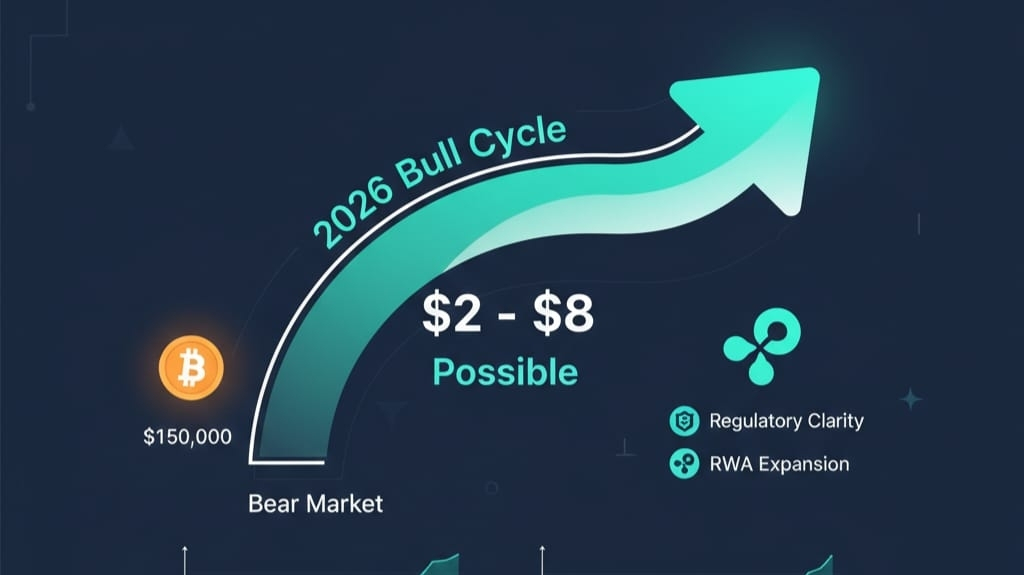
Understanding XRP’s Potential Cycle Turn in 2026Crypto markets move in cycles periods of rapid growth followed by deep corrections. In early 2026, sentiment feels bearish: Bitcoin sits near $69K after pulling back from 2025 highs, while major altcoins like Solana (SOL) and are down roughly 40–45% year-to-date. Historically, however, these pessimistic phases often set the stage for the next major rally.
XRP is particularly interesting right now. Trading around $1.40–$1.60, it remains below its 2018 ATH of $3.65 but far above the $0.20 lows seen in past downturns. The big question: Could 2026 mark a cycle turn from bear to bull?
What Are Crypto Market Cycles?
Crypto cycles typically align with Bitcoin’s four-year halving rhythm:
Accumulation, Bull Market, Distribution, Bear Market.
While we appear to be in a cooling phase, catalysts like ETF approvals, regulatory clarity, and institutional adoption can accelerate a reversal.
XRP’s 2026 Outlook
Analysts remain mixed but increasingly optimistic.
Conservative views: $2–$4 without major catalysts.
Bullish scenarios: $5–$8 if ETFs, regulation, and adoption improve.
Extreme upside: Higher targets depend heavily on mass institutional use.
Key drivers to watch:
Institutional inflows through potential XRP ETFs
Regulatory progress for Ripple
Expansion into real-world assets (RWAs)
A broader Bitcoin recovery
Technically, XRP appears to be defending previous breakout zones, suggesting $1.40 could act as strong support but regulatory setbacks or prolonged bearish conditions could keep it range-bound.
XRP vs. Solana: Speed vs. Stability
Solana tends to move faster due to retail hype, DeFi activity, and meme-coin ecosystems. Its cycles are explosive but volatile.
SOL: High-beta asset that often rebounds quickly.
XRP: Slower mover with stronger institutional narratives.
If alt season returns, may surge first, but XRP could deliver steadier, more sustainable gains.
XRP vs. Bitcoin: Following the Market Leader
Bitcoin still dictates macro direction. Historically, alts rally after BTC strengthens.
A BTC push toward new highs could lift XRP into the $4–$8 range.
Unlike Bitcoin’s scarcity-driven growth, XRP’s upside relies more on adoption and utility.
Expect higher volatility but also larger percentage moves.
In Conclusion:
Market cycles reward patience. While sentiment is uncertain, consolidation often comes before expansion.
The edge belongs to investors who stay informed and think long-term because the biggest moves usually begin when conviction is quiet.
Understanding XRP’s Potential Cycle Turn in 2026
Crypto markets move in cycles periods of rapid growth followed by deep corrections. In early 2026, sentiment feels bearish: Bitcoin sits near $69K after pulling back from 2025 highs, while major altcoins like Solana (SOL) and are down roughly 40–45% year-to-date. Historically, however, these pessimistic phases often set the stage for the next major rally.
XRP is particularly interesting right now. Trading around $1.40–$1.60, it remains below its 2018 ATH of $3.65 but far above the $0.20 lows seen in past downturns. The big question: Could 2026 mark a cycle turn from bear to bull?
What Are Crypto Market Cycles?
Crypto cycles typically align with Bitcoin’s four-year halving rhythm:
Accumulation, Bull Market, Distribution, Bear Market.
While we appear to be in a cooling phase, catalysts like ETF approvals, regulatory clarity, and institutional adoption can accelerate a reversal.
XRP’s 2026 Outlook
Analysts remain mixed but increasingly optimistic.
Conservative views: $2–$4 without major catalysts.
Bullish scenarios: $5–$8 if ETFs, regulation, and adoption improve.
Extreme upside: Higher targets depend heavily on mass institutional use.
Key drivers to watch:
Institutional inflows through potential XRP ETFs
Regulatory progress for Ripple
Expansion into real-world assets (RWAs)
A broader Bitcoin recovery
Technically, XRP appears to be defending previous breakout zones, suggesting $1.40 could act as strong support but regulatory setbacks or prolonged bearish conditions could keep it range-bound.
XRP vs. Solana: Speed vs. Stability
Solana tends to move faster due to retail hype, DeFi activity, and meme-coin ecosystems. Its cycles are explosive but volatile.
SOL: High-beta asset that often rebounds quickly.
XRP: Slower mover with stronger institutional narratives.
If alt season returns, may surge first, but XRP could deliver steadier, more sustainable gains.
XRP vs. Bitcoin: Following the Market Leader
Bitcoin still dictates macro direction. Historically, alts rally after BTC strengthens.
A BTC push toward new highs could lift XRP into the $4–$8 range.
Unlike Bitcoin’s scarcity-driven growth, XRP’s upside relies more on adoption and utility.
Expect higher volatility but also larger percentage moves.
In Conclusion:
Market cycles reward patience. While sentiment is uncertain, consolidation often comes before expansion.
The edge belongs to investors who stay informed and think long-term because the biggest moves usually begin when conviction is quiet.
XRP is particularly interesting right now. Trading around $1.40–$1.60, it remains below its 2018 ATH of $3.65 but far above the $0.20 lows seen in past downturns. The big question: Could 2026 mark a cycle turn from bear to bull?
What Are Crypto Market Cycles?
Crypto cycles typically align with Bitcoin’s four-year halving rhythm:
Accumulation, Bull Market, Distribution, Bear Market.
While we appear to be in a cooling phase, catalysts like ETF approvals, regulatory clarity, and institutional adoption can accelerate a reversal.
XRP’s 2026 Outlook
Analysts remain mixed but increasingly optimistic.
Conservative views: $2–$4 without major catalysts.
Bullish scenarios: $5–$8 if ETFs, regulation, and adoption improve.
Extreme upside: Higher targets depend heavily on mass institutional use.
Key drivers to watch:
Institutional inflows through potential XRP ETFs
Regulatory progress for Ripple
Expansion into real-world assets (RWAs)
A broader Bitcoin recovery
Technically, XRP appears to be defending previous breakout zones, suggesting $1.40 could act as strong support but regulatory setbacks or prolonged bearish conditions could keep it range-bound.
XRP vs. Solana: Speed vs. Stability
Solana tends to move faster due to retail hype, DeFi activity, and meme-coin ecosystems. Its cycles are explosive but volatile.
SOL: High-beta asset that often rebounds quickly.
XRP: Slower mover with stronger institutional narratives.
If alt season returns, may surge first, but XRP could deliver steadier, more sustainable gains.
XRP vs. Bitcoin: Following the Market Leader
Bitcoin still dictates macro direction. Historically, alts rally after BTC strengthens.
A BTC push toward new highs could lift XRP into the $4–$8 range.
Unlike Bitcoin’s scarcity-driven growth, XRP’s upside relies more on adoption and utility.
Expect higher volatility but also larger percentage moves.
In Conclusion:
Market cycles reward patience. While sentiment is uncertain, consolidation often comes before expansion.
The edge belongs to investors who stay informed and think long-term because the biggest moves usually begin when conviction is quiet.
8
5
71
55.5k
$CIFR and $IREN are two AI infrastructure plays I’m watching closely over the next six months.
Both have growth potential, but the main part is how well they can execute.
For IREN, the November 5 earnings report is one to watch. I want to see how quickly its AI business is translating into revenue and whether expansion plans remain on track.
My focus for IREN:
· Revenue growth versus contracted ARR
· Progress on Microsoft deployments
· Capital spending, funding needs and potential dilution
For CIFR, the opportunity depends on turning its data-center pipeline into projects that generate revenue without putting too much pressure on its balance sheet.
What I’m watching:
· New tenant agreements and existing contracts
· Construction progress and delivery timelines
· How the company funds its expansion
AI demand is creating major opportunities, but having a large pipeline doesn’t automatically translate into shareholder value.
Over the next six months, execution, revenue growth and how each company manages its funding could make the difference.
$CIFR and $IREN are two AI infrastructure plays I’m watching closely over the next six months.
Both have growth potential, but the main part is how well they can execute.
For IREN, the November 5 earnings report is one to watch. I want to see how quickly its AI business is translating into revenue and whether expansion plans remain on track.
My focus for IREN:
· Revenue growth versus contracted ARR
· Progress on Microsoft deployments
· Capital spending, funding needs and potential dilution
For CIFR, the opportunity depends on turning its data-center pipeline into projects that generate revenue without putting too much pressure on its balance sheet.
What I’m watching:
· New tenant agreements and existing contracts
· Construction progress and delivery timelines
· How the company funds its expansion
AI demand is creating major opportunities, but having a large pipeline doesn’t automatically translate into shareholder value.
Over the next six months, execution, revenue growth and how each company manages its funding could make the difference.
Both have growth potential, but the main part is how well they can execute.
For IREN, the November 5 earnings report is one to watch. I want to see how quickly its AI business is translating into revenue and whether expansion plans remain on track.
My focus for IREN:
· Revenue growth versus contracted ARR
· Progress on Microsoft deployments
· Capital spending, funding needs and potential dilution
For CIFR, the opportunity depends on turning its data-center pipeline into projects that generate revenue without putting too much pressure on its balance sheet.
What I’m watching:
· New tenant agreements and existing contracts
· Construction progress and delivery timelines
· How the company funds its expansion
AI demand is creating major opportunities, but having a large pipeline doesn’t automatically translate into shareholder value.
Over the next six months, execution, revenue growth and how each company manages its funding could make the difference.
1
1.6k
The Binance hack is a reminder that cybersecurity could become one of the biggest bottlenecks in the AI era.
As AI adoption grows, inference demand will rise, but so will the sophistication of cyberattacks. Companies like $CRWD and $PANW are working to strengthen threat detection and security, while $GOOGL , $MSFT and NVDA are investing across AI infrastructure and deployment.
AI can help exchanges detect suspicious transactions, flag unusual wallet activity and respond to threats faster. But the same technology can help attackers automate phishing, exploit vulnerabilities and create more convincing scams.
This goes beyond crypto. In stock markets, AI can improve fraud detection, risk management and trading efficiency, but automated attacks and misinformation can also increase volatility and undermine confidence.
The inference side matters just as much. $NVDA provides computing infrastructure, while $AMD and $AVGO are also important players in the AI compute and semiconductor supply chain. As AI moves into real-time applications, demand for faster, cheaper and more efficient inference should grow.
The next winners in the AI value chain may not just be chipmakers and data center operators. Cybersecurity companies and inference infrastructure providers could become equally important as AI scales.
AI creates opportunities on both sides, but the more powerful it becomes, the more valuable security and trust will be.
The Binance hack is a reminder that cybersecurity could become one of the biggest bottlenecks in the AI era.
As AI adoption grows, inference demand will rise, but so will the sophistication of cyberattacks. Companies like $CRWD and $PANW are working to strengthen threat detection and security, while $GOOGL , $MSFT and NVDA are investing across AI infrastructure and deployment.
AI can help exchanges detect suspicious transactions, flag unusual wallet activity and respond to threats faster. But the same technology can help attackers automate phishing, exploit vulnerabilities and create more convincing scams.
This goes beyond crypto. In stock markets, AI can improve fraud detection, risk management and trading efficiency, but automated attacks and misinformation can also increase volatility and undermine confidence.
The inference side matters just as much. $NVDA provides computing infrastructure, while $AMD and $AVGO are also important players in the AI compute and semiconductor supply chain. As AI moves into real-time applications, demand for faster, cheaper and more efficient inference should grow.
The next winners in the AI value chain may not just be chipmakers and data center operators. Cybersecurity companies and inference infrastructure providers could become equally important as AI scales.
AI creates opportunities on both sides, but the more powerful it becomes, the more valuable security and trust will be.
As AI adoption grows, inference demand will rise, but so will the sophistication of cyberattacks. Companies like $CRWD and $PANW are working to strengthen threat detection and security, while $GOOGL , $MSFT and NVDA are investing across AI infrastructure and deployment.
AI can help exchanges detect suspicious transactions, flag unusual wallet activity and respond to threats faster. But the same technology can help attackers automate phishing, exploit vulnerabilities and create more convincing scams.
This goes beyond crypto. In stock markets, AI can improve fraud detection, risk management and trading efficiency, but automated attacks and misinformation can also increase volatility and undermine confidence.
The inference side matters just as much. $NVDA provides computing infrastructure, while $AMD and $AVGO are also important players in the AI compute and semiconductor supply chain. As AI moves into real-time applications, demand for faster, cheaper and more efficient inference should grow.
The next winners in the AI value chain may not just be chipmakers and data center operators. Cybersecurity companies and inference infrastructure providers could become equally important as AI scales.
AI creates opportunities on both sides, but the more powerful it becomes, the more valuable security and trust will be.
2
2.1k
Verified
$INTC dropped 18% after a factory explosion in Israel reportedly forced a two-week shutdown, with the disruption expected to cost around $600 million in lost revenue over two quarters.
The impact also weighed on other chip stocks after hours, mainly due to Intel’s outlook and the broader negative sentiment.
But Intel’s problems in the PC business don’t automatically mean trouble for the AI chip sector. The two markets have different demand drivers, so it’s worth looking at them separately.
AMD fell 4%, Broadcom lost 2%, and the 3x leveraged semiconductor ETF dropped 9%.
Semiconductor stocks have had a strong run in 2026, with the SOX index gaining more than 60% as AI demand and chip shortages helped lift prices and profits for companies like Nvidia, Micron and Marvell.
Now, investors are paying closer attention to valuations, funding costs and how much growth these companies can actually deliver.
AI demand is still a major driver for the chip sector, but not every company will benefit equally.
$INTC dropped 18% after a factory explosion in Israel reportedly forced a two-week shutdown, with the disruption expected to cost around $600 million in lost revenue over two quarters.
The impact also weighed on other chip stocks after hours, mainly due to Intel’s outlook and the broader negative sentiment.
But Intel’s problems in the PC business don’t automatically mean trouble for the AI chip sector. The two markets have different demand drivers, so it’s worth looking at them separately.
AMD fell 4%, Broadcom lost 2%, and the 3x leveraged semiconductor ETF dropped 9%.
Semiconductor stocks have had a strong run in 2026, with the SOX index gaining more than 60% as AI demand and chip shortages helped lift prices and profits for companies like Nvidia, Micron and Marvell.
Now, investors are paying closer attention to valuations, funding costs and how much growth these companies can actually deliver.
AI demand is still a major driver for the chip sector, but not every company will benefit equally.
The impact also weighed on other chip stocks after hours, mainly due to Intel’s outlook and the broader negative sentiment.
But Intel’s problems in the PC business don’t automatically mean trouble for the AI chip sector. The two markets have different demand drivers, so it’s worth looking at them separately.
AMD fell 4%, Broadcom lost 2%, and the 3x leveraged semiconductor ETF dropped 9%.
Semiconductor stocks have had a strong run in 2026, with the SOX index gaining more than 60% as AI demand and chip shortages helped lift prices and profits for companies like Nvidia, Micron and Marvell.
Now, investors are paying closer attention to valuations, funding costs and how much growth these companies can actually deliver.
AI demand is still a major driver for the chip sector, but not every company will benefit equally.
2
3.6k
Big Tech has the cash to keep investing in AI, but investors are becoming more cautious about smaller AI cloud companies relying heavily on debt to fund their growing backlogs.
That concern showed up after hours, with Amazon falling 7% and $CRWV , $NBIS and $IREN dropping between 5.8% and 6.7%. Alphabet also slipped another 1.5% after already losing nearly 13% during regular trading.
The market is starting to look beyond AI demand and order backlogs. Having big customers is one thing; funding the infrastructure, managing debt and turning those investments into real cash flow is another.
Big Tech has the cash to keep investing in AI, but investors are becoming more cautious about smaller AI cloud companies relying heavily on debt to fund their growing backlogs.
That concern showed up after hours, with Amazon falling 7% and $CRWV , $NBIS and $IREN dropping between 5.8% and 6.7%. Alphabet also slipped another 1.5% after already losing nearly 13% during regular trading.
The market is starting to look beyond AI demand and order backlogs. Having big customers is one thing; funding the infrastructure, managing debt and turning those investments into real cash flow is another.
That concern showed up after hours, with Amazon falling 7% and $CRWV , $NBIS and $IREN dropping between 5.8% and 6.7%. Alphabet also slipped another 1.5% after already losing nearly 13% during regular trading.
The market is starting to look beyond AI demand and order backlogs. Having big customers is one thing; funding the infrastructure, managing debt and turning those investments into real cash flow is another.
4
2
4k
Verified
Nebius $NBIS is showing that access to capital still matters in the AI infrastructure race.
After securing a $775 million facility, the company has now secured $3.5 billion from Citi, strengthening its financing capacity as it expands its AI infrastructure.
Building AI data centers requires enormous upfront spending on GPUs, power, land and cooling systems. Access to financing can help Nebius scale faster and compete for growing demand from AI companies.
But the good part I’m watching is how efficiently that capital turns into revenue and cash flow. More funding creates room to grow, but execution, debt obligations and returns on invested capital will determine the long-term outcome.
In AI infrastructure, securing capital is one advantage. Turning it into profitable growth is the real test.
Nebius $NBIS is showing that access to capital still matters in the AI infrastructure race.
After securing a $775 million facility, the company has now secured $3.5 billion from Citi, strengthening its financing capacity as it expands its AI infrastructure.
Building AI data centers requires enormous upfront spending on GPUs, power, land and cooling systems. Access to financing can help Nebius scale faster and compete for growing demand from AI companies.
But the good part I’m watching is how efficiently that capital turns into revenue and cash flow. More funding creates room to grow, but execution, debt obligations and returns on invested capital will determine the long-term outcome.
In AI infrastructure, securing capital is one advantage. Turning it into profitable growth is the real test.
After securing a $775 million facility, the company has now secured $3.5 billion from Citi, strengthening its financing capacity as it expands its AI infrastructure.
Building AI data centers requires enormous upfront spending on GPUs, power, land and cooling systems. Access to financing can help Nebius scale faster and compete for growing demand from AI companies.
But the good part I’m watching is how efficiently that capital turns into revenue and cash flow. More funding creates room to grow, but execution, debt obligations and returns on invested capital will determine the long-term outcome.
In AI infrastructure, securing capital is one advantage. Turning it into profitable growth is the real test.
628
AI infrastructure is facing a problem that money alone cannot solve.
Companies can order more GPUs and commit billions to new data centers, but they still need reliable electricity, grid connections, skilled workers and regulatory approval to bring that capacity online.
This is where the gap between AI demand and actual computing capacity becomes important.
For companies like $IREN , $NBIS , $CRWV and $CIFR power availability and construction timelines can be just as important as GPU supply. Delays can push revenue further out while interest expenses, equipment costs and other capital requirements continue to build.
The financial impact also differs by company. Established operators with existing power infrastructure may have an advantage, while companies expanding aggressively could face more pressure on cash flow and potential dilution.
AI demand is growing, but the companies best positioned to benefit will be those that can turn power, land and infrastructure into paying compute capacity on time.
In this cycle, having the capital to build is one thing. Getting the infrastructure operational and generating returns is what matters.
AI infrastructure is facing a problem that money alone cannot solve.
Companies can order more GPUs and commit billions to new data centers, but they still need reliable electricity, grid connections, skilled workers and regulatory approval to bring that capacity online.
This is where the gap between AI demand and actual computing capacity becomes important.
For companies like $IREN , $NBIS , $CRWV and $CIFR power availability and construction timelines can be just as important as GPU supply. Delays can push revenue further out while interest expenses, equipment costs and other capital requirements continue to build.
The financial impact also differs by company. Established operators with existing power infrastructure may have an advantage, while companies expanding aggressively could face more pressure on cash flow and potential dilution.
AI demand is growing, but the companies best positioned to benefit will be those that can turn power, land and infrastructure into paying compute capacity on time.
In this cycle, having the capital to build is one thing. Getting the infrastructure operational and generating returns is what matters.
Companies can order more GPUs and commit billions to new data centers, but they still need reliable electricity, grid connections, skilled workers and regulatory approval to bring that capacity online.
This is where the gap between AI demand and actual computing capacity becomes important.
For companies like $IREN , $NBIS , $CRWV and $CIFR power availability and construction timelines can be just as important as GPU supply. Delays can push revenue further out while interest expenses, equipment costs and other capital requirements continue to build.
The financial impact also differs by company. Established operators with existing power infrastructure may have an advantage, while companies expanding aggressively could face more pressure on cash flow and potential dilution.
AI demand is growing, but the companies best positioned to benefit will be those that can turn power, land and infrastructure into paying compute capacity on time.
In this cycle, having the capital to build is one thing. Getting the infrastructure operational and generating returns is what matters.
663
Looking at the next 4 years, I'm focused on the AI stocks that could benefit most as the industry moves from massive infrastructure spending to real cash flow.
$IREN is on my radar for its AI cloud expansion and power capacity. $CIFR is another one I'm watching as its data center plans develop, while $NVDA remains main of supplying the chips powering this entire buildout.
Each comes with different risks, especially around execution, funding and valuation, but I'm more in what these companies can deliver by 2030 than in chasing every short-term move.
#FedWatch
Looking at the next 4 years, I'm focused on the AI stocks that could benefit most as the industry moves from massive infrastructure spending to real cash flow.
$IREN is on my radar for its AI cloud expansion and power capacity. $CIFR is another one I'm watching as its data center plans develop, while $NVDA remains main of supplying the chips powering this entire buildout.
Each comes with different risks, especially around execution, funding and valuation, but I'm more in what these companies can deliver by 2030 than in chasing every short-term move.
#FedWatch
$IREN is on my radar for its AI cloud expansion and power capacity. $CIFR is another one I'm watching as its data center plans develop, while $NVDA remains main of supplying the chips powering this entire buildout.
Each comes with different risks, especially around execution, funding and valuation, but I'm more in what these companies can deliver by 2030 than in chasing every short-term move.
#FedWatch
2
536
The next leg of the AI trade may not be just about chips and infrastructure.
Companies like $NVDA, $AMD, $AVGO, and $MU are supplying the hardware powering the AI boom. Data center players like $IREN, $NBIS, and $CRWV are building the compute capacity needed to run these models.
But the other side of the trade is getting just as interesting: the companies actually using AI to grow their businesses.
Think $MSFT, $GOOGL, $AMZN, and $META. They’re weaving AI into software, cloud services, advertising, and enterprise tools—and that could turn adoption into recurring revenue and better margins.
The big difference is that infrastructure companies are spending heavily to keep up with demand, while AI adopters still need to prove the technology drives measurable business results.
Across both groups, I’m watching three things: revenue growth, free cash flow, and whether AI spending actually turns into real earnings.
The infrastructure buildout may be laying the foundation, but the companies that monetize AI efficiently could be the next group investors start paying closer attention to.
The long-term winners won’t necessarily be the ones spending the most on AI they’ll be the ones getting the most value out of it.
The next leg of the AI trade may not be just about chips and infrastructure.
Companies like $NVDA, $AMD, $AVGO, and $MU are supplying the hardware powering the AI boom. Data center players like $IREN, $NBIS, and $CRWV are building the compute capacity needed to run these models.
But the other side of the trade is getting just as interesting: the companies actually using AI to grow their businesses.
Think $MSFT, $GOOGL, $AMZN, and $META. They’re weaving AI into software, cloud services, advertising, and enterprise tools—and that could turn adoption into recurring revenue and better margins.
The big difference is that infrastructure companies are spending heavily to keep up with demand, while AI adopters still need to prove the technology drives measurable business results.
Across both groups, I’m watching three things: revenue growth, free cash flow, and whether AI spending actually turns into real earnings.
The infrastructure buildout may be laying the foundation, but the companies that monetize AI efficiently could be the next group investors start paying closer attention to.
The long-term winners won’t necessarily be the ones spending the most on AI they’ll be the ones getting the most value out of it.
Companies like $NVDA, $AMD, $AVGO, and $MU are supplying the hardware powering the AI boom. Data center players like $IREN, $NBIS, and $CRWV are building the compute capacity needed to run these models.
But the other side of the trade is getting just as interesting: the companies actually using AI to grow their businesses.
Think $MSFT, $GOOGL, $AMZN, and $META. They’re weaving AI into software, cloud services, advertising, and enterprise tools—and that could turn adoption into recurring revenue and better margins.
The big difference is that infrastructure companies are spending heavily to keep up with demand, while AI adopters still need to prove the technology drives measurable business results.
Across both groups, I’m watching three things: revenue growth, free cash flow, and whether AI spending actually turns into real earnings.
The infrastructure buildout may be laying the foundation, but the companies that monetize AI efficiently could be the next group investors start paying closer attention to.
The long-term winners won’t necessarily be the ones spending the most on AI they’ll be the ones getting the most value out of it.
6
9.9k
$IREN is finding another way to fund its AI expansion without relying entirely on equity issuance.
The $363M equipment financing deal with Wingspire allows IREN to unlock capital from GPU servers and networking equipment that are already generating revenue.
That gives the company more liquidity to reinvest in additional AI capacity as demand grows, while potentially easing pressure to raise fresh equity.
The next thing to watch is whether this capital translates into stronger cash flow and sustainable growth. Financing helps, but execution and debt obligations still matter.
$IREN is finding another way to fund its AI expansion without relying entirely on equity issuance.
The $363M equipment financing deal with Wingspire allows IREN to unlock capital from GPU servers and networking equipment that are already generating revenue.
That gives the company more liquidity to reinvest in additional AI capacity as demand grows, while potentially easing pressure to raise fresh equity.
The next thing to watch is whether this capital translates into stronger cash flow and sustainable growth. Financing helps, but execution and debt obligations still matter.
The $363M equipment financing deal with Wingspire allows IREN to unlock capital from GPU servers and networking equipment that are already generating revenue.
That gives the company more liquidity to reinvest in additional AI capacity as demand grows, while potentially easing pressure to raise fresh equity.
The next thing to watch is whether this capital translates into stronger cash flow and sustainable growth. Financing helps, but execution and debt obligations still matter.
1
136
AI stocks isn't just how much companies are spending. It's how they're funding the buildout before the revenue fully catches up.
$IREN is scaling AI Cloud, but still needs to convert contracted ARR into actual cash flow while managing financing and potential dilution.
$NBIS has strong cash reserves and customer prepayments, but its infrastructure spending remains far above operating cash generation.
$CRWV is expanding aggressively, with massive capex and debt obligations putting pressure on its path to sustainable free cash flow.
$CIFR is investing heavily in AI infrastructure, making future funding needs and shareholder dilution important risks to monitor.
$WULF is growing its HPC business, but negative operating cash flow and equity financing show how expensive this transition can be.
The thing is cash flow per share, not just revenue growth. If these companies keep raising capital faster than their businesses generate cash, shareholders could see their ownership diluted even as the AI business grows.
The real winners will be the ones that scale revenue, control financing costs, and eventually fund more of their expansion internally.
AI stocks isn't just how much companies are spending. It's how they're funding the buildout before the revenue fully catches up.
$IREN is scaling AI Cloud, but still needs to convert contracted ARR into actual cash flow while managing financing and potential dilution.
$NBIS has strong cash reserves and customer prepayments, but its infrastructure spending remains far above operating cash generation.
$CRWV is expanding aggressively, with massive capex and debt obligations putting pressure on its path to sustainable free cash flow.
$CIFR is investing heavily in AI infrastructure, making future funding needs and shareholder dilution important risks to monitor.
$WULF is growing its HPC business, but negative operating cash flow and equity financing show how expensive this transition can be.
The thing is cash flow per share, not just revenue growth. If these companies keep raising capital faster than their businesses generate cash, shareholders could see their ownership diluted even as the AI business grows.
The real winners will be the ones that scale revenue, control financing costs, and eventually fund more of their expansion internally.
$IREN is scaling AI Cloud, but still needs to convert contracted ARR into actual cash flow while managing financing and potential dilution.
$NBIS has strong cash reserves and customer prepayments, but its infrastructure spending remains far above operating cash generation.
$CRWV is expanding aggressively, with massive capex and debt obligations putting pressure on its path to sustainable free cash flow.
$CIFR is investing heavily in AI infrastructure, making future funding needs and shareholder dilution important risks to monitor.
$WULF is growing its HPC business, but negative operating cash flow and equity financing show how expensive this transition can be.
The thing is cash flow per share, not just revenue growth. If these companies keep raising capital faster than their businesses generate cash, shareholders could see their ownership diluted even as the AI business grows.
The real winners will be the ones that scale revenue, control financing costs, and eventually fund more of their expansion internally.
560
AI stocks are increasingly being judged by saying how does all this spending translate into actual profits?
Companies like $NVDA sell the chips powering AI, while cloud giants like $MSFT , $GOOGL and $AMZN invest billions in data centers, computing power and AI models.
The connection is straightforward. More AI adoption creates demand for GPUs, servers, electricity and cloud capacity. That spending generates revenue for infrastructure providers, while software companies monetize AI through subscriptions, enterprise tools and usage-based fees.
The challenge is that infrastructure costs come first, while returns may take years to fully materialize.
If AI revenue grows fast enough to justify the spending, margins and earnings can expand. If monetization falls behind capex, even companies benefiting from AI demand could face valuation pressure.
The real opportunity is identifying which companies can turn AI investment into sustainable cash flow, not just which ones are spending the most.
#CanMicrosoftDeliverOnAI
AI stocks are increasingly being judged by saying how does all this spending translate into actual profits?
Companies like $NVDA sell the chips powering AI, while cloud giants like $MSFT , $GOOGL and $AMZN invest billions in data centers, computing power and AI models.
The connection is straightforward. More AI adoption creates demand for GPUs, servers, electricity and cloud capacity. That spending generates revenue for infrastructure providers, while software companies monetize AI through subscriptions, enterprise tools and usage-based fees.
The challenge is that infrastructure costs come first, while returns may take years to fully materialize.
If AI revenue grows fast enough to justify the spending, margins and earnings can expand. If monetization falls behind capex, even companies benefiting from AI demand could face valuation pressure.
The real opportunity is identifying which companies can turn AI investment into sustainable cash flow, not just which ones are spending the most.
#CanMicrosoftDeliverOnAI
Companies like $NVDA sell the chips powering AI, while cloud giants like $MSFT , $GOOGL and $AMZN invest billions in data centers, computing power and AI models.
The connection is straightforward. More AI adoption creates demand for GPUs, servers, electricity and cloud capacity. That spending generates revenue for infrastructure providers, while software companies monetize AI through subscriptions, enterprise tools and usage-based fees.
The challenge is that infrastructure costs come first, while returns may take years to fully materialize.
If AI revenue grows fast enough to justify the spending, margins and earnings can expand. If monetization falls behind capex, even companies benefiting from AI demand could face valuation pressure.
The real opportunity is identifying which companies can turn AI investment into sustainable cash flow, not just which ones are spending the most.
#CanMicrosoftDeliverOnAI
169
$GOOGL vs. $MSFT : Earnings are showing that strong AI growth doesn't always guarantee the same market reaction.
Google stood out with resilient Search performance and strong Google Cloud growth, up 82% year over year to $24.8B. But its plan to spend $195B–$205B on capex in 2026 raises questions about how quickly those AI investments will translate into returns.
For Microsoft, the biggest takeaway is how well Azure and AI demand are translating into actual growth, especially as investors watch spending and infrastructure costs closely.
The difference comes down to expectations. Google has strong momentum, but the market is weighing its massive AI spending against future returns. Microsoft faces similar pressure to prove that its AI investments can generate enough growth to justify the cost.
The AI trade is moving beyond who spends the most. Investors increasingly want to see who can turn that spending into sustainable revenue and profits.
#CanGoogleDefindItsCore
$GOOGL vs. $MSFT : Earnings are showing that strong AI growth doesn't always guarantee the same market reaction.
Google stood out with resilient Search performance and strong Google Cloud growth, up 82% year over year to $24.8B. But its plan to spend $195B–$205B on capex in 2026 raises questions about how quickly those AI investments will translate into returns.
For Microsoft, the biggest takeaway is how well Azure and AI demand are translating into actual growth, especially as investors watch spending and infrastructure costs closely.
The difference comes down to expectations. Google has strong momentum, but the market is weighing its massive AI spending against future returns. Microsoft faces similar pressure to prove that its AI investments can generate enough growth to justify the cost.
The AI trade is moving beyond who spends the most. Investors increasingly want to see who can turn that spending into sustainable revenue and profits.
#CanGoogleDefindItsCore
Google stood out with resilient Search performance and strong Google Cloud growth, up 82% year over year to $24.8B. But its plan to spend $195B–$205B on capex in 2026 raises questions about how quickly those AI investments will translate into returns.
For Microsoft, the biggest takeaway is how well Azure and AI demand are translating into actual growth, especially as investors watch spending and infrastructure costs closely.
The difference comes down to expectations. Google has strong momentum, but the market is weighing its massive AI spending against future returns. Microsoft faces similar pressure to prove that its AI investments can generate enough growth to justify the cost.
The AI trade is moving beyond who spends the most. Investors increasingly want to see who can turn that spending into sustainable revenue and profits.
#CanGoogleDefindItsCore
Crypto_Paykash
·
--
I want to make some analysis talk about stocks
$GOOGL didn't just the revenue growth. It's how quickly Google Cloud is becoming a major AI growth engine.
In Q2 2026, Alphabet generated $119.8B in revenue, up 24% YoY, while Google Cloud revenue surged 82% to $24.8B. Search also remained resilient despite growing competition from AI tools.
But there's another side to the story.
Alphabet raised its 2026 capex forecast to $195B–$205B as it continues investing heavily in AI infrastructure. That spending is necessary to capture demand, but it also puts pressure on cash flow and raises the bar for future returns.
For me, the biggest question is whether Google's AI investments can translate into sustainable profits and stronger free cash flow.
The growth is impressive. Now the market needs to see the payoff.
$GOOGL didn't just the revenue growth. It's how quickly Google Cloud is becoming a major AI growth engine.
In Q2 2026, Alphabet generated $119.8B in revenue, up 24% YoY, while Google Cloud revenue surged 82% to $24.8B. Search also remained resilient despite growing competition from AI tools.
But there's another side to the story.
Alphabet raised its 2026 capex forecast to $195B–$205B as it continues investing heavily in AI infrastructure. That spending is necessary to capture demand, but it also puts pressure on cash flow and raises the bar for future returns.
For me, the biggest question is whether Google's AI investments can translate into sustainable profits and stronger free cash flow.
The growth is impressive. Now the market needs to see the payoff.
1
233
I want to make some analysis talk about stocks
$GOOGL didn't just the revenue growth. It's how quickly Google Cloud is becoming a major AI growth engine.
In Q2 2026, Alphabet generated $119.8B in revenue, up 24% YoY, while Google Cloud revenue surged 82% to $24.8B. Search also remained resilient despite growing competition from AI tools.
But there's another side to the story.
Alphabet raised its 2026 capex forecast to $195B–$205B as it continues investing heavily in AI infrastructure. That spending is necessary to capture demand, but it also puts pressure on cash flow and raises the bar for future returns.
For me, the biggest question is whether Google's AI investments can translate into sustainable profits and stronger free cash flow.
The growth is impressive. Now the market needs to see the payoff.
I want to make some analysis talk about stocks
$GOOGL didn't just the revenue growth. It's how quickly Google Cloud is becoming a major AI growth engine.
In Q2 2026, Alphabet generated $119.8B in revenue, up 24% YoY, while Google Cloud revenue surged 82% to $24.8B. Search also remained resilient despite growing competition from AI tools.
But there's another side to the story.
Alphabet raised its 2026 capex forecast to $195B–$205B as it continues investing heavily in AI infrastructure. That spending is necessary to capture demand, but it also puts pressure on cash flow and raises the bar for future returns.
For me, the biggest question is whether Google's AI investments can translate into sustainable profits and stronger free cash flow.
The growth is impressive. Now the market needs to see the payoff.
$GOOGL didn't just the revenue growth. It's how quickly Google Cloud is becoming a major AI growth engine.
In Q2 2026, Alphabet generated $119.8B in revenue, up 24% YoY, while Google Cloud revenue surged 82% to $24.8B. Search also remained resilient despite growing competition from AI tools.
But there's another side to the story.
Alphabet raised its 2026 capex forecast to $195B–$205B as it continues investing heavily in AI infrastructure. That spending is necessary to capture demand, but it also puts pressure on cash flow and raises the bar for future returns.
For me, the biggest question is whether Google's AI investments can translate into sustainable profits and stronger free cash flow.
The growth is impressive. Now the market needs to see the payoff.
1
203
$IREN Horizon 2 is an important milestone because delivery and customer acceptance are what allow the Microsoft contract to start generating operating revenue. A delay could push back revenue recognition, but it doesn’t automatically mean the contract is in trouble.
IREN’s official guidance still targets delivery of Horizons 2–4 in Q4 2026, and its SEC filing notes contractual grace periods that extend into early Q2 2027.
Even so, succeeding will still take a lot of hard work, grit, and disciplined execution.
#EarningsSeason
$IREN Horizon 2 is an important milestone because delivery and customer acceptance are what allow the Microsoft contract to start generating operating revenue. A delay could push back revenue recognition, but it doesn’t automatically mean the contract is in trouble.
IREN’s official guidance still targets delivery of Horizons 2–4 in Q4 2026, and its SEC filing notes contractual grace periods that extend into early Q2 2027.
Even so, succeeding will still take a lot of hard work, grit, and disciplined execution.
#EarningsSeason
IREN’s official guidance still targets delivery of Horizons 2–4 in Q4 2026, and its SEC filing notes contractual grace periods that extend into early Q2 2027.
Even so, succeeding will still take a lot of hard work, grit, and disciplined execution.
#EarningsSeason
143
Google is playing both sides of the AI race. It’s competing with Claude through Gemini while potentially making billions supplying the compute that powers Anthropic.
$GOOGL benefits either way, and its TPUs are becoming a serious part of the AI infrastructure story.
Google is playing both sides of the AI race. It’s competing with Claude through Gemini while potentially making billions supplying the compute that powers Anthropic.
$GOOGL benefits either way, and its TPUs are becoming a serious part of the AI infrastructure story.
$GOOGL benefits either way, and its TPUs are becoming a serious part of the AI infrastructure story.
267
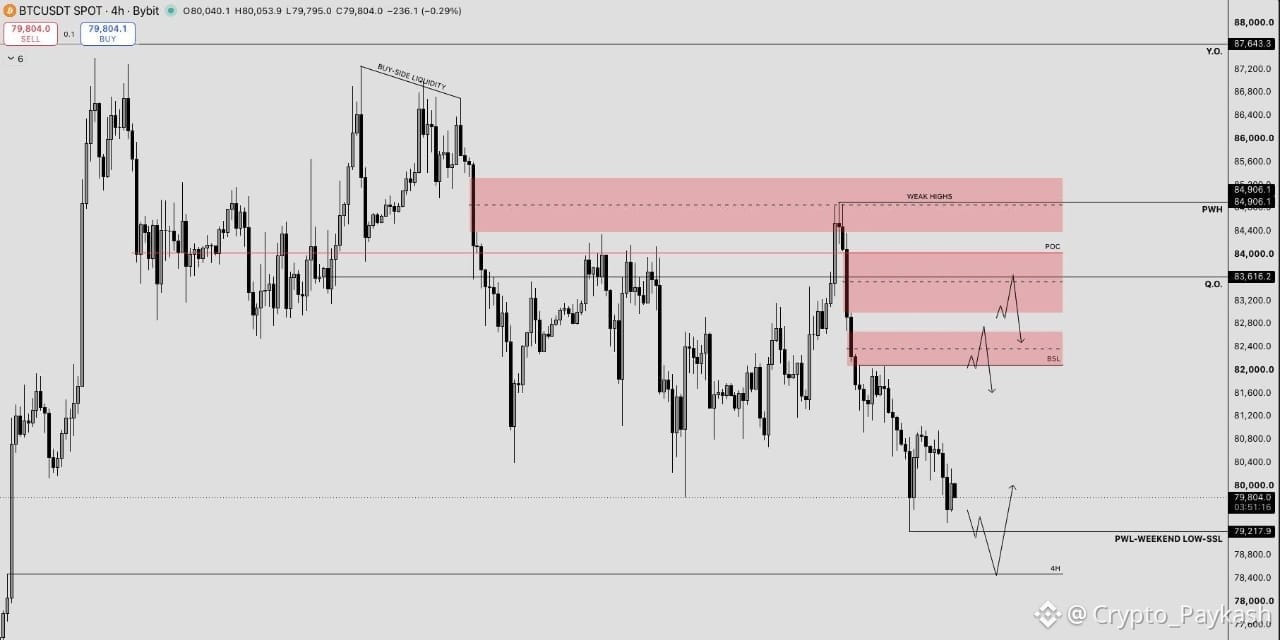
$BTC is trying to hold the $79.2K level as we head into a new trading week, and my overall plan remains unchanged.
Personally, I’d prefer to see price sweep the $79.2K weekend low and take the sell-side liquidity below. If we get a clean sweep followed by a bullish trigger, I’ll be watching for long opportunities targeting the $82K buy-side liquidity.
The $78.3K–$79K zone is interesting to me, but I’m not entering blindly. I want confirmation because we can’t know how deep the sweep might go.
If BTC holds the current low and reclaims $81K with strong momentum, there could be opportunities for scalp longs. That’s just not my preferred setup right now.
For shorts, I’d rather wait for price to move higher. My first area of interest is $82.3K–$82.8K, where buy-side liquidity lines up with both 4H and daily imbalances. I’ll be looking for bearish confirmation if price reaches that zone.
The $83.5K area is another zone I’m watching if BTC pushes higher into the imbalances. Both setups are valid, but the $82.3K–$82.8K region has stronger higher-timeframe confluence.
One thing to keep in mind: it’s FOMC week. We could see plenty of chop and sideways price action before Wednesday’s announcement, so patience and confirmation matter more than trying to predict every move.
#EarningsSeason
$BTC is trying to hold the $79.2K level as we head into a new trading week, and my overall plan remains unchanged.
Personally, I’d prefer to see price sweep the $79.2K weekend low and take the sell-side liquidity below. If we get a clean sweep followed by a bullish trigger, I’ll be watching for long opportunities targeting the $82K buy-side liquidity.
The $78.3K–$79K zone is interesting to me, but I’m not entering blindly. I want confirmation because we can’t know how deep the sweep might go.
If BTC holds the current low and reclaims $81K with strong momentum, there could be opportunities for scalp longs. That’s just not my preferred setup right now.
For shorts, I’d rather wait for price to move higher. My first area of interest is $82.3K–$82.8K, where buy-side liquidity lines up with both 4H and daily imbalances. I’ll be looking for bearish confirmation if price reaches that zone.
The $83.5K area is another zone I’m watching if BTC pushes higher into the imbalances. Both setups are valid, but the $82.3K–$82.8K region has stronger higher-timeframe confluence.
One thing to keep in mind: it’s FOMC week. We could see plenty of chop and sideways price action before Wednesday’s announcement, so patience and confirmation matter more than trying to predict every move.
#EarningsSeason
Personally, I’d prefer to see price sweep the $79.2K weekend low and take the sell-side liquidity below. If we get a clean sweep followed by a bullish trigger, I’ll be watching for long opportunities targeting the $82K buy-side liquidity.
The $78.3K–$79K zone is interesting to me, but I’m not entering blindly. I want confirmation because we can’t know how deep the sweep might go.
If BTC holds the current low and reclaims $81K with strong momentum, there could be opportunities for scalp longs. That’s just not my preferred setup right now.
For shorts, I’d rather wait for price to move higher. My first area of interest is $82.3K–$82.8K, where buy-side liquidity lines up with both 4H and daily imbalances. I’ll be looking for bearish confirmation if price reaches that zone.
The $83.5K area is another zone I’m watching if BTC pushes higher into the imbalances. Both setups are valid, but the $82.3K–$82.8K region has stronger higher-timeframe confluence.
One thing to keep in mind: it’s FOMC week. We could see plenty of chop and sideways price action before Wednesday’s announcement, so patience and confirmation matter more than trying to predict every move.
#EarningsSeason
115
Elon Musk's warning actually makes the dilution comparison more important. Highlighting that AI infrastructure companies need more than demand: they need enormous capital, power, cooling and execution to bring compute online. $SPCX secured $40 billion in debt financing, but Musk argued that companies without substantial revenue outside AI infrastructure could struggle to access capital.
For $IREN , the bull case is that higher compute pricing and customer prepayments could fund more expansion with less dilution. For $CRWV the concern is its heavier debt burden and financing costs.
Elon Musk's warning actually makes the dilution comparison more important. Highlighting that AI infrastructure companies need more than demand: they need enormous capital, power, cooling and execution to bring compute online. $SPCX secured $40 billion in debt financing, but Musk argued that companies without substantial revenue outside AI infrastructure could struggle to access capital.
For $IREN , the bull case is that higher compute pricing and customer prepayments could fund more expansion with less dilution. For $CRWV the concern is its heavier debt burden and financing costs.
For $IREN , the bull case is that higher compute pricing and customer prepayments could fund more expansion with less dilution. For $CRWV the concern is its heavier debt burden and financing costs.
554
⚡️ CZ says concerns about AI breaking crypto security are being overstated, pointing out that much of the internet and traditional banking rely on weaker encryption.
However, he warns that AI doesn't need to crack $BTC cryptography to pose a threat. Leaked data can already help attackers carry out more convincing phishing scams and social engineering attacks.
⚡️ CZ says concerns about AI breaking crypto security are being overstated, pointing out that much of the internet and traditional banking rely on weaker encryption.
However, he warns that AI doesn't need to crack $BTC cryptography to pose a threat. Leaked data can already help attackers carry out more convincing phishing scams and social engineering attacks.
However, he warns that AI doesn't need to crack $BTC cryptography to pose a threat. Leaked data can already help attackers carry out more convincing phishing scams and social engineering attacks.

32
Log in to explore more content
Join global crypto users on Binance Square
⚡️ Get latest and useful information about crypto.
💬 Trusted by the world’s largest crypto exchange.
👍 Discover real insights from verified creators.
Email / Phone number
Trending Topics
UniswapA16zSeekDeFiExemptionFromIllinoisCryptoTax
22,332 views
720 Discussing
The debate over crypto taxation is heating up as Uniswap and Andreessen Horowitz ( a16z ) push for a DeFi exemption from Illinois proposed crypto tax rules. Their concern is that decentralized finance protocols and non custodial platforms could face unfair tax burdens potentially slowing innovation and making crypto development more difficult. DeFi platforms allow users to trade and manage digital assets without traditional intermediaries so applying conventional financial tax rules may create serious challenges. This could become an important moment for the US crypto industry as regulators must find a balance between fair taxation, investor protection, and innovation. 🚀
The main concern is that the proposed 0.2% tax is calculated on transaction value, not simply trading profits. Uniswap a16z and the DeFi Education Fund want wallet withdrawals and cross chain bridging excluded, while also opposing requirements to maintain private key records. Illinois has agreed to postpone implementation until July 1, 2027 subject to court approval. The outcome could influence how other US states approach DeFi taxation. The Defiant +2
What do you think 🤔 ? Should DeFi transactions be tax free to protect decentralization or should crypto platforms follow traditional tax rules ? 🤔
#UniswapA16zSeekDeFiExemptionFromIllinoisCryptoTax
Volatile
·3 Likes
·215 views
HKDollarStablecoinHKDAPToLaunchOnSolana
16,702 views
459 Discussing
$1.5BInLeveragedCryptoBetsLiquidated
36,356 views
242 Discussing