
骆驼-Camel king
358 Posts
 LIVE
骆驼-Camel king
Report
Block User
熊市就是你的沙漠,穿越周期,抵达绿洲
穿越两轮牛熊的实战交易者,10多年交易经验,A股,美股,加密;擅长周期主流交易;精选捕捉龙头山寨百倍币;专业金融从业人员;
53 Following
1.2K+ Followers
682 Liked
Posts
All
Quotes
Live
PINNED
Verified
Article
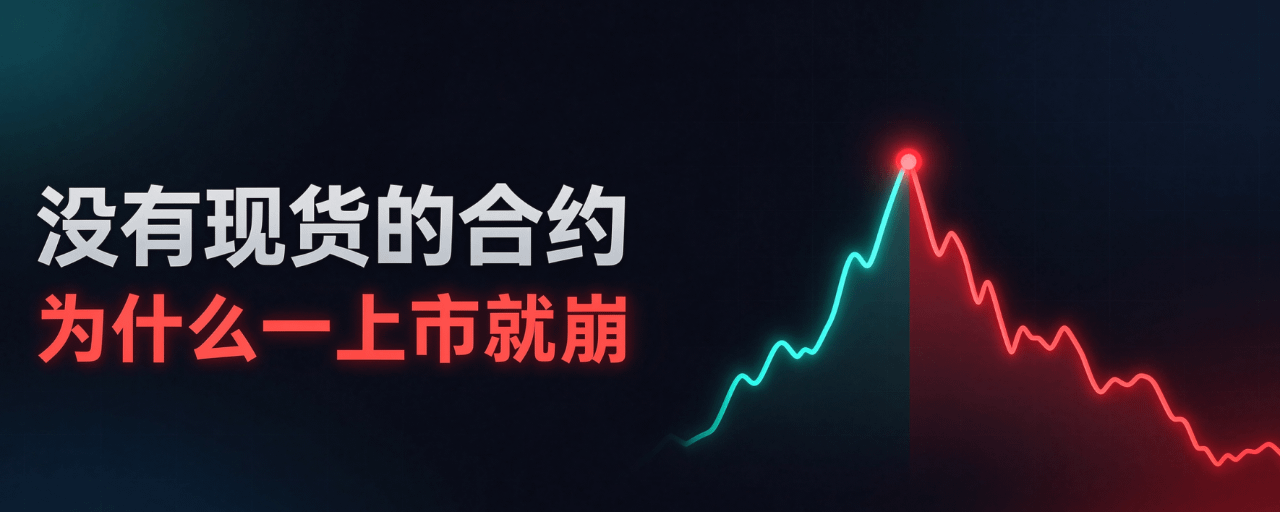
Why do futures contracts without a spot listing crash as soon as they’re listed?Have you noticed that Binance lists a large number of futures contracts without listing the corresponding coins on the spot market? Most of these coins plummet as soon as they’re listed. Many fall more than 50% after being listed as futures contracts for a while, with no way to stop the decline.
I’ve shared the underlying logic with everyone in a livestream before. Today, I’m laying it out in this article:
1. Why does Binance list futures contracts but not spot trading?
2. Why are contracts without a spot listing most likely to be at their peak as soon as they’re listed?
Binance is just a “shelf,” primarily making money from trading fees. Popular coins attract enough people, and listing them as futures contracts doesn’t require considering regulatory compliance or building a trading channel. The costs for the platform are low enough, and the “value” is high enough, that at the height of the hype, Binance lists them as futures contracts but not on the spot market.
Why do futures contracts without a spot listing crash as soon as they’re listed?
Have you noticed that Binance lists a large number of futures contracts without listing the corresponding coins on the spot market? Most of these coins plummet as soon as they’re listed. Many fall more than 50% after being listed as futures contracts for a while, with no way to stop the decline.
I’ve shared the underlying logic with everyone in a livestream before. Today, I’m laying it out in this article:
1. Why does Binance list futures contracts but not spot trading?
2. Why are contracts without a spot listing most likely to be at their peak as soon as they’re listed?
Binance is just a “shelf,” primarily making money from trading fees. Popular coins attract enough people, and listing them as futures contracts doesn’t require considering regulatory compliance or building a trading channel. The costs for the platform are low enough, and the “value” is high enough, that at the height of the hype, Binance lists them as futures contracts but not on the spot market.
5
1
12
5.5k
PINNED

Article
Big players controlling the market on small exchanges, spot coins harvesting Binance futuresHave you seen a coin like this: spot trading volume is hundreds of thousands of U a day, futures trading volume is billions a day, it rises 4x in 3 days, and then gets smashed down 30-50% by a single wick. Why does this happen? Let's discuss it together today.
1. First, distinguish the three prices
There are three prices in Binance futures, and many people mix them up. This is the foundation for understanding the whole mechanism:
① Last Price (Last): the price of the most recent matched trade in the order book, and also the actual price at which your order is executed.
② Mark Price (Mark Price): a price calculated from the weighted average of spot indices from multiple exchanges. Binance uses it to determine whether to liquidate positions, rather than using the last traded price.
Big players controlling the market on small exchanges, spot coins harvesting Binance futures
Have you seen a coin like this: spot trading volume is hundreds of thousands of U a day, futures trading volume is billions a day, it rises 4x in 3 days, and then gets smashed down 30-50% by a single wick. Why does this happen? Let's discuss it together today.
1. First, distinguish the three prices
There are three prices in Binance futures, and many people mix them up. This is the foundation for understanding the whole mechanism:
① Last Price (Last): the price of the most recent matched trade in the order book, and also the actual price at which your order is executed.
② Mark Price (Mark Price): a price calculated from the weighted average of spot indices from multiple exchanges. Binance uses it to determine whether to liquidate positions, rather than using the last traded price.
9
4
27
5.1k
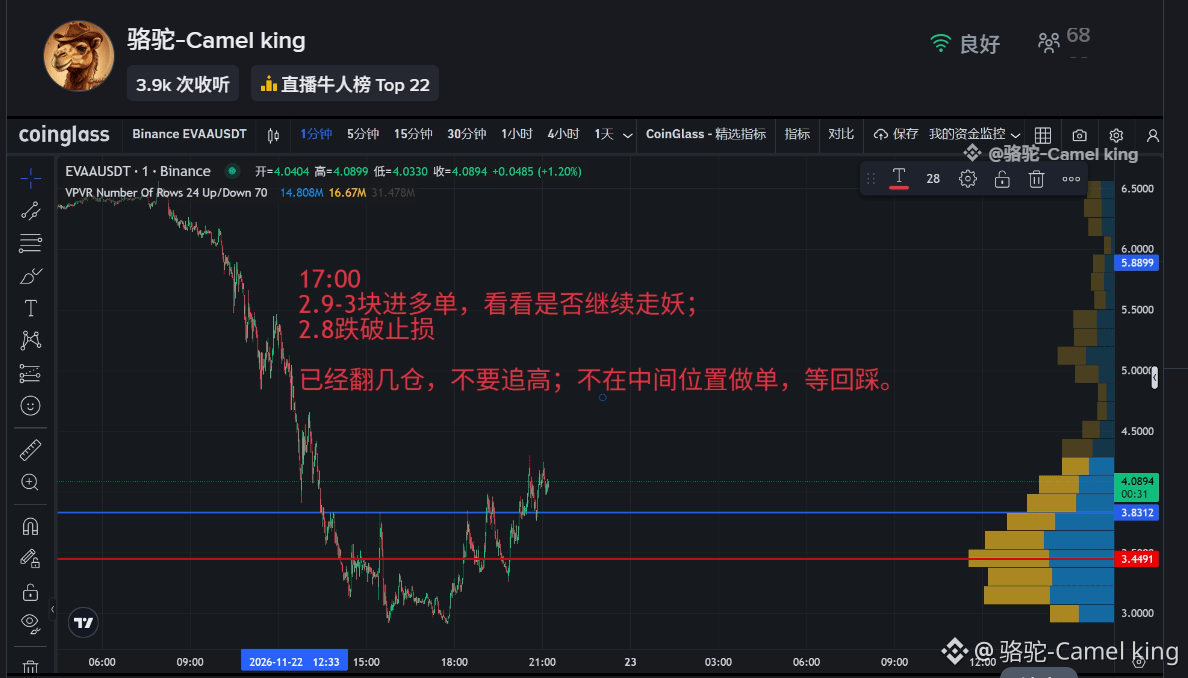
The long positions entered around 3 have already multiplied several times.
You can take out your initial investment first, then set a stop-loss at your entry price and see whether this becomes a major gainer in the near term.
Keep holding for now, and don't chase the price higher.
$EVAA
{future}(EVAAUSDT)
The long positions entered around 3 have already multiplied several times.
You can take out your initial investment first, then set a stop-loss at your entry price and see whether this becomes a major gainer in the near term.
Keep holding for now, and don't chase the price higher.
$EVAA
You can take out your initial investment first, then set a stop-loss at your entry price and see whether this becomes a major gainer in the near term.
Keep holding for now, and don't chase the price higher.
$EVAA
1
1
1.1k
·
--
Bullish
Will EVAA double again?
If you've already entered, set a stop-loss at your entry price and see if it keeps going on a wild run;
either break even or make a big profit.
Will EVAA double again?
If you've already entered, set a stop-loss at your entry price and see if it keeps going on a wild run;
either break even or make a big profit.
If you've already entered, set a stop-loss at your entry price and see if it keeps going on a wild run;
either break even or make a big profit.
1
1.7k
·
--
Bullish
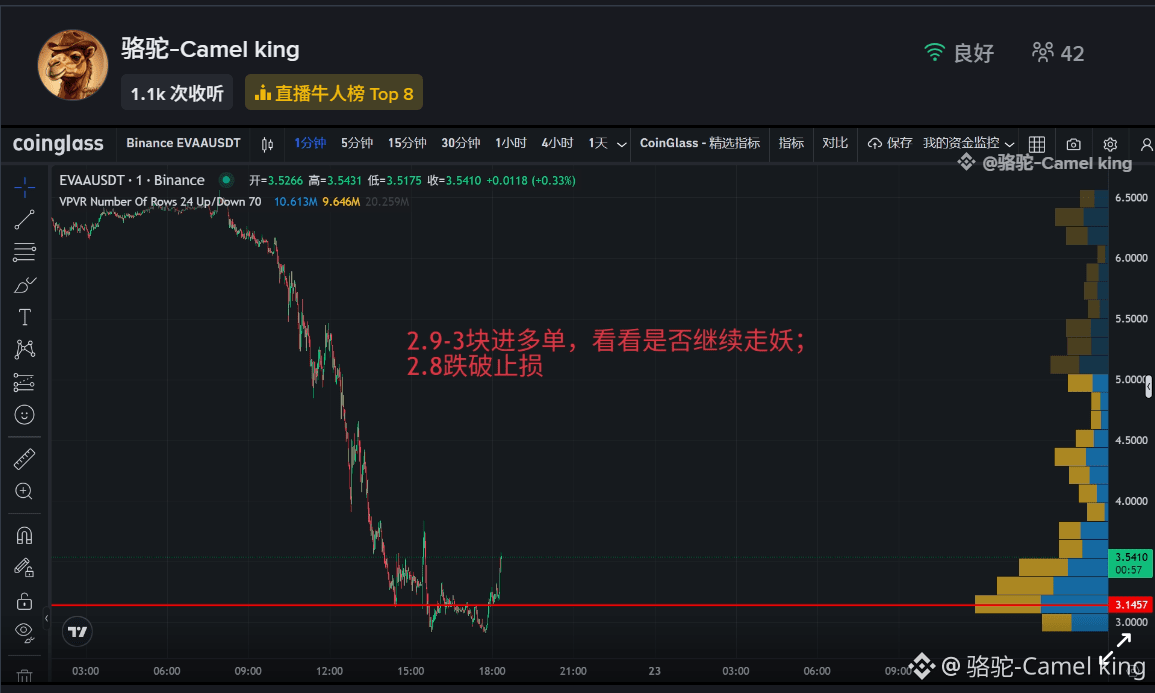
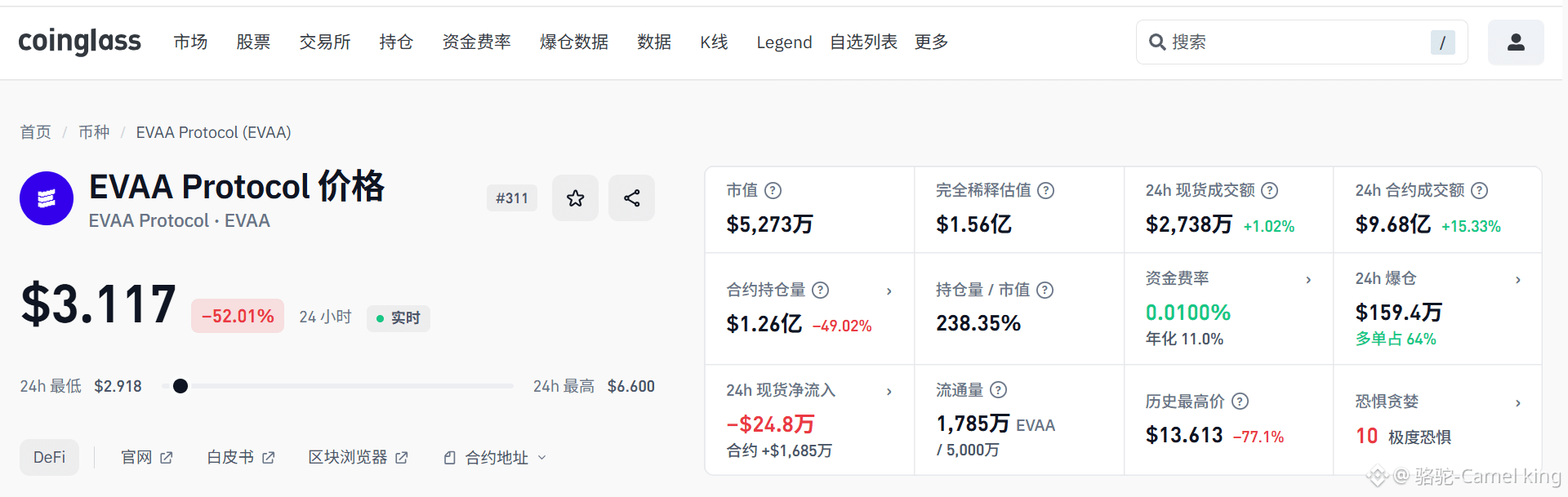
Several positions were opened in the livestream at 2.95, with a stop-loss around 2.8;
Let's see if there's another move.
Join us in the livestream to keep an eye on the volatile coin
$EVAA
{future}(EVAAUSDT)
Several positions were opened in the livestream at 2.95, with a stop-loss around 2.8;
Let's see if there's another move.
Join us in the livestream to keep an eye on the volatile coin
$EVAA
Let's see if there's another move.
Join us in the livestream to keep an eye on the volatile coin
$EVAA
806

·
--
Bearish
The essence of this BTC and ETH crash is:
Inflation rebounding → Fed rate-cut expectations reversing and Treasury yields rising + U.S. AI tech stocks (QQQ / Nvidia) crashing, the ANT listing draining liquidity, cross-asset risk capital contracting across the board + continued outflows from spot BTC ETFs and a liquidity crunch within crypto + cascading leveraged liquidations—all combining to amplify the downturn.
With capital in short supply, will institutions accelerate selling gold and crypto assets to meet margin requirements for U.S. stocks?
At the end of September, market makers drained a huge amount of liquidity from the crypto market. The script has already been written.
These issues have yet to be resolved, and prices will continue to fall further.
There may be a rebound, but it won’t be a reversal.
When the market direction is unclear, it may be best to stay on the sidelines rather than place trades.
$ETH
{future}(ETHUSDT)
The essence of this BTC and ETH crash is:
Inflation rebounding → Fed rate-cut expectations reversing and Treasury yields rising + U.S. AI tech stocks (QQQ / Nvidia) crashing, the ANT listing draining liquidity, cross-asset risk capital contracting across the board + continued outflows from spot BTC ETFs and a liquidity crunch within crypto + cascading leveraged liquidations—all combining to amplify the downturn.
With capital in short supply, will institutions accelerate selling gold and crypto assets to meet margin requirements for U.S. stocks?
At the end of September, market makers drained a huge amount of liquidity from the crypto market. The script has already been written.
These issues have yet to be resolved, and prices will continue to fall further.
There may be a rebound, but it won’t be a reversal.
When the market direction is unclear, it may be best to stay on the sidelines rather than place trades.
$ETH
3
270
·
--
Bearish
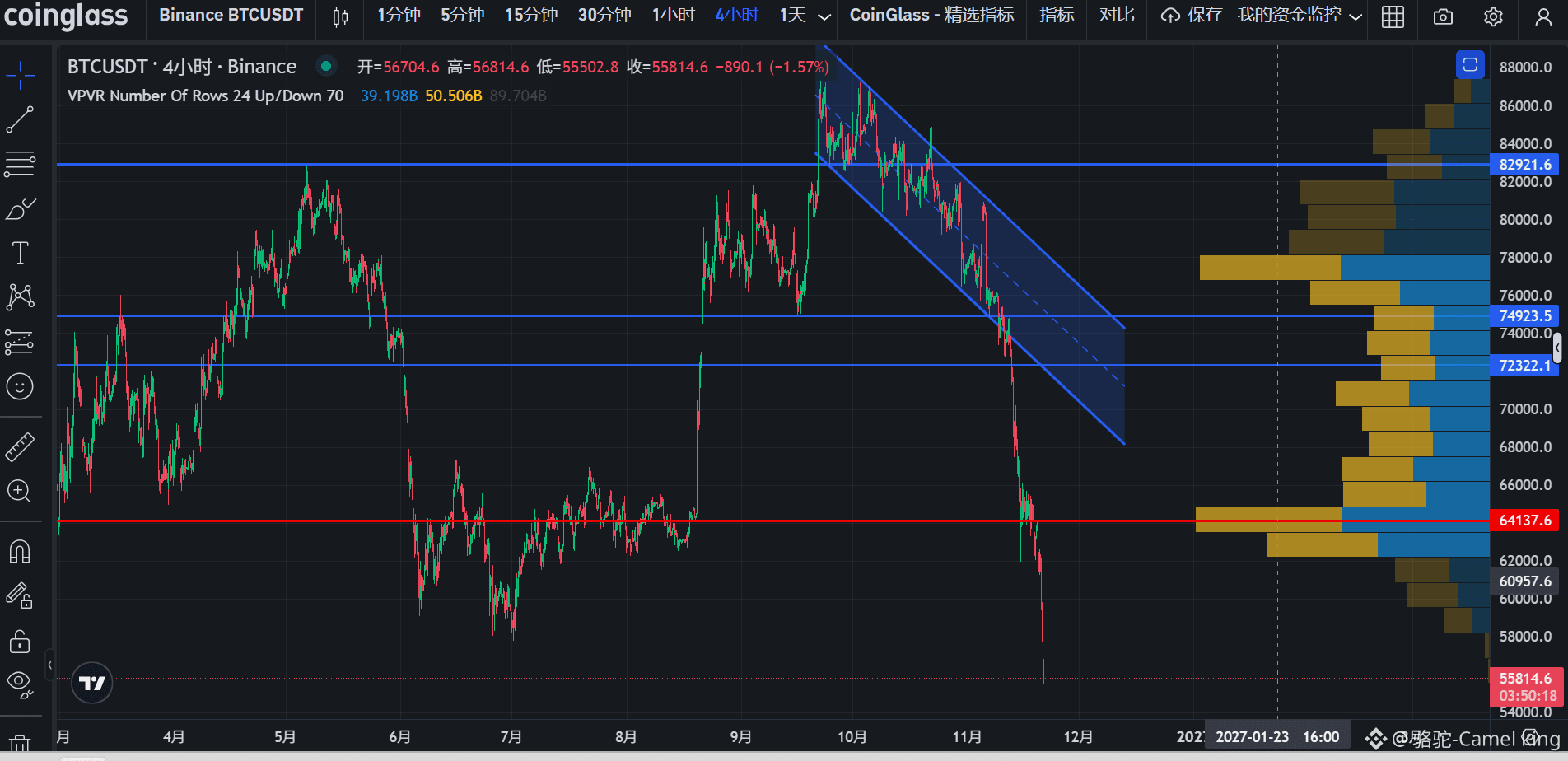
The first targets—ETH at 1,500 and BTC at 55,000—have been reached.
But don't get complacent and try to buy the dip; there's no bottom in sight.
Now we're looking at the second target: ETH around 1,000. Where is BTC headed? Join the livestream to discuss.
$ETH
{future}(ETHUSDT)
The first targets—ETH at 1,500 and BTC at 55,000—have been reached.
But don't get complacent and try to buy the dip; there's no bottom in sight.
Now we're looking at the second target: ETH around 1,000. Where is BTC headed? Join the livestream to discuss.
$ETH
But don't get complacent and try to buy the dip; there's no bottom in sight.
Now we're looking at the second target: ETH around 1,000. Where is BTC headed? Join the livestream to discuss.
$ETH
3
1.3k
·
--
Bearish
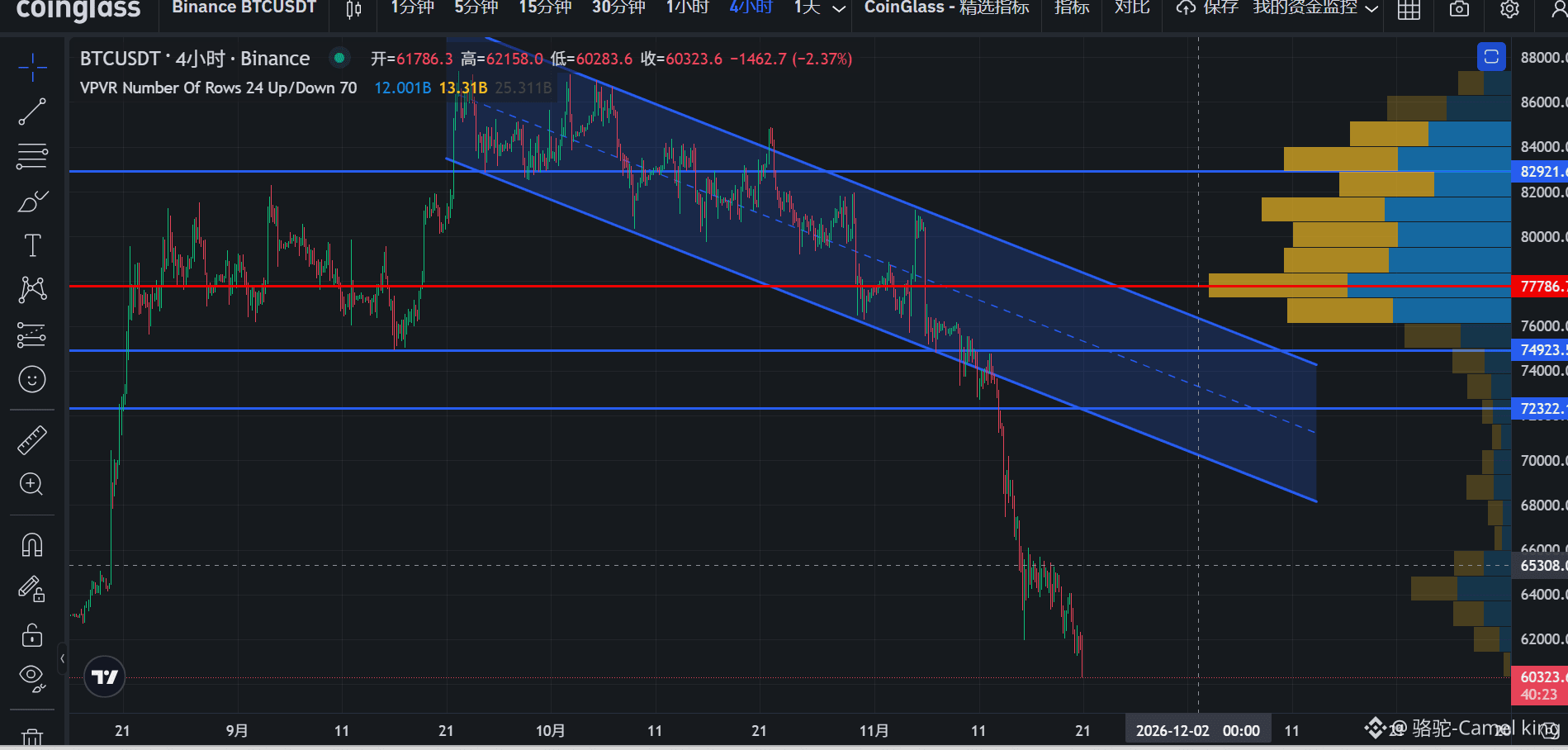
The plunge continues
Rate hikes continue to impact U.S. stocks, gold, and crypto
Has it bottomed out? No, there’s still room to fall
The Bitcoin price starting with a 5 that we’ve been waiting for is coming
$ETH
{future}(ETHUSDT)
The plunge continues
Rate hikes continue to impact U.S. stocks, gold, and crypto
Has it bottomed out? No, there’s still room to fall
The Bitcoin price starting with a 5 that we’ve been waiting for is coming
$ETH
Rate hikes continue to impact U.S. stocks, gold, and crypto
Has it bottomed out? No, there’s still room to fall
The Bitcoin price starting with a 5 that we’ve been waiting for is coming
$ETH
1
1k
After a sharp rise comes an inevitable sharp fall.
After a sharp fall comes inevitable overselling.
After overselling comes an inevitable rebound.
After a rebound, a reversal is not inevitable.
Waiting for Bitcoin to start with a 5
$ETH
{future}(ETHUSDT)
$BTC
{future}(BTCUSDT)
After a sharp rise comes an inevitable sharp fall.
After a sharp fall comes inevitable overselling.
After overselling comes an inevitable rebound.
After a rebound, a reversal is not inevitable.
Waiting for Bitcoin to start with a 5
$ETH
$BTC
After a sharp fall comes inevitable overselling.
After overselling comes an inevitable rebound.
After a rebound, a reversal is not inevitable.
Waiting for Bitcoin to start with a 5
$ETH
$BTC
2
7
571
·
--
Bearish
Verified
Fierce Jensen Huang
Nvidia is blowing up a bubble in compute-credit financing, leveraging its own AAA credit to gear up the entire industry. It isn’t simply selling chips; it’s selling “guarantees + credit quotas + compute-rental rights.” The risk is highly concentrated in NVDA alone.
Is Nvidia a lending company!?
Nvidia itself doesn’t directly lend money to customers to buy chips, but it has provided extensive guarantees, backstops, equity investments, payment terms, and bridges to third-party financing. This is the “AI central bank” model that has sparked the biggest debate in the market.
How does the money go around in a circle? If customers have no money, how can they get the financing to buy GPUs?
1: A $500 billion third-party financing platform
Nvidia teamed up with six asset managers—Blackstone, BlackRock, KKR, Apollo, Goldman Sachs, and Brookfield—to set up an independent financing vehicle. The money comes from these Wall Street firms, not from Nvidia making loans. Nvidia’s role: provide backing, guarantee residual value (assuming up to 25% of a project’s residual-value risk), and package GPUs as collateralizable compute assets, giving banks the confidence to lend to compute providers. Once funded, customers can only use the money to buy Nvidia hardware and build data centers.
2: Compute-capacity / revenue guarantees (the “Backstop” plan)
The agreement: If a compute service provider can’t rent out its capacity and has no paying customers, Nvidia promises to backstop the compute-rental payments, providing a safety net for lenders. Banks are willing to extend massive long-term loans only because they see this guarantee. The cost: Nvidia gets a share of the compute-rental revenue—getting paid twice for one batch of chips: once from selling the hardware, and then through an ongoing cut of compute rentals.
3: Equity investments in customers
Nvidia directly invests in compute customers such as CoreWeave and Nscale. Customers get equity financing and prioritize purchasing Nvidia GPUs; Nvidia also gives its portfolio companies priority supply quotas. The logic: earn revenue from chip sales while also benefiting from increases in the value of its customers’ equity; lock in customers while counterbalancing major chipmakers like AWS and Microsoft that are developing their own chips.
4: Extending accounts-receivable payment terms (selling on credit)
Nvidia extends payment periods for major customers, effectively providing vendor financing through credit sales. The rapid rise in accounts receivable in its financial statements means Nvidia is effectively fronting the money: customers get the chips first and pay gradually afterward. This is a genuine use of Nvidia’s own funds.
Will this earnings report and the Jensen Huang episode trigger an AI bubble?
Let’s wait and see. $NVDA
{future}(NVDAUSDT)
Fierce Jensen Huang
Nvidia is blowing up a bubble in compute-credit financing, leveraging its own AAA credit to gear up the entire industry. It isn’t simply selling chips; it’s selling “guarantees + credit quotas + compute-rental rights.” The risk is highly concentrated in NVDA alone.
Is Nvidia a lending company!?
Nvidia itself doesn’t directly lend money to customers to buy chips, but it has provided extensive guarantees, backstops, equity investments, payment terms, and bridges to third-party financing. This is the “AI central bank” model that has sparked the biggest debate in the market.
How does the money go around in a circle? If customers have no money, how can they get the financing to buy GPUs?
1: A $500 billion third-party financing platform
Nvidia teamed up with six asset managers—Blackstone, BlackRock, KKR, Apollo, Goldman Sachs, and Brookfield—to set up an independent financing vehicle. The money comes from these Wall Street firms, not from Nvidia making loans. Nvidia’s role: provide backing, guarantee residual value (assuming up to 25% of a project’s residual-value risk), and package GPUs as collateralizable compute assets, giving banks the confidence to lend to compute providers. Once funded, customers can only use the money to buy Nvidia hardware and build data centers.
2: Compute-capacity / revenue guarantees (the “Backstop” plan)
The agreement: If a compute service provider can’t rent out its capacity and has no paying customers, Nvidia promises to backstop the compute-rental payments, providing a safety net for lenders. Banks are willing to extend massive long-term loans only because they see this guarantee. The cost: Nvidia gets a share of the compute-rental revenue—getting paid twice for one batch of chips: once from selling the hardware, and then through an ongoing cut of compute rentals.
3: Equity investments in customers
Nvidia directly invests in compute customers such as CoreWeave and Nscale. Customers get equity financing and prioritize purchasing Nvidia GPUs; Nvidia also gives its portfolio companies priority supply quotas. The logic: earn revenue from chip sales while also benefiting from increases in the value of its customers’ equity; lock in customers while counterbalancing major chipmakers like AWS and Microsoft that are developing their own chips.
4: Extending accounts-receivable payment terms (selling on credit)
Nvidia extends payment periods for major customers, effectively providing vendor financing through credit sales. The rapid rise in accounts receivable in its financial statements means Nvidia is effectively fronting the money: customers get the chips first and pay gradually afterward. This is a genuine use of Nvidia’s own funds.
Will this earnings report and the Jensen Huang episode trigger an AI bubble?
Let’s wait and see. $NVDA
1
9
2.8k
Continue shorting BTC and ETH. They haven’t bounced back to their highs, so the only option is to open more shorts within the trading range;
There’s absolutely no liquidity. The market makers have pulled their liquidity and have no intention of supporting the price at all;
When will we see BTC start with a 5?
$ETH
{future}(ETHUSDT)
Continue shorting BTC and ETH. They haven’t bounced back to their highs, so the only option is to open more shorts within the trading range;
There’s absolutely no liquidity. The market makers have pulled their liquidity and have no intention of supporting the price at all;
When will we see BTC start with a 5?
$ETH
There’s absolutely no liquidity. The market makers have pulled their liquidity and have no intention of supporting the price at all;
When will we see BTC start with a 5?
$ETH
骆驼-Camel king
·
--
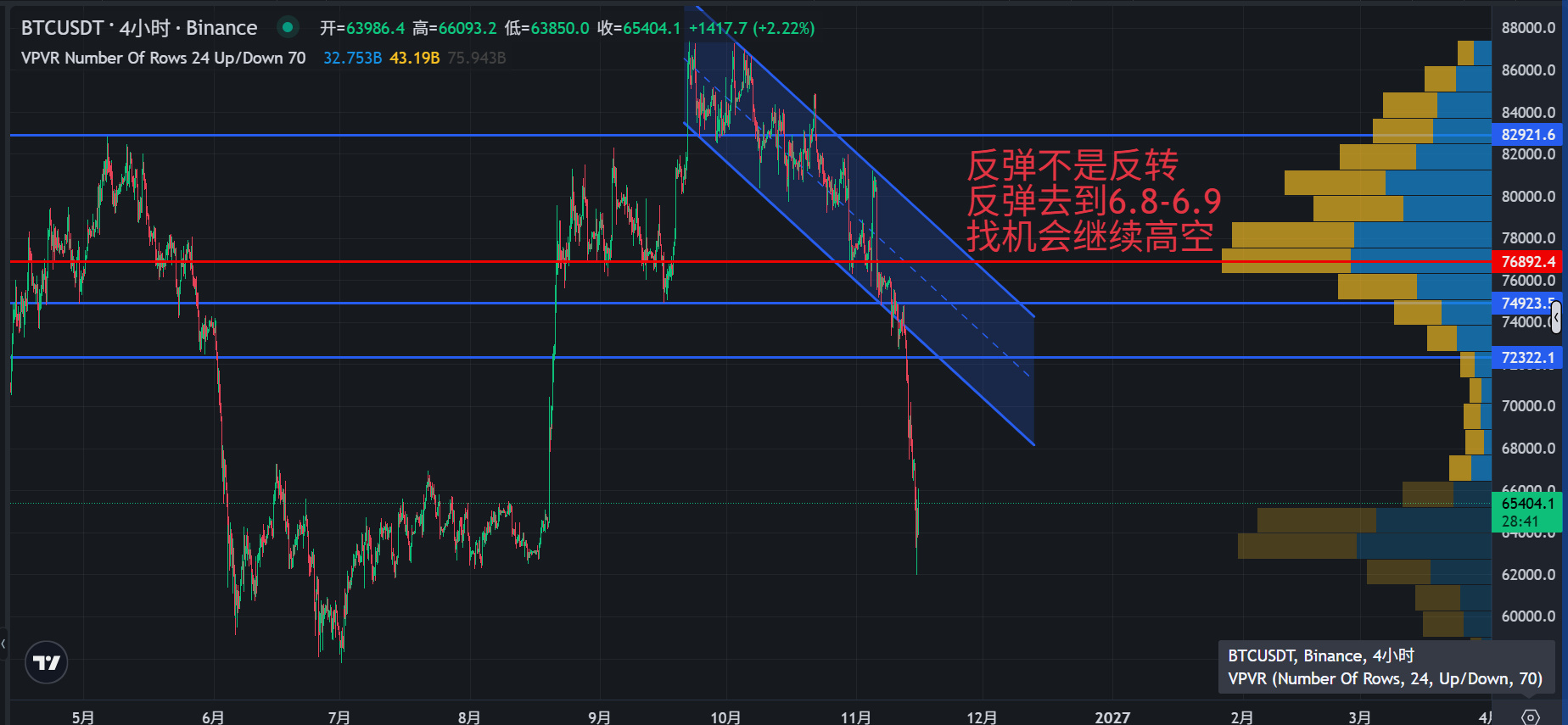
BearishThere has been no reversal yet, so it’s still too early to buy spot. I’ll only start considering spot when it begins with a 5;
There’s currently a small rebound, but liquidity is tightening further. The decline has accelerated recently, and large holders and institutions are starting to get liquidated.
After the small rebound, look for a higher level to open short positions.
Market makers started withdrawing liquidity back in September, and a downtrend has taken shape. The news is just providing convenient cover.
The U.S. midterm elections, the Jensen Huang incident that surfaced at the White House six months ago, inflation, continued rate hikes, the aftermath of the war, and SanDisk’s 100-fold gain in a year—when will they cash out?
Do you think the big players anticipated this news 3–6 months ago?
$BTC
2
801
·
--
Bullish
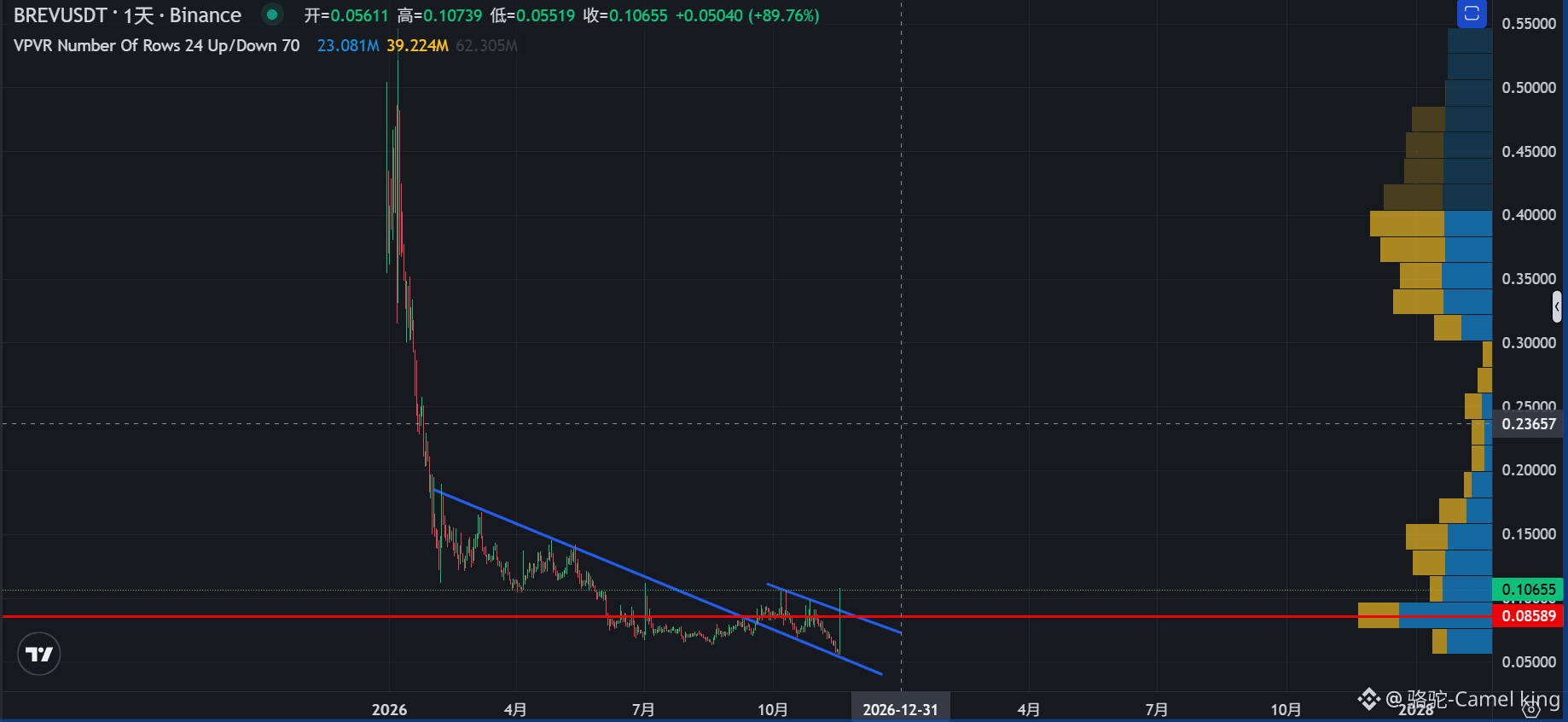
The volatile coin is seeing a surge in volume, breaking out of the descending channel and shooting straight up;
go long with a small position.
$BREV
{future}(BREVUSDT)
The volatile coin is seeing a surge in volume, breaking out of the descending channel and shooting straight up;
go long with a small position.
$BREV
go long with a small position.
$BREV
1
876
Spot purchases also need to be timed.
We haven’t seen a bottom yet, so wait for opportunities to short at higher levels.
$ETH
{future}(ETHUSDT)
Spot purchases also need to be timed.
We haven’t seen a bottom yet, so wait for opportunities to short at higher levels.
$ETH
We haven’t seen a bottom yet, so wait for opportunities to short at higher levels.
$ETH


Yi He
·
--
The pullback is temporary; spot holders have nothing to fear.🫥
1
469
·
--
Bearish
There has been no reversal yet, so it’s still too early to buy spot. I’ll only start considering spot when it begins with a 5;
There’s currently a small rebound, but liquidity is tightening further. The decline has accelerated recently, and large holders and institutions are starting to get liquidated.
After the small rebound, look for a higher level to open short positions.
Market makers started withdrawing liquidity back in September, and a downtrend has taken shape. The news is just providing convenient cover.
The U.S. midterm elections, the Jensen Huang incident that surfaced at the White House six months ago, inflation, continued rate hikes, the aftermath of the war, and SanDisk’s 100-fold gain in a year—when will they cash out?
Do you think the big players anticipated this news 3–6 months ago?
$BTC
{future}(BTCUSDT)
There has been no reversal yet, so it’s still too early to buy spot. I’ll only start considering spot when it begins with a 5;
There’s currently a small rebound, but liquidity is tightening further. The decline has accelerated recently, and large holders and institutions are starting to get liquidated.
After the small rebound, look for a higher level to open short positions.
Market makers started withdrawing liquidity back in September, and a downtrend has taken shape. The news is just providing convenient cover.
The U.S. midterm elections, the Jensen Huang incident that surfaced at the White House six months ago, inflation, continued rate hikes, the aftermath of the war, and SanDisk’s 100-fold gain in a year—when will they cash out?
Do you think the big players anticipated this news 3–6 months ago?
$BTC
1
2
775
·
--
Bearish
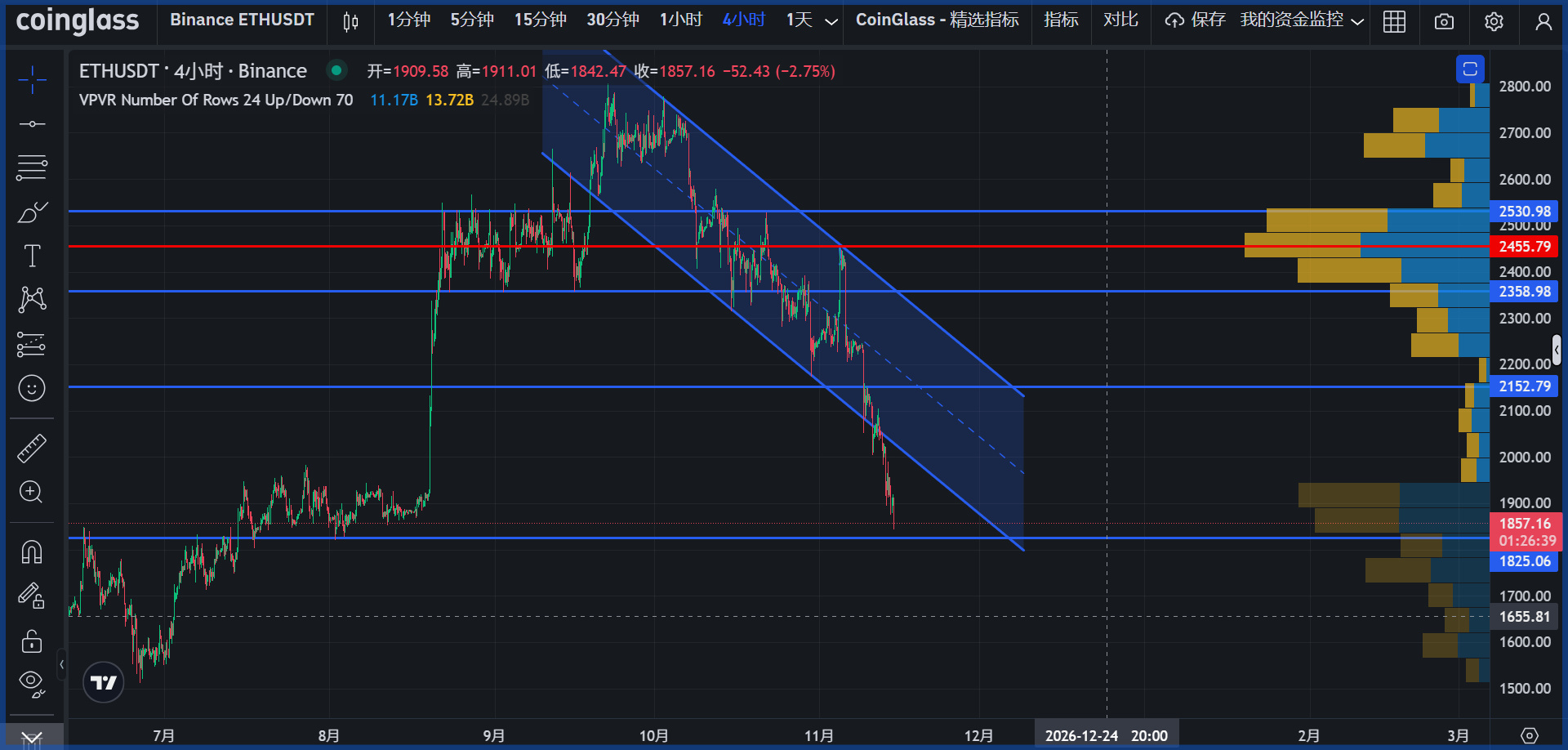
Taiwan’s Buffett is incredibly accurate at catching the dip—the guys have already profited from one wave;
come to the livestream and catch the dip together.
$ETH
{future}(ETHUSDT)
Taiwan’s Buffett is incredibly accurate at catching the dip—the guys have already profited from one wave;
come to the livestream and catch the dip together.
$ETH
come to the livestream and catch the dip together.
$ETH
2
1.3k
The world is one giant amateur operation: the lawsuit against Vitalik and the Ethereum Foundation.
Was the seppuku apology clause drafted by a Japanese person?
In February 2026, the Ethereum Foundation distributed a draft governance charter to all staff. Hidden in the document was a highly controversial “seppuku clause”: it stated that if maintainers failed to uphold Ethereum’s commitments or altered the charter, they would be held accountable by committing ritual suicide.
The Foundation’s internal explanation was that it was just a joke and shouldn’t be taken seriously.
There was strong internal opposition at the time: a colleague on the team had died by suicide the previous year, and 79 employees voted to remove the passage. Vitalik verbally promised to revise it, but the final version, officially published on March 13, still retained the clause. It was also permanently recorded on-chain along with the document, making it immutable. Management then sent out a confirmation form requiring employees to state that they agreed with the charter. Those who disagreed were pressured to leave.
Then employees sued Vitalik and the Ethereum Foundation.
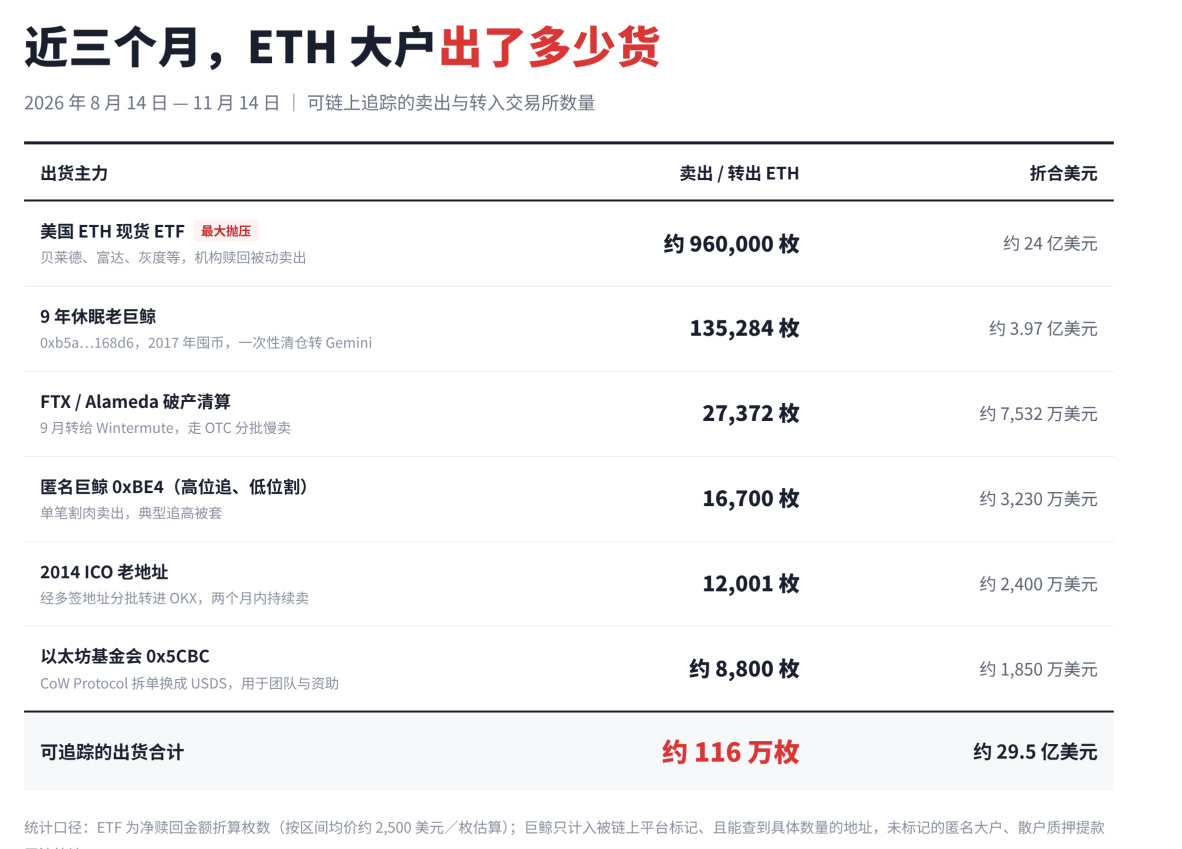
Will Democratic Party take power and go after the major crypto institutions that backed Trump? Will institutions hurry to sell and get out? Let’s wait and see how things unfold.
Who is selling off ETH, and who’s on the other side of the long trade?
$ETH
{future}(ETHUSDT)
The world is one giant amateur operation: the lawsuit against Vitalik and the Ethereum Foundation.
Was the seppuku apology clause drafted by a Japanese person?
In February 2026, the Ethereum Foundation distributed a draft governance charter to all staff. Hidden in the document was a highly controversial “seppuku clause”: it stated that if maintainers failed to uphold Ethereum’s commitments or altered the charter, they would be held accountable by committing ritual suicide.
The Foundation’s internal explanation was that it was just a joke and shouldn’t be taken seriously.
There was strong internal opposition at the time: a colleague on the team had died by suicide the previous year, and 79 employees voted to remove the passage. Vitalik verbally promised to revise it, but the final version, officially published on March 13, still retained the clause. It was also permanently recorded on-chain along with the document, making it immutable. Management then sent out a confirmation form requiring employees to state that they agreed with the charter. Those who disagreed were pressured to leave.
Then employees sued Vitalik and the Ethereum Foundation.
Will Democratic Party take power and go after the major crypto institutions that backed Trump? Will institutions hurry to sell and get out? Let’s wait and see how things unfold.
Who is selling off ETH, and who’s on the other side of the long trade?
$ETH
4
508
Recently, a lot of people have been asking about SOL’s price outlook.
Here are my humble thoughts on SOL:
Why did it rise to 295 last cycle?
1: The Solana chain had high TPS and low costs; other chains weren’t good enough;
2: The dog-coin craze took off, with a meme coin ecosystem mostly on Solana; hit projects emerged on-chain, and retail investors’ buying power was concentrated enough;
3: A bull market in the broader market fueled an overall crypto bull run;
4: The price was low, so more people were willing to buy and hold;
Why did it plunge after the previous cycle?
0: Network congestion and frequent system-level issues;
1: The wealth effect from meme coins dried up; retail sentiment faded, and the primary dog-coin market fell silent;
2: Regulation: there was no definitive answer on whether the SEC would classify it as a security (uncertainty), which also drove institutions away;
3: As the broader market entered a cyclical downturn, SOL fell even further;
Could it surge significantly in the future, and what would it take?
1: A broad crypto bull market, with Bitcoin reaching 100k+; (That seems unlikely in the next few months. The broader market even shows signs of accelerating declines, US stocks are siphoning off significant capital, and crypto institutions continue to sell.)
2: Tokenization of RWA assets (the next major narrative for the crypto industry, such as tokenized stocks)
3: A resurgence of the ecosystem (so far, it looks like the dog-coin ecosystem has migrated to BSC)
4: System upgrades to fix previous issues such as outages (upgrades are ongoing);
5: Institutional support (crypto-friendly policies, institutional ETF holdings, etc.)
When crypto liquidity is relatively poor, going long is an uphill battle. If you don’t understand it, don’t trade it.
This is just my own understanding; I may be wrong, and this is not trading advice. Open to discussion.
$SOL
{future}(SOLUSDT)
Recently, a lot of people have been asking about SOL’s price outlook.
Here are my humble thoughts on SOL:
Why did it rise to 295 last cycle?
1: The Solana chain had high TPS and low costs; other chains weren’t good enough;
2: The dog-coin craze took off, with a meme coin ecosystem mostly on Solana; hit projects emerged on-chain, and retail investors’ buying power was concentrated enough;
3: A bull market in the broader market fueled an overall crypto bull run;
4: The price was low, so more people were willing to buy and hold;
Why did it plunge after the previous cycle?
0: Network congestion and frequent system-level issues;
1: The wealth effect from meme coins dried up; retail sentiment faded, and the primary dog-coin market fell silent;
2: Regulation: there was no definitive answer on whether the SEC would classify it as a security (uncertainty), which also drove institutions away;
3: As the broader market entered a cyclical downturn, SOL fell even further;
Could it surge significantly in the future, and what would it take?
1: A broad crypto bull market, with Bitcoin reaching 100k+; (That seems unlikely in the next few months. The broader market even shows signs of accelerating declines, US stocks are siphoning off significant capital, and crypto institutions continue to sell.)
2: Tokenization of RWA assets (the next major narrative for the crypto industry, such as tokenized stocks)
3: A resurgence of the ecosystem (so far, it looks like the dog-coin ecosystem has migrated to BSC)
4: System upgrades to fix previous issues such as outages (upgrades are ongoing);
5: Institutional support (crypto-friendly policies, institutional ETF holdings, etc.)
When crypto liquidity is relatively poor, going long is an uphill battle. If you don’t understand it, don’t trade it.
This is just my own understanding; I may be wrong, and this is not trading advice. Open to discussion.
$SOL
2
8
4k
·
--
Bearish
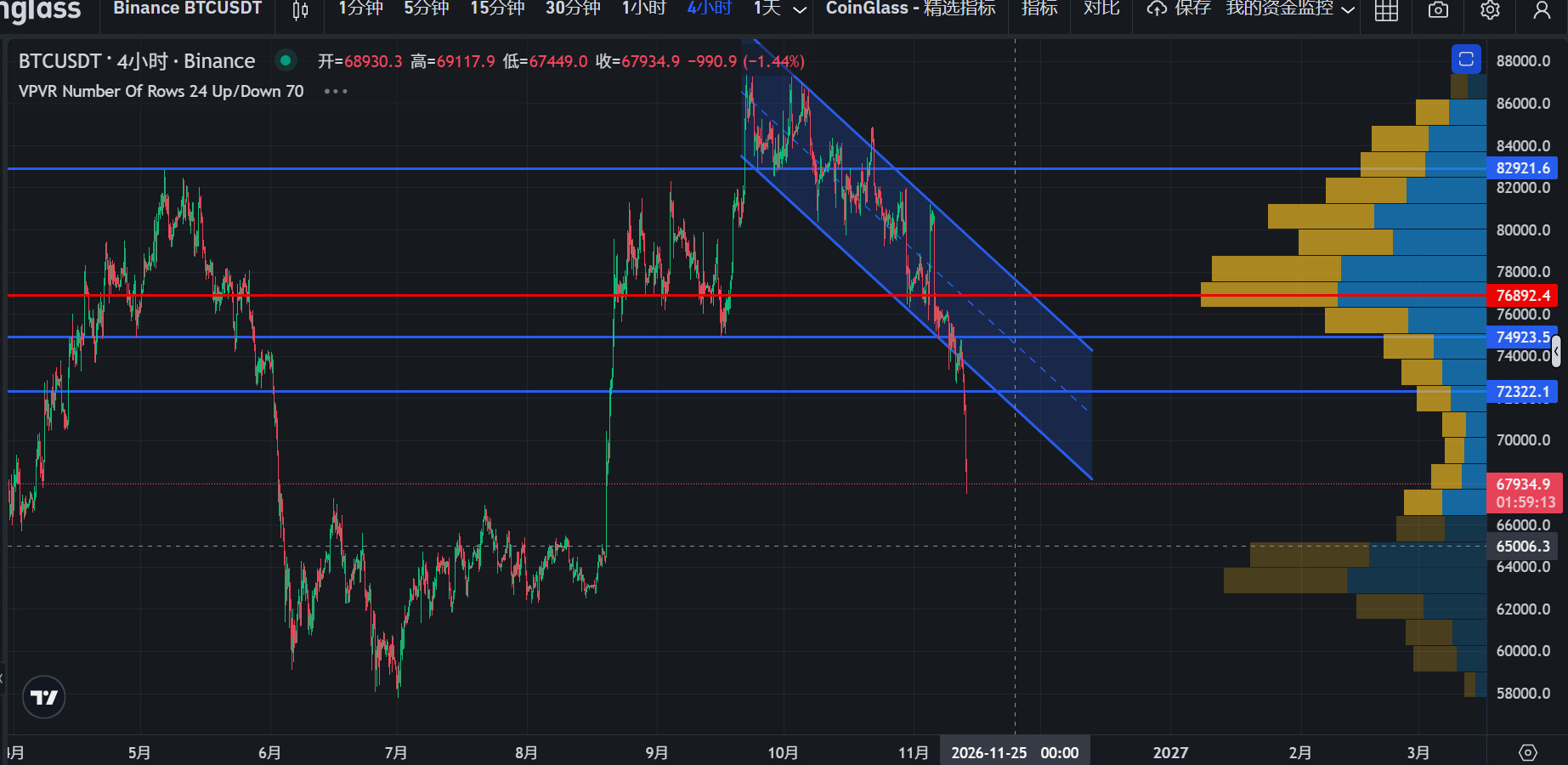
Vacuum zone, accelerate the plunge
Then catch a rebound and continue shorting at higher levels
$ETH
{future}(ETHUSDT)
Vacuum zone, accelerate the plunge
Then catch a rebound and continue shorting at higher levels
$ETH
Then catch a rebound and continue shorting at higher levels
$ETH
1
4
555
·
--
Bearish
Many bearish factors are weighing on the downtrend, and the timing is right;
Liquidity is getting worse and worse, so all we can do is wait and make a few small trades in the choppy market.
$ETH
{future}(ETHUSDT)
Many bearish factors are weighing on the downtrend, and the timing is right;
Liquidity is getting worse and worse, so all we can do is wait and make a few small trades in the choppy market.
$ETH
Liquidity is getting worse and worse, so all we can do is wait and make a few small trades in the choppy market.
$ETH
2
831
Log in to explore more content
Join global crypto users on Binance Square
⚡️ Get latest and useful information about crypto.
💬 Trusted by the world’s largest crypto exchange.
👍 Discover real insights from verified creators.
Email / Phone number
Trending Topics
BTCReboundsAbove$60KAmidWhaleDipBuying
80,439 views
355 Discussing
Abraxas Capital, Other Whales Buy the BTC Dip as Bitcoin Briefly Reclaims $60,000
Binance News
·35 Likes
·78k views
SolanaSets2027RoadmapToDoubleComputeCapacity
59,204 views
1,031 Discussing
CaliforniaNvidiaProbeExaminesPotentialCriminalViolations
17,580 views
141 Discussing