
聚财资本
3.5k Posts

聚财资本
Report
Block User
公众号:胖虎交易日记 X:@lmf8848
八年职业交易员,专注合约波段操作,日内波段盈利,胜率稳定在90%-95%。 现货策略:周期性埋伏潜力币,熊市低吸,牛市高抛,把握市场趋势。
29 Following
4.4K Followers
2.6K+ Liked
Posts
All
Quotes
PINNED
·
--
Binance has now launched a new feature— you can chat via direct messages within the platform.
If you need to connect or seek advice, you can scan the QR code below to add.
Your personal bio also includes a chat ID— enter the ID in search to add Hu Ge.
Copy-trading discussions: Binance official chatroom👇
Binance has now launched a new feature— you can chat via direct messages within the platform.
If you need to connect or seek advice, you can scan the QR code below to add.
Your personal bio also includes a chat ID— enter the ID in search to add Hu Ge.
Copy-trading discussions: Binance official chatroom👇
If you need to connect or seek advice, you can scan the QR code below to add.
Your personal bio also includes a chat ID— enter the ID in search to add Hu Ge.
Copy-trading discussions: Binance official chatroom👇

369
·
--
I remember now, I remember everything—I’m not the Wolf of Wall Street at all. I’m a minor. I’m applying for a refund $牛来
Have you noticed that every time you feel like you’ve got it “nailed” and you go in with a heavy position, the market starts to turn around? Every time you panic and cut your losses, thinking “it’s over,” the market then takes off. $IOST
It’s not bad luck. It’s because you’re being too normal.
Most people in the market are just normal. When it rises, they chase. When it falls, they run. The main force’s best skill is using your normal reactions—to get you to buy the top, and sell at the bottom.
$VTHO
Real opportunities to make money appear precisely when you “dare not.”
When everyone is panicking and cutting losses, and the group chat is full of wailing, and you don’t dare to buy—this is often when you’re not far from the bottom.
When everyone is going crazy chasing the highs, and even the delivery guy is asking you what coin to buy, and you don’t dare to chase—this is often when you’re not far from the top.
When everyone is cursing that coin as trash and you don’t dare to touch it—this may be the cheapest time for it.
Anti-instinct isn’t telling you to deliberately go against the grain. It’s telling you to calm down when your emotions are at extremes and ask one question: What I want to do right now—does most people also want to do it?
If yes, then don’t do it.
When others are greedy, you stay cautious. When others are fearful, pay attention. When others cut losses, observe. When others chase the highs, get out.
The most profitable market moves have never been something you can comfortably just eat. It will make you uncomfortable—it will make you doubt—it will make you want to run. If you can hold on, the profit is yours. If you can’t, you’ll end up like most people, becoming someone else’s profit.
Next time you’re panicking and want to cut losses, remind yourself: maybe an opportunity has arrived.
Next time you’re excited and want to chase the highs, remind yourself: maybe it’s time to take profit.
Anti-instinct isn’t being against common sense. It’s not letting emotions drive you. It’s not doing what most people do.
If you want to quickly get back on track and flip the situation, and you truly want to get back to even and make it ashore—Brother Hu is here waiting for you. As long as you take the initiative, I’ll always be here: @Lmf8848
I remember now, I remember everything—I’m not the Wolf of Wall Street at all. I’m a minor. I’m applying for a refund $牛来
Have you noticed that every time you feel like you’ve got it “nailed” and you go in with a heavy position, the market starts to turn around? Every time you panic and cut your losses, thinking “it’s over,” the market then takes off. $IOST
It’s not bad luck. It’s because you’re being too normal.
Most people in the market are just normal. When it rises, they chase. When it falls, they run. The main force’s best skill is using your normal reactions—to get you to buy the top, and sell at the bottom.
$VTHO
Real opportunities to make money appear precisely when you “dare not.”
When everyone is panicking and cutting losses, and the group chat is full of wailing, and you don’t dare to buy—this is often when you’re not far from the bottom.
When everyone is going crazy chasing the highs, and even the delivery guy is asking you what coin to buy, and you don’t dare to chase—this is often when you’re not far from the top.
When everyone is cursing that coin as trash and you don’t dare to touch it—this may be the cheapest time for it.
Anti-instinct isn’t telling you to deliberately go against the grain. It’s telling you to calm down when your emotions are at extremes and ask one question: What I want to do right now—does most people also want to do it?
If yes, then don’t do it.
When others are greedy, you stay cautious. When others are fearful, pay attention. When others cut losses, observe. When others chase the highs, get out.
The most profitable market moves have never been something you can comfortably just eat. It will make you uncomfortable—it will make you doubt—it will make you want to run. If you can hold on, the profit is yours. If you can’t, you’ll end up like most people, becoming someone else’s profit.
Next time you’re panicking and want to cut losses, remind yourself: maybe an opportunity has arrived.
Next time you’re excited and want to chase the highs, remind yourself: maybe it’s time to take profit.
Anti-instinct isn’t being against common sense. It’s not letting emotions drive you. It’s not doing what most people do.
If you want to quickly get back on track and flip the situation, and you truly want to get back to even and make it ashore—Brother Hu is here waiting for you. As long as you take the initiative, I’ll always be here: @胖虎eth
Have you noticed that every time you feel like you’ve got it “nailed” and you go in with a heavy position, the market starts to turn around? Every time you panic and cut your losses, thinking “it’s over,” the market then takes off. $IOST
It’s not bad luck. It’s because you’re being too normal.
Most people in the market are just normal. When it rises, they chase. When it falls, they run. The main force’s best skill is using your normal reactions—to get you to buy the top, and sell at the bottom.
$VTHO
Real opportunities to make money appear precisely when you “dare not.”
When everyone is panicking and cutting losses, and the group chat is full of wailing, and you don’t dare to buy—this is often when you’re not far from the bottom.
When everyone is going crazy chasing the highs, and even the delivery guy is asking you what coin to buy, and you don’t dare to chase—this is often when you’re not far from the top.
When everyone is cursing that coin as trash and you don’t dare to touch it—this may be the cheapest time for it.
Anti-instinct isn’t telling you to deliberately go against the grain. It’s telling you to calm down when your emotions are at extremes and ask one question: What I want to do right now—does most people also want to do it?
If yes, then don’t do it.
When others are greedy, you stay cautious. When others are fearful, pay attention. When others cut losses, observe. When others chase the highs, get out.
The most profitable market moves have never been something you can comfortably just eat. It will make you uncomfortable—it will make you doubt—it will make you want to run. If you can hold on, the profit is yours. If you can’t, you’ll end up like most people, becoming someone else’s profit.
Next time you’re panicking and want to cut losses, remind yourself: maybe an opportunity has arrived.
Next time you’re excited and want to chase the highs, remind yourself: maybe it’s time to take profit.
Anti-instinct isn’t being against common sense. It’s not letting emotions drive you. It’s not doing what most people do.
If you want to quickly get back on track and flip the situation, and you truly want to get back to even and make it ashore—Brother Hu is here waiting for you. As long as you take the initiative, I’ll always be here: @胖虎eth

1
160
·
--
Last year a beautiful woman found me. She had account capital of 13,000 USDT and traded for a year, stuck in place and making no progress. I looked at her records and her problems were only two: she would take a bit of profit and run, and when she lost, she would stubbornly hold on until it went worse. I told her: change your strategy—don’t gamble the principal.
$ZEC
I only had her do three things:
First, split the principal. Divide 13,000 USDT into 10 parts, and only move 1,300 USDT each time. Use 3x leverage, with a stop loss of 5%. By the way, take profit at 15%; if you're wrong, you lose 65 USDT. You can afford the loss—no panic.
$IOST
Second, only roll with profits; don’t touch the principal. If the first trade made 200 USDT profit, use that 200 USDT to add to the position. The principal of 1,300 USDT stays unmoved forever. Money earned from profits isn’t something you lose your heart over. If you win, keep rolling. The principal is life; profit is your ammo.
$VVV
Third, do only one kind of signal: 4-hour MACD bullish crossover plus a breakout on increasing volume. If there’s no signal, you don’t act. In that ETH main rally, she entered in pieces at the key levels four or five times, each time adding size using profits. From start to finish, the principal never moved.
After three months, her account grew to more than 200,000 USDT. Later she steadily reached 850,000 USDT without blowing up even once.
She said: I used to think you can only make big money by going heavy on positions. Now I understand—rolling with profits is faster than risking your life gambling. Rolling the position isn’t about betting big or small; it’s about accumulating every small win, letting profit do the offensive work for you.
“Brother Hu” usually plans with mainstream coin futures contracts and popular altcoin contracts. Spot is mainly for short-term trading. He’s good at catching “golden dogs” and spotting hundred-x coins. If you want to quickly recover and turn the tables—really want to get back on track and come ashore in one go—then Brother Hu is here. As long as you take initiative, I’ll be here the whole time.
@caishen147
Last year a beautiful woman found me. She had account capital of 13,000 USDT and traded for a year, stuck in place and making no progress. I looked at her records and her problems were only two: she would take a bit of profit and run, and when she lost, she would stubbornly hold on until it went worse. I told her: change your strategy—don’t gamble the principal.
$ZEC
I only had her do three things:
First, split the principal. Divide 13,000 USDT into 10 parts, and only move 1,300 USDT each time. Use 3x leverage, with a stop loss of 5%. By the way, take profit at 15%; if you're wrong, you lose 65 USDT. You can afford the loss—no panic.
$IOST
Second, only roll with profits; don’t touch the principal. If the first trade made 200 USDT profit, use that 200 USDT to add to the position. The principal of 1,300 USDT stays unmoved forever. Money earned from profits isn’t something you lose your heart over. If you win, keep rolling. The principal is life; profit is your ammo.
$VVV
Third, do only one kind of signal: 4-hour MACD bullish crossover plus a breakout on increasing volume. If there’s no signal, you don’t act. In that ETH main rally, she entered in pieces at the key levels four or five times, each time adding size using profits. From start to finish, the principal never moved.
After three months, her account grew to more than 200,000 USDT. Later she steadily reached 850,000 USDT without blowing up even once.
She said: I used to think you can only make big money by going heavy on positions. Now I understand—rolling with profits is faster than risking your life gambling. Rolling the position isn’t about betting big or small; it’s about accumulating every small win, letting profit do the offensive work for you.
“Brother Hu” usually plans with mainstream coin futures contracts and popular altcoin contracts. Spot is mainly for short-term trading. He’s good at catching “golden dogs” and spotting hundred-x coins. If you want to quickly recover and turn the tables—really want to get back on track and come ashore in one go—then Brother Hu is here. As long as you take initiative, I’ll be here the whole time.
@聚财资本
$ZEC
I only had her do three things:
First, split the principal. Divide 13,000 USDT into 10 parts, and only move 1,300 USDT each time. Use 3x leverage, with a stop loss of 5%. By the way, take profit at 15%; if you're wrong, you lose 65 USDT. You can afford the loss—no panic.
$IOST
Second, only roll with profits; don’t touch the principal. If the first trade made 200 USDT profit, use that 200 USDT to add to the position. The principal of 1,300 USDT stays unmoved forever. Money earned from profits isn’t something you lose your heart over. If you win, keep rolling. The principal is life; profit is your ammo.
$VVV
Third, do only one kind of signal: 4-hour MACD bullish crossover plus a breakout on increasing volume. If there’s no signal, you don’t act. In that ETH main rally, she entered in pieces at the key levels four or five times, each time adding size using profits. From start to finish, the principal never moved.
After three months, her account grew to more than 200,000 USDT. Later she steadily reached 850,000 USDT without blowing up even once.
She said: I used to think you can only make big money by going heavy on positions. Now I understand—rolling with profits is faster than risking your life gambling. Rolling the position isn’t about betting big or small; it’s about accumulating every small win, letting profit do the offensive work for you.
“Brother Hu” usually plans with mainstream coin futures contracts and popular altcoin contracts. Spot is mainly for short-term trading. He’s good at catching “golden dogs” and spotting hundred-x coins. If you want to quickly recover and turn the tables—really want to get back on track and come ashore in one go—then Brother Hu is here. As long as you take initiative, I’ll be here the whole time.
@聚财资本


264
·
--
Everyone wants to get rich overnight in the crypto world, but very few people know that in the first few years after I joined, I lost so much that I sold my house. $VVV
The worst time, even opening the app took courage.
Watching my funds shrink day by day, yet always thinking that if I just waited a little longer, it would come back $IOST
But what I waited for wasn’t breaking even—it was going to zero.
Later, relying on the few tens of thousands of yuan borrowed from friends and family, I gradually climbed back up, and little by little I brought my account to nearly a million $牛来
Over the years, I’ve made big money and paid countless lessons.
If I had to condense my experience from these years into 10 sentences, it would be these:
1. When the market plunges, strong coins don’t fall—pay close attention. The real leaders often emerge when others are panicking.
2. Don’t make trading too complicated. Understanding the trend is more useful than studying a dozen indicators.
3. If you mess up on a short-term trade, admit it and move on. Losing 5% and losing 50% are two completely different worlds.
4. After a crash, don’t rush in to catch the falling knife. First, wait for the market to stop bleeding.
5. Capital always flows to the strongest places. The leaders are usually stronger than you think.
6. Don’t buy coins just because they’re cheap. Many coins drop 90%, and they can still drop another 90%.
7. Consecutive wins are the most dangerous time. Many people don’t lose in the bear market—they lose because of the arrogance that comes after making money.
8. If you’re not sure, stay in cash. Sitting out doesn’t make money, but going heavy on the wrong move can be fatal.
9. New coins can be watched for fun, but don’t get carried away. Hype comes fast and fades fast.
10. Always show respect for the market. The market settles every kind of arrogance.
The biggest realization over the years can be summed up in one sentence: In the crypto world, many people make big money, but very few can take the money out.
In a bull market, everyone thinks they’re a genius; only in a bear market do you find out who’s been swimming naked.
Surviving matters more than anything.
Brother Cai usually plans with mainstream coin futures and popular altcoin contracts, focusing mainly on spot short-term trades. He’s good at catching gold-dog opportunities and digging up 100x coins. “It’s not as good to enjoy success alone as to share it.” If you reach out, I’ll pull you up to shore. @caishen147
Everyone wants to get rich overnight in the crypto world, but very few people know that in the first few years after I joined, I lost so much that I sold my house. $VVV
The worst time, even opening the app took courage.
Watching my funds shrink day by day, yet always thinking that if I just waited a little longer, it would come back $IOST
But what I waited for wasn’t breaking even—it was going to zero.
Later, relying on the few tens of thousands of yuan borrowed from friends and family, I gradually climbed back up, and little by little I brought my account to nearly a million $牛来
Over the years, I’ve made big money and paid countless lessons.
If I had to condense my experience from these years into 10 sentences, it would be these:
1. When the market plunges, strong coins don’t fall—pay close attention. The real leaders often emerge when others are panicking.
2. Don’t make trading too complicated. Understanding the trend is more useful than studying a dozen indicators.
3. If you mess up on a short-term trade, admit it and move on. Losing 5% and losing 50% are two completely different worlds.
4. After a crash, don’t rush in to catch the falling knife. First, wait for the market to stop bleeding.
5. Capital always flows to the strongest places. The leaders are usually stronger than you think.
6. Don’t buy coins just because they’re cheap. Many coins drop 90%, and they can still drop another 90%.
7. Consecutive wins are the most dangerous time. Many people don’t lose in the bear market—they lose because of the arrogance that comes after making money.
8. If you’re not sure, stay in cash. Sitting out doesn’t make money, but going heavy on the wrong move can be fatal.
9. New coins can be watched for fun, but don’t get carried away. Hype comes fast and fades fast.
10. Always show respect for the market. The market settles every kind of arrogance.
The biggest realization over the years can be summed up in one sentence: In the crypto world, many people make big money, but very few can take the money out.
In a bull market, everyone thinks they’re a genius; only in a bear market do you find out who’s been swimming naked.
Surviving matters more than anything.
Brother Cai usually plans with mainstream coin futures and popular altcoin contracts, focusing mainly on spot short-term trades. He’s good at catching gold-dog opportunities and digging up 100x coins. “It’s not as good to enjoy success alone as to share it.” If you reach out, I’ll pull you up to shore. @聚财资本
The worst time, even opening the app took courage.
Watching my funds shrink day by day, yet always thinking that if I just waited a little longer, it would come back $IOST
But what I waited for wasn’t breaking even—it was going to zero.
Later, relying on the few tens of thousands of yuan borrowed from friends and family, I gradually climbed back up, and little by little I brought my account to nearly a million $牛来
Over the years, I’ve made big money and paid countless lessons.
If I had to condense my experience from these years into 10 sentences, it would be these:
1. When the market plunges, strong coins don’t fall—pay close attention. The real leaders often emerge when others are panicking.
2. Don’t make trading too complicated. Understanding the trend is more useful than studying a dozen indicators.
3. If you mess up on a short-term trade, admit it and move on. Losing 5% and losing 50% are two completely different worlds.
4. After a crash, don’t rush in to catch the falling knife. First, wait for the market to stop bleeding.
5. Capital always flows to the strongest places. The leaders are usually stronger than you think.
6. Don’t buy coins just because they’re cheap. Many coins drop 90%, and they can still drop another 90%.
7. Consecutive wins are the most dangerous time. Many people don’t lose in the bear market—they lose because of the arrogance that comes after making money.
8. If you’re not sure, stay in cash. Sitting out doesn’t make money, but going heavy on the wrong move can be fatal.
9. New coins can be watched for fun, but don’t get carried away. Hype comes fast and fades fast.
10. Always show respect for the market. The market settles every kind of arrogance.
The biggest realization over the years can be summed up in one sentence: In the crypto world, many people make big money, but very few can take the money out.
In a bull market, everyone thinks they’re a genius; only in a bear market do you find out who’s been swimming naked.
Surviving matters more than anything.
Brother Cai usually plans with mainstream coin futures and popular altcoin contracts, focusing mainly on spot short-term trades. He’s good at catching gold-dog opportunities and digging up 100x coins. “It’s not as good to enjoy success alone as to share it.” If you reach out, I’ll pull you up to shore. @聚财资本

140
·
--
Adult dignity is never propped up by temper, but earned with the balance in your pocket. $VVV
Eight years ago, I was a failure who endured nothing but cold stares, with only 10,000 yuan left in my pocket. Now my assets have broken 10 million. This money didn’t fall from the sky—it’s been painstakingly “picked out” from the market through countless sleepless nights and surviving liquidation crises! $IOST
Today, I lay out the whole life-saving playbook:
First, capital management is life! Never go all-in “shaking the whole pot.” Use only one-fifth of your funds each time. If a single trade loses 10%, cut it immediately—no hesitation! Let losses not hurt your bones; take profits and lock them in right away! $牛来
Second, follow the trend—never try to catch the bottom. If you can’t tell where the bottom is in a downtrend, wait for an uptrend to form; buying on pullbacks is the way to go. It’s lower risk and higher win rate!
Third, stay far away from short-term blow-up coins! Coins that triple in a day are landmines. If you enter ten times, you’ll likely be trapped nine. Don’t be the one left holding the bag for the big players!
Fourth, never add to positions against the trend. Averaging down on losses is like pouring more money into a pit; only add when you’re in profit—that’s how you build the snowball. Also keep a close eye on trading volume: a breakout with increased volume at a low level shows the main force is entering. If you dare to follow, you can ride the main upswing!
The core is just six words: follow the trend + strictly control risk! When the moving average turns upward, go for it. When the trend reverses, exit immediately!
Financial Brother usually plans with mainstream coin futures contracts and popular altcoin contracts. He focuses on spot short-term trading, is good at catching golden dogs, and digging for hundred-bagger coins. “Enjoying it alone is not as good as sharing it.” If you reach out, I’ll pull you onto shore—@caishen147
Adult dignity is never propped up by temper, but earned with the balance in your pocket. $VVV
Eight years ago, I was a failure who endured nothing but cold stares, with only 10,000 yuan left in my pocket. Now my assets have broken 10 million. This money didn’t fall from the sky—it’s been painstakingly “picked out” from the market through countless sleepless nights and surviving liquidation crises! $IOST
Today, I lay out the whole life-saving playbook:
First, capital management is life! Never go all-in “shaking the whole pot.” Use only one-fifth of your funds each time. If a single trade loses 10%, cut it immediately—no hesitation! Let losses not hurt your bones; take profits and lock them in right away! $牛来
Second, follow the trend—never try to catch the bottom. If you can’t tell where the bottom is in a downtrend, wait for an uptrend to form; buying on pullbacks is the way to go. It’s lower risk and higher win rate!
Third, stay far away from short-term blow-up coins! Coins that triple in a day are landmines. If you enter ten times, you’ll likely be trapped nine. Don’t be the one left holding the bag for the big players!
Fourth, never add to positions against the trend. Averaging down on losses is like pouring more money into a pit; only add when you’re in profit—that’s how you build the snowball. Also keep a close eye on trading volume: a breakout with increased volume at a low level shows the main force is entering. If you dare to follow, you can ride the main upswing!
The core is just six words: follow the trend + strictly control risk! When the moving average turns upward, go for it. When the trend reverses, exit immediately!
Financial Brother usually plans with mainstream coin futures contracts and popular altcoin contracts. He focuses on spot short-term trading, is good at catching golden dogs, and digging for hundred-bagger coins. “Enjoying it alone is not as good as sharing it.” If you reach out, I’ll pull you onto shore—@聚财资本
Eight years ago, I was a failure who endured nothing but cold stares, with only 10,000 yuan left in my pocket. Now my assets have broken 10 million. This money didn’t fall from the sky—it’s been painstakingly “picked out” from the market through countless sleepless nights and surviving liquidation crises! $IOST
Today, I lay out the whole life-saving playbook:
First, capital management is life! Never go all-in “shaking the whole pot.” Use only one-fifth of your funds each time. If a single trade loses 10%, cut it immediately—no hesitation! Let losses not hurt your bones; take profits and lock them in right away! $牛来
Second, follow the trend—never try to catch the bottom. If you can’t tell where the bottom is in a downtrend, wait for an uptrend to form; buying on pullbacks is the way to go. It’s lower risk and higher win rate!
Third, stay far away from short-term blow-up coins! Coins that triple in a day are landmines. If you enter ten times, you’ll likely be trapped nine. Don’t be the one left holding the bag for the big players!
Fourth, never add to positions against the trend. Averaging down on losses is like pouring more money into a pit; only add when you’re in profit—that’s how you build the snowball. Also keep a close eye on trading volume: a breakout with increased volume at a low level shows the main force is entering. If you dare to follow, you can ride the main upswing!
The core is just six words: follow the trend + strictly control risk! When the moving average turns upward, go for it. When the trend reverses, exit immediately!
Financial Brother usually plans with mainstream coin futures contracts and popular altcoin contracts. He focuses on spot short-term trading, is good at catching golden dogs, and digging for hundred-bagger coins. “Enjoying it alone is not as good as sharing it.” If you reach out, I’ll pull you onto shore—@聚财资本

39
·
--
Don’t give your hard-earned blood-sweat money to the market as tuition. $ZEC
With small capital, surviving is winning.
When your account balance isn’t much, never rush to place orders. The crypto market isn’t a casino for betting on odds; it’s a jungle where the key is who can live longer. The smaller your principal, the more restraint you need—protect your principal first, then talk about profits. $IOST
Here are a few life-saving principles to share:
Split your funds—never go all-in (no “laying it all on the line”); leave a spark for a comeback. $牛来
Only trade trend markets. In a ranging/sideways market, make fewer moves—wait for the convergence of two confirming signals before entering.
Strict risk control: never add to a losing position. Use rules to control emotion-driven trading.
Small capital aims for big growth—not by doubling everything in one shot, but through compounding with fewer mistakes. Wanting to turn everything around in one play is often the root cause of an account going to zero.
If you want to steadily grow your principal, and you can hold your position, let’s exchange ideas together.
If you want to quickly recover losses and go from “down” to “up,” and you truly want to get back on track—Cai Ge is here waiting for you. As long as you take the initiative, I’ll be here. @caishen147
Don’t give your hard-earned blood-sweat money to the market as tuition. $ZEC
With small capital, surviving is winning.
When your account balance isn’t much, never rush to place orders. The crypto market isn’t a casino for betting on odds; it’s a jungle where the key is who can live longer. The smaller your principal, the more restraint you need—protect your principal first, then talk about profits. $IOST
Here are a few life-saving principles to share:
Split your funds—never go all-in (no “laying it all on the line”); leave a spark for a comeback. $牛来
Only trade trend markets. In a ranging/sideways market, make fewer moves—wait for the convergence of two confirming signals before entering.
Strict risk control: never add to a losing position. Use rules to control emotion-driven trading.
Small capital aims for big growth—not by doubling everything in one shot, but through compounding with fewer mistakes. Wanting to turn everything around in one play is often the root cause of an account going to zero.
If you want to steadily grow your principal, and you can hold your position, let’s exchange ideas together.
If you want to quickly recover losses and go from “down” to “up,” and you truly want to get back on track—Cai Ge is here waiting for you. As long as you take the initiative, I’ll be here. @聚财资本
With small capital, surviving is winning.
When your account balance isn’t much, never rush to place orders. The crypto market isn’t a casino for betting on odds; it’s a jungle where the key is who can live longer. The smaller your principal, the more restraint you need—protect your principal first, then talk about profits. $IOST
Here are a few life-saving principles to share:
Split your funds—never go all-in (no “laying it all on the line”); leave a spark for a comeback. $牛来
Only trade trend markets. In a ranging/sideways market, make fewer moves—wait for the convergence of two confirming signals before entering.
Strict risk control: never add to a losing position. Use rules to control emotion-driven trading.
Small capital aims for big growth—not by doubling everything in one shot, but through compounding with fewer mistakes. Wanting to turn everything around in one play is often the root cause of an account going to zero.
If you want to steadily grow your principal, and you can hold your position, let’s exchange ideas together.
If you want to quickly recover losses and go from “down” to “up,” and you truly want to get back on track—Cai Ge is here waiting for you. As long as you take the initiative, I’ll be here. @聚财资本

209
·
--
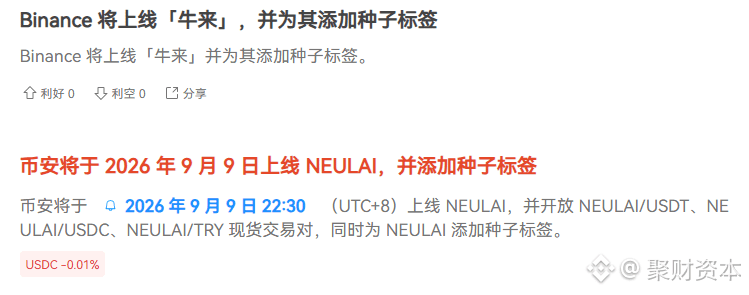
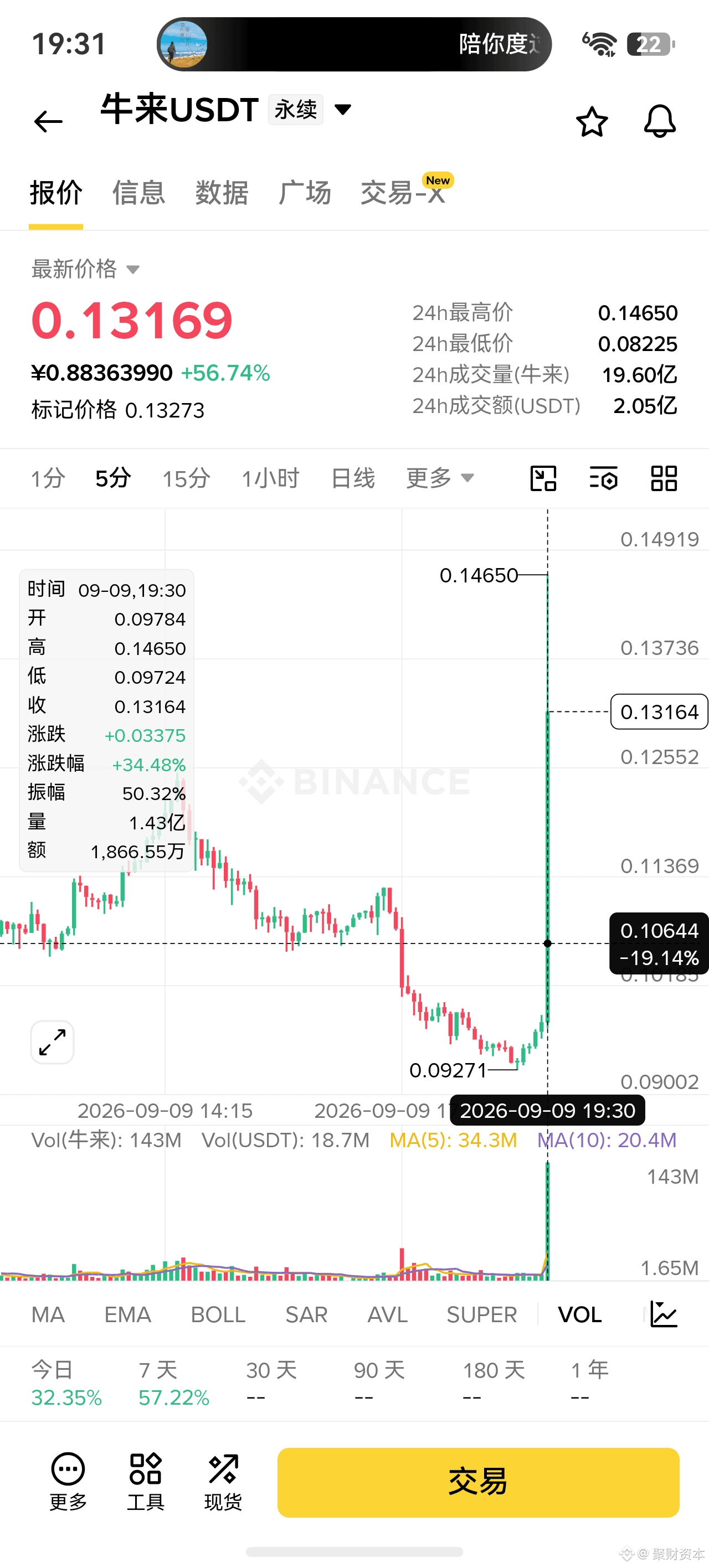
$牛来 ? New coin listed and it immediately rockets—tonight’s market action is going to be a big show!
Brothers, this price move completely ignores common sense. At 22:30 tonight, the trading target goes live; seed-tag it right away, and multiple groups of spot trading are opened simultaneously. $VVV
The moment it went live, it surged rapidly—high touched 0.1465, while the low was around 0.082. The short-term swing broke through 50%, and the current price is consolidating around 0.13. $SOPH
This kind of new coin hates being blindly chased. The more aggressive the pump, the higher the risk of a pullback.
Tonight, focus on two support levels: 0.125 and 0.12. Only if the price holds on the pullback will there be a chance to continue pushing higher; if it breaks down with volume, don’t stubbornly fight it.
Opportunities and risks coexist with the new listing. If you want to watch the chart together and find the right entry points, come to my chat room: @caishen147 . I’ll keep breaking down tonight’s market opportunities!
$牛来 ? New coin listed and it immediately rockets—tonight’s market action is going to be a big show!
Brothers, this price move completely ignores common sense. At 22:30 tonight, the trading target goes live; seed-tag it right away, and multiple groups of spot trading are opened simultaneously. $VVV
The moment it went live, it surged rapidly—high touched 0.1465, while the low was around 0.082. The short-term swing broke through 50%, and the current price is consolidating around 0.13. $SOPH
This kind of new coin hates being blindly chased. The more aggressive the pump, the higher the risk of a pullback.
Tonight, focus on two support levels: 0.125 and 0.12. Only if the price holds on the pullback will there be a chance to continue pushing higher; if it breaks down with volume, don’t stubbornly fight it.
Opportunities and risks coexist with the new listing. If you want to watch the chart together and find the right entry points, come to my chat room: @聚财资本 . I’ll keep breaking down tonight’s market opportunities!
Brothers, this price move completely ignores common sense. At 22:30 tonight, the trading target goes live; seed-tag it right away, and multiple groups of spot trading are opened simultaneously. $VVV
The moment it went live, it surged rapidly—high touched 0.1465, while the low was around 0.082. The short-term swing broke through 50%, and the current price is consolidating around 0.13. $SOPH
This kind of new coin hates being blindly chased. The more aggressive the pump, the higher the risk of a pullback.
Tonight, focus on two support levels: 0.125 and 0.12. Only if the price holds on the pullback will there be a chance to continue pushing higher; if it breaks down with volume, don’t stubbornly fight it.
Opportunities and risks coexist with the new listing. If you want to watch the chart together and find the right entry points, come to my chat room: @聚财资本 . I’ll keep breaking down tonight’s market opportunities!

312
·
--
Four Types of Inevitable Losers in the Crypto World—Have You Been One of Them? $VVV
1) Blind FOMO Hinge
At the start, new users go in with 100x leverage contracts. They make a little money, then immediately All-In—until there’s nothing left but their underwear. Going all-in on obscure coins, not knowing how to set a stop-loss, and always ending up in tears of “market longing”—surviving liquidation is nothing short of a miracle!
2) Dreaming-of-Fortune Type
Holding just a few thousand U and trying to turn it into a million—while the primary market and contracts have indeed created “miracles”—99% of people still die along the way. If you want to reverse your fate with a small bankroll, first learn to control risk, or you’re destined to be harvested! $SOPH $牛来
3) The Spoiled “Feed Me” Type
They learn nothing and wait for someone else to put food in their mouth. Lose a bit and blame the heavens, blame others. Nobody in the crypto world will spoil you. Once your mindset collapses, no matter how much you earn, you’ll have to give it all back!
4) The Stubborn Alt-Coin Only Type
They hold nothing but trash coins, refusing to touch BTC or ETH no matter what. In the end, what they’re waiting for isn’t a breakout surge—it’s the exchange delisting announcement. When altcoins fall, they fall way harder than Bitcoin. “Risk resistance”? It doesn’t exist!
Big Brother Hu’s usual setups focus on mainstream coin contracts and popular altcoin contracts. Spot and short-term trades are the mainstay. He’s good at catching the “golden dog,” digging out 100x coins. One person’s joy isn’t as good as everyone’s joy—if you reach out first, I’ll pull you onto shore. @Lmf8848
Four Types of Inevitable Losers in the Crypto World—Have You Been One of Them? $VVV
1) Blind FOMO Hinge
At the start, new users go in with 100x leverage contracts. They make a little money, then immediately All-In—until there’s nothing left but their underwear. Going all-in on obscure coins, not knowing how to set a stop-loss, and always ending up in tears of “market longing”—surviving liquidation is nothing short of a miracle!
2) Dreaming-of-Fortune Type
Holding just a few thousand U and trying to turn it into a million—while the primary market and contracts have indeed created “miracles”—99% of people still die along the way. If you want to reverse your fate with a small bankroll, first learn to control risk, or you’re destined to be harvested! $SOPH $牛来
3) The Spoiled “Feed Me” Type
They learn nothing and wait for someone else to put food in their mouth. Lose a bit and blame the heavens, blame others. Nobody in the crypto world will spoil you. Once your mindset collapses, no matter how much you earn, you’ll have to give it all back!
4) The Stubborn Alt-Coin Only Type
They hold nothing but trash coins, refusing to touch BTC or ETH no matter what. In the end, what they’re waiting for isn’t a breakout surge—it’s the exchange delisting announcement. When altcoins fall, they fall way harder than Bitcoin. “Risk resistance”? It doesn’t exist!
Big Brother Hu’s usual setups focus on mainstream coin contracts and popular altcoin contracts. Spot and short-term trades are the mainstay. He’s good at catching the “golden dog,” digging out 100x coins. One person’s joy isn’t as good as everyone’s joy—if you reach out first, I’ll pull you onto shore. @胖虎eth
1) Blind FOMO Hinge
At the start, new users go in with 100x leverage contracts. They make a little money, then immediately All-In—until there’s nothing left but their underwear. Going all-in on obscure coins, not knowing how to set a stop-loss, and always ending up in tears of “market longing”—surviving liquidation is nothing short of a miracle!
2) Dreaming-of-Fortune Type
Holding just a few thousand U and trying to turn it into a million—while the primary market and contracts have indeed created “miracles”—99% of people still die along the way. If you want to reverse your fate with a small bankroll, first learn to control risk, or you’re destined to be harvested! $SOPH $牛来
3) The Spoiled “Feed Me” Type
They learn nothing and wait for someone else to put food in their mouth. Lose a bit and blame the heavens, blame others. Nobody in the crypto world will spoil you. Once your mindset collapses, no matter how much you earn, you’ll have to give it all back!
4) The Stubborn Alt-Coin Only Type
They hold nothing but trash coins, refusing to touch BTC or ETH no matter what. In the end, what they’re waiting for isn’t a breakout surge—it’s the exchange delisting announcement. When altcoins fall, they fall way harder than Bitcoin. “Risk resistance”? It doesn’t exist!
Big Brother Hu’s usual setups focus on mainstream coin contracts and popular altcoin contracts. Spot and short-term trades are the mainstay. He’s good at catching the “golden dog,” digging out 100x coins. One person’s joy isn’t as good as everyone’s joy—if you reach out first, I’ll pull you onto shore. @胖虎eth

222
·
--
Why do futures contracts get liquidated every day, yet so many people still play?$VVV
Because most people simply don’t understand futures.
The real players spend 70% of their time waiting.
If the market isn’t right, you don’t make a move.$SOPH
The core of futures contracts is just two words: counter to human nature.
When others panic, you stay calm; when others are greedy, you act cautiously.
Your stop-loss must be ruthless—no more than 5% loss per trade.
But once profits start running, at least aim to take back double or more.$牛来
Many people say, “Futures contracts are just gambling?”
No. If you get liquidated, it’s because you’re gambling.
If you trade based on feelings, the market will eventually collect you.
Trading has never been about luck,
it’s about discipline.
Brother Cai usually plans using mainstream coin futures and popular altcoin contracts, with spot short-term trades as the focus. He’s good at catching “money-making dogs,” digging up hundred-x coins. One person enjoying it isn’t as good as everyone enjoying it—if you reach out first, I’ll pull you to shore.
When the broader market isn’t stable and sentiment is low, I’ve prepared a few coins that are suitable for bottom-fishing.
As part of the Turning-the-Sky plan, we expect one strong bullish candle—then thousands and tens of thousands will meet.
If you want to quickly recover and turn things around, and you genuinely want to get back to even and get ashore, Big Brother Hu is here waiting for you. As long as you take the initiative, I’ll be here at @Lmf8848 .
Why do futures contracts get liquidated every day, yet so many people still play?$VVV
Because most people simply don’t understand futures.
The real players spend 70% of their time waiting.
If the market isn’t right, you don’t make a move.$SOPH
The core of futures contracts is just two words: counter to human nature.
When others panic, you stay calm; when others are greedy, you act cautiously.
Your stop-loss must be ruthless—no more than 5% loss per trade.
But once profits start running, at least aim to take back double or more.$牛来
Many people say, “Futures contracts are just gambling?”
No. If you get liquidated, it’s because you’re gambling.
If you trade based on feelings, the market will eventually collect you.
Trading has never been about luck,
it’s about discipline.
Brother Cai usually plans using mainstream coin futures and popular altcoin contracts, with spot short-term trades as the focus. He’s good at catching “money-making dogs,” digging up hundred-x coins. One person enjoying it isn’t as good as everyone enjoying it—if you reach out first, I’ll pull you to shore.
When the broader market isn’t stable and sentiment is low, I’ve prepared a few coins that are suitable for bottom-fishing.
As part of the Turning-the-Sky plan, we expect one strong bullish candle—then thousands and tens of thousands will meet.
If you want to quickly recover and turn things around, and you genuinely want to get back to even and get ashore, Big Brother Hu is here waiting for you. As long as you take the initiative, I’ll be here at @胖虎eth .
Because most people simply don’t understand futures.
The real players spend 70% of their time waiting.
If the market isn’t right, you don’t make a move.$SOPH
The core of futures contracts is just two words: counter to human nature.
When others panic, you stay calm; when others are greedy, you act cautiously.
Your stop-loss must be ruthless—no more than 5% loss per trade.
But once profits start running, at least aim to take back double or more.$牛来
Many people say, “Futures contracts are just gambling?”
No. If you get liquidated, it’s because you’re gambling.
If you trade based on feelings, the market will eventually collect you.
Trading has never been about luck,
it’s about discipline.
Brother Cai usually plans using mainstream coin futures and popular altcoin contracts, with spot short-term trades as the focus. He’s good at catching “money-making dogs,” digging up hundred-x coins. One person enjoying it isn’t as good as everyone enjoying it—if you reach out first, I’ll pull you to shore.
When the broader market isn’t stable and sentiment is low, I’ve prepared a few coins that are suitable for bottom-fishing.
As part of the Turning-the-Sky plan, we expect one strong bullish candle—then thousands and tens of thousands will meet.
If you want to quickly recover and turn things around, and you genuinely want to get back to even and get ashore, Big Brother Hu is here waiting for you. As long as you take the initiative, I’ll be here at @胖虎eth .

215
·
--
How crypto newcomers can read candlestick charts to find entry points $VVV
Understanding candlesticks is the most basic step of technical analysis. For beginners, getting these points right is enough.
First, identify the trend. Consecutive bullish candles with the closing price steadily rising indicate an uptrend; consecutive bearish candles with prices continuously falling belong to a downtrend. Candlestick patterns like the hammer and engulfing patterns are often signals of trend reversal. $SOPH
Find support and resistance. The places where the price has repeatedly stopped falling and bounced are support. If a bullish candlestick appears near support, you can consider going long. Repeated rejections and pullbacks are pressure levels. If a bearish pattern appears near resistance, watch for opportunities to short. $ZEC
Pay attention to volume and price in combination. Price increases with rising volume means strong buying pressure; price falling with rising volume indicates heavy selling pressure.
Remember two types of reversal candlesticks in particular. A hammer appearing at the bottom of a downtrend, with a long lower wick, is a potential long signal; an inverted hammer is the same in logic and suggests the market may reverse upward.
The moving average golden cross is also a reference: when the short-term moving average crosses above the long-term moving average, it’s a bullish signal.
Most important of all is risk control. Before every trade, place a stop-loss at key levels in advance, and protect your principal.
If you want to quickly recover your losses, truly get back to break even and reach the shore, Caige is here for you. As long as you take the initiative, I’m always waiting at @caishen147
How crypto newcomers can read candlestick charts to find entry points $VVV
Understanding candlesticks is the most basic step of technical analysis. For beginners, getting these points right is enough.
First, identify the trend. Consecutive bullish candles with the closing price steadily rising indicate an uptrend; consecutive bearish candles with prices continuously falling belong to a downtrend. Candlestick patterns like the hammer and engulfing patterns are often signals of trend reversal. $SOPH
Find support and resistance. The places where the price has repeatedly stopped falling and bounced are support. If a bullish candlestick appears near support, you can consider going long. Repeated rejections and pullbacks are pressure levels. If a bearish pattern appears near resistance, watch for opportunities to short. $ZEC
Pay attention to volume and price in combination. Price increases with rising volume means strong buying pressure; price falling with rising volume indicates heavy selling pressure.
Remember two types of reversal candlesticks in particular. A hammer appearing at the bottom of a downtrend, with a long lower wick, is a potential long signal; an inverted hammer is the same in logic and suggests the market may reverse upward.
The moving average golden cross is also a reference: when the short-term moving average crosses above the long-term moving average, it’s a bullish signal.
Most important of all is risk control. Before every trade, place a stop-loss at key levels in advance, and protect your principal.
If you want to quickly recover your losses, truly get back to break even and reach the shore, Caige is here for you. As long as you take the initiative, I’m always waiting at @聚财资本
Understanding candlesticks is the most basic step of technical analysis. For beginners, getting these points right is enough.
First, identify the trend. Consecutive bullish candles with the closing price steadily rising indicate an uptrend; consecutive bearish candles with prices continuously falling belong to a downtrend. Candlestick patterns like the hammer and engulfing patterns are often signals of trend reversal. $SOPH
Find support and resistance. The places where the price has repeatedly stopped falling and bounced are support. If a bullish candlestick appears near support, you can consider going long. Repeated rejections and pullbacks are pressure levels. If a bearish pattern appears near resistance, watch for opportunities to short. $ZEC
Pay attention to volume and price in combination. Price increases with rising volume means strong buying pressure; price falling with rising volume indicates heavy selling pressure.
Remember two types of reversal candlesticks in particular. A hammer appearing at the bottom of a downtrend, with a long lower wick, is a potential long signal; an inverted hammer is the same in logic and suggests the market may reverse upward.
The moving average golden cross is also a reference: when the short-term moving average crosses above the long-term moving average, it’s a bullish signal.
Most important of all is risk control. Before every trade, place a stop-loss at key levels in advance, and protect your principal.
If you want to quickly recover your losses, truly get back to break even and reach the shore, Caige is here for you. As long as you take the initiative, I’m always waiting at @聚财资本

264
·
--
How to play in the crypto market to win? Here are a few tips.
$牛来
1. Simplicity is the king
When the bull market comes, all kinds of news flood in. Remember: do only what you’re good at, and don’t look left and right.
2. Topic heat $VVV
In this market, find hot topics and pay attention to what everyone is talking about—hype often beats technical analysis.
3. Catch the leader of the track
In this space, if you meet your “true love,” go for it boldly. Leader coins often can take you flying.
4. New coins bring new ideas $SOPH
Newly listed coins, new concepts, new ways to play—don’t miss them. The market always craves novelty and gets bored quickly after 1 day.
5. Pullbacks aren’t scary
Don’t be frightened by small pullbacks. In a bull market, pullbacks are normal. Stay calm and hold your coins—that’s the hard truth.
6. Don’t change positions too often
Frequent re-positioning may cost you. Lock onto your target and wait patiently.
7. Information must be reliable
In a bull market, reliable news is extremely important. Organize your information sources well and keep your info flowing.
8. Take profit in batches
Making money in a bull market is easy; holding onto it is hard. Remember to take profit regularly—safety comes first.
9. Keep a bit in reserve
After taking profit, leave a hand behind. If the market takes off, you can still get your share!
If you want to quickly recover and turn things around back to profit—if you truly want to break even and get back on your feet—Brother Cai is here waiting for you. As long as you take action, I’m always here at @caishen147
How to play in the crypto market to win? Here are a few tips.
$牛来
1. Simplicity is the king
When the bull market comes, all kinds of news flood in. Remember: do only what you’re good at, and don’t look left and right.
2. Topic heat $VVV
In this market, find hot topics and pay attention to what everyone is talking about—hype often beats technical analysis.
3. Catch the leader of the track
In this space, if you meet your “true love,” go for it boldly. Leader coins often can take you flying.
4. New coins bring new ideas $SOPH
Newly listed coins, new concepts, new ways to play—don’t miss them. The market always craves novelty and gets bored quickly after 1 day.
5. Pullbacks aren’t scary
Don’t be frightened by small pullbacks. In a bull market, pullbacks are normal. Stay calm and hold your coins—that’s the hard truth.
6. Don’t change positions too often
Frequent re-positioning may cost you. Lock onto your target and wait patiently.
7. Information must be reliable
In a bull market, reliable news is extremely important. Organize your information sources well and keep your info flowing.
8. Take profit in batches
Making money in a bull market is easy; holding onto it is hard. Remember to take profit regularly—safety comes first.
9. Keep a bit in reserve
After taking profit, leave a hand behind. If the market takes off, you can still get your share!
If you want to quickly recover and turn things around back to profit—if you truly want to break even and get back on your feet—Brother Cai is here waiting for you. As long as you take action, I’m always here at @聚财资本
$牛来
1. Simplicity is the king
When the bull market comes, all kinds of news flood in. Remember: do only what you’re good at, and don’t look left and right.
2. Topic heat $VVV
In this market, find hot topics and pay attention to what everyone is talking about—hype often beats technical analysis.
3. Catch the leader of the track
In this space, if you meet your “true love,” go for it boldly. Leader coins often can take you flying.
4. New coins bring new ideas $SOPH
Newly listed coins, new concepts, new ways to play—don’t miss them. The market always craves novelty and gets bored quickly after 1 day.
5. Pullbacks aren’t scary
Don’t be frightened by small pullbacks. In a bull market, pullbacks are normal. Stay calm and hold your coins—that’s the hard truth.
6. Don’t change positions too often
Frequent re-positioning may cost you. Lock onto your target and wait patiently.
7. Information must be reliable
In a bull market, reliable news is extremely important. Organize your information sources well and keep your info flowing.
8. Take profit in batches
Making money in a bull market is easy; holding onto it is hard. Remember to take profit regularly—safety comes first.
9. Keep a bit in reserve
After taking profit, leave a hand behind. If the market takes off, you can still get your share!
If you want to quickly recover and turn things around back to profit—if you truly want to break even and get back on your feet—Brother Cai is here waiting for you. As long as you take action, I’m always here at @聚财资本

206
·
--
5000U rolled into A8—an in-depth breakdown of the crypto-wealth-up strategy. The thinking behind it is fully explained; 99% of people end up failing on the third rule $USELESS
In the bull market from 2021 to 2024, countless people carried 100–125x leverage and wiped out overnight. I relied on this approach to move step by step, rolling from 5000U to A8.
Later I finally understood: the underlying laws of the market don’t change—only the patterns keep evolving. People need to learn to adapt to cycles. Don’t fantasize that the market will accommodate you; otherwise you’ll be eliminated sooner or later. $SOPH
First, strictly control your position size. Set your entry, exit, take-profit, and stop-loss ratios in advance. For every trade, plan your position-size cap—never impulsively add more on the fly. $VVV
Second, protect your risk. When your profit reaches your target, reduce your position proactively. Whether it’s 50% or 80% gains, taking it off the table counts as actually securing profit. Back then, the Luna “black swan” is still fresh in memory: 47 million-accounts-sized bottoms-up wiped out, and many A8 big shots basically went silent. In crypto, surviving is what makes you the winner. Capital is always the top priority. Protect your principal, and only then do you earn the right to keep competing. This market’s volatility is far greater than ordinary markets—risk can never be taken lightly.
Third, restrain greed and diversify your layout. You can participate moderately in staking, airdrops, and opportunities in hot sectors—but never go heavy, and never all-in. There is no 100% win rate in the market. One big loss can get you completely knocked out.
Always trade with the trend. Don’t stubbornly hold against the market. The market is always there—wait patiently for the hunting window. Patience is the trader’s strongest weapon.
If you want to quickly recover losses and turn the situation around—if you truly want to get back to even and get back on solid ground—Cai-ge is here for you. As long as you take the initiative, I’ll be waiting. @caishen147
5000U rolled into A8—an in-depth breakdown of the crypto-wealth-up strategy. The thinking behind it is fully explained; 99% of people end up failing on the third rule $USELESS
In the bull market from 2021 to 2024, countless people carried 100–125x leverage and wiped out overnight. I relied on this approach to move step by step, rolling from 5000U to A8.
Later I finally understood: the underlying laws of the market don’t change—only the patterns keep evolving. People need to learn to adapt to cycles. Don’t fantasize that the market will accommodate you; otherwise you’ll be eliminated sooner or later. $SOPH
First, strictly control your position size. Set your entry, exit, take-profit, and stop-loss ratios in advance. For every trade, plan your position-size cap—never impulsively add more on the fly. $VVV
Second, protect your risk. When your profit reaches your target, reduce your position proactively. Whether it’s 50% or 80% gains, taking it off the table counts as actually securing profit. Back then, the Luna “black swan” is still fresh in memory: 47 million-accounts-sized bottoms-up wiped out, and many A8 big shots basically went silent. In crypto, surviving is what makes you the winner. Capital is always the top priority. Protect your principal, and only then do you earn the right to keep competing. This market’s volatility is far greater than ordinary markets—risk can never be taken lightly.
Third, restrain greed and diversify your layout. You can participate moderately in staking, airdrops, and opportunities in hot sectors—but never go heavy, and never all-in. There is no 100% win rate in the market. One big loss can get you completely knocked out.
Always trade with the trend. Don’t stubbornly hold against the market. The market is always there—wait patiently for the hunting window. Patience is the trader’s strongest weapon.
If you want to quickly recover losses and turn the situation around—if you truly want to get back to even and get back on solid ground—Cai-ge is here for you. As long as you take the initiative, I’ll be waiting. @聚财资本
In the bull market from 2021 to 2024, countless people carried 100–125x leverage and wiped out overnight. I relied on this approach to move step by step, rolling from 5000U to A8.
Later I finally understood: the underlying laws of the market don’t change—only the patterns keep evolving. People need to learn to adapt to cycles. Don’t fantasize that the market will accommodate you; otherwise you’ll be eliminated sooner or later. $SOPH
First, strictly control your position size. Set your entry, exit, take-profit, and stop-loss ratios in advance. For every trade, plan your position-size cap—never impulsively add more on the fly. $VVV
Second, protect your risk. When your profit reaches your target, reduce your position proactively. Whether it’s 50% or 80% gains, taking it off the table counts as actually securing profit. Back then, the Luna “black swan” is still fresh in memory: 47 million-accounts-sized bottoms-up wiped out, and many A8 big shots basically went silent. In crypto, surviving is what makes you the winner. Capital is always the top priority. Protect your principal, and only then do you earn the right to keep competing. This market’s volatility is far greater than ordinary markets—risk can never be taken lightly.
Third, restrain greed and diversify your layout. You can participate moderately in staking, airdrops, and opportunities in hot sectors—but never go heavy, and never all-in. There is no 100% win rate in the market. One big loss can get you completely knocked out.
Always trade with the trend. Don’t stubbornly hold against the market. The market is always there—wait patiently for the hunting window. Patience is the trader’s strongest weapon.
If you want to quickly recover losses and turn the situation around—if you truly want to get back to even and get back on solid ground—Cai-ge is here for you. As long as you take the initiative, I’ll be waiting. @聚财资本

184
·
--
There is the stupidest way to trade and it’s almost 100% profitable. $ZEC
Only do high-sell low-buy for BTC/ETH—no altcoins at all!
10x leverage, best with 2–3 layers of position. If it exceeds 30%, the risk starts. Anything bigger can’t withstand just one round of a big drop—your margin for error becomes too small. This is a summary of Lengfeng’s years of experience. Don’t take it lightly. $SOPH
If you increase leverage, you can reduce your position size at the same time; if you reduce position size, you can increase leverage accordingly. Then it’s guaranteed to be pretty much the same as Lengfeng.
For one coin: the total of the three lots must not exceed 30%; at most hold 3–5 coins, and their combined total must not exceed 30% of your full account (normal position). $VVV
For one coin: the total of the three lots must not exceed 20%; at most hold 3–5 coins, and their combined total must not exceed 20% of your full account (conservative position).
When you buy a coin, first you need to have a concept of how much U you’re going to commit. For example: if I want to buy BTC, I’ll spend 1000U in total; if I buy ETH, I’ll spend 2000U in total; if I buy ORDI, I’ll spend 500U in total.
Second, you need rules for the buy progress. Usually it’s a three-lot system, with progress patterns of 4.3.3 or 3.4.3.
If during the buying process the price starts rising, don’t add more positions.
If all three lots have been deployed, and it still keeps falling, don’t add any more.
I. Set a stop-loss. This is a must, not optional.
II. You’ve averaged down, but it’s still dropping. That means your judgment was wrong—reduce your position proactively first. Wait until it turns around, then add back.
III. Add when it turns around. Averaging down isn’t “the lower it goes, the more you add”—that easily makes your position heavier and heavier. Instead, wait for it to turn before adding.
If you want to quickly claw back losses and turn everything around—truly want to get back to breakeven and make it out—Brother Hu is here for you. As long as you take the initiative, I’ll be here waiting at @caishen147 .
There is the stupidest way to trade and it’s almost 100% profitable. $ZEC
Only do high-sell low-buy for BTC/ETH—no altcoins at all!
10x leverage, best with 2–3 layers of position. If it exceeds 30%, the risk starts. Anything bigger can’t withstand just one round of a big drop—your margin for error becomes too small. This is a summary of Lengfeng’s years of experience. Don’t take it lightly. $SOPH
If you increase leverage, you can reduce your position size at the same time; if you reduce position size, you can increase leverage accordingly. Then it’s guaranteed to be pretty much the same as Lengfeng.
For one coin: the total of the three lots must not exceed 30%; at most hold 3–5 coins, and their combined total must not exceed 30% of your full account (normal position). $VVV
For one coin: the total of the three lots must not exceed 20%; at most hold 3–5 coins, and their combined total must not exceed 20% of your full account (conservative position).
When you buy a coin, first you need to have a concept of how much U you’re going to commit. For example: if I want to buy BTC, I’ll spend 1000U in total; if I buy ETH, I’ll spend 2000U in total; if I buy ORDI, I’ll spend 500U in total.
Second, you need rules for the buy progress. Usually it’s a three-lot system, with progress patterns of 4.3.3 or 3.4.3.
If during the buying process the price starts rising, don’t add more positions.
If all three lots have been deployed, and it still keeps falling, don’t add any more.
I. Set a stop-loss. This is a must, not optional.
II. You’ve averaged down, but it’s still dropping. That means your judgment was wrong—reduce your position proactively first. Wait until it turns around, then add back.
III. Add when it turns around. Averaging down isn’t “the lower it goes, the more you add”—that easily makes your position heavier and heavier. Instead, wait for it to turn before adding.
If you want to quickly claw back losses and turn everything around—truly want to get back to breakeven and make it out—Brother Hu is here for you. As long as you take the initiative, I’ll be here waiting at @聚财资本 .
Only do high-sell low-buy for BTC/ETH—no altcoins at all!
10x leverage, best with 2–3 layers of position. If it exceeds 30%, the risk starts. Anything bigger can’t withstand just one round of a big drop—your margin for error becomes too small. This is a summary of Lengfeng’s years of experience. Don’t take it lightly. $SOPH
If you increase leverage, you can reduce your position size at the same time; if you reduce position size, you can increase leverage accordingly. Then it’s guaranteed to be pretty much the same as Lengfeng.
For one coin: the total of the three lots must not exceed 30%; at most hold 3–5 coins, and their combined total must not exceed 30% of your full account (normal position). $VVV
For one coin: the total of the three lots must not exceed 20%; at most hold 3–5 coins, and their combined total must not exceed 20% of your full account (conservative position).
When you buy a coin, first you need to have a concept of how much U you’re going to commit. For example: if I want to buy BTC, I’ll spend 1000U in total; if I buy ETH, I’ll spend 2000U in total; if I buy ORDI, I’ll spend 500U in total.
Second, you need rules for the buy progress. Usually it’s a three-lot system, with progress patterns of 4.3.3 or 3.4.3.
If during the buying process the price starts rising, don’t add more positions.
If all three lots have been deployed, and it still keeps falling, don’t add any more.
I. Set a stop-loss. This is a must, not optional.
II. You’ve averaged down, but it’s still dropping. That means your judgment was wrong—reduce your position proactively first. Wait until it turns around, then add back.
III. Add when it turns around. Averaging down isn’t “the lower it goes, the more you add”—that easily makes your position heavier and heavier. Instead, wait for it to turn before adding.
If you want to quickly claw back losses and turn everything around—truly want to get back to breakeven and make it out—Brother Hu is here for you. As long as you take the initiative, I’ll be here waiting at @聚财资本 .

192
·
--
I remembered it—I remembered everything. I’m not “The Wolf of Wall Street.” I’m a minor. I’m applying for a refund $ZEC
Many people trade for an entire year. It looks like they’re always watching charts and reviewing them, but in reality they make no progress.
Most people think trading is about reading candlestick charts, finding opportunities, and making decisions. But the real difficulty isn’t finding a way to profit—it’s sticking to the correct trading actions. $SOPH
The market is never short of opportunities, but it will never have an opportunity that belongs to you every single day.
More often than not, the biggest improvement isn’t catching a huge rally—it’s keeping your hands off the trade, resisting the urge to enter impulsively. $VVV
Beginners are most prone to getting their mindset out of balance: when others make money they get anxious; when the market rises they fear missing out; when they make a mistake they rush to break even to prove themselves. In the end they make frequent errors and keep losing.
Only after deepening their trading practice do they understand: the market always has opportunities; what’s scarce is a stable version of yourself.
Consistent profitability doesn’t come from constant trading—it comes from daily recording of trades, reviewing gains and losses, and correcting your understanding. Trading is a long journey of cultivation. Keeping your mindset steady, following the rules, and continuously accumulating experience matter far more than blindly gambling.
If you want to quickly recover losses and turn the situation around—if you truly want to get back to break-even and finally make it ashore—Brother Cai is here waiting for you. As long as you take the initiative, I’m always here @caishen147
I remembered it—I remembered everything. I’m not “The Wolf of Wall Street.” I’m a minor. I’m applying for a refund $ZEC
Many people trade for an entire year. It looks like they’re always watching charts and reviewing them, but in reality they make no progress.
Most people think trading is about reading candlestick charts, finding opportunities, and making decisions. But the real difficulty isn’t finding a way to profit—it’s sticking to the correct trading actions. $SOPH
The market is never short of opportunities, but it will never have an opportunity that belongs to you every single day.
More often than not, the biggest improvement isn’t catching a huge rally—it’s keeping your hands off the trade, resisting the urge to enter impulsively. $VVV
Beginners are most prone to getting their mindset out of balance: when others make money they get anxious; when the market rises they fear missing out; when they make a mistake they rush to break even to prove themselves. In the end they make frequent errors and keep losing.
Only after deepening their trading practice do they understand: the market always has opportunities; what’s scarce is a stable version of yourself.
Consistent profitability doesn’t come from constant trading—it comes from daily recording of trades, reviewing gains and losses, and correcting your understanding. Trading is a long journey of cultivation. Keeping your mindset steady, following the rules, and continuously accumulating experience matter far more than blindly gambling.
If you want to quickly recover losses and turn the situation around—if you truly want to get back to break-even and finally make it ashore—Brother Cai is here waiting for you. As long as you take the initiative, I’m always here @聚财资本
Many people trade for an entire year. It looks like they’re always watching charts and reviewing them, but in reality they make no progress.
Most people think trading is about reading candlestick charts, finding opportunities, and making decisions. But the real difficulty isn’t finding a way to profit—it’s sticking to the correct trading actions. $SOPH
The market is never short of opportunities, but it will never have an opportunity that belongs to you every single day.
More often than not, the biggest improvement isn’t catching a huge rally—it’s keeping your hands off the trade, resisting the urge to enter impulsively. $VVV
Beginners are most prone to getting their mindset out of balance: when others make money they get anxious; when the market rises they fear missing out; when they make a mistake they rush to break even to prove themselves. In the end they make frequent errors and keep losing.
Only after deepening their trading practice do they understand: the market always has opportunities; what’s scarce is a stable version of yourself.
Consistent profitability doesn’t come from constant trading—it comes from daily recording of trades, reviewing gains and losses, and correcting your understanding. Trading is a long journey of cultivation. Keeping your mindset steady, following the rules, and continuously accumulating experience matter far more than blindly gambling.
If you want to quickly recover losses and turn the situation around—if you truly want to get back to break-even and finally make it ashore—Brother Cai is here waiting for you. As long as you take the initiative, I’m always here @聚财资本

218
·
--
Many people enter the market and immediately ask: what coin should I buy? When will it go up? Can it double? $VVV
But if you can’t even read the chart, it’s like four people playing mahjong and everyone else has their tiles showing, while only you don’t know what your opponents hold. How can you possibly win? $牛来
The first lesson for newcomers is not to look for a coin that will skyrocket, but to learn how to read the market. $SOPH
Candlesticks, trading volume, trends, and market sentiment—these fundamentals must be understood. First, take out past market moves and review them, then find a method that you can understand and actually use.
If your funds are limited, don’t go all in right away.
For example, if you have 1500U, use only 100U to get familiar with the rhythm of futures trading and experience the volatility with a small position. If you lose, stop and review, rather than immediately depositing more to try to win it back.
Technical skills are only the first hurdle. What really determines whether you can go far is position sizing, stop-loss discipline, and your mindset.
Futures trading is not about who is braver, but about who survives longer.
Newcomers should remember: your biggest advantage is not having more capital, but being able to afford losses, learn quickly, and wait patiently.
Master the basics first, then think about scaling up profits. The market is always there; opportunities won’t come only once.
If you want to slowly grow a small account and stop spinning in place, feel free to come and discuss. I’ll help you take a steadier path. @Lmf8848
Many people enter the market and immediately ask: what coin should I buy? When will it go up? Can it double? $VVV
But if you can’t even read the chart, it’s like four people playing mahjong and everyone else has their tiles showing, while only you don’t know what your opponents hold. How can you possibly win? $牛来
The first lesson for newcomers is not to look for a coin that will skyrocket, but to learn how to read the market. $SOPH
Candlesticks, trading volume, trends, and market sentiment—these fundamentals must be understood. First, take out past market moves and review them, then find a method that you can understand and actually use.
If your funds are limited, don’t go all in right away.
For example, if you have 1500U, use only 100U to get familiar with the rhythm of futures trading and experience the volatility with a small position. If you lose, stop and review, rather than immediately depositing more to try to win it back.
Technical skills are only the first hurdle. What really determines whether you can go far is position sizing, stop-loss discipline, and your mindset.
Futures trading is not about who is braver, but about who survives longer.
Newcomers should remember: your biggest advantage is not having more capital, but being able to afford losses, learn quickly, and wait patiently.
Master the basics first, then think about scaling up profits. The market is always there; opportunities won’t come only once.
If you want to slowly grow a small account and stop spinning in place, feel free to come and discuss. I’ll help you take a steadier path. @胖虎eth
But if you can’t even read the chart, it’s like four people playing mahjong and everyone else has their tiles showing, while only you don’t know what your opponents hold. How can you possibly win? $牛来
The first lesson for newcomers is not to look for a coin that will skyrocket, but to learn how to read the market. $SOPH
Candlesticks, trading volume, trends, and market sentiment—these fundamentals must be understood. First, take out past market moves and review them, then find a method that you can understand and actually use.
If your funds are limited, don’t go all in right away.
For example, if you have 1500U, use only 100U to get familiar with the rhythm of futures trading and experience the volatility with a small position. If you lose, stop and review, rather than immediately depositing more to try to win it back.
Technical skills are only the first hurdle. What really determines whether you can go far is position sizing, stop-loss discipline, and your mindset.
Futures trading is not about who is braver, but about who survives longer.
Newcomers should remember: your biggest advantage is not having more capital, but being able to afford losses, learn quickly, and wait patiently.
Master the basics first, then think about scaling up profits. The market is always there; opportunities won’t come only once.
If you want to slowly grow a small account and stop spinning in place, feel free to come and discuss. I’ll help you take a steadier path. @胖虎eth


298
·
--
I remember now—I remember everything. I’m not “The Wolf of Wall Street.” I’m a minor. I’m requesting a refund. $VVV
In the crypto world, many people lose money. It’s not that there aren’t trading methods, but that they’ve been desperately searching for a nonexistent “perfect strategy.” $SOPH
Once you trade for a while, you’ll understand: what’s usually dragging down your account isn’t that you don’t understand the market—it’s that you’ve got too many methods in hand. Today you study moving averages, tomorrow you study MACD, and the day after you keep piling on more indicators. You seem to be learning more and more, but your account balance keeps shrinking. $KAT
Earlier, a friend of mine asked me for help—within half a year, he kept switching out several trading systems. He lost with a moving-average approach, so he thought the whole system failed. Even after adding MACD and RSI, he still kept losing. In the end, he stacked a huge bunch of indicators, hoping to boost win rate with complex rules, but the trades only became more and more chaotic.
When I looked through his trades, I told him: it’s not that the strategy is wrong—it’s that you didn’t give it enough time to validate. Every trading system fits certain market conditions; it can’t be profitable all the time. If you overturn everything after just a few losing trades and keep chasing a new method, that’s essentially starting from scratch over and over.
A system that can survive long-term is actually quite simple: judge the trend, find the right entries, manage your positions well, and set stop-losses. The difficulty was never in finding a method—it’s in consistently executing it.
Mature traders don’t dismiss a system because of short-term losses. They adjust their pace according to market conditions. Trading isn’t a contest over who knows more indicators—it’s about who can repeat a simple strategy and do it well. There is no perfect strategy in the market—only an execution system that suits you. Do less back-and-forth tinkering, settle down to refine patiently, and your account has a chance to gradually recover.
If you want to quickly get your money back and turn things around—if you truly want to recover to break even and make it ashore, Big Tiger is here for you. As long as you take the initiative, I’ll be waiting at @Lmf8848
I remember now—I remember everything. I’m not “The Wolf of Wall Street.” I’m a minor. I’m requesting a refund. $VVV
In the crypto world, many people lose money. It’s not that there aren’t trading methods, but that they’ve been desperately searching for a nonexistent “perfect strategy.” $SOPH
Once you trade for a while, you’ll understand: what’s usually dragging down your account isn’t that you don’t understand the market—it’s that you’ve got too many methods in hand. Today you study moving averages, tomorrow you study MACD, and the day after you keep piling on more indicators. You seem to be learning more and more, but your account balance keeps shrinking. $KAT
Earlier, a friend of mine asked me for help—within half a year, he kept switching out several trading systems. He lost with a moving-average approach, so he thought the whole system failed. Even after adding MACD and RSI, he still kept losing. In the end, he stacked a huge bunch of indicators, hoping to boost win rate with complex rules, but the trades only became more and more chaotic.
When I looked through his trades, I told him: it’s not that the strategy is wrong—it’s that you didn’t give it enough time to validate. Every trading system fits certain market conditions; it can’t be profitable all the time. If you overturn everything after just a few losing trades and keep chasing a new method, that’s essentially starting from scratch over and over.
A system that can survive long-term is actually quite simple: judge the trend, find the right entries, manage your positions well, and set stop-losses. The difficulty was never in finding a method—it’s in consistently executing it.
Mature traders don’t dismiss a system because of short-term losses. They adjust their pace according to market conditions. Trading isn’t a contest over who knows more indicators—it’s about who can repeat a simple strategy and do it well. There is no perfect strategy in the market—only an execution system that suits you. Do less back-and-forth tinkering, settle down to refine patiently, and your account has a chance to gradually recover.
If you want to quickly get your money back and turn things around—if you truly want to recover to break even and make it ashore, Big Tiger is here for you. As long as you take the initiative, I’ll be waiting at @胖虎eth
In the crypto world, many people lose money. It’s not that there aren’t trading methods, but that they’ve been desperately searching for a nonexistent “perfect strategy.” $SOPH
Once you trade for a while, you’ll understand: what’s usually dragging down your account isn’t that you don’t understand the market—it’s that you’ve got too many methods in hand. Today you study moving averages, tomorrow you study MACD, and the day after you keep piling on more indicators. You seem to be learning more and more, but your account balance keeps shrinking. $KAT
Earlier, a friend of mine asked me for help—within half a year, he kept switching out several trading systems. He lost with a moving-average approach, so he thought the whole system failed. Even after adding MACD and RSI, he still kept losing. In the end, he stacked a huge bunch of indicators, hoping to boost win rate with complex rules, but the trades only became more and more chaotic.
When I looked through his trades, I told him: it’s not that the strategy is wrong—it’s that you didn’t give it enough time to validate. Every trading system fits certain market conditions; it can’t be profitable all the time. If you overturn everything after just a few losing trades and keep chasing a new method, that’s essentially starting from scratch over and over.
A system that can survive long-term is actually quite simple: judge the trend, find the right entries, manage your positions well, and set stop-losses. The difficulty was never in finding a method—it’s in consistently executing it.
Mature traders don’t dismiss a system because of short-term losses. They adjust their pace according to market conditions. Trading isn’t a contest over who knows more indicators—it’s about who can repeat a simple strategy and do it well. There is no perfect strategy in the market—only an execution system that suits you. Do less back-and-forth tinkering, settle down to refine patiently, and your account has a chance to gradually recover.
If you want to quickly get your money back and turn things around—if you truly want to recover to break even and make it ashore, Big Tiger is here for you. As long as you take the initiative, I’ll be waiting at @胖虎eth

262
·
--
3000 yuan to 1 million—what’s the reliable path?$VVV
First, the key point: don’t expect contracts to turn everything around in one move. With a small amount of capital, it’s always about patience and discipline.
$SOPH
If I had to start over, I would follow this approach.
Step one: build up principal. If your capital is too small, focus on steady work to increase income first, and gradually accumulate your principal to around 10,000. Don’t rush for instant results.
$BNC
Step two: only participate in trending markets. Wait until the weekly line holds above the MA20 before considering a setup. Choose 2–3 strong candidates that have momentum and are in the early stage, and avoid assets that have already surged significantly.
Third step: set your exit criteria in advance. If the weekly line breaks below the MA20, immediately pause the strategy and handle stop-loss. Leave room for 2–3 attempts at error. After you’ve lost, never add more money to “hold and die” through it.
Fourth step: hold trend profits. In one major market cycle, capture 2–3 waves of the main upswing. One wave may bring 5x; two waves, 25x; three waves, theoretically 125x. In theory, small capital can be rolled over into larger capital.
But this isn’t a guaranteed method, and it’s not a shortcut to get rich overnight. If you execute it many times and still keep making mistakes, it means it’s not the right time to add more. First, accumulate, save money, and refine your understanding—then wait for the next cycle.
The biggest advantage of small capital is that you can afford time. When it’s time to act, act. When it’s time to stop loss, exit decisively. If there’s no opportunity, go to cash. If you lack patience, don’t touch high leverage.
If you want to turn things around, don’t rely on reckless bets—depend on long-term survival and strict execution. If you also want to avoid fewer traps and build steadily, then plan it out step by step.
If you want to quickly get your money back and turn the situation around—truly wanting to return to profit and get back on solid ground—Tiger Brother is here for you. As long as you take initiative, I’ll be waiting at @Lmf8848
3000 yuan to 1 million—what’s the reliable path?$VVV
First, the key point: don’t expect contracts to turn everything around in one move. With a small amount of capital, it’s always about patience and discipline.
$SOPH
If I had to start over, I would follow this approach.
Step one: build up principal. If your capital is too small, focus on steady work to increase income first, and gradually accumulate your principal to around 10,000. Don’t rush for instant results.
$BNC
Step two: only participate in trending markets. Wait until the weekly line holds above the MA20 before considering a setup. Choose 2–3 strong candidates that have momentum and are in the early stage, and avoid assets that have already surged significantly.
Third step: set your exit criteria in advance. If the weekly line breaks below the MA20, immediately pause the strategy and handle stop-loss. Leave room for 2–3 attempts at error. After you’ve lost, never add more money to “hold and die” through it.
Fourth step: hold trend profits. In one major market cycle, capture 2–3 waves of the main upswing. One wave may bring 5x; two waves, 25x; three waves, theoretically 125x. In theory, small capital can be rolled over into larger capital.
But this isn’t a guaranteed method, and it’s not a shortcut to get rich overnight. If you execute it many times and still keep making mistakes, it means it’s not the right time to add more. First, accumulate, save money, and refine your understanding—then wait for the next cycle.
The biggest advantage of small capital is that you can afford time. When it’s time to act, act. When it’s time to stop loss, exit decisively. If there’s no opportunity, go to cash. If you lack patience, don’t touch high leverage.
If you want to turn things around, don’t rely on reckless bets—depend on long-term survival and strict execution. If you also want to avoid fewer traps and build steadily, then plan it out step by step.
If you want to quickly get your money back and turn the situation around—truly wanting to return to profit and get back on solid ground—Tiger Brother is here for you. As long as you take initiative, I’ll be waiting at @胖虎eth
First, the key point: don’t expect contracts to turn everything around in one move. With a small amount of capital, it’s always about patience and discipline.
$SOPH
If I had to start over, I would follow this approach.
Step one: build up principal. If your capital is too small, focus on steady work to increase income first, and gradually accumulate your principal to around 10,000. Don’t rush for instant results.
$BNC
Step two: only participate in trending markets. Wait until the weekly line holds above the MA20 before considering a setup. Choose 2–3 strong candidates that have momentum and are in the early stage, and avoid assets that have already surged significantly.
Third step: set your exit criteria in advance. If the weekly line breaks below the MA20, immediately pause the strategy and handle stop-loss. Leave room for 2–3 attempts at error. After you’ve lost, never add more money to “hold and die” through it.
Fourth step: hold trend profits. In one major market cycle, capture 2–3 waves of the main upswing. One wave may bring 5x; two waves, 25x; three waves, theoretically 125x. In theory, small capital can be rolled over into larger capital.
But this isn’t a guaranteed method, and it’s not a shortcut to get rich overnight. If you execute it many times and still keep making mistakes, it means it’s not the right time to add more. First, accumulate, save money, and refine your understanding—then wait for the next cycle.
The biggest advantage of small capital is that you can afford time. When it’s time to act, act. When it’s time to stop loss, exit decisively. If there’s no opportunity, go to cash. If you lack patience, don’t touch high leverage.
If you want to turn things around, don’t rely on reckless bets—depend on long-term survival and strict execution. If you also want to avoid fewer traps and build steadily, then plan it out step by step.
If you want to quickly get your money back and turn the situation around—truly wanting to return to profit and get back on solid ground—Tiger Brother is here for you. As long as you take initiative, I’ll be waiting at @胖虎eth

203
·
--
I remember now, I remember everything. I’m not “the Wolf of Wall Street.” I’m a minor. I’m applying for a refund.
The most thrilling thing about trading contracts is the K-line movement between the opening and closing—moment-to-moment fluctuations in unrealized profit and loss can tug at your account instantly. Every fraction of a move is real money.$VVV
But to achieve long-term profitability greater than losses, many people have fallen into the same big trap.
$BNC
In my early days of trading, I had this bad habit: once I went bullish, I stubbornly held the long positions; once I went bearish, I stubbornly held the short positions. Small losses kept growing and finally turned into a big loss. It took me a while to realize: contract trading isn’t about how accurately you can predict the market—it’s about whether you can flexibly adjust your trading plan as the market changes.$SOPH
If the price breaks below a key support level, don’t rush to chase shorts with a heavy position. First, observe whether the bearish momentum can continue. After confirming the breakdown, you can try shorting with a small position. For higher-quality opportunities, often it’s after the breakdown when a retracement occurs—the former support turns into resistance. That’s when you short again, with a clear stop-loss, and the risk-reward ratio becomes more favorable.
Going long is the same. Even if you previously judged bullishly, once the trend reverses, don’t cling to past views and keep holding stubbornly.
Switching between long and short doesn’t mean constantly flipping back and forth. It’s not that after one losing trade you immediately open a position in the opposite direction, and you absolutely shouldn’t trade back and forth repeatedly within a single day. Every time you change your direction, you need solid justification: a structural shift, the trend turning unfavorable, and key levels breaking—then adjust your thinking accordingly.#道指下跌超600点
The essence of contract trading has never been about guaranteeing profit on every single trade. It’s about controlling losses when you’re wrong, and holding onto profits when you’re right. Being wrong about the market isn’t the scary part—the truly frightening thing is doubling down stubbornly after you’ve already made the mistake.
If you want to quickly recover your losses and turn things around, and sincerely want to get back to break-even and get back on solid ground, Big Tiger is here for you. As long as you take initiative, I’ve been waiting for you at @Lmf8848 .
I remember now, I remember everything. I’m not “the Wolf of Wall Street.” I’m a minor. I’m applying for a refund.
The most thrilling thing about trading contracts is the K-line movement between the opening and closing—moment-to-moment fluctuations in unrealized profit and loss can tug at your account instantly. Every fraction of a move is real money.$VVV
But to achieve long-term profitability greater than losses, many people have fallen into the same big trap.
$BNC
In my early days of trading, I had this bad habit: once I went bullish, I stubbornly held the long positions; once I went bearish, I stubbornly held the short positions. Small losses kept growing and finally turned into a big loss. It took me a while to realize: contract trading isn’t about how accurately you can predict the market—it’s about whether you can flexibly adjust your trading plan as the market changes.$SOPH
If the price breaks below a key support level, don’t rush to chase shorts with a heavy position. First, observe whether the bearish momentum can continue. After confirming the breakdown, you can try shorting with a small position. For higher-quality opportunities, often it’s after the breakdown when a retracement occurs—the former support turns into resistance. That’s when you short again, with a clear stop-loss, and the risk-reward ratio becomes more favorable.
Going long is the same. Even if you previously judged bullishly, once the trend reverses, don’t cling to past views and keep holding stubbornly.
Switching between long and short doesn’t mean constantly flipping back and forth. It’s not that after one losing trade you immediately open a position in the opposite direction, and you absolutely shouldn’t trade back and forth repeatedly within a single day. Every time you change your direction, you need solid justification: a structural shift, the trend turning unfavorable, and key levels breaking—then adjust your thinking accordingly.#道指下跌超600点
The essence of contract trading has never been about guaranteeing profit on every single trade. It’s about controlling losses when you’re wrong, and holding onto profits when you’re right. Being wrong about the market isn’t the scary part—the truly frightening thing is doubling down stubbornly after you’ve already made the mistake.
If you want to quickly recover your losses and turn things around, and sincerely want to get back to break-even and get back on solid ground, Big Tiger is here for you. As long as you take initiative, I’ve been waiting for you at @胖虎eth .
The most thrilling thing about trading contracts is the K-line movement between the opening and closing—moment-to-moment fluctuations in unrealized profit and loss can tug at your account instantly. Every fraction of a move is real money.$VVV
But to achieve long-term profitability greater than losses, many people have fallen into the same big trap.
$BNC
In my early days of trading, I had this bad habit: once I went bullish, I stubbornly held the long positions; once I went bearish, I stubbornly held the short positions. Small losses kept growing and finally turned into a big loss. It took me a while to realize: contract trading isn’t about how accurately you can predict the market—it’s about whether you can flexibly adjust your trading plan as the market changes.$SOPH
If the price breaks below a key support level, don’t rush to chase shorts with a heavy position. First, observe whether the bearish momentum can continue. After confirming the breakdown, you can try shorting with a small position. For higher-quality opportunities, often it’s after the breakdown when a retracement occurs—the former support turns into resistance. That’s when you short again, with a clear stop-loss, and the risk-reward ratio becomes more favorable.
Going long is the same. Even if you previously judged bullishly, once the trend reverses, don’t cling to past views and keep holding stubbornly.
Switching between long and short doesn’t mean constantly flipping back and forth. It’s not that after one losing trade you immediately open a position in the opposite direction, and you absolutely shouldn’t trade back and forth repeatedly within a single day. Every time you change your direction, you need solid justification: a structural shift, the trend turning unfavorable, and key levels breaking—then adjust your thinking accordingly.#道指下跌超600点
The essence of contract trading has never been about guaranteeing profit on every single trade. It’s about controlling losses when you’re wrong, and holding onto profits when you’re right. Being wrong about the market isn’t the scary part—the truly frightening thing is doubling down stubbornly after you’ve already made the mistake.
If you want to quickly recover your losses and turn things around, and sincerely want to get back to break-even and get back on solid ground, Big Tiger is here for you. As long as you take initiative, I’ve been waiting for you at @胖虎eth .
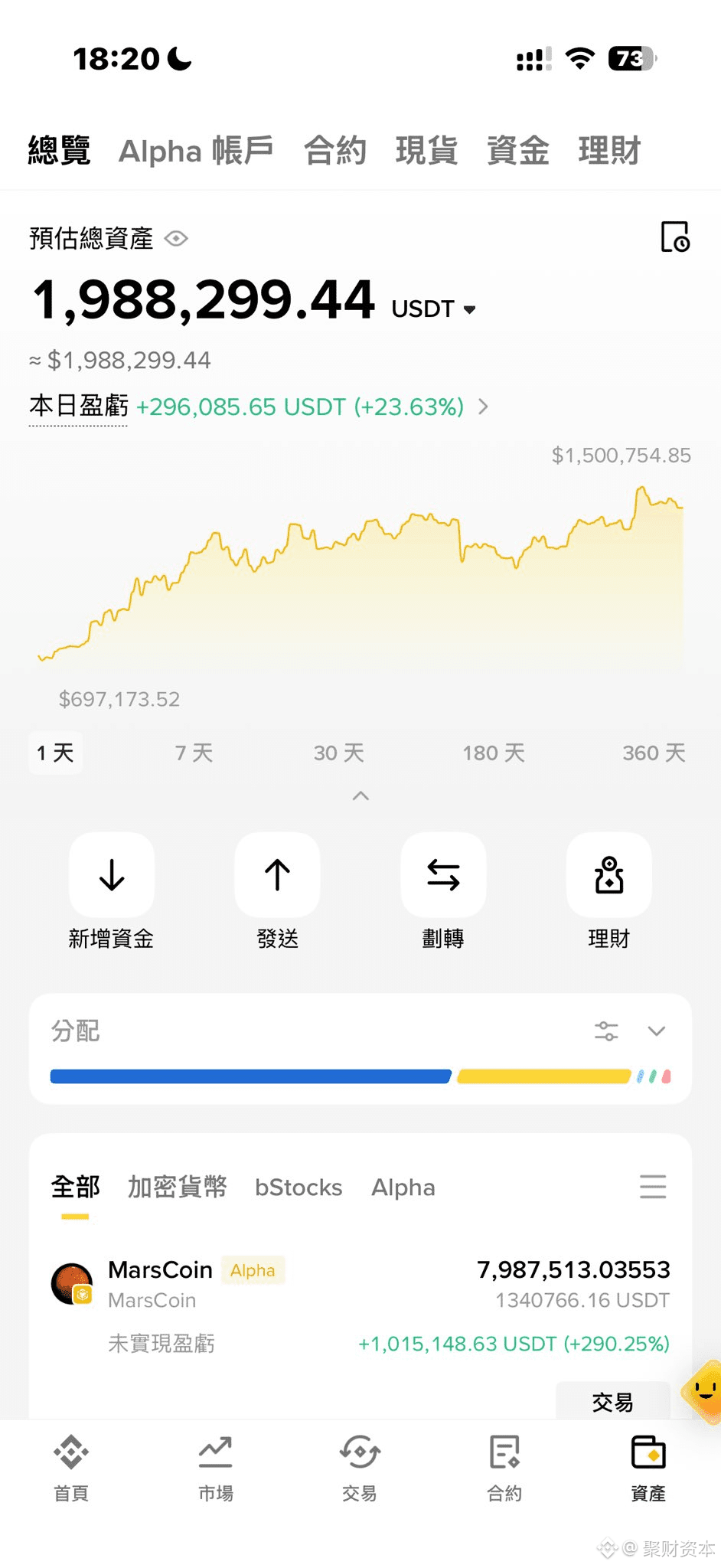
165
·
--
Floating gains aren’t money until you actually cash out—only then does it truly belong to you $VVV
The most regretful thing about trading crypto isn’t continuous losses; it’s the time you once made enough profit to change your life, only to give it all back to the market with not a cent left. $SOPH
I have a friend like that around me.
Last year, he caught a wave of the market. The coin he held started from low levels, and at its peak his account’s floating profit was close to 250,000 U. During those days, he stared at the charts every day to calculate his gains, and even began planning what his life would look like after he took profit. $BNC
At the time, I reminded him: take some profits first—don’t let floating gains be nothing but an illusion. But he felt the trend was strong, wanted to hold on longer, and expected to double again.
When the market started to pull back, he told himself it was just a shakeout. When his profits had already fallen by more than half, he still chose to hold. By the time he had given back all his gains, he still couldn’t bring himself to exit. In his mind, selling after the drop would be too much of a loss. In the end, not only did all the profits he had in hand disappear, but his principal also turned negative.
Many traders have the same misconception: when they’re winning, they assume that money is already theirs; when they’re losing, they console themselves that it’s only a temporary drawdown. The market won’t remember your cost basis, and it will never actively protect the profit you see on your screen.
You have to stick to these rules: First, protect profits first. Don’t always try to catch the entire perfect move—take profit in batches and lock in your gains. Second, before opening a position, decide your exit plan in advance: stop-loss, position reduction, and take-profit should all be planned ahead of time. Third, after consecutive losses, immediately pause trading. Many large losses aren’t because your judgment was wrong—they come from emotional loss of control, followed by continuous new entries.
Remember: the numbers in your account are only numbers. Unless you cash them out, they will never truly be yours.
If you want to quickly recover and turn the situation around—really get back to even and come back strong—Big Tiger is here for you. As long as you take the initiative, I’m waiting for you at @Lmf8848
Floating gains aren’t money until you actually cash out—only then does it truly belong to you $VVV
The most regretful thing about trading crypto isn’t continuous losses; it’s the time you once made enough profit to change your life, only to give it all back to the market with not a cent left. $SOPH
I have a friend like that around me.
Last year, he caught a wave of the market. The coin he held started from low levels, and at its peak his account’s floating profit was close to 250,000 U. During those days, he stared at the charts every day to calculate his gains, and even began planning what his life would look like after he took profit. $BNC
At the time, I reminded him: take some profits first—don’t let floating gains be nothing but an illusion. But he felt the trend was strong, wanted to hold on longer, and expected to double again.
When the market started to pull back, he told himself it was just a shakeout. When his profits had already fallen by more than half, he still chose to hold. By the time he had given back all his gains, he still couldn’t bring himself to exit. In his mind, selling after the drop would be too much of a loss. In the end, not only did all the profits he had in hand disappear, but his principal also turned negative.
Many traders have the same misconception: when they’re winning, they assume that money is already theirs; when they’re losing, they console themselves that it’s only a temporary drawdown. The market won’t remember your cost basis, and it will never actively protect the profit you see on your screen.
You have to stick to these rules: First, protect profits first. Don’t always try to catch the entire perfect move—take profit in batches and lock in your gains. Second, before opening a position, decide your exit plan in advance: stop-loss, position reduction, and take-profit should all be planned ahead of time. Third, after consecutive losses, immediately pause trading. Many large losses aren’t because your judgment was wrong—they come from emotional loss of control, followed by continuous new entries.
Remember: the numbers in your account are only numbers. Unless you cash them out, they will never truly be yours.
If you want to quickly recover and turn the situation around—really get back to even and come back strong—Big Tiger is here for you. As long as you take the initiative, I’m waiting for you at @胖虎eth
The most regretful thing about trading crypto isn’t continuous losses; it’s the time you once made enough profit to change your life, only to give it all back to the market with not a cent left. $SOPH
I have a friend like that around me.
Last year, he caught a wave of the market. The coin he held started from low levels, and at its peak his account’s floating profit was close to 250,000 U. During those days, he stared at the charts every day to calculate his gains, and even began planning what his life would look like after he took profit. $BNC
At the time, I reminded him: take some profits first—don’t let floating gains be nothing but an illusion. But he felt the trend was strong, wanted to hold on longer, and expected to double again.
When the market started to pull back, he told himself it was just a shakeout. When his profits had already fallen by more than half, he still chose to hold. By the time he had given back all his gains, he still couldn’t bring himself to exit. In his mind, selling after the drop would be too much of a loss. In the end, not only did all the profits he had in hand disappear, but his principal also turned negative.
Many traders have the same misconception: when they’re winning, they assume that money is already theirs; when they’re losing, they console themselves that it’s only a temporary drawdown. The market won’t remember your cost basis, and it will never actively protect the profit you see on your screen.
You have to stick to these rules: First, protect profits first. Don’t always try to catch the entire perfect move—take profit in batches and lock in your gains. Second, before opening a position, decide your exit plan in advance: stop-loss, position reduction, and take-profit should all be planned ahead of time. Third, after consecutive losses, immediately pause trading. Many large losses aren’t because your judgment was wrong—they come from emotional loss of control, followed by continuous new entries.
Remember: the numbers in your account are only numbers. Unless you cash them out, they will never truly be yours.
If you want to quickly recover and turn the situation around—really get back to even and come back strong—Big Tiger is here for you. As long as you take the initiative, I’m waiting for you at @胖虎eth

194
·
--
Why do so many people make money in the market at one point, only for their account to return to square one again?$SOPH
Because they only learned how to make money, but never learned how to protect profits.$ZEC
Many people, the moment they get a profit, are eager to prove themselves to others. They keep raising their spending, turning the money they’ve just earned into a heavy, burdensome lifestyle. But those with a real wealth mindset, after they become profitable, the first thing they do is to prioritize protecting their assets.$BNC
Making money relies on offense; protecting money relies on defense. Sound money management cannot be separated from reasonable position splitting, having a safety cushion ready, and strictly controlling risk—always leaving yourself an exit route.
Too many people, when the market is favorable, dare to go all-in and strike hard. But once losses come, they have no plan at all. They see an opportunity and impulsively enter; when the risks surface, it’s already too late to regret. What defeats you is often not the market, but the greed and luck-illusion in your heart.
What truly widens the gap between people is never who charges the hardest in the short term, but who can keep going far enough into the future. Whether investing or trading, first protect your principal, then pursue returns. Cashing in profits doesn’t mean it’s the end—staying steady and protecting what’s yours is what truly belongs to you. Accumulate slowly, ride out cycles, and only then can you meet the next round of opportunities.
If you want to quickly recover and turn the situation around, if you sincerely want to get back to even and make it ashore, Hu Ge is here waiting for you. As long as you take the initiative, I’m always here @Lmf8848
Why do so many people make money in the market at one point, only for their account to return to square one again?$SOPH
Because they only learned how to make money, but never learned how to protect profits.$ZEC
Many people, the moment they get a profit, are eager to prove themselves to others. They keep raising their spending, turning the money they’ve just earned into a heavy, burdensome lifestyle. But those with a real wealth mindset, after they become profitable, the first thing they do is to prioritize protecting their assets.$BNC
Making money relies on offense; protecting money relies on defense. Sound money management cannot be separated from reasonable position splitting, having a safety cushion ready, and strictly controlling risk—always leaving yourself an exit route.
Too many people, when the market is favorable, dare to go all-in and strike hard. But once losses come, they have no plan at all. They see an opportunity and impulsively enter; when the risks surface, it’s already too late to regret. What defeats you is often not the market, but the greed and luck-illusion in your heart.
What truly widens the gap between people is never who charges the hardest in the short term, but who can keep going far enough into the future. Whether investing or trading, first protect your principal, then pursue returns. Cashing in profits doesn’t mean it’s the end—staying steady and protecting what’s yours is what truly belongs to you. Accumulate slowly, ride out cycles, and only then can you meet the next round of opportunities.
If you want to quickly recover and turn the situation around, if you sincerely want to get back to even and make it ashore, Hu Ge is here waiting for you. As long as you take the initiative, I’m always here @胖虎eth
Because they only learned how to make money, but never learned how to protect profits.$ZEC
Many people, the moment they get a profit, are eager to prove themselves to others. They keep raising their spending, turning the money they’ve just earned into a heavy, burdensome lifestyle. But those with a real wealth mindset, after they become profitable, the first thing they do is to prioritize protecting their assets.$BNC
Making money relies on offense; protecting money relies on defense. Sound money management cannot be separated from reasonable position splitting, having a safety cushion ready, and strictly controlling risk—always leaving yourself an exit route.
Too many people, when the market is favorable, dare to go all-in and strike hard. But once losses come, they have no plan at all. They see an opportunity and impulsively enter; when the risks surface, it’s already too late to regret. What defeats you is often not the market, but the greed and luck-illusion in your heart.
What truly widens the gap between people is never who charges the hardest in the short term, but who can keep going far enough into the future. Whether investing or trading, first protect your principal, then pursue returns. Cashing in profits doesn’t mean it’s the end—staying steady and protecting what’s yours is what truly belongs to you. Accumulate slowly, ride out cycles, and only then can you meet the next round of opportunities.
If you want to quickly recover and turn the situation around, if you sincerely want to get back to even and make it ashore, Hu Ge is here waiting for you. As long as you take the initiative, I’m always here @胖虎eth

282
Log in to explore more content
Join global crypto users on Binance Square
⚡️ Get latest and useful information about crypto.
💬 Trusted by the world’s largest crypto exchange.
👍 Discover real insights from verified creators.
Email / Phone number
Trending Topics
AppleDebutsFoldablePhone
344 views
38 Discussing
#appledebutsfoldablephone Apple just redefined the smartphone era with the iPhone Duo.
This isn’t just another foldable—it’s full iPad mini-level productivity engineered into a razor-thin pocketable device.
Apple took its time to solve the form factor properly, debuting an invisible crease, dual-battery architecture, and custom vapor chamber thermals.
Key highlights:
Silicon: Next-gen A20 Pro chip delivering unprecedented efficiency and power.
Form Factor: Book-style hinge transforming a sleek everyday phone into an expansive canvas.
Software: Adaptive multi-window multitasking built natively for iOS.
Pricing & Availability: Starting at $1,999, pre-orders open October 16.
The wait was long, but Apple entered the foldable arena to dominate it, not just participate.
Are you making the switch, or staying on a classic slab?$VELVET $APR $USELESS
Isabella-I
·0 Likes
·7 views
VisaStablecoinSettlementTops$20B
0 views
20 Discussing
US10YTreasuryYieldHitsHighestSinceNov2023
3,732 views
106 Discussing