

Crypto Fortress 1
1.8k Posts

Crypto Fortress 1
Report
Block User
Crypto explorer | Building the decentralized future one block at a time | Insights on BTC, ETH, DeFi & beyond | Not financial advice.
0 Following
7 Followers
22 Liked
Posts
Solana's Institutional Push Now Has Two Measurable Jobs: Strategy and Payments
On September 24, the Solana Foundation appointed Rachel Conlan as Chief Strategy Officer and Jamal Raees as General Manager of Payments. Conlan previously spent three years as Binance's global Cмо, while Raees joined from Polygon Labs. The Foundation also disclosed that Solana has processed more than $5 trillion in stablecoin volume during 2026. That figure gives the hiring news a clearer context: the network is already handling large payment flows, so the next challenge is converting usage into repeat institutional activity.
My view is that personnel changes matter only when operating metrics improve. For Solana, the useful signals are not announcement volume or social attention, but stablecoin settlement, payment integrations, institutional onboarding and network reliability. A leadership upgrade is a catalyst, not proof of execution.
Risk and invalidation: if payment integrations and stablecoin activity stop expanding, the institutional narrative weakens regardless of who holds the new roles. What I would watch next is whether new integrations generate sustained transaction activity rather than one-off launches.
Which metric would you use to judge Solana's institutional progress: stablecoin volume, payment integrations, RWA growth or recurring active users?
Disclaimer: Informational analysis only, not financial advice. Network activity and ecosystem metrics can change and should be independently verified before making decisions.
$SOL
Solana • Payments • Institutional Adoption
#Solana #Stablecoins #CryptoInfrastructure
Solana's Institutional Push Now Has Two Measurable Jobs: Strategy and Payments
On September 24, the Solana Foundation appointed Rachel Conlan as Chief Strategy Officer and Jamal Raees as General Manager of Payments. Conlan previously spent three years as Binance's global Cмо, while Raees joined from Polygon Labs. The Foundation also disclosed that Solana has processed more than $5 trillion in stablecoin volume during 2026. That figure gives the hiring news a clearer context: the network is already handling large payment flows, so the next challenge is converting usage into repeat institutional activity.
My view is that personnel changes matter only when operating metrics improve. For Solana, the useful signals are not announcement volume or social attention, but stablecoin settlement, payment integrations, institutional onboarding and network reliability. A leadership upgrade is a catalyst, not proof of execution.
Risk and invalidation: if payment integrations and stablecoin activity stop expanding, the institutional narrative weakens regardless of who holds the new roles. What I would watch next is whether new integrations generate sustained transaction activity rather than one-off launches.
Which metric would you use to judge Solana's institutional progress: stablecoin volume, payment integrations, RWA growth or recurring active users?
Disclaimer: Informational analysis only, not financial advice. Network activity and ecosystem metrics can change and should be independently verified before making decisions.
$SOL
Solana • Payments • Institutional Adoption
#Solana #Stablecoins #CryptoInfrastructure
On September 24, the Solana Foundation appointed Rachel Conlan as Chief Strategy Officer and Jamal Raees as General Manager of Payments. Conlan previously spent three years as Binance's global Cмо, while Raees joined from Polygon Labs. The Foundation also disclosed that Solana has processed more than $5 trillion in stablecoin volume during 2026. That figure gives the hiring news a clearer context: the network is already handling large payment flows, so the next challenge is converting usage into repeat institutional activity.
My view is that personnel changes matter only when operating metrics improve. For Solana, the useful signals are not announcement volume or social attention, but stablecoin settlement, payment integrations, institutional onboarding and network reliability. A leadership upgrade is a catalyst, not proof of execution.
Risk and invalidation: if payment integrations and stablecoin activity stop expanding, the institutional narrative weakens regardless of who holds the new roles. What I would watch next is whether new integrations generate sustained transaction activity rather than one-off launches.
Which metric would you use to judge Solana's institutional progress: stablecoin volume, payment integrations, RWA growth or recurring active users?
Disclaimer: Informational analysis only, not financial advice. Network activity and ecosystem metrics can change and should be independently verified before making decisions.
$SOL
Solana • Payments • Institutional Adoption
#Solana #Stablecoins #CryptoInfrastructure

189
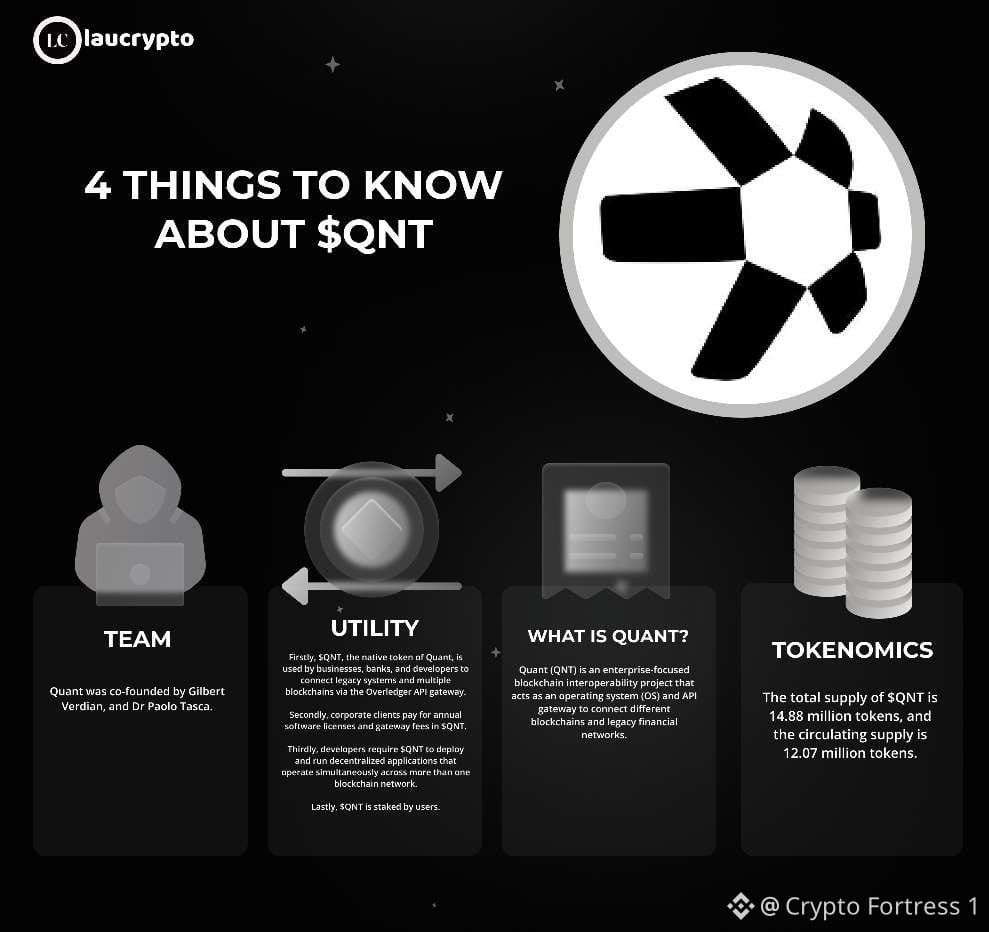
Coin Of the Day - $QNT
$QNT is the native token of Quant, an enterprise-focused blockchain interoperability project that acts as an operating system (OS) and API gateway to connect different blockchains and legacy financial networks.
Below are 4 things to know about it:
#Quant #QNT
Coin Of the Day - $QNT
$QNT is the native token of Quant, an enterprise-focused blockchain interoperability project that acts as an operating system (OS) and API gateway to connect different blockchains and legacy financial networks.
Below are 4 things to know about it:
#Quant #QNT
$QNT is the native token of Quant, an enterprise-focused blockchain interoperability project that acts as an operating system (OS) and API gateway to connect different blockchains and legacy financial networks.
Below are 4 things to know about it:
#Quant #QNT
51
$SOL
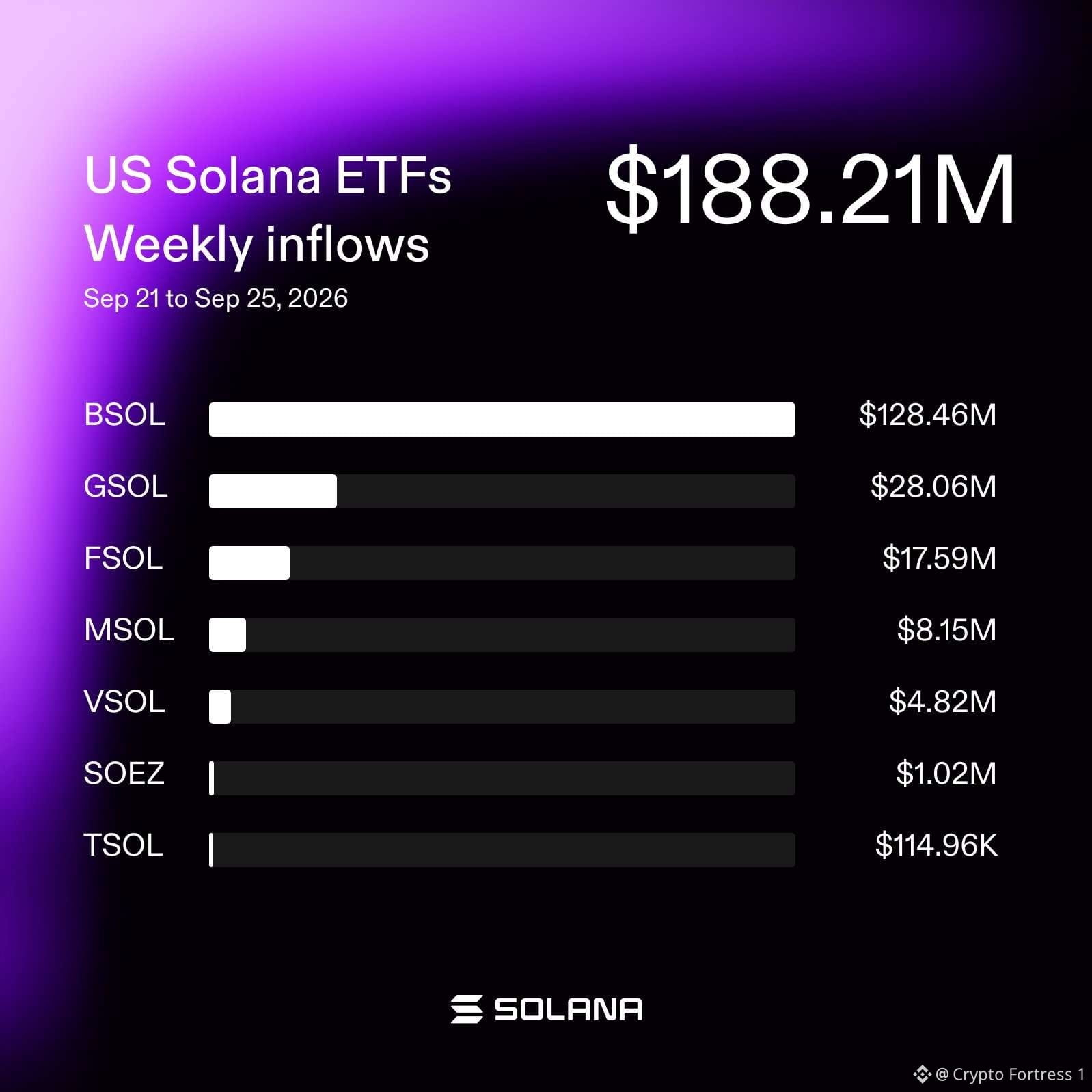
US #Solana ETFs attracted $188.21M in weekly inflows, led by BSOL at $128.46M, followed by GSOL, FSOL, MSOL, VSOL, SOEZ and TSOL.
$SOL
US #Solana ETFs attracted $188.21M in weekly inflows, led by BSOL at $128.46M, followed by GSOL, FSOL, MSOL, VSOL, SOEZ and TSOL.
US #Solana ETFs attracted $188.21M in weekly inflows, led by BSOL at $128.46M, followed by GSOL, FSOL, MSOL, VSOL, SOEZ and TSOL.
SOL+0.57%
VSOLETF+4.15%
44
Binance invested $100 million in Circle and signed a five-year agreement to promote and integrate USDC across its ecosystem. The partnership could strengthen Circle's distribution network and help expand USDC's presence in emerging markets and global crypto trading.
The deal could also increase competition between USDC and Tether's USDT.
However, analysts expect USDT to remain dominant in the near term, meaning the partnership is unlikely to immediately change the stablecoin market's balance.
#Binance $BNB
Binance invested $100 million in Circle and signed a five-year agreement to promote and integrate USDC across its ecosystem. The partnership could strengthen Circle's distribution network and help expand USDC's presence in emerging markets and global crypto trading.
The deal could also increase competition between USDC and Tether's USDT.
However, analysts expect USDT to remain dominant in the near term, meaning the partnership is unlikely to immediately change the stablecoin market's balance.
#Binance $BNB
The deal could also increase competition between USDC and Tether's USDT.
However, analysts expect USDT to remain dominant in the near term, meaning the partnership is unlikely to immediately change the stablecoin market's balance.
#Binance $BNB
64
UK Banks Complete First Interbank Transactions Using Tokenized Deposits.
Seven major UK banks, including Barclays, HSBC, Lloyds, Monzo, Nationwide, NatWest and Santander, have completed live customer transactions using tokenized sterling deposits through the Great British Tokenised Deposit initiative.
The transactions included remortgage settlements and a customer-to-customer payment, demonstrating how bank deposits can move across shared blockchain infrastructure with funds automatically released when predefined conditions are met. Unlike stablecoins, tokenized deposits remain liabilities of regulated banks, retaining the legal protections associated with conventional deposits.
The banks plan to establish a dedicated company and governance framework, with three digital bonds targeted for issuance in Q1 2027 using tokenized deposits for trading and settlement.
$BTC $QNT #BTC Price Analysis#
#Macro Insights# #Crypto
UK Banks Complete First Interbank Transactions Using Tokenized Deposits.
Seven major UK banks, including Barclays, HSBC, Lloyds, Monzo, Nationwide, NatWest and Santander, have completed live customer transactions using tokenized sterling deposits through the Great British Tokenised Deposit initiative.
The transactions included remortgage settlements and a customer-to-customer payment, demonstrating how bank deposits can move across shared blockchain infrastructure with funds automatically released when predefined conditions are met. Unlike stablecoins, tokenized deposits remain liabilities of regulated banks, retaining the legal protections associated with conventional deposits.
The banks plan to establish a dedicated company and governance framework, with three digital bonds targeted for issuance in Q1 2027 using tokenized deposits for trading and settlement.
$BTC $QNT #BTC Price Analysis#
#Macro Insights# #Crypto
Seven major UK banks, including Barclays, HSBC, Lloyds, Monzo, Nationwide, NatWest and Santander, have completed live customer transactions using tokenized sterling deposits through the Great British Tokenised Deposit initiative.
The transactions included remortgage settlements and a customer-to-customer payment, demonstrating how bank deposits can move across shared blockchain infrastructure with funds automatically released when predefined conditions are met. Unlike stablecoins, tokenized deposits remain liabilities of regulated banks, retaining the legal protections associated with conventional deposits.
The banks plan to establish a dedicated company and governance framework, with three digital bonds targeted for issuance in Q1 2027 using tokenized deposits for trading and settlement.
$BTC $QNT #BTC Price Analysis#
#Macro Insights# #Crypto

67
$BTC
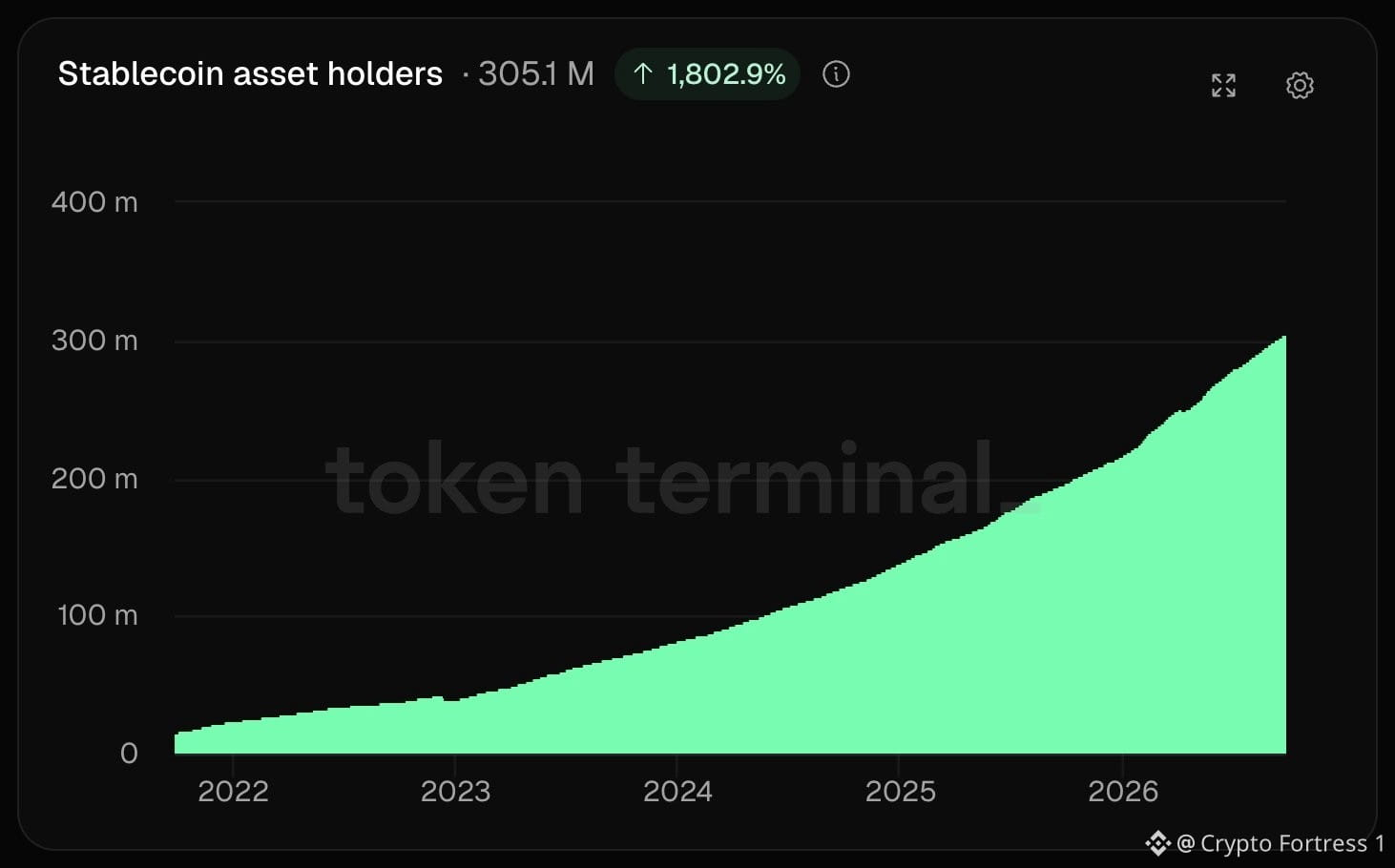
Stablecoin asset holders grew over 1,800% in five years, rising from around 16 million to 305.1 million across both bull and bear markets.
#BTC Price Analysis# #Macro Insights#
$BTC
Stablecoin asset holders grew over 1,800% in five years, rising from around 16 million to 305.1 million across both bull and bear markets.
#BTC Price Analysis# #Macro Insights#
Stablecoin asset holders grew over 1,800% in five years, rising from around 16 million to 305.1 million across both bull and bear markets.
#BTC Price Analysis# #Macro Insights#
2
$FIL
Real-world assets are getting a serious Web3 upgrade.
Filecoin engineers built a demo connecting a property token on Avalanche to its deed stored on Filecoin and fingerprinted with IPFS.
Change one line the fingerprint changes instantly.
Blockchain + decentralized storage + RWAS.
#FIL
$FIL
Real-world assets are getting a serious Web3 upgrade.
Filecoin engineers built a demo connecting a property token on Avalanche to its deed stored on Filecoin and fingerprinted with IPFS.
Change one line the fingerprint changes instantly.
Blockchain + decentralized storage + RWAS.
#FIL
Real-world assets are getting a serious Web3 upgrade.
Filecoin engineers built a demo connecting a property token on Avalanche to its deed stored on Filecoin and fingerprinted with IPFS.
Change one line the fingerprint changes instantly.
Blockchain + decentralized storage + RWAS.
#FIL
2
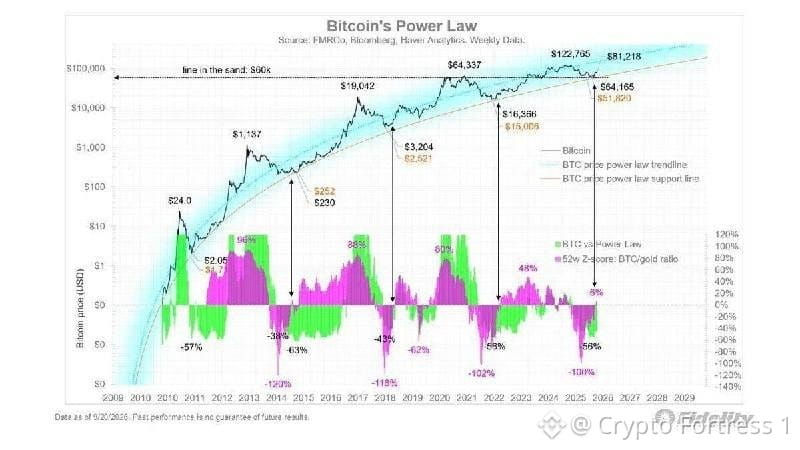
Bitcoin may be entering a new bull market, according to Fidelity's Jurrien Timmer.
He says $BTC held the $60,000 support zone for almost a year, roughly matching the length of a typical Bitcoin winter.
With Bitcoin now breaking higher, Timmer says a new four-year cycle could be underway. He also pointed to the BTC/gold Z-score turning positive after spending an extended period below zero.
Timmer's longer-term model also puts a potential path toward $300,000 by 2029, based on a slower projected growth rate of around 60 to 65% annually.
That figure comes from his power-law framework and is a model-based scenario, not a guaranteed price target.
#BTC, is the correction enough?# #Bitcoin Price Prediction: What is Bitcoins next move?#
Bitcoin may be entering a new bull market, according to Fidelity's Jurrien Timmer.
He says $BTC held the $60,000 support zone for almost a year, roughly matching the length of a typical Bitcoin winter.
With Bitcoin now breaking higher, Timmer says a new four-year cycle could be underway. He also pointed to the BTC/gold Z-score turning positive after spending an extended period below zero.
Timmer's longer-term model also puts a potential path toward $300,000 by 2029, based on a slower projected growth rate of around 60 to 65% annually.
That figure comes from his power-law framework and is a model-based scenario, not a guaranteed price target.
#BTC, is the correction enough?# #Bitcoin Price Prediction: What is Bitcoins next move?#
He says $BTC held the $60,000 support zone for almost a year, roughly matching the length of a typical Bitcoin winter.
With Bitcoin now breaking higher, Timmer says a new four-year cycle could be underway. He also pointed to the BTC/gold Z-score turning positive after spending an extended period below zero.
Timmer's longer-term model also puts a potential path toward $300,000 by 2029, based on a slower projected growth rate of around 60 to 65% annually.
That figure comes from his power-law framework and is a model-based scenario, not a guaranteed price target.
#BTC, is the correction enough?# #Bitcoin Price Prediction: What is Bitcoins next move?#
2
This week, Bitcoin and Ethereum spot ETFs recorded a total of $2.7 billion in inflows.
$BTC spot ETFs recorded a total inflow of $2.39 billion, while $ETH spot ETFs recorded a total inflow of $689.88 million.
#Bitcoin #Ethereum
This week, Bitcoin and Ethereum spot ETFs recorded a total of $2.7 billion in inflows.
$BTC spot ETFs recorded a total inflow of $2.39 billion, while $ETH spot ETFs recorded a total inflow of $689.88 million.
#Bitcoin #Ethereum
$BTC spot ETFs recorded a total inflow of $2.39 billion, while $ETH spot ETFs recorded a total inflow of $689.88 million.
#Bitcoin #Ethereum
1
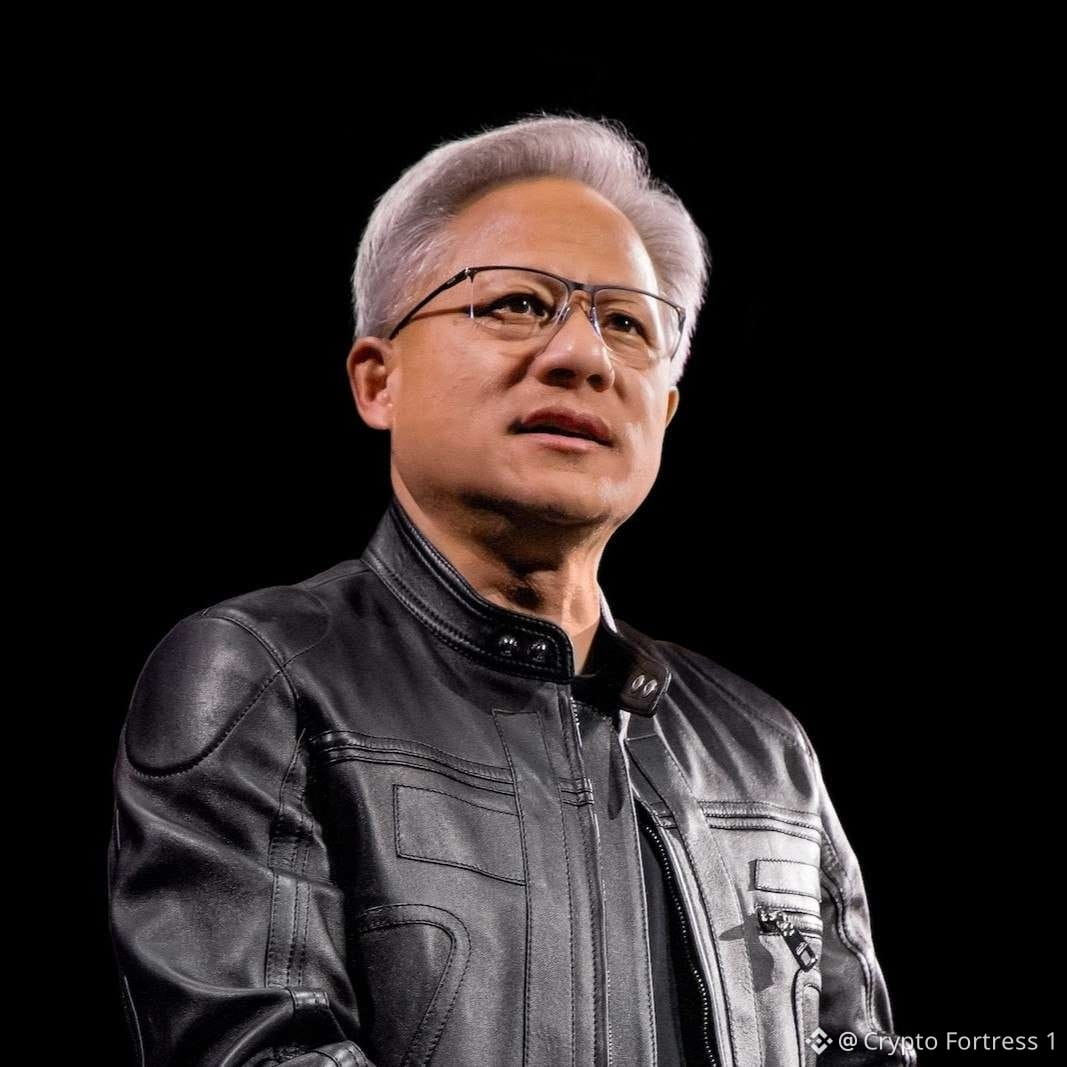
JENSEN HUANG: "AI NEEDS TO ACCELERATE TO BE SAFE"
Nvidia CEO Jensen Huang says Al labs should put more compute into evaluation and alignment, not just making models more capable.
His argument is simple but important:
- More compute → stronger Al
- More compute for evaluation → better understanding of Al behavior
- Better evaluation + alignment → stronger
safety systems
The bigger shift could be that Al safety becomes a core part of scaling, rather than something added after a model is built.
As Al capabilities accelerate, the race may no longer be just about who builds the most powerful models.
It could also be about who can test, monitor and control them at scale.
More Al capability. More Al evaluation.
More Al safety.
#Al #Artificiallntelligence $BTC
$ETH #BTC Price Analysis#
JENSEN HUANG: "AI NEEDS TO ACCELERATE TO BE SAFE"
Nvidia CEO Jensen Huang says Al labs should put more compute into evaluation and alignment, not just making models more capable.
His argument is simple but important:
- More compute → stronger Al
- More compute for evaluation → better understanding of Al behavior
- Better evaluation + alignment → stronger
safety systems
The bigger shift could be that Al safety becomes a core part of scaling, rather than something added after a model is built.
As Al capabilities accelerate, the race may no longer be just about who builds the most powerful models.
It could also be about who can test, monitor and control them at scale.
More Al capability. More Al evaluation.
More Al safety.
#Al #Artificiallntelligence $BTC
$ETH #BTC Price Analysis#
Nvidia CEO Jensen Huang says Al labs should put more compute into evaluation and alignment, not just making models more capable.
His argument is simple but important:
- More compute → stronger Al
- More compute for evaluation → better understanding of Al behavior
- Better evaluation + alignment → stronger
safety systems
The bigger shift could be that Al safety becomes a core part of scaling, rather than something added after a model is built.
As Al capabilities accelerate, the race may no longer be just about who builds the most powerful models.
It could also be about who can test, monitor and control them at scale.
More Al capability. More Al evaluation.
More Al safety.
#Al #Artificiallntelligence $BTC
$ETH #BTC Price Analysis#
1
SOMEONE JUST WENT ALL IN
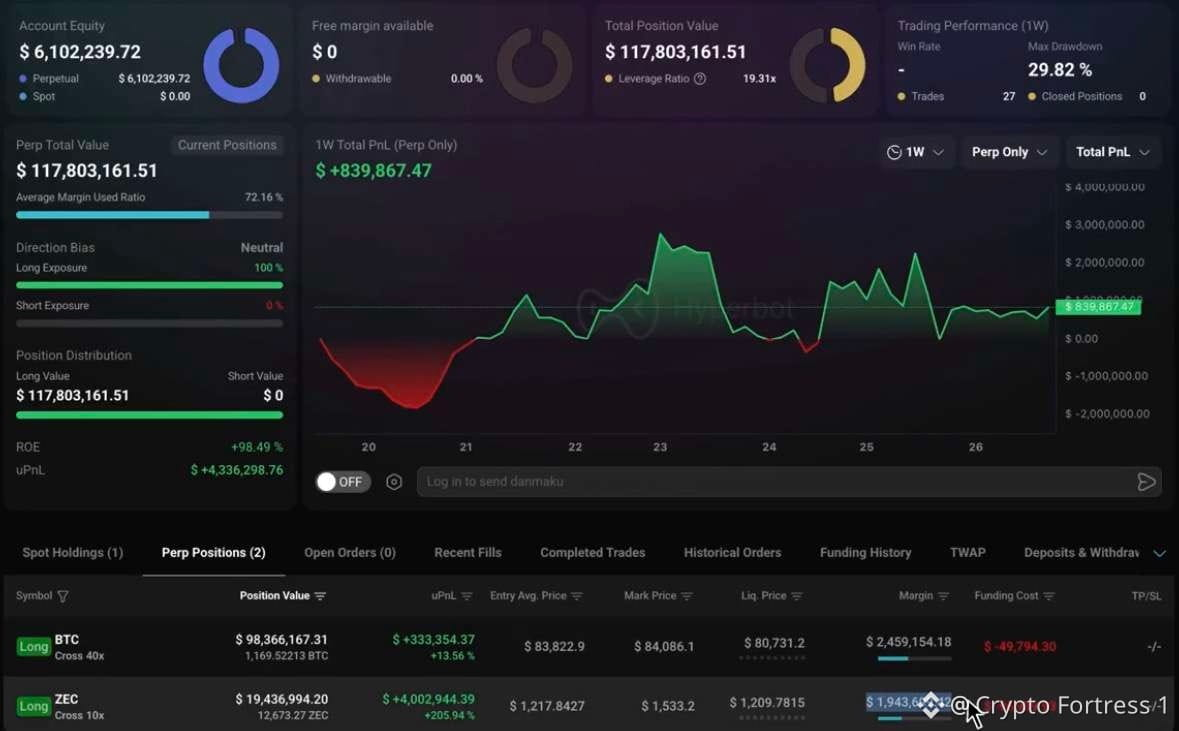
A trader has opened roughly $117.8 million in long positions, with $98.3M on BTC and another $19.4M on ZEC.
That's a serious amount of leverage betting on further upside.
The BTC position makes up the vast majority of the trade, while the ZEC position adds another high-beta bet to the portfolio. If prices move against these positions, the liquidation levels could become important for the market to watch.
For now, this is simply one trader taking a very aggressive bullish position, it doesn't guarantee where BTC or ZEC go next.
$117.8M in longs, that's really massive
$BTC $ZEC #BTC Price Analysis# #BTC Above 60K#
SOMEONE JUST WENT ALL IN
A trader has opened roughly $117.8 million in long positions, with $98.3M on BTC and another $19.4M on ZEC.
That's a serious amount of leverage betting on further upside.
The BTC position makes up the vast majority of the trade, while the ZEC position adds another high-beta bet to the portfolio. If prices move against these positions, the liquidation levels could become important for the market to watch.
For now, this is simply one trader taking a very aggressive bullish position, it doesn't guarantee where BTC or ZEC go next.
$117.8M in longs, that's really massive
$BTC $ZEC #BTC Price Analysis# #BTC Above 60K#
A trader has opened roughly $117.8 million in long positions, with $98.3M on BTC and another $19.4M on ZEC.
That's a serious amount of leverage betting on further upside.
The BTC position makes up the vast majority of the trade, while the ZEC position adds another high-beta bet to the portfolio. If prices move against these positions, the liquidation levels could become important for the market to watch.
For now, this is simply one trader taking a very aggressive bullish position, it doesn't guarantee where BTC or ZEC go next.
$117.8M in longs, that's really massive
$BTC $ZEC #BTC Price Analysis# #BTC Above 60K#
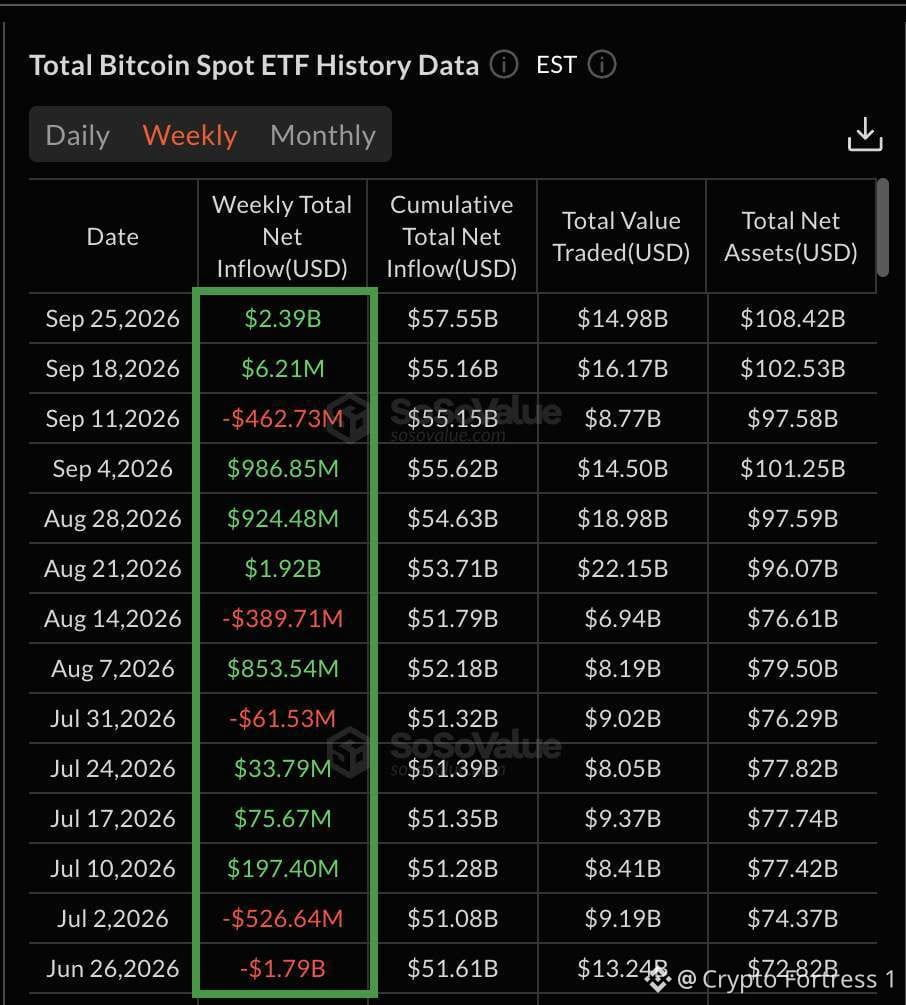
BREAKING: Bitcoin Spot ETFs just recorded a massive $2.39B in weekly inflows.
That's the strongest weekly inflow of 2026, surpassing the previous $1.92B record from August.
The signal is clear:
-> Capital is flowing back into $BTC
-> Institutional demand is accelerating
-> ETF flows are becoming a major market force
When traditional capital starts absorbing Bitcoin at this scale, the market deserves attention.
Institutional demand is heating up.
#BTC #Bitcoin #Crypto #Trading
BREAKING: Bitcoin Spot ETFs just recorded a massive $2.39B in weekly inflows.
That's the strongest weekly inflow of 2026, surpassing the previous $1.92B record from August.
The signal is clear:
-> Capital is flowing back into $BTC
-> Institutional demand is accelerating
-> ETF flows are becoming a major market force
When traditional capital starts absorbing Bitcoin at this scale, the market deserves attention.
Institutional demand is heating up.
#BTC #Bitcoin #Crypto #Trading
That's the strongest weekly inflow of 2026, surpassing the previous $1.92B record from August.
The signal is clear:
-> Capital is flowing back into $BTC
-> Institutional demand is accelerating
-> ETF flows are becoming a major market force
When traditional capital starts absorbing Bitcoin at this scale, the market deserves attention.
Institutional demand is heating up.
#BTC #Bitcoin #Crypto #Trading
1
$SOL
THE STOCK MARKET IS COMING ON-CHAIN.
Backpack CEO Armani Ferrante plans to bring the entire stock market to #Solana - enabling 10,000 tokenized shares to move seamlessly between brokerage accounts and DeFi through a single API.
Stocks + DeFi + Solana.
The financial rails are being rebuilt.
$SOL
THE STOCK MARKET IS COMING ON-CHAIN.
Backpack CEO Armani Ferrante plans to bring the entire stock market to #Solana - enabling 10,000 tokenized shares to move seamlessly between brokerage accounts and DeFi through a single API.
Stocks + DeFi + Solana.
The financial rails are being rebuilt.
THE STOCK MARKET IS COMING ON-CHAIN.
Backpack CEO Armani Ferrante plans to bring the entire stock market to #Solana - enabling 10,000 tokenized shares to move seamlessly between brokerage accounts and DeFi through a single API.
Stocks + DeFi + Solana.
The financial rails are being rebuilt.
2
$SOL
THE STOCK MARKET IS COMING ON-CHAIN.
Backpack CEO Armani Ferrante plans to bring the entire stock market to #Solana - enabling 10,000 tokenized shares to move seamlessly between brokerage accounts and DeFi through a single API.
Stocks + DeFi + Solana.
The financial rails are being rebuilt.
$SOL
THE STOCK MARKET IS COMING ON-CHAIN.
Backpack CEO Armani Ferrante plans to bring the entire stock market to #Solana - enabling 10,000 tokenized shares to move seamlessly between brokerage accounts and DeFi through a single API.
Stocks + DeFi + Solana.
The financial rails are being rebuilt.
THE STOCK MARKET IS COMING ON-CHAIN.
Backpack CEO Armani Ferrante plans to bring the entire stock market to #Solana - enabling 10,000 tokenized shares to move seamlessly between brokerage accounts and DeFi through a single API.
Stocks + DeFi + Solana.
The financial rails are being rebuilt.
1
$BTC
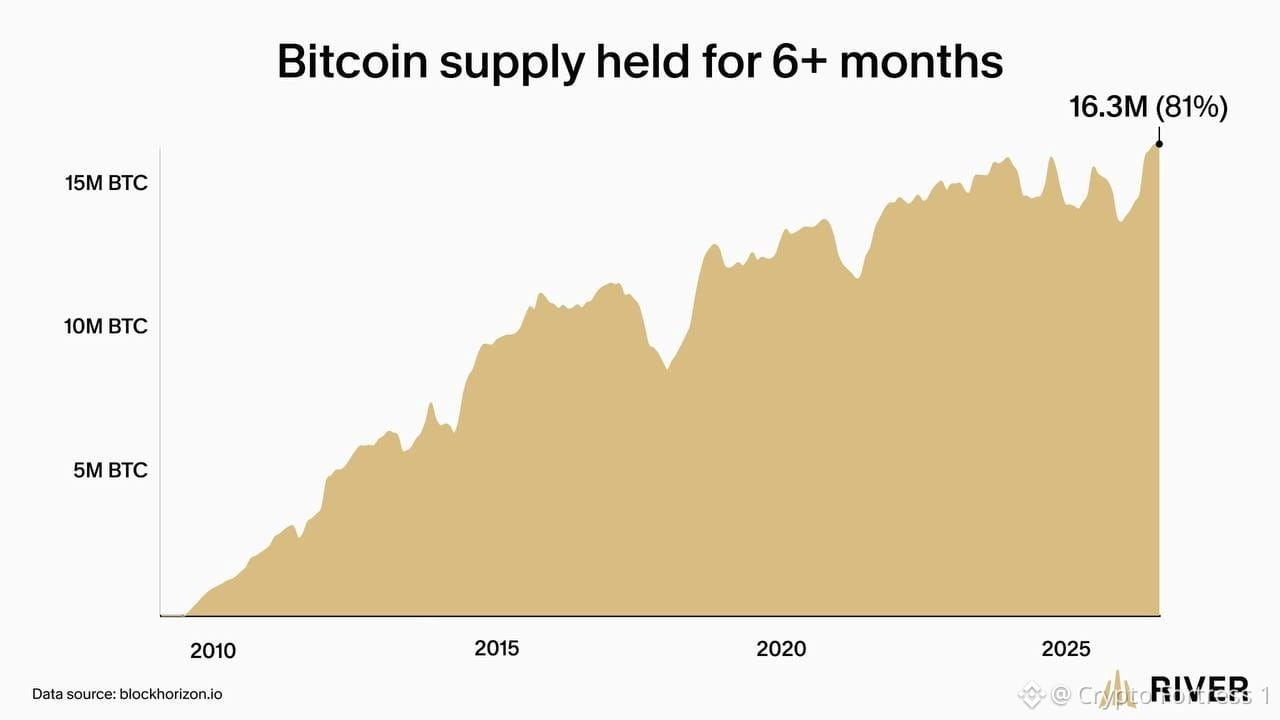
Bitcoin supply held for 6+ months reaches 16.3 million BTC, representing 81% of total supply.
Over 16 million #BTC haven't moved in the past six months.
That's a massive bullish signal for the entire crypto market.
#BTC Price Analysis#
$BTC
Bitcoin supply held for 6+ months reaches 16.3 million BTC, representing 81% of total supply.
Over 16 million #BTC haven't moved in the past six months.
That's a massive bullish signal for the entire crypto market.
#BTC Price Analysis#
Bitcoin supply held for 6+ months reaches 16.3 million BTC, representing 81% of total supply.
Over 16 million #BTC haven't moved in the past six months.
That's a massive bullish signal for the entire crypto market.
#BTC Price Analysis#
1
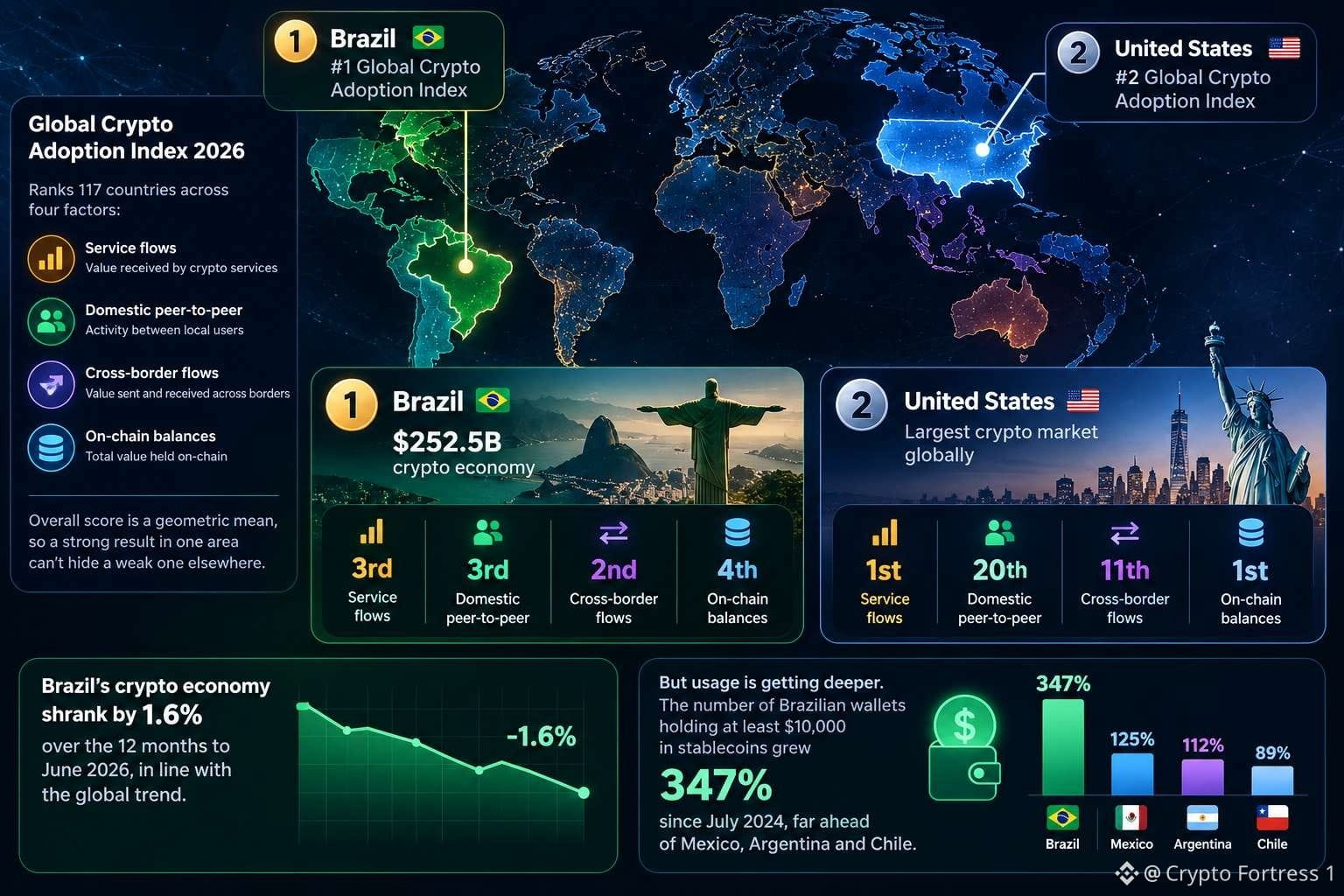
Why Brazil, Not the US, Tops the 2026 Crypto Adoption Index 🇧🇷
The United States ranks first in the world for $BTC crypto service flows and on-chain balances. Yet in Chainalysis' 2026 Global Crypto Adoption Index, the top spot went to Brazil, a $252.5 billion crypto economy that wasn't number one in a single category.
The answer is in how adoption is now measured
This year, Chainalysis switched to a new methodology that ranks 117 countries across four factors: service flows, domestic peer-to-peer activity, cross-border flows and on-chain balances. The overall score is a geometric mean, so a strong result in one area can't hide a weak one elsewhere.
That's exactly where the two leaders differ:
- Brazil placed in the global top four across all four factors: 2nd in cross-border flows, 3rd in service flows, 3rd in domestic peer-to-peer and 4th in balances.
- The US leads in service flows and balances, but ranks 20th in domestic peer-to-peer activity and 11th in cross-border flows.
In other words, the index now rewards crypto that is used broadly across an economy, not just held or traded in large volumes.
There is another detail worth noticing. Brazil's own crypto economy actually shrank by 1.6% over the 12 months to June 2026, in line with the global trend. What changed was the depth of its usage: the number of Brazilian wallets holding at least $10,000 in stablecoins grew 347% since July 2024, far ahead of Mexico, Argentina and Chile.
That points to a market that is maturing, where stablecoins are becoming part of how people save, pay and move money.
Which matters more for real adoption in your view: the size of a crypto market, or how evenly it is used?...
#BTC Price Analysis# #Bitcoin Price Prediction: What is Bitcoins next move?#
Why Brazil, Not the US, Tops the 2026 Crypto Adoption Index 🇧🇷
The United States ranks first in the world for $BTC crypto service flows and on-chain balances. Yet in Chainalysis' 2026 Global Crypto Adoption Index, the top spot went to Brazil, a $252.5 billion crypto economy that wasn't number one in a single category.
The answer is in how adoption is now measured
This year, Chainalysis switched to a new methodology that ranks 117 countries across four factors: service flows, domestic peer-to-peer activity, cross-border flows and on-chain balances. The overall score is a geometric mean, so a strong result in one area can't hide a weak one elsewhere.
That's exactly where the two leaders differ:
- Brazil placed in the global top four across all four factors: 2nd in cross-border flows, 3rd in service flows, 3rd in domestic peer-to-peer and 4th in balances.
- The US leads in service flows and balances, but ranks 20th in domestic peer-to-peer activity and 11th in cross-border flows.
In other words, the index now rewards crypto that is used broadly across an economy, not just held or traded in large volumes.
There is another detail worth noticing. Brazil's own crypto economy actually shrank by 1.6% over the 12 months to June 2026, in line with the global trend. What changed was the depth of its usage: the number of Brazilian wallets holding at least $10,000 in stablecoins grew 347% since July 2024, far ahead of Mexico, Argentina and Chile.
That points to a market that is maturing, where stablecoins are becoming part of how people save, pay and move money.
Which matters more for real adoption in your view: the size of a crypto market, or how evenly it is used?...
#BTC Price Analysis# #Bitcoin Price Prediction: What is Bitcoins next move?#
The United States ranks first in the world for $BTC crypto service flows and on-chain balances. Yet in Chainalysis' 2026 Global Crypto Adoption Index, the top spot went to Brazil, a $252.5 billion crypto economy that wasn't number one in a single category.
The answer is in how adoption is now measured
This year, Chainalysis switched to a new methodology that ranks 117 countries across four factors: service flows, domestic peer-to-peer activity, cross-border flows and on-chain balances. The overall score is a geometric mean, so a strong result in one area can't hide a weak one elsewhere.
That's exactly where the two leaders differ:
- Brazil placed in the global top four across all four factors: 2nd in cross-border flows, 3rd in service flows, 3rd in domestic peer-to-peer and 4th in balances.
- The US leads in service flows and balances, but ranks 20th in domestic peer-to-peer activity and 11th in cross-border flows.
In other words, the index now rewards crypto that is used broadly across an economy, not just held or traded in large volumes.
There is another detail worth noticing. Brazil's own crypto economy actually shrank by 1.6% over the 12 months to June 2026, in line with the global trend. What changed was the depth of its usage: the number of Brazilian wallets holding at least $10,000 in stablecoins grew 347% since July 2024, far ahead of Mexico, Argentina and Chile.
That points to a market that is maturing, where stablecoins are becoming part of how people save, pay and move money.
Which matters more for real adoption in your view: the size of a crypto market, or how evenly it is used?...
#BTC Price Analysis# #Bitcoin Price Prediction: What is Bitcoins next move?#
1
$SOL
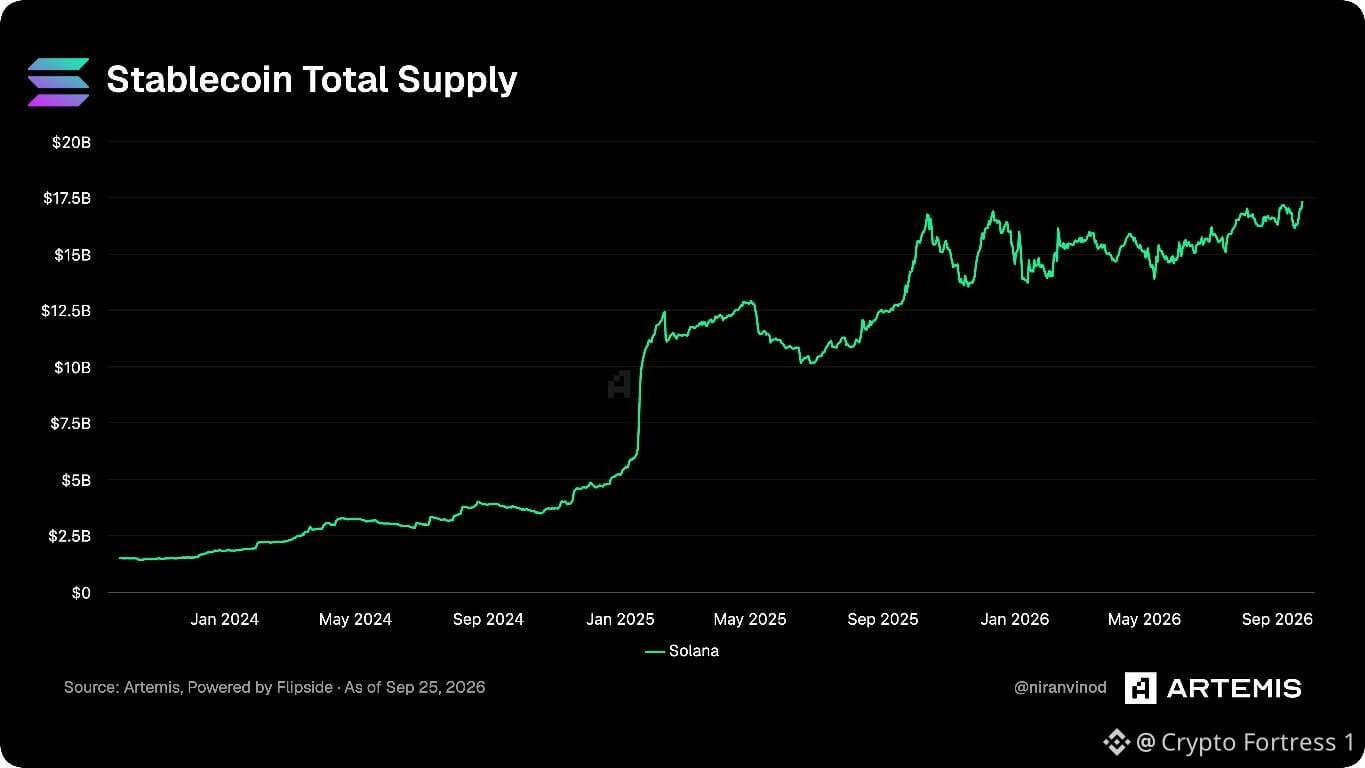
Stablecoin supply on #Solana hits a new all-time high of $17.3B
$SOL
Stablecoin supply on #Solana hits a new all-time high of $17.3B
Stablecoin supply on #Solana hits a new all-time high of $17.3B
30
Despite growing bank partnerships and wider transactional use, Brandt remains focused on $XRP 's supply structure. His main concern is simple: investors still need clearer answers about how XRP's supply could change over time.
For Brandt, that uncertainty makes it difficult to decide when XRP is genuinely undervalued or overpriced. And that leads directly to his bigger argument.
Being useful for payments doesn't automatically make an asset valuable as an investment. He compares XRP with the US dollar: dollars are used constantly for transactions, but transactional demand alone doesn't make people buy them expecting major appreciation.
Brandt says Bitcoin is different because its main investment case is built around being a store of value rather than primarily a transactional asset. That clearer role, in his view, makes the valuation story easier to understand.
Still, he doesn't believe $BTC is free from long-term risks either, pointing to quantum computing as one possible threat to Bitcoin's underlying cryptographic architecture.
So does XRP's growing real-world utility eventually translate into stronger investment value, or are utility and valuation two completely different stories? Share your view below!
#BTC Price Analysis# #XRP
#Bitcoin Price Prediction: What is Bitcoins next move?#
Despite growing bank partnerships and wider transactional use, Brandt remains focused on $XRP 's supply structure. His main concern is simple: investors still need clearer answers about how XRP's supply could change over time.
For Brandt, that uncertainty makes it difficult to decide when XRP is genuinely undervalued or overpriced. And that leads directly to his bigger argument.
Being useful for payments doesn't automatically make an asset valuable as an investment. He compares XRP with the US dollar: dollars are used constantly for transactions, but transactional demand alone doesn't make people buy them expecting major appreciation.
Brandt says Bitcoin is different because its main investment case is built around being a store of value rather than primarily a transactional asset. That clearer role, in his view, makes the valuation story easier to understand.
Still, he doesn't believe $BTC is free from long-term risks either, pointing to quantum computing as one possible threat to Bitcoin's underlying cryptographic architecture.
So does XRP's growing real-world utility eventually translate into stronger investment value, or are utility and valuation two completely different stories? Share your view below!
#BTC Price Analysis# #XRP
#Bitcoin Price Prediction: What is Bitcoins next move?#
For Brandt, that uncertainty makes it difficult to decide when XRP is genuinely undervalued or overpriced. And that leads directly to his bigger argument.
Being useful for payments doesn't automatically make an asset valuable as an investment. He compares XRP with the US dollar: dollars are used constantly for transactions, but transactional demand alone doesn't make people buy them expecting major appreciation.
Brandt says Bitcoin is different because its main investment case is built around being a store of value rather than primarily a transactional asset. That clearer role, in his view, makes the valuation story easier to understand.
Still, he doesn't believe $BTC is free from long-term risks either, pointing to quantum computing as one possible threat to Bitcoin's underlying cryptographic architecture.
So does XRP's growing real-world utility eventually translate into stronger investment value, or are utility and valuation two completely different stories? Share your view below!
#BTC Price Analysis# #XRP
#Bitcoin Price Prediction: What is Bitcoins next move?#
32
GRAYSCALE'S ZCASH ETF JUST HIT $1 BILLION IN AUM
Grayscale's Zcash ETF, ZCSH, has now crossed the $1 billion AUM mark just one month after launching on NYSE Arca.
The milestone comes as ZEC has exploded higher, pushing the value of the fund's existing holdings up sharply alongside fresh inflows.
Grayscale says Zcash is among the assets "defining the next era of digital finance," highlighting the growing institutional interest around privacy focused assets.
But there's an important detail, the $1B AUM figure isn't the same as $1B of new investor money. The fund had existing ZEC holdings when it converted to an ETF, while ZEC's price surge has also significantly increased its asset value.
$1B AUM in a month. Zcash is officially getting serious institutional attention.
#BTC Price Analysis#
#Macro Insights# $ZEC $SOL
GRAYSCALE'S ZCASH ETF JUST HIT $1 BILLION IN AUM
Grayscale's Zcash ETF, ZCSH, has now crossed the $1 billion AUM mark just one month after launching on NYSE Arca.
The milestone comes as ZEC has exploded higher, pushing the value of the fund's existing holdings up sharply alongside fresh inflows.
Grayscale says Zcash is among the assets "defining the next era of digital finance," highlighting the growing institutional interest around privacy focused assets.
But there's an important detail, the $1B AUM figure isn't the same as $1B of new investor money. The fund had existing ZEC holdings when it converted to an ETF, while ZEC's price surge has also significantly increased its asset value.
$1B AUM in a month. Zcash is officially getting serious institutional attention.
#BTC Price Analysis#
#Macro Insights# $ZEC $SOL
Grayscale's Zcash ETF, ZCSH, has now crossed the $1 billion AUM mark just one month after launching on NYSE Arca.
The milestone comes as ZEC has exploded higher, pushing the value of the fund's existing holdings up sharply alongside fresh inflows.
Grayscale says Zcash is among the assets "defining the next era of digital finance," highlighting the growing institutional interest around privacy focused assets.
But there's an important detail, the $1B AUM figure isn't the same as $1B of new investor money. The fund had existing ZEC holdings when it converted to an ETF, while ZEC's price surge has also significantly increased its asset value.
$1B AUM in a month. Zcash is officially getting serious institutional attention.
#BTC Price Analysis#
#Macro Insights# $ZEC $SOL

38
$SEI
Sei is bringing tokenized S&P 500 stocks to U.S. investors through Dinari's self-custody, USDC-backed dShares, enabling onchain equities.
#SEI
$SEI
Sei is bringing tokenized S&P 500 stocks to U.S. investors through Dinari's self-custody, USDC-backed dShares, enabling onchain equities.
#SEI
Sei is bringing tokenized S&P 500 stocks to U.S. investors through Dinari's self-custody, USDC-backed dShares, enabling onchain equities.
#SEI

46
Log in to explore more content
Join global crypto users on Binance Square
⚡️ Get latest and useful information about crypto.
💬 Trusted by the world’s largest crypto exchange.
👍 Discover real insights from verified creators.
Email / Phone number
Trending Topics
BitwiseFilesFinalNEARSpotETFProspectus
3,699 views
226 Discussing
🟣 Bitwise just gave Wall Street NEAR exposure with something most ETF headlines won't mention: an exit clock...
#bitwisefilesfinalnearspotetfprospectus
The Bitwise NEAR ETF has cleared registration and NYSE Arca has approved its listing. Its prospectus says the trust intends to stake 100% of its NEAR under normal conditions and retain about 67% of the staking rewards.
Sounds almost perfect:
NEAR exposure + staking yield.
But there's a trade-off.
Staked NEAR isn't instantly liquid.
The protocol requires 2–4 epochs to unstake, with epochs targeted around 12 hours. Bitwise therefore expects normal redemptions to be around T+2, while warning that stressed conditions can extend the process.
That's the part I find fascinating.
An institutional wrapper can turn staking yield into a portfolio feature —
but it can't turn blockchain finality into instant liquidity.
So the metric I'd watch isn't just ETF inflows.
It's how much NEAR stays staked versus how the fund handles redemptions during volatility.
That's where the institutional model gets tested.
Not financial advice. Staking rewards are variable and redemption timing can extend under adverse conditions.
$NEAR $BTC $ETH
#BitwiseFilesFinalNEARSpotETFProspectus #Near #CryptoETFMania #altcoins
Stink meaner
·3 Likes
·1.2k views
BitgetHackerMoves$83MStolenXRP
11,419 views
76 Discussing
SOLSpotETFWeeklyInflow$188M
4,415 views
62 Discussing