

Binance Security
101 Posts

Binance Security
 Binance Officially Verified Account
Report
Binance Security Team
1 Following
4.4K+ Followers
1.4K+ Liked
Posts
All
Quotes
PINNED
📣✨ Introducing Binance Verify - Your Tool to Verify Authenticity.
🔍 Binance Verify helps you quickly check if an account or contact is truly official with 4️⃣ simple steps:
1. Select the right category from the drop-down menu (choosing an incorrect category may affect the verification result)
2. Enter a URL, email, phone number, telegram username, or other social media handle you want to verify
3. Hit the "Search" button
4. View the verification result instantly in the pop-up window
🔗Try [Binance Verify](https://www.binance.com/en/official-verification) today!
For more security tips and updates, follow us!
#binanceverify #CryptoSafety #Binancesecurity 🙏
📣✨ Introducing Binance Verify - Your Tool to Verify Authenticity.
🔍 Binance Verify helps you quickly check if an account or contact is truly official with 4️⃣ simple steps:
1. Select the right category from the drop-down menu (choosing an incorrect category may affect the verification result)
2. Enter a URL, email, phone number, telegram username, or other social media handle you want to verify
3. Hit the "Search" button
4. View the verification result instantly in the pop-up window
🔗Try Binance Verify today!
For more security tips and updates, follow us!
#binanceverify #CryptoSafety #Binancesecurity 🙏
🔍 Binance Verify helps you quickly check if an account or contact is truly official with 4️⃣ simple steps:
1. Select the right category from the drop-down menu (choosing an incorrect category may affect the verification result)
2. Enter a URL, email, phone number, telegram username, or other social media handle you want to verify
3. Hit the "Search" button
4. View the verification result instantly in the pop-up window
🔗Try Binance Verify today!
For more security tips and updates, follow us!
#binanceverify #CryptoSafety #Binancesecurity 🙏
9
17
144
130.3k
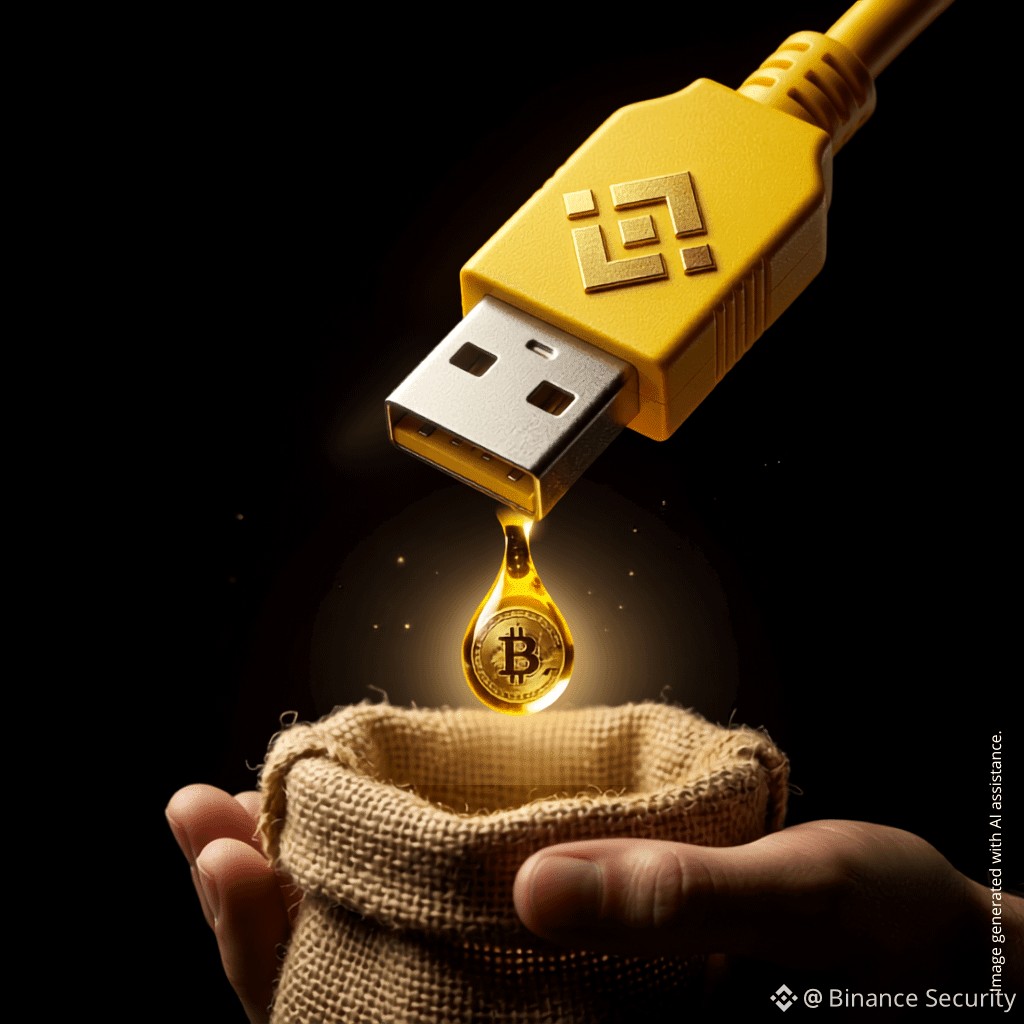
🚨 That “free” airport USB port may be more risky than it looks. 🚨
You’ve seen them everywhere — charging stations at airports, hotels, cafes, and shopping malls. Free power, convenient, easy to use.
But there’s a catch.
Welcome to juice jacking — a security risk travelers should know about. 🧵👇
⚡How can a USB port put your device at risk?
Standard USB connections can carry both electrical power and data. If a public charging port or cable has been tampered with, connecting your device could expose it to risks such as unauthorized data access or malware attempts.
Your phone may only show “Charging” — but that doesn’t always mean the connection is harmless. 🔋
🛡️3 simple ways to reduce the risk
✅ Use a wall outlet with your own charger — this is generally safer than plugging directly into a public USB port.
✅ Carry a personal power bank — a simple way to avoid relying on public charging stations.
✅ Use a USB data blocker or charge-only cable — these tools can help reduce the risk of unwanted data transfer.
💬 Poll time:
Have you ever used a public USB port while traveling? 🗳️
🟢 Yes — and I didn’t realize it could be risky
🟡 Never. Power bank only. 💪
Drop your answer below 👇 and tag a travel buddy who should know this.
#TravelSecurity #JuiceJacking #CryptoSafety #BinanceSquare
🚨 That “free” airport USB port may be more risky than it looks. 🚨
You’ve seen them everywhere — charging stations at airports, hotels, cafes, and shopping malls. Free power, convenient, easy to use.
But there’s a catch.
Welcome to juice jacking — a security risk travelers should know about. 🧵👇
⚡How can a USB port put your device at risk?
Standard USB connections can carry both electrical power and data. If a public charging port or cable has been tampered with, connecting your device could expose it to risks such as unauthorized data access or malware attempts.
Your phone may only show “Charging” — but that doesn’t always mean the connection is harmless. 🔋
🛡️3 simple ways to reduce the risk
✅ Use a wall outlet with your own charger — this is generally safer than plugging directly into a public USB port.
✅ Carry a personal power bank — a simple way to avoid relying on public charging stations.
✅ Use a USB data blocker or charge-only cable — these tools can help reduce the risk of unwanted data transfer.
💬 Poll time:
Have you ever used a public USB port while traveling? 🗳️
🟢 Yes — and I didn’t realize it could be risky
🟡 Never. Power bank only. 💪
Drop your answer below 👇 and tag a travel buddy who should know this.
#TravelSecurity #JuiceJacking #CryptoSafety #BinanceSquare
You’ve seen them everywhere — charging stations at airports, hotels, cafes, and shopping malls. Free power, convenient, easy to use.
But there’s a catch.
Welcome to juice jacking — a security risk travelers should know about. 🧵👇
⚡How can a USB port put your device at risk?
Standard USB connections can carry both electrical power and data. If a public charging port or cable has been tampered with, connecting your device could expose it to risks such as unauthorized data access or malware attempts.
Your phone may only show “Charging” — but that doesn’t always mean the connection is harmless. 🔋
🛡️3 simple ways to reduce the risk
✅ Use a wall outlet with your own charger — this is generally safer than plugging directly into a public USB port.
✅ Carry a personal power bank — a simple way to avoid relying on public charging stations.
✅ Use a USB data blocker or charge-only cable — these tools can help reduce the risk of unwanted data transfer.
💬 Poll time:
Have you ever used a public USB port while traveling? 🗳️
🟢 Yes — and I didn’t realize it could be risky
🟡 Never. Power bank only. 💪
Drop your answer below 👇 and tag a travel buddy who should know this.
#TravelSecurity #JuiceJacking #CryptoSafety #BinanceSquare
1
1
3
531
AI makes it easier than ever to create a polished looking scam: fake whitepaper, fake team, fake roadmap. If you can’t verify the people behind a project, don’t risk your funds. #Binancesecurity
AI makes it easier than ever to create a polished looking scam: fake whitepaper, fake team, fake roadmap. If you can’t verify the people behind a project, don’t risk your funds. #Binancesecurity
1
306
When the Threat Is Physical: Lowering Your Real-World Profile as a Crypto Holder
Most security controls in crypto are designed for attackers who operate remotely. Passwords, two-factor authentication, and approval checks all assume that the person trying to access your funds cannot physically reach you.
A growing category of attacks removes that assumption. In the first half of 2026, researchers reported more violent incidents targeting crypto holders, with losses in the millions. Home invasions made up an increasing share.
These attacks do not defeat your security controls. They bypass them by forcing you to complete every verification step yourself.
🔍 Targeting starts with information
Reported cases increasingly suggest planning rather than opportunism. That planning often begins with public information suggesting that a specific person holds significant crypto assets:
- Portfolio screenshots, profit posts, and balance reveals shared publicly
- A real name or photograph connected to a wallet address or on-chain identity
- Location details in posts and image metadata, including regular routines
- Open discussion of holdings at meetups and in public group chats
Individually, these details may seem harmless. Combined, they answer the two questions an attacker needs: who holds funds, and where they can be found.
🛡️ Reduce what is visible
- Do not publish balances or trade results in a way that identifies you
- Keep your legal name and face separate from addresses and handles that can be traced on-chain
- Post about travel afterwards rather than during, and check what your image metadata may reveal
- Be deliberate about who knows you hold crypto. Many incidents begin with someone who simply knew
Lower your profile. Stay SAFU. #Binancesecurity
When the Threat Is Physical: Lowering Your Real-World Profile as a Crypto Holder
Most security controls in crypto are designed for attackers who operate remotely. Passwords, two-factor authentication, and approval checks all assume that the person trying to access your funds cannot physically reach you.
A growing category of attacks removes that assumption. In the first half of 2026, researchers reported more violent incidents targeting crypto holders, with losses in the millions. Home invasions made up an increasing share.
These attacks do not defeat your security controls. They bypass them by forcing you to complete every verification step yourself.
🔍 Targeting starts with information
Reported cases increasingly suggest planning rather than opportunism. That planning often begins with public information suggesting that a specific person holds significant crypto assets:
- Portfolio screenshots, profit posts, and balance reveals shared publicly
- A real name or photograph connected to a wallet address or on-chain identity
- Location details in posts and image metadata, including regular routines
- Open discussion of holdings at meetups and in public group chats
Individually, these details may seem harmless. Combined, they answer the two questions an attacker needs: who holds funds, and where they can be found.
🛡️ Reduce what is visible
- Do not publish balances or trade results in a way that identifies you
- Keep your legal name and face separate from addresses and handles that can be traced on-chain
- Post about travel afterwards rather than during, and check what your image metadata may reveal
- Be deliberate about who knows you hold crypto. Many incidents begin with someone who simply knew
Lower your profile. Stay SAFU. #Binancesecurity
Most security controls in crypto are designed for attackers who operate remotely. Passwords, two-factor authentication, and approval checks all assume that the person trying to access your funds cannot physically reach you.
A growing category of attacks removes that assumption. In the first half of 2026, researchers reported more violent incidents targeting crypto holders, with losses in the millions. Home invasions made up an increasing share.
These attacks do not defeat your security controls. They bypass them by forcing you to complete every verification step yourself.
🔍 Targeting starts with information
Reported cases increasingly suggest planning rather than opportunism. That planning often begins with public information suggesting that a specific person holds significant crypto assets:
- Portfolio screenshots, profit posts, and balance reveals shared publicly
- A real name or photograph connected to a wallet address or on-chain identity
- Location details in posts and image metadata, including regular routines
- Open discussion of holdings at meetups and in public group chats
Individually, these details may seem harmless. Combined, they answer the two questions an attacker needs: who holds funds, and where they can be found.
🛡️ Reduce what is visible
- Do not publish balances or trade results in a way that identifies you
- Keep your legal name and face separate from addresses and handles that can be traced on-chain
- Post about travel afterwards rather than during, and check what your image metadata may reveal
- Be deliberate about who knows you hold crypto. Many incidents begin with someone who simply knew
Lower your profile. Stay SAFU. #Binancesecurity
1
6
461
Article
ClickFix: When “Verify You’re Human” Is the AttackClickFix is a fast-growing scam technique that skips hacking your device and instead convinces you to do it yourself. Attackers disguise malware as a routine fix: a CAPTCHA that “failed to load,” an urgent “system update,” a broken audio or video prompt before a call, or a document that “won't display” without extra steps.
Unlike traditional malware delivery methods, ClickFix often avoids asking users to manually download and open a suspicious file or attachment. Instead, it may only need you to copy a command, paste it, and press Enter.
How the Attack Works
You land on a fake page through a malicious ad, a compromised website, a link shared in a Telegram/Discord group, or a fake meeting invite.The page shows a familiar-looking error or verification prompt and quietly copies a command to your clipboard in the background.You're told to press Windows + R (or open Terminal on Mac), paste, and hit Enter to “complete verification” or apply the “fix.”That single paste-and-Enter runs a hidden PowerShell or shell command. Because you executed it yourself using trusted system tools, there may be no obvious download prompt, and no immediate antivirus warning. Malware installs silently in the background, most often an infostealer built to harvest saved credentials.
Why This Matters for Crypto Users
Traditional malware defenses mostly watch for malicious downloads or attachments. ClickFix skips that step as you are the one executing the command through Run, PowerShell, or Terminal, tools your own operating system already trusts.
These infostealers are increasingly built to target:
Browser-based wallet extensionsSaved passwords and session cookiesSeed phrases typed, copied, or stored on the deviceHardware wallet software, sometimes replaced with tampered versions
Because these threats can run silently and leave few traces, users may not realize their device is compromised until funds are already gone.
How to Stay SAFU
No real verification requires system access. Legitimate CAPTCHAs, software updates, and troubleshooting flows should not require you to open Run, Terminal, or PowerShell and paste a command from a webpage.Never paste blind. Don't paste anything into a system dialog because a webpage told you to — you often can't see what's on your clipboard before you paste it.Slow down on unusual prompts. If a verification step feels unusual, close the tab and reload the site independently instead of following on-page instructions.Update wallet software from official sources only. Download tools directly from the vendor's official site, never through a pop-up “fix.”Act fast if exposed. If you've already pasted and run a command like this, disconnect from the internet, avoid entering any passwords or seed phrases, run a full malware scan, and move funds using a clean, separate device.
Final Reminder
ClickFix succeeds by turning you into the installer, using tools your computer already trusts. No real fix, update, or verification should require you to copy and paste a command into Run, Terminal, or PowerShell.
If a page asks you to do that, close it immediately. No matter how convincing it looks.
#Binancesecurity #SAFU🙏
ClickFix: When “Verify You’re Human” Is the Attack
ClickFix is a fast-growing scam technique that skips hacking your device and instead convinces you to do it yourself. Attackers disguise malware as a routine fix: a CAPTCHA that “failed to load,” an urgent “system update,” a broken audio or video prompt before a call, or a document that “won't display” without extra steps.
Unlike traditional malware delivery methods, ClickFix often avoids asking users to manually download and open a suspicious file or attachment. Instead, it may only need you to copy a command, paste it, and press Enter.
How the Attack Works
You land on a fake page through a malicious ad, a compromised website, a link shared in a Telegram/Discord group, or a fake meeting invite.The page shows a familiar-looking error or verification prompt and quietly copies a command to your clipboard in the background.You're told to press Windows + R (or open Terminal on Mac), paste, and hit Enter to “complete verification” or apply the “fix.”That single paste-and-Enter runs a hidden PowerShell or shell command. Because you executed it yourself using trusted system tools, there may be no obvious download prompt, and no immediate antivirus warning. Malware installs silently in the background, most often an infostealer built to harvest saved credentials.
Why This Matters for Crypto Users
Traditional malware defenses mostly watch for malicious downloads or attachments. ClickFix skips that step as you are the one executing the command through Run, PowerShell, or Terminal, tools your own operating system already trusts.
These infostealers are increasingly built to target:
Browser-based wallet extensionsSaved passwords and session cookiesSeed phrases typed, copied, or stored on the deviceHardware wallet software, sometimes replaced with tampered versions
Because these threats can run silently and leave few traces, users may not realize their device is compromised until funds are already gone.
How to Stay SAFU
No real verification requires system access. Legitimate CAPTCHAs, software updates, and troubleshooting flows should not require you to open Run, Terminal, or PowerShell and paste a command from a webpage.Never paste blind. Don't paste anything into a system dialog because a webpage told you to — you often can't see what's on your clipboard before you paste it.Slow down on unusual prompts. If a verification step feels unusual, close the tab and reload the site independently instead of following on-page instructions.Update wallet software from official sources only. Download tools directly from the vendor's official site, never through a pop-up “fix.”Act fast if exposed. If you've already pasted and run a command like this, disconnect from the internet, avoid entering any passwords or seed phrases, run a full malware scan, and move funds using a clean, separate device.
Final Reminder
ClickFix succeeds by turning you into the installer, using tools your computer already trusts. No real fix, update, or verification should require you to copy and paste a command into Run, Terminal, or PowerShell.
If a page asks you to do that, close it immediately. No matter how convincing it looks.
#Binancesecurity #SAFU🙏
Unlike traditional malware delivery methods, ClickFix often avoids asking users to manually download and open a suspicious file or attachment. Instead, it may only need you to copy a command, paste it, and press Enter.
How the Attack Works
You land on a fake page through a malicious ad, a compromised website, a link shared in a Telegram/Discord group, or a fake meeting invite.The page shows a familiar-looking error or verification prompt and quietly copies a command to your clipboard in the background.You're told to press Windows + R (or open Terminal on Mac), paste, and hit Enter to “complete verification” or apply the “fix.”That single paste-and-Enter runs a hidden PowerShell or shell command. Because you executed it yourself using trusted system tools, there may be no obvious download prompt, and no immediate antivirus warning. Malware installs silently in the background, most often an infostealer built to harvest saved credentials.
Why This Matters for Crypto Users
Traditional malware defenses mostly watch for malicious downloads or attachments. ClickFix skips that step as you are the one executing the command through Run, PowerShell, or Terminal, tools your own operating system already trusts.
These infostealers are increasingly built to target:
Browser-based wallet extensionsSaved passwords and session cookiesSeed phrases typed, copied, or stored on the deviceHardware wallet software, sometimes replaced with tampered versions
Because these threats can run silently and leave few traces, users may not realize their device is compromised until funds are already gone.
How to Stay SAFU
No real verification requires system access. Legitimate CAPTCHAs, software updates, and troubleshooting flows should not require you to open Run, Terminal, or PowerShell and paste a command from a webpage.Never paste blind. Don't paste anything into a system dialog because a webpage told you to — you often can't see what's on your clipboard before you paste it.Slow down on unusual prompts. If a verification step feels unusual, close the tab and reload the site independently instead of following on-page instructions.Update wallet software from official sources only. Download tools directly from the vendor's official site, never through a pop-up “fix.”Act fast if exposed. If you've already pasted and run a command like this, disconnect from the internet, avoid entering any passwords or seed phrases, run a full malware scan, and move funds using a clean, separate device.
Final Reminder
ClickFix succeeds by turning you into the installer, using tools your computer already trusts. No real fix, update, or verification should require you to copy and paste a command into Run, Terminal, or PowerShell.
If a page asks you to do that, close it immediately. No matter how convincing it looks.
#Binancesecurity #SAFU🙏
2
8
929
Make security a habit, starting now. #Binancesecurity
Make security a habit, starting now. #Binancesecurity
2
300
Clipboard Hijacking vs. Address Poisoning: What’s the Difference?
Both scams aim to trick users into sending crypto to the wrong address, but they work in different ways.
🦠 Clipboard hijacking happens when malware on your device replaces a copied wallet address with an attacker’s address.
🎭 Address poisoning happens when attackers send small transactions from lookalike addresses to trick you into copying the wrong one from your transaction history.
🔍 Key difference:
Clipboard hijacking typically involves malware on a compromised device, while address poisoning relies on deceiving users into trusting the wrong address.
🛡️ Security tip:
Always verify the full wallet address before sending crypto, a quick check can help protect your funds.
Clipboard Hijacking vs. Address Poisoning: What’s the Difference?
Both scams aim to trick users into sending crypto to the wrong address, but they work in different ways.
🦠 Clipboard hijacking happens when malware on your device replaces a copied wallet address with an attacker’s address.
🎭 Address poisoning happens when attackers send small transactions from lookalike addresses to trick you into copying the wrong one from your transaction history.
🔍 Key difference:
Clipboard hijacking typically involves malware on a compromised device, while address poisoning relies on deceiving users into trusting the wrong address.
🛡️ Security tip:
Always verify the full wallet address before sending crypto, a quick check can help protect your funds.
Both scams aim to trick users into sending crypto to the wrong address, but they work in different ways.
🦠 Clipboard hijacking happens when malware on your device replaces a copied wallet address with an attacker’s address.
🎭 Address poisoning happens when attackers send small transactions from lookalike addresses to trick you into copying the wrong one from your transaction history.
🔍 Key difference:
Clipboard hijacking typically involves malware on a compromised device, while address poisoning relies on deceiving users into trusting the wrong address.
🛡️ Security tip:
Always verify the full wallet address before sending crypto, a quick check can help protect your funds.
2
265
Clipboard Hijacking and How to Prevent It
🔍 What is it?
Clipboard hijacking is a type of malware attack that monitors or alters the content you copy and paste.
⚠️ Why does it matter?
Attackers can capture clipboard data when users copy sensitive information, such as passwords or banking details, leading to data theft or privacy breaches. They may also replace a copied wallet address with their own, causing funds to be sent to the wrong destination.
💡 How can you stay protected?
- Keep your browser and device up to date
- Only install software from trusted sources
- Review your browser extensions regularly
- Use reliable antivirus or security software
- Always double check wallet addresses before sending crypto
🛡️ Stay alert and stay safe. #Binancesecurity
Clipboard Hijacking and How to Prevent It
🔍 What is it?
Clipboard hijacking is a type of malware attack that monitors or alters the content you copy and paste.
⚠️ Why does it matter?
Attackers can capture clipboard data when users copy sensitive information, such as passwords or banking details, leading to data theft or privacy breaches. They may also replace a copied wallet address with their own, causing funds to be sent to the wrong destination.
💡 How can you stay protected?
- Keep your browser and device up to date
- Only install software from trusted sources
- Review your browser extensions regularly
- Use reliable antivirus or security software
- Always double check wallet addresses before sending crypto
🛡️ Stay alert and stay safe. #Binancesecurity
🔍 What is it?
Clipboard hijacking is a type of malware attack that monitors or alters the content you copy and paste.
⚠️ Why does it matter?
Attackers can capture clipboard data when users copy sensitive information, such as passwords or banking details, leading to data theft or privacy breaches. They may also replace a copied wallet address with their own, causing funds to be sent to the wrong destination.
💡 How can you stay protected?
- Keep your browser and device up to date
- Only install software from trusted sources
- Review your browser extensions regularly
- Use reliable antivirus or security software
- Always double check wallet addresses before sending crypto
🛡️ Stay alert and stay safe. #Binancesecurity
2
265
✅ The answer is D: Unlimited token approval
Granting a DeFi contract unlimited approval allows it to retain ongoing permission to transfer your tokens. If the contract is malicious, compromised, or exploited, the approved tokens may be drained without any additional approval transaction.
Safety tip: Regularly review and revoke token approvals that are no longer needed.
✅ The answer is D: Unlimited token approval
Granting a DeFi contract unlimited approval allows it to retain ongoing permission to transfer your tokens. If the contract is malicious, compromised, or exploited, the approved tokens may be drained without any additional approval transaction.
Safety tip: Regularly review and revoke token approvals that are no longer needed.
Granting a DeFi contract unlimited approval allows it to retain ongoing permission to transfer your tokens. If the contract is malicious, compromised, or exploited, the approved tokens may be drained without any additional approval transaction.
Safety tip: Regularly review and revoke token approvals that are no longer needed.
Binance Security
·
--
You visited a DeFi site once, clicked “Approve,” and never went back.
Three weeks later, your tokens are gone.
You didn’t sign any new transaction.
You didn’t click a phishing link.
You didn’t share your seed phrase.
The token approval you granted was still active.
❓ What most likely happened?
👀 Follow us for the correct answer and more. #Binancesecurity
Three weeks later, your tokens are gone.
You didn’t sign any new transaction.
You didn’t click a phishing link.
You didn’t share your seed phrase.
The token approval you granted was still active.
❓ What most likely happened?
👀 Follow us for the correct answer and more. #Binancesecurity
252
You visited a DeFi site once, clicked “Approve,” and never went back.
Three weeks later, your tokens are gone.
You didn’t sign any new transaction.
You didn’t click a phishing link.
You didn’t share your seed phrase.
The token approval you granted was still active.
❓ What most likely happened?
👀 Follow us for the correct answer and more. #Binancesecurity
You visited a DeFi site once, clicked “Approve,” and never went back.
Three weeks later, your tokens are gone.
You didn’t sign any new transaction.
You didn’t click a phishing link.
You didn’t share your seed phrase.
The token approval you granted was still active.
❓ What most likely happened?
👀 Follow us for the correct answer and more. #Binancesecurity
Three weeks later, your tokens are gone.
You didn’t sign any new transaction.
You didn’t click a phishing link.
You didn’t share your seed phrase.
The token approval you granted was still active.
❓ What most likely happened?
👀 Follow us for the correct answer and more. #Binancesecurity
A: Seed phrase compromise
0%
B: Delayed rug pull
0%
C: Smart contract exploit
0%
D: Unlimited token approval
100%
3 votes • Voting closed
1
1
3
289
Public WiFi and crypto logins are a risky mix ⚠️
Open networks can expose you to interception and spoofing risks. Avoid signing transactions on public WiFi 🔒
Public WiFi and crypto logins are a risky mix ⚠️
Open networks can expose you to interception and spoofing risks. Avoid signing transactions on public WiFi 🔒
Open networks can expose you to interception and spoofing risks. Avoid signing transactions on public WiFi 🔒
2
4
215
🟡 Your daily security check starts now. #Binancesecurity
🟡 Your daily security check starts now. #Binancesecurity
4
491
AI can clone a voice from just seconds of audio. Someone calls you asking for an “urgent” crypto transfer? 🚨
Hang up. Stay alert. Verify independently.
AI can clone a voice from just seconds of audio. Someone calls you asking for an “urgent” crypto transfer? 🚨
Hang up. Stay alert. Verify independently.
Hang up. Stay alert. Verify independently.
2
129
🚨 Fake Support, Real Scam: 3 Red Flags to Watch For
When technical attacks fail, scammers target the human layer by pretending to be helpful, high-pressure support agents. They create panic, push urgency, and try to trick users into handing over access or funds.
⚠️ Remember: Binance staff will never message you first on Telegram to ask for funds, passwords, codes, or account credentials.
3 red flags to watch for:
🔴 Urgency: “Your account will be permanently banned in 1 hour!”
🔴 Upfront fees: asking for “gas fees” or a “temporary security deposit” to unlock your balance
🔴 Screen-sharing requests: telling you to install apps so they can “help” view your account
If someone pressures you to act fast, pay first, or share your screen, pause and verify before taking any action.
#Binancesecurity
🚨 Fake Support, Real Scam: 3 Red Flags to Watch For
When technical attacks fail, scammers target the human layer by pretending to be helpful, high-pressure support agents. They create panic, push urgency, and try to trick users into handing over access or funds.
⚠️ Remember: Binance staff will never message you first on Telegram to ask for funds, passwords, codes, or account credentials.
3 red flags to watch for:
🔴 Urgency: “Your account will be permanently banned in 1 hour!”
🔴 Upfront fees: asking for “gas fees” or a “temporary security deposit” to unlock your balance
🔴 Screen-sharing requests: telling you to install apps so they can “help” view your account
If someone pressures you to act fast, pay first, or share your screen, pause and verify before taking any action.
#Binancesecurity
When technical attacks fail, scammers target the human layer by pretending to be helpful, high-pressure support agents. They create panic, push urgency, and try to trick users into handing over access or funds.
⚠️ Remember: Binance staff will never message you first on Telegram to ask for funds, passwords, codes, or account credentials.
3 red flags to watch for:
🔴 Urgency: “Your account will be permanently banned in 1 hour!”
🔴 Upfront fees: asking for “gas fees” or a “temporary security deposit” to unlock your balance
🔴 Screen-sharing requests: telling you to install apps so they can “help” view your account
If someone pressures you to act fast, pay first, or share your screen, pause and verify before taking any action.
#Binancesecurity
4
298
You join a Telegram group where members are promoting an “AI-powered” trading bot. The pitch sounds convincing:
🔶 Claims 3–5% daily returns through machine learning
🔶 Shows screenshots of profitable trades
🔶 Features video from “users”
You decide to try a small deposit. Within hours, the dashboard shows profits. Then you try to withdraw.
First, you’re asked to pay a “liquidity unlock fee.”
Then, you’re told you need to reach a higher “withdrawal tier” which can only be unlocked by recruiting new members.
💭 Which red flag is the strongest sign of a scam?
A. Promises of guaranteed daily returns
B. Profits shown immediately after deposit
C. Withdrawal blocked by extra fees
D. Needing to recruit others to unlock withdrawals
#Binancesecurity #Cryptoscam
You join a Telegram group where members are promoting an “AI-powered” trading bot. The pitch sounds convincing:
🔶 Claims 3–5% daily returns through machine learning
🔶 Shows screenshots of profitable trades
🔶 Features video from “users”
You decide to try a small deposit. Within hours, the dashboard shows profits. Then you try to withdraw.
First, you’re asked to pay a “liquidity unlock fee.”
Then, you’re told you need to reach a higher “withdrawal tier” which can only be unlocked by recruiting new members.
💭 Which red flag is the strongest sign of a scam?
A. Promises of guaranteed daily returns
B. Profits shown immediately after deposit
C. Withdrawal blocked by extra fees
D. Needing to recruit others to unlock withdrawals
#Binancesecurity #Cryptoscam
🔶 Claims 3–5% daily returns through machine learning
🔶 Shows screenshots of profitable trades
🔶 Features video from “users”
You decide to try a small deposit. Within hours, the dashboard shows profits. Then you try to withdraw.
First, you’re asked to pay a “liquidity unlock fee.”
Then, you’re told you need to reach a higher “withdrawal tier” which can only be unlocked by recruiting new members.
💭 Which red flag is the strongest sign of a scam?
A. Promises of guaranteed daily returns
B. Profits shown immediately after deposit
C. Withdrawal blocked by extra fees
D. Needing to recruit others to unlock withdrawals
#Binancesecurity #Cryptoscam
A
40%
B
0%
C
40%
D
20%
5 votes • Voting closed
53
4
97
212.8k
🚩Not every AI crypto tool is secure: do you know the red flags?
🚩Not every AI crypto tool is secure: do you know the red flags?
Binance Security
·
--
Using AI Crypto Tools Safely: Security Before Convenience
Suspicious AI trading agents are becoming a growing risk in crypto. AI agents don’t just give advice — they can act on your behalf. Once connected to your wallet or exchange account, they may buy, sell, rebalance, or even move funds automatically.
That convenience also creates risk.
In 2026, a growing number of free AI crypto tools appeared across browser extensions, Telegram bots and Discord assistants. They offer portfolio tracking, market alerts, auto-trading, and wallet management. Many ask for wallet connection permissions to “work properly.”
This is where everyday users face the greatest risk: what looks like a helpful tool may actually be malware gaining enough access to monitor, manipulate, or drain your wallet.
Red Flags to watch for:
> It asks you to connect your wallet to “unlock full features,” even for functions like market data, alerts, or portfolio tracking. These features typically do not require permissions that can trade, transfer, or move funds.
> It is free, but there is no clear company, team, business model, or security review behind it. If you cannot tell who built it, who maintains it, or how it operates, proceed with caution.
> It is being promoted heavily in Discord, Telegram, or Reddit threads by anonymous or unverified accounts.
> It asks for broader permissions than the task requires. A price alert bot should not need trading permissions. A portfolio tracker should not need permissions that allow transfers or withdrawals.
> The app is new, has very few reviews, or its reviews appeared in a short period of time. Check when the tool launched and whether its feedback looks organic.
> Sponsored links in search engine results may be malicious, and the AI agent offered through them could contain malware.
Key Takeway:
Read permissions carefully before approving. When any app, AI or otherwise, asks for wallet or account access, review exactly what it is requesting.
Prefer tools from established platforms with transparent teams, credible security practices, and a strong reputation. A slick interface does not mean trustworthy code.
#Binancesecurity
That convenience also creates risk.
In 2026, a growing number of free AI crypto tools appeared across browser extensions, Telegram bots and Discord assistants. They offer portfolio tracking, market alerts, auto-trading, and wallet management. Many ask for wallet connection permissions to “work properly.”
This is where everyday users face the greatest risk: what looks like a helpful tool may actually be malware gaining enough access to monitor, manipulate, or drain your wallet.
Red Flags to watch for:
> It asks you to connect your wallet to “unlock full features,” even for functions like market data, alerts, or portfolio tracking. These features typically do not require permissions that can trade, transfer, or move funds.
> It is free, but there is no clear company, team, business model, or security review behind it. If you cannot tell who built it, who maintains it, or how it operates, proceed with caution.
> It is being promoted heavily in Discord, Telegram, or Reddit threads by anonymous or unverified accounts.
> It asks for broader permissions than the task requires. A price alert bot should not need trading permissions. A portfolio tracker should not need permissions that allow transfers or withdrawals.
> The app is new, has very few reviews, or its reviews appeared in a short period of time. Check when the tool launched and whether its feedback looks organic.
> Sponsored links in search engine results may be malicious, and the AI agent offered through them could contain malware.
Key Takeway:
Read permissions carefully before approving. When any app, AI or otherwise, asks for wallet or account access, review exactly what it is requesting.
Prefer tools from established platforms with transparent teams, credible security practices, and a strong reputation. A slick interface does not mean trustworthy code.
#Binancesecurity
1
224
🤖 Prompt Injection: What It Is and How to Stay Safe
There are emerging attack techniques that make AI agents risky in ways traditional software is not. One growing threat is prompt injection. ⚠️
🔍 What is prompt injection?
Prompt injection is a technique in which malicious instructions are hidden inside content that an AI system reads, such as websites, documents, or emails. These hidden instructions can trick the AI into ignoring its original task and following an attacker’s commands instead.
🚨 Why is it dangerous?
A successful prompt injection attack may cause an AI agent to:
📈 Manipulate trading strategies across connected systems
🔓 Reveal sensitive information
❗ Generate misleading or unsafe outputs
🔗 Click malicious links
⬇️ Download harmful tools or malware
⚙️ Take unintended actions on behalf of the user
🛡️ How can users protect themselves?
🔎Be cautious with sponsored search results when looking for AI tools or agents
🧠 Do not blindly trust AI-generated outputs
✅ Review AI actions before approving them
🔐 Use trusted tools and keep security protections enabled
As AI becomes more powerful, staying alert is just as important as staying productive.
Think before action, verify before trust. 💡
#Binancesecurity
🤖 Prompt Injection: What It Is and How to Stay Safe
There are emerging attack techniques that make AI agents risky in ways traditional software is not. One growing threat is prompt injection. ⚠️
🔍 What is prompt injection?
Prompt injection is a technique in which malicious instructions are hidden inside content that an AI system reads, such as websites, documents, or emails. These hidden instructions can trick the AI into ignoring its original task and following an attacker’s commands instead.
🚨 Why is it dangerous?
A successful prompt injection attack may cause an AI agent to:
📈 Manipulate trading strategies across connected systems
🔓 Reveal sensitive information
❗ Generate misleading or unsafe outputs
🔗 Click malicious links
⬇️ Download harmful tools or malware
⚙️ Take unintended actions on behalf of the user
🛡️ How can users protect themselves?
🔎Be cautious with sponsored search results when looking for AI tools or agents
🧠 Do not blindly trust AI-generated outputs
✅ Review AI actions before approving them
🔐 Use trusted tools and keep security protections enabled
As AI becomes more powerful, staying alert is just as important as staying productive.
Think before action, verify before trust. 💡
#Binancesecurity
There are emerging attack techniques that make AI agents risky in ways traditional software is not. One growing threat is prompt injection. ⚠️
🔍 What is prompt injection?
Prompt injection is a technique in which malicious instructions are hidden inside content that an AI system reads, such as websites, documents, or emails. These hidden instructions can trick the AI into ignoring its original task and following an attacker’s commands instead.
🚨 Why is it dangerous?
A successful prompt injection attack may cause an AI agent to:
📈 Manipulate trading strategies across connected systems
🔓 Reveal sensitive information
❗ Generate misleading or unsafe outputs
🔗 Click malicious links
⬇️ Download harmful tools or malware
⚙️ Take unintended actions on behalf of the user
🛡️ How can users protect themselves?
🔎Be cautious with sponsored search results when looking for AI tools or agents
🧠 Do not blindly trust AI-generated outputs
✅ Review AI actions before approving them
🔐 Use trusted tools and keep security protections enabled
As AI becomes more powerful, staying alert is just as important as staying productive.
Think before action, verify before trust. 💡
#Binancesecurity
3
175
Article
Using AI Crypto Tools Safely: Security Before ConvenienceSuspicious AI trading agents are becoming a growing risk in crypto. AI agents don’t just give advice — they can act on your behalf. Once connected to your wallet or exchange account, they may buy, sell, rebalance, or even move funds automatically.
That convenience also creates risk.
In 2026, a growing number of free AI crypto tools appeared across browser extensions, Telegram bots and Discord assistants. They offer portfolio tracking, market alerts, auto-trading, and wallet management. Many ask for wallet connection permissions to “work properly.”
This is where everyday users face the greatest risk: what looks like a helpful tool may actually be malware gaining enough access to monitor, manipulate, or drain your wallet.
Red Flags to watch for:
> It asks you to connect your wallet to “unlock full features,” even for functions like market data, alerts, or portfolio tracking. These features typically do not require permissions that can trade, transfer, or move funds.
> It is free, but there is no clear company, team, business model, or security review behind it. If you cannot tell who built it, who maintains it, or how it operates, proceed with caution.
> It is being promoted heavily in Discord, Telegram, or Reddit threads by anonymous or unverified accounts.
> It asks for broader permissions than the task requires. A price alert bot should not need trading permissions. A portfolio tracker should not need permissions that allow transfers or withdrawals.
> The app is new, has very few reviews, or its reviews appeared in a short period of time. Check when the tool launched and whether its feedback looks organic.
> Sponsored links in search engine results may be malicious, and the AI agent offered through them could contain malware.
Key Takeway:
Read permissions carefully before approving. When any app, AI or otherwise, asks for wallet or account access, review exactly what it is requesting.
Prefer tools from established platforms with transparent teams, credible security practices, and a strong reputation. A slick interface does not mean trustworthy code.
#Binancesecurity
Using AI Crypto Tools Safely: Security Before Convenience
Suspicious AI trading agents are becoming a growing risk in crypto. AI agents don’t just give advice — they can act on your behalf. Once connected to your wallet or exchange account, they may buy, sell, rebalance, or even move funds automatically.
That convenience also creates risk.
In 2026, a growing number of free AI crypto tools appeared across browser extensions, Telegram bots and Discord assistants. They offer portfolio tracking, market alerts, auto-trading, and wallet management. Many ask for wallet connection permissions to “work properly.”
This is where everyday users face the greatest risk: what looks like a helpful tool may actually be malware gaining enough access to monitor, manipulate, or drain your wallet.
Red Flags to watch for:
> It asks you to connect your wallet to “unlock full features,” even for functions like market data, alerts, or portfolio tracking. These features typically do not require permissions that can trade, transfer, or move funds.
> It is free, but there is no clear company, team, business model, or security review behind it. If you cannot tell who built it, who maintains it, or how it operates, proceed with caution.
> It is being promoted heavily in Discord, Telegram, or Reddit threads by anonymous or unverified accounts.
> It asks for broader permissions than the task requires. A price alert bot should not need trading permissions. A portfolio tracker should not need permissions that allow transfers or withdrawals.
> The app is new, has very few reviews, or its reviews appeared in a short period of time. Check when the tool launched and whether its feedback looks organic.
> Sponsored links in search engine results may be malicious, and the AI agent offered through them could contain malware.
Key Takeway:
Read permissions carefully before approving. When any app, AI or otherwise, asks for wallet or account access, review exactly what it is requesting.
Prefer tools from established platforms with transparent teams, credible security practices, and a strong reputation. A slick interface does not mean trustworthy code.
#Binancesecurity
That convenience also creates risk.
In 2026, a growing number of free AI crypto tools appeared across browser extensions, Telegram bots and Discord assistants. They offer portfolio tracking, market alerts, auto-trading, and wallet management. Many ask for wallet connection permissions to “work properly.”
This is where everyday users face the greatest risk: what looks like a helpful tool may actually be malware gaining enough access to monitor, manipulate, or drain your wallet.
Red Flags to watch for:
> It asks you to connect your wallet to “unlock full features,” even for functions like market data, alerts, or portfolio tracking. These features typically do not require permissions that can trade, transfer, or move funds.
> It is free, but there is no clear company, team, business model, or security review behind it. If you cannot tell who built it, who maintains it, or how it operates, proceed with caution.
> It is being promoted heavily in Discord, Telegram, or Reddit threads by anonymous or unverified accounts.
> It asks for broader permissions than the task requires. A price alert bot should not need trading permissions. A portfolio tracker should not need permissions that allow transfers or withdrawals.
> The app is new, has very few reviews, or its reviews appeared in a short period of time. Check when the tool launched and whether its feedback looks organic.
> Sponsored links in search engine results may be malicious, and the AI agent offered through them could contain malware.
Key Takeway:
Read permissions carefully before approving. When any app, AI or otherwise, asks for wallet or account access, review exactly what it is requesting.
Prefer tools from established platforms with transparent teams, credible security practices, and a strong reputation. A slick interface does not mean trustworthy code.
#Binancesecurity
1
4
373
📩 Phishing emails are not always sent from fake or suspicious-looking infrastructure. Today, attackers often abuse real platforms and trusted services to make malicious emails appear more legitimate.
❓ Which of the following best describes this growing phishing tactic?
A. Attackers only rely on obviously fake domains and suspicious servers to send phishing emails.
B. Attackers increasingly abuse legitimate cloud, notification, or automation platforms to deliver malicious emails that may still pass authentication checks.
C. Attackers can only succeed if SPF, DKIM, and DMARC are completely missing.
Vote below 🗳️ Follow us and check the comments for the correct answer 👇
#Binancesecurity
📩 Phishing emails are not always sent from fake or suspicious-looking infrastructure. Today, attackers often abuse real platforms and trusted services to make malicious emails appear more legitimate.
❓ Which of the following best describes this growing phishing tactic?
A. Attackers only rely on obviously fake domains and suspicious servers to send phishing emails.
B. Attackers increasingly abuse legitimate cloud, notification, or automation platforms to deliver malicious emails that may still pass authentication checks.
C. Attackers can only succeed if SPF, DKIM, and DMARC are completely missing.
Vote below 🗳️ Follow us and check the comments for the correct answer 👇
#Binancesecurity
❓ Which of the following best describes this growing phishing tactic?
A. Attackers only rely on obviously fake domains and suspicious servers to send phishing emails.
B. Attackers increasingly abuse legitimate cloud, notification, or automation platforms to deliver malicious emails that may still pass authentication checks.
C. Attackers can only succeed if SPF, DKIM, and DMARC are completely missing.
Vote below 🗳️ Follow us and check the comments for the correct answer 👇
#Binancesecurity
A
33%
B
67%
C
0%
3 votes • Voting closed
11
1
36
65.4k
Article
Security Alert | Email Authentication Does Not Stop PhishingSPF ✅
DKIM ✅
DMARC ✅
The email looked clean.
But it was still phishing. 🎣
Email authentication checks like SPF, DKIM, and DMARC help verify where an email comes from, but they do not confirm whether the message itself is safe.
As attackers evolve, they are increasingly abusing legitimate platforms to deliver phishing content instead of building fake infrastructure.
Authentication ≠ Trust
SPF, DKIM, and DMARC can help answer: “Did this email come from the server it claims to come from?”
But they do not answer: “Is this email actually safe?”
That means a phishing email can still pass authentication checks if it is sent through a trusted service. 🚨
Why This Matters
When attackers use legitimate infrastructure:
The sender may appear trustedAuthentication checks may passReputation-based defenses may not flag the emailMalicious content can still reach usersThis makes phishing detection much harder 🔍
What to Watch
For Even if an email looks legitimate:
Verify the intent of the message, not just the sender domainBe cautious with unexpected account alerts or legal noticesCheck Reply-To addresses carefullyBe cautious with clicking login links in unsolicited emailsA message can be technically authentic and still be malicious.
Key Takeaway
Authentication technologies remain essential, but they were never designed to determine intent.
As attackers increasingly hide inside trusted infrastructure, effective defense requires more than technical checks. It also also depends on context, behavior analysis, and user awareness 🛡️
Stay vigilant. Stay SAFU.
#Binance
Security Alert | Email Authentication Does Not Stop Phishing
SPF ✅
DKIM ✅
DMARC ✅
The email looked clean.
But it was still phishing. 🎣
Email authentication checks like SPF, DKIM, and DMARC help verify where an email comes from, but they do not confirm whether the message itself is safe.
As attackers evolve, they are increasingly abusing legitimate platforms to deliver phishing content instead of building fake infrastructure.
Authentication ≠ Trust
SPF, DKIM, and DMARC can help answer: “Did this email come from the server it claims to come from?”
But they do not answer: “Is this email actually safe?”
That means a phishing email can still pass authentication checks if it is sent through a trusted service. 🚨
Why This Matters
When attackers use legitimate infrastructure:
The sender may appear trustedAuthentication checks may passReputation-based defenses may not flag the emailMalicious content can still reach usersThis makes phishing detection much harder 🔍
What to Watch
For Even if an email looks legitimate:
Verify the intent of the message, not just the sender domainBe cautious with unexpected account alerts or legal noticesCheck Reply-To addresses carefullyBe cautious with clicking login links in unsolicited emailsA message can be technically authentic and still be malicious.
Key Takeaway
Authentication technologies remain essential, but they were never designed to determine intent.
As attackers increasingly hide inside trusted infrastructure, effective defense requires more than technical checks. It also also depends on context, behavior analysis, and user awareness 🛡️
Stay vigilant. Stay SAFU.
#Binance
DKIM ✅
DMARC ✅
The email looked clean.
But it was still phishing. 🎣
Email authentication checks like SPF, DKIM, and DMARC help verify where an email comes from, but they do not confirm whether the message itself is safe.
As attackers evolve, they are increasingly abusing legitimate platforms to deliver phishing content instead of building fake infrastructure.
Authentication ≠ Trust
SPF, DKIM, and DMARC can help answer: “Did this email come from the server it claims to come from?”
But they do not answer: “Is this email actually safe?”
That means a phishing email can still pass authentication checks if it is sent through a trusted service. 🚨
Why This Matters
When attackers use legitimate infrastructure:
The sender may appear trustedAuthentication checks may passReputation-based defenses may not flag the emailMalicious content can still reach usersThis makes phishing detection much harder 🔍
What to Watch
For Even if an email looks legitimate:
Verify the intent of the message, not just the sender domainBe cautious with unexpected account alerts or legal noticesCheck Reply-To addresses carefullyBe cautious with clicking login links in unsolicited emailsA message can be technically authentic and still be malicious.
Key Takeaway
Authentication technologies remain essential, but they were never designed to determine intent.
As attackers increasingly hide inside trusted infrastructure, effective defense requires more than technical checks. It also also depends on context, behavior analysis, and user awareness 🛡️
Stay vigilant. Stay SAFU.
#Binance
2
280
Log in to explore more content
Join global crypto users on Binance Square
⚡️ Get latest and useful information about crypto.
💬 Trusted by the world’s largest crypto exchange.
👍 Discover real insights from verified creators.
Email / Phone number
Trending Topics
ZcashETFPostsFirstWeeklyOutflow$93.6M
38,598 views
129 Discussing
#ZcashETFPostsFirstWeeklyOutflow$93.6M
🚨🚨🚨🚨🚨🚨🚨🚨🚨🚨🚨🚨🚨🚨✅ 🚨 ZCASH ETF FLOWS TURN NEGATIVE FOR THE FIRST TIME! 📉
$ZEC is facing a notable shift in institutional fund flows, with Zcash investment products recording their first weekly net outflow since launching in August.
According to fund-flow data, around $93.6M was withdrawn from Zcash products during the latest week, while ZEC price action also cooled significantly.
📊 WHAT HAPPENED?
• Weekly Zcash ETF outflow: $93.6M
• September 30 daily outflow: $30.25M
• ZCSH previously attracted around $98.2M in one week
• ZEC is trading near $1,300
• Recent high: around $1,690
• Weekly decline: roughly 17%+
🔍 LEVELS TO WATCH
🟢 Support: $1,280–$1,300
🔴 Resistance: $1,450–$1,500
The key question now is whether the $1,300 area can hold and attract fresh buyers.
Institutional flows will also be important. A return of consistent positive inflows could signal renewed confidence, while continued outflows may keep pressure on $ZEC .
👀 Is this simply profit-taking after ZEC’s huge rally, or could we see another deeper pullback before buyers return?
Share your view below. 👇
#Zcash #ZEC #ZcashETF #Crypto
#analysis
owhggwiohsjowve
·0 Likes
·178 views
GreekPoliceBustCryptoScamRingArrest17
90,353 views
758 Discussing
BitcoinRejectedAt$87K
129,204 views
186 Discussing