

张瑞阳-kevin
 Square Verified+
交易路上不迷茫,只讲干货张瑞阳!|红薯🍠和X:@cryptokevin1688|找到学习和可落地的路径,比拼执行力,千万别欺负正在努力和弱小时的你
Open Trade
High-Frequency Trader
1 Years
174 Following
46.7K+ Followers
26.6K+ Liked
Posts
Portfolio
All
Quotes
Videos
Live
PINNED

张瑞阳-kevin
·
--
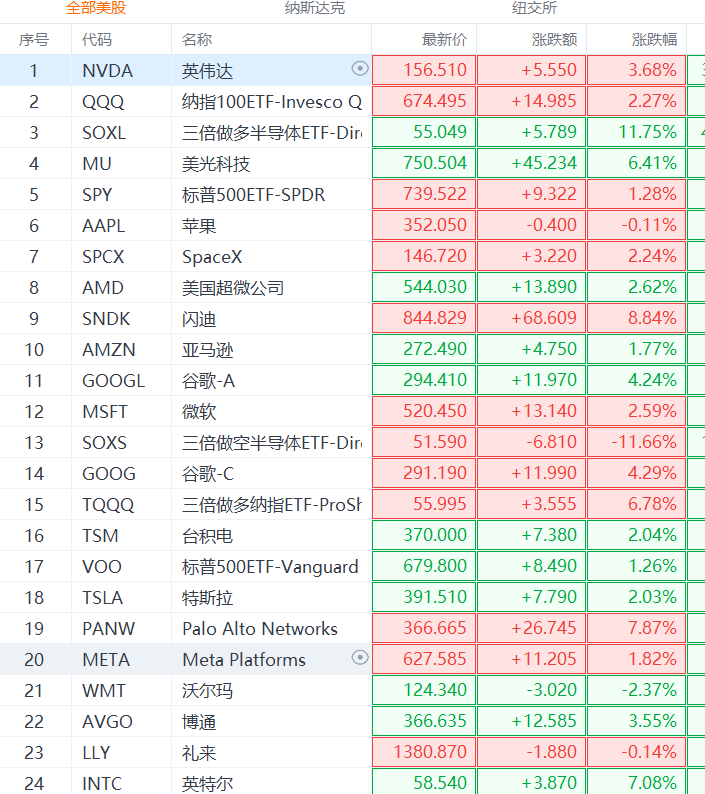
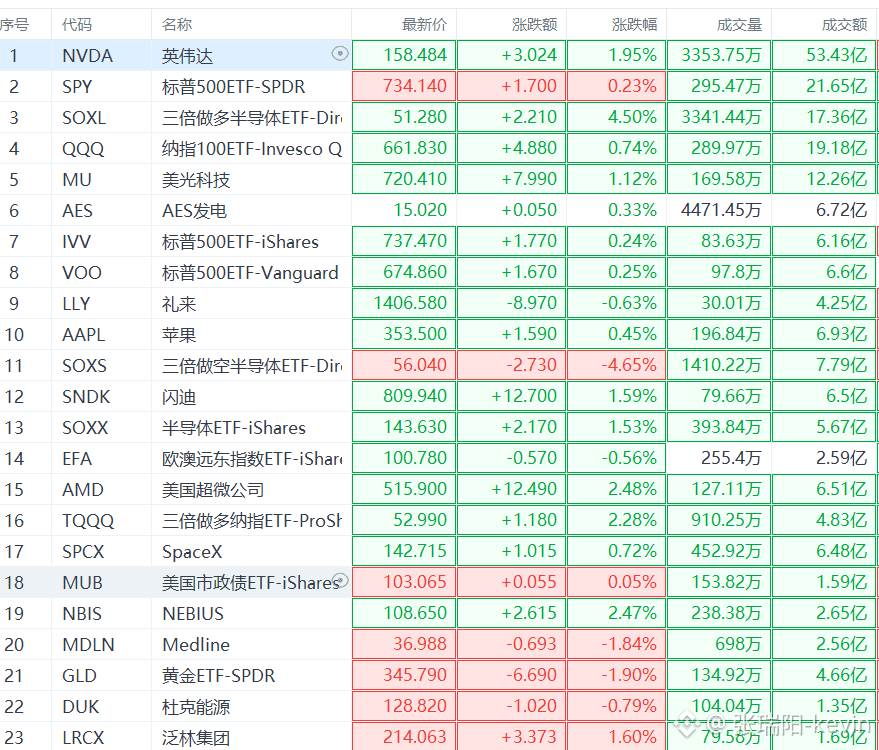
Mid-session U.S. market take: Shorts got swallowed whole, and did all the money just move from “boring old-man stocks” into chips?
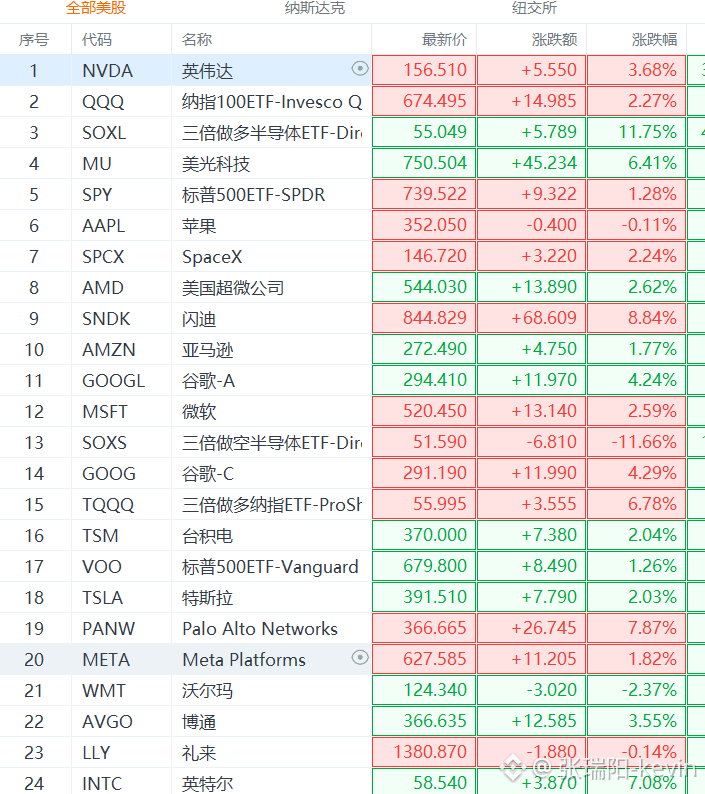
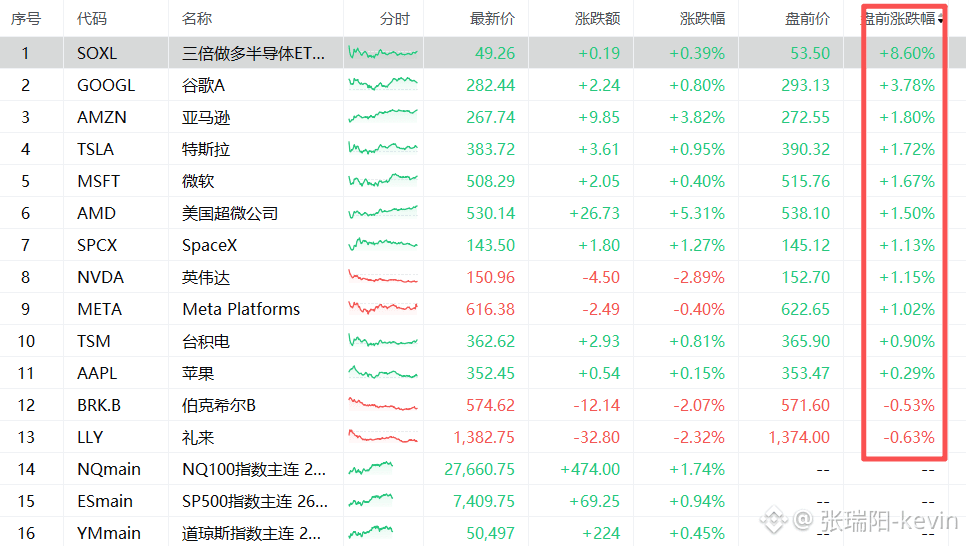
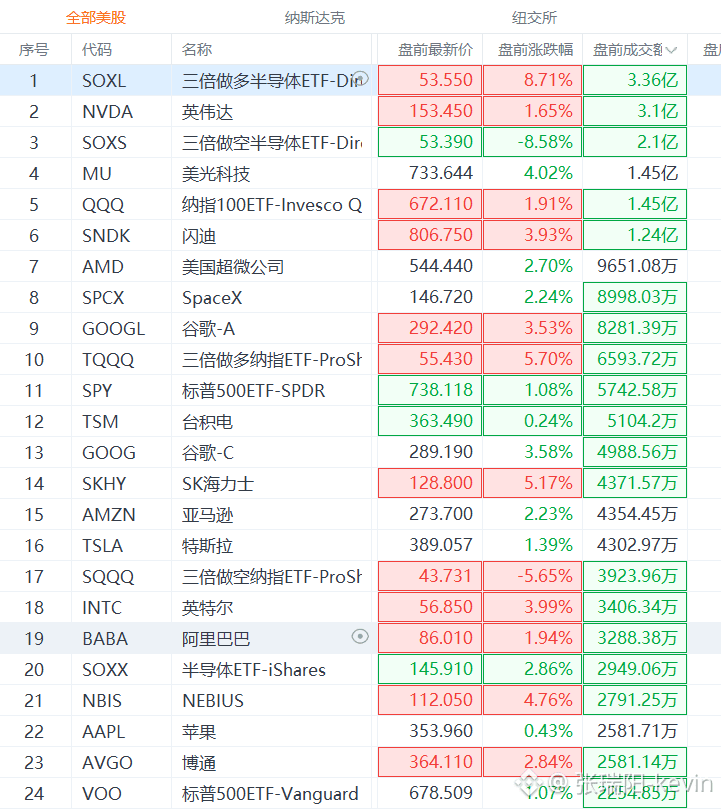
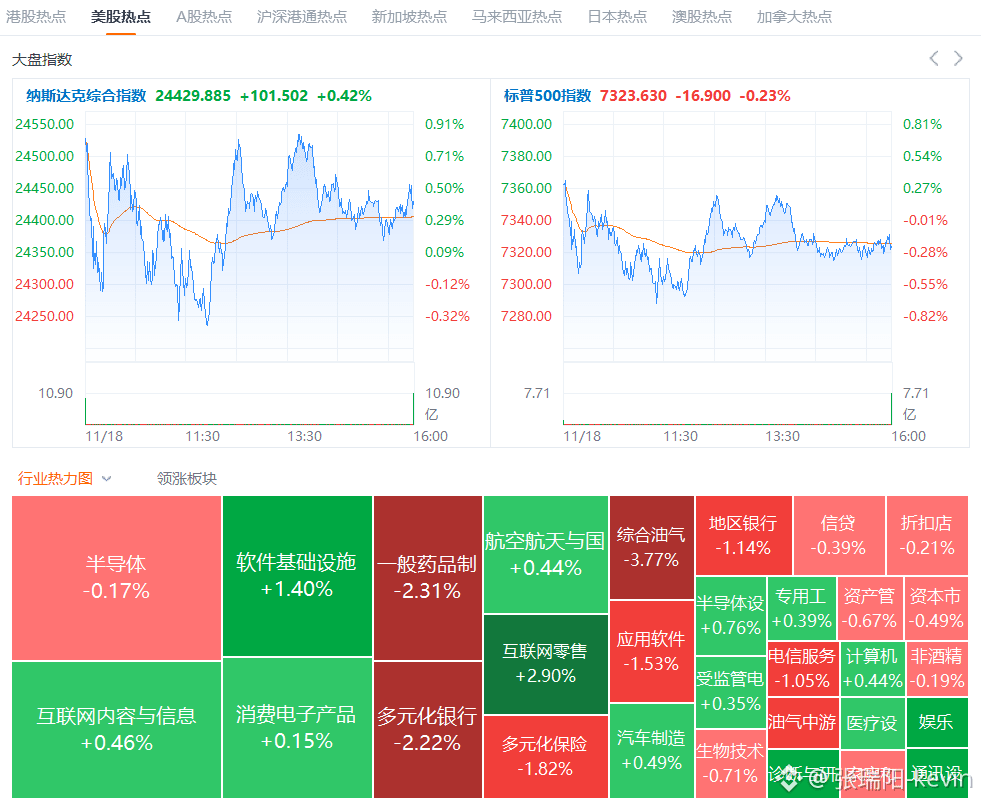
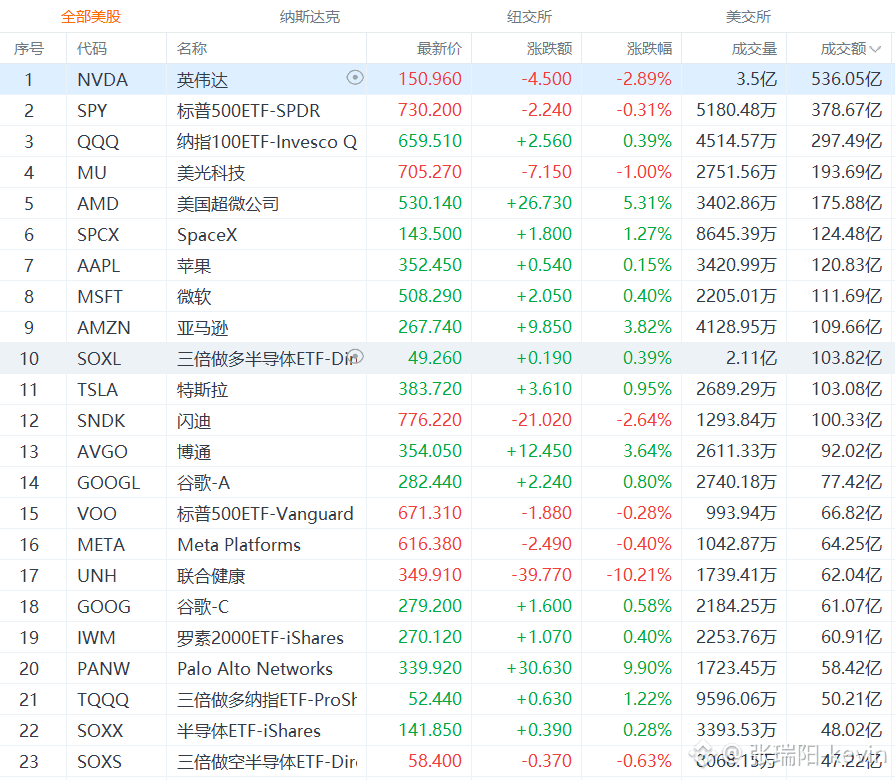
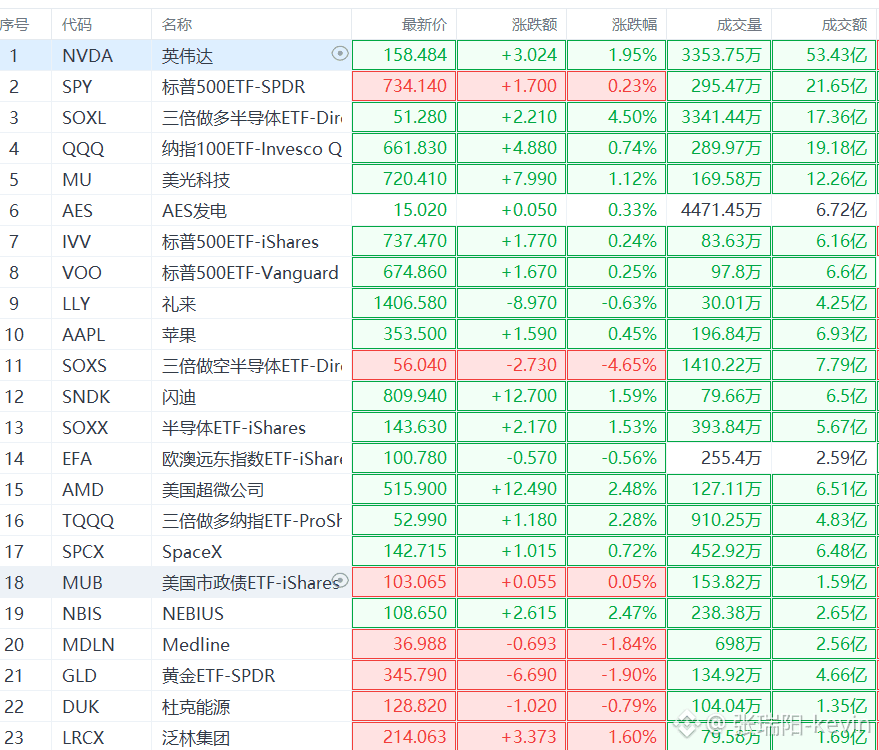
The market went absolutely nuts right at the open! Semiconductors took off, with the triple-leveraged SOXL surging 11.75%, while the inverse SOXS got pummeled, dropping 11.66%. Nvidia rose 3.68%, back to 156; Micron gained over 6%; SanDisk soared 8.8%; even Intel, usually ignored, ripped 7% higher.
Where’s the money flowing out of? Just look at the biggest losers. Walmart, the discount retailer, fell 2.37%, and Eli Lilly, the weight-loss drugmaker, was also in the red. In plain English: so-called “safe-haven money” has all run for the exits. Everyone’s decided betting on AI is still more appealing. As panic fades, those boring old-man stocks get ditched in a hurry.
Where’s the money going? Straight into AI hardware and tech giants. Google climbed 4.2%, while Microsoft and Amazon were partying too. There are two key reasons: first, Anthropic, valued at $100 billion, rings the bell tonight, giving global AI assets a boost; second, the Nvidia earnings landmine has been defused, and the shorts have completely thrown in the towel and started covering.
After several days of pent-up emotion, diving in during the first wave at the open is just making you an ATM for the people who bought last night’s dip. If Nvidia pulls back toward 155 and holds there on lighter volume, I might consider taking a shot.$SNDK $SOXL $ANT
张瑞阳-kevin
·
--
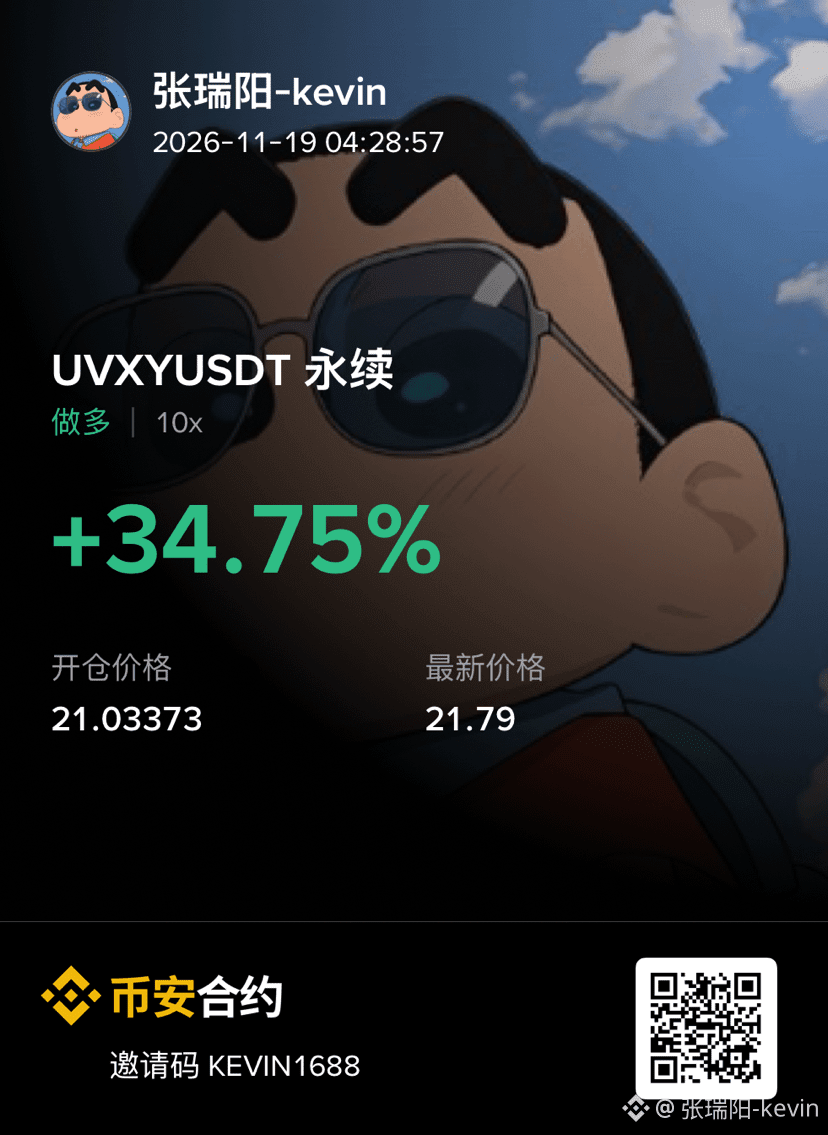
[Replay] 🎙️ ANT begins trading tonight— is Wall Street bullish on semiconductors across the board?
04 h 11 m 11 s · 753 listens

张瑞阳-kevin
·
--
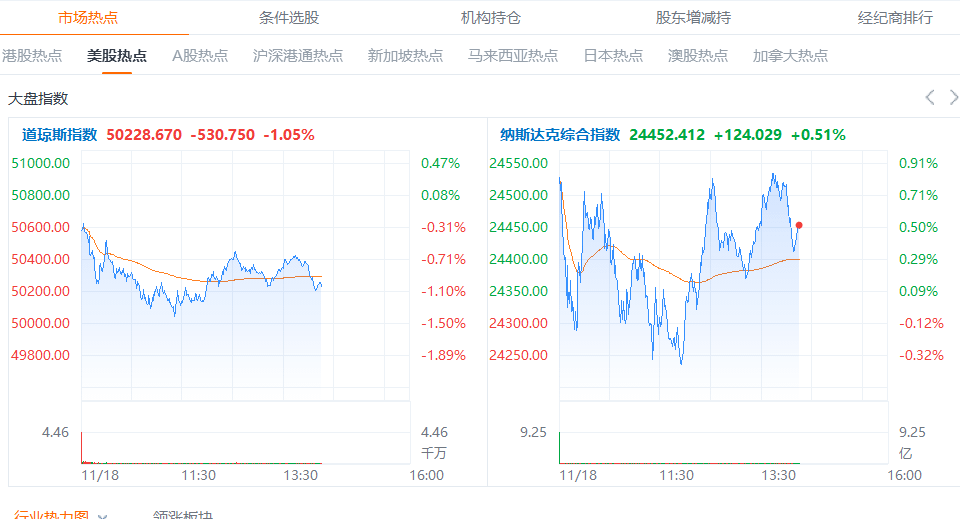
Interpreting the Fed meeting minutes: Is a 50-basis-point rate hike in December still possible?
The Dow plunged more than 600 points at one point during the session, the S&P 500 fell below a key level, and the Nasdaq erased an early gain of 0.86% and turned negative. Bitcoin also fell below $63,000.
Before the minutes were released, CME FedWatch showed the probability of a December rate hike had already surged to 96.7%. The market had long been pricing in a “rate hike.”
So did the minutes add anything new? Yes—but it wasn’t “new hawkishness”; it was “bringing the disagreement out into the open.”
At the October meeting, rates were held steady at 3.75% to 4.00%, but Cook and Hammack dissented, directly supporting a rate hike.
A small number of officials explicitly said that if upcoming inflation data failed to cooperate, the Fed might have no choice but to raise rates by 50 basis points in December.
In plain English: not everyone agrees with “taking it slowly”—some are already flipping the table. But Citi poured cold water on that view, saying the minutes were based on October data and didn’t include three consecutive months of hotter-than-expected core inflation since the meeting. The minutes are “outdated.”
Things are even worse in crypto. Total market capitalization plunged from $2.9 trillion to $2.1 trillion, Bitcoin has fallen for six straight weeks, and stablecoin supply has dropped by $14 billion in 30 days. Liquidity is visibly drying up. The money hasn’t gone far; it has simply moved from “high-risk” assets to “places that earn interest.”
Once the minutes were out, the real trading signal wasn’t whether the Fed was “hawkish”—it was whether liquidity was still there. If PCE inflation comes in hotter than expected again, the first to run will surely be those with the largest positions. $BTC $ETH $SOXL #美联储纪要几乎全员预期再加息
Verified
张瑞阳-kevin
·
--
Interpreting the Fed meeting minutes: Is a 50-basis-point rate hike in December still possible?
The Dow plunged more than 600 points at one point during the session, the S&P 500 fell below a key level, and the Nasdaq erased an early gain of 0.86% and turned negative. Bitcoin also fell below $63,000.
Before the minutes were released, CME FedWatch showed the probability of a December rate hike had already surged to 96.7%. The market had long been pricing in a “rate hike.”
So did the minutes add anything new? Yes—but it wasn’t “new hawkishness”; it was “bringing the disagreement out into the open.”
At the October meeting, rates were held steady at 3.75% to 4.00%, but Cook and Hammack dissented, directly supporting a rate hike.
A small number of officials explicitly said that if upcoming inflation data failed to cooperate, the Fed might have no choice but to raise rates by 50 basis points in December.
In plain English: not everyone agrees with “taking it slowly”—some are already flipping the table. But Citi poured cold water on that view, saying the minutes were based on October data and didn’t include three consecutive months of hotter-than-expected core inflation since the meeting. The minutes are “outdated.”
Things are even worse in crypto. Total market capitalization plunged from $2.9 trillion to $2.1 trillion, Bitcoin has fallen for six straight weeks, and stablecoin supply has dropped by $14 billion in 30 days. Liquidity is visibly drying up. The money hasn’t gone far; it has simply moved from “high-risk” assets to “places that earn interest.”
Once the minutes were out, the real trading signal wasn’t whether the Fed was “hawkish”—it was whether liquidity was still there. If PCE inflation comes in hotter than expected again, the first to run will surely be those with the largest positions. $BTC $ETH $SOXL #美联储纪要几乎全员预期再加息
The Dow plunged more than 600 points at one point during the session, the S&P 500 fell below a key level, and the Nasdaq erased an early gain of 0.86% and turned negative. Bitcoin also fell below $63,000.
Before the minutes were released, CME FedWatch showed the probability of a December rate hike had already surged to 96.7%. The market had long been pricing in a “rate hike.”
So did the minutes add anything new? Yes—but it wasn’t “new hawkishness”; it was “bringing the disagreement out into the open.”
At the October meeting, rates were held steady at 3.75% to 4.00%, but Cook and Hammack dissented, directly supporting a rate hike.
A small number of officials explicitly said that if upcoming inflation data failed to cooperate, the Fed might have no choice but to raise rates by 50 basis points in December.
In plain English: not everyone agrees with “taking it slowly”—some are already flipping the table. But Citi poured cold water on that view, saying the minutes were based on October data and didn’t include three consecutive months of hotter-than-expected core inflation since the meeting. The minutes are “outdated.”
Things are even worse in crypto. Total market capitalization plunged from $2.9 trillion to $2.1 trillion, Bitcoin has fallen for six straight weeks, and stablecoin supply has dropped by $14 billion in 30 days. Liquidity is visibly drying up. The money hasn’t gone far; it has simply moved from “high-risk” assets to “places that earn interest.”
Once the minutes were out, the real trading signal wasn’t whether the Fed was “hawkish”—it was whether liquidity was still there. If PCE inflation comes in hotter than expected again, the first to run will surely be those with the largest positions. $BTC $ETH $SOXL #美联储纪要几乎全员预期再加息
张瑞阳-kevin
·
--
Interpreting the Fed meeting minutes: Is a 50-basis-point rate hike in December still possible?
The Dow plunged more than 600 points at one point during the session, the S&P 500 fell below a key level, and the Nasdaq erased an early gain of 0.86% and turned negative. Bitcoin also fell below $63,000.
Before the minutes were released, CME FedWatch showed the probability of a December rate hike had already surged to 96.7%. The market had long been pricing in a “rate hike.”
So did the minutes add anything new? Yes—but it wasn’t “new hawkishness”; it was “bringing the disagreement out into the open.”
At the October meeting, rates were held steady at 3.75% to 4.00%, but Cook and Hammack dissented, directly supporting a rate hike.
A small number of officials explicitly said that if upcoming inflation data failed to cooperate, the Fed might have no choice but to raise rates by 50 basis points in December.
In plain English: not everyone agrees with “taking it slowly”—some are already flipping the table. But Citi poured cold water on that view, saying the minutes were based on October data and didn’t include three consecutive months of hotter-than-expected core inflation since the meeting. The minutes are “outdated.”
Things are even worse in crypto. Total market capitalization plunged from $2.9 trillion to $2.1 trillion, Bitcoin has fallen for six straight weeks, and stablecoin supply has dropped by $14 billion in 30 days. Liquidity is visibly drying up. The money hasn’t gone far; it has simply moved from “high-risk” assets to “places that earn interest.”
Once the minutes were out, the real trading signal wasn’t whether the Fed was “hawkish”—it was whether liquidity was still there. If PCE inflation comes in hotter than expected again, the first to run will surely be those with the largest positions. $BTC $ETH $SOXL #美联储纪要几乎全员预期再加息
The Dow plunged more than 600 points at one point during the session, the S&P 500 fell below a key level, and the Nasdaq erased an early gain of 0.86% and turned negative. Bitcoin also fell below $63,000.
Before the minutes were released, CME FedWatch showed the probability of a December rate hike had already surged to 96.7%. The market had long been pricing in a “rate hike.”
So did the minutes add anything new? Yes—but it wasn’t “new hawkishness”; it was “bringing the disagreement out into the open.”
At the October meeting, rates were held steady at 3.75% to 4.00%, but Cook and Hammack dissented, directly supporting a rate hike.
A small number of officials explicitly said that if upcoming inflation data failed to cooperate, the Fed might have no choice but to raise rates by 50 basis points in December.
In plain English: not everyone agrees with “taking it slowly”—some are already flipping the table. But Citi poured cold water on that view, saying the minutes were based on October data and didn’t include three consecutive months of hotter-than-expected core inflation since the meeting. The minutes are “outdated.”
Things are even worse in crypto. Total market capitalization plunged from $2.9 trillion to $2.1 trillion, Bitcoin has fallen for six straight weeks, and stablecoin supply has dropped by $14 billion in 30 days. Liquidity is visibly drying up. The money hasn’t gone far; it has simply moved from “high-risk” assets to “places that earn interest.”
Once the minutes were out, the real trading signal wasn’t whether the Fed was “hawkish”—it was whether liquidity was still there. If PCE inflation comes in hotter than expected again, the first to run will surely be those with the largest positions. $BTC $ETH $SOXL #美联储纪要几乎全员预期再加息
Log in to explore more content