


By Ari Redford, global director of policy and government affairs at TMR Labs, a blockchain intelligence company
Compiler: Wang Eryu, PANews
The trial against FTX founder and CEO SBF is set to begin on Tuesday.
The main task on the first day of trial is jury selection.
TMR Labs' Ari Record breaks down the focus on the first day of the trial.
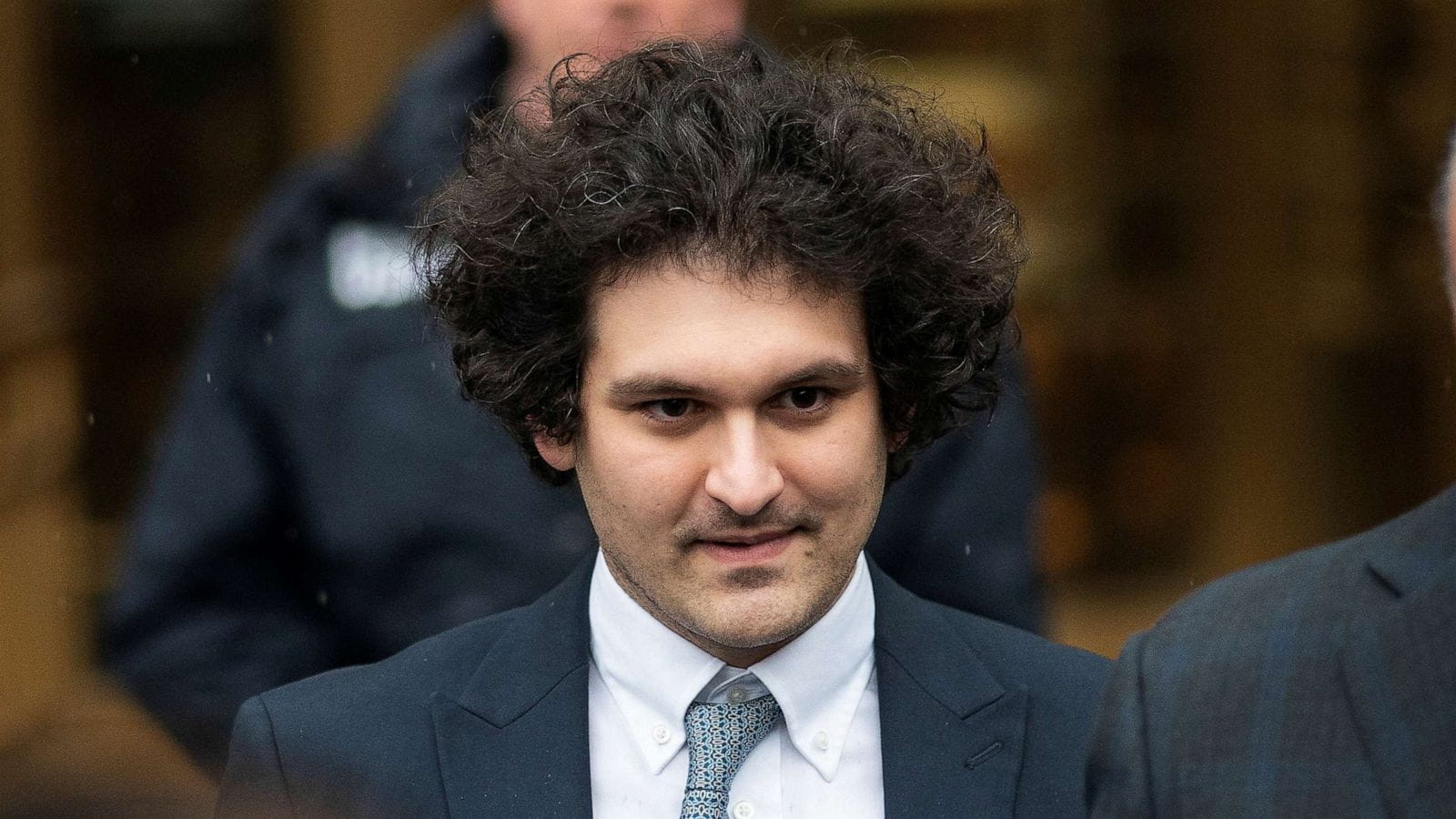
Exactly nine months and 20 days after his arrest in the Bahamas, FTX founder and former CEO Sam Bankman-Fried is set to stand trial in New York federal court this week for his role in defrauding the exchange’s customers.
SBF's case is moving at lightning speed, involving extradition, multiple cooperating witnesses and mountains of evidence.
Cases of this size and magnitude often take years to come to trial. But before both sides make opening statements, the jury must first be selected. This process, called "voir dire," begins tomorrow.
Voir dire, which means "to tell the truth" in French, is a question a judge or lawyer will ask juror candidates from the community to determine their suitability for jury service.
In other words, the original defendant and the court can lock in fair and strict jurors through this process. The judge will ask potential jurors questions, including those submitted by the government and defense attorneys.
Some questions are personal in nature (travel, work, medical) and some are more substantive and are intended to determine whether the juror has ties to the parties to the case or is biased against the defendant.
For example: Have you ever held cryptocurrency? Or have you been a customer of FTX? Due to the high stakes of the case, lawyers for both sides can ask ten questions each to eliminate unsuitable jurors.
While the questions are largely part of the standard jury selection process, the preliminary hearing is also the first opportunity for attorneys on both sides to evaluate who will determine the verdict in the case.
It also provides an opportunity for the government and defense attorneys to skillfully conduct a preliminary hearing through questioning.
Experienced prosecutors and defense attorneys will not only listen to jurors' answers, but also evaluate their body language and other behaviors that reflect "bias."
Read out the charges
During the preliminary hearing, the judge's first job is to read the charges against the defendant in advance to the full courtroom of potential jurors.
The judge will interpret the indictment (not evidence) charging SBF and its associates with defrauding FTX customers and investors and conspiring to launder the proceeds of the fraud.
Specifically, the indictment charges SBF with seven criminal counts, including wire fraud, conspiracy to commit wire fraud, securities fraud and commodities fraud against FTX customers and investors and Alameda lenders.
The indictment also accuses SBF of conspiring to launder money and attempting to conceal the proceeds of the fraud.
Of all the charges, only two (wire fraud against FTX customers and Alameda lenders) were "substantial" charges, meaning prosecutors had to prove beyond a reasonable doubt that SBF himself was actively involved in criminal activity.
The Wire Fraud Act, 18 U.S.C. § 1343, prohibits the use of wire transfers (in this case, the Internet) to engage in the obtaining of money or by "false or fraudulent pretenses, representations or promises, conveying or promoting" The conduct of property planning is criminalized.
The remaining five are "conspiracy" charges, meaning the government must prove that SBF planned the commission of the crime with at least one other person.
In its jury question, the Justice Department will ask the court to explain to the jury that conspiracy charges, unlike substantive charges, "do not require proof that a crime was actually committed."
This distinction is important and will be reiterated by the judge in jury instructions at the end of the trial.
Simplify procedures
This sounds quite complicated, but prosecutors are likely to streamline the process by introducing evidence to prove that SBF and its co-conspirators intended to commit massive defrauding of customers and investors.
If the government can effectively prove fraud, the defendant may be held liable for most or all of the charges.
SBF's lawyers, on the other hand, will argue that there was carelessness and incompetence in SBF's work, but that he had no criminal intent to deceive clients and investors.
Defense lawyers will also argue that SBF took a series of actions "on the advice of counsel" which may rule out criminal intent.
On the first day of court, the above developments were all expected.
There’s more not to be missed in the coming weeks, including opening statements, testimony from countless witnesses, and a mountain of evidence, recordings and testimonies from the SBF’s inner circle.
Today comes just 9 months and 20 days after SBF’s arrest, and only 11 months after FTX’s collapse, and the case is moving forward at an unprecedented pace. Let us wait and see whether the trial process will be so fast.
(The above content is excerpted and reprinted with the authorization of our partner PANews, original text link )
Statement: The article only represents the author's personal views and opinions, and does not represent the objective views and positions of the blockchain. All contents and opinions are for reference only and do not constitute investment advice. Investors should make their own decisions and transactions, and the author and Blockchain Client will not be held responsible for any direct or indirect losses caused by investors' transactions.
This article What will happen on the first day of SBF court? Watch the pre-trial process in one go! First appeared in Block Guest.