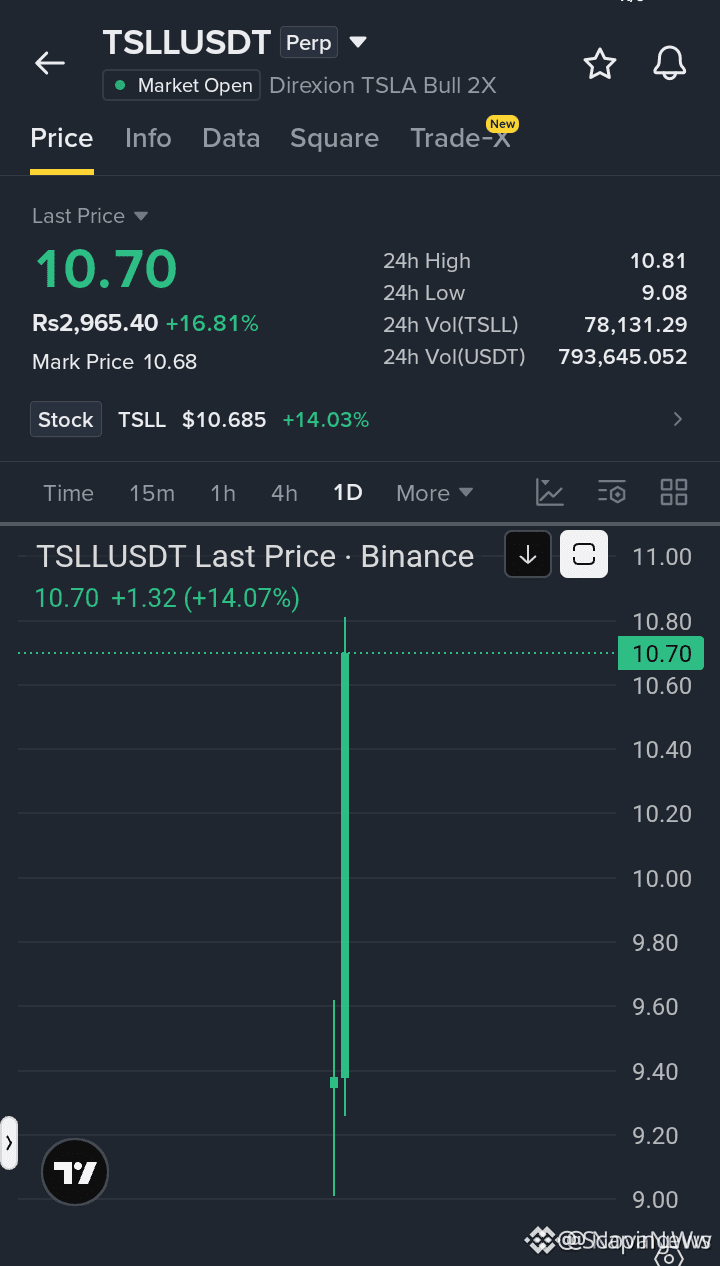
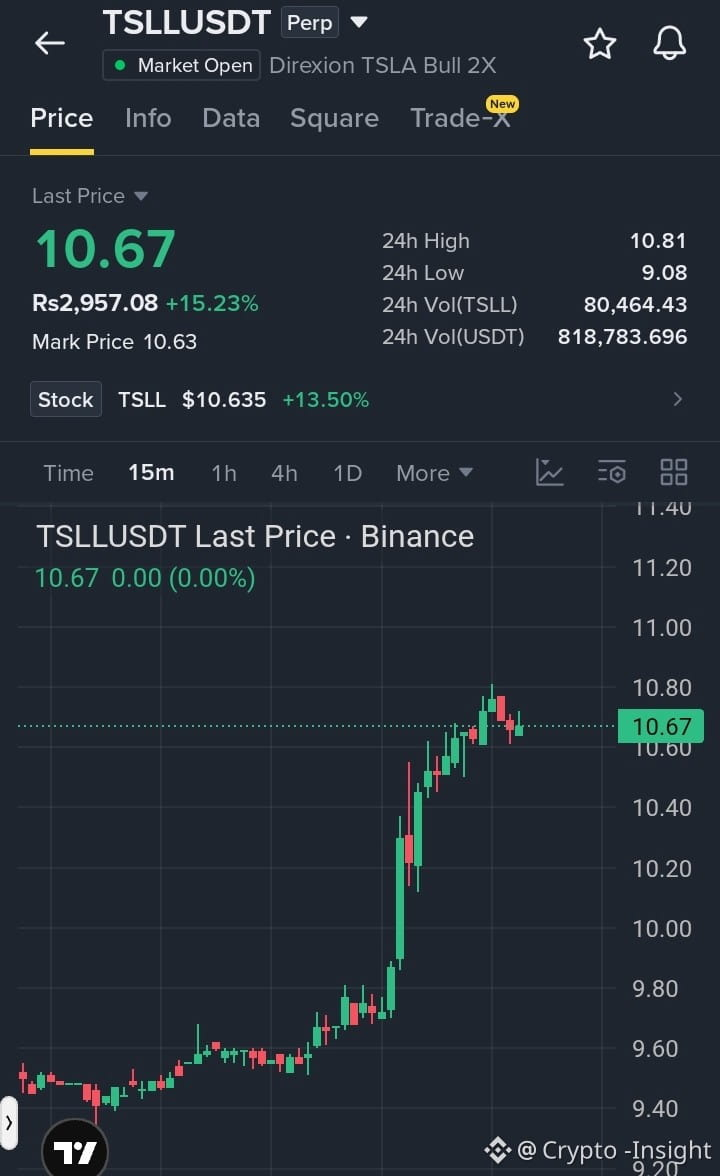
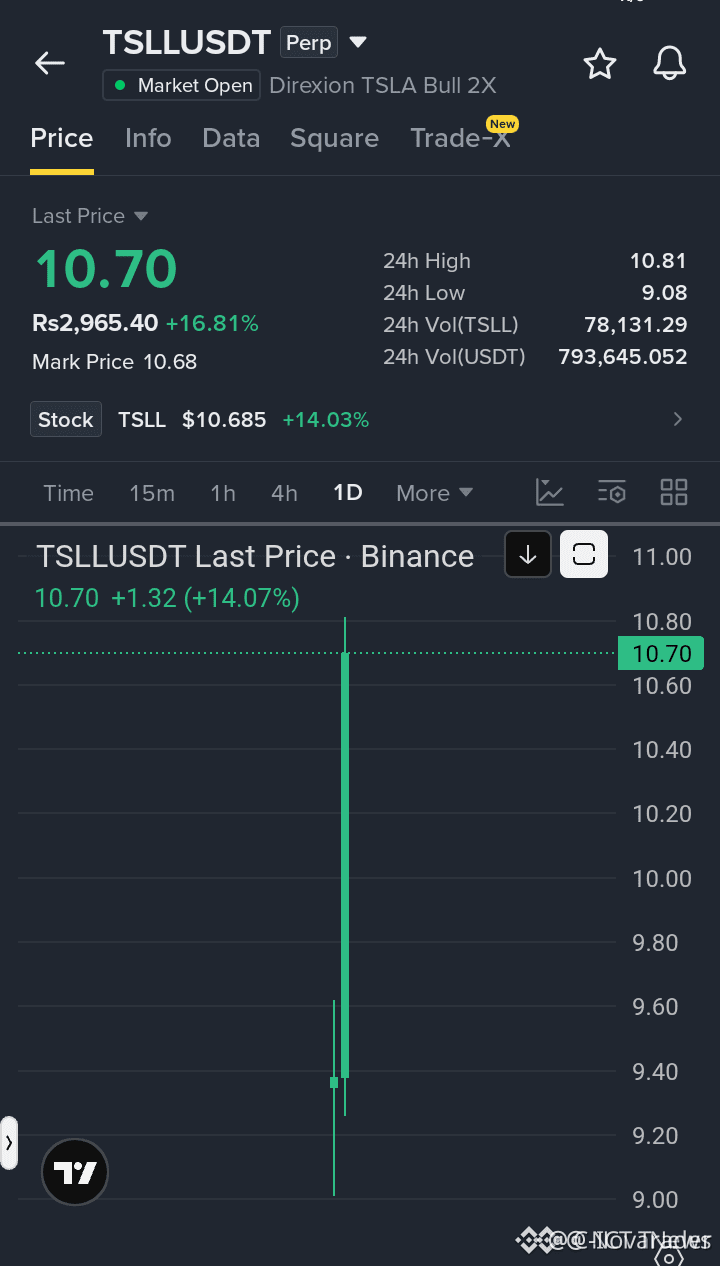
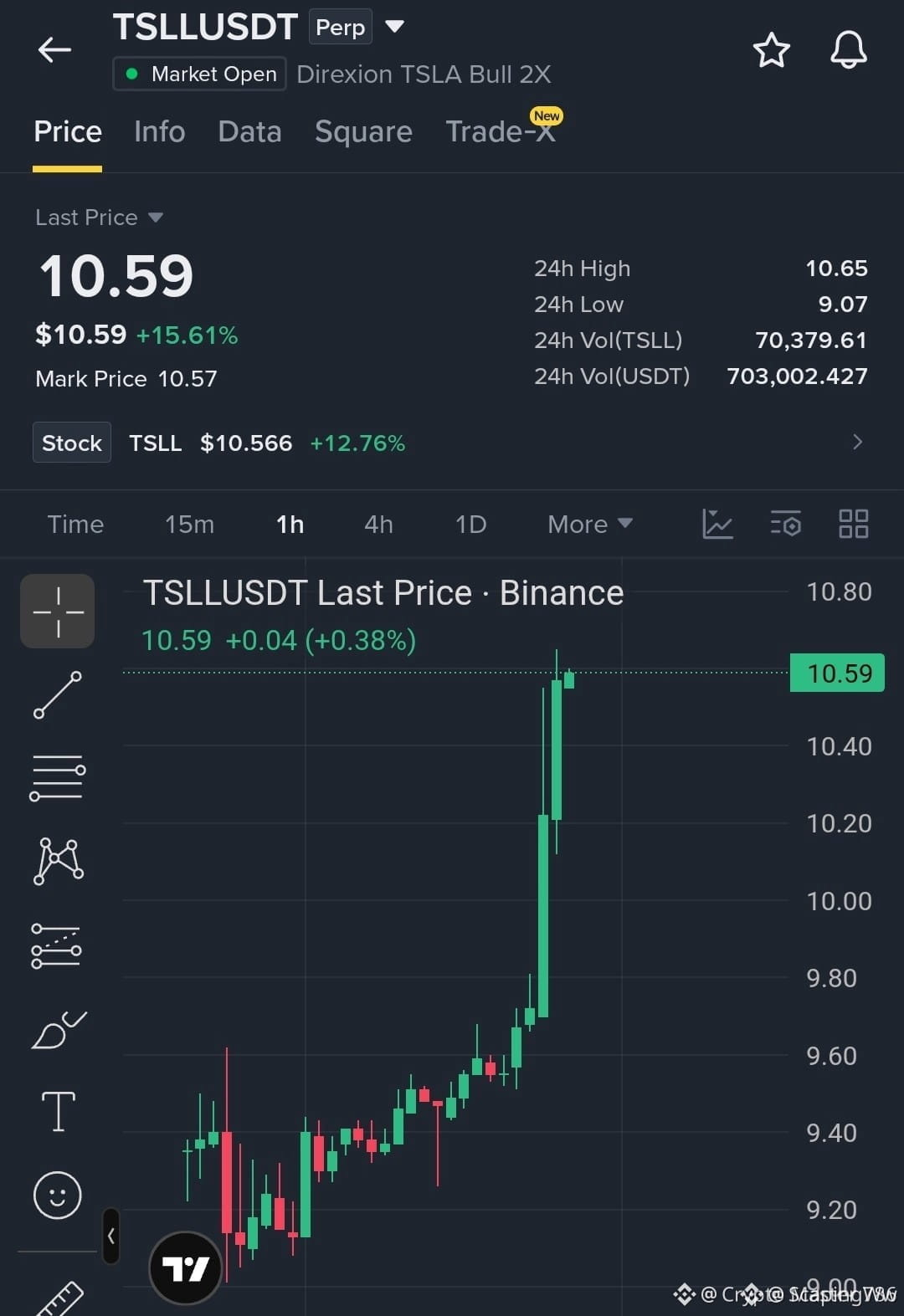
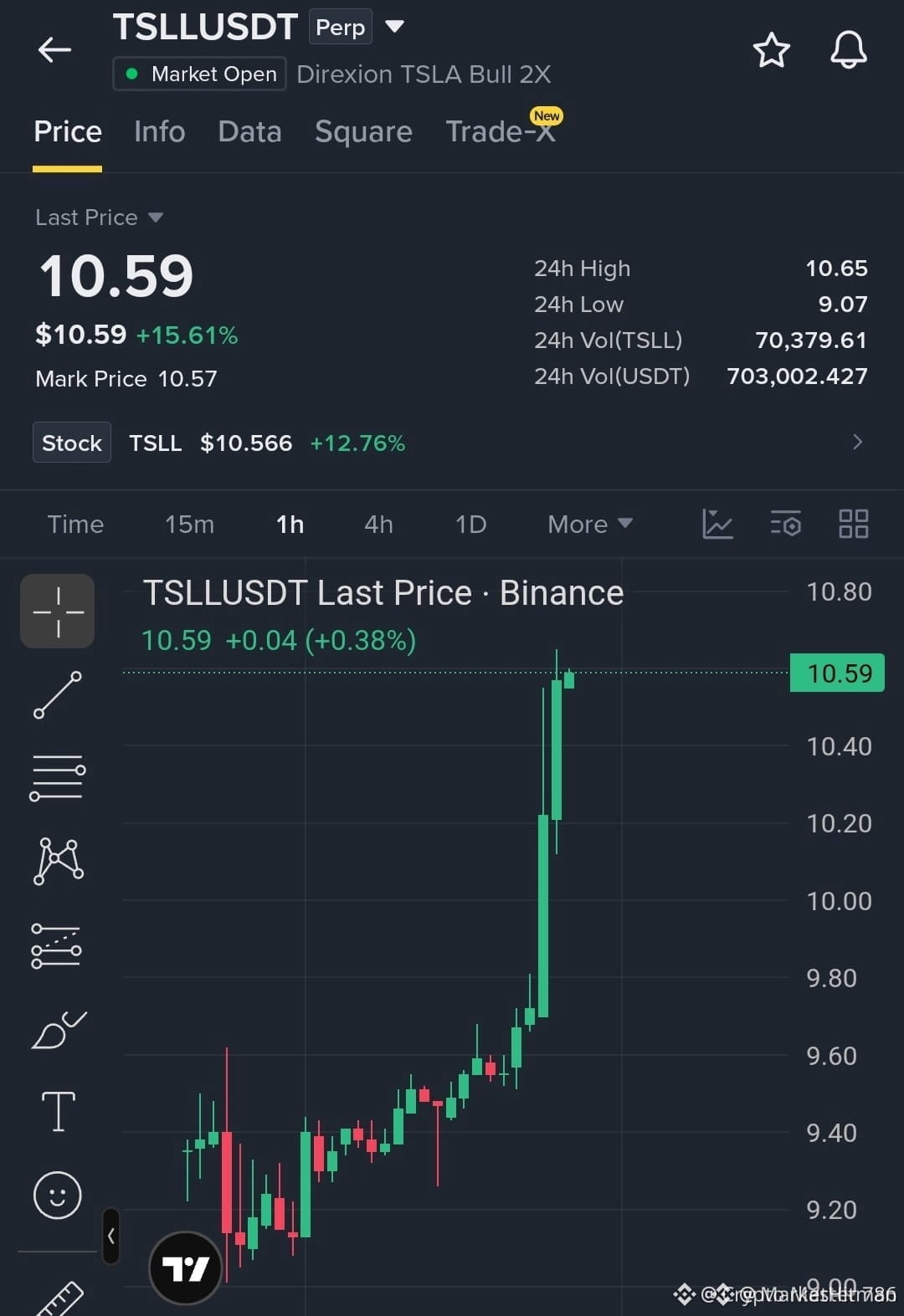
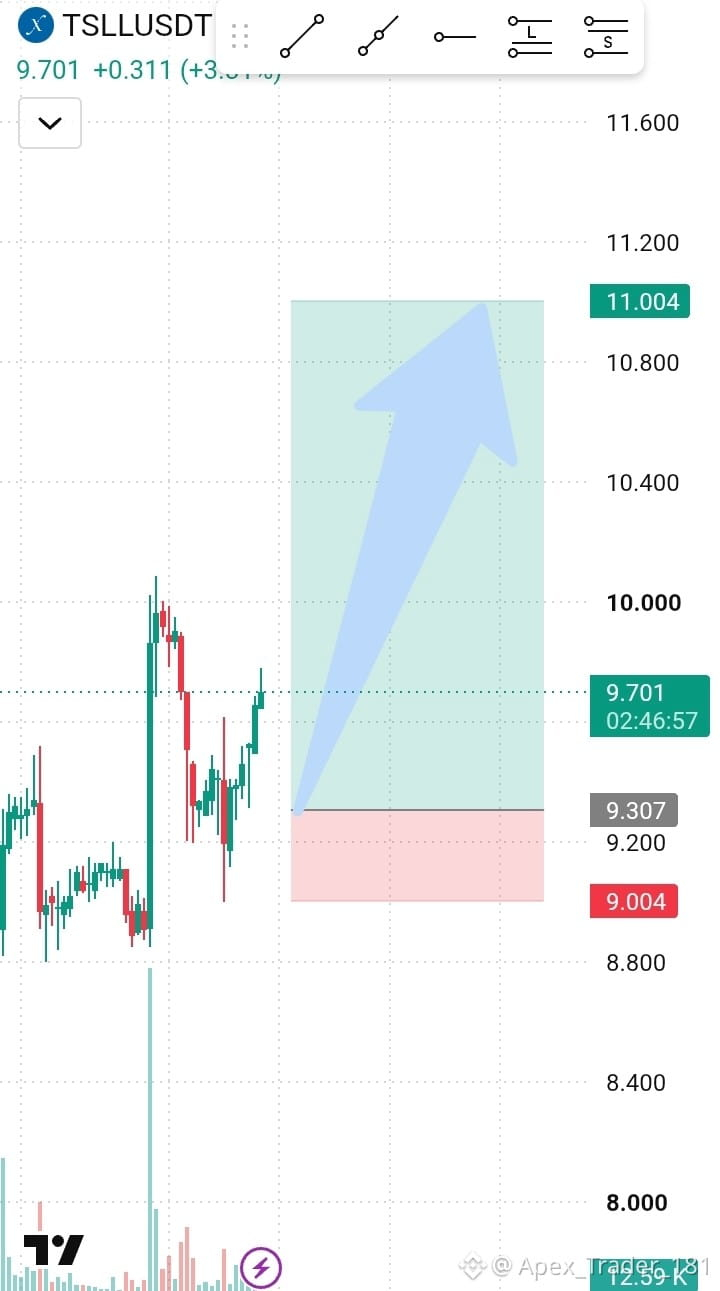
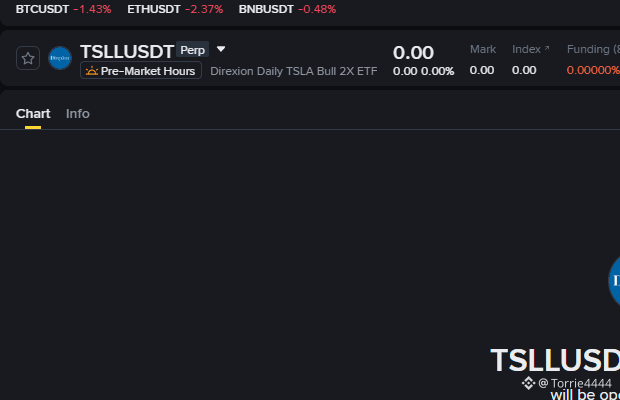
$TSLL has fallen nearly 9% over the past 24 hours, with the price hitting 9.16. Funding rates are flat at zero, and open interest is around 37,000 contracts. That’s all the trading desk data, with no extra news push. But from a broader angle, Trump’s tariff threats toward global trading partners change by the day. Tesla, as a company deeply embedded in the global supply chain, is a classic punching bag. When the stock wobbles, a leveraged shadow contract like
$TSLL will inevitably react even more violently.
My view is that Trump’s trade-war narrative is the biggest source of short-term risk premium for Tesla, and this uncertainty will continue to cap
$TSLL ’s rebound potential.
There are two pieces of evidence. First is price action: an 8.8% one-day drop is severe volatility in TradFi perps, suggesting sustained selling pressure rather than a single bad print. Second is the funding rate being flat at zero, which is a key signal. When price falls, funding is either negative, meaning shorts are crowded, or like now, zero, meaning longs and shorts are in a stalemate. A zero funding rate means neither side is paying extra to hold positions; neither has the upper hand, yet the price is still falling. That points to one conclusion: shorts currently have the advantage at this price level, and longs lack both the strength and the willingness to push funding negative to absorb the selling pressure. The market is in a weak equilibrium.
The strongest counterargument is that Trump’s policy of bringing manufacturing back to the U.S. could ultimately benefit Tesla’s domestic production capacity. But that is a long-term story. What the market is trading now is the short-term shock. Every time policy rhetoric changes, expectations of soaring supply-chain costs and blocked exports hit Tesla’s stock first, and that reaction path has not changed.
The second-order effects are clear. In a zero-funding environment, if price keeps drifting lower, longs’ patience will run out and a batch of stop-loss orders may get triggered. Meanwhile, because shorts are not earning funding income, their positions still carry time costs; if Trump softens his tone or Tesla gets some other positive catalyst, they may also cover quickly. Liquidity will partially shift away from assets with this kind of high uncertainty toward more defensive assets or tech stocks with a simpler narrative.
My move is to wait and see. The key level is the current price at 9.16. If price can hold above 9.20 with volume, that would suggest short pressure is easing, and I’d consider a small long for a rebound trade. If it breaks below 9.10 and funding turns negative, that would confirm short dominance, and I’d follow through with a short, with a stop above 9.16. Right now, at this in-between level, neither side has a safe margin.
Trade tag:
#TradFi #链上美股 #TSLL
Where do you think this entire thesis is most likely wrong?