
#opec
opec
64,548 views
257 Discussing
Hot
Latest

·
--
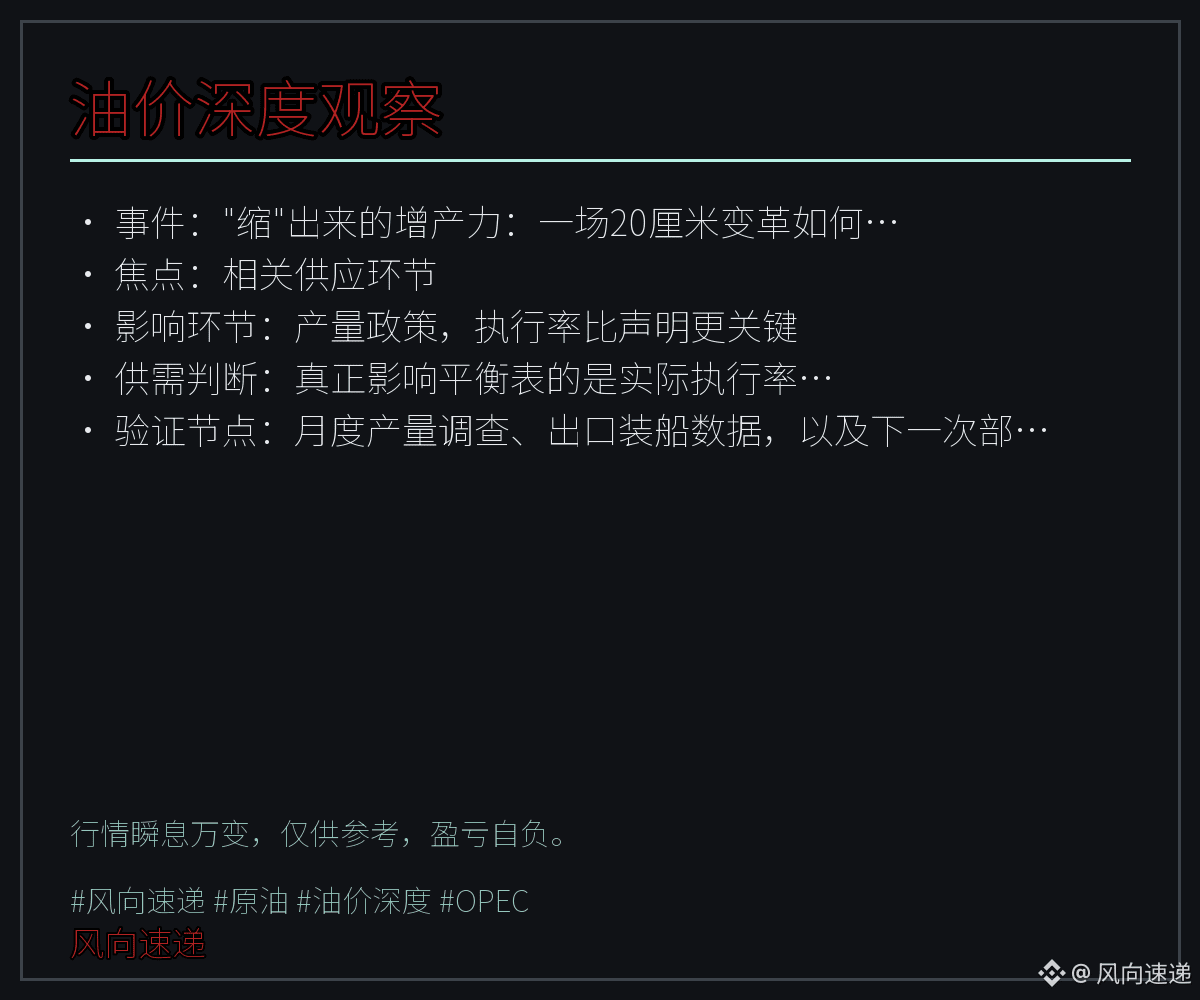
In-Depth Look at Oil Prices
【Key Event】
“Reduced” into higher output: How a 20-centimeter transformation is reshaping 200,000 mu of black soil (2 hours ago)
【Who Is Influencing Oil Prices】
Signals are being sent that supply will increase. The focus is on the relevant parts of the supply chain. OPEC+ accounts for roughly 40% of global output, and its quotas determine the medium-term supply curve. Spare capacity is the main buffer for smoothing unexpected shortfalls.
【Transmission Channels】
Production cuts, or extensions of voluntary cuts, directly reduce exportable volumes. Higher output, in turn, can depress near-month premiums by shaping expectations for future supply.
Policy signals can also alter trade flows. Price differentials between cargoes arriving in Asia and Europe tend to move first, with benchmark oil prices responding afterward.
【Supply, Demand, and Pricing】
What truly affects the balance sheet is the actual rate of compliance; overproduction by member states can significantly weaken the impact of cut announcements.
WTI is currently trading around $83.41, with a 24-hour change of +4.60%. Volatility has increased, suggesting that this type of risk is being priced in rapidly. Going forward, it will be especially important to see whether actual supply-and-demand data confirm expectations. Expectations ahead of a meeting are often partly priced in already; the reaction afterward depends on how the decision compares with expectations.
【What to Watch Next】
Watch monthly production surveys, export loading data, and the timing and messaging of the next ministerial meeting.
【What Would Invalidate This Outlook】
If demand weakens at the same time, falling demand will offset the price support from production cuts.
Markets change rapidly. For reference only; you are responsible for any gains or losses.
#风向速递 #原油 #油价深度 #OPEC
3

·
--
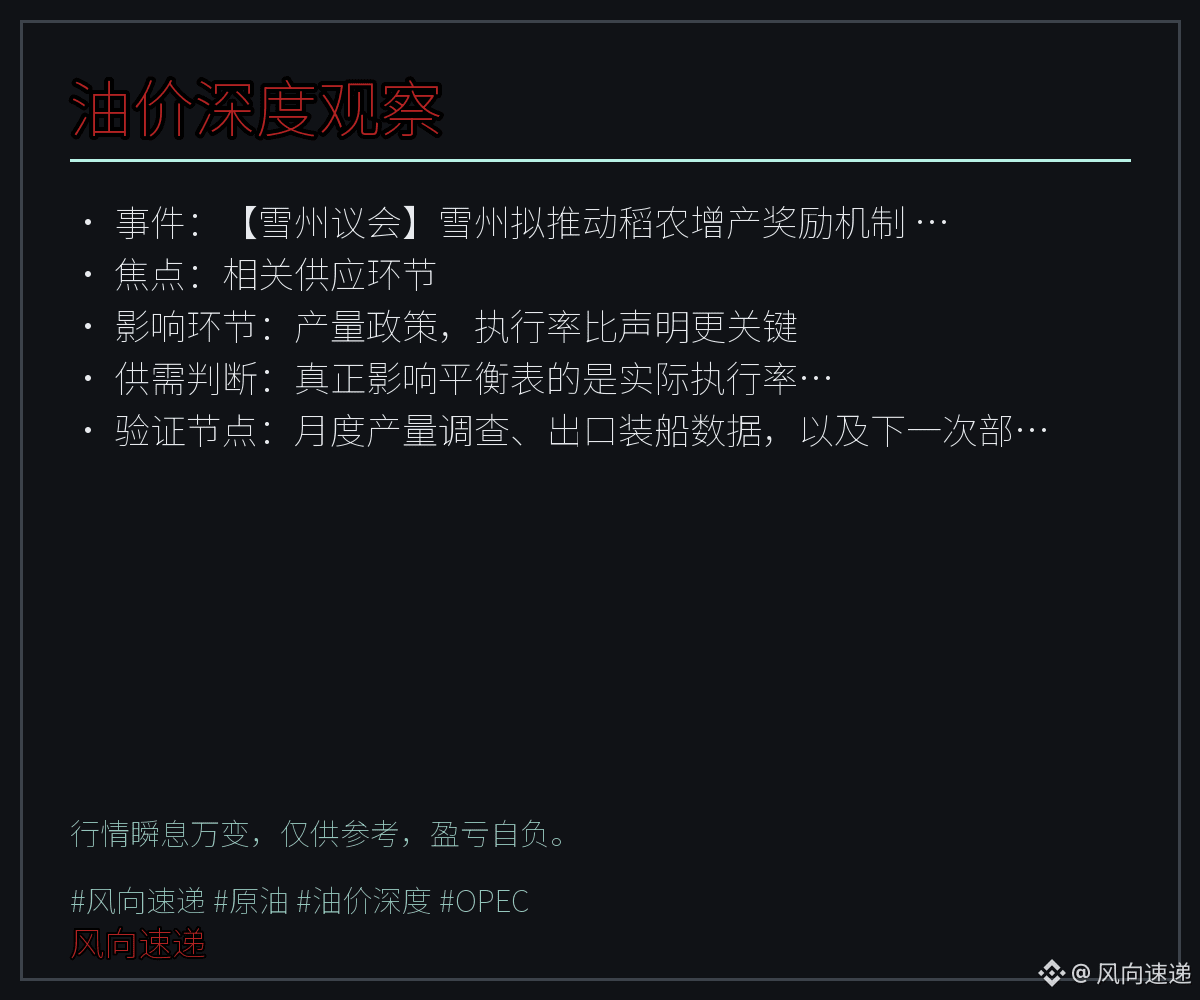
Oil Price Deep Dive
【Key Event】
【Selangor State Assembly】Selangor plans to introduce incentives to boost rice production: farmers producing over 7 tonnes of rice per hectare will qualify for a reward Central Malaysia Local (within 1 hour)
【Who Is Influencing Oil Prices】
A signal has been sent that supply will increase. The focus is on the relevant stages of the supply chain. OPEC+ accounts for around 40% of global output, and its quotas shape the medium-term supply curve. Spare capacity is the main buffer for offsetting sudden shortfalls.
【Transmission Chain】
Production cuts or extensions of voluntary cuts directly reduce exportable volumes, while increased production lowers near-month premiums by changing expectations for future supply.
Policy signals also alter trade flows. The landed price differentials between Asia and Europe will move first, followed by effects on benchmark oil prices.
【Supply, Demand and Pricing】
What truly affects the balance sheet is the actual compliance rate. Overproduction by member countries can significantly undermine the impact of production-cut announcements.
WTI is currently trading around $82.25, with a 24-hour change of -2.88%. Volatility has already increased, indicating that this type of risk is being priced in quickly. Going forward, it will be more important to see whether actual supply and demand data bear this out. Expectations ahead of a meeting are often partly priced in already; the market reaction afterward depends on how the decision compares with expectations.
【What to Watch Next】
Watch monthly production surveys, export shipment data, and the timing and messaging of the next ministerial meeting.
【What Would Invalidate This View】
If demand weakens at the same time, the price support from production cuts will be offset by declining demand.
Markets can change in an instant. For reference only; you are responsible for any gains or losses.
#风向速递 #原油 #油价深度 #OPEC
1
·
--
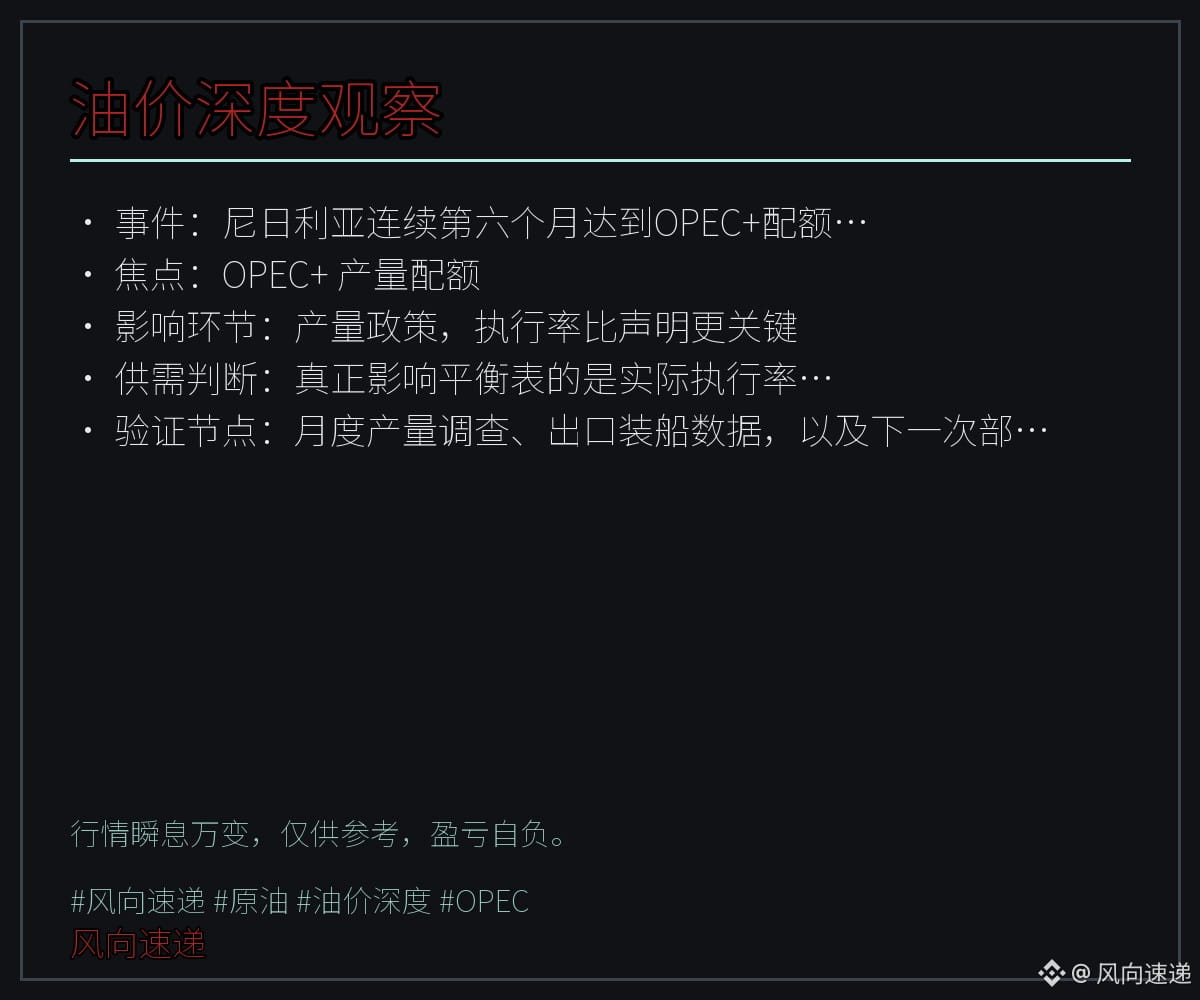
Oil Price Deep Dive
【Key Event】
Nigeria meets its OPEC+ quota for the sixth consecutive month, with average crude oil production of 1.51 million barrels per day - News and Statistics (2 hours ago)
【Who Is Influencing Oil Prices】
OPEC+ signals its production policy. The focus is on OPEC+ production quotas. OPEC+ accounts for about 40% of global output, and its quotas determine the medium-term supply curve. Spare capacity is the main buffer for smoothing sudden supply shortfalls.
【Transmission Mechanism】
Production cuts or extensions of voluntary cuts directly reduce exportable volumes, while production increases lower near-month premiums through expectations of greater future supply.
Policy signals can also alter trade flows: landed price spreads between Asia and Europe move first, with changes feeding back into benchmark oil prices afterward.
【Supply, Demand, and Pricing】
What truly affects the balance sheet is the actual compliance rate; overproduction by member countries can significantly weaken the impact of cut announcements.
WTI is currently trading around $88.56, with a 24-hour change of +0.35%. Price movements are limited, and the market's response has been moderate for now. Further data will be needed to confirm how much of this news has been priced in. Expectations ahead of a meeting are often partially reflected in prices already; the reaction afterward depends on the difference between the decision and expectations.
【What to Watch Next】
Watch monthly production surveys, export loading data, and the timing and messaging of the next ministerial meeting.
【What Would Invalidate This Outlook】
If demand weakens at the same time, the price support from production cuts will be offset by falling demand.
Markets can change rapidly. For reference only; you are responsible for any gains or losses.
#风向速递 #原油 #油价深度 #OPEC
6
·
--
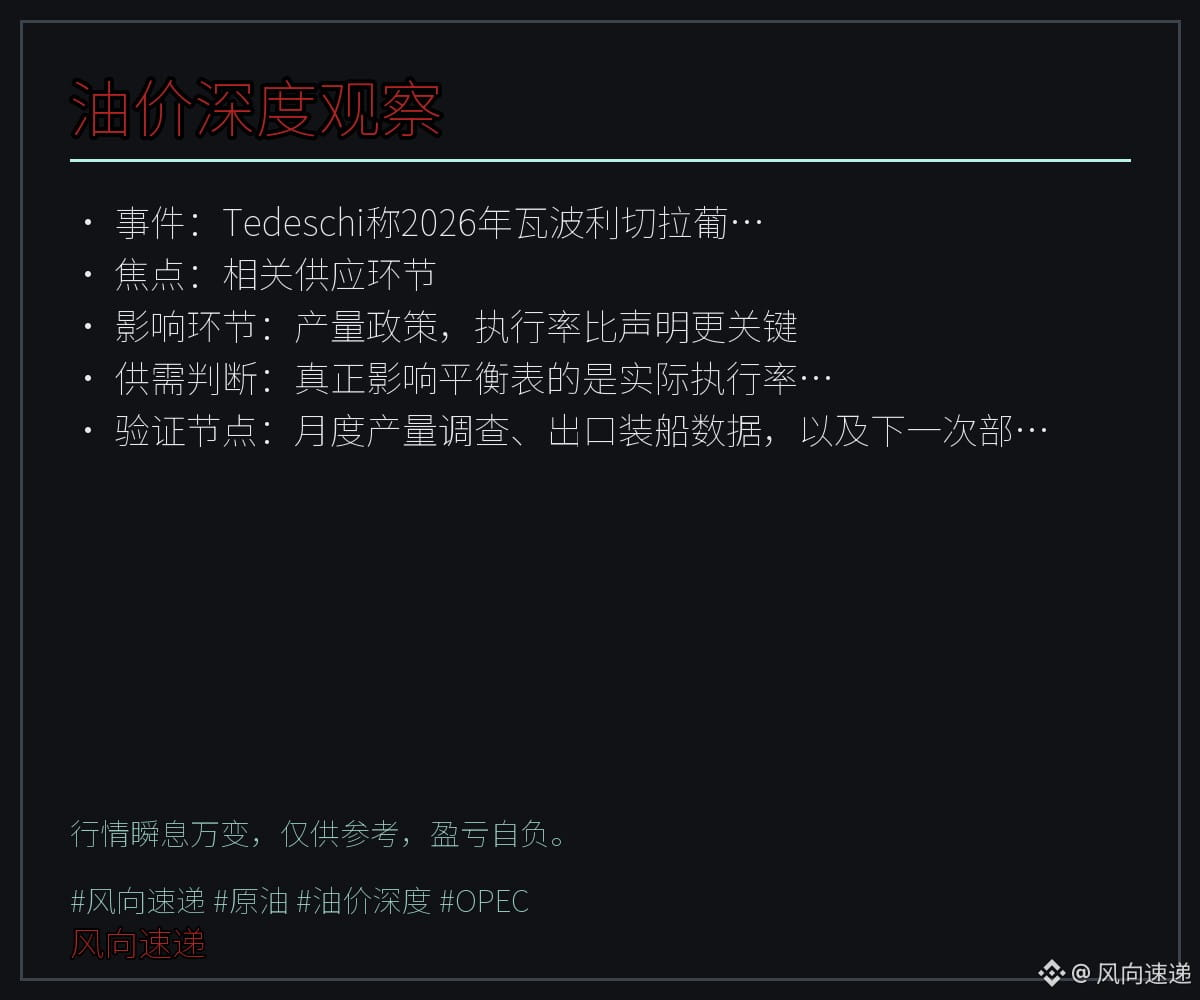
Oil Market Deep Dive
【Key Event】
Tedeschi says the 2026 Valpolicella grape harvest will be smaller, but the quality is excellent (within 1 hour)
【Who Is Influencing Oil Prices】
Signals of tighter supply are emerging. The focus is on the relevant supply channels. OPEC+ accounts for about 40% of global output, and its quotas determine the medium-term supply curve. Spare capacity is the main buffer for smoothing sudden shortfalls.
【Transmission Mechanism】
Cutting output or extending voluntary cuts directly reduces exportable volumes, while increasing output weighs on nearby premiums by lowering expectations for future supply.
Policy signals can also reshape trade flows. Price differentials between deliveries to Asia and Europe tend to move first, with benchmark oil prices responding later.
【Supply, Demand, and Pricing】
What truly affects the balance sheet is the actual compliance rate. Overproduction by member countries can significantly undermine the impact of announced cuts.
WTI is currently trading around $88.93, with a 24-hour change of +2.61%. Volatility has increased, indicating that this type of risk is being priced in quickly. Going forward, it will be important to see whether actual supply and demand data bear this out. Expectations ahead of a meeting are often partly priced in already; the market's reaction afterward depends on how the decision compares with expectations.
【What to Watch Next】
Watch monthly production surveys, export shipment data, and the timing and wording of the next ministerial meeting.
【What Would Invalidate This Thesis】
If demand weakens at the same time, the price support from production cuts will be offset by falling demand.
Markets can change in an instant. For reference only; you are responsible for any gains or losses.
#风向速递 #原油 #油价深度 #OPEC
2
·
--
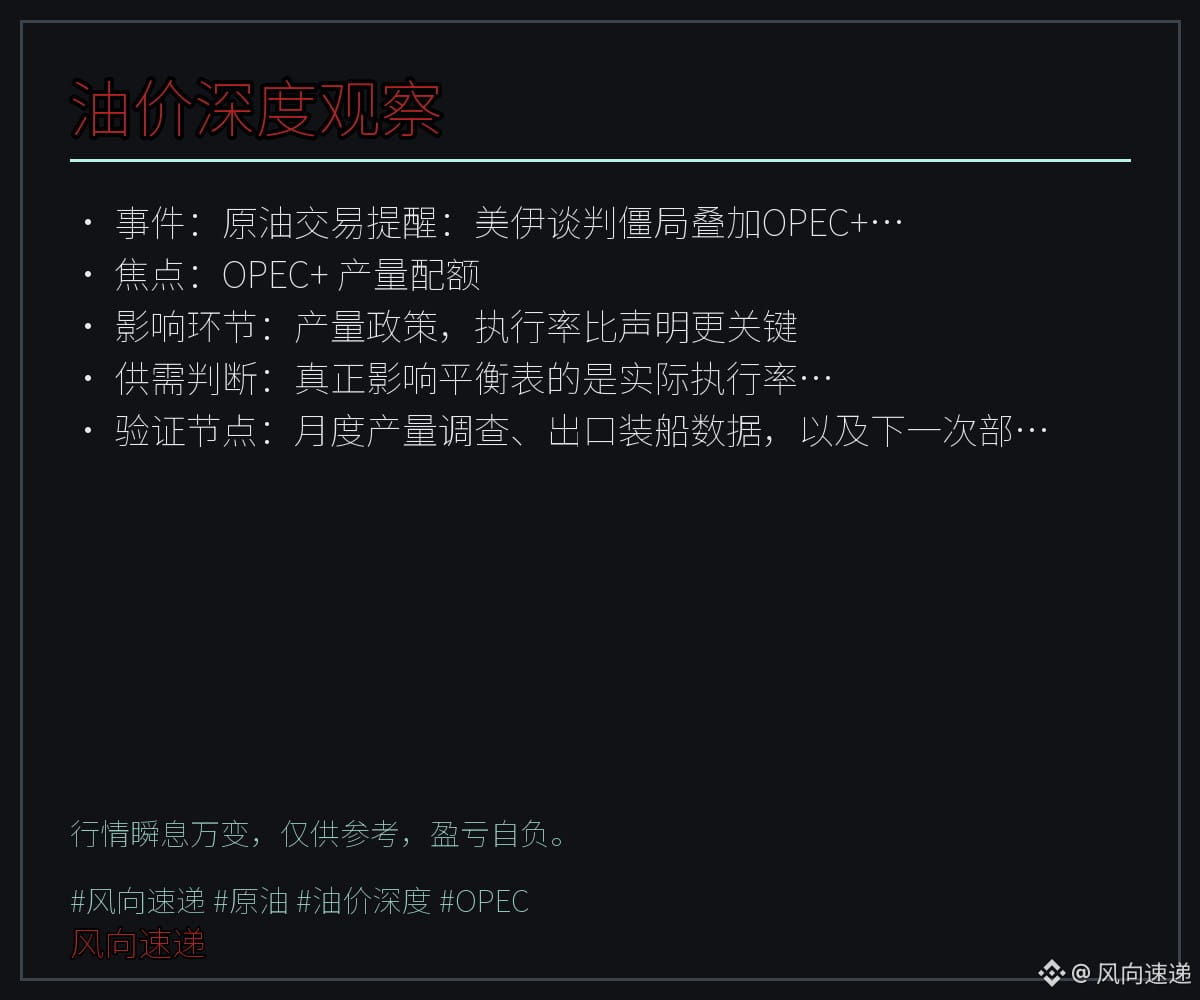
In-Depth Oil Price Watch
【Key Events】
Crude Oil Trading Alert: U.S.-Iran talks deadlocked as OPEC+ boosts production; WTI crude falls for five straight sessions—beware a downside breakout. Futures Market News (2 hours ago)
【Who Is Influencing Oil Prices】
OPEC+ has signaled that it may increase supply. The focus is on OPEC+ production quotas. OPEC+ accounts for roughly 40% of global output, and its quotas determine the medium-term supply curve. Spare capacity is the main buffer for smoothing sudden shortfalls.
【Transmission Channels】
Production cuts—or extending voluntary cuts—directly reduce exportable volumes, while increased production weighs on near-month premiums by lowering expectations for future supply.
Policy signals can also change trade flows. Price differentials for deliveries into Asia and Europe tend to move first, with the effects feeding through to benchmark oil prices afterward.
【Supply, Demand, and Pricing】
What really affects the balance sheet is the actual compliance rate; overproduction by member countries can significantly undermine the effect of production-cut announcements.
WTI is currently trading around $85.60, down 1.10% over 24 hours. This can serve as a starting point for observation; subsequent moves should be assessed alongside the confirmation points below. Expectations ahead of a meeting are often partly priced in already, and the market reaction afterward depends on the gap between the decision and expectations.
【What to Watch Next】
Watch monthly production surveys, export shipment data, and the timing and messaging of the next ministerial meeting.
【What Would Invalidate This Thesis】
If demand weakens at the same time, the price support from production cuts will be offset by declining demand.
Markets can change in an instant. For reference only; trade at your own risk.
#风向速递 #原油 #油价深度 #OPEC
13
·
--
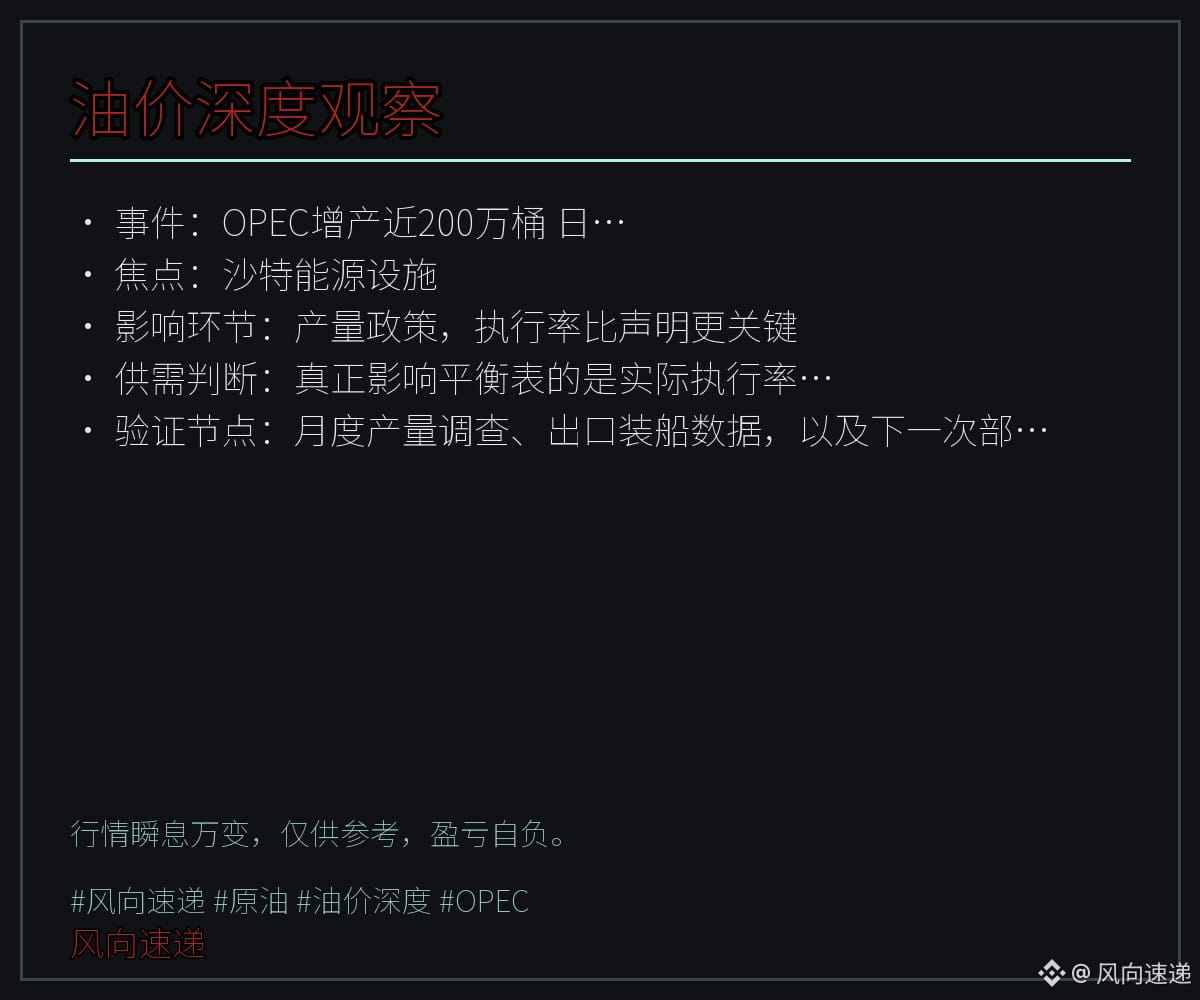
In-Depth Oil Price Watch
【Key Event】
OPEC raises output by nearly 2 million barrels per day; Saudi production surges to 10.6 million barrels, keeping oil prices under sustained pressure. FX News Report (within the past hour)
【Who Is Influencing Oil Prices】
Saudi Arabia signals an increase in supply. The focus is on Saudi energy facilities. OPEC+ accounts for around 40% of global production, and its quotas shape the medium-term supply curve. Spare capacity is the main buffer for smoothing sudden supply shortfalls.
【Transmission Mechanism】
Cuts or extensions of voluntary cuts directly reduce exportable volumes, while production increases weigh on nearby premiums by lowering expectations for future supply.
Policy signals can also reshape trade flows. The landed-price spreads between Asia and Europe tend to move first, with benchmark oil prices responding afterward.
【Supply, Demand, and Pricing】
What truly affects the balance sheet is the actual compliance rate. Overproduction by member countries can significantly weaken the impact of output-cut announcements.
WTI is currently trading around $85.39, with a 24-hour change of -1.44%. This level can serve as a starting point for observation; subsequent moves should be assessed alongside the confirmation points below. Expectations ahead of a meeting are often partly priced in already, and the market’s reaction afterward depends on the gap between the decision and expectations.
【What to Watch Next】
Watch monthly production surveys, export loading data, and the timing and messaging of the next ministerial meeting.
【What Would Invalidate This Outlook】
If demand weakens at the same time, the support that production cuts provide to prices may be offset by falling demand.
Markets can change rapidly. For reference only; you are responsible for your own gains and losses.
#风向速递 #原油 #油价深度 #OPEC
6
·
--
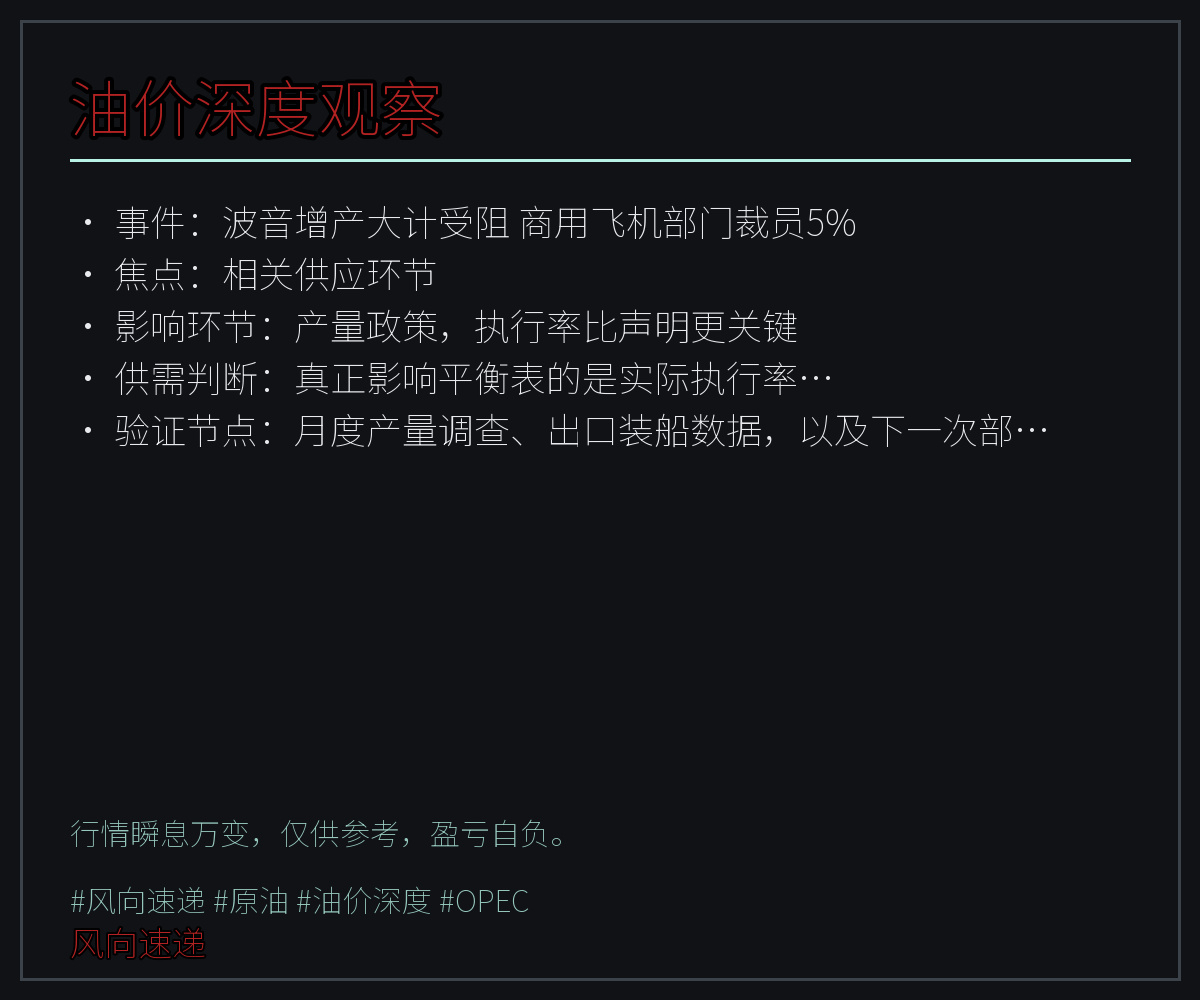
In-Depth Oil Price Analysis
【Key Event】
Boeing’s production ramp-up plans hit a snag; commercial airplanes division to cut 5% of jobs (within 1 hour)
【What’s Influencing Oil Prices】
A signal of increased supply has been released, putting the spotlight on the relevant supply channels. OPEC+ accounts for roughly 40% of global production, and its quotas determine the medium-term supply curve. Spare capacity is the main buffer for smoothing out sudden shortfalls.
【Transmission Channels】
Production cuts or extensions of voluntary cuts directly reduce exportable volumes, while increased production can weigh on near-month premiums by lowering expectations for future supply.
Policy signals can also shift trade flows. Delivered price differentials between Asia and Europe tend to move first, with benchmark oil prices responding afterward.
【Supply, Demand, and Pricing】
What really affects the balance sheet is the actual compliance rate. Overproduction by member countries can significantly undermine the effect of production-cut announcements.
WTI is currently trading near $87.58, with a 24-hour change of -3.58%. Volatility has widened, indicating that this type of risk is being priced in rapidly. Next, it will be important to see whether actual supply and demand data bear this out. Expectations ahead of a meeting are often partly priced in already; the market reaction afterward depends on the gap between the decision and expectations.
【What to Watch Next】
Watch monthly production surveys, export loading data, and the timing and messaging of the next ministerial meeting.
【What Would Invalidate This Thesis】
If demand weakens at the same time, its decline will offset the price support from production cuts.
Markets can change in an instant. For reference only; trade at your own risk.
#风向速递 #原油 #油价深度 #OPEC
11

·
--
OPEC+ has just made its decision: December production stays unchanged, while Brent remains above $117
· OPEC website: At an online meeting on November 1, Saudi Arabia, Russia, Iraq and four other countries decided to keep December production at the September quota levels. The next meeting is on November 29.
· The National: The seven countries have a combined quota of about 31 million barrels per day (Saudi Arabia 10.478 million, Russia 9.949 million, Iraq 4.431 million), but due to the U.S.-Iran war, most members are producing below their quotas. Brent is above $117.
· Reuters: The voluntary production cuts of 1.65 million barrels per day were fully phased out in September, while another roughly 2 million barrels per day in cuts will continue through year-end. In the fourth quarter, focus shifts to assessing capacity baselines for 2027.
【Viewpoint】
Holding production steady means no relief for oil prices. The real constraint on supply is not quotas, but export disruptions caused by the war. So this decision will have limited impact on actual supply, and the high-oil-price outlook remains unchanged. High oil prices → persistent inflation → a hawkish Fed, which will continue to weigh on risk assets such as tech stocks and crypto.
【Opportunities/Risks】
1) If hostilities ease and Gulf exports resume, a pullback in oil prices could benefit risk assets—potentially catalyzing a BTC rebound;
2) Key events this week: U.S. midterm elections on 11/3 and nonfarm payrolls on 11/6. Watch whether rate-hike expectations heat up;
3) The divergence between strong energy stocks and weak tech stocks may continue;
4) The November 29 meeting and negotiations over 2027 quotas are the next variables to watch.
Do you think the Fed will really raise rates in December if oil stays above $110?
#OPEC #原油 #宏观 #美联储 #CryptoMarket
$BTC $PAXG
For reference only; this is not investment advice

465

OPEC+ Output Increase Rekindles Fears of Global Oil OversupplyOPEC+ is set to move forward with another production increase as key member countries continue restoring oil output, a decision that is raising fresh concerns about a potential global supply surplus.
According to Bloomberg, the latest production boost comes despite questions over whether current market demand can absorb the additional barrels. Analysts warn that if consumption fails to keep pace, the extra supply could place renewed downward pressure on crude oil prices in the months ahead.
The move also signals a shift in the alliance's internal dynamics. After navigating a period of disagreements among member states over production quotas, OPEC+ appears to be presenting a more unified approach by advancing previously planned output increases.
While stronger seasonal demand and geopolitical risks continue to influence the energy market, the prospect of rising production has revived concerns that supply could outpace demand, particularly if global economic growth slows or fuel consumption weakens.
Traders will now closely monitor upcoming inventory data, demand indicators, and future OPEC+ policy decisions to assess whether the market can comfortably absorb the additional supply or if the production increase will contribute to a broader oil glut.
#OPEC
$XAU
{future}(XAUUSDT)
$CL
{future}(CLUSDT)
$BZ
{future}(BZUSDT)
OPEC+ Output Increase Rekindles Fears of Global Oil Oversupply
OPEC+ is set to move forward with another production increase as key member countries continue restoring oil output, a decision that is raising fresh concerns about a potential global supply surplus.
According to Bloomberg, the latest production boost comes despite questions over whether current market demand can absorb the additional barrels. Analysts warn that if consumption fails to keep pace, the extra supply could place renewed downward pressure on crude oil prices in the months ahead.
The move also signals a shift in the alliance's internal dynamics. After navigating a period of disagreements among member states over production quotas, OPEC+ appears to be presenting a more unified approach by advancing previously planned output increases.
While stronger seasonal demand and geopolitical risks continue to influence the energy market, the prospect of rising production has revived concerns that supply could outpace demand, particularly if global economic growth slows or fuel consumption weakens.
Traders will now closely monitor upcoming inventory data, demand indicators, and future OPEC+ policy decisions to assess whether the market can comfortably absorb the additional supply or if the production increase will contribute to a broader oil glut.
#OPEC
$XAU
$CL
$BZ
124

·
--
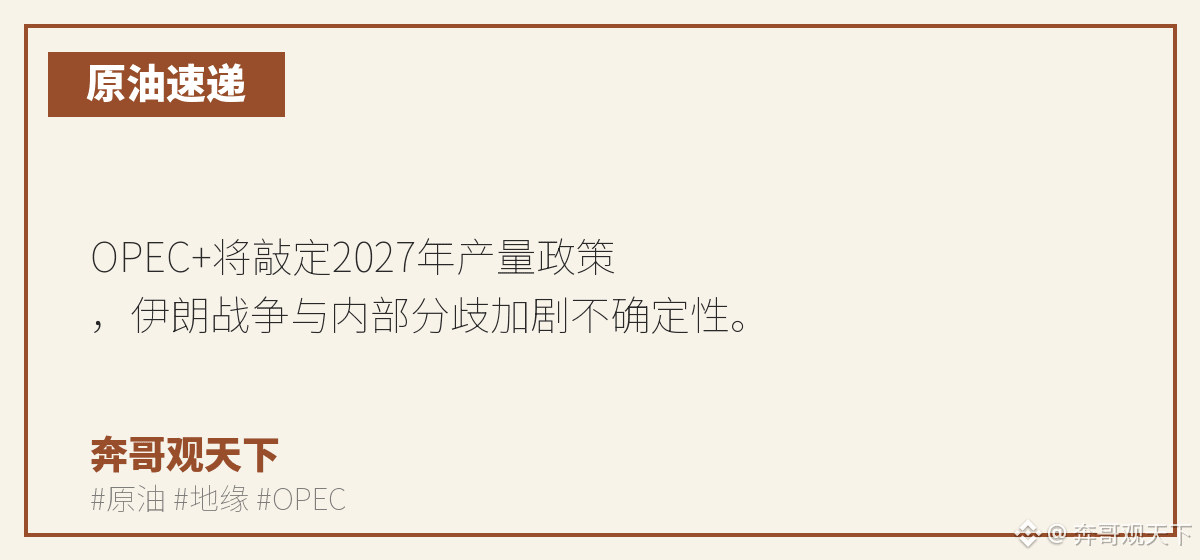
OPEC+ internal divisions intensify: Iraq seeks a new quota of 6 million barrels by leveraging capacity reviews, while Venezuela is considering exiting, putting the alliance’s stability to the test. The struggle over oil producers’ interests is heating up, and the future supply landscape is full of uncertainty.
#OPEC+ #原油市场 # capacity battle
#OPEC+ #原油市场 # capacity battle
78

·
--
Bullish
Partly True
OIL CUTS COMPLETED 🚨
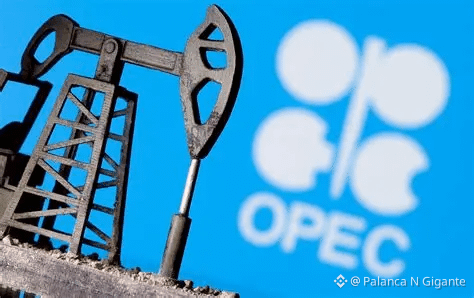
It is expected that the OPEC+ countries decide to completely abandon voluntary oil production cuts at a meeting on August 2, according to the RTRS.
$AKE $BILL $RIF 👀👀👀
{spot}(RIFUSDT)
{future}(BILLUSDT)
{future}(AKEUSDT)
#OPEC #OilTops$100 #HouthisAttackTwoSaudiTankers #KazakhstanApprovesStrategicDigitalMiningProgram #oil
OIL CUTS COMPLETED 🚨
It is expected that the OPEC+ countries decide to completely abandon voluntary oil production cuts at a meeting on August 2, according to the RTRS.
$AKE $BILL $RIF 👀👀👀
#OPEC #OilTops$100 #HouthisAttackTwoSaudiTankers #KazakhstanApprovesStrategicDigitalMiningProgram #oil
It is expected that the OPEC+ countries decide to completely abandon voluntary oil production cuts at a meeting on August 2, according to the RTRS.
$AKE $BILL $RIF 👀👀👀
#OPEC #OilTops$100 #HouthisAttackTwoSaudiTankers #KazakhstanApprovesStrategicDigitalMiningProgram #oil
622

·
--
Verified
Bullish
58%
Bearish
42%
12 votes • Voting closed
1.2k

OPEC+ Keeps Oil Output Quotas Unchanged — September 6, 2026OPEC+ has decided to keep its oil production policy unchanged for October, ending a run of monthly increases as the group faces major uncertainty from the Iran conflict and disruptions around the Strait of Hormuz.
🔑 Key details
October production: OPEC+ will keep its current output policy unchanged.No new increase: The decision follows several months of planned production increases.September increase: OPEC+ had raised September output targets by about 188,000 barrels per day, completing the phased rollback of a 1.65 million-barrel-per-day cut introduced in 2023.Actual production remains below targets: Despite higher quotas, several members are unable to produce or export at planned levels because of disruptions caused by the Iran war and the situation around the Strait of Hormuz.2027 quotas now in focus: OPEC+ needs to assess members' production capacity before establishing new production baselines for 2027.Next meeting: The seven core members are scheduled to meet again on October 4.🛢️ Why the decision mattersThe decision is supportive for oil prices because OPEC+ is not adding additional planned supply to the market in October. However, the impact is less straightforward than it would normally be because actual oil flows are being heavily affected by geopolitical disruptions.The Strait of Hormuz is particularly important. The ongoing Iran conflict has reduced tanker traffic and disrupted regional exports, meaning OPEC+'s ability to control the physical oil market is currently more limited.📈 Oil-market reactionBrent crude had already moved above $96 per barrel at Friday's close as traders priced in geopolitical supply risks. WTI was also around the low-$90s earlier in the week.#OPEC {spot}(OPENUSDT)
OPEC+ Keeps Oil Output Quotas Unchanged — September 6, 2026
OPEC+ has decided to keep its oil production policy unchanged for October, ending a run of monthly increases as the group faces major uncertainty from the Iran conflict and disruptions around the Strait of Hormuz.
🔑 Key details
October production: OPEC+ will keep its current output policy unchanged.No new increase: The decision follows several months of planned production increases.September increase: OPEC+ had raised September output targets by about 188,000 barrels per day, completing the phased rollback of a 1.65 million-barrel-per-day cut introduced in 2023.Actual production remains below targets: Despite higher quotas, several members are unable to produce or export at planned levels because of disruptions caused by the Iran war and the situation around the Strait of Hormuz.2027 quotas now in focus: OPEC+ needs to assess members' production capacity before establishing new production baselines for 2027.Next meeting: The seven core members are scheduled to meet again on October 4.🛢️ Why the decision mattersThe decision is supportive for oil prices because OPEC+ is not adding additional planned supply to the market in October. However, the impact is less straightforward than it would normally be because actual oil flows are being heavily affected by geopolitical disruptions.The Strait of Hormuz is particularly important. The ongoing Iran conflict has reduced tanker traffic and disrupted regional exports, meaning OPEC+'s ability to control the physical oil market is currently more limited.📈 Oil-market reactionBrent crude had already moved above $96 per barrel at Friday's close as traders priced in geopolitical supply risks. WTI was also around the low-$90s earlier in the week.#OPEC
28

·
--
$XAUT $2Z $SOL
OPEC+ extends oil production cuts through 2025! 🛢️ This move aims to stabilize global oil markets but could fuel inflation concerns, potentially impacting the broader economy and crypto sentiment. 📈 #OPEC #OilPrices #Inflation
$XAUT $2Z $SOL
OPEC+ extends oil production cuts through 2025! 🛢️ This move aims to stabilize global oil markets but could fuel inflation concerns, potentially impacting the broader economy and crypto sentiment. 📈 #OPEC #OilPrices #Inflation
OPEC+ extends oil production cuts through 2025! 🛢️ This move aims to stabilize global oil markets but could fuel inflation concerns, potentially impacting the broader economy and crypto sentiment. 📈 #OPEC #OilPrices #Inflation

169

·
--
According to OPEC's latest September monthly report, Saudi Arabia officially notified the cartel that its crude oil production has fallen to its lowest level since 1990. Simultaneously, OPEC trimmed its 2026 global oil demand growth projection for the fifth consecutive time to 380,000 barrels per day, down from 580,000 bpd, while lifting its 2027 forecast to 2.36 million bpd.
This persistent downward revision in demand reflects mounting structural headwinds across major global economies, outweighing fears of regional conflict disruptions. Despite aggressive production cuts by Riyadh to defend price floors, sluggish consumption signals that global industrial momentum remains under pressure.
For traditional markets, softening crude demand coupled with suppressed output keeps a lid on headline energy inflation. This dynamic eases pressure on sovereign bond yields and gives central banks broader room to navigate monetary easing without reigniting immediate cost pressures.
For crypto assets like $BTC, cooling energy costs and stabilizing inflation expectations provide a constructive macro backdrop. As liquidity conditions gradually loosen, sustained disinflation should bolster broader risk appetite.
#opec #oil #macro
According to OPEC's latest September monthly report, Saudi Arabia officially notified the cartel that its crude oil production has fallen to its lowest level since 1990. Simultaneously, OPEC trimmed its 2026 global oil demand growth projection for the fifth consecutive time to 380,000 barrels per day, down from 580,000 bpd, while lifting its 2027 forecast to 2.36 million bpd.
This persistent downward revision in demand reflects mounting structural headwinds across major global economies, outweighing fears of regional conflict disruptions. Despite aggressive production cuts by Riyadh to defend price floors, sluggish consumption signals that global industrial momentum remains under pressure.
For traditional markets, softening crude demand coupled with suppressed output keeps a lid on headline energy inflation. This dynamic eases pressure on sovereign bond yields and gives central banks broader room to navigate monetary easing without reigniting immediate cost pressures.
For crypto assets like $BTC , cooling energy costs and stabilizing inflation expectations provide a constructive macro backdrop. As liquidity conditions gradually loosen, sustained disinflation should bolster broader risk appetite.
#opec #oil #macro
43

On October 12, ministers from OPEC+ member countries held a meeting in Riyadh, focusing on the current severe security situation in crude oil maritime transport. Officials clearly stated that blockages in key shipping routes have driven transport and insurance costs to historic extremes, even exceeding one-third of the total value of the goods involved, posing a substantial impediment to the stability of global supply chains.
From a macro fundamental perspective, logistics premiums directly increase the frictional cost of crude oil transportation and add further upward pressure to global inflation expectations. However, this also further compels major oil-producing countries to strengthen joint output cuts and market intervention mechanisms, while the involvement of the International Energy Agency (IEA) and other institutions is expected to provide strong bottom support on the supply side.
At the technical level, tightness in commodity supply chains has not triggered widespread panic selling in the market; the U.S. dollar index and benchmark Treasury yields have maintained resilience within a range of fluctuations. As inflation pressures are absorbed, the risk asset market is showing strong downside resistance, and the bullish structure remains solid.
For the cryptocurrency market, energy-driven inflation pushed up by geopolitical risks may suppress liquidity expectations in the short term, but the value-storage logic of $BTC as a decentralized anti-inflation asset will be reinforced again. If prices can hold the key support level, a technically driven breakout as funds flow back into risk markets remains worth anticipating. 📈
#OPEC #CrudeOil #Geopolitics #Inflation
427

·
--
Bearish
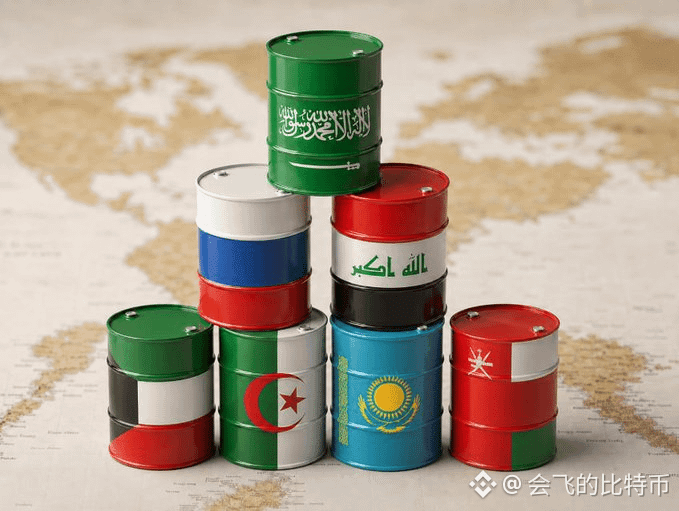
🚨Breaking Major News|Reuters: OPEC+ again increases daily crude oil production by 188,000 barrels in August
Shipping in the Strait of Hormuz gradually resumes, and oil-producing countries continue to loosen supply month by month
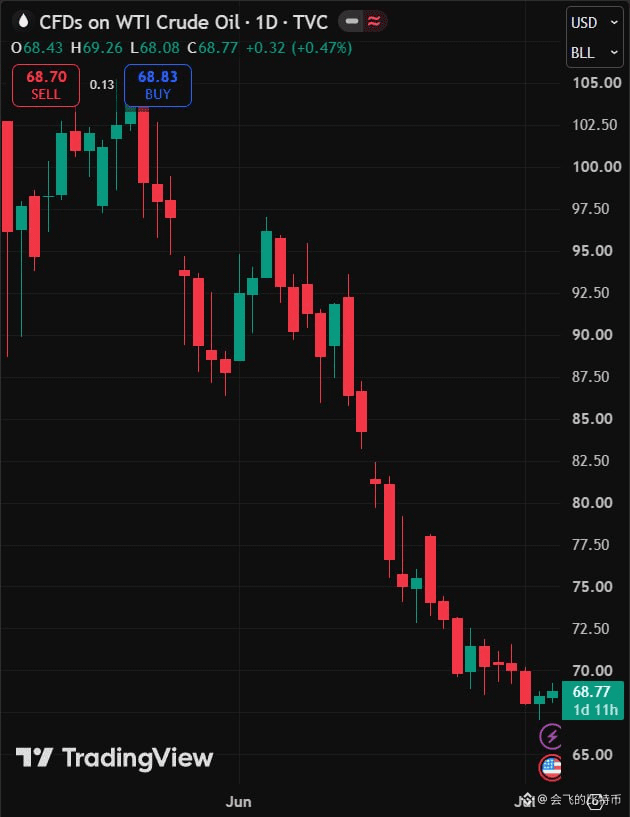
WTI crude oil has fallen sharply from its early-June peak of $105 to $68.77, with prices back in the pre-war range
As supply increments continue to be released, crude oil prices face sustained long-term pressure, and expectations of weakness in the energy sector strengthen
$CL
{future}(CLUSDT)
#原油 #OPEC
🚨Breaking Major News|Reuters: OPEC+ again increases daily crude oil production by 188,000 barrels in August
Shipping in the Strait of Hormuz gradually resumes, and oil-producing countries continue to loosen supply month by month
WTI crude oil has fallen sharply from its early-June peak of $105 to $68.77, with prices back in the pre-war range
As supply increments continue to be released, crude oil prices face sustained long-term pressure, and expectations of weakness in the energy sector strengthen
$CL
#原油 #OPEC
225

·
--
🚨 OPEC+ Increases August Oil Output by 188,000 BPD 🛢️📉
OPEC+ has officially approved an additional 188,000 barrels per day (BPD) of oil production for August, continuing its gradual strategy of bringing supply back to the market.
📊 What Does It Mean?
✅ More oil supply entering global markets
📉 Potential short-term pressure on crude oil prices
📈 Energy stocks and oil-linked assets could see increased volatility
🌍 Markets are now watching whether global demand can absorb the extra supply.
💡 Key Question:
Will this additional production cool the recent oil rally, or will strong demand keep prices supported?
👇 What's your outlook?
🐻 Bearish on oil in the short term?
🐂 Still bullish for the long run?
Share your thoughts in the comments!
#OPEC #OPECPlus #Oil #CrudeOil #WTI
{stock_us}(BZ.US)
{stock_us}(CL.US)
🚨 OPEC+ Increases August Oil Output by 188,000 BPD 🛢️📉
OPEC+ has officially approved an additional 188,000 barrels per day (BPD) of oil production for August, continuing its gradual strategy of bringing supply back to the market.
📊 What Does It Mean?
✅ More oil supply entering global markets
📉 Potential short-term pressure on crude oil prices
📈 Energy stocks and oil-linked assets could see increased volatility
🌍 Markets are now watching whether global demand can absorb the extra supply.
💡 Key Question:
Will this additional production cool the recent oil rally, or will strong demand keep prices supported?
👇 What's your outlook?
🐻 Bearish on oil in the short term?
🐂 Still bullish for the long run?
Share your thoughts in the comments!
#OPEC #OPECPlus #Oil #CrudeOil #WTI
3
5
94
Log in to explore more content
Join global crypto users on Binance Square
⚡️ Get latest and useful information about crypto.
💬 Trusted by the world’s largest crypto exchange.
👍 Discover real insights from verified creators.
Email / Phone number
Trending Topics
1
#CorePCEBeatLiftsFedHikeOdds
33,327 views
527 Discussing
2
#BitcoinAndStocksSlipAgainAmidTrump’sTariffPlans
118,875 views
1,460 Discussing
3
#JensenHuangSaysNvidiaDoesn’tNeedASuccessionPlan
61,182 views
868 Discussing
4
#NasdaqFuturesSlideMoreThan3%
7,430 views
163 Discussing
5
#USOctoberPCEPriceIndexAt0.3%MoM
7,425 views
151 Discussing
6
#BitcoinETFsPostRecord$4.94BNovemberOutflows
630 views
22 Discussing
7
#TetherInvestsInArgentinasLemon
4,212 views
74 Discussing
8
#AnthropicBreaksBelowIPOPriceAmidAISlump
184,092 views
1,552 Discussing
9
#SouthKoreaProposesCryptoExchangeStaffUseOwnPlatform
984 views
25 Discussing
10
#UkraineParliamentPassesVirtualAssetLegalizationBill
7,327 views
27 Discussing