

#jst
jst
413,076 views
4,649 Discussing
Hot
Latest

·
--
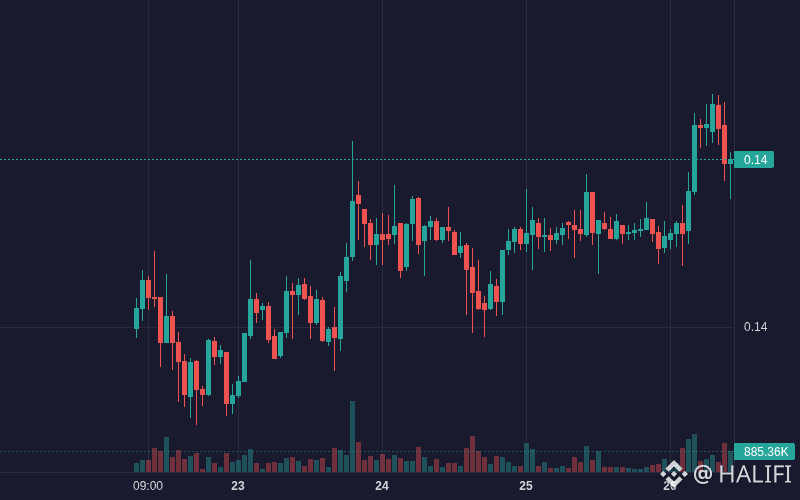
$JST JST is showing bullish movement: 0.35% (Crypto).
Volume: 1.77M | Last: $0.142050
Worth monitoring.
Bias Daily: BULLISH 🟢 | Weekly: BULLISH 🟢
JST rose 0.24% in 24h as buyback mechanism upgrades and $7B TVL spurred a temporary rally.
**Tokenomics overhaul (High)**: DAO revamped buyback-burn to tap recurring ecosystem revenue, allocating ~$20.34M across 4 phases → boosted fundamental demand
- **Ecosystem expansion (High)**: Lending platform TVL held above $7B while transaction count hit ~21.24M → raised fee generation expectations
- **Capital influx (Medium)**: Large buying pushed net inflows above +$234K during the breakout → triggered an upward move to $0.14265 before mean reversion
#JST #BinanceSquare #BinancePick #EarningsSeason #Crypto
26

·
--
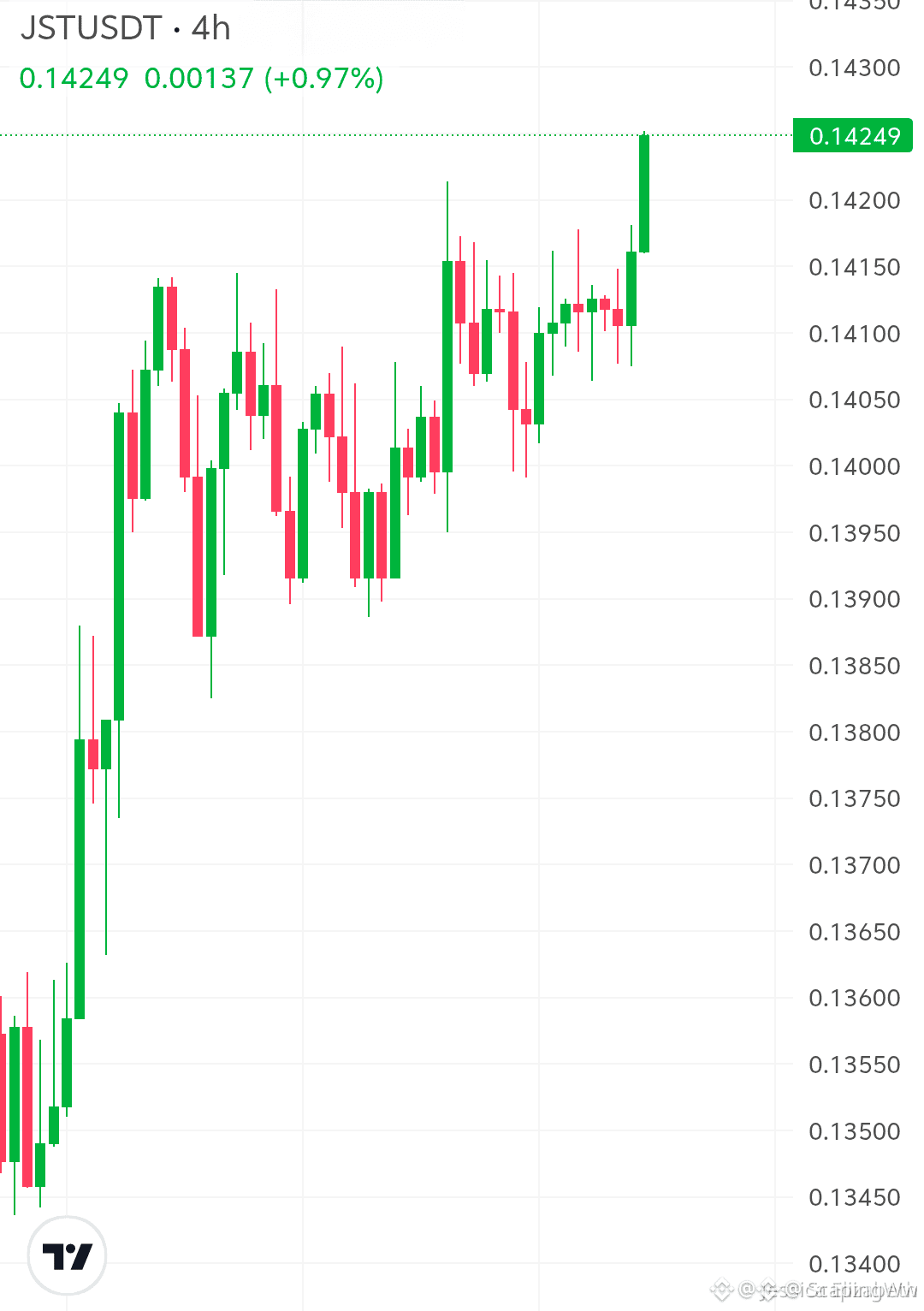
🚀 $JST BREAKING THROUGH ZONE – BULLISH MOMENTUM ON FIRE!
Entry: 0.1390-0.1433 ⚡
Target: 0.1495 / 0.1520 🚀
Stop Loss: 0.1250 ⚠️
Smart money is piling into $JST as the order block between 0.1390‑0.1433 devours lingering sell pressure. 📊 The 4‑hour volume spike signals a fresh liquidity grab, pushing the price toward the next bullish ceiling.
With the next resistance at 0.1495 and a second stretch at 0.1520, the upside has room to sprint. 🦈 Keep an eye on the 0.1250 floor—if sellers force a dip, the trade flips. ⚡ Ready to ride the wave or sit on the sidelines? 💬
⚠️ Not financial advice. Always manage your risk. 🛡️
🏷️ #JST #LongSetup #Bullish #Crypto
🔥 💎
13

·
--
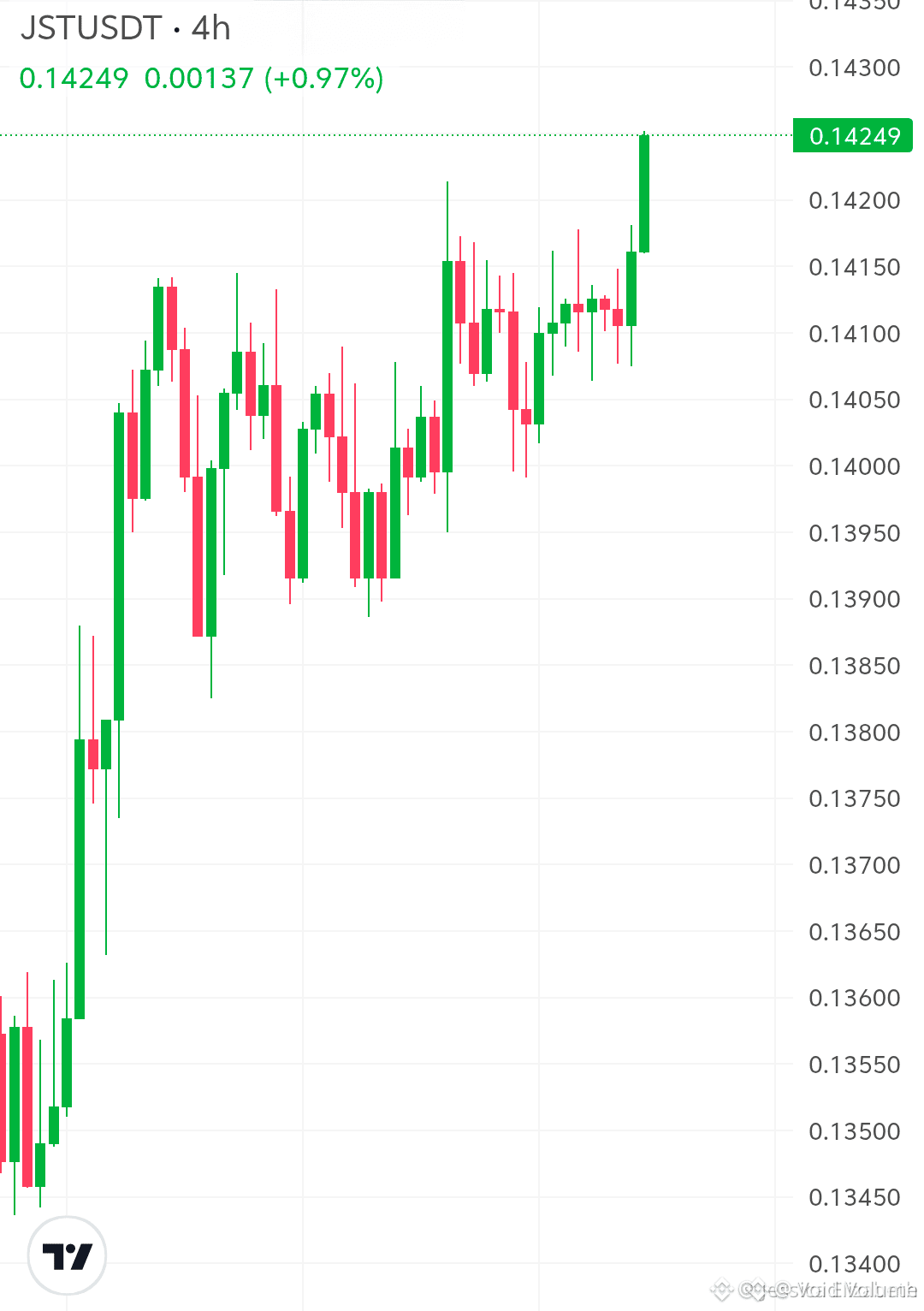
🚀 🦈 $JST BREAKING THROUGH KEY LIQUIDITY ZONE – BULLISH SWEEP!
Entry: 0.1390-0.1433 ⚡
Target: 0.1495 / 0.1520 🚀
Stop Loss: 0.1250 ⚠️
Smart money has been hoarding the 0.1390‑0.1433 order block, converting prior sell pressure into fresh demand. 📊 Volume spikes on the 4H chart confirm the institutional sweep.
A clean break above 0.1440 aligns with the next liquidity pool, setting the stage for a rapid climb toward the 0.1495‑0.1520 corridor. 🦈 The risk‑reward ratio hovers around 1:4, making the setup compelling for disciplined longs.
💬 Are you ready to ride the liquidity wave or waiting for a deeper pullback? 👇
⚠️ Not financial advice. Always manage your risk. 🛡️
🏷️ #JST #LongSetup #Liquidity #Crypto
🔥 🚀
3

·
--
Bullish
🚀 $JST — BULLISH MOMENTUM BUILDING! 🔥
🟢 LONG $JST
📍 Entry: $0.1390–$0.1433
🎯 TP1: $0.1495
🎯 TP2: $0.1520
🛑 SL: $0.1250
⚡ Catch the next move—wait for confirmation!
👇 Long $JST Now!
⚠️ Manage risk carefully. Not financial advice.
#JST #write2earn🌐💹 💫
🚀 $JST — BULLISH MOMENTUM BUILDING! 🔥
🟢 LONG $JST
📍 Entry: $0.1390–$0.1433
🎯 TP1: $0.1495
🎯 TP2: $0.1520
🛑 SL: $0.1250
⚡ Catch the next move—wait for confirmation!
👇 Long $JST Now!
⚠️ Manage risk carefully. Not financial advice.
#JST #write2earn🌐💹 💫
🟢 LONG $JST
📍 Entry: $0.1390–$0.1433
🎯 TP1: $0.1495
🎯 TP2: $0.1520
🛑 SL: $0.1250
⚡ Catch the next move—wait for confirmation!
👇 Long $JST Now!
⚠️ Manage risk carefully. Not financial advice.
#JST #write2earn🌐💹 💫
1
7

·
--
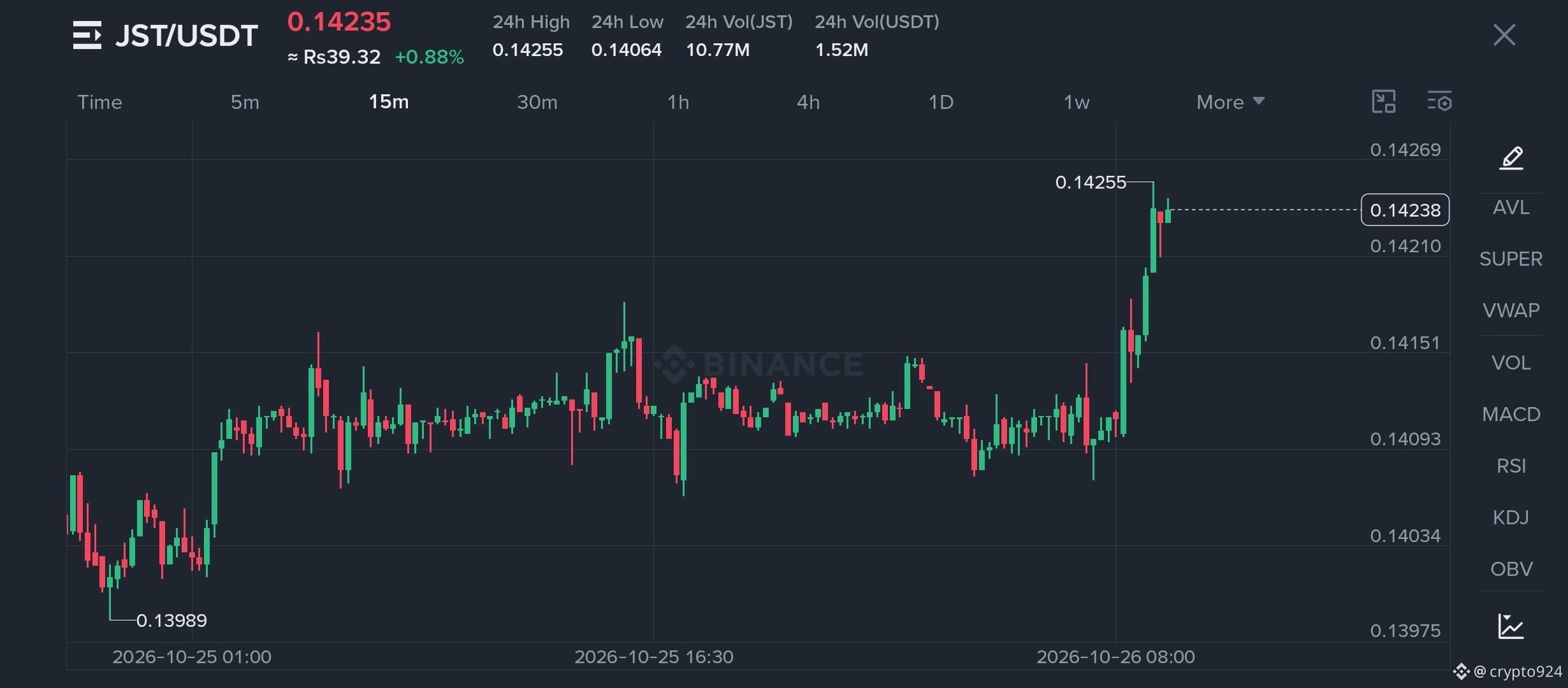
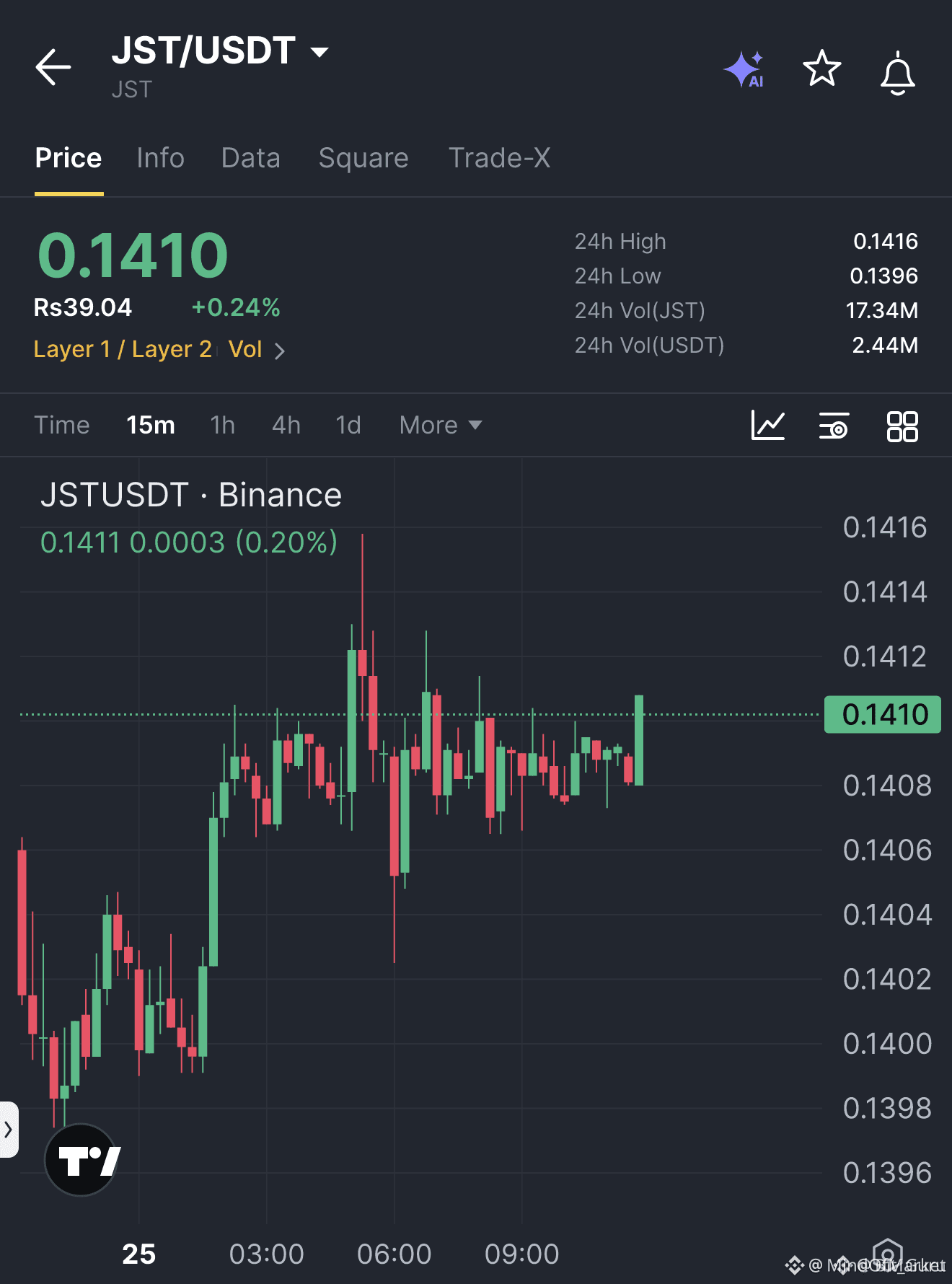
🚀 $JST SURGES PAST 0.141 – REAL BUYING EMERGES 🟢
Entry: 0.14108 ⚡
Target: 0.1421381, 0.1428435, 0.1439016 🚀
Stop Loss: 0.1403746 ⚠️
🦈 Institutional order flow has snapped the 0.141 barrier, confirming a fresh demand block. 📊 Volume spikes on the 15‑minute chart show aggressive accumulation, while the price is still hugging the liquidity pool below 0.1405. 💡 The multi‑tiered targets map the next order‑block extensions, offering a clean risk‑reward profile for disciplined traders. 🤔 Are you aligning your position with the live entry zone or waiting for a pull‑back?
⚠️ Not financial advice. Always manage your risk. 🛡️
🏷️ #JST #LongSetup #Liquidity #Crypto
🔥 💎
7
·
--
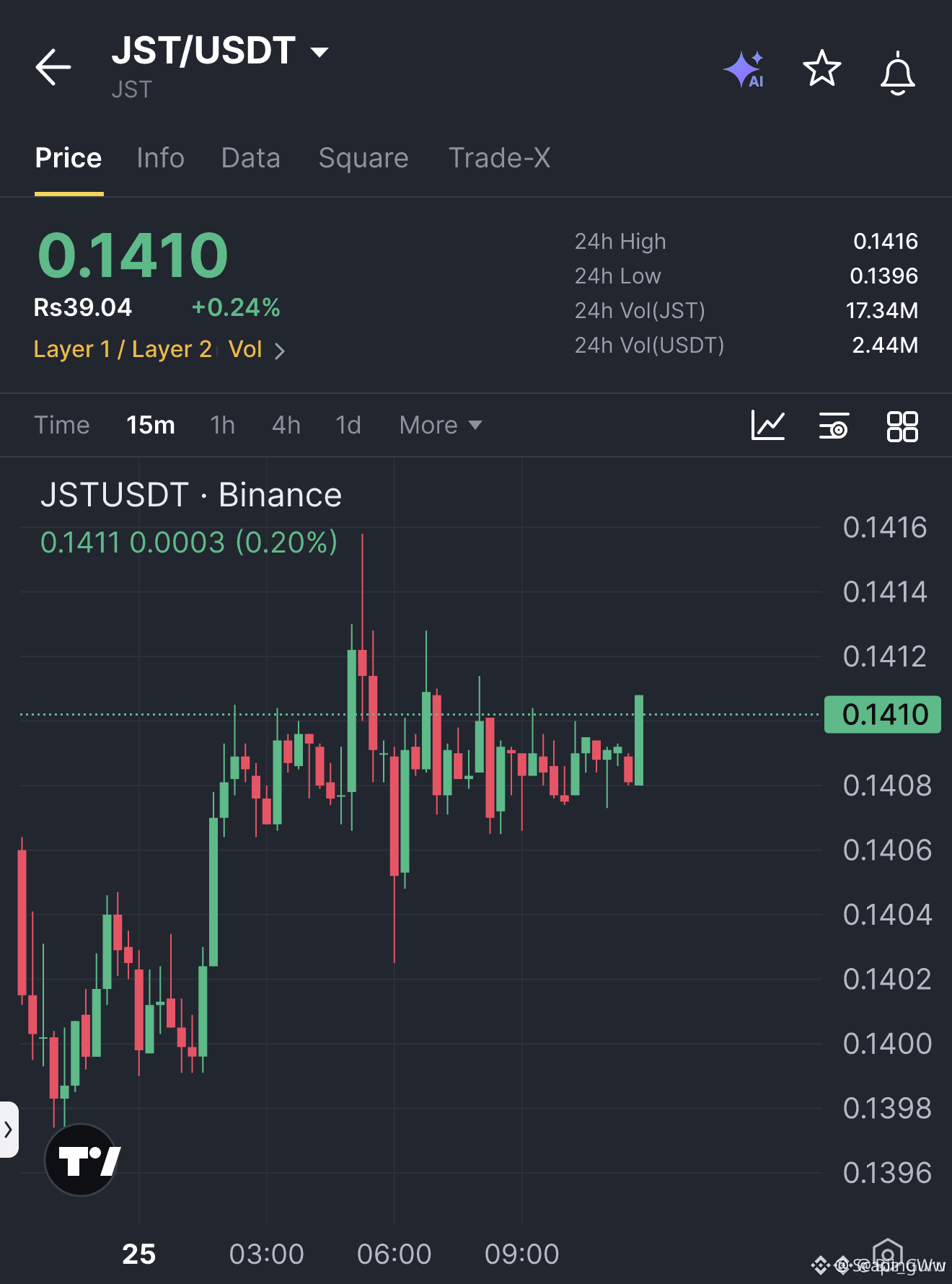
🚀 $JST SURGES PAST 0.14108 – BUYERS ON THE RAMPAGE! 🟢
Entry: 0.14108 ⚡
Target: 0.1421381 🚀
Stop Loss: 0.1403746 ⚠️
Liquidity just snapped the ceiling at 0.14108, and the order flow turned bullish as whales flooded the book. 📊 The surge is backed by a clean volume spike on the 15‑min chart, signaling real buying pressure.
With the entry zone now live, the next resistance cluster sits around 0.1421, then 0.1428, and finally 0.1439 – each a fresh target for the next wave. 🦈 Keep the stop tight at 0.14037 to guard against a sudden liquidity sweep. 💬 Are you ready to ride the next leg or waiting for the pullback? 👇
⚠️ Not financial advice. Always manage your risk. 🛡️
🏷️ #JST #LongSetup #Breakout #Crypto
🔥 💎
16

·
--
Bullish
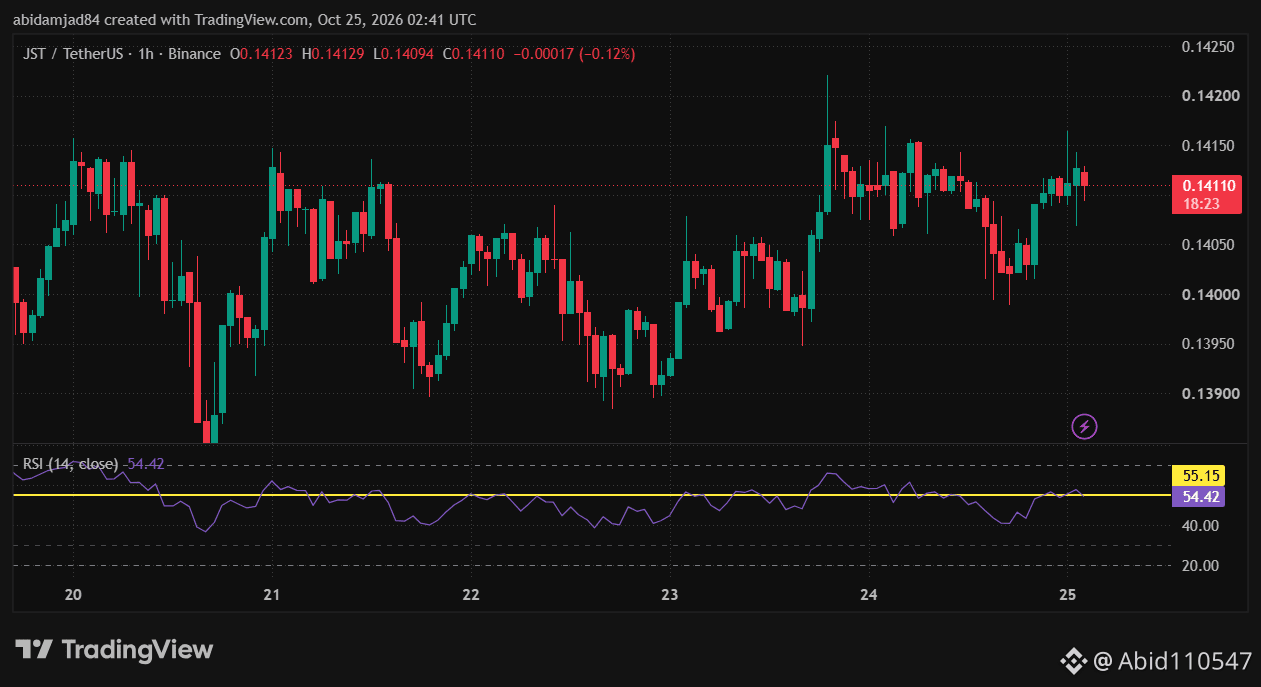
$JST 🚀 JST/USDT: BULLS TAKING CONTROL? 📈
💰 Price: $0.14105
📊 RSI: 55
🟢 Market Bias: Bullish
🔥 Can JST break higher from here—or is a pullback coming?
🎯 Your move: BUY 🟢 or SELL 🔴?
💬 Comment your entry price and target below! 👇
#jst #Jstusdt #BİNANCE #cryptotrading
{spot}(JSTUSDT)
$JST 🚀 JST/USDT: BULLS TAKING CONTROL? 📈
💰 Price: $0.14105
📊 RSI: 55
🟢 Market Bias: Bullish
🔥 Can JST break higher from here—or is a pullback coming?
🎯 Your move: BUY 🟢 or SELL 🔴?
💬 Comment your entry price and target below! 👇
#jst #Jstusdt #BİNANCE #cryptotrading
💰 Price: $0.14105
📊 RSI: 55
🟢 Market Bias: Bullish
🔥 Can JST break higher from here—or is a pullback coming?
🎯 Your move: BUY 🟢 or SELL 🔴?
💬 Comment your entry price and target below! 👇
#jst #Jstusdt #BİNANCE #cryptotrading
84

·
--
No hype, no FUD—I came across “JUST Releases Its JST Q3 and October 2026 Key Progress Report; Buyback Mechanism Shifts to Being Revenue-Based,” and it reminded me of when I first got into crypto.
Back then, every time I saw some news, I wanted to make a trade. Later, I bought in at the emotional peak several times, and sold near the bottom.
These days, I do things differently: I read the whole report first, then see how the market reacts, and only then decide whether to make a move. $JST was no different.
At the end of the day, what I fear most isn’t getting the call wrong—it’s letting my emotions dictate my timing.
Have any of you had a similar experience?
#JST
51

·
--
🟢 JST/USDT — Potential LONG
💰 Price: 0.13994 📊 RSI (14): 29.8 — Oversold
🎯 First target: 0.14100 🎯 Second target: 0.14220 🎯 Third target: 0.14350 🛑 Stop loss: 0.13850
⚠️ Enter after a rebound is confirmed; oversold conditions alone do not guarantee a rise.
❤️ Your support means a lot to me 🔥 Look for opportunities
$JST #JST #Trading #Altcoins
37

·
--
Five rounds of buybacks have burned nearly 19% of the initial supply. JST’s deflationary strength is among the most aggressive in the sector. But what’s worth examining is the mechanism adjustment JUST DAO made this October: buyback funds are shifting from reserves of historical revenue to recurring ecosystem revenue.
The previous rounds of buybacks were more like one-off actions: accumulate funds, then burn a batch. What the market saw was the token supply shrinking. Now that buybacks are supported by recurring revenue, the logic has changed—deflation no longer depends on a pool of existing funds, but is linked to the day-to-day output of businesses like JustLend and GasFree. JustLend’s TVL remained above $7 billion at the end of the quarter, while GasFree processed around 21.24 million transactions in a single quarter. These are the foundations of its revenue streams. Starting in Q4 2026, the plan is to allocate around $20.34 million in surplus funds to buybacks over four installments, while keeping at least $50 million in treasury reserves for safety. The pace seems measured.
I’m cautiously optimistic: the mechanism upgrade itself is a good thing, but how much substance there is behind the words “recurring revenue” depends on whether revenue in future quarters can genuinely cover the scale of the buybacks. If ecosystem revenue is volatile, the deflationary trajectory will fluctuate too, and holders’ expectations may weaken. Buyback burns are the outcome, not the cause. The cause is always whether the business can keep generating cash flow.
So here’s the question for everyone: Do you think tying JST’s deflation to ecosystem revenue is a healthier long-term design, or does it simply shift uncertainty from the treasury onto holders?$JST #JST #DeflationaryMechanism
$NVDB $MSFTB #Cryptocurrency
4

·
--
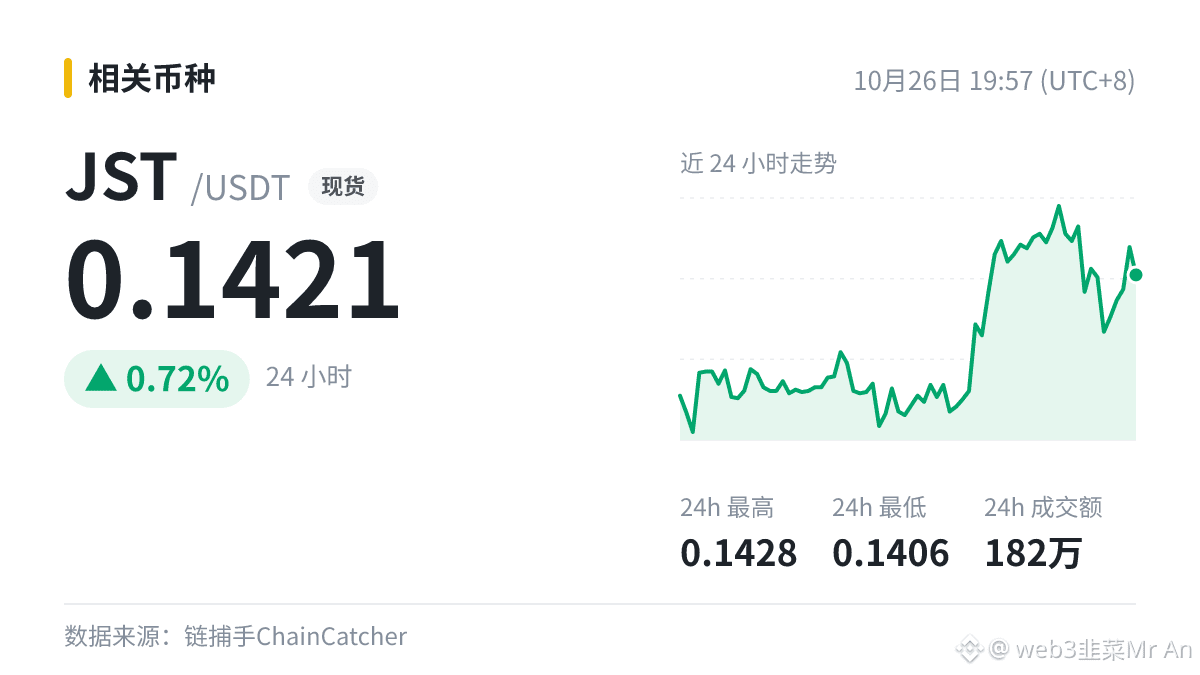
$JST , here’s the news: JUST has released its JST 2026 Q3 and October key developments report, shifting its buyback mechanism to one based on recurring revenue.
Positive news is more convincing when accompanied by rising volume; a reaction on lower volume should be taken with a grain of salt. News can’t change where the previous high and key moving averages are—those are the price levels to watch.
Would you wait for confirmation before making a move, or jump in right away?
#JST
Don’t take what I say as advice.
4
·
--
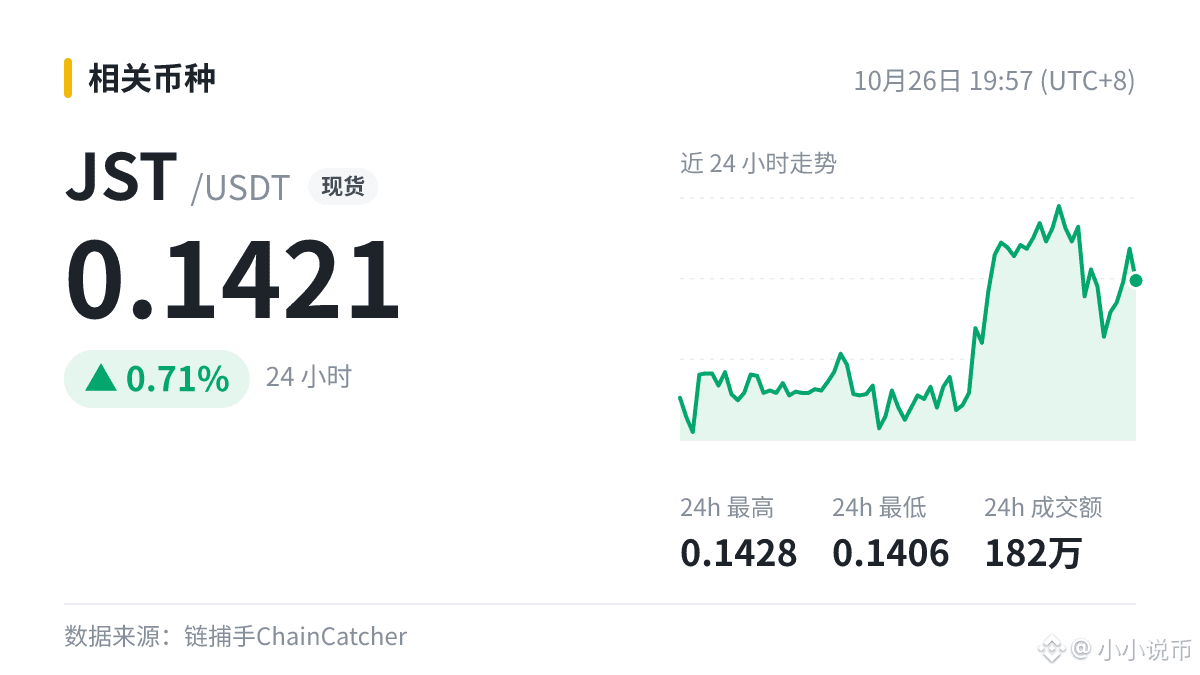
Take it easy, listen to me: JUST releases its JST 2026 Q3 and October key developments report, shifting its buyback mechanism to one based on recurring revenue
The right way to read a project announcement: get excited for three seconds, then check whether the on-chain data backs it up. If you’re getting excited without checking the data, I’d advise you to calm down—that’s advice I learned the hard way.
$JST is worth keeping an eye on.
#JST
The right way to read a project announcement: get excited for three seconds, then check whether the on-chain data backs it up. If you’re getting excited without checking the data, I’d advise you to calm down—that’s advice I learned the hard way.
$JST is worth keeping an eye on.
#JST
2

·
--
📰 JUST releases its key progress report for Q3 2026 and October: the buyback mechanism is shifting to a recurring-revenue basis
Analysts after reading it: Bullish—the story checks out.
Institutions after reading it: Quietly ran the numbers.
Me after reading it: Took a screenshot, then scrolled to the next post.
$JST is worth keeping an eye on. If this hit a little too close to home, come get a hug in the comments 🫂
#JST
Analysts after reading it: Bullish—the story checks out.
Institutions after reading it: Quietly ran the numbers.
Me after reading it: Took a screenshot, then scrolled to the next post.
$JST is worth keeping an eye on. If this hit a little too close to home, come get a hug in the comments 🫂
#JST

·
--
A friend just asked me: “JUST releases JST 2026 Q3 and October progress report, shifting its buyback mechanism to be based on recurring revenue”—is that bullish or bearish?
Here’s what I said: The overall direction is positive, but good news ≠ an immediate price rise. It depends on whether the money flows in.
$JST What do you think?
#JST
I can’t guarantee I’m right—make up your own mind.
Here’s what I said: The overall direction is positive, but good news ≠ an immediate price rise. It depends on whether the money flows in.
$JST What do you think?
#JST
I can’t guarantee I’m right—make up your own mind.
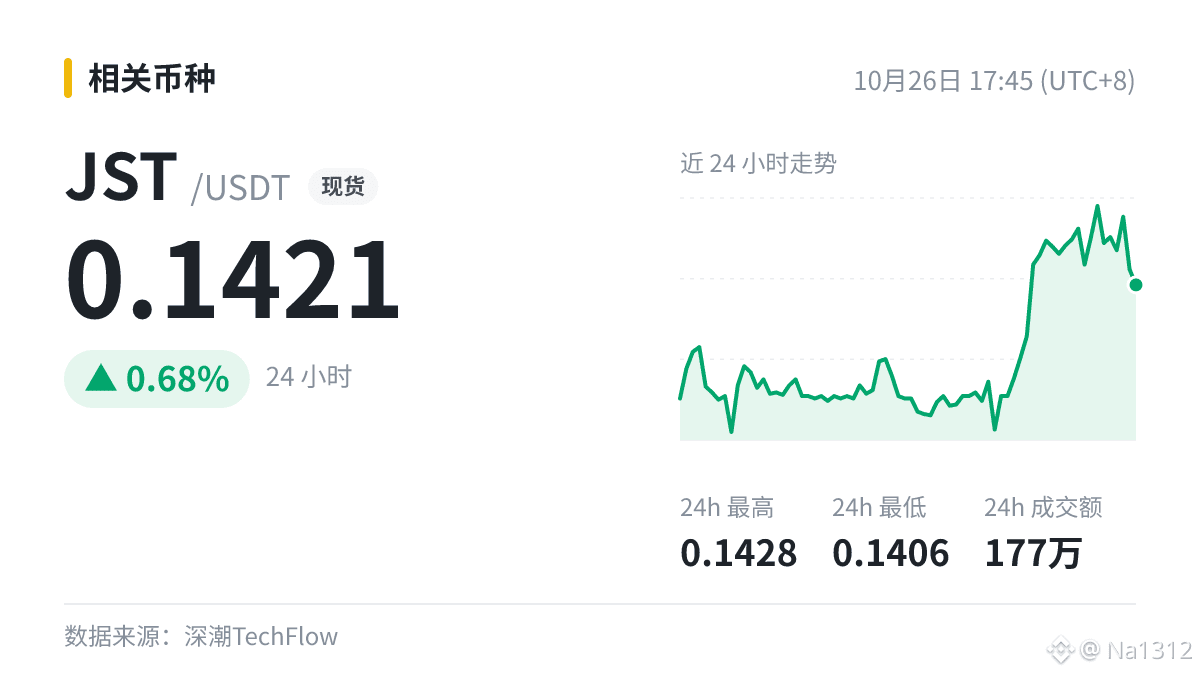

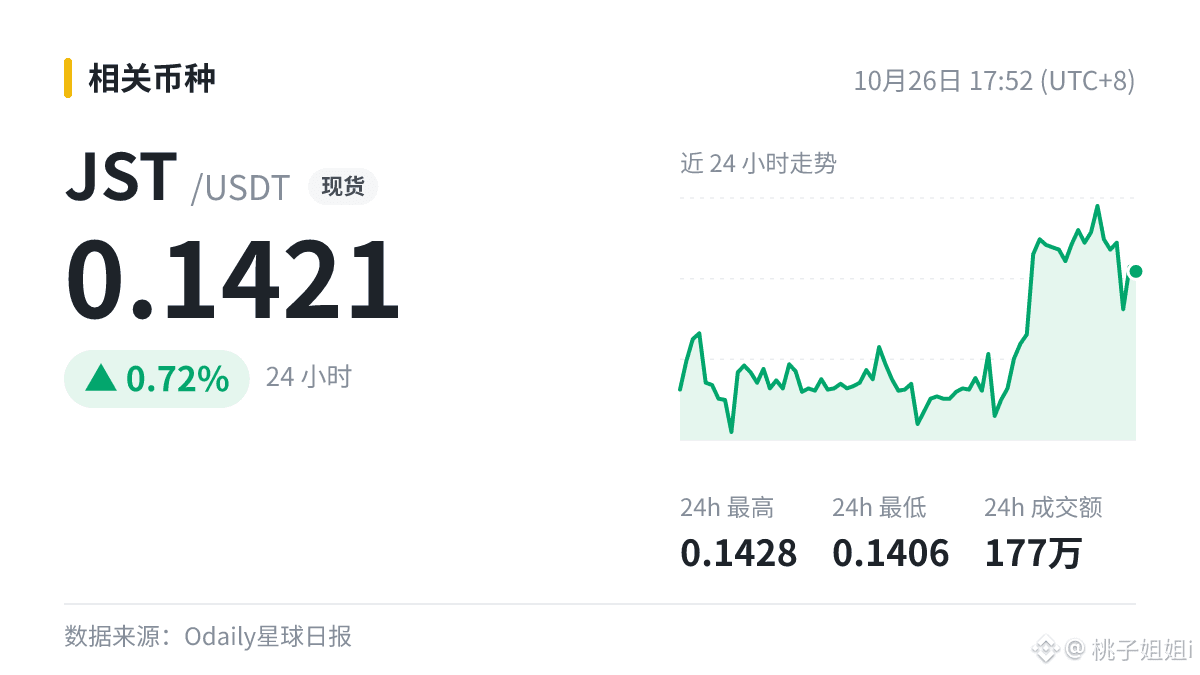
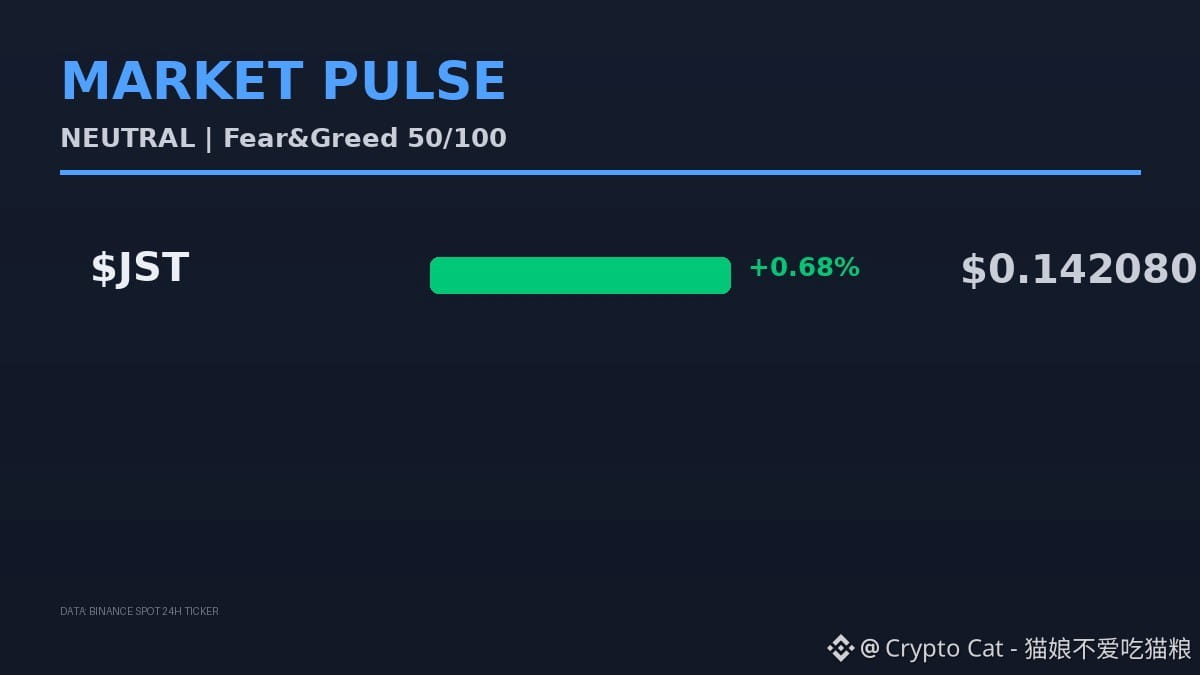
$JST Cumulative buybacks and burns are nearing 1.9 billion tokens, or 19% of the initial supply, but the market is up just 0.68% in 24 hours. The buying support is honestly pretty weak.
The overall market sentiment index is stuck at 50, in neutral territory, with no signs of a big rally. TVL is holding at 7 billion, transaction counts haven't risen, and the Q4 buyback plan hasn't been priced in yet.
Don't bet big on good news at this level. At most, dip your toe in with 30%; keep the other 70% in cash and add after the buybacks are implemented, in case things don't move as expected.
If you really want to put this strategy to the test, Binance's Spot Trading Tournament S8 is underway. The prize pool is substantial, so you can try out your strategy there.
Do you think $JST can hold the 0.14 level this time, or will it break down? Reply 1 if you think it holds, 2 if you think it breaks.
#Write2Earn #BinanceSquare #JST DeFi #TradingTournament
2

$JST — JST Buyback & Burn Upgrade: GasFree Revenue and $20.34M Surplus Injected as JUST’s Ecosystem Trio Solidifies… 🔔
{future}(JSTUSDT)
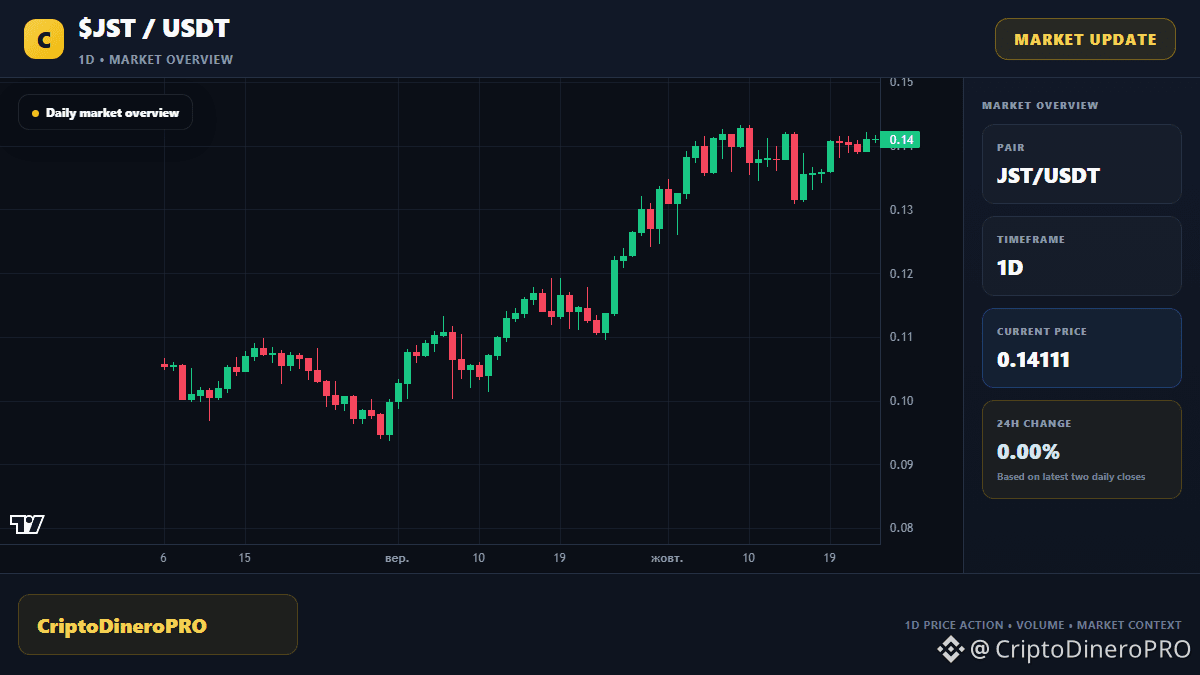
The upgraded JST Buyback and Burn program features the following highlights: Following its recent brand refresh on October 23, JUST—the flagship on-chain DeFi infrastructure on TRON—officially unveiled its upgraded JST Buyback & Burn initiative. Building on previous funding sources from JustLend and USDD, the upgraded mechanism incorporates business revenue from GasFree while allocating $20.34 million in capital surplus to future token repurchases.
#JST #JSTUSDT #CryptoNews
$JST — JST Buyback & Burn Upgrade: GasFree Revenue and $20.34M Surplus Injected as JUST’s Ecosystem Trio Solidifies… 🔔
The upgraded JST Buyback and Burn program features the following highlights: Following its recent brand refresh on October 23, JUST—the flagship on-chain DeFi infrastructure on TRON—officially unveiled its upgraded JST Buyback & Burn initiative. Building on previous funding sources from JustLend and USDD, the upgraded mechanism incorporates business revenue from GasFree while allocating $20.34 million in capital surplus to future token repurchases.
#JST #JSTUSDT #CryptoNews
43

🚨 $JST
{spot}(JSTUSDT)
A $50M TREASURY FLOOR CHANGES THE BUYBACK STORY.
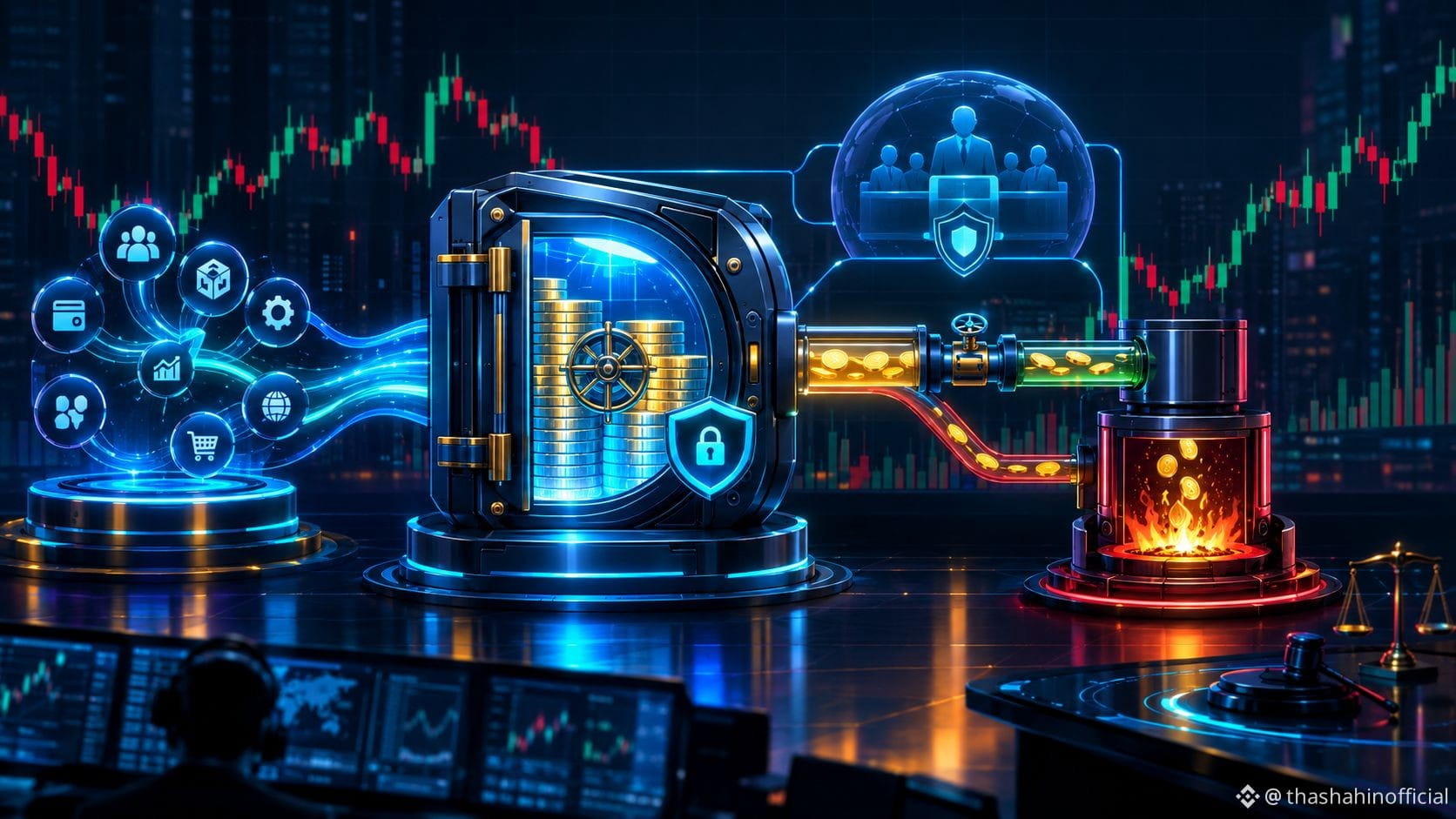
JUST announced a redesigned buyback-and-burn mechanism on October 23, placing governance under JUST DAO and requiring at least $50M in treasury reserves. Buybacks are funded by sustainable quarterly ecosystem revenue—not unlimited spending.
For JST holders, the key test is whether revenue consistently exceeds reserve and operating needs. Track actual buyback transactions, revenue disclosures, and tokens burned. A new mechanism is not a guarantee of price gains.
Can revenue-driven burns create lasting value for JST?
#JST #JUST #Tokenomics #CryptoNews
🚨 $JST
A $50M TREASURY FLOOR CHANGES THE BUYBACK STORY.
JUST announced a redesigned buyback-and-burn mechanism on October 23, placing governance under JUST DAO and requiring at least $50M in treasury reserves. Buybacks are funded by sustainable quarterly ecosystem revenue—not unlimited spending.
For JST holders, the key test is whether revenue consistently exceeds reserve and operating needs. Track actual buyback transactions, revenue disclosures, and tokens burned. A new mechanism is not a guarantee of price gains.
Can revenue-driven burns create lasting value for JST?
#JST #JUST #Tokenomics #CryptoNews
146

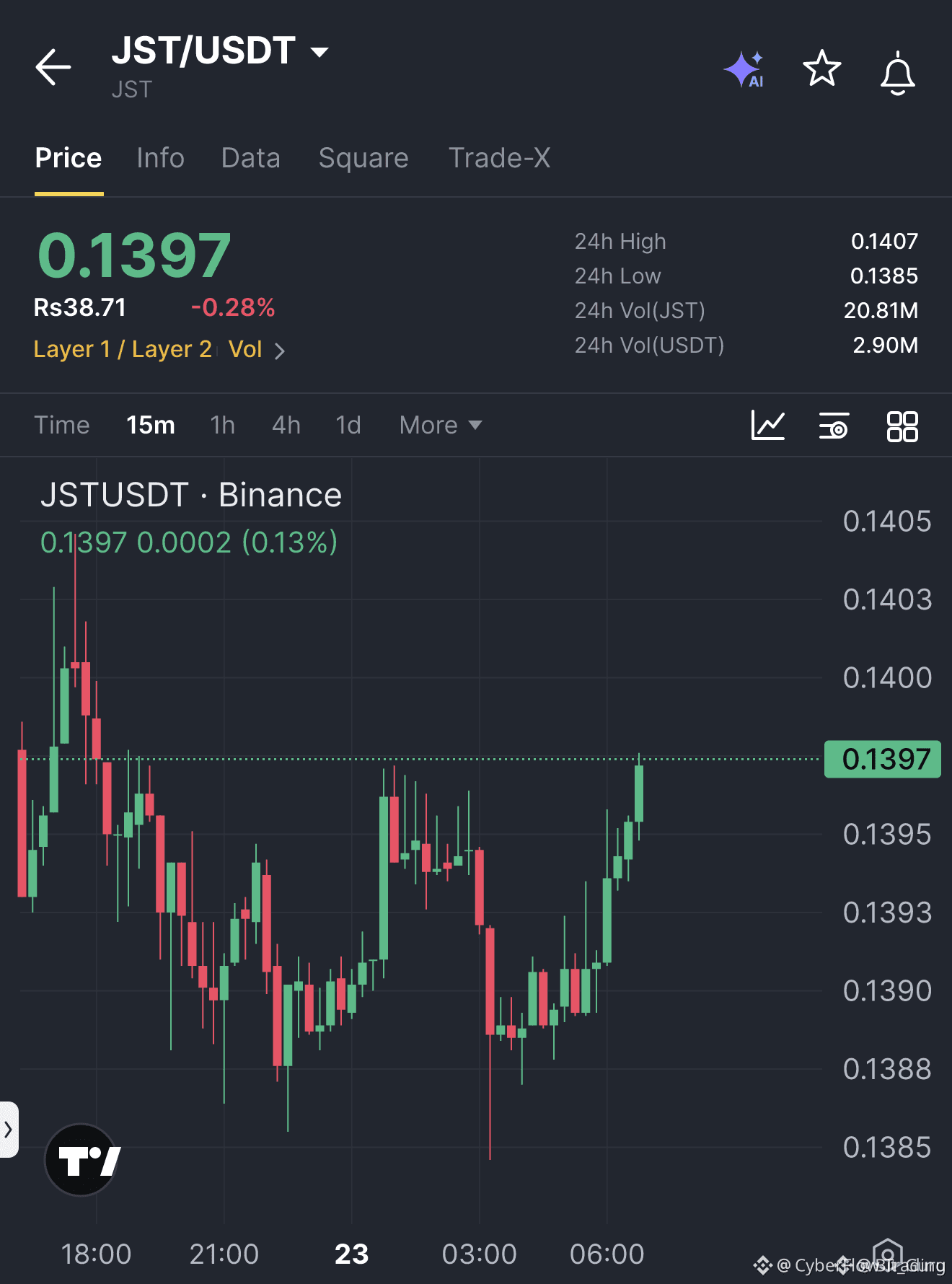
🚀🟢 $JST BREAKS OUT ABOVE 0.13846 – BULLISH MOMENTUM ON THE RISE!
Entry: 0.13972 ⚡
Target: 0.14092 🚀
Stop Loss: 0.13892 ⚠️
While $BTC slipped 2.47%, $JST held firm above 0.13846, flashing a clean green candle and stealing the spotlight. 🦈 Smart money is stacking on the breakout, and the order flow shows fresh buying pressure at the 0.13972 zone.
Volume on the 4‑hour chart is expanding, and the RSI is flirting with over‑bought territory, hinting at a short‑term rally. 📊 If the momentum holds, the next resistance sits near 0.141, a sweet spot for a quick flip. 💡
💬 Are you jumping on $JST ’s strength now or waiting for $BTC to catch up? 👇
⚠️ Not financial advice. Always manage your risk. 🛡️
🏷️ #JST #LongSetup #Breakout #Crypto
🔥 💎
12

·
--
20:35 Breaking news: JUST upgrades the JST buyback and burn mechanism, adding GasFree revenue and injecting a $20.34 million surplus
News like this first drives discussion. Whether it attracts capital remains to be seen. The basis for verifying whether it is true will be whether more authoritative sources confirm it.
$JST . In terms of timing, this came during trading hours, so the reaction may be quicker.
#JST
News like this first drives discussion. Whether it attracts capital remains to be seen. The basis for verifying whether it is true will be whether more authoritative sources confirm it.
$JST . In terms of timing, this came during trading hours, so the reaction may be quicker.
#JST
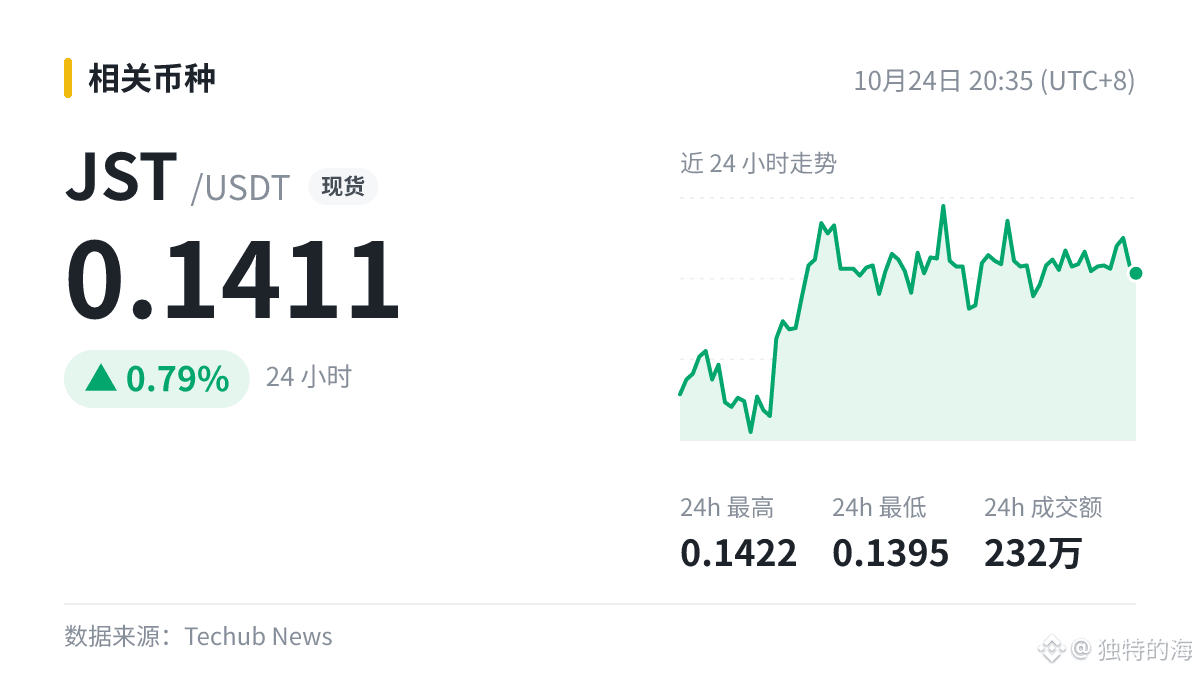
80

$JST LONG
🔹Entry zone: 0.14088
🎯Take profit 1: 0.14199537 (+0.79%)
🎯Take profit 2: 0.14319074 (+1.64%)
🎯Take profit 3: 0.1449838 (+2.91%)
⛔️Stop: 0.13900694 (-1.33%)
The six-hour momentum strength indicator is around the midpoint of the scale, reflecting a neutral balance of forces with no significant bias. This position does not predict rapid growth; it merely provides a starting basis for a long position. The plan for an upward move toward the target levels remains viable as long as the support zone is not breached by a sudden impulse. If conditions worsen and the price falls below the defensive threshold, losses may occur. An alternative scenario involves consolidation within a narrow range before another test of its boundaries.
⚠️ This is not financial advice. Trade at your own risk. DYOR.
#JST #HEI #AKEUSDT 📈
$JST
9
Log in to explore more content
Join global crypto users on Binance Square
⚡️ Get latest and useful information about crypto.
💬 Trusted by the world’s largest crypto exchange.
👍 Discover real insights from verified creators.
Email / Phone number
Trending Topics
1
#BinancePick
2.9M views
150,946 Discussing
2
#EarningsSeason
5.2M views
25,691 Discussing
3
#AnthropicTTMRevenueGrewAbout1200%
14,419 views
293 Discussing
4
#AnthropicS1ExpectedToday
16,358 views
267 Discussing
5
#SouthKoreaReportedlyWeighsFourthCryptoTaxDelay
22,965 views
400 Discussing
6
#FranklinTempletonFilesForTwoDividendToBitcoinETFs
30,789 views
495 Discussing
7
#StrategyMSTRSurpassesNasdaqInMarketCap
23,615 views
358 Discussing
8
#CanadaProposesStablecoinRedemptionWithin3BusinessDays
1,100 views
34 Discussing
9
#ElectrumWalletBugLetRogueServersStealFunds
25,743 views
441 Discussing
10
#ArgentineCourtDismissesLIBRACaseAgainstMilei
39,202 views
542 Discussing