
#geniusact
geniusact
17.7M views
34,012 Discussing
ChatGPT 说:
Trump has officially signed the stablecoin-related GENIUS Act at the White House, marking the beginning of the implementation phase for stablecoin regulation in the United States. What’s your take on this? Join the discussion.
Hot
Latest

·
--
🚨 $BTC SHOCKING: MOONPAY WANTS TO BECOME A BANK IN THE UNITED STATES
To me, the fact that a crypto payments company is seeking a federal banking license says the industry no longer wants to remain on the sidelines: MoonPay applied to the OCC on November 17 to establish MoonPay National Trust Bank, headquartered in Miami Beach. If approved, it will be able to custody assets, issue and redeem stablecoins, and manage their reserves under federal supervision.
Here’s the detail no one is noticing:
→ The application reached the OCC on November 18; the bank would not take deposits or make loans and would not have FDIC insurance: it would be a trust bank, not a commercial bank.
→ The timing is no coincidence: the GENIUS Act takes effect on January 18, 2027, and stablecoin issuers will need federal approval; Circle received final approval in July, Ripple in October, and Coinbase’s approval took effect this month.
→ MoonPay isn’t starting from scratch: it has held a New York BitLicense since June 2025 and a state trust charter since November 2025, and its co-founder Ivan Soto-Wright would chair the board and serve as interim president.
Do you think crypto banks are the future of money, or will the traditional system swallow them up? 👇
$BTC $USDC
#MoonPay #BancoCrypto #GENIUSAct

200

·
--
GENIUS Act passed, but Senator Moreno admits they blew it by not codifying clarity right then and there. "Time kills all deals" – the regulatory window slammed shut just like that. Now getting clear rules is gonna be a nightmare. 🪦
CryptoRegulation
#GENIUSAct
GENIUS Act passed, but Senator Moreno admits they blew it by not codifying clarity right then and there. "Time kills all deals" – the regulatory window slammed shut just like that. Now getting clear rules is gonna be a nightmare. 🪦
CryptoRegulation
#GENIUSAct
CryptoRegulation
#GENIUSAct

东家二公子:
这会不会是一匹黑马
1
1
195

·
--
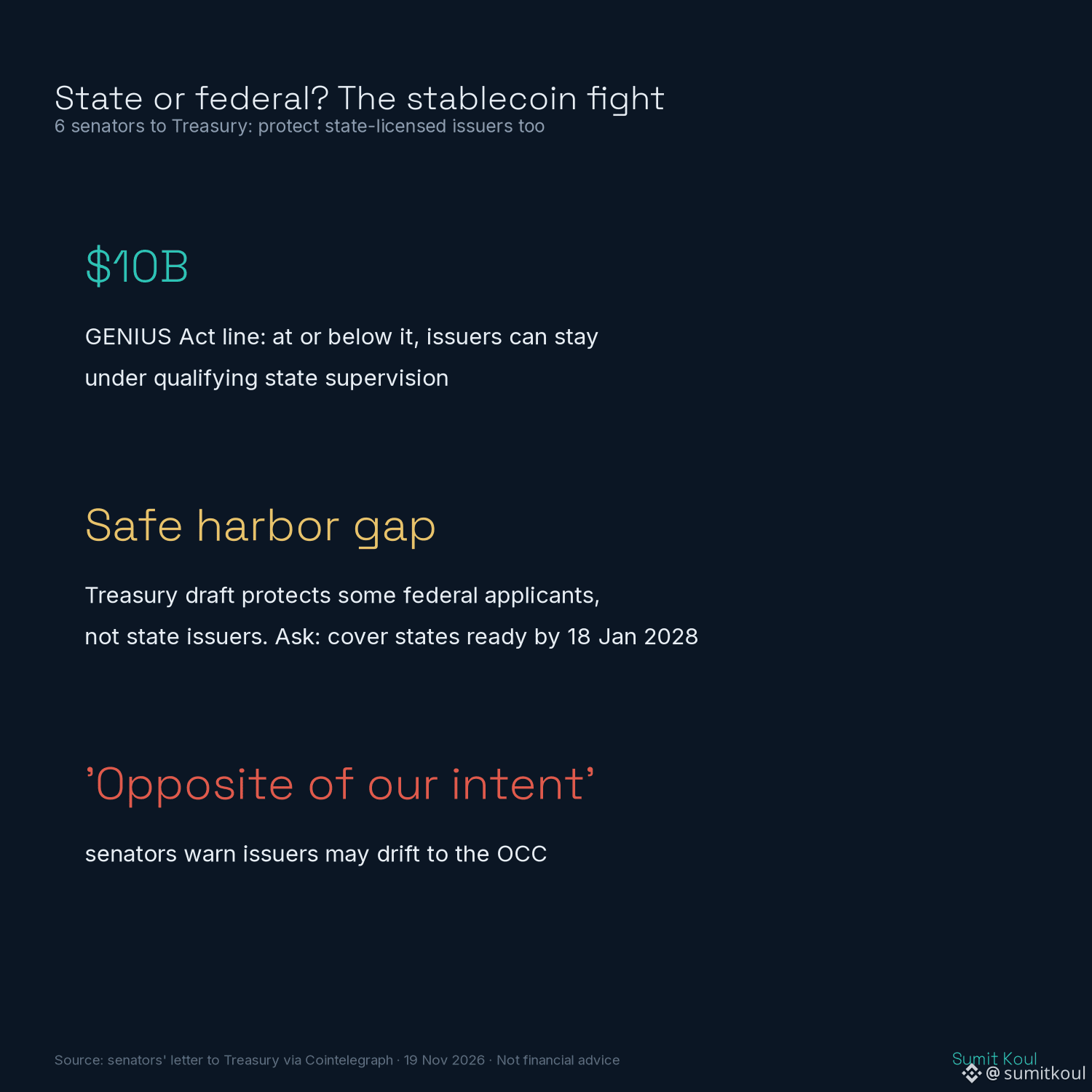
Six US senators say Treasury's GENIUS Act draft could push stablecoin issuers away from state licenses. 🏛️
• The Act lets issuers with $10B or less in stablecoins stay under qualifying state supervision
• Treasury's draft gives a safe harbor to some federal applicants, but not state issuers
• Ask: cover issuers in states ready before 18 Jan 2028
• Their words: drifting to the OCC is "the opposite of our intent"
Anchorage's policy head says issuers pick federal anyway, to avoid switching regulators if they pass $10B.
State or federal: which wins? 👇
#Stablecoins #GENIUSAct #CryptoRegulation
6

·
--
Bullish
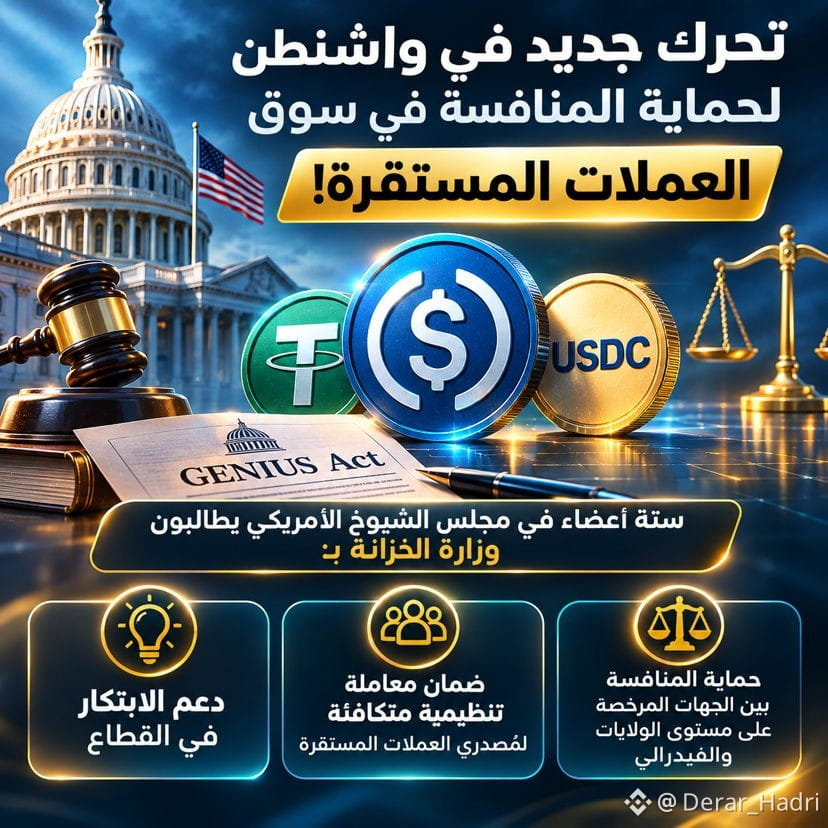
🏛️ A new move in Washington could affect the future of stablecoins!
Should stablecoin issuers have the same regulatory rights, whether they are licensed by a U.S. state or by federal authorities?
Six U.S. senators sent a letter to the Treasury Department, calling for state-licensed stablecoin issuers to receive equal regulatory treatment during the transition to implementing the GENIUS Act.
🔎 Why does this move matter?
🔹 Competition: Avoid giving federally licensed companies an unfair advantage.
🔹 Innovation: Preserve opportunities for startups and smaller institutions to compete in the stablecoin market.
🔹 Regulation: Clarify how the new rules will be applied without disrupting entities that already hold licenses.
💡 What does this mean for investors?
Future regulations could affect compliance costs and competition among stablecoin issuers, but the actual impact will depend on the final decisions.
⚠️ Important: The letter is a policy and regulatory request, not a new government decision or an enacted amendment to the law.
📌 The key question:
Would equal regulatory treatment strengthen competition, or do stablecoins need more centralized federal oversight?
👇 Share your thoughts.
#Stablecoins #GENIUSAct
{spot}(BTCUSDT)
🏛️ A new move in Washington could affect the future of stablecoins!
Should stablecoin issuers have the same regulatory rights, whether they are licensed by a U.S. state or by federal authorities?
Six U.S. senators sent a letter to the Treasury Department, calling for state-licensed stablecoin issuers to receive equal regulatory treatment during the transition to implementing the GENIUS Act.
🔎 Why does this move matter?
🔹 Competition: Avoid giving federally licensed companies an unfair advantage.
🔹 Innovation: Preserve opportunities for startups and smaller institutions to compete in the stablecoin market.
🔹 Regulation: Clarify how the new rules will be applied without disrupting entities that already hold licenses.
💡 What does this mean for investors?
Future regulations could affect compliance costs and competition among stablecoin issuers, but the actual impact will depend on the final decisions.
⚠️ Important: The letter is a policy and regulatory request, not a new government decision or an enacted amendment to the law.
📌 The key question:
Would equal regulatory treatment strengthen competition, or do stablecoins need more centralized federal oversight?
👇 Share your thoughts.
#Stablecoins #GENIUSAct
Abu Fahadأ:
💛
1
1
165


·
--
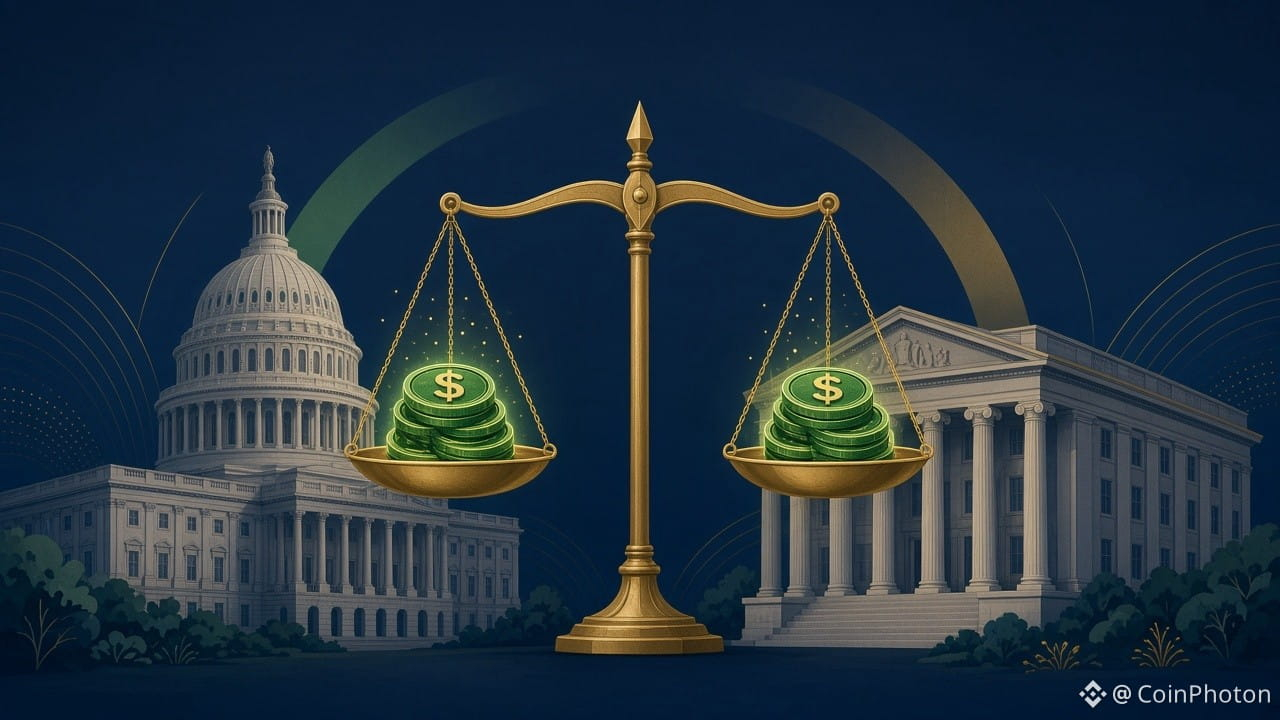
🏛️ Senators press Treasury on "equal footing" for state stablecoin issuers
Six bipartisan senators, including Cynthia Lummis and Kirsten Gillibrand, wrote to Treasury Secretary Scott Bessent asking for a safe harbor for stablecoin issuers regulated at the state level as the GENIUS Act is implemented. They say Treasury's current proposal protects issuers awaiting federal approval but offers no matching relief for state issuers. The law lets issuers with $10 billion or less be state-regulated if their state's rules are "substantially similar" to federal ones.
⭐ How Treasury responds will shape whether smaller stablecoin issuers can rely on state regimes like New York's or Wyoming's.
#Stablecoin #GENIUSAct #Regulation #CryptoNews
689

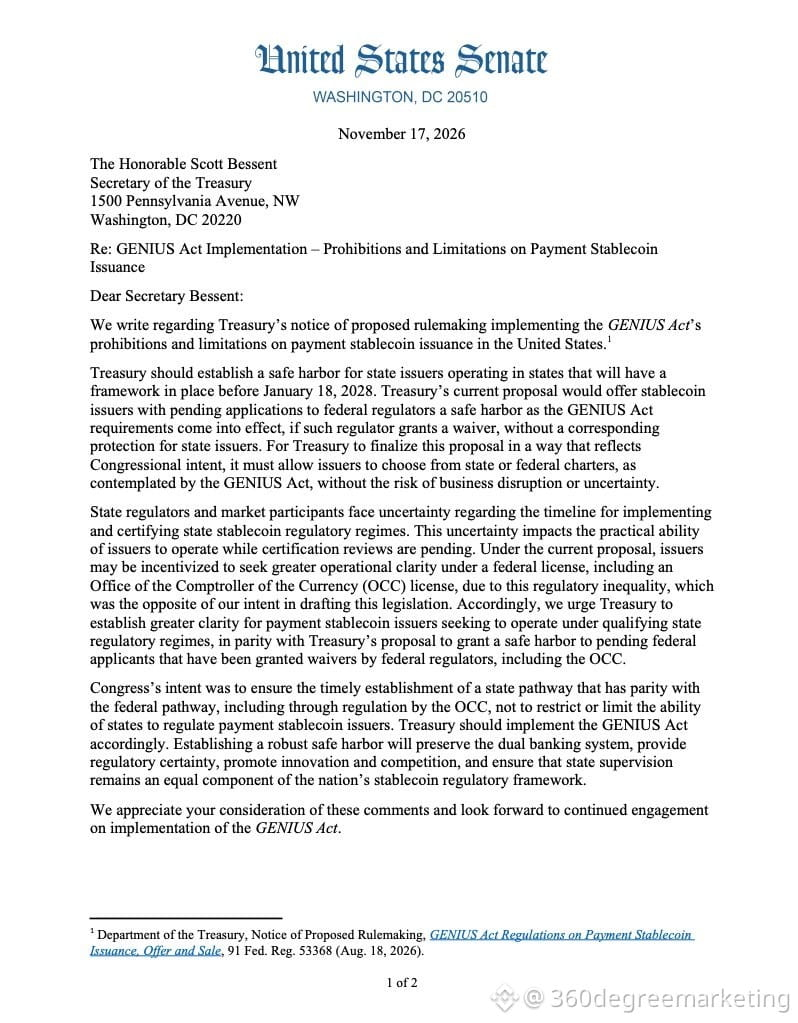
🇺🇸 NEW: Sen. Cynthia Lummis and a group of senators urge the Treasury to extend its proposed GENIUS Act safe harbor to state stablecoin issuers.
They say state issuers should get the same protection as federal applicants.
#Crypto #GeniusAct #Stablecoin
🇺🇸 NEW: Sen. Cynthia Lummis and a group of senators urge the Treasury to extend its proposed GENIUS Act safe harbor to state stablecoin issuers.
They say state issuers should get the same protection as federal applicants.
#Crypto #GeniusAct #Stablecoin
They say state issuers should get the same protection as federal applicants.
#Crypto #GeniusAct #Stablecoin

1
1
279

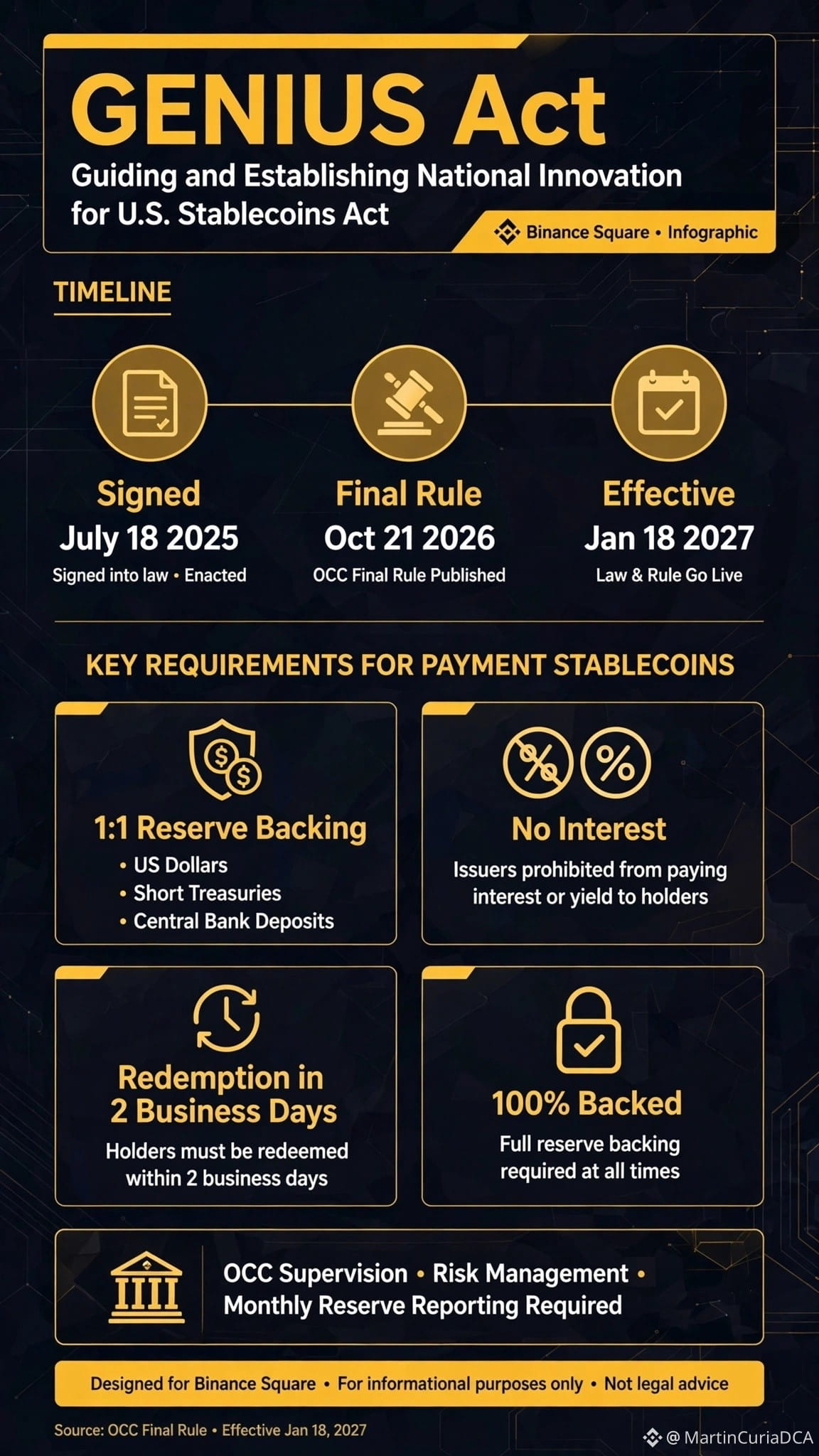
🧵 THREAD: US GENIUS ACT - What we discussed yesterday in the group - Explained simply
Yesterday, Sunday, we were discussing the GENIUS Act in another chat, and it's much more important than it seems.
📅 OFFICIAL TIMELINE:
Signed: July 18, 2025
Final Rule: October 21, 2026, by the OCC
Effective: January 18, 2027
✅ WHAT IT NOW REQUIRES OF $USDT AND $USDC:
1) REAL 1-to-1 backing: Only dollars, short-term US Treasury bonds, or central bank deposits. No more unusual reserves.
2) They can't pay you interest just for holding it.
3) If you ask for your money, they have to return it within a maximum of 2 business days.
4) 100 percent backed at all times.
WHY DOES THIS MATTER IF YOU DCA IN $ETH $ARB
Because when you buy $BTC with $USDT or $USDC, now you know those dollars really exist. Less risk of another stablecoin collapsing.
I left the visual summary I made in the photo.
Question for you: After this law, which one would you choose to get in? $USDT or $USDC? I moved 70 percent into $USDC.
#GENIUSAct #Stablecoin #BinanceSquare #CryptoNoticias
166

·
--
🚨🇺🇸 BREAKING: A NEW ERA FOR STABLECOINS! $AIN
🏦 The OCC has finalized its GENIUS Act framework for regulated payment stablecoin issuers, including eligible banking institutions. $TAG
📅 The rules take effect January 18, 2027!
💥 Clearer rules. 🏦 Banking integration. 🌎 A new chapter for digital payments!
🔥 Are U.S. banks about to accelerate stablecoin adoption? 👀 $HUMA
#Crypto #Stablecoins #GENIUSAct #BinanceSquare
2
105

🚨🇺🇸 BIG WIN FOR $XRP STABLECOIN REGULATION! 💎🔥
🏛️ The GENIUS Act became law in 2025, bringing clearer rules for stablecoins and opening new opportunities for Ripple’s RLUSD! 🚀
#XRP #Ripple #RLUSD #GENIUSAct #CryptoNews
🚨🇺🇸 BIG WIN FOR $XRP STABLECOIN REGULATION! 💎🔥
🏛️ The GENIUS Act became law in 2025, bringing clearer rules for stablecoins and opening new opportunities for Ripple’s RLUSD! 🚀
#XRP #Ripple #RLUSD #GENIUSAct #CryptoNews
🏛️ The GENIUS Act became law in 2025, bringing clearer rules for stablecoins and opening new opportunities for Ripple’s RLUSD! 🚀
#XRP #Ripple #RLUSD #GENIUSAct #CryptoNews

1
47

·
--
#OCCUrgesCommunityBanksToEnterStablecoinPayments
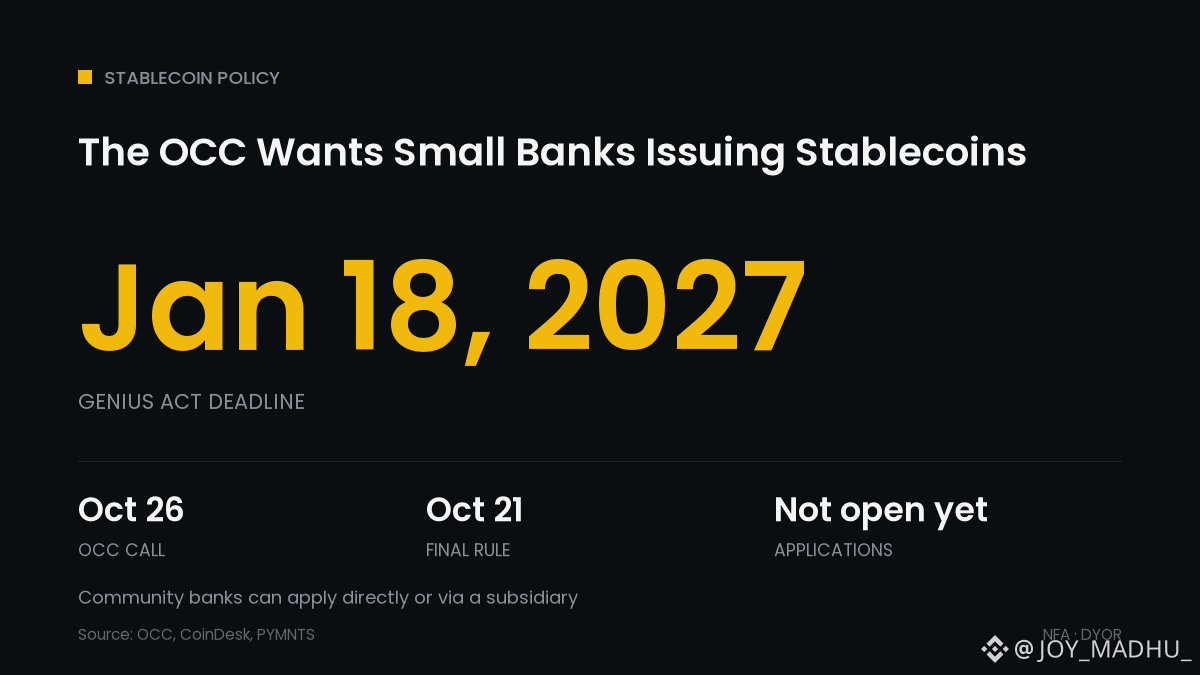
🏦 The OCC Wants Small Banks Issuing Stablecoins
📅 Monday Oct 26: the OCC invited community banks to build payment stablecoin capabilities
🪙 They can apply directly or through a subsidiary to become permitted issuers under the GENIUS Act
📜 Its final GENIUS Act rule (Oct 21) sets reserve, redemption and custody standards
⏳ From Jan 18, 2027, issuing without approval carries criminal penalties
📝 Applications aren't open yet, pending OMB sign-off on the forms
⚠️ Bank groups still warn yield-bearing stablecoins could pull deposits
What it means for crypto: more regulated issuers could widen dollar stablecoin rails beyond big banks and crypto firms. Whether small banks show up is still open.
Would you use a stablecoin issued by your local bank? 👇
$USDC $BTC
#CryptoNews #Stablecoins #GENIUSAct #OCCUrgesCommunityBanksToEnterStablecoinPayments
57

·
--
OCC Mobilizes Community Banks to Issue Payment Stablecoins, Bringing Stablecoin Funding Channels from Institutions to Retail
The U.S. Office of the Comptroller of the Currency (OCC) has formally called on community banks to become payment stablecoin issuers, following the regulator’s finalization of rules implementing the GENIUS Act. For those watching liquidity, the signal merits a closer look: stablecoin issuance is expanding beyond a handful of institutional players to reach more community-level banks.
According to Cointelegraph, this call to action came after the OCC finalized the GENIUS Act rules. The GENIUS Act is a stablecoin law, and its implementing rules have now been finalized. These rules give issuers a clear compliance framework. By turning its attention to community banks at this point, the OCC is broadening the range of potential issuers within that framework.
Why does this matter? Over the past two years, stablecoin supply growth has relied mainly on a small number of large issuers scaling up through reserve assets, leaving funding channels highly concentrated among institutional players. If community banks are brought into the issuer base, stablecoin funding channels could extend from institutions to the retail level. Banks already have access to substantial retail deposits and payment-settlement networks; if they begin issuing stablecoins, this could directly connect stablecoin supply with a broader base of bank deposits and payment networks.
From a liquidity perspective, expanding the pool of issuers could directly point to growth in stablecoin supply and liquidity. The more participants there are on the supply side, and the further their reach extends, the faster stablecoins may enter payment and trading use cases. Their marginal contribution to market liquidity warrants continued attention. With the rules finalized, policy uncertainty has been cleared; what remains is largely a matter of implementation pace.
Still, it is important to stay measured: a call to action does not mean issuance will begin immediately. The timing and scale of community banks’ actual entry into stablecoin issuance remain uncertain. This is a potential funding channel, not an immediate inflow of funds that has already occurred. There is still a gap between putting the framework in place and seeing funds actually flow in.
What should we watch next? First, community banks’ actual response and the number of issuances they announce. Second, changes in the composition and scale of reserve assets after the GENIUS Act rules are fully implemented. For trading, the more important thing is to wait for supply data to confirm the trend rather than price in the policy news prematurely.
#Stablecoin #GENIUSAct
The above is a compilation of information and personal analysis, and does not constitute investment advice.
I will continue to provide updates as further policy details become clear.
71

·
--
Article
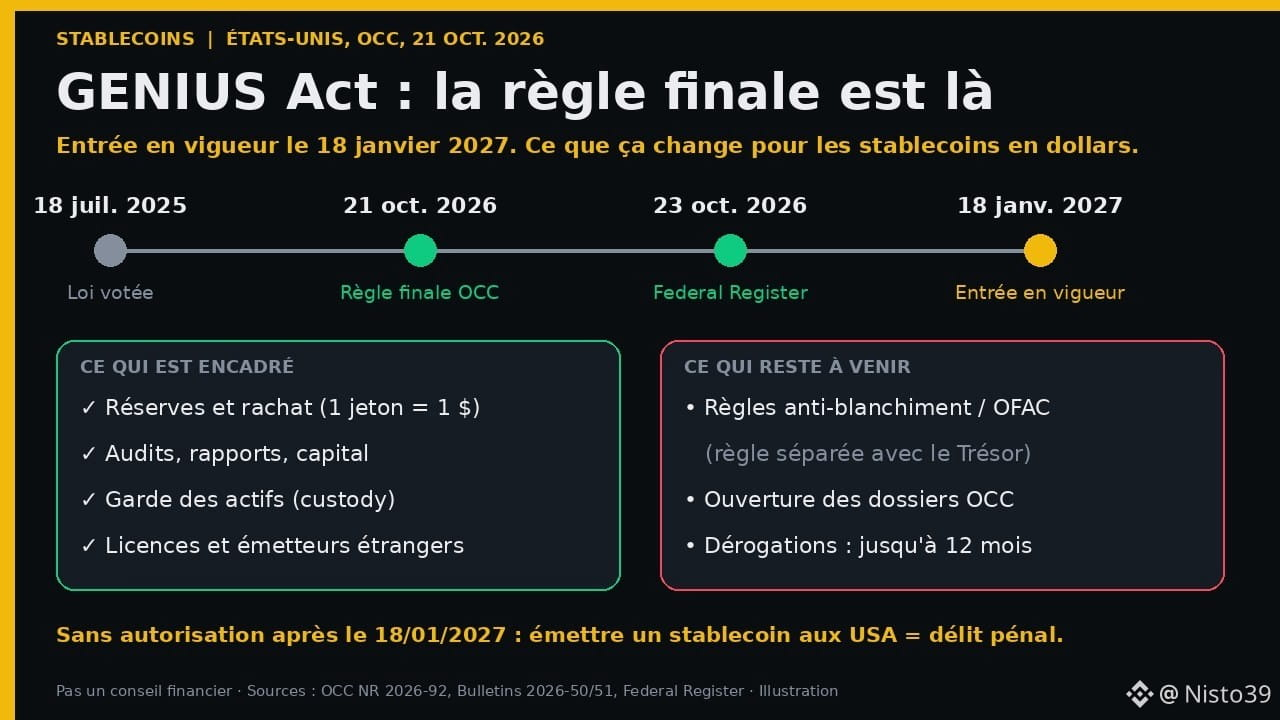
Stablecoins: Washington sets the rules for the GENIUS Act. What will change by January 2027Aminata imports wax-print fabrics and household goods into Conakry. To pay a supplier abroad, she sometimes uses a dollar stablecoin ($USDC, $USDT): it’s faster than a bank transfer. She doesn’t live in the United States. Yet a decision made in Washington on October 21 will gradually change the rules for the tokens she uses.
📋 The facts (official sources, October 2026)
• On October 21, 2026, the OCC (the U.S. regulator of national banks) published its final rule implementing the GENIUS Act, the U.S. law on payment stablecoins passed on July 18, 2025.
Stablecoins: Washington sets the rules for the GENIUS Act. What will change by January 2027
Aminata imports wax-print fabrics and household goods into Conakry. To pay a supplier abroad, she sometimes uses a dollar stablecoin ($USDC , $USDT): it’s faster than a bank transfer. She doesn’t live in the United States. Yet a decision made in Washington on October 21 will gradually change the rules for the tokens she uses.
📋 The facts (official sources, October 2026)
• On October 21, 2026, the OCC (the U.S. regulator of national banks) published its final rule implementing the GENIUS Act, the U.S. law on payment stablecoins passed on July 18, 2025.
📋 The facts (official sources, October 2026)
• On October 21, 2026, the OCC (the U.S. regulator of national banks) published its final rule implementing the GENIUS Act, the U.S. law on payment stablecoins passed on July 18, 2025.
24

·
--
U.S. stablecoin regulation has taken a key step forward. The Office of the Comptroller of the Currency (OCC) has finalized rules implementing the GENIUS Act, clarifying requirements addressing reserve, redemption, and custody risks for payment stablecoin issuers. Notably, the rules do not yet include anti-money laundering or OFAC sanctions provisions; the Treasury Department will coordinate work on those at a later stage. The Act and final rules are scheduled to take effect on January 18, 2027. The OCC has not yet announced a timeline for accepting issuer applications or exemption requests.
#稳定币 #OCC #加密监管 #GENIUSAct
#稳定币 #OCC #加密监管 #GENIUSAct
12
·
--
#OCCRemovesStablecoinSevenDayRedemptionExtension
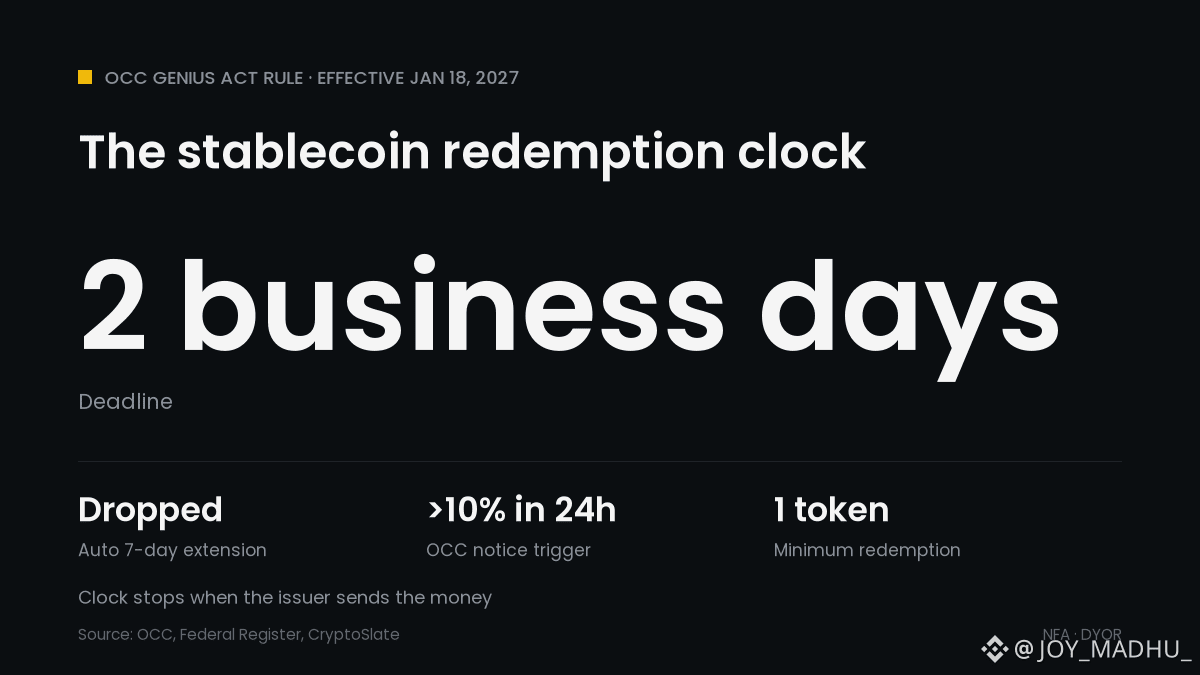
⏱️ What "Two Business Days" Really Means for Stablecoin Redemptions
📅 The OCC's final GENIUS Act rule dropped the automatic 7-day extension
⏱️ Issuers must redeem within two business days of a valid request
🗓️ Business days skip weekends and federal holidays, so it isn't 48 hours
✅ The clock stops when the issuer sends the money, not when your bank credits it
👤 Retail holders must be able to redeem, from as little as one token
⚠️ Requests above 10% of supply in 24h trigger an OCC notice; the OCC expects extensions to be rare
⏳ Effective Jan 18, 2027
What it means for crypto: clearer cash-out rules should make bank-supervised stablecoins more dependable, but they cover only OCC-licensed issuers.
How fast do you expect a stablecoin to pay out? 👇
$BTC $ETH
#CryptoNews #Stablecoins #GENIUSAct #OCCRemovesStablecoinSevenDayRedemptionExtension
47

·
--
Article
🚨
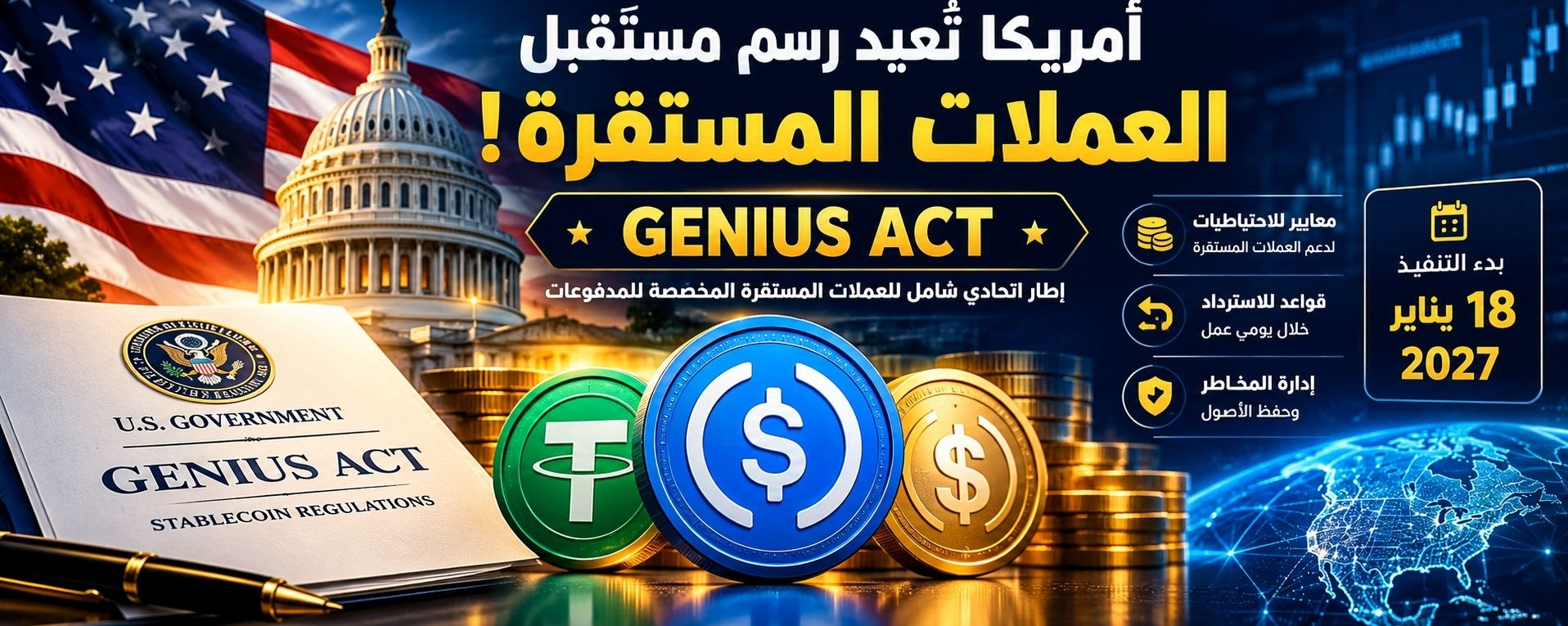
A regulatory earthquake in the crypto market! 🇺🇸 The GENIUS Act is poised to reshape the future of digital currenciesDollar-pegged stablecoins are entering a new phase in the United States following the announcement that detailed rules related to the GENIUS Act have been adopted. The Act establishes a federal framework for regulating payment stablecoins.
🔎 What are the key changes?
✅ Greater clarity on reserves: Establishing standards for the reserves backing stablecoins, with the aim of strengthening trust and the ability to meet issuance obligations.
🚨 A regulatory earthquake in the crypto market! 🇺🇸 The GENIUS Act is poised to reshape the future of digital currencies
Dollar-pegged stablecoins are entering a new phase in the United States following the announcement that detailed rules related to the GENIUS Act have been adopted. The Act establishes a federal framework for regulating payment stablecoins.
🔎 What are the key changes?
✅ Greater clarity on reserves: Establishing standards for the reserves backing stablecoins, with the aim of strengthening trust and the ability to meet issuance obligations.
🔎 What are the key changes?
✅ Greater clarity on reserves: Establishing standards for the reserves backing stablecoins, with the aim of strengthening trust and the ability to meet issuance obligations.
1
1
148

·
--
Update following the BLOOM post: The U.S. OCC’s rule under the GENIUS Act is final; it eliminated the automatic extension of redemptions for up to 7 days and retained the two-business-day limit. If requests exceed 10% of issuance within 24 hours, the agency must be notified; any extension requires its approval. The rule takes effect on January 18, 2027. What do you think? 🏛️📄⏱️
Most traded on Binance at the time of observation (USDT pairs, 16:45:58 Istanbul time; source: Binance Spot 24-hour data): $USDC, $BTC, $ETH. General market monitoring, with no causal link to the news.
#GENIUSAct #Stablecoins
Update following the BLOOM post: The U.S. OCC’s rule under the GENIUS Act is final; it eliminated the automatic extension of redemptions for up to 7 days and retained the two-business-day limit. If requests exceed 10% of issuance within 24 hours, the agency must be notified; any extension requires its approval. The rule takes effect on January 18, 2027. What do you think? 🏛️📄⏱️
Most traded on Binance at the time of observation (USDT pairs, 16:45:58 Istanbul time; source: Binance Spot 24-hour data): $USDC , $BTC , $ETH . General market monitoring, with no causal link to the news.
#GENIUSAct #Stablecoins
Most traded on Binance at the time of observation (USDT pairs, 16:45:58 Istanbul time; source: Binance Spot 24-hour data): $USDC , $BTC , $ETH . General market monitoring, with no causal link to the news.
#GENIUSAct #Stablecoins

51
·
--
#OCCRemovesStablecoinSevenDayRedemptionExtension
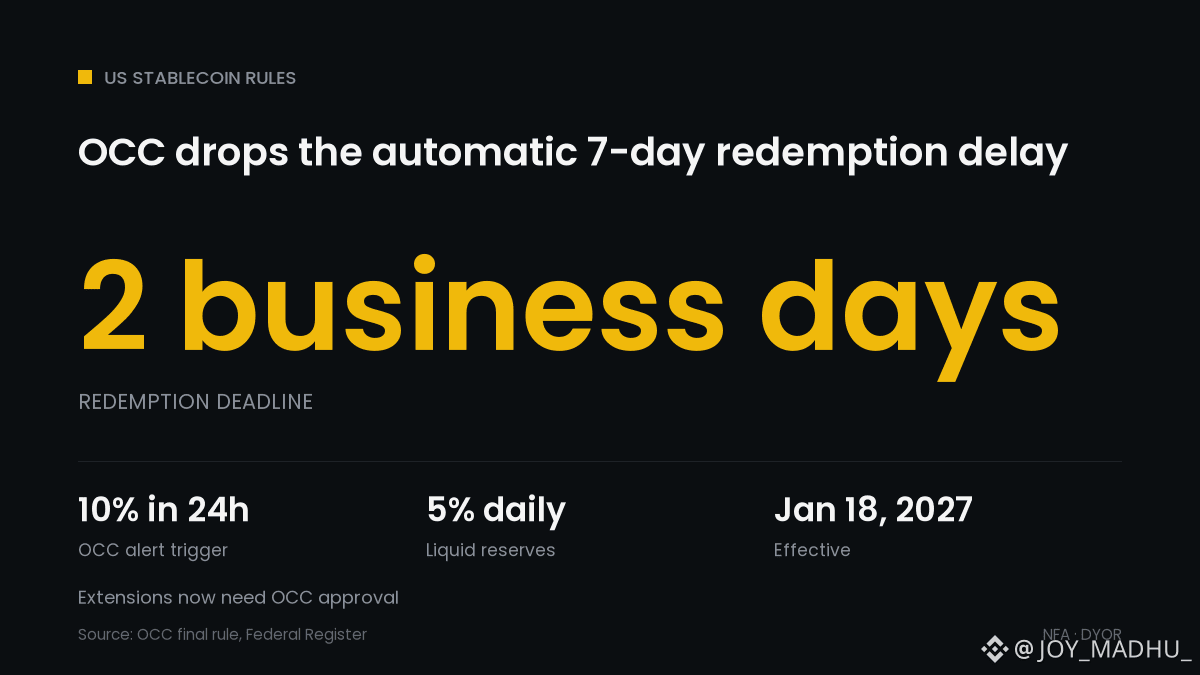
🇺🇸 OCC Drops the Automatic 7-Day Stablecoin Redemption Delay
📅 The OCC's final GENIUS Act rule, issued Oct 21, scrapped a proposed automatic redemption extension
⏱️ Issuers still must redeem within two business days
⚠️ If requests top 10% of a stablecoin's supply in 24 hours, the issuer must notify the OCC within 24 hours
📝 It can then ask for more time, and the OCC can approve or deny it
📊 Minimum daily liquid reserves cut from 10% to 5%, with a $5M capital floor
⏳ Rules take effect Jan 18, 2027
What it means for crypto: commenters warned an automatic freeze could speed up a run. Removing it should make bank-supervised dollar stablecoins feel more like cash, though AML rules are still to come.
Does a faster redemption promise make you trust stablecoins more? 👇
$BTC $ETH
#CryptoNews #Stablecoins #GENIUSAct #OCCRemovesStablecoinSevenDayRedemptionExtension
68

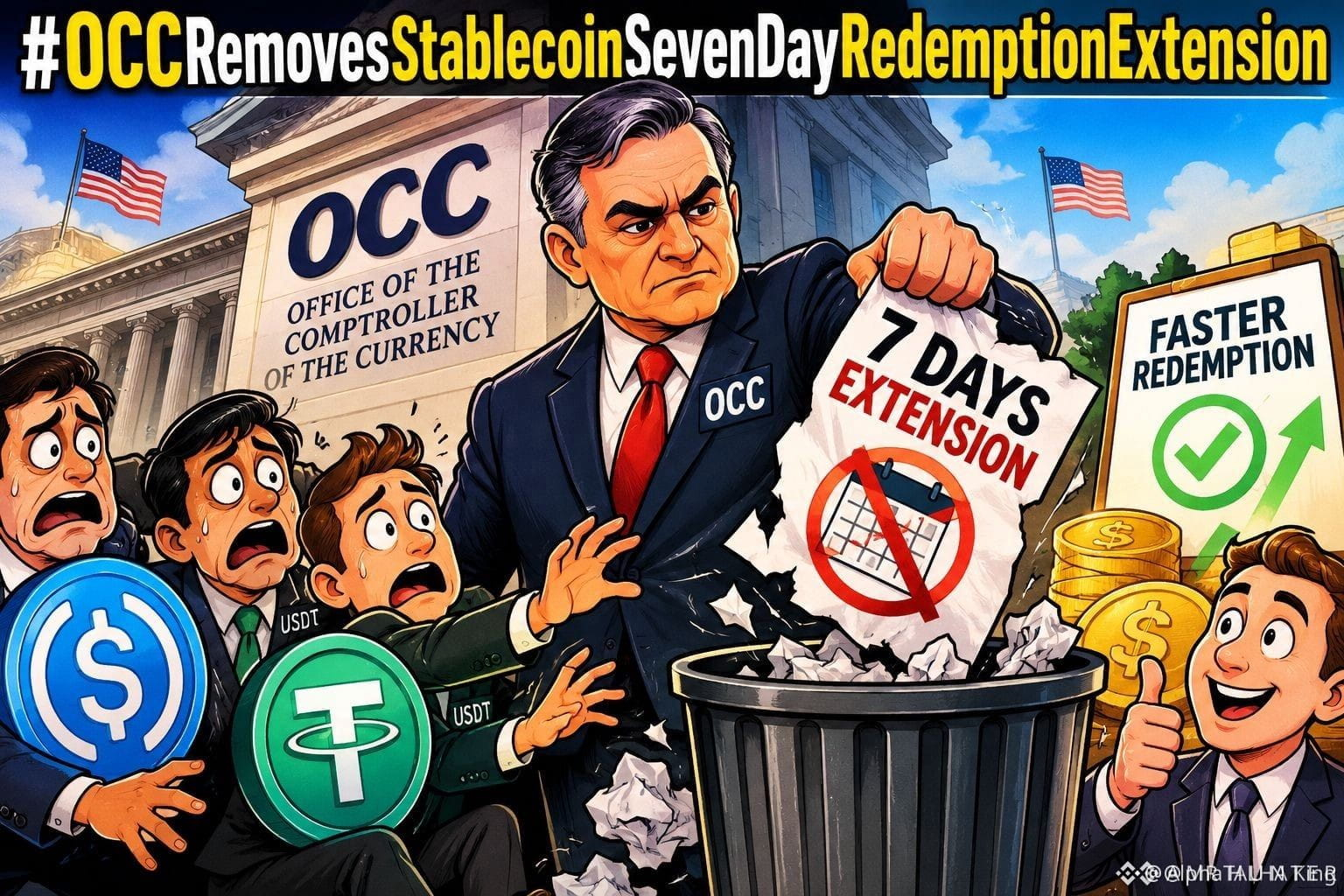
BREAKING: The OCC ends the 7-day delay for stablecoin redemptions! 🚨
This is HUGE for USDT USDC holders.
The U.S. Office of the Comptroller of the Currency (OCC) has just finalized its stablecoin rules under the GENIUS Act – they will take effect on January 18, 2027.
What changed?
The OCC REMOVED the automatic 7-day extension for redemptions that was included in the initial draft.
Under the previous draft, if too many people requested a redemption, issuers could automatically take 7 days.
And now? Redemptions must be processed within 2 business days – with no automatic delay.
If redemption requests exceed 10% of a stablecoin’s circulating supply over a 24-hour period, the issuer must notify the OCC within 24 hours and request an extension. The OCC will make the decision: it will no longer be automatic.
In plain English: your stablecoins are now much safer and more liquid.
No more funds being locked up for a week during a panic.
Is this good news for stablecoin adoption in the United States? Or will these rules be too strict for issuers?
Share your opinion below 👇
#Stablecoin #OCC #GENIUSAct
$ORDER
{future}(ORDERUSDT)
$BIRB
{future}(BIRBUSDT)
$BMT
{future}(BMTUSDT)
#occremovesstablecoinsevendayredemptionextension
BREAKING: The OCC ends the 7-day delay for stablecoin redemptions! 🚨
This is HUGE for USDT USDC holders.
The U.S. Office of the Comptroller of the Currency (OCC) has just finalized its stablecoin rules under the GENIUS Act – they will take effect on January 18, 2027.
What changed?
The OCC REMOVED the automatic 7-day extension for redemptions that was included in the initial draft.
Under the previous draft, if too many people requested a redemption, issuers could automatically take 7 days.
And now? Redemptions must be processed within 2 business days – with no automatic delay.
If redemption requests exceed 10% of a stablecoin’s circulating supply over a 24-hour period, the issuer must notify the OCC within 24 hours and request an extension. The OCC will make the decision: it will no longer be automatic.
In plain English: your stablecoins are now much safer and more liquid.
No more funds being locked up for a week during a panic.
Is this good news for stablecoin adoption in the United States? Or will these rules be too strict for issuers?
Share your opinion below 👇
#Stablecoin #OCC #GENIUSAct
$ORDER
$BIRB
$BMT
#occremovesstablecoinsevendayredemptionextension
2.2k
·
--
U.S. payment-stablecoin rules just hit the Federal Register — the January 18, 2027 clock is now official.
On October 23, 2026, the Office of the Comptroller of the Currency published its final GENIUS Act rule, setting standards for OCC-supervised payment-stablecoin issuers on reserves, redemptions, risk management, capital, custody, and licensing. Bank Secrecy Act, AML, and sanctions pieces stay on a separate Treasury-coordinated track. Issuers still cannot pay interest directly to holders.
The industry flashpoint is rewards. The final rule drops a proposal-era presumption that some third-party reward setups were illegal and will review them case by case. With $USDT and $USDC still the rails for much of crypto settlement, October 23 locked the first concrete U.S. stablecoin rulebook — application timing comes later, effective date January 18, 2027.
#Stablecoin #GENIUSAct #CryptoRegulation
DYOR. Not financial advice.
{spot}(USDCUSDT)
U.S. payment-stablecoin rules just hit the Federal Register — the January 18, 2027 clock is now official.
On October 23, 2026, the Office of the Comptroller of the Currency published its final GENIUS Act rule, setting standards for OCC-supervised payment-stablecoin issuers on reserves, redemptions, risk management, capital, custody, and licensing. Bank Secrecy Act, AML, and sanctions pieces stay on a separate Treasury-coordinated track. Issuers still cannot pay interest directly to holders.
The industry flashpoint is rewards. The final rule drops a proposal-era presumption that some third-party reward setups were illegal and will review them case by case. With $USDT and $USDC still the rails for much of crypto settlement, October 23 locked the first concrete U.S. stablecoin rulebook — application timing comes later, effective date January 18, 2027.
#Stablecoin #GENIUSAct #CryptoRegulation
DYOR. Not financial advice.

81
·
--
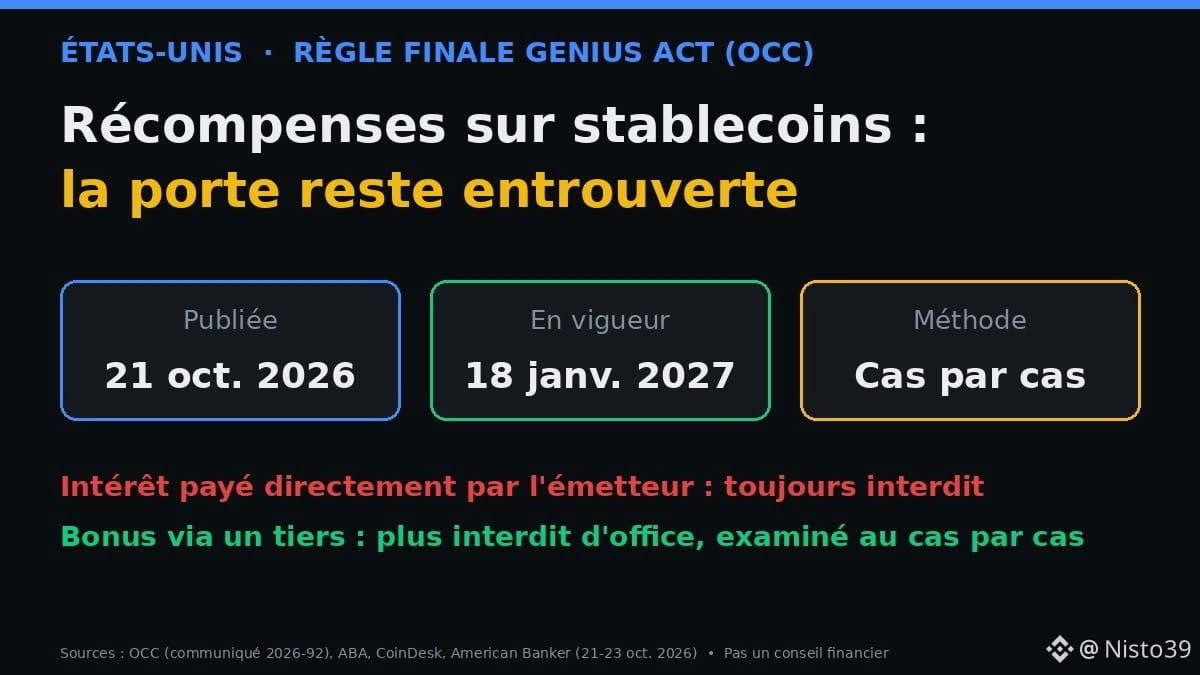
💵 “Rewards” on your stablecoin in the United States? The US banking regulator is leaving the door ajar… and banks are furious.
📌 The facts (OCC, ABA, CoinDesk)
• Oct. 21, 2026: the OCC (US banking regulator) publishes its final GENIUS Act rule, the law on stablecoins
• Still prohibited: the issuer cannot pay interest directly to holders
• Removed: the presumption that would have automatically banned bonuses paid through a third party (platform, partner)
• From now on: case-by-case review
• Effective January 18, 2027
🧠 How it works
The law bans payments made “solely” because you hold a stablecoin. A bonus partly tied to something else (a transaction, a service) might be allowed. So bonuses in $USDC or $USDT are neither approved nor banned in advance.
🏦 Banks (ABA) fear an “equivalent yield” that circumvents the law, deposits flowing out… and fewer loans.
👤 Imagine Aminata (a fictional character), a shopkeeper in Bamako who keeps part of her cash in digital dollars. Her real question: who pays this bonus, and what happens if it disappears? A bonus is not guaranteed interest.
⚖️ Caveat: no protection for existing programs, and no concrete examples provided.
✅ Rewards on stablecoins: a good thing 🟢 / a risk for banks 🔴 / something to regulate 🟡? 👇
Not financial advice. DYOR.
Sources: OCC, ABA, CoinDesk, American Banker (Oct. 21–23, 2026).
#Stablecoins #GENIUSAct #CryptoNews


10
Log in to explore more content
Join global crypto users on Binance Square
⚡️ Get latest and useful information about crypto.
💬 Trusted by the world’s largest crypto exchange.
👍 Discover real insights from verified creators.
Email / Phone number
Trending Topics
1
#BTCReboundsAbove$60KAmidWhaleDipBuying
42,689 views
229 Discussing
2
#SolanaSets2027RoadmapToDoubleComputeCapacity
27,123 views
582 Discussing
3
#CaliforniaNvidiaProbeExaminesPotentialCriminalViolations
6,770 views
78 Discussing
4
#BlackRockLaunchesHKDollarDigitalLiquidityFund
22,146 views
475 Discussing
5
#NvidiaLoses$2.7TrillionInMonthAndAHalf
65,013 views
272 Discussing
6
#GlobalStocksFaceLongestLosingStreakSince2023
511,017 views
3,201 Discussing
7
#BlackRockIBITPostsRecord$541MSingleDayOutflow
82,603 views
163 Discussing
8
#AnthropicPlungesTowardIPOPriceonDay2
277,448 views
2,130 Discussing
9
#TwentyOneCapitalAdds172.25BTC
143,146 views
1,464 Discussing
10
#HKBillWouldExcludeTokenizedDepositsFromVirtualAssets
16,878 views
97 Discussing