
#exchanges
exchanges
156,724 views
440 Discussing
Hot
Latest

·
--
Article
The Rivals Died First2013–2017 | Compliance, the collapse of Mt. Gox, and the fight with the IRS
February 24, 2014, evening on the US West Coast.
Coinbase posted a short statement on its official blog. Besides Coinbase, it was signed by Kraken, Bitstamp, BTC China, Blockchain[.]info and Circle, which together amounted to half of the bitcoin industry at the time. The statement was first titled "Joint Statement Regarding Mt. Gox Insolvency." It was soon changed to the more restrained "Joint Statement Regarding Mt. Gox."
A few hours later, the website of Mt. Gox, the world's largest bitcoin exchange, went blank.
Four days after that, Mt. Gox filed for bankruptcy protection in Tokyo District Court. It said it had lost about 850,000 bitcoin, about 750,000 of them belonging to customers, worth roughly $470 million at the time.
The joint statement was more than a break with one company. It read like a manifesto: one part of the industry had decided to part ways with another.
Coinbase had gone further down that road than anyone. Less than two years old and much smaller than Mt. Gox, it had chosen from the start the path that looked slowest, clumsiest and least "bitcoin."
This chapter is about that path: how much it cost, how much criticism it drew, and why, after its rivals fell one by one, Coinbase was the one still standing.
1. Two kinds of bitcoin company
In 2012, the bitcoin world roughly divided into two kinds of companies.
The first kind was Mt. Gox. Its name came from "Magic: The Gathering Online eXchange"; it began as a site for trading Magic cards, switched to bitcoin, and in 2011 was sold to Mark Karpelès, a French programmer living in Tokyo. It grew wildly, at one point in the first half of 2013 handling 80 to 90 percent of dollar-denominated bitcoin volume. Its technology and management, meanwhile, looked like a hobby project. It had been hacked once already in 2011, deposits and withdrawals were often delayed, and its relationships with banks were always strained.
The second kind had, at the time, almost only one example: Coinbase.
Brian Armstrong read Satoshi Nakamoto's white paper at the end of 2010, and later, as an engineer at Airbnb, experienced first-hand how painful cross-border payments were. On March 29, 2012, Armstrong applied to Y Combinator, joined that summer's batch, and teamed up with former Goldman Sachs trader Fred Ehrsam. In September the company raised a $600,000 seed round; in October Coinbase launched buying and selling bitcoin by bank transfer.
Those words, "by bank transfer," were where the whole divergence began.
To let ordinary Americans buy bitcoin with a bank account, Coinbase had to plug into the US banking system. And the banks had only one demand: prove you are not a money-laundering channel. That meant identity verification (KYC), anti-money-laundering monitoring (AML) and suspicious activity reporting. It meant being regulated like a financial company.
In March 2013, the Financial Crimes Enforcement Network (FinCEN), part of the US Treasury, issued guidance that explicitly brought exchanging and issuing virtual currency under its rules for "money services businesses." For the first time, rules had landed. For a company like Mt. Gox, this was a wall to get around. For Coinbase, it was a wall it had always planned to climb.
The first cost of this path came from the community.
To early bitcoin believers, the whole point of bitcoin was to get around banks and governments. A company that embraced banks, collected users' identities and froze accounts for compliance reasons was close to a traitor. In its early years Coinbase was often mocked as "the bank of bitcoin." Around 2014, some users had their accounts closed for sending money to gambling sites, and the community accused Coinbase of "tracking how users spend their bitcoin." Some even said that using Coinbase didn't count as really owning bitcoin.
But those were never the users Armstrong wanted. The target was ordinary people who had heard of bitcoin but had no idea what a private key was. For them, a product that linked to a bank account, looked like online banking and had someone accountable when things went wrong mattered far more than the idea of "decentralization."
The numbers soon proved the bet right. In May 2013 Coinbase raised a $5 million Series A led by Union Square Ventures, then the largest round for a bitcoin startup; it had about 130,000 wallets at the time. By December, when it raised a $25 million Series B led by Andreessen Horowitz, it had about 600,000 wallets and was adding about 10,000 users a day.
In an industry where everyone talked about "disrupting banks," the fastest-growing company was the one that looked most like a bank.
2. The purge begins
In October 2013, the FBI arrested Ross Ulbricht, founder of the dark web market Silk Road, at a public library in San Francisco, and the site was seized. Silk Road was one of bitcoin's earliest and most notorious use cases: people bought and sold drugs on it with bitcoin.
The seizure made everyone realize that regulators were no longer just issuing guidance. They would actually arrest people.
Three months later, they turned to the industry itself.
In late January 2014, Charlie Shrem, CEO of the bitcoin exchange service BitInstant, was arrested at JFK Airport in New York. Shrem was then vice chairman of the Bitcoin Foundation and one of the industry's best-known young faces. Prosecutors charged Shrem with conspiring to launder about $1 million for Silk Road users. Shrem posted $1 million bail and resigned from the foundation, then in September pleaded guilty to a lesser charge of aiding and abetting the operation of an unlicensed money transmitting business, and in December was sentenced to two years in prison.
Note the charge: operating an unlicensed money transmitting business. That was exactly what Coinbase had spent so much time and money to avoid.
Less than two weeks later, it was Mt. Gox's turn.
On February 7, 2014, Mt. Gox halted all bitcoin withdrawals, citing "unusual activity." The official explanation was a technical flaw called "transaction malleability," but suspicion grew that the problem went much deeper. On February 24, a "crisis strategy draft" said to come from inside Mt. Gox circulated online, claiming the company had lost a large amount of bitcoin. That day, Coinbase and five other companies issued the joint statement from the start of this chapter, and then the Mt. Gox site went down.
On February 28, the bankruptcy filing confirmed the worst: about 850,000 bitcoin had vanished. CEO Karpelès blamed weaknesses in system security. A month later, Mt. Gox found about 200,000 bitcoin in an old-format wallet used before June 2011, but about 650,000 remained missing.
In less than five months, three of the bitcoin industry's best-known names, the biggest dark web market, the best-known exchange service and the largest exchange, had respectively been seized, had their CEO arrested, and gone bankrupt.
The market panicked. Bitcoin's price slid from the previous year's high, and "bitcoin is dead" headlines filled the media again.
But inside the panic was a more important change: users began voting with their feet for "who can be trusted."
Before Mt. Gox fell, people chose exchanges based on liquidity and price. Afterward, the first question became: "Could my money be lost too?"
On that question, the "boring" assets Coinbase had built up over the previous year and a half suddenly became valuable: a US-registered company, proper banking relationships, backing from top venture firms, most assets in offline cold storage, and a management team that could be sued and was therefore accountable.
That is also why the joint statement mattered. For the first time, the "compliance camp" stood up together and told users: Mt. Gox does not represent bitcoin, and we are not like it.
Users' choices soon showed up in the numbers. On February 27, 2014, the day before Mt. Gox filed for bankruptcy, Coinbase announced that it had passed 1 million consumer wallets; 25,000 merchants were using it to accept bitcoin, and 4,000 applications had been built on its API. In early 2013, a little over a year earlier, it had fewer than 13,000 wallets.
Co-founder Fred Ehrsam put it bluntly in an interview: if Coinbase had not made a few key decisions early on, it might have met the same fate as Mt. Gox.
There was an interesting coincidence. Around the same time, Ben Reeves's Blockchain[.]info had passed 1 million wallets a month earlier, in January 2014. The two men who had split two years before over "who holds the keys" had each followed their own path and reached a million users almost at the same moment. The difference was that Blockchain[.]info's users were mostly people who knew what they were doing. More and more of Coinbase's users were ordinary people encountering bitcoin for the first time.
3. The compliance bill
"Compliance" is one word to say and a very long bill to pay.
The United States has no single money transmitter license. Each state has its own laws, its own regulator and its own capital and bonding requirements. A company that wants to operate nationwide has to apply state by state, file documents, pass reviews, post bonds, and then be examined again year after year.
For a startup of a few dozen people, that meant large legal bills, the cost of a compliance team, and the most expensive thing of all: time. A rival could ship a new feature today and open it to the whole world tomorrow. Coinbase first had to ask in which states the feature was legal and what new permissions it needed.
By the time Coinbase launched its US exchange in January 2015, it held licenses in 14 states, and 8 more states (including Massachusetts) had confirmed that no license was required. That was the result of more than two years of grinding.
The hardest nut was New York.
In June 2015, the New York State Department of Financial Services (NYDFS) formally introduced the BitLicense, a regime built specifically for virtual currency businesses and known for its strictness. Many crypto companies simply announced they were leaving the New York market. Coinbase chose to stay, served New York customers under a "safe harbor" provision while its application was reviewed, and finally received a BitLicense and a New York money transmitter license in January 2017. Regulators reviewed its anti-money-laundering, capital adequacy, consumer protection and cybersecurity policies.
The BitLicense itself had a bumpy birth. On July 17, 2014, NYDFS Superintendent Benjamin Lawsky published a first draft and opened a 45-day comment period. It drew more than 3,700 comments, many of them protests from the bitcoin community arguing that the bar was too high and would drive startups out of New York. In February 2015 the regulator issued a heavily revised second draft, and on June 3 the final rule took effect. It covered only intermediaries that held customer funds, not developers who simply wrote software.
In other words, the BitLicense was aimed precisely at companies like Coinbase that held other people's money. The choice of "who holds the keys" made in summer 2012 had, three years later, turned into a license that required its own application and its own review.
It took a year and a half from the BitLicense's introduction for Coinbase to receive one.
Was the bill worth paying? In the short run, maybe not. It slowed product development, left Coinbase always a step behind offshore exchanges in coins and features, and for a long time led some users to see it as "expensive and conservative."
But in the long run, a license is a very particular kind of asset: hard to buy, hard to copy, and harder to get the later you try. Every license Coinbase added raised the bar for whoever came next. When banks, institutional investors and eventually Wall Street began looking for partners in the crypto world, the first name on the list was often Coinbase.
4. Taking on the IRS
If getting licensed was Coinbase walking toward regulators, the lawsuit that began in 2016 showed the other side of the path: being on the same side as regulators does not mean doing whatever they say.
The seeds of this conflict were planted on March 25, 2014. That day, the Internal Revenue Service issued Notice 2014-21, which for the first time defined bitcoin's tax status: it is not currency, it is property.
That sounds abstract, but the consequences were concrete. If bitcoin is property, every sale, and every purchase made with bitcoin, could produce a capital gain or loss that had to be reported. Someone who bought a coffee with bitcoin would, in theory, have to work out the cost basis and gain on that cup. Nor did the IRS give a pass for the past: transactions before March 25, 2014 that had not been handled under these rules would not be blanket-exempted from penalties.
The rules were now clear, but almost nobody followed them. And the most direct way to find out who was trading and how much they had made was to go to the company holding the largest number of American users' transaction records.
In late 2016, the IRS asked a court for a "John Doe summons" requiring Coinbase to hand over information on all its US users from 2013 to 2015. The IRS argued that bitcoin trades were widely going unreported. According to figures the IRS submitted in the case, the number of people who reported bitcoin-related transactions on their tax returns in 2013, 2014 and 2015 was just 807, 893 and 802 respectively.
For Coinbase, this was a dilemma.
On one hand, its whole business model rested on being "the one that follows the rules," and openly fighting the IRS carried real risk. On the other hand, if it handed over the full transaction records of hundreds of thousands of users, "keeping your money at a compliant company" would turn into "handing everything about yourself to the government," exactly what its critics feared most.
Coinbase chose to go to court, but in a restrained way. It did not deny that the IRS had the right to investigate tax evasion. It argued only that this summons was far too broad, amounting to an indiscriminate search of all its users.
In November 2017, a federal court ruled. Coinbase won in part and lost in part. It had to hand over information, but the scope was sharply narrowed to accounts with at least $20,000 in transactions in any one year from 2013 to 2015. In the end that covered about 14,355 accounts and about 8.9 million transactions, and only limited identity information had to be provided.
From "all users" to "about 14,000 large accounts": that was the most room Coinbase could win within the rules.
This case set the tone for Coinbase's relationship with regulators from then on, and its later head-on fight with the SEC (see Chapter 8) followed the same logic: acknowledge that the rules exist, but demand that the rules make sense; cooperate with regulators, but don't give up fighting for users' boundaries.
It is a hard posture to hold. Cooperate too much and users feel betrayed; fight too hard and you lose your identity as part of the compliance camp. Coinbase has walked that tightrope for more than a decade, sometimes gracefully, sometimes wobbling.
5. Looking back: judgment or luck?
Looking back from today, it is easy to tell this chapter as a simple story: Coinbase stuck to compliance, its rivals didn't, the rivals died, Coinbase won.
But that story needs to be taken apart in at least three places.
First, Mt. Gox's fall had nothing to do with Coinbase. Coinbase didn't short it or beat it. Mt. Gox was crushed by its own poor security and management. Coinbase's achievement was not "winning," but being ready to catch the users fleeing at the moment its rival collapsed. That was partly judgment and partly luck: had Mt. Gox held on another three years, or fixed its systems, Coinbase would have had a much harder time.
Second, compliance was not a straight-line victory. The choice won Coinbase the United States but ceded vast ground in global markets. Binance, founded in 2017, took almost the opposite route: fast listings, low barriers and global expansion. Within six months it was the world's largest exchange by volume. For many years after, Coinbase trailed far behind in volume. The cost of compliance was not just legal fees but the markets lost for being "too slow." We tell that story in Chapter 4.
Third, Armstrong chose compliance first for product reasons, not moral ones. Armstrong wanted to build "ordinary people's front door to bitcoin." Ordinary people use bank accounts, and connecting to banks requires compliance. Compliance was the inevitable consequence of that positioning, not a separate noble choice. This matters. What is actually worth learning is not the slogan "follow the rules," but this: first figure out who your users are, then accept the full cost of serving them.
What if Coinbase had taken the other road?
Suppose the Coinbase of 2012 had become an offshore exchange with no identity checks and no banks. It probably would have grown faster and made more money in the 2013 bull market. But it would have been on the same list as Mt. Gox and BitInstant, facing the same purge. And it would never have gained the things that later proved most valuable: access to US banks, eligibility to go public, Wall Street's custody business, and its status as a "safe haven" in one industry crisis after another.
The most counterintuitive point of this chapter is that the payoff from compliance never comes in the current period. In a bull market it looks like a burden; only in a crisis does its value show. And the crypto industry is one with an unusual number of crises.
Mt. Gox in 2014 was only the first. Eight years later the same plot would play out again on a far larger scale, and that time the rival that fell would be called FTX.
Decision Card
Situation: 2012–2013: the bitcoin industry had almost no rules, and the largest exchange grew by running wildOptions: A: register offshore, skip identity checks, expand fast B: connect to the US banking system and seek licenses state by stateChoice: B, and in the conflict with the IRS, both "cooperate and resist"Outcome: Short term: slow growth, high costs, community criticism. Long term: after Mt. Gox and others fell, it became "the trustworthy choice," and its licenses became a moat that is hard to copyLesson: First figure out who your users are, then accept the full cost of serving them
Key line: The payoff from compliance never comes in the current period. In a bull market it is a burden; in a crisis it is a moat.
Sources
Mt. Gox halting withdrawals, the joint statement and the site going down: SiliconANGLE, 2014-02-24; TechCrunch, 2014-02-25; CoinDeskMt. Gox bankruptcy filing and 850,000 bitcoin: TechCrunch, 2014-02-28; SCMPMt. Gox recovering about 200,000 bitcoin: InfoWorldCoinbase's founding, YC application and seed round: Y Combinator Blog: Coinbase from YC to IPO; CoinDesk: Coinbase, Before It Was Inevitable; Wikipedia: CoinbaseSeries A: YC BlogSeries B and wallet numbers: TechCrunch, 2013-12-12; The Next WebCharlie Shrem's arrest and plea: Bloomberg; CNN Money; Wikipedia: Charlie ShremState licenses and the BitLicense: SiliconANGLE, 2015-01-29; CoinDesk, 2017-01-17; Orrick InfoBytesThe IRS summons case: Fortune, 2017-11-29; ProskauerNumber of taxpayers reporting bitcoin transactions: Fortune, 2017-07-20; PYMNTSShrem's sentence: CoinDesk; US Department of Justice press releaseMt. Gox's volume share: Bitcoin Magazine; CoinDeskAccount closure controversy: Cointelegraph; Pokerfuse1 million wallets, 25,000 merchants, 4,000 apps, fewer than 13,000 wallets in early 2013: TechCrunch, 2014-02-27; The Next Web, 2014-02-27; Ehrsam's remark and Blockchain[.]info's January milestone: CoinDesk, 2014-02-27BitLicense draft, comment count, revision and final rule: Wikipedia: BitLicense; Cleary Gottlieb; Bloomberg, 2014-07-17IRS Notice 2014-21: IRS virtual currency FAQ; Accounting Today; Katten
Verification notes
"80 to 90 percent" refers to dollar-denominated volume in the first half of 2013, not all global volume.The date of the FinCEN guidance (March 2013) is common knowledge; no separate source page was located.The 1 million figure: CoinDesk says "wallet downloads," TechCrunch says "consumer wallets"; the two may not be the same metric. The text uses "consumer wallets."The BitLicense comment count is given as "over 3,700" or 3,746; the text uses "more than 3,700."The 25,000 merchants here and the 16,000 in Chapter 1 (December 2013) are from different dates and do not conflict.
—
This is Chapter 2 of 13 from my new book Coinbase: On the Side of the Rules, serialized one chapter a day.
Author: Blue Lotus
#Coinbase #Crypto #Exchanges
The Rivals Died First
2013–2017 | Compliance, the collapse of Mt. Gox, and the fight with the IRS
February 24, 2014, evening on the US West Coast.
Coinbase posted a short statement on its official blog. Besides Coinbase, it was signed by Kraken, Bitstamp, BTC China, Blockchain[.]info and Circle, which together amounted to half of the bitcoin industry at the time. The statement was first titled "Joint Statement Regarding Mt. Gox Insolvency." It was soon changed to the more restrained "Joint Statement Regarding Mt. Gox."
A few hours later, the website of Mt. Gox, the world's largest bitcoin exchange, went blank.
Four days after that, Mt. Gox filed for bankruptcy protection in Tokyo District Court. It said it had lost about 850,000 bitcoin, about 750,000 of them belonging to customers, worth roughly $470 million at the time.
The joint statement was more than a break with one company. It read like a manifesto: one part of the industry had decided to part ways with another.
Coinbase had gone further down that road than anyone. Less than two years old and much smaller than Mt. Gox, it had chosen from the start the path that looked slowest, clumsiest and least "bitcoin."
This chapter is about that path: how much it cost, how much criticism it drew, and why, after its rivals fell one by one, Coinbase was the one still standing.
1. Two kinds of bitcoin company
In 2012, the bitcoin world roughly divided into two kinds of companies.
The first kind was Mt. Gox. Its name came from "Magic: The Gathering Online eXchange"; it began as a site for trading Magic cards, switched to bitcoin, and in 2011 was sold to Mark Karpelès, a French programmer living in Tokyo. It grew wildly, at one point in the first half of 2013 handling 80 to 90 percent of dollar-denominated bitcoin volume. Its technology and management, meanwhile, looked like a hobby project. It had been hacked once already in 2011, deposits and withdrawals were often delayed, and its relationships with banks were always strained.
The second kind had, at the time, almost only one example: Coinbase.
Brian Armstrong read Satoshi Nakamoto's white paper at the end of 2010, and later, as an engineer at Airbnb, experienced first-hand how painful cross-border payments were. On March 29, 2012, Armstrong applied to Y Combinator, joined that summer's batch, and teamed up with former Goldman Sachs trader Fred Ehrsam. In September the company raised a $600,000 seed round; in October Coinbase launched buying and selling bitcoin by bank transfer.
Those words, "by bank transfer," were where the whole divergence began.
To let ordinary Americans buy bitcoin with a bank account, Coinbase had to plug into the US banking system. And the banks had only one demand: prove you are not a money-laundering channel. That meant identity verification (KYC), anti-money-laundering monitoring (AML) and suspicious activity reporting. It meant being regulated like a financial company.
In March 2013, the Financial Crimes Enforcement Network (FinCEN), part of the US Treasury, issued guidance that explicitly brought exchanging and issuing virtual currency under its rules for "money services businesses." For the first time, rules had landed. For a company like Mt. Gox, this was a wall to get around. For Coinbase, it was a wall it had always planned to climb.
The first cost of this path came from the community.
To early bitcoin believers, the whole point of bitcoin was to get around banks and governments. A company that embraced banks, collected users' identities and froze accounts for compliance reasons was close to a traitor. In its early years Coinbase was often mocked as "the bank of bitcoin." Around 2014, some users had their accounts closed for sending money to gambling sites, and the community accused Coinbase of "tracking how users spend their bitcoin." Some even said that using Coinbase didn't count as really owning bitcoin.
But those were never the users Armstrong wanted. The target was ordinary people who had heard of bitcoin but had no idea what a private key was. For them, a product that linked to a bank account, looked like online banking and had someone accountable when things went wrong mattered far more than the idea of "decentralization."
The numbers soon proved the bet right. In May 2013 Coinbase raised a $5 million Series A led by Union Square Ventures, then the largest round for a bitcoin startup; it had about 130,000 wallets at the time. By December, when it raised a $25 million Series B led by Andreessen Horowitz, it had about 600,000 wallets and was adding about 10,000 users a day.
In an industry where everyone talked about "disrupting banks," the fastest-growing company was the one that looked most like a bank.
2. The purge begins
In October 2013, the FBI arrested Ross Ulbricht, founder of the dark web market Silk Road, at a public library in San Francisco, and the site was seized. Silk Road was one of bitcoin's earliest and most notorious use cases: people bought and sold drugs on it with bitcoin.
The seizure made everyone realize that regulators were no longer just issuing guidance. They would actually arrest people.
Three months later, they turned to the industry itself.
In late January 2014, Charlie Shrem, CEO of the bitcoin exchange service BitInstant, was arrested at JFK Airport in New York. Shrem was then vice chairman of the Bitcoin Foundation and one of the industry's best-known young faces. Prosecutors charged Shrem with conspiring to launder about $1 million for Silk Road users. Shrem posted $1 million bail and resigned from the foundation, then in September pleaded guilty to a lesser charge of aiding and abetting the operation of an unlicensed money transmitting business, and in December was sentenced to two years in prison.
Note the charge: operating an unlicensed money transmitting business. That was exactly what Coinbase had spent so much time and money to avoid.
Less than two weeks later, it was Mt. Gox's turn.
On February 7, 2014, Mt. Gox halted all bitcoin withdrawals, citing "unusual activity." The official explanation was a technical flaw called "transaction malleability," but suspicion grew that the problem went much deeper. On February 24, a "crisis strategy draft" said to come from inside Mt. Gox circulated online, claiming the company had lost a large amount of bitcoin. That day, Coinbase and five other companies issued the joint statement from the start of this chapter, and then the Mt. Gox site went down.
On February 28, the bankruptcy filing confirmed the worst: about 850,000 bitcoin had vanished. CEO Karpelès blamed weaknesses in system security. A month later, Mt. Gox found about 200,000 bitcoin in an old-format wallet used before June 2011, but about 650,000 remained missing.
In less than five months, three of the bitcoin industry's best-known names, the biggest dark web market, the best-known exchange service and the largest exchange, had respectively been seized, had their CEO arrested, and gone bankrupt.
The market panicked. Bitcoin's price slid from the previous year's high, and "bitcoin is dead" headlines filled the media again.
But inside the panic was a more important change: users began voting with their feet for "who can be trusted."
Before Mt. Gox fell, people chose exchanges based on liquidity and price. Afterward, the first question became: "Could my money be lost too?"
On that question, the "boring" assets Coinbase had built up over the previous year and a half suddenly became valuable: a US-registered company, proper banking relationships, backing from top venture firms, most assets in offline cold storage, and a management team that could be sued and was therefore accountable.
That is also why the joint statement mattered. For the first time, the "compliance camp" stood up together and told users: Mt. Gox does not represent bitcoin, and we are not like it.
Users' choices soon showed up in the numbers. On February 27, 2014, the day before Mt. Gox filed for bankruptcy, Coinbase announced that it had passed 1 million consumer wallets; 25,000 merchants were using it to accept bitcoin, and 4,000 applications had been built on its API. In early 2013, a little over a year earlier, it had fewer than 13,000 wallets.
Co-founder Fred Ehrsam put it bluntly in an interview: if Coinbase had not made a few key decisions early on, it might have met the same fate as Mt. Gox.
There was an interesting coincidence. Around the same time, Ben Reeves's Blockchain[.]info had passed 1 million wallets a month earlier, in January 2014. The two men who had split two years before over "who holds the keys" had each followed their own path and reached a million users almost at the same moment. The difference was that Blockchain[.]info's users were mostly people who knew what they were doing. More and more of Coinbase's users were ordinary people encountering bitcoin for the first time.
3. The compliance bill
"Compliance" is one word to say and a very long bill to pay.
The United States has no single money transmitter license. Each state has its own laws, its own regulator and its own capital and bonding requirements. A company that wants to operate nationwide has to apply state by state, file documents, pass reviews, post bonds, and then be examined again year after year.
For a startup of a few dozen people, that meant large legal bills, the cost of a compliance team, and the most expensive thing of all: time. A rival could ship a new feature today and open it to the whole world tomorrow. Coinbase first had to ask in which states the feature was legal and what new permissions it needed.
By the time Coinbase launched its US exchange in January 2015, it held licenses in 14 states, and 8 more states (including Massachusetts) had confirmed that no license was required. That was the result of more than two years of grinding.
The hardest nut was New York.
In June 2015, the New York State Department of Financial Services (NYDFS) formally introduced the BitLicense, a regime built specifically for virtual currency businesses and known for its strictness. Many crypto companies simply announced they were leaving the New York market. Coinbase chose to stay, served New York customers under a "safe harbor" provision while its application was reviewed, and finally received a BitLicense and a New York money transmitter license in January 2017. Regulators reviewed its anti-money-laundering, capital adequacy, consumer protection and cybersecurity policies.
The BitLicense itself had a bumpy birth. On July 17, 2014, NYDFS Superintendent Benjamin Lawsky published a first draft and opened a 45-day comment period. It drew more than 3,700 comments, many of them protests from the bitcoin community arguing that the bar was too high and would drive startups out of New York. In February 2015 the regulator issued a heavily revised second draft, and on June 3 the final rule took effect. It covered only intermediaries that held customer funds, not developers who simply wrote software.
In other words, the BitLicense was aimed precisely at companies like Coinbase that held other people's money. The choice of "who holds the keys" made in summer 2012 had, three years later, turned into a license that required its own application and its own review.
It took a year and a half from the BitLicense's introduction for Coinbase to receive one.
Was the bill worth paying? In the short run, maybe not. It slowed product development, left Coinbase always a step behind offshore exchanges in coins and features, and for a long time led some users to see it as "expensive and conservative."
But in the long run, a license is a very particular kind of asset: hard to buy, hard to copy, and harder to get the later you try. Every license Coinbase added raised the bar for whoever came next. When banks, institutional investors and eventually Wall Street began looking for partners in the crypto world, the first name on the list was often Coinbase.
4. Taking on the IRS
If getting licensed was Coinbase walking toward regulators, the lawsuit that began in 2016 showed the other side of the path: being on the same side as regulators does not mean doing whatever they say.
The seeds of this conflict were planted on March 25, 2014. That day, the Internal Revenue Service issued Notice 2014-21, which for the first time defined bitcoin's tax status: it is not currency, it is property.
That sounds abstract, but the consequences were concrete. If bitcoin is property, every sale, and every purchase made with bitcoin, could produce a capital gain or loss that had to be reported. Someone who bought a coffee with bitcoin would, in theory, have to work out the cost basis and gain on that cup. Nor did the IRS give a pass for the past: transactions before March 25, 2014 that had not been handled under these rules would not be blanket-exempted from penalties.
The rules were now clear, but almost nobody followed them. And the most direct way to find out who was trading and how much they had made was to go to the company holding the largest number of American users' transaction records.
In late 2016, the IRS asked a court for a "John Doe summons" requiring Coinbase to hand over information on all its US users from 2013 to 2015. The IRS argued that bitcoin trades were widely going unreported. According to figures the IRS submitted in the case, the number of people who reported bitcoin-related transactions on their tax returns in 2013, 2014 and 2015 was just 807, 893 and 802 respectively.
For Coinbase, this was a dilemma.
On one hand, its whole business model rested on being "the one that follows the rules," and openly fighting the IRS carried real risk. On the other hand, if it handed over the full transaction records of hundreds of thousands of users, "keeping your money at a compliant company" would turn into "handing everything about yourself to the government," exactly what its critics feared most.
Coinbase chose to go to court, but in a restrained way. It did not deny that the IRS had the right to investigate tax evasion. It argued only that this summons was far too broad, amounting to an indiscriminate search of all its users.
In November 2017, a federal court ruled. Coinbase won in part and lost in part. It had to hand over information, but the scope was sharply narrowed to accounts with at least $20,000 in transactions in any one year from 2013 to 2015. In the end that covered about 14,355 accounts and about 8.9 million transactions, and only limited identity information had to be provided.
From "all users" to "about 14,000 large accounts": that was the most room Coinbase could win within the rules.
This case set the tone for Coinbase's relationship with regulators from then on, and its later head-on fight with the SEC (see Chapter 8) followed the same logic: acknowledge that the rules exist, but demand that the rules make sense; cooperate with regulators, but don't give up fighting for users' boundaries.
It is a hard posture to hold. Cooperate too much and users feel betrayed; fight too hard and you lose your identity as part of the compliance camp. Coinbase has walked that tightrope for more than a decade, sometimes gracefully, sometimes wobbling.
5. Looking back: judgment or luck?
Looking back from today, it is easy to tell this chapter as a simple story: Coinbase stuck to compliance, its rivals didn't, the rivals died, Coinbase won.
But that story needs to be taken apart in at least three places.
First, Mt. Gox's fall had nothing to do with Coinbase. Coinbase didn't short it or beat it. Mt. Gox was crushed by its own poor security and management. Coinbase's achievement was not "winning," but being ready to catch the users fleeing at the moment its rival collapsed. That was partly judgment and partly luck: had Mt. Gox held on another three years, or fixed its systems, Coinbase would have had a much harder time.
Second, compliance was not a straight-line victory. The choice won Coinbase the United States but ceded vast ground in global markets. Binance, founded in 2017, took almost the opposite route: fast listings, low barriers and global expansion. Within six months it was the world's largest exchange by volume. For many years after, Coinbase trailed far behind in volume. The cost of compliance was not just legal fees but the markets lost for being "too slow." We tell that story in Chapter 4.
Third, Armstrong chose compliance first for product reasons, not moral ones. Armstrong wanted to build "ordinary people's front door to bitcoin." Ordinary people use bank accounts, and connecting to banks requires compliance. Compliance was the inevitable consequence of that positioning, not a separate noble choice. This matters. What is actually worth learning is not the slogan "follow the rules," but this: first figure out who your users are, then accept the full cost of serving them.
What if Coinbase had taken the other road?
Suppose the Coinbase of 2012 had become an offshore exchange with no identity checks and no banks. It probably would have grown faster and made more money in the 2013 bull market. But it would have been on the same list as Mt. Gox and BitInstant, facing the same purge. And it would never have gained the things that later proved most valuable: access to US banks, eligibility to go public, Wall Street's custody business, and its status as a "safe haven" in one industry crisis after another.
The most counterintuitive point of this chapter is that the payoff from compliance never comes in the current period. In a bull market it looks like a burden; only in a crisis does its value show. And the crypto industry is one with an unusual number of crises.
Mt. Gox in 2014 was only the first. Eight years later the same plot would play out again on a far larger scale, and that time the rival that fell would be called FTX.
Decision Card
Situation: 2012–2013: the bitcoin industry had almost no rules, and the largest exchange grew by running wildOptions: A: register offshore, skip identity checks, expand fast B: connect to the US banking system and seek licenses state by stateChoice: B, and in the conflict with the IRS, both "cooperate and resist"Outcome: Short term: slow growth, high costs, community criticism. Long term: after Mt. Gox and others fell, it became "the trustworthy choice," and its licenses became a moat that is hard to copyLesson: First figure out who your users are, then accept the full cost of serving them
Key line: The payoff from compliance never comes in the current period. In a bull market it is a burden; in a crisis it is a moat.
Sources
Mt. Gox halting withdrawals, the joint statement and the site going down: SiliconANGLE, 2014-02-24; TechCrunch, 2014-02-25; CoinDeskMt. Gox bankruptcy filing and 850,000 bitcoin: TechCrunch, 2014-02-28; SCMPMt. Gox recovering about 200,000 bitcoin: InfoWorldCoinbase's founding, YC application and seed round: Y Combinator Blog: Coinbase from YC to IPO; CoinDesk: Coinbase, Before It Was Inevitable; Wikipedia: CoinbaseSeries A: YC BlogSeries B and wallet numbers: TechCrunch, 2013-12-12; The Next WebCharlie Shrem's arrest and plea: Bloomberg; CNN Money; Wikipedia: Charlie ShremState licenses and the BitLicense: SiliconANGLE, 2015-01-29; CoinDesk, 2017-01-17; Orrick InfoBytesThe IRS summons case: Fortune, 2017-11-29; ProskauerNumber of taxpayers reporting bitcoin transactions: Fortune, 2017-07-20; PYMNTSShrem's sentence: CoinDesk; US Department of Justice press releaseMt. Gox's volume share: Bitcoin Magazine; CoinDeskAccount closure controversy: Cointelegraph; Pokerfuse1 million wallets, 25,000 merchants, 4,000 apps, fewer than 13,000 wallets in early 2013: TechCrunch, 2014-02-27; The Next Web, 2014-02-27; Ehrsam's remark and Blockchain[.]info's January milestone: CoinDesk, 2014-02-27BitLicense draft, comment count, revision and final rule: Wikipedia: BitLicense; Cleary Gottlieb; Bloomberg, 2014-07-17IRS Notice 2014-21: IRS virtual currency FAQ; Accounting Today; Katten
Verification notes
"80 to 90 percent" refers to dollar-denominated volume in the first half of 2013, not all global volume.The date of the FinCEN guidance (March 2013) is common knowledge; no separate source page was located.The 1 million figure: CoinDesk says "wallet downloads," TechCrunch says "consumer wallets"; the two may not be the same metric. The text uses "consumer wallets."The BitLicense comment count is given as "over 3,700" or 3,746; the text uses "more than 3,700."The 25,000 merchants here and the 16,000 in Chapter 1 (December 2013) are from different dates and do not conflict.
—
This is Chapter 2 of 13 from my new book Coinbase: On the Side of the Rules, serialized one chapter a day.
Author: Blue Lotus
#Coinbase #Crypto #Exchanges
222
·
--
Article
Bitcoin for Grandma2012 | Founding, the custodial wallet, and a front door for ordinary people
In the summer of 2012, a few days before Y Combinator's program began, Brian Armstrong did something people would bring up again and again: Armstrong locked the planned co-founder out of the company's accounts.
The co-founder was Ben Reeves, a British programmer. According to later media accounts, Reeves had been building a bitcoin wallet of their own and put it on hold, at Armstrong's urging, to help full time. The plan was for the two of them to take the project into YC together. But they could not agree on a question that sounded purely technical: who should hold the users' private keys?
Reeves believed the keys belonged in the users' own hands. That was the whole point of bitcoin. Armstrong insisted on keeping a backup of the keys, held by the company. The reasoning was simple. Ordinary people lose passwords, switch phones and forget recovery phrases. If losing a private key meant losing your money forever, bitcoin would remain a toy for geeks.
The two parted ways, and not gracefully. Reeves went back and restarted the earlier project, which became Blockchain[.]info, one of the best-known bitcoin wallets in the world. Armstrong took the custodial road into YC. The company was called Coinbase.
The split left behind a side story that only became clear years later. At the end of 2013, a programmer named Changpeng Zhao, known as CZ, joined Blockchain[.]info as head of development. According to CoinDesk at the time, Zhao came to the company through the early bitcoin investor Roger Ver, and the company had just grown from a one-person side project into a team of four. Zhao stayed only about five months. In June 2014, Zhao left to become chief technology officer at OKCoin, then China's largest bitcoin exchange. In July 2017, Zhao founded Binance, which would be Coinbase's biggest rival for years to come.
This was the first key decision in Coinbase's history, and the source of nearly every decision after it. Over the next fourteen years, through licenses, banking relationships, an IPO, institutional custody and endless dealings with regulators, Coinbase kept answering the same question: if you decide to hold other people's money for them, what are you signing up for?
1. An engineer's payment problem
Armstrong did not come from finance.
Armstrong studied economics and computer science at Rice University and ran a small tutoring-matching business while still a student. After graduating, Armstrong spent about a year in Buenos Aires working for an education company, and saw there how inflation ate into ordinary people's savings and how painful it was to move money across borders. Armstrong has said many times since that the experience made money feel personal.
Armstrong then worked in technology and consulting at IBM and Deloitte, and in 2011 joined Airbnb as a software engineer. Airbnb was a cross-border payments headache in its own right: hosts and guests lived in different countries, and money had to move between banks, currencies and regulatory systems. It was slow, expensive and error-prone.
Even before Airbnb, over the holidays at the end of 2010, Armstrong had come across a link to Satoshi Nakamoto's bitcoin white paper on Hacker News while visiting family. A programmer saw a kind of money that could be sent the way you send an email. Seeing how painful cross-border payments were at Airbnb later made its significance even clearer.
But on actually trying to use bitcoin, Armstrong ran into a huge problem: it was far too hard to use.
To buy bitcoin in 2012, you first had to find an exchange. The biggest one, Mt. Gox, was in Japan and took deposits by wire transfer, which often took days. Once you had bought, you had to download a bitcoin client, sync the entire blockchain and manage a string of letters and numbers called a private key yourself. Lose the key and the money was gone for good. No customer service, no "forgot password."
One bitcoin was worth about $6 at the time. The people who knew about it were, as Fred Ehrsam later put it, just "a few nerds on the internet."
Armstrong's conclusion was that for bitcoin to break out of that circle, what it needed was not better technology but a product as easy to use as online banking.
2. Finding a partner
On March 29, 2012, Armstrong applied to Y Combinator. After the split with Reeves, Armstrong needed a new co-founder.
Armstrong posted an early prototype on Reddit. A former Goldman Sachs foreign-exchange trader read it and sent a cold email. That was Fred Ehrsam. They met and quickly decided to work together. Armstrong later called the meeting "very lucky."
The pairing was naturally complementary. Armstrong was an engineer focused on product and long-term mission, introverted and stubborn. Ehrsam came off a Wall Street trading desk and understood markets, liquidity and how financial institutions think. A company that wanted to bring bitcoin to ordinary people, and that would have to deal with banks to do it, needed both perspectives.
Coinbase joined YC's Summer 2012 batch and received about $150,000 in starting capital.
That summer at YC, Armstrong was already clear about which side to be on, and wrote a post on Hacker News that almost previewed the next decade of Coinbase's strategy. The biggest risk to bitcoin businesses, the post suggested, might not be technology but the law. Anyone in the business would sooner or later have to choose between cooperating with authorities and revealing customer identities, or protecting anonymity to please the community. Armstrong's own leaning was stated plainly: anonymity may not be as important to the masses.
On the bitcoin forums of the time, that was close to heresy. But it was the other side of the same judgment as custody: the people Armstrong wanted to serve had never been those who treated anonymity as a creed.
3. The first money nobody was racing to give
YC's graduation day is called Demo Day. Founders get a few minutes to explain to a room of investors what they are building. Armstrong's pitch was simple: Coinbase would be "the easiest way to get started with bitcoin."
The room was not excited.
In 2012, mainstream investors saw bitcoin as something tied up with the dark web, money laundering and geek hobbies. Armstrong had hoped to raise $1 million and ended up with about $600,000.
Where that money came from says a lot. Part of it came through FundersClub, a young equity crowdfunding platform: 61 members put in about $268,700, slightly more than the $250,000 target. Coinbase was described as the first bitcoin company funded through crowdfunding. If institutions would not bet, a group of individual believers would each chip in a little.
Another early check came from Initialized Capital, a small fund just started by Garry Tan, a YC alumnus, and Reddit co-founder Alexis Ohanian. Tan later recalled writing the first check into Coinbase's seed round on Demo Day itself. According to a 2021 Forbes report, Initialized invested about $300,000 in Coinbase across 2012 and 2013; by the time Coinbase went public, that stake was worth about $680 million.
Nobody in 2012 could have known it would end that way. Investing in Coinbase then was a bet on an odd idea: that bitcoin would one day need a front door that ordinary people could use.
The seed round closed in September 2012. In October, Coinbase launched its core feature: buying and selling bitcoin directly with a US bank account.
4. Custody: a choice it would be attacked for over a decade
Back to the original disagreement: who should hold the private keys?
To bitcoin purists, there was only one answer. Bitcoin's core innovation was that you did not have to trust any intermediary. "Not your keys, not your coins" later became one of the crypto community's slogans. A company holding users' private keys was turning bitcoin back into a bank deposit.
Armstrong's choice put Coinbase on the opposite side of that slogan.
Armstrong was betting on a different judgment: most ordinary people would rather trust a reliable company than carry all the risk themselves. Most people keep their money in a bank, not under the mattress. The mattress is more "self-sovereign," but the bank is more convenient, safer, and someone is accountable when something goes wrong.
But "holding it for you," for a startup of a few people, meant very concrete headaches.
Armstrong ran the numbers. In an average week, only about 13% of customer funds actually needed to be available for withdrawal. The other 87% did not need to sit on internet-connected servers. So Armstrong put the private keys for that portion onto three USB thumb drives and locked them in a safe deposit box at a bank.
It sounds primitive now, but it was an early version of what became cold storage: keep most assets physically cut off from the internet, so that even a hacker who breaks into the servers cannot take the bulk of them. Around the same time, a number of bitcoin exchanges kept most of their coins in online hot wallets, and within a few years one after another was robbed.
The custody choice brought a chain of unavoidable consequences:
If you hold customers' assets, you must prove you are secure enough. So from very early on, Coinbase kept the vast majority of assets in offline cold storage.If you connect to customers' bank accounts, you must reassure the banks. So it had to verify identities, run anti-money-laundering checks and apply for licenses (the story of Chapter 2).If you want ordinary people to trust you, you must operate like a proper company, one that can be sued and is therefore accountable.
Custody led to compliance, compliance led to banking access, and banking access determined who the users would be. That chain of cause and effect was set in the summer of 2012.
The cost was just as clear. Coinbase would be seen by the community as "the bank of bitcoin," criticized for betraying bitcoin's spirit, and asked the same question every time an exchange failed: "Could you lose our coins too?"
5. The CEO as customer support
After launch, growth came faster than expected. Not long after users could buy directly with a bank account, Coinbase was handling about $1 million a month in bitcoin purchases and sales.
The company itself was tiny. The team worked out of an apartment on Bluxome Street in San Francisco. The first staff photos on the website were cropped from people's social media profiles. Each of the first 20 employees did a two-week work trial before joining.
More users meant more complaints. Buying meant waiting for bank transfers to clear while the price swung wildly, and anxious users emailed the company directly. In early 2013, Armstrong was still personally handling customer complaints, answering them one by one. About three months later, support was handed to Olaf Carlson-Wee, Coinbase's first employee, who would later leave to found the crypto fund Polychain Capital.
A company later worth over $100 billion once had a CEO whose job included replying to angry customers. That detail is more than startup color. It shows that from day one Coinbase understood that a custodial product doesn't sell technology. It sells "someone will deal with it if something goes wrong." Users who leave their coins with you are paying for that peace of mind.
The apartment office sometimes doubled as a community hub. In the summer of 2013, Armstrong and Ehrsam hosted a bitcoin meetup in that cramped apartment. Only a year later did the company move into a real office downtown.
6. What the competitors were doing
Zoom out and look at Coinbase's competitors in 2012:
Mt. Gox: the world's largest bitcoin exchange, based in Japan, serving veterans who could wire money and manage their own wallets. It was plagued by security and management problems.BitInstant: a New York bitcoin exchange service selling "fast bitcoin." Its founder Charlie Shrem was an industry star, but the company left huge compliance gaps.Bitstamp: an exchange founded in Slovenia in 2011. Relatively solid, but also built for professional users.Blockchain[.]info: the wallet Ben Reeves went on to build, following the "users hold their own keys" model and highly respected in technical circles.
They had one thing in common: they all served people who already understood bitcoin.
Coinbase was the only company that, from day one, defined its target user as "people who don't understand bitcoin yet." Its real competitor was not these exchanges but the thought in an ordinary person's head: "This is too complicated, forget it."
In 2012, this difference in positioning seemed almost meaningless. Few people understood bitcoin, and those who didn't had no interest in it. But it decided one thing: when bitcoin first broke into the mainstream and ordinary people poured in, where they would go.
The answer came a year later.
7. Breaking out for the first time
In 2013, bitcoin had its first big bull market.
That year, Cyprus went through a banking crisis in which depositors' savings were forcibly "haircut." Bitcoin, an asset no bank controlled, made the mainstream news for the first time. Its price climbed from the low teens at the start of the year to over $1,000 by year-end.
Coinbase had quietly laid another road before this: letting merchants accept bitcoin. In February 2013, Reddit began accepting bitcoin for its paid membership, Reddit Gold, at $3.99 a month or $29.99 a year. The payment processor behind it was Coinbase. Before that, 4chan's paid service was already using Coinbase's merchant tools. At a time when bitcoin was still seen as "dark web money," a mainstream site putting a price in bitcoin was news in itself.
Suddenly, "ordinary people who don't understand bitcoin" wanted to buy it. They were not going to wire money to Mt. Gox in Japan, and they did not want to download a client that took days to sync. They typed "how to buy bitcoin" into a search engine and found a site where they could link a bank account and that looked like online banking.
The numbers recorded the shift. In May 2013, when Coinbase raised a $5 million Series A led by Union Square Ventures, it had about 130,000 wallets. By December, when it raised a $25 million Series B led by Andreessen Horowitz, it had about 600,000 wallets, was adding about 10,000 users a day, and more than 16,000 merchants had signed up for its bitcoin payments service, including OkCupid, Khan Academy and Reddit.
Growth also brought the first time Coinbase couldn't keep up. In November 2013, as bitcoin raced past $1,000, buy orders came in faster than Coinbase could process them. It posted a notice on its site: because buy volume was far above normal, it could not give exact price quotes for now; rather than pause buying entirely, it would let users choose to buy at the market price a few days later, when their dollars arrived.
That notice says a lot about where Coinbase stood. It had caught the wave of newcomers, but its systems, bank rails and money flows were still built for a much smaller market. Four years later, the same problem would return on a much larger scale (see Chapter 4).
The $25 million Series B was the largest financing in the bitcoin industry's history up to that point.
The a16z investment was especially symbolic. The Silicon Valley firm famous for "software is eating the world" had never invested in a bitcoin company. It did not pick Mt. Gox, the biggest by volume, or the wallet with the best reputation among technologists. It picked Coinbase, the one that looked most like a normal internet company. Partner Chris Dixon and Fred Wilson of Union Square joined Coinbase's board.
Mainstream capital's first big bet on bitcoin went to the path of "custody plus compliance plus ease of use." A company that couldn't raise $1 million at Demo Day a year earlier had become the most sought-after company in the industry.
8. Looking back: judgment or luck?
The judgment: Armstrong's most important insight was seeing that bitcoin's bottleneck was experience, not technology. In a circle where everyone was talking about decentralization, cryptography and "disrupting banks," Armstrong asked a product manager's question: "Could my grandmother use this?" The answer to that question shaped everything Coinbase later became.
The luck: Coinbase's timing was excellent. Founded in summer 2012, it caught the first bull market of 2013 just as the product took shape. Two years earlier and it might not have survived to the first breakout; two years later and someone else might have owned the front door. Falling short of its $1 million seed target didn't sink it, because the bull market came fast enough.
The contested part: Whether custody was the right path is still debated. "Not your keys, not your coins" was proven right again and again after Mt. Gox in 2014 and FTX in 2022: hand your coins to a centralized company and you can lose everything. But another fact also holds. Coinbase, a custodian, went more than a decade without a Mt. Gox-style mass loss of coins, and it served far more ordinary users than self-custody wallets ever did.
What if Armstrong had gone along with Reeves?
Coinbase would probably have become another Blockchain[.]info: a well-regarded wallet popular with technologists, but unlikely to become the main entrance for ordinary people into crypto, and with no licenses, IPO, ETF custody or Wall Street partnerships to come. Both paths worked, but they led to two completely different companies.
One more point is easy to miss: custody is not a choice where you get only the benefits. Choosing it means locking keys in a safe deposit box, having the CEO answer complaint emails, and explaining to users why you can't quote a price when orders flood in. Those are exactly the headaches a self-custody wallet avoids. Coinbase's strength came precisely from its willingness to take on the headaches others wouldn't.
What this chapter really offers is not an answer to "custody or self-custody," but this: when a new technology first appears, the biggest opportunity is often not in the technology itself, but in the layer that makes it usable for ordinary people. That layer looks the least exciting and is the easiest for technologists to look down on, yet it is often where the most users are.
Decision Card
Situation: 2012: bitcoin was popular only among geeks; buying and storing it was extremely hardOptions: A: let users hold their own keys (self-custody) B: the company holds the keys and connects to bank accountsChoice: B, at the cost of parting ways with the planned co-founderOutcome: Short term: criticized for betraying bitcoin's spirit; seed round fell short. Long term: caught a wave of ordinary users in the 2013 breakout and won backing from top investors including a16zLesson: The biggest opportunity in a new technology is often not the technology itself, but the layer that makes it usable for ordinary people
Key line: Bitcoin's bottleneck wasn't cryptography. It was whether my grandmother could use it.
Sources
The disagreement with Ben Reeves, Ehrsam joining via Reddit, the apartment office and two-week trials: CoinDesk: Coinbase, Before It Was Inevitable; ChainCatcherYC application date and custodial wallet positioning: Y Combinator Blog: Coinbase from YC to IPOOne bitcoin at about $6: CNBC, 2021-04-14Armstrong's early life: Wikipedia: Brian Armstrong); Tim Ferriss interview transcript; BenzingaSeed round and October 2012 launch: Wikipedia: CoinbaseSeries A, Series B and user numbers: YC Blog; TechCrunch, 2013-12-12; SiliconANGLEThe white paper and Hacker News: Wikipedia: Brian Armstrong)Demo Day pitch, the Hacker News post on law and anonymity, about $1 million a month after bank linking, 13%/87% and the three thumb drives, Armstrong handling complaints, Carlson-Wee taking over support, the Bluxome Street apartment and meetups: CoinDesk: Coinbase, Before It Was InevitableSeed target of $1 million and about $600,000 raised; Initialized's roughly $300,000 and about $680 million at IPO: Forbes Colombia (republishing Forbes), 2021-04-16; ForkLogGarry Tan's "first check at Demo Day": Yahoo Finance: This VC Gave Coinbase Its First CheckFundersClub crowdfunding of $268,700 from 61 members: Private Internet Access Blog, 2012-09Reddit Gold accepting bitcoin; 4chan already using Coinbase's merchant tools: TechCrunch, 2013-02-14; prices: PCWorldNovember 2013 buy volume and settling at market price after funds arrived: 99BitcoinsZhao as Blockchain[.]info head of development, the Roger Ver connection, the four-person team, and the June 2014 move to OKCoin as CTO: CoinDesk, 2014-06-12; tenure December 2013 to May 2014 and the February 2015 exit from OKCoin: Cointelegraph, 2015-02-17; Binance founded July 2017: CryptoGlobe, 2018-05Reeves pausing the earlier wallet project to help, and the split: Crowdfund Insider; ChainCatcher
Verification notes
No authoritative source was found for which team Armstrong worked on at Airbnb, so the text does not say.Sources disagree on the year of the Buenos Aires stint; the text says only "after graduating."Sources disagree on YC's equity stake; the text says only about $150,000.The lockout and Reeves pausing the earlier project rest on secondhand reports; the text attributes them to "later media accounts" and gives no details.The Hacker News post is paraphrased, not quoted verbatim; "may not be as important to the masses" follows CoinDesk's rendering.Initialized's investment and return vary by source (ForkLog's headline says $565 million); the text uses Forbes's figures and attributes them.The size of Garry Tan's Demo Day check (reported as $50,000) comes only from a paywalled source and is omitted.When Zhao joined Blockchain[.]info: Cointelegraph says December 2013, CoinDesk says "last January" (January 2014); the text says "the end of 2013." The widely repeated "third member of the wallet team" rests only on a people-database profile and is left out.
—
This is Chapter 1 of 13 from my new book Coinbase: On the Side of the Rules, serialized one chapter a day.
Author: Blue Lotus
#Coinbase #Crypto #Exchanges
Bitcoin for Grandma
2012 | Founding, the custodial wallet, and a front door for ordinary people
In the summer of 2012, a few days before Y Combinator's program began, Brian Armstrong did something people would bring up again and again: Armstrong locked the planned co-founder out of the company's accounts.
The co-founder was Ben Reeves, a British programmer. According to later media accounts, Reeves had been building a bitcoin wallet of their own and put it on hold, at Armstrong's urging, to help full time. The plan was for the two of them to take the project into YC together. But they could not agree on a question that sounded purely technical: who should hold the users' private keys?
Reeves believed the keys belonged in the users' own hands. That was the whole point of bitcoin. Armstrong insisted on keeping a backup of the keys, held by the company. The reasoning was simple. Ordinary people lose passwords, switch phones and forget recovery phrases. If losing a private key meant losing your money forever, bitcoin would remain a toy for geeks.
The two parted ways, and not gracefully. Reeves went back and restarted the earlier project, which became Blockchain[.]info, one of the best-known bitcoin wallets in the world. Armstrong took the custodial road into YC. The company was called Coinbase.
The split left behind a side story that only became clear years later. At the end of 2013, a programmer named Changpeng Zhao, known as CZ, joined Blockchain[.]info as head of development. According to CoinDesk at the time, Zhao came to the company through the early bitcoin investor Roger Ver, and the company had just grown from a one-person side project into a team of four. Zhao stayed only about five months. In June 2014, Zhao left to become chief technology officer at OKCoin, then China's largest bitcoin exchange. In July 2017, Zhao founded Binance, which would be Coinbase's biggest rival for years to come.
This was the first key decision in Coinbase's history, and the source of nearly every decision after it. Over the next fourteen years, through licenses, banking relationships, an IPO, institutional custody and endless dealings with regulators, Coinbase kept answering the same question: if you decide to hold other people's money for them, what are you signing up for?
1. An engineer's payment problem
Armstrong did not come from finance.
Armstrong studied economics and computer science at Rice University and ran a small tutoring-matching business while still a student. After graduating, Armstrong spent about a year in Buenos Aires working for an education company, and saw there how inflation ate into ordinary people's savings and how painful it was to move money across borders. Armstrong has said many times since that the experience made money feel personal.
Armstrong then worked in technology and consulting at IBM and Deloitte, and in 2011 joined Airbnb as a software engineer. Airbnb was a cross-border payments headache in its own right: hosts and guests lived in different countries, and money had to move between banks, currencies and regulatory systems. It was slow, expensive and error-prone.
Even before Airbnb, over the holidays at the end of 2010, Armstrong had come across a link to Satoshi Nakamoto's bitcoin white paper on Hacker News while visiting family. A programmer saw a kind of money that could be sent the way you send an email. Seeing how painful cross-border payments were at Airbnb later made its significance even clearer.
But on actually trying to use bitcoin, Armstrong ran into a huge problem: it was far too hard to use.
To buy bitcoin in 2012, you first had to find an exchange. The biggest one, Mt. Gox, was in Japan and took deposits by wire transfer, which often took days. Once you had bought, you had to download a bitcoin client, sync the entire blockchain and manage a string of letters and numbers called a private key yourself. Lose the key and the money was gone for good. No customer service, no "forgot password."
One bitcoin was worth about $6 at the time. The people who knew about it were, as Fred Ehrsam later put it, just "a few nerds on the internet."
Armstrong's conclusion was that for bitcoin to break out of that circle, what it needed was not better technology but a product as easy to use as online banking.
2. Finding a partner
On March 29, 2012, Armstrong applied to Y Combinator. After the split with Reeves, Armstrong needed a new co-founder.
Armstrong posted an early prototype on Reddit. A former Goldman Sachs foreign-exchange trader read it and sent a cold email. That was Fred Ehrsam. They met and quickly decided to work together. Armstrong later called the meeting "very lucky."
The pairing was naturally complementary. Armstrong was an engineer focused on product and long-term mission, introverted and stubborn. Ehrsam came off a Wall Street trading desk and understood markets, liquidity and how financial institutions think. A company that wanted to bring bitcoin to ordinary people, and that would have to deal with banks to do it, needed both perspectives.
Coinbase joined YC's Summer 2012 batch and received about $150,000 in starting capital.
That summer at YC, Armstrong was already clear about which side to be on, and wrote a post on Hacker News that almost previewed the next decade of Coinbase's strategy. The biggest risk to bitcoin businesses, the post suggested, might not be technology but the law. Anyone in the business would sooner or later have to choose between cooperating with authorities and revealing customer identities, or protecting anonymity to please the community. Armstrong's own leaning was stated plainly: anonymity may not be as important to the masses.
On the bitcoin forums of the time, that was close to heresy. But it was the other side of the same judgment as custody: the people Armstrong wanted to serve had never been those who treated anonymity as a creed.
3. The first money nobody was racing to give
YC's graduation day is called Demo Day. Founders get a few minutes to explain to a room of investors what they are building. Armstrong's pitch was simple: Coinbase would be "the easiest way to get started with bitcoin."
The room was not excited.
In 2012, mainstream investors saw bitcoin as something tied up with the dark web, money laundering and geek hobbies. Armstrong had hoped to raise $1 million and ended up with about $600,000.
Where that money came from says a lot. Part of it came through FundersClub, a young equity crowdfunding platform: 61 members put in about $268,700, slightly more than the $250,000 target. Coinbase was described as the first bitcoin company funded through crowdfunding. If institutions would not bet, a group of individual believers would each chip in a little.
Another early check came from Initialized Capital, a small fund just started by Garry Tan, a YC alumnus, and Reddit co-founder Alexis Ohanian. Tan later recalled writing the first check into Coinbase's seed round on Demo Day itself. According to a 2021 Forbes report, Initialized invested about $300,000 in Coinbase across 2012 and 2013; by the time Coinbase went public, that stake was worth about $680 million.
Nobody in 2012 could have known it would end that way. Investing in Coinbase then was a bet on an odd idea: that bitcoin would one day need a front door that ordinary people could use.
The seed round closed in September 2012. In October, Coinbase launched its core feature: buying and selling bitcoin directly with a US bank account.
4. Custody: a choice it would be attacked for over a decade
Back to the original disagreement: who should hold the private keys?
To bitcoin purists, there was only one answer. Bitcoin's core innovation was that you did not have to trust any intermediary. "Not your keys, not your coins" later became one of the crypto community's slogans. A company holding users' private keys was turning bitcoin back into a bank deposit.
Armstrong's choice put Coinbase on the opposite side of that slogan.
Armstrong was betting on a different judgment: most ordinary people would rather trust a reliable company than carry all the risk themselves. Most people keep their money in a bank, not under the mattress. The mattress is more "self-sovereign," but the bank is more convenient, safer, and someone is accountable when something goes wrong.
But "holding it for you," for a startup of a few people, meant very concrete headaches.
Armstrong ran the numbers. In an average week, only about 13% of customer funds actually needed to be available for withdrawal. The other 87% did not need to sit on internet-connected servers. So Armstrong put the private keys for that portion onto three USB thumb drives and locked them in a safe deposit box at a bank.
It sounds primitive now, but it was an early version of what became cold storage: keep most assets physically cut off from the internet, so that even a hacker who breaks into the servers cannot take the bulk of them. Around the same time, a number of bitcoin exchanges kept most of their coins in online hot wallets, and within a few years one after another was robbed.
The custody choice brought a chain of unavoidable consequences:
If you hold customers' assets, you must prove you are secure enough. So from very early on, Coinbase kept the vast majority of assets in offline cold storage.If you connect to customers' bank accounts, you must reassure the banks. So it had to verify identities, run anti-money-laundering checks and apply for licenses (the story of Chapter 2).If you want ordinary people to trust you, you must operate like a proper company, one that can be sued and is therefore accountable.
Custody led to compliance, compliance led to banking access, and banking access determined who the users would be. That chain of cause and effect was set in the summer of 2012.
The cost was just as clear. Coinbase would be seen by the community as "the bank of bitcoin," criticized for betraying bitcoin's spirit, and asked the same question every time an exchange failed: "Could you lose our coins too?"
5. The CEO as customer support
After launch, growth came faster than expected. Not long after users could buy directly with a bank account, Coinbase was handling about $1 million a month in bitcoin purchases and sales.
The company itself was tiny. The team worked out of an apartment on Bluxome Street in San Francisco. The first staff photos on the website were cropped from people's social media profiles. Each of the first 20 employees did a two-week work trial before joining.
More users meant more complaints. Buying meant waiting for bank transfers to clear while the price swung wildly, and anxious users emailed the company directly. In early 2013, Armstrong was still personally handling customer complaints, answering them one by one. About three months later, support was handed to Olaf Carlson-Wee, Coinbase's first employee, who would later leave to found the crypto fund Polychain Capital.
A company later worth over $100 billion once had a CEO whose job included replying to angry customers. That detail is more than startup color. It shows that from day one Coinbase understood that a custodial product doesn't sell technology. It sells "someone will deal with it if something goes wrong." Users who leave their coins with you are paying for that peace of mind.
The apartment office sometimes doubled as a community hub. In the summer of 2013, Armstrong and Ehrsam hosted a bitcoin meetup in that cramped apartment. Only a year later did the company move into a real office downtown.
6. What the competitors were doing
Zoom out and look at Coinbase's competitors in 2012:
Mt. Gox: the world's largest bitcoin exchange, based in Japan, serving veterans who could wire money and manage their own wallets. It was plagued by security and management problems.BitInstant: a New York bitcoin exchange service selling "fast bitcoin." Its founder Charlie Shrem was an industry star, but the company left huge compliance gaps.Bitstamp: an exchange founded in Slovenia in 2011. Relatively solid, but also built for professional users.Blockchain[.]info: the wallet Ben Reeves went on to build, following the "users hold their own keys" model and highly respected in technical circles.
They had one thing in common: they all served people who already understood bitcoin.
Coinbase was the only company that, from day one, defined its target user as "people who don't understand bitcoin yet." Its real competitor was not these exchanges but the thought in an ordinary person's head: "This is too complicated, forget it."
In 2012, this difference in positioning seemed almost meaningless. Few people understood bitcoin, and those who didn't had no interest in it. But it decided one thing: when bitcoin first broke into the mainstream and ordinary people poured in, where they would go.
The answer came a year later.
7. Breaking out for the first time
In 2013, bitcoin had its first big bull market.
That year, Cyprus went through a banking crisis in which depositors' savings were forcibly "haircut." Bitcoin, an asset no bank controlled, made the mainstream news for the first time. Its price climbed from the low teens at the start of the year to over $1,000 by year-end.
Coinbase had quietly laid another road before this: letting merchants accept bitcoin. In February 2013, Reddit began accepting bitcoin for its paid membership, Reddit Gold, at $3.99 a month or $29.99 a year. The payment processor behind it was Coinbase. Before that, 4chan's paid service was already using Coinbase's merchant tools. At a time when bitcoin was still seen as "dark web money," a mainstream site putting a price in bitcoin was news in itself.
Suddenly, "ordinary people who don't understand bitcoin" wanted to buy it. They were not going to wire money to Mt. Gox in Japan, and they did not want to download a client that took days to sync. They typed "how to buy bitcoin" into a search engine and found a site where they could link a bank account and that looked like online banking.
The numbers recorded the shift. In May 2013, when Coinbase raised a $5 million Series A led by Union Square Ventures, it had about 130,000 wallets. By December, when it raised a $25 million Series B led by Andreessen Horowitz, it had about 600,000 wallets, was adding about 10,000 users a day, and more than 16,000 merchants had signed up for its bitcoin payments service, including OkCupid, Khan Academy and Reddit.
Growth also brought the first time Coinbase couldn't keep up. In November 2013, as bitcoin raced past $1,000, buy orders came in faster than Coinbase could process them. It posted a notice on its site: because buy volume was far above normal, it could not give exact price quotes for now; rather than pause buying entirely, it would let users choose to buy at the market price a few days later, when their dollars arrived.
That notice says a lot about where Coinbase stood. It had caught the wave of newcomers, but its systems, bank rails and money flows were still built for a much smaller market. Four years later, the same problem would return on a much larger scale (see Chapter 4).
The $25 million Series B was the largest financing in the bitcoin industry's history up to that point.
The a16z investment was especially symbolic. The Silicon Valley firm famous for "software is eating the world" had never invested in a bitcoin company. It did not pick Mt. Gox, the biggest by volume, or the wallet with the best reputation among technologists. It picked Coinbase, the one that looked most like a normal internet company. Partner Chris Dixon and Fred Wilson of Union Square joined Coinbase's board.
Mainstream capital's first big bet on bitcoin went to the path of "custody plus compliance plus ease of use." A company that couldn't raise $1 million at Demo Day a year earlier had become the most sought-after company in the industry.
8. Looking back: judgment or luck?
The judgment: Armstrong's most important insight was seeing that bitcoin's bottleneck was experience, not technology. In a circle where everyone was talking about decentralization, cryptography and "disrupting banks," Armstrong asked a product manager's question: "Could my grandmother use this?" The answer to that question shaped everything Coinbase later became.
The luck: Coinbase's timing was excellent. Founded in summer 2012, it caught the first bull market of 2013 just as the product took shape. Two years earlier and it might not have survived to the first breakout; two years later and someone else might have owned the front door. Falling short of its $1 million seed target didn't sink it, because the bull market came fast enough.
The contested part: Whether custody was the right path is still debated. "Not your keys, not your coins" was proven right again and again after Mt. Gox in 2014 and FTX in 2022: hand your coins to a centralized company and you can lose everything. But another fact also holds. Coinbase, a custodian, went more than a decade without a Mt. Gox-style mass loss of coins, and it served far more ordinary users than self-custody wallets ever did.
What if Armstrong had gone along with Reeves?
Coinbase would probably have become another Blockchain[.]info: a well-regarded wallet popular with technologists, but unlikely to become the main entrance for ordinary people into crypto, and with no licenses, IPO, ETF custody or Wall Street partnerships to come. Both paths worked, but they led to two completely different companies.
One more point is easy to miss: custody is not a choice where you get only the benefits. Choosing it means locking keys in a safe deposit box, having the CEO answer complaint emails, and explaining to users why you can't quote a price when orders flood in. Those are exactly the headaches a self-custody wallet avoids. Coinbase's strength came precisely from its willingness to take on the headaches others wouldn't.
What this chapter really offers is not an answer to "custody or self-custody," but this: when a new technology first appears, the biggest opportunity is often not in the technology itself, but in the layer that makes it usable for ordinary people. That layer looks the least exciting and is the easiest for technologists to look down on, yet it is often where the most users are.
Decision Card
Situation: 2012: bitcoin was popular only among geeks; buying and storing it was extremely hardOptions: A: let users hold their own keys (self-custody) B: the company holds the keys and connects to bank accountsChoice: B, at the cost of parting ways with the planned co-founderOutcome: Short term: criticized for betraying bitcoin's spirit; seed round fell short. Long term: caught a wave of ordinary users in the 2013 breakout and won backing from top investors including a16zLesson: The biggest opportunity in a new technology is often not the technology itself, but the layer that makes it usable for ordinary people
Key line: Bitcoin's bottleneck wasn't cryptography. It was whether my grandmother could use it.
Sources
The disagreement with Ben Reeves, Ehrsam joining via Reddit, the apartment office and two-week trials: CoinDesk: Coinbase, Before It Was Inevitable; ChainCatcherYC application date and custodial wallet positioning: Y Combinator Blog: Coinbase from YC to IPOOne bitcoin at about $6: CNBC, 2021-04-14Armstrong's early life: Wikipedia: Brian Armstrong); Tim Ferriss interview transcript; BenzingaSeed round and October 2012 launch: Wikipedia: CoinbaseSeries A, Series B and user numbers: YC Blog; TechCrunch, 2013-12-12; SiliconANGLEThe white paper and Hacker News: Wikipedia: Brian Armstrong)Demo Day pitch, the Hacker News post on law and anonymity, about $1 million a month after bank linking, 13%/87% and the three thumb drives, Armstrong handling complaints, Carlson-Wee taking over support, the Bluxome Street apartment and meetups: CoinDesk: Coinbase, Before It Was InevitableSeed target of $1 million and about $600,000 raised; Initialized's roughly $300,000 and about $680 million at IPO: Forbes Colombia (republishing Forbes), 2021-04-16; ForkLogGarry Tan's "first check at Demo Day": Yahoo Finance: This VC Gave Coinbase Its First CheckFundersClub crowdfunding of $268,700 from 61 members: Private Internet Access Blog, 2012-09Reddit Gold accepting bitcoin; 4chan already using Coinbase's merchant tools: TechCrunch, 2013-02-14; prices: PCWorldNovember 2013 buy volume and settling at market price after funds arrived: 99BitcoinsZhao as Blockchain[.]info head of development, the Roger Ver connection, the four-person team, and the June 2014 move to OKCoin as CTO: CoinDesk, 2014-06-12; tenure December 2013 to May 2014 and the February 2015 exit from OKCoin: Cointelegraph, 2015-02-17; Binance founded July 2017: CryptoGlobe, 2018-05Reeves pausing the earlier wallet project to help, and the split: Crowdfund Insider; ChainCatcher
Verification notes
No authoritative source was found for which team Armstrong worked on at Airbnb, so the text does not say.Sources disagree on the year of the Buenos Aires stint; the text says only "after graduating."Sources disagree on YC's equity stake; the text says only about $150,000.The lockout and Reeves pausing the earlier project rest on secondhand reports; the text attributes them to "later media accounts" and gives no details.The Hacker News post is paraphrased, not quoted verbatim; "may not be as important to the masses" follows CoinDesk's rendering.Initialized's investment and return vary by source (ForkLog's headline says $565 million); the text uses Forbes's figures and attributes them.The size of Garry Tan's Demo Day check (reported as $50,000) comes only from a paywalled source and is omitted.When Zhao joined Blockchain[.]info: Cointelegraph says December 2013, CoinDesk says "last January" (January 2014); the text says "the end of 2013." The widely repeated "third member of the wallet team" rests only on a people-database profile and is left out.
—
This is Chapter 1 of 13 from my new book Coinbase: On the Side of the Rules, serialized one chapter a day.
Author: Blue Lotus
#Coinbase #Crypto #Exchanges
111
·
--
Article
A 1.67% difference between Binance and other platforms shapes P2P trading in VenezuelaLive P2P Radar Capture: 25/11/2026, 4:00:18 PM
USDT/VES reference rate Bs. 1117.15
USDT buy rate Bs. 1117.15
USDT sell rate Bs. 1094.85
BCV Bs. 922.56
Premium vs. BCV 21.09%
P2P spread 2.04%
Offers observed 98
Check current data on Radar P2P
Real-time monitoring of Venezuela’s crypto asset market shows mixed dynamics today for users trading with bolivars (VES). According to data captured by Radar P2P, there is a specific 1.67% difference in the USDT exchange rate between two of the ecosystem’s main platforms: Binance and other platforms.
A 1.67% difference between Binance and other platforms shapes P2P trading in Venezuela
Live P2P Radar Capture: 25/11/2026, 4:00:18 PM
USDT/VES reference rate Bs. 1117.15
USDT buy rate Bs. 1117.15
USDT sell rate Bs. 1094.85
BCV Bs. 922.56
Premium vs. BCV 21.09%
P2P spread 2.04%
Offers observed 98
Check current data on Radar P2P
Real-time monitoring of Venezuela’s crypto asset market shows mixed dynamics today for users trading with bolivars (VES). According to data captured by Radar P2P, there is a specific 1.67% difference in the USDT exchange rate between two of the ecosystem’s main platforms: Binance and other platforms.
12

The United Kingdom will ban exchanges from making markets on their own platforms starting October 25, 2027. The FCA made it clear: an operator cannot execute orders against its own capital in a market it controls. The aim is to separate roles and curb conflicts of interest that have troubled users for years. Liquidity won’t disappear: independent market makers will be able to operate without additional permission, thanks to Article 9UA, approved on November 18. Firms wishing to continue operating in the United Kingdom must apply for authorization by February 28, 2027. Fairer or more expensive?
#exchanges $BTC
#exchanges $BTC

3
861

·
--
Greater oversight of centralized exchanges and the rise of decentralized platforms
The crypto market is undergoing an infrastructure transformation: while decentralized derivatives exchanges (such as Hyperliquid) continue to attract massive trading volumes and reach record levels of open interest, major centralized platforms are under scrutiny. International regulators are demanding much more rigorous security audits of hot wallets and strict anti-money laundering controls to protect users’ funds.
How does this affect holders?
For investors, this dual movement means the ecosystem is becoming more professional, but also more demanding. On the one hand, traditional centralized platforms are strengthening their security and auditing protocols to comply with the law, reducing the chances of unpleasant surprises. On the other hand, the growth of decentralized options is a reminder of the importance of understanding how on-chain finance works and the value of maintaining direct control over assets when choosing to operate without intermediaries.
Do you trust the convenience of an audited centralized exchange more, or do you prefer the complete autonomy of your own wallet? How much do you assess a platform’s technical security before using it?
Comment and let’s learn together.
$BTC $ETH $SOL
#Exchanges #HotWallets #ADNB
{future}(BTCUSDT)
{future}(ETHUSDT)
{future}(SOLUSDT)
Greater oversight of centralized exchanges and the rise of decentralized platforms
The crypto market is undergoing an infrastructure transformation: while decentralized derivatives exchanges (such as Hyperliquid) continue to attract massive trading volumes and reach record levels of open interest, major centralized platforms are under scrutiny. International regulators are demanding much more rigorous security audits of hot wallets and strict anti-money laundering controls to protect users’ funds.
How does this affect holders?
For investors, this dual movement means the ecosystem is becoming more professional, but also more demanding. On the one hand, traditional centralized platforms are strengthening their security and auditing protocols to comply with the law, reducing the chances of unpleasant surprises. On the other hand, the growth of decentralized options is a reminder of the importance of understanding how on-chain finance works and the value of maintaining direct control over assets when choosing to operate without intermediaries.
Do you trust the convenience of an audited centralized exchange more, or do you prefer the complete autonomy of your own wallet? How much do you assess a platform’s technical security before using it?
Comment and let’s learn together.
$BTC $ETH $SOL
#Exchanges #HotWallets #ADNB

1
82

·
--
When trading $BTC or $ETH, it's essential to understand the fee structure. Maker fees are charged when an order is placed on the order book, while taker fees apply when an order is matched immediately. Some exchanges offer rebate systems, where makers receive a rebate for providing liquidity. For example, if the fee is at 0.1%, a maker may receive a 0.05% rebate. This can significantly impact overall trading costs. Exchanges sitting at high trading volumes often have more competitive fee structures. Understanding these concepts can help traders optimize their strategy. Trading $LTC can also be affected by these fees. #tradingfees #cryptotrading #exchanges
When trading $BTC or $ETH , it's essential to understand the fee structure. Maker fees are charged when an order is placed on the order book, while taker fees apply when an order is matched immediately. Some exchanges offer rebate systems, where makers receive a rebate for providing liquidity. For example, if the fee is at 0.1%, a maker may receive a 0.05% rebate. This can significantly impact overall trading costs. Exchanges sitting at high trading volumes often have more competitive fee structures. Understanding these concepts can help traders optimize their strategy. Trading $LTC can also be affected by these fees. #tradingfees #cryptotrading #exchanges
57

·
--
Taiwan's FSC drafted a 75-article rulebook for crypto exchanges: a whitepaper for every listed asset, platform tokens only via free distribution, and lending rates capped at 16%. Public consultation runs to Dec 16. #Taiwan #CryptoRegulation #Exchanges
Taiwan's FSC drafted a 75-article rulebook for crypto exchanges: a whitepaper for every listed asset, platform tokens only via free distribution, and lending rates capped at 16%. Public consultation runs to Dec 16. #Taiwan #CryptoRegulation #Exchanges
45
·
--
Article
USDT P2P price and liquidity comparison: Binance and other platforms in VenezuelaLive P2P Radar Snapshot: 6/11/2026, 12:00:13 PM
USDT/VES reference rate Bs. 1019.63
USDT buy rate Bs. 1019.63
USDT sell rate Bs. 1001.74
BCV Bs. 896.12
Premium vs. BCV 13.78%
P2P spread 1.79%
Offers observed 99
Check current data on P2P Radar
Venezuela’s foreign exchange market today shows marked differences in price and volume across the main crypto asset exchange platforms. According to data verified by P2P Radar, the average buy rate for the USDT/VES pair is Bs. 1.019,63, while the sell rate is Bs. 1.001,74, resulting in an overall spread of 1,79% (Bs. 17,88).
USDT P2P price and liquidity comparison: Binance and other platforms in Venezuela
Live P2P Radar Snapshot: 6/11/2026, 12:00:13 PM
USDT/VES reference rate Bs. 1019.63
USDT buy rate Bs. 1019.63
USDT sell rate Bs. 1001.74
BCV Bs. 896.12
Premium vs. BCV 13.78%
P2P spread 1.79%
Offers observed 99
Check current data on P2P Radar
Venezuela’s foreign exchange market today shows marked differences in price and volume across the main crypto asset exchange platforms. According to data verified by P2P Radar, the average buy rate for the USDT/VES pair is Bs. 1.019,63, while the sell rate is Bs. 1.001,74, resulting in an overall spread of 1,79% (Bs. 17,88).
20

·
--
🚨 Asian Exchanges Brace for Hack Surge – Is Your Crypto Safe?
🚨 Asian exchanges are battening down the hatches as hack attempts explode – is your crypto safe?
A wave of coordinated cyber‑attacks hit major Asian platforms overnight, forcing emergency lock‑downs and password resets. Regulators warn the breach could spill over into global liquidity if users flee to safer chains.
• 📊 $BTC slipped 5.6% to $76,120.
• 📉 $ETH fell 7.8% to $2,240.
• 🔐 $BNB down 3.1% to $695.
• 📈 Fear & Greed Index: 28 (Fear), down from 50.
Key support: $BTC $75,000, $ETH $2,200; resistance: $BTC $77,500, $ETH $2,300.
What’s your move – hold, hedge, or exit? Drop your strategy below 👇
$BTC #Crypto #Security #Exchanges
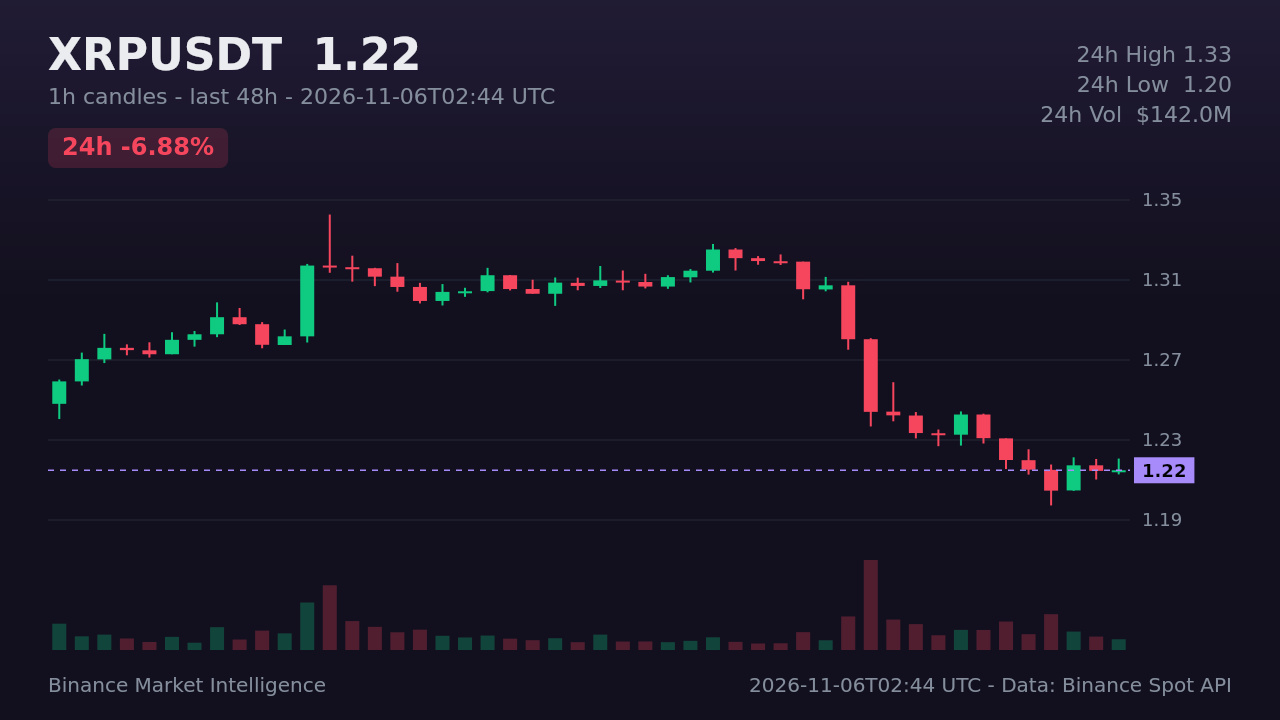
64

Article
KuCoin suspends all its services in Russia and Belarus with immediate effectKuCoin has announced that it is ceasing to provide services to users in Russia and Belarus with immediate effect. The suspension affects all its products, services, and features.
The exchange attributes this to «applicable legal and regulatory requirements», without giving further details about which regulation or authority is behind it.
What happens to affected users:
• They will receive a notification with deadlines and instructions for closing their accounts
• KuCoin is committed to an orderly process so users can close their positions and withdraw their funds
KuCoin suspends all its services in Russia and Belarus with immediate effect
KuCoin has announced that it is ceasing to provide services to users in Russia and Belarus with immediate effect. The suspension affects all its products, services, and features.
The exchange attributes this to «applicable legal and regulatory requirements», without giving further details about which regulation or authority is behind it.
What happens to affected users:
• They will receive a notification with deadlines and instructions for closing their accounts
• KuCoin is committed to an orderly process so users can close their positions and withdraw their funds
3
6k
Article
Bitget’s reserve ratio falls to 115% in October, down from 131% in SeptemberProof of reserves is back in the spotlight following the hacks of recent weeks. Bitget has published its October report, the 48th since December 2022, and the overall ratio has fallen from 131% in September to 115%.
What it reports:
• 30,762 BTC (+5.71% compared with September)
• 215,368 ETH (+18%)
• 924.7 million USDT (−27%)
• 150.9 million USDC
• XAUT, with a ratio of 110%
According to the company, all covered assets are backed at least 1:1, although it does not detail the ratio for each one. Each user can verify that their balance is included using a Merkle tree with anonymized identifiers. In September, coverage expanded from four cryptocurrencies to 19 assets.
Bitget’s reserve ratio falls to 115% in October, down from 131% in September
Proof of reserves is back in the spotlight following the hacks of recent weeks. Bitget has published its October report, the 48th since December 2022, and the overall ratio has fallen from 131% in September to 115%.
What it reports:
• 30,762 BTC (+5.71% compared with September)
• 215,368 ETH (+18%)
• 924.7 million USDT (−27%)
• 150.9 million USDC
• XAUT, with a ratio of 110%
According to the company, all covered assets are backed at least 1:1, although it does not detail the ratio for each one. Each user can verify that their balance is included using a Merkle tree with anonymized identifiers. In September, coverage expanded from four cryptocurrencies to 19 assets.
449
·
--
Article
A 1.65% spread across other platforms shapes P2P trading in VenezuelaLive P2P Radar Capture: 29/10/2026, 6:00:13 PM
USDT/VES reference Bs. 1012.05
USDT buy rate Bs. 1012.05
USDT sell rate Bs. 992.99
BCV Bs. 889.26
Premium vs. BCV 13.81%
P2P spread 1.92%
Offers observed 240
Check current data on Radar P2P
Real-time monitoring of Venezuela’s crypto asset market shows a significant variation today among the different exchange platforms. According to data captured by Radar P2P, there is a 1.65% price difference between two of the main exchanges operating with bolivars (VES): while other platforms list USDT buy quotes at around Bs. 1,005.00, on other platforms sell offers reach Bs. 1,021.63, representing a nominal gap of Bs. 16.63 per unit.
A 1.65% spread across other platforms shapes P2P trading in Venezuela
Live P2P Radar Capture: 29/10/2026, 6:00:13 PM
USDT/VES reference Bs. 1012.05
USDT buy rate Bs. 1012.05
USDT sell rate Bs. 992.99
BCV Bs. 889.26
Premium vs. BCV 13.81%
P2P spread 1.92%
Offers observed 240
Check current data on Radar P2P
Real-time monitoring of Venezuela’s crypto asset market shows a significant variation today among the different exchange platforms. According to data captured by Radar P2P, there is a 1.65% price difference between two of the main exchanges operating with bolivars (VES): while other platforms list USDT buy quotes at around Bs. 1,005.00, on other platforms sell offers reach Bs. 1,021.63, representing a nominal gap of Bs. 16.63 per unit.
24

·
--
Why cryptocurrency exchanges show volume gains without a real recovery
In May 2026, major crypto trading platforms displayed superficial stability. The spot trading volume only increased by 0.1% on leading platforms, according to data collected by Wu Blockchain. Behind this apparent calm, market shares shifted noticeably.
In brief
The global spot volume of exchanges rose by 0.1% in May 2026, while derivatives gained 1.1%.
OKX recorded the largest increase in spot volumes (+20.3%), followed by Kraken (+7.0%) and Bitget (+4.8%).
KuCoin ended up last in three key indicators: spot volumes (-10.4%), derivatives (-18.9%), and web traffic (-7.4%).
Why did volumes shift between crypto platforms in May 2026?
In May 2026, the global increase in volumes was anecdotal. Mainly, flows between platforms explained the performance differences. OKX jumped 20.3% in the spot segment, becoming the big winner of the month in this metric. Kraken and Bitget also progressed, with +7.0% and +4.8%, respectively.
In contrast, Upbit ceded 15.8% of its spot volumes. Uniswap dropped 13.3% and KuCoin 10.4%. In the crypto derivatives segment, with a slight monthly increase of 1.1%, Coinbase dominated with a progression of 19%, followed by Kraken (+9.9%) and Crypto.com (+9.6%). On the other end, BitMart lost 37.9% of its derivatives volumes, and KuCoin 18.9%.
$O
{alpha}(560x500a02a20b0b0a3f3efccfc0559543f5743bd1c4)
$BIO
{spot}(BIOUSDT)
$UP
{alpha}(560x000008d2175f9aeaddb2430c26f8a6f73c5a0000)
#exchanges
Why cryptocurrency exchanges show volume gains without a real recovery
In May 2026, major crypto trading platforms displayed superficial stability. The spot trading volume only increased by 0.1% on leading platforms, according to data collected by Wu Blockchain. Behind this apparent calm, market shares shifted noticeably.
In brief
The global spot volume of exchanges rose by 0.1% in May 2026, while derivatives gained 1.1%.
OKX recorded the largest increase in spot volumes (+20.3%), followed by Kraken (+7.0%) and Bitget (+4.8%).
KuCoin ended up last in three key indicators: spot volumes (-10.4%), derivatives (-18.9%), and web traffic (-7.4%).
Why did volumes shift between crypto platforms in May 2026?
In May 2026, the global increase in volumes was anecdotal. Mainly, flows between platforms explained the performance differences. OKX jumped 20.3% in the spot segment, becoming the big winner of the month in this metric. Kraken and Bitget also progressed, with +7.0% and +4.8%, respectively.
In contrast, Upbit ceded 15.8% of its spot volumes. Uniswap dropped 13.3% and KuCoin 10.4%. In the crypto derivatives segment, with a slight monthly increase of 1.1%, Coinbase dominated with a progression of 19%, followed by Kraken (+9.9%) and Crypto.com (+9.6%). On the other end, BitMart lost 37.9% of its derivatives volumes, and KuCoin 18.9%.
$O
$BIO
$UP
#exchanges

330

📈 Coinbase's Mixed Quarter: Record market share meets softer profits
On July 31, 2026, Coinbase delivered record crypto market share in Q2 but missed profit estimates, highlighting the gap between scale and profitability.
The backdrop: industry volume of $60.36B remains far below cycle peaks, compressing fee revenue across the exchange sector.
📌 Key Takeaway:
Market share without margin is a warning for the exchange industry — the next leg of growth depends on volume returning, not share gains alone.
#Coinbase #Exchanges #CryptoMarkets
#BinanceAlphaAlert
165
·
--
Article
P2P Exchanges in Venezuela: Liquidity, Spreads, and Platform BalancesLive P2P Radar Screenshot: 26/8/2026, 2:30:15 a. m.
USDT/VES reference Bs. 983.10
Buy USDT Bs. 983.10
Sell USDT Bs. 912.66
BCV Bs. 787.52
Premium vs BCV 24.84%
P2P spread 7.72%
Observed offers 180
Verify current data on P2P Radar
The peer-to-peer (P2P) exchange ecosystem in Venezuela remains the main artery for transactional dollarization and the financial coverage of businesses and individual users. In an economy where stablecoins perform everyday functions for value preservation and commercial settlement, the distribution of liquidity and quotes across different platforms shows notable variations that call for a rigorous, data-based analysis.
P2P Exchanges in Venezuela: Liquidity, Spreads, and Platform Balances
Live P2P Radar Screenshot: 26/8/2026, 2:30:15 a. m.
USDT/VES reference Bs. 983.10
Buy USDT Bs. 983.10
Sell USDT Bs. 912.66
BCV Bs. 787.52
Premium vs BCV 24.84%
P2P spread 7.72%
Observed offers 180
Verify current data on P2P Radar
The peer-to-peer (P2P) exchange ecosystem in Venezuela remains the main artery for transactional dollarization and the financial coverage of businesses and individual users. In an economy where stablecoins perform everyday functions for value preservation and commercial settlement, the distribution of liquidity and quotes across different platforms shows notable variations that call for a rigorous, data-based analysis.
78

·
--
Crypto ownership on exchanges could be headed for a major legal reset.
A new look at the proposed CLARITY Act focuses on a question every exchange user should care about: when a platform fails, who legally owns the crypto in customer accounts?
That distinction can decide whether users are treated as owners seeking the return of their assets—or as unsecured creditors waiting in line during bankruptcy.
The issue has become impossible to ignore after past exchange collapses exposed how murky custody arrangements can be. Clearer rules around customer asset rights, segregation and insolvency treatment could reshape how traders evaluate centralized platforms.
The key thing to watch now: whether lawmakers turn these principles into enforceable protections, and how exchanges would need to change custody disclosures and operational practices.
Would stronger legal ownership rights make you more comfortable keeping assets on an exchange?
#CryptoNews #CryptoRegulation #Exchanges

73
·
--
Article
A 2.14% spread between Binance and other platforms shapes today’s P2P tradingLive P2P Radar Snapshot: 18/10/2026, 10:00:08 a.m.
USDT/VES reference Bs. 1012.42
USDT Buy Bs. 1012.42
USDT Sell Bs. 978.82
BCV Bs. 881.07
Premium vs. BCV 14.91%
P2P Spread 3.43%
Offers observed 249
Check current data on P2P Radar
Venezuela’s P2P trading ecosystem is seeing a marked asymmetry today in price formation across the major exchange platforms. According to data verified by P2P Radar at 14:00 UTC on October 18, 2026, there is a 2.14% difference in the USDT exchange rate when comparing the order books on Binance and other platforms.
A 2.14% spread between Binance and other platforms shapes today’s P2P trading
Live P2P Radar Snapshot: 18/10/2026, 10:00:08 a.m.
USDT/VES reference Bs. 1012.42
USDT Buy Bs. 1012.42
USDT Sell Bs. 978.82
BCV Bs. 881.07
Premium vs. BCV 14.91%
P2P Spread 3.43%
Offers observed 249
Check current data on P2P Radar
Venezuela’s P2P trading ecosystem is seeing a marked asymmetry today in price formation across the major exchange platforms. According to data verified by P2P Radar at 14:00 UTC on October 18, 2026, there is a 2.14% difference in the USDT exchange rate when comparing the order books on Binance and other platforms.
27

Bitget is buying a license, not building one. The exchange announced a planned acquisition of GMO-Z.com Cryptonomics, a Bangkok-based licensed digital asset exchange running Z.com EX, through its interest in BTGT Management (Thailand). Completion still needs regulatory approval, with GMO's own September 24 filing targeting an October 31 close.
The timing is the story. This comes three weeks after a September 24 attack on Bitget's hot and warm wallet infrastructure, and days after the exchange cut service for users in certain jurisdictions. Thailand itself is on Bitget's prohibited list today — a licensed local operator would flip that overnight.
Exchanges are increasingly shopping for compliance rather than jurisdictions. CEO Gracy Chen framed it as a long-term Southeast Asia commitment. The open question: does a Thai license actually repair the trust hit, or is it just regulatory window-dressing? DYOR, as always.
#CryptoNews #Exchanges #Bitget
17
·
--
Article
Exchanges in Venezuela: 1.50% Difference Shapes P2P Trading in BolívaresLive P2P Radar Capture: 24/10/2026, 10:00:16 p.m.
USDT/VES reference Bs. 1012.67
Buy USDT Bs. 1012.67
Sell USDT Bs. 991.25
BCV Bs. 887.30
Premium vs. BCV 14.13%
P2P spread 2.16%
Offers observed 221
Check current data on Radar P2P
Venezuela’s P2P trading ecosystem is showing significant variations today, depending on the platform and selected payment method. According to real-time data captured by Radar P2P, there is a 1.50% difference (Bs. 15.09) between quotes from major exchanges operating in the country, specifically when comparing Binance rates with those of other platforms.
Exchanges in Venezuela: 1.50% Difference Shapes P2P Trading in Bolívares
Live P2P Radar Capture: 24/10/2026, 10:00:16 p.m.
USDT/VES reference Bs. 1012.67
Buy USDT Bs. 1012.67
Sell USDT Bs. 991.25
BCV Bs. 887.30
Premium vs. BCV 14.13%
P2P spread 2.16%
Offers observed 221
Check current data on Radar P2P
Venezuela’s P2P trading ecosystem is showing significant variations today, depending on the platform and selected payment method. According to real-time data captured by Radar P2P, there is a 1.50% difference (Bs. 15.09) between quotes from major exchanges operating in the country, specifically when comparing Binance rates with those of other platforms.
280
📈 Coinbase Profit Misses Despite Record Share: Exchange grows market share but margins tighten
On July 31, 2026, Coinbase's Q2 profit missed estimates even as the exchange captured record crypto market share — a reminder that volume share does not always equal margin.
Industry-wide 24-hour volume stands at $60.36B, a level where even dominant exchanges face revenue pressure.
📌 Key Takeaway:
Exchange economics are shifting: leadership in market share is necessary but no longer sufficient for profitability.
#Coinbase #Exchanges #CryptoMarkets
#BinanceAlphaAlert
129
Log in to explore more content
Join global crypto users on Binance Square
⚡️ Get latest and useful information about crypto.
💬 Trusted by the world’s largest crypto exchange.
👍 Discover real insights from verified creators.
Email / Phone number
Trending Topics
1
#EvolveAtBinanceBlockchainWeek
1.7M views
17,141 Discussing
2
#ColdcardFlawLeadsToTheftOfAtLeast1789BTC
23,741 views
261 Discussing
3
#VitalikWantsWalletChipDesignsOpened
36,474 views
442 Discussing
4
#ChainflipVaultTheftHaltsProtocol
25,448 views
377 Discussing
5
#SECIssuesNoActionLetterOnMoleculeModel
3,262 views
41 Discussing
6
#ClaudeAccusedOfDroppingUserPreferences
11,345 views
112 Discussing
7
#MalaysiaFirstBitcoinETFToListOnDecember2
14,842 views
175 Discussing
8
#DowJonesAdds591.99Points
22,140 views
112 Discussing
9
#AnzaUrgesSolanaNodesUpgradeAgave
11,196 views
173 Discussing
10
#EthereumGlamsterdamKeepsStorageFeeChange
57,476 views
546 Discussing