

#blockchainforensics
blockchainforensics
14,765 views
49 Discussing
Hot
Latest

·
--
Article
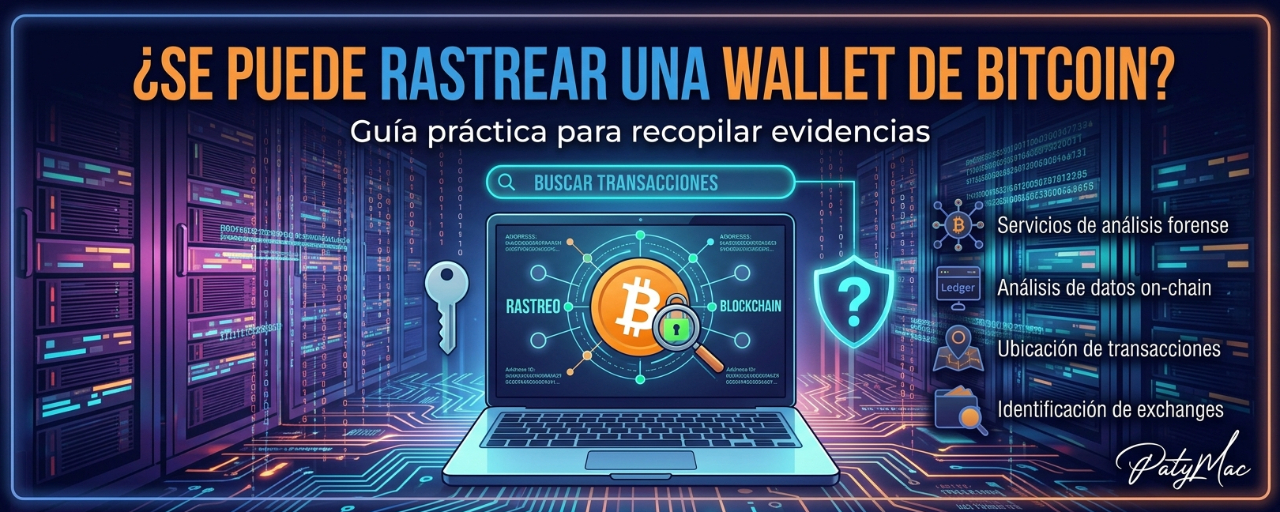
CAN YOU TRACE A BITCOIN WALLET?There’s a phrase we hear constantly:
“Bitcoin is anonymous.”
And based on that phrase, many people believe that if someone scams them and receives their Bitcoins in a wallet, there’s no possibility of tracking the money anymore.
But the reality is more complex.
Bitcoin is not completely anonymous.
Transactions are recorded on a public blockchain.
The question is different:
CAN WE KNOW WHO’S BEHIND A WALLET?
And that’s where the real difficulty lies.
⛓️ A WALLET DOESN’T NECESSARILY TELL WHO YOU ARE
CAN YOU TRACE A BITCOIN WALLET?
There’s a phrase we hear constantly:
“Bitcoin is anonymous.”
And based on that phrase, many people believe that if someone scams them and receives their Bitcoins in a wallet, there’s no possibility of tracking the money anymore.
But the reality is more complex.
Bitcoin is not completely anonymous.
Transactions are recorded on a public blockchain.
The question is different:
CAN WE KNOW WHO’S BEHIND A WALLET?
And that’s where the real difficulty lies.
⛓️ A WALLET DOESN’T NECESSARILY TELL WHO YOU ARE
“Bitcoin is anonymous.”
And based on that phrase, many people believe that if someone scams them and receives their Bitcoins in a wallet, there’s no possibility of tracking the money anymore.
But the reality is more complex.
Bitcoin is not completely anonymous.
Transactions are recorded on a public blockchain.
The question is different:
CAN WE KNOW WHO’S BEHIND A WALLET?
And that’s where the real difficulty lies.
⛓️ A WALLET DOESN’T NECESSARILY TELL WHO YOU ARE
1
216

🚨 $USDT TRACEABLE CHAIN FOOTPRINT LANDS CRIMINALS IN COURT – REAL DATA EXPOSES EVERYTHING 💣
📌 A landmark Chinese court ruling just proved USDT is far from anonymous. The scam ring used millions in USDT to settle illegal gambling, but on-chain wallet activity gave investigators an unbreakable paper trail. 📊 Tether and exchange records directly tied $4.67M USDT to real entities—only one defendant didn't return funds and got a harsher sentence.
💡 This is the cold truth: blockchain forensics is maturing fast. Every USDT transfer leaves a permanent breadcrumb. Smart money already knows this, but retail often treats stablecoins like privacy shields. 🔍 If authorities can trace 2.95 billion yuan in USDT across 105 merchants, so can the IRS or any cyber unit.
💬 Do you still believe USDT is "off the grid," or are you adjusting your operational security based on this? 👇
⚠️ Not financial advice. Always manage your risk. 🛡️
🏷️ #USDT #CryptoRegulation #BlockchainForensics #CryptoNews
🔍 💡
🚨 $USDT TRACEABLE CHAIN FOOTPRINT LANDS CRIMINALS IN COURT – REAL DATA EXPOSES EVERYTHING 💣
📌 A landmark Chinese court ruling just proved USDT is far from anonymous. The scam ring used millions in USDT to settle illegal gambling, but on-chain wallet activity gave investigators an unbreakable paper trail. 📊 Tether and exchange records directly tied $4.67M USDT to real entities—only one defendant didn't return funds and got a harsher sentence.
💡 This is the cold truth: blockchain forensics is maturing fast. Every USDT transfer leaves a permanent breadcrumb. Smart money already knows this, but retail often treats stablecoins like privacy shields. 🔍 If authorities can trace 2.95 billion yuan in USDT across 105 merchants, so can the IRS or any cyber unit.
💬 Do you still believe USDT is "off the grid," or are you adjusting your operational security based on this? 👇
⚠️ Not financial advice. Always manage your risk. 🛡️
🏷️ #USDT #CryptoRegulation #BlockchainForensics #CryptoNews
🔍 💡
📌 A landmark Chinese court ruling just proved USDT is far from anonymous. The scam ring used millions in USDT to settle illegal gambling, but on-chain wallet activity gave investigators an unbreakable paper trail. 📊 Tether and exchange records directly tied $4.67M USDT to real entities—only one defendant didn't return funds and got a harsher sentence.
💡 This is the cold truth: blockchain forensics is maturing fast. Every USDT transfer leaves a permanent breadcrumb. Smart money already knows this, but retail often treats stablecoins like privacy shields. 🔍 If authorities can trace 2.95 billion yuan in USDT across 105 merchants, so can the IRS or any cyber unit.
💬 Do you still believe USDT is "off the grid," or are you adjusting your operational security based on this? 👇
⚠️ Not financial advice. Always manage your risk. 🛡️
🏷️ #USDT #CryptoRegulation #BlockchainForensics #CryptoNews
🔍 💡
45

·
--

Article
Bitcoin Lost and Found: A 2012 Wallet Turns $2k into $4.5MGM fam, while the rest of the world was still figuring out what a “wallet” was, a British investor thought he’d lost a modest $2,000 in $BTC back in 2012. Fast forward to 2026, and that same wallet is now a treasure chest of 5,500 BTC, worth roughly $4.5 million. The story comes from a legal firm, CEL Solicitors, that traced the digital gold back to former users of the now-defunct Intersango platform.
The alpha: Intersango, a once-popular crypto exchange that collapsed in 2018, left a trail of cold wallets. Those wallets were never claimed, and the coins sat idle like a forgotten pizza in a freezer. When a savvy UK investor finally dug into the blockchain, he uncovered a vault of 5,500 BTC—more than enough to buy a small island or a private jet. The recovery process involved forensic blockchain analysis, legal wrangling, and a bit of luck. #BTC #CryptoRecovery #BlockchainForensics
Punchline insight: The crypto world is a time capsule. One day you’re a meme about “lost coins,” the next you’re a headline about a forgotten wallet turning into a multi-million dollar windfall. It’s a reminder that the blockchain is immutable, but the human element—forgetfulness, mismanagement, or simply not moving your assets—can create gold mines for the opportunistic. So, if you’re still chilling in that old wallet, maybe it’s time to dust off that private key and let the universe pay you back.
Engagement bait: Have you ever thought you lost crypto that you never realized was still there? Drop your story or a meme that captures the “I thought I lost it” moment. Let’s see who’s still holding onto digital gold in the ether!
Bitcoin Lost and Found: A 2012 Wallet Turns $2k into $4.5M
GM fam, while the rest of the world was still figuring out what a “wallet” was, a British investor thought he’d lost a modest $2,000 in $BTC back in 2012. Fast forward to 2026, and that same wallet is now a treasure chest of 5,500 BTC, worth roughly $4.5 million. The story comes from a legal firm, CEL Solicitors, that traced the digital gold back to former users of the now-defunct Intersango platform.
The alpha: Intersango, a once-popular crypto exchange that collapsed in 2018, left a trail of cold wallets. Those wallets were never claimed, and the coins sat idle like a forgotten pizza in a freezer. When a savvy UK investor finally dug into the blockchain, he uncovered a vault of 5,500 BTC—more than enough to buy a small island or a private jet. The recovery process involved forensic blockchain analysis, legal wrangling, and a bit of luck. #BTC #CryptoRecovery #BlockchainForensics
Punchline insight: The crypto world is a time capsule. One day you’re a meme about “lost coins,” the next you’re a headline about a forgotten wallet turning into a multi-million dollar windfall. It’s a reminder that the blockchain is immutable, but the human element—forgetfulness, mismanagement, or simply not moving your assets—can create gold mines for the opportunistic. So, if you’re still chilling in that old wallet, maybe it’s time to dust off that private key and let the universe pay you back.
Engagement bait: Have you ever thought you lost crypto that you never realized was still there? Drop your story or a meme that captures the “I thought I lost it” moment. Let’s see who’s still holding onto digital gold in the ether!
The alpha: Intersango, a once-popular crypto exchange that collapsed in 2018, left a trail of cold wallets. Those wallets were never claimed, and the coins sat idle like a forgotten pizza in a freezer. When a savvy UK investor finally dug into the blockchain, he uncovered a vault of 5,500 BTC—more than enough to buy a small island or a private jet. The recovery process involved forensic blockchain analysis, legal wrangling, and a bit of luck. #BTC #CryptoRecovery #BlockchainForensics
Punchline insight: The crypto world is a time capsule. One day you’re a meme about “lost coins,” the next you’re a headline about a forgotten wallet turning into a multi-million dollar windfall. It’s a reminder that the blockchain is immutable, but the human element—forgetfulness, mismanagement, or simply not moving your assets—can create gold mines for the opportunistic. So, if you’re still chilling in that old wallet, maybe it’s time to dust off that private key and let the universe pay you back.
Engagement bait: Have you ever thought you lost crypto that you never realized was still there? Drop your story or a meme that captures the “I thought I lost it” moment. Let’s see who’s still holding onto digital gold in the ether!
34

The myth of crypto anonymity is fading.
FBI agents used blockchain forensics to link two Florida brothers to a darknet opioid ring. This serves as a massive reminder that the era of absolute crypto anonymity is likely over.
#BlockchainForensics #DarknetMarkets
The myth of crypto anonymity is fading.
FBI agents used blockchain forensics to link two Florida brothers to a darknet opioid ring. This serves as a massive reminder that the era of absolute crypto anonymity is likely over.
#BlockchainForensics #DarknetMarkets
FBI agents used blockchain forensics to link two Florida brothers to a darknet opioid ring. This serves as a massive reminder that the era of absolute crypto anonymity is likely over.
#BlockchainForensics #DarknetMarkets
16

·
--
Most traders are freaking out about the latest crypto arrest. Smart money is looking at what it *really* means for market stability.
While headlines scream about a Florida man stealing $220k in crypto through video game malware, the real story is the FBI's growing sophistication in tracing illicit digital assets. This arrest isn't just about one individual; it's a testament to improved blockchain forensics and cross-border cooperation. This means increased regulatory certainty and a safer environment for legitimate players long-term. Think less "wild west," more regulated financial frontier. #BlockchainForensics #CryptoSecurity #MarketStability
This development signals a maturing market. The ability to track and prosecute these activities reduces systemic risk and makes institutions more comfortable. Expect a gradual shift towards greater institutional adoption as perceived risk diminishes.
Keep an eye on exchange compliance upgrades. The more robust their AML/KYC, the less attractive these targets become. #ExchangeCompliance
What does this mean for your portfolio strategy moving forward?
Most traders are freaking out about the latest crypto arrest. Smart money is looking at what it *really* means for market stability.
While headlines scream about a Florida man stealing $220k in crypto through video game malware, the real story is the FBI's growing sophistication in tracing illicit digital assets. This arrest isn't just about one individual; it's a testament to improved blockchain forensics and cross-border cooperation. This means increased regulatory certainty and a safer environment for legitimate players long-term. Think less "wild west," more regulated financial frontier. #BlockchainForensics #CryptoSecurity #MarketStability
This development signals a maturing market. The ability to track and prosecute these activities reduces systemic risk and makes institutions more comfortable. Expect a gradual shift towards greater institutional adoption as perceived risk diminishes.
Keep an eye on exchange compliance upgrades. The more robust their AML/KYC, the less attractive these targets become. #ExchangeCompliance
What does this mean for your portfolio strategy moving forward?
While headlines scream about a Florida man stealing $220k in crypto through video game malware, the real story is the FBI's growing sophistication in tracing illicit digital assets. This arrest isn't just about one individual; it's a testament to improved blockchain forensics and cross-border cooperation. This means increased regulatory certainty and a safer environment for legitimate players long-term. Think less "wild west," more regulated financial frontier. #BlockchainForensics #CryptoSecurity #MarketStability
This development signals a maturing market. The ability to track and prosecute these activities reduces systemic risk and makes institutions more comfortable. Expect a gradual shift towards greater institutional adoption as perceived risk diminishes.
Keep an eye on exchange compliance upgrades. The more robust their AML/KYC, the less attractive these targets become. #ExchangeCompliance
What does this mean for your portfolio strategy moving forward?
33


Article
The Reality About Crypto Physical Security.🇫🇷🛡️ ANALYSIS: The reality about crypto physical security and the myths of its global concentration
In the last few hours, an alarming piece of info has been circulating that claims around 70% of physical security attacks related to cryptocurrencies worldwide happen in France, citing supposed 41 kidnappings so far in 2026. However, breaking down the global reports from intelligence firms like Chainalysis or TRM Labs, the reality of the data tells a very different story. 📊🔍
The Reality About Crypto Physical Security.
🇫🇷🛡️ ANALYSIS: The reality about crypto physical security and the myths of its global concentration
In the last few hours, an alarming piece of info has been circulating that claims around 70% of physical security attacks related to cryptocurrencies worldwide happen in France, citing supposed 41 kidnappings so far in 2026. However, breaking down the global reports from intelligence firms like Chainalysis or TRM Labs, the reality of the data tells a very different story. 📊🔍
In the last few hours, an alarming piece of info has been circulating that claims around 70% of physical security attacks related to cryptocurrencies worldwide happen in France, citing supposed 41 kidnappings so far in 2026. However, breaking down the global reports from intelligence firms like Chainalysis or TRM Labs, the reality of the data tells a very different story. 📊🔍
1
165


·
--

Article
A hacker's remorse 👀In March 2023, Euler Finance was hit by a devastating flash loan exploit. The attacker managed to slip away with nearly $197 million in various digital assets.
In the immediate aftermath, the team did what every project does: they offered a $1 million bounty for information, tracked the wallets, and pleaded for the return of the funds.
But then, the on-chain transaction logs took a bizarre turn.
Instead of laundering the funds or ignoring the messages, the hacker using the pseudonym "Jacob" started sending embedded text messages back to the Euler deployer address.
They weren't demanding a ransom. They were apologizing.
"I want to make it easy for those affected. I do not intend to keep what is not mine."
Over the next two weeks, the blockchain ledger became an open journal of a hacker's psychological struggle. Jacob expressed deep regret, chatted with the developers on-chain, and even apologized directly to users who had lost their life savings.
Then came the final plot twist. Jacob actually kept his word.
In a series of transactions, the attacker returned 95% of the stolen funds (approximately $196 million worth of ETH and DAI) back to the Euler smart contracts. He kept only a small portion, seemingly as a self-awarded "bounty."
Most security experts argue that "Jacob" didn't return the money out of pure guilt, but because the sheer size of the loot made it impossible to wash or cash out without getting caught by on-chain tracking.
Yet, the bizarre negotiation proved that even in an ecosystem governed by cold, hard code, the human element still dictates the final outcome.
Do you think the hacker returned the funds because of genuine remorse, or was it simply the realization that a $200M bounty hunt is impossible to survive?
#CryptoSecurity #EulerFinance
#BlockchainForensics #Web3
A hacker's remorse 👀
In March 2023, Euler Finance was hit by a devastating flash loan exploit. The attacker managed to slip away with nearly $197 million in various digital assets.
In the immediate aftermath, the team did what every project does: they offered a $1 million bounty for information, tracked the wallets, and pleaded for the return of the funds.
But then, the on-chain transaction logs took a bizarre turn.
Instead of laundering the funds or ignoring the messages, the hacker using the pseudonym "Jacob" started sending embedded text messages back to the Euler deployer address.
They weren't demanding a ransom. They were apologizing.
"I want to make it easy for those affected. I do not intend to keep what is not mine."
Over the next two weeks, the blockchain ledger became an open journal of a hacker's psychological struggle. Jacob expressed deep regret, chatted with the developers on-chain, and even apologized directly to users who had lost their life savings.
Then came the final plot twist. Jacob actually kept his word.
In a series of transactions, the attacker returned 95% of the stolen funds (approximately $196 million worth of ETH and DAI) back to the Euler smart contracts. He kept only a small portion, seemingly as a self-awarded "bounty."
Most security experts argue that "Jacob" didn't return the money out of pure guilt, but because the sheer size of the loot made it impossible to wash or cash out without getting caught by on-chain tracking.
Yet, the bizarre negotiation proved that even in an ecosystem governed by cold, hard code, the human element still dictates the final outcome.
Do you think the hacker returned the funds because of genuine remorse, or was it simply the realization that a $200M bounty hunt is impossible to survive?
#CryptoSecurity #EulerFinance
#BlockchainForensics #Web3
In the immediate aftermath, the team did what every project does: they offered a $1 million bounty for information, tracked the wallets, and pleaded for the return of the funds.
But then, the on-chain transaction logs took a bizarre turn.
Instead of laundering the funds or ignoring the messages, the hacker using the pseudonym "Jacob" started sending embedded text messages back to the Euler deployer address.
They weren't demanding a ransom. They were apologizing.
"I want to make it easy for those affected. I do not intend to keep what is not mine."
Over the next two weeks, the blockchain ledger became an open journal of a hacker's psychological struggle. Jacob expressed deep regret, chatted with the developers on-chain, and even apologized directly to users who had lost their life savings.
Then came the final plot twist. Jacob actually kept his word.
In a series of transactions, the attacker returned 95% of the stolen funds (approximately $196 million worth of ETH and DAI) back to the Euler smart contracts. He kept only a small portion, seemingly as a self-awarded "bounty."
Most security experts argue that "Jacob" didn't return the money out of pure guilt, but because the sheer size of the loot made it impossible to wash or cash out without getting caught by on-chain tracking.
Yet, the bizarre negotiation proved that even in an ecosystem governed by cold, hard code, the human element still dictates the final outcome.
Do you think the hacker returned the funds because of genuine remorse, or was it simply the realization that a $200M bounty hunt is impossible to survive?
#CryptoSecurity #EulerFinance
#BlockchainForensics #Web3
1
351

·
--
Belgian police arrest phishing gang
Law enforcement officials in Belgium have detained the alleged ringleader of a sophisticated phishing operation that drained hundreds of thousands of dollars from cryptocurrency users across Europe. The suspect coordinated a network of attackers who used social engineering tactics to compromise digital wallet credentials.
The investigation revealed the gang targeted victims through fake support websites and fraudulent email campaigns designed to mimic legitimate exchange platforms. Once credentials were harvested, attackers transferred funds to mixing services before cashing out through peer-to-peer exchanges. Security researchers estimate the actual theft total may exceed the publicly disclosed amount.
This arrest highlights ongoing challenges in cryptocurrency security as bad actors exploit user trust rather than technical vulnerabilities. While tools like hardware wallets and transaction confirmations exist, social engineering remains the primary attack vector. Law enforcement increasingly coordinates cross-border to track perpetrators through blockchain forensics.
Can better user education reduce phishing success rates? Or will attackers adapt tactics faster than defenders adapt? Drop your take below. 👇
#CryptoSecurity #PhishingArrest #BlockchainForensics
Belgian police arrest phishing gang
Law enforcement officials in Belgium have detained the alleged ringleader of a sophisticated phishing operation that drained hundreds of thousands of dollars from cryptocurrency users across Europe. The suspect coordinated a network of attackers who used social engineering tactics to compromise digital wallet credentials.
The investigation revealed the gang targeted victims through fake support websites and fraudulent email campaigns designed to mimic legitimate exchange platforms. Once credentials were harvested, attackers transferred funds to mixing services before cashing out through peer-to-peer exchanges. Security researchers estimate the actual theft total may exceed the publicly disclosed amount.
This arrest highlights ongoing challenges in cryptocurrency security as bad actors exploit user trust rather than technical vulnerabilities. While tools like hardware wallets and transaction confirmations exist, social engineering remains the primary attack vector. Law enforcement increasingly coordinates cross-border to track perpetrators through blockchain forensics.
Can better user education reduce phishing success rates? Or will attackers adapt tactics faster than defenders adapt? Drop your take below. 👇
#CryptoSecurity #PhishingArrest #BlockchainForensics
Law enforcement officials in Belgium have detained the alleged ringleader of a sophisticated phishing operation that drained hundreds of thousands of dollars from cryptocurrency users across Europe. The suspect coordinated a network of attackers who used social engineering tactics to compromise digital wallet credentials.
The investigation revealed the gang targeted victims through fake support websites and fraudulent email campaigns designed to mimic legitimate exchange platforms. Once credentials were harvested, attackers transferred funds to mixing services before cashing out through peer-to-peer exchanges. Security researchers estimate the actual theft total may exceed the publicly disclosed amount.
This arrest highlights ongoing challenges in cryptocurrency security as bad actors exploit user trust rather than technical vulnerabilities. While tools like hardware wallets and transaction confirmations exist, social engineering remains the primary attack vector. Law enforcement increasingly coordinates cross-border to track perpetrators through blockchain forensics.
Can better user education reduce phishing success rates? Or will attackers adapt tactics faster than defenders adapt? Drop your take below. 👇
#CryptoSecurity #PhishingArrest #BlockchainForensics
18
The US Treasury dismantled a $2 million crypto network used for Hamas fundraising, signaling increased regulatory scrutiny.
#TreasurySanctions #BlockchainForensics
The US Treasury dismantled a $2 million crypto network used for Hamas fundraising, signaling increased regulatory scrutiny.
#TreasurySanctions #BlockchainForensics
#TreasurySanctions #BlockchainForensics
17

·
--
🚨 Punished For Being Innocent? Inside Crypto's "Last Holder Problem" & How Newton Protocol ($NEWT) Fixes It! 🛑🛡️
Imagine selling a piece of old gear—like a guitar—for $600 in USDC. Three weeks later, your exchange account is completely frozen. 🥶 You didn't do anything wrong, but it turns out that $600 passed through a stolen wallet two hops before it ever touched your hands. This is the brutal reality of crypto's "Last Holder Problem," where tracking tools punish the person holding the bag when the alarm trips, rather than the actual criminal. 💔💸
With illicit crypto activity skyrocketing from $64 billion to a massive $158 billion according to TRM Labs, traditional "reactive" security isn't cutting it anymore. 📈 Real people are losing access to their funds for weeks just trying to prove their innocence. The onchain ecosystem desperately needs a paradigm shift from fixing problems after the damage is done, to stopping them before they happen. 🛑🧠
This is exactly where Newton Protocol ($NEWT) steps in to change the game. 🛠️ Instead of letting tainted funds quietly change hands until an innocent user gets stuck with them, Newton uses a dedicated policy module called newton.source_of_funds. It turns compliance into code, scoring a wallet's background and slamming the door shut on flagged funds before a transaction can ever clear. It's a default-deny approach that keeps the taint away from your clean wallet! 🔐🦅
Of course, blocking fast-moving illicit flows that hide behind advanced cross-chain hops and mixers is an ongoing tech war. A gatekeeper is only as smart as its immediate data! 🧵 But shifting the defense line so that checks happen before settlement—rather than trapping everyday users in messy account freezes—is the upgrade Web3 infrastructure drastically needs. 🧠💪
Have you ever had an account frozen over funds you didn't know were dirty? Let's talk about onchain security below! 👇
$NEWT
#NewtonProtocol #NEWT #CryptoSecurity #OnchainCompliance #BlockchainForensics #BinanceSquare #SmartTrading
🚨 Punished For Being Innocent? Inside Crypto's "Last Holder Problem" & How Newton Protocol ($NEWT ) Fixes It! 🛑🛡️
Imagine selling a piece of old gear—like a guitar—for $600 in USDC. Three weeks later, your exchange account is completely frozen. 🥶 You didn't do anything wrong, but it turns out that $600 passed through a stolen wallet two hops before it ever touched your hands. This is the brutal reality of crypto's "Last Holder Problem," where tracking tools punish the person holding the bag when the alarm trips, rather than the actual criminal. 💔💸
With illicit crypto activity skyrocketing from $64 billion to a massive $158 billion according to TRM Labs, traditional "reactive" security isn't cutting it anymore. 📈 Real people are losing access to their funds for weeks just trying to prove their innocence. The onchain ecosystem desperately needs a paradigm shift from fixing problems after the damage is done, to stopping them before they happen. 🛑🧠
This is exactly where Newton Protocol ($NEWT ) steps in to change the game. 🛠️ Instead of letting tainted funds quietly change hands until an innocent user gets stuck with them, Newton uses a dedicated policy module called newton.source_of_funds. It turns compliance into code, scoring a wallet's background and slamming the door shut on flagged funds before a transaction can ever clear. It's a default-deny approach that keeps the taint away from your clean wallet! 🔐🦅
Of course, blocking fast-moving illicit flows that hide behind advanced cross-chain hops and mixers is an ongoing tech war. A gatekeeper is only as smart as its immediate data! 🧵 But shifting the defense line so that checks happen before settlement—rather than trapping everyday users in messy account freezes—is the upgrade Web3 infrastructure drastically needs. 🧠💪
Have you ever had an account frozen over funds you didn't know were dirty? Let's talk about onchain security below! 👇
$NEWT
#NewtonProtocol #NEWT #CryptoSecurity #OnchainCompliance #BlockchainForensics #BinanceSquare #SmartTrading
Imagine selling a piece of old gear—like a guitar—for $600 in USDC. Three weeks later, your exchange account is completely frozen. 🥶 You didn't do anything wrong, but it turns out that $600 passed through a stolen wallet two hops before it ever touched your hands. This is the brutal reality of crypto's "Last Holder Problem," where tracking tools punish the person holding the bag when the alarm trips, rather than the actual criminal. 💔💸
With illicit crypto activity skyrocketing from $64 billion to a massive $158 billion according to TRM Labs, traditional "reactive" security isn't cutting it anymore. 📈 Real people are losing access to their funds for weeks just trying to prove their innocence. The onchain ecosystem desperately needs a paradigm shift from fixing problems after the damage is done, to stopping them before they happen. 🛑🧠
This is exactly where Newton Protocol ($NEWT ) steps in to change the game. 🛠️ Instead of letting tainted funds quietly change hands until an innocent user gets stuck with them, Newton uses a dedicated policy module called newton.source_of_funds. It turns compliance into code, scoring a wallet's background and slamming the door shut on flagged funds before a transaction can ever clear. It's a default-deny approach that keeps the taint away from your clean wallet! 🔐🦅
Of course, blocking fast-moving illicit flows that hide behind advanced cross-chain hops and mixers is an ongoing tech war. A gatekeeper is only as smart as its immediate data! 🧵 But shifting the defense line so that checks happen before settlement—rather than trapping everyday users in messy account freezes—is the upgrade Web3 infrastructure drastically needs. 🧠💪
Have you ever had an account frozen over funds you didn't know were dirty? Let's talk about onchain security below! 👇
$NEWT
#NewtonProtocol #NEWT #CryptoSecurity #OnchainCompliance #BlockchainForensics #BinanceSquare #SmartTrading
22

·
--
🚨From Billionaire to Popcorn Tin: The $3.4 Billion "Perfect Crime" That Wasn't** 🚨
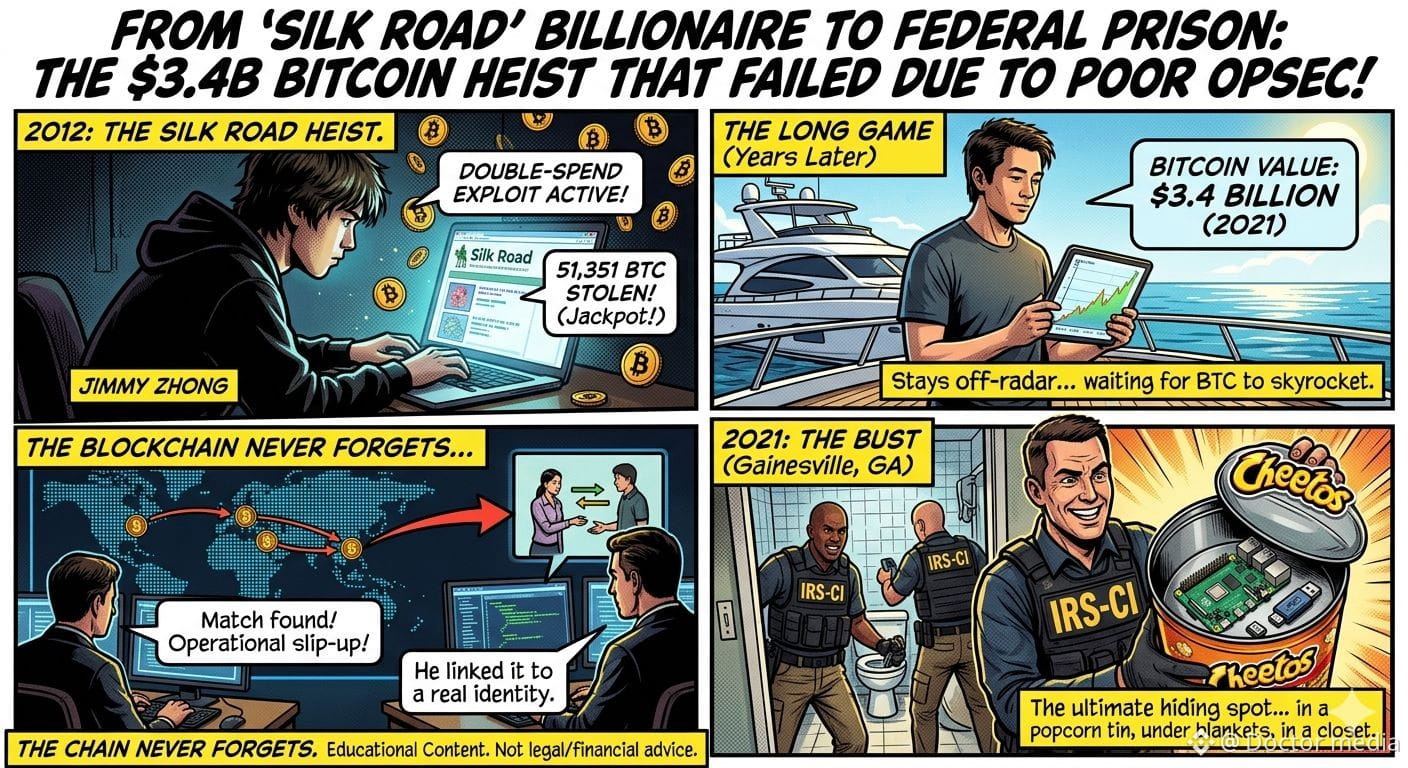
In 2012, James "Jimmy" Zhong pulled off what looked like the perfect heist. He exploited a loophole in the Silk Road exchange, double-clicking his way to 51,351 BTC.
For nearly a decade, he lived the high life—yachts, private jets, and mansions—while the world wondered where the legendary Silk Road treasure had vanished.
But here’s the brutal reality of crypto: *The blockchain never forgets.
You can wait 1 year or 10. You can use every mixer in the book. But eventually, the chain will force you into a fatal mistake.
📌 The Blunders That Toppled the King:
The 911 Call:** In a twist of irony, Zhong actually called the police to report a theft *from his own house*. He drew attention to himself and his stash.
The KYC Trap: He made a small transfer to a regulated exchange that required ID verification. That was the breadcrumb the IRS-CI needed to connect the wallet to a name.
The "Popcorn Tin" Finale:** When the feds finally raided his Gainesville home, they didn't just find keys on a laptop. They found a single-board computer buried under blankets in a Cheetos popcorn tin inside a bathroom closet.
The Timeline of a Downfall:
2012: The heist.
2019: The "911 call" mistake.
2021: The raid. IRS-CI recovers ~$3.4 Billion.
2023: A sentence of 1 year and 1 day.
The Moral?
In crypto, the tech rarely fails—OPSEC fails. You can outsmart code, but you can’t outsmart the immutable, permanent ledger. Once you interact with the real world, your digital footprint becomes your handcuffs. ⛓️
Stay safe, stay disciplined, and remember: on-chain, everything is transparent eventually.
#Bitcoin #SilkRoad #CryptoCrime #BlockchainForensics #HackerStories #JimmyZhong #CryptoEducation #Bullish
*Educational content only. Not financial or legal advice.
$BTC
{future}(BTCUSDT)
$AIA
{future}(AIAUSDT)
$HYPE
{future}(HYPEUSDT)
🚨From Billionaire to Popcorn Tin: The $3.4 Billion "Perfect Crime" That Wasn't** 🚨
In 2012, James "Jimmy" Zhong pulled off what looked like the perfect heist. He exploited a loophole in the Silk Road exchange, double-clicking his way to 51,351 BTC.
For nearly a decade, he lived the high life—yachts, private jets, and mansions—while the world wondered where the legendary Silk Road treasure had vanished.
But here’s the brutal reality of crypto: *The blockchain never forgets.
You can wait 1 year or 10. You can use every mixer in the book. But eventually, the chain will force you into a fatal mistake.
📌 The Blunders That Toppled the King:
The 911 Call:** In a twist of irony, Zhong actually called the police to report a theft *from his own house*. He drew attention to himself and his stash.
The KYC Trap: He made a small transfer to a regulated exchange that required ID verification. That was the breadcrumb the IRS-CI needed to connect the wallet to a name.
The "Popcorn Tin" Finale:** When the feds finally raided his Gainesville home, they didn't just find keys on a laptop. They found a single-board computer buried under blankets in a Cheetos popcorn tin inside a bathroom closet.
The Timeline of a Downfall:
2012: The heist.
2019: The "911 call" mistake.
2021: The raid. IRS-CI recovers ~$3.4 Billion.
2023: A sentence of 1 year and 1 day.
The Moral?
In crypto, the tech rarely fails—OPSEC fails. You can outsmart code, but you can’t outsmart the immutable, permanent ledger. Once you interact with the real world, your digital footprint becomes your handcuffs. ⛓️
Stay safe, stay disciplined, and remember: on-chain, everything is transparent eventually.
#Bitcoin #SilkRoad #CryptoCrime #BlockchainForensics #HackerStories #JimmyZhong #CryptoEducation #Bullish
*Educational content only. Not financial or legal advice.
$BTC
$AIA
$HYPE
In 2012, James "Jimmy" Zhong pulled off what looked like the perfect heist. He exploited a loophole in the Silk Road exchange, double-clicking his way to 51,351 BTC.
For nearly a decade, he lived the high life—yachts, private jets, and mansions—while the world wondered where the legendary Silk Road treasure had vanished.
But here’s the brutal reality of crypto: *The blockchain never forgets.
You can wait 1 year or 10. You can use every mixer in the book. But eventually, the chain will force you into a fatal mistake.
📌 The Blunders That Toppled the King:
The 911 Call:** In a twist of irony, Zhong actually called the police to report a theft *from his own house*. He drew attention to himself and his stash.
The KYC Trap: He made a small transfer to a regulated exchange that required ID verification. That was the breadcrumb the IRS-CI needed to connect the wallet to a name.
The "Popcorn Tin" Finale:** When the feds finally raided his Gainesville home, they didn't just find keys on a laptop. They found a single-board computer buried under blankets in a Cheetos popcorn tin inside a bathroom closet.
The Timeline of a Downfall:
2012: The heist.
2019: The "911 call" mistake.
2021: The raid. IRS-CI recovers ~$3.4 Billion.
2023: A sentence of 1 year and 1 day.
The Moral?
In crypto, the tech rarely fails—OPSEC fails. You can outsmart code, but you can’t outsmart the immutable, permanent ledger. Once you interact with the real world, your digital footprint becomes your handcuffs. ⛓️
Stay safe, stay disciplined, and remember: on-chain, everything is transparent eventually.
#Bitcoin #SilkRoad #CryptoCrime #BlockchainForensics #HackerStories #JimmyZhong #CryptoEducation #Bullish
*Educational content only. Not financial or legal advice.
$BTC
$AIA
$HYPE
1
453

AMLBot launches AI Tracer – an automated blockchain lookup tool for users
- AMLBot has just launched AI Tracer, an AI-powered blockchain lookup tool.
- The tool allows users to trace digital assets even after they have been stolen without needing specialized knowledge.
- The goal is to simplify the blockchain forensics process and strengthen security for the crypto community.
#BinanceSquare #CryptoNews #AMLBot #AI #BlockchainForensics
$btc $eth
vlikevn Titanbot
Source: CoinTelegraph
AMLBot launches AI Tracer – an automated blockchain lookup tool for users
- AMLBot has just launched AI Tracer, an AI-powered blockchain lookup tool.
- The tool allows users to trace digital assets even after they have been stolen without needing specialized knowledge.
- The goal is to simplify the blockchain forensics process and strengthen security for the crypto community.
#BinanceSquare #CryptoNews #AMLBot #AI #BlockchainForensics
$btc $eth
vlikevn Titanbot
Source: CoinTelegraph
- AMLBot has just launched AI Tracer, an AI-powered blockchain lookup tool.
- The tool allows users to trace digital assets even after they have been stolen without needing specialized knowledge.
- The goal is to simplify the blockchain forensics process and strengthen security for the crypto community.
#BinanceSquare #CryptoNews #AMLBot #AI #BlockchainForensics
$btc $eth
vlikevn Titanbot
Source: CoinTelegraph
230

·
--
🚨 $7.9M DRAINED FROM $ETH AND $TRX — PAYMENT PROVIDER HIT IN BRAZEN SWEEP 🦈
🦈 The institutional takeaway here isn’t just the headline — it’s the playbook. Attackers moved $7.9M across Ethereum and TRON in minutes, then immediately routed through Monero to sever the trail. 🔍 That’s not a random script-kiddie. That’s a disciplined operator who understands chain analytics better than most retail traders understand support levels.
💡 Blockchain forensics teams tracked the flow through ChangeNOW and FixedFloat, freezing a six-figure slice — proof that on-chain surveillance is the new front line of defense. 📊 For payment providers, this is a liquidity event risk that demos the true cost of a single compromised key.
💬 Does an attack of this scale change how you custody funds with centralized payment rails? 🤔
⚠️ Not financial advice. Always manage your risk. 🛡️
🏷️ #ETH #TRX #CryptoNews #SecurityAlert #BlockchainForensics
🦈 🛡️
🚨 $7.9M DRAINED FROM $ETH AND $TRX — PAYMENT PROVIDER HIT IN BRAZEN SWEEP 🦈
🦈 The institutional takeaway here isn’t just the headline — it’s the playbook. Attackers moved $7.9M across Ethereum and TRON in minutes, then immediately routed through Monero to sever the trail. 🔍 That’s not a random script-kiddie. That’s a disciplined operator who understands chain analytics better than most retail traders understand support levels.
💡 Blockchain forensics teams tracked the flow through ChangeNOW and FixedFloat, freezing a six-figure slice — proof that on-chain surveillance is the new front line of defense. 📊 For payment providers, this is a liquidity event risk that demos the true cost of a single compromised key.
💬 Does an attack of this scale change how you custody funds with centralized payment rails? 🤔
⚠️ Not financial advice. Always manage your risk. 🛡️
🏷️ #ETH #TRX #CryptoNews #SecurityAlert #BlockchainForensics
🦈 🛡️
🦈 The institutional takeaway here isn’t just the headline — it’s the playbook. Attackers moved $7.9M across Ethereum and TRON in minutes, then immediately routed through Monero to sever the trail. 🔍 That’s not a random script-kiddie. That’s a disciplined operator who understands chain analytics better than most retail traders understand support levels.
💡 Blockchain forensics teams tracked the flow through ChangeNOW and FixedFloat, freezing a six-figure slice — proof that on-chain surveillance is the new front line of defense. 📊 For payment providers, this is a liquidity event risk that demos the true cost of a single compromised key.
💬 Does an attack of this scale change how you custody funds with centralized payment rails? 🤔
⚠️ Not financial advice. Always manage your risk. 🛡️
🏷️ #ETH #TRX #CryptoNews #SecurityAlert #BlockchainForensics
🦈 🛡️
54
Log in to explore more content
Join global crypto users on Binance Square
⚡️ Get latest and useful information about crypto.
💬 Trusted by the world’s largest crypto exchange.
👍 Discover real insights from verified creators.
Email / Phone number
Trending Topics
1
#BinancePick
2.5M views
137,605 Discussing
2
#EarningsSeason
4.9M views
23,865 Discussing
3
#ElectrumWalletBugLetRogueServersStealFunds
2,066 views
121 Discussing
4
#ArgentineCourtDismissesLIBRACaseAgainstMilei
9,557 views
212 Discussing
5
#SKHynixReportedlyPlansSpecialDividendFromKioxiaStakeSale
2,187 views
34 Discussing
6
#KeystoneWebsiteBreachExposesBuyersShippingAddresses
1,177 views
25 Discussing
7
#USQ3GDPAndSeptemberPCEDueNextWeek
82,458 views
1,030 Discussing
8
#SouthKoreaDelaysCryptoIncomeTax
152,069 views
1,072 Discussing
9
#ElectrumFixesHighRiskExploitInVersionsBefore4.8.3
67,038 views
770 Discussing
10
#SouthKoreaPlansToRegulateStablecoinsUnderFXLaw
65,107 views
686 Discussing