

#apple
apple
1.4M views
2,478 Discussing
Hot
Latest

·
--
🍎 APPLE STOCK: WHAT’S NEXT? 📊
Apple (NASDAQ: $AAPL ) closed at $347.73 on October 23. The stock has shown strong gains in 2026, but some analysts are becoming cautious about iPhone demand and rising memory costs. Apple’s next earnings report is scheduled for November 2. <Cite refs={["turn727805search0","turn727805news4"]}/>
📈 BULLISH CASE: Strong product demand and upcoming launches could support further growth.
📉 BEARISH CASE: Slower iPhone demand and high expectations could trigger a pullback.
🔥 YOUR VIEW?
🟢 1 — BULLISH
🔴 2 — BEARISH
💬 Comment your prediction!
#Apple #stockmarket #Investing #BinanceSquare
⚠️ Market data changes rapidly. Do your own research (DYOR). Not financial advice.$AAPLB
{spot}(AAPLBUSDT)
🍎 APPLE STOCK: WHAT’S NEXT? 📊
Apple (NASDAQ: $AAPL ) closed at $347.73 on October 23. The stock has shown strong gains in 2026, but some analysts are becoming cautious about iPhone demand and rising memory costs. Apple’s next earnings report is scheduled for November 2. <Cite refs={["turn727805search0","turn727805news4"]}/>
📈 BULLISH CASE: Strong product demand and upcoming launches could support further growth.
📉 BEARISH CASE: Slower iPhone demand and high expectations could trigger a pullback.
🔥 YOUR VIEW?
🟢 1 — BULLISH
🔴 2 — BEARISH
💬 Comment your prediction!
#Apple #stockmarket #Investing #BinanceSquare
⚠️ Market data changes rapidly. Do your own research (DYOR). Not financial advice.$AAPLB

88
·
--
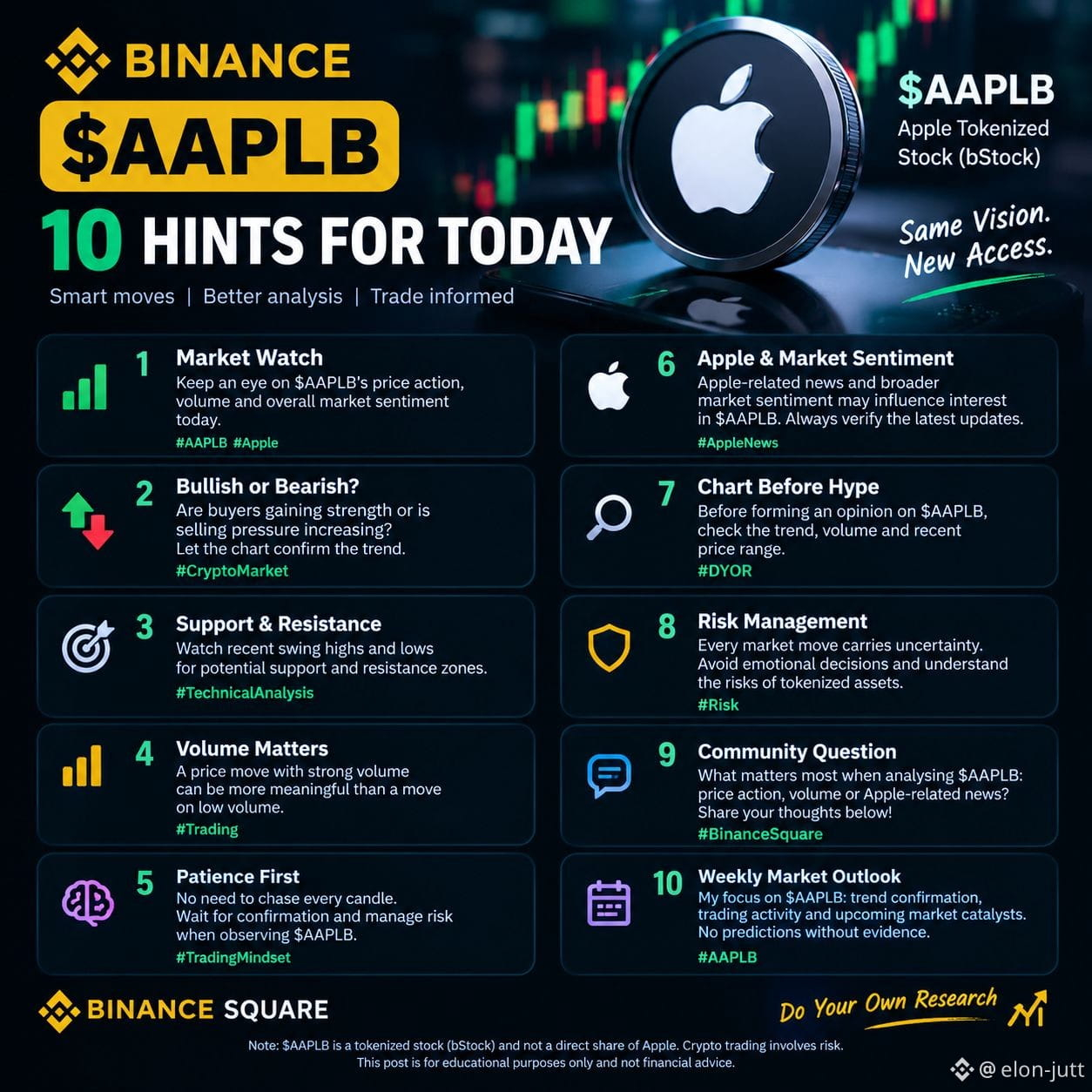
$AAPLB
1. $AAPLB Market Watch 📊
Watching $AAPLB today. Price action, volume, and market sentiment will be key factors to monitor. #AAPLB #Apple
2. Bullish or Bearish? 🟢🔴
$AAPLB: Are buyers gaining strength, or is selling pressure increasing? Let the chart confirm the trend. #CryptoMarket
3. Support & Resistance 🎯
For $AAPLB, traders can watch recent swing highs and lows for potential support and resistance zones. #TechnicalAnalysis
$AAPLB
1. $AAPLB Market Watch 📊
Watching $AAPLB today. Price action, volume, and market sentiment will be key factors to monitor. #AAPLB #Apple
2. Bullish or Bearish? 🟢🔴
$AAPLB : Are buyers gaining strength, or is selling pressure increasing? Let the chart confirm the trend. #CryptoMarket
3. Support & Resistance 🎯
For $AAPLB , traders can watch recent swing highs and lows for potential support and resistance zones. #TechnicalAnalysis
67

Apple Stores can now run diagnostics without opening the box: scan the packaging of an unopened iPhone with a device, and it can read the phone’s health status. The results are available before the device even reaches the customer.
First, let’s pin down where this falls financially. It reduces three types of costs: processing returns, determining whether products should be refurbished, and verifying fraud. These are operating expenses. It doesn’t generate revenue or affect the trajectory of service revenue. So for a stock like AAPLB, which is anchored to Apple’s parent stock, this is news that matters only in the “second decimal place.” Trading on it as a boost to service revenue would be getting the direction wrong. Conversely, shorting it because it “isn’t good news” would be just as badly mistaken: it does save money, and that will show up in the expense ratio—just gradually.
The second point is more noteworthy: this news has barely registered as a consensus view among Chinese traders. Of the two Apple hardware-related posts on the Plaza, one has 3 likes and 1 comment, and the other has 1 like and no comments. That’s four comments and four likes in total. Those numbers don’t mean the topic “isn’t hot enough”; they show that retail traders lack a pricing mechanism for this kind of operational news. There’s no discussion, no disagreement, and therefore no change in positioning. Price discovery for AAPLB is still driven by institutional money in the parent stock. The token merely absorbed a very weak sentiment impulse outside trading hours, then stalled.
The risk lies on the other side, and it points in the opposite direction. The iPhone Duo failed JerryRigEverything’s dust-resistance test. Negative quality-control news like this spreads far more efficiently in consumer electronics than “improved store efficiency.” Neither development has any impact on revenue, but the market typically reacts to bad news an order of magnitude faster. For AAPLB, this is short-term pressure on sentiment, not a fundamental event. But if it coincides with a period of thin liquidity, volatility could be amplified.
There’s another structural detail: this kind of operational news usually breaks while the stock market is closed, so the token moves first and the parent stock opens later. That can easily produce a false breakout without support from spot trading. Once the over-the-counter price comes in, the token may retrace. The odds of success when chasing this kind of breakout are far lower than when you assess the nature of the event yourself.
My view: this news is neither a bullish nor a bearish reason to trade AAPLB. It points in the right direction, but carries little weight. The two biggest costs on Apple’s retail side are return processing and fraud verification; condensing both into a scanning device is a form of cost engineering. Its effects will accumulate in the operating expense ratio over several quarters, leaving no trace in any single quarter’s revenue. Pricing it in requires expense-ratio data from several consecutive quarters, so the earliest opportunity will be after the next earnings report. Until then, any intraday move in AAPLB is just a liquidity fluctuation at the token level.
Risk warning: Premiums, discounts, and off-hours pricing discrepancies in tokenized assets are more likely to cost you money than getting the direction wrong.
#AAPLB #Apple #Crypto
9

·
--
Verified
#Apple $AAPLB has become Wall Street investors’ primary defensive asset in 2026. While competing tech giants are burning hundreds of billions of dollars on AI infrastructure, Apple is focusing on its traditional strength—the consumer segment—and the commercial launch of its first foldable smartphone, iPhone Duo.
➡️ Stock performance: Up +28% since the start of 2026, the best result among Big Tech companies.
➡️ Market value: The company’s market capitalization remains above $5.07 trillion.
➡️ Positioning: AAPL shares have become a key hedge against volatility and high capital expenditures in the AI sector.
❗️ Strategic context and risks. Reports show that the market is beginning to question whether massive investments in other companies’ AI servers will pay off quickly. However, two important factors are at play for Apple:
1️⃣ The launch of iPhone Duo and new smart devices must confirm that consumer demand can sustain the company’s margins without its own aggressive data center expansion.
2️⃣ Microsoft and Alphabet will publish their financial reports next week;
1
97

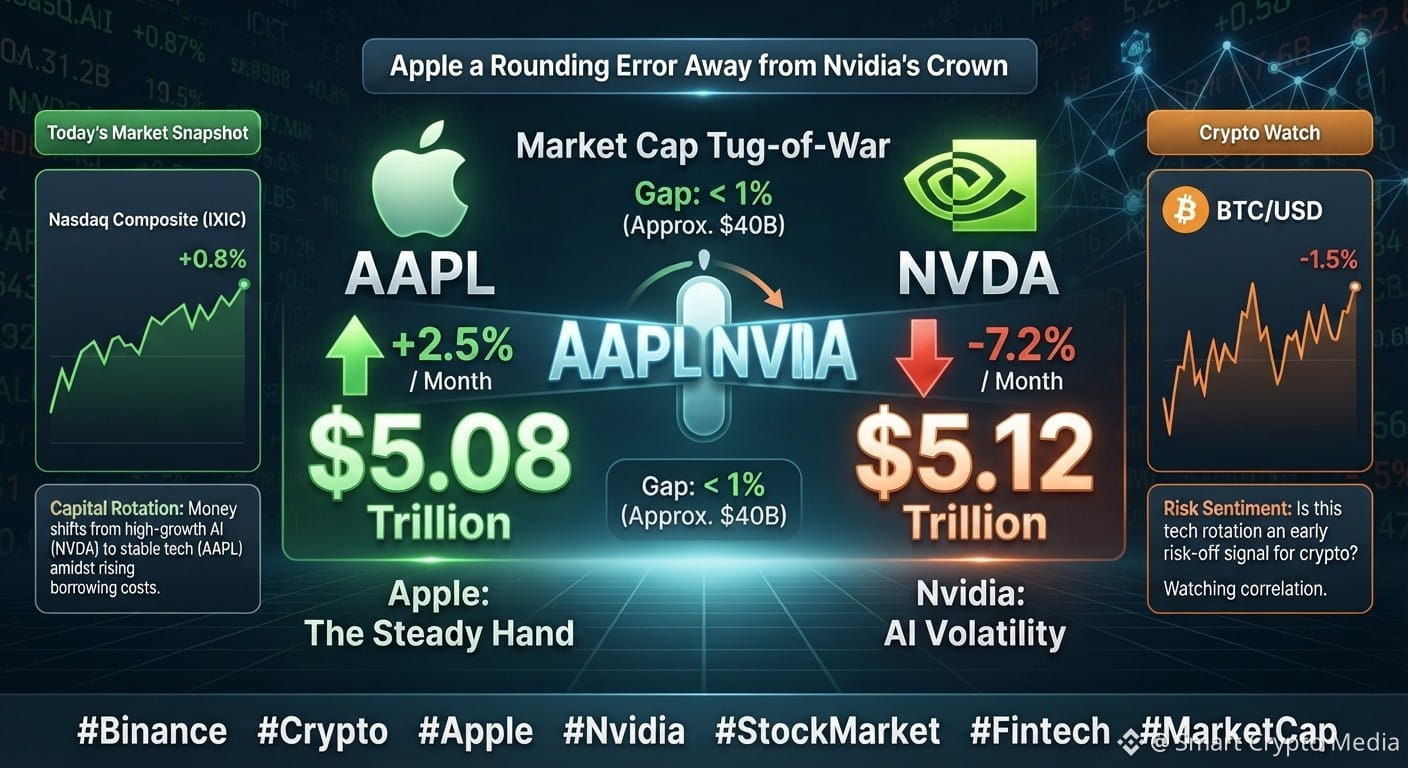
Apple is a rounding error away from Nvidia's crown
Apple and Nvidia are both sitting around $5.1 trillion right now, and Nvidia's lead is down to roughly $40 billion. That's under 1%. One ordinary green day for Apple could flip the whole ranking.
Over the past month Apple is up about 2.5%, while Nvidia has slid more than 7%. People are getting jumpy about how much money is going into AI, and Apple, which has mostly stayed out of that spending race, suddenly looks like the grown-up in the room.
Bloomberg called Apple a relative safe haven this week, as borrowing costs climb and companies funding AI buildouts feel the squeeze. That tracks with what I'd expect. When the hottest trade gets nervous, money rarely leaves the market. It just walks over to the names that feel sturdier.
Honestly, I wouldn't read much into the "world's most valuable company" headline. A gap that small can flip on a Tuesday. What I'd watch is whether the rotation out of AI keeps going, and what BTC does if it does. Does it hold its ground, or follow tech down like it has before?
Which way are you leaning: tech musical chairs, or an early risk-off signal for crypto?
#Crypto #Apple
107

The iPhone Duo was hyped as a godsend before launch, but one 23-minute review stripped it bare.
Tim Pan’s 10,000-fold test: the screen crease got deeper with every fold. After watching the review, tons of people turned around and canceled their orders.
Apple spent months putting together the launch event and who knows how much on advertising, but in the end, none of it could beat one YouTuber saying, “Don’t buy it.”
Two grand for a first-gen experimental product? Everyone who preordered one is a sucker. These days, you even have to queue up to get fleeced—and this time Apple put itself in line, too.
#iPhoneDuo #Apple

478

$AAPL
{future}(AAPLUSDT)
Holding Strong: Resistance Test Ahead
◆━━━━━━━━━━━━━━━━━━
Market Overview
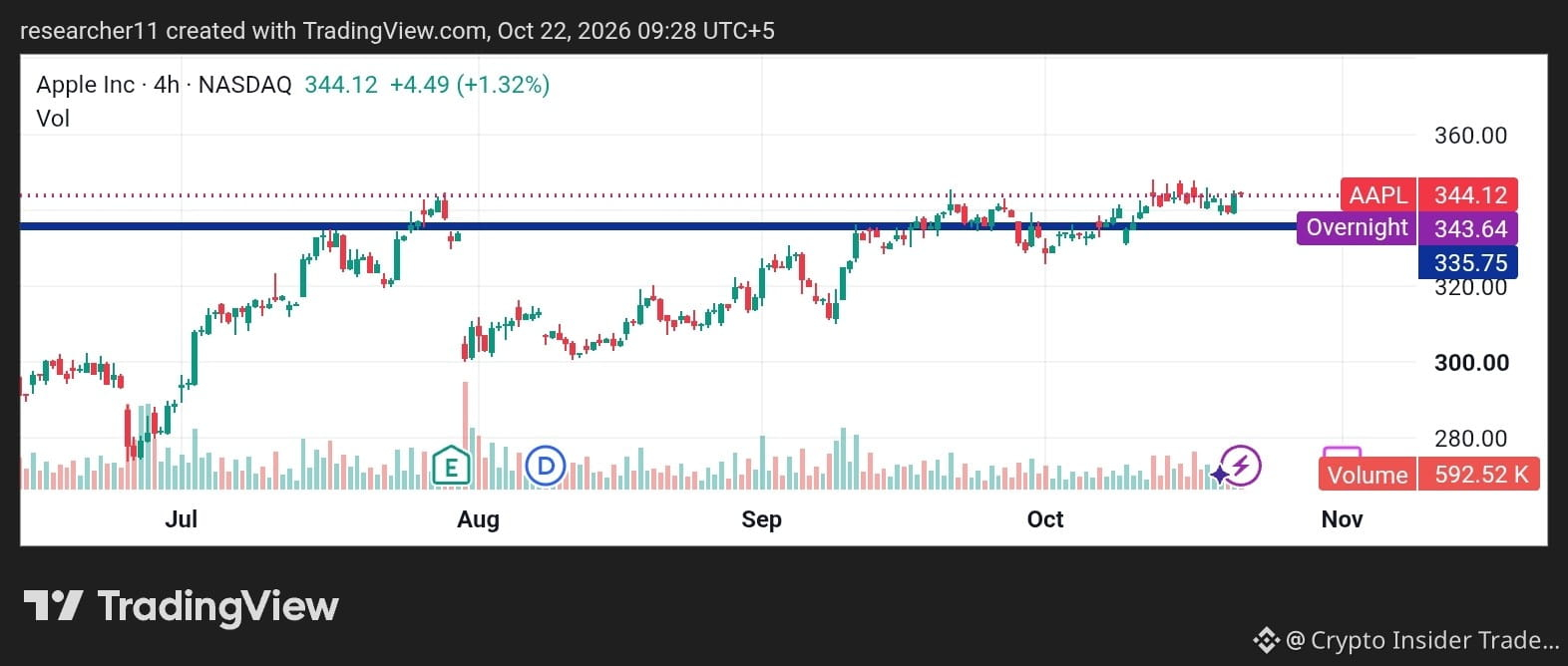
Apple is trading around $344.12 (+1.32%) on the 4H chart, extending a steady uptrend that began in July. Volatility has cooled in recent sessions, and price is compressing just under resistance, which often comes before a decisive move.
◆━━━━━━━━━━━━━━━━━━
Technical Analysis
The structure shows higher highs and higher lows since the summer, a classic bullish trend. The $335.75 zone has acted as a support base, and price keeps bouncing from it. The overnight price of $343.64 shows buyers are holding gains.
Resistance sits near $348 to $350, where several rejections occurred in October. Volume is moderate, so traders should look for a volume spike to confirm any breakout.
◆━━━━━━━━━━━━━━━━━━
Scenarios
🟢 Bullish Case: A strong 4H close above $350 with volume could signal trend continuation and fresh highs.
🔴 Bearish Case: A break below $335.75 could trigger a deeper pullback toward $320.
⚪ Neutral Case: Sideways consolidation between $336 and $348 while momentum builds.
◆━━━━━━━━━━━━━━━━━━
Key Levels
🔺 Resistance: R1 $348 | R2 $350+
🔻 Support: S1 $335.75 | S2 $320
◆━━━━━━━━━━━━━━━━━━
Outlook
AAPL remains in a healthy uptrend but is facing a key ceiling. The next move depends on whether buyers can push through $350 with conviction. Stay patient and let the chart confirm.
For informational purposes only. Not financial advice
#Apple #AAPL #EarningsSeason #ZcashDevelopersConfirmNovemberDateForNU7Upgrade #OCCIssuesFirstFinalRuleUnderGENIUSAct
$AAPL
Holding Strong: Resistance Test Ahead
◆━━━━━━━━━━━━━━━━━━
Market Overview
Apple is trading around $344.12 (+1.32%) on the 4H chart, extending a steady uptrend that began in July. Volatility has cooled in recent sessions, and price is compressing just under resistance, which often comes before a decisive move.
◆━━━━━━━━━━━━━━━━━━
Technical Analysis
The structure shows higher highs and higher lows since the summer, a classic bullish trend. The $335.75 zone has acted as a support base, and price keeps bouncing from it. The overnight price of $343.64 shows buyers are holding gains.
Resistance sits near $348 to $350, where several rejections occurred in October. Volume is moderate, so traders should look for a volume spike to confirm any breakout.
◆━━━━━━━━━━━━━━━━━━
Scenarios
🟢 Bullish Case: A strong 4H close above $350 with volume could signal trend continuation and fresh highs.
🔴 Bearish Case: A break below $335.75 could trigger a deeper pullback toward $320.
⚪ Neutral Case: Sideways consolidation between $336 and $348 while momentum builds.
◆━━━━━━━━━━━━━━━━━━
Key Levels
🔺 Resistance: R1 $348 | R2 $350+
🔻 Support: S1 $335.75 | S2 $320
◆━━━━━━━━━━━━━━━━━━
Outlook
AAPL remains in a healthy uptrend but is facing a key ceiling. The next move depends on whether buyers can push through $350 with conviction. Stay patient and let the chart confirm.
For informational purposes only. Not financial advice
#Apple #AAPL #EarningsSeason #ZcashDevelopersConfirmNovemberDateForNU7Upgrade #OCCIssuesFirstFinalRuleUnderGENIUSAct
237

Have you ordered yours yet?
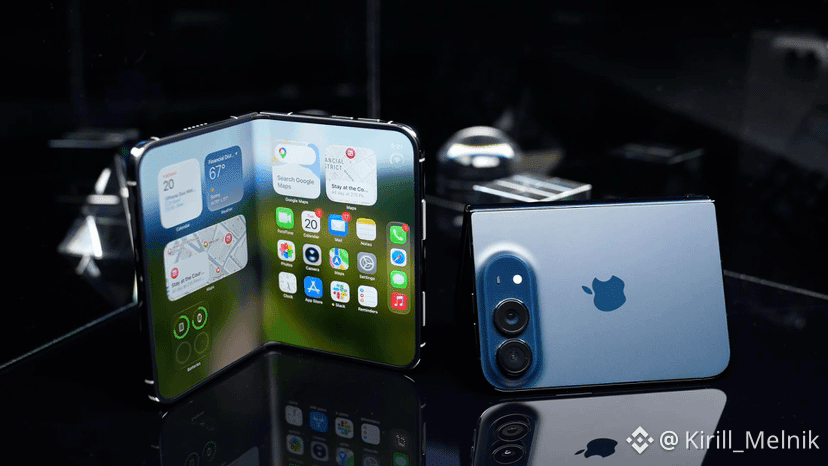
Apple plans to sell more iPhone Duos in their first year than Samsung has sold across eight generations of “Folds.”
Against the backdrop of record preorders, the company has nearly increased production of its foldable phone by half, from 9.7 million to 14 million units, Taiwanese publication DigiTimes reports, citing sources at Foxconn.
To be fair, the South Korean tech giant has never disclosed the exact number of Galaxy Z Folds shipped, but analysts estimate the total at 11–14 million units.
How quickly Apple will be able to meet the unprecedented demand for the iPhone Duo remains an open question.
Right now, everything hinges on Foxconn’s assembly capacity. Rumor has it that the foldable phone’s design is so complex that the company is still adjusting its equipment on the fly and refining production processes to find the optimal assembly rate for the “Duo.”
#Apple
1
927

·
--
🇬🇧 UK MOVES TO OPEN IPHONE CONTACTLESS PAYMENTS TO RIVALS
The UK’s Competition and Markets Authority (CMA) has proposed measures to give competing payment apps greater access to Apple’s iPhone contactless technology, alongside significantly lower access fees.
📱 What this could mean
- More competition for Apple Pay
- Greater opportunities for digital wallets and fintech companies
- Potentially lower barriers for rival payment providers
⚠️ The proposal is still under consultation, with the final outcome yet to be decided.
If implemented, the changes could reshape competition in the UK’s mobile payments market.
#Apple #UKNews #fintech #digitalpayments


54

#Apple ’s AI Edge May Be Underestimated 🍎🤖
Wedgewood Partners believes Apple’s AI advantage is underappreciated because of its deep hardware-software integration. Rather than selling AI compute, Apple can embed intelligence across iPhones, Macs, wearables, operating systems, and services to strengthen engagement and upgrade demand.
{spot}(AAPLBUSDT)
Apple closed at $343.46 on October 16, with a market cap near $5.01 trillion. The next proof point is whether AI features lift device demand and services usage without pressuring margins.
Can Apple turn its integrated ecosystem into the next major upgrade cycle?
$AAPLB $AAPL $AAPL.US #AAPL #AI #StockMarket #CoinVahini
#Apple ’s AI Edge May Be Underestimated 🍎🤖
Wedgewood Partners believes Apple’s AI advantage is underappreciated because of its deep hardware-software integration. Rather than selling AI compute, Apple can embed intelligence across iPhones, Macs, wearables, operating systems, and services to strengthen engagement and upgrade demand.
Apple closed at $343.46 on October 16, with a market cap near $5.01 trillion. The next proof point is whether AI features lift device demand and services usage without pressuring margins.
Can Apple turn its integrated ecosystem into the next major upgrade cycle?
$AAPLB $AAPL $AAPL.US #AAPL #AI #StockMarket #CoinVahini
343

·
--
Bullish
🍎 Breaking | Apple announces “Pro and Tell” event on October 28
Apple announced that it will hold a “Pro and Tell” event on October 28 in Los Angeles, amid widespread anticipation for the unveiling of its latest products and technology updates.
The event is drawing considerable attention from investors and technology industry followers, given the impact of Apple’s announcements on the markets for devices and advanced technologies.
As competition in the technology sector intensifies, the market is watching for any new signals regarding the company’s strategy and upcoming products.
$AAPL
#Apple #AppleEvent #technews #Innovation #AAPL

3
246

·
--
Verified
#Apple Everyone wants to get rich while doing nothing, but when an opportunity comes along, do you really have what it takes to seize it? 🤔🤔
Duan Yongping once again talked about his experience of making a big bet on Apple. He noted that at the time, Apple had a market cap of only around $300 billion, net cash of $100 billion, and annual profits of $15–16 billion. He could see that Apple’s future profits would certainly reach $50 billion a year or more.
So, when Apple’s stock price remained low because the company kept putting off launching a large-screen phone, Duan kept investing in Apple until it made up more than 95% of his portfolio. He had nearly exchanged all his other stocks for Apple.
He truly understood Apple and saw its potential. He knew that opportunities like this don’t come along often, so once you recognize one, you have to make a big bet.

francotraderr:
sigueme y te sigo
1
1
2.7k

$AAPLB
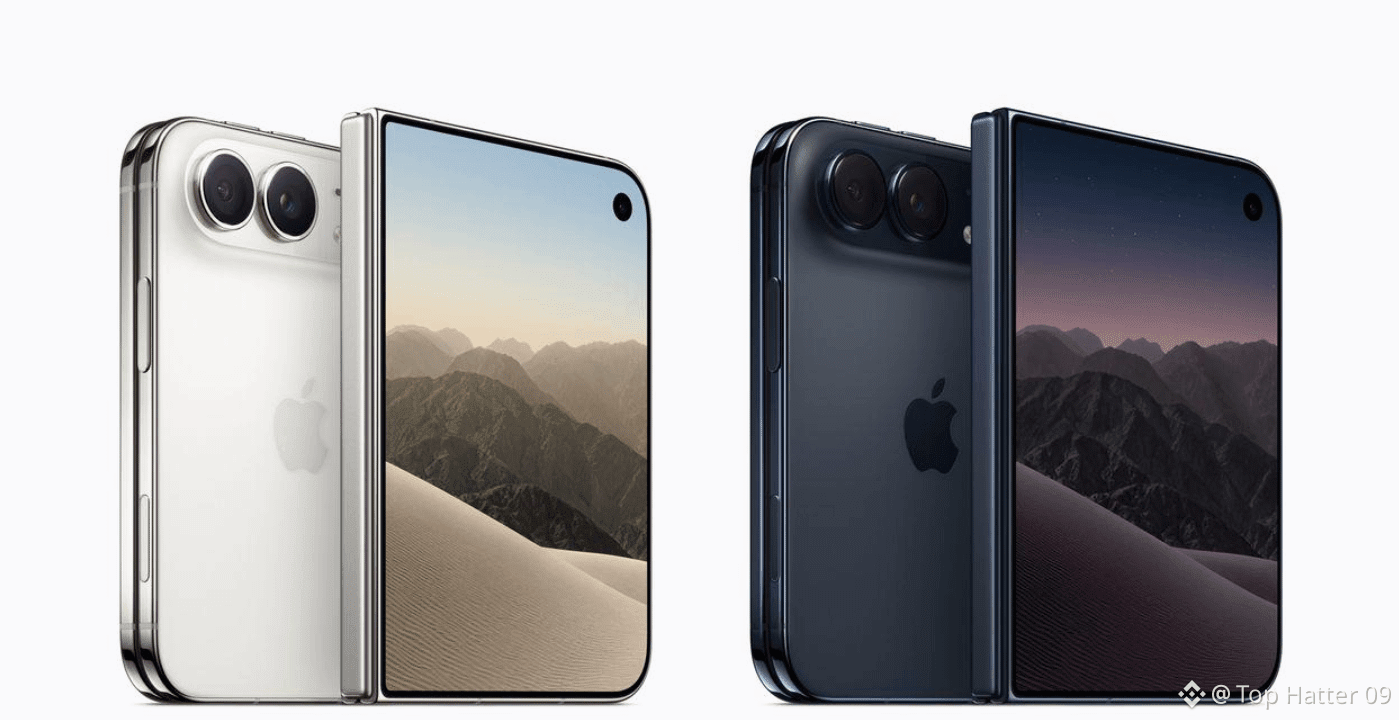
Apple's iPhone Duo is selling fast. But is it strong demand or limited supply?
Apple's first foldable iPhone is already creating an interesting situation for traders.
According to Mark Gurman, Apple pushed ahead with the October 23 launch despite production challenges that could have delayed availability until November.
Now there's another development.
Preorders opened on October 16, and delivery estimates for some configurations have already slipped into January 2027.
That sounds bullish at first.
But there's an important difference between strong demand and limited inventory.
Long delivery times could mean customers are rushing to buy the $1,999 device. They could also reflect Apple's difficulty producing enough units.
For traders watching $AAPLB, I think three things matter:
Demand: Are preorder volumes genuinely exceeding expectations?
Supply: Can Apple improve production and shorten delivery times?
Revenue: Will the launch translate into stronger sales and margins over the coming quarters?
I'm not treating long waiting lists as proof of a successful product launch just yet.
If demand stays strong and Apple fixes the supply issues, the Duo could become an important growth story.
But if production remains constrained, Apple could struggle to turn early excitement into near-term revenue.
The hype is already here. Now Apple needs to deliver the phones.
$AAPLB
{spot}(AAPLBUSDT)
#Apple #iPhoneDuo #AAPL #TokenizedStocks #StockMarket
$AAPLB
Apple's iPhone Duo is selling fast. But is it strong demand or limited supply?
Apple's first foldable iPhone is already creating an interesting situation for traders.
According to Mark Gurman, Apple pushed ahead with the October 23 launch despite production challenges that could have delayed availability until November.
Now there's another development.
Preorders opened on October 16, and delivery estimates for some configurations have already slipped into January 2027.
That sounds bullish at first.
But there's an important difference between strong demand and limited inventory.
Long delivery times could mean customers are rushing to buy the $1,999 device. They could also reflect Apple's difficulty producing enough units.
For traders watching $AAPLB , I think three things matter:
Demand: Are preorder volumes genuinely exceeding expectations?
Supply: Can Apple improve production and shorten delivery times?
Revenue: Will the launch translate into stronger sales and margins over the coming quarters?
I'm not treating long waiting lists as proof of a successful product launch just yet.
If demand stays strong and Apple fixes the supply issues, the Duo could become an important growth story.
But if production remains constrained, Apple could struggle to turn early excitement into near-term revenue.
The hype is already here. Now Apple needs to deliver the phones.
$AAPLB
#Apple #iPhoneDuo #AAPL #TokenizedStocks #StockMarket
179

·
--
Bullish
Verified
#RiksbankUrgesLawmakersToPrepareDigitalKronaLegislation 🚨 APPLE CROSSES $5 TRILLION — CAN THE RALLY CONTINUE? 🍎📈
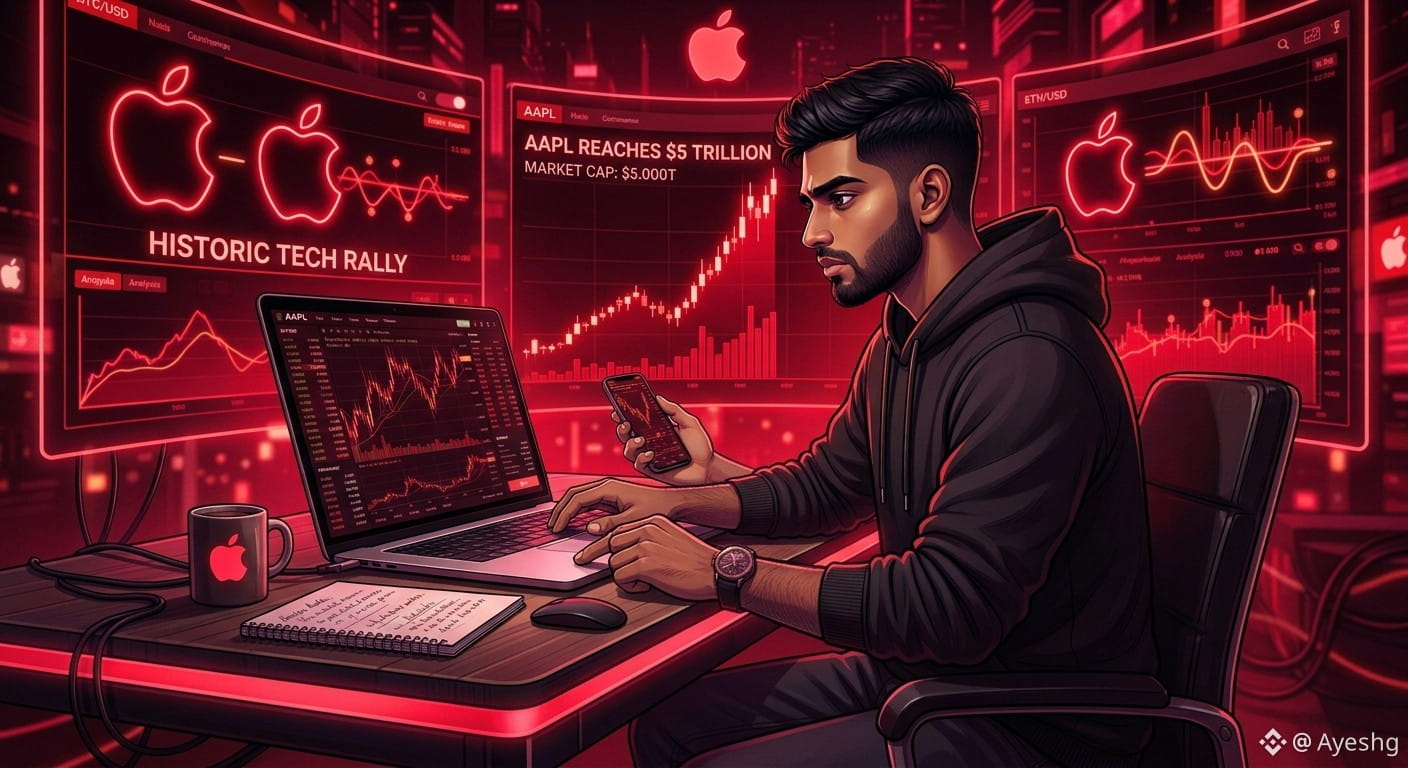
Apple ($AAPL) has reached a historic milestone, with its market capitalization reportedly closing above $5 trillion on October 14, 2026. The achievement highlights investor confidence in Apple's ecosystem, financial strength and long-term growth potential.
📱 WHAT IS DRIVING THE RALLY?
Apple's product ecosystem remains its biggest advantage. Its combination of iPhones, software, services and connected devices supports customer loyalty and recurring revenue. New product launches and potential upgrades could provide additional growth opportunities if consumer demand remains strong.
The company's ability to generate substantial cash flow also distinguishes it from businesses that depend heavily on future technology expectations. However, a record valuation creates higher expectations for future earnings.
⚠️ KEY RISKS TO WATCH
A $5 trillion market capitalization does not guarantee further gains. Slower iPhone upgrades, weaker consumer spending, disappointing product demand or increasing competition could pressure Apple's shares.
Artificial intelligence is another important factor. Investors will want evidence that Apple's AI development can improve its products, strengthen its ecosystem and create meaningful long-term value.
📊 WHAT COMES NEXT?
Strong product demand, expanding services revenue and better-than-expected earnings could support further upside. Conversely, disappointing results or a broader technology-stock correction could trigger profit-taking.
At this valuation, even small changes in growth expectations can influence market sentiment significantly.
🔎 MY TAKE
Apple's milestone reflects confidence in its business model, but sustaining momentum requires more than new product announcements. Investors should focus on earnings growth, customer demand, services performance and the company's ability to innovate.
$AAPLB $BTC $ETH
#Apple #AAPL #stockmarket #TechStocks
1
97

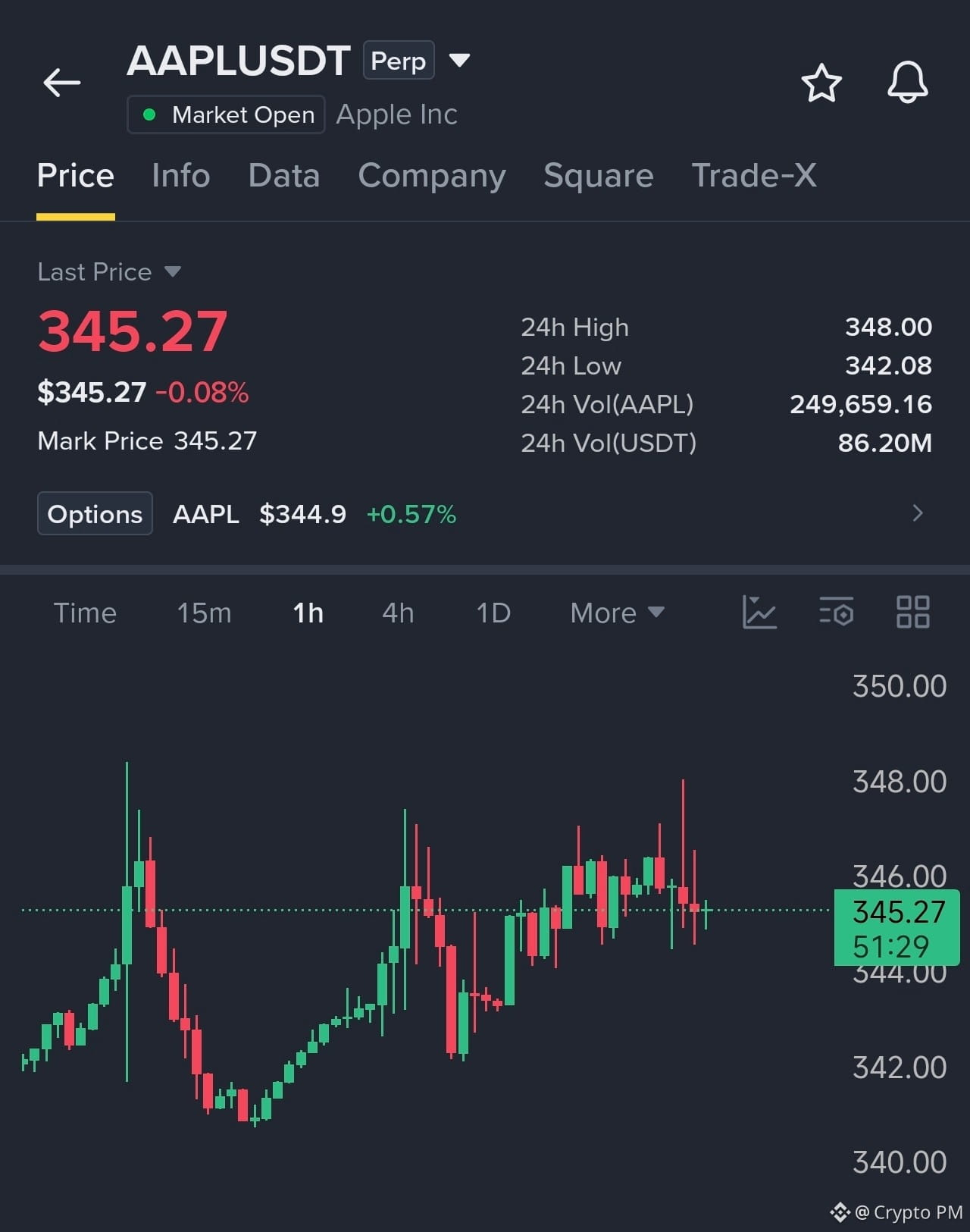
🚨 $AAPL CONFRONTS MASSIVE $1,499 REPAIR OVERHEAD ON NEW FOLDABLE RELEASE 📉
Institutional sentiment around $AAPL is absorbing structural friction as repair costs for the new foldable device reach up to $1,499, with display replacements alone tagged at $999. 🔍 Supply chain reports pointing to assembly yields hovering around 60% add noticeable execution pressure ahead of launch.
💡 Premium hardware pricing stretching up to $3,199 paired with steep maintenance creates an asymmetry that forces consumer capital into upfront protection plans. 📊 Market participants are monitoring whether order velocity stays resilient despite these structural cost hurdles. 🤔 Will high maintenance friction slow hardware adoption, or does brand equity absorb the risk? 👇
⚠️ Not financial advice. Always manage your risk. 🛡️
🏷️ #AAPL #Apple #TechNews #MarketStructure
🎯 🦈
7



·
--
Bullish
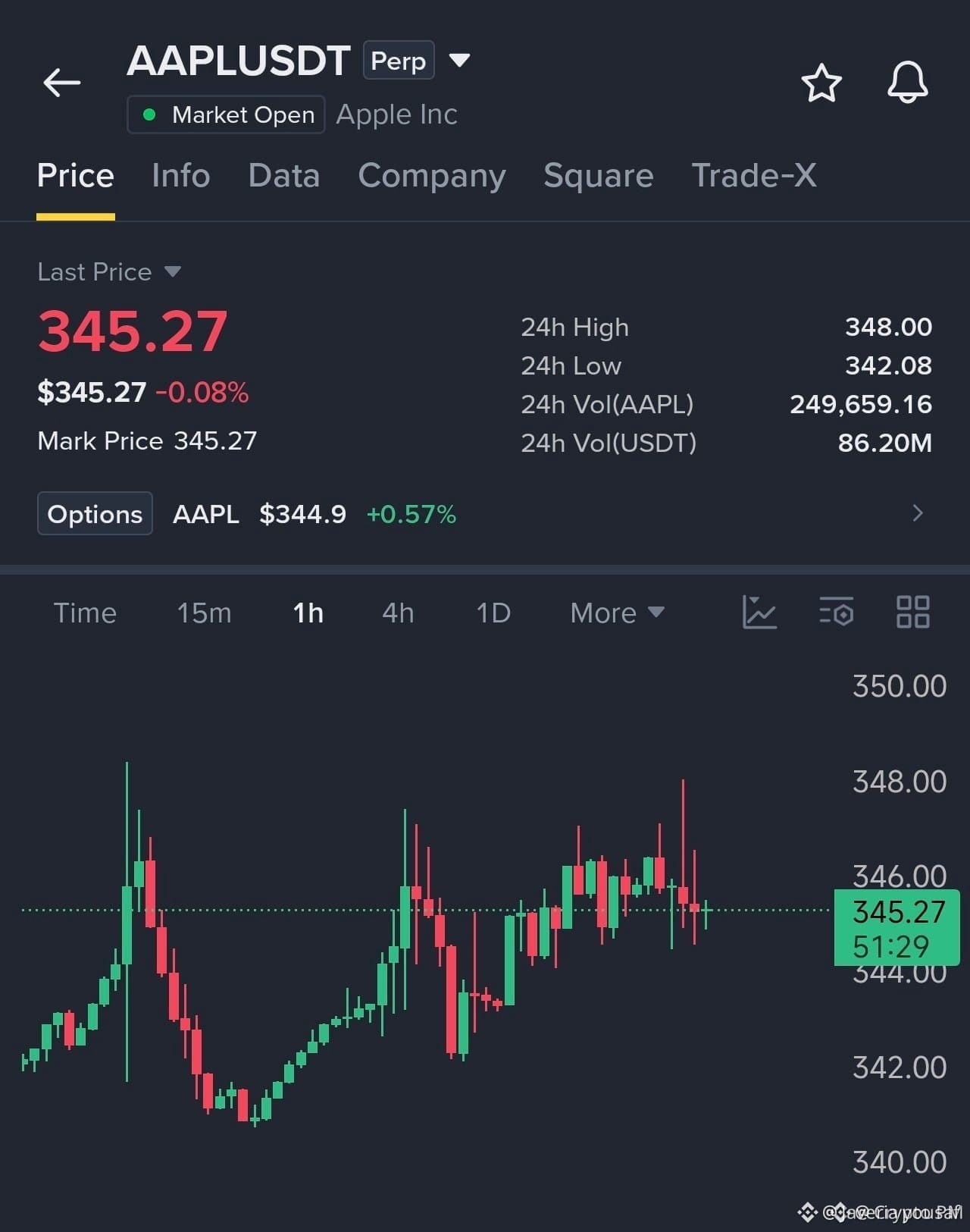
🚨 TRADE SIGNAL: $AAPL — LONG SETUP 🟢📈
Pair: AAPLUSDT Perpetual
Action: BUY / LONG
Leverage: 15x
Entry Zone: $341.07 – $344.50
🎯 Take Profit: $348.36
🛑 Stop Loss: $338.50
📅 Valid Until: 20 Oct 2026
Focus on disciplined execution and risk management. High leverage increases both potential profits and losses.
#AAPL #Apple #trading
{future}(AAPLUSDT)
🚨 TRADE SIGNAL: $AAPL — LONG SETUP 🟢📈
Pair: AAPLUSDT Perpetual
Action: BUY / LONG
Leverage: 15x
Entry Zone: $341.07 – $344.50
🎯 Take Profit: $348.36
🛑 Stop Loss: $338.50
📅 Valid Until: 20 Oct 2026
Focus on disciplined execution and risk management. High leverage increases both potential profits and losses.
#AAPL #Apple #trading
Pair: AAPLUSDT Perpetual
Action: BUY / LONG
Leverage: 15x
Entry Zone: $341.07 – $344.50
🎯 Take Profit: $348.36
🛑 Stop Loss: $338.50
📅 Valid Until: 20 Oct 2026
Focus on disciplined execution and risk management. High leverage increases both potential profits and losses.
#AAPL #Apple #trading
4

·
--
Bullish
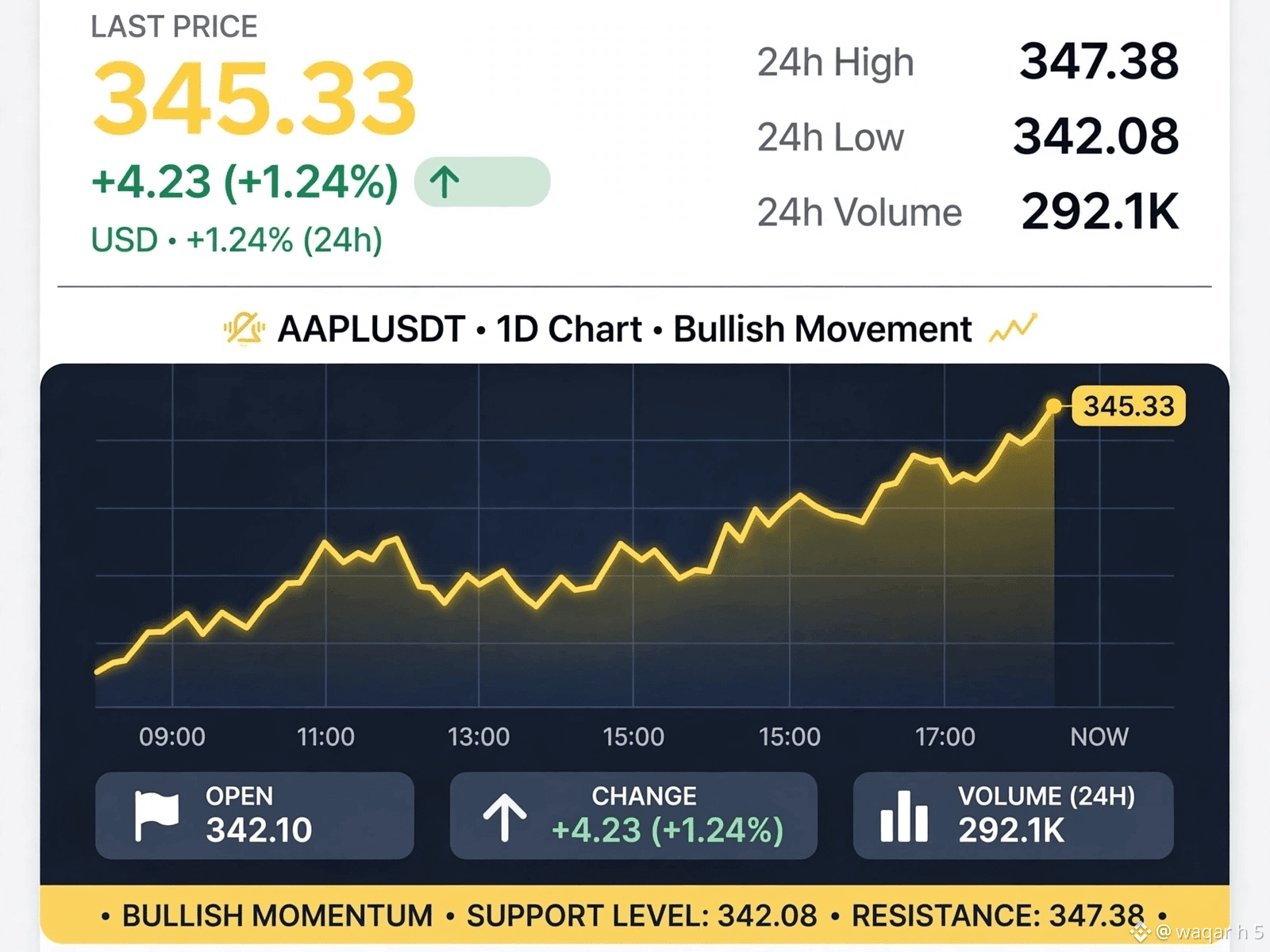
🍎 $AAPL on Binance — Apple is now tradable 24/7! 🔥
AAPLUSDT Perp is live at 345.33 (+0.33%) while Wall Street sleeps 😴
📊 24h High: 347.38
📉 24h Low: 342.08
💰 24h Vol: 92.91M USDT
📈 180 days: +27.80% 🚀
Stocks. Crypto. One app. No market hours. ⚡
Are you going LONG 🟢 or SHORT 🔴? Drop your call below 👇
👍 Like + 🔁 Share if you're watching Apple tonight!
#AAPLUSDT #Apple #BinanceSquare #Stocks #Perp #Trading #Crypto
144
·
--
Bullish
Verified
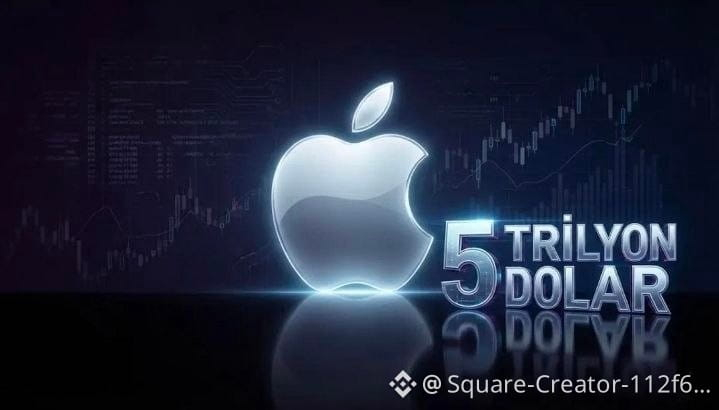
Apple surpasses $5 trillion in market value!
Apple shares ($AAPL ) closed at $342.96 on Wednesday, bringing its market capitalization to around $5.005 trillion and making it the second company in history to surpass this milestone, after Nvidia ($NVDA ).
What’s worth watching? Apple’s ability to maintain this valuation amid growing competition in the artificial intelligence sector.
Can Apple continue to grow in the next phase?
#Apple #AAPL #NVDA
4
144

·
--
🚨 $AAPL SUPPLY CHAIN ROTATION SIGNALS MASSIVE MARGIN EXPANSION AS PRO MAX DEMAND SURGES 📈
🔍 Institutional order flow within the supply chain confirms a 10% to 15% production reallocation from base Pro models into the higher-margin Pro Max. This strategic pivot directly elevates average selling prices, defending bottom-line margins despite conflicting retail demand narratives.
📊 While aggregate production volume remains flat, smart money recognizes that high-margin product mix optimization drives structural earnings outperformance. Lead times on the premium tier validate that liquidity is being absorbed at the top end of the catalog.
💡 Institutional positioning is leaning into margin expansion rather than raw unit volume. 💬 Do you expect this premium product shift to drive the next structural expansion for $AAPL ? 👇
⚠️ Not financial advice. Always manage your risk. 🛡️
🏷️ #AAPL #Apple #SmartMoney #TechStocks
🎯 🦈
11
Log in to explore more content
Join global crypto users on Binance Square
⚡️ Get latest and useful information about crypto.
💬 Trusted by the world’s largest crypto exchange.
👍 Discover real insights from verified creators.
Email / Phone number
Trending Topics
1
#BinancePick
2.7M views
142,841 Discussing
2
#EarningsSeason
5M views
24,509 Discussing
3
#SouthKoreaReportedlyWeighsFourthCryptoTaxDelay
2 views
13 Discussing
4
#FranklinTempletonFilesForTwoDividendToBitcoinETFs
4,146 views
163 Discussing
5
#StrategyMSTRSurpassesNasdaqInMarketCap
4,675 views
136 Discussing
6
#CanadaProposesStablecoinRedemptionWithin3BusinessDays
141 views
14 Discussing
7
#ElectrumWalletBugLetRogueServersStealFunds
10,595 views
271 Discussing
8
#ArgentineCourtDismissesLIBRACaseAgainstMilei
21,072 views
344 Discussing
9
#SKHynixReportedlyPlansSpecialDividendFromKioxiaStakeSale
3,347 views
48 Discussing
10
#KeystoneWebsiteBreachExposesBuyersShippingAddresses
1,759 views
41 Discussing