
O L I V I E
13.4k Posts

O L I V I E
Report
Block User

Traders League Badge Expert
Open Trade
Frequent Trader
1.2 Years
430 Following
19.4K+ Followers
21.4K+ Liked
1 Badges
Posts
Portfolio
All
Quotes
Live
PINNED
·
--

Article
Pixels and the Reality Behind Retro Game DesignThere is always a question that comes up when you look at games like Pixels. Is the retro pixel style a creative direction or just a practical shortcut? The honest answer is usually somewhere in the middle, and that is not a weakness. It is how most real products are built.
The 2D pixel look is often seen as nostalgia. People connect it to older games they grew up with, and that emotional layer is real. But nostalgia alone is not enough to keep players engaged in a live game for months or years. If the gameplay is not solid, no visual style can carry it for long.
What the pixel style does very well is clarity. In a 2D top-down world, everything is easy to read. Movement is simple. Objects are clear. You do not fight the camera or struggle to understand what is happening on screen. This makes long sessions less tiring, especially in games that require repetitive actions or constant attention.
There is also a production reality behind it. 2D assets are generally faster to create and easier to iterate. That means smaller teams can build and update content without the heavy cost of high-end 3D pipelines. Whether that decision started as budget control or artistic vision does not really matter in the end. What matters is that it allows the game to evolve faster.
Many modern indie games have taken the same path. Not because they lack ambition, but because they want speed and flexibility. A smaller art pipeline often means more focus on gameplay systems, economy design, and live updates. In a game that is constantly changing, that tradeoff can be very practical.
Another overlooked part is longevity. High fidelity 3D graphics age quickly. What looks impressive today can feel outdated in a few years. Pixel art tends to avoid that problem. It does not try to copy reality, so it is less sensitive to shifts in graphical expectations. A simple visual style can quietly remain stable for a long time without feeling broken.
But there is another layer in Pixels that makes the design more complex than it first appears. It is not just a game, it is also tied to a Web3 system. That creates an interesting contrast. On one side you have a very simple visual experience. On the other side you have token systems, rewards, and financial mechanics running underneath.
This is where perception can become tricky. A player entering the game for the first time sees something light and easy to understand. Farming loops, simple animations, and familiar controls. But behind that surface there are economic decisions that are far more complicated. That gap between appearance and system is something every Web3 game has to manage carefully.
The simplicity of the visuals helps onboarding, but it can also hide complexity. Some players might assume the entire system is straightforward because the world looks simple. In reality, the deeper layer requires more understanding if you want to fully engage with it.
Still, the strength of the design is that it does not overwhelm you at the start. It gives you space to learn at your own pace. You are not forced into complexity immediately. You can interact with the surface level of the game before you ever think about deeper mechanics.
What makes Pixels interesting is not that it is trying to be the most advanced visual experience. It is that it is trying to balance accessibility with systems that operate underneath. That is a difficult balance to maintain, and many projects fail either by being too complex too early or too shallow to stay interesting.
The pixel style, whether chosen for cost, clarity, or identity, ends up serving that balance well. It keeps the focus on interaction rather than presentation. It reduces friction in how players move through the world. And it gives the developers room to keep building without constantly rebuilding visual systems.
In the end, the art style is not the main argument. It is the structure it supports that matters more. A simple visual layer allows a more complex system underneath to exist without overwhelming the player from the start.
Whether that system holds up over time will depend less on how it looks and more on how it evolves.@pixels #pixel $PIXEL
Pixels and the Reality Behind Retro Game Design
There is always a question that comes up when you look at games like Pixels. Is the retro pixel style a creative direction or just a practical shortcut? The honest answer is usually somewhere in the middle, and that is not a weakness. It is how most real products are built.
The 2D pixel look is often seen as nostalgia. People connect it to older games they grew up with, and that emotional layer is real. But nostalgia alone is not enough to keep players engaged in a live game for months or years. If the gameplay is not solid, no visual style can carry it for long.
What the pixel style does very well is clarity. In a 2D top-down world, everything is easy to read. Movement is simple. Objects are clear. You do not fight the camera or struggle to understand what is happening on screen. This makes long sessions less tiring, especially in games that require repetitive actions or constant attention.
There is also a production reality behind it. 2D assets are generally faster to create and easier to iterate. That means smaller teams can build and update content without the heavy cost of high-end 3D pipelines. Whether that decision started as budget control or artistic vision does not really matter in the end. What matters is that it allows the game to evolve faster.
Many modern indie games have taken the same path. Not because they lack ambition, but because they want speed and flexibility. A smaller art pipeline often means more focus on gameplay systems, economy design, and live updates. In a game that is constantly changing, that tradeoff can be very practical.
Another overlooked part is longevity. High fidelity 3D graphics age quickly. What looks impressive today can feel outdated in a few years. Pixel art tends to avoid that problem. It does not try to copy reality, so it is less sensitive to shifts in graphical expectations. A simple visual style can quietly remain stable for a long time without feeling broken.
But there is another layer in Pixels that makes the design more complex than it first appears. It is not just a game, it is also tied to a Web3 system. That creates an interesting contrast. On one side you have a very simple visual experience. On the other side you have token systems, rewards, and financial mechanics running underneath.
This is where perception can become tricky. A player entering the game for the first time sees something light and easy to understand. Farming loops, simple animations, and familiar controls. But behind that surface there are economic decisions that are far more complicated. That gap between appearance and system is something every Web3 game has to manage carefully.
The simplicity of the visuals helps onboarding, but it can also hide complexity. Some players might assume the entire system is straightforward because the world looks simple. In reality, the deeper layer requires more understanding if you want to fully engage with it.
Still, the strength of the design is that it does not overwhelm you at the start. It gives you space to learn at your own pace. You are not forced into complexity immediately. You can interact with the surface level of the game before you ever think about deeper mechanics.
What makes Pixels interesting is not that it is trying to be the most advanced visual experience. It is that it is trying to balance accessibility with systems that operate underneath. That is a difficult balance to maintain, and many projects fail either by being too complex too early or too shallow to stay interesting.
The pixel style, whether chosen for cost, clarity, or identity, ends up serving that balance well. It keeps the focus on interaction rather than presentation. It reduces friction in how players move through the world. And it gives the developers room to keep building without constantly rebuilding visual systems.
In the end, the art style is not the main argument. It is the structure it supports that matters more. A simple visual layer allows a more complex system underneath to exist without overwhelming the player from the start.
Whether that system holds up over time will depend less on how it looks and more on how it evolves.@Pixels #pixel $PIXEL
The 2D pixel look is often seen as nostalgia. People connect it to older games they grew up with, and that emotional layer is real. But nostalgia alone is not enough to keep players engaged in a live game for months or years. If the gameplay is not solid, no visual style can carry it for long.
What the pixel style does very well is clarity. In a 2D top-down world, everything is easy to read. Movement is simple. Objects are clear. You do not fight the camera or struggle to understand what is happening on screen. This makes long sessions less tiring, especially in games that require repetitive actions or constant attention.
There is also a production reality behind it. 2D assets are generally faster to create and easier to iterate. That means smaller teams can build and update content without the heavy cost of high-end 3D pipelines. Whether that decision started as budget control or artistic vision does not really matter in the end. What matters is that it allows the game to evolve faster.
Many modern indie games have taken the same path. Not because they lack ambition, but because they want speed and flexibility. A smaller art pipeline often means more focus on gameplay systems, economy design, and live updates. In a game that is constantly changing, that tradeoff can be very practical.
Another overlooked part is longevity. High fidelity 3D graphics age quickly. What looks impressive today can feel outdated in a few years. Pixel art tends to avoid that problem. It does not try to copy reality, so it is less sensitive to shifts in graphical expectations. A simple visual style can quietly remain stable for a long time without feeling broken.
But there is another layer in Pixels that makes the design more complex than it first appears. It is not just a game, it is also tied to a Web3 system. That creates an interesting contrast. On one side you have a very simple visual experience. On the other side you have token systems, rewards, and financial mechanics running underneath.
This is where perception can become tricky. A player entering the game for the first time sees something light and easy to understand. Farming loops, simple animations, and familiar controls. But behind that surface there are economic decisions that are far more complicated. That gap between appearance and system is something every Web3 game has to manage carefully.
The simplicity of the visuals helps onboarding, but it can also hide complexity. Some players might assume the entire system is straightforward because the world looks simple. In reality, the deeper layer requires more understanding if you want to fully engage with it.
Still, the strength of the design is that it does not overwhelm you at the start. It gives you space to learn at your own pace. You are not forced into complexity immediately. You can interact with the surface level of the game before you ever think about deeper mechanics.
What makes Pixels interesting is not that it is trying to be the most advanced visual experience. It is that it is trying to balance accessibility with systems that operate underneath. That is a difficult balance to maintain, and many projects fail either by being too complex too early or too shallow to stay interesting.
The pixel style, whether chosen for cost, clarity, or identity, ends up serving that balance well. It keeps the focus on interaction rather than presentation. It reduces friction in how players move through the world. And it gives the developers room to keep building without constantly rebuilding visual systems.
In the end, the art style is not the main argument. It is the structure it supports that matters more. A simple visual layer allows a more complex system underneath to exist without overwhelming the player from the start.
Whether that system holds up over time will depend less on how it looks and more on how it evolves.@Pixels #pixel $PIXEL
5
25
268
·
--
Bitcoin Is Entering a New Phase: From Crypto Experiment to Global Financial AssetBitcoin has always been more than a price chart.
For years, the conversation around BTC was dominated by volatility, speculation, bull runs, crashes, and the question of whether cryptocurrencies would ever become part of mainstream finance.
That conversation is changing.
Bitcoin is increasingly being discussed alongside traditional financial assets, institutional portfolios, ETFs, macroeconomic policy, and global liquidity. The market is still highly volatile, but the infrastructure surrounding Bitcoin has become significantly more mature.
The biggest change may not be Bitcoin itself.
It is the financial system being built around it.
Institutional money is changing the market
The arrival and growth of spot Bitcoin ETFs created a much easier route for traditional investors to gain exposure to BTC without directly managing wallets or private keys.
That matters because many institutional investors were not necessarily opposed to Bitcoin. They were constrained by custody, compliance, operational complexity, and investment mandates.
ETFs helped remove some of those barriers. Institutional participation has since expanded across asset managers, wealth managers, family offices and other financial players.
This does not mean institutions are blindly buying Bitcoin.
Quite the opposite.
They are evaluating BTC through the same questions they apply to other assets: liquidity, volatility, portfolio construction, regulation, custody and risk management.
That is a sign of maturation.
Bitcoin is becoming increasingly connected to macroeconomics
Another important development is the way Bitcoin reacts to broader financial conditions.
Interest rates, Treasury yields, dollar strength, liquidity expectations and fiscal concerns can all influence BTC.
The recent rally above $80,000 has once again highlighted this relationship. A weaker dollar, changing expectations around U.S. policy and renewed institutional demand have contributed to the latest move.
This is important because Bitcoin is no longer trading in isolation.
Its market increasingly interacts with the same global liquidity environment that affects equities, commodities and other risk assets.
At the same time, Bitcoin retains characteristics that make it fundamentally different from traditional assets: a fixed maximum supply, decentralized settlement and the ability to operate without a central issuer.
That combination is what makes BTC so interesting.
The supply story still matters
Bitcoin's monetary design remains one of its strongest arguments.
There will never be more than 21 million BTC.
New bitcoin enters circulation through mining, and the issuance rate periodically decreases through the halving mechanism.
Demand, however, is not fixed.
If more investors, companies, funds or financial products want exposure to Bitcoin while the available supply remains limited, the resulting imbalance can create significant price movements.
But this should not be interpreted as a guarantee that Bitcoin will always rise.
Markets do not move according to simple supply-and-demand equations alone.
Leverage, liquidity, sentiment, regulation and macroeconomic conditions can produce extreme moves in both directions.
The next stage is about infrastructure
The most interesting Bitcoin story may therefore be bigger than BTC itself.
It is about infrastructure.
Custody providers, ETFs, regulated exchanges, derivatives markets, institutional research, compliance systems and financial products are gradually connecting Bitcoin with traditional finance.
Coinbase Research describes institutional crypto markets as becoming increasingly sophisticated, with investors gaining access to directional exposure, hedging, basis trading and other strategies.
That creates an ecosystem where Bitcoin can be used in more ways than simply buying and holding it.
But maturity also introduces new risks.
ETFs make access easier, but investors still face volatility and the trade-offs associated with custodial structures and tracking.
More financial products do not eliminate risk.
They simply make the market more accessible.
Volatility isn't going away
This is where investors need to remain realistic.
Bitcoin can rise dramatically, but it can also experience deep corrections.
Recent market history has repeatedly shown how quickly sentiment can change.
ETF inflows can support prices, while large outflows can create pressure. Macro uncertainty can shift risk appetite. Leverage can amplify both rallies and crashes.
So the fact that Bitcoin is becoming institutionalized does not mean it has become a low-risk asset.
It hasn't.
Bitcoin remains an asset where position sizing, time horizon and risk management matter enormously.
What happens next?
The future of Bitcoin probably won't be defined by one price target.
It will be defined by adoption.
If institutional participation continues expanding, regulatory frameworks become clearer, financial infrastructure keeps improving and Bitcoin continues attracting global demand, BTC could become an increasingly established component of the global financial system.
But there will still be periods of fear, speculation and sharp corrections.
That is part of the asset.
The real question is no longer simply:
“Will Bitcoin survive?”
The more interesting question is:
“What role will Bitcoin ultimately play in the global financial system?”
Bitcoin has already moved far beyond its early identity as an experiment in digital money.
Today, it sits at the intersection of technology, finance, monetary policy and global markets.
And that makes the next chapter of Bitcoin much bigger than another bull run.
It is about whether a decentralized digital asset can continue moving from the edge of finance toward the center of it.#BTC走势分析
Bitcoin Is Entering a New Phase: From Crypto Experiment to Global Financial Asset
Bitcoin has always been more than a price chart.
For years, the conversation around BTC was dominated by volatility, speculation, bull runs, crashes, and the question of whether cryptocurrencies would ever become part of mainstream finance.
That conversation is changing.
Bitcoin is increasingly being discussed alongside traditional financial assets, institutional portfolios, ETFs, macroeconomic policy, and global liquidity. The market is still highly volatile, but the infrastructure surrounding Bitcoin has become significantly more mature.
The biggest change may not be Bitcoin itself.
It is the financial system being built around it.
Institutional money is changing the market
The arrival and growth of spot Bitcoin ETFs created a much easier route for traditional investors to gain exposure to BTC without directly managing wallets or private keys.
That matters because many institutional investors were not necessarily opposed to Bitcoin. They were constrained by custody, compliance, operational complexity, and investment mandates.
ETFs helped remove some of those barriers. Institutional participation has since expanded across asset managers, wealth managers, family offices and other financial players.
This does not mean institutions are blindly buying Bitcoin.
Quite the opposite.
They are evaluating BTC through the same questions they apply to other assets: liquidity, volatility, portfolio construction, regulation, custody and risk management.
That is a sign of maturation.
Bitcoin is becoming increasingly connected to macroeconomics
Another important development is the way Bitcoin reacts to broader financial conditions.
Interest rates, Treasury yields, dollar strength, liquidity expectations and fiscal concerns can all influence BTC.
The recent rally above $80,000 has once again highlighted this relationship. A weaker dollar, changing expectations around U.S. policy and renewed institutional demand have contributed to the latest move.
This is important because Bitcoin is no longer trading in isolation.
Its market increasingly interacts with the same global liquidity environment that affects equities, commodities and other risk assets.
At the same time, Bitcoin retains characteristics that make it fundamentally different from traditional assets: a fixed maximum supply, decentralized settlement and the ability to operate without a central issuer.
That combination is what makes BTC so interesting.
The supply story still matters
Bitcoin's monetary design remains one of its strongest arguments.
There will never be more than 21 million BTC.
New bitcoin enters circulation through mining, and the issuance rate periodically decreases through the halving mechanism.
Demand, however, is not fixed.
If more investors, companies, funds or financial products want exposure to Bitcoin while the available supply remains limited, the resulting imbalance can create significant price movements.
But this should not be interpreted as a guarantee that Bitcoin will always rise.
Markets do not move according to simple supply-and-demand equations alone.
Leverage, liquidity, sentiment, regulation and macroeconomic conditions can produce extreme moves in both directions.
The next stage is about infrastructure
The most interesting Bitcoin story may therefore be bigger than BTC itself.
It is about infrastructure.
Custody providers, ETFs, regulated exchanges, derivatives markets, institutional research, compliance systems and financial products are gradually connecting Bitcoin with traditional finance.
Coinbase Research describes institutional crypto markets as becoming increasingly sophisticated, with investors gaining access to directional exposure, hedging, basis trading and other strategies.
That creates an ecosystem where Bitcoin can be used in more ways than simply buying and holding it.
But maturity also introduces new risks.
ETFs make access easier, but investors still face volatility and the trade-offs associated with custodial structures and tracking.
More financial products do not eliminate risk.
They simply make the market more accessible.
Volatility isn't going away
This is where investors need to remain realistic.
Bitcoin can rise dramatically, but it can also experience deep corrections.
Recent market history has repeatedly shown how quickly sentiment can change.
ETF inflows can support prices, while large outflows can create pressure. Macro uncertainty can shift risk appetite. Leverage can amplify both rallies and crashes.
So the fact that Bitcoin is becoming institutionalized does not mean it has become a low-risk asset.
It hasn't.
Bitcoin remains an asset where position sizing, time horizon and risk management matter enormously.
What happens next?
The future of Bitcoin probably won't be defined by one price target.
It will be defined by adoption.
If institutional participation continues expanding, regulatory frameworks become clearer, financial infrastructure keeps improving and Bitcoin continues attracting global demand, BTC could become an increasingly established component of the global financial system.
But there will still be periods of fear, speculation and sharp corrections.
That is part of the asset.
The real question is no longer simply:
“Will Bitcoin survive?”
The more interesting question is:
“What role will Bitcoin ultimately play in the global financial system?”
Bitcoin has already moved far beyond its early identity as an experiment in digital money.
Today, it sits at the intersection of technology, finance, monetary policy and global markets.
And that makes the next chapter of Bitcoin much bigger than another bull run.
It is about whether a decentralized digital asset can continue moving from the edge of finance toward the center of it.#BTC走势分析
For years, the conversation around BTC was dominated by volatility, speculation, bull runs, crashes, and the question of whether cryptocurrencies would ever become part of mainstream finance.
That conversation is changing.
Bitcoin is increasingly being discussed alongside traditional financial assets, institutional portfolios, ETFs, macroeconomic policy, and global liquidity. The market is still highly volatile, but the infrastructure surrounding Bitcoin has become significantly more mature.
The biggest change may not be Bitcoin itself.
It is the financial system being built around it.
Institutional money is changing the market
The arrival and growth of spot Bitcoin ETFs created a much easier route for traditional investors to gain exposure to BTC without directly managing wallets or private keys.
That matters because many institutional investors were not necessarily opposed to Bitcoin. They were constrained by custody, compliance, operational complexity, and investment mandates.
ETFs helped remove some of those barriers. Institutional participation has since expanded across asset managers, wealth managers, family offices and other financial players.
This does not mean institutions are blindly buying Bitcoin.
Quite the opposite.
They are evaluating BTC through the same questions they apply to other assets: liquidity, volatility, portfolio construction, regulation, custody and risk management.
That is a sign of maturation.
Bitcoin is becoming increasingly connected to macroeconomics
Another important development is the way Bitcoin reacts to broader financial conditions.
Interest rates, Treasury yields, dollar strength, liquidity expectations and fiscal concerns can all influence BTC.
The recent rally above $80,000 has once again highlighted this relationship. A weaker dollar, changing expectations around U.S. policy and renewed institutional demand have contributed to the latest move.
This is important because Bitcoin is no longer trading in isolation.
Its market increasingly interacts with the same global liquidity environment that affects equities, commodities and other risk assets.
At the same time, Bitcoin retains characteristics that make it fundamentally different from traditional assets: a fixed maximum supply, decentralized settlement and the ability to operate without a central issuer.
That combination is what makes BTC so interesting.
The supply story still matters
Bitcoin's monetary design remains one of its strongest arguments.
There will never be more than 21 million BTC.
New bitcoin enters circulation through mining, and the issuance rate periodically decreases through the halving mechanism.
Demand, however, is not fixed.
If more investors, companies, funds or financial products want exposure to Bitcoin while the available supply remains limited, the resulting imbalance can create significant price movements.
But this should not be interpreted as a guarantee that Bitcoin will always rise.
Markets do not move according to simple supply-and-demand equations alone.
Leverage, liquidity, sentiment, regulation and macroeconomic conditions can produce extreme moves in both directions.
The next stage is about infrastructure
The most interesting Bitcoin story may therefore be bigger than BTC itself.
It is about infrastructure.
Custody providers, ETFs, regulated exchanges, derivatives markets, institutional research, compliance systems and financial products are gradually connecting Bitcoin with traditional finance.
Coinbase Research describes institutional crypto markets as becoming increasingly sophisticated, with investors gaining access to directional exposure, hedging, basis trading and other strategies.
That creates an ecosystem where Bitcoin can be used in more ways than simply buying and holding it.
But maturity also introduces new risks.
ETFs make access easier, but investors still face volatility and the trade-offs associated with custodial structures and tracking.
More financial products do not eliminate risk.
They simply make the market more accessible.
Volatility isn't going away
This is where investors need to remain realistic.
Bitcoin can rise dramatically, but it can also experience deep corrections.
Recent market history has repeatedly shown how quickly sentiment can change.
ETF inflows can support prices, while large outflows can create pressure. Macro uncertainty can shift risk appetite. Leverage can amplify both rallies and crashes.
So the fact that Bitcoin is becoming institutionalized does not mean it has become a low-risk asset.
It hasn't.
Bitcoin remains an asset where position sizing, time horizon and risk management matter enormously.
What happens next?
The future of Bitcoin probably won't be defined by one price target.
It will be defined by adoption.
If institutional participation continues expanding, regulatory frameworks become clearer, financial infrastructure keeps improving and Bitcoin continues attracting global demand, BTC could become an increasingly established component of the global financial system.
But there will still be periods of fear, speculation and sharp corrections.
That is part of the asset.
The real question is no longer simply:
“Will Bitcoin survive?”
The more interesting question is:
“What role will Bitcoin ultimately play in the global financial system?”
Bitcoin has already moved far beyond its early identity as an experiment in digital money.
Today, it sits at the intersection of technology, finance, monetary policy and global markets.
And that makes the next chapter of Bitcoin much bigger than another bull run.
It is about whether a decentralized digital asset can continue moving from the edge of finance toward the center of it.#BTC走势分析
158
·
--
Article
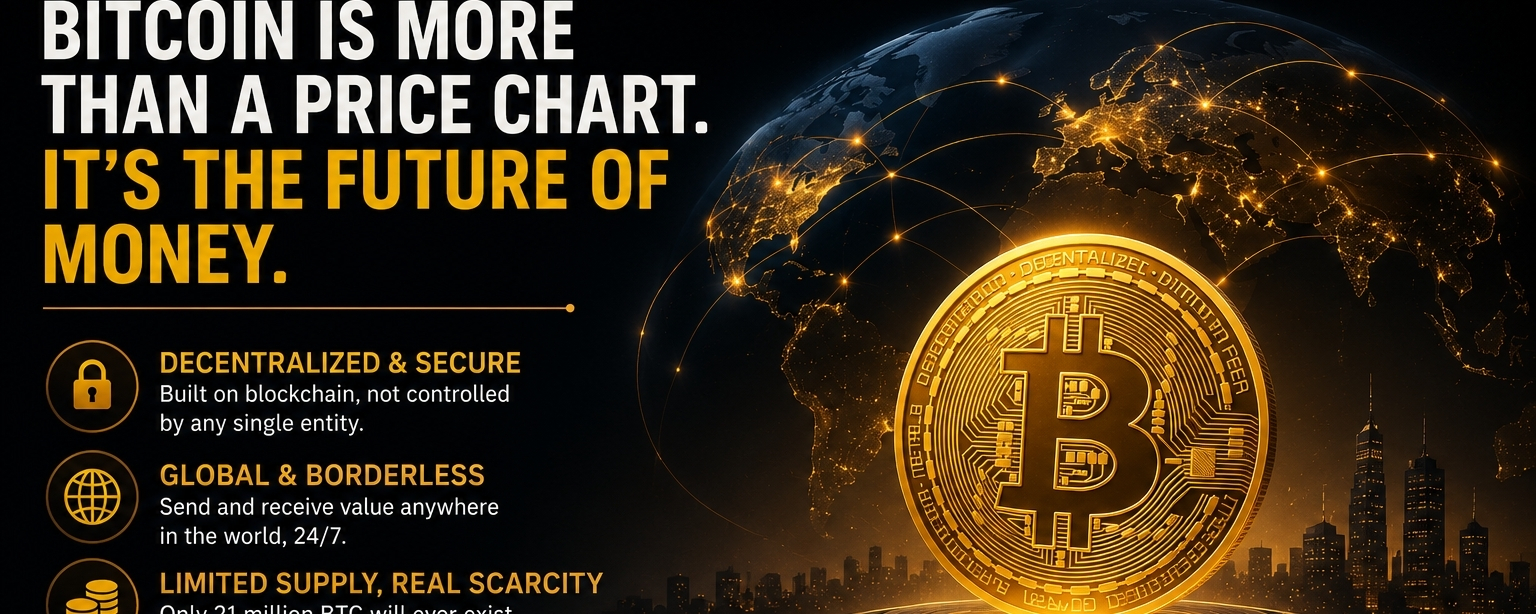
Bitcoin: The Evolution of a New Financial EraBitcoin started as an idea that challenged one of the oldest assumptions in finance: that money must always depend on a central authority.
Today, Bitcoin has grown far beyond that original concept. It has become one of the most discussed digital assets in the world, attracting investors, institutions, developers, businesses, and millions of individuals who are interested in the future of money.
But understanding Bitcoin is about more than watching its price move up or down.
What Makes Bitcoin Different?
Bitcoin operates on a decentralized blockchain network. Instead of relying on a single institution to maintain the system, transactions are verified and recorded across a distributed network of participants.
This structure gives Bitcoin several unique characteristics:
- A fixed maximum supply of 21 million BTC
- Decentralized transaction verification
- Transparent blockchain records
- Global accessibility
- The ability to transfer value without traditional banking infrastructure
These characteristics have helped Bitcoin develop a unique position within the digital economy.
Bitcoin and Scarcity
One of Bitcoin’s most important features is its limited supply.
Unlike currencies that can have their supply expanded through monetary policy, Bitcoin’s protocol has a predetermined maximum supply of 21 million coins.
This scarcity is one reason Bitcoin is often compared to digital gold.
However, scarcity alone does not create value. Bitcoin’s long-term significance also depends on adoption, security, liquidity, network activity, regulation, and how people choose to use it.
The Role of Bitcoin in a Changing Financial System
Financial markets are becoming increasingly digital.
People can transfer money across borders almost instantly, access financial information from their phones, and participate in global markets without being physically present in a financial center.
Bitcoin fits naturally into this broader digital transformation.
For some people, it represents an alternative form of money.
For others, it is a long-term asset.
For others still, Bitcoin represents an experiment in decentralized financial infrastructure.
The important point is that Bitcoin can mean different things to different participants.
Bitcoin Is More Than a Price Chart
Crypto markets often focus heavily on price.
A green candle can create excitement, while a sharp correction can create fear. Social media can quickly turn a small move into a major narrative.
But Bitcoin’s development cannot be measured only through daily price movements.
The bigger story includes network security, adoption, infrastructure, institutional participation, regulation, custody solutions, payment technology, and the continued development of the broader blockchain ecosystem.
Price is only one part of the Bitcoin story.
The Importance of Bitcoin Adoption
Every major technology goes through different stages of adoption.
At first, new technology is usually understood by a relatively small group of early users. Over time, infrastructure improves, education expands, and more people begin to understand its potential.
Bitcoin has already moved far beyond its earliest community.
Today, discussions around Bitcoin involve individual investors, financial institutions, technology companies, policymakers, payment providers, and businesses.
That growing participation has made Bitcoin an important part of conversations about the future of finance.
Bitcoin and Financial Freedom
Another important idea connected to Bitcoin is financial accessibility.
Traditional financial systems can sometimes create barriers based on geography, banking access, transfer infrastructure, or operating hours.
Bitcoin operates on a global network that is available around the clock.
This does not mean Bitcoin solves every financial problem, nor does it eliminate the need for traditional financial institutions.
Instead, it provides another way of thinking about how value can be stored and transferred in a digital world.
The Risks Matter Too
Bitcoin should not be viewed as a guaranteed path to wealth.
Its price can be highly volatile, and investors can experience significant gains as well as significant losses.
There are also risks involving security, scams, private-key management, regulation, liquidity, and market sentiment.
That is why understanding Bitcoin is more important than simply buying it because the market is moving higher.
A responsible approach starts with education.
Understand what you are buying, understand the risks, and never invest more than you can afford to lose.
Looking Toward the Future
The future of Bitcoin will likely depend on several factors.
Regulation will influence how businesses and financial institutions interact with digital assets.
Technology will continue improving the infrastructure surrounding Bitcoin.
Institutional participation could influence liquidity and market structure.
At the same time, ordinary users will continue determining whether Bitcoin becomes a meaningful part of everyday financial activity.
Nobody can predict exactly where Bitcoin will be years from now.
But one thing is clear: the conversation around decentralized digital money is no longer limited to a small group of technology enthusiasts.
Final Thoughts
Bitcoin represents one of the most interesting financial experiments of the digital age.
Its value proposition is built around decentralization, scarcity, transparency, and a global network that operates without a central monetary authority.
Whether someone views Bitcoin as digital gold, a technological innovation, an investment asset, or an alternative financial network, understanding its fundamentals is becoming increasingly important.
The biggest lesson is simple:
Bitcoin is not just about the next price target.
It is about a broader question:
What should money look like in a world that is becoming increasingly digital, global, and connected?
That question is still being explored, and Bitcoin remains at the center of the conversation.#BTC走势分析
Bitcoin: The Evolution of a New Financial Era
Bitcoin started as an idea that challenged one of the oldest assumptions in finance: that money must always depend on a central authority.
Today, Bitcoin has grown far beyond that original concept. It has become one of the most discussed digital assets in the world, attracting investors, institutions, developers, businesses, and millions of individuals who are interested in the future of money.
But understanding Bitcoin is about more than watching its price move up or down.
What Makes Bitcoin Different?
Bitcoin operates on a decentralized blockchain network. Instead of relying on a single institution to maintain the system, transactions are verified and recorded across a distributed network of participants.
This structure gives Bitcoin several unique characteristics:
- A fixed maximum supply of 21 million BTC
- Decentralized transaction verification
- Transparent blockchain records
- Global accessibility
- The ability to transfer value without traditional banking infrastructure
These characteristics have helped Bitcoin develop a unique position within the digital economy.
Bitcoin and Scarcity
One of Bitcoin’s most important features is its limited supply.
Unlike currencies that can have their supply expanded through monetary policy, Bitcoin’s protocol has a predetermined maximum supply of 21 million coins.
This scarcity is one reason Bitcoin is often compared to digital gold.
However, scarcity alone does not create value. Bitcoin’s long-term significance also depends on adoption, security, liquidity, network activity, regulation, and how people choose to use it.
The Role of Bitcoin in a Changing Financial System
Financial markets are becoming increasingly digital.
People can transfer money across borders almost instantly, access financial information from their phones, and participate in global markets without being physically present in a financial center.
Bitcoin fits naturally into this broader digital transformation.
For some people, it represents an alternative form of money.
For others, it is a long-term asset.
For others still, Bitcoin represents an experiment in decentralized financial infrastructure.
The important point is that Bitcoin can mean different things to different participants.
Bitcoin Is More Than a Price Chart
Crypto markets often focus heavily on price.
A green candle can create excitement, while a sharp correction can create fear. Social media can quickly turn a small move into a major narrative.
But Bitcoin’s development cannot be measured only through daily price movements.
The bigger story includes network security, adoption, infrastructure, institutional participation, regulation, custody solutions, payment technology, and the continued development of the broader blockchain ecosystem.
Price is only one part of the Bitcoin story.
The Importance of Bitcoin Adoption
Every major technology goes through different stages of adoption.
At first, new technology is usually understood by a relatively small group of early users. Over time, infrastructure improves, education expands, and more people begin to understand its potential.
Bitcoin has already moved far beyond its earliest community.
Today, discussions around Bitcoin involve individual investors, financial institutions, technology companies, policymakers, payment providers, and businesses.
That growing participation has made Bitcoin an important part of conversations about the future of finance.
Bitcoin and Financial Freedom
Another important idea connected to Bitcoin is financial accessibility.
Traditional financial systems can sometimes create barriers based on geography, banking access, transfer infrastructure, or operating hours.
Bitcoin operates on a global network that is available around the clock.
This does not mean Bitcoin solves every financial problem, nor does it eliminate the need for traditional financial institutions.
Instead, it provides another way of thinking about how value can be stored and transferred in a digital world.
The Risks Matter Too
Bitcoin should not be viewed as a guaranteed path to wealth.
Its price can be highly volatile, and investors can experience significant gains as well as significant losses.
There are also risks involving security, scams, private-key management, regulation, liquidity, and market sentiment.
That is why understanding Bitcoin is more important than simply buying it because the market is moving higher.
A responsible approach starts with education.
Understand what you are buying, understand the risks, and never invest more than you can afford to lose.
Looking Toward the Future
The future of Bitcoin will likely depend on several factors.
Regulation will influence how businesses and financial institutions interact with digital assets.
Technology will continue improving the infrastructure surrounding Bitcoin.
Institutional participation could influence liquidity and market structure.
At the same time, ordinary users will continue determining whether Bitcoin becomes a meaningful part of everyday financial activity.
Nobody can predict exactly where Bitcoin will be years from now.
But one thing is clear: the conversation around decentralized digital money is no longer limited to a small group of technology enthusiasts.
Final Thoughts
Bitcoin represents one of the most interesting financial experiments of the digital age.
Its value proposition is built around decentralization, scarcity, transparency, and a global network that operates without a central monetary authority.
Whether someone views Bitcoin as digital gold, a technological innovation, an investment asset, or an alternative financial network, understanding its fundamentals is becoming increasingly important.
The biggest lesson is simple:
Bitcoin is not just about the next price target.
It is about a broader question:
What should money look like in a world that is becoming increasingly digital, global, and connected?
That question is still being explored, and Bitcoin remains at the center of the conversation.#BTC走势分析
Today, Bitcoin has grown far beyond that original concept. It has become one of the most discussed digital assets in the world, attracting investors, institutions, developers, businesses, and millions of individuals who are interested in the future of money.
But understanding Bitcoin is about more than watching its price move up or down.
What Makes Bitcoin Different?
Bitcoin operates on a decentralized blockchain network. Instead of relying on a single institution to maintain the system, transactions are verified and recorded across a distributed network of participants.
This structure gives Bitcoin several unique characteristics:
- A fixed maximum supply of 21 million BTC
- Decentralized transaction verification
- Transparent blockchain records
- Global accessibility
- The ability to transfer value without traditional banking infrastructure
These characteristics have helped Bitcoin develop a unique position within the digital economy.
Bitcoin and Scarcity
One of Bitcoin’s most important features is its limited supply.
Unlike currencies that can have their supply expanded through monetary policy, Bitcoin’s protocol has a predetermined maximum supply of 21 million coins.
This scarcity is one reason Bitcoin is often compared to digital gold.
However, scarcity alone does not create value. Bitcoin’s long-term significance also depends on adoption, security, liquidity, network activity, regulation, and how people choose to use it.
The Role of Bitcoin in a Changing Financial System
Financial markets are becoming increasingly digital.
People can transfer money across borders almost instantly, access financial information from their phones, and participate in global markets without being physically present in a financial center.
Bitcoin fits naturally into this broader digital transformation.
For some people, it represents an alternative form of money.
For others, it is a long-term asset.
For others still, Bitcoin represents an experiment in decentralized financial infrastructure.
The important point is that Bitcoin can mean different things to different participants.
Bitcoin Is More Than a Price Chart
Crypto markets often focus heavily on price.
A green candle can create excitement, while a sharp correction can create fear. Social media can quickly turn a small move into a major narrative.
But Bitcoin’s development cannot be measured only through daily price movements.
The bigger story includes network security, adoption, infrastructure, institutional participation, regulation, custody solutions, payment technology, and the continued development of the broader blockchain ecosystem.
Price is only one part of the Bitcoin story.
The Importance of Bitcoin Adoption
Every major technology goes through different stages of adoption.
At first, new technology is usually understood by a relatively small group of early users. Over time, infrastructure improves, education expands, and more people begin to understand its potential.
Bitcoin has already moved far beyond its earliest community.
Today, discussions around Bitcoin involve individual investors, financial institutions, technology companies, policymakers, payment providers, and businesses.
That growing participation has made Bitcoin an important part of conversations about the future of finance.
Bitcoin and Financial Freedom
Another important idea connected to Bitcoin is financial accessibility.
Traditional financial systems can sometimes create barriers based on geography, banking access, transfer infrastructure, or operating hours.
Bitcoin operates on a global network that is available around the clock.
This does not mean Bitcoin solves every financial problem, nor does it eliminate the need for traditional financial institutions.
Instead, it provides another way of thinking about how value can be stored and transferred in a digital world.
The Risks Matter Too
Bitcoin should not be viewed as a guaranteed path to wealth.
Its price can be highly volatile, and investors can experience significant gains as well as significant losses.
There are also risks involving security, scams, private-key management, regulation, liquidity, and market sentiment.
That is why understanding Bitcoin is more important than simply buying it because the market is moving higher.
A responsible approach starts with education.
Understand what you are buying, understand the risks, and never invest more than you can afford to lose.
Looking Toward the Future
The future of Bitcoin will likely depend on several factors.
Regulation will influence how businesses and financial institutions interact with digital assets.
Technology will continue improving the infrastructure surrounding Bitcoin.
Institutional participation could influence liquidity and market structure.
At the same time, ordinary users will continue determining whether Bitcoin becomes a meaningful part of everyday financial activity.
Nobody can predict exactly where Bitcoin will be years from now.
But one thing is clear: the conversation around decentralized digital money is no longer limited to a small group of technology enthusiasts.
Final Thoughts
Bitcoin represents one of the most interesting financial experiments of the digital age.
Its value proposition is built around decentralization, scarcity, transparency, and a global network that operates without a central monetary authority.
Whether someone views Bitcoin as digital gold, a technological innovation, an investment asset, or an alternative financial network, understanding its fundamentals is becoming increasingly important.
The biggest lesson is simple:
Bitcoin is not just about the next price target.
It is about a broader question:
What should money look like in a world that is becoming increasingly digital, global, and connected?
That question is still being explored, and Bitcoin remains at the center of the conversation.#BTC走势分析
1
174
·
--
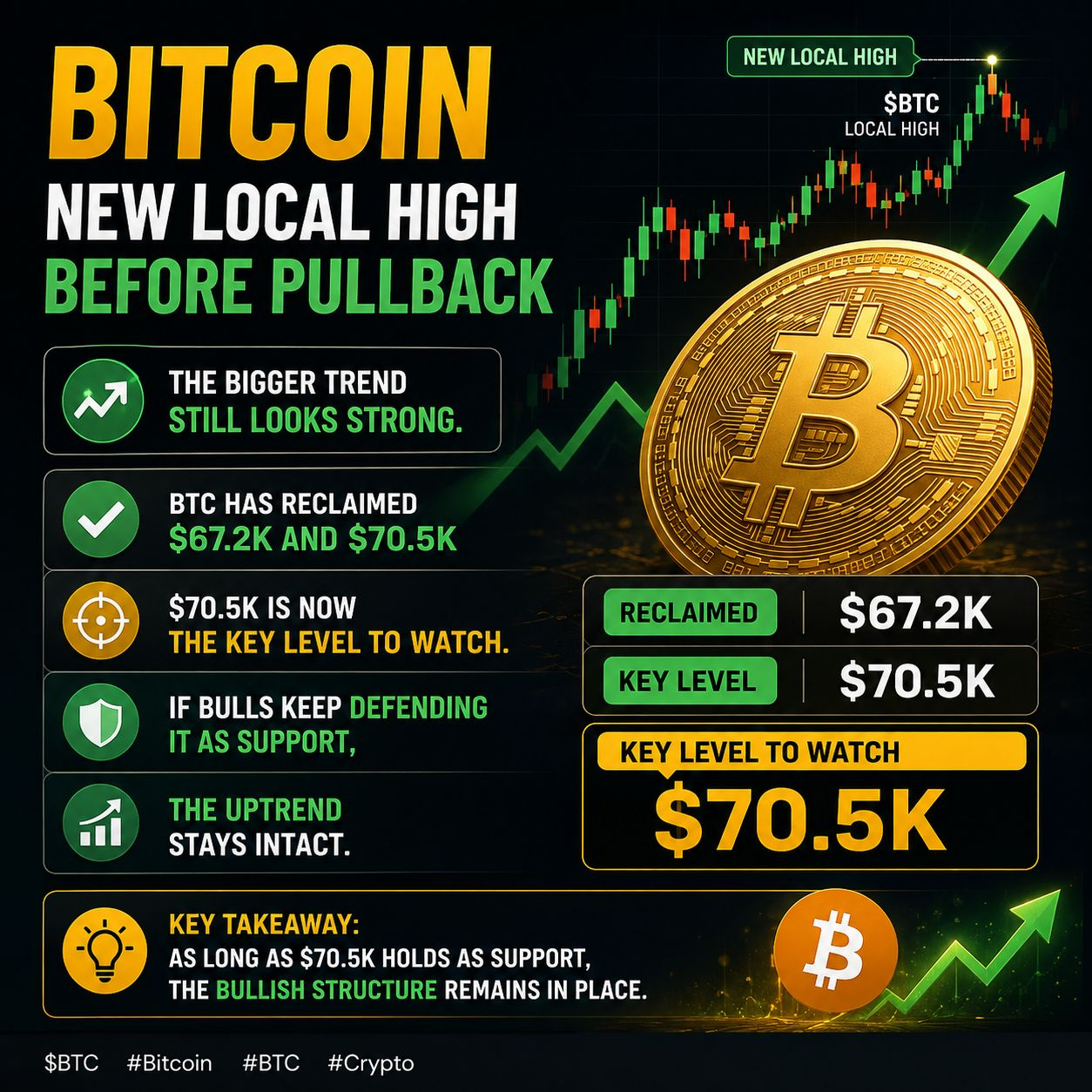
Bitcoin just reached a fresh local high before experiencing a minor pullback. 📈
The broader market structure still looks bullish.
BTC has reclaimed the $67.2K and $70.5K levels, with $70.5K now serving as the key support to monitor.
If buyers continue defending this area, the current uptrend could remain strong. 👀
$BTC #Bitcoin #BTC
Bitcoin just reached a fresh local high before experiencing a minor pullback. 📈
The broader market structure still looks bullish.
BTC has reclaimed the $67.2K and $70.5K levels, with $70.5K now serving as the key support to monitor.
If buyers continue defending this area, the current uptrend could remain strong. 👀
$BTC #Bitcoin #BTC
The broader market structure still looks bullish.
BTC has reclaimed the $67.2K and $70.5K levels, with $70.5K now serving as the key support to monitor.
If buyers continue defending this area, the current uptrend could remain strong. 👀
$BTC #Bitcoin #BTC
1
198
·
--
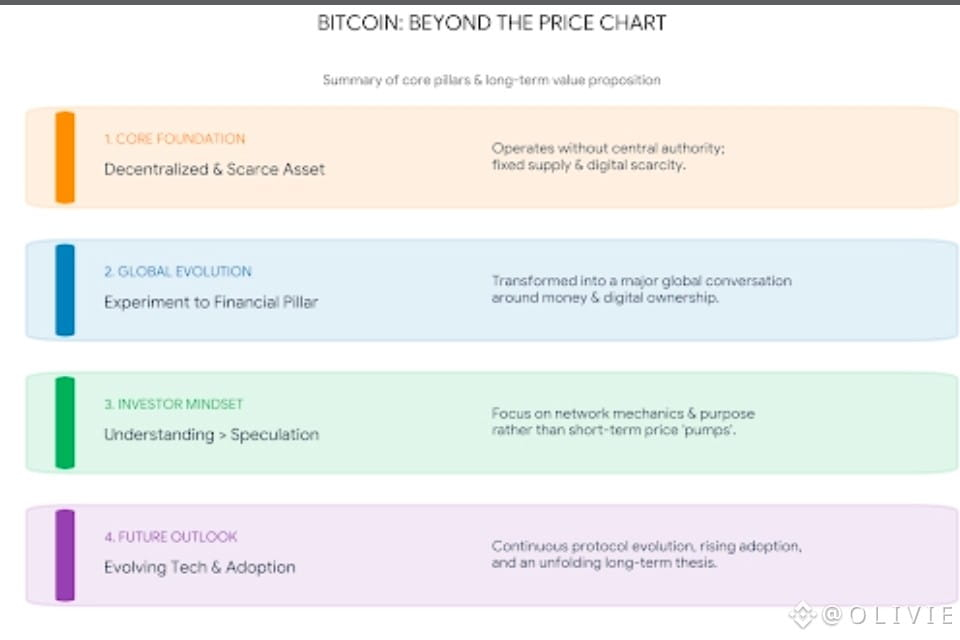
Bitcoin is more than just a price chart.
What makes BTC interesting is the idea behind it: a decentralized, scarce digital asset that operates without relying on a single central authority.
Over the years, Bitcoin has grown from an experiment into a major part of the global conversation around money, technology, and digital ownership.
For many investors, the biggest lesson isn’t about predicting the next pump. It’s understanding why Bitcoin was created, how its network works, and what role it could play in a changing financial system.
The technology keeps evolving, adoption keeps growing, and the conversation around Bitcoin continues to expand.
The long-term story is still being written. #BTC走势分析
Bitcoin is more than just a price chart.
What makes BTC interesting is the idea behind it: a decentralized, scarce digital asset that operates without relying on a single central authority.
Over the years, Bitcoin has grown from an experiment into a major part of the global conversation around money, technology, and digital ownership.
For many investors, the biggest lesson isn’t about predicting the next pump. It’s understanding why Bitcoin was created, how its network works, and what role it could play in a changing financial system.
The technology keeps evolving, adoption keeps growing, and the conversation around Bitcoin continues to expand.
The long-term story is still being written. #BTC走势分析
What makes BTC interesting is the idea behind it: a decentralized, scarce digital asset that operates without relying on a single central authority.
Over the years, Bitcoin has grown from an experiment into a major part of the global conversation around money, technology, and digital ownership.
For many investors, the biggest lesson isn’t about predicting the next pump. It’s understanding why Bitcoin was created, how its network works, and what role it could play in a changing financial system.
The technology keeps evolving, adoption keeps growing, and the conversation around Bitcoin continues to expand.
The long-term story is still being written. #BTC走势分析
243
·
--
Are you saying this whole meetup was just a trap to get us liquidated? 😂
At this point, it really does feel that way.
Still, I’m not bullish on $BTC right now.
Are you saying this whole meetup was just a trap to get us liquidated? 😂
At this point, it really does feel that way.
Still, I’m not bullish on $BTC right now.
At this point, it really does feel that way.
Still, I’m not bullish on $BTC right now.
120
·
--
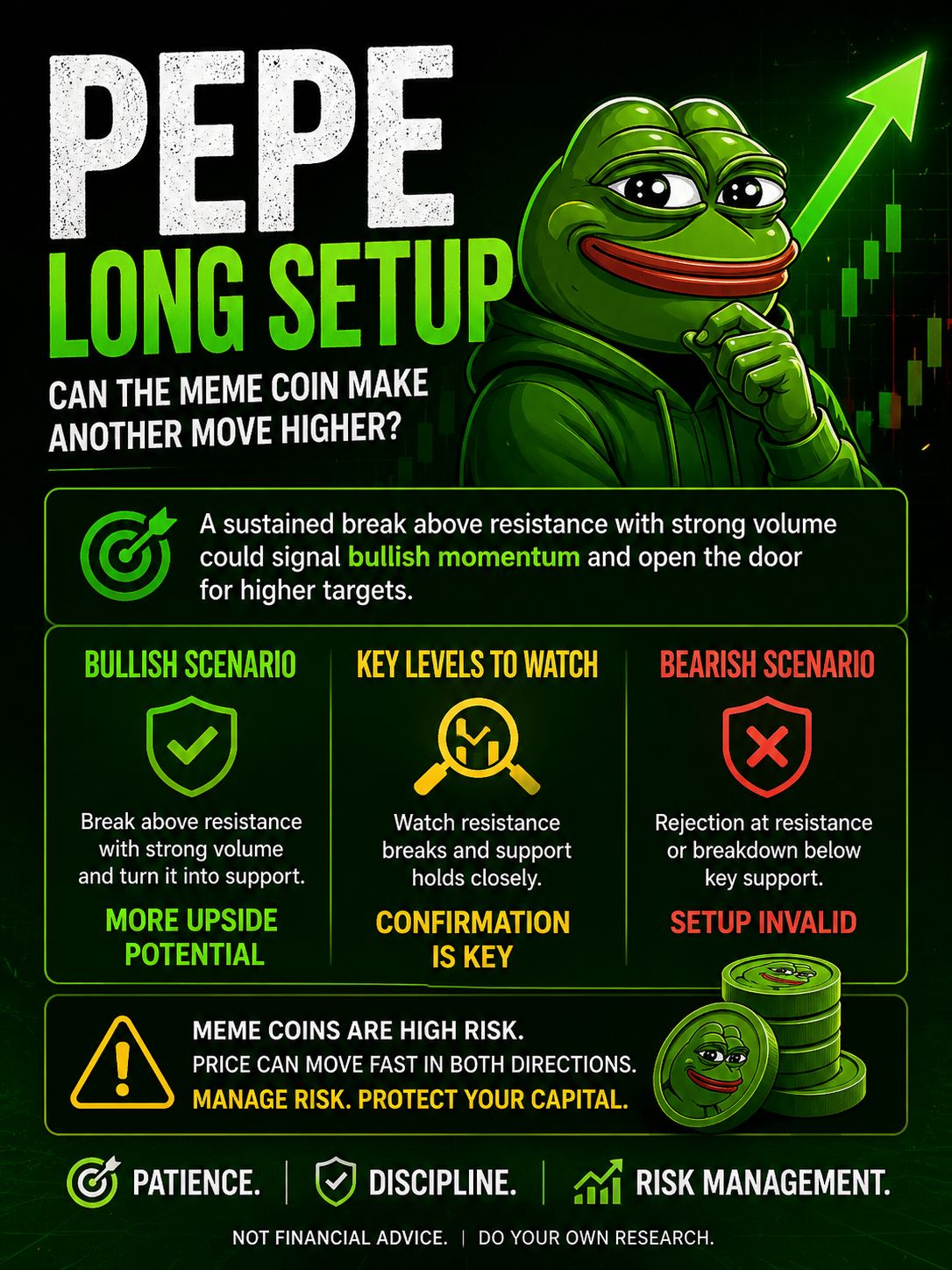
PEPE Long Setup: Can the Meme Coin Make Another Move Higher?
PEPE continues to attract attention whenever momentum returns to the meme-coin market. After periods of consolidation and sharp pullbacks, traders are once again watching for signs that buyers could regain control.
The key for a PEPE long setup is confirmation rather than simply chasing a sudden pump. A sustained move above recent resistance, supported by increasing volume, could signal that bullish momentum is returning. If buyers manage to turn that resistance into support, PEPE could have room to test higher levels.
At the same time, risk management remains important. Meme coins can move quickly in both directions, so a rejection at resistance or a breakdown below key support could invalidate the bullish setup.
For now, PEPE remains an interesting coin to watch as market sentiment improves. The combination of renewed trading volume, strong community interest, and broader meme-coin momentum could create opportunities—but patience and disciplined risk management are still essential.#BTC突破7万大关 #PEPE创历史新高
PEPE Long Setup: Can the Meme Coin Make Another Move Higher?
PEPE continues to attract attention whenever momentum returns to the meme-coin market. After periods of consolidation and sharp pullbacks, traders are once again watching for signs that buyers could regain control.
The key for a PEPE long setup is confirmation rather than simply chasing a sudden pump. A sustained move above recent resistance, supported by increasing volume, could signal that bullish momentum is returning. If buyers manage to turn that resistance into support, PEPE could have room to test higher levels.
At the same time, risk management remains important. Meme coins can move quickly in both directions, so a rejection at resistance or a breakdown below key support could invalidate the bullish setup.
For now, PEPE remains an interesting coin to watch as market sentiment improves. The combination of renewed trading volume, strong community interest, and broader meme-coin momentum could create opportunities—but patience and disciplined risk management are still essential.#BTC突破7万大关 #PEPE创历史新高
PEPE continues to attract attention whenever momentum returns to the meme-coin market. After periods of consolidation and sharp pullbacks, traders are once again watching for signs that buyers could regain control.
The key for a PEPE long setup is confirmation rather than simply chasing a sudden pump. A sustained move above recent resistance, supported by increasing volume, could signal that bullish momentum is returning. If buyers manage to turn that resistance into support, PEPE could have room to test higher levels.
At the same time, risk management remains important. Meme coins can move quickly in both directions, so a rejection at resistance or a breakdown below key support could invalidate the bullish setup.
For now, PEPE remains an interesting coin to watch as market sentiment improves. The combination of renewed trading volume, strong community interest, and broader meme-coin momentum could create opportunities—but patience and disciplined risk management are still essential.#BTC突破7万大关 #PEPE创历史新高
318
·
--
Article
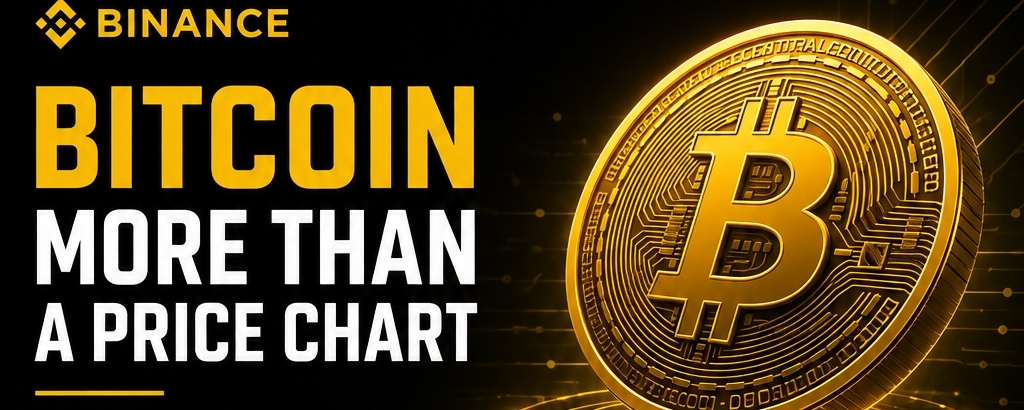
Bitcoin: Understanding the World's Leading CryptocurrencyBitcoin has grown from an experimental digital currency into one of the most recognized assets in the global financial market. Since its launch in 2009, Bitcoin has attracted investors, traders, developers, institutions, and everyday users who are interested in the idea of a decentralized form of money.
But Bitcoin is more than a price chart. To understand why it continues to attract attention, it is important to understand what Bitcoin is, how it works, why it has value, and what risks come with owning it.
What Is Bitcoin?
Bitcoin is a decentralized digital asset that operates without a central bank or single organization controlling the network.
Instead, transactions are recorded on a public blockchain. The network is maintained by participants around the world, making it possible to transfer Bitcoin without relying on a traditional financial intermediary for every transaction.
Bitcoin can be sent directly between users, stored in digital wallets, and traded on cryptocurrency exchanges.
Its decentralized structure is one of the main reasons Bitcoin is fundamentally different from traditional currencies.
Why Was Bitcoin Created?
Bitcoin emerged in the aftermath of the 2008 global financial crisis. Its creator, using the pseudonym Satoshi Nakamoto, introduced a system designed to allow people to transfer value digitally without depending entirely on centralized financial institutions.
The Bitcoin network combines cryptography, a public ledger, and a consensus mechanism to verify transactions and maintain the integrity of the system.
The idea was simple but ambitious: create digital money that could operate on a global network without requiring a central authority to issue or control every transaction.
Bitcoin's Limited Supply
One of Bitcoin's most discussed characteristics is its limited supply.
The Bitcoin protocol is designed so that there can never be more than 21 million BTC.
This fixed supply is one reason Bitcoin is often compared to scarce assets such as gold. Unlike traditional currencies, where supply can be changed through monetary policy, Bitcoin's maximum supply is embedded in its protocol.
However, scarcity alone does not guarantee that an asset will increase in value. Bitcoin's price is influenced by supply and demand, market sentiment, liquidity, adoption, regulation, macroeconomic conditions, and many other factors.
How Bitcoin Transactions Work
When someone sends Bitcoin, the transaction is broadcast to the Bitcoin network.
Network participants verify the transaction before it is included in the blockchain. Bitcoin uses a proof-of-work consensus system, where miners compete to add new blocks to the blockchain by solving computationally intensive problems.
Successful miners receive rewards according to the network's rules, along with transaction fees.
This process helps secure the network and makes it extremely difficult to alter previously confirmed transactions.
Bitcoin Halving
Another important part of Bitcoin's design is the halving mechanism.
Approximately every four years, the amount of new Bitcoin created as a block subsidy is reduced by half. This process continues according to Bitcoin's programmed monetary policy.
Halvings reduce the rate at which new BTC enters circulation. They are closely watched by the market because changes in new supply can influence Bitcoin's supply-demand dynamics.
However, a halving does not guarantee a price increase. Market conditions remain unpredictable.
Why Do People Buy Bitcoin?
People purchase Bitcoin for different reasons.
Some see it as a long-term investment. Others use it for trading, diversification, transferring value, or participating in the broader digital-asset ecosystem.
Some investors view Bitcoin as a potential alternative store of value, while others are primarily interested in its technological and decentralized characteristics.
There is no single reason why people own BTC, and investors can have very different expectations and strategies.
Bitcoin and Volatility
Bitcoin's potential comes with significant risk.
The price can move sharply within short periods, sometimes rising or falling by large percentages. This volatility can create opportunities for traders, but it can also lead to substantial losses.
New investors sometimes enter the market because of fear of missing out, especially when Bitcoin is experiencing a strong rally.
That can be dangerous.
Buying an asset simply because its price is rising does not guarantee that the trend will continue. A disciplined approach means understanding the asset, considering your risk tolerance, and avoiding decisions based purely on emotion.
Bitcoin Is Not a Guaranteed Investment
One of the most important lessons for anyone entering crypto is that Bitcoin does not provide guaranteed returns.
Past performance does not predict future results.
Even if Bitcoin has experienced significant growth over its history, it has also gone through major corrections and prolonged periods of declining prices.
Investors should never use money they cannot afford to lose, and they should consider how much volatility they can realistically tolerate.
How to Store Bitcoin
Bitcoin can be stored using different types of wallets.
A wallet provides a way to manage the cryptographic keys needed to access Bitcoin. These can include software wallets, hardware wallets, and other custody solutions.
Keeping assets on an exchange can be convenient, especially for active traders, while self-custody gives users greater direct control over their private keys.
However, self-custody also creates additional responsibility. Losing private keys or recovery information can potentially result in permanent loss of access.
Security should therefore be treated as a fundamental part of owning Bitcoin.
Bitcoin and the Future of Finance
Bitcoin has also contributed to a much larger conversation about the future of money and financial infrastructure.
Blockchain technology introduced a new way of thinking about ownership and value transfer. It demonstrated that a decentralized network could maintain a shared digital ledger without relying on a traditional central authority.
This concept has influenced the development of thousands of other cryptocurrencies, decentralized applications, and Web3 projects.
Whether Bitcoin ultimately becomes a major global financial asset, a digital store of value, a payment network, or some combination of these roles remains an open question.
The Importance of Doing Your Own Research
Before buying Bitcoin, investors should understand what they are purchasing.
Learn how Bitcoin works, understand its supply model, study its historical volatility, and consider the risks involved.
It is also important to distinguish between investing based on a long-term thesis and trading based on short-term price movements.
You do not need to predict every market move.
A better starting point is to have a clear plan, manage position size carefully, and avoid letting fear or excitement control financial decisions.
Final Thoughts
Bitcoin represents one of the most significant experiments in decentralized digital finance.
Its fixed supply, global accessibility, blockchain infrastructure, and decentralized design have made it a unique asset in the modern financial landscape.
At the same time, Bitcoin remains highly volatile and carries meaningful risks. Understanding those risks is just as important as understanding its potential.
The strongest approach to Bitcoin is not simply to ask, “How high can BTC go?”
A better question is:
“Do I understand what I am buying, why I am buying it, and how much risk I can responsibly take?”
Knowledge first. Risk management second. Investment decisions after that.
#BTC走势分析
Bitcoin: Understanding the World's Leading Cryptocurrency
Bitcoin has grown from an experimental digital currency into one of the most recognized assets in the global financial market. Since its launch in 2009, Bitcoin has attracted investors, traders, developers, institutions, and everyday users who are interested in the idea of a decentralized form of money.
But Bitcoin is more than a price chart. To understand why it continues to attract attention, it is important to understand what Bitcoin is, how it works, why it has value, and what risks come with owning it.
What Is Bitcoin?
Bitcoin is a decentralized digital asset that operates without a central bank or single organization controlling the network.
Instead, transactions are recorded on a public blockchain. The network is maintained by participants around the world, making it possible to transfer Bitcoin without relying on a traditional financial intermediary for every transaction.
Bitcoin can be sent directly between users, stored in digital wallets, and traded on cryptocurrency exchanges.
Its decentralized structure is one of the main reasons Bitcoin is fundamentally different from traditional currencies.
Why Was Bitcoin Created?
Bitcoin emerged in the aftermath of the 2008 global financial crisis. Its creator, using the pseudonym Satoshi Nakamoto, introduced a system designed to allow people to transfer value digitally without depending entirely on centralized financial institutions.
The Bitcoin network combines cryptography, a public ledger, and a consensus mechanism to verify transactions and maintain the integrity of the system.
The idea was simple but ambitious: create digital money that could operate on a global network without requiring a central authority to issue or control every transaction.
Bitcoin's Limited Supply
One of Bitcoin's most discussed characteristics is its limited supply.
The Bitcoin protocol is designed so that there can never be more than 21 million BTC.
This fixed supply is one reason Bitcoin is often compared to scarce assets such as gold. Unlike traditional currencies, where supply can be changed through monetary policy, Bitcoin's maximum supply is embedded in its protocol.
However, scarcity alone does not guarantee that an asset will increase in value. Bitcoin's price is influenced by supply and demand, market sentiment, liquidity, adoption, regulation, macroeconomic conditions, and many other factors.
How Bitcoin Transactions Work
When someone sends Bitcoin, the transaction is broadcast to the Bitcoin network.
Network participants verify the transaction before it is included in the blockchain. Bitcoin uses a proof-of-work consensus system, where miners compete to add new blocks to the blockchain by solving computationally intensive problems.
Successful miners receive rewards according to the network's rules, along with transaction fees.
This process helps secure the network and makes it extremely difficult to alter previously confirmed transactions.
Bitcoin Halving
Another important part of Bitcoin's design is the halving mechanism.
Approximately every four years, the amount of new Bitcoin created as a block subsidy is reduced by half. This process continues according to Bitcoin's programmed monetary policy.
Halvings reduce the rate at which new BTC enters circulation. They are closely watched by the market because changes in new supply can influence Bitcoin's supply-demand dynamics.
However, a halving does not guarantee a price increase. Market conditions remain unpredictable.
Why Do People Buy Bitcoin?
People purchase Bitcoin for different reasons.
Some see it as a long-term investment. Others use it for trading, diversification, transferring value, or participating in the broader digital-asset ecosystem.
Some investors view Bitcoin as a potential alternative store of value, while others are primarily interested in its technological and decentralized characteristics.
There is no single reason why people own BTC, and investors can have very different expectations and strategies.
Bitcoin and Volatility
Bitcoin's potential comes with significant risk.
The price can move sharply within short periods, sometimes rising or falling by large percentages. This volatility can create opportunities for traders, but it can also lead to substantial losses.
New investors sometimes enter the market because of fear of missing out, especially when Bitcoin is experiencing a strong rally.
That can be dangerous.
Buying an asset simply because its price is rising does not guarantee that the trend will continue. A disciplined approach means understanding the asset, considering your risk tolerance, and avoiding decisions based purely on emotion.
Bitcoin Is Not a Guaranteed Investment
One of the most important lessons for anyone entering crypto is that Bitcoin does not provide guaranteed returns.
Past performance does not predict future results.
Even if Bitcoin has experienced significant growth over its history, it has also gone through major corrections and prolonged periods of declining prices.
Investors should never use money they cannot afford to lose, and they should consider how much volatility they can realistically tolerate.
How to Store Bitcoin
Bitcoin can be stored using different types of wallets.
A wallet provides a way to manage the cryptographic keys needed to access Bitcoin. These can include software wallets, hardware wallets, and other custody solutions.
Keeping assets on an exchange can be convenient, especially for active traders, while self-custody gives users greater direct control over their private keys.
However, self-custody also creates additional responsibility. Losing private keys or recovery information can potentially result in permanent loss of access.
Security should therefore be treated as a fundamental part of owning Bitcoin.
Bitcoin and the Future of Finance
Bitcoin has also contributed to a much larger conversation about the future of money and financial infrastructure.
Blockchain technology introduced a new way of thinking about ownership and value transfer. It demonstrated that a decentralized network could maintain a shared digital ledger without relying on a traditional central authority.
This concept has influenced the development of thousands of other cryptocurrencies, decentralized applications, and Web3 projects.
Whether Bitcoin ultimately becomes a major global financial asset, a digital store of value, a payment network, or some combination of these roles remains an open question.
The Importance of Doing Your Own Research
Before buying Bitcoin, investors should understand what they are purchasing.
Learn how Bitcoin works, understand its supply model, study its historical volatility, and consider the risks involved.
It is also important to distinguish between investing based on a long-term thesis and trading based on short-term price movements.
You do not need to predict every market move.
A better starting point is to have a clear plan, manage position size carefully, and avoid letting fear or excitement control financial decisions.
Final Thoughts
Bitcoin represents one of the most significant experiments in decentralized digital finance.
Its fixed supply, global accessibility, blockchain infrastructure, and decentralized design have made it a unique asset in the modern financial landscape.
At the same time, Bitcoin remains highly volatile and carries meaningful risks. Understanding those risks is just as important as understanding its potential.
The strongest approach to Bitcoin is not simply to ask, “How high can BTC go?”
A better question is:
“Do I understand what I am buying, why I am buying it, and how much risk I can responsibly take?”
Knowledge first. Risk management second. Investment decisions after that.
#BTC走势分析
But Bitcoin is more than a price chart. To understand why it continues to attract attention, it is important to understand what Bitcoin is, how it works, why it has value, and what risks come with owning it.
What Is Bitcoin?
Bitcoin is a decentralized digital asset that operates without a central bank or single organization controlling the network.
Instead, transactions are recorded on a public blockchain. The network is maintained by participants around the world, making it possible to transfer Bitcoin without relying on a traditional financial intermediary for every transaction.
Bitcoin can be sent directly between users, stored in digital wallets, and traded on cryptocurrency exchanges.
Its decentralized structure is one of the main reasons Bitcoin is fundamentally different from traditional currencies.
Why Was Bitcoin Created?
Bitcoin emerged in the aftermath of the 2008 global financial crisis. Its creator, using the pseudonym Satoshi Nakamoto, introduced a system designed to allow people to transfer value digitally without depending entirely on centralized financial institutions.
The Bitcoin network combines cryptography, a public ledger, and a consensus mechanism to verify transactions and maintain the integrity of the system.
The idea was simple but ambitious: create digital money that could operate on a global network without requiring a central authority to issue or control every transaction.
Bitcoin's Limited Supply
One of Bitcoin's most discussed characteristics is its limited supply.
The Bitcoin protocol is designed so that there can never be more than 21 million BTC.
This fixed supply is one reason Bitcoin is often compared to scarce assets such as gold. Unlike traditional currencies, where supply can be changed through monetary policy, Bitcoin's maximum supply is embedded in its protocol.
However, scarcity alone does not guarantee that an asset will increase in value. Bitcoin's price is influenced by supply and demand, market sentiment, liquidity, adoption, regulation, macroeconomic conditions, and many other factors.
How Bitcoin Transactions Work
When someone sends Bitcoin, the transaction is broadcast to the Bitcoin network.
Network participants verify the transaction before it is included in the blockchain. Bitcoin uses a proof-of-work consensus system, where miners compete to add new blocks to the blockchain by solving computationally intensive problems.
Successful miners receive rewards according to the network's rules, along with transaction fees.
This process helps secure the network and makes it extremely difficult to alter previously confirmed transactions.
Bitcoin Halving
Another important part of Bitcoin's design is the halving mechanism.
Approximately every four years, the amount of new Bitcoin created as a block subsidy is reduced by half. This process continues according to Bitcoin's programmed monetary policy.
Halvings reduce the rate at which new BTC enters circulation. They are closely watched by the market because changes in new supply can influence Bitcoin's supply-demand dynamics.
However, a halving does not guarantee a price increase. Market conditions remain unpredictable.
Why Do People Buy Bitcoin?
People purchase Bitcoin for different reasons.
Some see it as a long-term investment. Others use it for trading, diversification, transferring value, or participating in the broader digital-asset ecosystem.
Some investors view Bitcoin as a potential alternative store of value, while others are primarily interested in its technological and decentralized characteristics.
There is no single reason why people own BTC, and investors can have very different expectations and strategies.
Bitcoin and Volatility
Bitcoin's potential comes with significant risk.
The price can move sharply within short periods, sometimes rising or falling by large percentages. This volatility can create opportunities for traders, but it can also lead to substantial losses.
New investors sometimes enter the market because of fear of missing out, especially when Bitcoin is experiencing a strong rally.
That can be dangerous.
Buying an asset simply because its price is rising does not guarantee that the trend will continue. A disciplined approach means understanding the asset, considering your risk tolerance, and avoiding decisions based purely on emotion.
Bitcoin Is Not a Guaranteed Investment
One of the most important lessons for anyone entering crypto is that Bitcoin does not provide guaranteed returns.
Past performance does not predict future results.
Even if Bitcoin has experienced significant growth over its history, it has also gone through major corrections and prolonged periods of declining prices.
Investors should never use money they cannot afford to lose, and they should consider how much volatility they can realistically tolerate.
How to Store Bitcoin
Bitcoin can be stored using different types of wallets.
A wallet provides a way to manage the cryptographic keys needed to access Bitcoin. These can include software wallets, hardware wallets, and other custody solutions.
Keeping assets on an exchange can be convenient, especially for active traders, while self-custody gives users greater direct control over their private keys.
However, self-custody also creates additional responsibility. Losing private keys or recovery information can potentially result in permanent loss of access.
Security should therefore be treated as a fundamental part of owning Bitcoin.
Bitcoin and the Future of Finance
Bitcoin has also contributed to a much larger conversation about the future of money and financial infrastructure.
Blockchain technology introduced a new way of thinking about ownership and value transfer. It demonstrated that a decentralized network could maintain a shared digital ledger without relying on a traditional central authority.
This concept has influenced the development of thousands of other cryptocurrencies, decentralized applications, and Web3 projects.
Whether Bitcoin ultimately becomes a major global financial asset, a digital store of value, a payment network, or some combination of these roles remains an open question.
The Importance of Doing Your Own Research
Before buying Bitcoin, investors should understand what they are purchasing.
Learn how Bitcoin works, understand its supply model, study its historical volatility, and consider the risks involved.
It is also important to distinguish between investing based on a long-term thesis and trading based on short-term price movements.
You do not need to predict every market move.
A better starting point is to have a clear plan, manage position size carefully, and avoid letting fear or excitement control financial decisions.
Final Thoughts
Bitcoin represents one of the most significant experiments in decentralized digital finance.
Its fixed supply, global accessibility, blockchain infrastructure, and decentralized design have made it a unique asset in the modern financial landscape.
At the same time, Bitcoin remains highly volatile and carries meaningful risks. Understanding those risks is just as important as understanding its potential.
The strongest approach to Bitcoin is not simply to ask, “How high can BTC go?”
A better question is:
“Do I understand what I am buying, why I am buying it, and how much risk I can responsibly take?”
Knowledge first. Risk management second. Investment decisions after that.
#BTC走势分析
187
·
--
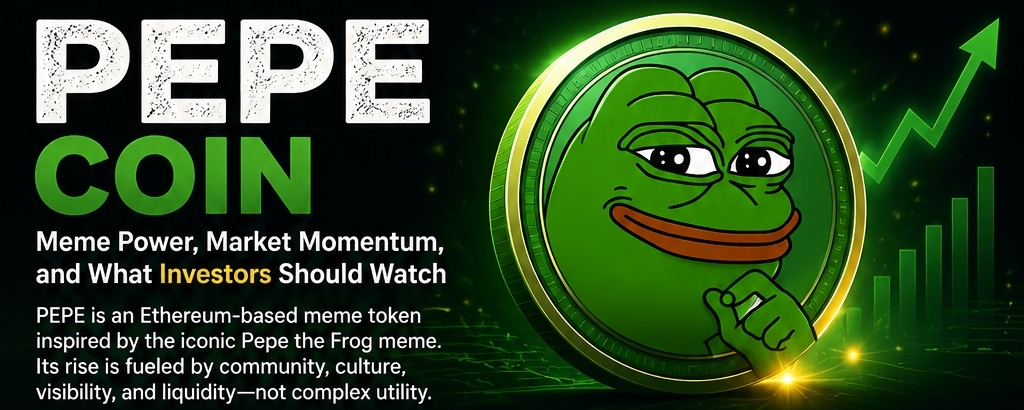
Article
PEPE : Meme Power, Market Momentum, and What Investors Should WatchPEPE has become one of the most recognizable meme coins in the cryptocurrency market. Inspired by the famous Pepe the Frog internet meme, the token gained significant attention through community-driven growth, viral social-media activity, and speculative trading. Unlike projects designed around complex utility, PEPE’s strength has largely come from its culture, visibility, liquidity, and passionate community.
What Is PEPE?
PEPE is an Ethereum-based meme token created around internet culture. Its identity is simple: it embraces the meme-coin phenomenon rather than presenting itself primarily as a traditional financial or technological project.
The project gained popularity because it arrived during a period when traders were actively searching for the next major meme-coin opportunity. Its branding was instantly recognizable, allowing the community to spread the token quickly across social platforms.
That community effect remains one of PEPE’s most important characteristics.
Why Does PEPE Attract So Much Attention?
Meme coins can behave differently from traditional cryptocurrencies. Their prices may respond strongly to social sentiment, community activity, exchange listings, market liquidity, and broader crypto trends.
PEPE benefits from several factors:
🐸 Strong meme recognition
🌐 Large online community
📈 High speculative interest
💧 Significant market liquidity compared with many smaller meme tokens
🔥 Strong social-media visibility
🏦 Availability across major crypto trading platforms
When market sentiment becomes bullish, meme coins can sometimes experience rapid moves as traders look for assets with high volatility and strong community momentum.
PEPE and the Meme-Coin Cycle
Meme coins often move in cycles. During periods of strong Bitcoin and Ethereum performance, traders may gradually move into higher-risk altcoins. When appetite for speculation increases, meme coins can attract additional capital.
PEPE can therefore benefit from a broader risk-on environment.
However, the opposite is also true. When Bitcoin falls sharply or liquidity leaves the crypto market, meme coins can experience significant selling pressure. Because PEPE is highly sentiment-driven, its volatility can be considerably higher than that of larger cryptocurrencies.
What Could Drive PEPE Higher?
Several factors could potentially support PEPE's future performance.
1. Stronger Crypto Market Conditions
If Bitcoin and the broader cryptocurrency market enter a sustained bullish phase, traders may become more willing to take risk in meme coins.
2. Growing Community Activity
Social engagement remains important for meme-based assets. Increased discussions, memes, trading activity, and community participation can contribute to stronger market attention.
3. Increased Liquidity and Exchange Access
Greater accessibility can make it easier for new traders to participate. Additional liquidity can also improve trading conditions.
4. Meme-Coin Narratives
Crypto markets frequently rotate between narratives. If meme coins become a dominant narrative again, PEPE could receive renewed attention.
What Are the Risks?
PEPE is not a low-risk investment. Its price can move rapidly in both directions.
Some major risks include:
High volatility: Large percentage moves can happen quickly.
Market sentiment: Social-media enthusiasm can disappear as quickly as it arrives.
Speculation: A significant part of meme-coin demand can be speculative rather than based on traditional valuation metrics.
Liquidity changes: Market liquidity can influence how easily large positions can enter or exit.
Broader market weakness: A major crypto sell-off could place heavy pressure on PEPE.
Because of these factors, investors should avoid assuming that previous performance will automatically repeat.
PEPE Trading Strategy
For traders watching PEPE, technical analysis can be useful, but it should not be treated as a guarantee.
Important areas to monitor include:
Major support and resistance levels
Trading volume
Breakouts and failed breakouts
Bitcoin's overall direction
Market-wide meme-coin sentiment
Exchange liquidity
Momentum indicators
A breakout supported by strong volume can be more meaningful than a price increase occurring on weak volume. Likewise, losing an important support zone with heavy selling pressure may signal that buyers are losing control.
Long-Term Outlook
PEPE's long-term future will depend heavily on whether it can maintain cultural relevance and community interest.
Meme coins have shown that attention itself can become a powerful market force. However, maintaining that attention over multiple market cycles is difficult. PEPE will need continued community engagement, liquidity, accessibility, and relevance to remain one of the leading meme assets.
The key point is that PEPE should be viewed differently from projects whose valuation is primarily based on technological infrastructure or cash flows. Its market value is strongly connected to community, culture, liquidity, and speculation.
Final Thoughts
PEPE has established itself as an important part of the meme-coin sector. Its recognizable identity and large community have helped it remain visible in a highly competitive crypto market.
At the same time, high visibility does not eliminate risk. PEPE can experience dramatic rallies, but it can also suffer equally dramatic corrections.
For anyone considering PEPE, the most important principles are simple: manage position size, avoid excessive leverage, understand volatility, and never invest more than you can afford to lose.
PEPE may continue to surprise the market, but disciplined risk management should always come before chasing the next big move.#BTC走势分析
PEPE : Meme Power, Market Momentum, and What Investors Should Watch
PEPE has become one of the most recognizable meme coins in the cryptocurrency market. Inspired by the famous Pepe the Frog internet meme, the token gained significant attention through community-driven growth, viral social-media activity, and speculative trading. Unlike projects designed around complex utility, PEPE’s strength has largely come from its culture, visibility, liquidity, and passionate community.
What Is PEPE?
PEPE is an Ethereum-based meme token created around internet culture. Its identity is simple: it embraces the meme-coin phenomenon rather than presenting itself primarily as a traditional financial or technological project.
The project gained popularity because it arrived during a period when traders were actively searching for the next major meme-coin opportunity. Its branding was instantly recognizable, allowing the community to spread the token quickly across social platforms.
That community effect remains one of PEPE’s most important characteristics.
Why Does PEPE Attract So Much Attention?
Meme coins can behave differently from traditional cryptocurrencies. Their prices may respond strongly to social sentiment, community activity, exchange listings, market liquidity, and broader crypto trends.
PEPE benefits from several factors:
🐸 Strong meme recognition
🌐 Large online community
📈 High speculative interest
💧 Significant market liquidity compared with many smaller meme tokens
🔥 Strong social-media visibility
🏦 Availability across major crypto trading platforms
When market sentiment becomes bullish, meme coins can sometimes experience rapid moves as traders look for assets with high volatility and strong community momentum.
PEPE and the Meme-Coin Cycle
Meme coins often move in cycles. During periods of strong Bitcoin and Ethereum performance, traders may gradually move into higher-risk altcoins. When appetite for speculation increases, meme coins can attract additional capital.
PEPE can therefore benefit from a broader risk-on environment.
However, the opposite is also true. When Bitcoin falls sharply or liquidity leaves the crypto market, meme coins can experience significant selling pressure. Because PEPE is highly sentiment-driven, its volatility can be considerably higher than that of larger cryptocurrencies.
What Could Drive PEPE Higher?
Several factors could potentially support PEPE's future performance.
1. Stronger Crypto Market Conditions
If Bitcoin and the broader cryptocurrency market enter a sustained bullish phase, traders may become more willing to take risk in meme coins.
2. Growing Community Activity
Social engagement remains important for meme-based assets. Increased discussions, memes, trading activity, and community participation can contribute to stronger market attention.
3. Increased Liquidity and Exchange Access
Greater accessibility can make it easier for new traders to participate. Additional liquidity can also improve trading conditions.
4. Meme-Coin Narratives
Crypto markets frequently rotate between narratives. If meme coins become a dominant narrative again, PEPE could receive renewed attention.
What Are the Risks?
PEPE is not a low-risk investment. Its price can move rapidly in both directions.
Some major risks include:
High volatility: Large percentage moves can happen quickly.
Market sentiment: Social-media enthusiasm can disappear as quickly as it arrives.
Speculation: A significant part of meme-coin demand can be speculative rather than based on traditional valuation metrics.
Liquidity changes: Market liquidity can influence how easily large positions can enter or exit.
Broader market weakness: A major crypto sell-off could place heavy pressure on PEPE.
Because of these factors, investors should avoid assuming that previous performance will automatically repeat.
PEPE Trading Strategy
For traders watching PEPE, technical analysis can be useful, but it should not be treated as a guarantee.
Important areas to monitor include:
Major support and resistance levels
Trading volume
Breakouts and failed breakouts
Bitcoin's overall direction
Market-wide meme-coin sentiment
Exchange liquidity
Momentum indicators
A breakout supported by strong volume can be more meaningful than a price increase occurring on weak volume. Likewise, losing an important support zone with heavy selling pressure may signal that buyers are losing control.
Long-Term Outlook
PEPE's long-term future will depend heavily on whether it can maintain cultural relevance and community interest.
Meme coins have shown that attention itself can become a powerful market force. However, maintaining that attention over multiple market cycles is difficult. PEPE will need continued community engagement, liquidity, accessibility, and relevance to remain one of the leading meme assets.
The key point is that PEPE should be viewed differently from projects whose valuation is primarily based on technological infrastructure or cash flows. Its market value is strongly connected to community, culture, liquidity, and speculation.
Final Thoughts
PEPE has established itself as an important part of the meme-coin sector. Its recognizable identity and large community have helped it remain visible in a highly competitive crypto market.
At the same time, high visibility does not eliminate risk. PEPE can experience dramatic rallies, but it can also suffer equally dramatic corrections.
For anyone considering PEPE, the most important principles are simple: manage position size, avoid excessive leverage, understand volatility, and never invest more than you can afford to lose.
PEPE may continue to surprise the market, but disciplined risk management should always come before chasing the next big move.#BTC走势分析
What Is PEPE?
PEPE is an Ethereum-based meme token created around internet culture. Its identity is simple: it embraces the meme-coin phenomenon rather than presenting itself primarily as a traditional financial or technological project.
The project gained popularity because it arrived during a period when traders were actively searching for the next major meme-coin opportunity. Its branding was instantly recognizable, allowing the community to spread the token quickly across social platforms.
That community effect remains one of PEPE’s most important characteristics.
Why Does PEPE Attract So Much Attention?
Meme coins can behave differently from traditional cryptocurrencies. Their prices may respond strongly to social sentiment, community activity, exchange listings, market liquidity, and broader crypto trends.
PEPE benefits from several factors:
🐸 Strong meme recognition
🌐 Large online community
📈 High speculative interest
💧 Significant market liquidity compared with many smaller meme tokens
🔥 Strong social-media visibility
🏦 Availability across major crypto trading platforms
When market sentiment becomes bullish, meme coins can sometimes experience rapid moves as traders look for assets with high volatility and strong community momentum.
PEPE and the Meme-Coin Cycle
Meme coins often move in cycles. During periods of strong Bitcoin and Ethereum performance, traders may gradually move into higher-risk altcoins. When appetite for speculation increases, meme coins can attract additional capital.
PEPE can therefore benefit from a broader risk-on environment.
However, the opposite is also true. When Bitcoin falls sharply or liquidity leaves the crypto market, meme coins can experience significant selling pressure. Because PEPE is highly sentiment-driven, its volatility can be considerably higher than that of larger cryptocurrencies.
What Could Drive PEPE Higher?
Several factors could potentially support PEPE's future performance.
1. Stronger Crypto Market Conditions
If Bitcoin and the broader cryptocurrency market enter a sustained bullish phase, traders may become more willing to take risk in meme coins.
2. Growing Community Activity
Social engagement remains important for meme-based assets. Increased discussions, memes, trading activity, and community participation can contribute to stronger market attention.
3. Increased Liquidity and Exchange Access
Greater accessibility can make it easier for new traders to participate. Additional liquidity can also improve trading conditions.
4. Meme-Coin Narratives
Crypto markets frequently rotate between narratives. If meme coins become a dominant narrative again, PEPE could receive renewed attention.
What Are the Risks?
PEPE is not a low-risk investment. Its price can move rapidly in both directions.
Some major risks include:
High volatility: Large percentage moves can happen quickly.
Market sentiment: Social-media enthusiasm can disappear as quickly as it arrives.
Speculation: A significant part of meme-coin demand can be speculative rather than based on traditional valuation metrics.
Liquidity changes: Market liquidity can influence how easily large positions can enter or exit.
Broader market weakness: A major crypto sell-off could place heavy pressure on PEPE.
Because of these factors, investors should avoid assuming that previous performance will automatically repeat.
PEPE Trading Strategy
For traders watching PEPE, technical analysis can be useful, but it should not be treated as a guarantee.
Important areas to monitor include:
Major support and resistance levels
Trading volume
Breakouts and failed breakouts
Bitcoin's overall direction
Market-wide meme-coin sentiment
Exchange liquidity
Momentum indicators
A breakout supported by strong volume can be more meaningful than a price increase occurring on weak volume. Likewise, losing an important support zone with heavy selling pressure may signal that buyers are losing control.
Long-Term Outlook
PEPE's long-term future will depend heavily on whether it can maintain cultural relevance and community interest.
Meme coins have shown that attention itself can become a powerful market force. However, maintaining that attention over multiple market cycles is difficult. PEPE will need continued community engagement, liquidity, accessibility, and relevance to remain one of the leading meme assets.
The key point is that PEPE should be viewed differently from projects whose valuation is primarily based on technological infrastructure or cash flows. Its market value is strongly connected to community, culture, liquidity, and speculation.
Final Thoughts
PEPE has established itself as an important part of the meme-coin sector. Its recognizable identity and large community have helped it remain visible in a highly competitive crypto market.
At the same time, high visibility does not eliminate risk. PEPE can experience dramatic rallies, but it can also suffer equally dramatic corrections.
For anyone considering PEPE, the most important principles are simple: manage position size, avoid excessive leverage, understand volatility, and never invest more than you can afford to lose.
PEPE may continue to surprise the market, but disciplined risk management should always come before chasing the next big move.#BTC走势分析
1
252
·
--
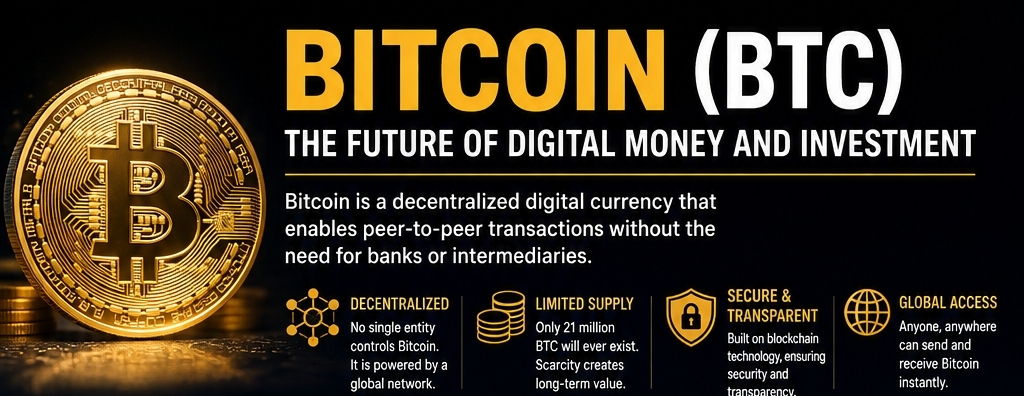
Article
Bitcoin (BTC): The Future of Digital Money and InvestmentBitcoin (BTC) has transformed from an experimental digital currency into one of the most discussed financial assets in the world. Since its launch in 2009, Bitcoin has challenged traditional ideas about money, banking, ownership, and investment. Unlike government-issued currencies, Bitcoin operates on a decentralized network, allowing people to transfer value without relying on a traditional bank as the central authority.
What Is Bitcoin?
Bitcoin is a decentralized digital asset built on blockchain technology. Transactions are recorded on a public ledger called the Bitcoin blockchain, which is maintained by a distributed network of computers around the world.
Bitcoin has a maximum supply of 21 million coins. This limited supply is one of the main reasons investors compare Bitcoin to scarce assets such as gold. New bitcoins are introduced into circulation through a process called mining, in which computers help secure the network and process transactions.
Why Is Bitcoin Important?
The most important feature of Bitcoin is decentralization. No single government, bank, or company controls the Bitcoin network. Instead, its rules are enforced by software and a global network of participants.
Bitcoin also allows people to hold and transfer an asset directly. Depending on how it is used, this can reduce dependence on traditional financial intermediaries and provide an alternative form of digital ownership.
Another important characteristic is scarcity. Because the protocol limits the total supply to 21 million BTC, Bitcoin cannot simply be printed in unlimited quantities.
Bitcoin as an Investment
Bitcoin has attracted investors because of its potential for significant long-term growth. Historically, BTC has experienced periods of extraordinary appreciation, but it has also suffered severe price declines.
This volatility is one of Bitcoin's biggest characteristics—and risks. The price can move dramatically because of changes in investor sentiment, regulation, liquidity, institutional demand, macroeconomic conditions, and developments within the cryptocurrency industry.
For investors, Bitcoin may therefore be better viewed as a high-risk asset rather than a guaranteed path to wealth.
The Bitcoin Halving
One of Bitcoin's most important events is the halving. Approximately every four years, the amount of new BTC awarded to miners is reduced by half.
The halving decreases the rate at which new bitcoins enter circulation. Investors often pay close attention to these events because reduced new supply can affect market dynamics when demand remains strong.
However, a halving does not guarantee that Bitcoin's price will rise. Market conditions remain unpredictable, and past performance should not be treated as a promise of future results.
Institutional Adoption
Bitcoin has increasingly entered mainstream financial markets. Large financial institutions, asset managers, payment companies, and publicly traded businesses have shown growing interest in Bitcoin and blockchain technology.
The development of regulated investment products has also made it easier for some traditional investors to gain exposure to Bitcoin without directly managing cryptocurrency wallets.
Institutional participation can potentially increase liquidity and legitimacy, but it can also introduce new sources of market volatility.
Bitcoin and Inflation
Bitcoin is sometimes described as "digital gold" because of its limited supply. Supporters argue that an asset with a fixed maximum supply can serve as a hedge against monetary expansion and currency debasement.
The reality is more complicated. Bitcoin has not behaved like a stable inflation hedge over every period. Its price is influenced by many factors, and it can fall sharply even when inflation is high.
Therefore, Bitcoin's scarcity is an important part of its investment thesis, but it should not be considered a guaranteed protection against inflation.
Risks of Bitcoin
Bitcoin offers potential opportunities, but investors should understand the risks.
Volatility: BTC can experience large price movements in short periods.
Regulatory risk: Governments around the world continue to develop rules concerning cryptocurrencies, taxation, exchanges, custody, and financial products.
Security risk: Losing private keys can result in permanent loss of access to bitcoin. Investors must take custody and security seriously.
Market risk: Bitcoin remains a speculative asset, and demand can change rapidly.
Technology risk: Although the Bitcoin network has demonstrated significant resilience, cryptocurrency infrastructure—including exchanges, wallets, and other services—can have vulnerabilities.
The Long-Term Bitcoin Thesis
The long-term argument for Bitcoin is based on several ideas: scarcity, decentralization, censorship resistance, global accessibility, and growing adoption.
If Bitcoin continues to gain acceptance as a store of value or digital asset, demand could potentially increase over time. On the other hand, Bitcoin faces competition from other digital assets, changing regulations, technological developments, and uncertainty about its role in the global financial system.
The future is therefore not guaranteed.
Conclusion
Bitcoin is much more than a cryptocurrency price chart. It represents an alternative approach to digital ownership and monetary technology. Its fixed supply, decentralized architecture, and global network have created an entirely new asset class.
At the same time, Bitcoin remains highly volatile and carries substantial risk. Anyone considering BTC should understand the technology, market conditions, security requirements, and possibility of significant losses before investing.
Bitcoin may ultimately become an important component of the global financial system—or its role may evolve in ways that are difficult to predict today. What is clear is that BTC has already changed the conversation about money, digital scarcity, and financial sovereignty.
Bitcoin's biggest opportunity is also its biggest uncertainty: its future depends on how people, institutions, and governments choose to use and regulate decentralized digital money.#BTC走势分析
Bitcoin (BTC): The Future of Digital Money and Investment
Bitcoin (BTC) has transformed from an experimental digital currency into one of the most discussed financial assets in the world. Since its launch in 2009, Bitcoin has challenged traditional ideas about money, banking, ownership, and investment. Unlike government-issued currencies, Bitcoin operates on a decentralized network, allowing people to transfer value without relying on a traditional bank as the central authority.
What Is Bitcoin?
Bitcoin is a decentralized digital asset built on blockchain technology. Transactions are recorded on a public ledger called the Bitcoin blockchain, which is maintained by a distributed network of computers around the world.
Bitcoin has a maximum supply of 21 million coins. This limited supply is one of the main reasons investors compare Bitcoin to scarce assets such as gold. New bitcoins are introduced into circulation through a process called mining, in which computers help secure the network and process transactions.
Why Is Bitcoin Important?
The most important feature of Bitcoin is decentralization. No single government, bank, or company controls the Bitcoin network. Instead, its rules are enforced by software and a global network of participants.
Bitcoin also allows people to hold and transfer an asset directly. Depending on how it is used, this can reduce dependence on traditional financial intermediaries and provide an alternative form of digital ownership.
Another important characteristic is scarcity. Because the protocol limits the total supply to 21 million BTC, Bitcoin cannot simply be printed in unlimited quantities.
Bitcoin as an Investment
Bitcoin has attracted investors because of its potential for significant long-term growth. Historically, BTC has experienced periods of extraordinary appreciation, but it has also suffered severe price declines.
This volatility is one of Bitcoin's biggest characteristics—and risks. The price can move dramatically because of changes in investor sentiment, regulation, liquidity, institutional demand, macroeconomic conditions, and developments within the cryptocurrency industry.
For investors, Bitcoin may therefore be better viewed as a high-risk asset rather than a guaranteed path to wealth.
The Bitcoin Halving
One of Bitcoin's most important events is the halving. Approximately every four years, the amount of new BTC awarded to miners is reduced by half.
The halving decreases the rate at which new bitcoins enter circulation. Investors often pay close attention to these events because reduced new supply can affect market dynamics when demand remains strong.
However, a halving does not guarantee that Bitcoin's price will rise. Market conditions remain unpredictable, and past performance should not be treated as a promise of future results.
Institutional Adoption
Bitcoin has increasingly entered mainstream financial markets. Large financial institutions, asset managers, payment companies, and publicly traded businesses have shown growing interest in Bitcoin and blockchain technology.
The development of regulated investment products has also made it easier for some traditional investors to gain exposure to Bitcoin without directly managing cryptocurrency wallets.
Institutional participation can potentially increase liquidity and legitimacy, but it can also introduce new sources of market volatility.
Bitcoin and Inflation
Bitcoin is sometimes described as "digital gold" because of its limited supply. Supporters argue that an asset with a fixed maximum supply can serve as a hedge against monetary expansion and currency debasement.
The reality is more complicated. Bitcoin has not behaved like a stable inflation hedge over every period. Its price is influenced by many factors, and it can fall sharply even when inflation is high.
Therefore, Bitcoin's scarcity is an important part of its investment thesis, but it should not be considered a guaranteed protection against inflation.
Risks of Bitcoin
Bitcoin offers potential opportunities, but investors should understand the risks.
Volatility: BTC can experience large price movements in short periods.
Regulatory risk: Governments around the world continue to develop rules concerning cryptocurrencies, taxation, exchanges, custody, and financial products.
Security risk: Losing private keys can result in permanent loss of access to bitcoin. Investors must take custody and security seriously.
Market risk: Bitcoin remains a speculative asset, and demand can change rapidly.
Technology risk: Although the Bitcoin network has demonstrated significant resilience, cryptocurrency infrastructure—including exchanges, wallets, and other services—can have vulnerabilities.
The Long-Term Bitcoin Thesis
The long-term argument for Bitcoin is based on several ideas: scarcity, decentralization, censorship resistance, global accessibility, and growing adoption.
If Bitcoin continues to gain acceptance as a store of value or digital asset, demand could potentially increase over time. On the other hand, Bitcoin faces competition from other digital assets, changing regulations, technological developments, and uncertainty about its role in the global financial system.
The future is therefore not guaranteed.
Conclusion
Bitcoin is much more than a cryptocurrency price chart. It represents an alternative approach to digital ownership and monetary technology. Its fixed supply, decentralized architecture, and global network have created an entirely new asset class.
At the same time, Bitcoin remains highly volatile and carries substantial risk. Anyone considering BTC should understand the technology, market conditions, security requirements, and possibility of significant losses before investing.
Bitcoin may ultimately become an important component of the global financial system—or its role may evolve in ways that are difficult to predict today. What is clear is that BTC has already changed the conversation about money, digital scarcity, and financial sovereignty.
Bitcoin's biggest opportunity is also its biggest uncertainty: its future depends on how people, institutions, and governments choose to use and regulate decentralized digital money.#BTC走势分析
What Is Bitcoin?
Bitcoin is a decentralized digital asset built on blockchain technology. Transactions are recorded on a public ledger called the Bitcoin blockchain, which is maintained by a distributed network of computers around the world.
Bitcoin has a maximum supply of 21 million coins. This limited supply is one of the main reasons investors compare Bitcoin to scarce assets such as gold. New bitcoins are introduced into circulation through a process called mining, in which computers help secure the network and process transactions.
Why Is Bitcoin Important?
The most important feature of Bitcoin is decentralization. No single government, bank, or company controls the Bitcoin network. Instead, its rules are enforced by software and a global network of participants.
Bitcoin also allows people to hold and transfer an asset directly. Depending on how it is used, this can reduce dependence on traditional financial intermediaries and provide an alternative form of digital ownership.
Another important characteristic is scarcity. Because the protocol limits the total supply to 21 million BTC, Bitcoin cannot simply be printed in unlimited quantities.
Bitcoin as an Investment
Bitcoin has attracted investors because of its potential for significant long-term growth. Historically, BTC has experienced periods of extraordinary appreciation, but it has also suffered severe price declines.
This volatility is one of Bitcoin's biggest characteristics—and risks. The price can move dramatically because of changes in investor sentiment, regulation, liquidity, institutional demand, macroeconomic conditions, and developments within the cryptocurrency industry.
For investors, Bitcoin may therefore be better viewed as a high-risk asset rather than a guaranteed path to wealth.
The Bitcoin Halving
One of Bitcoin's most important events is the halving. Approximately every four years, the amount of new BTC awarded to miners is reduced by half.
The halving decreases the rate at which new bitcoins enter circulation. Investors often pay close attention to these events because reduced new supply can affect market dynamics when demand remains strong.
However, a halving does not guarantee that Bitcoin's price will rise. Market conditions remain unpredictable, and past performance should not be treated as a promise of future results.
Institutional Adoption
Bitcoin has increasingly entered mainstream financial markets. Large financial institutions, asset managers, payment companies, and publicly traded businesses have shown growing interest in Bitcoin and blockchain technology.
The development of regulated investment products has also made it easier for some traditional investors to gain exposure to Bitcoin without directly managing cryptocurrency wallets.
Institutional participation can potentially increase liquidity and legitimacy, but it can also introduce new sources of market volatility.
Bitcoin and Inflation
Bitcoin is sometimes described as "digital gold" because of its limited supply. Supporters argue that an asset with a fixed maximum supply can serve as a hedge against monetary expansion and currency debasement.
The reality is more complicated. Bitcoin has not behaved like a stable inflation hedge over every period. Its price is influenced by many factors, and it can fall sharply even when inflation is high.
Therefore, Bitcoin's scarcity is an important part of its investment thesis, but it should not be considered a guaranteed protection against inflation.
Risks of Bitcoin
Bitcoin offers potential opportunities, but investors should understand the risks.
Volatility: BTC can experience large price movements in short periods.
Regulatory risk: Governments around the world continue to develop rules concerning cryptocurrencies, taxation, exchanges, custody, and financial products.
Security risk: Losing private keys can result in permanent loss of access to bitcoin. Investors must take custody and security seriously.
Market risk: Bitcoin remains a speculative asset, and demand can change rapidly.
Technology risk: Although the Bitcoin network has demonstrated significant resilience, cryptocurrency infrastructure—including exchanges, wallets, and other services—can have vulnerabilities.
The Long-Term Bitcoin Thesis
The long-term argument for Bitcoin is based on several ideas: scarcity, decentralization, censorship resistance, global accessibility, and growing adoption.
If Bitcoin continues to gain acceptance as a store of value or digital asset, demand could potentially increase over time. On the other hand, Bitcoin faces competition from other digital assets, changing regulations, technological developments, and uncertainty about its role in the global financial system.
The future is therefore not guaranteed.
Conclusion
Bitcoin is much more than a cryptocurrency price chart. It represents an alternative approach to digital ownership and monetary technology. Its fixed supply, decentralized architecture, and global network have created an entirely new asset class.
At the same time, Bitcoin remains highly volatile and carries substantial risk. Anyone considering BTC should understand the technology, market conditions, security requirements, and possibility of significant losses before investing.
Bitcoin may ultimately become an important component of the global financial system—or its role may evolve in ways that are difficult to predict today. What is clear is that BTC has already changed the conversation about money, digital scarcity, and financial sovereignty.
Bitcoin's biggest opportunity is also its biggest uncertainty: its future depends on how people, institutions, and governments choose to use and regulate decentralized digital money.#BTC走势分析
1
3
1.5k
·
--

Article
Bitcoin: The Digital Revolution Redefining Money, Ownership, and FreedomIntroduction
Bitcoin began as an unusual idea: a form of digital money that could operate without a central bank, government, or traditional financial institution controlling the network. Today, it has developed into something much larger—a global financial technology, a digital asset, and for many people, a new way of thinking about ownership and monetary freedom.
Unlike conventional currencies, Bitcoin does not exist as physical notes or coins. Its value is represented through a decentralized network secured by cryptography and maintained by thousands of computers around the world. No single company owns Bitcoin, and no central authority can simply create unlimited quantities of it.
This makes Bitcoin fundamentally different from traditional financial systems.
A New Kind of Digital Scarcity
One of Bitcoin's most important innovations is digital scarcity.
For decades, digital information could be copied almost instantly. A photograph, document, or song could be duplicated without destroying the original. Money, however, cannot work that way. If digital money could simply be copied, the financial system would become meaningless.
Bitcoin introduced a mechanism for creating scarce digital assets without relying on a central organization to maintain the records.
The Bitcoin protocol limits the total eventual supply to 21 million BTC. New bitcoins enter circulation through the network's mining process, and the issuance rate decreases over time through programmed halvings.
This predictable monetary policy is one of Bitcoin's defining characteristics.
Bitcoin as a Global Network
Bitcoin is more than an asset displayed on an exchange screen. It is a worldwide network that operates continuously.
Transactions can be broadcast to the network from almost anywhere with an internet connection. Miners process transactions and compete to add new blocks to the blockchain. Nodes independently verify that the rules of the Bitcoin protocol are being followed.
This architecture creates an unusual combination of transparency and independence.
Anyone can examine the public blockchain. At the same time, users do not need permission from a central bank to hold or transfer bitcoin.
That distinction has become increasingly important in a world where financial systems are becoming more digital.
The Meaning of Self-Custody
Bitcoin also introduced a powerful concept: self-custody.
With traditional banking, ownership and access to money generally depend on an account maintained by a financial institution. Bitcoin can instead be held directly by the person controlling the private keys.
The phrase "not your keys, not your coins" reflects this principle.
Self-custody can provide greater control, but it also creates responsibility. Losing private keys can mean permanently losing access to funds. Poor security practices can expose assets to theft or fraud.
Therefore, Bitcoin's freedom comes with an important requirement: users must understand how to protect what they own.
Bitcoin and the Future of Payments
Bitcoin was originally presented as a peer-to-peer electronic cash system. Although its role today extends beyond everyday payments, the underlying goal remains relevant.
Bitcoin can function as a settlement network for transferring value across borders without requiring the traditional chain of correspondent banks.
Second-layer technologies such as the Lightning Network attempt to make Bitcoin transactions faster and potentially more suitable for smaller payments.
The long-term question is not simply whether Bitcoin will replace cash or bank accounts. A more interesting possibility is that Bitcoin becomes one layer within a broader global financial infrastructure.
Bitcoin as Digital Gold
Another way to understand Bitcoin is to compare it with gold.
Gold has historically been valued because it is scarce, durable, difficult to produce, and independent of any single government's monetary policy. Bitcoin shares some of these characteristics while adding qualities that are native to the digital world.
Bitcoin can be transmitted electronically, divided into extremely small units, and verified through a public network.
However, the comparison should not hide the differences.
Gold has thousands of years of history as a store of value. Bitcoin is comparatively young and remains subject to significant price volatility, technological risks, regulatory uncertainty, and changing market conditions.
Bitcoin's future therefore cannot simply be assumed. It must be evaluated on its own merits.
The Investment Debate
Bitcoin has become one of the most closely watched assets in the world because of its extraordinary historical price movements.
Supporters argue that limited supply combined with growing adoption could create long-term scarcity. They point to institutional participation, expanding infrastructure, and increasing public awareness as potential drivers of demand.
Critics focus on volatility, speculative behavior, regulatory risks, technological competition, and the possibility that market enthusiasm can push prices far beyond reasonable valuations.
Both perspectives contain important lessons.
Bitcoin should not be treated as a guaranteed path to wealth. Its price can rise dramatically, but it can also experience severe declines. Anyone considering exposure should understand that possibility before investing.
Bitcoin and Institutions
The Bitcoin market has changed substantially as professional investors and financial institutions have become more involved.
Institutional participation can increase liquidity, accessibility, and legitimacy. Financial products can also make Bitcoin easier for traditional investors to gain exposure to.
At the same time, institutionalization creates an interesting contradiction.
Bitcoin was designed to allow individuals to control their assets without intermediaries. Yet much of the modern investment ecosystem surrounding Bitcoin involves exchanges, custodians, funds, and other intermediaries.
The future may therefore involve two parallel forms of Bitcoin ownership: institutional exposure through traditional financial products and direct ownership through personal wallets.
Regulation: Challenge and Opportunity
Bitcoin exists in a complicated relationship with governments.
Governments have legitimate concerns involving taxation, consumer protection, money laundering, financial stability, and market manipulation. Bitcoin advocates, meanwhile, often emphasize financial privacy, individual ownership, and freedom from excessive centralized control.
Regulation will likely continue to evolve.
Clear rules can encourage responsible businesses and reduce uncertainty. Excessive restrictions, however, could discourage innovation or push activity into less transparent markets.
The challenge for policymakers is finding a balance between protecting people and allowing technological innovation to develop.
The Environmental Question
Bitcoin mining has also generated substantial debate because proof-of-work mining requires electricity.
Critics argue that Bitcoin's energy consumption creates environmental concerns. Supporters respond that the industry can use renewable energy, stranded energy, and energy sources that might otherwise be wasted.
The environmental discussion is more complicated than simply asking how much electricity Bitcoin uses.
Important questions include where the energy comes from, what alternatives exist, how efficiently mining hardware operates, and whether mining can help stabilize or monetize energy systems.
As the industry develops, the environmental impact of Bitcoin will remain an important area of research and debate.
Bitcoin's Greatest Innovation May Not Be the Coin
Perhaps the most important contribution of Bitcoin is not bitcoin itself.
Bitcoin demonstrated that a decentralized network could maintain a shared financial ledger without a central administrator.
That idea influenced an entire generation of blockchain and cryptocurrency projects.
Many subsequent systems attempted to build decentralized applications, digital assets, smart contracts, decentralized finance, and new forms of online ownership.
Bitcoin remains different from many of these projects because its design is intentionally conservative. Its core protocol prioritizes security, decentralization, and monetary reliability over rapidly adding features.
A Different Vision of the Internet
The internet transformed information.
Bitcoin has the potential to transform ownership.
Traditional internet users can easily copy information, but ownership of digital assets has historically depended heavily on centralized databases. Bitcoin demonstrated that digital ownership could instead be represented through cryptographic control and a decentralized ledger.
This concept could become increasingly significant as economies move further into digital environments.
People may increasingly own digital currencies, digital securities, digital collectibles, virtual property, and other online assets.
Bitcoin is one of the earliest major experiments in this broader transformation.
The Risks That Should Not Be Ignored
A serious Bitcoin discussion must include its risks.
Bitcoin can experience extreme volatility. Regulatory environments can change. Exchanges can fail. Users can lose access to wallets. Cybersecurity threats remain real. Scams and fraudulent investment schemes can exploit Bitcoin's popularity.
There is also technological and competitive uncertainty.
No investor can know with certainty what the global financial system will look like decades from now.
For these reasons, Bitcoin should be approached as an emerging technology and financial asset—not as a guaranteed investment.
What Could Bitcoin Become?
The most interesting Bitcoin question is not simply, "How high can the price go?"
A better question is:
What role could Bitcoin play in the global economy?
It could remain primarily a speculative asset. It could become a widely recognized digital store of value. It could serve as a neutral settlement asset between countries and institutions. It could become an important reserve asset for some organizations. Or it could develop in ways that are difficult to predict today.
Several of these possibilities could exist simultaneously.
Bitcoin does not necessarily need to replace traditional money to be significant. A technology can change a system simply by becoming an alternative within it.
The Long-Term Perspective
Bitcoin's development is still relatively young when compared with established financial institutions.
The internet itself provides a useful reminder: early technologies are often difficult to understand because their eventual applications are not immediately obvious.
Bitcoin's future will depend on adoption, security, regulation, infrastructure, economics, competition, and public trust.
Its greatest strength may be the simplicity of its central proposition: a scarce digital asset governed by transparent rules rather than by a single institution.
Whether that proposition ultimately becomes a foundation of the global financial system or remains a major experiment in digital money is still an open question.
Conclusion
Bitcoin represents one of the most ambitious financial experiments of the digital era.
It combines cryptography, computer networking, economics, game theory, and monetary ideas into a system designed to operate without a central controller.
Its limited supply challenges conventional assumptions about money. Its decentralized structure challenges traditional ideas about financial intermediaries. Its global accessibility challenges the boundaries of national financial systems.
But Bitcoin is not without weaknesses. Volatility, security responsibilities, regulatory uncertainty, environmental concerns, and technological risks remain significant.
The most reasonable way to understand Bitcoin is neither as a guaranteed revolution nor as a meaningless speculative bubble.
It is a technology and financial network whose long-term importance is still being determined.
The Bitcoin story is ultimately a story about a larger transformation: the movement of money from the physical world into the digital world, and the search for a way to make digital value scarce, transferable, verifiable, and independent.
Whatever Bitcoin's final destination may be, its experiment has already changed the conversation about what money can be in the digital age.#BTC走势分析 #BTC突破7万大关
Bitcoin: The Digital Revolution Redefining Money, Ownership, and Freedom
Introduction
Bitcoin began as an unusual idea: a form of digital money that could operate without a central bank, government, or traditional financial institution controlling the network. Today, it has developed into something much larger—a global financial technology, a digital asset, and for many people, a new way of thinking about ownership and monetary freedom.
Unlike conventional currencies, Bitcoin does not exist as physical notes or coins. Its value is represented through a decentralized network secured by cryptography and maintained by thousands of computers around the world. No single company owns Bitcoin, and no central authority can simply create unlimited quantities of it.
This makes Bitcoin fundamentally different from traditional financial systems.
A New Kind of Digital Scarcity
One of Bitcoin's most important innovations is digital scarcity.
For decades, digital information could be copied almost instantly. A photograph, document, or song could be duplicated without destroying the original. Money, however, cannot work that way. If digital money could simply be copied, the financial system would become meaningless.
Bitcoin introduced a mechanism for creating scarce digital assets without relying on a central organization to maintain the records.
The Bitcoin protocol limits the total eventual supply to 21 million BTC. New bitcoins enter circulation through the network's mining process, and the issuance rate decreases over time through programmed halvings.
This predictable monetary policy is one of Bitcoin's defining characteristics.
Bitcoin as a Global Network
Bitcoin is more than an asset displayed on an exchange screen. It is a worldwide network that operates continuously.
Transactions can be broadcast to the network from almost anywhere with an internet connection. Miners process transactions and compete to add new blocks to the blockchain. Nodes independently verify that the rules of the Bitcoin protocol are being followed.
This architecture creates an unusual combination of transparency and independence.
Anyone can examine the public blockchain. At the same time, users do not need permission from a central bank to hold or transfer bitcoin.
That distinction has become increasingly important in a world where financial systems are becoming more digital.
The Meaning of Self-Custody
Bitcoin also introduced a powerful concept: self-custody.
With traditional banking, ownership and access to money generally depend on an account maintained by a financial institution. Bitcoin can instead be held directly by the person controlling the private keys.
The phrase "not your keys, not your coins" reflects this principle.
Self-custody can provide greater control, but it also creates responsibility. Losing private keys can mean permanently losing access to funds. Poor security practices can expose assets to theft or fraud.
Therefore, Bitcoin's freedom comes with an important requirement: users must understand how to protect what they own.
Bitcoin and the Future of Payments
Bitcoin was originally presented as a peer-to-peer electronic cash system. Although its role today extends beyond everyday payments, the underlying goal remains relevant.
Bitcoin can function as a settlement network for transferring value across borders without requiring the traditional chain of correspondent banks.
Second-layer technologies such as the Lightning Network attempt to make Bitcoin transactions faster and potentially more suitable for smaller payments.
The long-term question is not simply whether Bitcoin will replace cash or bank accounts. A more interesting possibility is that Bitcoin becomes one layer within a broader global financial infrastructure.
Bitcoin as Digital Gold
Another way to understand Bitcoin is to compare it with gold.
Gold has historically been valued because it is scarce, durable, difficult to produce, and independent of any single government's monetary policy. Bitcoin shares some of these characteristics while adding qualities that are native to the digital world.
Bitcoin can be transmitted electronically, divided into extremely small units, and verified through a public network.
However, the comparison should not hide the differences.
Gold has thousands of years of history as a store of value. Bitcoin is comparatively young and remains subject to significant price volatility, technological risks, regulatory uncertainty, and changing market conditions.
Bitcoin's future therefore cannot simply be assumed. It must be evaluated on its own merits.
The Investment Debate
Bitcoin has become one of the most closely watched assets in the world because of its extraordinary historical price movements.
Supporters argue that limited supply combined with growing adoption could create long-term scarcity. They point to institutional participation, expanding infrastructure, and increasing public awareness as potential drivers of demand.
Critics focus on volatility, speculative behavior, regulatory risks, technological competition, and the possibility that market enthusiasm can push prices far beyond reasonable valuations.
Both perspectives contain important lessons.
Bitcoin should not be treated as a guaranteed path to wealth. Its price can rise dramatically, but it can also experience severe declines. Anyone considering exposure should understand that possibility before investing.
Bitcoin and Institutions
The Bitcoin market has changed substantially as professional investors and financial institutions have become more involved.
Institutional participation can increase liquidity, accessibility, and legitimacy. Financial products can also make Bitcoin easier for traditional investors to gain exposure to.
At the same time, institutionalization creates an interesting contradiction.
Bitcoin was designed to allow individuals to control their assets without intermediaries. Yet much of the modern investment ecosystem surrounding Bitcoin involves exchanges, custodians, funds, and other intermediaries.
The future may therefore involve two parallel forms of Bitcoin ownership: institutional exposure through traditional financial products and direct ownership through personal wallets.
Regulation: Challenge and Opportunity
Bitcoin exists in a complicated relationship with governments.
Governments have legitimate concerns involving taxation, consumer protection, money laundering, financial stability, and market manipulation. Bitcoin advocates, meanwhile, often emphasize financial privacy, individual ownership, and freedom from excessive centralized control.
Regulation will likely continue to evolve.
Clear rules can encourage responsible businesses and reduce uncertainty. Excessive restrictions, however, could discourage innovation or push activity into less transparent markets.
The challenge for policymakers is finding a balance between protecting people and allowing technological innovation to develop.
The Environmental Question
Bitcoin mining has also generated substantial debate because proof-of-work mining requires electricity.
Critics argue that Bitcoin's energy consumption creates environmental concerns. Supporters respond that the industry can use renewable energy, stranded energy, and energy sources that might otherwise be wasted.
The environmental discussion is more complicated than simply asking how much electricity Bitcoin uses.
Important questions include where the energy comes from, what alternatives exist, how efficiently mining hardware operates, and whether mining can help stabilize or monetize energy systems.
As the industry develops, the environmental impact of Bitcoin will remain an important area of research and debate.
Bitcoin's Greatest Innovation May Not Be the Coin
Perhaps the most important contribution of Bitcoin is not bitcoin itself.
Bitcoin demonstrated that a decentralized network could maintain a shared financial ledger without a central administrator.
That idea influenced an entire generation of blockchain and cryptocurrency projects.
Many subsequent systems attempted to build decentralized applications, digital assets, smart contracts, decentralized finance, and new forms of online ownership.
Bitcoin remains different from many of these projects because its design is intentionally conservative. Its core protocol prioritizes security, decentralization, and monetary reliability over rapidly adding features.
A Different Vision of the Internet
The internet transformed information.
Bitcoin has the potential to transform ownership.
Traditional internet users can easily copy information, but ownership of digital assets has historically depended heavily on centralized databases. Bitcoin demonstrated that digital ownership could instead be represented through cryptographic control and a decentralized ledger.
This concept could become increasingly significant as economies move further into digital environments.
People may increasingly own digital currencies, digital securities, digital collectibles, virtual property, and other online assets.
Bitcoin is one of the earliest major experiments in this broader transformation.
The Risks That Should Not Be Ignored
A serious Bitcoin discussion must include its risks.
Bitcoin can experience extreme volatility. Regulatory environments can change. Exchanges can fail. Users can lose access to wallets. Cybersecurity threats remain real. Scams and fraudulent investment schemes can exploit Bitcoin's popularity.
There is also technological and competitive uncertainty.
No investor can know with certainty what the global financial system will look like decades from now.
For these reasons, Bitcoin should be approached as an emerging technology and financial asset—not as a guaranteed investment.
What Could Bitcoin Become?
The most interesting Bitcoin question is not simply, "How high can the price go?"
A better question is:
What role could Bitcoin play in the global economy?
It could remain primarily a speculative asset. It could become a widely recognized digital store of value. It could serve as a neutral settlement asset between countries and institutions. It could become an important reserve asset for some organizations. Or it could develop in ways that are difficult to predict today.
Several of these possibilities could exist simultaneously.
Bitcoin does not necessarily need to replace traditional money to be significant. A technology can change a system simply by becoming an alternative within it.
The Long-Term Perspective
Bitcoin's development is still relatively young when compared with established financial institutions.
The internet itself provides a useful reminder: early technologies are often difficult to understand because their eventual applications are not immediately obvious.
Bitcoin's future will depend on adoption, security, regulation, infrastructure, economics, competition, and public trust.
Its greatest strength may be the simplicity of its central proposition: a scarce digital asset governed by transparent rules rather than by a single institution.
Whether that proposition ultimately becomes a foundation of the global financial system or remains a major experiment in digital money is still an open question.
Conclusion
Bitcoin represents one of the most ambitious financial experiments of the digital era.
It combines cryptography, computer networking, economics, game theory, and monetary ideas into a system designed to operate without a central controller.
Its limited supply challenges conventional assumptions about money. Its decentralized structure challenges traditional ideas about financial intermediaries. Its global accessibility challenges the boundaries of national financial systems.
But Bitcoin is not without weaknesses. Volatility, security responsibilities, regulatory uncertainty, environmental concerns, and technological risks remain significant.
The most reasonable way to understand Bitcoin is neither as a guaranteed revolution nor as a meaningless speculative bubble.
It is a technology and financial network whose long-term importance is still being determined.
The Bitcoin story is ultimately a story about a larger transformation: the movement of money from the physical world into the digital world, and the search for a way to make digital value scarce, transferable, verifiable, and independent.
Whatever Bitcoin's final destination may be, its experiment has already changed the conversation about what money can be in the digital age.#BTC走势分析 #BTC突破7万大关
Bitcoin began as an unusual idea: a form of digital money that could operate without a central bank, government, or traditional financial institution controlling the network. Today, it has developed into something much larger—a global financial technology, a digital asset, and for many people, a new way of thinking about ownership and monetary freedom.
Unlike conventional currencies, Bitcoin does not exist as physical notes or coins. Its value is represented through a decentralized network secured by cryptography and maintained by thousands of computers around the world. No single company owns Bitcoin, and no central authority can simply create unlimited quantities of it.
This makes Bitcoin fundamentally different from traditional financial systems.
A New Kind of Digital Scarcity
One of Bitcoin's most important innovations is digital scarcity.
For decades, digital information could be copied almost instantly. A photograph, document, or song could be duplicated without destroying the original. Money, however, cannot work that way. If digital money could simply be copied, the financial system would become meaningless.
Bitcoin introduced a mechanism for creating scarce digital assets without relying on a central organization to maintain the records.
The Bitcoin protocol limits the total eventual supply to 21 million BTC. New bitcoins enter circulation through the network's mining process, and the issuance rate decreases over time through programmed halvings.
This predictable monetary policy is one of Bitcoin's defining characteristics.
Bitcoin as a Global Network
Bitcoin is more than an asset displayed on an exchange screen. It is a worldwide network that operates continuously.
Transactions can be broadcast to the network from almost anywhere with an internet connection. Miners process transactions and compete to add new blocks to the blockchain. Nodes independently verify that the rules of the Bitcoin protocol are being followed.
This architecture creates an unusual combination of transparency and independence.
Anyone can examine the public blockchain. At the same time, users do not need permission from a central bank to hold or transfer bitcoin.
That distinction has become increasingly important in a world where financial systems are becoming more digital.
The Meaning of Self-Custody
Bitcoin also introduced a powerful concept: self-custody.
With traditional banking, ownership and access to money generally depend on an account maintained by a financial institution. Bitcoin can instead be held directly by the person controlling the private keys.
The phrase "not your keys, not your coins" reflects this principle.
Self-custody can provide greater control, but it also creates responsibility. Losing private keys can mean permanently losing access to funds. Poor security practices can expose assets to theft or fraud.
Therefore, Bitcoin's freedom comes with an important requirement: users must understand how to protect what they own.
Bitcoin and the Future of Payments
Bitcoin was originally presented as a peer-to-peer electronic cash system. Although its role today extends beyond everyday payments, the underlying goal remains relevant.
Bitcoin can function as a settlement network for transferring value across borders without requiring the traditional chain of correspondent banks.
Second-layer technologies such as the Lightning Network attempt to make Bitcoin transactions faster and potentially more suitable for smaller payments.
The long-term question is not simply whether Bitcoin will replace cash or bank accounts. A more interesting possibility is that Bitcoin becomes one layer within a broader global financial infrastructure.
Bitcoin as Digital Gold
Another way to understand Bitcoin is to compare it with gold.
Gold has historically been valued because it is scarce, durable, difficult to produce, and independent of any single government's monetary policy. Bitcoin shares some of these characteristics while adding qualities that are native to the digital world.
Bitcoin can be transmitted electronically, divided into extremely small units, and verified through a public network.
However, the comparison should not hide the differences.
Gold has thousands of years of history as a store of value. Bitcoin is comparatively young and remains subject to significant price volatility, technological risks, regulatory uncertainty, and changing market conditions.
Bitcoin's future therefore cannot simply be assumed. It must be evaluated on its own merits.
The Investment Debate
Bitcoin has become one of the most closely watched assets in the world because of its extraordinary historical price movements.
Supporters argue that limited supply combined with growing adoption could create long-term scarcity. They point to institutional participation, expanding infrastructure, and increasing public awareness as potential drivers of demand.
Critics focus on volatility, speculative behavior, regulatory risks, technological competition, and the possibility that market enthusiasm can push prices far beyond reasonable valuations.
Both perspectives contain important lessons.
Bitcoin should not be treated as a guaranteed path to wealth. Its price can rise dramatically, but it can also experience severe declines. Anyone considering exposure should understand that possibility before investing.
Bitcoin and Institutions
The Bitcoin market has changed substantially as professional investors and financial institutions have become more involved.
Institutional participation can increase liquidity, accessibility, and legitimacy. Financial products can also make Bitcoin easier for traditional investors to gain exposure to.
At the same time, institutionalization creates an interesting contradiction.
Bitcoin was designed to allow individuals to control their assets without intermediaries. Yet much of the modern investment ecosystem surrounding Bitcoin involves exchanges, custodians, funds, and other intermediaries.
The future may therefore involve two parallel forms of Bitcoin ownership: institutional exposure through traditional financial products and direct ownership through personal wallets.
Regulation: Challenge and Opportunity
Bitcoin exists in a complicated relationship with governments.
Governments have legitimate concerns involving taxation, consumer protection, money laundering, financial stability, and market manipulation. Bitcoin advocates, meanwhile, often emphasize financial privacy, individual ownership, and freedom from excessive centralized control.
Regulation will likely continue to evolve.
Clear rules can encourage responsible businesses and reduce uncertainty. Excessive restrictions, however, could discourage innovation or push activity into less transparent markets.
The challenge for policymakers is finding a balance between protecting people and allowing technological innovation to develop.
The Environmental Question
Bitcoin mining has also generated substantial debate because proof-of-work mining requires electricity.
Critics argue that Bitcoin's energy consumption creates environmental concerns. Supporters respond that the industry can use renewable energy, stranded energy, and energy sources that might otherwise be wasted.
The environmental discussion is more complicated than simply asking how much electricity Bitcoin uses.
Important questions include where the energy comes from, what alternatives exist, how efficiently mining hardware operates, and whether mining can help stabilize or monetize energy systems.
As the industry develops, the environmental impact of Bitcoin will remain an important area of research and debate.
Bitcoin's Greatest Innovation May Not Be the Coin
Perhaps the most important contribution of Bitcoin is not bitcoin itself.
Bitcoin demonstrated that a decentralized network could maintain a shared financial ledger without a central administrator.
That idea influenced an entire generation of blockchain and cryptocurrency projects.
Many subsequent systems attempted to build decentralized applications, digital assets, smart contracts, decentralized finance, and new forms of online ownership.
Bitcoin remains different from many of these projects because its design is intentionally conservative. Its core protocol prioritizes security, decentralization, and monetary reliability over rapidly adding features.
A Different Vision of the Internet
The internet transformed information.
Bitcoin has the potential to transform ownership.
Traditional internet users can easily copy information, but ownership of digital assets has historically depended heavily on centralized databases. Bitcoin demonstrated that digital ownership could instead be represented through cryptographic control and a decentralized ledger.
This concept could become increasingly significant as economies move further into digital environments.
People may increasingly own digital currencies, digital securities, digital collectibles, virtual property, and other online assets.
Bitcoin is one of the earliest major experiments in this broader transformation.
The Risks That Should Not Be Ignored
A serious Bitcoin discussion must include its risks.
Bitcoin can experience extreme volatility. Regulatory environments can change. Exchanges can fail. Users can lose access to wallets. Cybersecurity threats remain real. Scams and fraudulent investment schemes can exploit Bitcoin's popularity.
There is also technological and competitive uncertainty.
No investor can know with certainty what the global financial system will look like decades from now.
For these reasons, Bitcoin should be approached as an emerging technology and financial asset—not as a guaranteed investment.
What Could Bitcoin Become?
The most interesting Bitcoin question is not simply, "How high can the price go?"
A better question is:
What role could Bitcoin play in the global economy?
It could remain primarily a speculative asset. It could become a widely recognized digital store of value. It could serve as a neutral settlement asset between countries and institutions. It could become an important reserve asset for some organizations. Or it could develop in ways that are difficult to predict today.
Several of these possibilities could exist simultaneously.
Bitcoin does not necessarily need to replace traditional money to be significant. A technology can change a system simply by becoming an alternative within it.
The Long-Term Perspective
Bitcoin's development is still relatively young when compared with established financial institutions.
The internet itself provides a useful reminder: early technologies are often difficult to understand because their eventual applications are not immediately obvious.
Bitcoin's future will depend on adoption, security, regulation, infrastructure, economics, competition, and public trust.
Its greatest strength may be the simplicity of its central proposition: a scarce digital asset governed by transparent rules rather than by a single institution.
Whether that proposition ultimately becomes a foundation of the global financial system or remains a major experiment in digital money is still an open question.
Conclusion
Bitcoin represents one of the most ambitious financial experiments of the digital era.
It combines cryptography, computer networking, economics, game theory, and monetary ideas into a system designed to operate without a central controller.
Its limited supply challenges conventional assumptions about money. Its decentralized structure challenges traditional ideas about financial intermediaries. Its global accessibility challenges the boundaries of national financial systems.
But Bitcoin is not without weaknesses. Volatility, security responsibilities, regulatory uncertainty, environmental concerns, and technological risks remain significant.
The most reasonable way to understand Bitcoin is neither as a guaranteed revolution nor as a meaningless speculative bubble.
It is a technology and financial network whose long-term importance is still being determined.
The Bitcoin story is ultimately a story about a larger transformation: the movement of money from the physical world into the digital world, and the search for a way to make digital value scarce, transferable, verifiable, and independent.
Whatever Bitcoin's final destination may be, its experiment has already changed the conversation about what money can be in the digital age.#BTC走势分析 #BTC突破7万大关
1
295
·
--
$BTC is edging closer to its weekly bull market support band.
With volatility cooling down, the setup feels like it could be building toward a major move.
My take: we could see a push toward $68K–$70K first, followed by another cycle low.#BTC走势分析
$BTC is edging closer to its weekly bull market support band.
With volatility cooling down, the setup feels like it could be building toward a major move.
My take: we could see a push toward $68K–$70K first, followed by another cycle low.#BTC走势分析
With volatility cooling down, the setup feels like it could be building toward a major move.
My take: we could see a push toward $68K–$70K first, followed by another cycle low.#BTC走势分析
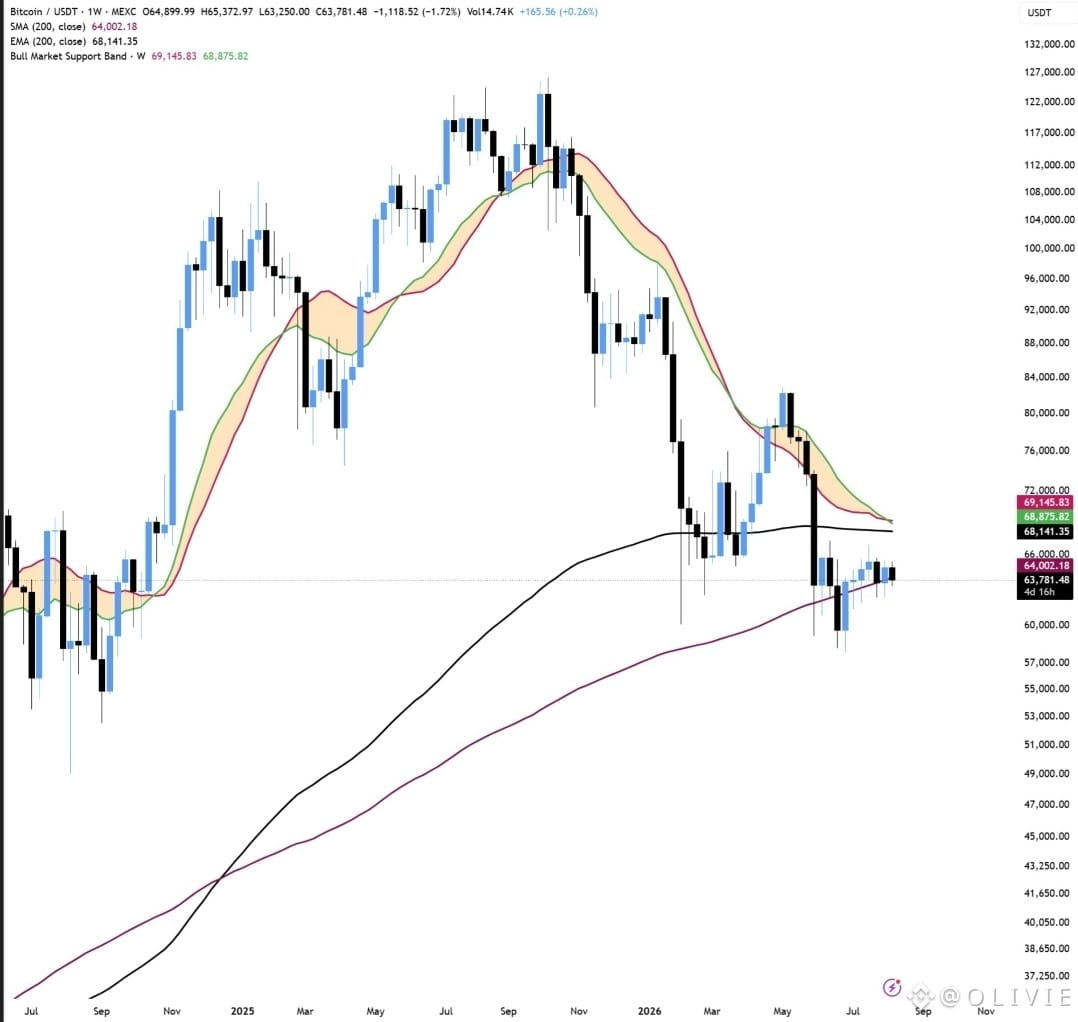
3
1
273
·
--
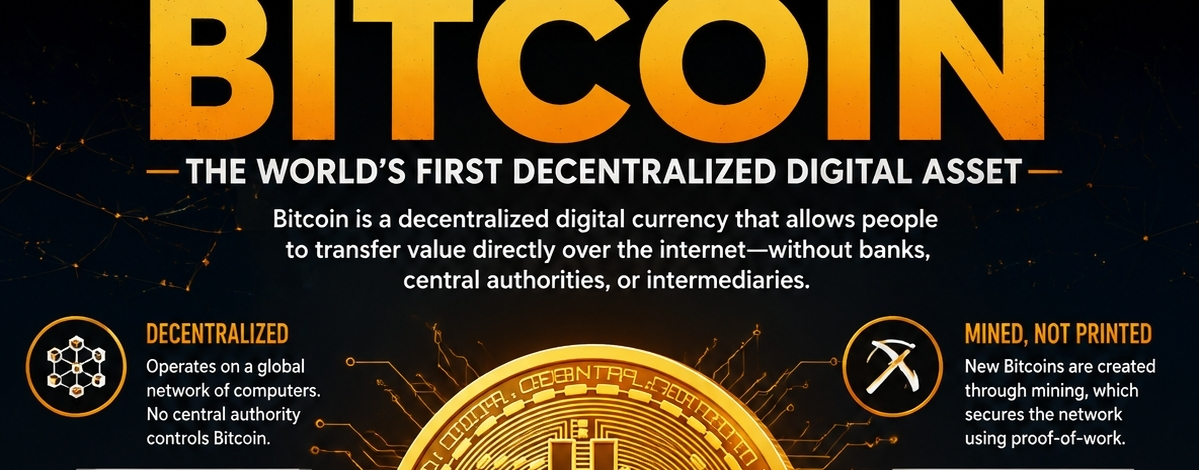
Article
Bitcoin (BTC): Understanding the World’s First Decentralized Digital AssetBitcoin (BTC) has grown from a relatively obscure digital experiment into one of the most recognized financial assets in the world. Since its introduction in 2009, Bitcoin has attracted investors, technology enthusiasts, businesses, financial institutions, regulators, and millions of individual users.
Unlike traditional currencies, Bitcoin is not issued or controlled by a central bank. Instead, it operates through a decentralized network of computers and uses blockchain technology to record transactions. This unique structure has made Bitcoin both an important technological innovation and one of the most debated assets in modern finance.
What Is Bitcoin?
Bitcoin is a decentralized digital currency designed to allow people to transfer value directly over the internet without relying on a traditional financial intermediary such as a bank.
Transactions are recorded on a public blockchain. The network uses cryptography and a consensus mechanism to verify transactions and maintain the integrity of the ledger.
One of Bitcoin's defining characteristics is its limited supply. The Bitcoin protocol is designed so that no more than 21 million BTC can ultimately exist. This scarcity is one reason some investors view Bitcoin as a potential store of value.
The Beginning of Bitcoin
Bitcoin was introduced in 2008 through a white paper published under the name Satoshi Nakamoto. In January 2009, the Bitcoin network became operational when the first block, known as the Genesis Block, was mined.
Satoshi's identity remains unknown. More importantly, Bitcoin was designed to operate without requiring users to trust a central authority.
The project emerged during a period of significant concern about the global financial system. Bitcoin offered a different model: instead of depending on institutions to maintain a monetary ledger, its rules could be enforced through software, cryptography, and a distributed network.
How Bitcoin Works
Bitcoin relies on several technologies working together.
Blockchain
The blockchain is a continuously growing public record of Bitcoin transactions. Blocks contain groups of transactions and are linked together chronologically.
Because copies of the blockchain are maintained across a distributed network, changing historical records is extremely difficult.
Mining
Bitcoin uses a proof-of-work system. Miners compete to solve computational problems and, in doing so, help secure the network and add new blocks to the blockchain.
Mining requires substantial computing power and electricity. In return, successful miners receive rewards according to the Bitcoin protocol, including newly issued BTC and transaction fees.
Bitcoin Halving
The Bitcoin network periodically reduces the amount of newly created BTC awarded to miners. This event is commonly known as the halving.
The reduction in new supply is an important part of Bitcoin's monetary design. However, a halving does not guarantee that the price of Bitcoin will rise. Market prices are influenced by many factors, including demand, liquidity, economic conditions, regulation, investor sentiment, and competition.
Why Do People Buy Bitcoin?
People purchase Bitcoin for different reasons.
Some see it as a long-term investment. Others use it for transferring value internationally or as an alternative financial asset.
A major argument made by Bitcoin supporters is that its predetermined supply provides a form of digital scarcity. Unlike fiat currencies, whose supply can be changed by monetary authorities, Bitcoin's issuance follows rules embedded in its protocol.
Bitcoin is also attractive to people who value financial self-custody. With appropriate security practices, individuals can hold and control their BTC without keeping it in a traditional bank account.
Bitcoin as a Store of Value
Bitcoin is sometimes described as "digital gold." The comparison is based largely on scarcity, portability, divisibility, and the idea that Bitcoin could preserve purchasing power over long periods.
However, Bitcoin's history is much shorter than gold's, and its price has historically been considerably more volatile.
For that reason, investors should distinguish between the theory of Bitcoin as a store of value and the evidence available from its relatively short market history.
Bitcoin and Market Volatility
Bitcoin has experienced dramatic price increases as well as severe declines.
Its volatility is an important consideration for anyone thinking about investing. BTC can experience substantial price movements over relatively short periods, and investors can lose a significant portion of their capital.
Several factors can influence Bitcoin's price, including:
- Global liquidity and interest rates
- Institutional demand
- Regulatory developments
- Investor sentiment
- Adoption and network activity
- Cryptocurrency market cycles
- Macroeconomic conditions
- Technological developments
- Large buying or selling activity
Consequently, Bitcoin should not be treated as an asset whose future price can be predicted with certainty.
Institutional Adoption
One of the most significant developments in Bitcoin's history has been increasing interest from traditional financial institutions.
Financial companies have developed products and services connected to Bitcoin, while some institutional investors have considered BTC as part of broader portfolio strategies.
The growth of regulated investment products has also made Bitcoin more accessible to investors who prefer traditional financial infrastructure.
Nevertheless, institutional participation does not eliminate Bitcoin's risks. Professional investors can also experience substantial losses during market downturns.
Bitcoin and Regulation
Regulation is one of the most important issues facing Bitcoin.
Governments around the world have taken different approaches. Some jurisdictions have developed frameworks for cryptocurrency businesses, while others have imposed restrictions.
Regulation can affect exchanges, custody providers, taxation, investment products, mining operations, and the ability of companies to offer cryptocurrency services.
Investors should therefore understand the laws and tax requirements applicable in their own jurisdiction.
Security and Self-Custody
Bitcoin transactions are generally irreversible. This makes security extremely important.
A Bitcoin wallet does not simply "store coins" in the same way that a physical wallet stores cash. Instead, it manages cryptographic keys that allow a user to control Bitcoin associated with particular blockchain addresses.
If private keys or recovery phrases are lost, access to the associated funds may be permanently lost. Similarly, if credentials are exposed to an attacker, the funds may be stolen.
Users should therefore be extremely cautious with:
- Recovery phrases
- Private keys
- Exchange passwords
- Fake investment platforms
- Phishing links
- Impersonation scams
- Unsolicited investment offers
No legitimate Bitcoin investment requires sending money to a stranger who promises guaranteed returns.
The Environmental Debate
Bitcoin mining consumes electricity because proof-of-work requires computational resources.
This has created an ongoing debate about Bitcoin's environmental impact. Critics argue that Bitcoin can consume substantial amounts of energy, while supporters point to changes in mining technology, the use of renewable or otherwise stranded energy, and the potential economic value of a decentralized monetary network.
The environmental impact therefore remains an important area of research and debate rather than a simple question with one universally accepted conclusion.
Bitcoin's Future
Bitcoin's long-term future remains uncertain.
Supporters believe it could become an increasingly important global financial asset, particularly as digital payments and financial infrastructure continue to evolve.
Critics argue that Bitcoin's volatility, regulatory uncertainty, energy requirements, competition from other technologies, and limitations as a payment system could restrict its broader adoption.
Both perspectives deserve consideration.
The most realistic view is that Bitcoin is an evolving technology and financial asset whose ultimate role has not yet been determined.
Is Bitcoin a Good Investment?
There is no universal answer.
Bitcoin may offer substantial upside, but it also carries substantial risk. Past performance should not be interpreted as a guarantee of future returns.
Anyone considering BTC should think about their investment horizon, financial situation, risk tolerance, and the possibility of losing money.
A responsible approach is to avoid investing money that is needed for essential expenses and to be skeptical of anyone promising guaranteed Bitcoin profits.
Conclusion
Bitcoin represents more than a cryptocurrency. It is an experiment in decentralized money, digital scarcity, cryptographic ownership, and financial infrastructure.
Its development since 2009 has demonstrated that a decentralized digital asset can operate on a global scale without a central issuer. At the same time, Bitcoin remains controversial because of its volatility, regulatory uncertainty, environmental questions, and the challenges associated with security and adoption.
Whether Bitcoin ultimately becomes a widely used form of money, a long-term store of value, a financial asset, or something else entirely remains an open question.
What is clear is that Bitcoin has already had a significant impact on the way the world thinks about money, ownership, payments, and decentralized technology.#BTC走势分析
Bitcoin (BTC): Understanding the World’s First Decentralized Digital Asset
Bitcoin (BTC) has grown from a relatively obscure digital experiment into one of the most recognized financial assets in the world. Since its introduction in 2009, Bitcoin has attracted investors, technology enthusiasts, businesses, financial institutions, regulators, and millions of individual users.
Unlike traditional currencies, Bitcoin is not issued or controlled by a central bank. Instead, it operates through a decentralized network of computers and uses blockchain technology to record transactions. This unique structure has made Bitcoin both an important technological innovation and one of the most debated assets in modern finance.
What Is Bitcoin?
Bitcoin is a decentralized digital currency designed to allow people to transfer value directly over the internet without relying on a traditional financial intermediary such as a bank.
Transactions are recorded on a public blockchain. The network uses cryptography and a consensus mechanism to verify transactions and maintain the integrity of the ledger.
One of Bitcoin's defining characteristics is its limited supply. The Bitcoin protocol is designed so that no more than 21 million BTC can ultimately exist. This scarcity is one reason some investors view Bitcoin as a potential store of value.
The Beginning of Bitcoin
Bitcoin was introduced in 2008 through a white paper published under the name Satoshi Nakamoto. In January 2009, the Bitcoin network became operational when the first block, known as the Genesis Block, was mined.
Satoshi's identity remains unknown. More importantly, Bitcoin was designed to operate without requiring users to trust a central authority.
The project emerged during a period of significant concern about the global financial system. Bitcoin offered a different model: instead of depending on institutions to maintain a monetary ledger, its rules could be enforced through software, cryptography, and a distributed network.
How Bitcoin Works
Bitcoin relies on several technologies working together.
Blockchain
The blockchain is a continuously growing public record of Bitcoin transactions. Blocks contain groups of transactions and are linked together chronologically.
Because copies of the blockchain are maintained across a distributed network, changing historical records is extremely difficult.
Mining
Bitcoin uses a proof-of-work system. Miners compete to solve computational problems and, in doing so, help secure the network and add new blocks to the blockchain.
Mining requires substantial computing power and electricity. In return, successful miners receive rewards according to the Bitcoin protocol, including newly issued BTC and transaction fees.
Bitcoin Halving
The Bitcoin network periodically reduces the amount of newly created BTC awarded to miners. This event is commonly known as the halving.
The reduction in new supply is an important part of Bitcoin's monetary design. However, a halving does not guarantee that the price of Bitcoin will rise. Market prices are influenced by many factors, including demand, liquidity, economic conditions, regulation, investor sentiment, and competition.
Why Do People Buy Bitcoin?
People purchase Bitcoin for different reasons.
Some see it as a long-term investment. Others use it for transferring value internationally or as an alternative financial asset.
A major argument made by Bitcoin supporters is that its predetermined supply provides a form of digital scarcity. Unlike fiat currencies, whose supply can be changed by monetary authorities, Bitcoin's issuance follows rules embedded in its protocol.
Bitcoin is also attractive to people who value financial self-custody. With appropriate security practices, individuals can hold and control their BTC without keeping it in a traditional bank account.
Bitcoin as a Store of Value
Bitcoin is sometimes described as "digital gold." The comparison is based largely on scarcity, portability, divisibility, and the idea that Bitcoin could preserve purchasing power over long periods.
However, Bitcoin's history is much shorter than gold's, and its price has historically been considerably more volatile.
For that reason, investors should distinguish between the theory of Bitcoin as a store of value and the evidence available from its relatively short market history.
Bitcoin and Market Volatility
Bitcoin has experienced dramatic price increases as well as severe declines.
Its volatility is an important consideration for anyone thinking about investing. BTC can experience substantial price movements over relatively short periods, and investors can lose a significant portion of their capital.
Several factors can influence Bitcoin's price, including:
- Global liquidity and interest rates
- Institutional demand
- Regulatory developments
- Investor sentiment
- Adoption and network activity
- Cryptocurrency market cycles
- Macroeconomic conditions
- Technological developments
- Large buying or selling activity
Consequently, Bitcoin should not be treated as an asset whose future price can be predicted with certainty.
Institutional Adoption
One of the most significant developments in Bitcoin's history has been increasing interest from traditional financial institutions.
Financial companies have developed products and services connected to Bitcoin, while some institutional investors have considered BTC as part of broader portfolio strategies.
The growth of regulated investment products has also made Bitcoin more accessible to investors who prefer traditional financial infrastructure.
Nevertheless, institutional participation does not eliminate Bitcoin's risks. Professional investors can also experience substantial losses during market downturns.
Bitcoin and Regulation
Regulation is one of the most important issues facing Bitcoin.
Governments around the world have taken different approaches. Some jurisdictions have developed frameworks for cryptocurrency businesses, while others have imposed restrictions.
Regulation can affect exchanges, custody providers, taxation, investment products, mining operations, and the ability of companies to offer cryptocurrency services.
Investors should therefore understand the laws and tax requirements applicable in their own jurisdiction.
Security and Self-Custody
Bitcoin transactions are generally irreversible. This makes security extremely important.
A Bitcoin wallet does not simply "store coins" in the same way that a physical wallet stores cash. Instead, it manages cryptographic keys that allow a user to control Bitcoin associated with particular blockchain addresses.
If private keys or recovery phrases are lost, access to the associated funds may be permanently lost. Similarly, if credentials are exposed to an attacker, the funds may be stolen.
Users should therefore be extremely cautious with:
- Recovery phrases
- Private keys
- Exchange passwords
- Fake investment platforms
- Phishing links
- Impersonation scams
- Unsolicited investment offers
No legitimate Bitcoin investment requires sending money to a stranger who promises guaranteed returns.
The Environmental Debate
Bitcoin mining consumes electricity because proof-of-work requires computational resources.
This has created an ongoing debate about Bitcoin's environmental impact. Critics argue that Bitcoin can consume substantial amounts of energy, while supporters point to changes in mining technology, the use of renewable or otherwise stranded energy, and the potential economic value of a decentralized monetary network.
The environmental impact therefore remains an important area of research and debate rather than a simple question with one universally accepted conclusion.
Bitcoin's Future
Bitcoin's long-term future remains uncertain.
Supporters believe it could become an increasingly important global financial asset, particularly as digital payments and financial infrastructure continue to evolve.
Critics argue that Bitcoin's volatility, regulatory uncertainty, energy requirements, competition from other technologies, and limitations as a payment system could restrict its broader adoption.
Both perspectives deserve consideration.
The most realistic view is that Bitcoin is an evolving technology and financial asset whose ultimate role has not yet been determined.
Is Bitcoin a Good Investment?
There is no universal answer.
Bitcoin may offer substantial upside, but it also carries substantial risk. Past performance should not be interpreted as a guarantee of future returns.
Anyone considering BTC should think about their investment horizon, financial situation, risk tolerance, and the possibility of losing money.
A responsible approach is to avoid investing money that is needed for essential expenses and to be skeptical of anyone promising guaranteed Bitcoin profits.
Conclusion
Bitcoin represents more than a cryptocurrency. It is an experiment in decentralized money, digital scarcity, cryptographic ownership, and financial infrastructure.
Its development since 2009 has demonstrated that a decentralized digital asset can operate on a global scale without a central issuer. At the same time, Bitcoin remains controversial because of its volatility, regulatory uncertainty, environmental questions, and the challenges associated with security and adoption.
Whether Bitcoin ultimately becomes a widely used form of money, a long-term store of value, a financial asset, or something else entirely remains an open question.
What is clear is that Bitcoin has already had a significant impact on the way the world thinks about money, ownership, payments, and decentralized technology.#BTC走势分析
Unlike traditional currencies, Bitcoin is not issued or controlled by a central bank. Instead, it operates through a decentralized network of computers and uses blockchain technology to record transactions. This unique structure has made Bitcoin both an important technological innovation and one of the most debated assets in modern finance.
What Is Bitcoin?
Bitcoin is a decentralized digital currency designed to allow people to transfer value directly over the internet without relying on a traditional financial intermediary such as a bank.
Transactions are recorded on a public blockchain. The network uses cryptography and a consensus mechanism to verify transactions and maintain the integrity of the ledger.
One of Bitcoin's defining characteristics is its limited supply. The Bitcoin protocol is designed so that no more than 21 million BTC can ultimately exist. This scarcity is one reason some investors view Bitcoin as a potential store of value.
The Beginning of Bitcoin
Bitcoin was introduced in 2008 through a white paper published under the name Satoshi Nakamoto. In January 2009, the Bitcoin network became operational when the first block, known as the Genesis Block, was mined.
Satoshi's identity remains unknown. More importantly, Bitcoin was designed to operate without requiring users to trust a central authority.
The project emerged during a period of significant concern about the global financial system. Bitcoin offered a different model: instead of depending on institutions to maintain a monetary ledger, its rules could be enforced through software, cryptography, and a distributed network.
How Bitcoin Works
Bitcoin relies on several technologies working together.
Blockchain
The blockchain is a continuously growing public record of Bitcoin transactions. Blocks contain groups of transactions and are linked together chronologically.
Because copies of the blockchain are maintained across a distributed network, changing historical records is extremely difficult.
Mining
Bitcoin uses a proof-of-work system. Miners compete to solve computational problems and, in doing so, help secure the network and add new blocks to the blockchain.
Mining requires substantial computing power and electricity. In return, successful miners receive rewards according to the Bitcoin protocol, including newly issued BTC and transaction fees.
Bitcoin Halving
The Bitcoin network periodically reduces the amount of newly created BTC awarded to miners. This event is commonly known as the halving.
The reduction in new supply is an important part of Bitcoin's monetary design. However, a halving does not guarantee that the price of Bitcoin will rise. Market prices are influenced by many factors, including demand, liquidity, economic conditions, regulation, investor sentiment, and competition.
Why Do People Buy Bitcoin?
People purchase Bitcoin for different reasons.
Some see it as a long-term investment. Others use it for transferring value internationally or as an alternative financial asset.
A major argument made by Bitcoin supporters is that its predetermined supply provides a form of digital scarcity. Unlike fiat currencies, whose supply can be changed by monetary authorities, Bitcoin's issuance follows rules embedded in its protocol.
Bitcoin is also attractive to people who value financial self-custody. With appropriate security practices, individuals can hold and control their BTC without keeping it in a traditional bank account.
Bitcoin as a Store of Value
Bitcoin is sometimes described as "digital gold." The comparison is based largely on scarcity, portability, divisibility, and the idea that Bitcoin could preserve purchasing power over long periods.
However, Bitcoin's history is much shorter than gold's, and its price has historically been considerably more volatile.
For that reason, investors should distinguish between the theory of Bitcoin as a store of value and the evidence available from its relatively short market history.
Bitcoin and Market Volatility
Bitcoin has experienced dramatic price increases as well as severe declines.
Its volatility is an important consideration for anyone thinking about investing. BTC can experience substantial price movements over relatively short periods, and investors can lose a significant portion of their capital.
Several factors can influence Bitcoin's price, including:
- Global liquidity and interest rates
- Institutional demand
- Regulatory developments
- Investor sentiment
- Adoption and network activity
- Cryptocurrency market cycles
- Macroeconomic conditions
- Technological developments
- Large buying or selling activity
Consequently, Bitcoin should not be treated as an asset whose future price can be predicted with certainty.
Institutional Adoption
One of the most significant developments in Bitcoin's history has been increasing interest from traditional financial institutions.
Financial companies have developed products and services connected to Bitcoin, while some institutional investors have considered BTC as part of broader portfolio strategies.
The growth of regulated investment products has also made Bitcoin more accessible to investors who prefer traditional financial infrastructure.
Nevertheless, institutional participation does not eliminate Bitcoin's risks. Professional investors can also experience substantial losses during market downturns.
Bitcoin and Regulation
Regulation is one of the most important issues facing Bitcoin.
Governments around the world have taken different approaches. Some jurisdictions have developed frameworks for cryptocurrency businesses, while others have imposed restrictions.
Regulation can affect exchanges, custody providers, taxation, investment products, mining operations, and the ability of companies to offer cryptocurrency services.
Investors should therefore understand the laws and tax requirements applicable in their own jurisdiction.
Security and Self-Custody
Bitcoin transactions are generally irreversible. This makes security extremely important.
A Bitcoin wallet does not simply "store coins" in the same way that a physical wallet stores cash. Instead, it manages cryptographic keys that allow a user to control Bitcoin associated with particular blockchain addresses.
If private keys or recovery phrases are lost, access to the associated funds may be permanently lost. Similarly, if credentials are exposed to an attacker, the funds may be stolen.
Users should therefore be extremely cautious with:
- Recovery phrases
- Private keys
- Exchange passwords
- Fake investment platforms
- Phishing links
- Impersonation scams
- Unsolicited investment offers
No legitimate Bitcoin investment requires sending money to a stranger who promises guaranteed returns.
The Environmental Debate
Bitcoin mining consumes electricity because proof-of-work requires computational resources.
This has created an ongoing debate about Bitcoin's environmental impact. Critics argue that Bitcoin can consume substantial amounts of energy, while supporters point to changes in mining technology, the use of renewable or otherwise stranded energy, and the potential economic value of a decentralized monetary network.
The environmental impact therefore remains an important area of research and debate rather than a simple question with one universally accepted conclusion.
Bitcoin's Future
Bitcoin's long-term future remains uncertain.
Supporters believe it could become an increasingly important global financial asset, particularly as digital payments and financial infrastructure continue to evolve.
Critics argue that Bitcoin's volatility, regulatory uncertainty, energy requirements, competition from other technologies, and limitations as a payment system could restrict its broader adoption.
Both perspectives deserve consideration.
The most realistic view is that Bitcoin is an evolving technology and financial asset whose ultimate role has not yet been determined.
Is Bitcoin a Good Investment?
There is no universal answer.
Bitcoin may offer substantial upside, but it also carries substantial risk. Past performance should not be interpreted as a guarantee of future returns.
Anyone considering BTC should think about their investment horizon, financial situation, risk tolerance, and the possibility of losing money.
A responsible approach is to avoid investing money that is needed for essential expenses and to be skeptical of anyone promising guaranteed Bitcoin profits.
Conclusion
Bitcoin represents more than a cryptocurrency. It is an experiment in decentralized money, digital scarcity, cryptographic ownership, and financial infrastructure.
Its development since 2009 has demonstrated that a decentralized digital asset can operate on a global scale without a central issuer. At the same time, Bitcoin remains controversial because of its volatility, regulatory uncertainty, environmental questions, and the challenges associated with security and adoption.
Whether Bitcoin ultimately becomes a widely used form of money, a long-term store of value, a financial asset, or something else entirely remains an open question.
What is clear is that Bitcoin has already had a significant impact on the way the world thinks about money, ownership, payments, and decentralized technology.#BTC走势分析
1
1
427
·
--
$BTC LTF Plan ✍🏻
We already hit full TP on our last setup, but the ERL remains untapped.
Looking for a retest of the $64.3K level first, followed by a potential bounce.
#BTC走势分析
$BTC LTF Plan ✍🏻
We already hit full TP on our last setup, but the ERL remains untapped.
Looking for a retest of the $64.3K level first, followed by a potential bounce.
#BTC走势分析
We already hit full TP on our last setup, but the ERL remains untapped.
Looking for a retest of the $64.3K level first, followed by a potential bounce.
#BTC走势分析
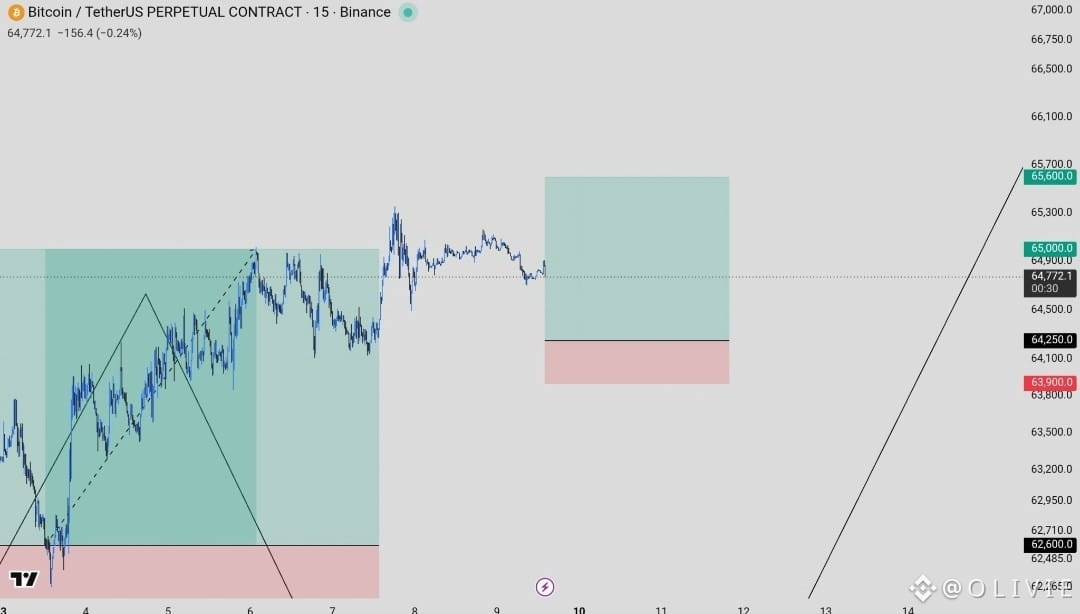
236
·
--
Heavy $BTC sell orders are stacked between $65K–$66K.
This is the key resistance zone bulls need to break through to push higher.#BTC走势分析
Heavy $BTC sell orders are stacked between $65K–$66K.
This is the key resistance zone bulls need to break through to push higher.#BTC走势分析
This is the key resistance zone bulls need to break through to push higher.#BTC走势分析
211
·
--
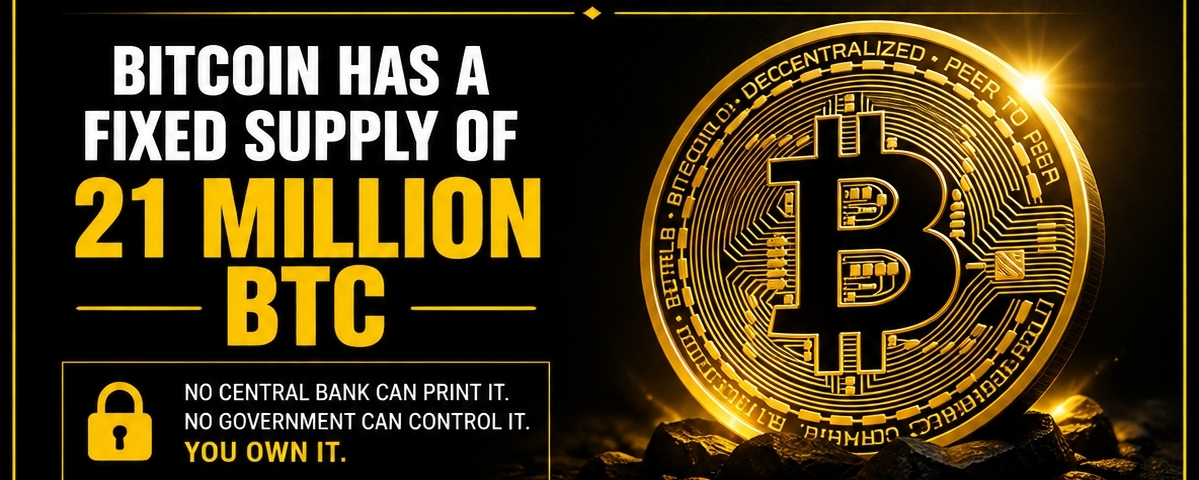
Article
Bitcoin (BTC): The Complete Guide to the World’s First CryptocurrencyBitcoin (BTC) has transformed from an experimental digital currency into one of the most recognized financial assets in the world. Created in 2009 by the pseudonymous Satoshi Nakamoto, Bitcoin introduced a new idea: people could transfer value directly over the internet without relying on a bank, government, or other central authority.
More than a decade later, Bitcoin remains at the center of discussions about money, technology, investing, inflation, financial freedom, and the future of the global financial system.
What Is Bitcoin?
Bitcoin is a decentralized digital currency that operates on a technology called blockchain. Unlike traditional currencies such as the US dollar, euro, or Indian rupee, Bitcoin is not issued or controlled by a central bank.
Instead, Bitcoin transactions are recorded on a distributed network of computers around the world. These computers collectively maintain the Bitcoin blockchain, making it possible to verify transactions without a central intermediary.
Bitcoin can be used to transfer value, hold wealth, make payments, or as an investment asset. Its limited supply is one of its most distinctive characteristics.
How Does Bitcoin Work?
Bitcoin operates through a combination of blockchain technology, cryptography, and a decentralized network.
When someone sends Bitcoin, the transaction is broadcast to the network. Participants verify that the transaction follows Bitcoin's rules, including whether the sender has sufficient funds.
Transactions are then grouped into blocks. Bitcoin uses a proof-of-work consensus mechanism, in which miners compete to solve computationally difficult problems. The successful miner can add a new block to the blockchain and receive rewards according to the protocol.
This process makes it extremely difficult to alter historical transactions without controlling a substantial portion of the network's computing power.
Bitcoin’s Limited Supply
One of Bitcoin's most important features is its fixed maximum supply of 21 million BTC.
Traditional fiat currencies can be expanded by central banks and governments through monetary policy. Bitcoin, by contrast, was designed with a predetermined issuance schedule.
New bitcoins are introduced into circulation through mining rewards. Approximately every four years, the reward paid to miners is reduced in an event commonly known as the Bitcoin halving.
The halving reduces the rate at which new BTC enters the market. Many investors therefore view Bitcoin as a scarce digital asset, although scarcity alone does not guarantee that its price will rise.
Why Do People Buy Bitcoin?
People purchase Bitcoin for different reasons.
Some investors view it as a long-term store of value. Others see it as a high-growth technology investment. Some use it for international transfers or as an alternative payment method.
Bitcoin is also attractive to people who believe decentralized financial systems can provide greater individual control over money.
However, Bitcoin remains highly volatile. Its price can rise or fall dramatically, sometimes within a short period. Investors should therefore understand the risks before purchasing it.
Bitcoin as an Investment
Bitcoin has become increasingly integrated into the broader financial market.
Institutional investors, companies, funds, and individual traders can gain exposure to BTC through different financial products and platforms. Market participation has expanded significantly compared with Bitcoin's early years.
At the same time, Bitcoin does not generate earnings in the same way a traditional operating company does. Its market value is largely influenced by supply and demand, investor expectations, liquidity, adoption, macroeconomic conditions, regulation, and market sentiment.
For this reason, determining Bitcoin's future price is highly uncertain.
Factors That Influence the Price of BTC
Several factors can affect Bitcoin's price.
1. Supply and Demand
Bitcoin has a limited maximum supply, while demand can change significantly. When demand increases faster than available supply, prices can rise. When demand weakens, prices can fall.
2. Institutional Adoption
The participation of large financial institutions can influence liquidity, market confidence, and overall demand for BTC.
3. Regulation
Government policies can have a major impact on the cryptocurrency industry. Favorable regulation may encourage adoption, while restrictive policies can create uncertainty and reduce market participation.
4. Macroeconomic Conditions
Interest rates, inflation, global liquidity, currency movements, and economic growth can influence investor appetite for risk assets, including Bitcoin.
5. Market Sentiment
Bitcoin is heavily influenced by sentiment. News, social media, major market events, technological developments, and investor psychology can all contribute to rapid price movements.
Bitcoin vs. Traditional Money
Bitcoin differs from traditional fiat currencies in several fundamental ways.
Fiat currencies are generally issued and managed by central monetary authorities. Bitcoin is governed by an open-source protocol and maintained by a decentralized network.
Bitcoin transactions can be conducted without traditional banking intermediaries, although exchanges and other service providers are commonly used by investors.
Bitcoin is also borderless in its design. A user can theoretically send BTC to another country without requiring a conventional international bank transfer.
However, Bitcoin's price volatility and transaction infrastructure mean it is not a perfect substitute for traditional money in every situation.
Bitcoin Mining
Mining is the process through which Bitcoin transactions are confirmed and new blocks are added to the blockchain.
Bitcoin miners use specialized computer hardware to perform proof-of-work calculations. Mining requires substantial amounts of electricity and specialized infrastructure.
The energy consumption of Bitcoin mining has become a major subject of debate. Supporters argue that Bitcoin provides a valuable decentralized monetary network and that miners can increasingly use renewable or otherwise underutilized energy sources.
Critics argue that Bitcoin's energy consumption creates environmental concerns and that alternative consensus mechanisms can be more energy efficient.
The debate remains an important part of Bitcoin's future.
Bitcoin Security
Bitcoin itself is secured by cryptography and the decentralized network, but users must still protect their private keys.
A Bitcoin wallet does not literally store bitcoins. Instead, it manages the cryptographic keys that allow users to control their Bitcoin addresses.
If a private key or recovery phrase is lost, access to the associated funds may become impossible. If private credentials are stolen, an attacker may be able to move the funds.
This makes security one of the most important considerations for Bitcoin users.
Bitcoin and Financial Freedom
One of Bitcoin's strongest philosophical arguments is financial sovereignty.
Traditional financial systems can involve banks, payment processors, governments, and other intermediaries. Bitcoin allows individuals to hold and transfer an asset using a decentralized network.
For supporters, this creates an alternative to systems in which access to financial services can be restricted or controlled.
Bitcoin's global accessibility is particularly significant in countries experiencing high inflation, capital controls, currency instability, or limited access to traditional financial services.
Risks of Bitcoin
Despite its potential, Bitcoin carries substantial risks.
High Volatility
BTC can experience large price movements. Investors should be prepared for significant losses as well as potential gains.
Regulatory Risk
Cryptocurrency laws differ between countries and can change over time.
Security Risk
Poor wallet security, scams, phishing attacks, exchange failures, and lost private keys can result in permanent financial losses.
Market Risk
Bitcoin remains a relatively young asset compared with traditional financial markets. Its long-term behavior is therefore difficult to predict.
Technology Risk
Although Bitcoin's core network has demonstrated significant resilience, users still interact with wallets, exchanges, applications, and other technologies that may contain vulnerabilities.
The Future of Bitcoin
Bitcoin's future remains uncertain, but its impact on finance and technology is already significant.
Future adoption could come from individual users, businesses, financial institutions, payment networks, investment products, and countries. Improvements in Bitcoin's surrounding infrastructure may also make it easier and safer for ordinary users to interact with the network.
At the same time, Bitcoin faces competition from other cryptocurrencies, stablecoins, central bank digital currencies, traditional financial products, and emerging blockchain technologies.
Its long-term success will depend on whether demand for a decentralized, scarce digital asset continues to grow and whether Bitcoin can remain secure, accessible, useful, and relevant in an evolving financial system.
Conclusion
Bitcoin represents one of the most important financial and technological experiments of the modern era. It introduced a decentralized system for transferring digital value and challenged traditional assumptions about money and financial intermediaries.
Its fixed supply, decentralized architecture, global accessibility, and resistance to centralized control have made BTC attractive to millions of people and investors around the world.
However, Bitcoin is not risk-free. Its volatility, regulatory uncertainty, security challenges, and environmental debates should be carefully considered.
Whether Bitcoin ultimately becomes a global reserve asset, a widely used payment network, a digital store of value, or something entirely different remains uncertain. What is clear is that Bitcoin has already changed the conversation about money—and its role in the global financial system will continue to be closely watched.#BTC走势分析
Bitcoin (BTC): The Complete Guide to the World’s First Cryptocurrency
Bitcoin (BTC) has transformed from an experimental digital currency into one of the most recognized financial assets in the world. Created in 2009 by the pseudonymous Satoshi Nakamoto, Bitcoin introduced a new idea: people could transfer value directly over the internet without relying on a bank, government, or other central authority.
More than a decade later, Bitcoin remains at the center of discussions about money, technology, investing, inflation, financial freedom, and the future of the global financial system.
What Is Bitcoin?
Bitcoin is a decentralized digital currency that operates on a technology called blockchain. Unlike traditional currencies such as the US dollar, euro, or Indian rupee, Bitcoin is not issued or controlled by a central bank.
Instead, Bitcoin transactions are recorded on a distributed network of computers around the world. These computers collectively maintain the Bitcoin blockchain, making it possible to verify transactions without a central intermediary.
Bitcoin can be used to transfer value, hold wealth, make payments, or as an investment asset. Its limited supply is one of its most distinctive characteristics.
How Does Bitcoin Work?
Bitcoin operates through a combination of blockchain technology, cryptography, and a decentralized network.
When someone sends Bitcoin, the transaction is broadcast to the network. Participants verify that the transaction follows Bitcoin's rules, including whether the sender has sufficient funds.
Transactions are then grouped into blocks. Bitcoin uses a proof-of-work consensus mechanism, in which miners compete to solve computationally difficult problems. The successful miner can add a new block to the blockchain and receive rewards according to the protocol.
This process makes it extremely difficult to alter historical transactions without controlling a substantial portion of the network's computing power.
Bitcoin’s Limited Supply
One of Bitcoin's most important features is its fixed maximum supply of 21 million BTC.
Traditional fiat currencies can be expanded by central banks and governments through monetary policy. Bitcoin, by contrast, was designed with a predetermined issuance schedule.
New bitcoins are introduced into circulation through mining rewards. Approximately every four years, the reward paid to miners is reduced in an event commonly known as the Bitcoin halving.
The halving reduces the rate at which new BTC enters the market. Many investors therefore view Bitcoin as a scarce digital asset, although scarcity alone does not guarantee that its price will rise.
Why Do People Buy Bitcoin?
People purchase Bitcoin for different reasons.
Some investors view it as a long-term store of value. Others see it as a high-growth technology investment. Some use it for international transfers or as an alternative payment method.
Bitcoin is also attractive to people who believe decentralized financial systems can provide greater individual control over money.
However, Bitcoin remains highly volatile. Its price can rise or fall dramatically, sometimes within a short period. Investors should therefore understand the risks before purchasing it.
Bitcoin as an Investment
Bitcoin has become increasingly integrated into the broader financial market.
Institutional investors, companies, funds, and individual traders can gain exposure to BTC through different financial products and platforms. Market participation has expanded significantly compared with Bitcoin's early years.
At the same time, Bitcoin does not generate earnings in the same way a traditional operating company does. Its market value is largely influenced by supply and demand, investor expectations, liquidity, adoption, macroeconomic conditions, regulation, and market sentiment.
For this reason, determining Bitcoin's future price is highly uncertain.
Factors That Influence the Price of BTC
Several factors can affect Bitcoin's price.
1. Supply and Demand
Bitcoin has a limited maximum supply, while demand can change significantly. When demand increases faster than available supply, prices can rise. When demand weakens, prices can fall.
2. Institutional Adoption
The participation of large financial institutions can influence liquidity, market confidence, and overall demand for BTC.
3. Regulation
Government policies can have a major impact on the cryptocurrency industry. Favorable regulation may encourage adoption, while restrictive policies can create uncertainty and reduce market participation.
4. Macroeconomic Conditions
Interest rates, inflation, global liquidity, currency movements, and economic growth can influence investor appetite for risk assets, including Bitcoin.
5. Market Sentiment
Bitcoin is heavily influenced by sentiment. News, social media, major market events, technological developments, and investor psychology can all contribute to rapid price movements.
Bitcoin vs. Traditional Money
Bitcoin differs from traditional fiat currencies in several fundamental ways.
Fiat currencies are generally issued and managed by central monetary authorities. Bitcoin is governed by an open-source protocol and maintained by a decentralized network.
Bitcoin transactions can be conducted without traditional banking intermediaries, although exchanges and other service providers are commonly used by investors.
Bitcoin is also borderless in its design. A user can theoretically send BTC to another country without requiring a conventional international bank transfer.
However, Bitcoin's price volatility and transaction infrastructure mean it is not a perfect substitute for traditional money in every situation.
Bitcoin Mining
Mining is the process through which Bitcoin transactions are confirmed and new blocks are added to the blockchain.
Bitcoin miners use specialized computer hardware to perform proof-of-work calculations. Mining requires substantial amounts of electricity and specialized infrastructure.
The energy consumption of Bitcoin mining has become a major subject of debate. Supporters argue that Bitcoin provides a valuable decentralized monetary network and that miners can increasingly use renewable or otherwise underutilized energy sources.
Critics argue that Bitcoin's energy consumption creates environmental concerns and that alternative consensus mechanisms can be more energy efficient.
The debate remains an important part of Bitcoin's future.
Bitcoin Security
Bitcoin itself is secured by cryptography and the decentralized network, but users must still protect their private keys.
A Bitcoin wallet does not literally store bitcoins. Instead, it manages the cryptographic keys that allow users to control their Bitcoin addresses.
If a private key or recovery phrase is lost, access to the associated funds may become impossible. If private credentials are stolen, an attacker may be able to move the funds.
This makes security one of the most important considerations for Bitcoin users.
Bitcoin and Financial Freedom
One of Bitcoin's strongest philosophical arguments is financial sovereignty.
Traditional financial systems can involve banks, payment processors, governments, and other intermediaries. Bitcoin allows individuals to hold and transfer an asset using a decentralized network.
For supporters, this creates an alternative to systems in which access to financial services can be restricted or controlled.
Bitcoin's global accessibility is particularly significant in countries experiencing high inflation, capital controls, currency instability, or limited access to traditional financial services.
Risks of Bitcoin
Despite its potential, Bitcoin carries substantial risks.
High Volatility
BTC can experience large price movements. Investors should be prepared for significant losses as well as potential gains.
Regulatory Risk
Cryptocurrency laws differ between countries and can change over time.
Security Risk
Poor wallet security, scams, phishing attacks, exchange failures, and lost private keys can result in permanent financial losses.
Market Risk
Bitcoin remains a relatively young asset compared with traditional financial markets. Its long-term behavior is therefore difficult to predict.
Technology Risk
Although Bitcoin's core network has demonstrated significant resilience, users still interact with wallets, exchanges, applications, and other technologies that may contain vulnerabilities.
The Future of Bitcoin
Bitcoin's future remains uncertain, but its impact on finance and technology is already significant.
Future adoption could come from individual users, businesses, financial institutions, payment networks, investment products, and countries. Improvements in Bitcoin's surrounding infrastructure may also make it easier and safer for ordinary users to interact with the network.
At the same time, Bitcoin faces competition from other cryptocurrencies, stablecoins, central bank digital currencies, traditional financial products, and emerging blockchain technologies.
Its long-term success will depend on whether demand for a decentralized, scarce digital asset continues to grow and whether Bitcoin can remain secure, accessible, useful, and relevant in an evolving financial system.
Conclusion
Bitcoin represents one of the most important financial and technological experiments of the modern era. It introduced a decentralized system for transferring digital value and challenged traditional assumptions about money and financial intermediaries.
Its fixed supply, decentralized architecture, global accessibility, and resistance to centralized control have made BTC attractive to millions of people and investors around the world.
However, Bitcoin is not risk-free. Its volatility, regulatory uncertainty, security challenges, and environmental debates should be carefully considered.
Whether Bitcoin ultimately becomes a global reserve asset, a widely used payment network, a digital store of value, or something entirely different remains uncertain. What is clear is that Bitcoin has already changed the conversation about money—and its role in the global financial system will continue to be closely watched.#BTC走势分析
More than a decade later, Bitcoin remains at the center of discussions about money, technology, investing, inflation, financial freedom, and the future of the global financial system.
What Is Bitcoin?
Bitcoin is a decentralized digital currency that operates on a technology called blockchain. Unlike traditional currencies such as the US dollar, euro, or Indian rupee, Bitcoin is not issued or controlled by a central bank.
Instead, Bitcoin transactions are recorded on a distributed network of computers around the world. These computers collectively maintain the Bitcoin blockchain, making it possible to verify transactions without a central intermediary.
Bitcoin can be used to transfer value, hold wealth, make payments, or as an investment asset. Its limited supply is one of its most distinctive characteristics.
How Does Bitcoin Work?
Bitcoin operates through a combination of blockchain technology, cryptography, and a decentralized network.
When someone sends Bitcoin, the transaction is broadcast to the network. Participants verify that the transaction follows Bitcoin's rules, including whether the sender has sufficient funds.
Transactions are then grouped into blocks. Bitcoin uses a proof-of-work consensus mechanism, in which miners compete to solve computationally difficult problems. The successful miner can add a new block to the blockchain and receive rewards according to the protocol.
This process makes it extremely difficult to alter historical transactions without controlling a substantial portion of the network's computing power.
Bitcoin’s Limited Supply
One of Bitcoin's most important features is its fixed maximum supply of 21 million BTC.
Traditional fiat currencies can be expanded by central banks and governments through monetary policy. Bitcoin, by contrast, was designed with a predetermined issuance schedule.
New bitcoins are introduced into circulation through mining rewards. Approximately every four years, the reward paid to miners is reduced in an event commonly known as the Bitcoin halving.
The halving reduces the rate at which new BTC enters the market. Many investors therefore view Bitcoin as a scarce digital asset, although scarcity alone does not guarantee that its price will rise.
Why Do People Buy Bitcoin?
People purchase Bitcoin for different reasons.
Some investors view it as a long-term store of value. Others see it as a high-growth technology investment. Some use it for international transfers or as an alternative payment method.
Bitcoin is also attractive to people who believe decentralized financial systems can provide greater individual control over money.
However, Bitcoin remains highly volatile. Its price can rise or fall dramatically, sometimes within a short period. Investors should therefore understand the risks before purchasing it.
Bitcoin as an Investment
Bitcoin has become increasingly integrated into the broader financial market.
Institutional investors, companies, funds, and individual traders can gain exposure to BTC through different financial products and platforms. Market participation has expanded significantly compared with Bitcoin's early years.
At the same time, Bitcoin does not generate earnings in the same way a traditional operating company does. Its market value is largely influenced by supply and demand, investor expectations, liquidity, adoption, macroeconomic conditions, regulation, and market sentiment.
For this reason, determining Bitcoin's future price is highly uncertain.
Factors That Influence the Price of BTC
Several factors can affect Bitcoin's price.
1. Supply and Demand
Bitcoin has a limited maximum supply, while demand can change significantly. When demand increases faster than available supply, prices can rise. When demand weakens, prices can fall.
2. Institutional Adoption
The participation of large financial institutions can influence liquidity, market confidence, and overall demand for BTC.
3. Regulation
Government policies can have a major impact on the cryptocurrency industry. Favorable regulation may encourage adoption, while restrictive policies can create uncertainty and reduce market participation.
4. Macroeconomic Conditions
Interest rates, inflation, global liquidity, currency movements, and economic growth can influence investor appetite for risk assets, including Bitcoin.
5. Market Sentiment
Bitcoin is heavily influenced by sentiment. News, social media, major market events, technological developments, and investor psychology can all contribute to rapid price movements.
Bitcoin vs. Traditional Money
Bitcoin differs from traditional fiat currencies in several fundamental ways.
Fiat currencies are generally issued and managed by central monetary authorities. Bitcoin is governed by an open-source protocol and maintained by a decentralized network.
Bitcoin transactions can be conducted without traditional banking intermediaries, although exchanges and other service providers are commonly used by investors.
Bitcoin is also borderless in its design. A user can theoretically send BTC to another country without requiring a conventional international bank transfer.
However, Bitcoin's price volatility and transaction infrastructure mean it is not a perfect substitute for traditional money in every situation.
Bitcoin Mining
Mining is the process through which Bitcoin transactions are confirmed and new blocks are added to the blockchain.
Bitcoin miners use specialized computer hardware to perform proof-of-work calculations. Mining requires substantial amounts of electricity and specialized infrastructure.
The energy consumption of Bitcoin mining has become a major subject of debate. Supporters argue that Bitcoin provides a valuable decentralized monetary network and that miners can increasingly use renewable or otherwise underutilized energy sources.
Critics argue that Bitcoin's energy consumption creates environmental concerns and that alternative consensus mechanisms can be more energy efficient.
The debate remains an important part of Bitcoin's future.
Bitcoin Security
Bitcoin itself is secured by cryptography and the decentralized network, but users must still protect their private keys.
A Bitcoin wallet does not literally store bitcoins. Instead, it manages the cryptographic keys that allow users to control their Bitcoin addresses.
If a private key or recovery phrase is lost, access to the associated funds may become impossible. If private credentials are stolen, an attacker may be able to move the funds.
This makes security one of the most important considerations for Bitcoin users.
Bitcoin and Financial Freedom
One of Bitcoin's strongest philosophical arguments is financial sovereignty.
Traditional financial systems can involve banks, payment processors, governments, and other intermediaries. Bitcoin allows individuals to hold and transfer an asset using a decentralized network.
For supporters, this creates an alternative to systems in which access to financial services can be restricted or controlled.
Bitcoin's global accessibility is particularly significant in countries experiencing high inflation, capital controls, currency instability, or limited access to traditional financial services.
Risks of Bitcoin
Despite its potential, Bitcoin carries substantial risks.
High Volatility
BTC can experience large price movements. Investors should be prepared for significant losses as well as potential gains.
Regulatory Risk
Cryptocurrency laws differ between countries and can change over time.
Security Risk
Poor wallet security, scams, phishing attacks, exchange failures, and lost private keys can result in permanent financial losses.
Market Risk
Bitcoin remains a relatively young asset compared with traditional financial markets. Its long-term behavior is therefore difficult to predict.
Technology Risk
Although Bitcoin's core network has demonstrated significant resilience, users still interact with wallets, exchanges, applications, and other technologies that may contain vulnerabilities.
The Future of Bitcoin
Bitcoin's future remains uncertain, but its impact on finance and technology is already significant.
Future adoption could come from individual users, businesses, financial institutions, payment networks, investment products, and countries. Improvements in Bitcoin's surrounding infrastructure may also make it easier and safer for ordinary users to interact with the network.
At the same time, Bitcoin faces competition from other cryptocurrencies, stablecoins, central bank digital currencies, traditional financial products, and emerging blockchain technologies.
Its long-term success will depend on whether demand for a decentralized, scarce digital asset continues to grow and whether Bitcoin can remain secure, accessible, useful, and relevant in an evolving financial system.
Conclusion
Bitcoin represents one of the most important financial and technological experiments of the modern era. It introduced a decentralized system for transferring digital value and challenged traditional assumptions about money and financial intermediaries.
Its fixed supply, decentralized architecture, global accessibility, and resistance to centralized control have made BTC attractive to millions of people and investors around the world.
However, Bitcoin is not risk-free. Its volatility, regulatory uncertainty, security challenges, and environmental debates should be carefully considered.
Whether Bitcoin ultimately becomes a global reserve asset, a widely used payment network, a digital store of value, or something entirely different remains uncertain. What is clear is that Bitcoin has already changed the conversation about money—and its role in the global financial system will continue to be closely watched.#BTC走势分析
1
2
426
·
--
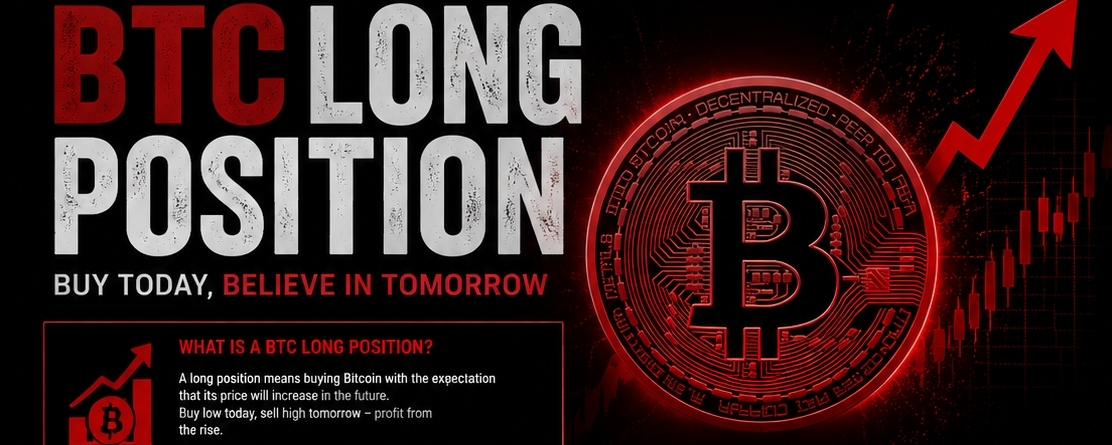
Article
Bitcoin (BTC) Long Position: Understanding the Opportunity, Risks, and StrategyIntroduction
Bitcoin (BTC) remains the world's largest and most influential cryptocurrency. Since its launch in 2009, Bitcoin has evolved from an experimental digital currency into a globally recognized financial asset. Traders and investors often choose to take either a long or short position depending on their market outlook. A BTC long position is based on the belief that Bitcoin's price will rise over time, allowing the investor to profit from the increase.
This article explores what a BTC long position is, why traders choose it, the factors that influence Bitcoin's price, common strategies, risk management techniques, and important considerations before investing.
What Is a BTC Long Position?
A long position means buying Bitcoin with the expectation that its price will increase in the future. If the price rises after purchase, the investor can sell the Bitcoin at a higher price and realize a profit.
For example:
- Purchase Price: $100,000 per BTC
- Sell Price: $110,000 per BTC
- Profit: $10,000 per BTC (excluding fees and taxes)
Long positions can be held for minutes, days, months, or even years depending on the investor's strategy.
Why Investors Go Long on Bitcoin
Several factors encourage investors to maintain a bullish outlook on Bitcoin.
1. Limited Supply
Bitcoin has a maximum supply of 21 million coins, making it a scarce digital asset. This limited supply is one reason many investors believe its value may increase over time if demand continues to grow.
2. Institutional Adoption
Large companies, investment funds, and financial institutions have increasingly incorporated Bitcoin into their investment strategies. Greater institutional participation can improve market liquidity and strengthen long-term confidence.
3. Inflation Hedge
Some investors view Bitcoin as "digital gold" and use it as a potential hedge against inflation and currency depreciation.
4. Growing Global Acceptance
Bitcoin is becoming more widely accepted for payments, investment products, and financial services, supporting long-term adoption.
Factors That Can Drive Bitcoin Higher
Several market forces influence Bitcoin's price.
- Increased institutional investment
- Positive regulatory developments
- Bitcoin halving events that reduce new supply
- Lower interest rates and favorable macroeconomic conditions
- Strong investor sentiment
- Growth in blockchain technology and digital asset adoption
Common BTC Long Strategies
Buy and Hold (HODL)
This strategy involves purchasing Bitcoin and holding it for years, regardless of short-term price fluctuations.
Dollar-Cost Averaging (DCA)
Investors buy fixed amounts of Bitcoin at regular intervals, reducing the impact of market volatility.
Swing Trading
Swing traders hold long positions for several days or weeks, aiming to profit from medium-term price movements.
Leveraged Long Trading
Some traders use borrowed funds to increase their exposure. While leverage can amplify profits, it also significantly increases the risk of losses and liquidation.
Risk Management
Risk management is essential when taking a BTC long position.
- Never invest more than you can afford to lose.
- Diversify your investment portfolio.
- Consider using stop-loss orders when trading.
- Avoid excessive leverage.
- Stay informed about market news and regulatory developments.
- Develop a clear investment plan and follow it consistently.
Risks of Going Long
Although Bitcoin has delivered substantial returns over its history, investing carries risks.
Market Volatility
Bitcoin's price can move sharply within short periods.
Regulatory Changes
Government regulations can influence market confidence and prices.
Security Risks
Investors should use secure wallets, strong passwords, and two-factor authentication to protect their assets.
Emotional Trading
Fear and greed often lead to poor investment decisions. Maintaining discipline is important.
Technical Analysis for Long Positions
Many traders use technical indicators such as:
- Moving Averages
- Relative Strength Index (RSI)
- MACD
- Support and Resistance Levels
- Trading Volume
These tools can help identify potential entry and exit points, although they cannot guarantee future performance.
Long-Term Outlook
Many analysts remain optimistic about Bitcoin due to its scarcity, increasing adoption, and expanding role in global finance. However, future performance depends on numerous factors including regulation, technological developments, macroeconomic conditions, and investor demand.
Conclusion
A BTC long position is a strategy based on the expectation that Bitcoin's value will increase over time. While the long-term outlook attracts many investors, Bitcoin remains a highly volatile asset. Success requires careful research, disciplined risk management, and a well-defined investment strategy.
Before investing, understand both the potential rewards and the risks, and make decisions that align with your financial goals and risk tolerance. No investment strategy guarantees profits, and past performance does not predict future results.#BTC走势分析
Bitcoin (BTC) Long Position: Understanding the Opportunity, Risks, and Strategy
Introduction
Bitcoin (BTC) remains the world's largest and most influential cryptocurrency. Since its launch in 2009, Bitcoin has evolved from an experimental digital currency into a globally recognized financial asset. Traders and investors often choose to take either a long or short position depending on their market outlook. A BTC long position is based on the belief that Bitcoin's price will rise over time, allowing the investor to profit from the increase.
This article explores what a BTC long position is, why traders choose it, the factors that influence Bitcoin's price, common strategies, risk management techniques, and important considerations before investing.
What Is a BTC Long Position?
A long position means buying Bitcoin with the expectation that its price will increase in the future. If the price rises after purchase, the investor can sell the Bitcoin at a higher price and realize a profit.
For example:
- Purchase Price: $100,000 per BTC
- Sell Price: $110,000 per BTC
- Profit: $10,000 per BTC (excluding fees and taxes)
Long positions can be held for minutes, days, months, or even years depending on the investor's strategy.
Why Investors Go Long on Bitcoin
Several factors encourage investors to maintain a bullish outlook on Bitcoin.
1. Limited Supply
Bitcoin has a maximum supply of 21 million coins, making it a scarce digital asset. This limited supply is one reason many investors believe its value may increase over time if demand continues to grow.
2. Institutional Adoption
Large companies, investment funds, and financial institutions have increasingly incorporated Bitcoin into their investment strategies. Greater institutional participation can improve market liquidity and strengthen long-term confidence.
3. Inflation Hedge
Some investors view Bitcoin as "digital gold" and use it as a potential hedge against inflation and currency depreciation.
4. Growing Global Acceptance
Bitcoin is becoming more widely accepted for payments, investment products, and financial services, supporting long-term adoption.
Factors That Can Drive Bitcoin Higher
Several market forces influence Bitcoin's price.
- Increased institutional investment
- Positive regulatory developments
- Bitcoin halving events that reduce new supply
- Lower interest rates and favorable macroeconomic conditions
- Strong investor sentiment
- Growth in blockchain technology and digital asset adoption
Common BTC Long Strategies
Buy and Hold (HODL)
This strategy involves purchasing Bitcoin and holding it for years, regardless of short-term price fluctuations.
Dollar-Cost Averaging (DCA)
Investors buy fixed amounts of Bitcoin at regular intervals, reducing the impact of market volatility.
Swing Trading
Swing traders hold long positions for several days or weeks, aiming to profit from medium-term price movements.
Leveraged Long Trading
Some traders use borrowed funds to increase their exposure. While leverage can amplify profits, it also significantly increases the risk of losses and liquidation.
Risk Management
Risk management is essential when taking a BTC long position.
- Never invest more than you can afford to lose.
- Diversify your investment portfolio.
- Consider using stop-loss orders when trading.
- Avoid excessive leverage.
- Stay informed about market news and regulatory developments.
- Develop a clear investment plan and follow it consistently.
Risks of Going Long
Although Bitcoin has delivered substantial returns over its history, investing carries risks.
Market Volatility
Bitcoin's price can move sharply within short periods.
Regulatory Changes
Government regulations can influence market confidence and prices.
Security Risks
Investors should use secure wallets, strong passwords, and two-factor authentication to protect their assets.
Emotional Trading
Fear and greed often lead to poor investment decisions. Maintaining discipline is important.
Technical Analysis for Long Positions
Many traders use technical indicators such as:
- Moving Averages
- Relative Strength Index (RSI)
- MACD
- Support and Resistance Levels
- Trading Volume
These tools can help identify potential entry and exit points, although they cannot guarantee future performance.
Long-Term Outlook
Many analysts remain optimistic about Bitcoin due to its scarcity, increasing adoption, and expanding role in global finance. However, future performance depends on numerous factors including regulation, technological developments, macroeconomic conditions, and investor demand.
Conclusion
A BTC long position is a strategy based on the expectation that Bitcoin's value will increase over time. While the long-term outlook attracts many investors, Bitcoin remains a highly volatile asset. Success requires careful research, disciplined risk management, and a well-defined investment strategy.
Before investing, understand both the potential rewards and the risks, and make decisions that align with your financial goals and risk tolerance. No investment strategy guarantees profits, and past performance does not predict future results.#BTC走势分析
Bitcoin (BTC) remains the world's largest and most influential cryptocurrency. Since its launch in 2009, Bitcoin has evolved from an experimental digital currency into a globally recognized financial asset. Traders and investors often choose to take either a long or short position depending on their market outlook. A BTC long position is based on the belief that Bitcoin's price will rise over time, allowing the investor to profit from the increase.
This article explores what a BTC long position is, why traders choose it, the factors that influence Bitcoin's price, common strategies, risk management techniques, and important considerations before investing.
What Is a BTC Long Position?
A long position means buying Bitcoin with the expectation that its price will increase in the future. If the price rises after purchase, the investor can sell the Bitcoin at a higher price and realize a profit.
For example:
- Purchase Price: $100,000 per BTC
- Sell Price: $110,000 per BTC
- Profit: $10,000 per BTC (excluding fees and taxes)
Long positions can be held for minutes, days, months, or even years depending on the investor's strategy.
Why Investors Go Long on Bitcoin
Several factors encourage investors to maintain a bullish outlook on Bitcoin.
1. Limited Supply
Bitcoin has a maximum supply of 21 million coins, making it a scarce digital asset. This limited supply is one reason many investors believe its value may increase over time if demand continues to grow.
2. Institutional Adoption
Large companies, investment funds, and financial institutions have increasingly incorporated Bitcoin into their investment strategies. Greater institutional participation can improve market liquidity and strengthen long-term confidence.
3. Inflation Hedge
Some investors view Bitcoin as "digital gold" and use it as a potential hedge against inflation and currency depreciation.
4. Growing Global Acceptance
Bitcoin is becoming more widely accepted for payments, investment products, and financial services, supporting long-term adoption.
Factors That Can Drive Bitcoin Higher
Several market forces influence Bitcoin's price.
- Increased institutional investment
- Positive regulatory developments
- Bitcoin halving events that reduce new supply
- Lower interest rates and favorable macroeconomic conditions
- Strong investor sentiment
- Growth in blockchain technology and digital asset adoption
Common BTC Long Strategies
Buy and Hold (HODL)
This strategy involves purchasing Bitcoin and holding it for years, regardless of short-term price fluctuations.
Dollar-Cost Averaging (DCA)
Investors buy fixed amounts of Bitcoin at regular intervals, reducing the impact of market volatility.
Swing Trading
Swing traders hold long positions for several days or weeks, aiming to profit from medium-term price movements.
Leveraged Long Trading
Some traders use borrowed funds to increase their exposure. While leverage can amplify profits, it also significantly increases the risk of losses and liquidation.
Risk Management
Risk management is essential when taking a BTC long position.
- Never invest more than you can afford to lose.
- Diversify your investment portfolio.
- Consider using stop-loss orders when trading.
- Avoid excessive leverage.
- Stay informed about market news and regulatory developments.
- Develop a clear investment plan and follow it consistently.
Risks of Going Long
Although Bitcoin has delivered substantial returns over its history, investing carries risks.
Market Volatility
Bitcoin's price can move sharply within short periods.
Regulatory Changes
Government regulations can influence market confidence and prices.
Security Risks
Investors should use secure wallets, strong passwords, and two-factor authentication to protect their assets.
Emotional Trading
Fear and greed often lead to poor investment decisions. Maintaining discipline is important.
Technical Analysis for Long Positions
Many traders use technical indicators such as:
- Moving Averages
- Relative Strength Index (RSI)
- MACD
- Support and Resistance Levels
- Trading Volume
These tools can help identify potential entry and exit points, although they cannot guarantee future performance.
Long-Term Outlook
Many analysts remain optimistic about Bitcoin due to its scarcity, increasing adoption, and expanding role in global finance. However, future performance depends on numerous factors including regulation, technological developments, macroeconomic conditions, and investor demand.
Conclusion
A BTC long position is a strategy based on the expectation that Bitcoin's value will increase over time. While the long-term outlook attracts many investors, Bitcoin remains a highly volatile asset. Success requires careful research, disciplined risk management, and a well-defined investment strategy.
Before investing, understand both the potential rewards and the risks, and make decisions that align with your financial goals and risk tolerance. No investment strategy guarantees profits, and past performance does not predict future results.#BTC走势分析
378
·
--
Article
Dogecoin: From Internet Meme to Global CryptocurrencyDogecoin (DOGE) is one of the most recognizable cryptocurrencies in the world. What started as a lighthearted joke in 2013 has grown into a digital asset with millions of supporters, widespread exchange listings, and real-world payment use. While many cryptocurrencies focus on complex technology or decentralized finance, Dogecoin has always stood out for its simplicity, accessibility, and community-driven culture.
The Origins of Dogecoin
Dogecoin was created in December 2013 by software engineers Billy Markus and Jackson Palmer. Inspired by the popular "Doge" internet meme featuring a Shiba Inu dog, the project was originally intended to parody the growing cryptocurrency market.
Despite its humorous beginnings, Dogecoin quickly gained popularity. Its friendly branding attracted newcomers who found other cryptocurrencies intimidating. Over time, the community became known for supporting charitable causes, tipping online creators, and fundraising for unique initiatives, including sponsoring sports teams and helping fund clean water projects.
How Dogecoin Works
Dogecoin operates on a decentralized blockchain, allowing users to send and receive payments without relying on banks or financial institutions. Transactions are verified by a network of miners who secure the blockchain through a Proof-of-Work (PoW) consensus mechanism.
Key features include:
- Fast transaction confirmations compared to many traditional payment systems.
- Low transaction fees, making it practical for smaller transfers.
- Open-source development that allows continuous improvements.
- A large and active global community.
Dogecoin shares similarities with Litecoin and uses the Scrypt mining algorithm, allowing merged mining with Litecoin in certain cases.
What Makes Dogecoin Different?
Unlike Bitcoin, which has a fixed supply of 21 million coins, Dogecoin has no maximum supply. New DOGE continues to be issued through mining rewards.
This inflationary design encourages spending rather than long-term scarcity, although opinions differ on whether this benefits or limits its long-term value.
Another defining characteristic is its strong online community. Social media platforms have played a major role in Dogecoin's popularity, helping it remain relevant even during changing market conditions.
Real-World Uses
Dogecoin has evolved beyond internet tipping and is now accepted by a growing number of businesses and payment providers.
Common use cases include:
- Online purchases
- Peer-to-peer payments
- Digital tipping
- Donations and fundraising
- Cryptocurrency trading and investing
Some merchants accept DOGE directly, while payment processors can convert it into local currency for businesses.
The Role of Community
One of Dogecoin's greatest strengths is its community. From charitable campaigns to educational content and online engagement, supporters have helped keep the project active for over a decade.
The community's positive culture has often distinguished Dogecoin from many other digital assets that focus primarily on technical innovation.
Market Performance
Dogecoin has experienced significant price volatility throughout its history. It gained worldwide attention during the 2021 cryptocurrency bull market, when increased retail interest and social media activity contributed to rapid price appreciation.
Like most cryptocurrencies, DOGE's market price can fluctuate substantially due to:
- Market sentiment
- Global economic conditions
- Cryptocurrency adoption
- Regulatory developments
- Social media discussions
- Broader digital asset trends
Past performance should not be viewed as an indicator of future results.
Advantages
Dogecoin offers several potential benefits:
- Easy for beginners to understand.
- Low transaction fees.
- Strong liquidity on major exchanges.
- Large global community.
- Widely recognized cryptocurrency brand.
- Fast peer-to-peer transfers.
Risks
Investors and users should also understand the risks:
- High price volatility.
- No guaranteed returns.
- Unlimited supply compared to fixed-supply cryptocurrencies.
- Market sentiment can heavily influence price movements.
- Regulatory changes may impact the broader cryptocurrency market.
Anyone considering buying or using Dogecoin should conduct independent research and understand the associated risks.
The Future of Dogecoin
Dogecoin continues to evolve as developers, businesses, and community members explore new use cases. Increasing payment adoption, wallet improvements, and broader cryptocurrency acceptance could influence its future role within the digital economy.
However, the cryptocurrency industry remains highly competitive, with thousands of blockchain projects offering different technologies and features. Dogecoin's long-term success will depend on continued community support, ongoing development, real-world utility, and broader market adoption.
Conclusion
Dogecoin's journey from an internet joke to one of the world's most recognized cryptocurrencies is a unique story in digital finance. Its simple design, active community, and widespread recognition have helped it maintain relevance over many years.#BTC走势分析 #DOGE
Dogecoin: From Internet Meme to Global Cryptocurrency
Dogecoin (DOGE) is one of the most recognizable cryptocurrencies in the world. What started as a lighthearted joke in 2013 has grown into a digital asset with millions of supporters, widespread exchange listings, and real-world payment use. While many cryptocurrencies focus on complex technology or decentralized finance, Dogecoin has always stood out for its simplicity, accessibility, and community-driven culture.
The Origins of Dogecoin
Dogecoin was created in December 2013 by software engineers Billy Markus and Jackson Palmer. Inspired by the popular "Doge" internet meme featuring a Shiba Inu dog, the project was originally intended to parody the growing cryptocurrency market.
Despite its humorous beginnings, Dogecoin quickly gained popularity. Its friendly branding attracted newcomers who found other cryptocurrencies intimidating. Over time, the community became known for supporting charitable causes, tipping online creators, and fundraising for unique initiatives, including sponsoring sports teams and helping fund clean water projects.
How Dogecoin Works
Dogecoin operates on a decentralized blockchain, allowing users to send and receive payments without relying on banks or financial institutions. Transactions are verified by a network of miners who secure the blockchain through a Proof-of-Work (PoW) consensus mechanism.
Key features include:
- Fast transaction confirmations compared to many traditional payment systems.
- Low transaction fees, making it practical for smaller transfers.
- Open-source development that allows continuous improvements.
- A large and active global community.
Dogecoin shares similarities with Litecoin and uses the Scrypt mining algorithm, allowing merged mining with Litecoin in certain cases.
What Makes Dogecoin Different?
Unlike Bitcoin, which has a fixed supply of 21 million coins, Dogecoin has no maximum supply. New DOGE continues to be issued through mining rewards.
This inflationary design encourages spending rather than long-term scarcity, although opinions differ on whether this benefits or limits its long-term value.
Another defining characteristic is its strong online community. Social media platforms have played a major role in Dogecoin's popularity, helping it remain relevant even during changing market conditions.
Real-World Uses
Dogecoin has evolved beyond internet tipping and is now accepted by a growing number of businesses and payment providers.
Common use cases include:
- Online purchases
- Peer-to-peer payments
- Digital tipping
- Donations and fundraising
- Cryptocurrency trading and investing
Some merchants accept DOGE directly, while payment processors can convert it into local currency for businesses.
The Role of Community
One of Dogecoin's greatest strengths is its community. From charitable campaigns to educational content and online engagement, supporters have helped keep the project active for over a decade.
The community's positive culture has often distinguished Dogecoin from many other digital assets that focus primarily on technical innovation.
Market Performance
Dogecoin has experienced significant price volatility throughout its history. It gained worldwide attention during the 2021 cryptocurrency bull market, when increased retail interest and social media activity contributed to rapid price appreciation.
Like most cryptocurrencies, DOGE's market price can fluctuate substantially due to:
- Market sentiment
- Global economic conditions
- Cryptocurrency adoption
- Regulatory developments
- Social media discussions
- Broader digital asset trends
Past performance should not be viewed as an indicator of future results.
Advantages
Dogecoin offers several potential benefits:
- Easy for beginners to understand.
- Low transaction fees.
- Strong liquidity on major exchanges.
- Large global community.
- Widely recognized cryptocurrency brand.
- Fast peer-to-peer transfers.
Risks
Investors and users should also understand the risks:
- High price volatility.
- No guaranteed returns.
- Unlimited supply compared to fixed-supply cryptocurrencies.
- Market sentiment can heavily influence price movements.
- Regulatory changes may impact the broader cryptocurrency market.
Anyone considering buying or using Dogecoin should conduct independent research and understand the associated risks.
The Future of Dogecoin
Dogecoin continues to evolve as developers, businesses, and community members explore new use cases. Increasing payment adoption, wallet improvements, and broader cryptocurrency acceptance could influence its future role within the digital economy.
However, the cryptocurrency industry remains highly competitive, with thousands of blockchain projects offering different technologies and features. Dogecoin's long-term success will depend on continued community support, ongoing development, real-world utility, and broader market adoption.
Conclusion
Dogecoin's journey from an internet joke to one of the world's most recognized cryptocurrencies is a unique story in digital finance. Its simple design, active community, and widespread recognition have helped it maintain relevance over many years.#BTC走势分析 #DOGE
The Origins of Dogecoin
Dogecoin was created in December 2013 by software engineers Billy Markus and Jackson Palmer. Inspired by the popular "Doge" internet meme featuring a Shiba Inu dog, the project was originally intended to parody the growing cryptocurrency market.
Despite its humorous beginnings, Dogecoin quickly gained popularity. Its friendly branding attracted newcomers who found other cryptocurrencies intimidating. Over time, the community became known for supporting charitable causes, tipping online creators, and fundraising for unique initiatives, including sponsoring sports teams and helping fund clean water projects.
How Dogecoin Works
Dogecoin operates on a decentralized blockchain, allowing users to send and receive payments without relying on banks or financial institutions. Transactions are verified by a network of miners who secure the blockchain through a Proof-of-Work (PoW) consensus mechanism.
Key features include:
- Fast transaction confirmations compared to many traditional payment systems.
- Low transaction fees, making it practical for smaller transfers.
- Open-source development that allows continuous improvements.
- A large and active global community.
Dogecoin shares similarities with Litecoin and uses the Scrypt mining algorithm, allowing merged mining with Litecoin in certain cases.
What Makes Dogecoin Different?
Unlike Bitcoin, which has a fixed supply of 21 million coins, Dogecoin has no maximum supply. New DOGE continues to be issued through mining rewards.
This inflationary design encourages spending rather than long-term scarcity, although opinions differ on whether this benefits or limits its long-term value.
Another defining characteristic is its strong online community. Social media platforms have played a major role in Dogecoin's popularity, helping it remain relevant even during changing market conditions.
Real-World Uses
Dogecoin has evolved beyond internet tipping and is now accepted by a growing number of businesses and payment providers.
Common use cases include:
- Online purchases
- Peer-to-peer payments
- Digital tipping
- Donations and fundraising
- Cryptocurrency trading and investing
Some merchants accept DOGE directly, while payment processors can convert it into local currency for businesses.
The Role of Community
One of Dogecoin's greatest strengths is its community. From charitable campaigns to educational content and online engagement, supporters have helped keep the project active for over a decade.
The community's positive culture has often distinguished Dogecoin from many other digital assets that focus primarily on technical innovation.
Market Performance
Dogecoin has experienced significant price volatility throughout its history. It gained worldwide attention during the 2021 cryptocurrency bull market, when increased retail interest and social media activity contributed to rapid price appreciation.
Like most cryptocurrencies, DOGE's market price can fluctuate substantially due to:
- Market sentiment
- Global economic conditions
- Cryptocurrency adoption
- Regulatory developments
- Social media discussions
- Broader digital asset trends
Past performance should not be viewed as an indicator of future results.
Advantages
Dogecoin offers several potential benefits:
- Easy for beginners to understand.
- Low transaction fees.
- Strong liquidity on major exchanges.
- Large global community.
- Widely recognized cryptocurrency brand.
- Fast peer-to-peer transfers.
Risks
Investors and users should also understand the risks:
- High price volatility.
- No guaranteed returns.
- Unlimited supply compared to fixed-supply cryptocurrencies.
- Market sentiment can heavily influence price movements.
- Regulatory changes may impact the broader cryptocurrency market.
Anyone considering buying or using Dogecoin should conduct independent research and understand the associated risks.
The Future of Dogecoin
Dogecoin continues to evolve as developers, businesses, and community members explore new use cases. Increasing payment adoption, wallet improvements, and broader cryptocurrency acceptance could influence its future role within the digital economy.
However, the cryptocurrency industry remains highly competitive, with thousands of blockchain projects offering different technologies and features. Dogecoin's long-term success will depend on continued community support, ongoing development, real-world utility, and broader market adoption.
Conclusion
Dogecoin's journey from an internet joke to one of the world's most recognized cryptocurrencies is a unique story in digital finance. Its simple design, active community, and widespread recognition have helped it maintain relevance over many years.#BTC走势分析 #DOGE
1
1
341
·
--
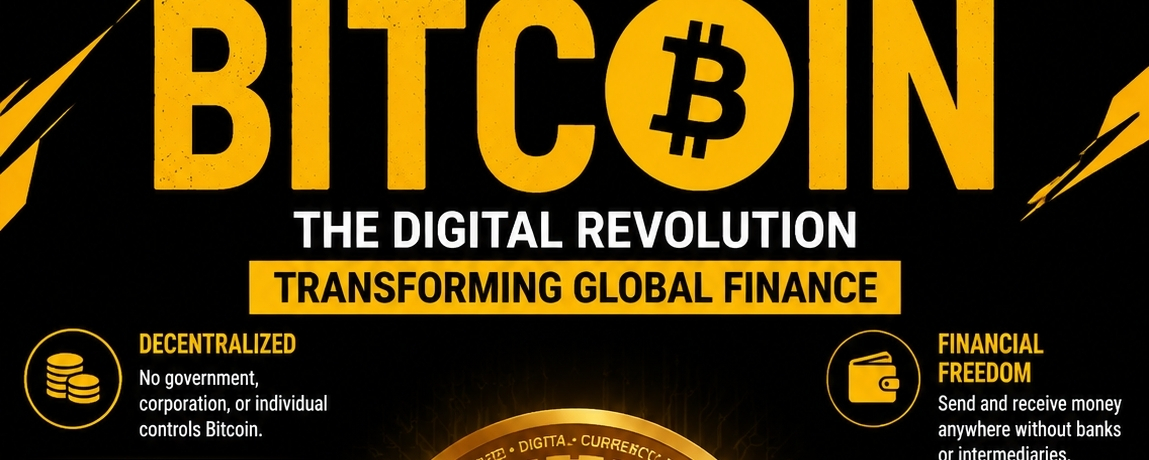
Article
Bitcoin (BTC): The Digital Revolution Transforming Global FinanceIntroduction
Bitcoin (BTC) is the world's first decentralized digital currency, introduced in 2009 by the pseudonymous creator Satoshi Nakamoto. Unlike traditional currencies issued and controlled by governments or central banks, Bitcoin operates on a peer-to-peer network powered by blockchain technology. Over the years, Bitcoin has evolved from an experimental digital asset into one of the most recognized financial innovations of the 21st century.
Today, Bitcoin is discussed by investors, technology enthusiasts, businesses, and governments alike. Some see it as "digital gold," while others view it as a revolutionary payment system capable of reshaping the global financial landscape.
What Is Bitcoin?
Bitcoin is a digital currency that allows users to send and receive money without relying on banks or financial intermediaries. Every Bitcoin transaction is recorded on a public ledger called the blockchain, ensuring transparency and security.
The Bitcoin network is maintained by thousands of computers worldwide, making it highly resistant to censorship, fraud, and unauthorized control. This decentralized design is one of Bitcoin's defining features.
The History of Bitcoin
The concept of Bitcoin was introduced in October 2008 when Satoshi Nakamoto published the white paper titled Bitcoin: A Peer-to-Peer Electronic Cash System. The first Bitcoin block, known as the Genesis Block, was mined on January 3, 2009.
In its early years, Bitcoin had little monetary value. One of the most famous events in Bitcoin's history occurred in 2010, when 10,000 BTC were used to purchase two pizzas. This event, now celebrated as Bitcoin Pizza Day, demonstrated the practical use of the cryptocurrency.
Since then, Bitcoin has experienced multiple market cycles, attracting institutional investors, technology companies, and millions of individual users worldwide.
How Bitcoin Works
Bitcoin operates using blockchain technology, which is a distributed ledger shared across a global network of computers.
When a user initiates a Bitcoin transaction:
- The transaction is broadcast to the network.
- Nodes verify the transaction.
- Miners (or validators of the network) confirm valid transactions by adding them to a new block.
- The block becomes part of the blockchain.
- The transaction is permanently recorded.
Because every block is linked to the previous one using cryptographic techniques, altering transaction history is extremely difficult.
Bitcoin Mining
Mining is the process through which new Bitcoins are created and transactions are verified.
Miners use specialized computers to solve complex mathematical problems. The first miner to solve the puzzle earns the right to add a new block to the blockchain and receives newly created Bitcoin along with transaction fees.
Bitcoin's supply is limited to 21 million coins, making it a scarce digital asset. Approximately every four years, the Bitcoin network undergoes an event called the "halving," which reduces mining rewards by 50%. This mechanism slows the creation of new Bitcoin over time.
Why Bitcoin Is Valuable
Several factors contribute to Bitcoin's value:
Limited Supply
Only 21 million Bitcoins will ever exist. This scarcity is often compared to precious metals such as gold.
Decentralization
No government, corporation, or individual controls the Bitcoin network.
Security
Bitcoin uses advanced cryptographic methods that make the network highly secure.
Transparency
Every transaction is publicly recorded on the blockchain, allowing anyone to verify network activity.
Global Accessibility
Anyone with internet access and a compatible wallet can participate in the Bitcoin network.
Advantages of Bitcoin
Bitcoin offers numerous benefits that have contributed to its global adoption.
It enables borderless transactions without requiring permission from centralized institutions. Transaction records cannot easily be altered, increasing trust in the system. Bitcoin also provides users with direct ownership of their funds through private keys.
For many investors, Bitcoin serves as a potential hedge against inflation due to its limited supply. Additionally, businesses increasingly accept Bitcoin as a payment method, expanding its practical use.
Risks and Challenges
Despite its strengths, Bitcoin also faces several challenges.
Price volatility remains one of the biggest concerns, with significant fluctuations occurring over short periods. Regulatory uncertainty varies across countries, affecting adoption and investment. Users must also secure their wallets carefully, as losing private keys can result in permanent loss of access to funds.
Environmental concerns related to energy consumption in proof-of-work mining have also sparked ongoing debate, although many mining operations are increasingly using renewable energy sources.
Bitcoin as an Investment
Many investors consider Bitcoin a long-term investment due to its scarcity and growing institutional interest. Financial firms, publicly traded companies, and investment funds have incorporated Bitcoin into their portfolios.
However, Bitcoin remains a high-risk asset. Investors should conduct thorough research, understand market volatility, and avoid investing more than they can afford to lose.
Diversification and a long-term perspective are commonly recommended approaches when investing in digital assets.
Bitcoin's Impact on the Financial Industry
Bitcoin has inspired an entirely new digital asset ecosystem. Thousands of cryptocurrencies have emerged since Bitcoin's creation, while blockchain technology has expanded into finance, healthcare, logistics, supply chain management, and digital identity.
Traditional financial institutions are also exploring blockchain solutions, digital payment systems, and tokenized assets influenced by Bitcoin's success.
The Future of Bitcoin
The future of Bitcoin depends on technological innovation, regulatory developments, market adoption, and public confidence.
As infrastructure improves and awareness grows, Bitcoin may continue expanding its role as a store of value, investment asset, and global payment network. While challenges remain, Bitcoin has already established itself as one of the most influential financial innovations in modern history.
Conclusion
Bitcoin represents far more than a digital currency. It is a technological breakthrough that introduced decentralized finance to the world and challenged traditional ideas about money and value. Its transparent blockchain, fixed supply, and global accessibility have made it a unique asset in the digital age.
Whether viewed as an investment, a payment system, or a transformative technology, Bitcoin continues to shape discussions about the future of finance. As adoption increases and innovation continues, Bitcoin is likely to remain at the center of the evolving digital economy for years to come.#BTC走势分析 #BTC
Bitcoin (BTC): The Digital Revolution Transforming Global Finance
Introduction
Bitcoin (BTC) is the world's first decentralized digital currency, introduced in 2009 by the pseudonymous creator Satoshi Nakamoto. Unlike traditional currencies issued and controlled by governments or central banks, Bitcoin operates on a peer-to-peer network powered by blockchain technology. Over the years, Bitcoin has evolved from an experimental digital asset into one of the most recognized financial innovations of the 21st century.
Today, Bitcoin is discussed by investors, technology enthusiasts, businesses, and governments alike. Some see it as "digital gold," while others view it as a revolutionary payment system capable of reshaping the global financial landscape.
What Is Bitcoin?
Bitcoin is a digital currency that allows users to send and receive money without relying on banks or financial intermediaries. Every Bitcoin transaction is recorded on a public ledger called the blockchain, ensuring transparency and security.
The Bitcoin network is maintained by thousands of computers worldwide, making it highly resistant to censorship, fraud, and unauthorized control. This decentralized design is one of Bitcoin's defining features.
The History of Bitcoin
The concept of Bitcoin was introduced in October 2008 when Satoshi Nakamoto published the white paper titled Bitcoin: A Peer-to-Peer Electronic Cash System. The first Bitcoin block, known as the Genesis Block, was mined on January 3, 2009.
In its early years, Bitcoin had little monetary value. One of the most famous events in Bitcoin's history occurred in 2010, when 10,000 BTC were used to purchase two pizzas. This event, now celebrated as Bitcoin Pizza Day, demonstrated the practical use of the cryptocurrency.
Since then, Bitcoin has experienced multiple market cycles, attracting institutional investors, technology companies, and millions of individual users worldwide.
How Bitcoin Works
Bitcoin operates using blockchain technology, which is a distributed ledger shared across a global network of computers.
When a user initiates a Bitcoin transaction:
- The transaction is broadcast to the network.
- Nodes verify the transaction.
- Miners (or validators of the network) confirm valid transactions by adding them to a new block.
- The block becomes part of the blockchain.
- The transaction is permanently recorded.
Because every block is linked to the previous one using cryptographic techniques, altering transaction history is extremely difficult.
Bitcoin Mining
Mining is the process through which new Bitcoins are created and transactions are verified.
Miners use specialized computers to solve complex mathematical problems. The first miner to solve the puzzle earns the right to add a new block to the blockchain and receives newly created Bitcoin along with transaction fees.
Bitcoin's supply is limited to 21 million coins, making it a scarce digital asset. Approximately every four years, the Bitcoin network undergoes an event called the "halving," which reduces mining rewards by 50%. This mechanism slows the creation of new Bitcoin over time.
Why Bitcoin Is Valuable
Several factors contribute to Bitcoin's value:
Limited Supply
Only 21 million Bitcoins will ever exist. This scarcity is often compared to precious metals such as gold.
Decentralization
No government, corporation, or individual controls the Bitcoin network.
Security
Bitcoin uses advanced cryptographic methods that make the network highly secure.
Transparency
Every transaction is publicly recorded on the blockchain, allowing anyone to verify network activity.
Global Accessibility
Anyone with internet access and a compatible wallet can participate in the Bitcoin network.
Advantages of Bitcoin
Bitcoin offers numerous benefits that have contributed to its global adoption.
It enables borderless transactions without requiring permission from centralized institutions. Transaction records cannot easily be altered, increasing trust in the system. Bitcoin also provides users with direct ownership of their funds through private keys.
For many investors, Bitcoin serves as a potential hedge against inflation due to its limited supply. Additionally, businesses increasingly accept Bitcoin as a payment method, expanding its practical use.
Risks and Challenges
Despite its strengths, Bitcoin also faces several challenges.
Price volatility remains one of the biggest concerns, with significant fluctuations occurring over short periods. Regulatory uncertainty varies across countries, affecting adoption and investment. Users must also secure their wallets carefully, as losing private keys can result in permanent loss of access to funds.
Environmental concerns related to energy consumption in proof-of-work mining have also sparked ongoing debate, although many mining operations are increasingly using renewable energy sources.
Bitcoin as an Investment
Many investors consider Bitcoin a long-term investment due to its scarcity and growing institutional interest. Financial firms, publicly traded companies, and investment funds have incorporated Bitcoin into their portfolios.
However, Bitcoin remains a high-risk asset. Investors should conduct thorough research, understand market volatility, and avoid investing more than they can afford to lose.
Diversification and a long-term perspective are commonly recommended approaches when investing in digital assets.
Bitcoin's Impact on the Financial Industry
Bitcoin has inspired an entirely new digital asset ecosystem. Thousands of cryptocurrencies have emerged since Bitcoin's creation, while blockchain technology has expanded into finance, healthcare, logistics, supply chain management, and digital identity.
Traditional financial institutions are also exploring blockchain solutions, digital payment systems, and tokenized assets influenced by Bitcoin's success.
The Future of Bitcoin
The future of Bitcoin depends on technological innovation, regulatory developments, market adoption, and public confidence.
As infrastructure improves and awareness grows, Bitcoin may continue expanding its role as a store of value, investment asset, and global payment network. While challenges remain, Bitcoin has already established itself as one of the most influential financial innovations in modern history.
Conclusion
Bitcoin represents far more than a digital currency. It is a technological breakthrough that introduced decentralized finance to the world and challenged traditional ideas about money and value. Its transparent blockchain, fixed supply, and global accessibility have made it a unique asset in the digital age.
Whether viewed as an investment, a payment system, or a transformative technology, Bitcoin continues to shape discussions about the future of finance. As adoption increases and innovation continues, Bitcoin is likely to remain at the center of the evolving digital economy for years to come.#BTC走势分析 #BTC
Bitcoin (BTC) is the world's first decentralized digital currency, introduced in 2009 by the pseudonymous creator Satoshi Nakamoto. Unlike traditional currencies issued and controlled by governments or central banks, Bitcoin operates on a peer-to-peer network powered by blockchain technology. Over the years, Bitcoin has evolved from an experimental digital asset into one of the most recognized financial innovations of the 21st century.
Today, Bitcoin is discussed by investors, technology enthusiasts, businesses, and governments alike. Some see it as "digital gold," while others view it as a revolutionary payment system capable of reshaping the global financial landscape.
What Is Bitcoin?
Bitcoin is a digital currency that allows users to send and receive money without relying on banks or financial intermediaries. Every Bitcoin transaction is recorded on a public ledger called the blockchain, ensuring transparency and security.
The Bitcoin network is maintained by thousands of computers worldwide, making it highly resistant to censorship, fraud, and unauthorized control. This decentralized design is one of Bitcoin's defining features.
The History of Bitcoin
The concept of Bitcoin was introduced in October 2008 when Satoshi Nakamoto published the white paper titled Bitcoin: A Peer-to-Peer Electronic Cash System. The first Bitcoin block, known as the Genesis Block, was mined on January 3, 2009.
In its early years, Bitcoin had little monetary value. One of the most famous events in Bitcoin's history occurred in 2010, when 10,000 BTC were used to purchase two pizzas. This event, now celebrated as Bitcoin Pizza Day, demonstrated the practical use of the cryptocurrency.
Since then, Bitcoin has experienced multiple market cycles, attracting institutional investors, technology companies, and millions of individual users worldwide.
How Bitcoin Works
Bitcoin operates using blockchain technology, which is a distributed ledger shared across a global network of computers.
When a user initiates a Bitcoin transaction:
- The transaction is broadcast to the network.
- Nodes verify the transaction.
- Miners (or validators of the network) confirm valid transactions by adding them to a new block.
- The block becomes part of the blockchain.
- The transaction is permanently recorded.
Because every block is linked to the previous one using cryptographic techniques, altering transaction history is extremely difficult.
Bitcoin Mining
Mining is the process through which new Bitcoins are created and transactions are verified.
Miners use specialized computers to solve complex mathematical problems. The first miner to solve the puzzle earns the right to add a new block to the blockchain and receives newly created Bitcoin along with transaction fees.
Bitcoin's supply is limited to 21 million coins, making it a scarce digital asset. Approximately every four years, the Bitcoin network undergoes an event called the "halving," which reduces mining rewards by 50%. This mechanism slows the creation of new Bitcoin over time.
Why Bitcoin Is Valuable
Several factors contribute to Bitcoin's value:
Limited Supply
Only 21 million Bitcoins will ever exist. This scarcity is often compared to precious metals such as gold.
Decentralization
No government, corporation, or individual controls the Bitcoin network.
Security
Bitcoin uses advanced cryptographic methods that make the network highly secure.
Transparency
Every transaction is publicly recorded on the blockchain, allowing anyone to verify network activity.
Global Accessibility
Anyone with internet access and a compatible wallet can participate in the Bitcoin network.
Advantages of Bitcoin
Bitcoin offers numerous benefits that have contributed to its global adoption.
It enables borderless transactions without requiring permission from centralized institutions. Transaction records cannot easily be altered, increasing trust in the system. Bitcoin also provides users with direct ownership of their funds through private keys.
For many investors, Bitcoin serves as a potential hedge against inflation due to its limited supply. Additionally, businesses increasingly accept Bitcoin as a payment method, expanding its practical use.
Risks and Challenges
Despite its strengths, Bitcoin also faces several challenges.
Price volatility remains one of the biggest concerns, with significant fluctuations occurring over short periods. Regulatory uncertainty varies across countries, affecting adoption and investment. Users must also secure their wallets carefully, as losing private keys can result in permanent loss of access to funds.
Environmental concerns related to energy consumption in proof-of-work mining have also sparked ongoing debate, although many mining operations are increasingly using renewable energy sources.
Bitcoin as an Investment
Many investors consider Bitcoin a long-term investment due to its scarcity and growing institutional interest. Financial firms, publicly traded companies, and investment funds have incorporated Bitcoin into their portfolios.
However, Bitcoin remains a high-risk asset. Investors should conduct thorough research, understand market volatility, and avoid investing more than they can afford to lose.
Diversification and a long-term perspective are commonly recommended approaches when investing in digital assets.
Bitcoin's Impact on the Financial Industry
Bitcoin has inspired an entirely new digital asset ecosystem. Thousands of cryptocurrencies have emerged since Bitcoin's creation, while blockchain technology has expanded into finance, healthcare, logistics, supply chain management, and digital identity.
Traditional financial institutions are also exploring blockchain solutions, digital payment systems, and tokenized assets influenced by Bitcoin's success.
The Future of Bitcoin
The future of Bitcoin depends on technological innovation, regulatory developments, market adoption, and public confidence.
As infrastructure improves and awareness grows, Bitcoin may continue expanding its role as a store of value, investment asset, and global payment network. While challenges remain, Bitcoin has already established itself as one of the most influential financial innovations in modern history.
Conclusion
Bitcoin represents far more than a digital currency. It is a technological breakthrough that introduced decentralized finance to the world and challenged traditional ideas about money and value. Its transparent blockchain, fixed supply, and global accessibility have made it a unique asset in the digital age.
Whether viewed as an investment, a payment system, or a transformative technology, Bitcoin continues to shape discussions about the future of finance. As adoption increases and innovation continues, Bitcoin is likely to remain at the center of the evolving digital economy for years to come.#BTC走势分析 #BTC
1
252
·
--
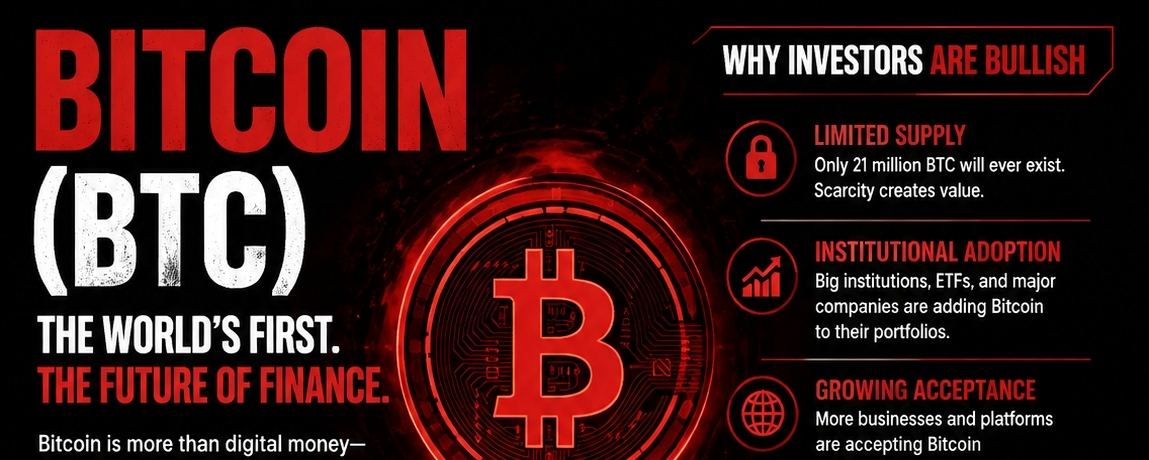
Article
Bitcoin (BTC): Why the World's Largest Cryptocurrency Continues to Attract Long-Term InvestorsBitcoin (BTC), the world's first and largest cryptocurrency, remains one of the most closely watched financial assets. Since its creation in 2009 by the anonymous Satoshi Nakamoto, Bitcoin has transformed from a niche digital experiment into a globally recognized store of value and investment asset.
Strong Long-Term Trend
Despite experiencing periods of high volatility, Bitcoin has historically followed a long-term upward trend driven by increasing adoption, institutional investment, and limited supply. With a maximum supply capped at 21 million coins, Bitcoin's scarcity has earned it the nickname "digital gold."
Institutional Adoption
Major financial institutions, hedge funds, and publicly traded companies have added Bitcoin to their portfolios over the years. The launch and expansion of spot Bitcoin ETFs in several markets have also made it easier for traditional investors to gain exposure without directly holding cryptocurrency.
Growing Global Acceptance
Bitcoin is increasingly being accepted as a payment method by businesses and integrated into financial services. In many regions, it is viewed as an alternative asset that can help diversify investment portfolios.
Key Factors Supporting a Bullish Outlook
Fixed supply of 21 million BTC creates scarcity.
Increasing institutional demand through ETFs and investment products.
Growing adoption by businesses and payment platforms.
Continued development of Bitcoin infrastructure and custody solutions.
Rising awareness of Bitcoin as a potential hedge against currency debasement.
Risks to Consider9
While Bitcoin has significant upside potential, investors should also understand the risks:
High price volatility.
Regulatory changes in different countries.
Macroeconomic factors such as interest rates and liquidity conditions.
Security risks if assets are not stored properly.
Investment Perspective
Many analysts believe Bitcoin could continue to benefit from increasing global adoption and limited supply over the long term. However, short-term price movements can be unpredictable. Investors should conduct their own research, assess their risk tolerance, and avoid investing more than they can afford to lose.
Conclusion
Bitcoin remains one of the most influential assets in the digital economy. Its combination of scarcity, decentralization, and growing institutional acceptance continues to support long-term interest. Although volatility is likely to remain a defining characteristic, Bitcoin's role in global finance continues to evolve, making it an asset worth monitoring for both experienced and new investors.#BTC走势分析
Bitcoin (BTC): Why the World's Largest Cryptocurrency Continues to Attract Long-Term Investors
Bitcoin (BTC), the world's first and largest cryptocurrency, remains one of the most closely watched financial assets. Since its creation in 2009 by the anonymous Satoshi Nakamoto, Bitcoin has transformed from a niche digital experiment into a globally recognized store of value and investment asset.
Strong Long-Term Trend
Despite experiencing periods of high volatility, Bitcoin has historically followed a long-term upward trend driven by increasing adoption, institutional investment, and limited supply. With a maximum supply capped at 21 million coins, Bitcoin's scarcity has earned it the nickname "digital gold."
Institutional Adoption
Major financial institutions, hedge funds, and publicly traded companies have added Bitcoin to their portfolios over the years. The launch and expansion of spot Bitcoin ETFs in several markets have also made it easier for traditional investors to gain exposure without directly holding cryptocurrency.
Growing Global Acceptance
Bitcoin is increasingly being accepted as a payment method by businesses and integrated into financial services. In many regions, it is viewed as an alternative asset that can help diversify investment portfolios.
Key Factors Supporting a Bullish Outlook
Fixed supply of 21 million BTC creates scarcity.
Increasing institutional demand through ETFs and investment products.
Growing adoption by businesses and payment platforms.
Continued development of Bitcoin infrastructure and custody solutions.
Rising awareness of Bitcoin as a potential hedge against currency debasement.
Risks to Consider9
While Bitcoin has significant upside potential, investors should also understand the risks:
High price volatility.
Regulatory changes in different countries.
Macroeconomic factors such as interest rates and liquidity conditions.
Security risks if assets are not stored properly.
Investment Perspective
Many analysts believe Bitcoin could continue to benefit from increasing global adoption and limited supply over the long term. However, short-term price movements can be unpredictable. Investors should conduct their own research, assess their risk tolerance, and avoid investing more than they can afford to lose.
Conclusion
Bitcoin remains one of the most influential assets in the digital economy. Its combination of scarcity, decentralization, and growing institutional acceptance continues to support long-term interest. Although volatility is likely to remain a defining characteristic, Bitcoin's role in global finance continues to evolve, making it an asset worth monitoring for both experienced and new investors.#BTC走势分析
Strong Long-Term Trend
Despite experiencing periods of high volatility, Bitcoin has historically followed a long-term upward trend driven by increasing adoption, institutional investment, and limited supply. With a maximum supply capped at 21 million coins, Bitcoin's scarcity has earned it the nickname "digital gold."
Institutional Adoption
Major financial institutions, hedge funds, and publicly traded companies have added Bitcoin to their portfolios over the years. The launch and expansion of spot Bitcoin ETFs in several markets have also made it easier for traditional investors to gain exposure without directly holding cryptocurrency.
Growing Global Acceptance
Bitcoin is increasingly being accepted as a payment method by businesses and integrated into financial services. In many regions, it is viewed as an alternative asset that can help diversify investment portfolios.
Key Factors Supporting a Bullish Outlook
Fixed supply of 21 million BTC creates scarcity.
Increasing institutional demand through ETFs and investment products.
Growing adoption by businesses and payment platforms.
Continued development of Bitcoin infrastructure and custody solutions.
Rising awareness of Bitcoin as a potential hedge against currency debasement.
Risks to Consider9
While Bitcoin has significant upside potential, investors should also understand the risks:
High price volatility.
Regulatory changes in different countries.
Macroeconomic factors such as interest rates and liquidity conditions.
Security risks if assets are not stored properly.
Investment Perspective
Many analysts believe Bitcoin could continue to benefit from increasing global adoption and limited supply over the long term. However, short-term price movements can be unpredictable. Investors should conduct their own research, assess their risk tolerance, and avoid investing more than they can afford to lose.
Conclusion
Bitcoin remains one of the most influential assets in the digital economy. Its combination of scarcity, decentralization, and growing institutional acceptance continues to support long-term interest. Although volatility is likely to remain a defining characteristic, Bitcoin's role in global finance continues to evolve, making it an asset worth monitoring for both experienced and new investors.#BTC走势分析
1
294
Log in to explore more content
Join global crypto users on Binance Square
⚡️ Get latest and useful information about crypto.
💬 Trusted by the world’s largest crypto exchange.
👍 Discover real insights from verified creators.
Email / Phone number
Trending Topics
SECSendsCryptoCustodyRuleToWhiteHouse
3,252 views
184 Discussing
#secsendscryptocustodyruletowhitehouse
🔥 SEC’s Custody Twist: Freedom for US Whales! 🔓
The SEC just sent a new crypto custody rule to the White House, and it's officially labeled "Deregulatory"! 🎉 This means big US investment advisors can finally hold real spot crypto directly, instead of hiding behind paper ETFs.
You might ask: "So US whales get all the fun? When is this coming to my country?!" 🌍 Well, while you wait for your local regulators to wake up, remember this: when Phố Wall pumps real cash into actual crypto wallets, the whole global market flies! 📈🚀
What’s the play, traders?
✨ Be patient: This rule takes a few months to clear, but the structural bull case is massive.
💼 Follow the smart money: Accumulate spot assets alongside the giants.
⚠️ Not financial advice.
Ready to trade before the institutions front-run you? Sign up with code VINHTOCDO or click: https://www.binance.com/register?ref=VINHTOCDO
#SEC #CryptoRegulation #InstitutionalMoney #VINHTOCDO
$BTC
$ETH
$BNB
Vinhtocdo
·1 Likes
·1.8k views
BitcoinFaces$6.4BOptionsExpiry
2,251 views
76 Discussing
IranSaysHormuzOmanDealNotFinalized
4,346 views
193 Discussing