
律动BlockBeats
111.5k Posts

律动BlockBeats
 Square Verified+
Report
Block User
律动BlockBeats是最具有影响力的中文媒体之一。为满足区块链初学者、爱好者、从业者、投资者等多种类型读者需求,内容类型囊括区块链及数字货币入门学习文章、热门事件报道、律动原创研究、行业现象深度剖析、知名大 V 观点分享、一线高质量采访等,内容展示形式包括图文、音频及视频。
6 Following
26.0K+ Followers
182.9K+ Liked
1 Badges
Posts
·
--
BlockBeats message: On September 10, according to Arkham, the BSOL ETF under Bitwise saw net inflows of $107.4 million over the past 20 trading days, with only 2 trading days showing outflows.
BlockBeats message: On September 10, according to Arkham, the BSOL ETF under Bitwise saw net inflows of $107.4 million over the past 20 trading days, with only 2 trading days showing outflows.
8
·
--
UBS CEO Warns: Risks Keep Accumulating, Yet Investors Are Growing More ComplacentBlockBeats report: On September 10, UBS CEO Sergio Ermotti said today that despite the continuous accumulation of geopolitical and economic risks, investors over the past few years have become more complacent, and the market should have seen bigger swings.
Emotti noted that the energy and shipping risks, global supply-chain pressures, high inflation, and high borrowing costs caused by the conflict between Iran and Ukraine are still ongoing, while large-scale investment in areas such as artificial intelligence and data centers, though supporting economic growth, is not enough to eliminate potential risks.
Regarding investment strategy, he said that UBS clients in recent times have been more inclined to diversify across industries and regions rather than betting on a single market direction, while continuing to allocate to AI and technology assets. He emphasized that this does not mean funds are withdrawing broadly from the United States or from the US dollar; the US dollar remains the world’s primary “reference currency.”
UBS CEO Warns: Risks Keep Accumulating, Yet Investors Are Growing More Complacent
BlockBeats report: On September 10, UBS CEO Sergio Ermotti said today that despite the continuous accumulation of geopolitical and economic risks, investors over the past few years have become more complacent, and the market should have seen bigger swings.
Emotti noted that the energy and shipping risks, global supply-chain pressures, high inflation, and high borrowing costs caused by the conflict between Iran and Ukraine are still ongoing, while large-scale investment in areas such as artificial intelligence and data centers, though supporting economic growth, is not enough to eliminate potential risks.
Regarding investment strategy, he said that UBS clients in recent times have been more inclined to diversify across industries and regions rather than betting on a single market direction, while continuing to allocate to AI and technology assets. He emphasized that this does not mean funds are withdrawing broadly from the United States or from the US dollar; the US dollar remains the world’s primary “reference currency.”
Emotti noted that the energy and shipping risks, global supply-chain pressures, high inflation, and high borrowing costs caused by the conflict between Iran and Ukraine are still ongoing, while large-scale investment in areas such as artificial intelligence and data centers, though supporting economic growth, is not enough to eliminate potential risks.
Regarding investment strategy, he said that UBS clients in recent times have been more inclined to diversify across industries and regions rather than betting on a single market direction, while continuing to allocate to AI and technology assets. He emphasized that this does not mean funds are withdrawing broadly from the United States or from the US dollar; the US dollar remains the world’s primary “reference currency.”
33
·
--
ZEC whale rotates at high levels: early longs take profit as a $17 million new buyer entersBlockBeats message: On September 10, according to TradingBeats monitoring, ZEC is temporarily trading at about $1,218.8. The address starting with 0xbf73 sold all 13,000 ZEC in three rounds from the evening of September 9 to this morning, totaling about $16.4017 million, with a closing average price of about $1,261.67. Its original position cost was about $869.6. In this round, it realized cumulative profit of about $5.096 million. The current ZEC holdings and outstanding orders have both been reduced to zero.
While early long positions were exiting, the address starting with 0x152e on the other side was expanding its ZEC position.
In the same period, the address starting with 0x152e accumulated an additional 9,426.59 ZEC, with actual purchases of about $11.636 million and an average add-on price of about $1,234.38. Combined with the existing position, its holdings expanded to 11,739.54 ZEC, worth about $14.3082 million, with an integrated cost of about $1,217.62. Currently, its overall unrealized profit is about $13.9 thousand.
ZEC whale rotates at high levels: early longs take profit as a $17 million new buyer enters
BlockBeats message: On September 10, according to TradingBeats monitoring, ZEC is temporarily trading at about $1,218.8. The address starting with 0xbf73 sold all 13,000 ZEC in three rounds from the evening of September 9 to this morning, totaling about $16.4017 million, with a closing average price of about $1,261.67. Its original position cost was about $869.6. In this round, it realized cumulative profit of about $5.096 million. The current ZEC holdings and outstanding orders have both been reduced to zero.
While early long positions were exiting, the address starting with 0x152e on the other side was expanding its ZEC position.
In the same period, the address starting with 0x152e accumulated an additional 9,426.59 ZEC, with actual purchases of about $11.636 million and an average add-on price of about $1,234.38. Combined with the existing position, its holdings expanded to 11,739.54 ZEC, worth about $14.3082 million, with an integrated cost of about $1,217.62. Currently, its overall unrealized profit is about $13.9 thousand.
While early long positions were exiting, the address starting with 0x152e on the other side was expanding its ZEC position.
In the same period, the address starting with 0x152e accumulated an additional 9,426.59 ZEC, with actual purchases of about $11.636 million and an average add-on price of about $1,234.38. Combined with the existing position, its holdings expanded to 11,739.54 ZEC, worth about $14.3082 million, with an integrated cost of about $1,217.62. Currently, its overall unrealized profit is about $13.9 thousand.
68
·
--
Reassessing NEAR’s Investment Thesis: Transaction Volume Is Taking Off—Can Token Value Keep Up?TL;DR
NEAR’s investment thesis is shifting from high-performance Layer 1 to chain abstraction, cross-chain settlement, and AI agent infrastructure, aiming to capture greater growth potential from multi-chain ecosystems.
NEAR Intents is reportedly already completed more than $13 billion in cross-chain settlement, but there is still a significant gap between the settlement volume and the protocol’s actual revenue.
NEAR’s maximum annual inflation rate has been reduced from 5% to about 2.5%, while eliminating the developer Gas refund and expanding fee burn; the tokenomics have improved compared with the previous cycle.
In the 30 days leading up to September 1, NEAR-related products generated about $3.48 million in total fees, but net protocol fees were only about $0.7575 million—value capture is still in its early stages.
Reassessing NEAR’s Investment Thesis: Transaction Volume Is Taking Off—Can Token Value Keep Up?
TL;DR
NEAR’s investment thesis is shifting from high-performance Layer 1 to chain abstraction, cross-chain settlement, and AI agent infrastructure, aiming to capture greater growth potential from multi-chain ecosystems.
NEAR Intents is reportedly already completed more than $13 billion in cross-chain settlement, but there is still a significant gap between the settlement volume and the protocol’s actual revenue.
NEAR’s maximum annual inflation rate has been reduced from 5% to about 2.5%, while eliminating the developer Gas refund and expanding fee burn; the tokenomics have improved compared with the previous cycle.
In the 30 days leading up to September 1, NEAR-related products generated about $3.48 million in total fees, but net protocol fees were only about $0.7575 million—value capture is still in its early stages.
NEAR’s investment thesis is shifting from high-performance Layer 1 to chain abstraction, cross-chain settlement, and AI agent infrastructure, aiming to capture greater growth potential from multi-chain ecosystems.
NEAR Intents is reportedly already completed more than $13 billion in cross-chain settlement, but there is still a significant gap between the settlement volume and the protocol’s actual revenue.
NEAR’s maximum annual inflation rate has been reduced from 5% to about 2.5%, while eliminating the developer Gas refund and expanding fee burn; the tokenomics have improved compared with the previous cycle.
In the 30 days leading up to September 1, NEAR-related products generated about $3.48 million in total fees, but net protocol fees were only about $0.7575 million—value capture is still in its early stages.
117
·
--
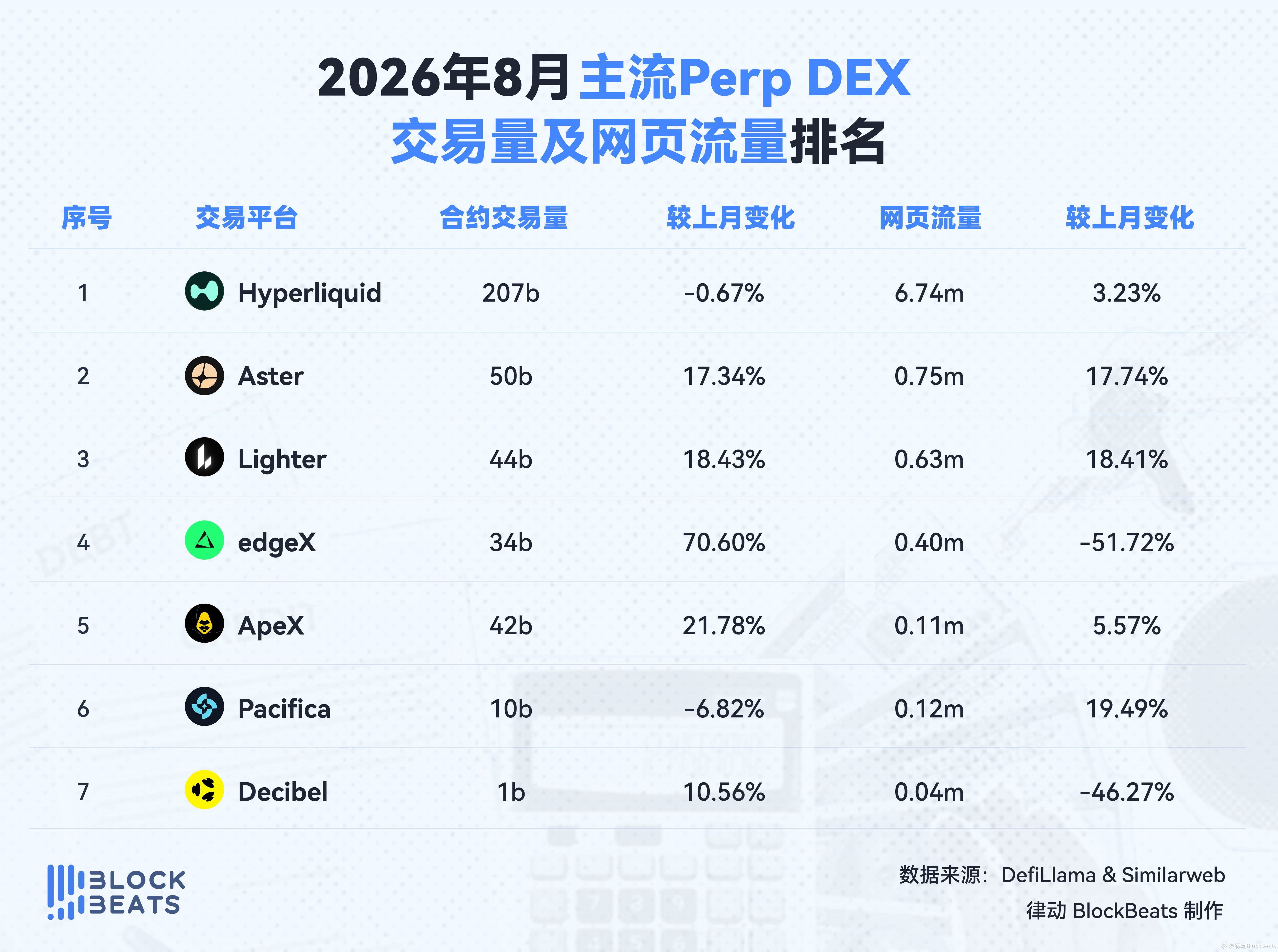
Article
August Trading Platform Rankings: Spot Market Growth Exceeds 18%, Trading Momentum Clearly ReboundsIn August 2026, the spot trading volume of major CEXs increased by 18.64% compared with July 2026, while the volume of perpetual futures contracts rose by 10.89% over the same period. The increase in spot trading is significantly higher than that of contracts, indicating that the market’s renewed trading activity is mainly driven by spot demand.
In August, the website visits of major CEXs decreased by 0.26% compared with July 2026, and website downloads decreased by 5.61%. With external traffic not increasing in parallel, trading volume nonetheless rebounded noticeably. This may mean that the increased trading activity this time is more attributable to improved trading frequency and conversion efficiency among existing users, rather than a large influx of new users and external traffic.
August Trading Platform Rankings: Spot Market Growth Exceeds 18%, Trading Momentum Clearly Rebounds
In August 2026, the spot trading volume of major CEXs increased by 18.64% compared with July 2026, while the volume of perpetual futures contracts rose by 10.89% over the same period. The increase in spot trading is significantly higher than that of contracts, indicating that the market’s renewed trading activity is mainly driven by spot demand.
In August, the website visits of major CEXs decreased by 0.26% compared with July 2026, and website downloads decreased by 5.61%. With external traffic not increasing in parallel, trading volume nonetheless rebounded noticeably. This may mean that the increased trading activity this time is more attributable to improved trading frequency and conversion efficiency among existing users, rather than a large influx of new users and external traffic.
In August, the website visits of major CEXs decreased by 0.26% compared with July 2026, and website downloads decreased by 5.61%. With external traffic not increasing in parallel, trading volume nonetheless rebounded noticeably. This may mean that the increased trading activity this time is more attributable to improved trading frequency and conversion efficiency among existing users, rather than a large influx of new users and external traffic.
90
·
--
BlockBeats message, September 10. Last night, Hunter Biden, the son of former U.S. President Biden, launched a meme coin “LAPTOP.” However, due to Hunter Biden’s previously checkered record, the token did not receive much enthusiasm from the crypto market after it went live, and its price quickly slipped.
This morning, the operating account for “LAPTOP” was banned. After that, Hunter Biden posted for engagement under tweets from Base’s main members Cobie and Jesse, but they “ignored him coldly”—neither directly replied to Hunter Biden’s comment. Later posts by Cobie and Jesse also did not explicitly address him.
BlockBeats message, September 10. Last night, Hunter Biden, the son of former U.S. President Biden, launched a meme coin “LAPTOP.” However, due to Hunter Biden’s previously checkered record, the token did not receive much enthusiasm from the crypto market after it went live, and its price quickly slipped.
This morning, the operating account for “LAPTOP” was banned. After that, Hunter Biden posted for engagement under tweets from Base’s main members Cobie and Jesse, but they “ignored him coldly”—neither directly replied to Hunter Biden’s comment. Later posts by Cobie and Jesse also did not explicitly address him.
This morning, the operating account for “LAPTOP” was banned. After that, Hunter Biden posted for engagement under tweets from Base’s main members Cobie and Jesse, but they “ignored him coldly”—neither directly replied to Hunter Biden’s comment. Later posts by Cobie and Jesse also did not explicitly address him.
1
250
·
--
BlockBeats message, on September 10, 2026, Binance decided to stop trading and delist Pax Dollar (USDP) on September 24, 2026 at 11:00 (UTC+8 time).
BlockBeats message, on September 10, 2026, Binance decided to stop trading and delist Pax Dollar (USDP) on September 24, 2026 at 11:00 (UTC+8 time).
225
·
--
BlockBeats news: On September 10, Musk’s tunnel-digging startup The Boring Company completed a $3.0 billion Series D funding round, valuing the company at $23.0 billion.
BlockBeats news: On September 10, Musk’s tunnel-digging startup The Boring Company completed a $3.0 billion Series D funding round, valuing the company at $23.0 billion.
192
·
--
ZCAT rebounds and breaks through the $100 million mark, up more than 40% in nearly 4 hoursBlockBeats message: On September 10, according to GMGN market data, the Solana ecosystem meme coin Anonymous Cat (ZCAT) continues to rebound. Its market cap has returned to the $100 million mark, up more than 40% in the past four hours. Trading volume in the same period reached $15.8 million.
ZCAT is a cat-themed meme token on Solana, inspired by the privacy concept of Zcash (ZEC). Its mascot is an anonymous cat wearing a brown paper bag on its head. Users buy it via trading or transfer tax (about 3%) and then receive an airdrop distribution of bridged Zcash (ZEC) on the Solana chain to holders.
BlockBeats reminds users that meme coins often have no real utility, their prices can fluctuate significantly, and investing requires caution.
ZCAT rebounds and breaks through the $100 million mark, up more than 40% in nearly 4 hours
BlockBeats message: On September 10, according to GMGN market data, the Solana ecosystem meme coin Anonymous Cat (ZCAT) continues to rebound. Its market cap has returned to the $100 million mark, up more than 40% in the past four hours. Trading volume in the same period reached $15.8 million.
ZCAT is a cat-themed meme token on Solana, inspired by the privacy concept of Zcash (ZEC). Its mascot is an anonymous cat wearing a brown paper bag on its head. Users buy it via trading or transfer tax (about 3%) and then receive an airdrop distribution of bridged Zcash (ZEC) on the Solana chain to holders.
BlockBeats reminds users that meme coins often have no real utility, their prices can fluctuate significantly, and investing requires caution.
ZCAT is a cat-themed meme token on Solana, inspired by the privacy concept of Zcash (ZEC). Its mascot is an anonymous cat wearing a brown paper bag on its head. Users buy it via trading or transfer tax (about 3%) and then receive an airdrop distribution of bridged Zcash (ZEC) on the Solana chain to holders.
BlockBeats reminds users that meme coins often have no real utility, their prices can fluctuate significantly, and investing requires caution.
1
539
·
--
BlockBeats message, September 10, according to Alicharts data: over the past week, Bitcoin whale holdings have remained almost unchanged, at around 5.23 million BTC. This also echoes Bitcoin’s sideways consolidation at high levels.
Alicharts believes this indicates that big players are waiting in the wings, planning to take their next step after the upcoming CPI report and the FOMC meeting.
BlockBeats message, September 10, according to Alicharts data: over the past week, Bitcoin whale holdings have remained almost unchanged, at around 5.23 million BTC. This also echoes Bitcoin’s sideways consolidation at high levels.
Alicharts believes this indicates that big players are waiting in the wings, planning to take their next step after the upcoming CPI report and the FOMC meeting.
Alicharts believes this indicates that big players are waiting in the wings, planning to take their next step after the upcoming CPI report and the FOMC meeting.
240
·
--
BlockBeats message, September 10. According to Arkham monitoring, a BTC whale withdrew Bitcoin worth approximately $461.5 million from Coinbase nearly two years ago, and since then has never fully exited the position. Its holdings were once in the green by about $315 million at the BTC peak, but at the low point in July this year it temporarily turned into an unrealized loss of about $100 million.
Since August, the address has transferred approximately $82 million worth of BTC to Kraken and still holds approximately $418 million worth of BTC, with an current unrealized profit of about $40 million.
BlockBeats message, September 10. According to Arkham monitoring, a BTC whale withdrew Bitcoin worth approximately $461.5 million from Coinbase nearly two years ago, and since then has never fully exited the position. Its holdings were once in the green by about $315 million at the BTC peak, but at the low point in July this year it temporarily turned into an unrealized loss of about $100 million.
Since August, the address has transferred approximately $82 million worth of BTC to Kraken and still holds approximately $418 million worth of BTC, with an current unrealized profit of about $40 million.
Since August, the address has transferred approximately $82 million worth of BTC to Kraken and still holds approximately $418 million worth of BTC, with an current unrealized profit of about $40 million.
156
·
--
BlockBeats message, September 10, according to on-chain analyst Ai Yi (@ai_9684xtpa) monitoring, the new address 0x4C2…C568a today accumulated 2,100 ETH, worth $5.18 million. The most recent deposit was 4 hours ago, transferred from OKX at an average price of $2,469. This is also the only asset currently held by the address for its initial position.
BlockBeats message, September 10, according to on-chain analyst Ai Yi (@ai_9684xtpa) monitoring, the new address 0x4C2…C568a today accumulated 2,100 ETH, worth $5.18 million. The most recent deposit was 4 hours ago, transferred from OKX at an average price of $2,469. This is also the only asset currently held by the address for its initial position.
234
·
--
Verified
“Launch equals greatness” script is replayed; the whale ranked No. 2 on the “Bull Comes” chart calls on Binance management to slow down the listing paceBlockBeats message: On September 10, encrypted KOL Qwerty today urged Binance’s management team on the X platform in Chinese, suggesting that they slow down the speed of getting assets listed. He said, “Nowadays, almost every day sees new Alpha projects launch, and about 75% of Alpha projects ultimately enter the contract or spot markets. As the listing speed keeps accelerating, the scarcity, authenticity, and real value that originally belonged to Binance listings are gradually being eroded. I sincerely hope Binance can appropriately slow down the listing pace, put more attention on the authenticity of projects and communities, and leave opportunities for those projects that truly have real culture, real users, and strong communities—and are genuinely worthy of recognition by Binance.”
“Launch equals greatness” script is replayed; the whale ranked No. 2 on the “Bull Comes” chart calls on Binance management to slow down the listing pace
BlockBeats message: On September 10, encrypted KOL Qwerty today urged Binance’s management team on the X platform in Chinese, suggesting that they slow down the speed of getting assets listed. He said, “Nowadays, almost every day sees new Alpha projects launch, and about 75% of Alpha projects ultimately enter the contract or spot markets. As the listing speed keeps accelerating, the scarcity, authenticity, and real value that originally belonged to Binance listings are gradually being eroded. I sincerely hope Binance can appropriately slow down the listing pace, put more attention on the authenticity of projects and communities, and leave opportunities for those projects that truly have real culture, real users, and strong communities—and are genuinely worthy of recognition by Binance.”
2
1.2k
·
--
Bitunix analyst: With CPI just 0.1 percentage points away, the Fed and U.S. Treasuries face policy pressure at the same timeBlockBeats message: On September 10, market focus is highly concentrated on the August CPI to be released this Friday. Core CPI month-over-month is expected to rise by 0.2% to 0.3%, which could directly affect the Fed’s September policy decision. Current market expectations for a rate hike have increased from 35% before Waller’s speech to about 60%, indicating that investors have already priced in a more hawkish policy scenario in advance. If inflation visibly cools, the Fed would still have reason to wait; but if the data comes in too hot, whether the summer improvement in inflation is merely a short-term phenomenon will again be called into question, and the room for Waller to keep rates unchanged would be significantly narrowed.
The truly tricky part is not a single month’s data, but the fact that multiple supply pressures still exist behind inflation. The Middle East situation has pushed oil prices to around $100 per barrel. Combined with new tariffs and the disruption to supply chains from AI development, this could allow price pressure to build up again. Therefore, what the market needs to judge is not whether the August CPI is “high or low,” but whether underlying inflation remains above the range the Fed considers acceptable.
Bitunix analyst: With CPI just 0.1 percentage points away, the Fed and U.S. Treasuries face policy pressure at the same time
BlockBeats message: On September 10, market focus is highly concentrated on the August CPI to be released this Friday. Core CPI month-over-month is expected to rise by 0.2% to 0.3%, which could directly affect the Fed’s September policy decision. Current market expectations for a rate hike have increased from 35% before Waller’s speech to about 60%, indicating that investors have already priced in a more hawkish policy scenario in advance. If inflation visibly cools, the Fed would still have reason to wait; but if the data comes in too hot, whether the summer improvement in inflation is merely a short-term phenomenon will again be called into question, and the room for Waller to keep rates unchanged would be significantly narrowed.
The truly tricky part is not a single month’s data, but the fact that multiple supply pressures still exist behind inflation. The Middle East situation has pushed oil prices to around $100 per barrel. Combined with new tariffs and the disruption to supply chains from AI development, this could allow price pressure to build up again. Therefore, what the market needs to judge is not whether the August CPI is “high or low,” but whether underlying inflation remains above the range the Fed considers acceptable.
The truly tricky part is not a single month’s data, but the fact that multiple supply pressures still exist behind inflation. The Middle East situation has pushed oil prices to around $100 per barrel. Combined with new tariffs and the disruption to supply chains from AI development, this could allow price pressure to build up again. Therefore, what the market needs to judge is not whether the August CPI is “high or low,” but whether underlying inflation remains above the range the Fed considers acceptable.
189
·
--
CoinMarketCap: bStocks contributed 88% of trading volume in the tokenized stock marketBlockBeats report: On September 10, according to the latest data from CoinMarketCap, as of last week, the global tokenized stock market’s total value locked reached $2.55 billion. The number of holders surpassed 1 million, on-chain trading volume reached $1.7 billion, and active traders increased to 235,000.
Of these, bStocks contributed 26% of TVL, accounting for 88% of the total on-chain trading volume in the entire market, making it one of the most active platforms in the tokenized stock market today. Ondo accounts for 42% of TVL, corresponding to 2% of trading volume share; xStocks accounts for 32% of TVL, with a trading volume share of 10%.
CoinMarketCap: bStocks contributed 88% of trading volume in the tokenized stock market
BlockBeats report: On September 10, according to the latest data from CoinMarketCap, as of last week, the global tokenized stock market’s total value locked reached $2.55 billion. The number of holders surpassed 1 million, on-chain trading volume reached $1.7 billion, and active traders increased to 235,000.
Of these, bStocks contributed 26% of TVL, accounting for 88% of the total on-chain trading volume in the entire market, making it one of the most active platforms in the tokenized stock market today. Ondo accounts for 42% of TVL, corresponding to 2% of trading volume share; xStocks accounts for 32% of TVL, with a trading volume share of 10%.
Of these, bStocks contributed 26% of TVL, accounting for 88% of the total on-chain trading volume in the entire market, making it one of the most active platforms in the tokenized stock market today. Ondo accounts for 42% of TVL, corresponding to 2% of trading volume share; xStocks accounts for 32% of TVL, with a trading volume share of 10%.
204
·
--
BTC ambushed by a whale as it lowers the buy-in price; $30 million buy order plan waits for another 2.5% pullbackBlockBeats message: On September 10, according to TradingBeats monitoring, the Hyperliquid address starting with 0xf517 again lowered its BTC accumulation price this morning. The planned buy quantity remains unchanged.
This morning, the address canceled the 385.72 BTC buy order previously placed at $77,377, and at the same time re-posted the same quantity of regular limit buy orders at $76,377. The current pending order amount is about $29.46 million.
As of the time of publication, the address still holds approximately 78.31 BTC in a long position, worth about $6.137 million. The average entry price is $77,772.7, with an unrealized profit of about $47,000. If all orders are filled, its BTC long position will increase to about 464.03 BTC. BTC at the same period was about $78,368; it needs to drop by about 2.5% to reach the new accumulation price.
BTC ambushed by a whale as it lowers the buy-in price; $30 million buy order plan waits for another 2.5% pullback
BlockBeats message: On September 10, according to TradingBeats monitoring, the Hyperliquid address starting with 0xf517 again lowered its BTC accumulation price this morning. The planned buy quantity remains unchanged.
This morning, the address canceled the 385.72 BTC buy order previously placed at $77,377, and at the same time re-posted the same quantity of regular limit buy orders at $76,377. The current pending order amount is about $29.46 million.
As of the time of publication, the address still holds approximately 78.31 BTC in a long position, worth about $6.137 million. The average entry price is $77,772.7, with an unrealized profit of about $47,000. If all orders are filled, its BTC long position will increase to about 464.03 BTC. BTC at the same period was about $78,368; it needs to drop by about 2.5% to reach the new accumulation price.
This morning, the address canceled the 385.72 BTC buy order previously placed at $77,377, and at the same time re-posted the same quantity of regular limit buy orders at $76,377. The current pending order amount is about $29.46 million.
As of the time of publication, the address still holds approximately 78.31 BTC in a long position, worth about $6.137 million. The average entry price is $77,772.7, with an unrealized profit of about $47,000. If all orders are filled, its BTC long position will increase to about 464.03 BTC. BTC at the same period was about $78,368; it needs to drop by about 2.5% to reach the new accumulation price.
238
·
--
Solana ecosystem remains the only on-chain hotspot; banton quickly surged past $10 million then pulled backBlockBeats message: On September 10, on-chain activity dropped significantly today, but the Solana ecosystem remains the only hotspot on-chain. According to GMGN market data, today several meme coins backed by altcoin liquidity pools stayed strong, including:
After going live on baton for 7 hours, trading volume surpassed $2,750. Its market cap briefly surged to $10 million before pulling back; it is currently $4.94 million. The token originated from an early pump.fun project name and the company behind it, with the paired liquidity pool being pump.fun platform token PUMP.
LEVERCAT has a market cap of $5.0 million, with a 24-hour gain of 277%. This token uses Hylo's leveraged SOL token, xSOL, as its liquidity pool.
Solana ecosystem remains the only on-chain hotspot; banton quickly surged past $10 million then pulled back
BlockBeats message: On September 10, on-chain activity dropped significantly today, but the Solana ecosystem remains the only hotspot on-chain. According to GMGN market data, today several meme coins backed by altcoin liquidity pools stayed strong, including:
After going live on baton for 7 hours, trading volume surpassed $2,750. Its market cap briefly surged to $10 million before pulling back; it is currently $4.94 million. The token originated from an early pump.fun project name and the company behind it, with the paired liquidity pool being pump.fun platform token PUMP.
LEVERCAT has a market cap of $5.0 million, with a 24-hour gain of 277%. This token uses Hylo's leveraged SOL token, xSOL, as its liquidity pool.
After going live on baton for 7 hours, trading volume surpassed $2,750. Its market cap briefly surged to $10 million before pulling back; it is currently $4.94 million. The token originated from an early pump.fun project name and the company behind it, with the paired liquidity pool being pump.fun platform token PUMP.
LEVERCAT has a market cap of $5.0 million, with a 24-hour gain of 277%. This token uses Hylo's leveraged SOL token, xSOL, as its liquidity pool.
374
·
--
Goldman Sachs: If Japan’s government pension fund increases allocation to Japanese bonds, a structural yen appreciation could disrupt Asian FX marketsBlockBeats news: On September 10, Goldman Sachs said in its latest report that the yen has appreciated by more than 4% since early September, as the Bank of Japan’s policy shift has become more hawkish and market expectations of adjustments to asset allocation by Japan’s Government Pension Investment Fund (GPIF) have together pushed the FX market to reassess the yen’s medium-term outlook.
Goldman Sachs believes that if GPIF shifts some assets from overseas allocation to Japan’s domestic fixed-income market, the yen could see a structural appreciation. Based on its roughly $2 trillion in assets under management, a 5-percentage-point increase in domestic fixed-income allocation would, in theory, correspond to around $100 billion of sell orders in the USD/JPY market. The scale is roughly equivalent to half of Japan’s annual current account surplus, and it could also trigger the unwinding of previously accumulated yen carry trade positions.
Goldman Sachs: If Japan’s government pension fund increases allocation to Japanese bonds, a structural yen appreciation could disrupt Asian FX markets
BlockBeats news: On September 10, Goldman Sachs said in its latest report that the yen has appreciated by more than 4% since early September, as the Bank of Japan’s policy shift has become more hawkish and market expectations of adjustments to asset allocation by Japan’s Government Pension Investment Fund (GPIF) have together pushed the FX market to reassess the yen’s medium-term outlook.
Goldman Sachs believes that if GPIF shifts some assets from overseas allocation to Japan’s domestic fixed-income market, the yen could see a structural appreciation. Based on its roughly $2 trillion in assets under management, a 5-percentage-point increase in domestic fixed-income allocation would, in theory, correspond to around $100 billion of sell orders in the USD/JPY market. The scale is roughly equivalent to half of Japan’s annual current account surplus, and it could also trigger the unwinding of previously accumulated yen carry trade positions.
Goldman Sachs believes that if GPIF shifts some assets from overseas allocation to Japan’s domestic fixed-income market, the yen could see a structural appreciation. Based on its roughly $2 trillion in assets under management, a 5-percentage-point increase in domestic fixed-income allocation would, in theory, correspond to around $100 billion of sell orders in the USD/JPY market. The scale is roughly equivalent to half of Japan’s annual current account surplus, and it could also trigger the unwinding of previously accumulated yen carry trade positions.
219
·
--
BlockBeats message: On September 10, according to TradingBeats (formerly Hyperinsight) monitoring, a certain “smart money” opened a long position of HYPE worth $2.10 million using 25x leverage, with an entry average price of $83.81 and a liquidation price of $72.36.
Historical records show that this smart money’s total career profit reached $9.29 million.
BlockBeats message: On September 10, according to TradingBeats (formerly Hyperinsight) monitoring, a certain “smart money” opened a long position of HYPE worth $2.10 million using 25x leverage, with an entry average price of $83.81 and a liquidation price of $72.36.
Historical records show that this smart money’s total career profit reached $9.29 million.
Historical records show that this smart money’s total career profit reached $9.29 million.
341
·
--
BlockBeats message, September 10, according to GMGN market data, the market cap of Solana token issuance platform StonkFun’s platform token STONK briefly rebounded to above $180 million, now reported at $179.6 million, with a 24-hour increase of 24.86%. The token’s trading volume over the past 24 hours reached $94.1 million.
BlockBeats reminds users that many meme coins have no real utility, prices fluctuate significantly, and investors should exercise caution.
BlockBeats message, September 10, according to GMGN market data, the market cap of Solana token issuance platform StonkFun’s platform token STONK briefly rebounded to above $180 million, now reported at $179.6 million, with a 24-hour increase of 24.86%. The token’s trading volume over the past 24 hours reached $94.1 million.
BlockBeats reminds users that many meme coins have no real utility, prices fluctuate significantly, and investors should exercise caution.
BlockBeats reminds users that many meme coins have no real utility, prices fluctuate significantly, and investors should exercise caution.
225
Log in to explore more content
Join global crypto users on Binance Square
⚡️ Get latest and useful information about crypto.
💬 Trusted by the world’s largest crypto exchange.
👍 Discover real insights from verified creators.
Email / Phone number
Trending Topics
AppleDebutsFoldablePhone
18,892 views
377 Discussing
Apple just dropped the foldable iPhone — and the market is paying attention. This isn't just another product cycle; it's a new product category, a new CEO on stage, and a $1,999 price tag that pushes $AAPL further into ultra-premium territory. Foldables are the narrative, and Apple is now the headline.
#appledebutsfoldablephone #EUExtendsCentralContactPointToCASPs #US10YTreasuryYieldHitsHighestSinceNov2023 #BrentCrudeTops$100 #USTreasuryToBuyBackUpTo$6BLongDatedDebt
KimHotbae
·1 Likes
·2k views
IranSaysReadyToEscalateWarWithUS
147 views
20 Discussing
EUExtendsCentralContactPointToCASPs
3,733 views
120 Discussing