
F I N K Y
14.4k Posts
F I N K Y
 Square Verified+
Report
Block User
Building wealth, one sat at a time | Sharing my crypto journey...
Open Trade
Frequent Trader
1.2 Years
26 Following
39.2K+ Followers
38.1K+ Liked
Posts
Portfolio
All
Quotes
Live
·
--
Bullish
🚨 The crypto gainers board is heating up!
Today’s screen is showing some serious momentum, with HIVE leading the move at +20.27%, trading around $0.0617 (Rs17.11).
But HIVE isn’t alone:
• HIVE: +20.27% — $0.0617
• T: +18.61% — $0.00529
• $ASTR : +17.28% — $0.007431
• $PENDLE : +12.82% — $2.420
• $CRWDB : +11.64% — $234.96
What makes this interesting is that the strength is spread across several different names rather than just one token making a sudden jump.
HIVE is clearly stealing the spotlight, while T and ASTR are also showing aggressive buying pressure. PENDLE and CRWDB are following with double-digit gains.
This is the kind of market screen that makes traders stop scrolling and start watching closely.
The big question now isn’t just “who is pumping?”
It’s “who can actually hold these gains?”
Strong green candles can attract attention fast, but the next move will depend on volume, market conditions and whether buyers continue supporting these levels.
For now, the message from the gainers board is simple:
Momentum is alive, and the battle to keep it going has started.
#GrayscalePutsXRPAt26.11%InAdvisorPortfolio #FedHikeOddsRiseTo89% #AvalancheIntegratesIntoUAEPassDigitalVault #UKSeeksViewsOnTokenizingGold #AnthropicCEOCallsForAISlowdown
🚨 The crypto gainers board is heating up!
Today’s screen is showing some serious momentum, with HIVE leading the move at +20.27%, trading around $0.0617 (Rs17.11).
But HIVE isn’t alone:
• HIVE: +20.27% — $0.0617
• T: +18.61% — $0.00529
• $ASTR : +17.28% — $0.007431
• $PENDLE : +12.82% — $2.420
• $CRWDB : +11.64% — $234.96
What makes this interesting is that the strength is spread across several different names rather than just one token making a sudden jump.
HIVE is clearly stealing the spotlight, while T and ASTR are also showing aggressive buying pressure. PENDLE and CRWDB are following with double-digit gains.
This is the kind of market screen that makes traders stop scrolling and start watching closely.
The big question now isn’t just “who is pumping?”
It’s “who can actually hold these gains?”
Strong green candles can attract attention fast, but the next move will depend on volume, market conditions and whether buyers continue supporting these levels.
For now, the message from the gainers board is simple:
Momentum is alive, and the battle to keep it going has started.
#GrayscalePutsXRPAt26.11%InAdvisorPortfolio #FedHikeOddsRiseTo89% #AvalancheIntegratesIntoUAEPassDigitalVault #UKSeeksViewsOnTokenizingGold #AnthropicCEOCallsForAISlowdown
Today’s screen is showing some serious momentum, with HIVE leading the move at +20.27%, trading around $0.0617 (Rs17.11).
But HIVE isn’t alone:
• HIVE: +20.27% — $0.0617
• T: +18.61% — $0.00529
• $ASTR : +17.28% — $0.007431
• $PENDLE : +12.82% — $2.420
• $CRWDB : +11.64% — $234.96
What makes this interesting is that the strength is spread across several different names rather than just one token making a sudden jump.
HIVE is clearly stealing the spotlight, while T and ASTR are also showing aggressive buying pressure. PENDLE and CRWDB are following with double-digit gains.
This is the kind of market screen that makes traders stop scrolling and start watching closely.
The big question now isn’t just “who is pumping?”
It’s “who can actually hold these gains?”
Strong green candles can attract attention fast, but the next move will depend on volume, market conditions and whether buyers continue supporting these levels.
For now, the message from the gainers board is simple:
Momentum is alive, and the battle to keep it going has started.
#GrayscalePutsXRPAt26.11%InAdvisorPortfolio #FedHikeOddsRiseTo89% #AvalancheIntegratesIntoUAEPassDigitalVault #UKSeeksViewsOnTokenizingGold #AnthropicCEOCallsForAISlowdown
LONG
SHORT
• $PENDLE :
$CRWDB :
21 hr(s) left
1
691
·
--
Bullish
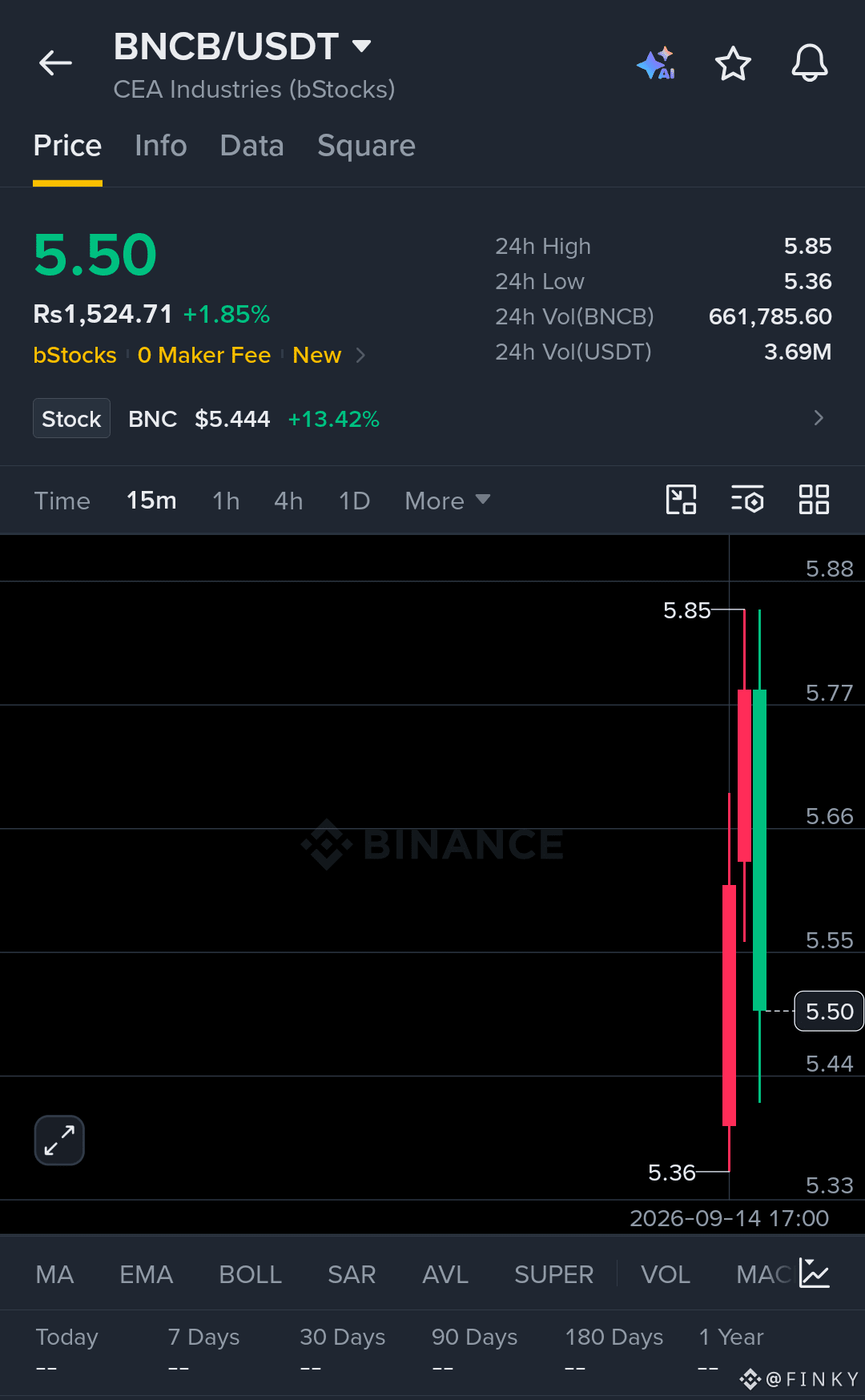
$BNCB — A Strong Setup Is Taking Shape
The price action is showing a clear reaction from the recent 5.36 area, with momentum returning toward the 5.77 to 5.85 zone. The current level around 5.50 gives this setup an important area to watch as the market develops.
EP
5.50
TP
5.77
5.85
SL
5.36
Trade with proper risk management and avoid chasing sudden price movements. Let the setup confirm and manage the position carefully around the marked levels.
Let's go and Trade now $BNCB
{spot}(BNCBUSDT)
#AnthropicCEOCallsForAISlowdown #BrazilCentralBankRaisesVASPCapitalRequirements #BitcoinThirdSingleBlockReorgInFourWeeks #WhiteHouseRejectsAISlowdownCalls #AvalancheIntegratesIntoUAEPassDigitalVault
$BNCB — A Strong Setup Is Taking Shape
The price action is showing a clear reaction from the recent 5.36 area, with momentum returning toward the 5.77 to 5.85 zone. The current level around 5.50 gives this setup an important area to watch as the market develops.
EP
5.50
TP
5.77
5.85
SL
5.36
Trade with proper risk management and avoid chasing sudden price movements. Let the setup confirm and manage the position carefully around the marked levels.
Let's go and Trade now $BNCB
#AnthropicCEOCallsForAISlowdown #BrazilCentralBankRaisesVASPCapitalRequirements #BitcoinThirdSingleBlockReorgInFourWeeks #WhiteHouseRejectsAISlowdownCalls #AvalancheIntegratesIntoUAEPassDigitalVault
The price action is showing a clear reaction from the recent 5.36 area, with momentum returning toward the 5.77 to 5.85 zone. The current level around 5.50 gives this setup an important area to watch as the market develops.
EP
5.50
TP
5.77
5.85
SL
5.36
Trade with proper risk management and avoid chasing sudden price movements. Let the setup confirm and manage the position carefully around the marked levels.
Let's go and Trade now $BNCB
#AnthropicCEOCallsForAISlowdown #BrazilCentralBankRaisesVASPCapitalRequirements #BitcoinThirdSingleBlockReorgInFourWeeks #WhiteHouseRejectsAISlowdownCalls #AvalancheIntegratesIntoUAEPassDigitalVault
1
464
·
--
Bullish
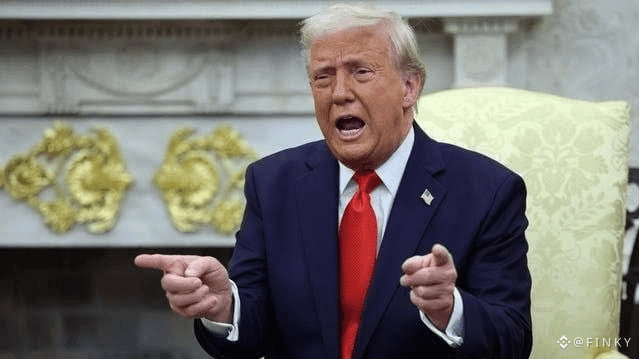
MARKETS ARE BREAKING RECORDS
Trump says the US stock market is now far above its previous highs, calling the economy the most successful in US history and predicting even bigger gains ahead.
The message is clear: he believes the next phase could be even stronger.
Markets are watching.
#Trump #Stocks #Markets
$TRUMP
{spot}(TRUMPUSDT)
MARKETS ARE BREAKING RECORDS
Trump says the US stock market is now far above its previous highs, calling the economy the most successful in US history and predicting even bigger gains ahead.
The message is clear: he believes the next phase could be even stronger.
Markets are watching.
#Trump #Stocks #Markets
$TRUMP
Trump says the US stock market is now far above its previous highs, calling the economy the most successful in US history and predicting even bigger gains ahead.
The message is clear: he believes the next phase could be even stronger.
Markets are watching.
#Trump #Stocks #Markets
$TRUMP
1
357
·
--
Bearish
$SHIB /USDT — A Tight Battle Is Building
$SHIB is holding around 0.00000521 after a sharp recovery from the 0.00000510–0.00000515 area. The 15-minute chart shows price moving in a tight range, with buyers and sellers clearly fighting for control.
Current Price: 0.00000521
24H High: 0.00000528
24H Low: 0.00000511
24H Volume: 442.32B SHIB
24H USDT Volume: 2.30M
The recent bounce pushed price back toward the 0.00000520–0.00000525 zone, but momentum is still cautious. A strong move with volume could make the next few candles interesting.
30D: +13.48%
90D: +2.15%
7D: -3.69%
180D: -14.14%
1Y: -63.00%
The setup is getting tighter. Keep an eye on volume and the nearby levels because a clean breakout from this range could bring a much bigger move.
$SHIB is at a key moment. Stay focused and trade with a plan.
{spot}(SHIBUSDT)
$SHIB /USDT — A Tight Battle Is Building
$SHIB is holding around 0.00000521 after a sharp recovery from the 0.00000510–0.00000515 area. The 15-minute chart shows price moving in a tight range, with buyers and sellers clearly fighting for control.
Current Price: 0.00000521
24H High: 0.00000528
24H Low: 0.00000511
24H Volume: 442.32B SHIB
24H USDT Volume: 2.30M
The recent bounce pushed price back toward the 0.00000520–0.00000525 zone, but momentum is still cautious. A strong move with volume could make the next few candles interesting.
30D: +13.48%
90D: +2.15%
7D: -3.69%
180D: -14.14%
1Y: -63.00%
The setup is getting tighter. Keep an eye on volume and the nearby levels because a clean breakout from this range could bring a much bigger move.
$SHIB is at a key moment. Stay focused and trade with a plan.
$SHIB is holding around 0.00000521 after a sharp recovery from the 0.00000510–0.00000515 area. The 15-minute chart shows price moving in a tight range, with buyers and sellers clearly fighting for control.
Current Price: 0.00000521
24H High: 0.00000528
24H Low: 0.00000511
24H Volume: 442.32B SHIB
24H USDT Volume: 2.30M
The recent bounce pushed price back toward the 0.00000520–0.00000525 zone, but momentum is still cautious. A strong move with volume could make the next few candles interesting.
30D: +13.48%
90D: +2.15%
7D: -3.69%
180D: -14.14%
1Y: -63.00%
The setup is getting tighter. Keep an eye on volume and the nearby levels because a clean breakout from this range could bring a much bigger move.
$SHIB is at a key moment. Stay focused and trade with a plan.
1
235
·
--
Bullish
$LSK IS TAKING THE SPOTLIGHT
The futures market is heating up, and is standing far above the crowd.
LSKUSDT is trading around $0.82485, up an impressive 54.28% in the last 24 hours. That is a huge move compared with the other major gainers in the snapshot.
The leaderboard is looking strong:
$LSKUSDT — $0.82485 | +54.28%
$CVCUSDT — $0.03213 | +31.14%
$BRUSDT — $0.31604 | +25.86%
$BTWUSDT — $0.68605 | +23.61%
$POWER USDT — $0.12423 | +23.18%
What makes especially interesting is the gap between its performance and the rest of the group. While every token listed is showing gains above 23%, LSK has pushed beyond 54%, making it the clear standout.
But this kind of momentum comes with a warning.
A move this fast can bring serious volatility, sharp pullbacks, and sudden changes in momentum. The key is to watch how behaves after such a powerful run instead of blindly chasing the move.
One thing is certain: has grabbed the market's attention.
Now the real question is whether this momentum can continue into the next move.
$LSK is definitely one to keep on the radar.
{spot}(LSKUSDT)
{future}(POWERUSDT)
#POWER #LSK #ClarityActFacesProceduralVoteSept15
$LSK IS TAKING THE SPOTLIGHT
The futures market is heating up, and is standing far above the crowd.
LSKUSDT is trading around $0.82485, up an impressive 54.28% in the last 24 hours. That is a huge move compared with the other major gainers in the snapshot.
The leaderboard is looking strong:
$LSKUSDT — $0.82485 | +54.28%
$CVCUSDT — $0.03213 | +31.14%
$BRUSDT — $0.31604 | +25.86%
$BTWUSDT — $0.68605 | +23.61%
$POWER USDT — $0.12423 | +23.18%
What makes especially interesting is the gap between its performance and the rest of the group. While every token listed is showing gains above 23%, LSK has pushed beyond 54%, making it the clear standout.
But this kind of momentum comes with a warning.
A move this fast can bring serious volatility, sharp pullbacks, and sudden changes in momentum. The key is to watch how behaves after such a powerful run instead of blindly chasing the move.
One thing is certain: has grabbed the market's attention.
Now the real question is whether this momentum can continue into the next move.
$LSK is definitely one to keep on the radar.
#POWER #LSK #ClarityActFacesProceduralVoteSept15
The futures market is heating up, and is standing far above the crowd.
LSKUSDT is trading around $0.82485, up an impressive 54.28% in the last 24 hours. That is a huge move compared with the other major gainers in the snapshot.
The leaderboard is looking strong:
$LSKUSDT — $0.82485 | +54.28%
$CVCUSDT — $0.03213 | +31.14%
$BRUSDT — $0.31604 | +25.86%
$BTWUSDT — $0.68605 | +23.61%
$POWER USDT — $0.12423 | +23.18%
What makes especially interesting is the gap between its performance and the rest of the group. While every token listed is showing gains above 23%, LSK has pushed beyond 54%, making it the clear standout.
But this kind of momentum comes with a warning.
A move this fast can bring serious volatility, sharp pullbacks, and sudden changes in momentum. The key is to watch how behaves after such a powerful run instead of blindly chasing the move.
One thing is certain: has grabbed the market's attention.
Now the real question is whether this momentum can continue into the next move.
$LSK is definitely one to keep on the radar.
#POWER #LSK #ClarityActFacesProceduralVoteSept15
LONG
40%
SHORT
0%
LSK
30%
POWER
30%
10 votes • Voting closed
2
470
·
--
$N — A Critical Zone Is Forming
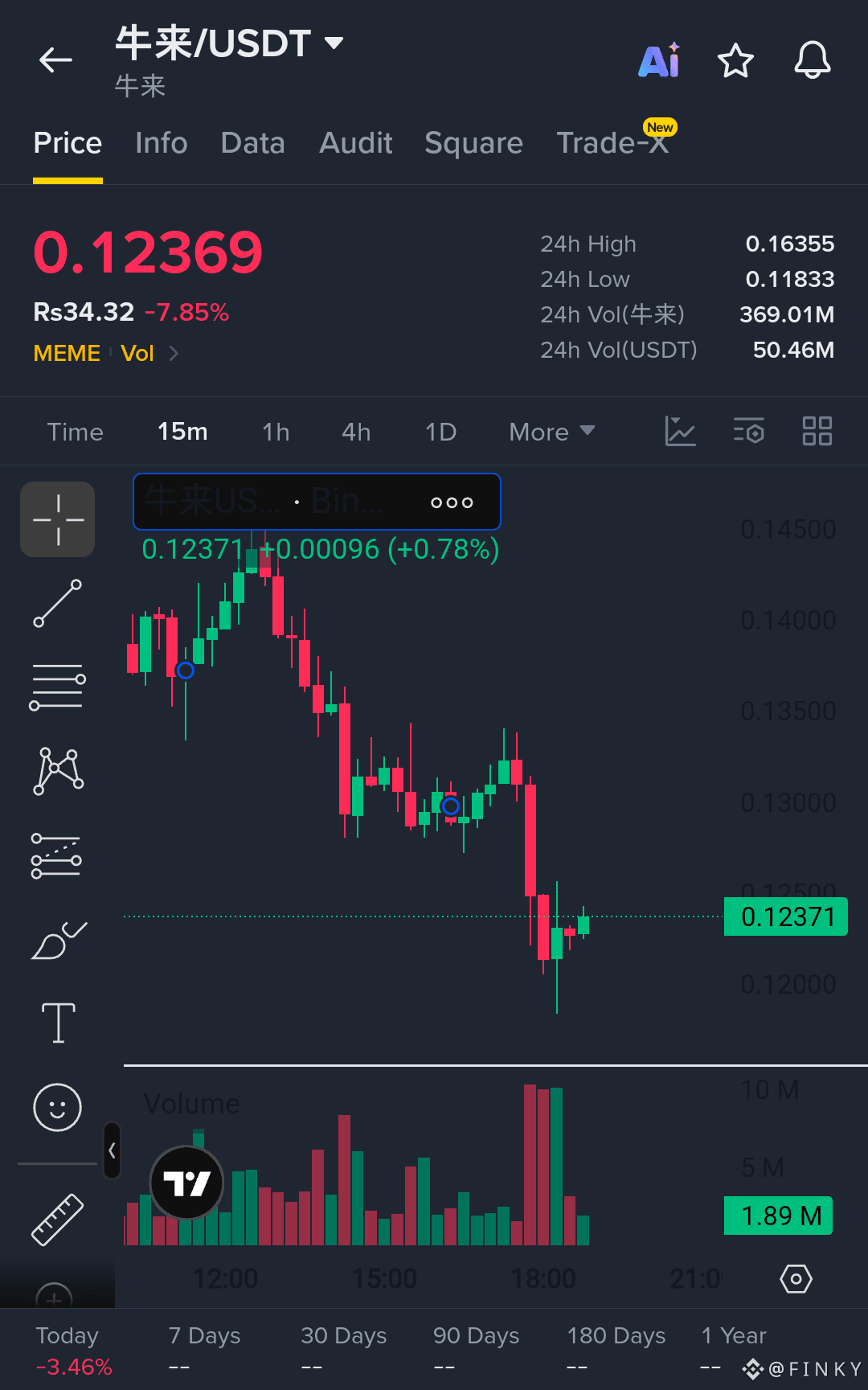
$NiuNiu is showing a sharp drop into the 0.1200–0.1230 area, followed by a quick reaction with strong volume.
Price: 0.12369
24H High: 0.16355
24H Low: 0.11833
The key now is how price behaves around this zone. A strong reaction could bring volatility back fast.
Watch the chart. Wait for confirmation.
#SECReceivesGrayscaleLitecoinTrustETFFiling #ClarityActFacesProceduralVoteSept15 #US10YearTreasuryYieldNears5% #RevolutConfirmsFakeGovEmailDataBreach #USBankCompletesCrossBorderPaymentPilotOnStellar
$N — A Critical Zone Is Forming
$NiuNiu is showing a sharp drop into the 0.1200–0.1230 area, followed by a quick reaction with strong volume.
Price: 0.12369
24H High: 0.16355
24H Low: 0.11833
The key now is how price behaves around this zone. A strong reaction could bring volatility back fast.
Watch the chart. Wait for confirmation.
#SECReceivesGrayscaleLitecoinTrustETFFiling #ClarityActFacesProceduralVoteSept15 #US10YearTreasuryYieldNears5% #RevolutConfirmsFakeGovEmailDataBreach #USBankCompletesCrossBorderPaymentPilotOnStellar
$NiuNiu is showing a sharp drop into the 0.1200–0.1230 area, followed by a quick reaction with strong volume.
Price: 0.12369
24H High: 0.16355
24H Low: 0.11833
The key now is how price behaves around this zone. A strong reaction could bring volatility back fast.
Watch the chart. Wait for confirmation.
#SECReceivesGrayscaleLitecoinTrustETFFiling #ClarityActFacesProceduralVoteSept15 #US10YearTreasuryYieldNears5% #RevolutConfirmsFakeGovEmailDataBreach #USBankCompletesCrossBorderPaymentPilotOnStellar
1
1
47
·
--
Bullish
$VVV — A Setup Worth Watching
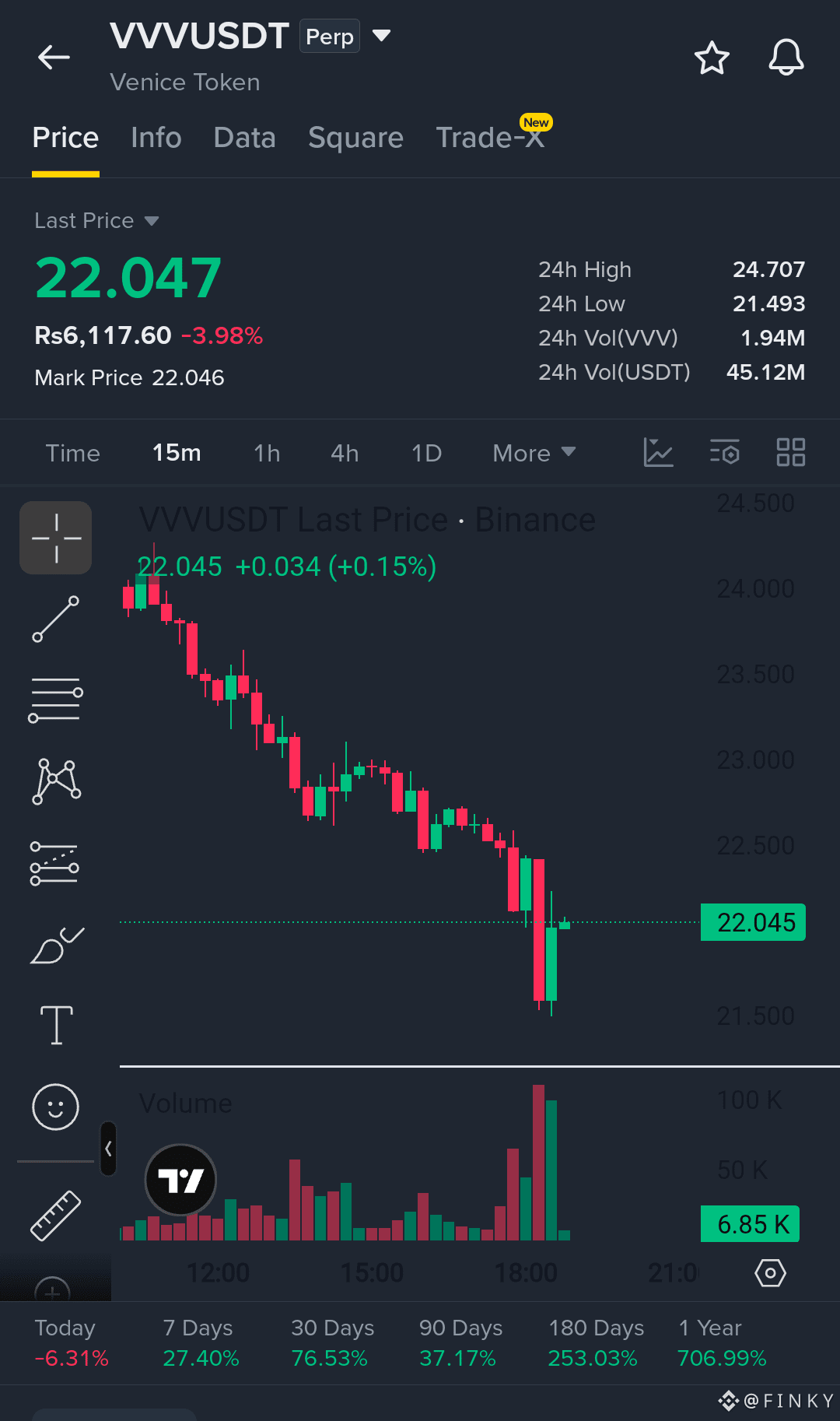
$VVV is showing a sharp reaction around the 21.50–22.00 area, with heavy volume appearing near the recent low.
The chart is giving us an important level to watch. If momentum returns, this zone could become the key for the next move.
Price: 22.047
24H High: 24.707
24H Low: 21.493
Watch the levels. Let the chart confirm the move.
{future}(VVVUSDT)
#SECReceivesGrayscaleLitecoinTrustETFFiling #ClarityActFacesProceduralVoteSept15 #US10YearTreasuryYieldNears5% #TokenizedStockHoldersUp619.1% #RevolutConfirmsFakeGovEmailDataBreach
$VVV — A Setup Worth Watching
$VVV is showing a sharp reaction around the 21.50–22.00 area, with heavy volume appearing near the recent low.
The chart is giving us an important level to watch. If momentum returns, this zone could become the key for the next move.
Price: 22.047
24H High: 24.707
24H Low: 21.493
Watch the levels. Let the chart confirm the move.
#SECReceivesGrayscaleLitecoinTrustETFFiling #ClarityActFacesProceduralVoteSept15 #US10YearTreasuryYieldNears5% #TokenizedStockHoldersUp619.1% #RevolutConfirmsFakeGovEmailDataBreach
$VVV is showing a sharp reaction around the 21.50–22.00 area, with heavy volume appearing near the recent low.
The chart is giving us an important level to watch. If momentum returns, this zone could become the key for the next move.
Price: 22.047
24H High: 24.707
24H Low: 21.493
Watch the levels. Let the chart confirm the move.
#SECReceivesGrayscaleLitecoinTrustETFFiling #ClarityActFacesProceduralVoteSept15 #US10YearTreasuryYieldNears5% #TokenizedStockHoldersUp619.1% #RevolutConfirmsFakeGovEmailDataBreach
1
211
·
--
Bullish
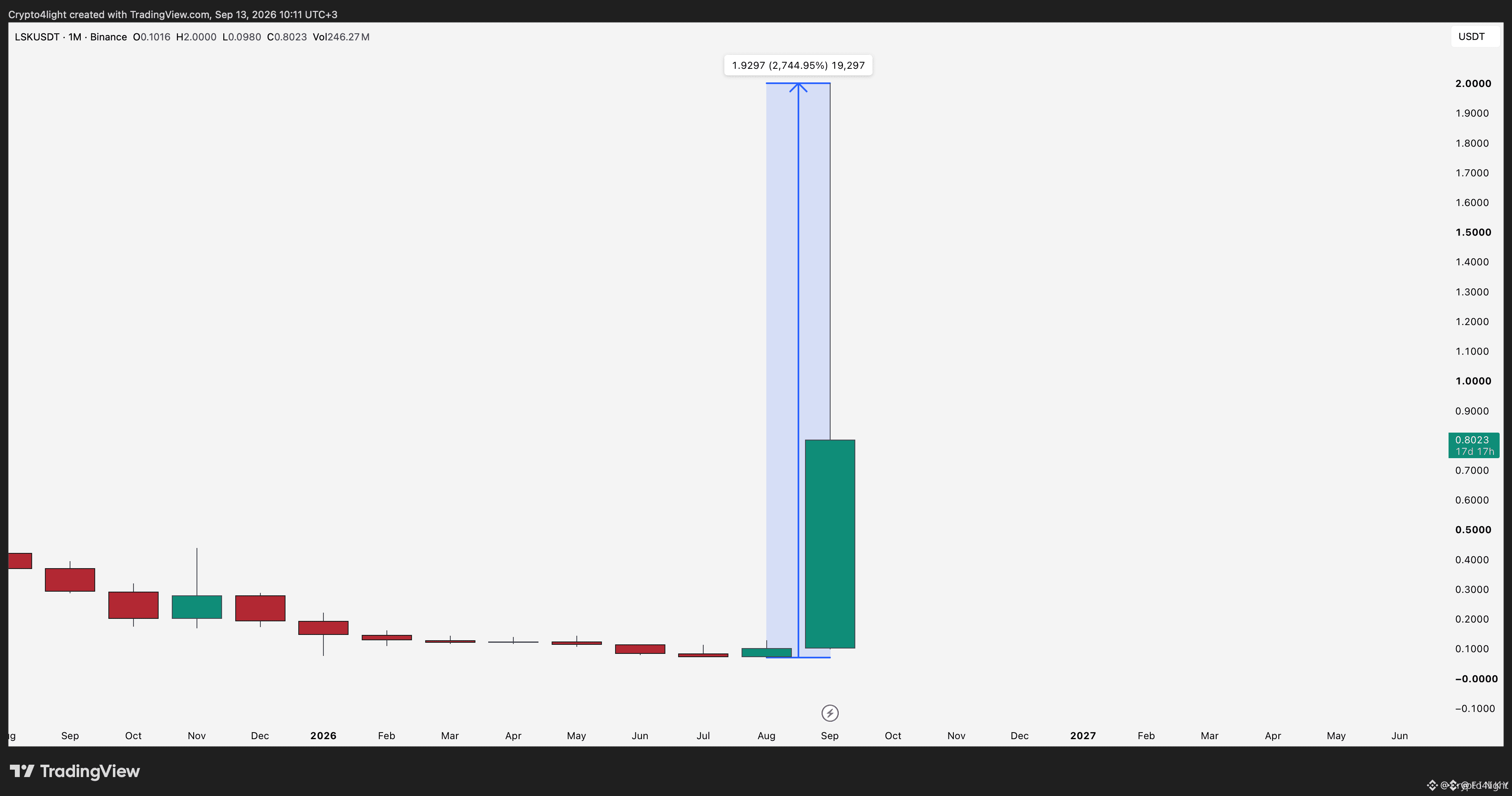
$LSK just delivered a brutal crypto lesson.
A token from 2016 revisited its 2017 all-time low — then exploded nearly 2700% in only two months.
The chart showed the potential before the crowd noticed.
That’s the point: crypto is speculation. Liquidity and market structure can matter more than narratives, influencers, or “next 100x” hype.
And when a token has already pumped 1000–2700%, chasing it may be the worst entry.
The real opportunity is often finding undervalued tokens BEFORE the crowd starts searching for them.
Study the charts. Watch the levels. Do your own homework.
{spot}(LSKUSDT)
$CVC
{future}(CVCUSDT)
$LAB
{future}(LABUSDT)
#SECReceivesGrayscaleLitecoinTrustETFFiling
#ClarityActFacesProceduralVoteSept15
#TokenizedStockHoldersUp619.1%
#EtherRalliesAsBearishBetsLiquidate
$LSK just delivered a brutal crypto lesson.
A token from 2016 revisited its 2017 all-time low — then exploded nearly 2700% in only two months.
The chart showed the potential before the crowd noticed.
That’s the point: crypto is speculation. Liquidity and market structure can matter more than narratives, influencers, or “next 100x” hype.
And when a token has already pumped 1000–2700%, chasing it may be the worst entry.
The real opportunity is often finding undervalued tokens BEFORE the crowd starts searching for them.
Study the charts. Watch the levels. Do your own homework.
$CVC
$LAB
#SECReceivesGrayscaleLitecoinTrustETFFiling
#ClarityActFacesProceduralVoteSept15
#TokenizedStockHoldersUp619.1%
#EtherRalliesAsBearishBetsLiquidate
A token from 2016 revisited its 2017 all-time low — then exploded nearly 2700% in only two months.
The chart showed the potential before the crowd noticed.
That’s the point: crypto is speculation. Liquidity and market structure can matter more than narratives, influencers, or “next 100x” hype.
And when a token has already pumped 1000–2700%, chasing it may be the worst entry.
The real opportunity is often finding undervalued tokens BEFORE the crowd starts searching for them.
Study the charts. Watch the levels. Do your own homework.
$CVC
$LAB
#SECReceivesGrayscaleLitecoinTrustETFFiling
#ClarityActFacesProceduralVoteSept15
#TokenizedStockHoldersUp619.1%
#EtherRalliesAsBearishBetsLiquidate
1
333
·
--
Bullish
🚨 $ARK — SHORT SETUP IS GETTING INTERESTING 🚨
$ARK is trading around 0.1779 after a massive move, up more than 50% in 24H. Price pushed all the way to 0.2082 and then pulled back, now consolidating around the 0.17–0.18 area.
I’m watching this zone for a possible short rejection.
🎯 SHORT SETUP
Entry: 0.178–0.182
TP1: 0.172
TP2: 0.165
TP3: 0.158
SL: 0.195
🔥 THE IDEA
After such a strong pump, buyers need to prove they can reclaim the higher resistance area. If $ARK gets rejected around the entry zone and selling pressure increases, the pullback could move toward the lower support levels.
➡️ Rejection near 0.178–0.182 → short bias
➡️ Break below 0.172 → momentum can accelerate
➡️ 0.165 → second target
➡️ 0.158 → deeper pullback zone
🛑 Above 0.195 → setup is invalid
No chasing the candle. Let price confirm the rejection first.
— the pump was powerful. Now let’s see if the bears can take control. 🐻🔥
{spot}(ARKUSDT)
#ARK
#SECReceivesGrayscaleLitecoinTrustETFFiling m#ClarityActFacesProceduralVoteSept15 #US10YearTreasuryYieldNears5% #TokenizedStockHoldersUp619.1%
🚨 $ARK — SHORT SETUP IS GETTING INTERESTING 🚨
$ARK is trading around 0.1779 after a massive move, up more than 50% in 24H. Price pushed all the way to 0.2082 and then pulled back, now consolidating around the 0.17–0.18 area.
I’m watching this zone for a possible short rejection.
🎯 SHORT SETUP
Entry: 0.178–0.182
TP1: 0.172
TP2: 0.165
TP3: 0.158
SL: 0.195
🔥 THE IDEA
After such a strong pump, buyers need to prove they can reclaim the higher resistance area. If $ARK gets rejected around the entry zone and selling pressure increases, the pullback could move toward the lower support levels.
➡️ Rejection near 0.178–0.182 → short bias
➡️ Break below 0.172 → momentum can accelerate
➡️ 0.165 → second target
➡️ 0.158 → deeper pullback zone
🛑 Above 0.195 → setup is invalid
No chasing the candle. Let price confirm the rejection first.
— the pump was powerful. Now let’s see if the bears can take control. 🐻🔥
#ARK
#SECReceivesGrayscaleLitecoinTrustETFFiling m#ClarityActFacesProceduralVoteSept15 #US10YearTreasuryYieldNears5% #TokenizedStockHoldersUp619.1%
$ARK is trading around 0.1779 after a massive move, up more than 50% in 24H. Price pushed all the way to 0.2082 and then pulled back, now consolidating around the 0.17–0.18 area.
I’m watching this zone for a possible short rejection.
🎯 SHORT SETUP
Entry: 0.178–0.182
TP1: 0.172
TP2: 0.165
TP3: 0.158
SL: 0.195
🔥 THE IDEA
After such a strong pump, buyers need to prove they can reclaim the higher resistance area. If $ARK gets rejected around the entry zone and selling pressure increases, the pullback could move toward the lower support levels.
➡️ Rejection near 0.178–0.182 → short bias
➡️ Break below 0.172 → momentum can accelerate
➡️ 0.165 → second target
➡️ 0.158 → deeper pullback zone
🛑 Above 0.195 → setup is invalid
No chasing the candle. Let price confirm the rejection first.
— the pump was powerful. Now let’s see if the bears can take control. 🐻🔥
#ARK
#SECReceivesGrayscaleLitecoinTrustETFFiling m#ClarityActFacesProceduralVoteSept15 #US10YearTreasuryYieldNears5% #TokenizedStockHoldersUp619.1%
ARK
54%
LONG
23%
SHORT
23%
open trade
0%
22 votes • Voting closed
3
634
·
--
Bullish
🚨 $LSK — SHORT SETUP 🚨
$LSK is approaching a key rejection zone, and I’m watching for a quick downside continuation.
🎯 SHORT SETUP
Entry: 1,142–1,144
TP1: 1,138
TP2: 1,133
SL: 1,149
The idea is simple: if fails to hold the entry area and sellers step in, the downside move could accelerate.
⚡ Entry → 1,142–1,144
🎯 First target → 1,138
🔥 Second target → 1,133
🛑 Invalidation → 1,149
No chasing. If price breaks the invalidation level, the setup is off.
$LSK — sellers, show me what you’ve got. 👀
#SECReceivesGrayscaleLitecoinTrustETFFiling #ClarityActFacesProceduralVoteSept15 #TokenizedStockHoldersUp619.1% #RevolutConfirmsFakeGovEmailDataBreach #USBankCompletesCrossBorderPaymentPilotOnStellar
{spot}(LSKUSDT)
🚨 $LSK — SHORT SETUP 🚨
$LSK is approaching a key rejection zone, and I’m watching for a quick downside continuation.
🎯 SHORT SETUP
Entry: 1,142–1,144
TP1: 1,138
TP2: 1,133
SL: 1,149
The idea is simple: if fails to hold the entry area and sellers step in, the downside move could accelerate.
⚡ Entry → 1,142–1,144
🎯 First target → 1,138
🔥 Second target → 1,133
🛑 Invalidation → 1,149
No chasing. If price breaks the invalidation level, the setup is off.
$LSK — sellers, show me what you’ve got. 👀
#SECReceivesGrayscaleLitecoinTrustETFFiling #ClarityActFacesProceduralVoteSept15 #TokenizedStockHoldersUp619.1% #RevolutConfirmsFakeGovEmailDataBreach #USBankCompletesCrossBorderPaymentPilotOnStellar
$LSK is approaching a key rejection zone, and I’m watching for a quick downside continuation.
🎯 SHORT SETUP
Entry: 1,142–1,144
TP1: 1,138
TP2: 1,133
SL: 1,149
The idea is simple: if fails to hold the entry area and sellers step in, the downside move could accelerate.
⚡ Entry → 1,142–1,144
🎯 First target → 1,138
🔥 Second target → 1,133
🛑 Invalidation → 1,149
No chasing. If price breaks the invalidation level, the setup is off.
$LSK — sellers, show me what you’ve got. 👀
#SECReceivesGrayscaleLitecoinTrustETFFiling #ClarityActFacesProceduralVoteSept15 #TokenizedStockHoldersUp619.1% #RevolutConfirmsFakeGovEmailDataBreach #USBankCompletesCrossBorderPaymentPilotOnStellar
LONG🤑🤑
54%
SHORT 👀👀👈
36%
Open 🤯🤯
5%
trade💯💯💫💫
5%
41 votes • Voting closed
1
1.7k
·
--
Article
Dusk Network: Where Financial Privacy Meets RealityThat is where Dusk starts to make more sense to me.
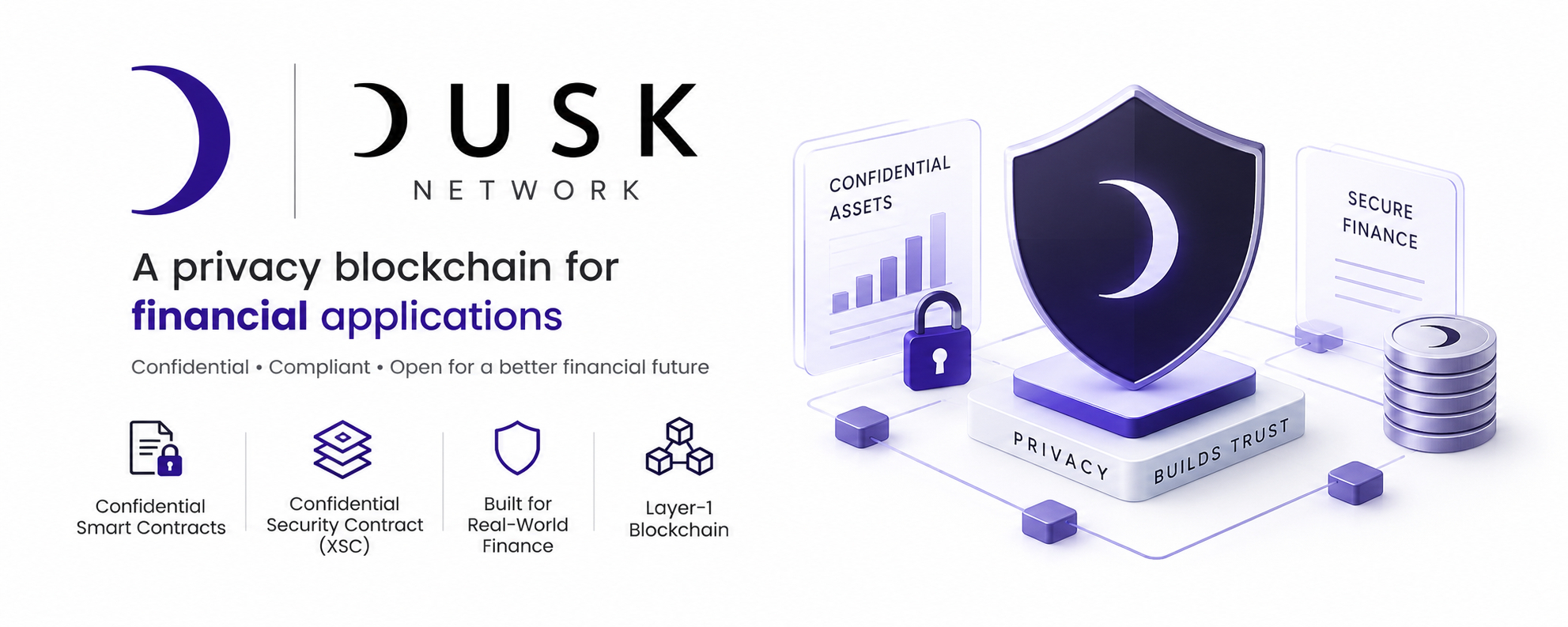
The project is a Layer-1 blockchain built around financial applications, with privacy sitting much closer to the center of its design than it does on most general-purpose chains. Its Confidential Security Contract, or XSC, is particularly interesting because it is not simply about hiding transactions. The idea is to create financial assets and contracts that can enforce certain rules while keeping sensitive information confidential.
And honestly, that sounds much closer to how real finance works.
A financial institution may need to prove that an investor is eligible to hold an asset without revealing every detail about that investor. An issuer may need to restrict transfers without making its entire ownership structure public. A regulator may need access to specific information without requiring every piece of private data to sit openly on a public ledger.
The more I look at it from that angle, the more I understand why Dusk is focused on the space between privacy and compliance.
Because complete privacy creates problems.
Complete transparency creates problems too.
The difficult part is finding the point somewhere in the middle.
Dusk appears to be building around that middle ground, using technologies such as zero-knowledge proofs to allow certain facts to be verified without exposing all the underlying information. That sounds complicated when described through cryptography, but the basic idea is surprisingly simple: prove what needs to be proven, and keep the rest private.
I think that distinction could matter if blockchain-based financial markets ever become much larger than they are today.
But I also find myself being careful here.
Crypto has a habit of turning a good idea into a prediction. A technical solution becomes a future market. A partnership becomes adoption. A token becomes an investment thesis. Eventually, the story becomes much bigger than the actual usage.
I've watched that happen enough times to be skeptical of the story before looking at the system underneath it.
With Dusk, the underlying question seems fairly straightforward to me: will people actually need this infrastructure?
The technology is certainly designed with that possibility in mind. Dusk has been developing different components for settlement, execution, privacy, identity, and financial contracts. It has also moved toward EVM compatibility, which makes the network more accessible to developers already familiar with Ethereum's tools and Solidity.
That is probably a practical decision.
Developers don't necessarily want another completely unfamiliar environment. They have already spent years learning existing frameworks, and compatibility can remove one of the barriers standing between an idea and an actual application.
But compatibility by itself doesn't create an ecosystem.
There still has to be a reason for developers to build on Dusk instead of choosing one of the many other networks competing for the same attention.
That reason, in my view, has to come from the privacy and financial infrastructure itself.
If Dusk can offer something that conventional blockchains cannot provide easily — confidential financial contracts with enforceable rules and selective disclosure — then the project has a more specific purpose than simply being another Layer-1.
That specificity is probably its strength.
It is also its challenge.
A general-purpose blockchain can chase almost anything. A network built around financial applications has to prove that the financial market it is targeting actually wants blockchain infrastructure badly enough to change existing systems.
And that is not an easy sell.
Traditional financial infrastructure may be old and complicated, but it has also been refined over decades. Banks, exchanges, custodians, brokers, clearing systems, and regulators have established processes for dealing with problems that blockchain projects sometimes discover only after deployment.
A new system has to be more than technically impressive.
It has to be dependable.
That is why I find the delivery-versus-payment side of Dusk interesting as well. The basic concept is familiar in finance: the transfer of an asset and the corresponding payment should happen in a coordinated way, reducing the risk that one side is delivered while the other side is not.
Putting that kind of logic into programmable infrastructure makes sense.
But again, the interesting part isn't whether it can be done.
The interesting part is whether anyone will trust it enough to use it for something important.
That distinction keeps coming up whenever I look at Dusk.
The project seems to be solving problems that are real. Privacy in finance is real. Compliance is real. Settlement risk is real. Confidential ownership information is real.
But solving a real problem doesn't automatically mean there will be a large market for your particular solution.
The token has its own story as well. DUSK is used for transaction fees and staking, while the network has an emission structure designed to support participation and security.
On paper, that gives the token a role inside the network.
But I've become cautious about the word “utility.”
A token can have a function without necessarily having sustainable demand. Staking can encourage people to hold it. Network activity can create demand for it. But eventually the economics have to connect with actual usage.
If the blockchain is busy because people genuinely need it, that is one thing.
If the blockchain is busy mainly because incentives are paying people to be there, that is something very different.
That is one of the things I would watch with Dusk over time.
Not just the price.
Not just announcements.
Not just how much attention the project receives during a strong market.
I'd want to see what happens when the market gets quiet.
Are people still building?
Are real assets still moving?
Are developers using the privacy features because they actually need them?
Are institutions finding the infrastructure useful enough to change existing processes?
Those are much harder questions than watching a chart.
And they are usually much more revealing.
The privacy side may ultimately be the biggest test.
It is easy to say that financial data should be private. It is harder to decide exactly what should be private, who should be allowed to see it, when it should be disclosed, and how those decisions should be enforced without creating a centralized point of failure.
That is where the system meets reality.
A regulator may need information.
An investor may need confidentiality.
An issuer may need control over who can hold an asset.
A market participant may want transparency about the validity of a transaction without wanting competitors to know the details.
These interests don't always line up.
A blockchain doesn't make that conflict disappear.
It simply gives developers another way to encode the rules.
That is why I don't think Dusk's story can really be judged by its technology alone.
The technology may work exactly as designed and the project could still struggle if the surrounding economic incentives don't develop.
On the other hand, if regulated digital assets become more common and financial institutions begin looking seriously for infrastructure that can combine blockchain settlement with privacy and compliance, then Dusk's focus could become much more relevant.
That possibility is what keeps me interested.
Not certainty.
Possibility.
I've seen too many crypto projects arrive with enormous promises and disappear when the market stops caring. The projects that survive tend to be the ones that quietly solve something people continue to need when there is no hype around them.
So when I look at Dusk, I don't really find myself asking whether it will become the next big blockchain.
That question feels too easy.
I'd rather ask whether the system can survive the boring parts.
Can it attract developers without constantly relying on incentives?
Can it generate meaningful activity?
Can its privacy model work alongside real compliance requirements?
Can institutions trust it?
Can the token economics remain healthy as the network grows?
Can the technology stay reliable when the value moving through it becomes large enough that mistakes actually hurt?
Those questions don't make for the most exciting crypto narrative.
But they are the questions that usually matter in the end.
For now, Dusk looks like an interesting attempt to deal with a problem that blockchain has not completely solved: how do you make financial activity verifiable without making every piece of financial information public?
I don't think there is an easy answer.
And maybe that is exactly why the project is worth watching.
Not because it has already proven the future, but because it is working in a part of crypto where the difference between an interesting idea and useful infrastructure could eventually become very obvious.
When that happens, I suspect the market won't need much explanation.
The users will simply be there.
@Dusk_Foundation $DUSK #dusk
#SECReceivesGrayscaleLitecoinTrustETFFiling #ClarityActFacesProceduralVoteSept15 #CryptoLiquidations$674MIn24H #RevolutConfirmsFakeGovEmailDataBreach
$ZEC
$BAND
{spot}(BANDUSDT)
Dusk Network: Where Financial Privacy Meets Reality
That is where Dusk starts to make more sense to me.
The project is a Layer-1 blockchain built around financial applications, with privacy sitting much closer to the center of its design than it does on most general-purpose chains. Its Confidential Security Contract, or XSC, is particularly interesting because it is not simply about hiding transactions. The idea is to create financial assets and contracts that can enforce certain rules while keeping sensitive information confidential.
And honestly, that sounds much closer to how real finance works.
A financial institution may need to prove that an investor is eligible to hold an asset without revealing every detail about that investor. An issuer may need to restrict transfers without making its entire ownership structure public. A regulator may need access to specific information without requiring every piece of private data to sit openly on a public ledger.
The more I look at it from that angle, the more I understand why Dusk is focused on the space between privacy and compliance.
Because complete privacy creates problems.
Complete transparency creates problems too.
The difficult part is finding the point somewhere in the middle.
Dusk appears to be building around that middle ground, using technologies such as zero-knowledge proofs to allow certain facts to be verified without exposing all the underlying information. That sounds complicated when described through cryptography, but the basic idea is surprisingly simple: prove what needs to be proven, and keep the rest private.
I think that distinction could matter if blockchain-based financial markets ever become much larger than they are today.
But I also find myself being careful here.
Crypto has a habit of turning a good idea into a prediction. A technical solution becomes a future market. A partnership becomes adoption. A token becomes an investment thesis. Eventually, the story becomes much bigger than the actual usage.
I've watched that happen enough times to be skeptical of the story before looking at the system underneath it.
With Dusk, the underlying question seems fairly straightforward to me: will people actually need this infrastructure?
The technology is certainly designed with that possibility in mind. Dusk has been developing different components for settlement, execution, privacy, identity, and financial contracts. It has also moved toward EVM compatibility, which makes the network more accessible to developers already familiar with Ethereum's tools and Solidity.
That is probably a practical decision.
Developers don't necessarily want another completely unfamiliar environment. They have already spent years learning existing frameworks, and compatibility can remove one of the barriers standing between an idea and an actual application.
But compatibility by itself doesn't create an ecosystem.
There still has to be a reason for developers to build on Dusk instead of choosing one of the many other networks competing for the same attention.
That reason, in my view, has to come from the privacy and financial infrastructure itself.
If Dusk can offer something that conventional blockchains cannot provide easily — confidential financial contracts with enforceable rules and selective disclosure — then the project has a more specific purpose than simply being another Layer-1.
That specificity is probably its strength.
It is also its challenge.
A general-purpose blockchain can chase almost anything. A network built around financial applications has to prove that the financial market it is targeting actually wants blockchain infrastructure badly enough to change existing systems.
And that is not an easy sell.
Traditional financial infrastructure may be old and complicated, but it has also been refined over decades. Banks, exchanges, custodians, brokers, clearing systems, and regulators have established processes for dealing with problems that blockchain projects sometimes discover only after deployment.
A new system has to be more than technically impressive.
It has to be dependable.
That is why I find the delivery-versus-payment side of Dusk interesting as well. The basic concept is familiar in finance: the transfer of an asset and the corresponding payment should happen in a coordinated way, reducing the risk that one side is delivered while the other side is not.
Putting that kind of logic into programmable infrastructure makes sense.
But again, the interesting part isn't whether it can be done.
The interesting part is whether anyone will trust it enough to use it for something important.
That distinction keeps coming up whenever I look at Dusk.
The project seems to be solving problems that are real. Privacy in finance is real. Compliance is real. Settlement risk is real. Confidential ownership information is real.
But solving a real problem doesn't automatically mean there will be a large market for your particular solution.
The token has its own story as well. DUSK is used for transaction fees and staking, while the network has an emission structure designed to support participation and security.
On paper, that gives the token a role inside the network.
But I've become cautious about the word “utility.”
A token can have a function without necessarily having sustainable demand. Staking can encourage people to hold it. Network activity can create demand for it. But eventually the economics have to connect with actual usage.
If the blockchain is busy because people genuinely need it, that is one thing.
If the blockchain is busy mainly because incentives are paying people to be there, that is something very different.
That is one of the things I would watch with Dusk over time.
Not just the price.
Not just announcements.
Not just how much attention the project receives during a strong market.
I'd want to see what happens when the market gets quiet.
Are people still building?
Are real assets still moving?
Are developers using the privacy features because they actually need them?
Are institutions finding the infrastructure useful enough to change existing processes?
Those are much harder questions than watching a chart.
And they are usually much more revealing.
The privacy side may ultimately be the biggest test.
It is easy to say that financial data should be private. It is harder to decide exactly what should be private, who should be allowed to see it, when it should be disclosed, and how those decisions should be enforced without creating a centralized point of failure.
That is where the system meets reality.
A regulator may need information.
An investor may need confidentiality.
An issuer may need control over who can hold an asset.
A market participant may want transparency about the validity of a transaction without wanting competitors to know the details.
These interests don't always line up.
A blockchain doesn't make that conflict disappear.
It simply gives developers another way to encode the rules.
That is why I don't think Dusk's story can really be judged by its technology alone.
The technology may work exactly as designed and the project could still struggle if the surrounding economic incentives don't develop.
On the other hand, if regulated digital assets become more common and financial institutions begin looking seriously for infrastructure that can combine blockchain settlement with privacy and compliance, then Dusk's focus could become much more relevant.
That possibility is what keeps me interested.
Not certainty.
Possibility.
I've seen too many crypto projects arrive with enormous promises and disappear when the market stops caring. The projects that survive tend to be the ones that quietly solve something people continue to need when there is no hype around them.
So when I look at Dusk, I don't really find myself asking whether it will become the next big blockchain.
That question feels too easy.
I'd rather ask whether the system can survive the boring parts.
Can it attract developers without constantly relying on incentives?
Can it generate meaningful activity?
Can its privacy model work alongside real compliance requirements?
Can institutions trust it?
Can the token economics remain healthy as the network grows?
Can the technology stay reliable when the value moving through it becomes large enough that mistakes actually hurt?
Those questions don't make for the most exciting crypto narrative.
But they are the questions that usually matter in the end.
For now, Dusk looks like an interesting attempt to deal with a problem that blockchain has not completely solved: how do you make financial activity verifiable without making every piece of financial information public?
I don't think there is an easy answer.
And maybe that is exactly why the project is worth watching.
Not because it has already proven the future, but because it is working in a part of crypto where the difference between an interesting idea and useful infrastructure could eventually become very obvious.
When that happens, I suspect the market won't need much explanation.
The users will simply be there.
@Dusk $DUSK #dusk
#SECReceivesGrayscaleLitecoinTrustETFFiling #ClarityActFacesProceduralVoteSept15 #CryptoLiquidations$674MIn24H #RevolutConfirmsFakeGovEmailDataBreach
$ZEC
$BAND
The project is a Layer-1 blockchain built around financial applications, with privacy sitting much closer to the center of its design than it does on most general-purpose chains. Its Confidential Security Contract, or XSC, is particularly interesting because it is not simply about hiding transactions. The idea is to create financial assets and contracts that can enforce certain rules while keeping sensitive information confidential.
And honestly, that sounds much closer to how real finance works.
A financial institution may need to prove that an investor is eligible to hold an asset without revealing every detail about that investor. An issuer may need to restrict transfers without making its entire ownership structure public. A regulator may need access to specific information without requiring every piece of private data to sit openly on a public ledger.
The more I look at it from that angle, the more I understand why Dusk is focused on the space between privacy and compliance.
Because complete privacy creates problems.
Complete transparency creates problems too.
The difficult part is finding the point somewhere in the middle.
Dusk appears to be building around that middle ground, using technologies such as zero-knowledge proofs to allow certain facts to be verified without exposing all the underlying information. That sounds complicated when described through cryptography, but the basic idea is surprisingly simple: prove what needs to be proven, and keep the rest private.
I think that distinction could matter if blockchain-based financial markets ever become much larger than they are today.
But I also find myself being careful here.
Crypto has a habit of turning a good idea into a prediction. A technical solution becomes a future market. A partnership becomes adoption. A token becomes an investment thesis. Eventually, the story becomes much bigger than the actual usage.
I've watched that happen enough times to be skeptical of the story before looking at the system underneath it.
With Dusk, the underlying question seems fairly straightforward to me: will people actually need this infrastructure?
The technology is certainly designed with that possibility in mind. Dusk has been developing different components for settlement, execution, privacy, identity, and financial contracts. It has also moved toward EVM compatibility, which makes the network more accessible to developers already familiar with Ethereum's tools and Solidity.
That is probably a practical decision.
Developers don't necessarily want another completely unfamiliar environment. They have already spent years learning existing frameworks, and compatibility can remove one of the barriers standing between an idea and an actual application.
But compatibility by itself doesn't create an ecosystem.
There still has to be a reason for developers to build on Dusk instead of choosing one of the many other networks competing for the same attention.
That reason, in my view, has to come from the privacy and financial infrastructure itself.
If Dusk can offer something that conventional blockchains cannot provide easily — confidential financial contracts with enforceable rules and selective disclosure — then the project has a more specific purpose than simply being another Layer-1.
That specificity is probably its strength.
It is also its challenge.
A general-purpose blockchain can chase almost anything. A network built around financial applications has to prove that the financial market it is targeting actually wants blockchain infrastructure badly enough to change existing systems.
And that is not an easy sell.
Traditional financial infrastructure may be old and complicated, but it has also been refined over decades. Banks, exchanges, custodians, brokers, clearing systems, and regulators have established processes for dealing with problems that blockchain projects sometimes discover only after deployment.
A new system has to be more than technically impressive.
It has to be dependable.
That is why I find the delivery-versus-payment side of Dusk interesting as well. The basic concept is familiar in finance: the transfer of an asset and the corresponding payment should happen in a coordinated way, reducing the risk that one side is delivered while the other side is not.
Putting that kind of logic into programmable infrastructure makes sense.
But again, the interesting part isn't whether it can be done.
The interesting part is whether anyone will trust it enough to use it for something important.
That distinction keeps coming up whenever I look at Dusk.
The project seems to be solving problems that are real. Privacy in finance is real. Compliance is real. Settlement risk is real. Confidential ownership information is real.
But solving a real problem doesn't automatically mean there will be a large market for your particular solution.
The token has its own story as well. DUSK is used for transaction fees and staking, while the network has an emission structure designed to support participation and security.
On paper, that gives the token a role inside the network.
But I've become cautious about the word “utility.”
A token can have a function without necessarily having sustainable demand. Staking can encourage people to hold it. Network activity can create demand for it. But eventually the economics have to connect with actual usage.
If the blockchain is busy because people genuinely need it, that is one thing.
If the blockchain is busy mainly because incentives are paying people to be there, that is something very different.
That is one of the things I would watch with Dusk over time.
Not just the price.
Not just announcements.
Not just how much attention the project receives during a strong market.
I'd want to see what happens when the market gets quiet.
Are people still building?
Are real assets still moving?
Are developers using the privacy features because they actually need them?
Are institutions finding the infrastructure useful enough to change existing processes?
Those are much harder questions than watching a chart.
And they are usually much more revealing.
The privacy side may ultimately be the biggest test.
It is easy to say that financial data should be private. It is harder to decide exactly what should be private, who should be allowed to see it, when it should be disclosed, and how those decisions should be enforced without creating a centralized point of failure.
That is where the system meets reality.
A regulator may need information.
An investor may need confidentiality.
An issuer may need control over who can hold an asset.
A market participant may want transparency about the validity of a transaction without wanting competitors to know the details.
These interests don't always line up.
A blockchain doesn't make that conflict disappear.
It simply gives developers another way to encode the rules.
That is why I don't think Dusk's story can really be judged by its technology alone.
The technology may work exactly as designed and the project could still struggle if the surrounding economic incentives don't develop.
On the other hand, if regulated digital assets become more common and financial institutions begin looking seriously for infrastructure that can combine blockchain settlement with privacy and compliance, then Dusk's focus could become much more relevant.
That possibility is what keeps me interested.
Not certainty.
Possibility.
I've seen too many crypto projects arrive with enormous promises and disappear when the market stops caring. The projects that survive tend to be the ones that quietly solve something people continue to need when there is no hype around them.
So when I look at Dusk, I don't really find myself asking whether it will become the next big blockchain.
That question feels too easy.
I'd rather ask whether the system can survive the boring parts.
Can it attract developers without constantly relying on incentives?
Can it generate meaningful activity?
Can its privacy model work alongside real compliance requirements?
Can institutions trust it?
Can the token economics remain healthy as the network grows?
Can the technology stay reliable when the value moving through it becomes large enough that mistakes actually hurt?
Those questions don't make for the most exciting crypto narrative.
But they are the questions that usually matter in the end.
For now, Dusk looks like an interesting attempt to deal with a problem that blockchain has not completely solved: how do you make financial activity verifiable without making every piece of financial information public?
I don't think there is an easy answer.
And maybe that is exactly why the project is worth watching.
Not because it has already proven the future, but because it is working in a part of crypto where the difference between an interesting idea and useful infrastructure could eventually become very obvious.
When that happens, I suspect the market won't need much explanation.
The users will simply be there.
@Dusk $DUSK #dusk
#SECReceivesGrayscaleLitecoinTrustETFFiling #ClarityActFacesProceduralVoteSept15 #CryptoLiquidations$674MIn24H #RevolutConfirmsFakeGovEmailDataBreach
$ZEC
$BAND
1
333
·
--
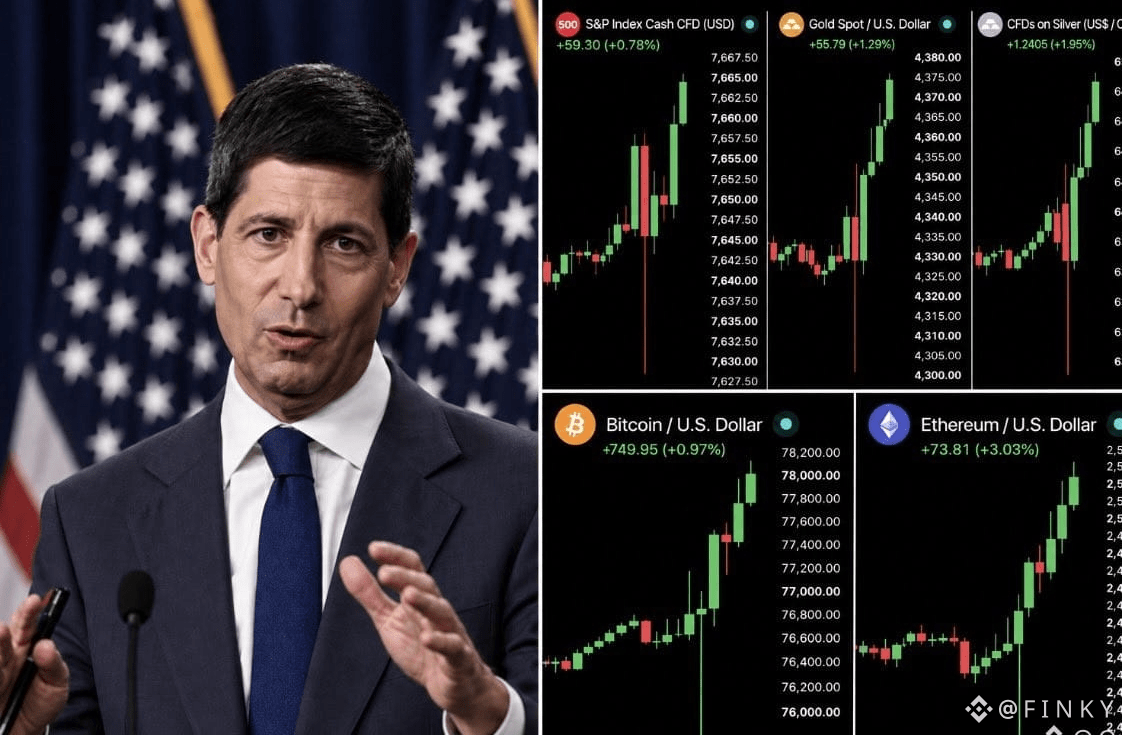
US inflation just made the Fed’s job harder.
CPI held at 3.4%, right on expectations, but monthly inflation jumped 0.3% vs 0.2% expected. Core CPI eased to its lowest level since March.
Markets now face a tricky mix: sticky headline inflation, but cooling core prices.
The Fed has a tough call ahead.
US inflation just made the Fed’s job harder.
CPI held at 3.4%, right on expectations, but monthly inflation jumped 0.3% vs 0.2% expected. Core CPI eased to its lowest level since March.
Markets now face a tricky mix: sticky headline inflation, but cooling core prices.
The Fed has a tough call ahead.
CPI held at 3.4%, right on expectations, but monthly inflation jumped 0.3% vs 0.2% expected. Core CPI eased to its lowest level since March.
Markets now face a tricky mix: sticky headline inflation, but cooling core prices.
The Fed has a tough call ahead.
1
122
·
--
Bullish
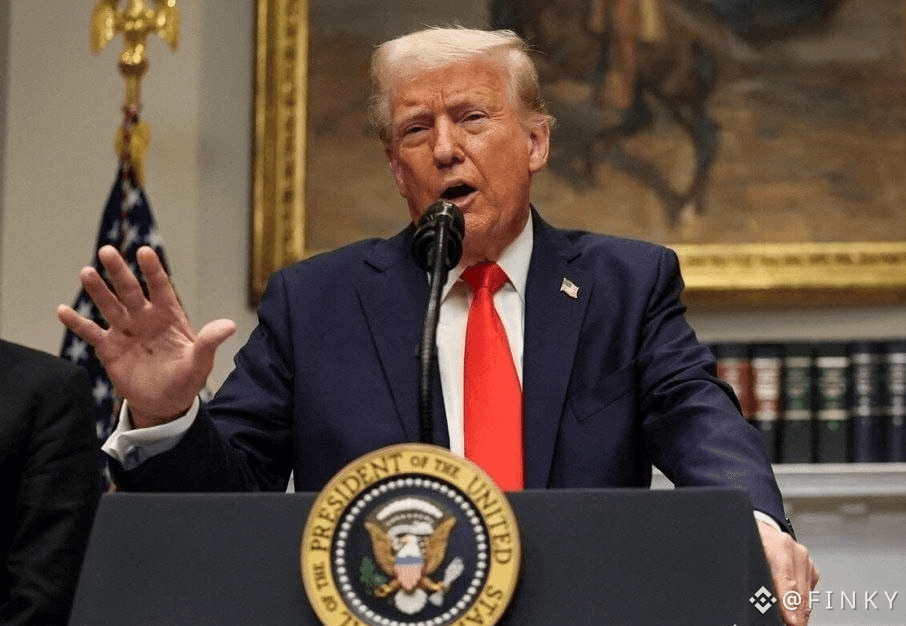
🚨 TRUMP: “THE US ECONOMY IS BLOWING IT AWAY”
Trump says the US stock market is now much higher than when he left office, calling the economy the “most successful” in US history.
Big claim. Bigger market story. 📈
#TRUMP
$TRUMP
{spot}(TRUMPUSDT)
🚨 TRUMP: “THE US ECONOMY IS BLOWING IT AWAY”
Trump says the US stock market is now much higher than when he left office, calling the economy the “most successful” in US history.
Big claim. Bigger market story. 📈
#TRUMP
$TRUMP
Trump says the US stock market is now much higher than when he left office, calling the economy the “most successful” in US history.
Big claim. Bigger market story. 📈
#TRUMP
$TRUMP
1
202
·
--
Bullish
🚨$ZEC — A Clean Setup Is Taking Shape
EP: 1,143.54
TP: 1,148
TP: 1,153
SL: 1,137
Let's go and Trade now $ZEC 🤑🤑🤑🤑🤑🤑
{spot}(ZECUSDT)
$牛来
{spot}(牛来USDT)
🚨$ZEC — A Clean Setup Is Taking Shape
EP: 1,143.54
TP: 1,148
TP: 1,153
SL: 1,137
Let's go and Trade now $ZEC 🤑🤑🤑🤑🤑🤑
$牛来
EP: 1,143.54
TP: 1,148
TP: 1,153
SL: 1,137
Let's go and Trade now $ZEC 🤑🤑🤑🤑🤑🤑
$牛来
LONG
32%
SHORT
16%
$牛来
31%
$ZEC
21%
19 votes • Voting closed
1
2
748
·
--
Bullish
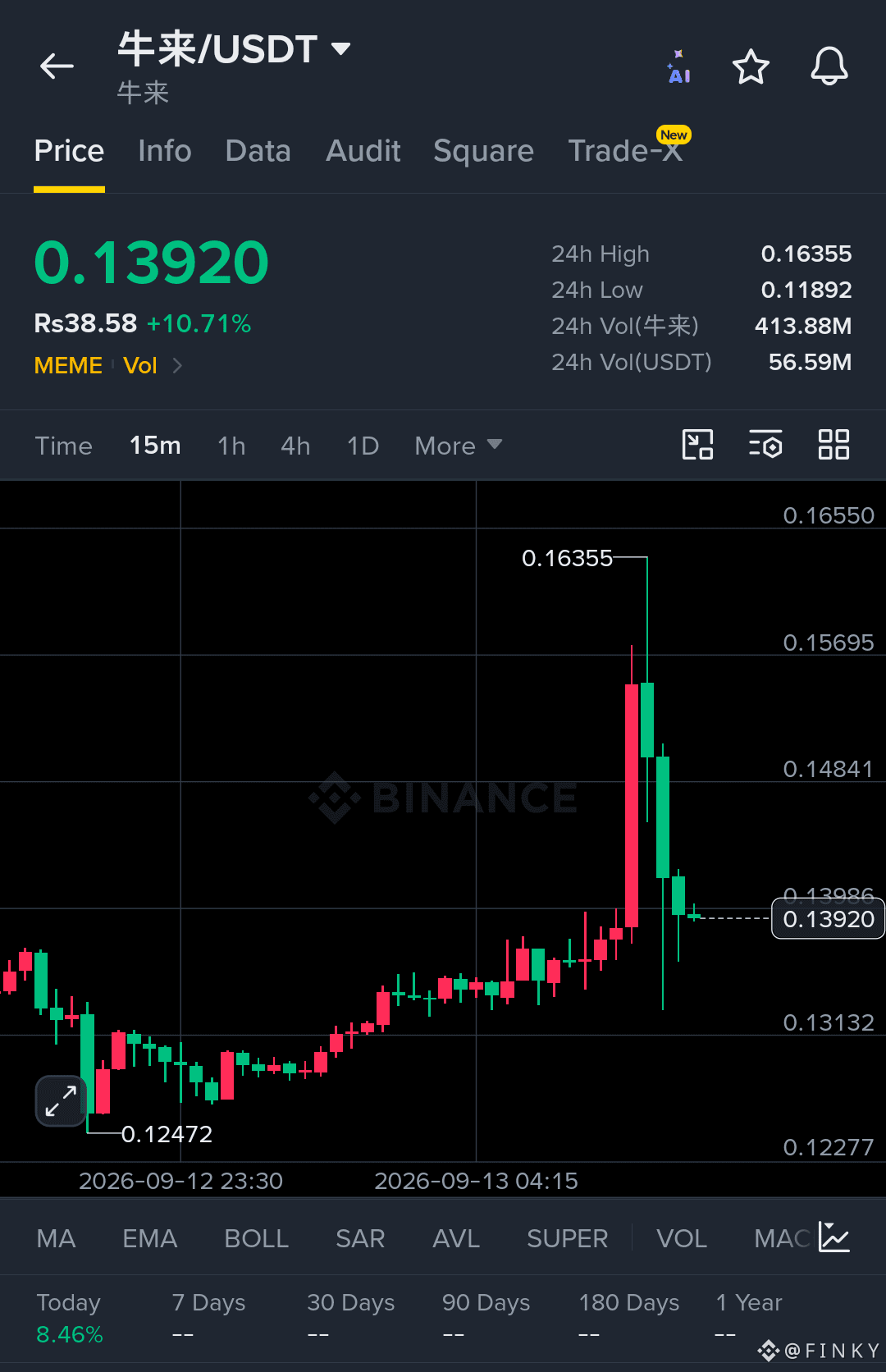
$牛来/USDT — MOMENTUM UPDATE
Price: 0.13920
24H Change: +10.71%
24H High: 0.16355
24H Low: 0.11892
24H Volume:
牛来: 413.88M
USDT: 56.59M
15M Chart Levels:
High: 0.16355
Current: 0.13920
Support Area: 0.13132
Previous Low: 0.12472
The move is still catching attention as $牛来 holds around 0.13920 after a sharp push toward 0.16355. Volume is strong, and the chart is showing plenty of action.
Stay focused, manage your risk, and watch the key levels carefully.
Let's go and Trade now $牛来
{spot}(牛来USDT)
#SECReceivesGrayscaleLitecoinTrustETFFiling #US10YearTreasuryYieldNears5% #ClarityActFacesProceduralVoteSept15 #TokenizedStockHoldersUp619.1% #RevolutConfirmsFakeGovEmailDataBreach
$牛来 /USDT — MOMENTUM UPDATE
Price: 0.13920
24H Change: +10.71%
24H High: 0.16355
24H Low: 0.11892
24H Volume:
牛来: 413.88M
USDT: 56.59M
15M Chart Levels:
High: 0.16355
Current: 0.13920
Support Area: 0.13132
Previous Low: 0.12472
The move is still catching attention as $牛来 holds around 0.13920 after a sharp push toward 0.16355. Volume is strong, and the chart is showing plenty of action.
Stay focused, manage your risk, and watch the key levels carefully.
Let's go and Trade now $牛来
#SECReceivesGrayscaleLitecoinTrustETFFiling #US10YearTreasuryYieldNears5% #ClarityActFacesProceduralVoteSept15 #TokenizedStockHoldersUp619.1% #RevolutConfirmsFakeGovEmailDataBreach
Price: 0.13920
24H Change: +10.71%
24H High: 0.16355
24H Low: 0.11892
24H Volume:
牛来: 413.88M
USDT: 56.59M
15M Chart Levels:
High: 0.16355
Current: 0.13920
Support Area: 0.13132
Previous Low: 0.12472
The move is still catching attention as $牛来 holds around 0.13920 after a sharp push toward 0.16355. Volume is strong, and the chart is showing plenty of action.
Stay focused, manage your risk, and watch the key levels carefully.
Let's go and Trade now $牛来
#SECReceivesGrayscaleLitecoinTrustETFFiling #US10YearTreasuryYieldNears5% #ClarityActFacesProceduralVoteSept15 #TokenizedStockHoldersUp619.1% #RevolutConfirmsFakeGovEmailDataBreach
1
1
534
·
--
Bullish
Happy Gainer Day
What a move across the market today. The gainers board is looking seriously strong, with some tokens putting up eye-catching numbers.
$LSK — 0.5519
24H Change: +228.51%
PKR: Rs 152.98
$POWR — 0.0831
24H Change: +54.46%
PKR: Rs 23.03
$STEEM — 0.06568
24H Change: +44.26%
PKR: Rs 18.21
$REZ — 0.004222
24H Change: +29.35%
PKR: Rs 1.17
$牛来 — 0.15872
24H Change: +26.53%
PKR: Rs 44
$LSK is clearly stealing the spotlight with an impressive +228.51% move, while $POWR, $STEEM, $REZ and $牛来 are also showing strong momentum.
The market is moving fast, and days like this always remind us why keeping an eye on the gainers matters. Stay alert, manage risk, and never chase a move blindly.
Happy Gainer Day. Let's go and Trade now
{spot}(牛来USDT)
{spot}(POWRUSDT)
#ClarityActFacesProceduralVoteSept15 #US10YearTreasuryYieldNears5% #TokenizedStockHoldersUp619.1% #USBankCompletesCrossBorderPaymentPilotOnStellar #EtherRalliesAsBearishBetsLiquidate
Happy Gainer Day
What a move across the market today. The gainers board is looking seriously strong, with some tokens putting up eye-catching numbers.
$LSK — 0.5519
24H Change: +228.51%
PKR: Rs 152.98
$POWR — 0.0831
24H Change: +54.46%
PKR: Rs 23.03
$STEEM — 0.06568
24H Change: +44.26%
PKR: Rs 18.21
$REZ — 0.004222
24H Change: +29.35%
PKR: Rs 1.17
$牛来 — 0.15872
24H Change: +26.53%
PKR: Rs 44
$LSK is clearly stealing the spotlight with an impressive +228.51% move, while $POWR , $STEEM, $REZ and $牛来 are also showing strong momentum.
The market is moving fast, and days like this always remind us why keeping an eye on the gainers matters. Stay alert, manage risk, and never chase a move blindly.
Happy Gainer Day. Let's go and Trade now
#ClarityActFacesProceduralVoteSept15 #US10YearTreasuryYieldNears5% #TokenizedStockHoldersUp619.1% #USBankCompletesCrossBorderPaymentPilotOnStellar #EtherRalliesAsBearishBetsLiquidate
What a move across the market today. The gainers board is looking seriously strong, with some tokens putting up eye-catching numbers.
$LSK — 0.5519
24H Change: +228.51%
PKR: Rs 152.98
$POWR — 0.0831
24H Change: +54.46%
PKR: Rs 23.03
$STEEM — 0.06568
24H Change: +44.26%
PKR: Rs 18.21
$REZ — 0.004222
24H Change: +29.35%
PKR: Rs 1.17
$牛来 — 0.15872
24H Change: +26.53%
PKR: Rs 44
$LSK is clearly stealing the spotlight with an impressive +228.51% move, while $POWR , $STEEM, $REZ and $牛来 are also showing strong momentum.
The market is moving fast, and days like this always remind us why keeping an eye on the gainers matters. Stay alert, manage risk, and never chase a move blindly.
Happy Gainer Day. Let's go and Trade now
#ClarityActFacesProceduralVoteSept15 #US10YearTreasuryYieldNears5% #TokenizedStockHoldersUp619.1% #USBankCompletesCrossBorderPaymentPilotOnStellar #EtherRalliesAsBearishBetsLiquidate
$POWR
15%
$牛来
54%
$LSK
19%
$REZ
12%
26 votes • Voting closed
2
894
·
--
Bullish
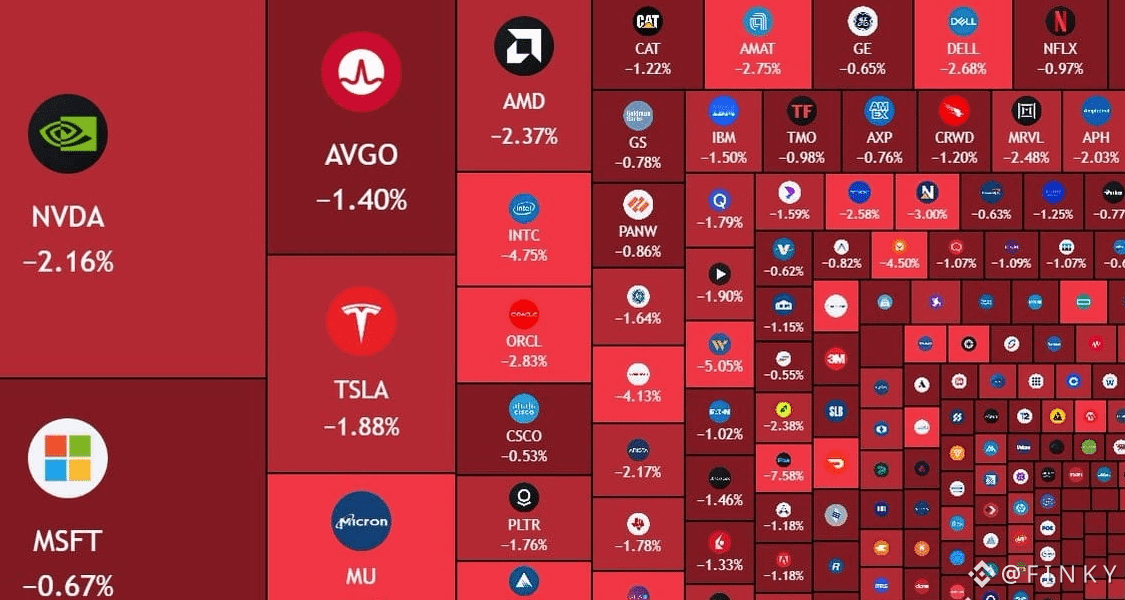
Market bloodbath at the open.
$520B wiped from US equities in minutes. That kind of macro shock can hit crypto fast, triggering liquidations and extreme correlation.
Don’t chase the panic. Let the dust settle, watch the structure, and wait for a clean setup.
When fear takes over, discipline becomes the edge.
Market bloodbath at the open.
$520B wiped from US equities in minutes. That kind of macro shock can hit crypto fast, triggering liquidations and extreme correlation.
Don’t chase the panic. Let the dust settle, watch the structure, and wait for a clean setup.
When fear takes over, discipline becomes the edge.
$520B wiped from US equities in minutes. That kind of macro shock can hit crypto fast, triggering liquidations and extreme correlation.
Don’t chase the panic. Let the dust settle, watch the structure, and wait for a clean setup.
When fear takes over, discipline becomes the edge.
2
105
·
--
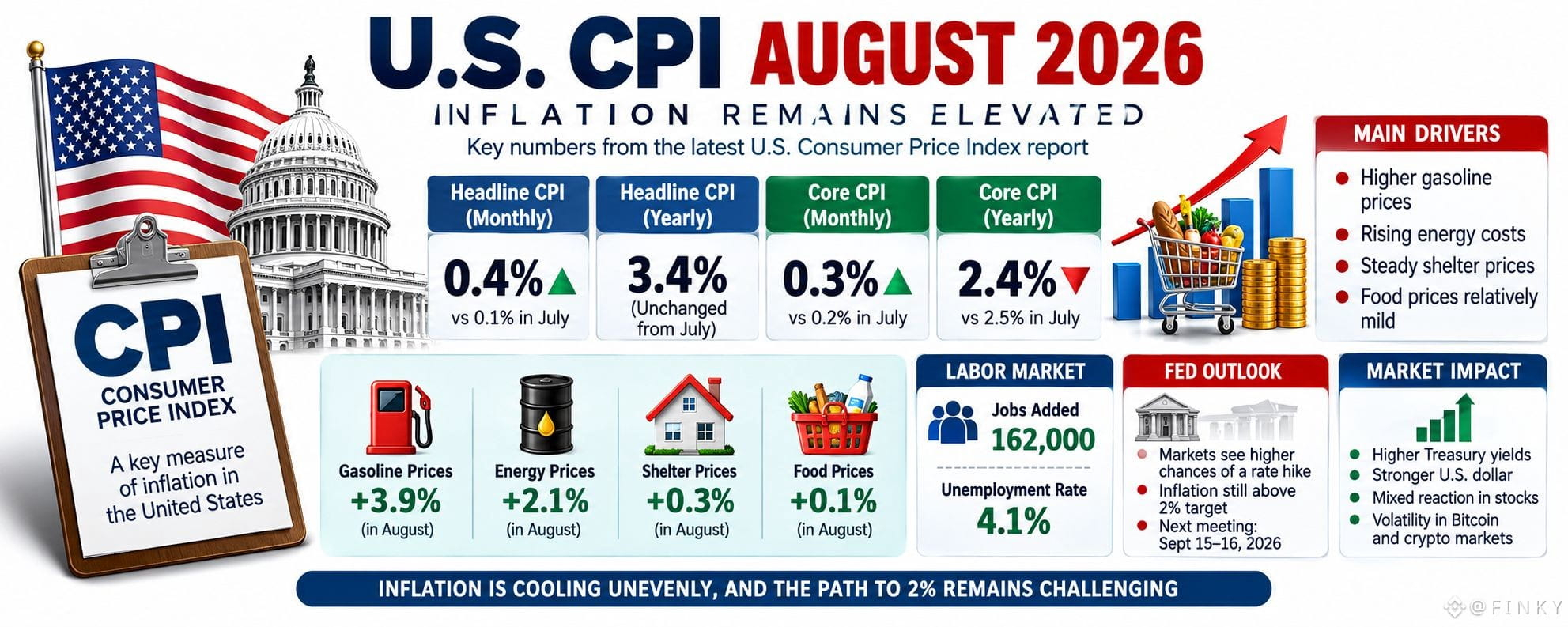
🔥 U.S. CPI August 2026: Inflation Is Still Running Hot
The latest U.S. inflation numbers are sending a clear message — the fight against inflation is not over yet.
Headline CPI:
• Monthly: +0.4% vs +0.1% in July
• Yearly: 3.4%, unchanged from July
Core CPI:
• Monthly: +0.3% vs +0.2% in July
• Yearly: 2.4% vs 2.5% in July
The biggest pressure is coming from the energy side.
Gasoline prices jumped +3.9% in August, while energy prices rose +2.1%. Shelter prices increased +0.3%, and food prices moved up a softer +0.1%.
The labor market is still holding up, with 162,000 jobs added and unemployment at 4.1%.
Now comes the interesting part.
Inflation is still above the Fed’s 2% target, which could keep pressure on policymakers. Markets are now watching the Fed closely ahead of the September 15–16, 2026 meeting, with higher Treasury yields and a stronger U.S. dollar among the possible reactions.
Stocks could see a mixed response, while Bitcoin and crypto markets may remain sensitive to rate expectations and volatility.
The big picture?
Inflation is cooling, but not smoothly.
The road back to 2% is proving harder than many hoped.
This CPI report could become an important piece of the puzzle for the next move in markets.
#CPIWatch
$ZEC
{spot}(ZECUSDT)
$LAB
{future}(LABUSDT)
$BOOT.US
{stock_us}(BOOT.US)
#
🔥 U.S. CPI August 2026: Inflation Is Still Running Hot
The latest U.S. inflation numbers are sending a clear message — the fight against inflation is not over yet.
Headline CPI:
• Monthly: +0.4% vs +0.1% in July
• Yearly: 3.4%, unchanged from July
Core CPI:
• Monthly: +0.3% vs +0.2% in July
• Yearly: 2.4% vs 2.5% in July
The biggest pressure is coming from the energy side.
Gasoline prices jumped +3.9% in August, while energy prices rose +2.1%. Shelter prices increased +0.3%, and food prices moved up a softer +0.1%.
The labor market is still holding up, with 162,000 jobs added and unemployment at 4.1%.
Now comes the interesting part.
Inflation is still above the Fed’s 2% target, which could keep pressure on policymakers. Markets are now watching the Fed closely ahead of the September 15–16, 2026 meeting, with higher Treasury yields and a stronger U.S. dollar among the possible reactions.
Stocks could see a mixed response, while Bitcoin and crypto markets may remain sensitive to rate expectations and volatility.
The big picture?
Inflation is cooling, but not smoothly.
The road back to 2% is proving harder than many hoped.
This CPI report could become an important piece of the puzzle for the next move in markets.
#CPIWatch
$ZEC
$LAB
$BOOT.US
#
The latest U.S. inflation numbers are sending a clear message — the fight against inflation is not over yet.
Headline CPI:
• Monthly: +0.4% vs +0.1% in July
• Yearly: 3.4%, unchanged from July
Core CPI:
• Monthly: +0.3% vs +0.2% in July
• Yearly: 2.4% vs 2.5% in July
The biggest pressure is coming from the energy side.
Gasoline prices jumped +3.9% in August, while energy prices rose +2.1%. Shelter prices increased +0.3%, and food prices moved up a softer +0.1%.
The labor market is still holding up, with 162,000 jobs added and unemployment at 4.1%.
Now comes the interesting part.
Inflation is still above the Fed’s 2% target, which could keep pressure on policymakers. Markets are now watching the Fed closely ahead of the September 15–16, 2026 meeting, with higher Treasury yields and a stronger U.S. dollar among the possible reactions.
Stocks could see a mixed response, while Bitcoin and crypto markets may remain sensitive to rate expectations and volatility.
The big picture?
Inflation is cooling, but not smoothly.
The road back to 2% is proving harder than many hoped.
This CPI report could become an important piece of the puzzle for the next move in markets.
#CPIWatch
$ZEC
$LAB
$BOOT.US
#
1
335
·
--
Bullish
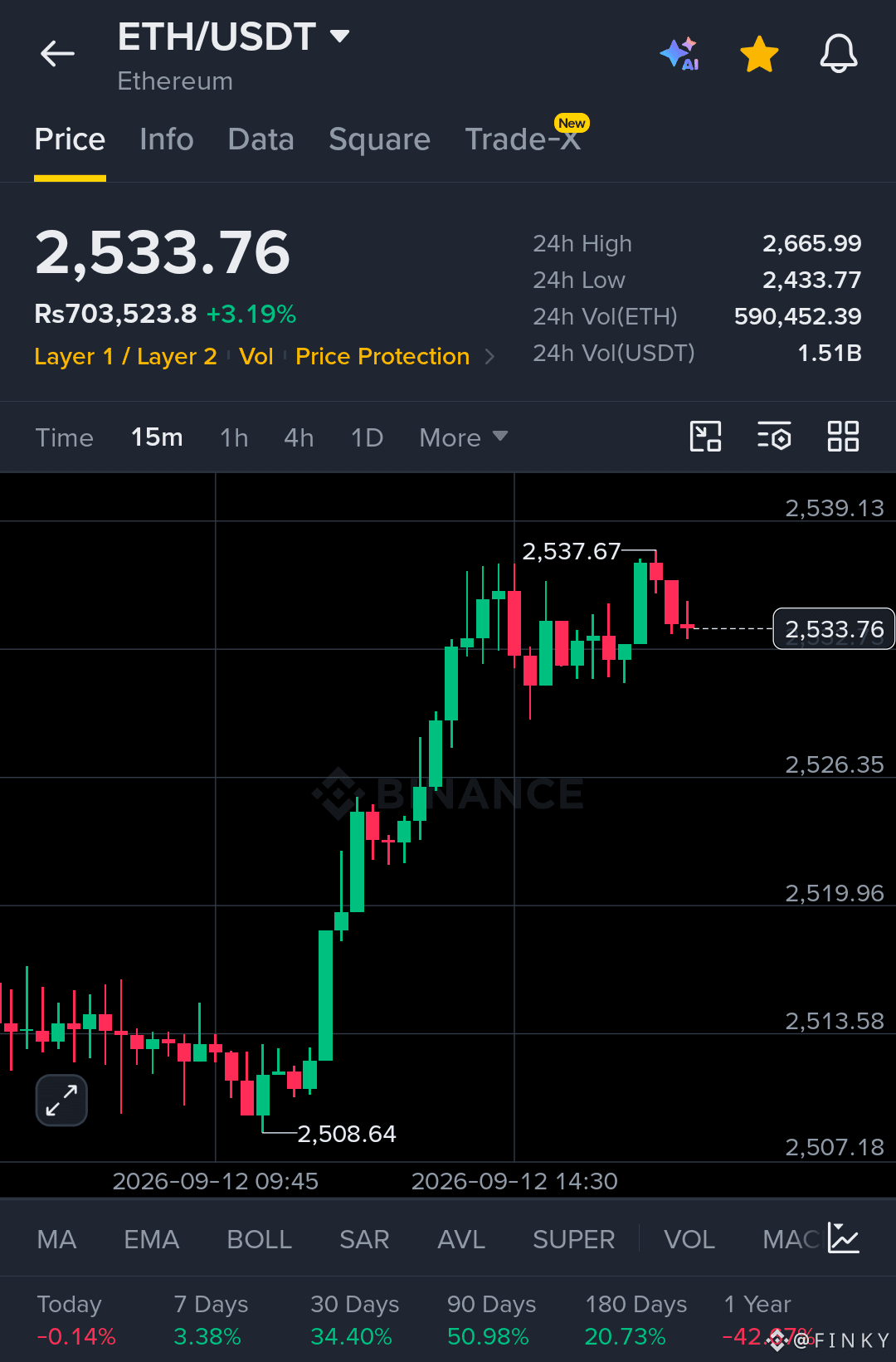
$ETH /USDT is heating up, and the chart is starting to look interesting.
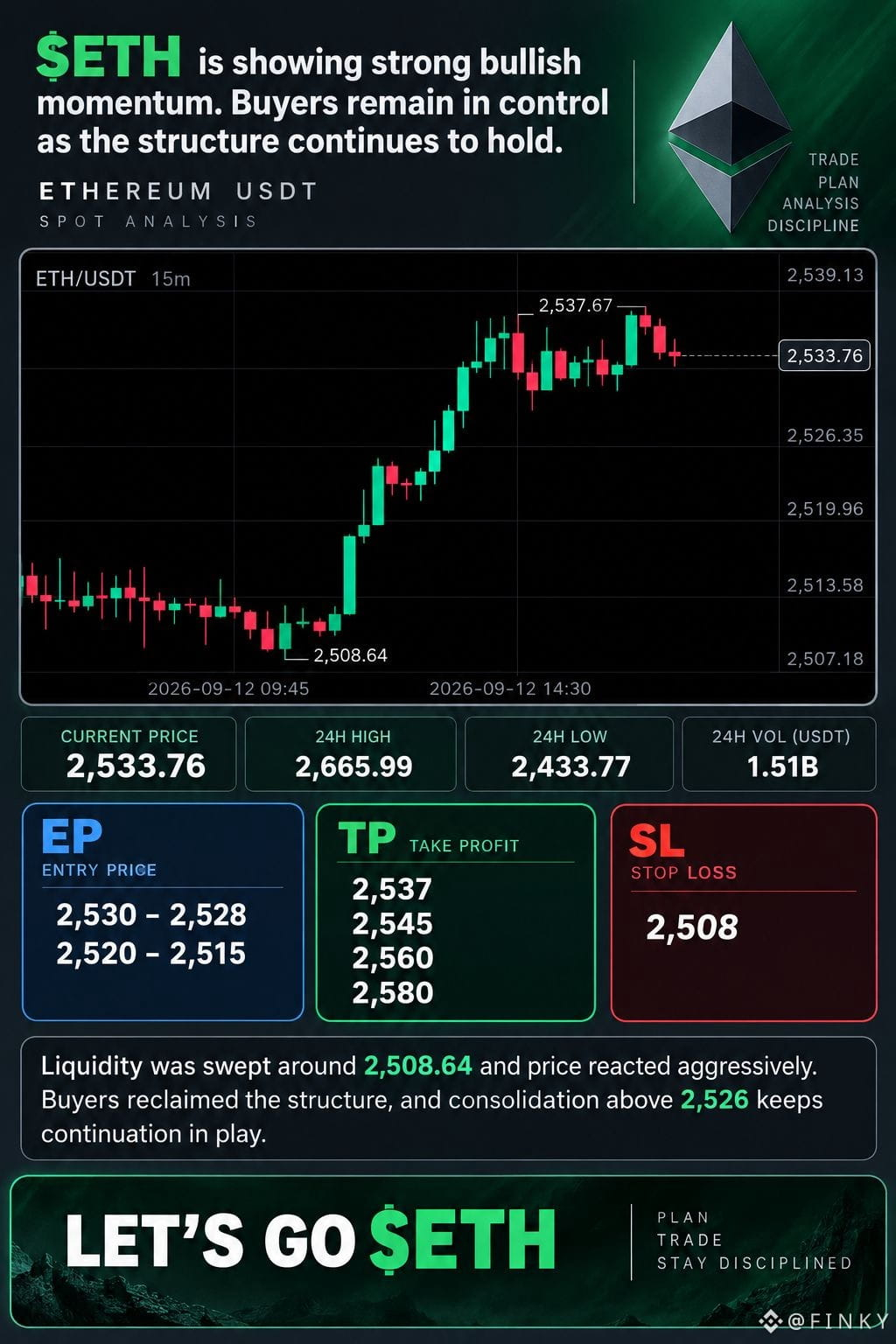
Ethereum is currently trading around $2,533.76, up 3.19% on the day. The 15-minute chart shows a strong move from the $2,508.64 area, followed by a sharp recovery and a push toward $2,537.67.
After that strong move, ETH is now holding near $2,533, with price consolidating close to the recent high. This kind of tight consolidation can be important because the next strong move may come once price breaks out of this short-term range.
Key levels from the chart:
Current Price: $2,533.76
Recent High: $2,537.67
24H High: $2,665.99
24H Low: $2,433.77
Recent Swing Low: $2,508.64
Nearby Support: $2,526.35
Lower Support: $2,519.96
24H Volume: 590,452.39 ETH
24H USDT Volume: $1.51B
The bigger picture is also catching attention. ETH is showing +3.38% over 7 days, +34.40% over 30 days, and +50.98% over 90 days.
Right now, the key area to watch is $2,537–$2,539. A clean move above this zone could bring fresh momentum, while a loss of $2,526 would make the short-term structure weaker.
ETH has already made the move from $2,508 to above $2,530. Now the question is whether buyers can turn this consolidation into the next breakout.
Stay patient, watch the levels, and let price confirm the move.
{spot}(ETHUSDT)
#RevolutConfirmsFakeGovEmailDataBreach #USBankCompletesCrossBorderPaymentPilotOnStellar #EtherRalliesAsBearishBetsLiquidate #OpticalCommsStocksRallyOver3% #USInflationHoldsAt3.4%InAugust
$ETH /USDT is heating up, and the chart is starting to look interesting.
Ethereum is currently trading around $2,533.76, up 3.19% on the day. The 15-minute chart shows a strong move from the $2,508.64 area, followed by a sharp recovery and a push toward $2,537.67.
After that strong move, ETH is now holding near $2,533, with price consolidating close to the recent high. This kind of tight consolidation can be important because the next strong move may come once price breaks out of this short-term range.
Key levels from the chart:
Current Price: $2,533.76
Recent High: $2,537.67
24H High: $2,665.99
24H Low: $2,433.77
Recent Swing Low: $2,508.64
Nearby Support: $2,526.35
Lower Support: $2,519.96
24H Volume: 590,452.39 ETH
24H USDT Volume: $1.51B
The bigger picture is also catching attention. ETH is showing +3.38% over 7 days, +34.40% over 30 days, and +50.98% over 90 days.
Right now, the key area to watch is $2,537–$2,539. A clean move above this zone could bring fresh momentum, while a loss of $2,526 would make the short-term structure weaker.
ETH has already made the move from $2,508 to above $2,530. Now the question is whether buyers can turn this consolidation into the next breakout.
Stay patient, watch the levels, and let price confirm the move.
#RevolutConfirmsFakeGovEmailDataBreach #USBankCompletesCrossBorderPaymentPilotOnStellar #EtherRalliesAsBearishBetsLiquidate #OpticalCommsStocksRallyOver3% #USInflationHoldsAt3.4%InAugust
Ethereum is currently trading around $2,533.76, up 3.19% on the day. The 15-minute chart shows a strong move from the $2,508.64 area, followed by a sharp recovery and a push toward $2,537.67.
After that strong move, ETH is now holding near $2,533, with price consolidating close to the recent high. This kind of tight consolidation can be important because the next strong move may come once price breaks out of this short-term range.
Key levels from the chart:
Current Price: $2,533.76
Recent High: $2,537.67
24H High: $2,665.99
24H Low: $2,433.77
Recent Swing Low: $2,508.64
Nearby Support: $2,526.35
Lower Support: $2,519.96
24H Volume: 590,452.39 ETH
24H USDT Volume: $1.51B
The bigger picture is also catching attention. ETH is showing +3.38% over 7 days, +34.40% over 30 days, and +50.98% over 90 days.
Right now, the key area to watch is $2,537–$2,539. A clean move above this zone could bring fresh momentum, while a loss of $2,526 would make the short-term structure weaker.
ETH has already made the move from $2,508 to above $2,530. Now the question is whether buyers can turn this consolidation into the next breakout.
Stay patient, watch the levels, and let price confirm the move.
#RevolutConfirmsFakeGovEmailDataBreach #USBankCompletesCrossBorderPaymentPilotOnStellar #EtherRalliesAsBearishBetsLiquidate #OpticalCommsStocksRallyOver3% #USInflationHoldsAt3.4%InAugust
2
102
·
--
Bullish
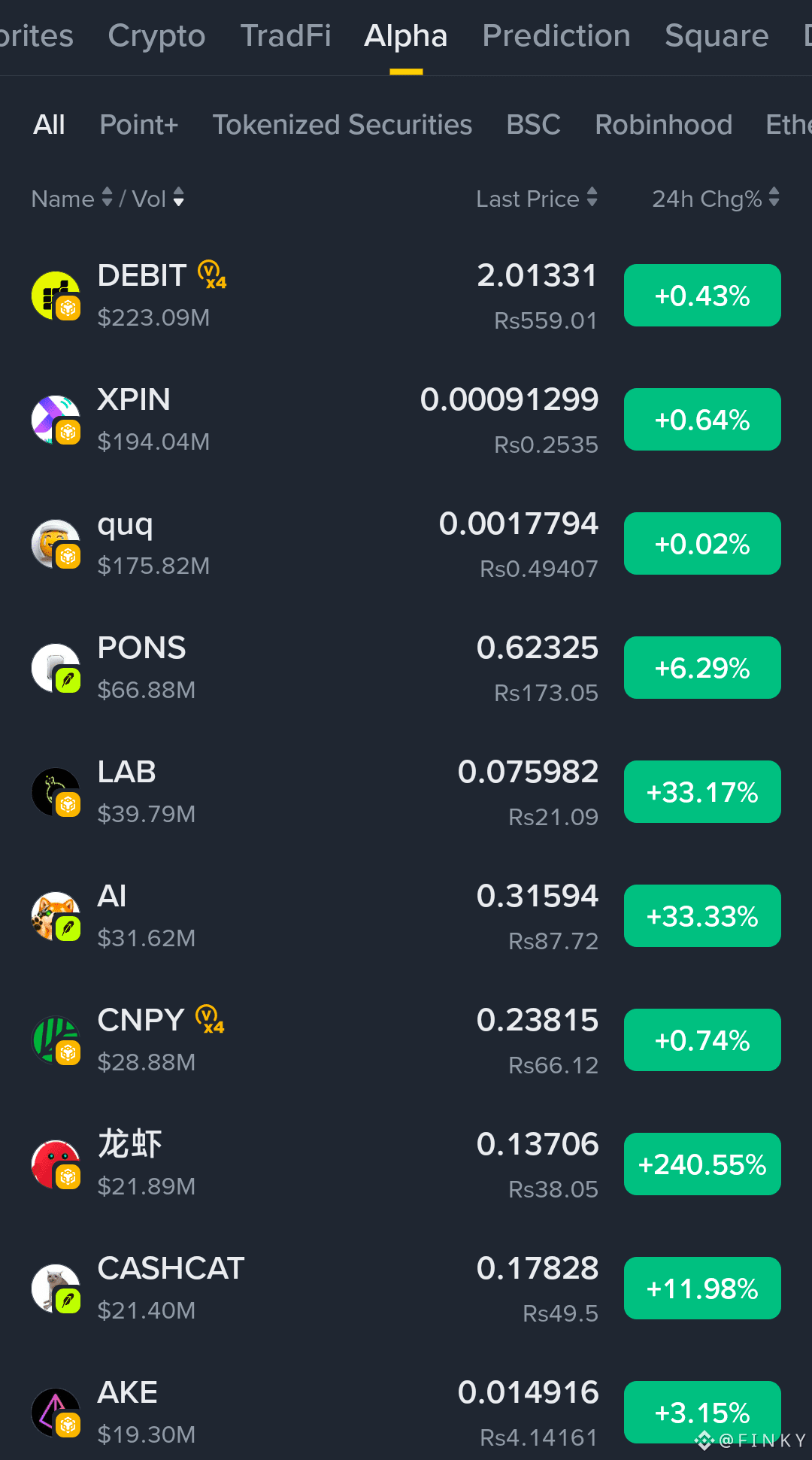
🚨 ALPHA MARKET IS HEATING UP!
The latest Alpha board is showing some serious momentum, with several tokens posting strong 24H gains. Here’s the full snapshot:
LAB — 0.075982 | +33.17% | Vol: $39.79M
AI — 0.31594 | +33.33% | Vol: $31.62M
$龙虾 — 0.13706 | +240.55% | Vol: $21.89M
CASHCAT — 0.17828 | +11.98% | Vol: $21.40M
PONS — 0.62325 | +6.29% | Vol: $66.88M
$AKE — 0.014916 | +3.15% | Vol: $19.30M
$CNПY — 0.23815 | +0.74% | Vol: $28.88M
XPIN — 0.00091299 | +0.64% | Vol: $194.04M
$DEBIT — 2.01331 | +0.43% | Vol: $223.09M
quq — 0.0017794 | +0.02% | Vol: $175.82M
The biggest eye-catcher is 龙虾 with a massive +240.55% move, while AI and LAB are both above +33%. At the same time, DEBIT, XPIN, and quq are showing some of the highest trading volumes on the board.
Alpha is moving fast. Keep your eyes on volume, momentum, and sudden breakouts.
Do your own research and manage risk before trading.
{alpha}(560xeccbb861c0dda7efd964010085488b69317e4444)
{alpha}(560x2c3a8ee94ddd97244a93bc48298f97d2c412f7db)
{alpha}(560x66661c7229901f568f16bd1551b3ba826f83ce49)
#RevolutConfirmsFakeGovEmailDataBreach #USBankCompletesCrossBorderPaymentPilotOnStellar #EtherRalliesAsBearishBetsLiquidate #OpticalCommsStocksRallyOver3% #USInflationHoldsAt3.4%InAugust
🚨 ALPHA MARKET IS HEATING UP!
The latest Alpha board is showing some serious momentum, with several tokens posting strong 24H gains. Here’s the full snapshot:
LAB — 0.075982 | +33.17% | Vol: $39.79M
AI — 0.31594 | +33.33% | Vol: $31.62M
$龙虾 — 0.13706 | +240.55% | Vol: $21.89M
CASHCAT — 0.17828 | +11.98% | Vol: $21.40M
PONS — 0.62325 | +6.29% | Vol: $66.88M
$AKE — 0.014916 | +3.15% | Vol: $19.30M
$CNПY — 0.23815 | +0.74% | Vol: $28.88M
XPIN — 0.00091299 | +0.64% | Vol: $194.04M
$DEBIT — 2.01331 | +0.43% | Vol: $223.09M
quq — 0.0017794 | +0.02% | Vol: $175.82M
The biggest eye-catcher is 龙虾 with a massive +240.55% move, while AI and LAB are both above +33%. At the same time, DEBIT, XPIN, and quq are showing some of the highest trading volumes on the board.
Alpha is moving fast. Keep your eyes on volume, momentum, and sudden breakouts.
Do your own research and manage risk before trading.
#RevolutConfirmsFakeGovEmailDataBreach #USBankCompletesCrossBorderPaymentPilotOnStellar #EtherRalliesAsBearishBetsLiquidate #OpticalCommsStocksRallyOver3% #USInflationHoldsAt3.4%InAugust
The latest Alpha board is showing some serious momentum, with several tokens posting strong 24H gains. Here’s the full snapshot:
LAB — 0.075982 | +33.17% | Vol: $39.79M
AI — 0.31594 | +33.33% | Vol: $31.62M
$龙虾 — 0.13706 | +240.55% | Vol: $21.89M
CASHCAT — 0.17828 | +11.98% | Vol: $21.40M
PONS — 0.62325 | +6.29% | Vol: $66.88M
$AKE — 0.014916 | +3.15% | Vol: $19.30M
$CNПY — 0.23815 | +0.74% | Vol: $28.88M
XPIN — 0.00091299 | +0.64% | Vol: $194.04M
$DEBIT — 2.01331 | +0.43% | Vol: $223.09M
quq — 0.0017794 | +0.02% | Vol: $175.82M
The biggest eye-catcher is 龙虾 with a massive +240.55% move, while AI and LAB are both above +33%. At the same time, DEBIT, XPIN, and quq are showing some of the highest trading volumes on the board.
Alpha is moving fast. Keep your eyes on volume, momentum, and sudden breakouts.
Do your own research and manage risk before trading.
#RevolutConfirmsFakeGovEmailDataBreach #USBankCompletesCrossBorderPaymentPilotOnStellar #EtherRalliesAsBearishBetsLiquidate #OpticalCommsStocksRallyOver3% #USInflationHoldsAt3.4%InAugust
2
904
Log in to explore more content
Join global crypto users on Binance Square
⚡️ Get latest and useful information about crypto.
💬 Trusted by the world’s largest crypto exchange.
👍 Discover real insights from verified creators.
Email / Phone number
Trending Topics
BitcoinReboundsTo$79K
13,247 views
126 Discussing
🚨 $BTC is pushing higher.
Bitcoin is trading around $78,804, up roughly 1.9%, after reclaiming the $78K area. The next level to watch is the intraday high near $78,905.
A clean break above that level could open the way toward $79K–$80K. If BTC gets rejected, support sits around $78,300, then $77,975.
Bulls have momentum, but BTC needs to hold above $78K.
#Bitcoin #BTC #CryptoTrading #CryptoMarket #CryptoAnalysis
PulseON
·13 Likes
·12.9k views
SouthKoreaCryptoTaxDelayPetitionTops50000
2 views
9 Discussing
SolanaTransactionV1GoesLiveOnMainnet
16 views
5 Discussing