
zwizard
313 Posts

zwizard
Report
Block User
Open Trade

BTC Holder
Frequent Trader
1.8 Years
14 Following
179 Followers
536 Liked
Posts
Portfolio
All
Quotes
·
--
Technical and sentimental analysis of Bitcoin and the crypto market in general 👇
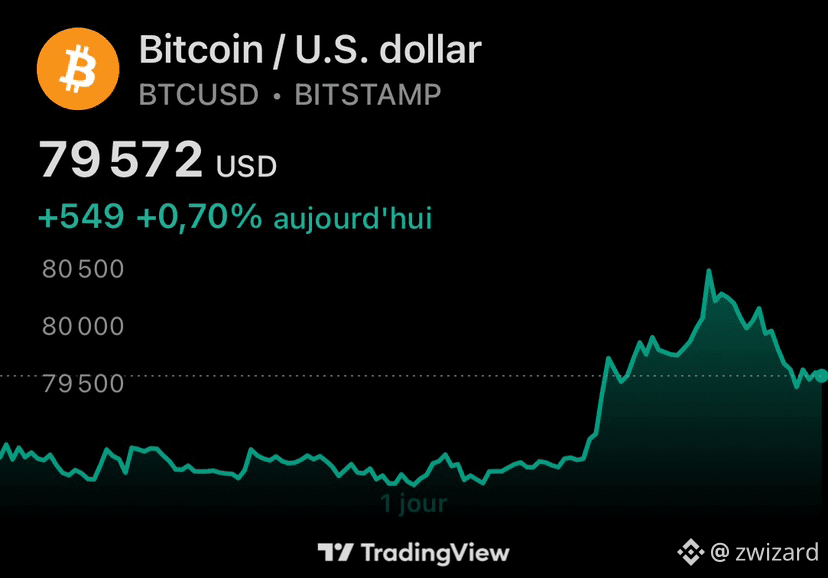
The cryptocurrency market is showing a clearly more positive dynamic at the end of August 2026.
Bitcoin is trading around $80,000, up 2.17% over 24 hours, confirming the breakthrough of a major psychological level after its rebound from $63,000–64,000.
This progress is in particular supported by institutional flows: Bitcoin and Ethereum ETFs recorded about $2.6 billion in inflows over one week, including $1.9 billion for Bitcoin.
The macroeconomic backdrop also helps support risky assets, as investors anticipate improved liquidity.
However, the Jackson Hole meeting, from August 27 to 29, is a short-term risk: a more restrictive speech from the Federal Reserve could trigger profit-taking.
The total market capitalization is around $2,618 billion, while Bitcoin dominance rises to 59.8%.
Ethereum is up 3.78% and Solana up 8.92%, signaling a renewed appetite for risk, but without a true broad-based altseason.
Market sentiment has risen from 31 to 71 in just a few days. This improvement is encouraging, but it also increases the risk of a correction.
For Bitcoin, the 78,000–80,000 $ zone is now essential.
Consolidation above would strengthen the breakout, while a return below 78,000 $ could indicate a false breakout.
Technical and sentimental analysis of Bitcoin and the crypto market in general 👇
The cryptocurrency market is showing a clearly more positive dynamic at the end of August 2026.
Bitcoin is trading around $80,000, up 2.17% over 24 hours, confirming the breakthrough of a major psychological level after its rebound from $63,000–64,000.
This progress is in particular supported by institutional flows: Bitcoin and Ethereum ETFs recorded about $2.6 billion in inflows over one week, including $1.9 billion for Bitcoin.
The macroeconomic backdrop also helps support risky assets, as investors anticipate improved liquidity.
However, the Jackson Hole meeting, from August 27 to 29, is a short-term risk: a more restrictive speech from the Federal Reserve could trigger profit-taking.
The total market capitalization is around $2,618 billion, while Bitcoin dominance rises to 59.8%.
Ethereum is up 3.78% and Solana up 8.92%, signaling a renewed appetite for risk, but without a true broad-based altseason.
Market sentiment has risen from 31 to 71 in just a few days. This improvement is encouraging, but it also increases the risk of a correction.
For Bitcoin, the 78,000–80,000 $ zone is now essential.
Consolidation above would strengthen the breakout, while a return below 78,000 $ could indicate a false breakout.
The cryptocurrency market is showing a clearly more positive dynamic at the end of August 2026.
Bitcoin is trading around $80,000, up 2.17% over 24 hours, confirming the breakthrough of a major psychological level after its rebound from $63,000–64,000.
This progress is in particular supported by institutional flows: Bitcoin and Ethereum ETFs recorded about $2.6 billion in inflows over one week, including $1.9 billion for Bitcoin.
The macroeconomic backdrop also helps support risky assets, as investors anticipate improved liquidity.
However, the Jackson Hole meeting, from August 27 to 29, is a short-term risk: a more restrictive speech from the Federal Reserve could trigger profit-taking.
The total market capitalization is around $2,618 billion, while Bitcoin dominance rises to 59.8%.
Ethereum is up 3.78% and Solana up 8.92%, signaling a renewed appetite for risk, but without a true broad-based altseason.
Market sentiment has risen from 31 to 71 in just a few days. This improvement is encouraging, but it also increases the risk of a correction.
For Bitcoin, the 78,000–80,000 $ zone is now essential.
Consolidation above would strengthen the breakout, while a return below 78,000 $ could indicate a false breakout.
1
·
--
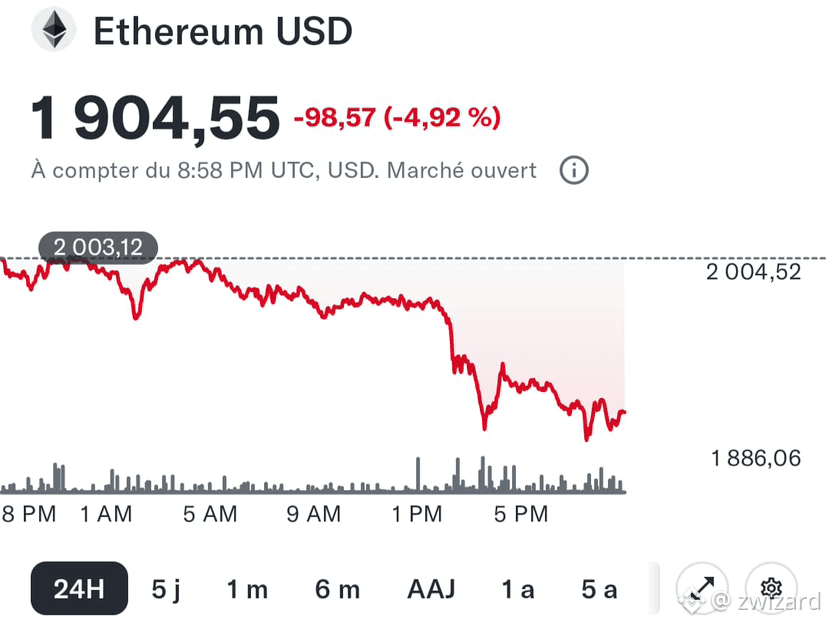
🤦♂️ Those who refused to sell Ethereum above 4,500$ last year, I hope you’re not gonna dump at 1,900$ inh 👀
🤦♂️ Those who refused to sell Ethereum above 4,500$ last year, I hope you’re not gonna dump at 1,900$ inh 👀
815
·
--
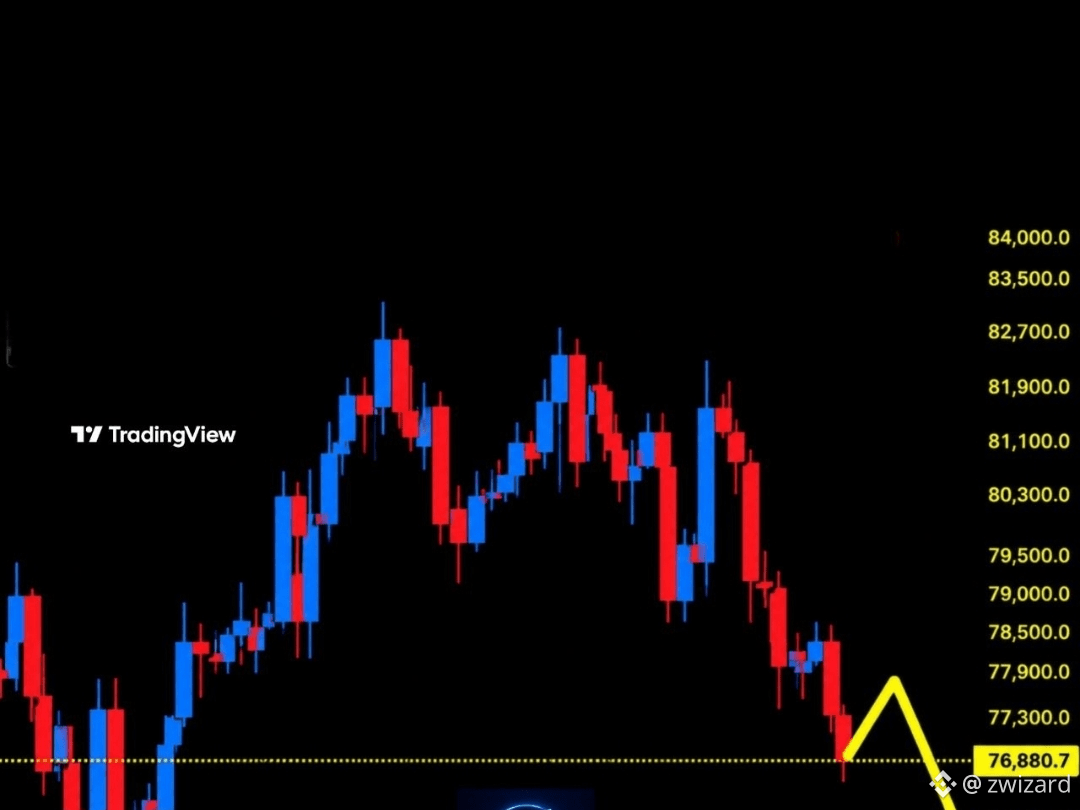
The "trap" of Bitcoin is being triggered. 📉
Stop dreaming of the moon for a second and look at the charts.
Everyone was celebrating the dip at 76 800 $ like it was a "buy the dip" opportunity. It wasn't. The selling pressure is suffocating right now, and the big players are toying with their prey.
We might see a tiny and pathetic "recovery" move in the next few hours, don't be fooled. It's a trap before the real floor collapses. We're bleeding towards $75,800, and most retail traders are going to get liquidated while they're busy hoping for a miracle.
➡️. Current reality: Bearish momentum dominates.
➡️. The move: Watch for a weak bounce, then the drop.
➡️. The target: $75,800.
Hang tight, or are you really looking at the data? Get out of your emotions before the market takes your money.
The "trap" of Bitcoin is being triggered. 📉
Stop dreaming of the moon for a second and look at the charts.
Everyone was celebrating the dip at 76 800 $ like it was a "buy the dip" opportunity. It wasn't. The selling pressure is suffocating right now, and the big players are toying with their prey.
We might see a tiny and pathetic "recovery" move in the next few hours, don't be fooled. It's a trap before the real floor collapses. We're bleeding towards $75,800, and most retail traders are going to get liquidated while they're busy hoping for a miracle.
➡️. Current reality: Bearish momentum dominates.
➡️. The move: Watch for a weak bounce, then the drop.
➡️. The target: $75,800.
Hang tight, or are you really looking at the data? Get out of your emotions before the market takes your money.
Stop dreaming of the moon for a second and look at the charts.
Everyone was celebrating the dip at 76 800 $ like it was a "buy the dip" opportunity. It wasn't. The selling pressure is suffocating right now, and the big players are toying with their prey.
We might see a tiny and pathetic "recovery" move in the next few hours, don't be fooled. It's a trap before the real floor collapses. We're bleeding towards $75,800, and most retail traders are going to get liquidated while they're busy hoping for a miracle.
➡️. Current reality: Bearish momentum dominates.
➡️. The move: Watch for a weak bounce, then the drop.
➡️. The target: $75,800.
Hang tight, or are you really looking at the data? Get out of your emotions before the market takes your money.
2
1
10k
·
--
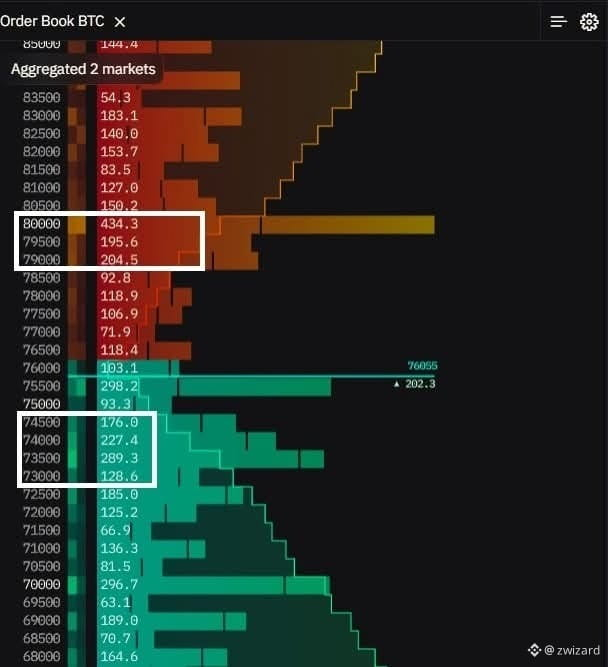
📊 Strong buy orders of $BTC are situated around the $73,000 to $74,000 zone.
Strong sell orders of $BTC are positioned around the $79,000 to $80,000 zone.
This could establish the Bitcoin range for a while.
#bitcoin $BTC
📊 Strong buy orders of $BTC are situated around the $73,000 to $74,000 zone.
Strong sell orders of $BTC are positioned around the $79,000 to $80,000 zone.
This could establish the Bitcoin range for a while.
#bitcoin $BTC
Strong sell orders of $BTC are positioned around the $79,000 to $80,000 zone.
This could establish the Bitcoin range for a while.
#bitcoin $BTC
82
·
--
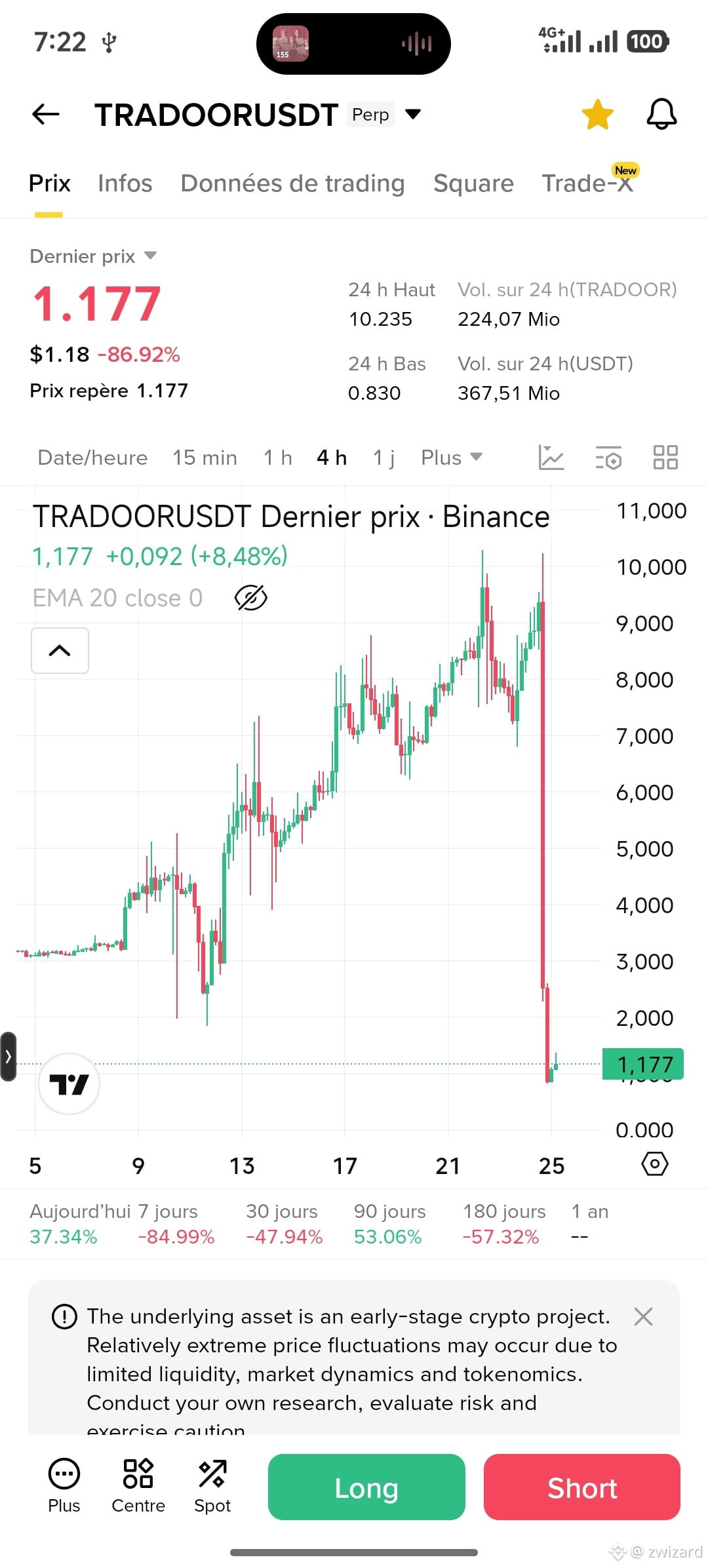
If you got wrecked by the TRADOOR crash from $10 to $3 after entering at $5, you're just too greedy and borderline masochistic (you enjoy the pain for the thrill 😏).
We're in a market where a 50% gain is already massive ✍🏾
$TRADOOR
If you got wrecked by the TRADOOR crash from $10 to $3 after entering at $5, you're just too greedy and borderline masochistic (you enjoy the pain for the thrill 😏).
We're in a market where a 50% gain is already massive ✍🏾
$TRADOOR
We're in a market where a 50% gain is already massive ✍🏾
$TRADOOR
350
·
--
Here's a playbook just dropped by cybersecurity researchers 👇 :
🎭 You get added to a WhatsApp or Telegram "investment" group
🎭 90 members chat, celebrate gains, and post screenshots of profits
🎭 An "expert" moderator answers all questions with confidence
🎭 A few members DM you, friendly and supportive, like real pals
🎭 After weeks of manipulation, they pitch you an app: 500 to 700% returns, guaranteed
🎭 You deposit cash. It vanishes. So does the group
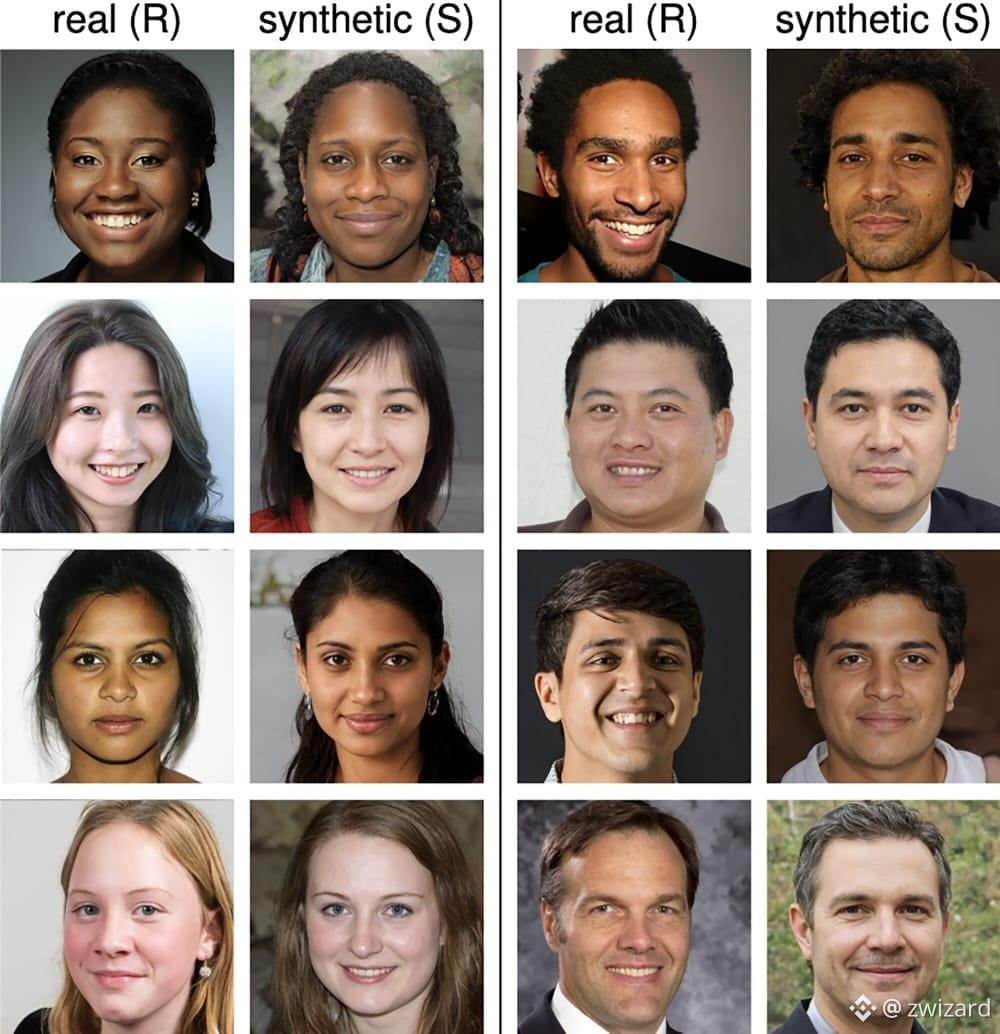
Every face is AI-generated. Every profit is fake. Every "member" is a bot. Even the news articles they send you are fabricated.
A red flag that nobody talks about: in a legit investment group, there's always some disagreement. In this one? No one ever contradicts.
If you're in a group where everyone is a bit too hyped, you might be the only real person in the room.
🔁 Share this. It takes 3 seconds and could save someone's savings.
Here's a playbook just dropped by cybersecurity researchers 👇 :
🎭 You get added to a WhatsApp or Telegram "investment" group
🎭 90 members chat, celebrate gains, and post screenshots of profits
🎭 An "expert" moderator answers all questions with confidence
🎭 A few members DM you, friendly and supportive, like real pals
🎭 After weeks of manipulation, they pitch you an app: 500 to 700% returns, guaranteed
🎭 You deposit cash. It vanishes. So does the group
Every face is AI-generated. Every profit is fake. Every "member" is a bot. Even the news articles they send you are fabricated.
A red flag that nobody talks about: in a legit investment group, there's always some disagreement. In this one? No one ever contradicts.
If you're in a group where everyone is a bit too hyped, you might be the only real person in the room.
🔁 Share this. It takes 3 seconds and could save someone's savings.
🎭 You get added to a WhatsApp or Telegram "investment" group
🎭 90 members chat, celebrate gains, and post screenshots of profits
🎭 An "expert" moderator answers all questions with confidence
🎭 A few members DM you, friendly and supportive, like real pals
🎭 After weeks of manipulation, they pitch you an app: 500 to 700% returns, guaranteed
🎭 You deposit cash. It vanishes. So does the group
Every face is AI-generated. Every profit is fake. Every "member" is a bot. Even the news articles they send you are fabricated.
A red flag that nobody talks about: in a legit investment group, there's always some disagreement. In this one? No one ever contradicts.
If you're in a group where everyone is a bit too hyped, you might be the only real person in the room.
🔁 Share this. It takes 3 seconds and could save someone's savings.
1
231
·
--
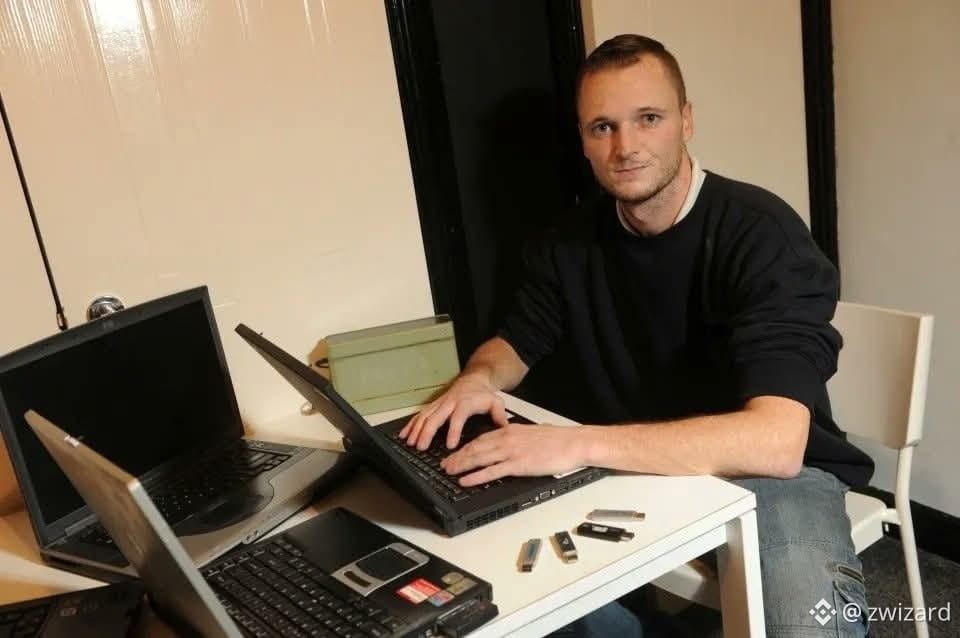
This is James Howells, the guy who accidentally threw away a hard drive containing 7500 BTC in 2013
The legend has it that he still asks for permission to search through more than 200,000 tons of waste...🤦♂️
$BTC
This is James Howells, the guy who accidentally threw away a hard drive containing 7500 BTC in 2013
The legend has it that he still asks for permission to search through more than 200,000 tons of waste...🤦♂️
$BTC
The legend has it that he still asks for permission to search through more than 200,000 tons of waste...🤦♂️
$BTC
2
2
6.2k
·
--
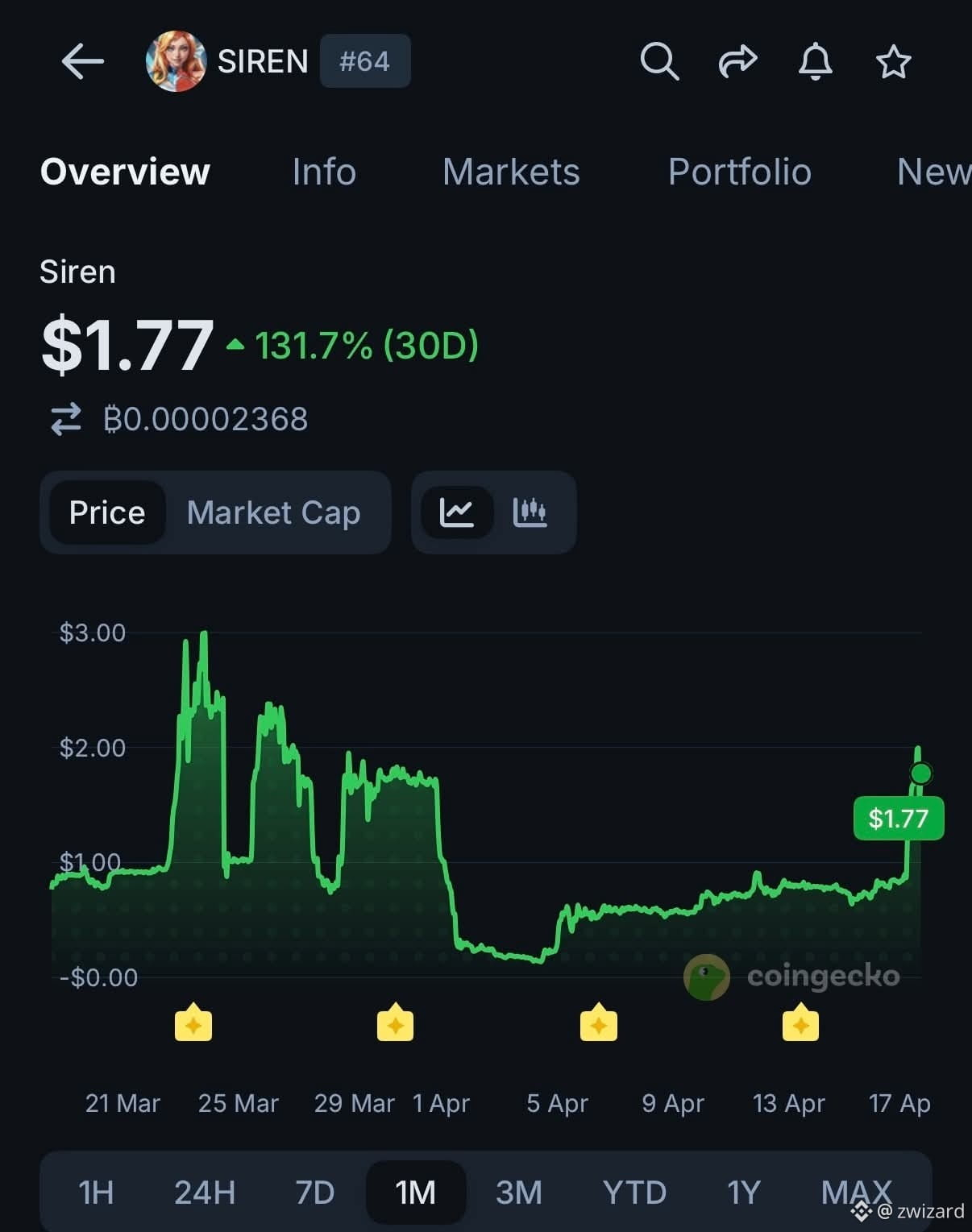
$SIREN SIREN has just reached the market cap of 1.2 billion dollars for the fourth time this month
Will it hold or will it drop back down?
$SIREN SIREN has just reached the market cap of 1.2 billion dollars for the fourth time this month
Will it hold or will it drop back down?
Will it hold or will it drop back down?
458
·
--
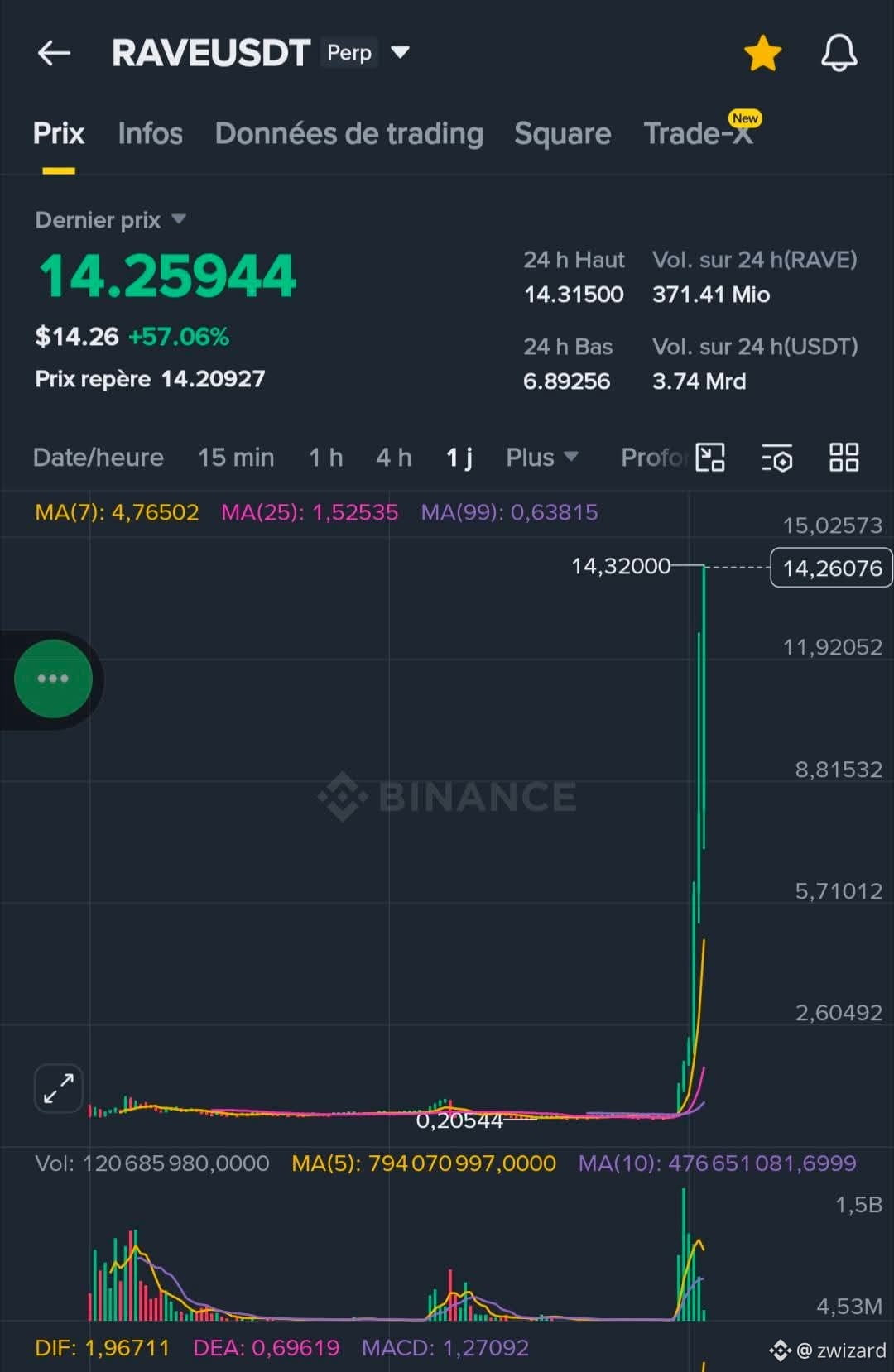
For all those who want to rush to buy RAVE, I just want to warn you that the team behind this project holds more than 80% of the supply of the token in question.
In other words, it's a scam that could blow up at any moment 🥲.
If you have already made a X2, withdraw your initial capital and let the gains run with a trailing SL 🙂.
This is advice from a predecessor 🙂.
Esperance Appoh
I myself didn't know it would reach $5 one day when I discovered it in February, and then it crashed after a 100% performance in 1 week 💔
That's why I believe that making ×30 currently is a coincidence and not a strategy.
The proof: despite the fact that some will tell you they shared $RAVE RAVE in their groups, none of them had a TP target of more than $3 😅
Today they are doing calculations like if you had put in $100, you should have $3000 😂
So with the current context, are you going to go from $100 to $500 without taking your profits? 😏
Worse still, no one knows when or which gem will offer the next ×30.
We generally make ×30 with moonbags, not with the initial capital 🧘🏾♂️
So don't put unnecessary pressure on yourself and stick to a sustainable and profitable strategy 👌🏾
#rave $RAVE
{future}(RAVEUSDT)
For all those who want to rush to buy RAVE, I just want to warn you that the team behind this project holds more than 80% of the supply of the token in question.
In other words, it's a scam that could blow up at any moment 🥲.
If you have already made a X2, withdraw your initial capital and let the gains run with a trailing SL 🙂.
This is advice from a predecessor 🙂.
Esperance Appoh
I myself didn't know it would reach $5 one day when I discovered it in February, and then it crashed after a 100% performance in 1 week 💔
That's why I believe that making ×30 currently is a coincidence and not a strategy.
The proof: despite the fact that some will tell you they shared $RAVE RAVE in their groups, none of them had a TP target of more than $3 😅
Today they are doing calculations like if you had put in $100, you should have $3000 😂
So with the current context, are you going to go from $100 to $500 without taking your profits? 😏
Worse still, no one knows when or which gem will offer the next ×30.
We generally make ×30 with moonbags, not with the initial capital 🧘🏾♂️
So don't put unnecessary pressure on yourself and stick to a sustainable and profitable strategy 👌🏾
#rave $RAVE
In other words, it's a scam that could blow up at any moment 🥲.
If you have already made a X2, withdraw your initial capital and let the gains run with a trailing SL 🙂.
This is advice from a predecessor 🙂.
Esperance Appoh
I myself didn't know it would reach $5 one day when I discovered it in February, and then it crashed after a 100% performance in 1 week 💔
That's why I believe that making ×30 currently is a coincidence and not a strategy.
The proof: despite the fact that some will tell you they shared $RAVE RAVE in their groups, none of them had a TP target of more than $3 😅
Today they are doing calculations like if you had put in $100, you should have $3000 😂
So with the current context, are you going to go from $100 to $500 without taking your profits? 😏
Worse still, no one knows when or which gem will offer the next ×30.
We generally make ×30 with moonbags, not with the initial capital 🧘🏾♂️
So don't put unnecessary pressure on yourself and stick to a sustainable and profitable strategy 👌🏾
#rave $RAVE
1
491
·
--
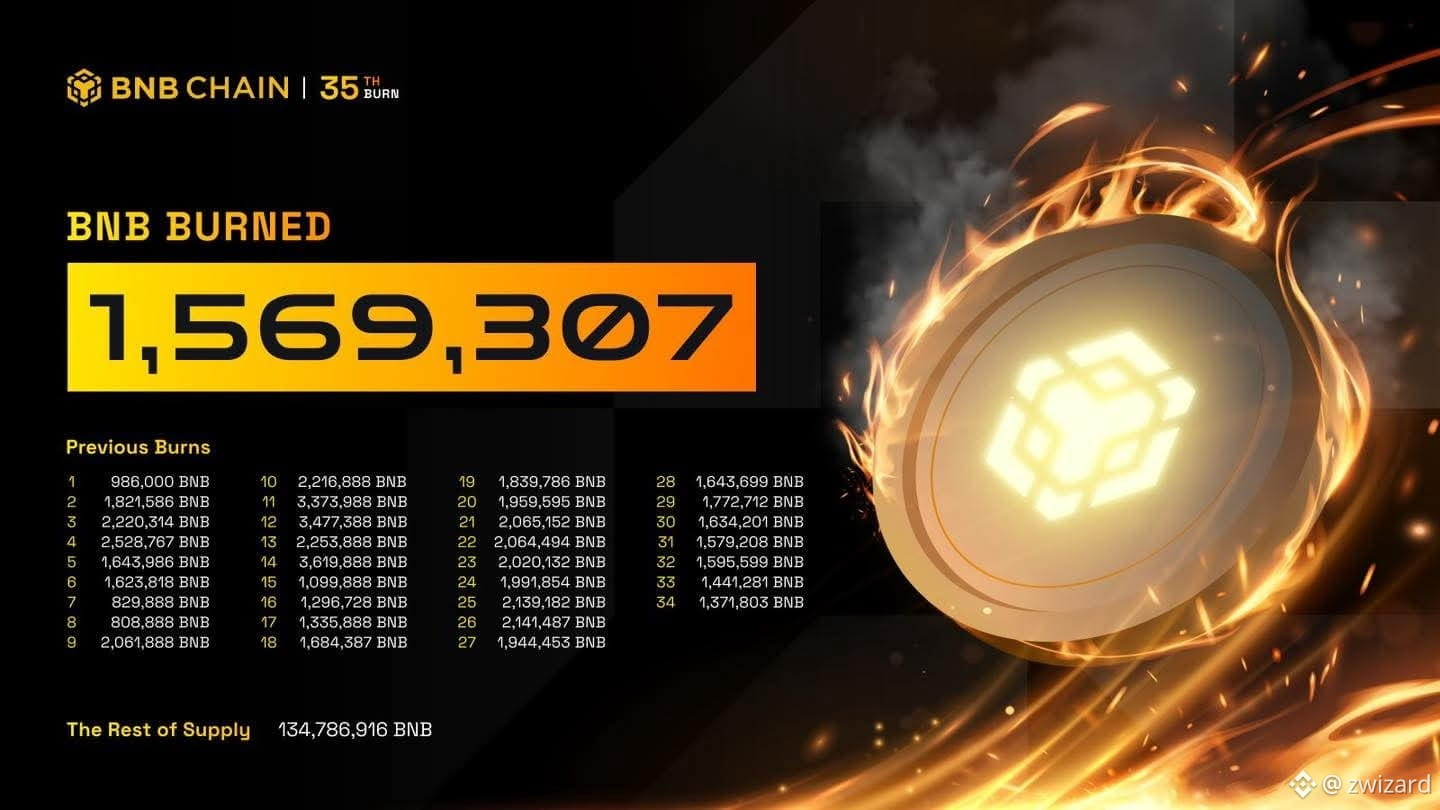
The 35th quarterly token burn $BNB was performed directly on the BNB Smart Chain (BSC).
1.569 million #BNB was burned, worth approximately 1.021 billion US dollars 🔥$BNB
The 35th quarterly token burn $BNB was performed directly on the BNB Smart Chain (BSC).
1.569 million #BNB was burned, worth approximately 1.021 billion US dollars 🔥$BNB
1.569 million #BNB was burned, worth approximately 1.021 billion US dollars 🔥$BNB
966
·
--
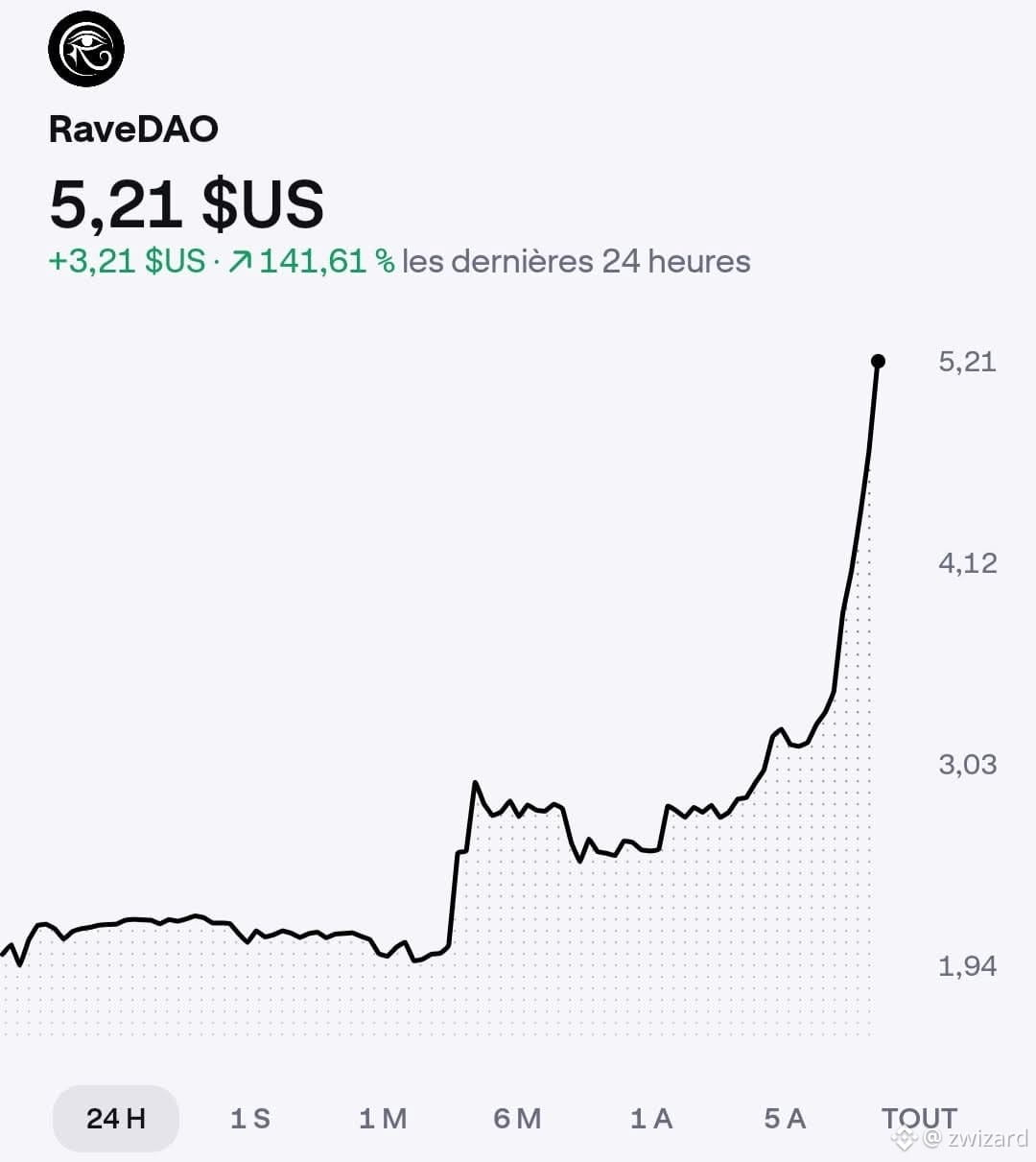
And we have $RAVE RAVE DAO which went from $0.24 to $5.70 in less than 72 hours, which is over 2400% (x24)
Everything seems to have started mainly from the listing on Coinbase, gopax, and a tweet supporting that the project seems substantial and not just a meme.
Note: Very extreme volatility, beware of FOMO, FUD ‼️.
And we have $RAVE RAVE DAO which went from $0.24 to $5.70 in less than 72 hours, which is over 2400% (x24)
Everything seems to have started mainly from the listing on Coinbase, gopax, and a tweet supporting that the project seems substantial and not just a meme.
Note: Very extreme volatility, beware of FOMO, FUD ‼️.
Everything seems to have started mainly from the listing on Coinbase, gopax, and a tweet supporting that the project seems substantial and not just a meme.
Note: Very extreme volatility, beware of FOMO, FUD ‼️.
224
·
--
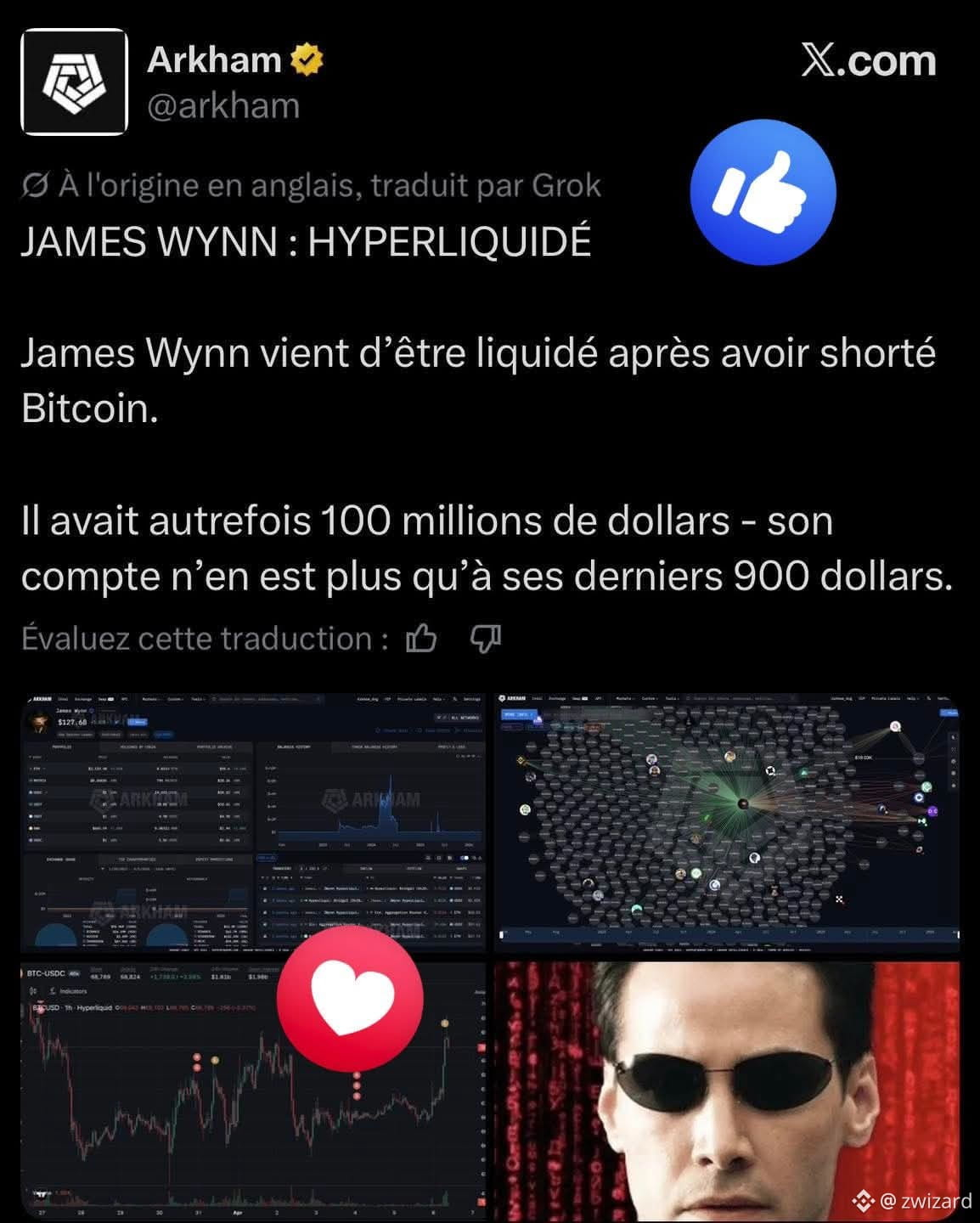
From 100 M$ to 800$ 💔🤧
He got scammed or what❓️ 😭🤣🤣
From 100 M$ to 800$ 💔🤧
He got scammed or what❓️ 😭🤣🤣
He got scammed or what❓️ 😭🤣🤣
1
1.2k
·
--
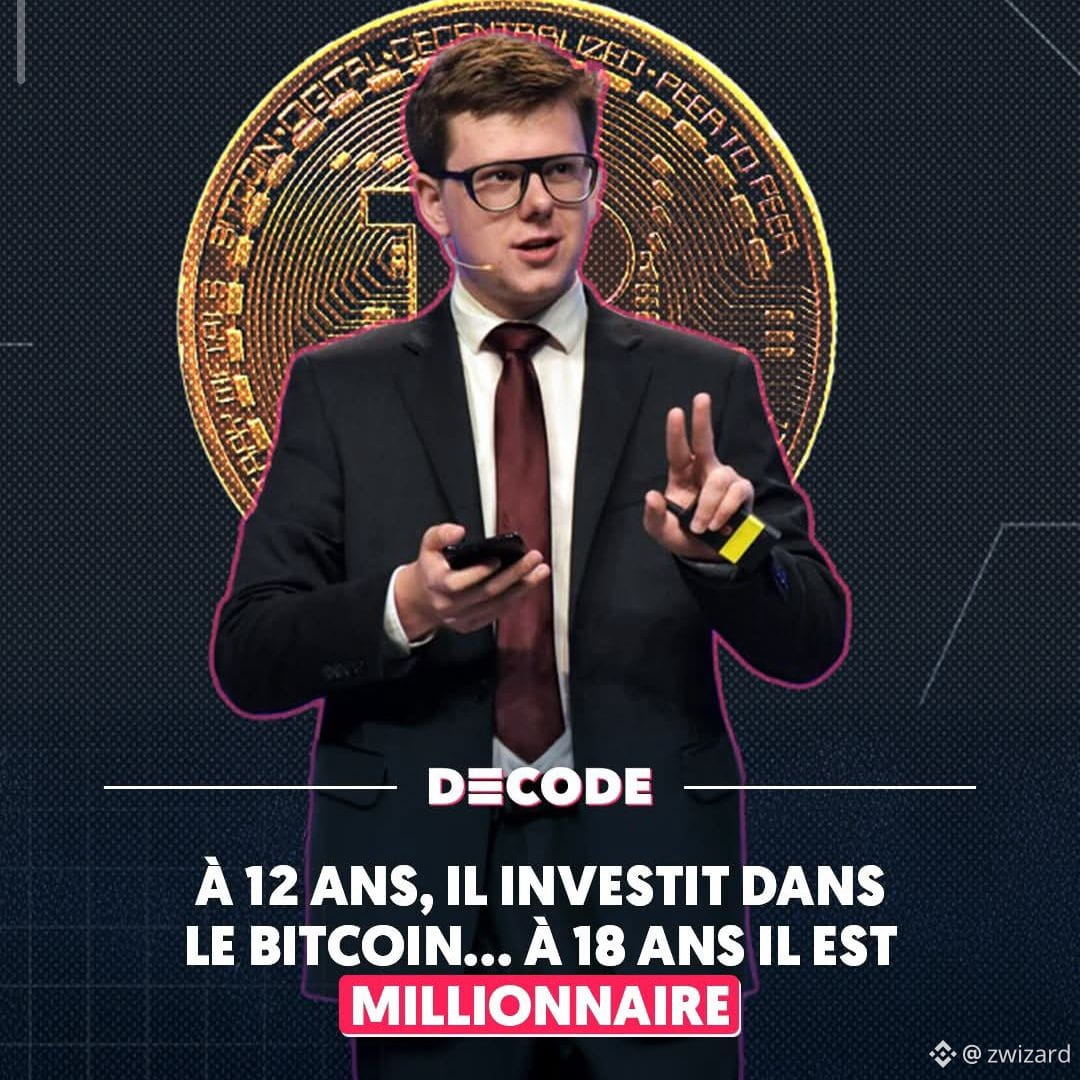
It's a completely crazy bet that Erik Finman, an American 🇺🇸 who became a millionaire at 18 thanks to bitcoins. 😯
It all started in 2011, Erik was only 12 years old and was fed up with school.
His parents jokingly told him that if he became a millionaire before reaching adulthood, he wouldn't need to go to university.
Erik took them at their word and invested the 1,000 dollars 💸 that his grandmother had given him for his birthday into bitcoins.
A cryptocurrency that no one was talking about at the time and that was worth only 12 dollars each.
Bingo, within a few years, the young man became a millionaire.
He is now 22 years old and runs several companies.
So, happy coincidence or stroke of fate?
it's not too late yet $BTC
It's a completely crazy bet that Erik Finman, an American 🇺🇸 who became a millionaire at 18 thanks to bitcoins. 😯
It all started in 2011, Erik was only 12 years old and was fed up with school.
His parents jokingly told him that if he became a millionaire before reaching adulthood, he wouldn't need to go to university.
Erik took them at their word and invested the 1,000 dollars 💸 that his grandmother had given him for his birthday into bitcoins.
A cryptocurrency that no one was talking about at the time and that was worth only 12 dollars each.
Bingo, within a few years, the young man became a millionaire.
He is now 22 years old and runs several companies.
So, happy coincidence or stroke of fate?
it's not too late yet $BTC
It all started in 2011, Erik was only 12 years old and was fed up with school.
His parents jokingly told him that if he became a millionaire before reaching adulthood, he wouldn't need to go to university.
Erik took them at their word and invested the 1,000 dollars 💸 that his grandmother had given him for his birthday into bitcoins.
A cryptocurrency that no one was talking about at the time and that was worth only 12 dollars each.
Bingo, within a few years, the young man became a millionaire.
He is now 22 years old and runs several companies.
So, happy coincidence or stroke of fate?
it's not too late yet $BTC
3
532
·
--
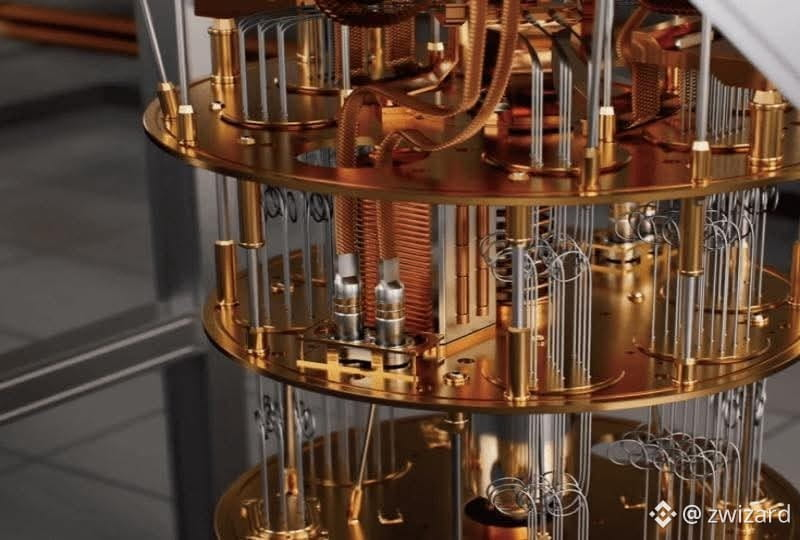
CZ on the threats of quantum computers in crypto. He gave a good report, I think especially on the part about Satoshi's BTC because if it falls into the hands of hackers, it will bring BTC back to $5000. Read:
« I've seen people panic or ask questions about the impact of quantum computing on crypto.
At a high level, all crypto has to do is switch to quantum-resistant algorithms (post-quantum). So, no need to panic. 😂
In practice, there are some execution considerations. It's difficult to organize updates in a decentralized world. There will likely be a lot of debates about which algorithm(s) to use, which will result in some forks.
And some dead projects won't update at all. This could be a good opportunity to clean up those projects anyway.
New code could introduce other bugs or security problems in the short term.
People who hold their own keys will need to migrate their coins to new wallets.
This raises the question of Satoshi's bitcoins. If these coins move, it means he/she is still around, which would be interesting to know. If they don't move (over a certain period of time), it might be better to lock (or effectively burn) those addresses so they don't fall into the hands of the first hacker who cracks them. There is also the difficulty of identifying all of his addresses, without confusing them with those of old hodlers. In short, that's a different topic for later.
Basically:
It's always easier to encrypt than to decrypt.
More computing power is always good.
Crypto will remain, post-quantum. »
$BTC
#USNoKingsProtests #BTCETFFeeRace
CZ on the threats of quantum computers in crypto. He gave a good report, I think especially on the part about Satoshi's BTC because if it falls into the hands of hackers, it will bring BTC back to $5000. Read:
« I've seen people panic or ask questions about the impact of quantum computing on crypto.
At a high level, all crypto has to do is switch to quantum-resistant algorithms (post-quantum). So, no need to panic. 😂
In practice, there are some execution considerations. It's difficult to organize updates in a decentralized world. There will likely be a lot of debates about which algorithm(s) to use, which will result in some forks.
And some dead projects won't update at all. This could be a good opportunity to clean up those projects anyway.
New code could introduce other bugs or security problems in the short term.
People who hold their own keys will need to migrate their coins to new wallets.
This raises the question of Satoshi's bitcoins. If these coins move, it means he/she is still around, which would be interesting to know. If they don't move (over a certain period of time), it might be better to lock (or effectively burn) those addresses so they don't fall into the hands of the first hacker who cracks them. There is also the difficulty of identifying all of his addresses, without confusing them with those of old hodlers. In short, that's a different topic for later.
Basically:
It's always easier to encrypt than to decrypt.
More computing power is always good.
Crypto will remain, post-quantum. »
$BTC
#USNoKingsProtests #BTCETFFeeRace
« I've seen people panic or ask questions about the impact of quantum computing on crypto.
At a high level, all crypto has to do is switch to quantum-resistant algorithms (post-quantum). So, no need to panic. 😂
In practice, there are some execution considerations. It's difficult to organize updates in a decentralized world. There will likely be a lot of debates about which algorithm(s) to use, which will result in some forks.
And some dead projects won't update at all. This could be a good opportunity to clean up those projects anyway.
New code could introduce other bugs or security problems in the short term.
People who hold their own keys will need to migrate their coins to new wallets.
This raises the question of Satoshi's bitcoins. If these coins move, it means he/she is still around, which would be interesting to know. If they don't move (over a certain period of time), it might be better to lock (or effectively burn) those addresses so they don't fall into the hands of the first hacker who cracks them. There is also the difficulty of identifying all of his addresses, without confusing them with those of old hodlers. In short, that's a different topic for later.
Basically:
It's always easier to encrypt than to decrypt.
More computing power is always good.
Crypto will remain, post-quantum. »
$BTC
#USNoKingsProtests #BTCETFFeeRace

111
·
--
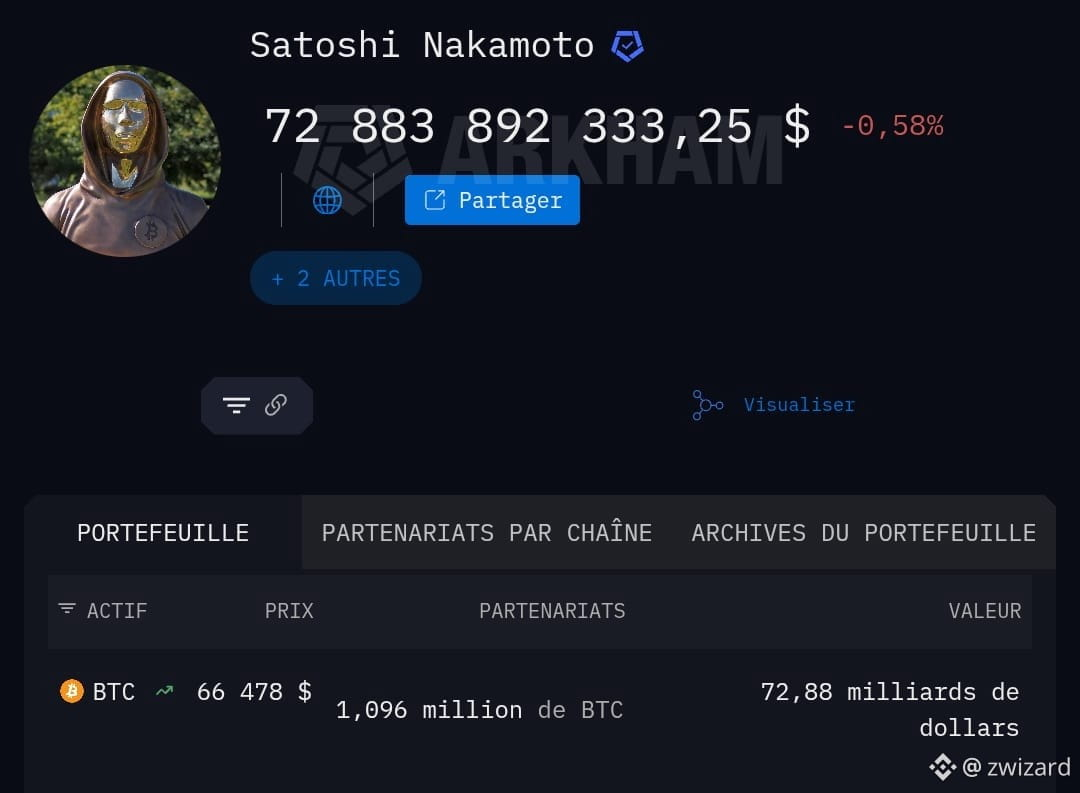
You just need 24 words in the right order
and a decentralized network to access the fortune of Sathoshi Nakamoto
Don't forget that you have a chance of 👇
1 chance in 10⁷⁷
that is 1 chance in 115 792 089 237 316 195 423 570 985 008 687 907 853 269 984 665 640 564 039 457 584 007 913 129 639 936
Manually it will take you more than 10,000 years, even thousands of years with a super fast computer that works 24/7
So, are you tempted? 😅
$BTC $ETH
You just need 24 words in the right order
and a decentralized network to access the fortune of Sathoshi Nakamoto
Don't forget that you have a chance of 👇
1 chance in 10⁷⁷
that is 1 chance in 115 792 089 237 316 195 423 570 985 008 687 907 853 269 984 665 640 564 039 457 584 007 913 129 639 936
Manually it will take you more than 10,000 years, even thousands of years with a super fast computer that works 24/7
So, are you tempted? 😅
$BTC $ETH
and a decentralized network to access the fortune of Sathoshi Nakamoto
Don't forget that you have a chance of 👇
1 chance in 10⁷⁷
that is 1 chance in 115 792 089 237 316 195 423 570 985 008 687 907 853 269 984 665 640 564 039 457 584 007 913 129 639 936
Manually it will take you more than 10,000 years, even thousands of years with a super fast computer that works 24/7
So, are you tempted? 😅
$BTC $ETH
3
·
--
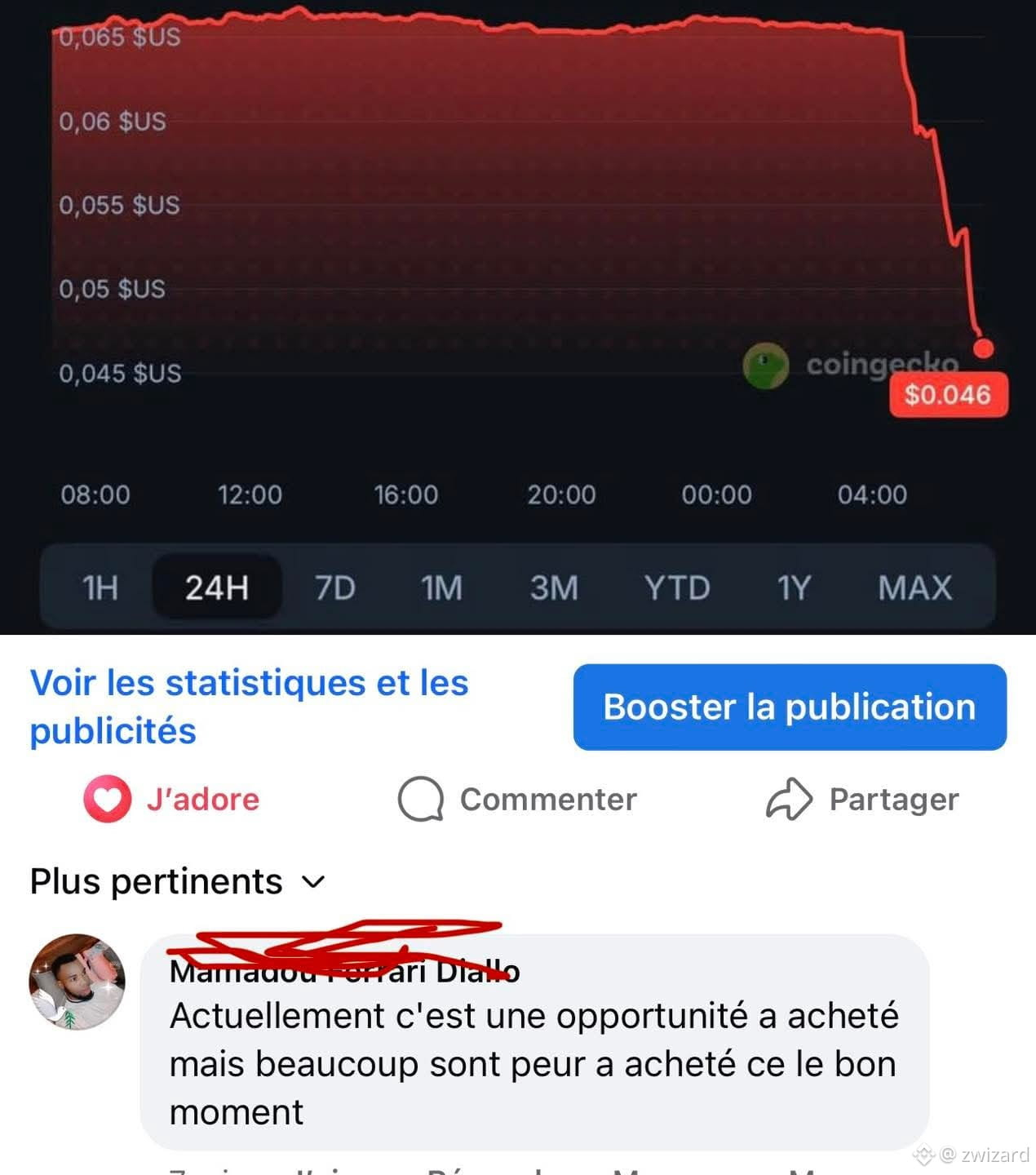
Crypto has become a long-term investment, so only buy what you are sure you can hold for a long time. Just because people say that crypto is about patience doesn't mean you should keep just anything; this is no longer a game. Your priority should be Bitcoin, and then the rest to play with 30-40% of the wallet. Now everyone does as they wish.
$BTC
{spot}(BTCUSDT)
Crypto has become a long-term investment, so only buy what you are sure you can hold for a long time. Just because people say that crypto is about patience doesn't mean you should keep just anything; this is no longer a game. Your priority should be Bitcoin, and then the rest to play with 30-40% of the wallet. Now everyone does as they wish.
$BTC
$BTC
2
241
·
--
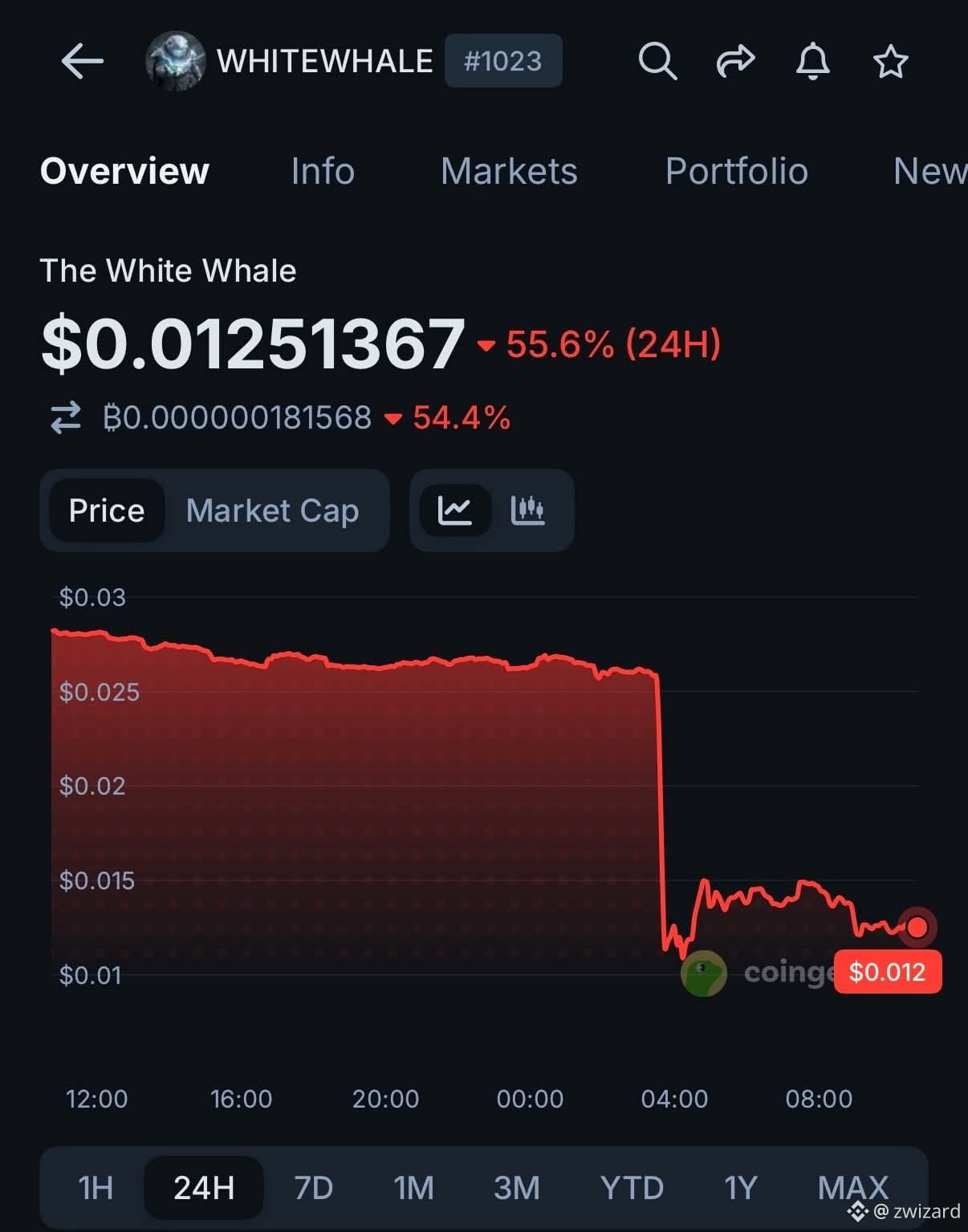
INSIGHT : #WHITEWHALE drop of 55.6% following the announcement that the CTO founder will step away from crypto.
INSIGHT : #WHITEWHALE drop of 55.6% following the announcement that the CTO founder will step away from crypto.
157
·
--
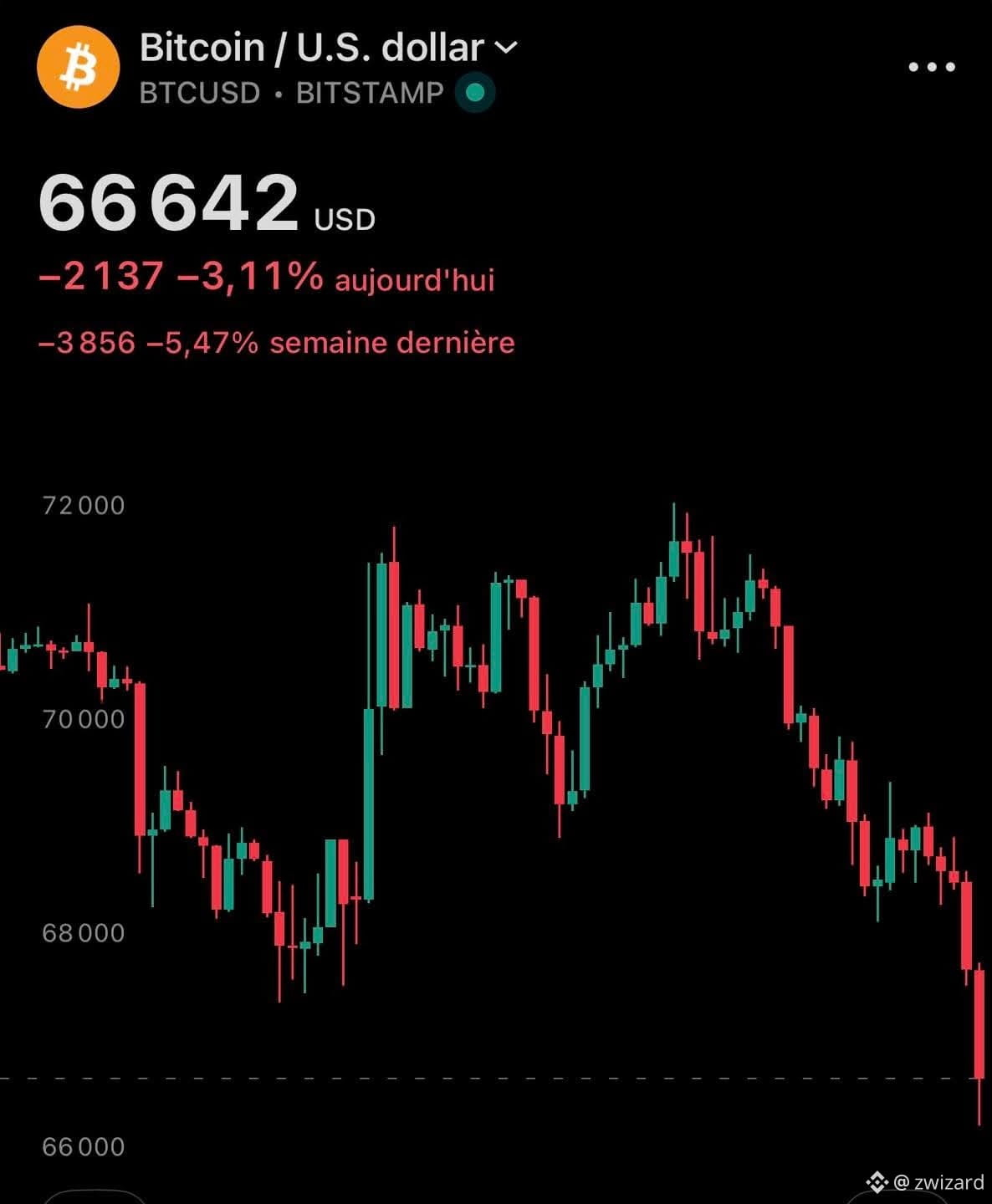
I confess that shortening each green candle on Bitcoin is an increasingly lucrative activity 😅.
I confess that shortening each green candle on Bitcoin is an increasingly lucrative activity 😅.
109
·
--
⚖️ Nvidia is facing a class action lawsuit regarding alleged hidden revenues from GPU sales for cryptocurrency mining exceeding 1 billion dollars.
The plaintiffs claim that Nvidia hid over 1 billion dollars in GPU sales related to cryptocurrency and recorded them in its gaming segment, which impacted its stock price.
The court found that Nvidia failed to prove the absence of impact on the price, and the case continues with a hearing scheduled for April 21.
The SEC had previously imposed a fine of 5.5 million dollars on Nvidia in 2022 for failing to disclose the impacts of cryptocurrency mining.
⚖️ Nvidia is facing a class action lawsuit regarding alleged hidden revenues from GPU sales for cryptocurrency mining exceeding 1 billion dollars.
The plaintiffs claim that Nvidia hid over 1 billion dollars in GPU sales related to cryptocurrency and recorded them in its gaming segment, which impacted its stock price.
The court found that Nvidia failed to prove the absence of impact on the price, and the case continues with a hearing scheduled for April 21.
The SEC had previously imposed a fine of 5.5 million dollars on Nvidia in 2022 for failing to disclose the impacts of cryptocurrency mining.
The plaintiffs claim that Nvidia hid over 1 billion dollars in GPU sales related to cryptocurrency and recorded them in its gaming segment, which impacted its stock price.
The court found that Nvidia failed to prove the absence of impact on the price, and the case continues with a hearing scheduled for April 21.
The SEC had previously imposed a fine of 5.5 million dollars on Nvidia in 2022 for failing to disclose the impacts of cryptocurrency mining.

8
·
--
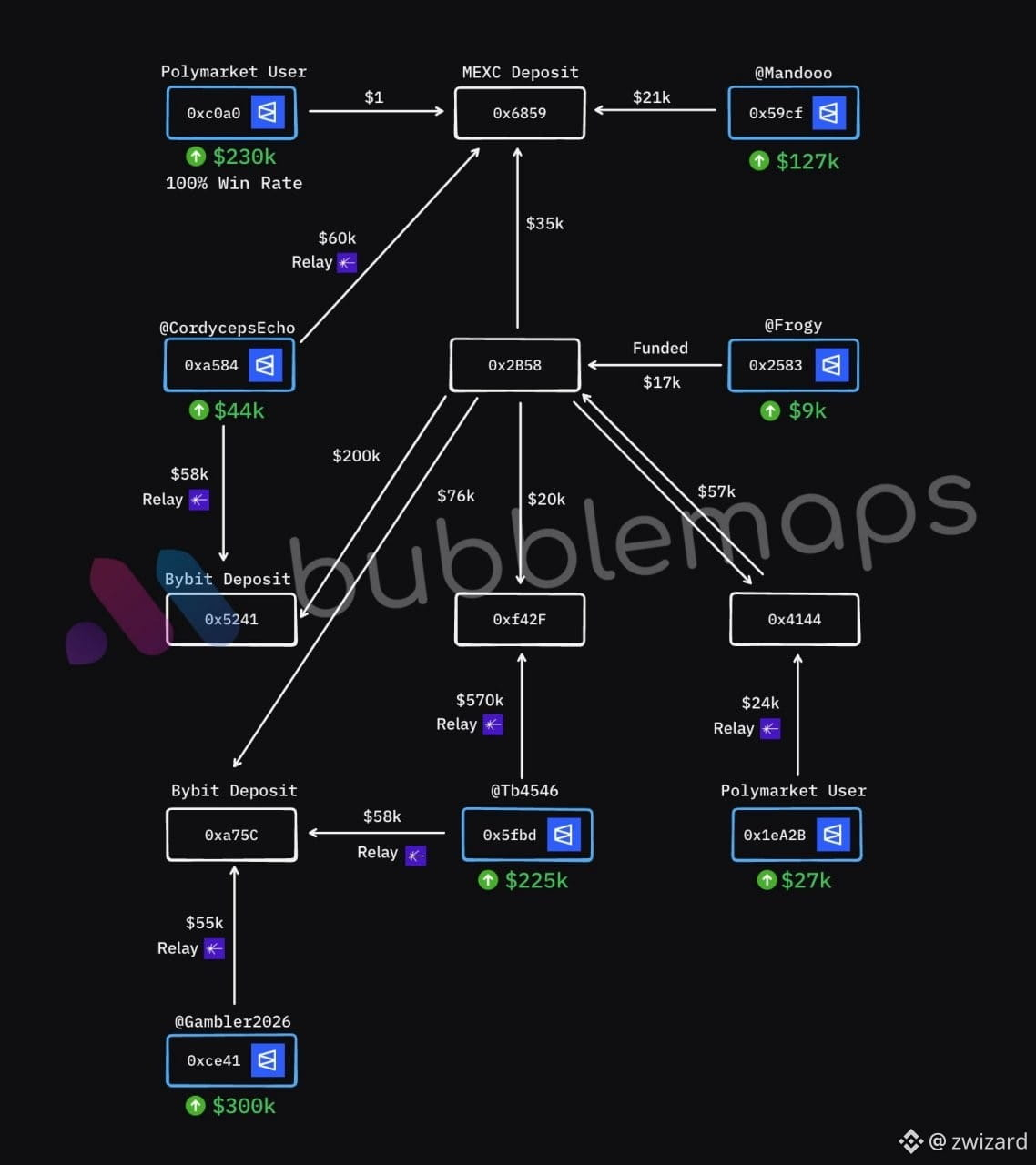
🚨 A trader won 1M$ by betting on American and Israeli strikes over the past 2 years, with almost perfect accuracy.
An on-chain analysis by @bubblemaps reveals a network of 7 @Polymarket accounts linked together and betting on military actions since 2024.
The facts:
• ~1M$ in cumulative profits
• 93% win rate on bets related to Iran
• Positions taken a few hours before major strikes (2024, 2025, 2026)
• Several wallets connected to each other
A good trader generally has a success rate of around 50-55%. Here, the trader approaches a 93% success rate.
In other words, either he is the best trader in the world, or he has access to information that the market does not.
🚨 A trader won 1M$ by betting on American and Israeli strikes over the past 2 years, with almost perfect accuracy.
An on-chain analysis by @bubblemaps reveals a network of 7 @Polymarket accounts linked together and betting on military actions since 2024.
The facts:
• ~1M$ in cumulative profits
• 93% win rate on bets related to Iran
• Positions taken a few hours before major strikes (2024, 2025, 2026)
• Several wallets connected to each other
A good trader generally has a success rate of around 50-55%. Here, the trader approaches a 93% success rate.
In other words, either he is the best trader in the world, or he has access to information that the market does not.
An on-chain analysis by @bubblemaps reveals a network of 7 @Polymarket accounts linked together and betting on military actions since 2024.
The facts:
• ~1M$ in cumulative profits
• 93% win rate on bets related to Iran
• Positions taken a few hours before major strikes (2024, 2025, 2026)
• Several wallets connected to each other
A good trader generally has a success rate of around 50-55%. Here, the trader approaches a 93% success rate.
In other words, either he is the best trader in the world, or he has access to information that the market does not.
6
Log in to explore more content
Join global crypto users on Binance Square
⚡️ Get latest and useful information about crypto.
💬 Trusted by the world’s largest crypto exchange.
👍 Discover real insights from verified creators.
Email / Phone number
Trending Topics
ClarityActFacesProceduralVoteSept15
54,377 views
788 Discussing
Tuesday, September 15, 2:15pm ET. Mark it. 🗓️
The Senate votes on whether to even debate the CLARITY Act, the bill that would finally define which coins are securities vs commodities under US law.
Needs 60 votes. Republicans have 53. Several Democrats need to cross over, and it's not guaranteed.
Fail this vote = the bill is dead for 2026, likely until 2029 (midterms eat the calendar after this).
Pass this vote = doors open to real debate, still a long way to actual law.
Biggest crypto regulation moment of the year happens in a few days.
#ClarityActFacesProceduralVoteSept15
NewbieToNode
·5 Likes
·5.9k views
US2YearYieldRisesTo4.61%
38,013 views
707 Discussing
US10YearTreasuryYieldNears5%
23,350 views
419 Discussing