
Ahanaf_Tahmid01
35 Posts

Ahanaf_Tahmid01
Report
Block User
Occasional Trader
3.3 Years
12 Following
11 Followers
25 Liked
Posts
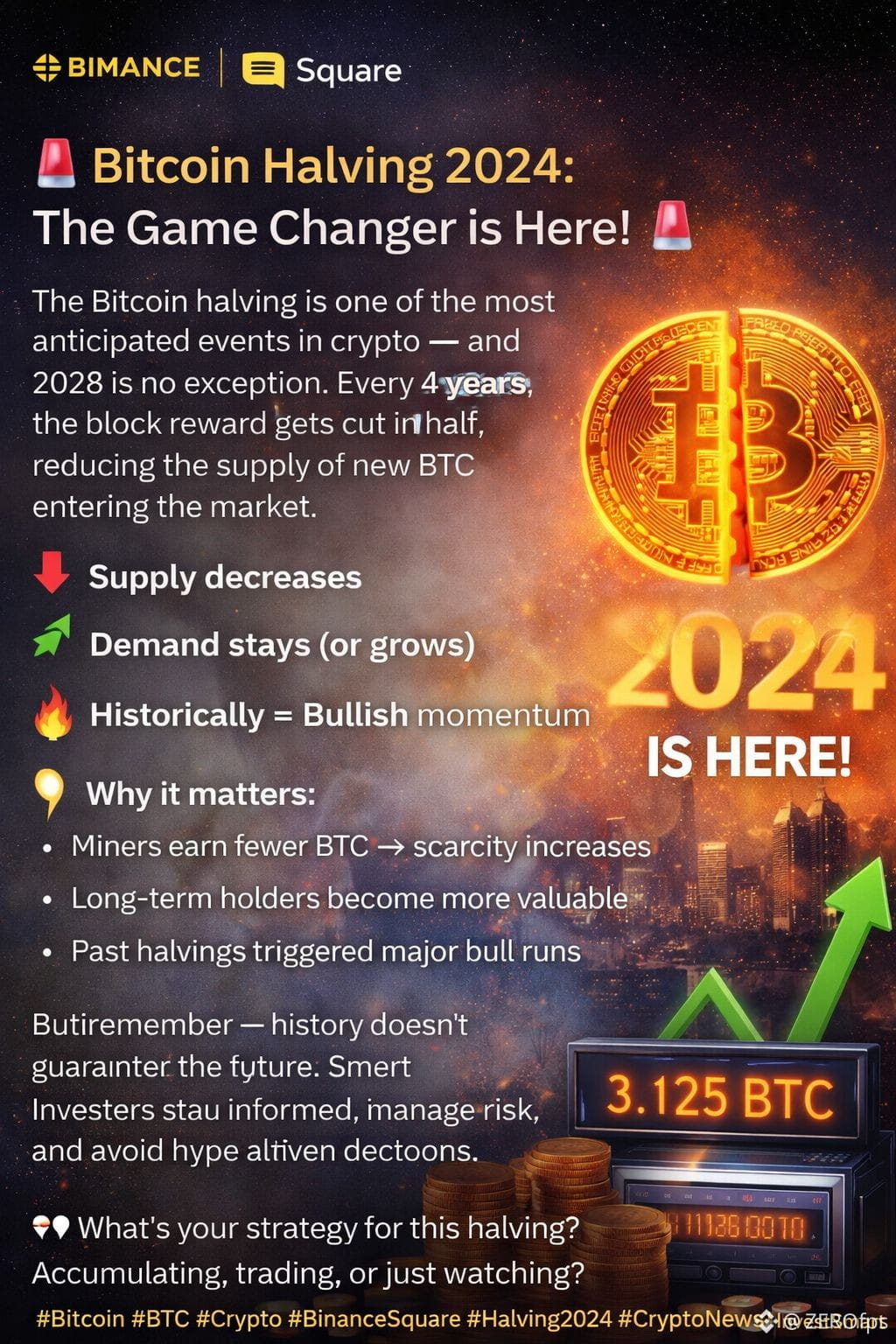
🚨 Bitcoin Halving 2024: The Game Changer is Here! 🚨
The Bitcoin halving is one of the most anticipated events in crypto — and 2024 is no exception. Every 4 years, the block reward gets cut in half, reducing the supply of new BTC entering the market.
📉 Supply decreases
📈 Demand stays (or grows)
🔥 Historically = Bullish momentum
💡 Why it matters:
• Miners earn fewer $BTC → scarcity increases
• Long-term holders become more valuable
• Past halvings triggered major bull runs
But remember — history doesn’t guarantee the future. Smart investors stay informed, manage risk, and avoid hype-driven decisions.
👀 What’s your strategy for this halving?
Accumulating, trading, or just watching?
{spot}(BTCUSDT)
#Bitcoin #BTC☀ #Crypto #BinanceSquare #Halving2024 #CryptoNews #InvestSmart
🚨 Bitcoin Halving 2024: The Game Changer is Here! 🚨
The Bitcoin halving is one of the most anticipated events in crypto — and 2024 is no exception. Every 4 years, the block reward gets cut in half, reducing the supply of new BTC entering the market.
📉 Supply decreases
📈 Demand stays (or grows)
🔥 Historically = Bullish momentum
💡 Why it matters:
• Miners earn fewer $BTC → scarcity increases
• Long-term holders become more valuable
• Past halvings triggered major bull runs
But remember — history doesn’t guarantee the future. Smart investors stay informed, manage risk, and avoid hype-driven decisions.
👀 What’s your strategy for this halving?
Accumulating, trading, or just watching?
#Bitcoin #BTC☀ #Crypto #BinanceSquare #Halving2024 #CryptoNews #InvestSmart
The Bitcoin halving is one of the most anticipated events in crypto — and 2024 is no exception. Every 4 years, the block reward gets cut in half, reducing the supply of new BTC entering the market.
📉 Supply decreases
📈 Demand stays (or grows)
🔥 Historically = Bullish momentum
💡 Why it matters:
• Miners earn fewer $BTC → scarcity increases
• Long-term holders become more valuable
• Past halvings triggered major bull runs
But remember — history doesn’t guarantee the future. Smart investors stay informed, manage risk, and avoid hype-driven decisions.
👀 What’s your strategy for this halving?
Accumulating, trading, or just watching?
#Bitcoin #BTC☀ #Crypto #BinanceSquare #Halving2024 #CryptoNews #InvestSmart
1
145
🚀 $BNB showing strong bullish momentum on the 4H timeframe!
📊 Candle Chart Insight:
Higher highs and higher lows confirm an active uptrend. Key resistance is near $640. A breakout above this level could trigger the next leg up.
🎯 My Trade Setup:
Entry: $612
Target: $645
Stop Loss: $598
Risk/Reward: 1:2.5
📈 Candle Chart Widget:
[View Live $BNB Candle Chart on Binance]
🔗 Real Trade Proof:
https://www.binance.com/en/trade/BNB_USDT
If volume continues rising, $BNB may outperform other large-cap altcoins this week. Watching closely for breakout confirmation.
#bnb #crypto #Trading #Bullish #Binance
🚀 $BNB showing strong bullish momentum on the 4H timeframe!
📊 Candle Chart Insight:
Higher highs and higher lows confirm an active uptrend. Key resistance is near $640. A breakout above this level could trigger the next leg up.
🎯 My Trade Setup:
Entry: $612
Target: $645
Stop Loss: $598
Risk/Reward: 1:2.5
📈 Candle Chart Widget:
[View Live $BNB Candle Chart on Binance]
🔗 Real Trade Proof:
https://www.binance.com/en/trade/BNB_USDT
If volume continues rising, $BNB may outperform other large-cap altcoins this week. Watching closely for breakout confirmation.
#bnb #crypto #Trading #Bullish #Binance
📊 Candle Chart Insight:
Higher highs and higher lows confirm an active uptrend. Key resistance is near $640. A breakout above this level could trigger the next leg up.
🎯 My Trade Setup:
Entry: $612
Target: $645
Stop Loss: $598
Risk/Reward: 1:2.5
📈 Candle Chart Widget:
[View Live $BNB Candle Chart on Binance]
🔗 Real Trade Proof:
https://www.binance.com/en/trade/BNB_USDT
If volume continues rising, $BNB may outperform other large-cap altcoins this week. Watching closely for breakout confirmation.
#bnb #crypto #Trading #Bullish #Binance
1
31
Article
Securing the Autonomous Age: How Mira Network Builds a Decentralized Trust Layer for AIAs AI systems become more integrated into our daily lives and critical infrastructure, the risks of AI hallucinations and systemic bias are growing exponentially. We can no longer just blindly trust the probabilistic outputs of large language models, especially in high-stakes fields like healthcare, finance, and decentralized applications. This is exactly where @mira_network is stepping in to change the game.
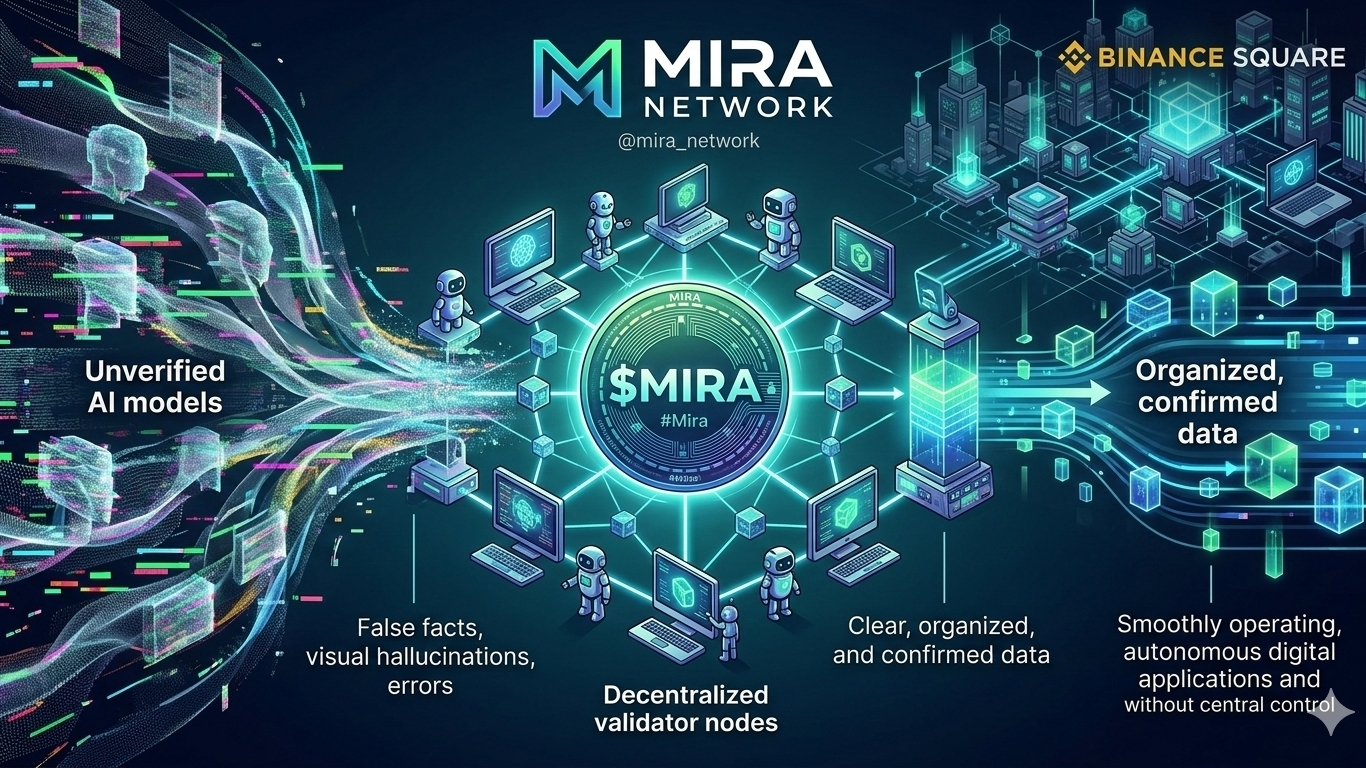
Instead of relying on a centralized authority to fact-check AI, Mira is building a decentralized "Trust Layer" that cryptographically verifies AI outputs. It works by breaking complex AI-generated content down into smaller, independently verifiable claims, and then uses a consensus mechanism across multiple distinct AI models to ensure absolute accuracy. This effectively turns AI reliability into a solvable engineering problem rather than a probabilistic guessing game.
At the very core of this decentralized verification ecosystem is the $MIRA token. It operates on a robust Proof-of-Stake model where validator nodes must stake tokens to participate in the verification process. Honest validation is rewarded with network incentives, while dishonest or lazy behavior results in slashed stakes. This cryptoeconomic structure ensures that the network remains secure, highly scalable, and fully aligned with the goal of creating trustworthy, autonomous AI.
As we move rapidly towards an autonomous digital age, verifiable AI isn't just a luxury—it's an absolute necessity. Trust cannot just be assumed; it must be built into the infrastructure. Projects bridging this gap are laying down the essential foundation for the future of Web3 and intelligent automation. #Mira
Securing the Autonomous Age: How Mira Network Builds a Decentralized Trust Layer for AI
As AI systems become more integrated into our daily lives and critical infrastructure, the risks of AI hallucinations and systemic bias are growing exponentially. We can no longer just blindly trust the probabilistic outputs of large language models, especially in high-stakes fields like healthcare, finance, and decentralized applications. This is exactly where @Mira - Trust Layer of AI is stepping in to change the game.
Instead of relying on a centralized authority to fact-check AI, Mira is building a decentralized "Trust Layer" that cryptographically verifies AI outputs. It works by breaking complex AI-generated content down into smaller, independently verifiable claims, and then uses a consensus mechanism across multiple distinct AI models to ensure absolute accuracy. This effectively turns AI reliability into a solvable engineering problem rather than a probabilistic guessing game.
At the very core of this decentralized verification ecosystem is the $MIRA token. It operates on a robust Proof-of-Stake model where validator nodes must stake tokens to participate in the verification process. Honest validation is rewarded with network incentives, while dishonest or lazy behavior results in slashed stakes. This cryptoeconomic structure ensures that the network remains secure, highly scalable, and fully aligned with the goal of creating trustworthy, autonomous AI.
As we move rapidly towards an autonomous digital age, verifiable AI isn't just a luxury—it's an absolute necessity. Trust cannot just be assumed; it must be built into the infrastructure. Projects bridging this gap are laying down the essential foundation for the future of Web3 and intelligent automation. #Mira
Instead of relying on a centralized authority to fact-check AI, Mira is building a decentralized "Trust Layer" that cryptographically verifies AI outputs. It works by breaking complex AI-generated content down into smaller, independently verifiable claims, and then uses a consensus mechanism across multiple distinct AI models to ensure absolute accuracy. This effectively turns AI reliability into a solvable engineering problem rather than a probabilistic guessing game.
At the very core of this decentralized verification ecosystem is the $MIRA token. It operates on a robust Proof-of-Stake model where validator nodes must stake tokens to participate in the verification process. Honest validation is rewarded with network incentives, while dishonest or lazy behavior results in slashed stakes. This cryptoeconomic structure ensures that the network remains secure, highly scalable, and fully aligned with the goal of creating trustworthy, autonomous AI.
As we move rapidly towards an autonomous digital age, verifiable AI isn't just a luxury—it's an absolute necessity. Trust cannot just be assumed; it must be built into the infrastructure. Projects bridging this gap are laying down the essential foundation for the future of Web3 and intelligent automation. #Mira
10
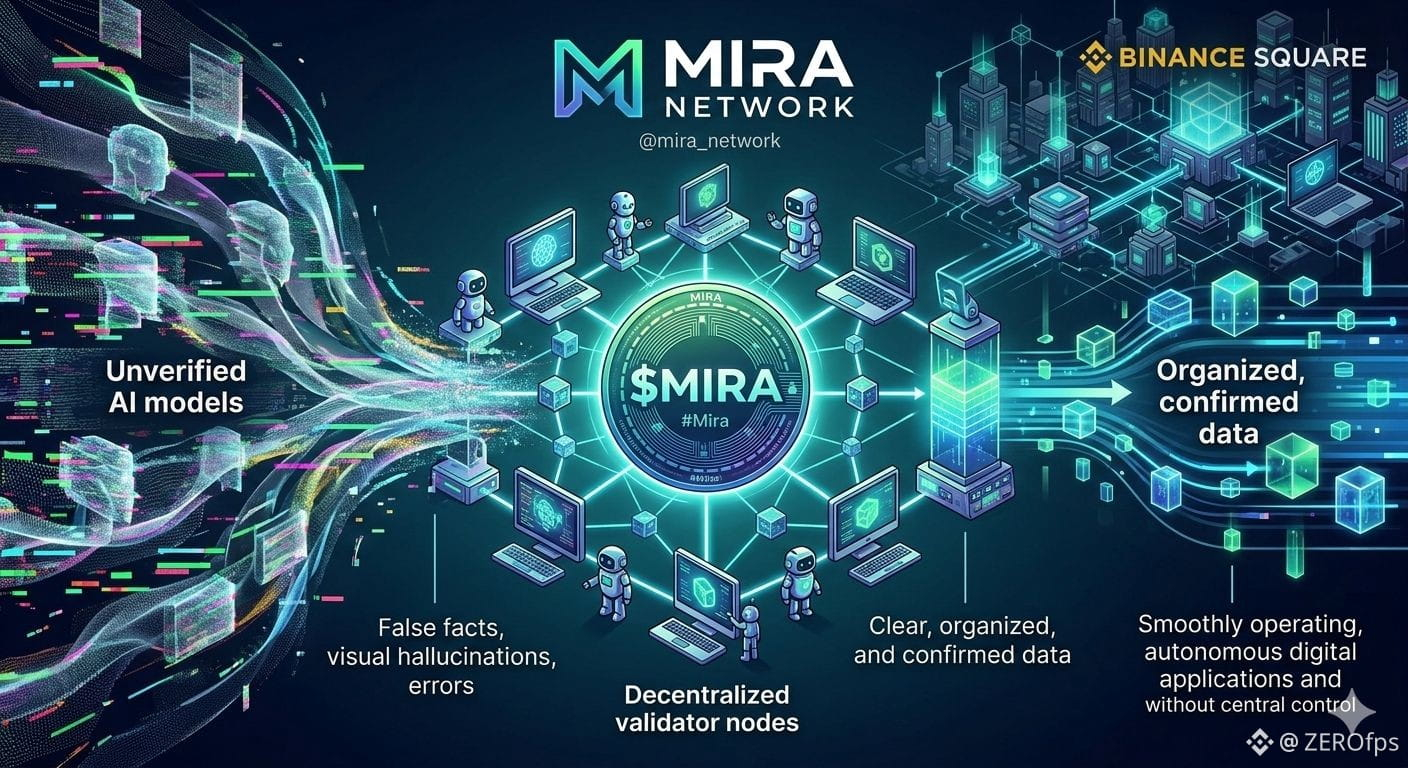
As AI scales, verifiability becomes the biggest bottleneck. @mira_network solves this by decentralizing AI validation. Instead of trusting a single model, Mira uses blockchain consensus to check facts and eliminate hallucinations. Secured by the $MIRA token, this infrastructure is paving the way for truly autonomous, trustless AI applications. #Mira
#mira $MIRA
As AI scales, verifiability becomes the biggest bottleneck. @Mira - Trust Layer of AI solves this by decentralizing AI validation. Instead of trusting a single model, Mira uses blockchain consensus to check facts and eliminate hallucinations. Secured by the $MIRA token, this infrastructure is paving the way for truly autonomous, trustless AI applications. #Mira
#mira $MIRA
#mira $MIRA
9
Article
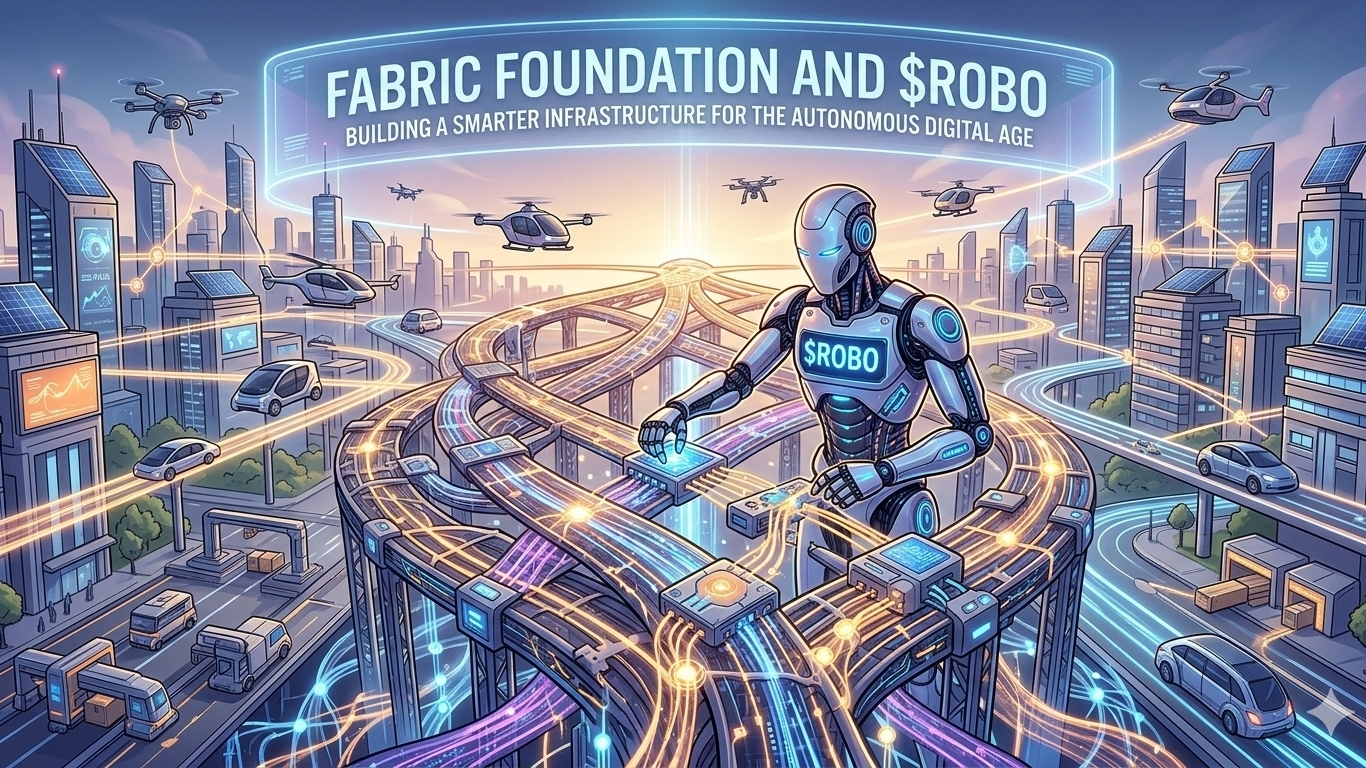
Fabric Foundation and $ROBO: Building a Smarter Infrastructure for the Autonomous Digital AgeThe digital world is entering a new phase where automation, artificial intelligence, and decentralization are no longer separate innovations but interconnected forces shaping the future. @FabricFND Fabric Foundation is emerging as a forward-thinking project focused on creating a decentralized infrastructure that allows intelligent systems to operate independently, securely, and efficiently. By integrating blockchain reliability with automation capabilities, Fabric Foundation is helping establish a foundation for the next generation of digital interaction.
Traditional digital systems often depend on centralized control, which can create limitations such as slower processes, lack of transparency, and vulnerability to single points of failure. @FabricFND addresses these challenges by introducing a decentralized framework where systems can operate without relying on a central authority. This decentralized approach ensures that data, processes, and interactions remain secure, verifiable, and transparent to all participants.
At the center of this ecosystem is $ROBO, a utility token designed to power and maintain network operations. $ROBO enables seamless value exchange within the ecosystem and supports automated digital processes. It also plays a key role in incentivizing users, developers, and contributors who help strengthen and expand the network. By aligning incentives with participation, Fabric Foundation creates a self-sustaining environment where growth and innovation naturally reinforce each other.
One of the most important aspects of Fabric Foundation is its focus on enabling autonomous functionality. In this ecosystem, digital agents and decentralized applications can perform tasks without requiring constant human intervention. These tasks may include managing digital assets, verifying information, executing automated agreements, or supporting decentralized services. This level of automation improves efficiency while reducing the risk of human error and operational delays.
Developers benefit greatly from the infrastructure provided by Fabric Foundation. The platform offers a secure and scalable environment where new decentralized applications can be built and deployed. Instead of creating complex systems from scratch, developers can use Fabric’s existing infrastructure to build solutions more efficiently. This lowers barriers to innovation and allows creators to focus on delivering useful and impactful applications.
Security is another critical strength of the Fabric ecosystem. Blockchain technology ensures that all transactions and automated actions are recorded in a transparent and tamper-resistant manner. This provides users with confidence that their interactions and digital assets are protected. At the same time, decentralization reduces the risk associated with centralized failures, making the ecosystem more resilient and reliable.
Scalability is equally important for long-term success, and Fabric Foundation is designed with future growth in mind. As more users and applications join the network, the infrastructure is capable of supporting increased activity without compromising performance. This ensures that the ecosystem remains efficient and accessible even as adoption expands.
The role of $ROBO extends beyond simple transactions. It acts as the economic backbone of the ecosystem by supporting participation, enabling access to services, and encouraging long-term engagement. Users who hold and use $ROBO become active participants in the network’s development and sustainability. This creates a strong connection between the technology and its community.
@FabricFND also supports the idea of an open and collaborative digital environment. By encouraging developer participation and community involvement, the ecosystem benefits from continuous improvement and innovation. This collaborative approach ensures that the platform can evolve over time to meet changing technological needs and opportunities.
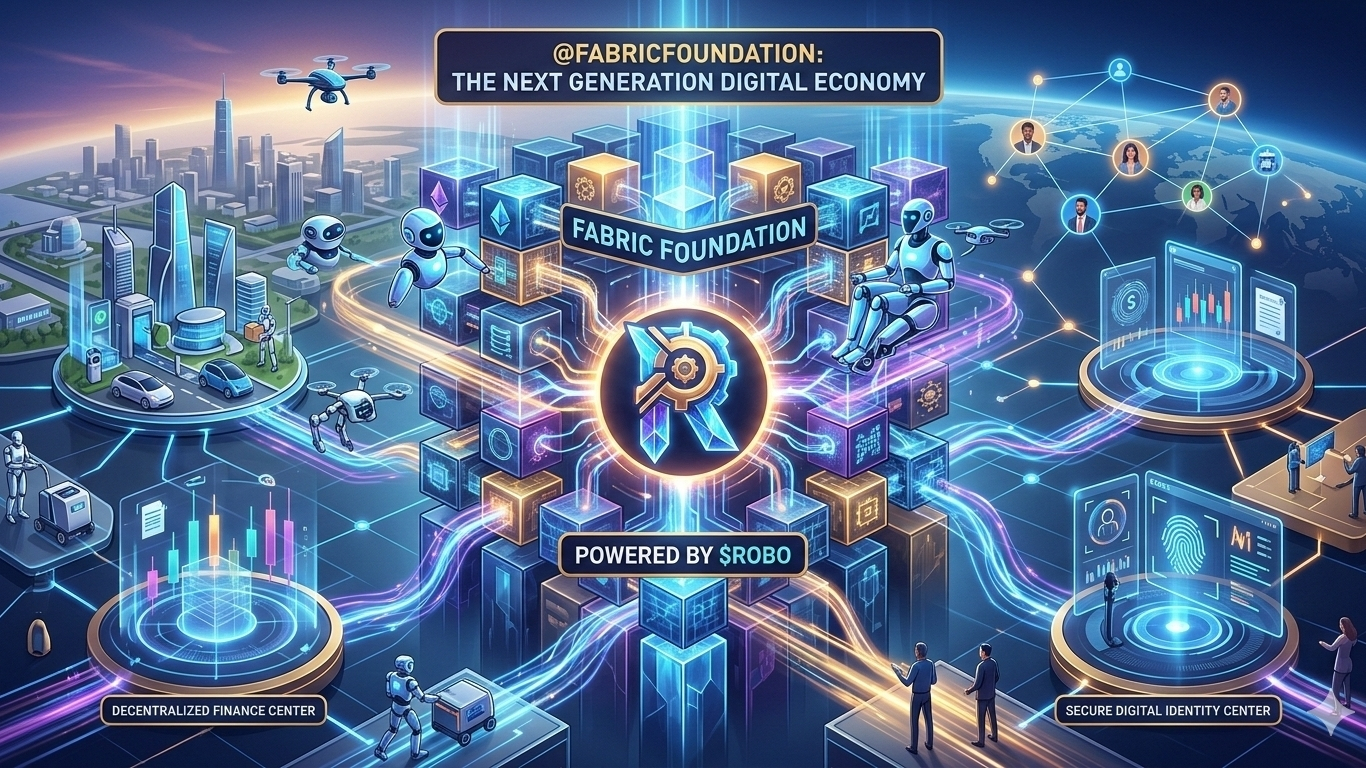
The potential applications of Fabric Foundation’s infrastructure are wide-ranging. It can support decentralized finance systems, automated digital services, secure identity management, and intelligent coordination between applications. These capabilities make Fabric Foundation relevant across multiple industries that require secure, transparent, and efficient digital solutions.
As the world becomes increasingly connected and automated, the importance of decentralized infrastructure will continue to grow. Fabric Foundation represents a major step toward building systems that are not only secure and transparent but also intelligent and autonomous. By combining blockchain trust with automation efficiency, the project is helping shape a future where digital systems can operate more independently and effectively.
$ROBO plays a central role in making this vision possible. It powers the ecosystem, supports participation, and enables the automated processes that define the Fabric network. Together, Fabric Foundation and $ROBO are creating a strong and flexible infrastructure designed for the demands of the modern digital era.
With its focus on decentralization, automation, scalability, and community-driven growth, Fabric Foundation is positioning itself as an important contributor to the evolution of digital technology. As adoption continues to expand, the ecosystem has the potential to influence how decentralized systems operate and how automation is integrated into everyday digital life. The journey of Fabric Foundation and $ROBO reflects a broader movement toward smarter, more secure, and more autonomous digital ecosystems that will define the future of technology. #ROBO
Fabric Foundation and $ROBO: Building a Smarter Infrastructure for the Autonomous Digital Age
The digital world is entering a new phase where automation, artificial intelligence, and decentralization are no longer separate innovations but interconnected forces shaping the future. @Fabric Foundation Fabric Foundation is emerging as a forward-thinking project focused on creating a decentralized infrastructure that allows intelligent systems to operate independently, securely, and efficiently. By integrating blockchain reliability with automation capabilities, Fabric Foundation is helping establish a foundation for the next generation of digital interaction.
Traditional digital systems often depend on centralized control, which can create limitations such as slower processes, lack of transparency, and vulnerability to single points of failure. @Fabric Foundation addresses these challenges by introducing a decentralized framework where systems can operate without relying on a central authority. This decentralized approach ensures that data, processes, and interactions remain secure, verifiable, and transparent to all participants.
At the center of this ecosystem is $ROBO , a utility token designed to power and maintain network operations. $ROBO enables seamless value exchange within the ecosystem and supports automated digital processes. It also plays a key role in incentivizing users, developers, and contributors who help strengthen and expand the network. By aligning incentives with participation, Fabric Foundation creates a self-sustaining environment where growth and innovation naturally reinforce each other.
One of the most important aspects of Fabric Foundation is its focus on enabling autonomous functionality. In this ecosystem, digital agents and decentralized applications can perform tasks without requiring constant human intervention. These tasks may include managing digital assets, verifying information, executing automated agreements, or supporting decentralized services. This level of automation improves efficiency while reducing the risk of human error and operational delays.
Developers benefit greatly from the infrastructure provided by Fabric Foundation. The platform offers a secure and scalable environment where new decentralized applications can be built and deployed. Instead of creating complex systems from scratch, developers can use Fabric’s existing infrastructure to build solutions more efficiently. This lowers barriers to innovation and allows creators to focus on delivering useful and impactful applications.
Security is another critical strength of the Fabric ecosystem. Blockchain technology ensures that all transactions and automated actions are recorded in a transparent and tamper-resistant manner. This provides users with confidence that their interactions and digital assets are protected. At the same time, decentralization reduces the risk associated with centralized failures, making the ecosystem more resilient and reliable.
Scalability is equally important for long-term success, and Fabric Foundation is designed with future growth in mind. As more users and applications join the network, the infrastructure is capable of supporting increased activity without compromising performance. This ensures that the ecosystem remains efficient and accessible even as adoption expands.
The role of $ROBO extends beyond simple transactions. It acts as the economic backbone of the ecosystem by supporting participation, enabling access to services, and encouraging long-term engagement. Users who hold and use $ROBO become active participants in the network’s development and sustainability. This creates a strong connection between the technology and its community.
@Fabric Foundation also supports the idea of an open and collaborative digital environment. By encouraging developer participation and community involvement, the ecosystem benefits from continuous improvement and innovation. This collaborative approach ensures that the platform can evolve over time to meet changing technological needs and opportunities.
The potential applications of Fabric Foundation’s infrastructure are wide-ranging. It can support decentralized finance systems, automated digital services, secure identity management, and intelligent coordination between applications. These capabilities make Fabric Foundation relevant across multiple industries that require secure, transparent, and efficient digital solutions.
As the world becomes increasingly connected and automated, the importance of decentralized infrastructure will continue to grow. Fabric Foundation represents a major step toward building systems that are not only secure and transparent but also intelligent and autonomous. By combining blockchain trust with automation efficiency, the project is helping shape a future where digital systems can operate more independently and effectively.
$ROBO plays a central role in making this vision possible. It powers the ecosystem, supports participation, and enables the automated processes that define the Fabric network. Together, Fabric Foundation and $ROBO are creating a strong and flexible infrastructure designed for the demands of the modern digital era.
With its focus on decentralization, automation, scalability, and community-driven growth, Fabric Foundation is positioning itself as an important contributor to the evolution of digital technology. As adoption continues to expand, the ecosystem has the potential to influence how decentralized systems operate and how automation is integrated into everyday digital life. The journey of Fabric Foundation and $ROBO reflects a broader movement toward smarter, more secure, and more autonomous digital ecosystems that will define the future of technology. #ROBO
Traditional digital systems often depend on centralized control, which can create limitations such as slower processes, lack of transparency, and vulnerability to single points of failure. @Fabric Foundation addresses these challenges by introducing a decentralized framework where systems can operate without relying on a central authority. This decentralized approach ensures that data, processes, and interactions remain secure, verifiable, and transparent to all participants.
At the center of this ecosystem is $ROBO , a utility token designed to power and maintain network operations. $ROBO enables seamless value exchange within the ecosystem and supports automated digital processes. It also plays a key role in incentivizing users, developers, and contributors who help strengthen and expand the network. By aligning incentives with participation, Fabric Foundation creates a self-sustaining environment where growth and innovation naturally reinforce each other.
One of the most important aspects of Fabric Foundation is its focus on enabling autonomous functionality. In this ecosystem, digital agents and decentralized applications can perform tasks without requiring constant human intervention. These tasks may include managing digital assets, verifying information, executing automated agreements, or supporting decentralized services. This level of automation improves efficiency while reducing the risk of human error and operational delays.
Developers benefit greatly from the infrastructure provided by Fabric Foundation. The platform offers a secure and scalable environment where new decentralized applications can be built and deployed. Instead of creating complex systems from scratch, developers can use Fabric’s existing infrastructure to build solutions more efficiently. This lowers barriers to innovation and allows creators to focus on delivering useful and impactful applications.
Security is another critical strength of the Fabric ecosystem. Blockchain technology ensures that all transactions and automated actions are recorded in a transparent and tamper-resistant manner. This provides users with confidence that their interactions and digital assets are protected. At the same time, decentralization reduces the risk associated with centralized failures, making the ecosystem more resilient and reliable.
Scalability is equally important for long-term success, and Fabric Foundation is designed with future growth in mind. As more users and applications join the network, the infrastructure is capable of supporting increased activity without compromising performance. This ensures that the ecosystem remains efficient and accessible even as adoption expands.
The role of $ROBO extends beyond simple transactions. It acts as the economic backbone of the ecosystem by supporting participation, enabling access to services, and encouraging long-term engagement. Users who hold and use $ROBO become active participants in the network’s development and sustainability. This creates a strong connection between the technology and its community.
@Fabric Foundation also supports the idea of an open and collaborative digital environment. By encouraging developer participation and community involvement, the ecosystem benefits from continuous improvement and innovation. This collaborative approach ensures that the platform can evolve over time to meet changing technological needs and opportunities.
The potential applications of Fabric Foundation’s infrastructure are wide-ranging. It can support decentralized finance systems, automated digital services, secure identity management, and intelligent coordination between applications. These capabilities make Fabric Foundation relevant across multiple industries that require secure, transparent, and efficient digital solutions.
As the world becomes increasingly connected and automated, the importance of decentralized infrastructure will continue to grow. Fabric Foundation represents a major step toward building systems that are not only secure and transparent but also intelligent and autonomous. By combining blockchain trust with automation efficiency, the project is helping shape a future where digital systems can operate more independently and effectively.
$ROBO plays a central role in making this vision possible. It powers the ecosystem, supports participation, and enables the automated processes that define the Fabric network. Together, Fabric Foundation and $ROBO are creating a strong and flexible infrastructure designed for the demands of the modern digital era.
With its focus on decentralization, automation, scalability, and community-driven growth, Fabric Foundation is positioning itself as an important contributor to the evolution of digital technology. As adoption continues to expand, the ecosystem has the potential to influence how decentralized systems operate and how automation is integrated into everyday digital life. The journey of Fabric Foundation and $ROBO reflects a broader movement toward smarter, more secure, and more autonomous digital ecosystems that will define the future of technology. #ROBO
2
35
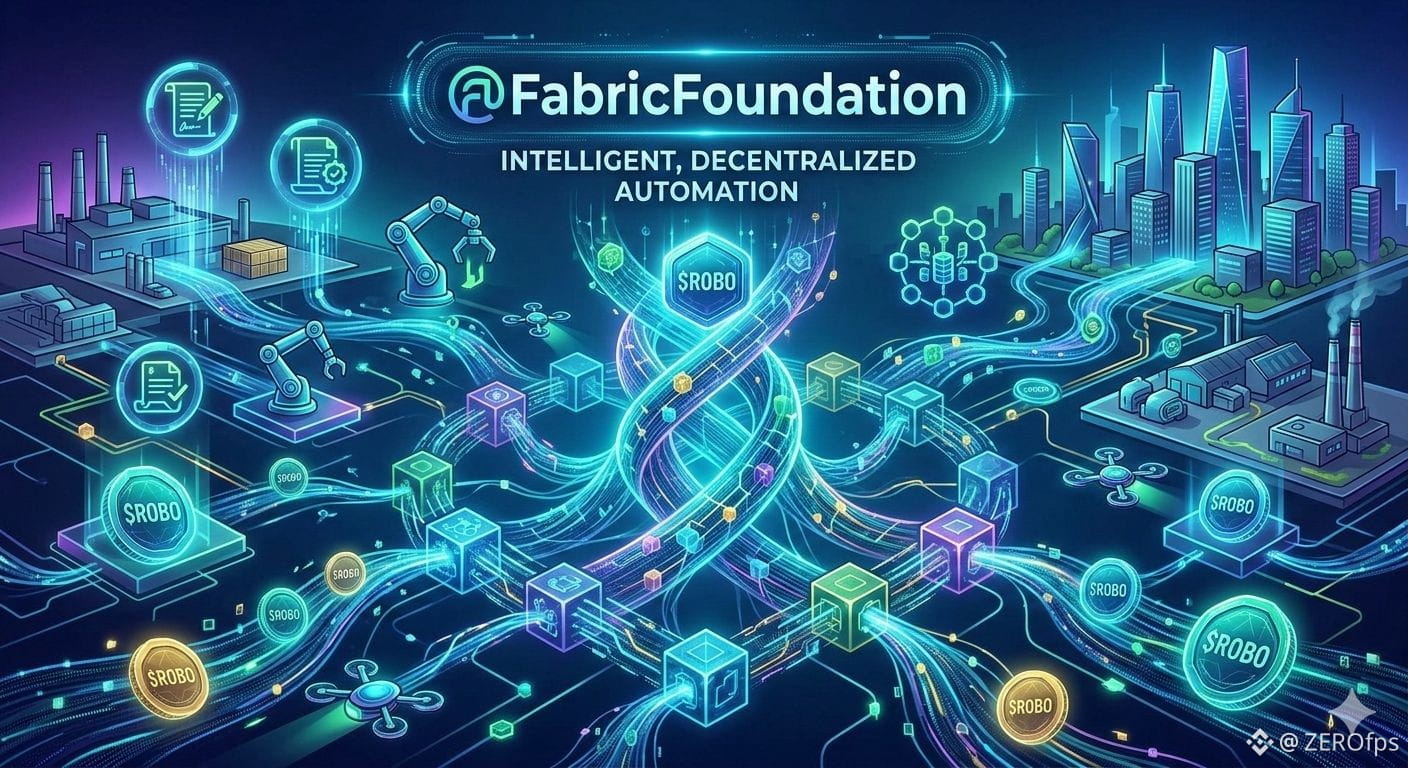
Blockchain technology is rapidly evolving, and @FabricFND is building an ecosystem designed to support intelligent, decentralized automation. By combining secure blockchain infrastructure with advanced automation capabilities, Fabric Foundation enables systems and applications to operate independently while maintaining transparency and trust. This approach opens new opportunities for developers, businesses, and users who want faster, more reliable decentralized solutions.
$ROBO is the core token that powers this ecosystem. It supports transactions, rewards participation, and enables automated services to function efficiently. With $ROBO, users can interact with decentralized applications, access network features, and contribute to the growth of the Fabric ecosystem. This creates a sustainable environment where innovation and participation are encouraged.
One of the most important aspects of @FabricFoundation is its focus on real-world utility. The ecosystem is designed to solve practical problems by enabling secure automation and decentralized coordination. This makes it valuable for industries that require efficiency, transparency, and scalability.
As decentralized technology continues to grow, projects like @FabricFoundation and tokens like $ROBO will play a key role in shaping the future. By empowering automation and secure digital interaction, the Fabric ecosystem represents an important step toward a smarter and more decentralized world.
#robo $ROBO
Blockchain technology is rapidly evolving, and @Fabric Foundation is building an ecosystem designed to support intelligent, decentralized automation. By combining secure blockchain infrastructure with advanced automation capabilities, Fabric Foundation enables systems and applications to operate independently while maintaining transparency and trust. This approach opens new opportunities for developers, businesses, and users who want faster, more reliable decentralized solutions.
$ROBO is the core token that powers this ecosystem. It supports transactions, rewards participation, and enables automated services to function efficiently. With $ROBO , users can interact with decentralized applications, access network features, and contribute to the growth of the Fabric ecosystem. This creates a sustainable environment where innovation and participation are encouraged.
One of the most important aspects of @FabricFoundation is its focus on real-world utility. The ecosystem is designed to solve practical problems by enabling secure automation and decentralized coordination. This makes it valuable for industries that require efficiency, transparency, and scalability.
As decentralized technology continues to grow, projects like @FabricFoundation and tokens like $ROBO will play a key role in shaping the future. By empowering automation and secure digital interaction, the Fabric ecosystem represents an important step toward a smarter and more decentralized world.
#robo $ROBO
$ROBO is the core token that powers this ecosystem. It supports transactions, rewards participation, and enables automated services to function efficiently. With $ROBO , users can interact with decentralized applications, access network features, and contribute to the growth of the Fabric ecosystem. This creates a sustainable environment where innovation and participation are encouraged.
One of the most important aspects of @FabricFoundation is its focus on real-world utility. The ecosystem is designed to solve practical problems by enabling secure automation and decentralized coordination. This makes it valuable for industries that require efficiency, transparency, and scalability.
As decentralized technology continues to grow, projects like @FabricFoundation and tokens like $ROBO will play a key role in shaping the future. By empowering automation and secure digital interaction, the Fabric ecosystem represents an important step toward a smarter and more decentralized world.
#robo $ROBO
37
Article
Fabric Foundation and $ROBO: Powering the Future of Decentralized Intelligent Automation@FabricFND is redefining the future of decentralized technology by combining blockchain infrastructure with intelligent automation powered by $ROBO. In a world where efficiency, transparency, and trust are essential, Fabric Foundation introduces a powerful ecosystem designed to support autonomous agents, smart coordination, and scalable innovation. The integration of AI-driven logic with secure blockchain architecture ensures that users, developers, and businesses can operate with confidence and flexibility.
$ROBO serves as the core utility token that fuels this ecosystem. It enables seamless transactions, incentivizes participation, and supports the execution of autonomous services across the Fabric network. With $ROBO, users gain access to a decentralized environment where machines and applications can interact, learn, and evolve without centralized control. This creates new opportunities for automation in finance, data management, digital identity, and beyond.
What makes @FabricFoundation truly exciting is its long-term vision. It is not just building a platform, but laying the foundation for a smarter digital economy where intelligent systems collaborate securely and efficiently. Developers can create powerful decentralized applications, while users benefit from faster, more reliable, and transparent services powered by $ROBO.
As blockchain adoption grows globally, projects like @FabricFoundation and tokens like $ROBO will play a critical role in shaping the next generation of technology. By focusing on innovation, scalability, and real-world utility, Fabric Foundation is positioning itself as a key contributor to the decentralized future. The journey ahead looks promising, and is $ROBO at the center of this transformation. #ROBO
Community engagement, open development, and continuous improvement are central to its mission. By empowering contributors and encouraging innovation, the ecosystem becomes stronger over time. Early supporters of $ROBO have the opportunity to be part of a revolutionary movement that connects artificial intelligence with decentralized infrastructure, unlocking new possibilities for global collaboration, automation, and digital ownership for the future of humanity everywhere.
#robo $ROBO
Fabric Foundation and $ROBO: Powering the Future of Decentralized Intelligent Automation
@Fabric Foundation is redefining the future of decentralized technology by combining blockchain infrastructure with intelligent automation powered by $ROBO . In a world where efficiency, transparency, and trust are essential, Fabric Foundation introduces a powerful ecosystem designed to support autonomous agents, smart coordination, and scalable innovation. The integration of AI-driven logic with secure blockchain architecture ensures that users, developers, and businesses can operate with confidence and flexibility.
$ROBO serves as the core utility token that fuels this ecosystem. It enables seamless transactions, incentivizes participation, and supports the execution of autonomous services across the Fabric network. With $ROBO , users gain access to a decentralized environment where machines and applications can interact, learn, and evolve without centralized control. This creates new opportunities for automation in finance, data management, digital identity, and beyond.
What makes @FabricFoundation truly exciting is its long-term vision. It is not just building a platform, but laying the foundation for a smarter digital economy where intelligent systems collaborate securely and efficiently. Developers can create powerful decentralized applications, while users benefit from faster, more reliable, and transparent services powered by $ROBO .
As blockchain adoption grows globally, projects like @FabricFoundation and tokens like $ROBO will play a critical role in shaping the next generation of technology. By focusing on innovation, scalability, and real-world utility, Fabric Foundation is positioning itself as a key contributor to the decentralized future. The journey ahead looks promising, and is $ROBO at the center of this transformation. #ROBO
Community engagement, open development, and continuous improvement are central to its mission. By empowering contributors and encouraging innovation, the ecosystem becomes stronger over time. Early supporters of $ROBO have the opportunity to be part of a revolutionary movement that connects artificial intelligence with decentralized infrastructure, unlocking new possibilities for global collaboration, automation, and digital ownership for the future of humanity everywhere.
#robo $ROBO
$ROBO serves as the core utility token that fuels this ecosystem. It enables seamless transactions, incentivizes participation, and supports the execution of autonomous services across the Fabric network. With $ROBO , users gain access to a decentralized environment where machines and applications can interact, learn, and evolve without centralized control. This creates new opportunities for automation in finance, data management, digital identity, and beyond.
What makes @FabricFoundation truly exciting is its long-term vision. It is not just building a platform, but laying the foundation for a smarter digital economy where intelligent systems collaborate securely and efficiently. Developers can create powerful decentralized applications, while users benefit from faster, more reliable, and transparent services powered by $ROBO .
As blockchain adoption grows globally, projects like @FabricFoundation and tokens like $ROBO will play a critical role in shaping the next generation of technology. By focusing on innovation, scalability, and real-world utility, Fabric Foundation is positioning itself as a key contributor to the decentralized future. The journey ahead looks promising, and is $ROBO at the center of this transformation. #ROBO
Community engagement, open development, and continuous improvement are central to its mission. By empowering contributors and encouraging innovation, the ecosystem becomes stronger over time. Early supporters of $ROBO have the opportunity to be part of a revolutionary movement that connects artificial intelligence with decentralized infrastructure, unlocking new possibilities for global collaboration, automation, and digital ownership for the future of humanity everywhere.
#robo $ROBO
6
Bitcoin is no longer just an experiment — it’s becoming a global financial reality.
From being called “worthless” to reaching record-breaking values, Bitcoin has proven its resilience time and time again. It represents freedom, decentralization, and the power of technology over traditional systems. While the market still moves with volatility, the long-term vision of Bitcoin continues to attract investors, developers, and believers around the world.
Some see risk. Others see opportunity.
The question is not whether Bitcoin will survive — it’s whether you will be early enough to witness its true potential.
#bitcoin #crypto $BTC #FutureOfFinance #DigitalGold
Bitcoin is no longer just an experiment — it’s becoming a global financial reality.
From being called “worthless” to reaching record-breaking values, Bitcoin has proven its resilience time and time again. It represents freedom, decentralization, and the power of technology over traditional systems. While the market still moves with volatility, the long-term vision of Bitcoin continues to attract investors, developers, and believers around the world.
Some see risk. Others see opportunity.
The question is not whether Bitcoin will survive — it’s whether you will be early enough to witness its true potential.
#bitcoin #crypto $BTC #FutureOfFinance #DigitalGold
From being called “worthless” to reaching record-breaking values, Bitcoin has proven its resilience time and time again. It represents freedom, decentralization, and the power of technology over traditional systems. While the market still moves with volatility, the long-term vision of Bitcoin continues to attract investors, developers, and believers around the world.
Some see risk. Others see opportunity.
The question is not whether Bitcoin will survive — it’s whether you will be early enough to witness its true potential.
#bitcoin #crypto $BTC #FutureOfFinance #DigitalGold

1
18
The idea of integrating Bitcoin into the U.S. Treasury under a Trump administration has sparked major conversations across the financial and crypto communities. While the concept might seem radical, it's not entirely out of sync with growing interest in decentralized assets as a hedge against inflation and global uncertainty. If digital assets like Bitcoin were to become part of the Treasury’s reserve strategy, it could mark a historical turning point in how nations perceive and utilize decentralized finance. Advocates argue that it would not only strengthen the dollar’s position globally but also signal to the world that the U.S. is serious about financial innovation. On the other hand, critics raise valid concerns about volatility, regulatory complications, and long-term economic implications. Whether it's symbolic or strategic, even the discussion alone brings crypto closer to mainstream policy debates. As global markets evolve, the intersection between politics and crypto is no longer hypothetical—it's becoming a serious consideration.
#TrumpBTCTreasury
The idea of integrating Bitcoin into the U.S. Treasury under a Trump administration has sparked major conversations across the financial and crypto communities. While the concept might seem radical, it's not entirely out of sync with growing interest in decentralized assets as a hedge against inflation and global uncertainty. If digital assets like Bitcoin were to become part of the Treasury’s reserve strategy, it could mark a historical turning point in how nations perceive and utilize decentralized finance. Advocates argue that it would not only strengthen the dollar’s position globally but also signal to the world that the U.S. is serious about financial innovation. On the other hand, critics raise valid concerns about volatility, regulatory complications, and long-term economic implications. Whether it's symbolic or strategic, even the discussion alone brings crypto closer to mainstream policy debates. As global markets evolve, the intersection between politics and crypto is no longer hypothetical—it's becoming a serious consideration.
#TrumpBTCTreasury
#TrumpBTCTreasury
7
$BTC TC remains the most dominant asset in the crypto market, and understanding its movement is crucial for any serious trader or investor. As the first cryptocurrency ever created, it not only carries historical weight but also sets the tone for broader market sentiment. When it experiences significant price shifts, it often causes ripple effects across altcoins and related assets. Many traders use it as a benchmark to gauge overall market health. In high volatility scenarios, it tends to act as both a safe haven and a risk asset, depending on global economic conditions and investor sentiment. Watching its price action, trading volume, and order book depth gives important clues about potential market trends. Whether you're trading short-term or investing long-term, recognizing support and resistance levels on it charts is essential. Moreover, macroeconomic news, institutional adoption, and regulatory developments frequently have a direct impact on its performance, making it a critical asset to monitor closely.
$BTC TC remains the most dominant asset in the crypto market, and understanding its movement is crucial for any serious trader or investor. As the first cryptocurrency ever created, it not only carries historical weight but also sets the tone for broader market sentiment. When it experiences significant price shifts, it often causes ripple effects across altcoins and related assets. Many traders use it as a benchmark to gauge overall market health. In high volatility scenarios, it tends to act as both a safe haven and a risk asset, depending on global economic conditions and investor sentiment. Watching its price action, trading volume, and order book depth gives important clues about potential market trends. Whether you're trading short-term or investing long-term, recognizing support and resistance levels on it charts is essential. Moreover, macroeconomic news, institutional adoption, and regulatory developments frequently have a direct impact on its performance, making it a critical asset to monitor closely.
26
$ADA has steadily positioned itself as a prominent player in the blockchain ecosystem, driven by a strong academic foundation and a focus on scalability, sustainability, and interoperability. Traders and investors are drawn to it not just for its price action, but for the long-term vision of the network it supports. When analyzing $ADA, it’s important to look beyond short-term volatility and consider the broader roadmap—especially the impact of network upgrades and smart contract integrations. Technical traders often monitor key levels and trend indicators such as moving averages, Fibonacci retracements, and volume spikes to identify potential setups. Meanwhile, long-term holders pay close attention to staking opportunities and overall network activity. While it may not always deliver explosive moves like some lesser-known assets, its steady development and strong community support make it a compelling option for diversified strategies. As always, staying updated on project developments and broader market trends helps make smarter decisions when trading it.
$ADA has steadily positioned itself as a prominent player in the blockchain ecosystem, driven by a strong academic foundation and a focus on scalability, sustainability, and interoperability. Traders and investors are drawn to it not just for its price action, but for the long-term vision of the network it supports. When analyzing $ADA , it’s important to look beyond short-term volatility and consider the broader roadmap—especially the impact of network upgrades and smart contract integrations. Technical traders often monitor key levels and trend indicators such as moving averages, Fibonacci retracements, and volume spikes to identify potential setups. Meanwhile, long-term holders pay close attention to staking opportunities and overall network activity. While it may not always deliver explosive moves like some lesser-known assets, its steady development and strong community support make it a compelling option for diversified strategies. As always, staying updated on project developments and broader market trends helps make smarter decisions when trading it.
18
Cardano continues to stir up debate in the crypto community, drawing strong opinions from both supporters and skeptics. Some admire its academic and peer-reviewed approach to development, arguing that this method ensures a more secure and scalable foundation over time. Its focus on formal verification and slow, methodical upgrades sets it apart from projects that prioritize speed over scrutiny. On the flip side, critics argue that this same cautious approach has delayed adoption and left Cardano trailing in terms of ecosystem growth and developer activity. The debate often boils down to a philosophical difference—should a blockchain prioritize innovation speed, or should it strive for precision and long-term sustainability? As the ecosystem matures and more smart contracts and dApps come online, the real-world impact of Cardano’s strategy will become clearer. Whether you're on the side of praise or critique, there's no denying that Cardano has earned its place as one of the most discussed platforms in crypto.
#CardanoDebate
Cardano continues to stir up debate in the crypto community, drawing strong opinions from both supporters and skeptics. Some admire its academic and peer-reviewed approach to development, arguing that this method ensures a more secure and scalable foundation over time. Its focus on formal verification and slow, methodical upgrades sets it apart from projects that prioritize speed over scrutiny. On the flip side, critics argue that this same cautious approach has delayed adoption and left Cardano trailing in terms of ecosystem growth and developer activity. The debate often boils down to a philosophical difference—should a blockchain prioritize innovation speed, or should it strive for precision and long-term sustainability? As the ecosystem matures and more smart contracts and dApps come online, the real-world impact of Cardano’s strategy will become clearer. Whether you're on the side of praise or critique, there's no denying that Cardano has earned its place as one of the most discussed platforms in crypto.
#CardanoDebate
#CardanoDebate
1
$ETH/USD remains one of the most actively traded pairs in the crypto market, second only to Bitcoin in both volume and influence. Ethereum has evolved far beyond being just a digital currency — it's the foundation for DeFi, NFTs, and countless decentralized applications. Price movements in $ETH/USD often reflect the market’s sentiment on blockchain innovation and adoption. Currently, traders are closely monitoring the $3,800–$4,000 resistance zone, while support lies near $3,400. Technical indicators like Bollinger Bands and moving averages suggest increasing volatility, which may precede a decisive breakout. With Ethereum's recent upgrades and scaling solutions like Layer 2s gaining traction, many believe the fundamentals are stronger than ever. Long-term holders view $ETH #as a play on the future of decentralized tech, while day traders watch it for its liquidity and volatility. Whether you’re in it for the tech or the trading opportunity, ETH/USD continues to be a core market to understand.
$ETH /USD remains one of the most actively traded pairs in the crypto market, second only to Bitcoin in both volume and influence. Ethereum has evolved far beyond being just a digital currency — it's the foundation for DeFi, NFTs, and countless decentralized applications. Price movements in $ETH /USD often reflect the market’s sentiment on blockchain innovation and adoption. Currently, traders are closely monitoring the $3,800–$4,000 resistance zone, while support lies near $3,400. Technical indicators like Bollinger Bands and moving averages suggest increasing volatility, which may precede a decisive breakout. With Ethereum's recent upgrades and scaling solutions like Layer 2s gaining traction, many believe the fundamentals are stronger than ever. Long-term holders view $ETH #as a play on the future of decentralized tech, while day traders watch it for its liquidity and volatility. Whether you’re in it for the tech or the trading opportunity, ETH/USD continues to be a core market to understand.
57
$BTC continues to be the heartbeat of the cryptocurrency market, acting as a critical indicator of overall market sentiment. Bitcoin, as the leading digital asset, tends to influence the direction of altcoins and often reacts strongly to macroeconomic factors like interest rate decisions, inflation data, and geopolitical instability. Recently, Bitcoin's price action has shown a strong correlation with U.S. stock indices, especially tech-heavy ones, making cross-market analysis more relevant than ever. Traders are keeping a close eye on resistance levels around $72,000 and support near $63,000. A breakout above or below these levels could signal a major shift in momentum. Long-term investors are also closely monitoring the halving narrative and institutional adoption trends. Whether you're scalping short moves or holding through market cycles, understanding price behavior on the BTC/USD pair is essential. It remains the most traded and most watched crypto asset on the planet — for good reason.
$BTC continues to be the heartbeat of the cryptocurrency market, acting as a critical indicator of overall market sentiment. Bitcoin, as the leading digital asset, tends to influence the direction of altcoins and often reacts strongly to macroeconomic factors like interest rate decisions, inflation data, and geopolitical instability. Recently, Bitcoin's price action has shown a strong correlation with U.S. stock indices, especially tech-heavy ones, making cross-market analysis more relevant than ever. Traders are keeping a close eye on resistance levels around $72,000 and support near $63,000. A breakout above or below these levels could signal a major shift in momentum. Long-term investors are also closely monitoring the halving narrative and institutional adoption trends. Whether you're scalping short moves or holding through market cycles, understanding price behavior on the BTC/USD pair is essential. It remains the most traded and most watched crypto asset on the planet — for good reason.
3
The Israel-Iran conflict represents one of the most complex and longstanding geopolitical tensions in the Middle East. Rooted in ideological, strategic, and regional power rivalries, the friction between the two nations has far-reaching implications beyond their borders. Iran’s support for groups like Hezbollah and its nuclear ambitions have long been seen as existential threats by Israel. In response, Israel has carried out numerous covert operations and airstrikes targeting Iranian assets and proxies in Syria and other areas. The tension isn’t just military—it plays out diplomatically and economically, influencing global oil prices and international alliances. While open warfare hasn’t broken out directly between the two, the shadow conflict is very real, driven by cyberattacks, espionage, and proxy wars. As regional and global powers take sides or call for de-escalation, the situation remains volatile. Understanding this conflict is essential for anyone trying to grasp the broader Middle Eastern geopolitical landscape.
#IsraelIranConflict
The Israel-Iran conflict represents one of the most complex and longstanding geopolitical tensions in the Middle East. Rooted in ideological, strategic, and regional power rivalries, the friction between the two nations has far-reaching implications beyond their borders. Iran’s support for groups like Hezbollah and its nuclear ambitions have long been seen as existential threats by Israel. In response, Israel has carried out numerous covert operations and airstrikes targeting Iranian assets and proxies in Syria and other areas. The tension isn’t just military—it plays out diplomatically and economically, influencing global oil prices and international alliances. While open warfare hasn’t broken out directly between the two, the shadow conflict is very real, driven by cyberattacks, espionage, and proxy wars. As regional and global powers take sides or call for de-escalation, the situation remains volatile. Understanding this conflict is essential for anyone trying to grasp the broader Middle Eastern geopolitical landscape.
#IsraelIranConflict
#IsraelIranConflict
6
$BTC remains the cornerstone of the crypto market, often acting as a barometer for overall market sentiment. Its price movement not only affects investor confidence but also tends to influence the direction of most other assets. Traders closely monitor it for breakout patterns, support and resistance zones, and macroeconomic correlations. As the oldest and most recognized cryptocurrency, it offers high liquidity and deep market depth, making it suitable for both short-term strategies and long-term holding. Whether you’re day trading or investing for the long haul, understanding how it reacts to news, global events, and institutional movements is crucial. Volatility is part of its identity, but that volatility creates opportunities for well-informed traders. Risk management is key, especially when dealing with leverage, and keeping an eye on indicators like volume, RSI, and moving averages can provide valuable insight. At the end of the day, mastering $BTC’s behavior helps shape a more confident and strategic trading journey.
$BTC remains the cornerstone of the crypto market, often acting as a barometer for overall market sentiment. Its price movement not only affects investor confidence but also tends to influence the direction of most other assets. Traders closely monitor it for breakout patterns, support and resistance zones, and macroeconomic correlations. As the oldest and most recognized cryptocurrency, it offers high liquidity and deep market depth, making it suitable for both short-term strategies and long-term holding. Whether you’re day trading or investing for the long haul, understanding how it reacts to news, global events, and institutional movements is crucial. Volatility is part of its identity, but that volatility creates opportunities for well-informed traders. Risk management is key, especially when dealing with leverage, and keeping an eye on indicators like volume, RSI, and moving averages can provide valuable insight. At the end of the day, mastering $BTC ’s behavior helps shape a more confident and strategic trading journey.
36
In recent times, the term Trump Traffic has started to trend, and not just in political circles. Whether you're talking about online engagement, physical rallies, or media coverage, anything involving Donald Trump tends to attract massive attention—sometimes to the point of gridlock. From streets being shut down during appearances to websites crashing due to overwhelming traffic spikes, the Trump effect is real. This phenomenon extends beyond traditional politics and into pop culture, finance, and digital media. Platforms experience a surge in traffic every time Trump makes a public statement, launches a product, or becomes the focus of controversy. For marketers, analysts, and even investors, understanding how this kind of high-impact traffic works is crucial. It’s a blend of virality, polarization, and personality-driven branding. Whether you're for or against him, there's no denying the ripple effect his presence creates online and offline. The key is learning how to navigate or leverage that traffic smartly.
#TrumpTariffs
In recent times, the term Trump Traffic has started to trend, and not just in political circles. Whether you're talking about online engagement, physical rallies, or media coverage, anything involving Donald Trump tends to attract massive attention—sometimes to the point of gridlock. From streets being shut down during appearances to websites crashing due to overwhelming traffic spikes, the Trump effect is real. This phenomenon extends beyond traditional politics and into pop culture, finance, and digital media. Platforms experience a surge in traffic every time Trump makes a public statement, launches a product, or becomes the focus of controversy. For marketers, analysts, and even investors, understanding how this kind of high-impact traffic works is crucial. It’s a blend of virality, polarization, and personality-driven branding. Whether you're for or against him, there's no denying the ripple effect his presence creates online and offline. The key is learning how to navigate or leverage that traffic smartly.
#TrumpTariffs
#TrumpTariffs
25
To succeed in crypto trading, having the right tools is just as important as having the right strategy. Trading tools help you make informed decisions, manage risks, and execute trades more effectively. Charting platforms allow traders to visualize price movements and apply technical indicators like RSI, MACD, or moving averages to identify trends. Price alert tools keep you updated when the market hits key levels, so you never miss an opportunity. Portfolio trackers are essential for monitoring your overall performance and keeping tabs on gains or losses. More advanced tools, like trading bots, can automate strategies, removing emotional bias and operating 24/7. Risk management calculators help determine position size based on stop-loss levels and account balance. Even something as simple as a reliable news aggregator can give you a competitive edge by delivering timely market-moving information. The key is knowing which tools align with your trading style and integrating them into your routine for smarter, faster decisions.
#TradingTools101
To succeed in crypto trading, having the right tools is just as important as having the right strategy. Trading tools help you make informed decisions, manage risks, and execute trades more effectively. Charting platforms allow traders to visualize price movements and apply technical indicators like RSI, MACD, or moving averages to identify trends. Price alert tools keep you updated when the market hits key levels, so you never miss an opportunity. Portfolio trackers are essential for monitoring your overall performance and keeping tabs on gains or losses. More advanced tools, like trading bots, can automate strategies, removing emotional bias and operating 24/7. Risk management calculators help determine position size based on stop-loss levels and account balance. Even something as simple as a reliable news aggregator can give you a competitive edge by delivering timely market-moving information. The key is knowing which tools align with your trading style and integrating them into your routine for smarter, faster decisions.
#TradingTools101
#TradingTools101
20
Understanding trading pairs is essential for anyone entering the world of crypto trading. A trading pair shows how much of one asset is needed to purchase another, and it's the backbone of every transaction on an exchange. For beginners, it's easy to get confused, especially when moving between different types of pairs — like crypto-to-crypto versus crypto-to-fiat. The key to mastering trading pairs is recognizing what each pair is telling you about value and market demand. Knowing how to read charts and watch liquidity for these pairs helps identify better entry and exit points. Additionally, selecting the right trading pairs can affect fees, speed, and even your strategy. It's not just about buying and selling; it's about doing it in a way that aligns with your goals and the market conditions. Always analyze the volume and spread before trading. Remember, the pair you choose matters as much as the asset itself.
#TradingPairs101
Understanding trading pairs is essential for anyone entering the world of crypto trading. A trading pair shows how much of one asset is needed to purchase another, and it's the backbone of every transaction on an exchange. For beginners, it's easy to get confused, especially when moving between different types of pairs — like crypto-to-crypto versus crypto-to-fiat. The key to mastering trading pairs is recognizing what each pair is telling you about value and market demand. Knowing how to read charts and watch liquidity for these pairs helps identify better entry and exit points. Additionally, selecting the right trading pairs can affect fees, speed, and even your strategy. It's not just about buying and selling; it's about doing it in a way that aligns with your goals and the market conditions. Always analyze the volume and spread before trading. Remember, the pair you choose matters as much as the asset itself.
#TradingPairs101
#TradingPairs101
1
10
Liquidity is one of the most important yet overlooked aspects of trading, especially in the crypto market. At its core, liquidity refers to how quickly and easily an asset can be bought or sold without causing significant price movement. High liquidity means there are enough buyers and sellers in the market to accommodate large trades without major slippage. Low liquidity, on the other hand, can lead to volatile price swings and difficulty executing trades at desired prices. For traders, understanding liquidity is crucial for managing risk. It's not just about finding opportunities; it's about ensuring you can enter and exit positions efficiently. Factors like trading volume, market depth, and spread give insight into liquidity levels. New traders often mistake price movement for opportunity, forgetting that liquidity determines how realistic those opportunities are. Before trading, always consider the liquidity of the asset to avoid getting trapped in illiquid markets where the cost of trading becomes much higher.
#Liquidity101
Liquidity is one of the most important yet overlooked aspects of trading, especially in the crypto market. At its core, liquidity refers to how quickly and easily an asset can be bought or sold without causing significant price movement. High liquidity means there are enough buyers and sellers in the market to accommodate large trades without major slippage. Low liquidity, on the other hand, can lead to volatile price swings and difficulty executing trades at desired prices. For traders, understanding liquidity is crucial for managing risk. It's not just about finding opportunities; it's about ensuring you can enter and exit positions efficiently. Factors like trading volume, market depth, and spread give insight into liquidity levels. New traders often mistake price movement for opportunity, forgetting that liquidity determines how realistic those opportunities are. Before trading, always consider the liquidity of the asset to avoid getting trapped in illiquid markets where the cost of trading becomes much higher.
#Liquidity101
#Liquidity101
1
13
Log in to explore more content
Join global crypto users on Binance Square
⚡️ Get latest and useful information about crypto.
💬 Trusted by the world’s largest crypto exchange.
👍 Discover real insights from verified creators.
Email / Phone number
Trending Topics
ClarityActFacesProceduralVoteSept15
19,170 views
334 Discussing
#clarityactfacesproceduralvotesept15
🚨 CLARITY Act Faces Procedural Vote September 15 🚨
The Senate chamber is quiet, but the crypto market is already watching the clock. On September 15, one procedural vote could determine whether a major U.S. crypto market-structure bill gets its chance to move forward.
The CLARITY Act is not facing final passage that day. Senators are expected to vote on a motion to proceed, a critical procedural step that requires 60 votes to clear the Senate hurdle.
That distinction matters. A successful vote would not make the bill law, but it would open the door to further Senate consideration and negotiations.
The stakes are substantial because the legislation aims to establish clearer rules around digital assets and determine how responsibilities are divided between U.S. regulators.
The latest 630-page revision also adds provisions addressing certain non-decentralized trading protocols, while several political and regulatory disagreements remain unresolved.
My take: September 15 should be viewed less as a victory-or-defeat day and more as a credibility test. Clearing the procedural barrier could strengthen confidence that U.S. crypto legislation is moving toward a clearer framework. Failure could extend uncertainty.
For crypto markets, regulatory clarity can influence institutional participation, business decisions, and how investors price U.S. exposure. But expectations can move faster than legislation itself.
The real signal is not whether crypto gets clarity overnight, but whether lawmakers can finally build enough consensus to move the process forward.
Will the September 15 vote become a turning point for U.S. crypto regulation, or another delay?
Disclaimer: This article is for educational purposes only and is not financial advice. Conduct your own research and manage risk carefully.
#CryptoRegulation #Bitcoin #GrowWithSAC $SUI $NEAR $BNB
#ClarityActFacesProceduralVoteSept15
Sienna Leo-你真棒-带我走
·3 Likes
·2.8k views
US2YearYieldRisesTo4.61%
20,738 views
413 Discussing
US10YearTreasuryYieldNears5%
10,712 views
240 Discussing