
小家日记
143 Posts

小家日记
Report
Block User
为交易而活,每天更新一些交易思路和心得,希望对你有帮助,粉丝到一千抽五个安排红包🌹
3 Following
7 Followers
54 Liked
Posts
PINNED
·
--
Thank you all so much for watching! If you'd like to chat, you can join the group chat pinned on my profile or add the contact below. I'll share any promising trades or strategies 🙂
@XJ001
Thank you all so much for watching! If you'd like to chat, you can join the group chat pinned on my profile or add the contact below. I'll share any promising trades or strategies 🙂
@小家日记
@小家日记

1
83
·
--
Turned 600U into 60,000U, lost it all overnight and was left with 1,700U—then, four and a half months later, his account had grown to 200,000U!
The most shocking part wasn’t that he made 200,000U. It was that he once watched 60,000U plunge all the way back down to 1,700U in a single blow.
After that massive loss, he uninstalled his trading app and disappeared for several days. Everyone around him thought he was done for good. But when he came back, he said just one thing: “This time, I’m not trying to win it all back. I’m starting over with 1,700U.”
Later, while ETH fluctuated repeatedly between 3,200U and 3,700U, traders chasing rallies and selling dips got whipsawed. He, on the other hand, started again with that 1,700U and grew his account to 200,000U in four and a half months.
Looking back at his trades, there are three details worth studying:
1. Completely let go of past losses.
He stopped thinking about when he would earn back the 60,000U and stopped putting pressure on himself by comparing his current account with its former size. Every day, he focused only on his current funds and the next trade, without rushing into trades just to make his money back.
2. Split the 1,700U into three portions, with a maximum loss of 20U per trade.
Each portion was about 550U. He set a stop-loss in advance for every trade and exited once the loss reached 20U. After a profitable trade, he first locked in some of the gains. Only after three consecutive profitable trades would he consider using realized profits to increase the size of the next round of trades.
3. Trade no more than twice a day and keep a record of every order.
He recorded entry screenshots, stop-loss levels, and reasons for exiting. During his evening review, he didn’t just check profits and losses; he also looked for early entries, last-minute position increases, or stop-losses moved without a plan.
The most interesting thing about this story is that the first time he reached 60,000U, he did it by daring to take risks. When he started over with 1,700U, he began paying much closer attention to the cost of every trade. Same person, same market—but when he grew his account from 1,700U to 200,000U, what truly changed wasn’t the market. It was how he handled each trade. @XJ001
Turned 600U into 60,000U, lost it all overnight and was left with 1,700U—then, four and a half months later, his account had grown to 200,000U!
The most shocking part wasn’t that he made 200,000U. It was that he once watched 60,000U plunge all the way back down to 1,700U in a single blow.
After that massive loss, he uninstalled his trading app and disappeared for several days. Everyone around him thought he was done for good. But when he came back, he said just one thing: “This time, I’m not trying to win it all back. I’m starting over with 1,700U.”
Later, while ETH fluctuated repeatedly between 3,200U and 3,700U, traders chasing rallies and selling dips got whipsawed. He, on the other hand, started again with that 1,700U and grew his account to 200,000U in four and a half months.
Looking back at his trades, there are three details worth studying:
1. Completely let go of past losses.
He stopped thinking about when he would earn back the 60,000U and stopped putting pressure on himself by comparing his current account with its former size. Every day, he focused only on his current funds and the next trade, without rushing into trades just to make his money back.
2. Split the 1,700U into three portions, with a maximum loss of 20U per trade.
Each portion was about 550U. He set a stop-loss in advance for every trade and exited once the loss reached 20U. After a profitable trade, he first locked in some of the gains. Only after three consecutive profitable trades would he consider using realized profits to increase the size of the next round of trades.
3. Trade no more than twice a day and keep a record of every order.
He recorded entry screenshots, stop-loss levels, and reasons for exiting. During his evening review, he didn’t just check profits and losses; he also looked for early entries, last-minute position increases, or stop-losses moved without a plan.
The most interesting thing about this story is that the first time he reached 60,000U, he did it by daring to take risks. When he started over with 1,700U, he began paying much closer attention to the cost of every trade. Same person, same market—but when he grew his account from 1,700U to 200,000U, what truly changed wasn’t the market. It was how he handled each trade. @小家日记

·
--
With less than 100,000 in capital, is crypto trading easier to stick to when you keep it simple?
I’ve been wondering about something: Why do some people study a whole bunch of indicators, yet get worse trading results than those who watch just a few simple signals?
Especially when you have less than 100,000 in capital, an overly complicated strategy may not be a good thing. With limited funds and a high trading frequency, it’s easy to get caught in a cycle of constant trial and error and endless adjustments.
Would simplifying your trading actually make things easier to see clearly?
For example, start by looking at the trend. If the daily chart is clearly moving upward, use MACD to gauge its strength, then add coins that meet your criteria to a watchlist. For assets whose prices keep swinging back and forth without a clear direction, would sitting them out for now help avoid a lot of unnecessary trades?
Then there’s managing your positions. If the price is following the moving average, keep observing. If it decisively breaks below a key level, reassess—instead of continuing to hope for a rebound just because you bought in.
The same goes for position sizing. Don’t rush to make a big first bet. Wait for the market to confirm your initial judgment, then consider whether to add to your position. If you got the direction wrong, is adding more really improving your cost basis, or are you just unwilling to admit your judgment was mistaken?
And stop-losses: Many people only think about them after entering a trade, but shouldn’t the order be reversed? First decide how much you can afford to lose, then calculate your position size based on the distance to your stop-loss.
At the end of the day, do small-capital traders really need to make things so complicated?
The trend tells you where to look, position sizing determines how much volatility you can withstand, and the stop-loss determines the cost of getting your judgment wrong. Thinking through these few questions may be more practical than studying a dozen indicators every day. @Square-Creator-3b44b38ee1b9f $HUMA

1
1
·
--
Keep getting liquidated and think you’re just unlucky? Maybe you haven’t even figured out how to scale up with profits!
Many people trade futures: when they’re in profit, they’re reluctant to add to their positions; when they’re losing, they keep averaging down. As soon as the market moves enough to show a little profit, they rush to cash out. But when they get the direction wrong, they start adding to their positions to lower their average entry price. In the end, the problem isn’t that they missed the move—it’s that their trading approach was flawed from the start.
Scaling up with profits doesn’t mean continually increasing your position size. It means gradually putting your profits to work in subsequent trades. Let’s use an account with 10,000 USDT as an example. I’d break the process into three stages:
Step 1: Test the direction with a small position.
Don’t use up all your capital as soon as you enter a trade. Start with a small position and observe the market. Set your stop-loss level before entering. If your assessment is wrong, exit promptly; don’t try to change your average entry price by adding to a losing position.
Step 2: Wait for the profit to be confirmed before considering adding to your position.
Being in unrealized profit on your first trade doesn’t mean you should add immediately. Check whether the trend is continuing, whether key levels have been broken, and whether your original trade rationale still holds. Only if the conditions are met should you consider using part of your profits to participate in the next leg of the move.
Step 3: Reassess your risk as your account grows.
For example, if your 10,000 USDT account grows to 12,000 USDT, don’t double your position just because you have an extra 2,000 USDT. Recalculate your overall risk every time you add to your position. If the market reverses, reduce your position when needed. Don’t let profits you’ve already made turn into new losses.
One more thing: don’t treat high leverage as a tool for scaling up with profits. 100x leverage may seem like an efficient use of capital, but even a slight move in the opposite direction can trigger liquidation. Saying you’re only risking your profits doesn’t mean your account is actually risk-free.
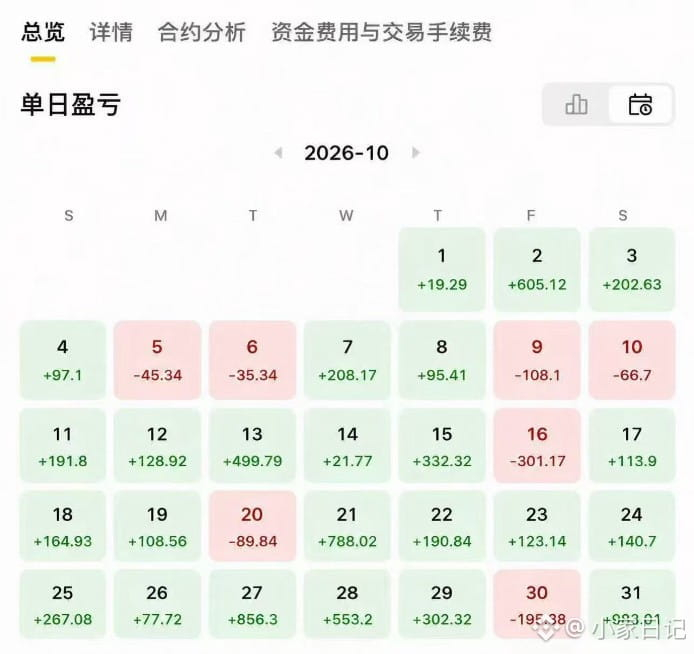
Scaling up with profits isn’t about relentlessly increasing your position size. It’s about giving your profits a chance to generate further returns while keeping the cost of each wrong call within an acceptable range. @Square-Creator-3b44b38ee1b9f $HUMA
1
·
--
Can you turn things around by compounding with 1,000U? It all comes down to how you handle your first profitable trade.
If you want to build your account through compounding, the biggest mistake is putting all your chips on the table right from the start.
Many people think compounding means adding more after a win and doubling down after a loss, hoping one market move will multiply their money several times over. But experienced traders don’t treat their first trade as a chance to turn things around—they treat it as a test.
Say you have 1,000U in your account. I wouldn’t put it all in from the start. I’d set aside 300–500U as trading capital and keep the rest in reserve. The first trade is mainly about checking whether the direction and entry point are right. If the judgment is wrong, exit according to plan. Only consider adding to the next trade once the judgment has been validated.
When is it worth continuing?
I mainly look at three things: whether the trend is continuing, whether a key level has been confirmed, and whether there’s a clear exit condition after entering. If the expected return isn’t at least twice the potential loss, I usually don’t rush into a trade.
One more detail: having profits in your account doesn’t mean you can take on more risk indiscriminately. Recalculate your total potential loss every time you add to a position. Don’t let earlier profits turn later trades into high-stakes bets. Decide in advance how much you can afford to lose on a single trade, based on your account size and risk tolerance.
When your account grows from 1,000U to 3,000U, don’t rush to increase your position size proportionally. You could withdraw some of your realized profits, then adjust how you use your capital based on your trading records. What compounds is profit that has been validated—not an ever-growing bet. @Square-Creator-3b44b38ee1b9f $HUMA

·
--
The most frightening aftereffect of crypto trading: even slow, steady gains start to feel unbearable
Many people aren’t unable to make money. They’ve simply been spoiled by the extreme volatility of the crypto market and can no longer appreciate a normal pace of returns.
A 5% gain feels too small, a 10% gain isn’t satisfying enough, and after two days without market action, they start itching to trade. They used to think steadily building wealth over a month was pretty good. Now they expect to see results within hours. This isn’t just greed—it’s a change in their trading habits.
This is especially obvious with futures. Prices jump every second, and account balances fluctuate constantly. You might make a few hundred U today, then lose it all tomorrow. When you’re constantly exposed to this kind of immediate feedback, it’s easy to develop the illusion that as long as you’re willing to trade, your money should change right away.
Then this mindset spills over into everyday life. You get frustrated that your salary isn’t rising fast enough, that saving takes too long, or that a project hasn’t paid off after a few days, so you want to change direction. Even your trading starts to get distorted: entering before there’s a signal, wanting to increase your position as soon as you make a small profit, and rushing to win back your losses.
I think this is the cost of crypto trading that people tend to overlook.
The market may occasionally give you a chance to make a huge gain, but that doesn’t mean this pace is normal. If you make short-term windfalls your benchmark, everything else you do will seem too slow.
What you really need to watch out for isn’t a single loss, but beginning to lose the ability to accept normal returns. When even waiting feels unbearable, trading can easily become about chasing thrills rather than looking for opportunities. @Square-Creator-3b44b38ee1b9f $HUMA

1
·
--
The scariest consequence of contract trading isn’t losing money—it’s losing patience.
When you first start out, you won’t place a trade if there’s no signal all day, and you’re happy to take profit after making a few points. But the longer you trade, the bigger your appetite can get. Making a few dozen U in a day starts to feel pointless; placing only two or three trades in a week feels like too little. You see the candlesticks moving and want to get in on the action.
I’ve seen plenty of accounts whose trading histories were fairly clean at first. Then, when you look at their past orders, they’re packed with entries. Chasing rallies, reversing positions, adding to positions, reversing again—the fees keep piling up, while the market moves they were truly confident about pass them by.
Worse still, once your trading frequency goes up, your judgment can get distorted too. You get stopped out and immediately want to win it back; you make a profit and want to ride the momentum and earn more. At first, you only entered when specific conditions were met. Gradually, you start feeling that you have to do something whenever the price moves.
When I review a contract trading history now, I look at three numbers first: how many trades were placed in a week, how many followed the original plan, and how much of the loss came from changing decisions on the fly.
If the number of orders suddenly rises and more trades fall outside the plan, that’s a sign your trading rhythm is already off track. Adding to your position at that point will only make your mistakes more expensive.
Contract trading isn’t a job that makes money every day. Not placing an order when there’s no signal is part of the trading plan. @Square-Creator-3b44b38ee1b9f $HUMA
1
·
--
From 1000U to 10,000U, the truly difficult part is the few hurdles in between
What is most likely to go wrong is not the first trade, but after the account grows from 1000U to 2000U. At first, making 100U feels pretty good. When you make 500U, you start thinking normal fluctuations are too slow; once the account has 2000U, you want to double the size of each position. As a result, the trading method does not change, but the losses you have to bear keep getting larger.
When I manage a small account, I divide it into several stages:
In the 1000U stage, I first use small positions to test the strategy, focusing on recording the entry reason for each trade, the stop-loss level, and the actual profit and loss, without rushing to scale up capital.
After reaching 2000U, I do not increase leverage directly, but instead look at the trading records from the recent period. If the profits mainly come from one or two lucky trades, the position size stays the same; if multiple trades are executed according to plan, then I gradually adjust the risk per trade.
After reaching 5000U, I begin regularly withdrawing part of the realized profits to avoid letting the account balance rise and then continuously increasing trading risk along with it.
There is another detail: when an account grows from 1000U to 2000U, the return rate is 100%; when it grows from 5000U to 10,000U, it also requires 100%. But that does not mean the second half is easier. The larger the capital, the higher the actual dollar amount corresponding to a drawdown.
Going from 1000U to 10,000U is not simply about increasing position size tenfold; rather, each stage requires readjusting to the scale of the capital.@Square-Creator-3b44b38ee1b9f $RARE
·
--
Should you trade crypto with spot or futures? Don’t rush to choose
I think a lot of people get it wrong from the start. Spot and futures aren’t about which one makes more money, but whether you can manage the risks.
The biggest misconception about spot trading is using long-term holding as an excuse to ignore losses. You buy in and the price keeps falling. At first, you say you’re in it for the long term. When it’s down 30%, you tell yourself it’s just a pullback. At 50% down, you start waiting for a rebound. Eventually, you don’t even want to open your account.
But there’s one number you need to remember: if a coin drops 90%, it needs to rise 900% just to get back to its original price. Not every coin gets the chance to recover.
The problem with futures is more straightforward. Get the direction wrong, and leverage makes losses pile up faster. Many people don’t even have a solid trading plan, yet they keep thinking that high leverage will help them make money sooner. In the end, they don’t lose to the market—they lose to volatility they can’t handle.
So I wouldn’t simply say that spot is always better than futures. Spot suits people with a clear investment thesis who can tolerate price fluctuations. Futures put your timing, position sizing, and risk management to the test. Neither approach should rely on guesswork.
What matters more to me is whether I can understand a market move. Before entering a trade, think through what would show that your judgment was wrong and at what point you’d consider taking profits. If the move hasn’t materialized, don’t trade just for the sake of trading. And when the trend changes, don’t stubbornly hold on out of conviction.
Stop looking for the tool that will make you money fastest. First figure out how much loss you can tolerate, then decide how to participate in the market. @Square-Creator-3b44b38ee1b9f $RARE
·
--
Only after I started making a living from crypto trading did I realize that freedom doesn’t mean making money every day.
A lot of people think the best thing about being a professional trader is not having to go to work, having no one boss you around, and not having to worry about what your boss thinks.
But it’s only when you actually make a living from trading that you realize no one is going to make you go to work—and no one guarantees you’ll make money today. When there’s no market opportunity, all you can do is wait. If you make the wrong call repeatedly, you have to bear the losses yourself.
If I were starting out with only 100 USDT, I wouldn’t expect to turn my life around with one big trade. With a small amount of capital, the most important thing isn’t how much you earn, but getting comfortable with your trading process. You need to know exactly why you’re entering each trade, where you’ll exit if you’re wrong, and what you’ll do once you’re in profit. You can trade with little capital, but you shouldn’t trade on gut feeling.
Another thing that’s especially easy to overlook: after a winning streak, you need to be even more cautious. Many people don’t lose control when they’re losing—they get carried away after a few profitable trades. They keep increasing their position size and stop taking their original rules seriously. Then one market reversal wipes out all their previous gains.
That’s why I review my trades regularly, especially the winners. Don’t just look at how much you made; ask whether you earned it through sound judgment or simply got lucky with the market. If you hid the profit, would your reason for entering the trade still hold up?
Once your account has grown, you can start considering how to trade across different timeframes. Day trading, swing trading, and trend trading each have their own rhythm. You can’t approach long-term trades with a short-term mindset, or let short-term fluctuations throw your original plan off course.
What professional trading really tests isn’t how good you are at making money, but whether you can still follow your own rules when no one is watching. @Square-Creator-3b44b38ee1b9f $SOPH

1
4
·
--
Many people trade crypto without ever really understanding what “pyramiding” actually means.
Pyramiding doesn’t mean adding to a losing position. It means considering whether to increase your next position only after you’ve made a profit.
I used to make this mistake all the time. I’d make a profit on my first trade, then increase my position on the second. When the market pulled back on the third, instead of reducing my position, I’d add more to lower my average cost. In the end, my position just kept getting bigger, and one pullback would wipe out all my earlier profits.
Later, I set four rules for myself:
1. Set your loss limit before opening a position.
Keep the risk on any single trade to 1%–2% of your account balance. Never increase it on impulse.
2. Only consider adding to a position when you’re in profit.
Only consider entering the next leg once your first position is showing an unrealized profit and the trend has been confirmed. Never add to a losing position.
3. Reduce your position when the trend breaks down.
If the price falls below a key level you’ve set in advance, exit promptly. Don’t let hope replace your trading plan.
4. Stop trading after consecutive losses.
If you get two or three trades in a row wrong, pause and review them. Don’t rush to win back your losses.
Pyramiding doesn’t mean increasing your position every time you make money, and it certainly doesn’t mean raising your leverage just because your account balance has grown. Recalculate your total risk every time you add to a position.
Remember: You can gradually scale up your gains, but you must cut your losses promptly. If all you know is how to add to a position, but not when to stop, that’s not pyramiding at all. @Square-Creator-3b44b38ee1b9f $RARE

1
75
·
--
If you keep losing money trading crypto, the problem may not be your strategy—it may be that you switch strategies too often!
A trader who had been at it for years once had dozens of strategies saved on his computer: moving averages, MACD, breakouts, swing trading, grid trading—he had studied just about every method. But in the end, he deleted most of them.
When someone asked why, he said, “It’s not that these methods don’t work. It’s that I keep thinking the next one will be better.”
This is a common problem among retail traders.
After two losing trades, they think their indicators are unreliable. They miss a market move and decide their entry method must be the problem. They see someone making money with short-term trades and immediately switch to short-term trading; they hear that swing trading offers steadier returns and start studying that instead.
So when deciding whether a strategy is worth using, don’t just look at whether it makes money. More importantly, ask whether it can keep losses under control.
What should you do if your entry is wrong? Should you pause after a string of losses? Where should you exit if the trend reverses? What’s the maximum loss you can tolerate on a single trade? If you haven’t thought through these questions, rushing to place trades won’t help, no matter how complicated your strategy is.
This is especially important when you’re trading with a small amount of capital. Don’t assume that because you have little to start with, high leverage will help you build it faster. A few small wins may look encouraging, but one major loss could wipe out all your hard work.
There’s one more thing that’s easy to overlook: execution. Don’t move your stop-loss just because you can’t accept a loss, and don’t suddenly increase your position size after making a profit.
Trading isn’t about constantly searching for new methods. It’s about finding one that suits you, then testing and refining it over time. Your strategy determines what you do, execution determines the outcome, and risk management determines whether you can keep trading.@Square-Creator-3b44b38ee1b9f $SOPH
1
375
·
--
After trading crypto for a while, you realize that sometimes, checking the charts a little less can save you quite a bit of money.
I used to be incredibly active. Whenever a coin started climbing, my hands would move faster than my brain—I was afraid of missing out on a few percentage points. When the price fell, I’d think an opportunity had come along and rush to buy the dip.
In the end, everyone else was making money while I was paying tuition. After all that activity, my account had actually shrunk.
It took me a while to realize that sometimes, not touching a market is a win in itself.
For example, when a coin suddenly surges, I usually don’t chase it right away anymore. You watch it shoot up and feel like you’ll miss your chance if you don’t jump in now. But by the time you actually buy, it might be someone else’s turn to get out.
The same goes for coins that have been falling for a while. A big drop doesn’t mean they’re cheap, let alone that they’re about to bounce back. I’d rather wait a little longer and see if there are signs the price has stopped falling than risk real money trying to guess the bottom.
And choppy markets are truly exhausting. Going long in the morning, short in the afternoon, then switching again at night—you end up making nothing from the price direction but paying plenty in fees. So when the trend isn’t clear, I’d rather close the app and go out for a meal.
These days, I have another trading habit: once I’ve reached my target profit, I take some of it off the table in stages. If I realize I’m wrong, I exit promptly. And I never put all my funds into the market.
No matter how many indicators you use, they can’t make you right every time.
The most interesting thing about crypto trading is that when everyone else is busy looking for opportunities, having the patience not to make rash moves may already put you ahead of a whole lot of people.@Square-Creator-3b44b38ee1b9f $RARE

1
72
·
--
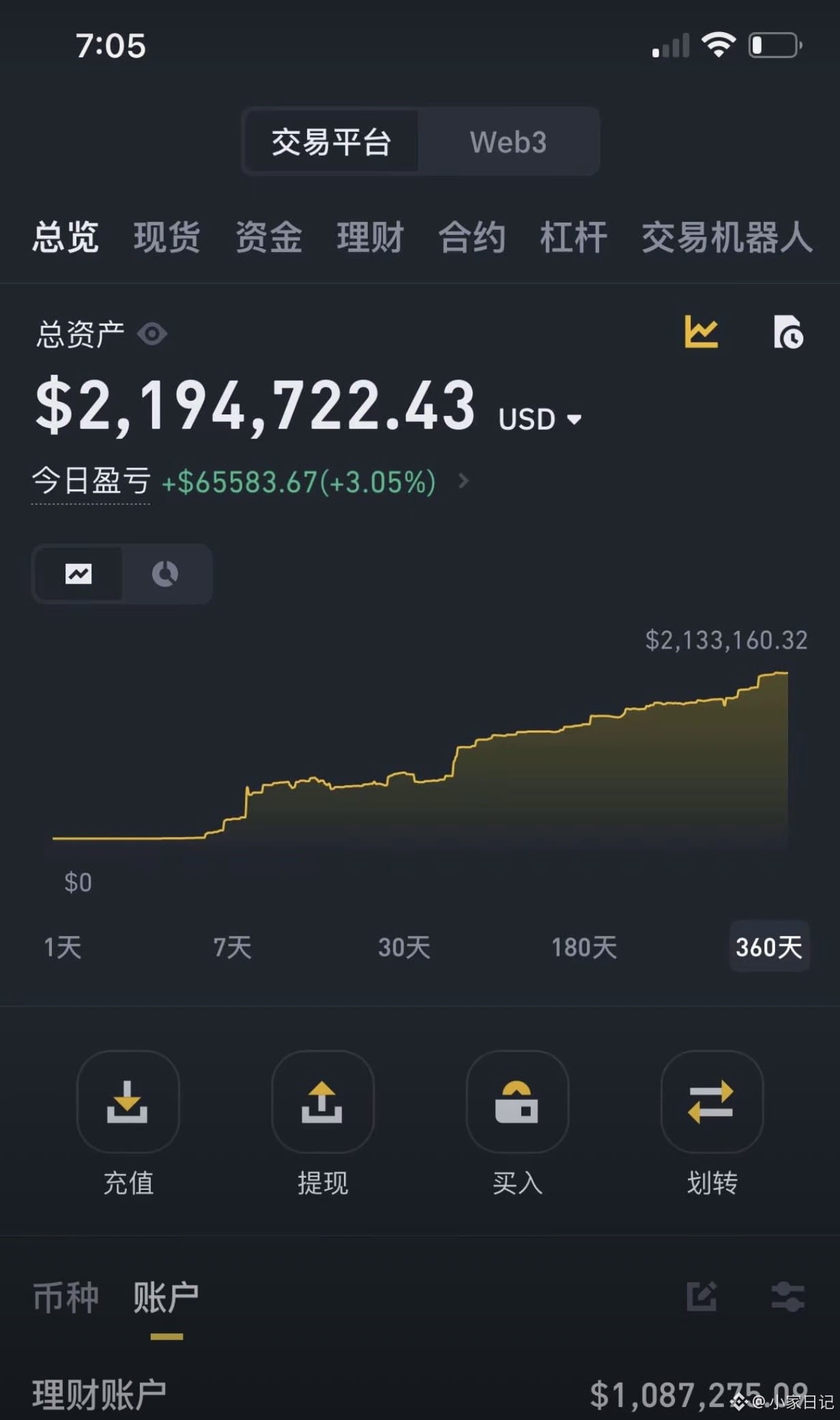
After being liquidated five times, I finally kicked one of the most dangerous trading habits
I used to trade with one thing on my mind every day: how much I could make.
When my account balance grew to over 60,000 U, I got incredibly overconfident. I stared at my profits every day, and whenever the market looked good, I wanted to increase my position. I always felt that when an opportunity came along, I should go all in.
If a trade lost money, I would add to my position. If the price kept falling, I would start waiting for a rebound. After a few rounds of this, my account shrank from tens of thousands of U to less than 1,000 U. In total, I was liquidated five times.
Those experiences completely changed three of my trading habits:
1. Before opening a position, calculate the worst-case outcome.
I no longer start by thinking about how much I could make. First, I decide the maximum amount I’m willing to lose on the trade. I plan my entry, stop-loss, and position size in advance.
2. Don’t rush to win back losses.
If I make several bad calls in a row, I stop trading. Losing on the last trade doesn’t mean I have to make it back on the next one. Trading while emotional will only compound my mistakes.
3. Know when to take profits out of your account.
I no longer leave all my profits in my futures account. When I reach a milestone, I withdraw part of them. No matter how good the account balance looks, if the profits aren’t actually locked in, they could disappear again as the market moves.
Now I don’t set myself a daily target for how much U to make, and I don’t insist on trading every day. Being able to stop myself from losing control matters more than catching a sudden surge. @Square-Creator-3b44b38ee1b9f $RARE
27
·
--
It’s hard to go far in crypto trading if you haven’t weathered losses
I’ve been through that phase too: losing repeatedly, placing trades constantly, watching the market during the day and sleeping badly at night. The meal I ate most often was a bowl of Master Kong beef noodles. I still buy one occasionally, but now I can finally afford to add a sausage.
After years of struggling in the market, what I’ve truly held on to isn’t some hugely profitable indicator, but three trading principles.
First, your position size determines how far you can go.
Having 100,000 in your account doesn’t mean you need to put all 100,000 into every trade. I prefer to deploy my funds in stages: observe the market first, then decide what to do next based on how it actually moves. Don’t block off every option you might have later just to seize one opportunity.
Second, plan your exit before you enter.
Entering a trade isn’t the end of the process—it’s the beginning of risk management. You should decide in advance at what point you’ll admit you were wrong and at what point you’ll take profits. If you’re on the wrong side, exit. Don’t use hope as a basis for your decisions.
Third, don’t trade just for the sake of trading.
The market fluctuates every day, but there aren’t many opportunities truly worth taking. If you don’t understand what’s happening, stay out. If the signal isn’t strong enough, keep waiting. Placing trades constantly may make you look busy, but fees and mistakes can gradually eat away at your account.
My trading principles are simple now: don’t go all in, don’t hold on to losing positions, and don’t open trades recklessly just to make your money back.
After all these years trading crypto, my biggest takeaway is this: making money depends on judgment; keeping your profits depends on discipline. Don’t keep thinking you can win it all back in one shot. What truly changes your account balance is whether you can make the right call more often over the long term—not how big a bet you make on any one trade.@Square-Creator-3b44b38ee1b9f $SOPH

2
354
·
--
How can you make 1 million by trading cryptocurrency in a year?
Let’s start with the conclusion: it’s possible, and there are examples, but when your starting capital is limited, the biggest danger is getting impatient.
If I were to put together a new plan for growing capital, I’d prefer to split it into five portions and trade them in rotation, rather than put all my chips in at once.
For example, if you have 10,000 in starting capital, you could split it into five portions of 2,000 each. Enter the market in stages based on market conditions. Don’t chase prices just because they’ve risen in the short term, and don’t blindly add to your position when they fall.
Here’s one way to put this into practice:
1. Take profits in stages as prices rise. Once your preset profit target is reached, gradually sell part of your position. Don’t always expect to capture the entire move.
2. Build your position in stages during pullbacks. When the price falls back to your planned range, consider using your reserve funds, provided your original trading rationale remains intact.
3. Choose assets with sufficient liquidity. Focus on researching major cryptocurrencies. Don’t buy obscure coins with low trading volumes just to chase higher returns.
4. Adjust promptly when market conditions deteriorate. If the trend has reversed, don’t mechanically keep adding to your position as the price falls. Buying in stages doesn’t mean averaging down without limit.
5. Review your account performance regularly. Look at actual returns, maximum drawdown, and how your capital is being used—not just how much your account rose on a particular day.
The point of this approach isn’t to predict every price movement, but to put your capital to work in the market according to a plan. Take profits when prices rise, keep some room to maneuver when they fall, and leave yourself a chance to recover even if your judgment is wrong.
If you want to grow your account, don’t rush to make it multiply several times over in a year. The key to growing your capital is being able to lock in the profits from each market cycle.@Square-Creator-3b44b38ee1b9f $RARE

1
76
·
--
The more actively you trade crypto, the faster you may lose money!
I used to be just like this. If the market suddenly pumped in the middle of the night, I’d jump out of bed to check. When I saw others calling out trades, I couldn’t resist following them in. As soon as my account showed an unrealized profit, I’d start thinking I could make even more.
In the end, I spent plenty of time watching the market but didn’t make much more money. Instead, trading left me completely exhausted.
Later, I set five rules for myself, and my approach to trading gradually began to change.
1. Set a fixed time to study the market. I no longer watch the charts all day. I choose the time when I’m most focused to analyze trends and key levels, and I don’t let short-term fluctuations sway me the rest of the time.
2. When profits reach your target, take some off the table. I no longer imagine I can sell at the exact top every time. I lock in some profit, then decide what to do with the remaining position based on market conditions.
3. Don’t open a position without a clear rationale. Don’t jump in just because someone in a group chat called out a trade, or because of one big green candle. Before entering, you should at least know which signal you’re acting on.
4. If your judgment was wrong, don’t fight the market. If your entry rationale no longer holds, cut your losses. Don’t hold on out of stubbornness, and don’t add to your position just to prove you were right.
5. If trading keeps going badly, stop voluntarily. You don’t have to place a certain number of trades every day. If you make several wrong calls in a row, step away from the charts. Don’t let your emotions take over your account.
Trading skill isn’t just about reading candlestick charts and finding entry and exit points. It also means managing your time and energy well.@Square-Creator-3b44b38ee1b9f $SOPH
5
854
·
--
With less than 1,000 U left, is there still a chance to turn things around by compounding?
Yes, there is. I’ve tried it myself.
With a small account, the real challenge isn’t how quickly you can make money, but how to give your account room to grow steadily. I’d recommend focusing on these things:
1. Don’t go all in from the start. Leave yourself room to adjust, and don’t let one trade determine the fate of your entire account.
2. Only trade markets you understand. Stay away from coins you’re unfamiliar with, and sit on the sidelines when price movements get too erratic.
3. Don’t immediately increase your leverage after making a profit. A larger account doesn’t mean your trading skills have improved at the same rate.
4. Set a maximum loss for every trade in advance. If you make several bad calls in a row, pause trading instead of rushing to win back your losses.
5. Take profits periodically. Don’t let the numbers in your account become your only goal—the money you actually cash out is what’s truly yours.
A small account doesn’t mean there’s no opportunity. The real danger is staking all your hopes of turning things around on the next trade. Learn from every trade. First master your approach, then think about growing your account.
@Square-Creator-3b44b38ee1b9f $RARE

100
·
--
From 2,300 to 2.1 million in a year and a half = the 50% position strategy
No insider information, and no betting on the market by going all-in. I used to like taking large positions too, thinking that when an opportunity came along, I couldn't afford to miss it. But after a few drawdowns, I realized I had no room left to adjust.
Later, I changed my trading habits. The key principles are these eight:
1. Split up your capital and never stay fully invested for long. Keep funds in reserve so you have room to adjust when the market changes.
2. Follow trends; don't try to guess the bottom. If you can't make sense of the market, it's better to miss out than to gamble your principal on a reversal.
3. Be cautious about chasing coins after a sharp surge. The more extreme the rise, the more wary you should be of buying in just in time to be left holding the bag.
4. Use indicators only as supporting tools. Consider MACD, moving averages, and trading volume together; don't put blind faith in any single signal.
5. Don't blindly add to losing positions. If your original reason for buying no longer holds, reassess instead of using more money to cover up a mistake.
6. Look at price and trading volume together. Whether buying pressure is following through on a rise is more useful than looking at a single long bullish candlestick.
7. You don't need to look for opportunities every day. If market conditions aren't right, don't trade just for the sake of trading.
8. Review your trades every day. You should know the reasoning behind every entry and exit, rather than looking only at whether you ended up making or losing money.
This approach may not seem exciting—in fact, it may seem a little clumsy—but it means I'm no longer relying on any single trade to determine the fate of my account. No one's trading experience guarantees returns. What is truly worth learning from isn't this number, but the method behind it—one that can be tested and followed repeatedly.
@Square-Creator-3b44b38ee1b9f $INIT


1
229
·
--
If you want to change your life through crypto, start by building your first million.
Why do so many people trade for years without seeing much change in their accounts? Because they rush to chase huge profits before building up their capital. They chase one hot trend today, switch to an altcoin tomorrow, and increase their leverage when they see others making big gains. In the end, they give their profits right back to the market.
If you want to grow your funds steadily, keep these four things in mind:
1. Don’t let a single trade decide whether you win or lose.
Don’t pin all your hopes on one coin. Set a clear risk limit for every trade, and don’t keep increasing your position just to double your money.
2. Gradually turn profits into assets of your own.
Making money in your account doesn’t mean it’s truly yours yet. Once you reach a milestone, consider taking some profits off the table instead of leaving all your gains exposed to the market.
3. Find a way to make money that suits you.
Spot trading, swing trading, and project research all have their own learning curves. Pick one approach and study it deeply. Don’t switch strategies every time something new becomes popular.
4. As your capital grows, keep your risk under control.
When your funds increase, reassess your position sizing and how much you can afford to lose. Don’t let your account get bigger while your trading becomes more and more aggressive.
There’s no set formula or surefire shortcut for going from a few thousand to a million. But one thing is clear: money made through luck isn’t necessarily money you can hold on to through luck.
Build your capital first, improve your skills next, and only then scale up. Don’t keep fixating on a ten-million goal when you haven’t even found your footing in the first stage.@Square-Creator-3b44b38ee1b9f $INIT

1
268
Log in to explore more content
Join global crypto users on Binance Square
⚡️ Get latest and useful information about crypto.
💬 Trusted by the world’s largest crypto exchange.
👍 Discover real insights from verified creators.
Email / Phone number
Trending Topics
NvidiaEarningsTonight:AIStocks’NextMove?
15,636 views
271 Discussing
Nvidia Earnings Day: Interim CEO's First Appearance — Can the AI Story Hold?
Binance News
·10 Likes
·5.2k views
A Packed Week of Earnings and Data Tests Markets
102,325 views
537 Discussing
AnthropicIPOTestsInvestorAppetiteForAI
210,856 views
2,107 Discussing