

Crypto心诚
1.9k Posts

Crypto心诚
Report
Block User
BTC/ETH行情技术分析与市场趋势研判,主做长期资产管理,点下方聊天框进入聊天室 永久20%返佣邀请码:DFUIJVHH

BTC Holder
Frequent Trader
5.4 Years
32 Following
3.8K+ Followers
3.2K+ Liked
Posts
All
Quotes
Videos
Live
PINNED
·
--
Article
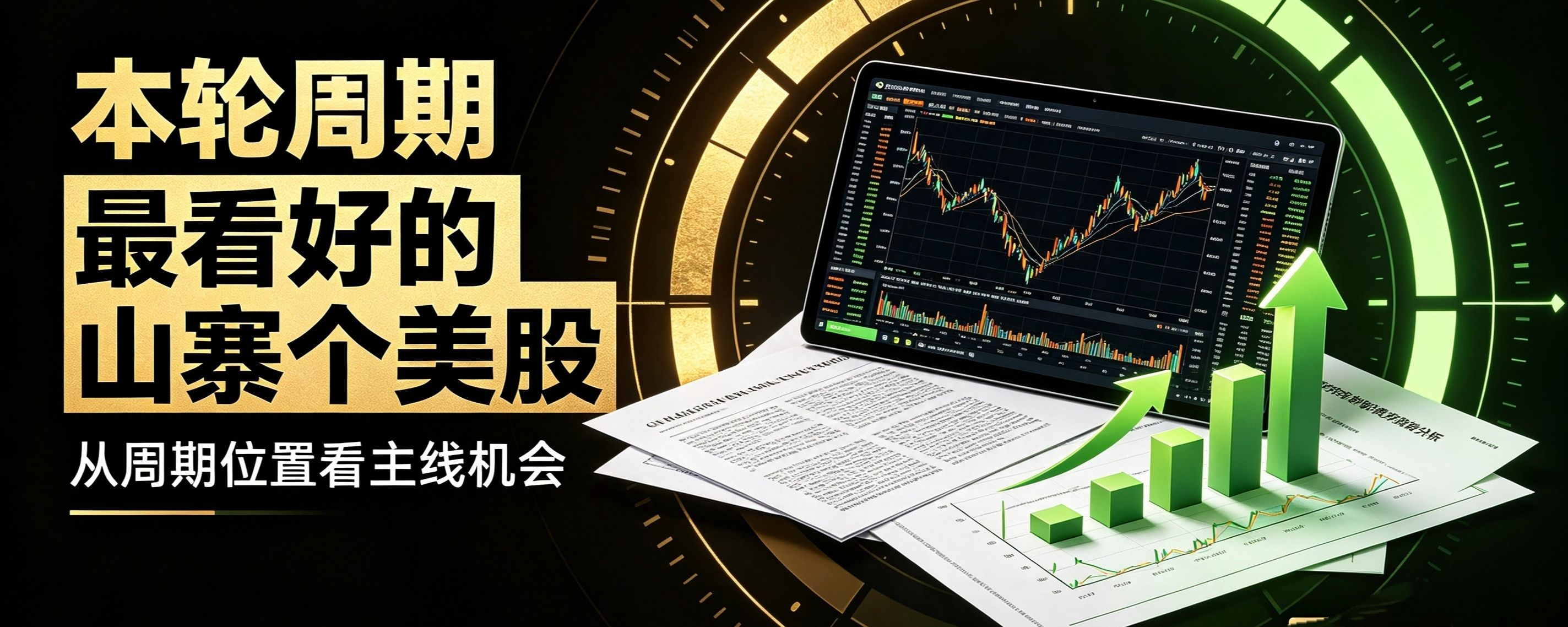
The altcoins and U.S. stocks I like most in this cycleMany people in the livestream asked: In this cycle, which alternative coins do I think will do well? I personally have a group I’m keeping an eye on. I’ll screenshot it for everyone in a moment, and I’ll also explain my reasons!
👉 Here, please note that the content is for reference only and does not constitute investment advice
Crypto altcoins:
① SUI
Target price: $9
Reason: It uses the object model and the Move language to make native capabilities out of parallel execution, asset safety, and sub-second confirmations. Then it layers on stablecoin payments, institutional channels, and gaming/high-frequency application scenarios—making it closer than most other chains to being able to truly run large-scale on-chain applications for the next-gen L1.
The altcoins and U.S. stocks I like most in this cycle
Many people in the livestream asked: In this cycle, which alternative coins do I think will do well? I personally have a group I’m keeping an eye on. I’ll screenshot it for everyone in a moment, and I’ll also explain my reasons!
👉 Here, please note that the content is for reference only and does not constitute investment advice
Crypto altcoins:
① SUI
Target price: $9
Reason: It uses the object model and the Move language to make native capabilities out of parallel execution, asset safety, and sub-second confirmations. Then it layers on stablecoin payments, institutional channels, and gaming/high-frequency application scenarios—making it closer than most other chains to being able to truly run large-scale on-chain applications for the next-gen L1.
👉 Here, please note that the content is for reference only and does not constitute investment advice
Crypto altcoins:
① SUI
Target price: $9
Reason: It uses the object model and the Move language to make native capabilities out of parallel execution, asset safety, and sub-second confirmations. Then it layers on stablecoin payments, institutional channels, and gaming/high-frequency application scenarios—making it closer than most other chains to being able to truly run large-scale on-chain applications for the next-gen L1.
1
1
5
3.9k
PINNED
·
--
🚀 BTC Market Helper Group
Focused on real-time Bitcoin updates, market analysis, and trading ideas sharing!
From time to time, there are technical discussions, opportunity shares, and risk alerts here. Welcome to communicate rationally and learn from each other.
Permanent 20% off trading fees. Invitation code DFUIJVHH—saving enough in a year to cover a car
Wishing everyone smooth trading and continuous wealth ~
$BTC
{future}(BTCUSDT)
🚀 BTC Market Helper Group
Focused on real-time Bitcoin updates, market analysis, and trading ideas sharing!
From time to time, there are technical discussions, opportunity shares, and risk alerts here. Welcome to communicate rationally and learn from each other.
Permanent 20% off trading fees. Invitation code DFUIJVHH—saving enough in a year to cover a car
Wishing everyone smooth trading and continuous wealth ~
$BTC
Focused on real-time Bitcoin updates, market analysis, and trading ideas sharing!
From time to time, there are technical discussions, opportunity shares, and risk alerts here. Welcome to communicate rationally and learn from each other.
Permanent 20% off trading fees. Invitation code DFUIJVHH—saving enough in a year to cover a car
Wishing everyone smooth trading and continuous wealth ~
$BTC


3
100
·
--
The China-US high-level dialogue has taken shape, and expectations of heightened geopolitical tension have clearly cooled. Many people ask: where will global capital flow first?
First, global equity risk assets. As concerns about geopolitical conflict ease, risk appetite rises, and overseas equity assets such as US stock technology and the Nasdaq will be the first to benefit from improved sentiment.
Second, the export-oriented industrial chains. Consumer electronics, machinery and equipment, and auto parts—sectors that are highly dependent on bilateral trade—are expected to see a rebound.
Third, Hong Kong stocks and China concept assets. Foreign investors’ concerns about allocating to China assets diminish. As Hong Kong serves as a channel for foreign capital flows, it should exhibit stronger upside elasticity.
As for safe-haven assets like gold, they may face downward pressure in the short term, because the market is no longer rushing into safety.
But you must make a clear distinction: this is a positive shift at the expectation level, not a guarantee of unidirectional, blowout gains.
The talks are only meant to establish a normalized communication channel. Many structural disagreements will not disappear all at once. The market is likely to see a choppy, repairing pattern rather than a straight-line rally—don’t chase after gains with a one-time, heavy position.
The focus of investment should be to capitalize on the repair of expectations, not to bet on a short-term surge.
$BTC
{future}(BTCUSDT)
The China-US high-level dialogue has taken shape, and expectations of heightened geopolitical tension have clearly cooled. Many people ask: where will global capital flow first?
First, global equity risk assets. As concerns about geopolitical conflict ease, risk appetite rises, and overseas equity assets such as US stock technology and the Nasdaq will be the first to benefit from improved sentiment.
Second, the export-oriented industrial chains. Consumer electronics, machinery and equipment, and auto parts—sectors that are highly dependent on bilateral trade—are expected to see a rebound.
Third, Hong Kong stocks and China concept assets. Foreign investors’ concerns about allocating to China assets diminish. As Hong Kong serves as a channel for foreign capital flows, it should exhibit stronger upside elasticity.
As for safe-haven assets like gold, they may face downward pressure in the short term, because the market is no longer rushing into safety.
But you must make a clear distinction: this is a positive shift at the expectation level, not a guarantee of unidirectional, blowout gains.
The talks are only meant to establish a normalized communication channel. Many structural disagreements will not disappear all at once. The market is likely to see a choppy, repairing pattern rather than a straight-line rally—don’t chase after gains with a one-time, heavy position.
The focus of investment should be to capitalize on the repair of expectations, not to bet on a short-term surge.
$BTC
First, global equity risk assets. As concerns about geopolitical conflict ease, risk appetite rises, and overseas equity assets such as US stock technology and the Nasdaq will be the first to benefit from improved sentiment.
Second, the export-oriented industrial chains. Consumer electronics, machinery and equipment, and auto parts—sectors that are highly dependent on bilateral trade—are expected to see a rebound.
Third, Hong Kong stocks and China concept assets. Foreign investors’ concerns about allocating to China assets diminish. As Hong Kong serves as a channel for foreign capital flows, it should exhibit stronger upside elasticity.
As for safe-haven assets like gold, they may face downward pressure in the short term, because the market is no longer rushing into safety.
But you must make a clear distinction: this is a positive shift at the expectation level, not a guarantee of unidirectional, blowout gains.
The talks are only meant to establish a normalized communication channel. Many structural disagreements will not disappear all at once. The market is likely to see a choppy, repairing pattern rather than a straight-line rally—don’t chase after gains with a one-time, heavy position.
The focus of investment should be to capitalize on the repair of expectations, not to bet on a short-term surge.
$BTC
1
1
4.9k
·
--
#Bitwise申请上市NEAR协议ETF
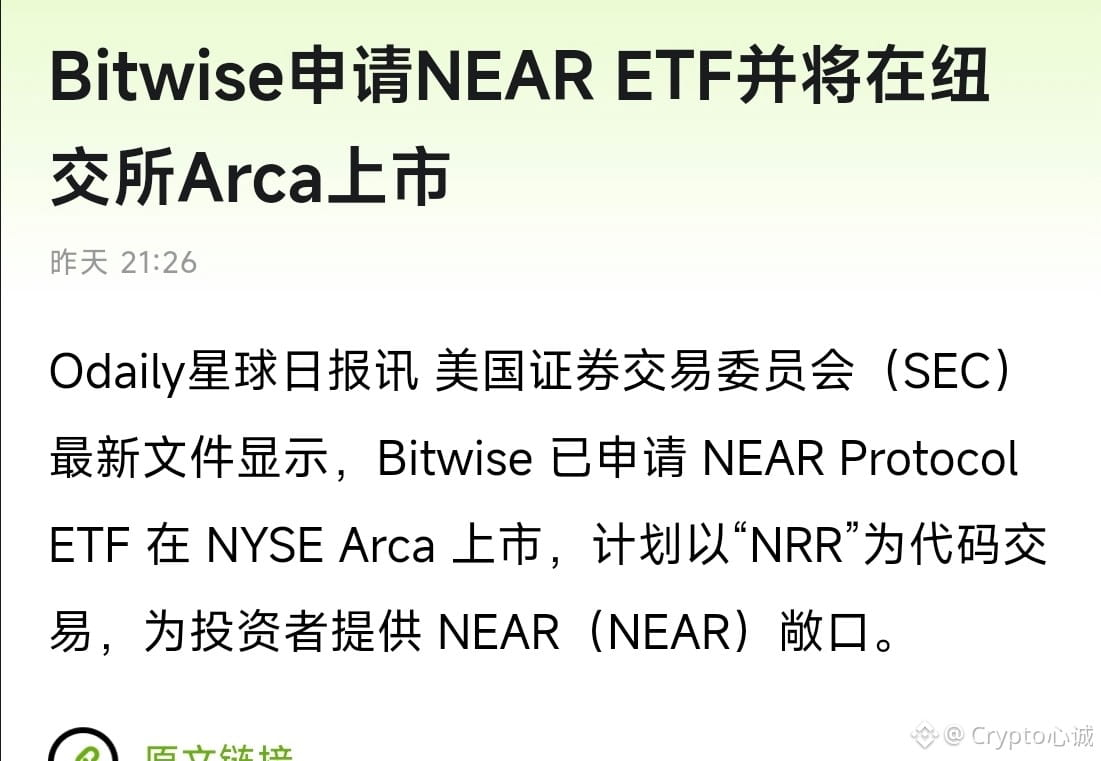
Bitwise’s spot NEAR ETF has made its way to NYSE Arca for listing and registration under the ticker NRR. This isn’t just a random name—after more than a year of filing the S-1, they submitted an 8-A.
The structure is very clear: the trust holds only NEAR, intends to be fully allocated to staking, charges a 0.75% management fee, and then an additional one-third of the staking rewards is taken out. Custody is with Coinbase, and cash is handled by BNY. Europe already has a similar ETP with roughly $130 million in assets.
My take:
This is a signal that crypto ETFs are expanding from BTC/ETH into mid-sized L1s—not that NEAR’s fundamentals have doubled. ETFs don’t create demand; they simply move money from wallets and the European venue into US stock market accounts. The seed book is only $500,000—nowhere near enough to move the market.
NEAR has surged in recent days because people are buying the expectation of the pathway/route. Whether it’s real or hype will depend on net creations after the open, and what share of the trust’s holdings represents of the circulating supply. Getting listed and getting big are two different things. Bitwise just recently cleared out its Dogecoin product, and long-tail ETFs often get applause but not much action.
You can buy it, but that doesn’t mean anyone is buying.
#Bitwise申请上市NEAR协议ETF
Bitwise’s spot NEAR ETF has made its way to NYSE Arca for listing and registration under the ticker NRR. This isn’t just a random name—after more than a year of filing the S-1, they submitted an 8-A.
The structure is very clear: the trust holds only NEAR, intends to be fully allocated to staking, charges a 0.75% management fee, and then an additional one-third of the staking rewards is taken out. Custody is with Coinbase, and cash is handled by BNY. Europe already has a similar ETP with roughly $130 million in assets.
My take:
This is a signal that crypto ETFs are expanding from BTC/ETH into mid-sized L1s—not that NEAR’s fundamentals have doubled. ETFs don’t create demand; they simply move money from wallets and the European venue into US stock market accounts. The seed book is only $500,000—nowhere near enough to move the market.
NEAR has surged in recent days because people are buying the expectation of the pathway/route. Whether it’s real or hype will depend on net creations after the open, and what share of the trust’s holdings represents of the circulating supply. Getting listed and getting big are two different things. Bitwise just recently cleared out its Dogecoin product, and long-tail ETFs often get applause but not much action.
You can buy it, but that doesn’t mean anyone is buying.
Bitwise’s spot NEAR ETF has made its way to NYSE Arca for listing and registration under the ticker NRR. This isn’t just a random name—after more than a year of filing the S-1, they submitted an 8-A.
The structure is very clear: the trust holds only NEAR, intends to be fully allocated to staking, charges a 0.75% management fee, and then an additional one-third of the staking rewards is taken out. Custody is with Coinbase, and cash is handled by BNY. Europe already has a similar ETP with roughly $130 million in assets.
My take:
This is a signal that crypto ETFs are expanding from BTC/ETH into mid-sized L1s—not that NEAR’s fundamentals have doubled. ETFs don’t create demand; they simply move money from wallets and the European venue into US stock market accounts. The seed book is only $500,000—nowhere near enough to move the market.
NEAR has surged in recent days because people are buying the expectation of the pathway/route. Whether it’s real or hype will depend on net creations after the open, and what share of the trust’s holdings represents of the circulating supply. Getting listed and getting big are two different things. Bitwise just recently cleared out its Dogecoin product, and long-tail ETFs often get applause but not much action.
You can buy it, but that doesn’t mean anyone is buying.
367
·
--
The market has a very cruel truth: most opportunities in the market were never meant for you
The market moves every day, sectors rotate nonstop, and assets with big rallies are everywhere
Scroll short videos and check communities—everywhere you look there are stories of other people making money
Many people’s mindsets get thrown into chaos; they’re afraid of missing out on every wave of行情, and they want to take part in every so-called opportunity
But for each type of market opportunity, there’s a corresponding set of cognition, capital, and risk tolerance behind it
An opportunity that someone else can seize—if you put it on yourself—may become a trap
Investing isn’t about capturing all the upswings; it’s about taking only the opportunities you understand and can withstand the risks of
If a market opportunity doesn’t belong to you, forcing yourself to participate—even if you make money in the short term—you will eventually have to give it back to the market
Learning to proactively give up opportunities that aren’t yours is the hallmark of a mature investor
$BTC
{future}(BTCUSDT)
The market has a very cruel truth: most opportunities in the market were never meant for you
The market moves every day, sectors rotate nonstop, and assets with big rallies are everywhere
Scroll short videos and check communities—everywhere you look there are stories of other people making money
Many people’s mindsets get thrown into chaos; they’re afraid of missing out on every wave of行情, and they want to take part in every so-called opportunity
But for each type of market opportunity, there’s a corresponding set of cognition, capital, and risk tolerance behind it
An opportunity that someone else can seize—if you put it on yourself—may become a trap
Investing isn’t about capturing all the upswings; it’s about taking only the opportunities you understand and can withstand the risks of
If a market opportunity doesn’t belong to you, forcing yourself to participate—even if you make money in the short term—you will eventually have to give it back to the market
Learning to proactively give up opportunities that aren’t yours is the hallmark of a mature investor
$BTC
The market moves every day, sectors rotate nonstop, and assets with big rallies are everywhere
Scroll short videos and check communities—everywhere you look there are stories of other people making money
Many people’s mindsets get thrown into chaos; they’re afraid of missing out on every wave of行情, and they want to take part in every so-called opportunity
But for each type of market opportunity, there’s a corresponding set of cognition, capital, and risk tolerance behind it
An opportunity that someone else can seize—if you put it on yourself—may become a trap
Investing isn’t about capturing all the upswings; it’s about taking only the opportunities you understand and can withstand the risks of
If a market opportunity doesn’t belong to you, forcing yourself to participate—even if you make money in the short term—you will eventually have to give it back to the market
Learning to proactively give up opportunities that aren’t yours is the hallmark of a mature investor
$BTC
244
·
--
#贝莱德为Ondo开发代币化组合策略
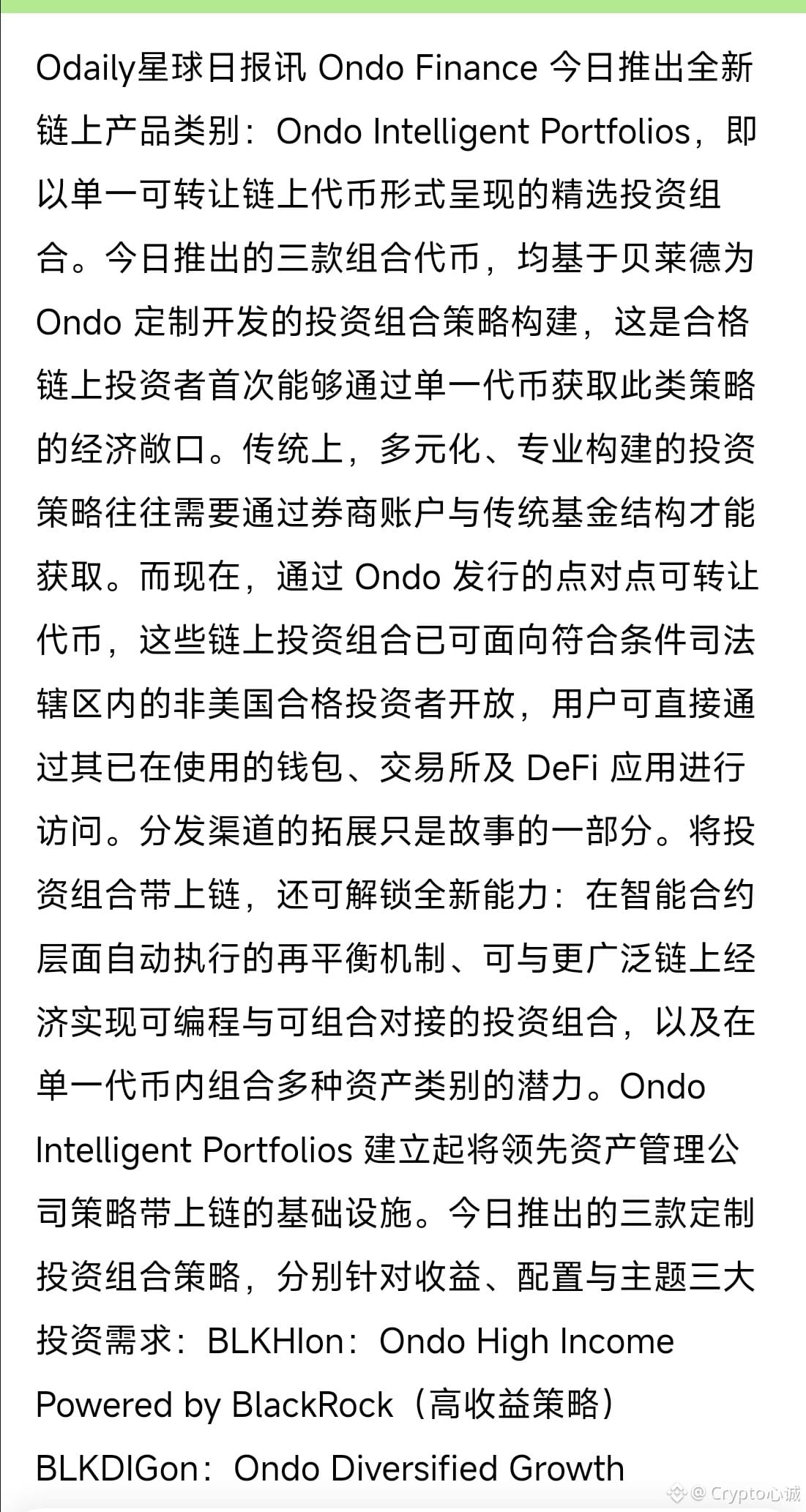
BlackRock didn’t move the funds on-chain. Instead, it sold the allocation to Ondo, and Ondo compressed the entire portfolio into a single token.
There are three: high yield, diversified growth, and high growth. One token = a basket of tokenized stocks and ETFs. Rebalancing is written into the contract; you can only buy it outside the U.S. “Powered by BlackRock” is the strategy source, not BlackRock managing the money, issuing, or custodying it.
My take:
The first phase of RWA was essentially taking snapshots—putting Treasuries and ETFs onto the blockchain. This time, it finally touches the core of asset management: the allocations themselves are on-chain. Brokerage accounts can’t do 24/7 transfers, use it as collateral, or plug it into DeFi. That’s the real progress.
Don’t be fooled by the brand. The legal counterparty is Ondo, not iShares. ONDO’s surge is a narrative, not AUM. Whether it can work depends on the minting volume, the rebalancing slippage, and whether it’s actually used for lending.
You can outsource the strategy, but you can’t outsource the risk.
$ONDO
{future}(ONDOUSDT)
#贝莱德为Ondo开发代币化组合策略
BlackRock didn’t move the funds on-chain. Instead, it sold the allocation to Ondo, and Ondo compressed the entire portfolio into a single token.
There are three: high yield, diversified growth, and high growth. One token = a basket of tokenized stocks and ETFs. Rebalancing is written into the contract; you can only buy it outside the U.S. “Powered by BlackRock” is the strategy source, not BlackRock managing the money, issuing, or custodying it.
My take:
The first phase of RWA was essentially taking snapshots—putting Treasuries and ETFs onto the blockchain. This time, it finally touches the core of asset management: the allocations themselves are on-chain. Brokerage accounts can’t do 24/7 transfers, use it as collateral, or plug it into DeFi. That’s the real progress.
Don’t be fooled by the brand. The legal counterparty is Ondo, not iShares. ONDO’s surge is a narrative, not AUM. Whether it can work depends on the minting volume, the rebalancing slippage, and whether it’s actually used for lending.
You can outsource the strategy, but you can’t outsource the risk.
$ONDO
BlackRock didn’t move the funds on-chain. Instead, it sold the allocation to Ondo, and Ondo compressed the entire portfolio into a single token.
There are three: high yield, diversified growth, and high growth. One token = a basket of tokenized stocks and ETFs. Rebalancing is written into the contract; you can only buy it outside the U.S. “Powered by BlackRock” is the strategy source, not BlackRock managing the money, issuing, or custodying it.
My take:
The first phase of RWA was essentially taking snapshots—putting Treasuries and ETFs onto the blockchain. This time, it finally touches the core of asset management: the allocations themselves are on-chain. Brokerage accounts can’t do 24/7 transfers, use it as collateral, or plug it into DeFi. That’s the real progress.
Don’t be fooled by the brand. The legal counterparty is Ondo, not iShares. ONDO’s surge is a narrative, not AUM. Whether it can work depends on the minting volume, the rebalancing slippage, and whether it’s actually used for lending.
You can outsource the strategy, but you can’t outsource the risk.
$ONDO
336
·
--
Bullish
What is the height of this round $BTC ?
My intuition is around 25W–30W.
My logic will definitely overturn your understanding. I’m tired today and don’t want to go into it. I’ll organize it and post it tomorrow. In the meantime, please follow so you don’t lose me tomorrow.
{future}(BTCUSDT)
What is the height of this round $BTC ?
My intuition is around 25W–30W.
My logic will definitely overturn your understanding. I’m tired today and don’t want to go into it. I’ll organize it and post it tomorrow. In the meantime, please follow so you don’t lose me tomorrow.
My intuition is around 25W–30W.
My logic will definitely overturn your understanding. I’m tired today and don’t want to go into it. I’ll organize it and post it tomorrow. In the meantime, please follow so you don’t lose me tomorrow.
1
1
181
·
--
#Polymarket银行倒闭押注引FDIC关注
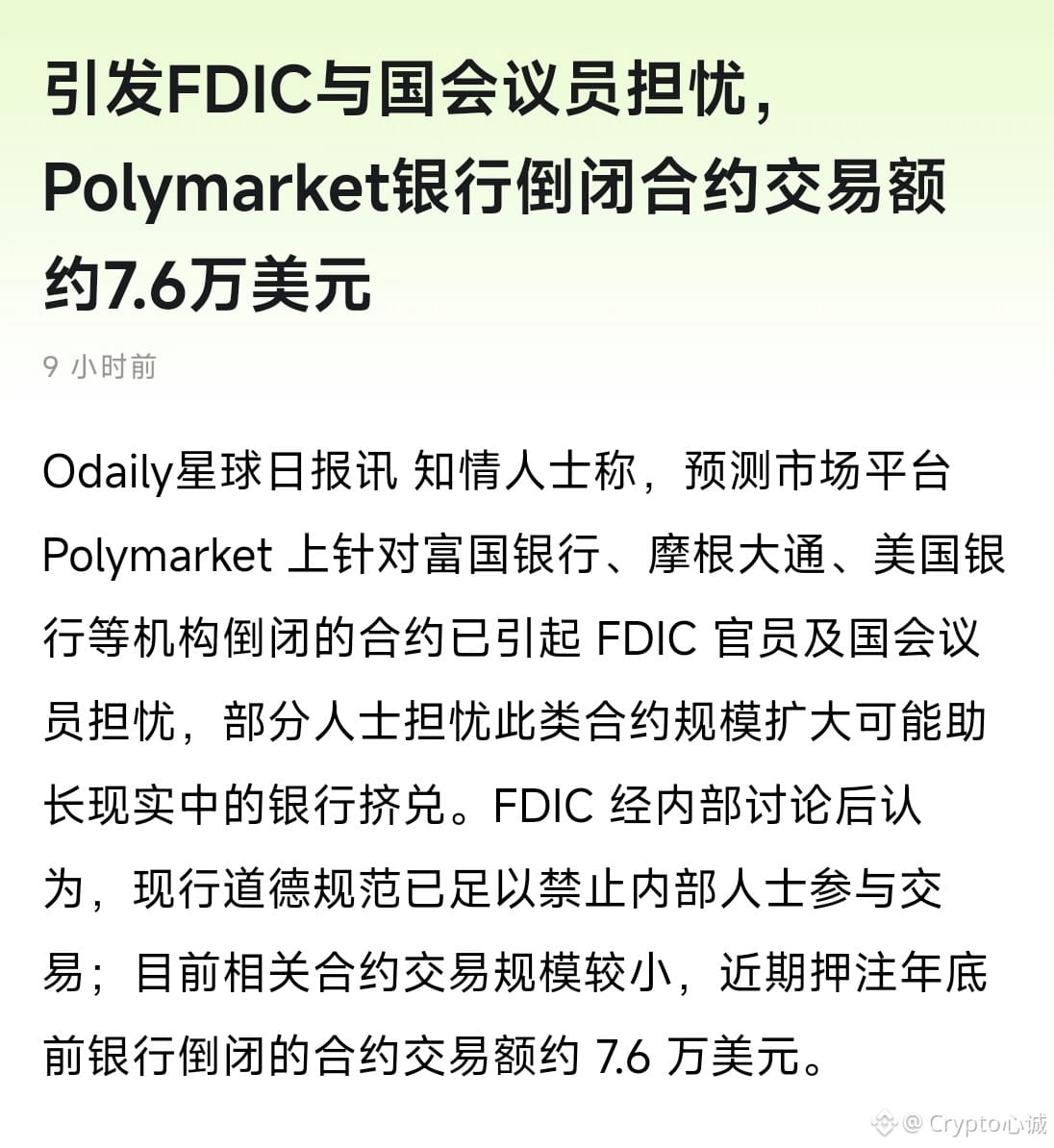
On Polymarket, people are betting on whether JPMorgan, Wells Fargo, and Bank of America will fail—will the FDIC and Congress be worried?
What they’re worried about isn’t really that today’s $76,000 in trading volume. What they’re worried about is that a bank run is accelerated by belief: publicly posting the prices of “this bank is going to fail,” so that uninsured deposits run first. Regulators also have lists of problem banks—classified internally. They’re most afraid that insiders will price things in first.
My view is simple: This $76,000 won’t shake the systemically important banks. In 2026, the failures will likely be small community banks, not JPMorgan. Writing “small banks getting cleared out” as “big banks are about to collapse” is clickbait.
But regulators being hypersensitive is understandable too. Prediction markets have expanded from elections to naming specific banks. Once that happens, public odds can shift from a thermometer to a megaphone. Today’s purpose is a monitoring tool—turn it into mainstream coverage that names big banks, and that’s the real risk.
Don’t be spooked by the headline. Don’t focus on whether the odds board exists or not—focus on whether the scale will build up
$BTC
{future}(BTCUSDT)
#Polymarket银行倒闭押注引FDIC关注
On Polymarket, people are betting on whether JPMorgan, Wells Fargo, and Bank of America will fail—will the FDIC and Congress be worried?
What they’re worried about isn’t really that today’s $76,000 in trading volume. What they’re worried about is that a bank run is accelerated by belief: publicly posting the prices of “this bank is going to fail,” so that uninsured deposits run first. Regulators also have lists of problem banks—classified internally. They’re most afraid that insiders will price things in first.
My view is simple: This $76,000 won’t shake the systemically important banks. In 2026, the failures will likely be small community banks, not JPMorgan. Writing “small banks getting cleared out” as “big banks are about to collapse” is clickbait.
But regulators being hypersensitive is understandable too. Prediction markets have expanded from elections to naming specific banks. Once that happens, public odds can shift from a thermometer to a megaphone. Today’s purpose is a monitoring tool—turn it into mainstream coverage that names big banks, and that’s the real risk.
Don’t be spooked by the headline. Don’t focus on whether the odds board exists or not—focus on whether the scale will build up
$BTC
On Polymarket, people are betting on whether JPMorgan, Wells Fargo, and Bank of America will fail—will the FDIC and Congress be worried?
What they’re worried about isn’t really that today’s $76,000 in trading volume. What they’re worried about is that a bank run is accelerated by belief: publicly posting the prices of “this bank is going to fail,” so that uninsured deposits run first. Regulators also have lists of problem banks—classified internally. They’re most afraid that insiders will price things in first.
My view is simple: This $76,000 won’t shake the systemically important banks. In 2026, the failures will likely be small community banks, not JPMorgan. Writing “small banks getting cleared out” as “big banks are about to collapse” is clickbait.
But regulators being hypersensitive is understandable too. Prediction markets have expanded from elections to naming specific banks. Once that happens, public odds can shift from a thermometer to a megaphone. Today’s purpose is a monitoring tool—turn it into mainstream coverage that names big banks, and that’s the real risk.
Don’t be spooked by the headline. Don’t focus on whether the odds board exists or not—focus on whether the scale will build up
$BTC
215
·
--
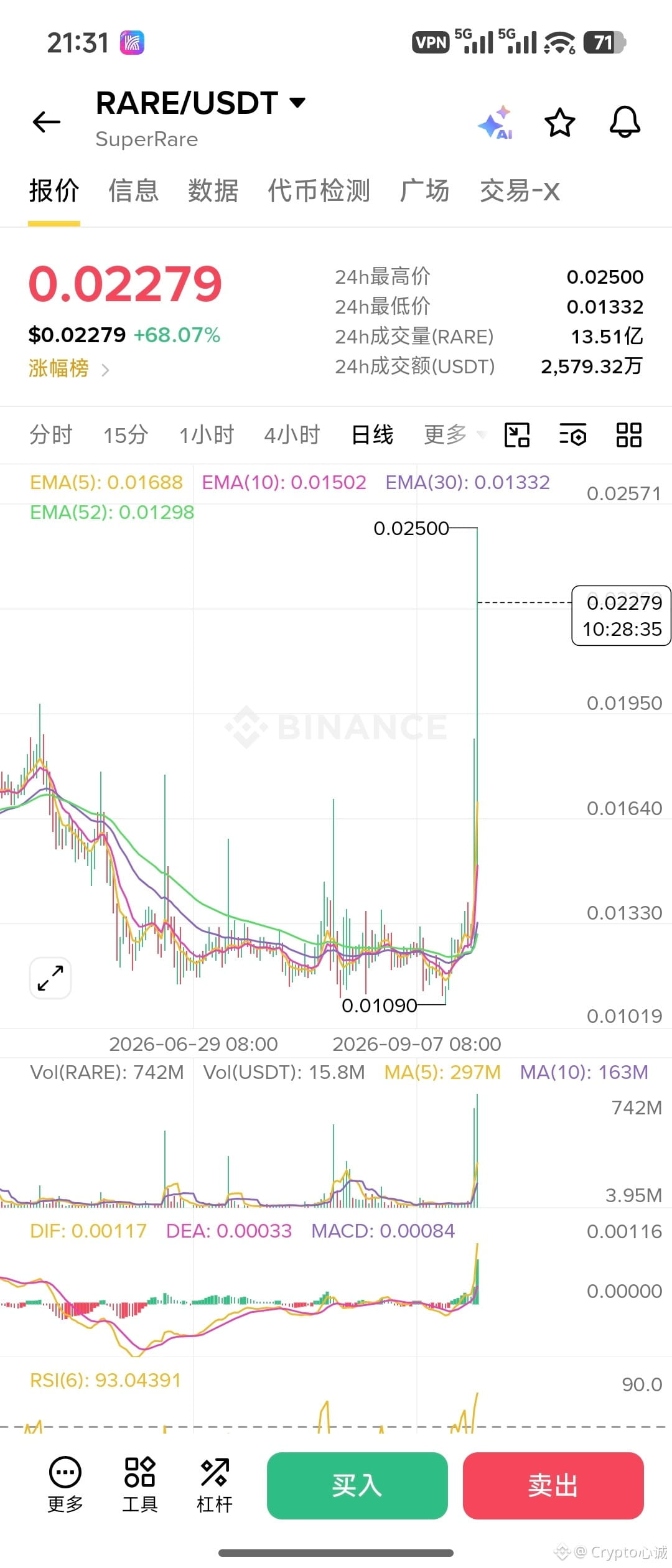
RARE rises 60% in a single day—don’t jump to calling it an NFT revival.
This is SuperRare’s governance token. Its market cap is about $20 million, and trading volume can reach $150 million, with turnover spiking to an absurd level. There’s no matching major official news—Binance and Coinbase spot and derivatives all pumped together, and the alt rotation swept through this pool.
My take:
This is a liquidity event, not a fundamental revaluation. The platform is still there, but token trading and platform trading long ago decoupled. For an old coin that’s down 99% from its peak, the order book is thin—just a bit of leverage can drive a move this large. Before Magic Eden ran into trouble, funds also swept through NFT platform tokens; the story ends there.
Volume far exceeds market cap—it's the same batch of holders trading back and forth. When volume dries up, the rally often gives back more than half. Look at whether NFTs are actually picking up: artwork sales and creator splits. Don’t just watch RARE’s 15-minute candlesticks.
The casino is open—it’s not that spring has arrived.$RARE
{future}(RAREUSDT)
RARE rises 60% in a single day—don’t jump to calling it an NFT revival.
This is SuperRare’s governance token. Its market cap is about $20 million, and trading volume can reach $150 million, with turnover spiking to an absurd level. There’s no matching major official news—Binance and Coinbase spot and derivatives all pumped together, and the alt rotation swept through this pool.
My take:
This is a liquidity event, not a fundamental revaluation. The platform is still there, but token trading and platform trading long ago decoupled. For an old coin that’s down 99% from its peak, the order book is thin—just a bit of leverage can drive a move this large. Before Magic Eden ran into trouble, funds also swept through NFT platform tokens; the story ends there.
Volume far exceeds market cap—it's the same batch of holders trading back and forth. When volume dries up, the rally often gives back more than half. Look at whether NFTs are actually picking up: artwork sales and creator splits. Don’t just watch RARE’s 15-minute candlesticks.
The casino is open—it’s not that spring has arrived.$RARE
This is SuperRare’s governance token. Its market cap is about $20 million, and trading volume can reach $150 million, with turnover spiking to an absurd level. There’s no matching major official news—Binance and Coinbase spot and derivatives all pumped together, and the alt rotation swept through this pool.
My take:
This is a liquidity event, not a fundamental revaluation. The platform is still there, but token trading and platform trading long ago decoupled. For an old coin that’s down 99% from its peak, the order book is thin—just a bit of leverage can drive a move this large. Before Magic Eden ran into trouble, funds also swept through NFT platform tokens; the story ends there.
Volume far exceeds market cap—it's the same batch of holders trading back and forth. When volume dries up, the rally often gives back more than half. Look at whether NFTs are actually picking up: artwork sales and creator splits. Don’t just watch RARE’s 15-minute candlesticks.
The casino is open—it’s not that spring has arrived.$RARE
271
·
--
#Circle在Solana增发5亿枚USDC
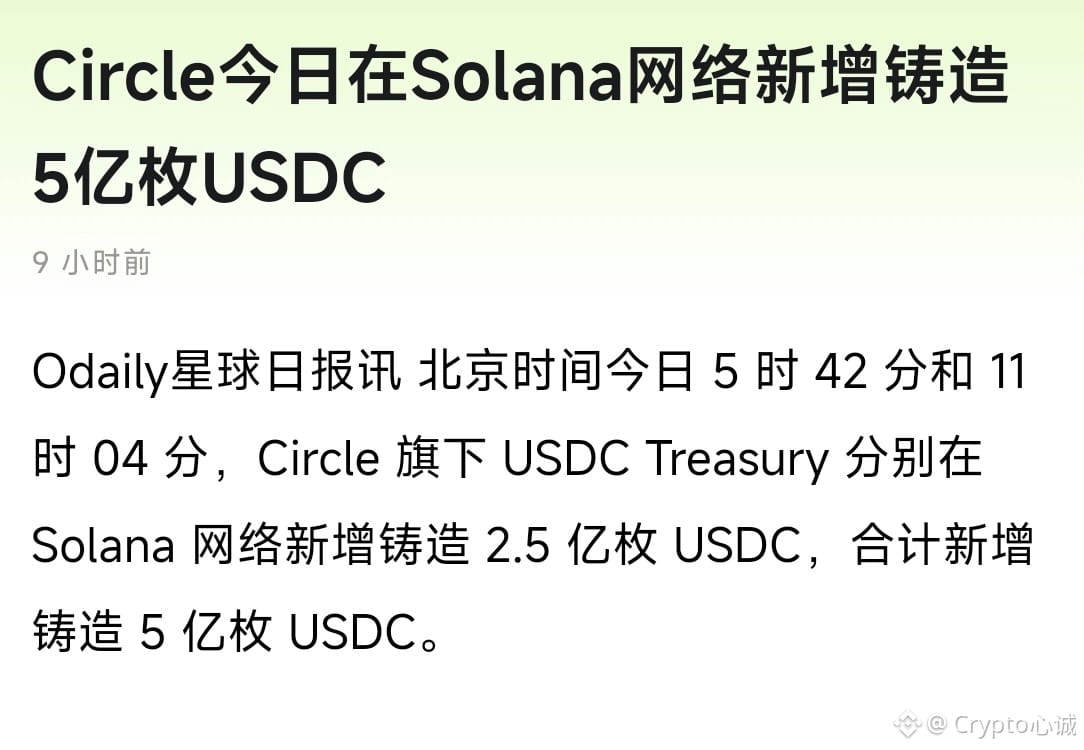
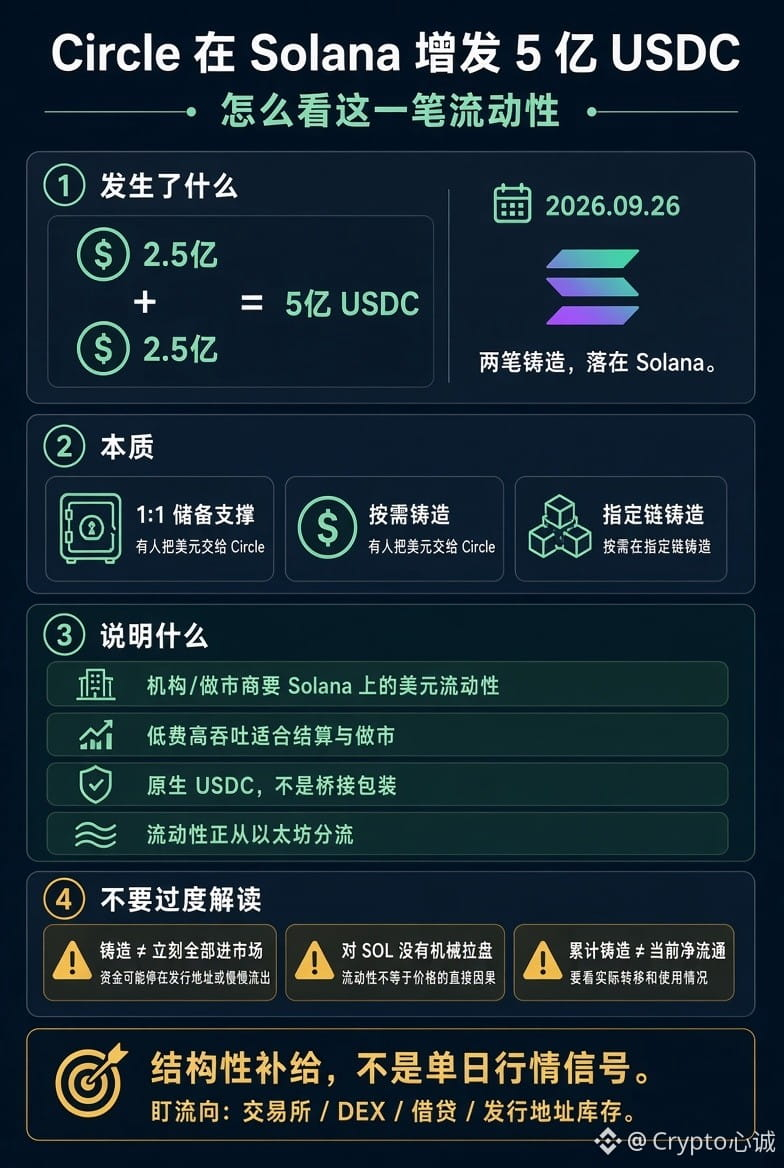
Circle on Solana mints an additional 500 million USDC—this isn’t printing money; it means someone swapped real dollars for on-chain liquidity.
Today, there are two transactions of 250 million each, totaling 500 million. USDC is backed 1:1, and minting typically means institutions, market makers, or exchanges obtain dollars on Solana. With low fees, high throughput, and native issuance, money keeps flowing onto this chain—and it also draws funds away from Ethereum.
Don’t over-interpret:
Minting ≠ all of it immediately entering the market
More stablecoin supply ≠ SOL automatically goes up
Cumulative minting ≠ current net circulating supply
This is structural replenishment, not a one-day market signal. What you should really look at is where it goes: exchanges, DEXs, lending—or whether it’s still sitting at the issuing addresses
$CRCL
{future}(CRCLUSDT)
$SOL
{future}(SOLUSDT)
$USDC
{future}(USDCUSDT)
#Circle在Solana增发5亿枚USDC
Circle on Solana mints an additional 500 million USDC—this isn’t printing money; it means someone swapped real dollars for on-chain liquidity.
Today, there are two transactions of 250 million each, totaling 500 million. USDC is backed 1:1, and minting typically means institutions, market makers, or exchanges obtain dollars on Solana. With low fees, high throughput, and native issuance, money keeps flowing onto this chain—and it also draws funds away from Ethereum.
Don’t over-interpret:
Minting ≠ all of it immediately entering the market
More stablecoin supply ≠ SOL automatically goes up
Cumulative minting ≠ current net circulating supply
This is structural replenishment, not a one-day market signal. What you should really look at is where it goes: exchanges, DEXs, lending—or whether it’s still sitting at the issuing addresses
$CRCL
$SOL
$USDC
Circle on Solana mints an additional 500 million USDC—this isn’t printing money; it means someone swapped real dollars for on-chain liquidity.
Today, there are two transactions of 250 million each, totaling 500 million. USDC is backed 1:1, and minting typically means institutions, market makers, or exchanges obtain dollars on Solana. With low fees, high throughput, and native issuance, money keeps flowing onto this chain—and it also draws funds away from Ethereum.
Don’t over-interpret:
Minting ≠ all of it immediately entering the market
More stablecoin supply ≠ SOL automatically goes up
Cumulative minting ≠ current net circulating supply
This is structural replenishment, not a one-day market signal. What you should really look at is where it goes: exchanges, DEXs, lending—or whether it’s still sitting at the issuing addresses
$CRCL
$SOL
$USDC
196
·
--
Verified
#QNT上涨39%
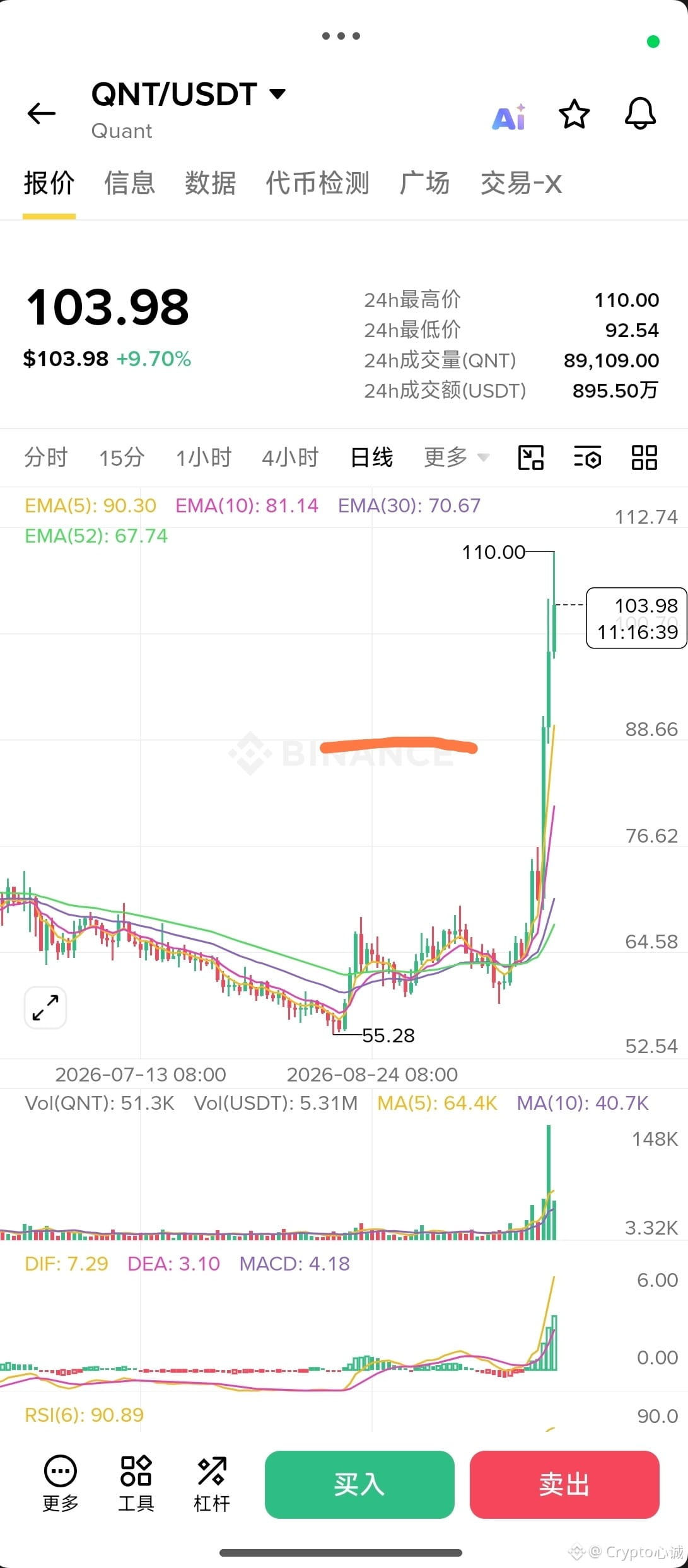
QNT rises nearly 40% in a day—The Clearing House chose Quant.
This company holds RTP and CHIPS, processing payments of about $2 trillion per day. It plans to build a tokenized deposits network for the U.S., with Quant as the interoperability layer—about 25 banks are involved. The target is to go live in the first half of 2027. In the UK, HSBC and Barclays have already used it to run tokenized pound sterling deposits.
My view:
What’s rising is the label of “U.S. banking infrastructure provider,” not the fact that it’s already processing that $2 trillion in clearing. A contract isn’t the same as transaction volume. Banks buy enterprise software—QNT won’t take fees on a 1:1 basis proportional to payment volume. The circulating supply is small, so once the news breaks, the upside elasticity is big. And with leverage getting squeezed, the move can reach that magnitude in a single day.
$QNT
{future}(QNTUSDT)
#QNT上涨39%
QNT rises nearly 40% in a day—The Clearing House chose Quant.
This company holds RTP and CHIPS, processing payments of about $2 trillion per day. It plans to build a tokenized deposits network for the U.S., with Quant as the interoperability layer—about 25 banks are involved. The target is to go live in the first half of 2027. In the UK, HSBC and Barclays have already used it to run tokenized pound sterling deposits.
My view:
What’s rising is the label of “U.S. banking infrastructure provider,” not the fact that it’s already processing that $2 trillion in clearing. A contract isn’t the same as transaction volume. Banks buy enterprise software—QNT won’t take fees on a 1:1 basis proportional to payment volume. The circulating supply is small, so once the news breaks, the upside elasticity is big. And with leverage getting squeezed, the move can reach that magnitude in a single day.
$QNT
QNT rises nearly 40% in a day—The Clearing House chose Quant.
This company holds RTP and CHIPS, processing payments of about $2 trillion per day. It plans to build a tokenized deposits network for the U.S., with Quant as the interoperability layer—about 25 banks are involved. The target is to go live in the first half of 2027. In the UK, HSBC and Barclays have already used it to run tokenized pound sterling deposits.
My view:
What’s rising is the label of “U.S. banking infrastructure provider,” not the fact that it’s already processing that $2 trillion in clearing. A contract isn’t the same as transaction volume. Banks buy enterprise software—QNT won’t take fees on a 1:1 basis proportional to payment volume. The circulating supply is small, so once the news breaks, the upside elasticity is big. And with leverage getting squeezed, the move can reach that magnitude in a single day.
$QNT
1
1
3
4.3k
·
--
The market is once again stuck in a situation where everyone is watching Bitcoin’s mood👀
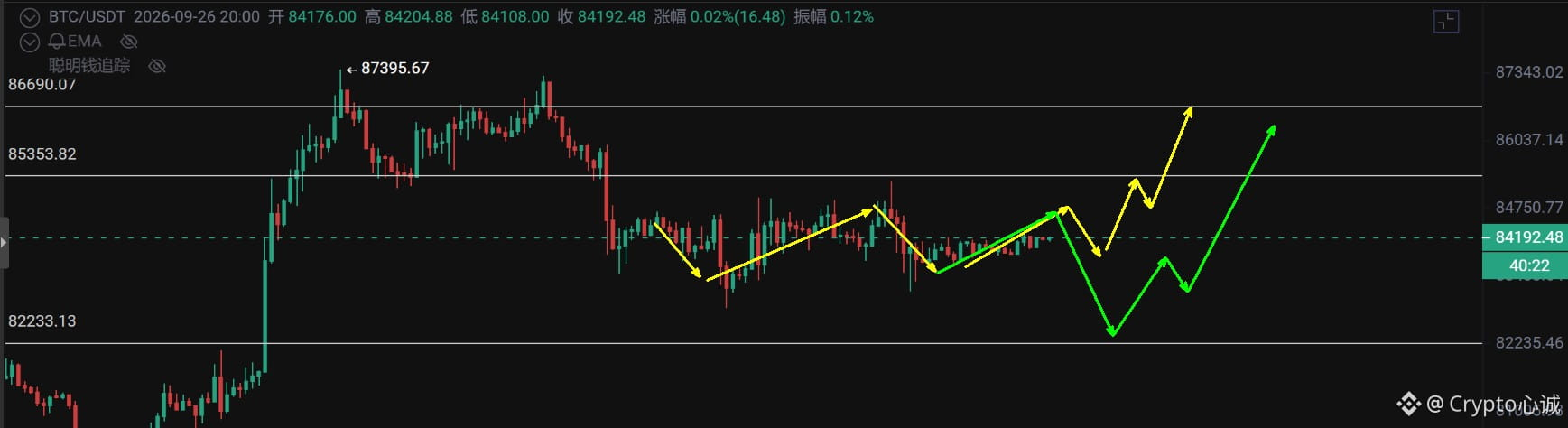
Because at the current level of $BTC , it’s been consolidating in a high range. It has risen from 57800 to a peak of 85300—an entire 50% upside—with no proper, meaningful pullback.
Since the macro picture is still not very clear, at this moment all the altcoins are waiting for Bitcoin’s signal: should it break upward further, or should it pull back downward?
Once Bitcoin’s direction becomes clear, altcoins will follow. Whether they go up or down, the cost won’t be very limited. But if they move against the trend, costs will be magnified.
So take advantage of the holiday season and the weekend—rest well. Then after the market opens next week, take a look at how it moves.
Let me share my personal view. I personally believe the downside potential from this level is limited. Even if the MACD here is showing a top divergence, I still think there’s a chance for a rebound toward the 86600 area before choosing the next direction.
{future}(BTCUSDT)
#比特币
The market is once again stuck in a situation where everyone is watching Bitcoin’s mood👀
Because at the current level of $BTC , it’s been consolidating in a high range. It has risen from 57800 to a peak of 85300—an entire 50% upside—with no proper, meaningful pullback.
Since the macro picture is still not very clear, at this moment all the altcoins are waiting for Bitcoin’s signal: should it break upward further, or should it pull back downward?
Once Bitcoin’s direction becomes clear, altcoins will follow. Whether they go up or down, the cost won’t be very limited. But if they move against the trend, costs will be magnified.
So take advantage of the holiday season and the weekend—rest well. Then after the market opens next week, take a look at how it moves.
Let me share my personal view. I personally believe the downside potential from this level is limited. Even if the MACD here is showing a top divergence, I still think there’s a chance for a rebound toward the 86600 area before choosing the next direction.
#比特币
Because at the current level of $BTC , it’s been consolidating in a high range. It has risen from 57800 to a peak of 85300—an entire 50% upside—with no proper, meaningful pullback.
Since the macro picture is still not very clear, at this moment all the altcoins are waiting for Bitcoin’s signal: should it break upward further, or should it pull back downward?
Once Bitcoin’s direction becomes clear, altcoins will follow. Whether they go up or down, the cost won’t be very limited. But if they move against the trend, costs will be magnified.
So take advantage of the holiday season and the weekend—rest well. Then after the market opens next week, take a look at how it moves.
Let me share my personal view. I personally believe the downside potential from this level is limited. Even if the MACD here is showing a top divergence, I still think there’s a chance for a rebound toward the 86600 area before choosing the next direction.
#比特币
291
·
--
I’ve been buying at $PONS these past few days, repeatedly catching pullbacks to go long. This token is indeed very strong—it has been consolidating around above 0.6.
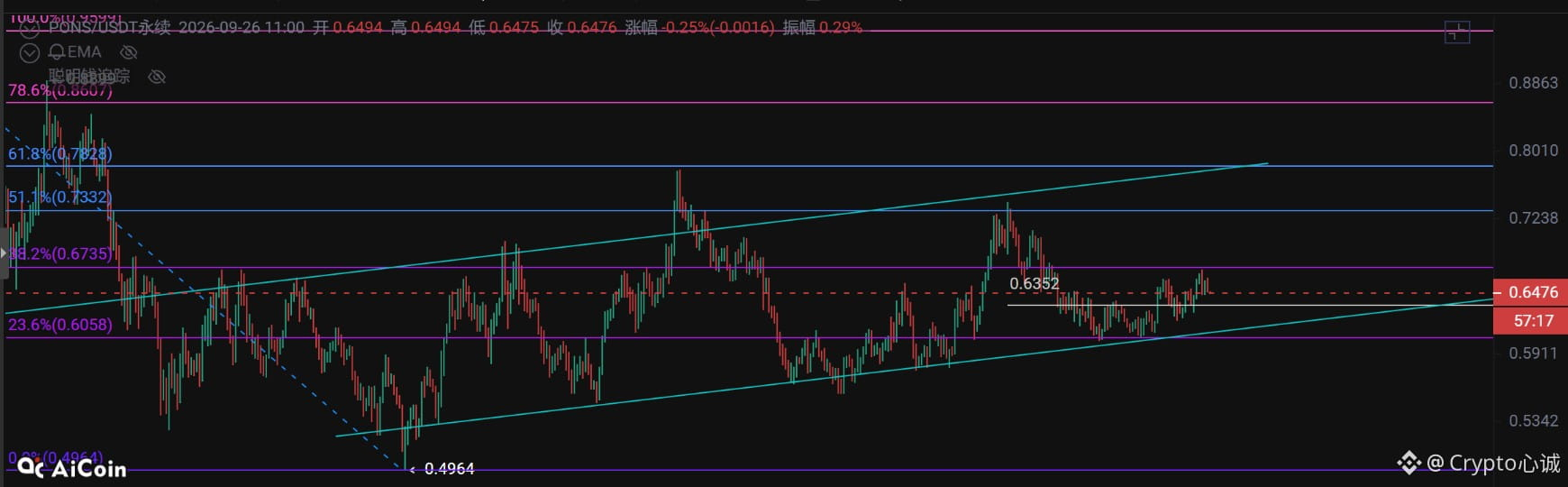
From the daily chart, it’s forming an ascending wedge pattern, with both the top and bottom gradually rising.
On the 4-hour timeframe, at this position the bottom is also gradually rising, and it has formed five bottoms. So as long as the key level 0.6 is not broken, I think there will be another upward push here, and the price will likely move within a range around 0.8 to 0.9. Then, it may start a larger-scale downward move; the process might be a bit grindy.
If you’re interested, you can buy at 0.635 with one lot.
{future}(PONSUSDT)
I’ve been buying at $PONS these past few days, repeatedly catching pullbacks to go long. This token is indeed very strong—it has been consolidating around above 0.6.
From the daily chart, it’s forming an ascending wedge pattern, with both the top and bottom gradually rising.
On the 4-hour timeframe, at this position the bottom is also gradually rising, and it has formed five bottoms. So as long as the key level 0.6 is not broken, I think there will be another upward push here, and the price will likely move within a range around 0.8 to 0.9. Then, it may start a larger-scale downward move; the process might be a bit grindy.
If you’re interested, you can buy at 0.635 with one lot.
From the daily chart, it’s forming an ascending wedge pattern, with both the top and bottom gradually rising.
On the 4-hour timeframe, at this position the bottom is also gradually rising, and it has formed five bottoms. So as long as the key level 0.6 is not broken, I think there will be another upward push here, and the price will likely move within a range around 0.8 to 0.9. Then, it may start a larger-scale downward move; the process might be a bit grindy.
If you’re interested, you can buy at 0.635 with one lot.
826
·
--
Before $BTW , Xiaoyang Xiaoyang would definitely have a big bullish candle. Now it’s Xiaoyang Xiaoyang will definitely have a big bearish candle 😂
I previously got this token in some other airdrops, but I sold it during the first pump.
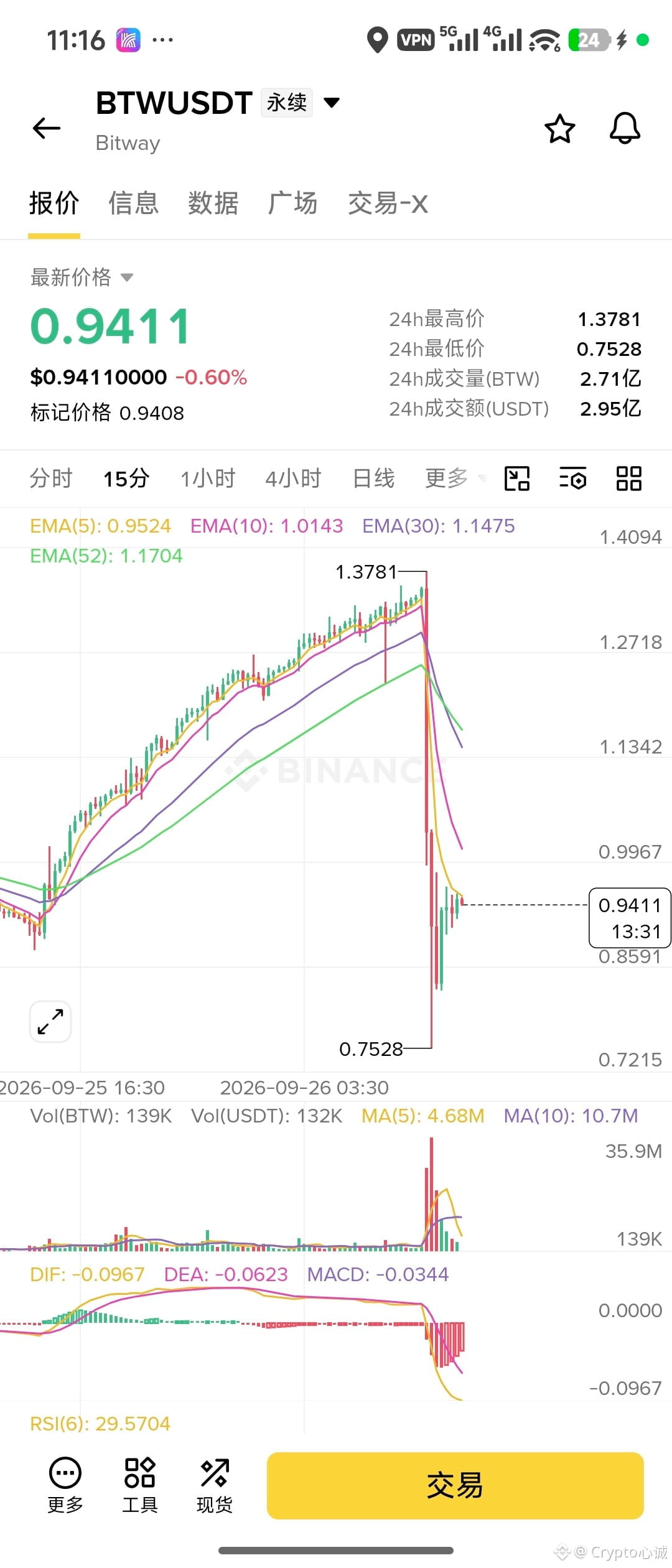
I think this time Bitway’s plunge was mainly caused by leverage getting liquidated and exploding itself.
It first used incentives and contracts to pull the price from around 0.1 to 1.3, and the long/short ratio reached 9x—most whales were basically all on the long side. The order book was thin and the chips were concentrated; with a single bearish candle, the longs were wiped out. In one hour, it dropped 40%+.
It goes up by squeezing shorts, and it also drops due to the same group of positions. In October there’s still an unlock—people who sold at the highs were not the shorts, but those taking profits.
{future}(BTWUSDT)
Before $BTW , Xiaoyang Xiaoyang would definitely have a big bullish candle. Now it’s Xiaoyang Xiaoyang will definitely have a big bearish candle 😂
I previously got this token in some other airdrops, but I sold it during the first pump.
I think this time Bitway’s plunge was mainly caused by leverage getting liquidated and exploding itself.
It first used incentives and contracts to pull the price from around 0.1 to 1.3, and the long/short ratio reached 9x—most whales were basically all on the long side. The order book was thin and the chips were concentrated; with a single bearish candle, the longs were wiped out. In one hour, it dropped 40%+.
It goes up by squeezing shorts, and it also drops due to the same group of positions. In October there’s still an unlock—people who sold at the highs were not the shorts, but those taking profits.
I previously got this token in some other airdrops, but I sold it during the first pump.
I think this time Bitway’s plunge was mainly caused by leverage getting liquidated and exploding itself.
It first used incentives and contracts to pull the price from around 0.1 to 1.3, and the long/short ratio reached 9x—most whales were basically all on the long side. The order book was thin and the chips were concentrated; with a single bearish candle, the longs were wiped out. In one hour, it dropped 40%+.
It goes up by squeezing shorts, and it also drops due to the same group of positions. In October there’s still an unlock—people who sold at the highs were not the shorts, but those taking profits.
868
·
--
#solana
$SOL From the very bottom to now, it has doubled. This wave indeed is stronger than the older big ones, and his ETF has been continuously buying in—his on-chain asset liquidity is also still in the top tier. Everyone, let's predict: in this round, how high can SOL go?
{future}(SOLUSDT)
#solana
$SOL From the very bottom to now, it has doubled. This wave indeed is stronger than the older big ones, and his ETF has been continuously buying in—his on-chain asset liquidity is also still in the top tier. Everyone, let's predict: in this round, how high can SOL go?
$SOL From the very bottom to now, it has doubled. This wave indeed is stronger than the older big ones, and his ETF has been continuously buying in—his on-chain asset liquidity is also still in the top tier. Everyone, let's predict: in this round, how high can SOL go?
300
43%
500
20%
800
5%
1000➕
32%
96 votes • Voting closed
4
1.2k
·
--
$SOL Sola this round is still pretty strong. Coming up from the bottom, it just doubled at the right time. For a public blockchain, its performance remains steady. This time, I think its ability to keep moving upward has a lot to do with the following reasons:
① ETFs are continuously buying
Every day, the ETF needs to buy SOL in the spot market—so it’s essentially a steady, measurable institutional buy order flow.
② Breakout triggers short covering
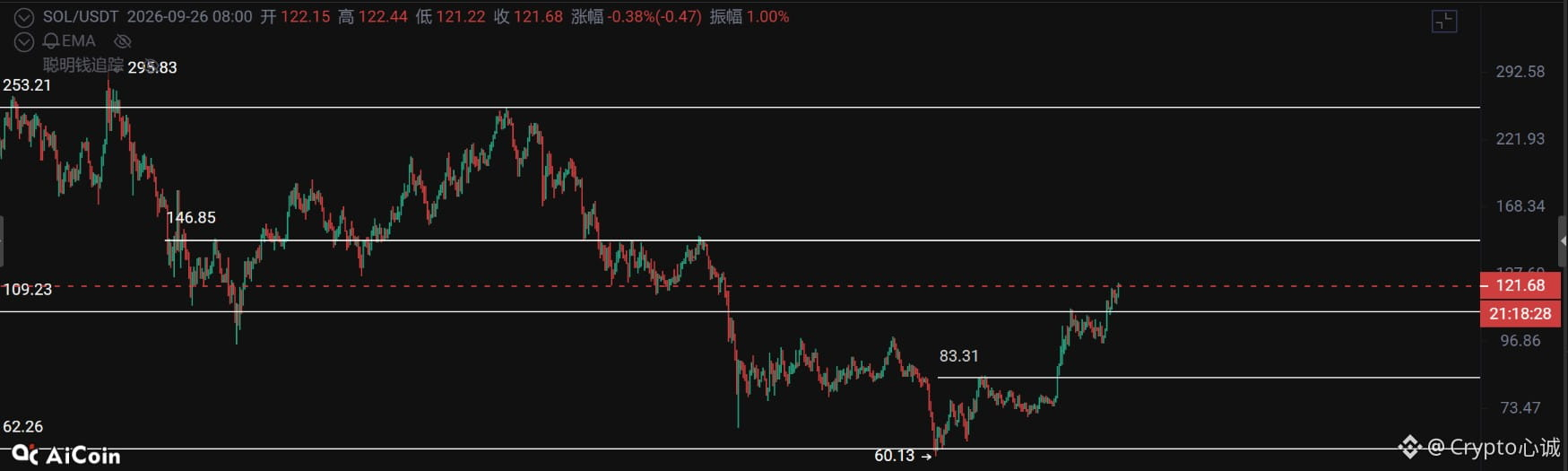
When it broke above around 120, there were reports that roughly $18 million–$19.5 million worth of SOL short positions were liquidated.
③ Upgrades + tokenized stocks give institutions a story to tell. On the Solana side, there are already about $465 million in tokenized stocks, which is leading among various chains.
④ On-chain activity hasn’t completely died. DEX trading volume is still one of the highest tiers among all chains.
I think the most important point is that the overall market has warmed up, and that led the move.
I still have certain expectations for this round of SOL. I think SOL should try to push toward 500—what do you think?
{future}(SOLUSDT)
$SOL Sola this round is still pretty strong. Coming up from the bottom, it just doubled at the right time. For a public blockchain, its performance remains steady. This time, I think its ability to keep moving upward has a lot to do with the following reasons:
① ETFs are continuously buying
Every day, the ETF needs to buy SOL in the spot market—so it’s essentially a steady, measurable institutional buy order flow.
② Breakout triggers short covering
When it broke above around 120, there were reports that roughly $18 million–$19.5 million worth of SOL short positions were liquidated.
③ Upgrades + tokenized stocks give institutions a story to tell. On the Solana side, there are already about $465 million in tokenized stocks, which is leading among various chains.
④ On-chain activity hasn’t completely died. DEX trading volume is still one of the highest tiers among all chains.
I think the most important point is that the overall market has warmed up, and that led the move.
I still have certain expectations for this round of SOL. I think SOL should try to push toward 500—what do you think?
① ETFs are continuously buying
Every day, the ETF needs to buy SOL in the spot market—so it’s essentially a steady, measurable institutional buy order flow.
② Breakout triggers short covering
When it broke above around 120, there were reports that roughly $18 million–$19.5 million worth of SOL short positions were liquidated.
③ Upgrades + tokenized stocks give institutions a story to tell. On the Solana side, there are already about $465 million in tokenized stocks, which is leading among various chains.
④ On-chain activity hasn’t completely died. DEX trading volume is still one of the highest tiers among all chains.
I think the most important point is that the overall market has warmed up, and that led the move.
I still have certain expectations for this round of SOL. I think SOL should try to push toward 500—what do you think?
2
2
2.4k
·
--
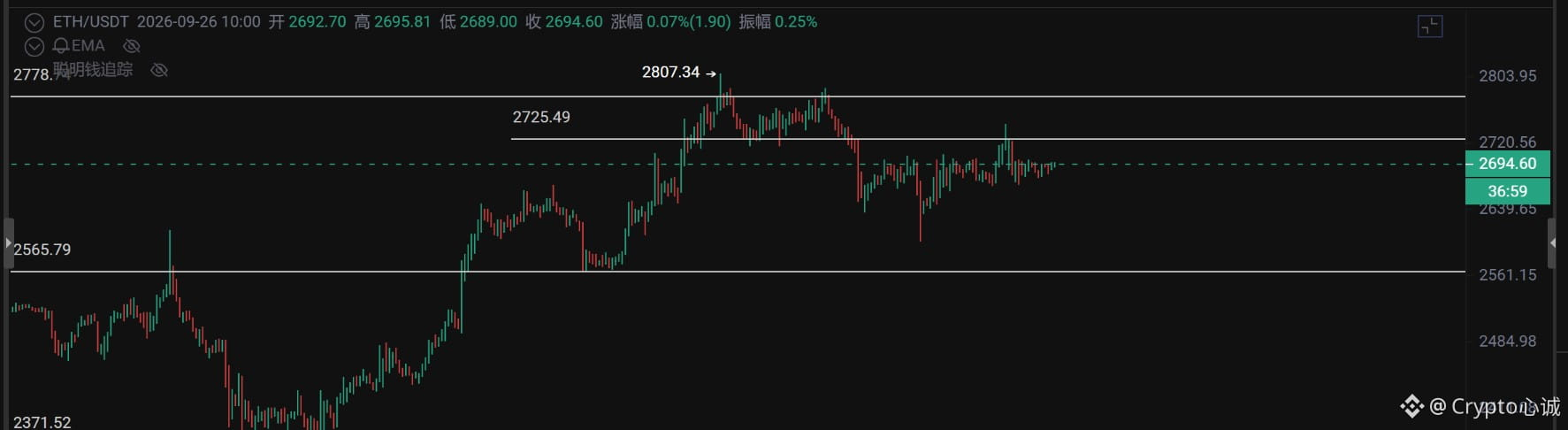
$ETH Yesterday we went through it according to our plan. Yesterday, we mentioned to everyone that if the market doesn’t hold firm at the 2725 level, it still has to come back down. Yesterday, a single big bullish candle went up, and then a single big bearish candle pulled back. But at this moment, from various timeframes and levels, this area is showing a bottoming pattern. If it doesn’t break down below the 2525 position, it will once again push up toward around 2780, and then choose a direction again.
So next, we need to pay attention to whether the bottom and the top on the one-hour timeframe are gradually rising. If the tops and bottoms are rising, that means it still needs to move upward by another leg.
{future}(ETHUSDT)
$ETH Yesterday we went through it according to our plan. Yesterday, we mentioned to everyone that if the market doesn’t hold firm at the 2725 level, it still has to come back down. Yesterday, a single big bullish candle went up, and then a single big bearish candle pulled back. But at this moment, from various timeframes and levels, this area is showing a bottoming pattern. If it doesn’t break down below the 2525 position, it will once again push up toward around 2780, and then choose a direction again.
So next, we need to pay attention to whether the bottom and the top on the one-hour timeframe are gradually rising. If the tops and bottoms are rising, that means it still needs to move upward by another leg.
So next, we need to pay attention to whether the bottom and the top on the one-hour timeframe are gradually rising. If the tops and bottoms are rising, that means it still needs to move upward by another leg.
352
·
--
#Bitget遭黑客攻击损失3.52亿美元
Today, Saturday’s market action is still mainly characterized by consolidation.
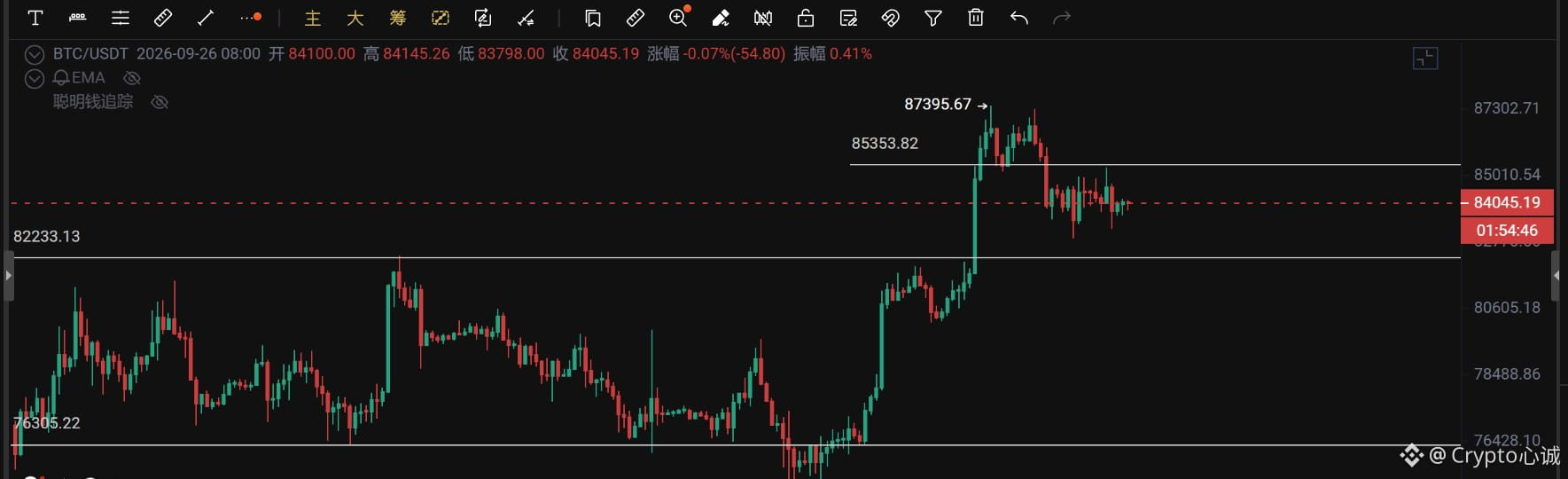
Yesterday, I told everyone to watch whether the 85300 level can hold. If it can’t, then it will continue to range around below the neckline and consolidate. Yesterday, price did reach that level and then moved sideways—exactly as we expected. So the current thinking is the same: the consolidation range is between 82300 and 85300.
In the short term, as long as price doesn’t break down below 83200, I think there’s a chance it will move up again to test around 86600, and then come back down.
So to summarize: intraday, this area is still mainly a period of consolidation. And when next week opens, it will most likely focus on a retracement toward 86,600.
I think the most important thing today isn’t the market—it’s when BG can be withdrawn. If you want cashback from trading on Binance, you can message me privately 🧐
$BTC
{future}(BTCUSDT)
$ETH
{future}(ETHUSDT)
#Bitget遭黑客攻击损失3.52亿美元
Today, Saturday’s market action is still mainly characterized by consolidation.
Yesterday, I told everyone to watch whether the 85300 level can hold. If it can’t, then it will continue to range around below the neckline and consolidate. Yesterday, price did reach that level and then moved sideways—exactly as we expected. So the current thinking is the same: the consolidation range is between 82300 and 85300.
In the short term, as long as price doesn’t break down below 83200, I think there’s a chance it will move up again to test around 86600, and then come back down.
So to summarize: intraday, this area is still mainly a period of consolidation. And when next week opens, it will most likely focus on a retracement toward 86,600.
I think the most important thing today isn’t the market—it’s when BG can be withdrawn. If you want cashback from trading on Binance, you can message me privately 🧐
$BTC
$ETH
Today, Saturday’s market action is still mainly characterized by consolidation.
Yesterday, I told everyone to watch whether the 85300 level can hold. If it can’t, then it will continue to range around below the neckline and consolidate. Yesterday, price did reach that level and then moved sideways—exactly as we expected. So the current thinking is the same: the consolidation range is between 82300 and 85300.
In the short term, as long as price doesn’t break down below 83200, I think there’s a chance it will move up again to test around 86600, and then come back down.
So to summarize: intraday, this area is still mainly a period of consolidation. And when next week opens, it will most likely focus on a retracement toward 86,600.
I think the most important thing today isn’t the market—it’s when BG can be withdrawn. If you want cashback from trading on Binance, you can message me privately 🧐
$BTC
$ETH
163
·
--
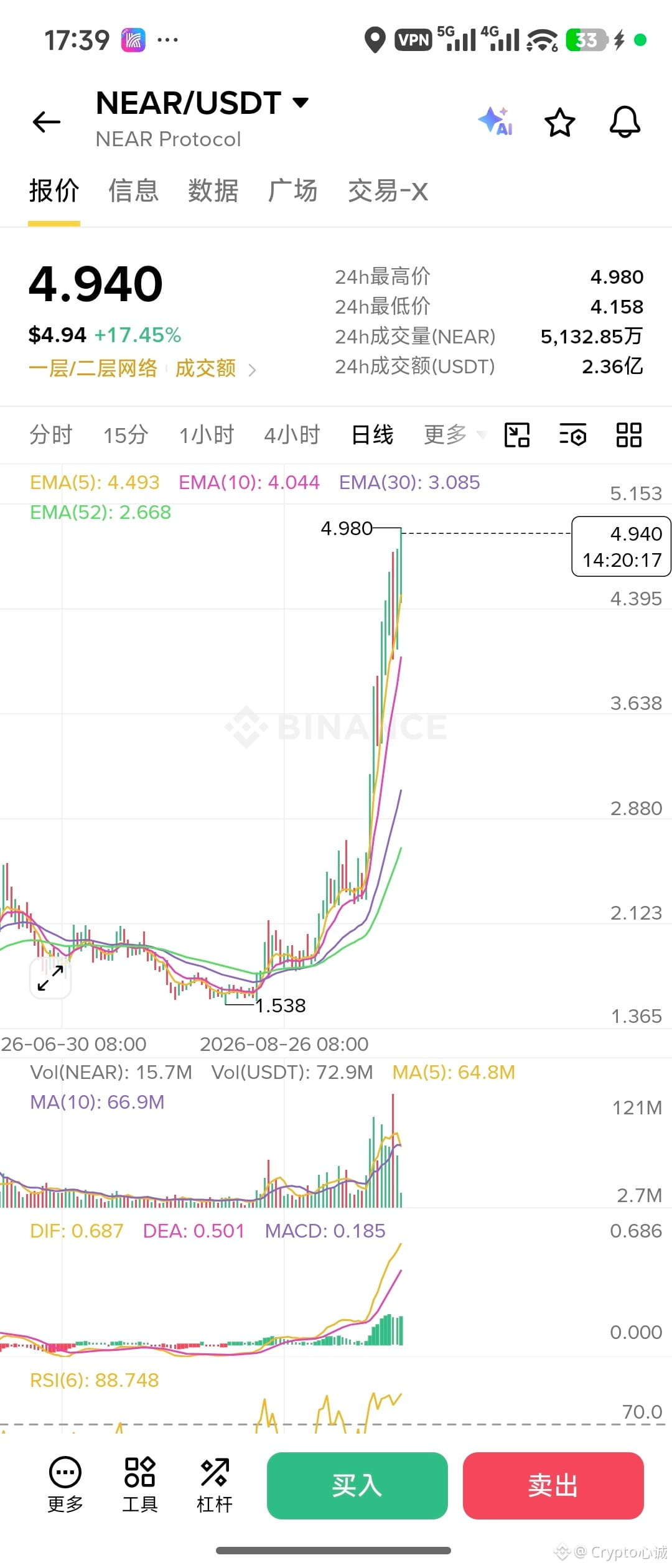
$NEAR Every time either it doesn’t go up at all, or it rockets—this time it’s already up more than threefold.
I think NEAR’s big surge this time mainly comes from these three reasons:
① Real volume in Intents: it crosses 30+ chains for exchanges, with cumulative volume around 30 billion, and nearly 1 billion in a single week. The privacy channel is still gobbling up large ZEC transfer “trades.”
② NEAR@3.33 turns the airdrop into a limit-up condition: snapshots are taken only after a confidential account’s TVL crosses the threshold. Only when the three-day moving average climbs above 3.33 can it be converted into circulating tokens. The money is used to unlock rewards—both fueling the product and propping the price.
③ With near.com’s default privacy contracts, settlement connects to Hyperliquid; then it stacks on top Ondo tokenized U.S. stocks and AI inference—one narrative assembled in one go.
It’s so steep because incentives compress the timeline.
Right now, the key resistance level is $5. As long as it holds above $5, the upside opens up—but you also have to watch Bitcoin’s mood.
#Near
{future}(NEARUSDT)
$NEAR Every time either it doesn’t go up at all, or it rockets—this time it’s already up more than threefold.
I think NEAR’s big surge this time mainly comes from these three reasons:
① Real volume in Intents: it crosses 30+ chains for exchanges, with cumulative volume around 30 billion, and nearly 1 billion in a single week. The privacy channel is still gobbling up large ZEC transfer “trades.”
② NEAR@3.33 turns the airdrop into a limit-up condition: snapshots are taken only after a confidential account’s TVL crosses the threshold. Only when the three-day moving average climbs above 3.33 can it be converted into circulating tokens. The money is used to unlock rewards—both fueling the product and propping the price.
③ With near.com’s default privacy contracts, settlement connects to Hyperliquid; then it stacks on top Ondo tokenized U.S. stocks and AI inference—one narrative assembled in one go.
It’s so steep because incentives compress the timeline.
Right now, the key resistance level is $5. As long as it holds above $5, the upside opens up—but you also have to watch Bitcoin’s mood.
#Near
I think NEAR’s big surge this time mainly comes from these three reasons:
① Real volume in Intents: it crosses 30+ chains for exchanges, with cumulative volume around 30 billion, and nearly 1 billion in a single week. The privacy channel is still gobbling up large ZEC transfer “trades.”
② NEAR@3.33 turns the airdrop into a limit-up condition: snapshots are taken only after a confidential account’s TVL crosses the threshold. Only when the three-day moving average climbs above 3.33 can it be converted into circulating tokens. The money is used to unlock rewards—both fueling the product and propping the price.
③ With near.com’s default privacy contracts, settlement connects to Hyperliquid; then it stacks on top Ondo tokenized U.S. stocks and AI inference—one narrative assembled in one go.
It’s so steep because incentives compress the timeline.
Right now, the key resistance level is $5. As long as it holds above $5, the upside opens up—but you also have to watch Bitcoin’s mood.
#Near
1.6k
·
--
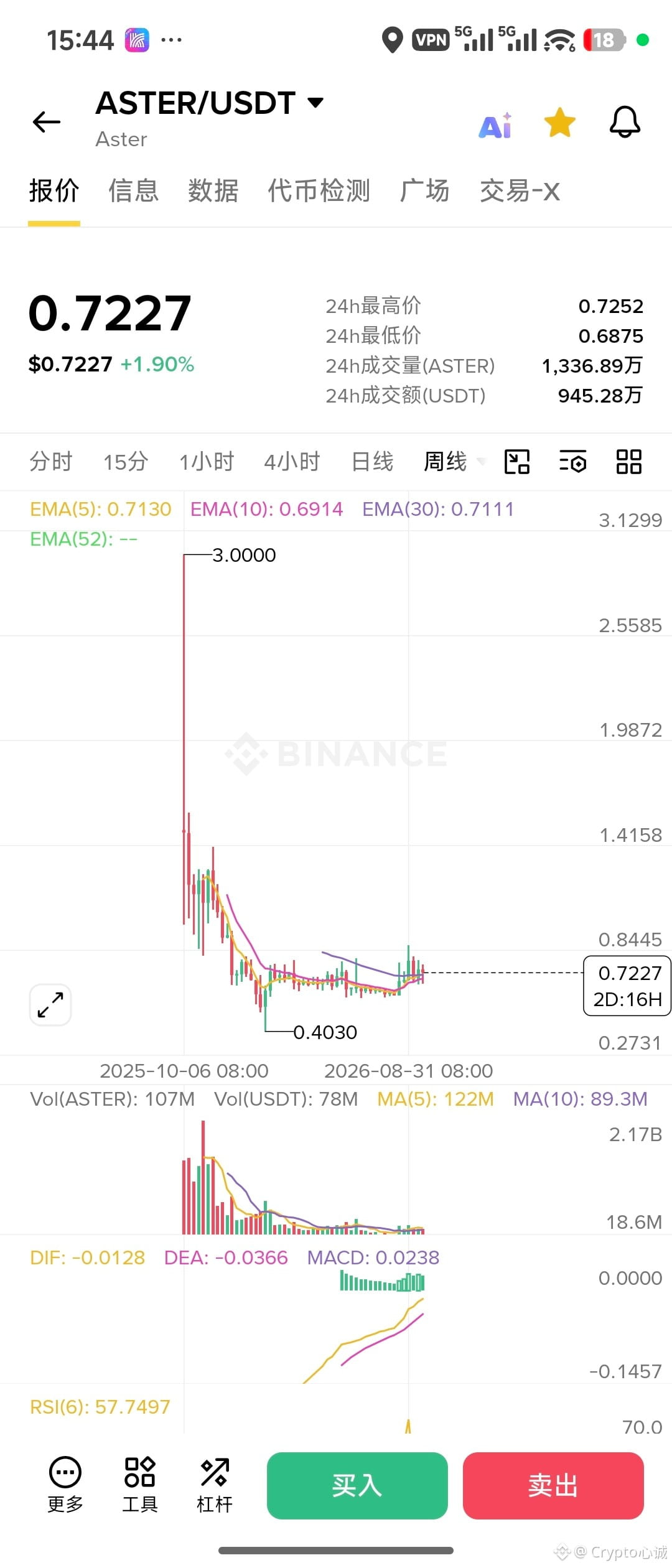
From the chart, I feel that $ASTER is like a little student quietly sitting there, waiting, not knowing where to start—just a feeling of being at a loss.
This time Binance listed HYPE on the spot market, which is essentially the leader making up the global largest spot on-ramp. Pay attention: attention and capital first flow into HYPE, and the next Hyperliquid premium on the BNB Chain will get squeezed a bit.
That way, you can see that market pricing power is becoming more concentrated in the leader.
If we look purely from a technical perspective, ASTER now seems like it really could be an opportunity to set up a position—step by step moving upward, and the accumulation should have pretty much been done.
Brothers, dare we take a shot together? Maybe it’s “one bicycle turns into a motorcycle.” $HYPE
{future}(HYPEUSDT)
{future}(ASTERUSDT)
From the chart, I feel that $ASTER is like a little student quietly sitting there, waiting, not knowing where to start—just a feeling of being at a loss.
This time Binance listed HYPE on the spot market, which is essentially the leader making up the global largest spot on-ramp. Pay attention: attention and capital first flow into HYPE, and the next Hyperliquid premium on the BNB Chain will get squeezed a bit.
That way, you can see that market pricing power is becoming more concentrated in the leader.
If we look purely from a technical perspective, ASTER now seems like it really could be an opportunity to set up a position—step by step moving upward, and the accumulation should have pretty much been done.
Brothers, dare we take a shot together? Maybe it’s “one bicycle turns into a motorcycle.” $HYPE
This time Binance listed HYPE on the spot market, which is essentially the leader making up the global largest spot on-ramp. Pay attention: attention and capital first flow into HYPE, and the next Hyperliquid premium on the BNB Chain will get squeezed a bit.
That way, you can see that market pricing power is becoming more concentrated in the leader.
If we look purely from a technical perspective, ASTER now seems like it really could be an opportunity to set up a position—step by step moving upward, and the accumulation should have pretty much been done.
Brothers, dare we take a shot together? Maybe it’s “one bicycle turns into a motorcycle.” $HYPE
1.3k
Log in to explore more content
Join global crypto users on Binance Square
⚡️ Get latest and useful information about crypto.
💬 Trusted by the world’s largest crypto exchange.
👍 Discover real insights from verified creators.
Email / Phone number
Trending Topics
StrategyStriveAdd2305BitcoinThisWeek
6,193 views
279 Discussing
🔥 2,305 BTC In One Week — Watch $BTC
Corporate Bitcoin treasuries continue expanding.
Strategy + Strive added 2,305 $BTC, taking their combined reported holdings to about 872K BTC.
This doesn't guarantee where price goes next — but it shows why Bitcoin's fixed supply remains a major part of the investment discussion.
Spot $BTC. Real ownership. No leverage required. 📊🟠
#strategystriveadd2305bitcointhisweek
CryptoMahibaloch
·1 Likes
·1.4k views
TrumpRejectsIranHormuzReopening
11,492 views
348 Discussing
TokenizedStockDEXVolumeHits$20.9B
33 views
2 Discussing