
LaoYao_crypto
660 Posts
LaoYao_crypto
币圈心学践行者|知行合一,摆脱FOMO与焦虑,在周期中稳健生存与增值
Frequent Trader
2.6 Years
28 Following
431 Followers
758 Liked
Posts
All
Quotes
Videos
Live
LaoYao_crypto
·
--
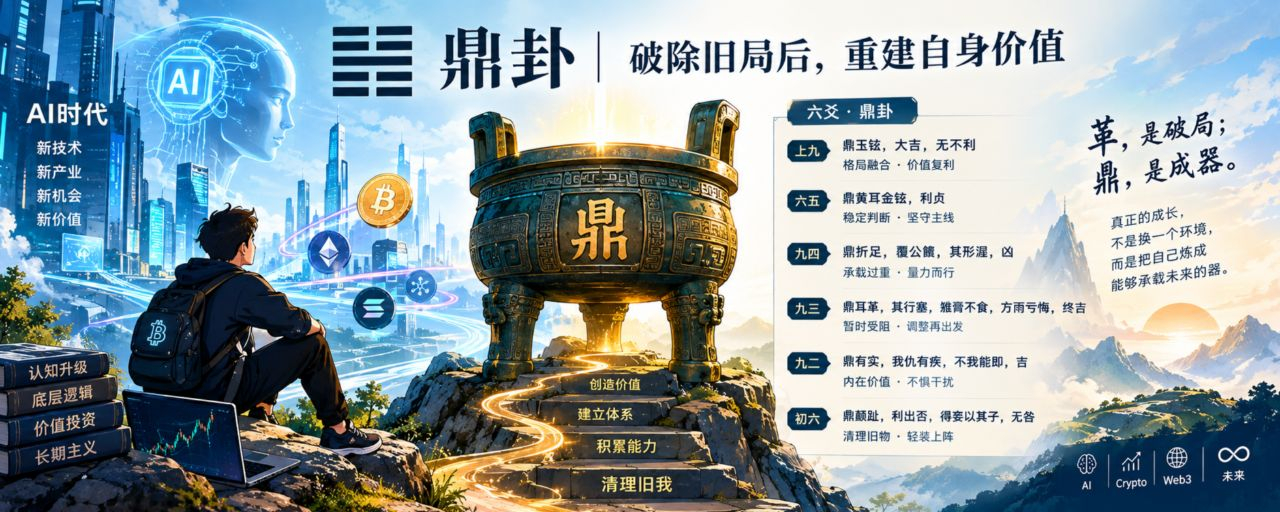
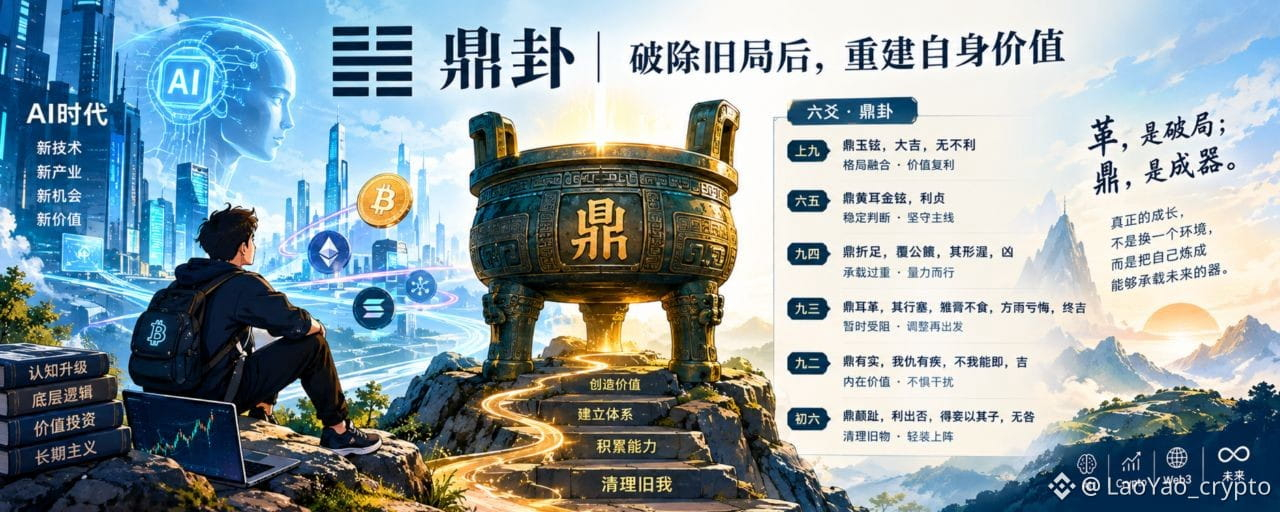
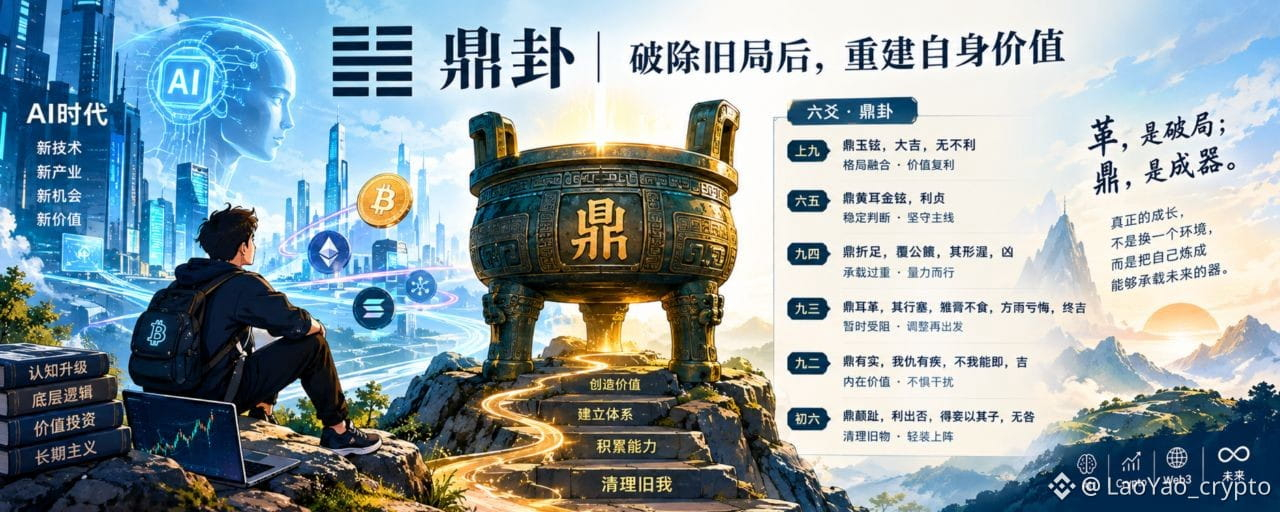
Knowing Is Easy, Not Divining It|Hexagram ䷱ Ding: After Breaking the Old Order, Rebuild Your Own Value
—Real growth is not only breaking the old situation; it is also the remaking of your own value.
Ding, in ancient times, was used for cooking and for sacrifices, and it also symbolizes bearing, stability, and authority.
Ding has three legs, two handles, and one body;
Using wood to initiate and fire to refine what is made.
四十九卦 ䷰ 革卦 强调:旧局已破,要敢于改变.
The fifty hexagrams—Hexagram ䷱ Ding—further tells us:
After changing, what’s even more important is to become someone who can bear value.
Hexagram ䷱ Ding emphasizes the wisdom of “standing”: after discarding the old, you must usher in something new.
Ding, in ancient times, was used for cooking and for sacrifices, and it also symbolizes bearing, stability, and authority.
Ding has three legs, two handles, and one body;
Using wood to initiate and fire to refine what is made.
四十九卦 ䷰ 革卦 强调:旧局已破,要敢于改变.
The fifty hexagrams—Hexagram ䷱ Ding—further tells us:
After changing, what’s even more important is to become someone who can bear value.
Hexagram ䷱ Ding emphasizes the wisdom of “standing”: after discarding the old, you must usher in something new.


LaoYao_crypto
·
--
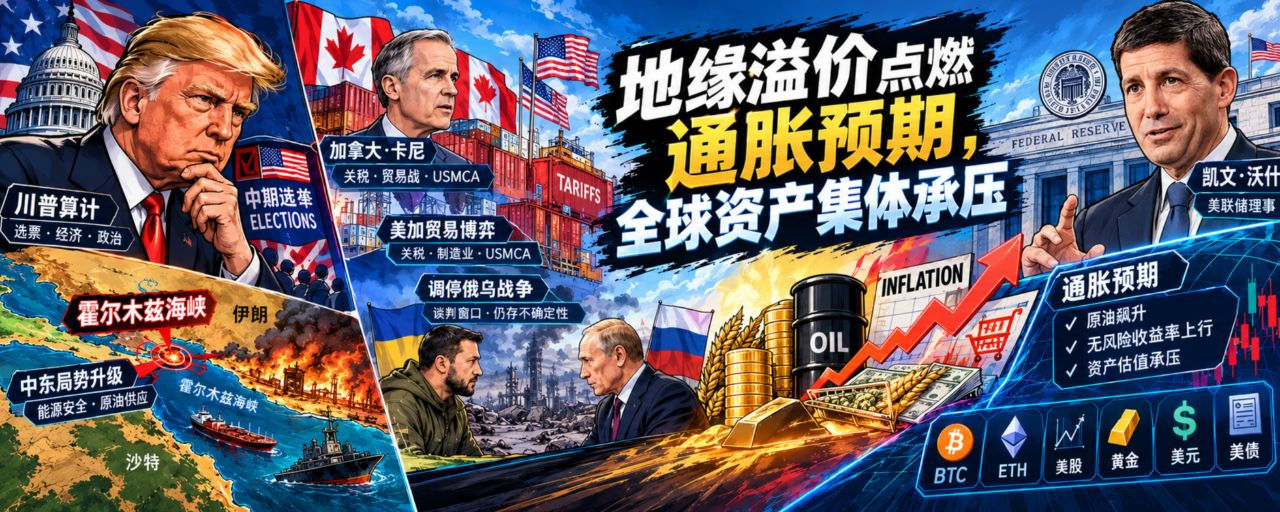
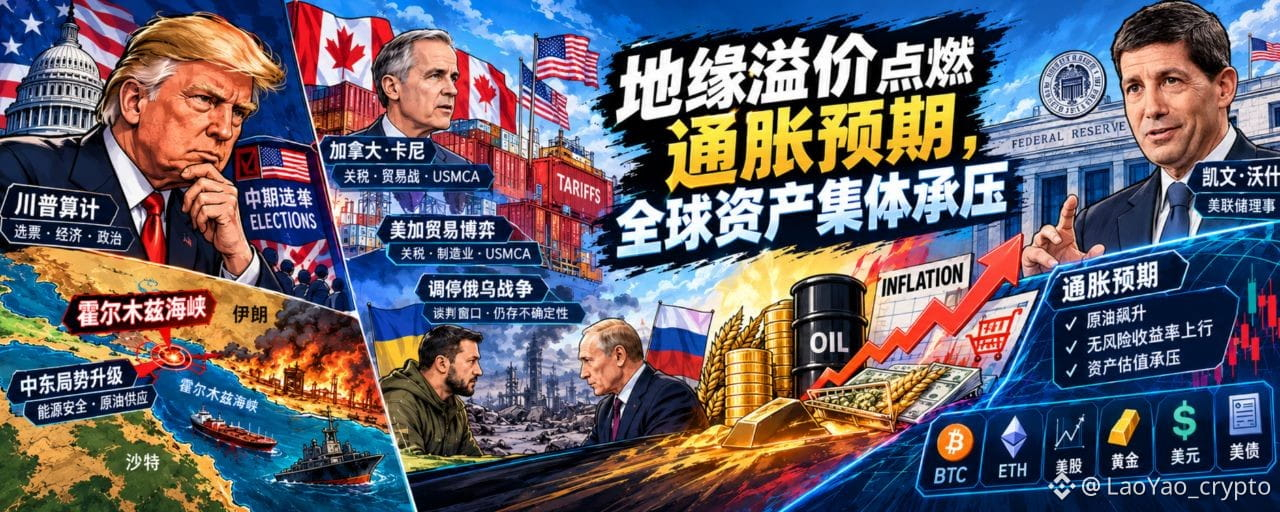
September 9: Geopolitical risk premium ignites inflation expectations, putting global assets under collective pressure
Over the past 24 hours, the key variables in global markets have shifted again—from the “rate-cut trade” to “geopolitics × energy × inflation.”
Houthi attacks on energy facilities in southern Saudi Arabia became the direct catalyst for a rapid rise in oil prices;
Meanwhile, the risk in the Strait of Hormuz continues to heat up, and expectations of crude oil supply disruptions rise rapidly.
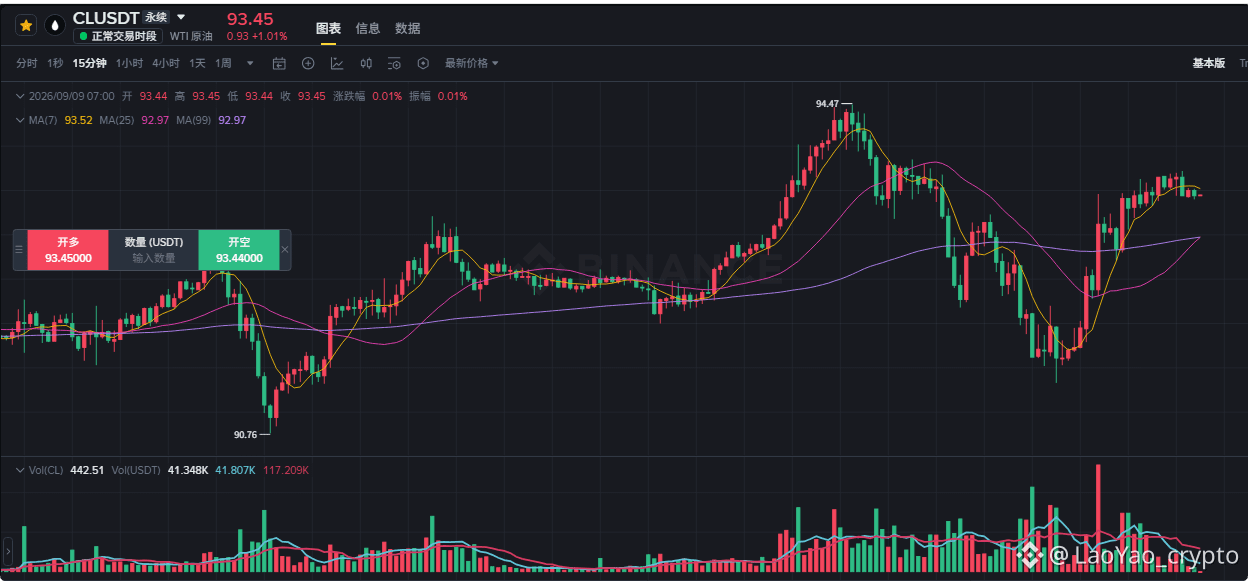
Brent crude is nearing $100 per barrel, and the market is beginning to reprice the impact of energy shocks on global inflation.
This means a familiar transmission chain is restarting:
Geopolitical conflict → Energy prices → Inflation expectations → Central bank policy → Risk-free interest rates → Asset valuations → Global capital flows
Houthi attacks on energy facilities in southern Saudi Arabia became the direct catalyst for a rapid rise in oil prices;
Meanwhile, the risk in the Strait of Hormuz continues to heat up, and expectations of crude oil supply disruptions rise rapidly.
Brent crude is nearing $100 per barrel, and the market is beginning to reprice the impact of energy shocks on global inflation.
This means a familiar transmission chain is restarting:
Geopolitical conflict → Energy prices → Inflation expectations → Central bank policy → Risk-free interest rates → Asset valuations → Global capital flows
LaoYao_crypto
·
--
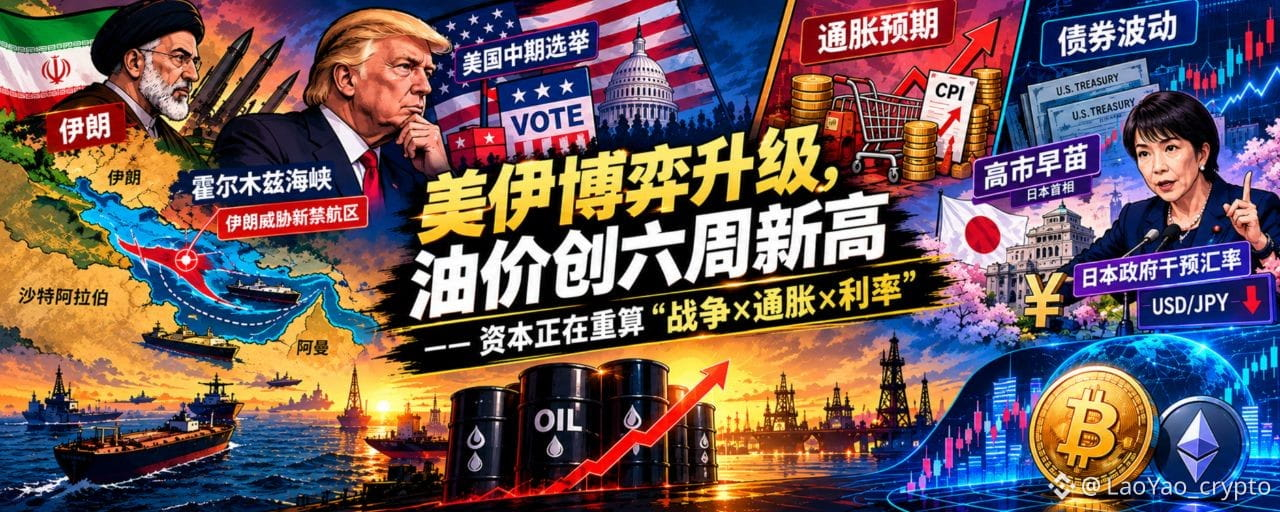
September 8: U.S.-Iran tensions escalate, oil prices hit a six-week high—capital is recalculating “war × inflation × rates”
Over the past 24 hours, Labor Day is being observed in the United States. U.S. stock spot and U.S. Treasury spot markets are closed; only futures, FX, and commodities continue to trade OTC.
In such a low-liquidity window, the market instead released clearer signals:
The standoff between the U.S. and Iran over the Strait of Hormuz has continued to escalate, and the risk premium for crude oil has risen again;
Strong U.S. employment data reinforced expectations that “inflation still has staying power,” putting pressure on global long-end yields;
Between gold, the U.S. dollar, the Japanese yen, and crypto assets, there is a more obvious differentiation in safe-haven demand and cross-asset pricing.
In such a low-liquidity window, the market instead released clearer signals:
The standoff between the U.S. and Iran over the Strait of Hormuz has continued to escalate, and the risk premium for crude oil has risen again;
Strong U.S. employment data reinforced expectations that “inflation still has staying power,” putting pressure on global long-end yields;
Between gold, the U.S. dollar, the Japanese yen, and crypto assets, there is a more obvious differentiation in safe-haven demand and cross-asset pricing.
LaoYao_crypto
·
--
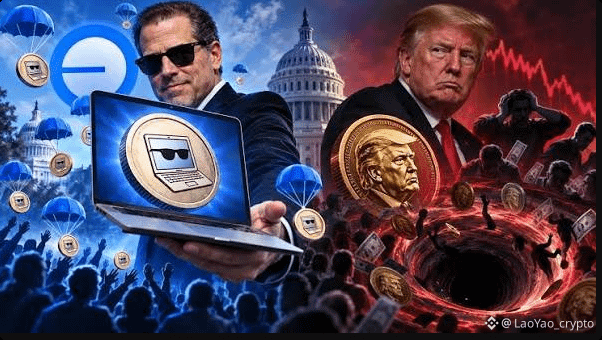
🚦 Hunter Biden to Launch a Meme Coin ( $LAPTOP )
Hunter Biden, the son of former U.S. President Joe Biden, will list a meme coin named LAPTOP (Chinese: laptop) on Coinbase’s Base network. Total supply: 1 billion coins, with 20% reserved for an air drop. A portion is explicitly allocated to users who lost money on the TRUMP coin issued by Donald Trump. The remaining token allocation is also tied to event predictions such as “whether Trump will be impeached.”
In April 2019, Hunter sent his own broken laptop for repair. The hard drive contained a large number of photos and videos involving drug use and private life. In addition, emails related to his political and business connections were also disclosed by the Washington Post.
This meme launch by Hunter has been widely linked by the public to his poor financial situation.
He previously said his debts are about $17 million. In sworn testimony made public this year, he stated that he has no car, no savings, and that besides his paintings, he does not own anything of value. It is also reported that between 2021 and 2023, while Biden was president, Hunter sold 27 paintings at an average price of about $54,000, after which trading nearly came to a halt.
Hunter Biden, the son of former U.S. President Joe Biden, will list a meme coin named LAPTOP (Chinese: laptop) on Coinbase’s Base network. Total supply: 1 billion coins, with 20% reserved for an air drop. A portion is explicitly allocated to users who lost money on the TRUMP coin issued by Donald Trump. The remaining token allocation is also tied to event predictions such as “whether Trump will be impeached.”
In April 2019, Hunter sent his own broken laptop for repair. The hard drive contained a large number of photos and videos involving drug use and private life. In addition, emails related to his political and business connections were also disclosed by the Washington Post.
This meme launch by Hunter has been widely linked by the public to his poor financial situation.
He previously said his debts are about $17 million. In sworn testimony made public this year, he stated that he has no car, no savings, and that besides his paintings, he does not own anything of value. It is also reported that between 2021 and 2023, while Biden was president, Hunter sold 27 paintings at an average price of about $54,000, after which trading nearly came to a halt.
Verified
LaoYao_crypto
·
--
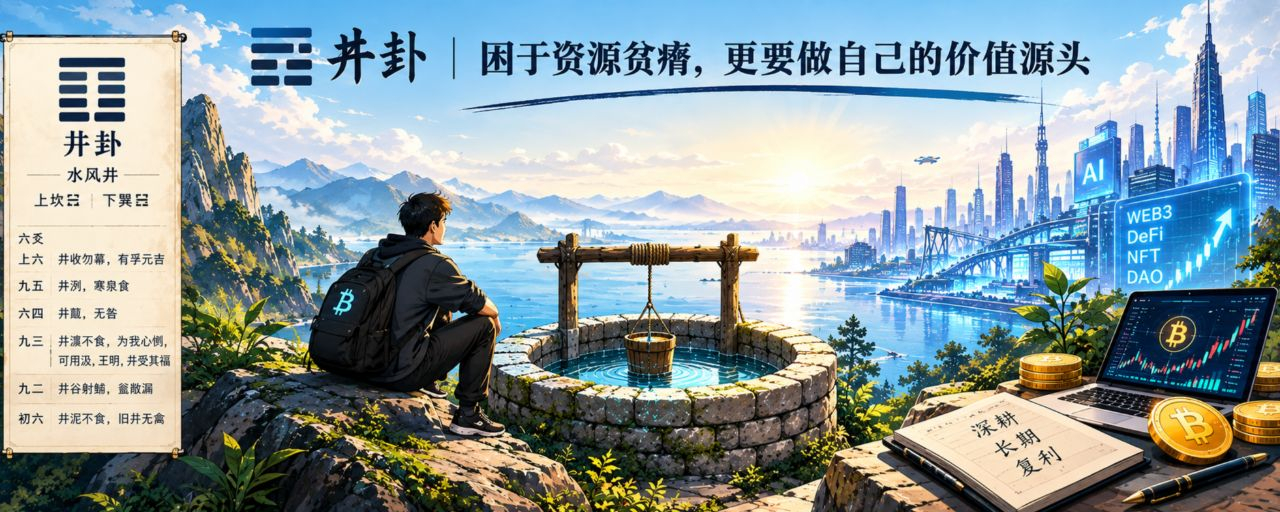
Easy to know, not to predict|Hexagram ䷯ Well: Trapped by scarce resources, one must still make one’s own value source
—the real value is not in temporary glory, but in having the ability to provide a steady stream over the long term.
Well, meaning a water well, resources, and nourishment.
On the treetop there is water; the water is drawn from a well;
A well does not dry up because no one is there; nor does it run out because people draw water.
The forty-eight hexagrams, Hexagram ䷯ Well, speaks of the wisdom of a “well”:
What truly matters in life is not just finding a chance once,
Rather, it is to build a source that can continuously generate value.
A person’s long-term competitiveness is not about occasionally catching a wave of opportunity,
but no matter how circumstances change,
to always be able to draw strength from one’s own “well.”
Well, meaning a water well, resources, and nourishment.
On the treetop there is water; the water is drawn from a well;
A well does not dry up because no one is there; nor does it run out because people draw water.
The forty-eight hexagrams, Hexagram ䷯ Well, speaks of the wisdom of a “well”:
What truly matters in life is not just finding a chance once,
Rather, it is to build a source that can continuously generate value.
A person’s long-term competitiveness is not about occasionally catching a wave of opportunity,
but no matter how circumstances change,
to always be able to draw strength from one’s own “well.”
LaoYao_crypto
·
--
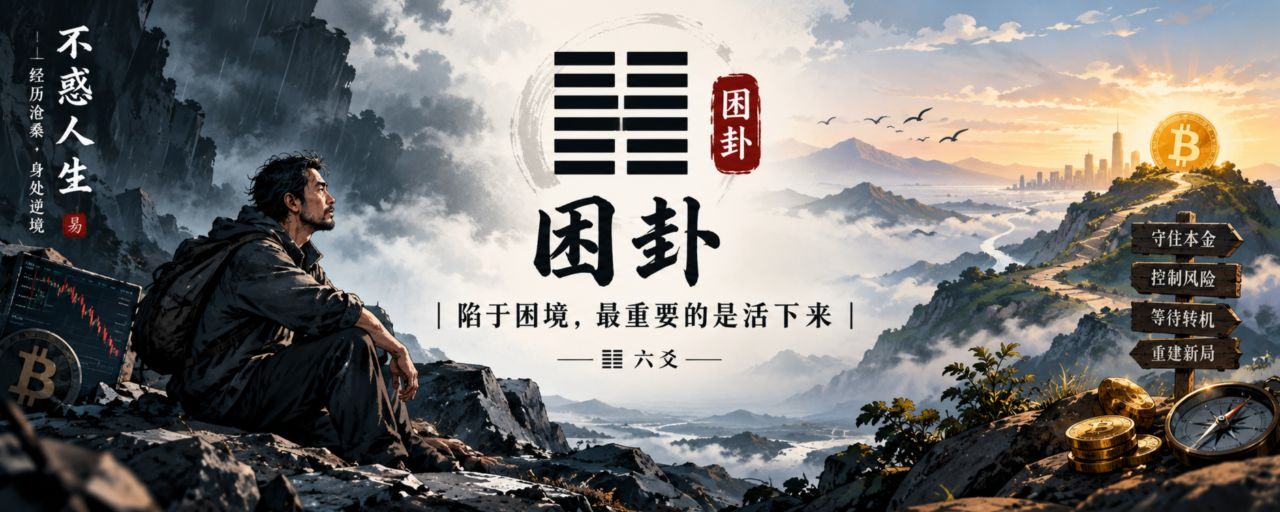
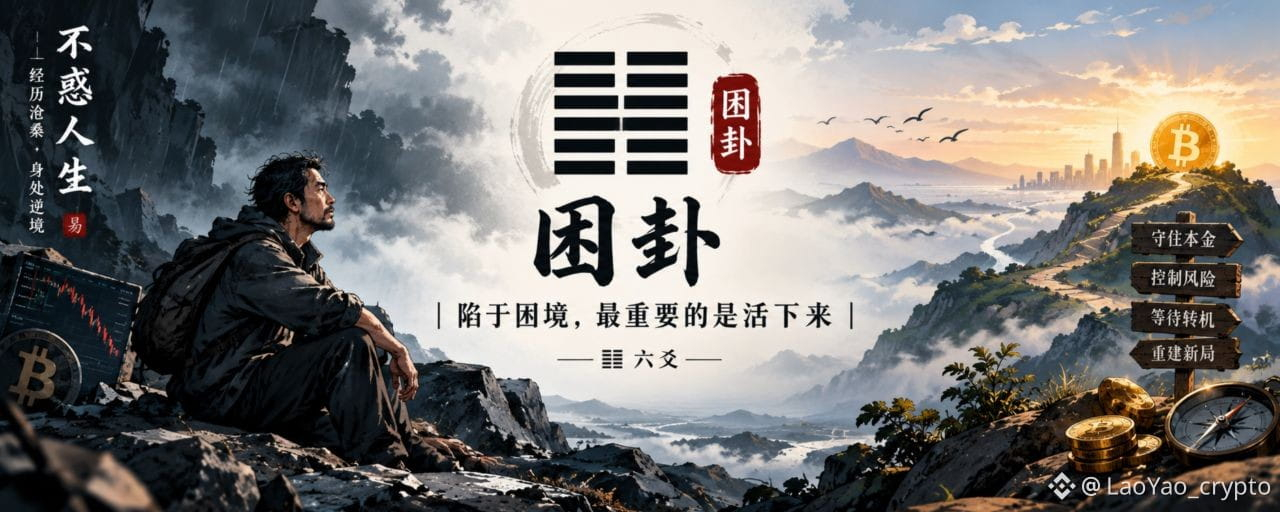
Knowing the I Ching Without Divining|䷮Kun Hexagram: In hardship without losing one’s ambition; true breakthrough begins with inner strength
—The true predicament in life is not that the road ahead is temporarily impassable, but that one loses one’s true self and direction while trapped in adversity.
Kun means hardship, obstruction, and embarrassment.
There is no water in the marsh; the marsh dries up;
External resources diminish, the road ahead is blocked, and one is caught between advance and retreat.
Hexagram 47 ䷮ Kun speaks precisely of the wisdom of "Kun":
Life is rarely a smooth road all the way.
When career paths hit a wall, assets pull back, and relationships fall out of balance, even exhausting all efforts without hearing a response is all part of Kun.
What truly tests a person is not the skill one has in favorable times, but whether one can hold fast to the heart in times of hardship.
Circumstances may confine your situation, but they cannot bind your mindset.
Kun means hardship, obstruction, and embarrassment.
There is no water in the marsh; the marsh dries up;
External resources diminish, the road ahead is blocked, and one is caught between advance and retreat.
Hexagram 47 ䷮ Kun speaks precisely of the wisdom of "Kun":
Life is rarely a smooth road all the way.
When career paths hit a wall, assets pull back, and relationships fall out of balance, even exhausting all efforts without hearing a response is all part of Kun.
What truly tests a person is not the skill one has in favorable times, but whether one can hold fast to the heart in times of hardship.
Circumstances may confine your situation, but they cannot bind your mindset.
LaoYao_crypto
·
--
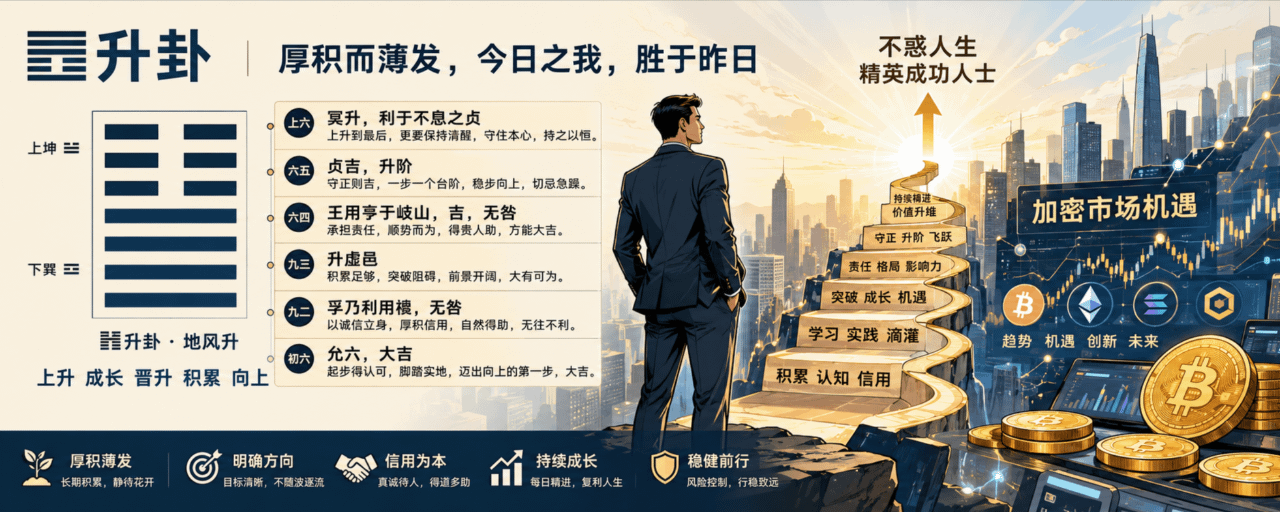
Knowing the I Ching Without Divination | ䷭ Rise Hexagram: Accumulate deeply, then flourish lightly; upward growth has its time
—True growth is not a sudden leap upward, but step by step lifting yourself to a higher place.
Upward, meaning rising, growing, and promotion.
A tree grows from the earth, with deep roots before its branches flourish;
A tree does not tower to the sky overnight, yet it keeps growing upward through daily accumulation.
Hexagram 46, ䷭ Rise, is precisely about the wisdom of “rising”:
Many of life’s true leaps seem to happen all of a sudden,
It had actually already been accumulating for a long time in places no one was paying attention to.
Ability is honed bit by bit,
Trust is built by doing one thing after another,
Upward, meaning rising, growing, and promotion.
A tree grows from the earth, with deep roots before its branches flourish;
A tree does not tower to the sky overnight, yet it keeps growing upward through daily accumulation.
Hexagram 46, ䷭ Rise, is precisely about the wisdom of “rising”:
Many of life’s true leaps seem to happen all of a sudden,
It had actually already been accumulating for a long time in places no one was paying attention to.
Ability is honed bit by bit,
Trust is built by doing one thing after another,
LaoYao_crypto
·
--
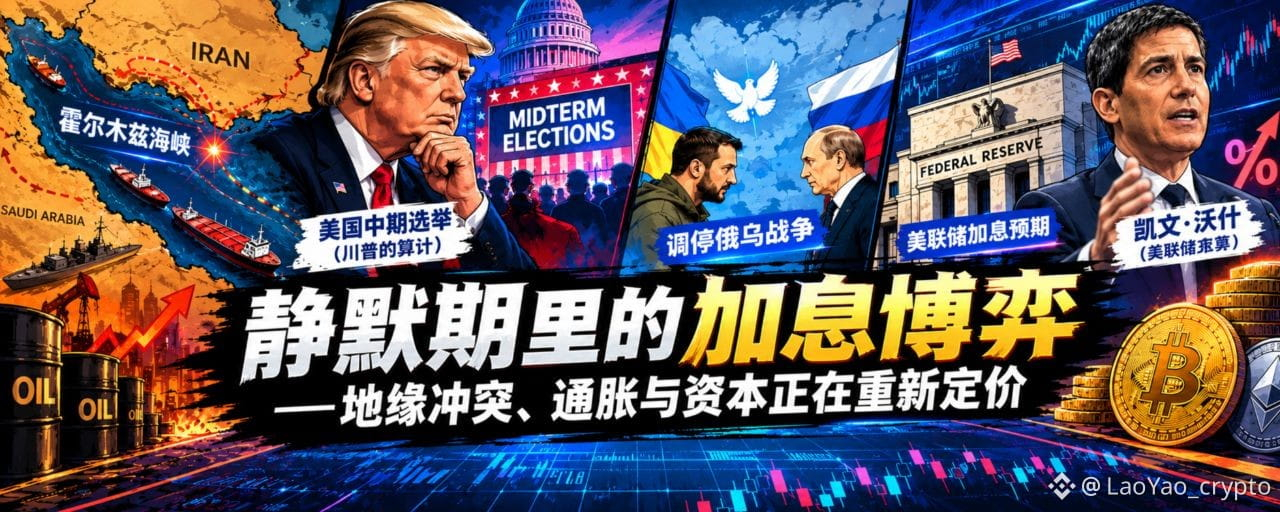
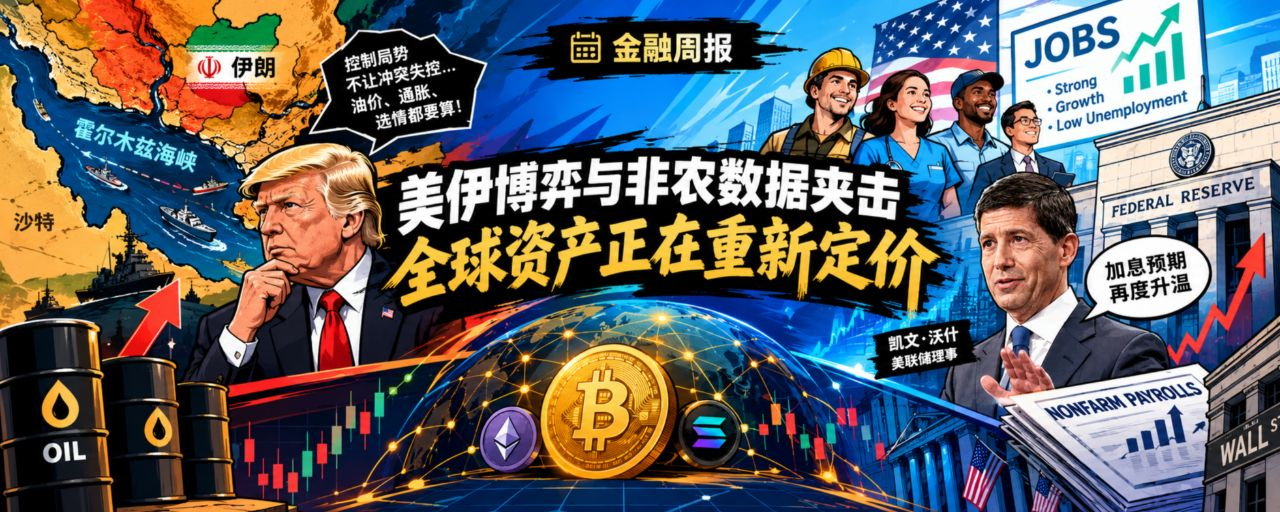
September 6: Financial Weekly | U.S.-Iran tensions and nonfarm data squeeze global assets as they are being repriced
This week’s global financial markets were basically centered on three main themes:
First, tensions between the U.S. and Iran heated up again, pushing oil prices higher and reigniting inflation worries;
Second, global bond markets continued to sell off, with U.S. Treasury yields rising to a period high;
Third, U.S. nonfarm payrolls for August came in above expectations, and the market raised its expectations for a Fed rate hike in September once again.
These three clues ultimately converged on the same question:
Will inflation start rising again? Will the Fed turn hawkish again?
Thus, this week global assets showed a very typical “repricing” pattern:
First, tensions between the U.S. and Iran heated up again, pushing oil prices higher and reigniting inflation worries;
Second, global bond markets continued to sell off, with U.S. Treasury yields rising to a period high;
Third, U.S. nonfarm payrolls for August came in above expectations, and the market raised its expectations for a Fed rate hike in September once again.
These three clues ultimately converged on the same question:
Will inflation start rising again? Will the Fed turn hawkish again?
Thus, this week global assets showed a very typical “repricing” pattern:
Log in to explore more content