

wiki002
4.2k Posts

wiki002
Report
Block User
Allah is greatest
Frequent Trader
2.1 Years
1.0K+ Following
6.2K+ Followers
16.2K+ Liked
Posts
All
Quotes
Live
·
--
#BinancePick Real value comes from informed choices, solid fundamentals, and Long-term vision. 🚀
#BinancePick Real value comes from informed choices, solid fundamentals, and Long-term vision. 🚀

2
·
--
Honestly, Binance Pick makes market predictions more interesting. I’m focusing on research, smart decisions, and consistency rather than luck.
#BinancePick
Honestly, Binance Pick makes market predictions more interesting. I’m focusing on research, smart decisions, and consistency rather than luck.
#BinancePick
#BinancePick

3
107
·
--
A market can trade 24/7 and still struggle to answer one basic question: what is this asset actually worth?
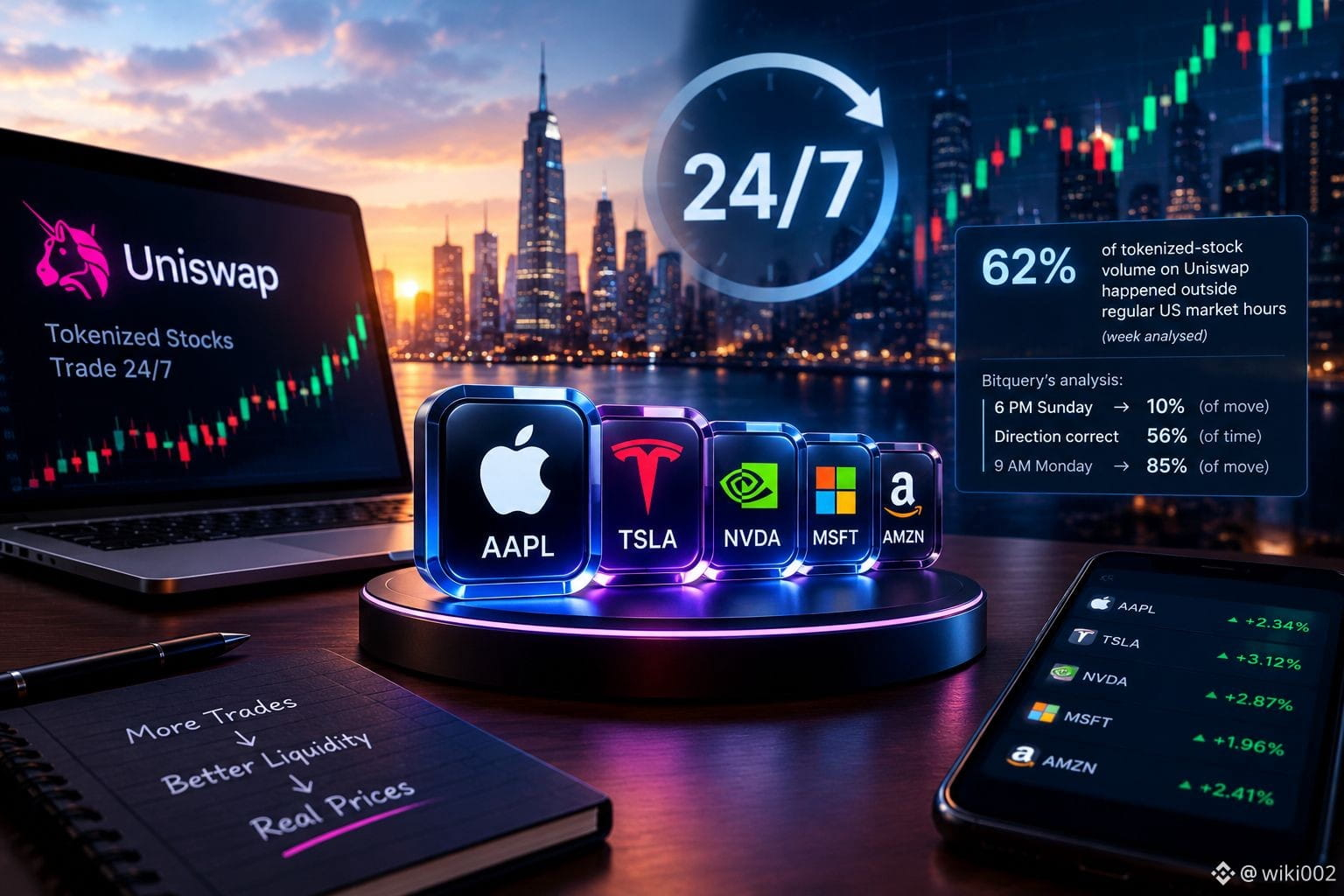
According to a recent report on Uniswap’s tokenized-stock activity, 62% of trading volume during the week analysed occurred outside regular US market hours. That signals demand for round-the-clock access. But volume alone doesn’t tell us whether those trades are producing reliable prices.
Here’s the technical problem:
When the underlying stock market closes, arbitrageurs may lose access to their usual hedging routes. If a stock token trades below its fair value, buying the token and selling the real share is no longer a straightforward trade. Market makers may have to carry more directional risk, while thinner liquidity can make even modest orders move prices sharply.
Bitquery’s analysis of 13 weekends across six issuers found that, by 6 PM Sunday New York time, the typical token had covered just 10% of the move to Monday’s stock-market opening price. Its direction matched the eventual move only 56% of the time. By 9 AM Monday, after stock futures reopened, tokens had covered 85% of that move.
These figures measure how much of the eventual price move tokens reflected—not how accurate their prices were in absolute terms.
That distinction matters for @Uniswap and the wider RWA market. The next step isn’t simply attracting more trades. It’s building deeper executable liquidity, reducing slippage on meaningful order sizes, and improving price discovery when traditional hedging markets are unavailable.
24/7 access creates the opportunity. Reliable prices create the market. 👍
$UNI $AVAX $LINK #Uniswap #RWA #TokenizedStocks
{future}(UNIUSDT)
A market can trade 24/7 and still struggle to answer one basic question: what is this asset actually worth?
According to a recent report on Uniswap’s tokenized-stock activity, 62% of trading volume during the week analysed occurred outside regular US market hours. That signals demand for round-the-clock access. But volume alone doesn’t tell us whether those trades are producing reliable prices.
Here’s the technical problem:
When the underlying stock market closes, arbitrageurs may lose access to their usual hedging routes. If a stock token trades below its fair value, buying the token and selling the real share is no longer a straightforward trade. Market makers may have to carry more directional risk, while thinner liquidity can make even modest orders move prices sharply.
Bitquery’s analysis of 13 weekends across six issuers found that, by 6 PM Sunday New York time, the typical token had covered just 10% of the move to Monday’s stock-market opening price. Its direction matched the eventual move only 56% of the time. By 9 AM Monday, after stock futures reopened, tokens had covered 85% of that move.
These figures measure how much of the eventual price move tokens reflected—not how accurate their prices were in absolute terms.
That distinction matters for @Uniswap Protocol and the wider RWA market. The next step isn’t simply attracting more trades. It’s building deeper executable liquidity, reducing slippage on meaningful order sizes, and improving price discovery when traditional hedging markets are unavailable.
24/7 access creates the opportunity. Reliable prices create the market. 👍
$UNI $AVAX $LINK #Uniswap #RWA #TokenizedStocks
According to a recent report on Uniswap’s tokenized-stock activity, 62% of trading volume during the week analysed occurred outside regular US market hours. That signals demand for round-the-clock access. But volume alone doesn’t tell us whether those trades are producing reliable prices.
Here’s the technical problem:
When the underlying stock market closes, arbitrageurs may lose access to their usual hedging routes. If a stock token trades below its fair value, buying the token and selling the real share is no longer a straightforward trade. Market makers may have to carry more directional risk, while thinner liquidity can make even modest orders move prices sharply.
Bitquery’s analysis of 13 weekends across six issuers found that, by 6 PM Sunday New York time, the typical token had covered just 10% of the move to Monday’s stock-market opening price. Its direction matched the eventual move only 56% of the time. By 9 AM Monday, after stock futures reopened, tokens had covered 85% of that move.
These figures measure how much of the eventual price move tokens reflected—not how accurate their prices were in absolute terms.
That distinction matters for @Uniswap Protocol and the wider RWA market. The next step isn’t simply attracting more trades. It’s building deeper executable liquidity, reducing slippage on meaningful order sizes, and improving price discovery when traditional hedging markets are unavailable.
24/7 access creates the opportunity. Reliable prices create the market. 👍
$UNI $AVAX $LINK #Uniswap #RWA #TokenizedStocks
2
3
415
·
--
Bullish
🔍 An accepted block on Dusk is not necessarily a final block. That difference matters when an application decides whether a transaction is safe to settle.
Dusk uses Succinct Attestation, a consensus protocol that works through iterations. If an earlier iteration remains unresolved, a block accepted in a later iteration can be replaced if the earlier iteration eventually succeeds.
The whitepaper defines a 2n rule, where n counts previous non-attested iterations. An accepted block needs 2n consecutive attested or confirmed blocks to become confirmed. When n equals 2, that means four qualifying blocks. Confirmation alone is not finality. The block’s parent must also be final.
Payment apps should check the network’s finality status before releasing funds. A transaction appearing on screen does not, by itself, mean the payment has reached finality.
#DUSK $DUSK $AMP $GTC @Dusk_Foundation
{spot}(DUSKUSDT)
🔍 An accepted block on Dusk is not necessarily a final block. That difference matters when an application decides whether a transaction is safe to settle.
Dusk uses Succinct Attestation, a consensus protocol that works through iterations. If an earlier iteration remains unresolved, a block accepted in a later iteration can be replaced if the earlier iteration eventually succeeds.
The whitepaper defines a 2n rule, where n counts previous non-attested iterations. An accepted block needs 2n consecutive attested or confirmed blocks to become confirmed. When n equals 2, that means four qualifying blocks. Confirmation alone is not finality. The block’s parent must also be final.
Payment apps should check the network’s finality status before releasing funds. A transaction appearing on screen does not, by itself, mean the payment has reached finality.
#DUSK $DUSK $AMP $GTC @Dusk
Dusk uses Succinct Attestation, a consensus protocol that works through iterations. If an earlier iteration remains unresolved, a block accepted in a later iteration can be replaced if the earlier iteration eventually succeeds.
The whitepaper defines a 2n rule, where n counts previous non-attested iterations. An accepted block needs 2n consecutive attested or confirmed blocks to become confirmed. When n equals 2, that means four qualifying blocks. Confirmation alone is not finality. The block’s parent must also be final.
Payment apps should check the network’s finality status before releasing funds. A transaction appearing on screen does not, by itself, mean the payment has reached finality.
#DUSK $DUSK $AMP $GTC @Dusk

4
290
·
--
Verified
Giving an AI agent permission to spend money is easy. The real challenge is making sure it can never spend more than you authorized. 🔐
Here’s what matters. The task field describes what the agent is supposed to do, but it isn’t the security boundary. The "payment policy" defines enforceable spending limits, while optional "execution constraints" can further restrict how payments are executed.
For example, imagine I authorize an agent to buy weather data, with a $2 limit per transaction and a $10 total budget. If it decides it needs a $15 purchase, that decision shouldn’t override the approved policy. The payment should be rejected if it exceeds the enforced limits.
I also checked a less obvious issue: overlapping payments. A system can’t just count money already spent; it must account for funds reserved by payments still in progress. Kite’s documentation describes tracking both "spent total" and "reserved total", with row-locked reservation accounting to prevent concurrent requests from bypassing the same budget limit.
That’s the important distinction for autonomous payments. An agent can decide what it wants to do, but the enforcement layer determines what it’s actually allowed to spend. The more autonomy we give agents, the more important that boundary becomes.
Would you trust an Ai agent with your money if its spending limits weren’t enforced by the payment system itself? 🤔
@GoKiteAI $KITE #KiteBBW
{spot}(KITEUSDT)
Giving an AI agent permission to spend money is easy. The real challenge is making sure it can never spend more than you authorized. 🔐
Here’s what matters. The task field describes what the agent is supposed to do, but it isn’t the security boundary. The "payment policy" defines enforceable spending limits, while optional "execution constraints" can further restrict how payments are executed.
For example, imagine I authorize an agent to buy weather data, with a $2 limit per transaction and a $10 total budget. If it decides it needs a $15 purchase, that decision shouldn’t override the approved policy. The payment should be rejected if it exceeds the enforced limits.
I also checked a less obvious issue: overlapping payments. A system can’t just count money already spent; it must account for funds reserved by payments still in progress. Kite’s documentation describes tracking both "spent total" and "reserved total", with row-locked reservation accounting to prevent concurrent requests from bypassing the same budget limit.
That’s the important distinction for autonomous payments. An agent can decide what it wants to do, but the enforcement layer determines what it’s actually allowed to spend. The more autonomy we give agents, the more important that boundary becomes.
Would you trust an Ai agent with your money if its spending limits weren’t enforced by the payment system itself? 🤔
@KITE AI 中文 $KITE #KiteBBW
Here’s what matters. The task field describes what the agent is supposed to do, but it isn’t the security boundary. The "payment policy" defines enforceable spending limits, while optional "execution constraints" can further restrict how payments are executed.
For example, imagine I authorize an agent to buy weather data, with a $2 limit per transaction and a $10 total budget. If it decides it needs a $15 purchase, that decision shouldn’t override the approved policy. The payment should be rejected if it exceeds the enforced limits.
I also checked a less obvious issue: overlapping payments. A system can’t just count money already spent; it must account for funds reserved by payments still in progress. Kite’s documentation describes tracking both "spent total" and "reserved total", with row-locked reservation accounting to prevent concurrent requests from bypassing the same budget limit.
That’s the important distinction for autonomous payments. An agent can decide what it wants to do, but the enforcement layer determines what it’s actually allowed to spend. The more autonomy we give agents, the more important that boundary becomes.
Would you trust an Ai agent with your money if its spending limits weren’t enforced by the payment system itself? 🤔
@KITE AI 中文 $KITE #KiteBBW

4
238
·
--
Bullish
Verified
#nil $NIL @nillionnetwork
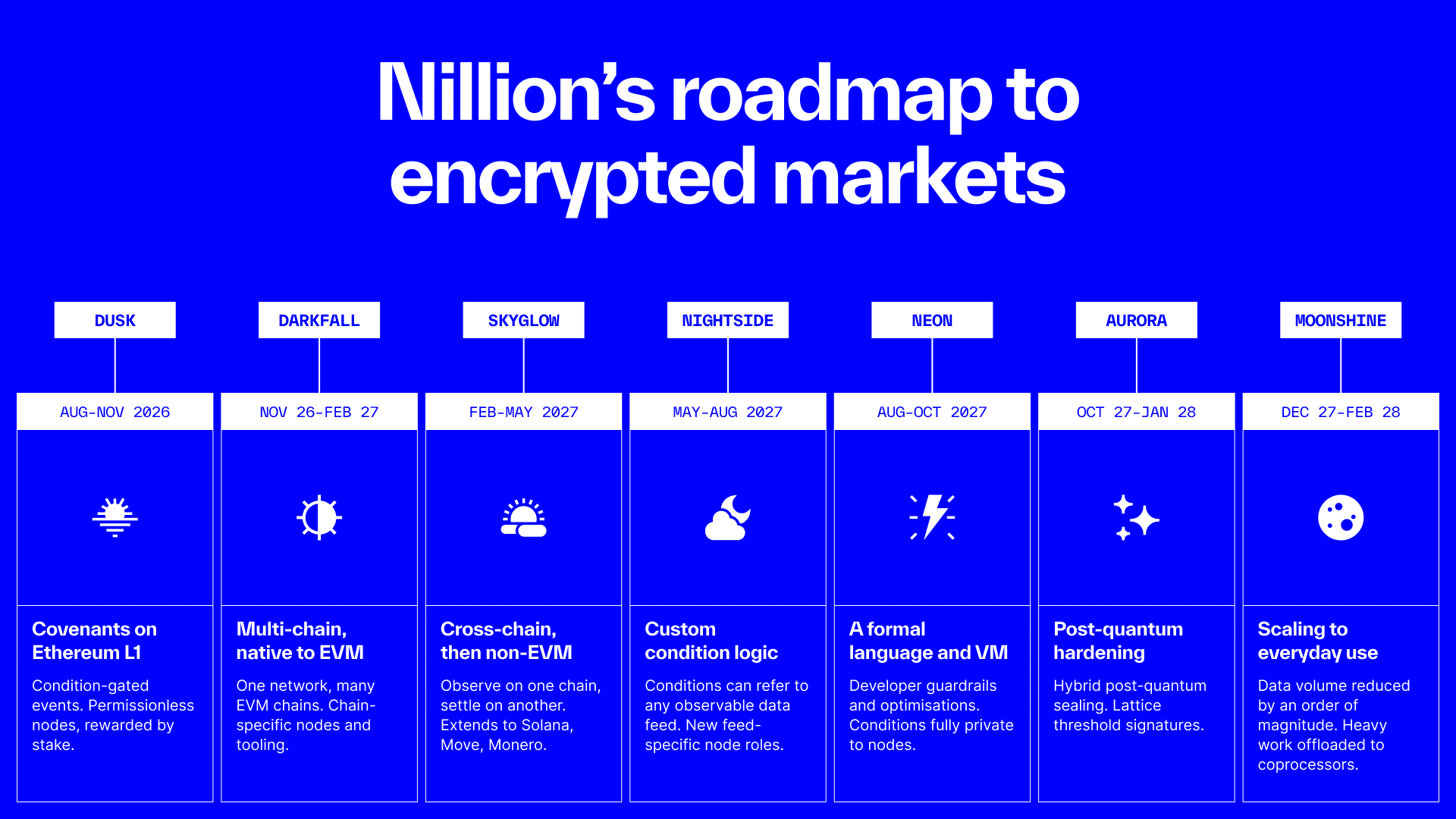
When I looked at Nillion’s Covenants, one specific detail changed how I viewed the design: the instruction can stay sealed, while the condition that unlocks it remains visible.
That distinction matters. Onchain transparency helps people verify what happened, but it can also reveal clues about what may happen next. Those are two very different things.
In Dusk, Nillion encrypts the instruction’s payload and splits it into shares distributed across a committee. No single node can reconstruct the complete payload alone.
Once the condition is met, enough shares
are released to reconstruct it and verify it on Ethereum.
But the condition remains visible to nodes in this phase. Depending on what it reveals, someone might still infer an application’s intended action. So the design reduces one kind of exposure without eliminating every possible information leak.
For $NIL ,I’d separate the technical promise from the investment case. The key questions are whether developers repeatedly use Covenants and whether trigger fees generate meaningful demand relative to token incentives. Staking participation alone doesn’t prove sustainable demand.
For me, the real test isn’t whether the technology sounds clever. It’s whether it solves a recurring problem well enough that developers keep using it. 🔍
#NIL #Ethereum #DeFi
#nil $NIL @Nillion
When I looked at Nillion’s Covenants, one specific detail changed how I viewed the design: the instruction can stay sealed, while the condition that unlocks it remains visible.
That distinction matters. Onchain transparency helps people verify what happened, but it can also reveal clues about what may happen next. Those are two very different things.
In Dusk, Nillion encrypts the instruction’s payload and splits it into shares distributed across a committee. No single node can reconstruct the complete payload alone.
Once the condition is met, enough shares
are released to reconstruct it and verify it on Ethereum.
But the condition remains visible to nodes in this phase. Depending on what it reveals, someone might still infer an application’s intended action. So the design reduces one kind of exposure without eliminating every possible information leak.
For $NIL ,I’d separate the technical promise from the investment case. The key questions are whether developers repeatedly use Covenants and whether trigger fees generate meaningful demand relative to token incentives. Staking participation alone doesn’t prove sustainable demand.
For me, the real test isn’t whether the technology sounds clever. It’s whether it solves a recurring problem well enough that developers keep using it. 🔍
#NIL #Ethereum #DeFi
When I looked at Nillion’s Covenants, one specific detail changed how I viewed the design: the instruction can stay sealed, while the condition that unlocks it remains visible.
That distinction matters. Onchain transparency helps people verify what happened, but it can also reveal clues about what may happen next. Those are two very different things.
In Dusk, Nillion encrypts the instruction’s payload and splits it into shares distributed across a committee. No single node can reconstruct the complete payload alone.
Once the condition is met, enough shares
are released to reconstruct it and verify it on Ethereum.
But the condition remains visible to nodes in this phase. Depending on what it reveals, someone might still infer an application’s intended action. So the design reduces one kind of exposure without eliminating every possible information leak.
For $NIL ,I’d separate the technical promise from the investment case. The key questions are whether developers repeatedly use Covenants and whether trigger fees generate meaningful demand relative to token incentives. Staking participation alone doesn’t prove sustainable demand.
For me, the real test isn’t whether the technology sounds clever. It’s whether it solves a recurring problem well enough that developers keep using it. 🔍
#NIL #Ethereum #DeFi
4
162
·
--
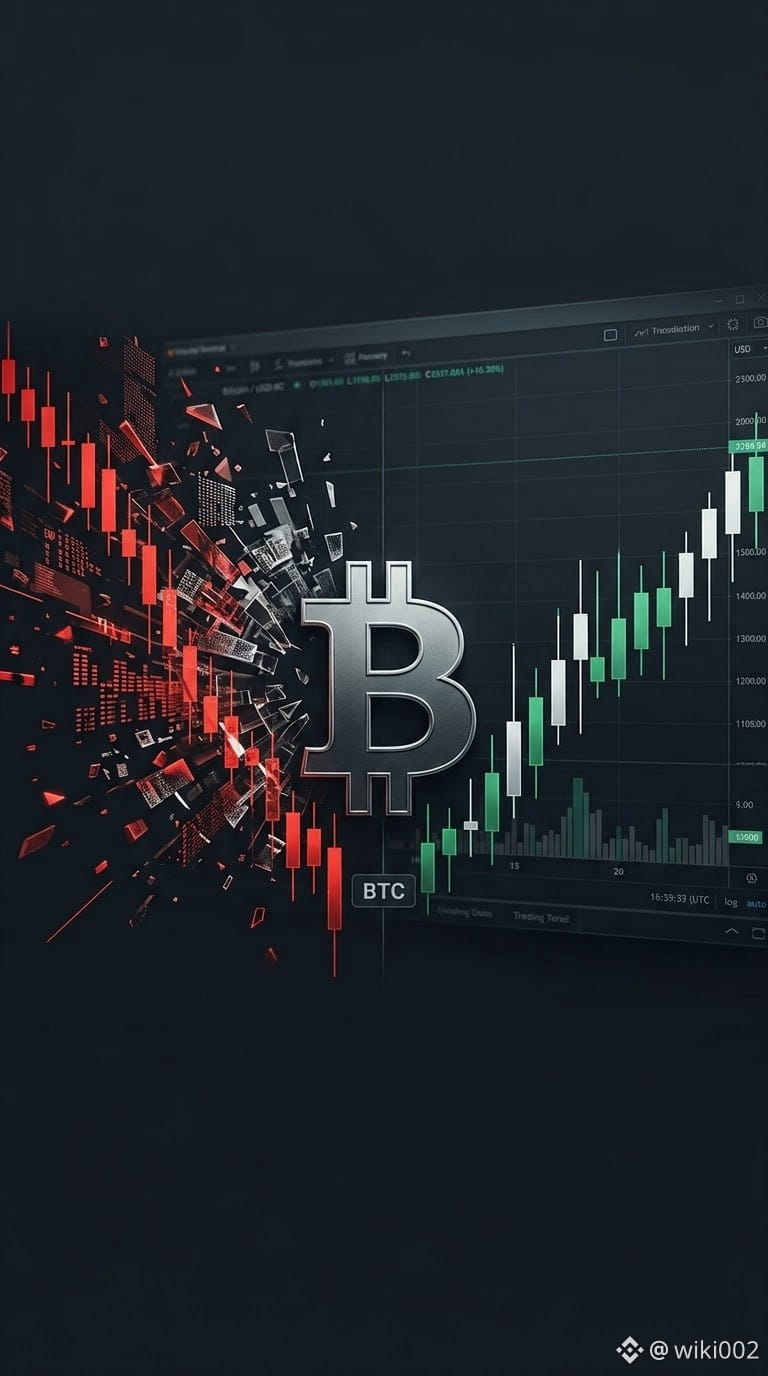
Most people watch a BTC liquidation
cascade and ask, How much leverage
just disappeared? 📉
I think there’s a better question:
What did price do after the forced selling was finished?
A liquidation event matters because it removes positions that were too fragile to survive the move. But the real information comes afterward.
If BTC gets flushed, leverage resets, and follow-through selling still fails to push price materially lower, that tells me something important: demand is absorbing the remaining supply rather than the liquidation simply triggering another leg down.
That is very different from a breakdown where every recovery becomes another opportunity to sell.
This is why I don’t automatically treat a large liquidation event as bearish.
Sometimes the flush is the cleanup, not the trend reversal.
The distinction I’m watching is simple:
Forced selling + weak recovery = possible distribution.
Forced selling + strong recovery = possible absorption.
And there’s a second-order implication here.
A market that survives its own leverage reset can become structurally healthier, because the next move starts with fewer fragile positions sitting underneath it.
So honestly, I’m less interested in predicting BTC’s next candle than watching what happens after the leverage is gone.
The liquidation itself is the event.
The market’s response is the signal.
$BTC $ETH $BNB #Bitcoin #Crypto #MarketStructure
Most people watch a BTC liquidation
cascade and ask, How much leverage
just disappeared? 📉
I think there’s a better question:
What did price do after the forced selling was finished?
A liquidation event matters because it removes positions that were too fragile to survive the move. But the real information comes afterward.
If BTC gets flushed, leverage resets, and follow-through selling still fails to push price materially lower, that tells me something important: demand is absorbing the remaining supply rather than the liquidation simply triggering another leg down.
That is very different from a breakdown where every recovery becomes another opportunity to sell.
This is why I don’t automatically treat a large liquidation event as bearish.
Sometimes the flush is the cleanup, not the trend reversal.
The distinction I’m watching is simple:
Forced selling + weak recovery = possible distribution.
Forced selling + strong recovery = possible absorption.
And there’s a second-order implication here.
A market that survives its own leverage reset can become structurally healthier, because the next move starts with fewer fragile positions sitting underneath it.
So honestly, I’m less interested in predicting BTC’s next candle than watching what happens after the leverage is gone.
The liquidation itself is the event.
The market’s response is the signal.
$BTC $ETH $BNB #Bitcoin #Crypto #MarketStructure
cascade and ask, How much leverage
just disappeared? 📉
I think there’s a better question:
What did price do after the forced selling was finished?
A liquidation event matters because it removes positions that were too fragile to survive the move. But the real information comes afterward.
If BTC gets flushed, leverage resets, and follow-through selling still fails to push price materially lower, that tells me something important: demand is absorbing the remaining supply rather than the liquidation simply triggering another leg down.
That is very different from a breakdown where every recovery becomes another opportunity to sell.
This is why I don’t automatically treat a large liquidation event as bearish.
Sometimes the flush is the cleanup, not the trend reversal.
The distinction I’m watching is simple:
Forced selling + weak recovery = possible distribution.
Forced selling + strong recovery = possible absorption.
And there’s a second-order implication here.
A market that survives its own leverage reset can become structurally healthier, because the next move starts with fewer fragile positions sitting underneath it.
So honestly, I’m less interested in predicting BTC’s next candle than watching what happens after the leverage is gone.
The liquidation itself is the event.
The market’s response is the signal.
$BTC $ETH $BNB #Bitcoin #Crypto #MarketStructure
4
211
·
--
$FET’s most important signal right now may not be the direction of price. It’s the quality of the demand underneath it.
What I like about the setup is the structure. Price remains above its key moving averages, so the market is still maintaining a constructive technical base.
But there’s a less obvious weakness.
Participation hasn’t expanded with the same intensity as the price structure, while momentum is becoming less decisive. That creates an interesting mismatch. The chart looks stronger, but the evidence behind that strength isn’t expanding at the same rate.
For me, this changes how I read the setup.
The question isn’t simply whether buyers are still present. They clearly are.
The better question is whether higher prices are creating new demand or merely extending existing demand. 🔎
That distinction matters because a move can remain technically healthy while becoming increasingly dependent on a smaller pool of active buyers.
This is why I’m watching participation as a measure of demand durability, not just as a breakout confirmation tool.
If participation strengthens, the structure becomes more meaningful because demand is catching up with price.
If it doesn’t, the bullish structure can remain intact while the conviction behind continuation stays questionable.
Honestly, that’s the part I find most valuable about $FET. The chart is showing strength, the next layer is discovering whether that strength has depth.
$FET $ONDO $OP
#FET #ASI #Crypto #Altcoins
$FET ’s most important signal right now may not be the direction of price. It’s the quality of the demand underneath it.
What I like about the setup is the structure. Price remains above its key moving averages, so the market is still maintaining a constructive technical base.
But there’s a less obvious weakness.
Participation hasn’t expanded with the same intensity as the price structure, while momentum is becoming less decisive. That creates an interesting mismatch. The chart looks stronger, but the evidence behind that strength isn’t expanding at the same rate.
For me, this changes how I read the setup.
The question isn’t simply whether buyers are still present. They clearly are.
The better question is whether higher prices are creating new demand or merely extending existing demand. 🔎
That distinction matters because a move can remain technically healthy while becoming increasingly dependent on a smaller pool of active buyers.
This is why I’m watching participation as a measure of demand durability, not just as a breakout confirmation tool.
If participation strengthens, the structure becomes more meaningful because demand is catching up with price.
If it doesn’t, the bullish structure can remain intact while the conviction behind continuation stays questionable.
Honestly, that’s the part I find most valuable about $FET . The chart is showing strength, the next layer is discovering whether that strength has depth.
$FET $ONDO $OP
#FET #ASI #Crypto #Altcoins
What I like about the setup is the structure. Price remains above its key moving averages, so the market is still maintaining a constructive technical base.
But there’s a less obvious weakness.
Participation hasn’t expanded with the same intensity as the price structure, while momentum is becoming less decisive. That creates an interesting mismatch. The chart looks stronger, but the evidence behind that strength isn’t expanding at the same rate.
For me, this changes how I read the setup.
The question isn’t simply whether buyers are still present. They clearly are.
The better question is whether higher prices are creating new demand or merely extending existing demand. 🔎
That distinction matters because a move can remain technically healthy while becoming increasingly dependent on a smaller pool of active buyers.
This is why I’m watching participation as a measure of demand durability, not just as a breakout confirmation tool.
If participation strengthens, the structure becomes more meaningful because demand is catching up with price.
If it doesn’t, the bullish structure can remain intact while the conviction behind continuation stays questionable.
Honestly, that’s the part I find most valuable about $FET . The chart is showing strength, the next layer is discovering whether that strength has depth.
$FET $ONDO $OP
#FET #ASI #Crypto #Altcoins

5
720
·
--
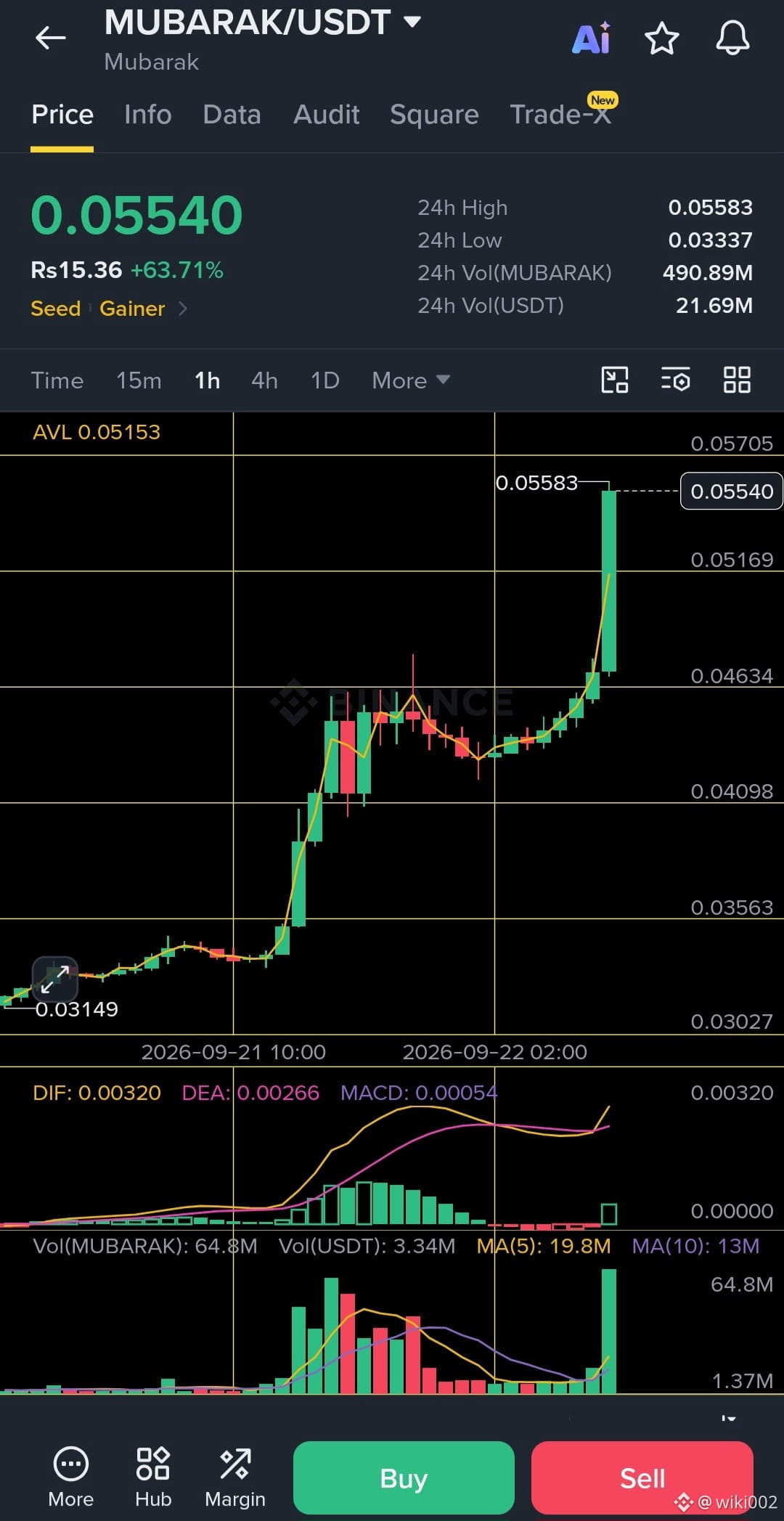
$MUBARAK /USDT
Entry: $0.0517–$0.0530
TP1: $0.0570
TP2: $0.0610
TP3: $0.0660
SL: $0.0462
The key level is $0.0517. If price holds above it, the breakout structure remains intact. A clean push through $0.0570 with strong volume could open the next leg higher. If $0.0517 fails, I’d avoid forcing the trade.
#MUBARAK #Binance #Crypto #Trading
$MUBARAK /USDT
Entry: $0.0517–$0.0530
TP1: $0.0570
TP2: $0.0610
TP3: $0.0660
SL: $0.0462
The key level is $0.0517. If price holds above it, the breakout structure remains intact. A clean push through $0.0570 with strong volume could open the next leg higher. If $0.0517 fails, I’d avoid forcing the trade.
#MUBARAK #Binance #Crypto #Trading
Entry: $0.0517–$0.0530
TP1: $0.0570
TP2: $0.0610
TP3: $0.0660
SL: $0.0462
The key level is $0.0517. If price holds above it, the breakout structure remains intact. A clean push through $0.0570 with strong volume could open the next leg higher. If $0.0517 fails, I’d avoid forcing the trade.
#MUBARAK #Binance #Crypto #Trading
27
6
146
·
--
I checked $AKE more closely, and I think the interesting question is not whether AI gaming is a big narrative.
It’s whether AKE can capture the economic activity created by the platform.
AKEDO’s tokenomics give AKE a direct role in creation: users need AKE for AI prompts and game publishing. Protocol fees are then split equally between platform revenue, AKE stakers and burns. New tokens launched through AKEDO are also designed to use AKE for liquidity.
That creates a mechanism I find more interesting than the headline narrative:
creation → activity → fees → staking/burns → potential value capture.
But there is a catch that matters just as much.
AKE has a 100B maximum supply, while the cited data puts circulating supply at about 22.8B. The vesting schedule therefore remains a major variable for holders.
And this is where my thesis becomes less about “AI will grow” and more about economics.
If platform activity generates enough fee-driven demand and burns to absorb the effect of future unlocks, AKE’s utility can become economically meaningful. If supply expands faster than real usage, the same tokenomics can work against holders.
So I’m watching one relationship above everything else:
Does AKE’s economic activity grow faster than its circulating supply? 🤔
That, to me, is the real AKE thesis.
#AKE #AKEDO #GameFi #Crypto
I checked $AKE more closely, and I think the interesting question is not whether AI gaming is a big narrative.
It’s whether AKE can capture the economic activity created by the platform.
AKEDO’s tokenomics give AKE a direct role in creation: users need AKE for AI prompts and game publishing. Protocol fees are then split equally between platform revenue, AKE stakers and burns. New tokens launched through AKEDO are also designed to use AKE for liquidity.
That creates a mechanism I find more interesting than the headline narrative:
creation → activity → fees → staking/burns → potential value capture.
But there is a catch that matters just as much.
AKE has a 100B maximum supply, while the cited data puts circulating supply at about 22.8B. The vesting schedule therefore remains a major variable for holders.
And this is where my thesis becomes less about “AI will grow” and more about economics.
If platform activity generates enough fee-driven demand and burns to absorb the effect of future unlocks, AKE’s utility can become economically meaningful. If supply expands faster than real usage, the same tokenomics can work against holders.
So I’m watching one relationship above everything else:
Does AKE’s economic activity grow faster than its circulating supply? 🤔
That, to me, is the real AKE thesis.
#AKE #AKEDO #GameFi #Crypto
It’s whether AKE can capture the economic activity created by the platform.
AKEDO’s tokenomics give AKE a direct role in creation: users need AKE for AI prompts and game publishing. Protocol fees are then split equally between platform revenue, AKE stakers and burns. New tokens launched through AKEDO are also designed to use AKE for liquidity.
That creates a mechanism I find more interesting than the headline narrative:
creation → activity → fees → staking/burns → potential value capture.
But there is a catch that matters just as much.
AKE has a 100B maximum supply, while the cited data puts circulating supply at about 22.8B. The vesting schedule therefore remains a major variable for holders.
And this is where my thesis becomes less about “AI will grow” and more about economics.
If platform activity generates enough fee-driven demand and burns to absorb the effect of future unlocks, AKE’s utility can become economically meaningful. If supply expands faster than real usage, the same tokenomics can work against holders.
So I’m watching one relationship above everything else:
Does AKE’s economic activity grow faster than its circulating supply? 🤔
That, to me, is the real AKE thesis.
#AKE #AKEDO #GameFi #Crypto

245
1
14
310
·
--
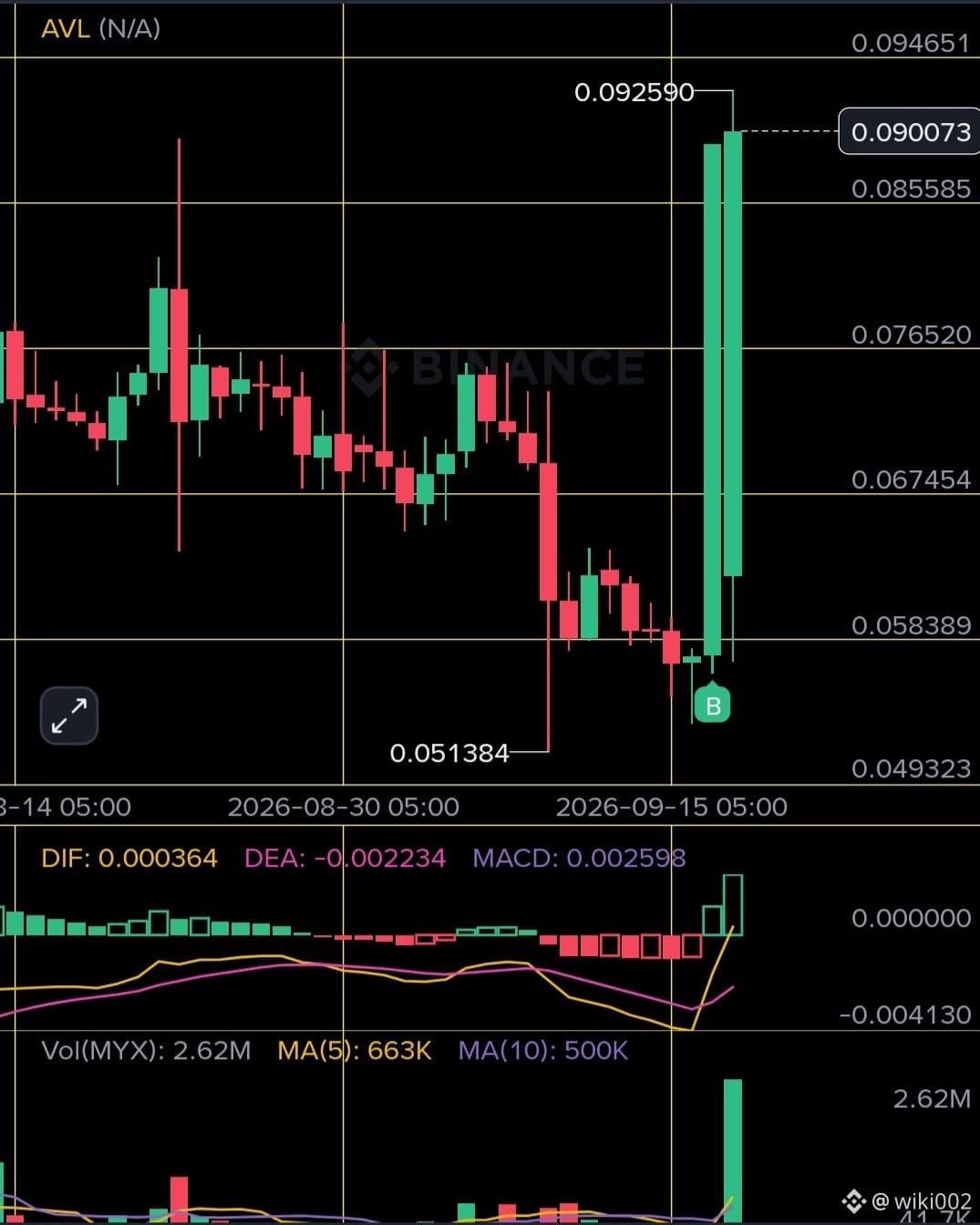
MYX/USDT 🚨
$MYX has broken out aggressively from the $0.05–$0.06 zone with a major volume expansion and bullish MACD reversal.
Entry: $0.0860–$0.0900
Targets: $0.0945 → $0.1050 → $0.1200
Support: $0.0855 / $0.0765
Invalidation: sustained move below $0.0765
The key level now is $0.0926. A clean break and hold above it can open the next upside leg, while rejection there could bring a retest toward $0.0855.
Risk management matters after a +50% move—chasing a vertical candle is riskier than waiting for confirmation or a controlled pullback.
#MYX #MYXFinance #CryptoTrading #Binance
$MYX $G
MYX/USDT 🚨
$MYX has broken out aggressively from the $0.05–$0.06 zone with a major volume expansion and bullish MACD reversal.
Entry: $0.0860–$0.0900
Targets: $0.0945 → $0.1050 → $0.1200
Support: $0.0855 / $0.0765
Invalidation: sustained move below $0.0765
The key level now is $0.0926. A clean break and hold above it can open the next upside leg, while rejection there could bring a retest toward $0.0855.
Risk management matters after a +50% move—chasing a vertical candle is riskier than waiting for confirmation or a controlled pullback.
#MYX #MYXFinance #CryptoTrading #Binance
$MYX $G
$MYX has broken out aggressively from the $0.05–$0.06 zone with a major volume expansion and bullish MACD reversal.
Entry: $0.0860–$0.0900
Targets: $0.0945 → $0.1050 → $0.1200
Support: $0.0855 / $0.0765
Invalidation: sustained move below $0.0765
The key level now is $0.0926. A clean break and hold above it can open the next upside leg, while rejection there could bring a retest toward $0.0855.
Risk management matters after a +50% move—chasing a vertical candle is riskier than waiting for confirmation or a controlled pullback.
#MYX #MYXFinance #CryptoTrading #Binance
$MYX $G
1
6
1.6k
·
--
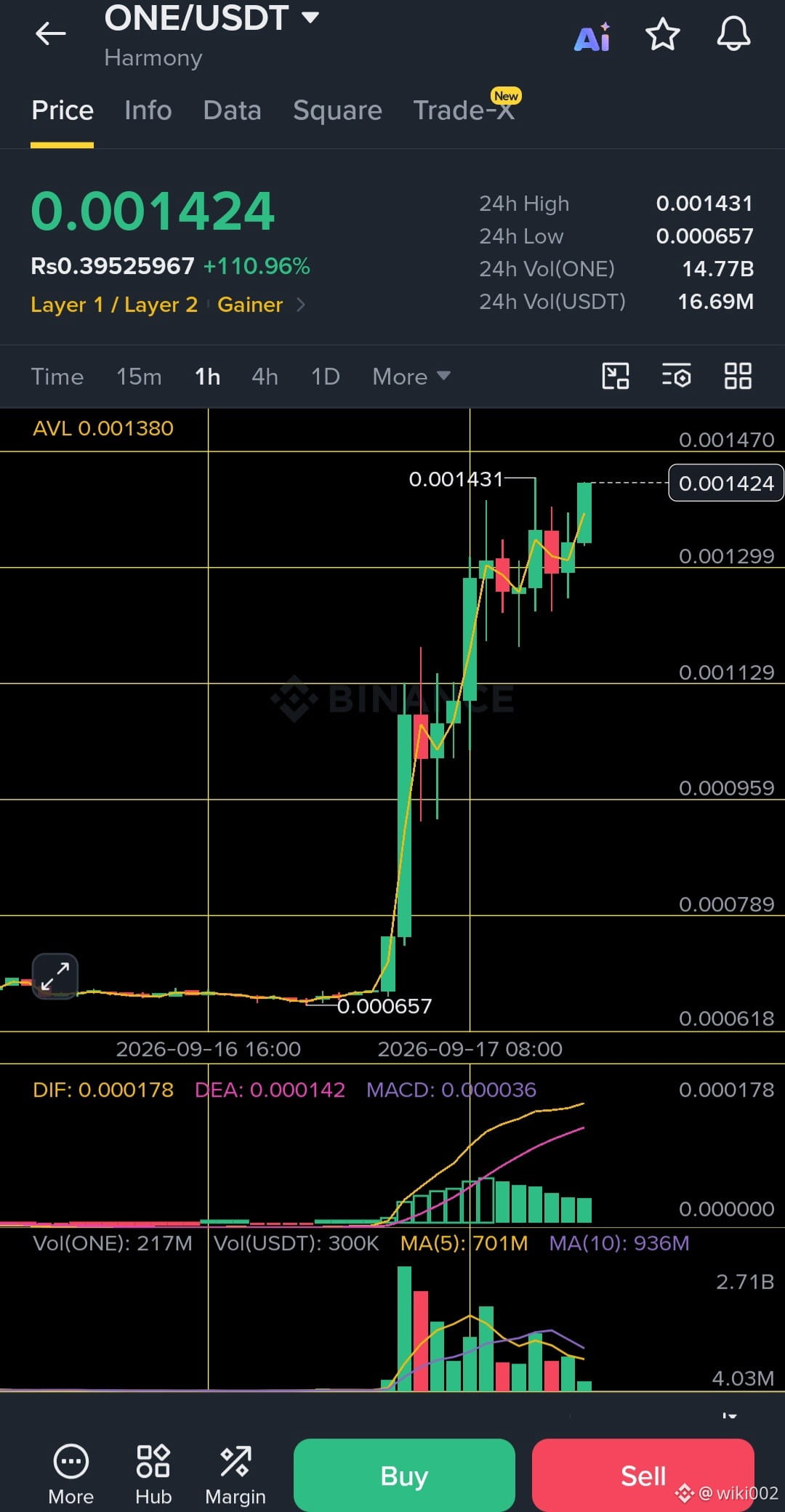
ONE/USDT 📈
$ONE has broken out sharply from the 0.000657 area and is now trading around 0.001424, with strong momentum.
Entry Zone: 0.00135 – 0.00140
Take Profit: 0.00147 / 0.00160 / 0.00175
Stop Loss: 0.00129
MACD remains bullish, but volume is cooling after the massive breakout, so chasing the current candle carries higher risk. A pullback that holds 0.00135–0.00140 would provide a cleaner risk/reward setup.
Key level: 0.00129. Losing this area would weaken the breakout structure.
$ONE $AVA #Harmony #ONE #CryptoTrading
ONE/USDT 📈
$ONE has broken out sharply from the 0.000657 area and is now trading around 0.001424, with strong momentum.
Entry Zone: 0.00135 – 0.00140
Take Profit: 0.00147 / 0.00160 / 0.00175
Stop Loss: 0.00129
MACD remains bullish, but volume is cooling after the massive breakout, so chasing the current candle carries higher risk. A pullback that holds 0.00135–0.00140 would provide a cleaner risk/reward setup.
Key level: 0.00129. Losing this area would weaken the breakout structure.
$ONE $AVA #Harmony #ONE #CryptoTrading
$ONE has broken out sharply from the 0.000657 area and is now trading around 0.001424, with strong momentum.
Entry Zone: 0.00135 – 0.00140
Take Profit: 0.00147 / 0.00160 / 0.00175
Stop Loss: 0.00129
MACD remains bullish, but volume is cooling after the massive breakout, so chasing the current candle carries higher risk. A pullback that holds 0.00135–0.00140 would provide a cleaner risk/reward setup.
Key level: 0.00129. Losing this area would weaken the breakout structure.
$ONE $AVA #Harmony #ONE #CryptoTrading
7
1.2k
·
--
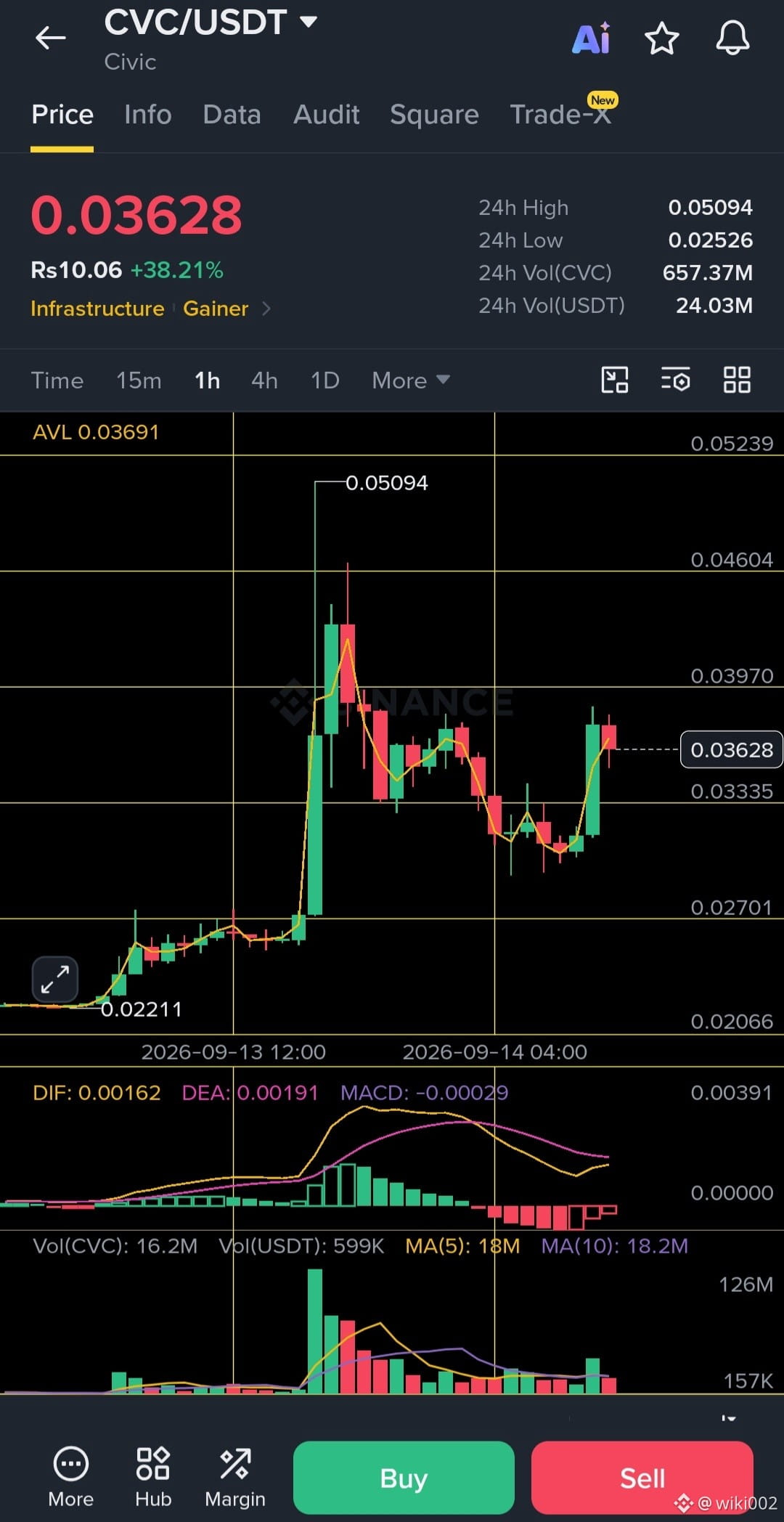
$CVC /USDT 📊
CVC has reclaimed momentum after defending the 0.0270–0.0300 area and is now trading around 0.0363. The rebound is constructive, but price is approaching the first major resistance at 0.0397.
Entry: 0.0340–0.0365
Targets: 0.0397 → 0.0460 → 0.0509
Stop-Loss: 0.0325
The key level is 0.0397. A clean breakout and hold above it would strengthen the bullish continuation toward 0.0460–0.0509. If $CVC loses 0.0333, the setup weakens and a deeper retest toward 0.0270 becomes possible.
MACD is still below the signal line, so I would not treat the current move as confirmed breakout momentum yet. Risk management matters here because the coin has already experienced a sharp expansion in volatility.
#CVC #Civic #CryptoTrading #Binance
$CVC /USDT 📊
CVC has reclaimed momentum after defending the 0.0270–0.0300 area and is now trading around 0.0363. The rebound is constructive, but price is approaching the first major resistance at 0.0397.
Entry: 0.0340–0.0365
Targets: 0.0397 → 0.0460 → 0.0509
Stop-Loss: 0.0325
The key level is 0.0397. A clean breakout and hold above it would strengthen the bullish continuation toward 0.0460–0.0509. If $CVC loses 0.0333, the setup weakens and a deeper retest toward 0.0270 becomes possible.
MACD is still below the signal line, so I would not treat the current move as confirmed breakout momentum yet. Risk management matters here because the coin has already experienced a sharp expansion in volatility.
#CVC #Civic #CryptoTrading #Binance
CVC has reclaimed momentum after defending the 0.0270–0.0300 area and is now trading around 0.0363. The rebound is constructive, but price is approaching the first major resistance at 0.0397.
Entry: 0.0340–0.0365
Targets: 0.0397 → 0.0460 → 0.0509
Stop-Loss: 0.0325
The key level is 0.0397. A clean breakout and hold above it would strengthen the bullish continuation toward 0.0460–0.0509. If $CVC loses 0.0333, the setup weakens and a deeper retest toward 0.0270 becomes possible.
MACD is still below the signal line, so I would not treat the current move as confirmed breakout momentum yet. Risk management matters here because the coin has already experienced a sharp expansion in volatility.
#CVC #Civic #CryptoTrading #Binance
4
311
·
--
A few years ago, I would have judged ETC by one question. How much activity can it attract? Looking closer at its architecture, I think that is the wrong benchmark.
ETC’s development is cautious and consensus-driven. There is no central team forcing a roadmap; upgrades go through ECIPs and community review. That can slow innovation, but the trade-off is important: protocol continuity becomes part of the value proposition.
Then I started thinking about where blockchain architecture is heading.
If more execution moves to Layer 2s, the base layer’s role can shift from processing everything to providing settlement, security and durable state. ETC’s EVM compatibility could also let it benefit from open-source tooling and proven innovations across the wider EVM ecosystem without rebuilding every component itself.
But compatibility alone does not create an economy. Ethereum still has much deeper liquidity, developer activity and applications, and ETC must prove that its architecture can translate into sustained Real-world usage.
So I would not call ETC “the next Ethereum.
My thesis is narrower. If crypto increasingly separates execution from settlement, ETC’s conservative PoW architecture could become useful precisely because it prioritizes continuity over constant protocol change.
That is not a guaranteed comeback. It is a Long-term infrastructure bet. 📊
$ETC $ETH $SOL
#ETC #EthereumClassic #Crypto
A few years ago, I would have judged ETC by one question. How much activity can it attract? Looking closer at its architecture, I think that is the wrong benchmark.
ETC’s development is cautious and consensus-driven. There is no central team forcing a roadmap; upgrades go through ECIPs and community review. That can slow innovation, but the trade-off is important: protocol continuity becomes part of the value proposition.
Then I started thinking about where blockchain architecture is heading.
If more execution moves to Layer 2s, the base layer’s role can shift from processing everything to providing settlement, security and durable state. ETC’s EVM compatibility could also let it benefit from open-source tooling and proven innovations across the wider EVM ecosystem without rebuilding every component itself.
But compatibility alone does not create an economy. Ethereum still has much deeper liquidity, developer activity and applications, and ETC must prove that its architecture can translate into sustained Real-world usage.
So I would not call ETC “the next Ethereum.
My thesis is narrower. If crypto increasingly separates execution from settlement, ETC’s conservative PoW architecture could become useful precisely because it prioritizes continuity over constant protocol change.
That is not a guaranteed comeback. It is a Long-term infrastructure bet. 📊
$ETC $ETH $SOL
#ETC #EthereumClassic #Crypto
ETC’s development is cautious and consensus-driven. There is no central team forcing a roadmap; upgrades go through ECIPs and community review. That can slow innovation, but the trade-off is important: protocol continuity becomes part of the value proposition.
Then I started thinking about where blockchain architecture is heading.
If more execution moves to Layer 2s, the base layer’s role can shift from processing everything to providing settlement, security and durable state. ETC’s EVM compatibility could also let it benefit from open-source tooling and proven innovations across the wider EVM ecosystem without rebuilding every component itself.
But compatibility alone does not create an economy. Ethereum still has much deeper liquidity, developer activity and applications, and ETC must prove that its architecture can translate into sustained Real-world usage.
So I would not call ETC “the next Ethereum.
My thesis is narrower. If crypto increasingly separates execution from settlement, ETC’s conservative PoW architecture could become useful precisely because it prioritizes continuity over constant protocol change.
That is not a guaranteed comeback. It is a Long-term infrastructure bet. 📊
$ETC $ETH $SOL
#ETC #EthereumClassic #Crypto

5
605
·
--
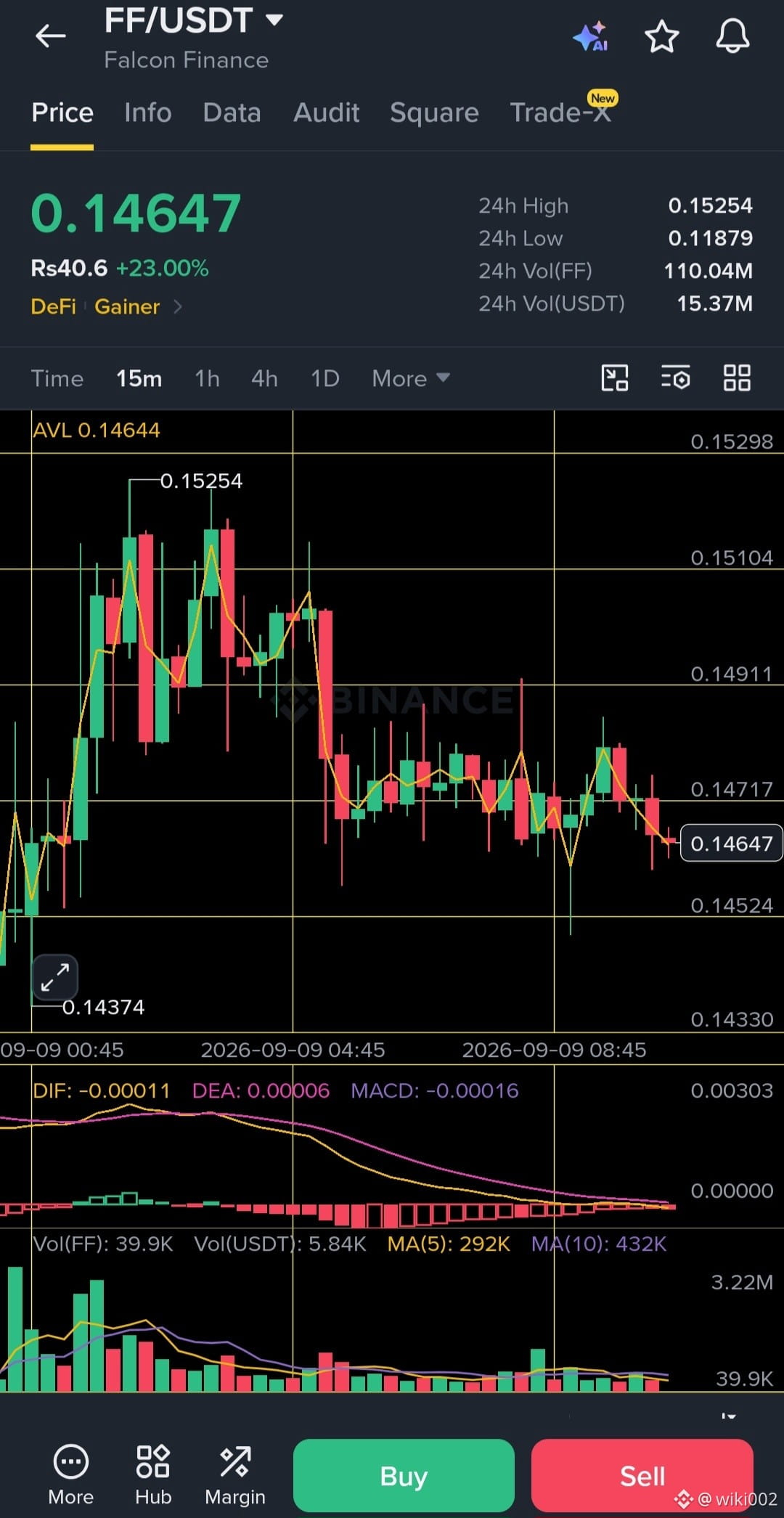
$FF/USDT 📈
Entry: 0.14730–0.14800
Stop Loss: 0.14520
TP1: 0.14910
TP2: 0.15100
TP3: 0.15250
Confirmation: Entry only if FF holds/reclaims 0.14730 with volume. If price loses 0.14520, invalidate the setup.
FF is trading around $0.1466–0.1470 and has strong 24h momentum, but Binance marks it with a Seed Tag, so volatility can remain elevated.
Risk small. No confirmation = no trade.
$FF $KAT $RAY #FF #CryptoTrading #Binance
$FF /USDT 📈
Entry: 0.14730–0.14800
Stop Loss: 0.14520
TP1: 0.14910
TP2: 0.15100
TP3: 0.15250
Confirmation: Entry only if FF holds/reclaims 0.14730 with volume. If price loses 0.14520, invalidate the setup.
FF is trading around $0.1466–0.1470 and has strong 24h momentum, but Binance marks it with a Seed Tag, so volatility can remain elevated.
Risk small. No confirmation = no trade.
$FF $KAT $RAY #FF #CryptoTrading #Binance
Entry: 0.14730–0.14800
Stop Loss: 0.14520
TP1: 0.14910
TP2: 0.15100
TP3: 0.15250
Confirmation: Entry only if FF holds/reclaims 0.14730 with volume. If price loses 0.14520, invalidate the setup.
FF is trading around $0.1466–0.1470 and has strong 24h momentum, but Binance marks it with a Seed Tag, so volatility can remain elevated.
Risk small. No confirmation = no trade.
$FF $KAT $RAY #FF #CryptoTrading #Binance
6
385
·
--
Verified
Robinhood puts $INJ in front of a much wider retail audience but the bigger opportunity is what that access could connect to on Injective.
Injective is building around a simple idea: tokenized assets should not stop at being tokens.
On Injective, tokenization connects directly with trading, lending and settlement, while its RWA infrastructure can support access rules, KYC requirements and jurisdiction-specific compliance at the protocol level.
That changes how I view the Robinhood listing.
The first step is simple: a new group of users can access INJ through a familiar platform.
The second step is more important: whether some of that distribution eventually reaches Injective’s tokenized-asset markets and creates actual onchain participation.
A listing creates access. It does not automatically create onchain demand.
If new INJ holders eventually become participants in Injective’s tokenized-asset markets, the impact moves beyond token exposure and into actual financial activity.
That’s the part I’ll be watching.
Not just how many people can buy INJ but whether Robinhood becomes the first step into Injective’s onchain financial stack.
@Injective $INJ #INJ 🚀
Robinhood puts $INJ in front of a much wider retail audience but the bigger opportunity is what that access could connect to on Injective.
Injective is building around a simple idea: tokenized assets should not stop at being tokens.
On Injective, tokenization connects directly with trading, lending and settlement, while its RWA infrastructure can support access rules, KYC requirements and jurisdiction-specific compliance at the protocol level.
That changes how I view the Robinhood listing.
The first step is simple: a new group of users can access INJ through a familiar platform.
The second step is more important: whether some of that distribution eventually reaches Injective’s tokenized-asset markets and creates actual onchain participation.
A listing creates access. It does not automatically create onchain demand.
If new INJ holders eventually become participants in Injective’s tokenized-asset markets, the impact moves beyond token exposure and into actual financial activity.
That’s the part I’ll be watching.
Not just how many people can buy INJ but whether Robinhood becomes the first step into Injective’s onchain financial stack.
@Injective $INJ #INJ 🚀
Injective is building around a simple idea: tokenized assets should not stop at being tokens.
On Injective, tokenization connects directly with trading, lending and settlement, while its RWA infrastructure can support access rules, KYC requirements and jurisdiction-specific compliance at the protocol level.
That changes how I view the Robinhood listing.
The first step is simple: a new group of users can access INJ through a familiar platform.
The second step is more important: whether some of that distribution eventually reaches Injective’s tokenized-asset markets and creates actual onchain participation.
A listing creates access. It does not automatically create onchain demand.
If new INJ holders eventually become participants in Injective’s tokenized-asset markets, the impact moves beyond token exposure and into actual financial activity.
That’s the part I’ll be watching.
Not just how many people can buy INJ but whether Robinhood becomes the first step into Injective’s onchain financial stack.
@Injective $INJ #INJ 🚀

512
5
32
512
·
--
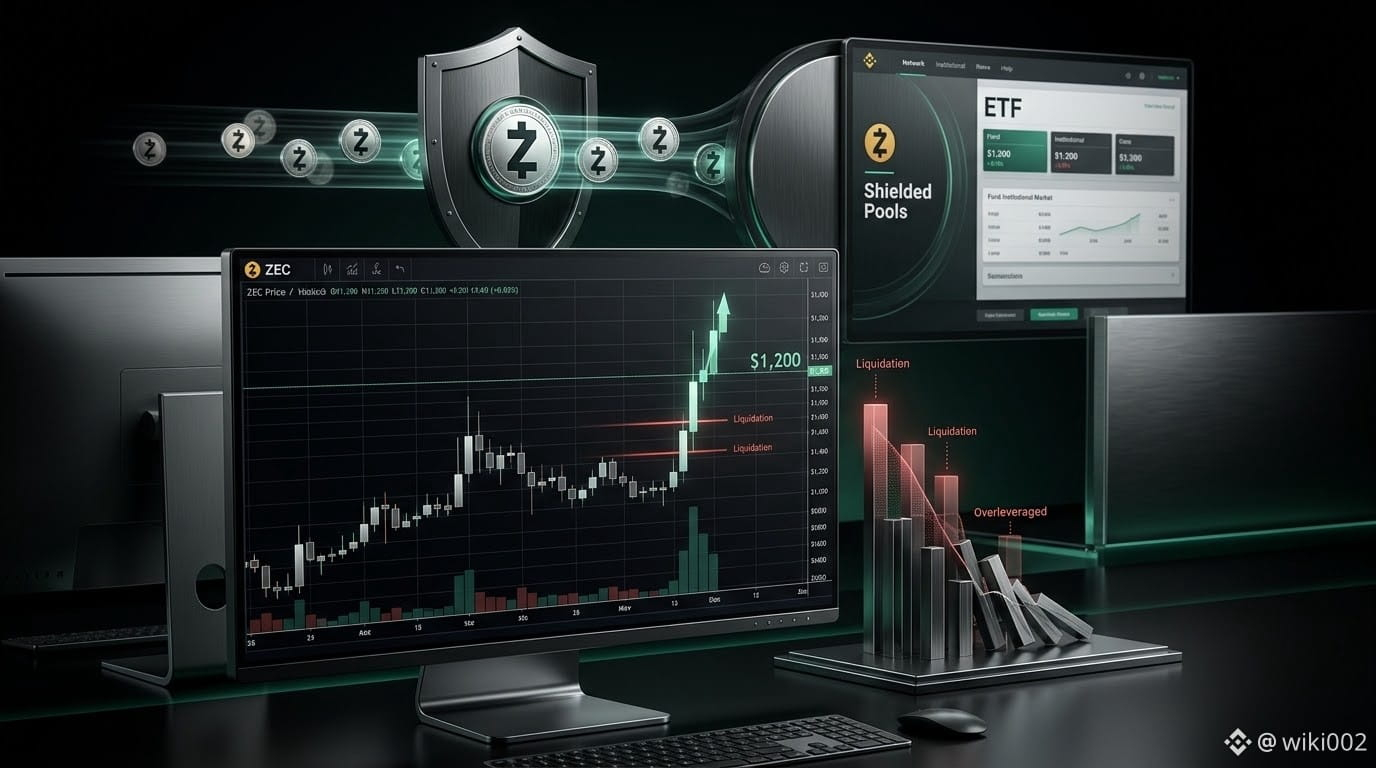
ZEC breaking above $1,200 is impressive.
But I’m not interested in buying a vertical candle. I’m interested in what happens after
the squeeze loses its fuel.
The recent move has clearly been amplified by leverage. ZEC futures open interest has reached about $2.4B, while roughly $34.5M in short positions were liquidated during the surge. That creates upside acceleration, but it also makes the move more fragile if momentum reverses.
There is a second demand channel worth watching.
Grayscale’s ZCSH has recorded at least $34.4M in net inflows since its August 25 debut. Its assets reached about $463M by September 4, although I would not treat that entire AUM increase as new buying because ZEC’s price appreciation also raises the fund’s asset value.
The network side is interesting too.
Shielded supply has climbed to roughly 4.9M ZEC, around 30% of supply. That doesn’t mean those coins are permanently locked. It does show that shielded balances now represent a materially larger share of ZEC’s supply.
That leaves me watching one thing.
The next signal is not another liquidation spike. It is whether ZEC can hold the breakout while leverage cools.
I’d become more constructive if price holds above the breakout area, open interest stabilizes or falls without a major price breakdown, and ETF net inflows continue.
That would tell me the market is absorbing the move rather than simply squeezing shorts.
If those conditions fail, I would wait.
Personally, I’d rather buy confirmation of strength than become liquidity for the final part of a squeeze.
$ZEC $SOL $ORCA #ZEC #Zcash #Crypto
{spot}(ZECUSDT)
ZEC breaking above $1,200 is impressive.
But I’m not interested in buying a vertical candle. I’m interested in what happens after
the squeeze loses its fuel.
The recent move has clearly been amplified by leverage. ZEC futures open interest has reached about $2.4B, while roughly $34.5M in short positions were liquidated during the surge. That creates upside acceleration, but it also makes the move more fragile if momentum reverses.
There is a second demand channel worth watching.
Grayscale’s ZCSH has recorded at least $34.4M in net inflows since its August 25 debut. Its assets reached about $463M by September 4, although I would not treat that entire AUM increase as new buying because ZEC’s price appreciation also raises the fund’s asset value.
The network side is interesting too.
Shielded supply has climbed to roughly 4.9M ZEC, around 30% of supply. That doesn’t mean those coins are permanently locked. It does show that shielded balances now represent a materially larger share of ZEC’s supply.
That leaves me watching one thing.
The next signal is not another liquidation spike. It is whether ZEC can hold the breakout while leverage cools.
I’d become more constructive if price holds above the breakout area, open interest stabilizes or falls without a major price breakdown, and ETF net inflows continue.
That would tell me the market is absorbing the move rather than simply squeezing shorts.
If those conditions fail, I would wait.
Personally, I’d rather buy confirmation of strength than become liquidity for the final part of a squeeze.
$ZEC $SOL $ORCA #ZEC #Zcash #Crypto
But I’m not interested in buying a vertical candle. I’m interested in what happens after
the squeeze loses its fuel.
The recent move has clearly been amplified by leverage. ZEC futures open interest has reached about $2.4B, while roughly $34.5M in short positions were liquidated during the surge. That creates upside acceleration, but it also makes the move more fragile if momentum reverses.
There is a second demand channel worth watching.
Grayscale’s ZCSH has recorded at least $34.4M in net inflows since its August 25 debut. Its assets reached about $463M by September 4, although I would not treat that entire AUM increase as new buying because ZEC’s price appreciation also raises the fund’s asset value.
The network side is interesting too.
Shielded supply has climbed to roughly 4.9M ZEC, around 30% of supply. That doesn’t mean those coins are permanently locked. It does show that shielded balances now represent a materially larger share of ZEC’s supply.
That leaves me watching one thing.
The next signal is not another liquidation spike. It is whether ZEC can hold the breakout while leverage cools.
I’d become more constructive if price holds above the breakout area, open interest stabilizes or falls without a major price breakdown, and ETF net inflows continue.
That would tell me the market is absorbing the move rather than simply squeezing shorts.
If those conditions fail, I would wait.
Personally, I’d rather buy confirmation of strength than become liquidity for the final part of a squeeze.
$ZEC $SOL $ORCA #ZEC #Zcash #Crypto
2
523
·
--
Something about Bitcoin’s latest move doesn’t add up to me.
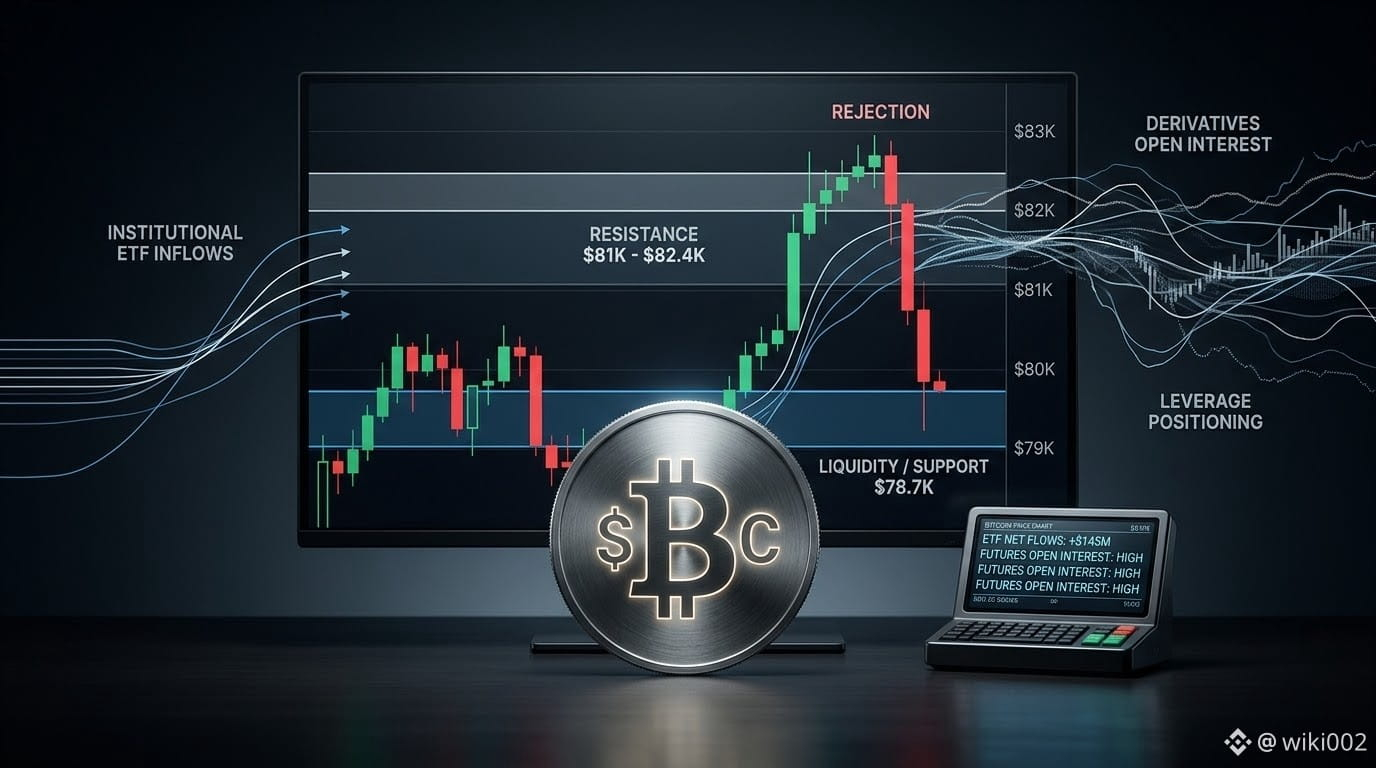
U.S. spot Bitcoin ETFs pulled in roughly $3.8B over the three weeks through September 4, yet $BTC still failed to hold its move above $82K and slipped back toward $80K. Futures open interest is still around $54.4B.
That creates a more interesting question than “Is Bitcoin bullish?”
If genuine demand is absorbing supply, why did price struggle to retain the breakout?
My read is that ETF demand may be providing strong underlying liquidity, but derivatives positioning is still influencing the marginal price.
That distinction matters.
A leveraged trader can move price quickly, but they cannot necessarily create durable demand. If $BTC rallies toward $81K–$82.4K while open interest expands aggressively and spot demand doesn't accelerate with it, I’d treat that strength cautiously.
But if Bitcoin reclaims that area while leverage stays contained and price continues holding higher after the initial breakout, the signal becomes much stronger.
The downside tells us something too. A loss of roughly $78.7K would make me question whether the recent recovery was genuine accumulation or simply a liquidity-driven rebound.
This is where my own approach has changed.
I don't want to predict the breakout anymore.
I want to see whether the market can absorb the sellers that appear after the breakout.
That is the difference between a move that looks bullish on a chart and one that can actually sustain itself. 🔎
$BTC #Bitcoin #Crypto #Trading
Something about Bitcoin’s latest move doesn’t add up to me.
U.S. spot Bitcoin ETFs pulled in roughly $3.8B over the three weeks through September 4, yet $BTC still failed to hold its move above $82K and slipped back toward $80K. Futures open interest is still around $54.4B.
That creates a more interesting question than “Is Bitcoin bullish?”
If genuine demand is absorbing supply, why did price struggle to retain the breakout?
My read is that ETF demand may be providing strong underlying liquidity, but derivatives positioning is still influencing the marginal price.
That distinction matters.
A leveraged trader can move price quickly, but they cannot necessarily create durable demand. If $BTC rallies toward $81K–$82.4K while open interest expands aggressively and spot demand doesn't accelerate with it, I’d treat that strength cautiously.
But if Bitcoin reclaims that area while leverage stays contained and price continues holding higher after the initial breakout, the signal becomes much stronger.
The downside tells us something too. A loss of roughly $78.7K would make me question whether the recent recovery was genuine accumulation or simply a liquidity-driven rebound.
This is where my own approach has changed.
I don't want to predict the breakout anymore.
I want to see whether the market can absorb the sellers that appear after the breakout.
That is the difference between a move that looks bullish on a chart and one that can actually sustain itself. 🔎
$BTC #Bitcoin #Crypto #Trading
U.S. spot Bitcoin ETFs pulled in roughly $3.8B over the three weeks through September 4, yet $BTC still failed to hold its move above $82K and slipped back toward $80K. Futures open interest is still around $54.4B.
That creates a more interesting question than “Is Bitcoin bullish?”
If genuine demand is absorbing supply, why did price struggle to retain the breakout?
My read is that ETF demand may be providing strong underlying liquidity, but derivatives positioning is still influencing the marginal price.
That distinction matters.
A leveraged trader can move price quickly, but they cannot necessarily create durable demand. If $BTC rallies toward $81K–$82.4K while open interest expands aggressively and spot demand doesn't accelerate with it, I’d treat that strength cautiously.
But if Bitcoin reclaims that area while leverage stays contained and price continues holding higher after the initial breakout, the signal becomes much stronger.
The downside tells us something too. A loss of roughly $78.7K would make me question whether the recent recovery was genuine accumulation or simply a liquidity-driven rebound.
This is where my own approach has changed.
I don't want to predict the breakout anymore.
I want to see whether the market can absorb the sellers that appear after the breakout.
That is the difference between a move that looks bullish on a chart and one that can actually sustain itself. 🔎
$BTC #Bitcoin #Crypto #Trading
837
11
38
837
·
--
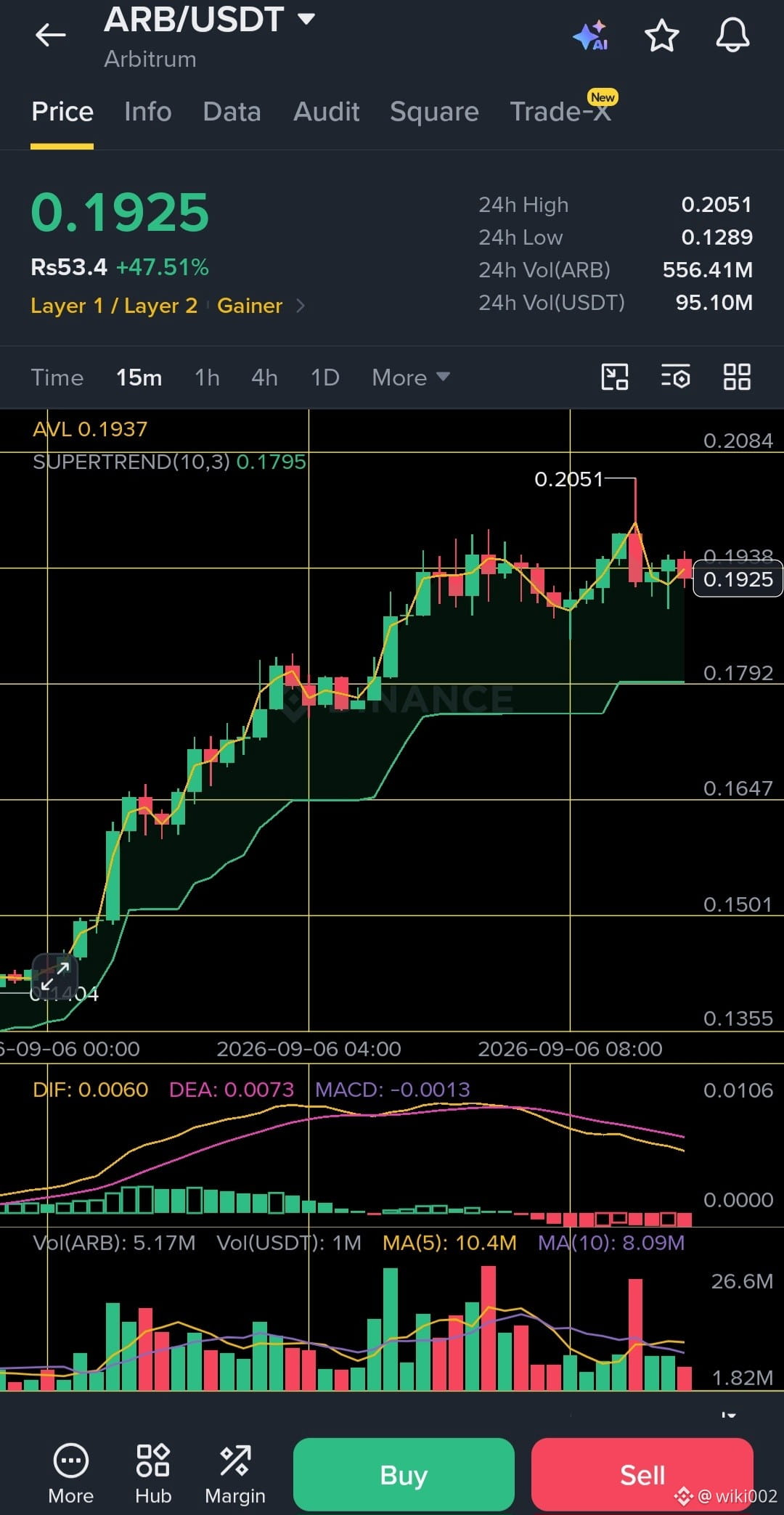
$ARB is holding strong after a sharp breakout, but the next move needs confirmation.
📍 Entry Zone: 0.190–0.194
🎯 Targets: 0.200 → 0.205 → 0.208
🛑 Stop Loss: Below 0.179
Price is consolidating near the breakout area while Supertrend remains bullish. A clean reclaim of 0.200–0.205 could open the way higher, while losing 0.179 would weaken the setup significantly.
Manage risk the move has already been aggressive.
$ARB $RAY #ARB #Arbitrum #CryptoTrading
$ARB is holding strong after a sharp breakout, but the next move needs confirmation.
📍 Entry Zone: 0.190–0.194
🎯 Targets: 0.200 → 0.205 → 0.208
🛑 Stop Loss: Below 0.179
Price is consolidating near the breakout area while Supertrend remains bullish. A clean reclaim of 0.200–0.205 could open the way higher, while losing 0.179 would weaken the setup significantly.
Manage risk the move has already been aggressive.
$ARB $RAY #ARB #Arbitrum #CryptoTrading
📍 Entry Zone: 0.190–0.194
🎯 Targets: 0.200 → 0.205 → 0.208
🛑 Stop Loss: Below 0.179
Price is consolidating near the breakout area while Supertrend remains bullish. A clean reclaim of 0.200–0.205 could open the way higher, while losing 0.179 would weaken the setup significantly.
Manage risk the move has already been aggressive.
$ARB $RAY #ARB #Arbitrum #CryptoTrading
3
317
·
--
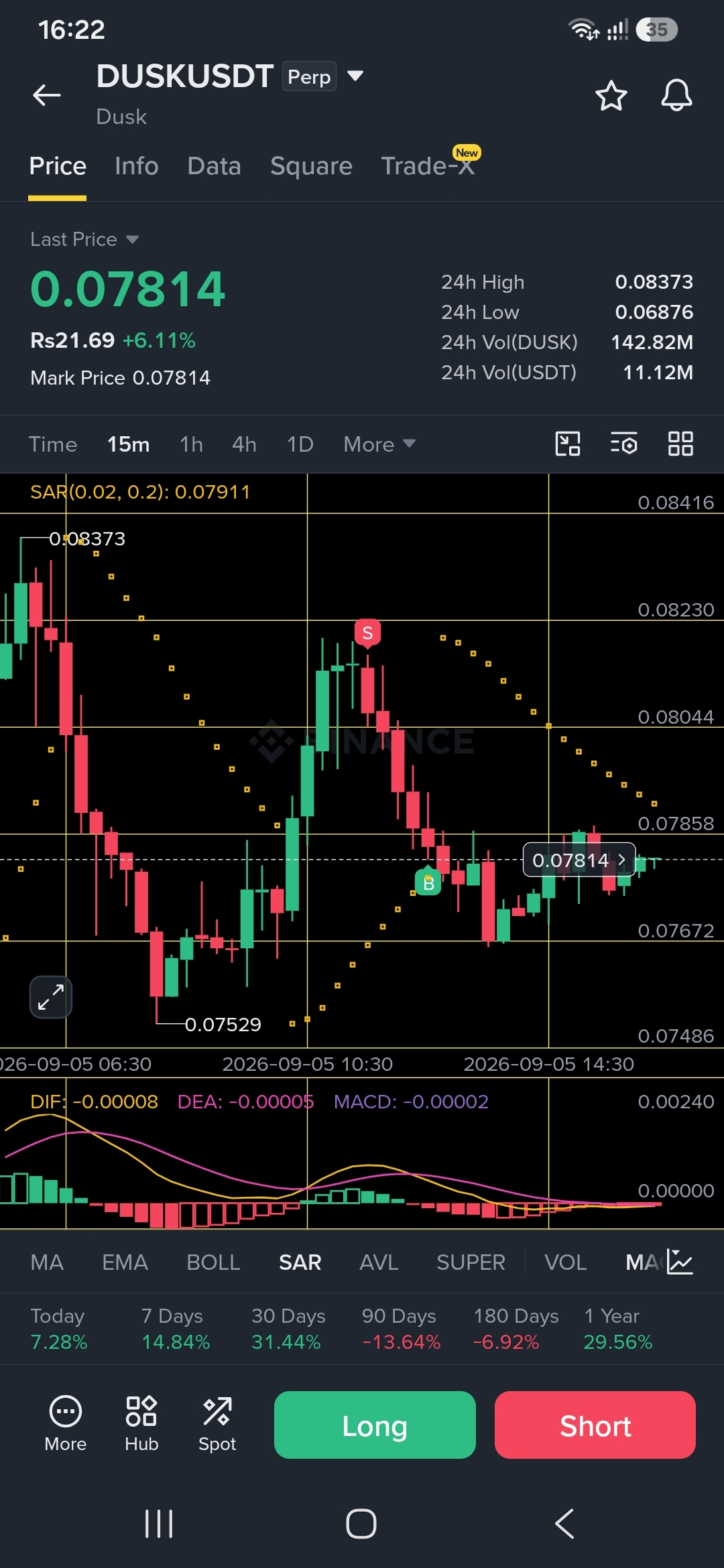
DUSK/USDT 📊
Bias: LONG on confirmation
DUSK is holding above the 0.0767 support zone after a sharp recovery. Momentum is stabilizing, but price is still below the 0.0791 SAR level, so confirmation matters.
Entry: 0.0776 – 0.0782
TP1: 0.0791
TP2: 0.0804
TP3: 0.0823
Stop Loss: 0.0765
A clean reclaim of 0.0791 would strengthen the bullish setup. Losing 0.0767 invalidates the idea.
Risk management first. Don’t chase the candle.
$DUSK $MARSCOIN $USDT #DUSK #CryptoTrading #Binance
DUSK/USDT 📊
Bias: LONG on confirmation
DUSK is holding above the 0.0767 support zone after a sharp recovery. Momentum is stabilizing, but price is still below the 0.0791 SAR level, so confirmation matters.
Entry: 0.0776 – 0.0782
TP1: 0.0791
TP2: 0.0804
TP3: 0.0823
Stop Loss: 0.0765
A clean reclaim of 0.0791 would strengthen the bullish setup. Losing 0.0767 invalidates the idea.
Risk management first. Don’t chase the candle.
$DUSK $MARSCOIN $USDT #DUSK #CryptoTrading #Binance
Bias: LONG on confirmation
DUSK is holding above the 0.0767 support zone after a sharp recovery. Momentum is stabilizing, but price is still below the 0.0791 SAR level, so confirmation matters.
Entry: 0.0776 – 0.0782
TP1: 0.0791
TP2: 0.0804
TP3: 0.0823
Stop Loss: 0.0765
A clean reclaim of 0.0791 would strengthen the bullish setup. Losing 0.0767 invalidates the idea.
Risk management first. Don’t chase the candle.
$DUSK $MARSCOIN $USDT #DUSK #CryptoTrading #Binance
2
758
Log in to explore more content
Join global crypto users on Binance Square
⚡️ Get latest and useful information about crypto.
💬 Trusted by the world’s largest crypto exchange.
👍 Discover real insights from verified creators.
Email / Phone number