

TheNewsCrypto
19.1k Posts

TheNewsCrypto
Report
Block User
TheNewsCrypto is an online crypto media publication that helps to educate readers about news, exchanges, and markets in the crypto and blockchain industry.
14 Following
84.5K+ Followers
349.3K+ Liked
Posts
Article
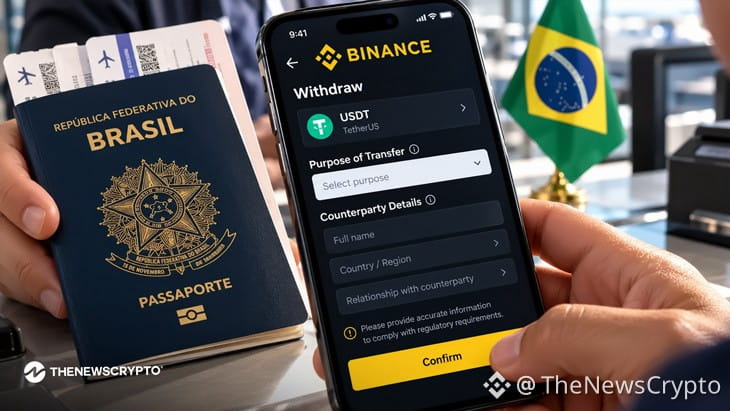
Binance Users in Brazil Face New Transfer Requirements Under Central Bank RulesBinance users in Brazil must provide the transfer purpose and confirm counterparty details before cross-border crypto transactions can be processed from November 1, 2026.
The changes align Binance with Brazil’s Resolution BCB No. 521/2025, which brings international virtual asset transfers under the country’s formal foreign exchange framework.
Starting November 1, 2026, Binance users in Brazil will need to provide the purpose of their transfer and confirm counterparty details before any cross-border crypto transaction can be processed. The change comes as Binance adapts to Resolution BCB No. 521/2025, Brazil’s Central Bank framework. It brings international virtual asset transfers under the country’s formal foreign exchange rules.
The rule is: if someone is sending crypto to or receiving crypto from anyone outside Brazil on Binance, there is a need to declare why. Also, to confirm who the other party is. Binance will then report these transactions monthly to Brazil’s Central Bank.
In addition, transfers between Brazilian residents are entirely unaffected. If moving crypto to a Brazilian exchange or another person based in Brazil, nothing changes.
The withdrawals simply will not go through until the required information is completed; there’s no bypass. Deposits may sit pending or, in some cases, be returned if the counterparty details are missing.
How the Classification Works
For transfers up to $50,000, users select from a list of 10 purpose categories. Above that threshold, the complete list of 96 classifications applies, and there’s no generic other option available for larger transfers. A search field and help texts are provided to assist with the selection.
One additional limit to note: transfers to counterparties not authorised in Brazil‘s foreign exchange market are capped at $100,000 per transaction under current Central Bank rules. This limit may be raised to $500,000 in the near future.
Two Special Cases
Sending to someone’s own account on a foreign exchange is handled cleanly: select that sending to yourself, the purpose comes pre-filled as transfer between accounts of the same person, and the counterparty information fills in automatically. There is only a need to confirm and accept the declaration.
Transfers to one’s own self-hosted wallet are treated differently again; no purpose declaration is required, but you must confirm wallet ownership. These are still reported to the Central Bank under a separate category.
The Travel Rule, a separate compliance requirement, is being implemented on its own timeline. It has phased rollouts for domestic and international transactions in 2027 and 2028, respectively. The November 1 changes apply exclusively to the Central Bank’s foreign exchange rules for virtual assets.
Crypto Market Highlights
OKXICE Targets U.S. Tokenised Securities Market With SEC Innovation Exemption Filing
Binance Users in Brazil Face New Transfer Requirements Under Central Bank Rules
Binance users in Brazil must provide the transfer purpose and confirm counterparty details before cross-border crypto transactions can be processed from November 1, 2026.
The changes align Binance with Brazil’s Resolution BCB No. 521/2025, which brings international virtual asset transfers under the country’s formal foreign exchange framework.
Starting November 1, 2026, Binance users in Brazil will need to provide the purpose of their transfer and confirm counterparty details before any cross-border crypto transaction can be processed. The change comes as Binance adapts to Resolution BCB No. 521/2025, Brazil’s Central Bank framework. It brings international virtual asset transfers under the country’s formal foreign exchange rules.
The rule is: if someone is sending crypto to or receiving crypto from anyone outside Brazil on Binance, there is a need to declare why. Also, to confirm who the other party is. Binance will then report these transactions monthly to Brazil’s Central Bank.
In addition, transfers between Brazilian residents are entirely unaffected. If moving crypto to a Brazilian exchange or another person based in Brazil, nothing changes.
The withdrawals simply will not go through until the required information is completed; there’s no bypass. Deposits may sit pending or, in some cases, be returned if the counterparty details are missing.
How the Classification Works
For transfers up to $50,000, users select from a list of 10 purpose categories. Above that threshold, the complete list of 96 classifications applies, and there’s no generic other option available for larger transfers. A search field and help texts are provided to assist with the selection.
One additional limit to note: transfers to counterparties not authorised in Brazil‘s foreign exchange market are capped at $100,000 per transaction under current Central Bank rules. This limit may be raised to $500,000 in the near future.
Two Special Cases
Sending to someone’s own account on a foreign exchange is handled cleanly: select that sending to yourself, the purpose comes pre-filled as transfer between accounts of the same person, and the counterparty information fills in automatically. There is only a need to confirm and accept the declaration.
Transfers to one’s own self-hosted wallet are treated differently again; no purpose declaration is required, but you must confirm wallet ownership. These are still reported to the Central Bank under a separate category.
The Travel Rule, a separate compliance requirement, is being implemented on its own timeline. It has phased rollouts for domestic and international transactions in 2027 and 2028, respectively. The November 1 changes apply exclusively to the Central Bank’s foreign exchange rules for virtual assets.
Crypto Market Highlights
OKXICE Targets U.S. Tokenised Securities Market With SEC Innovation Exemption Filing
The changes align Binance with Brazil’s Resolution BCB No. 521/2025, which brings international virtual asset transfers under the country’s formal foreign exchange framework.
Starting November 1, 2026, Binance users in Brazil will need to provide the purpose of their transfer and confirm counterparty details before any cross-border crypto transaction can be processed. The change comes as Binance adapts to Resolution BCB No. 521/2025, Brazil’s Central Bank framework. It brings international virtual asset transfers under the country’s formal foreign exchange rules.
The rule is: if someone is sending crypto to or receiving crypto from anyone outside Brazil on Binance, there is a need to declare why. Also, to confirm who the other party is. Binance will then report these transactions monthly to Brazil’s Central Bank.
In addition, transfers between Brazilian residents are entirely unaffected. If moving crypto to a Brazilian exchange or another person based in Brazil, nothing changes.
The withdrawals simply will not go through until the required information is completed; there’s no bypass. Deposits may sit pending or, in some cases, be returned if the counterparty details are missing.
How the Classification Works
For transfers up to $50,000, users select from a list of 10 purpose categories. Above that threshold, the complete list of 96 classifications applies, and there’s no generic other option available for larger transfers. A search field and help texts are provided to assist with the selection.
One additional limit to note: transfers to counterparties not authorised in Brazil‘s foreign exchange market are capped at $100,000 per transaction under current Central Bank rules. This limit may be raised to $500,000 in the near future.
Two Special Cases
Sending to someone’s own account on a foreign exchange is handled cleanly: select that sending to yourself, the purpose comes pre-filled as transfer between accounts of the same person, and the counterparty information fills in automatically. There is only a need to confirm and accept the declaration.
Transfers to one’s own self-hosted wallet are treated differently again; no purpose declaration is required, but you must confirm wallet ownership. These are still reported to the Central Bank under a separate category.
The Travel Rule, a separate compliance requirement, is being implemented on its own timeline. It has phased rollouts for domestic and international transactions in 2027 and 2028, respectively. The November 1 changes apply exclusively to the Central Bank’s foreign exchange rules for virtual assets.
Crypto Market Highlights
OKXICE Targets U.S. Tokenised Securities Market With SEC Innovation Exemption Filing
165
Article
Zcash NU7 Goes Live on Testnet As ZEC Trades Near $1,300Zcash activated NU7 on testnet at block 4,465,026.
NU7 cuts target block times from 75 seconds to 25 seconds.
Zcash has activated its NU7 network upgrade on public testnet, moving the protocol closer to a planned mainnet rollout in November. The upgrade went live at block 4,465,026 on October 4, ahead of the previously expected October 6 activation.
(Source: ZecBlock)
NU7 reduces Zcash’s target block time from 75 seconds to 25 seconds. The change is designed to cut the average wait for a first confirmation to about 25 seconds, while the amount of ZEC issued each day remains unchanged. The per-block reward is adjusted to preserve the existing issuance schedule and halving timetable.
(Source: ZecBlock)
The upgrade also introduces the Network Sustainability Mechanism (NSM). Under the new system, 60% of transaction fees are placed into a reserve, while miners receive the remaining 40%. Part of the reserve can later be reissued as block rewards. The 21 million ZEC supply cap remains unchanged.
NU7 Changes Shielded Transactions as ZEC Recovers
NU7 also introduces limits on shielded activity to manage network and wallet workloads as blocks become more frequent. It sets limits of 330 Orchard or Ironwood actions and 300 Sapling inputs and outputs, alongside a shared 330-action budget.
The upgrade also makes version 4 transactions invalid. Because the older Sprout privacy system relies on version 4 transactions, ZEC remaining in the Sprout pool after NU7 reaches mainnet would become unspendable unless moved beforehand. Version 5 and version 6 transactions remain valid.
Zcash developers are expected to review the testnet results on October 20 before setting the mainnet activation height. The current target for NU7 mainnet activation is November 5, subject to that review.
Meanwhile, following the NU7 testnet activation, ZEC is trading around $1,335, up about 2.9% over 24 hours, with roughly $625 million in 24-hour trading volume and a market cap of about $22.48 billion. Still, ZEC remains down about 15.6% over the past seven days. Its current 24-hour range is approximately $1,308 to $1,362.
The price action puts $1,350-1,462 near-term resistance on the chart, while $1,284 is the immediate downside level from the current 24-hour range.
Zcash NU7 Goes Live on Testnet As ZEC Trades Near $1,300
Zcash activated NU7 on testnet at block 4,465,026.
NU7 cuts target block times from 75 seconds to 25 seconds.
Zcash has activated its NU7 network upgrade on public testnet, moving the protocol closer to a planned mainnet rollout in November. The upgrade went live at block 4,465,026 on October 4, ahead of the previously expected October 6 activation.
(Source: ZecBlock)
NU7 reduces Zcash’s target block time from 75 seconds to 25 seconds. The change is designed to cut the average wait for a first confirmation to about 25 seconds, while the amount of ZEC issued each day remains unchanged. The per-block reward is adjusted to preserve the existing issuance schedule and halving timetable.
(Source: ZecBlock)
The upgrade also introduces the Network Sustainability Mechanism (NSM). Under the new system, 60% of transaction fees are placed into a reserve, while miners receive the remaining 40%. Part of the reserve can later be reissued as block rewards. The 21 million ZEC supply cap remains unchanged.
NU7 Changes Shielded Transactions as ZEC Recovers
NU7 also introduces limits on shielded activity to manage network and wallet workloads as blocks become more frequent. It sets limits of 330 Orchard or Ironwood actions and 300 Sapling inputs and outputs, alongside a shared 330-action budget.
The upgrade also makes version 4 transactions invalid. Because the older Sprout privacy system relies on version 4 transactions, ZEC remaining in the Sprout pool after NU7 reaches mainnet would become unspendable unless moved beforehand. Version 5 and version 6 transactions remain valid.
Zcash developers are expected to review the testnet results on October 20 before setting the mainnet activation height. The current target for NU7 mainnet activation is November 5, subject to that review.
Meanwhile, following the NU7 testnet activation, ZEC is trading around $1,335, up about 2.9% over 24 hours, with roughly $625 million in 24-hour trading volume and a market cap of about $22.48 billion. Still, ZEC remains down about 15.6% over the past seven days. Its current 24-hour range is approximately $1,308 to $1,362.
The price action puts $1,350-1,462 near-term resistance on the chart, while $1,284 is the immediate downside level from the current 24-hour range.
NU7 cuts target block times from 75 seconds to 25 seconds.
Zcash has activated its NU7 network upgrade on public testnet, moving the protocol closer to a planned mainnet rollout in November. The upgrade went live at block 4,465,026 on October 4, ahead of the previously expected October 6 activation.
(Source: ZecBlock)
NU7 reduces Zcash’s target block time from 75 seconds to 25 seconds. The change is designed to cut the average wait for a first confirmation to about 25 seconds, while the amount of ZEC issued each day remains unchanged. The per-block reward is adjusted to preserve the existing issuance schedule and halving timetable.
(Source: ZecBlock)
The upgrade also introduces the Network Sustainability Mechanism (NSM). Under the new system, 60% of transaction fees are placed into a reserve, while miners receive the remaining 40%. Part of the reserve can later be reissued as block rewards. The 21 million ZEC supply cap remains unchanged.
NU7 Changes Shielded Transactions as ZEC Recovers
NU7 also introduces limits on shielded activity to manage network and wallet workloads as blocks become more frequent. It sets limits of 330 Orchard or Ironwood actions and 300 Sapling inputs and outputs, alongside a shared 330-action budget.
The upgrade also makes version 4 transactions invalid. Because the older Sprout privacy system relies on version 4 transactions, ZEC remaining in the Sprout pool after NU7 reaches mainnet would become unspendable unless moved beforehand. Version 5 and version 6 transactions remain valid.
Zcash developers are expected to review the testnet results on October 20 before setting the mainnet activation height. The current target for NU7 mainnet activation is November 5, subject to that review.
Meanwhile, following the NU7 testnet activation, ZEC is trading around $1,335, up about 2.9% over 24 hours, with roughly $625 million in 24-hour trading volume and a market cap of about $22.48 billion. Still, ZEC remains down about 15.6% over the past seven days. Its current 24-hour range is approximately $1,308 to $1,362.
The price action puts $1,350-1,462 near-term resistance on the chart, while $1,284 is the immediate downside level from the current 24-hour range.
212
Article
OKXICE Targets U.S. Tokenised Securities Market With SEC Innovation Exemption FilingOKXICE has filed with the SEC under the agency’s new Innovation Exemption to launch a Tokenised Securities Venue in the United States.
The filing puts OKXICE among the first firms to formally seek approval under the exemption.
OKXICE LLC, a joint venture between crypto exchange OKX and Intercontinental Exchange, the parent company of the New York Stock Exchange, filed with the SEC under the agency’s new Innovation Exemption to launch a Tokenised Securities Venue in the United States.
The filing makes OKXICE one of the first firms to formally pursue approval under the exemption, which the SEC introduced after comprehensive crypto legislation backed by President Trump failed to advance in the Senate. The exemption clears the way for blockchain-based securities to trade on U.S. crypto venues under specific conditions.
Moreover, ICE took a stake in OKX in March in a deal that valued the crypto firm at $25 billion. Former New York Governor Andrew Cuomo, co-chair of OKXICE, announced the filing on X, describing it as a landmark step toward a genuinely global, 24/7 Wall Street.
What the Filing Actually Covers?
The initial lineup targets tokenised shares of 63 NYSE-listed companies, with issuers given 30 days to opt out before trading in their stock can begin. The platform is designed for round-the-clock trading and faster on-chain settlement, with dividend and voting rights preserved, a requirement under the SEC’s new framework. Also, no shareholder benefits are stripped in the process.
Furthermore, the timing of the platform’s launch depends on completing that opt-out period and meeting remaining regulatory requirements.
The Shifting Competitive Landscape
Global exchanges including the NYSE, Nasdaq, and the London Stock Exchange are all preparing to launch round-the-clock trading in the coming months. Prediction markets have also been pushing into U.S. stock trading, a move that has already drawn regulatory scrutiny.
The SEC’s Innovation Exemption has effectively fired a starting gun. Different models are now competing for market share, with some firms working directly with public companies to bring tokenised shares to crypto markets, and others offering tokens created by third parties without issuer involvement. OKXICE sits firmly in the first camp, with NYSE‘s own parent company as a partner.
For traditional exchanges, this represents a structural challenge, not just a new product category. In addition, the crypto venue offering 24/7 access to U.S. equities with on-chain settlement directly competes with the operating hours and settlement timelines that have defined Wall Street for decades.
Tokenised U.S. stocks trading on crypto infrastructure around the clock reframes what an exchange can be. The first venues to go live under this exemption gain a first-mover position in a market that traditional finance is only beginning to enter.
Crypto Market Highlights
SEC Approves 3x Bitcoin and Ether ETFs in Major Expansion of Crypto Market Access
OKXICE Targets U.S. Tokenised Securities Market With SEC Innovation Exemption Filing
OKXICE has filed with the SEC under the agency’s new Innovation Exemption to launch a Tokenised Securities Venue in the United States.
The filing puts OKXICE among the first firms to formally seek approval under the exemption.
OKXICE LLC, a joint venture between crypto exchange OKX and Intercontinental Exchange, the parent company of the New York Stock Exchange, filed with the SEC under the agency’s new Innovation Exemption to launch a Tokenised Securities Venue in the United States.
The filing makes OKXICE one of the first firms to formally pursue approval under the exemption, which the SEC introduced after comprehensive crypto legislation backed by President Trump failed to advance in the Senate. The exemption clears the way for blockchain-based securities to trade on U.S. crypto venues under specific conditions.
Moreover, ICE took a stake in OKX in March in a deal that valued the crypto firm at $25 billion. Former New York Governor Andrew Cuomo, co-chair of OKXICE, announced the filing on X, describing it as a landmark step toward a genuinely global, 24/7 Wall Street.
What the Filing Actually Covers?
The initial lineup targets tokenised shares of 63 NYSE-listed companies, with issuers given 30 days to opt out before trading in their stock can begin. The platform is designed for round-the-clock trading and faster on-chain settlement, with dividend and voting rights preserved, a requirement under the SEC’s new framework. Also, no shareholder benefits are stripped in the process.
Furthermore, the timing of the platform’s launch depends on completing that opt-out period and meeting remaining regulatory requirements.
The Shifting Competitive Landscape
Global exchanges including the NYSE, Nasdaq, and the London Stock Exchange are all preparing to launch round-the-clock trading in the coming months. Prediction markets have also been pushing into U.S. stock trading, a move that has already drawn regulatory scrutiny.
The SEC’s Innovation Exemption has effectively fired a starting gun. Different models are now competing for market share, with some firms working directly with public companies to bring tokenised shares to crypto markets, and others offering tokens created by third parties without issuer involvement. OKXICE sits firmly in the first camp, with NYSE‘s own parent company as a partner.
For traditional exchanges, this represents a structural challenge, not just a new product category. In addition, the crypto venue offering 24/7 access to U.S. equities with on-chain settlement directly competes with the operating hours and settlement timelines that have defined Wall Street for decades.
Tokenised U.S. stocks trading on crypto infrastructure around the clock reframes what an exchange can be. The first venues to go live under this exemption gain a first-mover position in a market that traditional finance is only beginning to enter.
Crypto Market Highlights
SEC Approves 3x Bitcoin and Ether ETFs in Major Expansion of Crypto Market Access
The filing puts OKXICE among the first firms to formally seek approval under the exemption.
OKXICE LLC, a joint venture between crypto exchange OKX and Intercontinental Exchange, the parent company of the New York Stock Exchange, filed with the SEC under the agency’s new Innovation Exemption to launch a Tokenised Securities Venue in the United States.
The filing makes OKXICE one of the first firms to formally pursue approval under the exemption, which the SEC introduced after comprehensive crypto legislation backed by President Trump failed to advance in the Senate. The exemption clears the way for blockchain-based securities to trade on U.S. crypto venues under specific conditions.
Moreover, ICE took a stake in OKX in March in a deal that valued the crypto firm at $25 billion. Former New York Governor Andrew Cuomo, co-chair of OKXICE, announced the filing on X, describing it as a landmark step toward a genuinely global, 24/7 Wall Street.
What the Filing Actually Covers?
The initial lineup targets tokenised shares of 63 NYSE-listed companies, with issuers given 30 days to opt out before trading in their stock can begin. The platform is designed for round-the-clock trading and faster on-chain settlement, with dividend and voting rights preserved, a requirement under the SEC’s new framework. Also, no shareholder benefits are stripped in the process.
Furthermore, the timing of the platform’s launch depends on completing that opt-out period and meeting remaining regulatory requirements.
The Shifting Competitive Landscape
Global exchanges including the NYSE, Nasdaq, and the London Stock Exchange are all preparing to launch round-the-clock trading in the coming months. Prediction markets have also been pushing into U.S. stock trading, a move that has already drawn regulatory scrutiny.
The SEC’s Innovation Exemption has effectively fired a starting gun. Different models are now competing for market share, with some firms working directly with public companies to bring tokenised shares to crypto markets, and others offering tokens created by third parties without issuer involvement. OKXICE sits firmly in the first camp, with NYSE‘s own parent company as a partner.
For traditional exchanges, this represents a structural challenge, not just a new product category. In addition, the crypto venue offering 24/7 access to U.S. equities with on-chain settlement directly competes with the operating hours and settlement timelines that have defined Wall Street for decades.
Tokenised U.S. stocks trading on crypto infrastructure around the clock reframes what an exchange can be. The first venues to go live under this exemption gain a first-mover position in a market that traditional finance is only beginning to enter.
Crypto Market Highlights
SEC Approves 3x Bitcoin and Ether ETFs in Major Expansion of Crypto Market Access
50
Article
Payward Partners With Singapore Gulf Bank to Enable 24/7 SettlementPayward and SGB launched 24/7 settlement for institutional digital asset markets.
The service initially supports USD transactions for select clients.
Payward, the financial infrastructure company behind Kraken, has partnered with Singapore Gulf Bank (SGB) to provide 24/7 settlement for institutional digital asset markets, according to an announcement on October 5, 2026.
Under the partnership, Payward has integrated SGB Net, SGB’s real-time, multi-currency clearing network. The tie allows eligible institutional clients of both companies to settle transactions instantly, 24 hours a day, seven days a week.
Markets run 24/7. Settlement should too. Payward has integrated SGB Net from @SGB_app, a real-time clearing network, so institutional clients can settle instantly, 24/7. Read the full announcement: https://t.co/pFPBOwqtEf
— Payward (@Payward) October 5, 2026
The initial service covers U.S. dollar transactions and is available to a select number of institutional clients in supported jurisdictions across Asia and the Gulf region. Payward and SGB said they plan to extend the service to additional clients and currencies over time, although no specific time was given.
The arrangement allows an SGB client to deposit funds with Payward and make those funds available for use immediately, including outside traditional banking hours. This addresses the timing difference between digital asset markets, which operate continuously, and conventional banking systems that often rely on fixed processing windows.
SGB Adds Kraken Prime for Digital Asset Liquidity
The partnership also includes Kraken Prime, Payward’s institutional prime brokerage platform. SGB will use Kraken Prime as an additional source of digital asset liquidity and plans to draw on Payward’s markets to price trades for its customers in the coming months.
SGB launched SGB Net in 2025 to provide real-time clearing for businesses operating in digital assets and says the network now processes more than $20 billion in fiat transactions each month. The bank is backed by Bahrain’s sovereign wealth fund, Mumtalakat, and Singapore-based Whampoa Group.
SGB is licensed and regulated by the Central Bank of Bahrain. The bank provides multi-currency accounts, international payments and digital asset services to eligible businesses and individuals.
For Payward, the agreement forms part of its broader Payward Banking infrastructure, which covers cash movement across deposits, payments, cards, custody and lending. The company has also expanded its banking relationships this year, including a September partnership with SoFi for 24/7 U.S. dollar settlement.
Payward Partners With Singapore Gulf Bank to Enable 24/7 Settlement
Payward and SGB launched 24/7 settlement for institutional digital asset markets.
The service initially supports USD transactions for select clients.
Payward, the financial infrastructure company behind Kraken, has partnered with Singapore Gulf Bank (SGB) to provide 24/7 settlement for institutional digital asset markets, according to an announcement on October 5, 2026.
Under the partnership, Payward has integrated SGB Net, SGB’s real-time, multi-currency clearing network. The tie allows eligible institutional clients of both companies to settle transactions instantly, 24 hours a day, seven days a week.
Markets run 24/7. Settlement should too. Payward has integrated SGB Net from @SGB_app, a real-time clearing network, so institutional clients can settle instantly, 24/7. Read the full announcement: https://t.co/pFPBOwqtEf
— Payward (@Payward) October 5, 2026
The initial service covers U.S. dollar transactions and is available to a select number of institutional clients in supported jurisdictions across Asia and the Gulf region. Payward and SGB said they plan to extend the service to additional clients and currencies over time, although no specific time was given.
The arrangement allows an SGB client to deposit funds with Payward and make those funds available for use immediately, including outside traditional banking hours. This addresses the timing difference between digital asset markets, which operate continuously, and conventional banking systems that often rely on fixed processing windows.
SGB Adds Kraken Prime for Digital Asset Liquidity
The partnership also includes Kraken Prime, Payward’s institutional prime brokerage platform. SGB will use Kraken Prime as an additional source of digital asset liquidity and plans to draw on Payward’s markets to price trades for its customers in the coming months.
SGB launched SGB Net in 2025 to provide real-time clearing for businesses operating in digital assets and says the network now processes more than $20 billion in fiat transactions each month. The bank is backed by Bahrain’s sovereign wealth fund, Mumtalakat, and Singapore-based Whampoa Group.
SGB is licensed and regulated by the Central Bank of Bahrain. The bank provides multi-currency accounts, international payments and digital asset services to eligible businesses and individuals.
For Payward, the agreement forms part of its broader Payward Banking infrastructure, which covers cash movement across deposits, payments, cards, custody and lending. The company has also expanded its banking relationships this year, including a September partnership with SoFi for 24/7 U.S. dollar settlement.
The service initially supports USD transactions for select clients.
Payward, the financial infrastructure company behind Kraken, has partnered with Singapore Gulf Bank (SGB) to provide 24/7 settlement for institutional digital asset markets, according to an announcement on October 5, 2026.
Under the partnership, Payward has integrated SGB Net, SGB’s real-time, multi-currency clearing network. The tie allows eligible institutional clients of both companies to settle transactions instantly, 24 hours a day, seven days a week.
Markets run 24/7. Settlement should too. Payward has integrated SGB Net from @SGB_app, a real-time clearing network, so institutional clients can settle instantly, 24/7. Read the full announcement: https://t.co/pFPBOwqtEf
— Payward (@Payward) October 5, 2026
The initial service covers U.S. dollar transactions and is available to a select number of institutional clients in supported jurisdictions across Asia and the Gulf region. Payward and SGB said they plan to extend the service to additional clients and currencies over time, although no specific time was given.
The arrangement allows an SGB client to deposit funds with Payward and make those funds available for use immediately, including outside traditional banking hours. This addresses the timing difference between digital asset markets, which operate continuously, and conventional banking systems that often rely on fixed processing windows.
SGB Adds Kraken Prime for Digital Asset Liquidity
The partnership also includes Kraken Prime, Payward’s institutional prime brokerage platform. SGB will use Kraken Prime as an additional source of digital asset liquidity and plans to draw on Payward’s markets to price trades for its customers in the coming months.
SGB launched SGB Net in 2025 to provide real-time clearing for businesses operating in digital assets and says the network now processes more than $20 billion in fiat transactions each month. The bank is backed by Bahrain’s sovereign wealth fund, Mumtalakat, and Singapore-based Whampoa Group.
SGB is licensed and regulated by the Central Bank of Bahrain. The bank provides multi-currency accounts, international payments and digital asset services to eligible businesses and individuals.
For Payward, the agreement forms part of its broader Payward Banking infrastructure, which covers cash movement across deposits, payments, cards, custody and lending. The company has also expanded its banking relationships this year, including a September partnership with SoFi for 24/7 U.S. dollar settlement.
246
Article
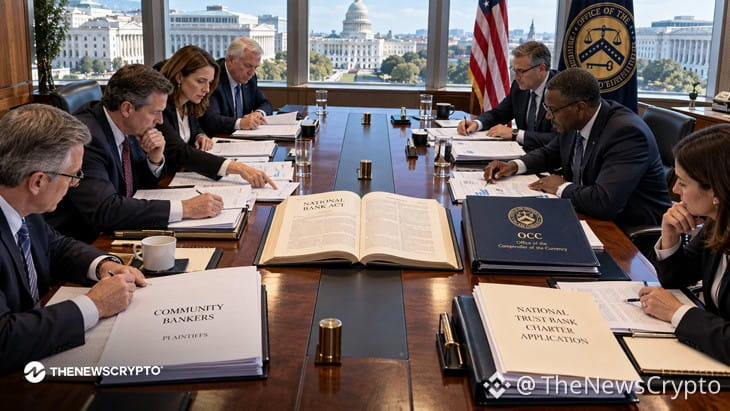
Community Banks Sue OCC Over Crypto Trust Bank ChartersCommunity Banks sued the OCC over national trust bank charters for crypto firms, arguing the regulator exceeded its authority under the National Bank Act.
The lawsuit challenges the OCC’s March 2026 rule and Protego’s charter.
The Independent Community Bankers of America (ICBA) has sued the U.S. Office of the Comptroller of the Currency (OCC) over its decision to allow cryptocurrency companies to obtain national trust bank charters.
The banking group filed the lawsuit on October 2 in the U.S. District Court for the District of Columbia. ICBA is challenging an OCC rule issued in March 2026, along with Interpretive Letter No. 1176, arguing that the regulator exceeded the authority granted to it under the National Bank Act.
Source: Source: ICBA
The dispute centers on national trust banks that do not take traditional deposits but can provide services such as digital-asset custody and payment settlement. Unlike insured banks, these institutions are not subject to FDIC insurance requirements, and they do not operate under the same capital, liquidity and Community Reinvestment Act requirements that apply to insured depository institutions.
The OCC, however, said in its February 2026 final rule that it was clarifying the existing authority of national banks limited to trust-company operations to conduct non-fiduciary activities. The agency said the rule does not expand or reduce its statutory authority to charter national banks. The rule became effective on April 1.
ICBA Challenges Crypto Trust Bank Approvals
ICBA argues that the expanded use of national trust charters creates a regulatory difference between crypto firms and traditional community banks. The group said consumers could also assume that assets held with a federally chartered crypto trust company receive the same federal protections as deposits at an insured bank.
The lawsuit specifically asks the court to invalidate the OCC’s rule and related guidance. It also seeks to overturn the conditional approval of a national trust bank charter for Protego Holdings Corp., a digital-asset company.
The OCC has granted or conditionally approved several national trust bank applications involving digital-asset companies. In December 2025, the agency announced conditional approvals for firms including Ripple National Trust Bank, First National Digital Currency Bank, BitGo Bank & Trust, Fidelity Digital Assets and Paxos Trust Company.
The OCC declined to comment on the new lawsuit, according to Reuters.
Community Banks Sue OCC Over Crypto Trust Bank Charters
Community Banks sued the OCC over national trust bank charters for crypto firms, arguing the regulator exceeded its authority under the National Bank Act.
The lawsuit challenges the OCC’s March 2026 rule and Protego’s charter.
The Independent Community Bankers of America (ICBA) has sued the U.S. Office of the Comptroller of the Currency (OCC) over its decision to allow cryptocurrency companies to obtain national trust bank charters.
The banking group filed the lawsuit on October 2 in the U.S. District Court for the District of Columbia. ICBA is challenging an OCC rule issued in March 2026, along with Interpretive Letter No. 1176, arguing that the regulator exceeded the authority granted to it under the National Bank Act.
Source: Source: ICBA
The dispute centers on national trust banks that do not take traditional deposits but can provide services such as digital-asset custody and payment settlement. Unlike insured banks, these institutions are not subject to FDIC insurance requirements, and they do not operate under the same capital, liquidity and Community Reinvestment Act requirements that apply to insured depository institutions.
The OCC, however, said in its February 2026 final rule that it was clarifying the existing authority of national banks limited to trust-company operations to conduct non-fiduciary activities. The agency said the rule does not expand or reduce its statutory authority to charter national banks. The rule became effective on April 1.
ICBA Challenges Crypto Trust Bank Approvals
ICBA argues that the expanded use of national trust charters creates a regulatory difference between crypto firms and traditional community banks. The group said consumers could also assume that assets held with a federally chartered crypto trust company receive the same federal protections as deposits at an insured bank.
The lawsuit specifically asks the court to invalidate the OCC’s rule and related guidance. It also seeks to overturn the conditional approval of a national trust bank charter for Protego Holdings Corp., a digital-asset company.
The OCC has granted or conditionally approved several national trust bank applications involving digital-asset companies. In December 2025, the agency announced conditional approvals for firms including Ripple National Trust Bank, First National Digital Currency Bank, BitGo Bank & Trust, Fidelity Digital Assets and Paxos Trust Company.
The OCC declined to comment on the new lawsuit, according to Reuters.
The lawsuit challenges the OCC’s March 2026 rule and Protego’s charter.
The Independent Community Bankers of America (ICBA) has sued the U.S. Office of the Comptroller of the Currency (OCC) over its decision to allow cryptocurrency companies to obtain national trust bank charters.
The banking group filed the lawsuit on October 2 in the U.S. District Court for the District of Columbia. ICBA is challenging an OCC rule issued in March 2026, along with Interpretive Letter No. 1176, arguing that the regulator exceeded the authority granted to it under the National Bank Act.
Source: Source: ICBA
The dispute centers on national trust banks that do not take traditional deposits but can provide services such as digital-asset custody and payment settlement. Unlike insured banks, these institutions are not subject to FDIC insurance requirements, and they do not operate under the same capital, liquidity and Community Reinvestment Act requirements that apply to insured depository institutions.
The OCC, however, said in its February 2026 final rule that it was clarifying the existing authority of national banks limited to trust-company operations to conduct non-fiduciary activities. The agency said the rule does not expand or reduce its statutory authority to charter national banks. The rule became effective on April 1.
ICBA Challenges Crypto Trust Bank Approvals
ICBA argues that the expanded use of national trust charters creates a regulatory difference between crypto firms and traditional community banks. The group said consumers could also assume that assets held with a federally chartered crypto trust company receive the same federal protections as deposits at an insured bank.
The lawsuit specifically asks the court to invalidate the OCC’s rule and related guidance. It also seeks to overturn the conditional approval of a national trust bank charter for Protego Holdings Corp., a digital-asset company.
The OCC has granted or conditionally approved several national trust bank applications involving digital-asset companies. In December 2025, the agency announced conditional approvals for firms including Ripple National Trust Bank, First National Digital Currency Bank, BitGo Bank & Trust, Fidelity Digital Assets and Paxos Trust Company.
The OCC declined to comment on the new lawsuit, according to Reuters.
2
853
Article
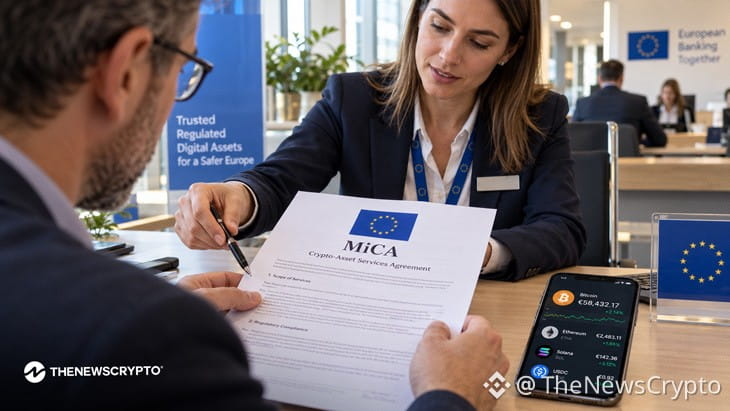
Bitpanda Co-CEO Says European Crypto Users Have More Faith in Regulated Firms Under MiCABitpanda co-CEO Christian Trummer says European users have more faith in MiCA-regulated crypto firms.
EU regulators are tightening enforcement against firms serving European customers without MiCA authorization.
European crypto users are showing greater trust in regulated platforms following the rollout of the European Union’s Markets in Crypto-Assets (MiCA) framework, according to Bitpanda co-CEO Christian Trummer.
Speaking on Cointelegraph’s Chain Reaction, Trummer said users now have “more faith” in regulated market participants. He also argued that the wider crypto market can look different from the community often seen on Crypto Twitter, where self-custody remains a major focus.
Trummer said ordinary users are generally more comfortable using regulated providers rather than managing private keys themselves. However, his comments are based on his observations and were not accompanied by a specific survey or percentage measuring a rise in consumer trust.
MiCA has also moved into a stricter enforcement phase across the bloc. Under the regulation’s transitional rules, existing crypto-asset service providers could continue operating until July 1, 2026 at the latest, or until their authorization was granted or refused. ESMA said firms without a MiCA license after the transition period must stop providing crypto-asset services to EU clients.
MiCA Enforcement Puts Unlicensed Firms Under Pressure
Trummer also called for stronger enforcement against companies that continue serving European customers without the required authorization. His comments come as EU regulators are examining Binance’s continued services in the region and its reliance on MiCA’s “reverse solicitation” exemption. ESMA has said the exemption is narrowly defined and should not be used to bypass the licensing requirements.
Bitpanda itself is operating under the European regulatory framework, while Trummer became co-CEO in September alongside Lukas Enzersdorfer-Konrad, who is expected to step down in the first quarter of 2027.
The comments come as MiCA moves from its transition period into a phase where regulators are increasingly focused on whether crypto firms serving European customers are properly authorized.
Bitpanda Co-CEO Says European Crypto Users Have More Faith in Regulated Firms Under MiCA
Bitpanda co-CEO Christian Trummer says European users have more faith in MiCA-regulated crypto firms.
EU regulators are tightening enforcement against firms serving European customers without MiCA authorization.
European crypto users are showing greater trust in regulated platforms following the rollout of the European Union’s Markets in Crypto-Assets (MiCA) framework, according to Bitpanda co-CEO Christian Trummer.
Speaking on Cointelegraph’s Chain Reaction, Trummer said users now have “more faith” in regulated market participants. He also argued that the wider crypto market can look different from the community often seen on Crypto Twitter, where self-custody remains a major focus.
Trummer said ordinary users are generally more comfortable using regulated providers rather than managing private keys themselves. However, his comments are based on his observations and were not accompanied by a specific survey or percentage measuring a rise in consumer trust.
MiCA has also moved into a stricter enforcement phase across the bloc. Under the regulation’s transitional rules, existing crypto-asset service providers could continue operating until July 1, 2026 at the latest, or until their authorization was granted or refused. ESMA said firms without a MiCA license after the transition period must stop providing crypto-asset services to EU clients.
MiCA Enforcement Puts Unlicensed Firms Under Pressure
Trummer also called for stronger enforcement against companies that continue serving European customers without the required authorization. His comments come as EU regulators are examining Binance’s continued services in the region and its reliance on MiCA’s “reverse solicitation” exemption. ESMA has said the exemption is narrowly defined and should not be used to bypass the licensing requirements.
Bitpanda itself is operating under the European regulatory framework, while Trummer became co-CEO in September alongside Lukas Enzersdorfer-Konrad, who is expected to step down in the first quarter of 2027.
The comments come as MiCA moves from its transition period into a phase where regulators are increasingly focused on whether crypto firms serving European customers are properly authorized.
EU regulators are tightening enforcement against firms serving European customers without MiCA authorization.
European crypto users are showing greater trust in regulated platforms following the rollout of the European Union’s Markets in Crypto-Assets (MiCA) framework, according to Bitpanda co-CEO Christian Trummer.
Speaking on Cointelegraph’s Chain Reaction, Trummer said users now have “more faith” in regulated market participants. He also argued that the wider crypto market can look different from the community often seen on Crypto Twitter, where self-custody remains a major focus.
Trummer said ordinary users are generally more comfortable using regulated providers rather than managing private keys themselves. However, his comments are based on his observations and were not accompanied by a specific survey or percentage measuring a rise in consumer trust.
MiCA has also moved into a stricter enforcement phase across the bloc. Under the regulation’s transitional rules, existing crypto-asset service providers could continue operating until July 1, 2026 at the latest, or until their authorization was granted or refused. ESMA said firms without a MiCA license after the transition period must stop providing crypto-asset services to EU clients.
MiCA Enforcement Puts Unlicensed Firms Under Pressure
Trummer also called for stronger enforcement against companies that continue serving European customers without the required authorization. His comments come as EU regulators are examining Binance’s continued services in the region and its reliance on MiCA’s “reverse solicitation” exemption. ESMA has said the exemption is narrowly defined and should not be used to bypass the licensing requirements.
Bitpanda itself is operating under the European regulatory framework, while Trummer became co-CEO in September alongside Lukas Enzersdorfer-Konrad, who is expected to step down in the first quarter of 2027.
The comments come as MiCA moves from its transition period into a phase where regulators are increasingly focused on whether crypto firms serving European customers are properly authorized.
330
Article
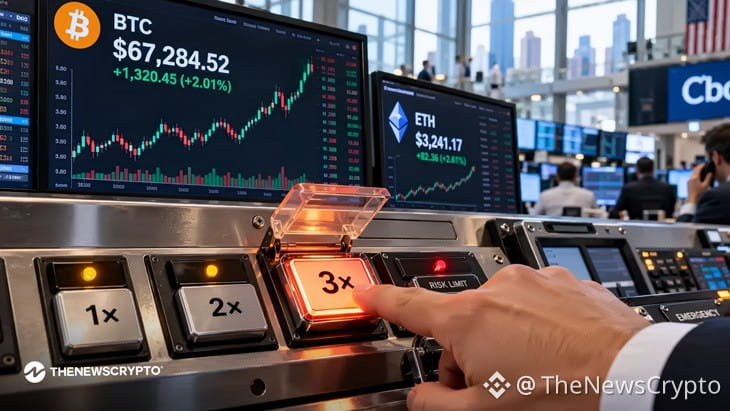
SEC Approves 3x Bitcoin and Ether ETFs in Major Expansion of Crypto Market AccessThe SEC approved the listing and trading of the 3x Bitcoin ETF and 3x Ether ETF, alongside four other 3x commodity-linked products under the VS Trust.
The approval expands access to leveraged crypto exposure through US-listed ETFs.
The U.S. Securities and Exchange Commission (SEC) has approved the first-ever 3x leveraged Bitcoin and Ethereum ETFs for listing and trading in the United States, a decision that marks one of the most significant shifts in crypto regulatory history since the spot Bitcoin ETF approval in January 2024.
The approval covers six products under the VS Trust managed by Volatility Shares: the 3x Bitcoin ETF, 3x Ether ETF, 3x Gold ETF, 3x Silver ETF, 3x Crude Oil ETF, and 3x Natural Gas ETF. Cboe BZX Exchange filed the proposed rule change on August 10, 2026; the SEC published it in the Federal Register on August 19 for public comment, and the order granting approval followed shortly after.
Also, Bloomberg ETF analyst Eric Balchunas called it a big win for Volatility Shares. ETF Store President Nate Geraci noted the speed of the shift; under three years ago, the SEC was still litigating against Grayscale over a plain-vanilla spot Bitcoin ETF. Now it has approved products that deliver three times the daily performance of the underlying assets.
How Do These Products Actually Work?
The Bitcoin and Ether ETFs use CME futures contracts and other instruments to seek returns equal to three times the daily performance of their respective indexes, before fees and expenses. That structure requires issuers to rebalance positions every single day, creating predictable buying and selling pressure that can amplify intraday price movements in both spot and futures markets.
That daily rebalancing also introduces a structural complexity that matters. In volatile, range-bound markets, returns can erode even when traders correctly anticipate the underlying asset’s direction. Moreover, it makes these products better suited to short-term tactical trading than long-term holding.
What This Means for BTC, ETH, and the Broader Market?
The leveraged ETPs targeting crypto assets bring a new class of traders and institutions into the market. In addition, those with shorter time horizons and higher risk tolerance who previously had no regulated vehicle for this kind of exposure.
For BTC and ETH specifically, daily rebalancing from these products will create consistent and predictable buying pressure on up days and selling pressure on down days, amplifying intraday moves in both directions. Volatility is likely to increase around market open and close as issuers adjust positions.
The approval also signals something larger: the SEC’s posture toward complex crypto investment vehicles has fundamentally shifted. Furthermore, spot ETFs were the first step, and the leveraged ETFs are the next. The regulatory door that once seemed permanently closed is now opening faster than expected.
Crypto Market Highlights
Binance Faces Fresh EU Scrutiny Over MiCA Reverse Solicitation
SEC Approves 3x Bitcoin and Ether ETFs in Major Expansion of Crypto Market Access
The SEC approved the listing and trading of the 3x Bitcoin ETF and 3x Ether ETF, alongside four other 3x commodity-linked products under the VS Trust.
The approval expands access to leveraged crypto exposure through US-listed ETFs.
The U.S. Securities and Exchange Commission (SEC) has approved the first-ever 3x leveraged Bitcoin and Ethereum ETFs for listing and trading in the United States, a decision that marks one of the most significant shifts in crypto regulatory history since the spot Bitcoin ETF approval in January 2024.
The approval covers six products under the VS Trust managed by Volatility Shares: the 3x Bitcoin ETF, 3x Ether ETF, 3x Gold ETF, 3x Silver ETF, 3x Crude Oil ETF, and 3x Natural Gas ETF. Cboe BZX Exchange filed the proposed rule change on August 10, 2026; the SEC published it in the Federal Register on August 19 for public comment, and the order granting approval followed shortly after.
Also, Bloomberg ETF analyst Eric Balchunas called it a big win for Volatility Shares. ETF Store President Nate Geraci noted the speed of the shift; under three years ago, the SEC was still litigating against Grayscale over a plain-vanilla spot Bitcoin ETF. Now it has approved products that deliver three times the daily performance of the underlying assets.
How Do These Products Actually Work?
The Bitcoin and Ether ETFs use CME futures contracts and other instruments to seek returns equal to three times the daily performance of their respective indexes, before fees and expenses. That structure requires issuers to rebalance positions every single day, creating predictable buying and selling pressure that can amplify intraday price movements in both spot and futures markets.
That daily rebalancing also introduces a structural complexity that matters. In volatile, range-bound markets, returns can erode even when traders correctly anticipate the underlying asset’s direction. Moreover, it makes these products better suited to short-term tactical trading than long-term holding.
What This Means for BTC, ETH, and the Broader Market?
The leveraged ETPs targeting crypto assets bring a new class of traders and institutions into the market. In addition, those with shorter time horizons and higher risk tolerance who previously had no regulated vehicle for this kind of exposure.
For BTC and ETH specifically, daily rebalancing from these products will create consistent and predictable buying pressure on up days and selling pressure on down days, amplifying intraday moves in both directions. Volatility is likely to increase around market open and close as issuers adjust positions.
The approval also signals something larger: the SEC’s posture toward complex crypto investment vehicles has fundamentally shifted. Furthermore, spot ETFs were the first step, and the leveraged ETFs are the next. The regulatory door that once seemed permanently closed is now opening faster than expected.
Crypto Market Highlights
Binance Faces Fresh EU Scrutiny Over MiCA Reverse Solicitation
The approval expands access to leveraged crypto exposure through US-listed ETFs.
The U.S. Securities and Exchange Commission (SEC) has approved the first-ever 3x leveraged Bitcoin and Ethereum ETFs for listing and trading in the United States, a decision that marks one of the most significant shifts in crypto regulatory history since the spot Bitcoin ETF approval in January 2024.
The approval covers six products under the VS Trust managed by Volatility Shares: the 3x Bitcoin ETF, 3x Ether ETF, 3x Gold ETF, 3x Silver ETF, 3x Crude Oil ETF, and 3x Natural Gas ETF. Cboe BZX Exchange filed the proposed rule change on August 10, 2026; the SEC published it in the Federal Register on August 19 for public comment, and the order granting approval followed shortly after.
Also, Bloomberg ETF analyst Eric Balchunas called it a big win for Volatility Shares. ETF Store President Nate Geraci noted the speed of the shift; under three years ago, the SEC was still litigating against Grayscale over a plain-vanilla spot Bitcoin ETF. Now it has approved products that deliver three times the daily performance of the underlying assets.
How Do These Products Actually Work?
The Bitcoin and Ether ETFs use CME futures contracts and other instruments to seek returns equal to three times the daily performance of their respective indexes, before fees and expenses. That structure requires issuers to rebalance positions every single day, creating predictable buying and selling pressure that can amplify intraday price movements in both spot and futures markets.
That daily rebalancing also introduces a structural complexity that matters. In volatile, range-bound markets, returns can erode even when traders correctly anticipate the underlying asset’s direction. Moreover, it makes these products better suited to short-term tactical trading than long-term holding.
What This Means for BTC, ETH, and the Broader Market?
The leveraged ETPs targeting crypto assets bring a new class of traders and institutions into the market. In addition, those with shorter time horizons and higher risk tolerance who previously had no regulated vehicle for this kind of exposure.
For BTC and ETH specifically, daily rebalancing from these products will create consistent and predictable buying pressure on up days and selling pressure on down days, amplifying intraday moves in both directions. Volatility is likely to increase around market open and close as issuers adjust positions.
The approval also signals something larger: the SEC’s posture toward complex crypto investment vehicles has fundamentally shifted. Furthermore, spot ETFs were the first step, and the leveraged ETFs are the next. The regulatory door that once seemed permanently closed is now opening faster than expected.
Crypto Market Highlights
Binance Faces Fresh EU Scrutiny Over MiCA Reverse Solicitation
1.1k
Article
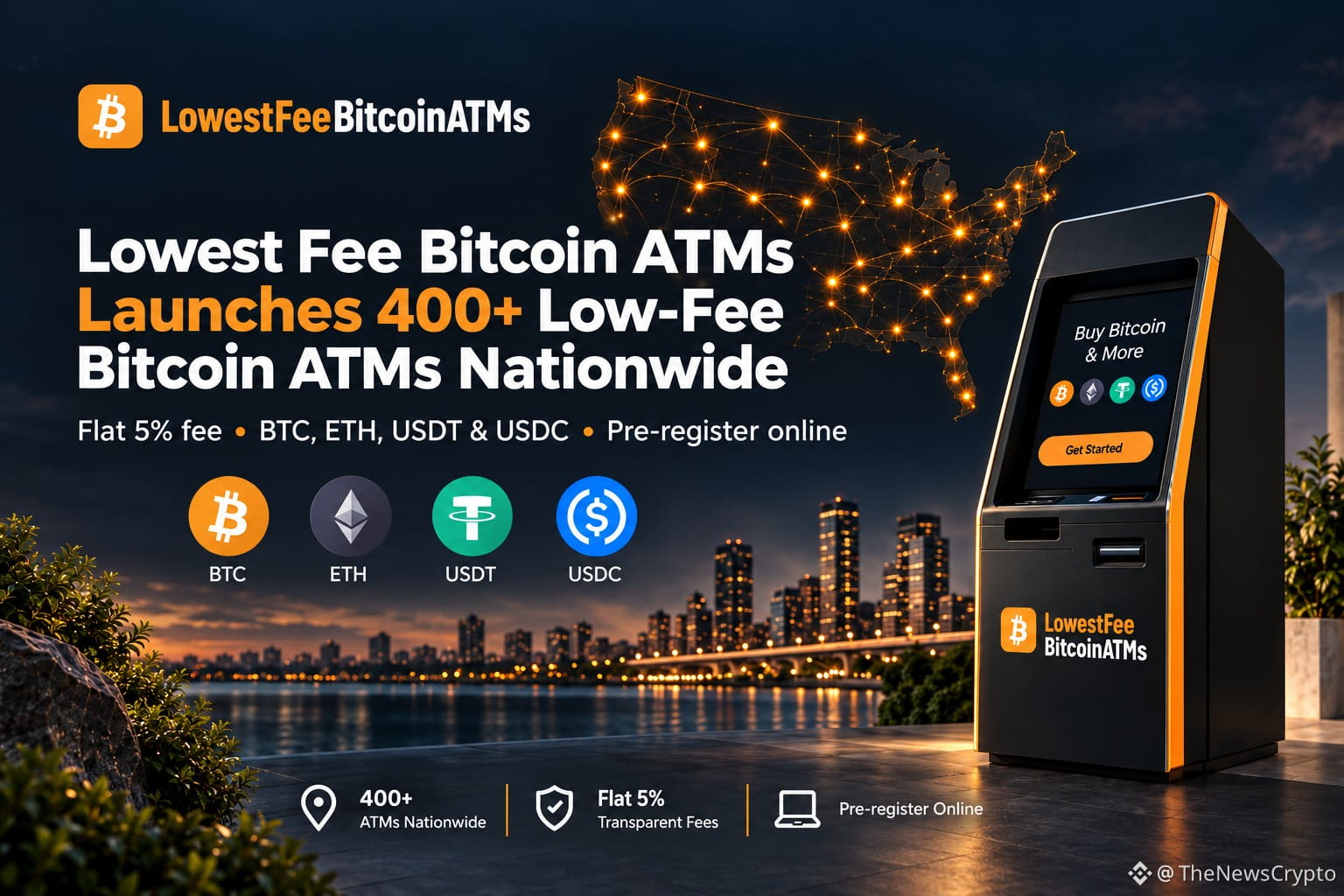
Lowest Fee Bitcoin ATMs Announces Launch of More Than 400 ATMs NationwideLas Vegas, NV, October 1st, 2026, Chainwire
Lowest Fee Bitcoin ATMs announced the launch of more than 400 cryptocurrency ATMs across the United States. The machines allow customers to purchase Bitcoin, Ethereum, USDT and USDC with cash at a stated flat 5% fee. Customers can also pre-register online before visiting an ATM.
Lowest Fee Bitcoin ATMs, a new nationwide low-fee Bitcoin ATM operator, launched today with an initial rollout of more than 400 Bitcoin ATMs across the United States, a footprint that places it amongst the largest Bitcoin ATM operators in the country on its first day. It also launched with a name that does most of the marketing department’s job for it. The brand charges a flat 5% Bitcoin ATM fee to buy Bitcoin, Ethereum, USDT or USDC with cash, displays the fee and exchange rate on screen before the customer confirms, and, as of today, lets first-time customers register online in about two minutes so they can skip onboarding at the machine entirely.
400+ Bitcoin ATM locations on day one
Most Bitcoin ATM operators in the U.S. run a few dozen machines. Lowest Fee Bitcoin ATMs opens with more than 400 Bitcoin ATM locations in the convenience stores, gas stations and shopping centers people already visit, with machines in Florida, California, Arizona and Texas among other states, as the first phase of a larger rollout.
“Four hundred machines is not a pilot. It’s a network,” said Quincy Mathis, Operations Manager at Lowest Fee Bitcoin ATMs. “We wanted to be one of the biggest Bitcoin ATM operators in the country on the day we opened, because a low fee only matters if there’s a machine near you. This is phase one.”
Buy Bitcoin, Ethereum, USDT and USDC with cash: coins, limits and one fee
Every Lowest Fee Bitcoin ATM sells Bitcoin (BTC), Ethereum (ETH), Tether (USDT) and USD Coin (USDC) for cash, all at the same 5% fee, all sent directly to the customer’s own wallet. No bank account or credit card is needed. The machines are non-custodial: the company never holds customer funds.
Bitcoin ATM daily limits are set by verification tier:
Tier 1, phone number only: up to $2,000 per day
Tier 2, government ID and Tax ID: up to $50,000 per day
Bitcoin ATM fees compared: what $1,000 buys
The typical Bitcoin ATM in the United States charges roughly 12% to 15% to buy, and some of the largest national brands charge 20% or more. Here is what that looks like when a customer walks up with $1,000 in cash:
Illustrative, based on posted percentage fees only and before exchange rate. Many operators add an exchange-rate markup on top of the posted fee; Lowest Fee Bitcoin ATMs shows both the fee and the rate on screen before a transaction is confirmed. Industry figures reflect publicly reported U.S. Bitcoin ATM fee ranges. See how the Bitcoin ATM fees compare.
At a 20% machine, one dollar in every five never becomes crypto. At Lowest Fee Bitcoin ATMs, it’s one in twenty. The name is not subtle; neither is a 20% fee.
“We wanted a rate people can look at on the receipt and feel good about, not one they have to make peace with,” said Quincy Mathis. “Five percent, shown up front, with the exchange rate right next to it. That’s the whole pitch.”
Stablecoin ATMs are becoming the way people send money overseas
A growing share of customers are using the machines as USDT and USDC ATMs, buying dollar pegged stable coins to send money to family and friends overseas and to pay suppliers and contractors abroad. A customer inserts cash, the stable coins arrive in the recipient’s wallet within minutes, and the recipient holds dollars they can keep or cash out locally. No wire counter, no multi-day wait, and no bank account needed to send.
That makes the fee gap matter more, not less. Someone sending $1,000 home once a month pays about $600 a year in fees at a 5% machine, $1,440 to $1,800 at a typical machine, and $2,400 at a 20% machine. The difference is real money to the people who can least afford to lose it, which is why low fees matter most to remittance customers.
“The people using stable coins to support family abroad are exactly the people who shouldn’t be paying 20% for the privilege,” said Quincy Mathis.
How to use a Bitcoin ATM: four steps, under two minutes, now with online pre-registration
New with today’s launch is online Bitcoin ATM pre-registration. First-time customers can pre-register online before they ever visit a machine, so the first visit is as fast as the tenth. At any of the 400+ machines, they simply enter their phone number.
Register online, once. About two minutes on a phone.
Walk up and enter your phone number. The machine recognizes you. No paperwork at the kiosk.
Pick a coin, scan your wallet, insert cash. Scan your wallet’s QR code and feed in the bills.
Check the screen and confirm. The fee and exchange rate are displayed before you press anything. Crypto lands in your wallet within minutes.
Customers who would rather register at the machine still can. It just takes a little longer, and the company would like to gently point out that it no longer has to. A full walkthrough of how a Bitcoin ATM works is on the company’s website.
Compliance, briefly
Lowest Fee Bitcoin ATMs is a FinCEN-registered money services business, and every machine operates in compliance with federal and state regulations. Customer data is encrypted, and transactions are non-custodial and irreversible. No government agency, bank, utility or tech-support line will ever ask anyone to pay them at a Bitcoin ATM; if someone does, it is a scam. Common questions are answered in the company’s Bitcoin ATM FAQ.
Find a low-fee Bitcoin ATM near you
Lowest Fee Bitcoin ATMs are live now at 400+ locations across the United States, with further phases of the rollout to follow. Customers can find a Bitcoin ATM near them and pre-register at lowestfeebitcoinatms.com. New customers can use code LOWEST at the machine for 20% off the transaction fee, which brings the fee on that $1,000 transaction down to $40.
About Lowest Fee Bitcoin ATMs
Lowest Fee Bitcoin ATMs is a nationwide low-fee Bitcoin ATM operator whose initial network of more than 400 machines ranks among the largest in the United States. Customers can buy Bitcoin, Ethereum, USDT and USDC with cash for a flat 5% fee, with the fee and exchange rate displayed on screen before every transaction. The company is a FinCEN-registered money services business. Users can learn more at lowestfeebitcoinatms.com.
Contact
Marketing DirectorBrian S. SmithLowest Fee Bitcoin ATMssupport@lowestfeebitcoinatms.com
Lowest Fee Bitcoin ATMs Announces Launch of More Than 400 ATMs Nationwide
Las Vegas, NV, October 1st, 2026, Chainwire
Lowest Fee Bitcoin ATMs announced the launch of more than 400 cryptocurrency ATMs across the United States. The machines allow customers to purchase Bitcoin, Ethereum, USDT and USDC with cash at a stated flat 5% fee. Customers can also pre-register online before visiting an ATM.
Lowest Fee Bitcoin ATMs, a new nationwide low-fee Bitcoin ATM operator, launched today with an initial rollout of more than 400 Bitcoin ATMs across the United States, a footprint that places it amongst the largest Bitcoin ATM operators in the country on its first day. It also launched with a name that does most of the marketing department’s job for it. The brand charges a flat 5% Bitcoin ATM fee to buy Bitcoin, Ethereum, USDT or USDC with cash, displays the fee and exchange rate on screen before the customer confirms, and, as of today, lets first-time customers register online in about two minutes so they can skip onboarding at the machine entirely.
400+ Bitcoin ATM locations on day one
Most Bitcoin ATM operators in the U.S. run a few dozen machines. Lowest Fee Bitcoin ATMs opens with more than 400 Bitcoin ATM locations in the convenience stores, gas stations and shopping centers people already visit, with machines in Florida, California, Arizona and Texas among other states, as the first phase of a larger rollout.
“Four hundred machines is not a pilot. It’s a network,” said Quincy Mathis, Operations Manager at Lowest Fee Bitcoin ATMs. “We wanted to be one of the biggest Bitcoin ATM operators in the country on the day we opened, because a low fee only matters if there’s a machine near you. This is phase one.”
Buy Bitcoin, Ethereum, USDT and USDC with cash: coins, limits and one fee
Every Lowest Fee Bitcoin ATM sells Bitcoin (BTC), Ethereum (ETH), Tether (USDT) and USD Coin (USDC) for cash, all at the same 5% fee, all sent directly to the customer’s own wallet. No bank account or credit card is needed. The machines are non-custodial: the company never holds customer funds.
Bitcoin ATM daily limits are set by verification tier:
Tier 1, phone number only: up to $2,000 per day
Tier 2, government ID and Tax ID: up to $50,000 per day
Bitcoin ATM fees compared: what $1,000 buys
The typical Bitcoin ATM in the United States charges roughly 12% to 15% to buy, and some of the largest national brands charge 20% or more. Here is what that looks like when a customer walks up with $1,000 in cash:
Illustrative, based on posted percentage fees only and before exchange rate. Many operators add an exchange-rate markup on top of the posted fee; Lowest Fee Bitcoin ATMs shows both the fee and the rate on screen before a transaction is confirmed. Industry figures reflect publicly reported U.S. Bitcoin ATM fee ranges. See how the Bitcoin ATM fees compare.
At a 20% machine, one dollar in every five never becomes crypto. At Lowest Fee Bitcoin ATMs, it’s one in twenty. The name is not subtle; neither is a 20% fee.
“We wanted a rate people can look at on the receipt and feel good about, not one they have to make peace with,” said Quincy Mathis. “Five percent, shown up front, with the exchange rate right next to it. That’s the whole pitch.”
Stablecoin ATMs are becoming the way people send money overseas
A growing share of customers are using the machines as USDT and USDC ATMs, buying dollar pegged stable coins to send money to family and friends overseas and to pay suppliers and contractors abroad. A customer inserts cash, the stable coins arrive in the recipient’s wallet within minutes, and the recipient holds dollars they can keep or cash out locally. No wire counter, no multi-day wait, and no bank account needed to send.
That makes the fee gap matter more, not less. Someone sending $1,000 home once a month pays about $600 a year in fees at a 5% machine, $1,440 to $1,800 at a typical machine, and $2,400 at a 20% machine. The difference is real money to the people who can least afford to lose it, which is why low fees matter most to remittance customers.
“The people using stable coins to support family abroad are exactly the people who shouldn’t be paying 20% for the privilege,” said Quincy Mathis.
How to use a Bitcoin ATM: four steps, under two minutes, now with online pre-registration
New with today’s launch is online Bitcoin ATM pre-registration. First-time customers can pre-register online before they ever visit a machine, so the first visit is as fast as the tenth. At any of the 400+ machines, they simply enter their phone number.
Register online, once. About two minutes on a phone.
Walk up and enter your phone number. The machine recognizes you. No paperwork at the kiosk.
Pick a coin, scan your wallet, insert cash. Scan your wallet’s QR code and feed in the bills.
Check the screen and confirm. The fee and exchange rate are displayed before you press anything. Crypto lands in your wallet within minutes.
Customers who would rather register at the machine still can. It just takes a little longer, and the company would like to gently point out that it no longer has to. A full walkthrough of how a Bitcoin ATM works is on the company’s website.
Compliance, briefly
Lowest Fee Bitcoin ATMs is a FinCEN-registered money services business, and every machine operates in compliance with federal and state regulations. Customer data is encrypted, and transactions are non-custodial and irreversible. No government agency, bank, utility or tech-support line will ever ask anyone to pay them at a Bitcoin ATM; if someone does, it is a scam. Common questions are answered in the company’s Bitcoin ATM FAQ.
Find a low-fee Bitcoin ATM near you
Lowest Fee Bitcoin ATMs are live now at 400+ locations across the United States, with further phases of the rollout to follow. Customers can find a Bitcoin ATM near them and pre-register at lowestfeebitcoinatms.com. New customers can use code LOWEST at the machine for 20% off the transaction fee, which brings the fee on that $1,000 transaction down to $40.
About Lowest Fee Bitcoin ATMs
Lowest Fee Bitcoin ATMs is a nationwide low-fee Bitcoin ATM operator whose initial network of more than 400 machines ranks among the largest in the United States. Customers can buy Bitcoin, Ethereum, USDT and USDC with cash for a flat 5% fee, with the fee and exchange rate displayed on screen before every transaction. The company is a FinCEN-registered money services business. Users can learn more at lowestfeebitcoinatms.com.
Contact
Marketing DirectorBrian S. SmithLowest Fee Bitcoin ATMssupport@lowestfeebitcoinatms.com
Lowest Fee Bitcoin ATMs announced the launch of more than 400 cryptocurrency ATMs across the United States. The machines allow customers to purchase Bitcoin, Ethereum, USDT and USDC with cash at a stated flat 5% fee. Customers can also pre-register online before visiting an ATM.
Lowest Fee Bitcoin ATMs, a new nationwide low-fee Bitcoin ATM operator, launched today with an initial rollout of more than 400 Bitcoin ATMs across the United States, a footprint that places it amongst the largest Bitcoin ATM operators in the country on its first day. It also launched with a name that does most of the marketing department’s job for it. The brand charges a flat 5% Bitcoin ATM fee to buy Bitcoin, Ethereum, USDT or USDC with cash, displays the fee and exchange rate on screen before the customer confirms, and, as of today, lets first-time customers register online in about two minutes so they can skip onboarding at the machine entirely.
400+ Bitcoin ATM locations on day one
Most Bitcoin ATM operators in the U.S. run a few dozen machines. Lowest Fee Bitcoin ATMs opens with more than 400 Bitcoin ATM locations in the convenience stores, gas stations and shopping centers people already visit, with machines in Florida, California, Arizona and Texas among other states, as the first phase of a larger rollout.
“Four hundred machines is not a pilot. It’s a network,” said Quincy Mathis, Operations Manager at Lowest Fee Bitcoin ATMs. “We wanted to be one of the biggest Bitcoin ATM operators in the country on the day we opened, because a low fee only matters if there’s a machine near you. This is phase one.”
Buy Bitcoin, Ethereum, USDT and USDC with cash: coins, limits and one fee
Every Lowest Fee Bitcoin ATM sells Bitcoin (BTC), Ethereum (ETH), Tether (USDT) and USD Coin (USDC) for cash, all at the same 5% fee, all sent directly to the customer’s own wallet. No bank account or credit card is needed. The machines are non-custodial: the company never holds customer funds.
Bitcoin ATM daily limits are set by verification tier:
Tier 1, phone number only: up to $2,000 per day
Tier 2, government ID and Tax ID: up to $50,000 per day
Bitcoin ATM fees compared: what $1,000 buys
The typical Bitcoin ATM in the United States charges roughly 12% to 15% to buy, and some of the largest national brands charge 20% or more. Here is what that looks like when a customer walks up with $1,000 in cash:
Illustrative, based on posted percentage fees only and before exchange rate. Many operators add an exchange-rate markup on top of the posted fee; Lowest Fee Bitcoin ATMs shows both the fee and the rate on screen before a transaction is confirmed. Industry figures reflect publicly reported U.S. Bitcoin ATM fee ranges. See how the Bitcoin ATM fees compare.
At a 20% machine, one dollar in every five never becomes crypto. At Lowest Fee Bitcoin ATMs, it’s one in twenty. The name is not subtle; neither is a 20% fee.
“We wanted a rate people can look at on the receipt and feel good about, not one they have to make peace with,” said Quincy Mathis. “Five percent, shown up front, with the exchange rate right next to it. That’s the whole pitch.”
Stablecoin ATMs are becoming the way people send money overseas
A growing share of customers are using the machines as USDT and USDC ATMs, buying dollar pegged stable coins to send money to family and friends overseas and to pay suppliers and contractors abroad. A customer inserts cash, the stable coins arrive in the recipient’s wallet within minutes, and the recipient holds dollars they can keep or cash out locally. No wire counter, no multi-day wait, and no bank account needed to send.
That makes the fee gap matter more, not less. Someone sending $1,000 home once a month pays about $600 a year in fees at a 5% machine, $1,440 to $1,800 at a typical machine, and $2,400 at a 20% machine. The difference is real money to the people who can least afford to lose it, which is why low fees matter most to remittance customers.
“The people using stable coins to support family abroad are exactly the people who shouldn’t be paying 20% for the privilege,” said Quincy Mathis.
How to use a Bitcoin ATM: four steps, under two minutes, now with online pre-registration
New with today’s launch is online Bitcoin ATM pre-registration. First-time customers can pre-register online before they ever visit a machine, so the first visit is as fast as the tenth. At any of the 400+ machines, they simply enter their phone number.
Register online, once. About two minutes on a phone.
Walk up and enter your phone number. The machine recognizes you. No paperwork at the kiosk.
Pick a coin, scan your wallet, insert cash. Scan your wallet’s QR code and feed in the bills.
Check the screen and confirm. The fee and exchange rate are displayed before you press anything. Crypto lands in your wallet within minutes.
Customers who would rather register at the machine still can. It just takes a little longer, and the company would like to gently point out that it no longer has to. A full walkthrough of how a Bitcoin ATM works is on the company’s website.
Compliance, briefly
Lowest Fee Bitcoin ATMs is a FinCEN-registered money services business, and every machine operates in compliance with federal and state regulations. Customer data is encrypted, and transactions are non-custodial and irreversible. No government agency, bank, utility or tech-support line will ever ask anyone to pay them at a Bitcoin ATM; if someone does, it is a scam. Common questions are answered in the company’s Bitcoin ATM FAQ.
Find a low-fee Bitcoin ATM near you
Lowest Fee Bitcoin ATMs are live now at 400+ locations across the United States, with further phases of the rollout to follow. Customers can find a Bitcoin ATM near them and pre-register at lowestfeebitcoinatms.com. New customers can use code LOWEST at the machine for 20% off the transaction fee, which brings the fee on that $1,000 transaction down to $40.
About Lowest Fee Bitcoin ATMs
Lowest Fee Bitcoin ATMs is a nationwide low-fee Bitcoin ATM operator whose initial network of more than 400 machines ranks among the largest in the United States. Customers can buy Bitcoin, Ethereum, USDT and USDC with cash for a flat 5% fee, with the fee and exchange rate displayed on screen before every transaction. The company is a FinCEN-registered money services business. Users can learn more at lowestfeebitcoinatms.com.
Contact
Marketing DirectorBrian S. SmithLowest Fee Bitcoin ATMssupport@lowestfeebitcoinatms.com
216
Article
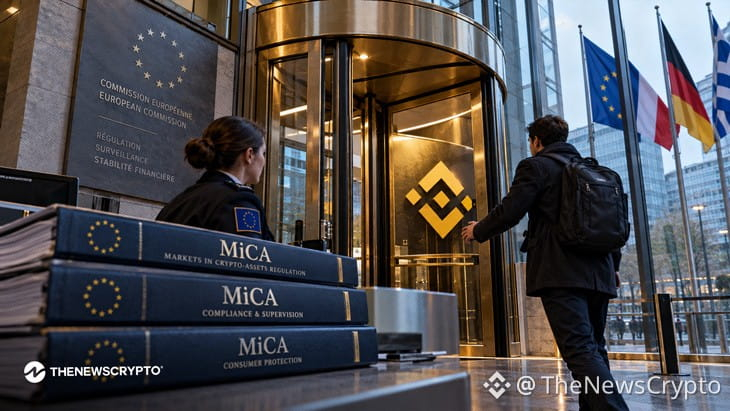
Binance Faces Fresh EU Scrutiny Over MiCA Reverse SolicitationEU regulators are examining Binance’s use of MiCA’s reverse solicitation exemption to determine whether its current approach complies with the framework.
The review follows Binance’s failure to secure a MiCA license, raising questions over its continued EU operations after the July 1 transition deadline.
Binance is facing regulatory scrutiny across Europe over its use of MiCA’s reverse solicitation exemption, a legal provision that allows non-EU companies to serve European clients, but only when those clients independently seek out the relationship without any solicitation or marketing from the firm.
The European Securities and Markets Authority, alongside national regulators in France, Germany, and Greece, is now examining whether Binance’s current service model genuinely meets those conditions.
Significantly, the review follows Binance’s failure to secure a MiCA license this summer. A setback that should have required the exchange to wind down its EU operations from July 1. It limits the activity to help existing customers transfer or sell their holdings.
What Reverse Solicitation Actually Means, and Why It Matters
Reverse solicitation became prominent in Europe after Brexit, when UK-based firms tried to use it to continue serving EU clients without separate licensing. The provision is narrow by design. ESMA said the exemption should be regarded as the exception and not be used to circumvent MiCA requirements. Moreover, crypto firms cannot simply claim it; clear requirements and guidelines must be met.
Binance’s position is that it operates under reverse solicitation in EU countries where it holds no local licence, with customers onboarding of their own volition. Its Abu Dhabi-regulated entity, active since December 2025, serves traders outside countries where local licences previously existed.
Local licences in France, Spain, and Poland have since lapsed under the MiCA regime. In addition, Binance said it complies with applicable regulatory requirements and is actively working toward MiCA authorisation. That process is still ongoing.
What Enforcement Could Look Like?
If regulators conclude that Binance’s use of the exemption doesn’t hold up, enforcement action, including fines, could result. Binance is not the only firm under review; smaller platforms are also being examined.
This is not Binance’s first significant regulatory confrontation. The exchange paid a record $4.3 billion fine in the US in 2023. Also pleaded guilty to criminal charges related to money laundering and breaching international financial sanctions.
For the broader crypto market, this probe adds another layer of regulatory uncertainty in one of the world’s largest trading regions. If enforcement action follows and Binance faces restrictions on EU operations, liquidity and trading volume across European markets could take a meaningful hit. Particularly for retail traders who rely on Binance as their primary platform.
Crypto Market Highlights
MetaMask Staking Begins Lido Validator Exit After Security Incident
Binance Faces Fresh EU Scrutiny Over MiCA Reverse Solicitation
EU regulators are examining Binance’s use of MiCA’s reverse solicitation exemption to determine whether its current approach complies with the framework.
The review follows Binance’s failure to secure a MiCA license, raising questions over its continued EU operations after the July 1 transition deadline.
Binance is facing regulatory scrutiny across Europe over its use of MiCA’s reverse solicitation exemption, a legal provision that allows non-EU companies to serve European clients, but only when those clients independently seek out the relationship without any solicitation or marketing from the firm.
The European Securities and Markets Authority, alongside national regulators in France, Germany, and Greece, is now examining whether Binance’s current service model genuinely meets those conditions.
Significantly, the review follows Binance’s failure to secure a MiCA license this summer. A setback that should have required the exchange to wind down its EU operations from July 1. It limits the activity to help existing customers transfer or sell their holdings.
What Reverse Solicitation Actually Means, and Why It Matters
Reverse solicitation became prominent in Europe after Brexit, when UK-based firms tried to use it to continue serving EU clients without separate licensing. The provision is narrow by design. ESMA said the exemption should be regarded as the exception and not be used to circumvent MiCA requirements. Moreover, crypto firms cannot simply claim it; clear requirements and guidelines must be met.
Binance’s position is that it operates under reverse solicitation in EU countries where it holds no local licence, with customers onboarding of their own volition. Its Abu Dhabi-regulated entity, active since December 2025, serves traders outside countries where local licences previously existed.
Local licences in France, Spain, and Poland have since lapsed under the MiCA regime. In addition, Binance said it complies with applicable regulatory requirements and is actively working toward MiCA authorisation. That process is still ongoing.
What Enforcement Could Look Like?
If regulators conclude that Binance’s use of the exemption doesn’t hold up, enforcement action, including fines, could result. Binance is not the only firm under review; smaller platforms are also being examined.
This is not Binance’s first significant regulatory confrontation. The exchange paid a record $4.3 billion fine in the US in 2023. Also pleaded guilty to criminal charges related to money laundering and breaching international financial sanctions.
For the broader crypto market, this probe adds another layer of regulatory uncertainty in one of the world’s largest trading regions. If enforcement action follows and Binance faces restrictions on EU operations, liquidity and trading volume across European markets could take a meaningful hit. Particularly for retail traders who rely on Binance as their primary platform.
Crypto Market Highlights
MetaMask Staking Begins Lido Validator Exit After Security Incident
The review follows Binance’s failure to secure a MiCA license, raising questions over its continued EU operations after the July 1 transition deadline.
Binance is facing regulatory scrutiny across Europe over its use of MiCA’s reverse solicitation exemption, a legal provision that allows non-EU companies to serve European clients, but only when those clients independently seek out the relationship without any solicitation or marketing from the firm.
The European Securities and Markets Authority, alongside national regulators in France, Germany, and Greece, is now examining whether Binance’s current service model genuinely meets those conditions.
Significantly, the review follows Binance’s failure to secure a MiCA license this summer. A setback that should have required the exchange to wind down its EU operations from July 1. It limits the activity to help existing customers transfer or sell their holdings.
What Reverse Solicitation Actually Means, and Why It Matters
Reverse solicitation became prominent in Europe after Brexit, when UK-based firms tried to use it to continue serving EU clients without separate licensing. The provision is narrow by design. ESMA said the exemption should be regarded as the exception and not be used to circumvent MiCA requirements. Moreover, crypto firms cannot simply claim it; clear requirements and guidelines must be met.
Binance’s position is that it operates under reverse solicitation in EU countries where it holds no local licence, with customers onboarding of their own volition. Its Abu Dhabi-regulated entity, active since December 2025, serves traders outside countries where local licences previously existed.
Local licences in France, Spain, and Poland have since lapsed under the MiCA regime. In addition, Binance said it complies with applicable regulatory requirements and is actively working toward MiCA authorisation. That process is still ongoing.
What Enforcement Could Look Like?
If regulators conclude that Binance’s use of the exemption doesn’t hold up, enforcement action, including fines, could result. Binance is not the only firm under review; smaller platforms are also being examined.
This is not Binance’s first significant regulatory confrontation. The exchange paid a record $4.3 billion fine in the US in 2023. Also pleaded guilty to criminal charges related to money laundering and breaching international financial sanctions.
For the broader crypto market, this probe adds another layer of regulatory uncertainty in one of the world’s largest trading regions. If enforcement action follows and Binance faces restrictions on EU operations, liquidity and trading volume across European markets could take a meaningful hit. Particularly for retail traders who rely on Binance as their primary platform.
Crypto Market Highlights
MetaMask Staking Begins Lido Validator Exit After Security Incident
1
95
Article
OFAC Sanctions Seven TRON Addresses Linked to Tren De Aragua ATM SchemeOFAC sanctioned seven TRON addresses linked to an alleged Tren de Aragua money-laundering network.
The seven addresses received about $6.1M in crypto inflows since March 2022, according to TRM Labs.
The U.S. Department of the Treasury’s Office of Foreign Assets Control (OFAC) has sanctioned seven TRON blockchain addresses linked to an alleged ATM jackpotting and money-laundering operation connected to Tren de Aragua (TdA).
The action, announced on September 30, designated eight individuals and two Mexico-based companies tied to the alleged scheme, while also targeting TdA leader Juan Gabriel Rivas Nunez, known as “Juancho.” The seven TRON addresses were added to OFAC’s Specially Designated Nationals and Blocked Persons List.
According to Treasury, the operation used malware to force U.S. ATMs and interactive teller machines to dispense cash without charging a customer account. The stolen money was then moved between TdA members and associates to hide its origin, including through cryptocurrency transactions.
Treasury said reported losses from alleged TdA jackpotting attacks in the U.S. reached $40.73 million across more than 1,500 attacks as of August 2025. The Justice Department has also indicted 98 people since October 21, 2025 for alleged involvement in ATM jackpotting schemes.
Seven TRON Addresses Received $6.1M Since 2022
Blockchain analytics firm TRM Labs found that the seven sanctioned TRON addresses received about $6.1 million in total inflows since March 2022. The largest share, around $2.1 million, went to an address attributed to Eric Gabriel Cardenas Arzola.
TRM said all seven addresses were deposit addresses hosted by a centralized cryptocurrency exchange. The addresses received funds from multiple sources and later transferred money to other addresses associated with TdA. TRM also cautioned that the full $6.1 million cannot necessarily be attributed to the alleged ATM jackpotting operation.
(Source: TRM Labs)
The seven addresses subsequently sent funds to other TdA-linked addresses, which in turn transferred about $35 million to a network U.S. authorities have associated with Venezuelan national Jorge Figueira, who has been charged with laundering about $1 billion. Figueira has not been convicted, and those charges remain allegations.
OFAC’s action blocks property and interests in property of the designated persons that are in the United States or under the control of U.S. persons. The designation also means U.S. persons generally cannot conduct transactions involving the blocked property unless authorized by OFAC.
OFAC Sanctions Seven TRON Addresses Linked to Tren De Aragua ATM Scheme
OFAC sanctioned seven TRON addresses linked to an alleged Tren de Aragua money-laundering network.
The seven addresses received about $6.1M in crypto inflows since March 2022, according to TRM Labs.
The U.S. Department of the Treasury’s Office of Foreign Assets Control (OFAC) has sanctioned seven TRON blockchain addresses linked to an alleged ATM jackpotting and money-laundering operation connected to Tren de Aragua (TdA).
The action, announced on September 30, designated eight individuals and two Mexico-based companies tied to the alleged scheme, while also targeting TdA leader Juan Gabriel Rivas Nunez, known as “Juancho.” The seven TRON addresses were added to OFAC’s Specially Designated Nationals and Blocked Persons List.
According to Treasury, the operation used malware to force U.S. ATMs and interactive teller machines to dispense cash without charging a customer account. The stolen money was then moved between TdA members and associates to hide its origin, including through cryptocurrency transactions.
Treasury said reported losses from alleged TdA jackpotting attacks in the U.S. reached $40.73 million across more than 1,500 attacks as of August 2025. The Justice Department has also indicted 98 people since October 21, 2025 for alleged involvement in ATM jackpotting schemes.
Seven TRON Addresses Received $6.1M Since 2022
Blockchain analytics firm TRM Labs found that the seven sanctioned TRON addresses received about $6.1 million in total inflows since March 2022. The largest share, around $2.1 million, went to an address attributed to Eric Gabriel Cardenas Arzola.
TRM said all seven addresses were deposit addresses hosted by a centralized cryptocurrency exchange. The addresses received funds from multiple sources and later transferred money to other addresses associated with TdA. TRM also cautioned that the full $6.1 million cannot necessarily be attributed to the alleged ATM jackpotting operation.
(Source: TRM Labs)
The seven addresses subsequently sent funds to other TdA-linked addresses, which in turn transferred about $35 million to a network U.S. authorities have associated with Venezuelan national Jorge Figueira, who has been charged with laundering about $1 billion. Figueira has not been convicted, and those charges remain allegations.
OFAC’s action blocks property and interests in property of the designated persons that are in the United States or under the control of U.S. persons. The designation also means U.S. persons generally cannot conduct transactions involving the blocked property unless authorized by OFAC.
The seven addresses received about $6.1M in crypto inflows since March 2022, according to TRM Labs.
The U.S. Department of the Treasury’s Office of Foreign Assets Control (OFAC) has sanctioned seven TRON blockchain addresses linked to an alleged ATM jackpotting and money-laundering operation connected to Tren de Aragua (TdA).
The action, announced on September 30, designated eight individuals and two Mexico-based companies tied to the alleged scheme, while also targeting TdA leader Juan Gabriel Rivas Nunez, known as “Juancho.” The seven TRON addresses were added to OFAC’s Specially Designated Nationals and Blocked Persons List.
According to Treasury, the operation used malware to force U.S. ATMs and interactive teller machines to dispense cash without charging a customer account. The stolen money was then moved between TdA members and associates to hide its origin, including through cryptocurrency transactions.
Treasury said reported losses from alleged TdA jackpotting attacks in the U.S. reached $40.73 million across more than 1,500 attacks as of August 2025. The Justice Department has also indicted 98 people since October 21, 2025 for alleged involvement in ATM jackpotting schemes.
Seven TRON Addresses Received $6.1M Since 2022
Blockchain analytics firm TRM Labs found that the seven sanctioned TRON addresses received about $6.1 million in total inflows since March 2022. The largest share, around $2.1 million, went to an address attributed to Eric Gabriel Cardenas Arzola.
TRM said all seven addresses were deposit addresses hosted by a centralized cryptocurrency exchange. The addresses received funds from multiple sources and later transferred money to other addresses associated with TdA. TRM also cautioned that the full $6.1 million cannot necessarily be attributed to the alleged ATM jackpotting operation.
(Source: TRM Labs)
The seven addresses subsequently sent funds to other TdA-linked addresses, which in turn transferred about $35 million to a network U.S. authorities have associated with Venezuelan national Jorge Figueira, who has been charged with laundering about $1 billion. Figueira has not been convicted, and those charges remain allegations.
OFAC’s action blocks property and interests in property of the designated persons that are in the United States or under the control of U.S. persons. The designation also means U.S. persons generally cannot conduct transactions involving the blocked property unless authorized by OFAC.
440
Verified
Article
DogeOS Launches Public Testnet With EVM Smart Contracts for DogecoinDogeOS has opened its public testnet, bringing EVM-compatible smart contracts to the Dogecoin ecosystem.
DOGE will power transaction fees, while developers can build DeFi, trading, stablecoin, and gaming applications on DogeOS.
DogeOS has opened its public Chikyū testnet, bringing an EVM-compatible smart contract layer to the Dogecoin ecosystem through a zero-knowledge rollup.
The testnet went live on September 30, giving developers a place to build and test applications on top of Dogecoin without changing the network’s underlying Layer 1. DOGE is used as the native token for transaction fees on DogeOS.
The launch gives Dogecoin developers access to Ethereum-compatible smart contract infrastructure. Developers can use familiar tools including Hardhat, Foundry and Remix, while the Chikyū testnet currently operates with chain ID 6281971.
DogeOS Brings DeFi and Other Applications to Dogecoin
DogeOS is designed to support applications that are not available directly on Dogecoin’s base layer, including decentralized exchanges, lending platforms, perpetual trading, stablecoins, prediction markets and games. Several projects are already building on the testnet, including Barkswap, Superposition Finance, Derps, Split Markets and USDoge.
The network targets about 300 transactions per second, compared with roughly 30 transactions per second on Dogecoin’s Layer 1. DogeOS also uses a separate application layer so that smart contract activity can run without requiring changes to Dogecoin’s core network.
The zero-knowledge rollup is designed to settle its state to Dogecoin. However, Dogecoin does not currently verify DogeOS’s zero-knowledge proofs directly. The testnet instead uses a trusted execution environment, validators and a permissioned sequencer, with bridge state transitions requiring valid proofs along with validator and TEE signatures.
DogeOS has previously proposed a Dogecoin Core upgrade that would allow the base network to verify ZK proofs directly, but that upgrade has not yet been implemented.
For DOGE, the immediate change is therefore on the application side rather than the base blockchain. The cryptocurrency can be used to pay fees for smart contract activity, while developers get an EVM-compatible environment for building applications around Dogecoin.
DogeOS has not announced a mainnet launch date. The current public testnet is being used to allow developers to build and test applications before the project moves toward mainnet.
DOGE was trading around $0.0976 on October 1, up about 2.5% over the previous 24 hours, according to CoinMarketCap data at the time of writing.
DogeOS Launches Public Testnet With EVM Smart Contracts for Dogecoin
DogeOS has opened its public testnet, bringing EVM-compatible smart contracts to the Dogecoin ecosystem.
DOGE will power transaction fees, while developers can build DeFi, trading, stablecoin, and gaming applications on DogeOS.
DogeOS has opened its public Chikyū testnet, bringing an EVM-compatible smart contract layer to the Dogecoin ecosystem through a zero-knowledge rollup.
The testnet went live on September 30, giving developers a place to build and test applications on top of Dogecoin without changing the network’s underlying Layer 1. DOGE is used as the native token for transaction fees on DogeOS.
The launch gives Dogecoin developers access to Ethereum-compatible smart contract infrastructure. Developers can use familiar tools including Hardhat, Foundry and Remix, while the Chikyū testnet currently operates with chain ID 6281971.
DogeOS Brings DeFi and Other Applications to Dogecoin
DogeOS is designed to support applications that are not available directly on Dogecoin’s base layer, including decentralized exchanges, lending platforms, perpetual trading, stablecoins, prediction markets and games. Several projects are already building on the testnet, including Barkswap, Superposition Finance, Derps, Split Markets and USDoge.
The network targets about 300 transactions per second, compared with roughly 30 transactions per second on Dogecoin’s Layer 1. DogeOS also uses a separate application layer so that smart contract activity can run without requiring changes to Dogecoin’s core network.
The zero-knowledge rollup is designed to settle its state to Dogecoin. However, Dogecoin does not currently verify DogeOS’s zero-knowledge proofs directly. The testnet instead uses a trusted execution environment, validators and a permissioned sequencer, with bridge state transitions requiring valid proofs along with validator and TEE signatures.
DogeOS has previously proposed a Dogecoin Core upgrade that would allow the base network to verify ZK proofs directly, but that upgrade has not yet been implemented.
For DOGE, the immediate change is therefore on the application side rather than the base blockchain. The cryptocurrency can be used to pay fees for smart contract activity, while developers get an EVM-compatible environment for building applications around Dogecoin.
DogeOS has not announced a mainnet launch date. The current public testnet is being used to allow developers to build and test applications before the project moves toward mainnet.
DOGE was trading around $0.0976 on October 1, up about 2.5% over the previous 24 hours, according to CoinMarketCap data at the time of writing.
DOGE will power transaction fees, while developers can build DeFi, trading, stablecoin, and gaming applications on DogeOS.
DogeOS has opened its public Chikyū testnet, bringing an EVM-compatible smart contract layer to the Dogecoin ecosystem through a zero-knowledge rollup.
The testnet went live on September 30, giving developers a place to build and test applications on top of Dogecoin without changing the network’s underlying Layer 1. DOGE is used as the native token for transaction fees on DogeOS.
The launch gives Dogecoin developers access to Ethereum-compatible smart contract infrastructure. Developers can use familiar tools including Hardhat, Foundry and Remix, while the Chikyū testnet currently operates with chain ID 6281971.
DogeOS Brings DeFi and Other Applications to Dogecoin
DogeOS is designed to support applications that are not available directly on Dogecoin’s base layer, including decentralized exchanges, lending platforms, perpetual trading, stablecoins, prediction markets and games. Several projects are already building on the testnet, including Barkswap, Superposition Finance, Derps, Split Markets and USDoge.
The network targets about 300 transactions per second, compared with roughly 30 transactions per second on Dogecoin’s Layer 1. DogeOS also uses a separate application layer so that smart contract activity can run without requiring changes to Dogecoin’s core network.
The zero-knowledge rollup is designed to settle its state to Dogecoin. However, Dogecoin does not currently verify DogeOS’s zero-knowledge proofs directly. The testnet instead uses a trusted execution environment, validators and a permissioned sequencer, with bridge state transitions requiring valid proofs along with validator and TEE signatures.
DogeOS has previously proposed a Dogecoin Core upgrade that would allow the base network to verify ZK proofs directly, but that upgrade has not yet been implemented.
For DOGE, the immediate change is therefore on the application side rather than the base blockchain. The cryptocurrency can be used to pay fees for smart contract activity, while developers get an EVM-compatible environment for building applications around Dogecoin.
DogeOS has not announced a mainnet launch date. The current public testnet is being used to allow developers to build and test applications before the project moves toward mainnet.
DOGE was trading around $0.0976 on October 1, up about 2.5% over the previous 24 hours, according to CoinMarketCap data at the time of writing.
1
465
Article
MetaMask Staking Begins Lido Validator Exit After Security IncidentMetaMask Staking has started exiting its Ethereum validators from Lido following a security incident affecting part of MetaMask’s infrastructure.
The final validators are expected to complete their exit by October 7, 2026, according to Lido.
MetaMask is responding to a security incident affecting part of its infrastructure, and while the wallet provider has been clear that no immediate threat to user wallets has been identified, the precautionary steps it’s taking are significant enough to pay attention to.
As a direct response to the incident, MetaMask Staking, formerly known as Consensys Staking, has begun exiting its Ethereum validators from the Lido protocol. The exit process is being carried out in coordination with clients, partners, and external security advisors. Lido confirmed the exits began this week, with the final validators expected to complete their exit by October 7, 2026.
The nature of the incident, its cause, and the full scope of affected infrastructure have not been disclosed. In addition, MetaMask has confirmed it is actively remediating the issue internally while working alongside external partners.
What Happens to the ETH?
The Ethereum withdrawn from MetaMask Staking’s validators will not disappear. It will likely return to the Lido protocol gradually as each validator completes the exit, withdrawal, and re-entry cycle. According to Lido Finance developer Will Shannon, that process could take up to 45 days due to an extended entry queue currently affecting the network.
Furthermore, Lido has been clear that no action is required from stETH holders. The protocol’s diverse Node Operator set, combined with its ad hoc reserve fund holding over 6,750 stETH, is designed to absorb and contain exactly this type of disruption without impacting normal protocol operations.
One important clarification MetaMask has made, its staking operations are non-custodial. Moreover, the company does not manage withdrawal keys for staked ETH on behalf of clients. The exit process is a protective measure rather than a fund recovery operation.
The Implication
A security incident at MetaMask’s infrastructure level, even one where no direct wallet threat has been confirmed, carries weight. MetaMask is one of the most widely used Ethereum wallets in the world. Any compromise of its backend infrastructure raises questions about how attackers gained access and what data or systems were exposed.
The validator exit from Lido also means foregone staking rewards and possible downtime penalties if validators are taken offline quickly to reduce network penalty risk, a financial cost the company is absorbing to protect client assets. Also, the investigation is ongoing, and the next update will matter significantly for how the market and the broader Ethereum staking community respond.
Crypto Market Highlights
HSBC RedCoin Takes Shape With Phased Stablecoin Rollout in Hong Kong
MetaMask Staking Begins Lido Validator Exit After Security Incident
MetaMask Staking has started exiting its Ethereum validators from Lido following a security incident affecting part of MetaMask’s infrastructure.
The final validators are expected to complete their exit by October 7, 2026, according to Lido.
MetaMask is responding to a security incident affecting part of its infrastructure, and while the wallet provider has been clear that no immediate threat to user wallets has been identified, the precautionary steps it’s taking are significant enough to pay attention to.
As a direct response to the incident, MetaMask Staking, formerly known as Consensys Staking, has begun exiting its Ethereum validators from the Lido protocol. The exit process is being carried out in coordination with clients, partners, and external security advisors. Lido confirmed the exits began this week, with the final validators expected to complete their exit by October 7, 2026.
The nature of the incident, its cause, and the full scope of affected infrastructure have not been disclosed. In addition, MetaMask has confirmed it is actively remediating the issue internally while working alongside external partners.
What Happens to the ETH?
The Ethereum withdrawn from MetaMask Staking’s validators will not disappear. It will likely return to the Lido protocol gradually as each validator completes the exit, withdrawal, and re-entry cycle. According to Lido Finance developer Will Shannon, that process could take up to 45 days due to an extended entry queue currently affecting the network.
Furthermore, Lido has been clear that no action is required from stETH holders. The protocol’s diverse Node Operator set, combined with its ad hoc reserve fund holding over 6,750 stETH, is designed to absorb and contain exactly this type of disruption without impacting normal protocol operations.
One important clarification MetaMask has made, its staking operations are non-custodial. Moreover, the company does not manage withdrawal keys for staked ETH on behalf of clients. The exit process is a protective measure rather than a fund recovery operation.
The Implication
A security incident at MetaMask’s infrastructure level, even one where no direct wallet threat has been confirmed, carries weight. MetaMask is one of the most widely used Ethereum wallets in the world. Any compromise of its backend infrastructure raises questions about how attackers gained access and what data or systems were exposed.
The validator exit from Lido also means foregone staking rewards and possible downtime penalties if validators are taken offline quickly to reduce network penalty risk, a financial cost the company is absorbing to protect client assets. Also, the investigation is ongoing, and the next update will matter significantly for how the market and the broader Ethereum staking community respond.
Crypto Market Highlights
HSBC RedCoin Takes Shape With Phased Stablecoin Rollout in Hong Kong
The final validators are expected to complete their exit by October 7, 2026, according to Lido.
MetaMask is responding to a security incident affecting part of its infrastructure, and while the wallet provider has been clear that no immediate threat to user wallets has been identified, the precautionary steps it’s taking are significant enough to pay attention to.
As a direct response to the incident, MetaMask Staking, formerly known as Consensys Staking, has begun exiting its Ethereum validators from the Lido protocol. The exit process is being carried out in coordination with clients, partners, and external security advisors. Lido confirmed the exits began this week, with the final validators expected to complete their exit by October 7, 2026.
The nature of the incident, its cause, and the full scope of affected infrastructure have not been disclosed. In addition, MetaMask has confirmed it is actively remediating the issue internally while working alongside external partners.
What Happens to the ETH?
The Ethereum withdrawn from MetaMask Staking’s validators will not disappear. It will likely return to the Lido protocol gradually as each validator completes the exit, withdrawal, and re-entry cycle. According to Lido Finance developer Will Shannon, that process could take up to 45 days due to an extended entry queue currently affecting the network.
Furthermore, Lido has been clear that no action is required from stETH holders. The protocol’s diverse Node Operator set, combined with its ad hoc reserve fund holding over 6,750 stETH, is designed to absorb and contain exactly this type of disruption without impacting normal protocol operations.
One important clarification MetaMask has made, its staking operations are non-custodial. Moreover, the company does not manage withdrawal keys for staked ETH on behalf of clients. The exit process is a protective measure rather than a fund recovery operation.
The Implication
A security incident at MetaMask’s infrastructure level, even one where no direct wallet threat has been confirmed, carries weight. MetaMask is one of the most widely used Ethereum wallets in the world. Any compromise of its backend infrastructure raises questions about how attackers gained access and what data or systems were exposed.
The validator exit from Lido also means foregone staking rewards and possible downtime penalties if validators are taken offline quickly to reduce network penalty risk, a financial cost the company is absorbing to protect client assets. Also, the investigation is ongoing, and the next update will matter significantly for how the market and the broader Ethereum staking community respond.
Crypto Market Highlights
HSBC RedCoin Takes Shape With Phased Stablecoin Rollout in Hong Kong
363
Article
Exclusive Interview: Bitcoin Is More Than an Investment, Says LABITCONF Founder Rodolfo AndragnesRodolfo Andragnes discusses Bitcoin’s evolution, growing institutional participation, self-custody, stablecoins, regulation and how digital-asset adoption is developing across Latin America.
Bitcoin has changed significantly since Rodolfo Andragnes, co-founder of ONG Bitcoin Argentina and founder of LABITCONF, first became involved with it in 2011. What was once a small community outside the traditional financial system has grown into a global market, with Bitcoin ETFs, institutional investors and governments now part of the conversation.
For Andragnes, however, Bitcoin’s importance goes beyond its price or its growing presence in traditional finance. The LABITCONF founder has spent more than a decade advocating for Bitcoin in Argentina, building communities and taking part in discussions around its use and regulation.
In an exclusive interview with TheNewsCrypto, Andragnes spoke about Bitcoin’s early years, the rise of institutional adoption, why he continues to see self-custody as important, and where he believes regulators still misunderstand the technology. He also discussed stablecoins, financial privacy, the U.S. crypto regulatory debate and what years of bringing the industry together through LABITCONF have taught him.
TheNewsCrypto (TNC): Can you tell us about your journey in Bitcoin and what initially convinced you that it could become important?
Rodolfo Andragnes (RA): Back in 1997 I’d already started a project with the same name and owned the domain bitcoins.com and I first got involved with it in 2011. What made me realize this mattered was how it reshaped the way I understood Money, Power and where value, Trust and its role really come from. They’re simple concepts on the surface, but we rarely stop to consider how powerful they are, or how an entirely new kind of society could be built around them.
TNC: You entered the Bitcoin ecosystem more than a decade ago, when it was still largely outside the mainstream. Looking back, what has changed most in the way people understand Bitcoin, and what misunderstanding still remains?
RA: People still struggle to see this as more than an investment – to grasp that it’s really about recognizing that the monetary and power system is broken, and that Bitcoin is a key part of the solution. What’s easier now, at least, is finding clear, digestible information in multiple languages to help people start down that path of discovery.
TNC: Right now, Bitcoin ETFs and institutional adoption have become two of the biggest trends in the market. Do you think this institutionalization is changing what Bitcoin represents, or simply creating new ways to access it?
RA: Not at all. Bitcoin is free for anyone to adopt. Some people adopting it that way doesn’t stop others from adopting it directly or self-custodying it themselves. It’s simply another entry point for people who aren’t quite confident to take that step, or for companies that have no other way to do it. That said, it’s obviously not the same as holding your own Bitcoin.
TNC: As more financial institutions enter the market, how important is it to preserve the ideas of self-custody, decentralization and financial independence that originally attracted people to Bitcoin?
RA: As important as ever, maybe more so. Bitcoin is the only asset in the world, and the only sound money, with guaranteed scarcity, and that awareness keeps spreading. Why would anyone hand that over to a third party and have to ask permission to use it? Real ownership only exists through self-custody.
TNC: You’ve been involved in Bitcoin advocacy in Argentina for more than a decade, including discussions with regulators. What is one thing policymakers still misunderstand about Bitcoin today?
RA: Almost everything. For starters, they assume Bitcoin and crypto are the same thing, that blockchain is inherently secure, that it’s just another financial asset, just to name a few. These are all fundamental misunderstandings. There’s no such thing as “the blockchain” – there are many different networks, each with its own risks and problems.
And unlike nearly everything else out there, Bitcoin isn’t a promise or a claim on something, the way a financial asset, a stablecoin or a tokenized instrument is – or the way yield-bearing tokens, infinitely issued coins, or entity-controlled cryptocurrencies are. So the basic concepts they work with are simply wrong, and no law or regulation to date has actually drawn that distinction.
TNC: With the CLARITY Act becoming an important part of the U.S. crypto regulatory debate, how do you think it could affect the broader crypto industry?
RA: The U.S wields enormous power globally, which can shape the decisions and regulations of other countries. The CLARITY Act would have brought more clarity to the crypto world as a whole, even though it doesn’t affect Bitcoin at all. I think it could have given a potential boost for developing projects operating under clear, favorable regulatory frameworks in the US. Stille, the CLARITY Act is just one of several steps the current US administration is trying to take in that direction.
TNC: From your experience working with regulators in Argentina, where do you think regulation can help the crypto industry, and where can it create problems?
RA: Regulation helps companies understand and define the legal and operational boundaries they need to work within, while also giving them legitimacy as recognized players and better access to relationships with banks and other institutions. That doesn’t mean regulation is automatically positive. Often, the requirements are so strict or impractical that smaller projects can’t survive them, or companies simply choose to leave the market instead.
TNC: At the same time, stablecoins have become one of the most widely used parts of the digital-asset ecosystem, particularly in emerging markets. From what you have observed in Latin America, what problems are stablecoins solving that Bitcoin alone has not solved as effectively?
RA: That’s comparing apples and oranges, as my math teacher used to say. Stablecoins are essentially a version of the dollar, gaining blockchain’s traceability, global reach and speed, but also taking on greater execution risks, control, state abuse or system failures. Bitcoin, on the other hand, definitely doesn’t try to be a dollar. It’s something fundamentally different: the only asset in the world with certainty of scarcity that’s also divisible, transferable, unforgeable and portable, all hallmarks of sound money, while also being digital and programmable. No other asset has managed to combine all of that.
TNC: You have also raised concerns about digital currencies that could give governments greater visibility or control over financial transactions. As payments become increasingly digital, how do you see the balance between financial regulation and individual privacy?
RA: Well, that path is already mapped out, and it ties into my previous answer. CBDCs and stablecoins represent that scenario, though it’s hardly unfamiliar territory, since the whole world already runs on financial transactions that can be, and often are, traced or blocked. Stablecoins and CBDCs simply take that control even further. Bitcoin, by contrast, can’t be frozen or blocked unilaterally: it’s a pseudonymous system, and it’s entirely up to each person whether to reveal their identity to states or companies.
TNC: Looking across Latin America today, which differences between countries do you think are most important for understanding how crypto adoption will develop in the region?
RA: Every country is its own world, honestly, but a few key factors stand out: how much people trust and have adopted the financial system, past experiences with inflation, the level of international payments, how heavy the tax burden is, and so on. Together, these shape how willing citizens are to use cryptocurrencies, treat Bitcoin as a store of value, or embrace circular economies.
TNC: You have spent years building communities and bringing people together through LABITCONF. Beyond the conference itself, what have you observed from watching developers, entrepreneurs, investors and policymakers interact in the same room that you would not necessarily see from following the industry online?
RA: That’s the big difference: going into meatspace – meaning meeting in person, flesh and blood – not only allows you to understand what’s happening but also builds relationships that let you find partners, save time, debate and dig deeper live on the topics you care about with others who share the same interests.
TNC: Finally, after more than a decade in Bitcoin, what do you think is the biggest question the Bitcoin and digital-asset industry still needs to answer?
RA: I´m not sure it needs an answer. I think it’s mostly a matter of time before society fully recognizes Bitcoin as the best asset for storing value, thanks to its unique qualities as money, especially heading into an AI-driven future built on abundance. As for crypto more broadly, I expect it will keep gaining ground, gradually being adopted for more and more solutions and control.
Disclaimer: The information provided in this interview article is for informational purposes only. It is not intended to be, nor should it be construed as, investment advice, financial guidance, or a recommendation to make any specific decisions. Readers are encouraged to conduct their own research.
Exclusive Interview: Bitcoin Is More Than an Investment, Says LABITCONF Founder Rodolfo Andragnes
Rodolfo Andragnes discusses Bitcoin’s evolution, growing institutional participation, self-custody, stablecoins, regulation and how digital-asset adoption is developing across Latin America.
Bitcoin has changed significantly since Rodolfo Andragnes, co-founder of ONG Bitcoin Argentina and founder of LABITCONF, first became involved with it in 2011. What was once a small community outside the traditional financial system has grown into a global market, with Bitcoin ETFs, institutional investors and governments now part of the conversation.
For Andragnes, however, Bitcoin’s importance goes beyond its price or its growing presence in traditional finance. The LABITCONF founder has spent more than a decade advocating for Bitcoin in Argentina, building communities and taking part in discussions around its use and regulation.
In an exclusive interview with TheNewsCrypto, Andragnes spoke about Bitcoin’s early years, the rise of institutional adoption, why he continues to see self-custody as important, and where he believes regulators still misunderstand the technology. He also discussed stablecoins, financial privacy, the U.S. crypto regulatory debate and what years of bringing the industry together through LABITCONF have taught him.
TheNewsCrypto (TNC): Can you tell us about your journey in Bitcoin and what initially convinced you that it could become important?
Rodolfo Andragnes (RA): Back in 1997 I’d already started a project with the same name and owned the domain bitcoins.com and I first got involved with it in 2011. What made me realize this mattered was how it reshaped the way I understood Money, Power and where value, Trust and its role really come from. They’re simple concepts on the surface, but we rarely stop to consider how powerful they are, or how an entirely new kind of society could be built around them.
TNC: You entered the Bitcoin ecosystem more than a decade ago, when it was still largely outside the mainstream. Looking back, what has changed most in the way people understand Bitcoin, and what misunderstanding still remains?
RA: People still struggle to see this as more than an investment – to grasp that it’s really about recognizing that the monetary and power system is broken, and that Bitcoin is a key part of the solution. What’s easier now, at least, is finding clear, digestible information in multiple languages to help people start down that path of discovery.
TNC: Right now, Bitcoin ETFs and institutional adoption have become two of the biggest trends in the market. Do you think this institutionalization is changing what Bitcoin represents, or simply creating new ways to access it?
RA: Not at all. Bitcoin is free for anyone to adopt. Some people adopting it that way doesn’t stop others from adopting it directly or self-custodying it themselves. It’s simply another entry point for people who aren’t quite confident to take that step, or for companies that have no other way to do it. That said, it’s obviously not the same as holding your own Bitcoin.
TNC: As more financial institutions enter the market, how important is it to preserve the ideas of self-custody, decentralization and financial independence that originally attracted people to Bitcoin?
RA: As important as ever, maybe more so. Bitcoin is the only asset in the world, and the only sound money, with guaranteed scarcity, and that awareness keeps spreading. Why would anyone hand that over to a third party and have to ask permission to use it? Real ownership only exists through self-custody.
TNC: You’ve been involved in Bitcoin advocacy in Argentina for more than a decade, including discussions with regulators. What is one thing policymakers still misunderstand about Bitcoin today?
RA: Almost everything. For starters, they assume Bitcoin and crypto are the same thing, that blockchain is inherently secure, that it’s just another financial asset, just to name a few. These are all fundamental misunderstandings. There’s no such thing as “the blockchain” – there are many different networks, each with its own risks and problems.
And unlike nearly everything else out there, Bitcoin isn’t a promise or a claim on something, the way a financial asset, a stablecoin or a tokenized instrument is – or the way yield-bearing tokens, infinitely issued coins, or entity-controlled cryptocurrencies are. So the basic concepts they work with are simply wrong, and no law or regulation to date has actually drawn that distinction.
TNC: With the CLARITY Act becoming an important part of the U.S. crypto regulatory debate, how do you think it could affect the broader crypto industry?
RA: The U.S wields enormous power globally, which can shape the decisions and regulations of other countries. The CLARITY Act would have brought more clarity to the crypto world as a whole, even though it doesn’t affect Bitcoin at all. I think it could have given a potential boost for developing projects operating under clear, favorable regulatory frameworks in the US. Stille, the CLARITY Act is just one of several steps the current US administration is trying to take in that direction.
TNC: From your experience working with regulators in Argentina, where do you think regulation can help the crypto industry, and where can it create problems?
RA: Regulation helps companies understand and define the legal and operational boundaries they need to work within, while also giving them legitimacy as recognized players and better access to relationships with banks and other institutions. That doesn’t mean regulation is automatically positive. Often, the requirements are so strict or impractical that smaller projects can’t survive them, or companies simply choose to leave the market instead.
TNC: At the same time, stablecoins have become one of the most widely used parts of the digital-asset ecosystem, particularly in emerging markets. From what you have observed in Latin America, what problems are stablecoins solving that Bitcoin alone has not solved as effectively?
RA: That’s comparing apples and oranges, as my math teacher used to say. Stablecoins are essentially a version of the dollar, gaining blockchain’s traceability, global reach and speed, but also taking on greater execution risks, control, state abuse or system failures. Bitcoin, on the other hand, definitely doesn’t try to be a dollar. It’s something fundamentally different: the only asset in the world with certainty of scarcity that’s also divisible, transferable, unforgeable and portable, all hallmarks of sound money, while also being digital and programmable. No other asset has managed to combine all of that.
TNC: You have also raised concerns about digital currencies that could give governments greater visibility or control over financial transactions. As payments become increasingly digital, how do you see the balance between financial regulation and individual privacy?
RA: Well, that path is already mapped out, and it ties into my previous answer. CBDCs and stablecoins represent that scenario, though it’s hardly unfamiliar territory, since the whole world already runs on financial transactions that can be, and often are, traced or blocked. Stablecoins and CBDCs simply take that control even further. Bitcoin, by contrast, can’t be frozen or blocked unilaterally: it’s a pseudonymous system, and it’s entirely up to each person whether to reveal their identity to states or companies.
TNC: Looking across Latin America today, which differences between countries do you think are most important for understanding how crypto adoption will develop in the region?
RA: Every country is its own world, honestly, but a few key factors stand out: how much people trust and have adopted the financial system, past experiences with inflation, the level of international payments, how heavy the tax burden is, and so on. Together, these shape how willing citizens are to use cryptocurrencies, treat Bitcoin as a store of value, or embrace circular economies.
TNC: You have spent years building communities and bringing people together through LABITCONF. Beyond the conference itself, what have you observed from watching developers, entrepreneurs, investors and policymakers interact in the same room that you would not necessarily see from following the industry online?
RA: That’s the big difference: going into meatspace – meaning meeting in person, flesh and blood – not only allows you to understand what’s happening but also builds relationships that let you find partners, save time, debate and dig deeper live on the topics you care about with others who share the same interests.
TNC: Finally, after more than a decade in Bitcoin, what do you think is the biggest question the Bitcoin and digital-asset industry still needs to answer?
RA: I´m not sure it needs an answer. I think it’s mostly a matter of time before society fully recognizes Bitcoin as the best asset for storing value, thanks to its unique qualities as money, especially heading into an AI-driven future built on abundance. As for crypto more broadly, I expect it will keep gaining ground, gradually being adopted for more and more solutions and control.
Disclaimer: The information provided in this interview article is for informational purposes only. It is not intended to be, nor should it be construed as, investment advice, financial guidance, or a recommendation to make any specific decisions. Readers are encouraged to conduct their own research.
Bitcoin has changed significantly since Rodolfo Andragnes, co-founder of ONG Bitcoin Argentina and founder of LABITCONF, first became involved with it in 2011. What was once a small community outside the traditional financial system has grown into a global market, with Bitcoin ETFs, institutional investors and governments now part of the conversation.
For Andragnes, however, Bitcoin’s importance goes beyond its price or its growing presence in traditional finance. The LABITCONF founder has spent more than a decade advocating for Bitcoin in Argentina, building communities and taking part in discussions around its use and regulation.
In an exclusive interview with TheNewsCrypto, Andragnes spoke about Bitcoin’s early years, the rise of institutional adoption, why he continues to see self-custody as important, and where he believes regulators still misunderstand the technology. He also discussed stablecoins, financial privacy, the U.S. crypto regulatory debate and what years of bringing the industry together through LABITCONF have taught him.
TheNewsCrypto (TNC): Can you tell us about your journey in Bitcoin and what initially convinced you that it could become important?
Rodolfo Andragnes (RA): Back in 1997 I’d already started a project with the same name and owned the domain bitcoins.com and I first got involved with it in 2011. What made me realize this mattered was how it reshaped the way I understood Money, Power and where value, Trust and its role really come from. They’re simple concepts on the surface, but we rarely stop to consider how powerful they are, or how an entirely new kind of society could be built around them.
TNC: You entered the Bitcoin ecosystem more than a decade ago, when it was still largely outside the mainstream. Looking back, what has changed most in the way people understand Bitcoin, and what misunderstanding still remains?
RA: People still struggle to see this as more than an investment – to grasp that it’s really about recognizing that the monetary and power system is broken, and that Bitcoin is a key part of the solution. What’s easier now, at least, is finding clear, digestible information in multiple languages to help people start down that path of discovery.
TNC: Right now, Bitcoin ETFs and institutional adoption have become two of the biggest trends in the market. Do you think this institutionalization is changing what Bitcoin represents, or simply creating new ways to access it?
RA: Not at all. Bitcoin is free for anyone to adopt. Some people adopting it that way doesn’t stop others from adopting it directly or self-custodying it themselves. It’s simply another entry point for people who aren’t quite confident to take that step, or for companies that have no other way to do it. That said, it’s obviously not the same as holding your own Bitcoin.
TNC: As more financial institutions enter the market, how important is it to preserve the ideas of self-custody, decentralization and financial independence that originally attracted people to Bitcoin?
RA: As important as ever, maybe more so. Bitcoin is the only asset in the world, and the only sound money, with guaranteed scarcity, and that awareness keeps spreading. Why would anyone hand that over to a third party and have to ask permission to use it? Real ownership only exists through self-custody.
TNC: You’ve been involved in Bitcoin advocacy in Argentina for more than a decade, including discussions with regulators. What is one thing policymakers still misunderstand about Bitcoin today?
RA: Almost everything. For starters, they assume Bitcoin and crypto are the same thing, that blockchain is inherently secure, that it’s just another financial asset, just to name a few. These are all fundamental misunderstandings. There’s no such thing as “the blockchain” – there are many different networks, each with its own risks and problems.
And unlike nearly everything else out there, Bitcoin isn’t a promise or a claim on something, the way a financial asset, a stablecoin or a tokenized instrument is – or the way yield-bearing tokens, infinitely issued coins, or entity-controlled cryptocurrencies are. So the basic concepts they work with are simply wrong, and no law or regulation to date has actually drawn that distinction.
TNC: With the CLARITY Act becoming an important part of the U.S. crypto regulatory debate, how do you think it could affect the broader crypto industry?
RA: The U.S wields enormous power globally, which can shape the decisions and regulations of other countries. The CLARITY Act would have brought more clarity to the crypto world as a whole, even though it doesn’t affect Bitcoin at all. I think it could have given a potential boost for developing projects operating under clear, favorable regulatory frameworks in the US. Stille, the CLARITY Act is just one of several steps the current US administration is trying to take in that direction.
TNC: From your experience working with regulators in Argentina, where do you think regulation can help the crypto industry, and where can it create problems?
RA: Regulation helps companies understand and define the legal and operational boundaries they need to work within, while also giving them legitimacy as recognized players and better access to relationships with banks and other institutions. That doesn’t mean regulation is automatically positive. Often, the requirements are so strict or impractical that smaller projects can’t survive them, or companies simply choose to leave the market instead.
TNC: At the same time, stablecoins have become one of the most widely used parts of the digital-asset ecosystem, particularly in emerging markets. From what you have observed in Latin America, what problems are stablecoins solving that Bitcoin alone has not solved as effectively?
RA: That’s comparing apples and oranges, as my math teacher used to say. Stablecoins are essentially a version of the dollar, gaining blockchain’s traceability, global reach and speed, but also taking on greater execution risks, control, state abuse or system failures. Bitcoin, on the other hand, definitely doesn’t try to be a dollar. It’s something fundamentally different: the only asset in the world with certainty of scarcity that’s also divisible, transferable, unforgeable and portable, all hallmarks of sound money, while also being digital and programmable. No other asset has managed to combine all of that.
TNC: You have also raised concerns about digital currencies that could give governments greater visibility or control over financial transactions. As payments become increasingly digital, how do you see the balance between financial regulation and individual privacy?
RA: Well, that path is already mapped out, and it ties into my previous answer. CBDCs and stablecoins represent that scenario, though it’s hardly unfamiliar territory, since the whole world already runs on financial transactions that can be, and often are, traced or blocked. Stablecoins and CBDCs simply take that control even further. Bitcoin, by contrast, can’t be frozen or blocked unilaterally: it’s a pseudonymous system, and it’s entirely up to each person whether to reveal their identity to states or companies.
TNC: Looking across Latin America today, which differences between countries do you think are most important for understanding how crypto adoption will develop in the region?
RA: Every country is its own world, honestly, but a few key factors stand out: how much people trust and have adopted the financial system, past experiences with inflation, the level of international payments, how heavy the tax burden is, and so on. Together, these shape how willing citizens are to use cryptocurrencies, treat Bitcoin as a store of value, or embrace circular economies.
TNC: You have spent years building communities and bringing people together through LABITCONF. Beyond the conference itself, what have you observed from watching developers, entrepreneurs, investors and policymakers interact in the same room that you would not necessarily see from following the industry online?
RA: That’s the big difference: going into meatspace – meaning meeting in person, flesh and blood – not only allows you to understand what’s happening but also builds relationships that let you find partners, save time, debate and dig deeper live on the topics you care about with others who share the same interests.
TNC: Finally, after more than a decade in Bitcoin, what do you think is the biggest question the Bitcoin and digital-asset industry still needs to answer?
RA: I´m not sure it needs an answer. I think it’s mostly a matter of time before society fully recognizes Bitcoin as the best asset for storing value, thanks to its unique qualities as money, especially heading into an AI-driven future built on abundance. As for crypto more broadly, I expect it will keep gaining ground, gradually being adopted for more and more solutions and control.
Disclaimer: The information provided in this interview article is for informational purposes only. It is not intended to be, nor should it be construed as, investment advice, financial guidance, or a recommendation to make any specific decisions. Readers are encouraged to conduct their own research.
163
Article
Standard Chartered Sets $2 Target for Ethena’s ENA After September RallyStandard Chartered predicts Ethena’s ENA to reach $2 by the end of 2028, with targets of $0.42 for 2026 and $1.10 for 2027.
ENA is trading above $0.25 after a strong September rally.
Around 1.4B ENA tokens will unlock on October 5, adding selling pressure.
The leading global bank, Standard Chartered has made a first research coverage of Ethena’s ENA token and set a $2 price target for the end of 2028, putting the bank’s forecast at roughly seven times ENA’s current market price. The report, published on September 30, focuses on Ethena’s position across yield-bearing stablecoins, perpetual futures and tokenized real-world assets. The bank also forecasts ENA to reach $0.42 by the end of 2026 and $1.10 by the end of 2027.
The bank’s case is built largely around USDe, Ethena’s synthetic dollar stablecoin. Standard Chartered expects USDe supply to reach about $40 billion worth by the end of 2028. Right now Ethena issued USDe value stands at $4.98B, meaning the bank’s projection is about 8x higher.
Standard Chartered has initiated research coverage of Ethena. They forecast potential USDe growth of ~8x in the next 2 years as the convergence of DeFi and TradFi accelerates. Unclear why they are so bearish, but worth a read regardless: pic.twitter.com/JlzXqrqc07
— Ethena (@ethena) September 30, 2026
This comes as the bank expects real-world assets deployed on blockchains to expand from around $40 billion currently to $2 trillion over the same period, creating a larger market for Ethena’s tokenized-asset and yield strategies.
Ethena initially generated USDe’s yield mainly through the crypto basis trade, holding spot assets while shorting perpetual futures to hedge price exposure. The protocol has since expanded into institutional credit, tokenized U.S. equities and equity perpetual futures.
As well as, its latest equity strategy uses Binance bStocks as tokenized spot exposure and stock perpetuals as the hedge. Since then, open interest in Binance’s equity perpetuals had surpassed $2.9 billion, while the reported six-month annualized basis return averaged 3.56%.
The ENA token’s economics are another part of Standard Chartered’s valuation argument. Ethena’s approved revenue-allocation framework links future ENA buybacks to USDe supply milestones. The first threshold is $7.5 billion in USDe supply. At that level, 5% of eligible net revenue is allocated to buybacks, rising to 10% at $10 billion, 15% at $15 billion and 20% at $20 billion.
ENA Regains Key Support as 1.4B Token Unlock Approaches
ENA is trading at around $0.2586 at the time of writing, according to CoinMarketCap. The daily chart indicates that ENA has pulled back after a sharp September advance, nearly to $0.3. Binance historical data shows ENA closed to $0.2566 on Sep, 28 and $0.2484 on Sep. 29. The Sep. 30 session has so far traded between $0.2441 and $0.2633.
Technical readings also hint that the short-term trend has slightly weakened. In the 4-hours EN/USDT snapshot, ENA is trading around $0.2586, a modest recovery after finding support near the $0.24-0.250 area.
Zooming in, the recent candles indicate that buyers have returned, with ENA moving back above its 9-day MA at $0.2514. Still, the token is trading just below the 21-day MA at $0.2603, making that level an important near-term resistance.
(Source: TradingView)
That puts RSI at 54.55, moving back above the neutral 50 level. This suggests that buying momentum has improved, but the indicator is still well below the 70 overbought zone, leaving room for further movement if buyers remain active.
So, a sustained move above $0.2603 would strengthen the short-term setup and bring the next resistance around $0.2675 into focus. A break above that level could open the way toward the $0.275-$0.280 region, while the recent September high near $0.3 remains a larger resistance area.
But there is also a major supply event ahead. Around 1.4 billion ENA is expected to be released on October 5, bringing a large amount of previously locked tokens into circulation.
Due to that, if ENA price faces rejection, $0.2514 is the first support to watch, as it currently aligns with the 9-day MA. If ENA falls below that level, attention would shift toward the $0.245-$0.250 zone, where the latest rebound began. A clear break below that area would weaken the current recovery structure.
Standard Chartered Sets $2 Target for Ethena’s ENA After September Rally
Standard Chartered predicts Ethena’s ENA to reach $2 by the end of 2028, with targets of $0.42 for 2026 and $1.10 for 2027.
ENA is trading above $0.25 after a strong September rally.
Around 1.4B ENA tokens will unlock on October 5, adding selling pressure.
The leading global bank, Standard Chartered has made a first research coverage of Ethena’s ENA token and set a $2 price target for the end of 2028, putting the bank’s forecast at roughly seven times ENA’s current market price. The report, published on September 30, focuses on Ethena’s position across yield-bearing stablecoins, perpetual futures and tokenized real-world assets. The bank also forecasts ENA to reach $0.42 by the end of 2026 and $1.10 by the end of 2027.
The bank’s case is built largely around USDe, Ethena’s synthetic dollar stablecoin. Standard Chartered expects USDe supply to reach about $40 billion worth by the end of 2028. Right now Ethena issued USDe value stands at $4.98B, meaning the bank’s projection is about 8x higher.
Standard Chartered has initiated research coverage of Ethena. They forecast potential USDe growth of ~8x in the next 2 years as the convergence of DeFi and TradFi accelerates. Unclear why they are so bearish, but worth a read regardless: pic.twitter.com/JlzXqrqc07
— Ethena (@ethena) September 30, 2026
This comes as the bank expects real-world assets deployed on blockchains to expand from around $40 billion currently to $2 trillion over the same period, creating a larger market for Ethena’s tokenized-asset and yield strategies.
Ethena initially generated USDe’s yield mainly through the crypto basis trade, holding spot assets while shorting perpetual futures to hedge price exposure. The protocol has since expanded into institutional credit, tokenized U.S. equities and equity perpetual futures.
As well as, its latest equity strategy uses Binance bStocks as tokenized spot exposure and stock perpetuals as the hedge. Since then, open interest in Binance’s equity perpetuals had surpassed $2.9 billion, while the reported six-month annualized basis return averaged 3.56%.
The ENA token’s economics are another part of Standard Chartered’s valuation argument. Ethena’s approved revenue-allocation framework links future ENA buybacks to USDe supply milestones. The first threshold is $7.5 billion in USDe supply. At that level, 5% of eligible net revenue is allocated to buybacks, rising to 10% at $10 billion, 15% at $15 billion and 20% at $20 billion.
ENA Regains Key Support as 1.4B Token Unlock Approaches
ENA is trading at around $0.2586 at the time of writing, according to CoinMarketCap. The daily chart indicates that ENA has pulled back after a sharp September advance, nearly to $0.3. Binance historical data shows ENA closed to $0.2566 on Sep, 28 and $0.2484 on Sep. 29. The Sep. 30 session has so far traded between $0.2441 and $0.2633.
Technical readings also hint that the short-term trend has slightly weakened. In the 4-hours EN/USDT snapshot, ENA is trading around $0.2586, a modest recovery after finding support near the $0.24-0.250 area.
Zooming in, the recent candles indicate that buyers have returned, with ENA moving back above its 9-day MA at $0.2514. Still, the token is trading just below the 21-day MA at $0.2603, making that level an important near-term resistance.
(Source: TradingView)
That puts RSI at 54.55, moving back above the neutral 50 level. This suggests that buying momentum has improved, but the indicator is still well below the 70 overbought zone, leaving room for further movement if buyers remain active.
So, a sustained move above $0.2603 would strengthen the short-term setup and bring the next resistance around $0.2675 into focus. A break above that level could open the way toward the $0.275-$0.280 region, while the recent September high near $0.3 remains a larger resistance area.
But there is also a major supply event ahead. Around 1.4 billion ENA is expected to be released on October 5, bringing a large amount of previously locked tokens into circulation.
Due to that, if ENA price faces rejection, $0.2514 is the first support to watch, as it currently aligns with the 9-day MA. If ENA falls below that level, attention would shift toward the $0.245-$0.250 zone, where the latest rebound began. A clear break below that area would weaken the current recovery structure.
ENA is trading above $0.25 after a strong September rally.
Around 1.4B ENA tokens will unlock on October 5, adding selling pressure.
The leading global bank, Standard Chartered has made a first research coverage of Ethena’s ENA token and set a $2 price target for the end of 2028, putting the bank’s forecast at roughly seven times ENA’s current market price. The report, published on September 30, focuses on Ethena’s position across yield-bearing stablecoins, perpetual futures and tokenized real-world assets. The bank also forecasts ENA to reach $0.42 by the end of 2026 and $1.10 by the end of 2027.
The bank’s case is built largely around USDe, Ethena’s synthetic dollar stablecoin. Standard Chartered expects USDe supply to reach about $40 billion worth by the end of 2028. Right now Ethena issued USDe value stands at $4.98B, meaning the bank’s projection is about 8x higher.
Standard Chartered has initiated research coverage of Ethena. They forecast potential USDe growth of ~8x in the next 2 years as the convergence of DeFi and TradFi accelerates. Unclear why they are so bearish, but worth a read regardless: pic.twitter.com/JlzXqrqc07
— Ethena (@ethena) September 30, 2026
This comes as the bank expects real-world assets deployed on blockchains to expand from around $40 billion currently to $2 trillion over the same period, creating a larger market for Ethena’s tokenized-asset and yield strategies.
Ethena initially generated USDe’s yield mainly through the crypto basis trade, holding spot assets while shorting perpetual futures to hedge price exposure. The protocol has since expanded into institutional credit, tokenized U.S. equities and equity perpetual futures.
As well as, its latest equity strategy uses Binance bStocks as tokenized spot exposure and stock perpetuals as the hedge. Since then, open interest in Binance’s equity perpetuals had surpassed $2.9 billion, while the reported six-month annualized basis return averaged 3.56%.
The ENA token’s economics are another part of Standard Chartered’s valuation argument. Ethena’s approved revenue-allocation framework links future ENA buybacks to USDe supply milestones. The first threshold is $7.5 billion in USDe supply. At that level, 5% of eligible net revenue is allocated to buybacks, rising to 10% at $10 billion, 15% at $15 billion and 20% at $20 billion.
ENA Regains Key Support as 1.4B Token Unlock Approaches
ENA is trading at around $0.2586 at the time of writing, according to CoinMarketCap. The daily chart indicates that ENA has pulled back after a sharp September advance, nearly to $0.3. Binance historical data shows ENA closed to $0.2566 on Sep, 28 and $0.2484 on Sep. 29. The Sep. 30 session has so far traded between $0.2441 and $0.2633.
Technical readings also hint that the short-term trend has slightly weakened. In the 4-hours EN/USDT snapshot, ENA is trading around $0.2586, a modest recovery after finding support near the $0.24-0.250 area.
Zooming in, the recent candles indicate that buyers have returned, with ENA moving back above its 9-day MA at $0.2514. Still, the token is trading just below the 21-day MA at $0.2603, making that level an important near-term resistance.
(Source: TradingView)
That puts RSI at 54.55, moving back above the neutral 50 level. This suggests that buying momentum has improved, but the indicator is still well below the 70 overbought zone, leaving room for further movement if buyers remain active.
So, a sustained move above $0.2603 would strengthen the short-term setup and bring the next resistance around $0.2675 into focus. A break above that level could open the way toward the $0.275-$0.280 region, while the recent September high near $0.3 remains a larger resistance area.
But there is also a major supply event ahead. Around 1.4 billion ENA is expected to be released on October 5, bringing a large amount of previously locked tokens into circulation.
Due to that, if ENA price faces rejection, $0.2514 is the first support to watch, as it currently aligns with the 9-day MA. If ENA falls below that level, attention would shift toward the $0.245-$0.250 zone, where the latest rebound began. A clear break below that area would weaken the current recovery structure.
167
Verified
Article
HSBC RedCoin Takes Shape With Phased Stablecoin Rollout in Hong KongHSBC RedCoin marks a major stablecoin move by a traditional bank in Asia, with the name reflecting HSBC’s Hong Kong roots.
The rollout will be phased, beginning with P2P and P2M payments before moving to corporate and institutional applications.
HSBC has officially named its forthcoming Hong Kong stablecoin HSBC RedCoin. It is one of the most significant moves by a traditional bank into the digital asset space in Asia. The name reflects the bank’s Hong Kong heritage. The launch strategy is deliberately phased. It starts with person-to-person and person-to-merchant payments before expanding into corporate and institutional use cases aligned with Hong Kong’s evolving digital asset landscape.
In addition, the announcement came alongside a survey of over 1,000 local customers. The findings tell a more nuanced story than a simple headline about stablecoin adoption.
What the Survey Actually Shows?
74% of respondents could identify at least one stablecoin use case, a higher number than most banks would have expected. Digital asset trading and tokenised investments led the list at 57%, followed by P2P transfers at 53%, with cross-border remittances and merchant payments both sitting at 52%.
On the understanding side, 60% correctly defined a stablecoin as a fiat-backed digital asset. 26% assumed stablecoins were government-issued, and 10% viewed them as interest-bearing, a feature not included in Hong Kong’s current regulatory framework.
What’s Still Holding People Back
When asked what would build their trust, respondents pointed to fraud protection (53%), seamless cash conversion (51%), and reserve transparency (39%). Also, the two most powerful confidence-boosters, however, were stronger regulatory clarity at 62% and enhanced education at 55%.
That is why HSBC is launching a comprehensive public education series across its banking apps, website, and social media. It is focused on scam prevention and transparent redemption mechanisms. The bank isn’t just launching a product. It’s trying to build the trust infrastructure around it at the same time.
HSBC RedCoin is not arriving in a vacuum. Traditional financial institutions are accelerating their stablecoin strategies globally, from Circle’s partnerships with Visa and Mastercard to JPMorgan’s own tokenisation efforts. For HSBC, one of Hong Kong‘s three note-issuing banks. Notably, naming a stablecoin is a statement of intent rather than just a product launch.
Moreover, the phased rollout, P2P and P2M first, wholesale corporate use cases soon after, reflects a careful read of where customer comfort actually sits right now versus where the institution wants to take it.
On the other hand, a bank of HSBC’s scale entering the stablecoin market with a named product, a survey-backed strategy, and a public education commitment signals that institutional stablecoin adoption in Asia is no longer a future conversation.
Crypto Market Highlights
Kalshi Eyes $40B Valuation in Fresh $1B Funding Push
HSBC RedCoin Takes Shape With Phased Stablecoin Rollout in Hong Kong
HSBC RedCoin marks a major stablecoin move by a traditional bank in Asia, with the name reflecting HSBC’s Hong Kong roots.
The rollout will be phased, beginning with P2P and P2M payments before moving to corporate and institutional applications.
HSBC has officially named its forthcoming Hong Kong stablecoin HSBC RedCoin. It is one of the most significant moves by a traditional bank into the digital asset space in Asia. The name reflects the bank’s Hong Kong heritage. The launch strategy is deliberately phased. It starts with person-to-person and person-to-merchant payments before expanding into corporate and institutional use cases aligned with Hong Kong’s evolving digital asset landscape.
In addition, the announcement came alongside a survey of over 1,000 local customers. The findings tell a more nuanced story than a simple headline about stablecoin adoption.
What the Survey Actually Shows?
74% of respondents could identify at least one stablecoin use case, a higher number than most banks would have expected. Digital asset trading and tokenised investments led the list at 57%, followed by P2P transfers at 53%, with cross-border remittances and merchant payments both sitting at 52%.
On the understanding side, 60% correctly defined a stablecoin as a fiat-backed digital asset. 26% assumed stablecoins were government-issued, and 10% viewed them as interest-bearing, a feature not included in Hong Kong’s current regulatory framework.
What’s Still Holding People Back
When asked what would build their trust, respondents pointed to fraud protection (53%), seamless cash conversion (51%), and reserve transparency (39%). Also, the two most powerful confidence-boosters, however, were stronger regulatory clarity at 62% and enhanced education at 55%.
That is why HSBC is launching a comprehensive public education series across its banking apps, website, and social media. It is focused on scam prevention and transparent redemption mechanisms. The bank isn’t just launching a product. It’s trying to build the trust infrastructure around it at the same time.
HSBC RedCoin is not arriving in a vacuum. Traditional financial institutions are accelerating their stablecoin strategies globally, from Circle’s partnerships with Visa and Mastercard to JPMorgan’s own tokenisation efforts. For HSBC, one of Hong Kong‘s three note-issuing banks. Notably, naming a stablecoin is a statement of intent rather than just a product launch.
Moreover, the phased rollout, P2P and P2M first, wholesale corporate use cases soon after, reflects a careful read of where customer comfort actually sits right now versus where the institution wants to take it.
On the other hand, a bank of HSBC’s scale entering the stablecoin market with a named product, a survey-backed strategy, and a public education commitment signals that institutional stablecoin adoption in Asia is no longer a future conversation.
Crypto Market Highlights
Kalshi Eyes $40B Valuation in Fresh $1B Funding Push
The rollout will be phased, beginning with P2P and P2M payments before moving to corporate and institutional applications.
HSBC has officially named its forthcoming Hong Kong stablecoin HSBC RedCoin. It is one of the most significant moves by a traditional bank into the digital asset space in Asia. The name reflects the bank’s Hong Kong heritage. The launch strategy is deliberately phased. It starts with person-to-person and person-to-merchant payments before expanding into corporate and institutional use cases aligned with Hong Kong’s evolving digital asset landscape.
In addition, the announcement came alongside a survey of over 1,000 local customers. The findings tell a more nuanced story than a simple headline about stablecoin adoption.
What the Survey Actually Shows?
74% of respondents could identify at least one stablecoin use case, a higher number than most banks would have expected. Digital asset trading and tokenised investments led the list at 57%, followed by P2P transfers at 53%, with cross-border remittances and merchant payments both sitting at 52%.
On the understanding side, 60% correctly defined a stablecoin as a fiat-backed digital asset. 26% assumed stablecoins were government-issued, and 10% viewed them as interest-bearing, a feature not included in Hong Kong’s current regulatory framework.
What’s Still Holding People Back
When asked what would build their trust, respondents pointed to fraud protection (53%), seamless cash conversion (51%), and reserve transparency (39%). Also, the two most powerful confidence-boosters, however, were stronger regulatory clarity at 62% and enhanced education at 55%.
That is why HSBC is launching a comprehensive public education series across its banking apps, website, and social media. It is focused on scam prevention and transparent redemption mechanisms. The bank isn’t just launching a product. It’s trying to build the trust infrastructure around it at the same time.
HSBC RedCoin is not arriving in a vacuum. Traditional financial institutions are accelerating their stablecoin strategies globally, from Circle’s partnerships with Visa and Mastercard to JPMorgan’s own tokenisation efforts. For HSBC, one of Hong Kong‘s three note-issuing banks. Notably, naming a stablecoin is a statement of intent rather than just a product launch.
Moreover, the phased rollout, P2P and P2M first, wholesale corporate use cases soon after, reflects a careful read of where customer comfort actually sits right now versus where the institution wants to take it.
On the other hand, a bank of HSBC’s scale entering the stablecoin market with a named product, a survey-backed strategy, and a public education commitment signals that institutional stablecoin adoption in Asia is no longer a future conversation.
Crypto Market Highlights
Kalshi Eyes $40B Valuation in Fresh $1B Funding Push
1
3
4k
Verified
Article
Ripple and CSD BR Bring XRP Ledger Into Brazil’s BRL 22 Trillion MarketRipple and CSD BR will employ the XRP Ledger to reflect ownership data for Brazilian investment funds.
This initiative begins with BTG Pactual fund shares and might expand to include native issuance as well as other securities.
Brazil is integrating public blockchain technology into regulated financial infrastructure through a cooperation with Ripple and CSD BR. On September 29, CSD BR announced this initiative, which involves BTG Pactual investment fund shares. The operator has over BRL 22 trillion worth of assets registered. The XRP Ledger will reflect ownership data but will not substitute official records of CSD BR. CSD BR stated that the initiative marks the first use of public blockchain technology by the central securities depository for ownership mirroring. The operator has permission from Brazil’s Central Bank and CVM.
Tokenized Shares Will Be Subject to Institutional Controls
The shares issued by the fund will be based on the multi-purpose token standard of the XRP Ledger used by Ripple and CSD BR. The multi-purpose token standard allows for the setup of rules regarding financial assets and includes restrictions for approved participants as well as asset recovery processes. Corporate and banking institutions need to go through the verification process and anti-money laundering processes prior to gaining entry to the platform. CSD BR will control token issuance, participant approval, administration, and asset freezing. It will also manage clawbacks when regulatory or judicial action requires asset recovery. The blockchain infrastructure will be provided by Ripple together with the custody system.
Project May Be Expanding Beyond Brazilian Securities
This project can go further from simple record mirroring depending on whether the project meets its objectives at this stage. In subsequent stages, there may be the issuance of native financial instruments within the XRP ledger. Tokenized instruments would then be traded through the blockchain network by approved participants. These may include Real Estate Receivables Certificates which are known as CRIs and Agribusiness Receivables Certificates that are called CRAs.
These are Brazilian fixed income securities which are backed by sector-specific receivables. Other tokenization activities in Brazil already have projects that are being undertaken by VERT and Mercado Bitcoin. For instance, VERT created a private credit platform which is based on XRPL, and it holds a BRL 700 million agribusiness receivables certificate. On the other hand, Mercado Bitcoin planned to tokenize more than $200 million worth of real-world assets.
Highlighted Crypto News:
Illinois Drafts Rules for 0.2% Crypto Transaction Tax
Ripple and CSD BR Bring XRP Ledger Into Brazil’s BRL 22 Trillion Market
Ripple and CSD BR will employ the XRP Ledger to reflect ownership data for Brazilian investment funds.
This initiative begins with BTG Pactual fund shares and might expand to include native issuance as well as other securities.
Brazil is integrating public blockchain technology into regulated financial infrastructure through a cooperation with Ripple and CSD BR. On September 29, CSD BR announced this initiative, which involves BTG Pactual investment fund shares. The operator has over BRL 22 trillion worth of assets registered. The XRP Ledger will reflect ownership data but will not substitute official records of CSD BR. CSD BR stated that the initiative marks the first use of public blockchain technology by the central securities depository for ownership mirroring. The operator has permission from Brazil’s Central Bank and CVM.
Tokenized Shares Will Be Subject to Institutional Controls
The shares issued by the fund will be based on the multi-purpose token standard of the XRP Ledger used by Ripple and CSD BR. The multi-purpose token standard allows for the setup of rules regarding financial assets and includes restrictions for approved participants as well as asset recovery processes. Corporate and banking institutions need to go through the verification process and anti-money laundering processes prior to gaining entry to the platform. CSD BR will control token issuance, participant approval, administration, and asset freezing. It will also manage clawbacks when regulatory or judicial action requires asset recovery. The blockchain infrastructure will be provided by Ripple together with the custody system.
Project May Be Expanding Beyond Brazilian Securities
This project can go further from simple record mirroring depending on whether the project meets its objectives at this stage. In subsequent stages, there may be the issuance of native financial instruments within the XRP ledger. Tokenized instruments would then be traded through the blockchain network by approved participants. These may include Real Estate Receivables Certificates which are known as CRIs and Agribusiness Receivables Certificates that are called CRAs.
These are Brazilian fixed income securities which are backed by sector-specific receivables. Other tokenization activities in Brazil already have projects that are being undertaken by VERT and Mercado Bitcoin. For instance, VERT created a private credit platform which is based on XRPL, and it holds a BRL 700 million agribusiness receivables certificate. On the other hand, Mercado Bitcoin planned to tokenize more than $200 million worth of real-world assets.
Highlighted Crypto News:
Illinois Drafts Rules for 0.2% Crypto Transaction Tax
This initiative begins with BTG Pactual fund shares and might expand to include native issuance as well as other securities.
Brazil is integrating public blockchain technology into regulated financial infrastructure through a cooperation with Ripple and CSD BR. On September 29, CSD BR announced this initiative, which involves BTG Pactual investment fund shares. The operator has over BRL 22 trillion worth of assets registered. The XRP Ledger will reflect ownership data but will not substitute official records of CSD BR. CSD BR stated that the initiative marks the first use of public blockchain technology by the central securities depository for ownership mirroring. The operator has permission from Brazil’s Central Bank and CVM.
Tokenized Shares Will Be Subject to Institutional Controls
The shares issued by the fund will be based on the multi-purpose token standard of the XRP Ledger used by Ripple and CSD BR. The multi-purpose token standard allows for the setup of rules regarding financial assets and includes restrictions for approved participants as well as asset recovery processes. Corporate and banking institutions need to go through the verification process and anti-money laundering processes prior to gaining entry to the platform. CSD BR will control token issuance, participant approval, administration, and asset freezing. It will also manage clawbacks when regulatory or judicial action requires asset recovery. The blockchain infrastructure will be provided by Ripple together with the custody system.
Project May Be Expanding Beyond Brazilian Securities
This project can go further from simple record mirroring depending on whether the project meets its objectives at this stage. In subsequent stages, there may be the issuance of native financial instruments within the XRP ledger. Tokenized instruments would then be traded through the blockchain network by approved participants. These may include Real Estate Receivables Certificates which are known as CRIs and Agribusiness Receivables Certificates that are called CRAs.
These are Brazilian fixed income securities which are backed by sector-specific receivables. Other tokenization activities in Brazil already have projects that are being undertaken by VERT and Mercado Bitcoin. For instance, VERT created a private credit platform which is based on XRPL, and it holds a BRL 700 million agribusiness receivables certificate. On the other hand, Mercado Bitcoin planned to tokenize more than $200 million worth of real-world assets.
Highlighted Crypto News:
Illinois Drafts Rules for 0.2% Crypto Transaction Tax
3
2
2.1k
Article
Illinois Drafts Rules for 0.2% Crypto Transaction TaxIllinois has released draft rules for its 0.2% crypto transaction tax, including stablecoins and memecoins.
The tax is scheduled to take effect on January 1, 2027.
NFTs are excluded from the proposed digital asset tax rules.
The U.S. state of Illinois has released draft rules for its new 0.2% digital asset tax, giving crypto exchanges and other service providers more detail on how the levy could work when it takes effect next year.
The Illinois Department of Revenue (IDOR) posted the draft rules on September 28 and is accepting public comments through October 30, 2026. The rules have not yet been filed with the Secretary of State or submitted to the Joint Committee on Administrative Rules.
The underlying Digital Asset Tax Act was signed into law in June and is scheduled to take effect on January 1, 2027. It applies a 0.2% tax to the value of a digital asset involved in covered business activity received by an Illinois customer. Digital asset brokers are responsible for collecting the tax.
What the Draft Rules Cover
The proposed rules define taxable activity as the exchange, transfer or storage of digital assets through a business or for a customer. Exchanges include buying or selling crypto for dollars, trading one digital asset for another, converting fiat into crypto, converting crypto back into fiat and bridging assets between blockchains.
Transfers can also fall under the tax when a broker performs them for a fee. The draft specifically includes transfers between accounts belonging to the same customer when a digital asset broker facilitates the transaction for consideration. Direct peer-to-peer transfers without an intermediary are not covered.
The proposal also covers stablecoins and memecoins, while specifically excluding NFTs. Network or gas fees paid directly to miners and validators are not treated as taxable consideration. DeFi transactions generally fall outside the tax unless a platform receives qualifying fees, such as protocol fees.
The tax is based on the dollar value of the digital asset when the taxable activity is completed, rather than on whether the customer made a profit.
How It Compares With U.S. Federal Crypto Taxes
Illinois’ levy is separate from federal crypto taxation. The IRS treats digital assets as property, meaning sales and exchanges can create taxable capital gains or losses. Federal rules also require certain brokers to report digital asset transactions to the IRS through Form 1099-DA.
Illinois is currently the first U.S. state to enact a transaction-based tax specifically targeting digital asset activity. A separate Illinois bill, HB 5798, has been introduced to repeal the Digital Asset Tax Act, but it has not repealed the law.
Illinois Drafts Rules for 0.2% Crypto Transaction Tax
Illinois has released draft rules for its 0.2% crypto transaction tax, including stablecoins and memecoins.
The tax is scheduled to take effect on January 1, 2027.
NFTs are excluded from the proposed digital asset tax rules.
The U.S. state of Illinois has released draft rules for its new 0.2% digital asset tax, giving crypto exchanges and other service providers more detail on how the levy could work when it takes effect next year.
The Illinois Department of Revenue (IDOR) posted the draft rules on September 28 and is accepting public comments through October 30, 2026. The rules have not yet been filed with the Secretary of State or submitted to the Joint Committee on Administrative Rules.
The underlying Digital Asset Tax Act was signed into law in June and is scheduled to take effect on January 1, 2027. It applies a 0.2% tax to the value of a digital asset involved in covered business activity received by an Illinois customer. Digital asset brokers are responsible for collecting the tax.
What the Draft Rules Cover
The proposed rules define taxable activity as the exchange, transfer or storage of digital assets through a business or for a customer. Exchanges include buying or selling crypto for dollars, trading one digital asset for another, converting fiat into crypto, converting crypto back into fiat and bridging assets between blockchains.
Transfers can also fall under the tax when a broker performs them for a fee. The draft specifically includes transfers between accounts belonging to the same customer when a digital asset broker facilitates the transaction for consideration. Direct peer-to-peer transfers without an intermediary are not covered.
The proposal also covers stablecoins and memecoins, while specifically excluding NFTs. Network or gas fees paid directly to miners and validators are not treated as taxable consideration. DeFi transactions generally fall outside the tax unless a platform receives qualifying fees, such as protocol fees.
The tax is based on the dollar value of the digital asset when the taxable activity is completed, rather than on whether the customer made a profit.
How It Compares With U.S. Federal Crypto Taxes
Illinois’ levy is separate from federal crypto taxation. The IRS treats digital assets as property, meaning sales and exchanges can create taxable capital gains or losses. Federal rules also require certain brokers to report digital asset transactions to the IRS through Form 1099-DA.
Illinois is currently the first U.S. state to enact a transaction-based tax specifically targeting digital asset activity. A separate Illinois bill, HB 5798, has been introduced to repeal the Digital Asset Tax Act, but it has not repealed the law.
The tax is scheduled to take effect on January 1, 2027.
NFTs are excluded from the proposed digital asset tax rules.
The U.S. state of Illinois has released draft rules for its new 0.2% digital asset tax, giving crypto exchanges and other service providers more detail on how the levy could work when it takes effect next year.
The Illinois Department of Revenue (IDOR) posted the draft rules on September 28 and is accepting public comments through October 30, 2026. The rules have not yet been filed with the Secretary of State or submitted to the Joint Committee on Administrative Rules.
The underlying Digital Asset Tax Act was signed into law in June and is scheduled to take effect on January 1, 2027. It applies a 0.2% tax to the value of a digital asset involved in covered business activity received by an Illinois customer. Digital asset brokers are responsible for collecting the tax.
What the Draft Rules Cover
The proposed rules define taxable activity as the exchange, transfer or storage of digital assets through a business or for a customer. Exchanges include buying or selling crypto for dollars, trading one digital asset for another, converting fiat into crypto, converting crypto back into fiat and bridging assets between blockchains.
Transfers can also fall under the tax when a broker performs them for a fee. The draft specifically includes transfers between accounts belonging to the same customer when a digital asset broker facilitates the transaction for consideration. Direct peer-to-peer transfers without an intermediary are not covered.
The proposal also covers stablecoins and memecoins, while specifically excluding NFTs. Network or gas fees paid directly to miners and validators are not treated as taxable consideration. DeFi transactions generally fall outside the tax unless a platform receives qualifying fees, such as protocol fees.
The tax is based on the dollar value of the digital asset when the taxable activity is completed, rather than on whether the customer made a profit.
How It Compares With U.S. Federal Crypto Taxes
Illinois’ levy is separate from federal crypto taxation. The IRS treats digital assets as property, meaning sales and exchanges can create taxable capital gains or losses. Federal rules also require certain brokers to report digital asset transactions to the IRS through Form 1099-DA.
Illinois is currently the first U.S. state to enact a transaction-based tax specifically targeting digital asset activity. A separate Illinois bill, HB 5798, has been introduced to repeal the Digital Asset Tax Act, but it has not repealed the law.
246
Article
Kalshi Eyes $40B Valuation in Fresh $1B Funding PushKalshi is discussing a roughly $1 billion funding round at a $40 billion valuation, an 82% increase from the $22 billion valuation in its May financing round.
Sequoia Capital and Wellington Management are in talks to lead the round, with Tiger Global Management and Dragoneer Investment Group expected as new participants.
Kalshi is in advanced talks to raise approximately $1 billion in fresh capital at a valuation of around $40 billion, an 82% jump from the $22 billion valuation it commanded just three months ago in its May financing round. The deal is expected to close in the coming weeks, with Sequoia Capital and Wellington Management in talks to lead. Also joining are Tiger Global Management and Dragoneer Investment Group as new participants.
Alfred Lin, a co-leader at Sequoia and current member of Kalshi’s five-person board, adds institutional weight to the round. It signals serious confidence in the platform’s trajectory. Early discussions around a potential IPO in the coming years have also begun, though no timeline has been set.
From Prediction Markets to Full Trading Platform
Kalshi’s ambitions have grown well beyond election outcomes and sports contracts. The New York-based firm is pushing to become a one-stop trading platform across a wide range of asset classes. This puts it in direct competition with CME Group and Intercontinental Exchange, the parent of the New York Stock Exchange.
Over the past year, Kalshi has leapfrogged Polymarket in market share, according to Dune Analytics data, as its rival has struggled with the launch of its U.S. platform and an ongoing CFTC investigation. Polymarket, backed by Intercontinental Exchange among others, is separately seeking $1 billion in fresh capital of its own.
Regulators Are Paying Attention
The explosive growth of prediction markets has not gone unnoticed in Washington. Furthermore, platforms now offer contracts tied to financial markets, economic data releases, company events, and public outcomes. It gives traders new ways to take positions that increasingly overlap with traditional regulated markets.
Moreover, the CFTC has been examining how prediction market contracts are structured and whether existing frameworks adequately cover the products being offered. Kalshi’s own path to offering regulated event contracts required years of legal battles with the CFTC before it secured its Designated Contract Market license, a fight that ultimately shaped how the industry views regulatory positioning today.
Binance US recently announced plans to apply for a DCM license in August. In addition, Polymarket filed its own FCM application in July. The regulatory conversation around prediction markets is no longer theoretical; it’s active, contested, and moving fast.
Significantly, a $40 billion valuation for Kalshi three months after a $22 billion raise reflects genuine institutional conviction in prediction markets as an asset class. Whether regulators keep pace with that growth, or move to constrain it, will define the next chapter for the entire sector.
Crypto Market Highlights
Kakao Pay Securities Pushes Korean Equities Toward the Tokenised Market
Kalshi Eyes $40B Valuation in Fresh $1B Funding Push
Kalshi is discussing a roughly $1 billion funding round at a $40 billion valuation, an 82% increase from the $22 billion valuation in its May financing round.
Sequoia Capital and Wellington Management are in talks to lead the round, with Tiger Global Management and Dragoneer Investment Group expected as new participants.
Kalshi is in advanced talks to raise approximately $1 billion in fresh capital at a valuation of around $40 billion, an 82% jump from the $22 billion valuation it commanded just three months ago in its May financing round. The deal is expected to close in the coming weeks, with Sequoia Capital and Wellington Management in talks to lead. Also joining are Tiger Global Management and Dragoneer Investment Group as new participants.
Alfred Lin, a co-leader at Sequoia and current member of Kalshi’s five-person board, adds institutional weight to the round. It signals serious confidence in the platform’s trajectory. Early discussions around a potential IPO in the coming years have also begun, though no timeline has been set.
From Prediction Markets to Full Trading Platform
Kalshi’s ambitions have grown well beyond election outcomes and sports contracts. The New York-based firm is pushing to become a one-stop trading platform across a wide range of asset classes. This puts it in direct competition with CME Group and Intercontinental Exchange, the parent of the New York Stock Exchange.
Over the past year, Kalshi has leapfrogged Polymarket in market share, according to Dune Analytics data, as its rival has struggled with the launch of its U.S. platform and an ongoing CFTC investigation. Polymarket, backed by Intercontinental Exchange among others, is separately seeking $1 billion in fresh capital of its own.
Regulators Are Paying Attention
The explosive growth of prediction markets has not gone unnoticed in Washington. Furthermore, platforms now offer contracts tied to financial markets, economic data releases, company events, and public outcomes. It gives traders new ways to take positions that increasingly overlap with traditional regulated markets.
Moreover, the CFTC has been examining how prediction market contracts are structured and whether existing frameworks adequately cover the products being offered. Kalshi’s own path to offering regulated event contracts required years of legal battles with the CFTC before it secured its Designated Contract Market license, a fight that ultimately shaped how the industry views regulatory positioning today.
Binance US recently announced plans to apply for a DCM license in August. In addition, Polymarket filed its own FCM application in July. The regulatory conversation around prediction markets is no longer theoretical; it’s active, contested, and moving fast.
Significantly, a $40 billion valuation for Kalshi three months after a $22 billion raise reflects genuine institutional conviction in prediction markets as an asset class. Whether regulators keep pace with that growth, or move to constrain it, will define the next chapter for the entire sector.
Crypto Market Highlights
Kakao Pay Securities Pushes Korean Equities Toward the Tokenised Market
Sequoia Capital and Wellington Management are in talks to lead the round, with Tiger Global Management and Dragoneer Investment Group expected as new participants.
Kalshi is in advanced talks to raise approximately $1 billion in fresh capital at a valuation of around $40 billion, an 82% jump from the $22 billion valuation it commanded just three months ago in its May financing round. The deal is expected to close in the coming weeks, with Sequoia Capital and Wellington Management in talks to lead. Also joining are Tiger Global Management and Dragoneer Investment Group as new participants.
Alfred Lin, a co-leader at Sequoia and current member of Kalshi’s five-person board, adds institutional weight to the round. It signals serious confidence in the platform’s trajectory. Early discussions around a potential IPO in the coming years have also begun, though no timeline has been set.
From Prediction Markets to Full Trading Platform
Kalshi’s ambitions have grown well beyond election outcomes and sports contracts. The New York-based firm is pushing to become a one-stop trading platform across a wide range of asset classes. This puts it in direct competition with CME Group and Intercontinental Exchange, the parent of the New York Stock Exchange.
Over the past year, Kalshi has leapfrogged Polymarket in market share, according to Dune Analytics data, as its rival has struggled with the launch of its U.S. platform and an ongoing CFTC investigation. Polymarket, backed by Intercontinental Exchange among others, is separately seeking $1 billion in fresh capital of its own.
Regulators Are Paying Attention
The explosive growth of prediction markets has not gone unnoticed in Washington. Furthermore, platforms now offer contracts tied to financial markets, economic data releases, company events, and public outcomes. It gives traders new ways to take positions that increasingly overlap with traditional regulated markets.
Moreover, the CFTC has been examining how prediction market contracts are structured and whether existing frameworks adequately cover the products being offered. Kalshi’s own path to offering regulated event contracts required years of legal battles with the CFTC before it secured its Designated Contract Market license, a fight that ultimately shaped how the industry views regulatory positioning today.
Binance US recently announced plans to apply for a DCM license in August. In addition, Polymarket filed its own FCM application in July. The regulatory conversation around prediction markets is no longer theoretical; it’s active, contested, and moving fast.
Significantly, a $40 billion valuation for Kalshi three months after a $22 billion raise reflects genuine institutional conviction in prediction markets as an asset class. Whether regulators keep pace with that growth, or move to constrain it, will define the next chapter for the entire sector.
Crypto Market Highlights
Kakao Pay Securities Pushes Korean Equities Toward the Tokenised Market
1
189

Article
Where Is the Next 100x Meme Coin? Robinhood Chain Erupts, and BSC Could Be Next — MUBARAK Ignites MaThe crypto world never runs short of legends. What matters is whether you can stay clear-headed and decisive at the moment an opportunity appears. Over the past 24 hours, nearly all attention across the crypto market has been pulled toward one name: Robinhood Chain.
Originally positioned as compliant infrastructure for traditional financial assets, real-world assets (RWA), and tokenized U.S. equities, Robinhood Chain has unexpectedly been swept up in a wave of meme-driven speculation. Daily on-chain trading volume has surged into the hundreds of millions of dollars, with a significant share of activity centered on the emerging combination of meme tokens and tokenized equity-related assets. Amid this frenzy, MUBARAK has become one of the market’s most talked-about names, driven by sharp price action and rapidly expanding community attention.
Why MUBARAK? The Hype Is Taking Over the Market
Across trading platforms and crypto communities, MUBARAK is appearing everywhere. This is no longer being discussed as simply another token rally; supporters are treating it as a broader experiment in the combination of meme culture and speculative capital.
1. The Rise of a Powerful Meme Symbol
MUBARAK appears to fit the kind of emotional narrative that on-chain traders often rally around. Its strong cultural identity and viral spread have helped it build attention and community consensus at a speed that traditional projects can take years to achieve.
2. Capital Spillover From a Surging Narrative
As RWA and meme-related activity on Robinhood Chain generates hundreds of millions of dollars in daily volume, MUBARAK has emerged as a leading sentiment-driven asset within the narrative. Capital has poured into the market, and each pullback is being closely watched by traders looking for another entry.
3. Missed Base? Missed Solana? Is BSC Next?
Did you miss the early opportunities on Base? Did you miss the last cycle’s 100x stories on Solana? The market is now asking whether MUBARAK’s momentum on Robinhood Chain could spill over elsewhere. History does not repeat itself exactly, but market narratives often rhyme — and the original article argues that BSC (BNB Chain) could be positioned to follow the trend.
The Narrative Is Spreading: Why BSC Could Follow
Capital is both aggressive and highly responsive to momentum. In the article’s framing, the current Robinhood Chain frenzy may only be the beginning. Major market narratives frequently trigger imitation, cross-chain activity, and sector-wide speculation across other ecosystems.
The potential next stage is framed around three ideas:
1. Capital Seeking the Next High-Activity Ecosystem
As Robinhood Chain faces increasing activity and pressure on capacity and gas, speculative capital may look for another ecosystem capable of supporting high-frequency trading and a large retail audience. BSC (BNB Chain) has a mature retail user base, fast-moving liquidity, and a long history of reacting quickly to meme-coin narratives.
2. Cross-Chain Spillover of the MUBARAK Narrative
Once an IP, meme, or narrative becomes associated with outsized returns, attention often stops being confined to a single chain. The original article argues that BSC is unlikely to ignore such a wave of market interest. From this perspective, MUBARAK’s narrative and speculative energy could naturally attract participants within the BSC ecosystem.
3. A Familiar Pattern From Previous Cycles
Looking back across previous market cycles — from Ethereum to Solana and later Layer 2 ecosystems — major traffic and speculation trends have rarely remained isolated to one chain. If the BSC community begins actively participating in the MUBARAK narrative, the article argues that cross-chain attention could push the trend into a second or even third wave.
The Rallying Cry: Spectator or Participant?
The original article closes with an intentionally provocative message: wealth does not simply knock on the door; speculative markets tend to reward participants willing to take risks at decisive moments.
In that framing, today’s MUBARAK is compared with the early stages of previous tokens that later produced extraordinary returns, while the BSC community is portrayed as waiting for the next catalyst.
The message is deliberately urgent: do not wait until the token is dominating trending lists and everyone around you is asking how to buy MUBARAK. By then, the article argues, early positioning may already have passed and late entrants could be taking on substantially greater risk.
The storm, in this narrative, is already forming. Robinhood Chain is presented as the opening act, with BSC positioned as a potential next stage of the trend.
Watch the market closely, manage fear, and stay connected to the community. The article’s central message is that missing the early phase could mean missing one of 2026’s most aggressive speculative waves.
Disclaimer: The cryptocurrency market is highly volatile, and meme coins are particularly speculative. Participate rationally according to your own risk tolerance and assume responsibility for your own investment decisions and outcomes.
Where Is the Next 100x Meme Coin? Robinhood Chain Erupts, and BSC Could Be Next — MUBARAK Ignites Ma
The crypto world never runs short of legends. What matters is whether you can stay clear-headed and decisive at the moment an opportunity appears. Over the past 24 hours, nearly all attention across the crypto market has been pulled toward one name: Robinhood Chain.
Originally positioned as compliant infrastructure for traditional financial assets, real-world assets (RWA), and tokenized U.S. equities, Robinhood Chain has unexpectedly been swept up in a wave of meme-driven speculation. Daily on-chain trading volume has surged into the hundreds of millions of dollars, with a significant share of activity centered on the emerging combination of meme tokens and tokenized equity-related assets. Amid this frenzy, MUBARAK has become one of the market’s most talked-about names, driven by sharp price action and rapidly expanding community attention.
Why MUBARAK? The Hype Is Taking Over the Market
Across trading platforms and crypto communities, MUBARAK is appearing everywhere. This is no longer being discussed as simply another token rally; supporters are treating it as a broader experiment in the combination of meme culture and speculative capital.
1. The Rise of a Powerful Meme Symbol
MUBARAK appears to fit the kind of emotional narrative that on-chain traders often rally around. Its strong cultural identity and viral spread have helped it build attention and community consensus at a speed that traditional projects can take years to achieve.
2. Capital Spillover From a Surging Narrative
As RWA and meme-related activity on Robinhood Chain generates hundreds of millions of dollars in daily volume, MUBARAK has emerged as a leading sentiment-driven asset within the narrative. Capital has poured into the market, and each pullback is being closely watched by traders looking for another entry.
3. Missed Base? Missed Solana? Is BSC Next?
Did you miss the early opportunities on Base? Did you miss the last cycle’s 100x stories on Solana? The market is now asking whether MUBARAK’s momentum on Robinhood Chain could spill over elsewhere. History does not repeat itself exactly, but market narratives often rhyme — and the original article argues that BSC (BNB Chain) could be positioned to follow the trend.
The Narrative Is Spreading: Why BSC Could Follow
Capital is both aggressive and highly responsive to momentum. In the article’s framing, the current Robinhood Chain frenzy may only be the beginning. Major market narratives frequently trigger imitation, cross-chain activity, and sector-wide speculation across other ecosystems.
The potential next stage is framed around three ideas:
1. Capital Seeking the Next High-Activity Ecosystem
As Robinhood Chain faces increasing activity and pressure on capacity and gas, speculative capital may look for another ecosystem capable of supporting high-frequency trading and a large retail audience. BSC (BNB Chain) has a mature retail user base, fast-moving liquidity, and a long history of reacting quickly to meme-coin narratives.
2. Cross-Chain Spillover of the MUBARAK Narrative
Once an IP, meme, or narrative becomes associated with outsized returns, attention often stops being confined to a single chain. The original article argues that BSC is unlikely to ignore such a wave of market interest. From this perspective, MUBARAK’s narrative and speculative energy could naturally attract participants within the BSC ecosystem.
3. A Familiar Pattern From Previous Cycles
Looking back across previous market cycles — from Ethereum to Solana and later Layer 2 ecosystems — major traffic and speculation trends have rarely remained isolated to one chain. If the BSC community begins actively participating in the MUBARAK narrative, the article argues that cross-chain attention could push the trend into a second or even third wave.
The Rallying Cry: Spectator or Participant?
The original article closes with an intentionally provocative message: wealth does not simply knock on the door; speculative markets tend to reward participants willing to take risks at decisive moments.
In that framing, today’s MUBARAK is compared with the early stages of previous tokens that later produced extraordinary returns, while the BSC community is portrayed as waiting for the next catalyst.
The message is deliberately urgent: do not wait until the token is dominating trending lists and everyone around you is asking how to buy MUBARAK. By then, the article argues, early positioning may already have passed and late entrants could be taking on substantially greater risk.
The storm, in this narrative, is already forming. Robinhood Chain is presented as the opening act, with BSC positioned as a potential next stage of the trend.
Watch the market closely, manage fear, and stay connected to the community. The article’s central message is that missing the early phase could mean missing one of 2026’s most aggressive speculative waves.
Disclaimer: The cryptocurrency market is highly volatile, and meme coins are particularly speculative. Participate rationally according to your own risk tolerance and assume responsibility for your own investment decisions and outcomes.
Originally positioned as compliant infrastructure for traditional financial assets, real-world assets (RWA), and tokenized U.S. equities, Robinhood Chain has unexpectedly been swept up in a wave of meme-driven speculation. Daily on-chain trading volume has surged into the hundreds of millions of dollars, with a significant share of activity centered on the emerging combination of meme tokens and tokenized equity-related assets. Amid this frenzy, MUBARAK has become one of the market’s most talked-about names, driven by sharp price action and rapidly expanding community attention.
Why MUBARAK? The Hype Is Taking Over the Market
Across trading platforms and crypto communities, MUBARAK is appearing everywhere. This is no longer being discussed as simply another token rally; supporters are treating it as a broader experiment in the combination of meme culture and speculative capital.
1. The Rise of a Powerful Meme Symbol
MUBARAK appears to fit the kind of emotional narrative that on-chain traders often rally around. Its strong cultural identity and viral spread have helped it build attention and community consensus at a speed that traditional projects can take years to achieve.
2. Capital Spillover From a Surging Narrative
As RWA and meme-related activity on Robinhood Chain generates hundreds of millions of dollars in daily volume, MUBARAK has emerged as a leading sentiment-driven asset within the narrative. Capital has poured into the market, and each pullback is being closely watched by traders looking for another entry.
3. Missed Base? Missed Solana? Is BSC Next?
Did you miss the early opportunities on Base? Did you miss the last cycle’s 100x stories on Solana? The market is now asking whether MUBARAK’s momentum on Robinhood Chain could spill over elsewhere. History does not repeat itself exactly, but market narratives often rhyme — and the original article argues that BSC (BNB Chain) could be positioned to follow the trend.
The Narrative Is Spreading: Why BSC Could Follow
Capital is both aggressive and highly responsive to momentum. In the article’s framing, the current Robinhood Chain frenzy may only be the beginning. Major market narratives frequently trigger imitation, cross-chain activity, and sector-wide speculation across other ecosystems.
The potential next stage is framed around three ideas:
1. Capital Seeking the Next High-Activity Ecosystem
As Robinhood Chain faces increasing activity and pressure on capacity and gas, speculative capital may look for another ecosystem capable of supporting high-frequency trading and a large retail audience. BSC (BNB Chain) has a mature retail user base, fast-moving liquidity, and a long history of reacting quickly to meme-coin narratives.
2. Cross-Chain Spillover of the MUBARAK Narrative
Once an IP, meme, or narrative becomes associated with outsized returns, attention often stops being confined to a single chain. The original article argues that BSC is unlikely to ignore such a wave of market interest. From this perspective, MUBARAK’s narrative and speculative energy could naturally attract participants within the BSC ecosystem.
3. A Familiar Pattern From Previous Cycles
Looking back across previous market cycles — from Ethereum to Solana and later Layer 2 ecosystems — major traffic and speculation trends have rarely remained isolated to one chain. If the BSC community begins actively participating in the MUBARAK narrative, the article argues that cross-chain attention could push the trend into a second or even third wave.
The Rallying Cry: Spectator or Participant?
The original article closes with an intentionally provocative message: wealth does not simply knock on the door; speculative markets tend to reward participants willing to take risks at decisive moments.
In that framing, today’s MUBARAK is compared with the early stages of previous tokens that later produced extraordinary returns, while the BSC community is portrayed as waiting for the next catalyst.
The message is deliberately urgent: do not wait until the token is dominating trending lists and everyone around you is asking how to buy MUBARAK. By then, the article argues, early positioning may already have passed and late entrants could be taking on substantially greater risk.
The storm, in this narrative, is already forming. Robinhood Chain is presented as the opening act, with BSC positioned as a potential next stage of the trend.
Watch the market closely, manage fear, and stay connected to the community. The article’s central message is that missing the early phase could mean missing one of 2026’s most aggressive speculative waves.
Disclaimer: The cryptocurrency market is highly volatile, and meme coins are particularly speculative. Participate rationally according to your own risk tolerance and assume responsibility for your own investment decisions and outcomes.
2
1.1k

Article
BlockCon Global Confirms 2026 Speaker Roster: Investors, IGaming Operators and the Web3 Infrastru...BlockCon Global has confirmed the speaker roster for its 2026 executive business retreat, a four-day program dedicated to the infrastructure layer of the digital economy. The retreat convenes attendees from 60+ countries, 50% of them C-level, with 50 curated speakers and over 90 companies represented.
Gulf capital anchors the program. Shaikh Ali Sultan Al Nuaimi of the Royal Family of the Emirate of Ajman, BOF Investments and Ajman Bank is joined by Imad Al-Abdulgader, Partner at DGA–Albright Stonebridge Group; Sarah Abuagela of Ceras Ventures; and Danish Chotani from Burj Financial.
Regulatory and public-sector authority sits in the same room. Camila Santana of Revolut, a regulatory expert and former supervisor in Colombia, is joined by Julio César Valentín, Superintendent of Insurance of the Dominican Republic; Senator Mario Ishii of Buenos Aires Province, and more.
The institutional and infrastructure layer is represented by Tomás Pérez Quevedo, Co-Founder at Makachain; Geraldine Pacheco, Account Executive for Latin America and the Caribbean at Chainalysis; Donald Lavoile founder of Venturis13 Global Holdings.
“Convergence is not something you announce. It is something you produce,” said Raymond Ratti, CEO and Co-Founder of BlockCon Global. “A central bank supervisor, a Gulf investor, a compliance architect and an infrastructure founder each hold one part of the same system. BlockCon exists to put those parts in the same room, for four days, under conditions where a conversation becomes a decision.”
BlockCon is built on decision density: what matters is the concentration of decision-making power in the room. The agenda spans stablecoins and digital payments, tokenization and real-world assets, prediction markets, iGaming infrastructure, regulatory architecture and cross-border payment rails, delivered through closed-door sessions, business roundtables, a Casino Experience, and the Cigar & Rum Room.
Three access tiers are available: starting at $195. Registration is open at https://www.gevme.com/blockcon-punta-cana-2026-69652010ABOUT BLOCKCON GLOBAL
BlockCon Global is an international executive business retreat dedicated to the infrastructure of the digital economy, the convergence point where capital, builders, financial institutions and regulatory architects meet to execute. The 2026 edition takes place November 25–28 at Barceló Bávaro Grand Resort, Punta Cana, Dominican Republic.
MEDIA CONTACT
marketing@blockcon.co · Partnerships: partners@blockcon.co · https://www.blockcon.co/partner-with-us
BlockCon Global Confirms 2026 Speaker Roster: Investors, IGaming Operators and the Web3 Infrastru...
BlockCon Global has confirmed the speaker roster for its 2026 executive business retreat, a four-day program dedicated to the infrastructure layer of the digital economy. The retreat convenes attendees from 60+ countries, 50% of them C-level, with 50 curated speakers and over 90 companies represented.
Gulf capital anchors the program. Shaikh Ali Sultan Al Nuaimi of the Royal Family of the Emirate of Ajman, BOF Investments and Ajman Bank is joined by Imad Al-Abdulgader, Partner at DGA–Albright Stonebridge Group; Sarah Abuagela of Ceras Ventures; and Danish Chotani from Burj Financial.
Regulatory and public-sector authority sits in the same room. Camila Santana of Revolut, a regulatory expert and former supervisor in Colombia, is joined by Julio César Valentín, Superintendent of Insurance of the Dominican Republic; Senator Mario Ishii of Buenos Aires Province, and more.
The institutional and infrastructure layer is represented by Tomás Pérez Quevedo, Co-Founder at Makachain; Geraldine Pacheco, Account Executive for Latin America and the Caribbean at Chainalysis; Donald Lavoile founder of Venturis13 Global Holdings.
“Convergence is not something you announce. It is something you produce,” said Raymond Ratti, CEO and Co-Founder of BlockCon Global. “A central bank supervisor, a Gulf investor, a compliance architect and an infrastructure founder each hold one part of the same system. BlockCon exists to put those parts in the same room, for four days, under conditions where a conversation becomes a decision.”
BlockCon is built on decision density: what matters is the concentration of decision-making power in the room. The agenda spans stablecoins and digital payments, tokenization and real-world assets, prediction markets, iGaming infrastructure, regulatory architecture and cross-border payment rails, delivered through closed-door sessions, business roundtables, a Casino Experience, and the Cigar & Rum Room.
Three access tiers are available: starting at $195. Registration is open at https://www.gevme.com/blockcon-punta-cana-2026-69652010ABOUT BLOCKCON GLOBAL
BlockCon Global is an international executive business retreat dedicated to the infrastructure of the digital economy, the convergence point where capital, builders, financial institutions and regulatory architects meet to execute. The 2026 edition takes place November 25–28 at Barceló Bávaro Grand Resort, Punta Cana, Dominican Republic.
MEDIA CONTACT
marketing@blockcon.co · Partnerships: partners@blockcon.co · https://www.blockcon.co/partner-with-us
Gulf capital anchors the program. Shaikh Ali Sultan Al Nuaimi of the Royal Family of the Emirate of Ajman, BOF Investments and Ajman Bank is joined by Imad Al-Abdulgader, Partner at DGA–Albright Stonebridge Group; Sarah Abuagela of Ceras Ventures; and Danish Chotani from Burj Financial.
Regulatory and public-sector authority sits in the same room. Camila Santana of Revolut, a regulatory expert and former supervisor in Colombia, is joined by Julio César Valentín, Superintendent of Insurance of the Dominican Republic; Senator Mario Ishii of Buenos Aires Province, and more.
The institutional and infrastructure layer is represented by Tomás Pérez Quevedo, Co-Founder at Makachain; Geraldine Pacheco, Account Executive for Latin America and the Caribbean at Chainalysis; Donald Lavoile founder of Venturis13 Global Holdings.
“Convergence is not something you announce. It is something you produce,” said Raymond Ratti, CEO and Co-Founder of BlockCon Global. “A central bank supervisor, a Gulf investor, a compliance architect and an infrastructure founder each hold one part of the same system. BlockCon exists to put those parts in the same room, for four days, under conditions where a conversation becomes a decision.”
BlockCon is built on decision density: what matters is the concentration of decision-making power in the room. The agenda spans stablecoins and digital payments, tokenization and real-world assets, prediction markets, iGaming infrastructure, regulatory architecture and cross-border payment rails, delivered through closed-door sessions, business roundtables, a Casino Experience, and the Cigar & Rum Room.
Three access tiers are available: starting at $195. Registration is open at https://www.gevme.com/blockcon-punta-cana-2026-69652010ABOUT BLOCKCON GLOBAL
BlockCon Global is an international executive business retreat dedicated to the infrastructure of the digital economy, the convergence point where capital, builders, financial institutions and regulatory architects meet to execute. The 2026 edition takes place November 25–28 at Barceló Bávaro Grand Resort, Punta Cana, Dominican Republic.
MEDIA CONTACT
marketing@blockcon.co · Partnerships: partners@blockcon.co · https://www.blockcon.co/partner-with-us
129
Log in to explore more content
Join global crypto users on Binance Square
⚡️ Get latest and useful information about crypto.
💬 Trusted by the world’s largest crypto exchange.
👍 Discover real insights from verified creators.
Email / Phone number
Trending Topics
ADAGains10%Above$0.27
10,426 views
153 Discussing
$ADA is making a strong move today jumping over 10 percent to around 027 and breaking into a new 90 day high
Trading volume has also surged above 1 billion showing strong market activity
The move comes as $ADA continues its recovery from the June lows while its recent technical structure has turned more bullish
The 027 to 028 zone is now the key area to watch A sustained breakout could open the door toward higher resistance levels
But after such a sharp daily move volatility could remain high
#ADAGains10%Above$0.27 #crypto #ADA #Cardano #crypto #Write2Earn
AbdullahAbid_7
·0 Likes
·311 views
ETHUp70%InQ3ButLiquidityFalls
117,270 views
918 Discussing
EthStakingExitQueueHits2026High
42,459 views
669 Discussing