
Sky株式会社
1.9k Posts

Sky株式会社
Report
Block User

Futures Copy Trading AUM Top 10

30D Copier PnL Top 36
High-Frequency Trader
2.5 Years
14 Following
2.5K+ Followers
1.9K+ Liked
2 Badges
Posts
All
Quotes
Videos
Live
PINNED
·
--

Article
Attention, old users—get up to 50% fee refundBinance recently opened a re-binding invitation code activity for some older users.
If you didn’t use an invitation code when you registered previously, you can check whether your account meets the requirements.
Click to check if you are eligible
Activity rules:
1、Not bound an invitation code before;
2、Your trading volume in the past 3 months meets the official requirements.
If you meet the requirements, you can re-bind the invitation code【Sky99】to enjoy discounted trading fee benefits.
For questions about the activity rules, fee ratios, etc., you can enter the homepage to consult.#手续费优惠
Attention, old users—get up to 50% fee refund
Binance recently opened a re-binding invitation code activity for some older users.
If you didn’t use an invitation code when you registered previously, you can check whether your account meets the requirements.
Click to check if you are eligible
Activity rules:
1、Not bound an invitation code before;
2、Your trading volume in the past 3 months meets the official requirements.
If you meet the requirements, you can re-bind the invitation code【Sky99】to enjoy discounted trading fee benefits.
For questions about the activity rules, fee ratios, etc., you can enter the homepage to consult.#手续费优惠
1
1
10
1.2k
PINNED
·
--

Article
The old script from 2000 is being replayed in the AI era.$BTC
In March 2000, the NASDAQ peaked.
In the following two years, the index plummeted nearly 80%.
During that round of the bubble, hardware giants like Cisco and Sun Microsystems created prosperity in a seemingly rational way: lending money to downstream companies so they could purchase their equipment.
On paper, the revenue looks great. In reality, the risks have quietly shifted across the entire supply chain.
Until those downstream companies can't pay back the money, the chain will snap instantly.
26 years later, a similar script seems to be playing out again.
Only this time, the scale is larger, the methods more hidden, and everything seems legal and compliant.
The old script from 2000 is being replayed in the AI era.
$BTC
In March 2000, the NASDAQ peaked.
In the following two years, the index plummeted nearly 80%.
During that round of the bubble, hardware giants like Cisco and Sun Microsystems created prosperity in a seemingly rational way: lending money to downstream companies so they could purchase their equipment.
On paper, the revenue looks great. In reality, the risks have quietly shifted across the entire supply chain.
Until those downstream companies can't pay back the money, the chain will snap instantly.
26 years later, a similar script seems to be playing out again.
Only this time, the scale is larger, the methods more hidden, and everything seems legal and compliant.
3
2
6
2.1k
·
--
I stand in the little alley where I played as a child, looking back
I can no longer see that carefree young boy
I run my hand over the low wall I once climbed
Time has hidden the childhood scribbles
I stand in the little alley where I played as a child, looking back
I can no longer see the youthful face I once had
Time always lies, without a word or a sound
And my own face has grown a little more weathered
I stand in the little alley where I played as a child, looking back
I can no longer see that carefree young boy
I run my hand over the low wall I once climbed
Time has hidden the childhood scribbles
I stand in the little alley where I played as a child, looking back
I can no longer see the youthful face I once had
Time always lies, without a word or a sound
And my own face has grown a little more weathered
2
3
2.2k
·
--
Race into Lisboa Bay at full speed for 210 yards. Racing is about more than speed—it’s also about your attitude toward time.#Anthropic创纪录上市,1.5万亿美元市值合理吗? $TSLAB
Race into Lisboa Bay at full speed for 210 yards. Racing is about more than speed—it’s also about your attitude toward time.#Anthropic创纪录上市,1.5万亿美元市值合理吗? $TSLAB
609
·
--
Hurtling into Lisboa Bay at 210 km/h, racing is about more than speed—it’s about one’s attitude toward time.
Hurtling into Lisboa Bay at 210 km/h, racing is about more than speed—it’s about one’s attitude toward time.
My Futures Portfolio
501 / 700
Public
7D PNL
(USDT)
19831.79
7D ROI
+5.65%
AUM
$1393041.55
Win Rate
15.00%
1
934
·
--

Article
Binance Hot Wallet Hacked: A Single Signature Breached Its Security DefensesA major security incident occurred at Binance early this morning. The most alarming part isn’t how much was transferred out, but that the attacker exploited the EIP-7702 authorization mechanism to make Binance’s hot wallet execute contract code specified by the attacker.
According to current on-chain analysis, the attacker submitted 50 authorizations to Binance 14, using sequential nonces in an attempt to match the wallet’s transaction sequence at the time. Only one authorization ultimately took effect. About 3 minutes and 24 seconds later, the attacker called a drain contract and transferred out a large amount of ETH and tokens.
What does this mean?
In the past, we believed that as long as a wallet didn’t leak its private key, its assets were relatively safe. But EIP-7702 changes the boundaries of risk: a valid authorization could allow an ordinary wallet to temporarily execute external contract code. The real danger isn’t a routine transfer signature, but whether the user or signing system recognizes the actual permissions behind the authorization.
Binance Hot Wallet Hacked: A Single Signature Breached Its Security Defenses
A major security incident occurred at Binance early this morning. The most alarming part isn’t how much was transferred out, but that the attacker exploited the EIP-7702 authorization mechanism to make Binance’s hot wallet execute contract code specified by the attacker.
According to current on-chain analysis, the attacker submitted 50 authorizations to Binance 14, using sequential nonces in an attempt to match the wallet’s transaction sequence at the time. Only one authorization ultimately took effect. About 3 minutes and 24 seconds later, the attacker called a drain contract and transferred out a large amount of ETH and tokens.
What does this mean?
In the past, we believed that as long as a wallet didn’t leak its private key, its assets were relatively safe. But EIP-7702 changes the boundaries of risk: a valid authorization could allow an ordinary wallet to temporarily execute external contract code. The real danger isn’t a routine transfer signature, but whether the user or signing system recognizes the actual permissions behind the authorization.
2
1
5
2.4k
·
--
Bearish
Behind the AI Sell-Off: What the Economy Really Needs Is a Third Path to Growth
Recently, AI-related assets have come under pressure, prompting markets to reassess the relationship between investment in computing power, capital expenditure, and commercial returns. I believe what makes this correction worth watching is that it has brought a long-overlooked question to the fore: when excess savings, excess spending, and insufficient growth in real incomes all coexist, what else can the economy rely on to achieve sustained growth?
The first path is excess savings. Large amounts of money remain parked in the financial system, and investors focus more on asset prices and returns on capital, while new demand in the real economy does not necessarily grow at the same pace.
The second path is excess spending. Companies are racing to invest in AI infrastructure, and construction of data centers, chips, and computing capacity continues to expand. If income growth fails to keep pace with capital expenditure, markets will eventually recalculate investment returns, putting valuations under pressure.
The third path, and the one truly worth exploring, is turning technological progress into real income growth.
AI cannot stop at the scale of funding, computing-power rankings, and rising share prices. It needs to help companies cut costs, create new products, and improve productivity—and ultimately enable more workers and consumers to share in the tangible gains. When productivity improvements drive growth in wages, job opportunities, and purchasing power, investment in technology can create a sustainable economic cycle.
So I do not believe the AI sell-off means the technological revolution is over. It is more like a reality check: capital can drive the rapid expansion of technology, but only real demand and income growth can support long-term value.
What may truly be worth watching in the future is not who has invested the most in computing power, but who can turn AI’s efficiency gains into economic improvements that ordinary people can feel. Whether this third path succeeds will determine whether the AI boom is merely another capital cycle or a broader transformation in productivity.

1
6
1.1k
·
--

Article
Brent Crude Back at $117 Six Months Later: Energy Shock Spreading to Financial MarketsBrent crude is once again nearing $117 a barrel, and tensions in energy markets are heating up again. On October 23, Brent briefly broke above $117 before closing at $116.72, its highest level in nearly six months. Escalating tensions in the Middle East, risks to shipping in the Red Sea, and concerns about potential military action have together pushed up the risk premium on crude oil.
In my view, the most noteworthy aspect of this rally is that the energy shock is spreading from the crude oil market to broader financial markets.
The first impact is inflationary pressure. Rising oil prices drive up costs in transportation, chemicals, and manufacturing, which gradually feed through to the prices of goods and services. If oil prices remain high, expectations for inflation to ease could be upended, limiting the Federal Reserve’s scope to cut interest rates and even reigniting concerns about rate hikes.
Brent Crude Back at $117 Six Months Later: Energy Shock Spreading to Financial Markets
Brent crude is once again nearing $117 a barrel, and tensions in energy markets are heating up again. On October 23, Brent briefly broke above $117 before closing at $116.72, its highest level in nearly six months. Escalating tensions in the Middle East, risks to shipping in the Red Sea, and concerns about potential military action have together pushed up the risk premium on crude oil.
In my view, the most noteworthy aspect of this rally is that the energy shock is spreading from the crude oil market to broader financial markets.
The first impact is inflationary pressure. Rising oil prices drive up costs in transportation, chemicals, and manufacturing, which gradually feed through to the prices of goods and services. If oil prices remain high, expectations for inflation to ease could be upended, limiting the Federal Reserve’s scope to cut interest rates and even reigniting concerns about rate hikes.
1
2
1.4k
·
--
Bearish
Binance Agent Developer Mode Opens Up External Signing: The Real Risks Are Here
Once AI agents start taking control of wallets, the biggest concern isn’t whether they can read the market correctly—it’s whether they can turn a mistaken instruction into a real on-chain transaction.
Binance Agent’s Developer Mode is designed for external transaction and message signing, and allows contract calls beyond the platform’s built-in workflows. This added flexibility also expands the boundaries of risk.
There are three specific risks.
First, malicious contract calls. If an agent is given the wrong contract address or parameters, it may initiate an action that doesn’t match the user’s actual intent. What looks like a simple interaction could involve transferring tokens, executing a contract, or changing asset permissions.
Second, signature-based authorization can be exploited. With signature authorizations such as Permit and Permit2, the risk may not involve an immediate transfer. Instead, they could grant an address permission to use assets later. If users understand only that they are “signing” something, but not who they’re authorizing, for how much, or for how long, they could leave themselves exposed. Unlimited approvals are even more dangerous. However, Binance’s official documentation says Developer Mode will directly reject detected transactions involving unlimited approvals.
Third, AI errors and automation can amplify risk. An agent could be misled by incorrect data, malicious prompts, or unreliable contract information. If users don’t carefully review the transaction preview, automation may make mistakes happen faster rather than make transactions safer.
It’s worth noting that Binance Developer Mode does have safeguards: according to official materials, the mode is disabled by default, external transactions must be simulated, signing is rejected if simulation fails, and separate daily limits and other restrictions are in place.
My advice is simple: don’t assume that just because something “can be signed,” it’s “worth signing.” Check the contract address, call details, and authorization scope every time. Test with a separate wallet holding a small amount, limit the Developer Mode allowance, and regularly review and revoke authorizations you no longer need.
#Binance Agent has the potential to make on-chain transactions more automated, but wallet security shouldn’t rely on AI judgment alone. The real bottom line is that even if an agent gets something wrong, it shouldn’t be able to easily access more assets than intended.

My Futures Portfolio
501 / 700
Public
7D PNL
(USDT)
19831.79
7D ROI
+5.65%
AUM
$1393041.55
Win Rate
15.00%
3
4
710
·
--

Article
U.S. Stocks Pull Back, but Why Is BTC Holding Up? Capital Flows Are DivergingU.S. stocks are falling, but BTC hasn’t weakened in tandem. This divergence is worth watching.
U.S. stocks are under pressure, mainly because the market has started reassessing tech stock valuations, AI capital spending, and future returns. Put simply, companies are investing more and more, prompting the market to ask: When will that money actually pay off? As investors recalculate the cost of growth, highly valued tech stocks naturally come under pressure.
But BTC is priced differently. It doesn’t follow the earnings and valuation models of traditional companies. Its short-term performance is influenced more by ETF flows, spot buying, leveraged positions, and market supply and demand. So a decline in U.S. stocks doesn’t mean BTC has to fall in tandem.
U.S. Stocks Pull Back, but Why Is BTC Holding Up? Capital Flows Are Diverging
U.S. stocks are falling, but BTC hasn’t weakened in tandem. This divergence is worth watching.
U.S. stocks are under pressure, mainly because the market has started reassessing tech stock valuations, AI capital spending, and future returns. Put simply, companies are investing more and more, prompting the market to ask: When will that money actually pay off? As investors recalculate the cost of growth, highly valued tech stocks naturally come under pressure.
But BTC is priced differently. It doesn’t follow the earnings and valuation models of traditional companies. Its short-term performance is influenced more by ETF flows, spot buying, leveraged positions, and market supply and demand. So a decline in U.S. stocks doesn’t mean BTC has to fall in tandem.
1
2
520
·
--
Bullish

My Futures Portfolio
501 / 700
Public
7D PNL
(USDT)
19831.79
7D ROI
+5.65%
AUM
$1393041.55
Win Rate
15.00%
1
263
·
--
Verified

Article
Tesla Earnings Revealed Tonight: SpaceX Merger Expectations Are Reshaping Its ValuationTesla will release its third-quarter earnings after the market closes on October 21, U.S. time. Unlike in the past, market attention is focused not only on electric vehicle sales and margins, but also on a factor that could reshape the company's long-term valuation: discussions about a merger between SpaceX and Tesla.
In my view, what is truly worth examining in this market move is whether Tesla can support its share price with its fundamentals while further turning the potential of AI, robotics, and space infrastructure into reality.
I. Earnings highlights: Sales are solid, but profits and cash flow are what matter most
Tesla delivered approximately 486,500 vehicles in the third quarter. Whether this represents year-over-year growth will need to be assessed against market expectations. Energy storage deployments reached 13.7 GWh, also showing that the energy business is becoming an increasingly significant growth engine. According to the analyst consensus published by the company, third-quarter revenue was expected to be approximately $28.34 billion, GAAP earnings per share approximately $0.23, and non-GAAP earnings per share approximately $0.45. Note that these figures are expectations ahead of the earnings release, not final results.
Tesla Earnings Revealed Tonight: SpaceX Merger Expectations Are Reshaping Its Valuation
Tesla will release its third-quarter earnings after the market closes on October 21, U.S. time. Unlike in the past, market attention is focused not only on electric vehicle sales and margins, but also on a factor that could reshape the company's long-term valuation: discussions about a merger between SpaceX and Tesla.
In my view, what is truly worth examining in this market move is whether Tesla can support its share price with its fundamentals while further turning the potential of AI, robotics, and space infrastructure into reality.
I. Earnings highlights: Sales are solid, but profits and cash flow are what matter most
Tesla delivered approximately 486,500 vehicles in the third quarter. Whether this represents year-over-year growth will need to be assessed against market expectations. Energy storage deployments reached 13.7 GWh, also showing that the energy business is becoming an increasingly significant growth engine. According to the analyst consensus published by the company, third-quarter revenue was expected to be approximately $28.34 billion, GAAP earnings per share approximately $0.23, and non-GAAP earnings per share approximately $0.45. Note that these figures are expectations ahead of the earnings release, not final results.
1
1
5
802
·
--
Bearish
BTC’s daily Bollinger Bands keep tightening; I’m leaning toward a downside breakout
The continued narrowing of BTC’s daily Bollinger Bands means volatility is contracting. I personally lean bearish, but the key is not to guess the direction—it’s to wait for confirmation from both the Bollinger Bands and trading volume.
My trading approach focuses on three signals:
First, watch the middle band. If BTC rebounds toward the middle band but fails to hold above it, while rebound volume gradually declines, buying pressure may be insufficient and the bearish structure may remain dominant.
Second, watch volume during a breakdown. If the daily candle closes below the lower Bollinger Band and that day’s volume is at least 1.3 times the average daily volume of the previous 20 candles, this can serve as a reference signal for a high-volume breakdown. If price also falls below the lower boundary of the previous trading range, the bearish signal is more convincing.
Third, watch for a retest after the breakdown. If price rebounds to retest the breakdown level, but rebound volume is clearly lower than the volume during the decline, and price is rejected again, you could consider looking for a short opportunity. Place the stop-loss above the retest high to manage risk in advance.
If volume does not increase when price breaks below the lower band, or if price quickly moves back inside the Bollinger Bands, beware of a false breakdown and avoid blindly chasing shorts.
My strategy is to maintain a bearish bias and wait rather than commit heavily in advance. Use the Bollinger Bands to assess the price level, volume to verify momentum, and the retest to confirm entry. The 1.3-times figure is only a supplementary reference, not an absolute standard; the final assessment should also take market volatility and key support levels into account.

My Futures Portfolio
501 / 700
Public
7D PNL
(USDT)
19831.79
7D ROI
+5.65%
AUM
$1393041.55
Win Rate
15.00%
1
2
389
·
--
Bearish
PaperTrade’s biggest hidden risk: the liquidity pool may not withstand a simultaneous rush by longs and shorts
My view of PaperTrade is that its mechanism is innovative, but what will ultimately determine whether it can go the distance is not trading volume—it’s whether the liquidity pool can withstand extreme market conditions.
Its model can easily attract users: high leverage, zero slippage, and token incentives can quickly generate trading activity. But I think there’s a key tension in the liquidity-pool model that needs to be made clear: traders want to earn more, while the platform must ensure it can pay out those profits.
For example, if the market suddenly surges in one direction, a large number of users may go long and profit, while losses on the short side may not be enough to cover the amounts owed. The liquidity pool could then come under pressure. The same could happen in reverse during a sharp market decline. This is especially concerning in extreme conditions: if many positions are profitable at the same time and the liquidation mechanism cannot manage risk quickly enough, the question is no longer whether users can make money, but whether the platform has enough funds to pay them.
There’s a second tension here: liquidity needs and user behavior don’t always move in sync. When markets are calm, the liquidity pool may appear well funded. But when markets become highly volatile and users rush to withdraw or cash out profits, demand for funds can surge suddenly. If the pool’s reserves are insufficient or its hedging is inadequate, the platform may be forced to adjust limits, delay processing, or even suspend some features. What exactly might happen depends on its contract design, risk parameters, and contingency measures; it can’t be inferred from the model alone.
The third tension is between incentives and genuine demand. Loss-mining can attract traders, but it may also encourage users to trade excessively for rewards. Once rewards are reduced, trading volume could fall rapidly. If the liquidity pool also relies on ongoing trading losses to build up its reserves, the platform’s growth model will face a serious test.
So I wouldn’t look only at PaperTrade’s trading volume and PAPER price. I’m more interested in the size of its liquidity pool, its rules for paying out profits, stress tests for extreme market conditions, its hedging approach, and the level of genuine trading demand after token incentives end.
My view is that the biggest risk of the liquidity-pool model isn’t failing to make money in ordinary conditions—it’s running short of funds precisely when liquidity is needed most.

My Futures Portfolio
501 / 700
Public
7D PNL
(USDT)
19831.79
7D ROI
+5.65%
AUM
$1393041.55
Win Rate
15.00%
1
1
5
696
·
--
Article
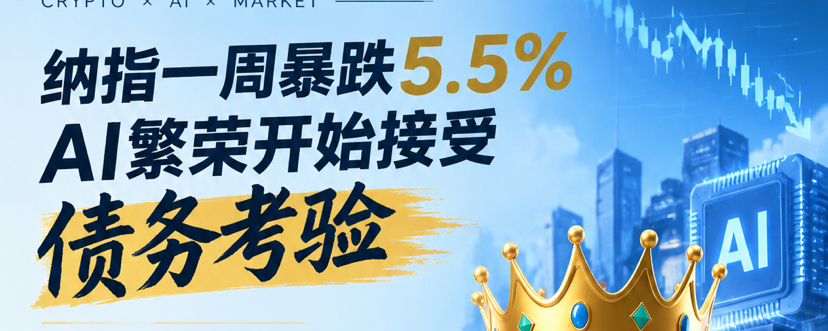
Nasdaq Plunges 5.5% in a Week as AI Boom Faces a Debt TestThe Nasdaq 100 fell about 5.5% in a week. I think the most important thing to watch in this sell-off isn’t how much tech stocks have fallen, but the question the market is beginning to ask: With AI investment so enormous, how much profit will it ultimately generate?
Until now, the central thesis behind the AI boom has been that demand for computing power will keep growing. As long as chips keep selling and data centers keep expanding, the market is willing to value related companies more highly. But this logic rests on an easily overlooked assumption: capital expenditures must eventually translate into cash flow.
Building AI data centers is expensive. Buying GPUs, constructing facilities, securing power, and deploying networks all require substantial investment. If companies rely on debt to expand, they must contend with interest payments, depreciation, and the need for further financing. If financing costs rise or returns fall short of expectations, businesses that once appeared to be growing rapidly may find themselves under pressure to turn a profit.
Nasdaq Plunges 5.5% in a Week as AI Boom Faces a Debt Test
The Nasdaq 100 fell about 5.5% in a week. I think the most important thing to watch in this sell-off isn’t how much tech stocks have fallen, but the question the market is beginning to ask: With AI investment so enormous, how much profit will it ultimately generate?
Until now, the central thesis behind the AI boom has been that demand for computing power will keep growing. As long as chips keep selling and data centers keep expanding, the market is willing to value related companies more highly. But this logic rests on an easily overlooked assumption: capital expenditures must eventually translate into cash flow.
Building AI data centers is expensive. Buying GPUs, constructing facilities, securing power, and deploying networks all require substantial investment. If companies rely on debt to expand, they must contend with interest payments, depreciation, and the need for further financing. If financing costs rise or returns fall short of expectations, businesses that once appeared to be growing rapidly may find themselves under pressure to turn a profit.
1
4
501
·
--
Bearish
StandX Shuts Down Before Issuing a Token as Project Closures Continue
If a project reaches the point of shutting down before it has even issued a token, the most important question to reflect on is not whether there is still hope for an airdrop, but whether its business model was ever sustainable.
StandX once attracted users with perpetual futures trading, yield mechanisms, and the prospect of a potential token. But for many crypto projects, users’ willingness to participate does not necessarily mean there is genuine demand for the product; a high volume of interactions does not necessarily translate into recurring revenue.
I’ve always believed that one of the industry’s most dangerous trends is treating points, tasks, and airdrop expectations as the product itself. Once market excitement fades and users start trading less, projects have to face the realities of customer acquisition costs, liquidity maintenance, and operating expenses.
If revenue can’t cover costs and fundraising can’t continue, shutting down may become the final option. Users may not be compensated for the time they invested, the trading fees they paid, or the opportunity cost of the funds they committed.
What’s even more concerning is that a project’s shutdown may not be preceded by any clear warning signs. The team may change course, pause activities, or even cease operations outright. For projects that haven’t issued a token, users often have neither token liquidity nor a way to exit.
In my view, an airdrop can be an added benefit of joining a new project, but it shouldn’t be the only reason to participate. At a minimum, when evaluating a project, consider whether people genuinely use its product, where its revenue comes from, whether the team can keep operating, and whether its safeguards for funds are reliable.
The crypto industry still offers opportunities, but the fact that there are many projects doesn’t mean every one of them will survive.

My Futures Portfolio
501 / 700
Public
7D PNL
(USDT)
19831.79
7D ROI
+5.65%
AUM
$1393041.55
Win Rate
15.00%
1
2
387
·
--

Article
Core Inflation Continues to Heat Up; Rate-Hike Risk Could Mark a Turning Point for MarketsI believe the biggest risk the market needs to watch right now is not a single CPI reading coming in above expectations, but core inflation failing to cool for an extended period, forcing the Federal Reserve to reassess its rate path.
Core inflation strips out the direct fluctuations in food and energy prices, making it a better reflection of underlying price pressures. If core CPI and core PCE remain above expectations, it suggests that prices in areas such as housing and services are still sticky. Even if headline inflation falls temporarily, that does not mean the inflation problem has been solved.
This would directly affect the Federal Reserve’s policy choices. The more persistent core inflation is, the harder it will be to cut rates; if inflation expectations rise again, rate hikes could also return to the discussion. While rate hikes are not inevitable, the market can no longer take monetary easing for granted.
Core Inflation Continues to Heat Up; Rate-Hike Risk Could Mark a Turning Point for Markets
I believe the biggest risk the market needs to watch right now is not a single CPI reading coming in above expectations, but core inflation failing to cool for an extended period, forcing the Federal Reserve to reassess its rate path.
Core inflation strips out the direct fluctuations in food and energy prices, making it a better reflection of underlying price pressures. If core CPI and core PCE remain above expectations, it suggests that prices in areas such as housing and services are still sticky. Even if headline inflation falls temporarily, that does not mean the inflation problem has been solved.
This would directly affect the Federal Reserve’s policy choices. The more persistent core inflation is, the harder it will be to cut rates; if inflation expectations rise again, rate hikes could also return to the discussion. While rate hikes are not inevitable, the market can no longer take monetary easing for granted.
1
3
422
·
--

Article
Buyer Demand Is Shrinking—Is the Treasury Selloff Far From Over?The U.S. Treasury market has remained under pressure recently, with yields staying elevated and debate heating up again over whether there are “no buyers for Treasuries.”
Many people once believed that, as the world’s largest safe-asset market, U.S. Treasuries would naturally attract inflows as long as yields were high enough.
But the reality is not so simple.
The core issue facing U.S. Treasuries today is not simply the level of yields, but the changing nature of buyer demand.
In the past, major buyers of U.S. Treasuries included foreign central banks, institutional investors, banks, and large funds. But as global funding conditions change, some traditional buyers are becoming less willing to allocate to them.
Buyer Demand Is Shrinking—Is the Treasury Selloff Far From Over?
The U.S. Treasury market has remained under pressure recently, with yields staying elevated and debate heating up again over whether there are “no buyers for Treasuries.”
Many people once believed that, as the world’s largest safe-asset market, U.S. Treasuries would naturally attract inflows as long as yields were high enough.
But the reality is not so simple.
The core issue facing U.S. Treasuries today is not simply the level of yields, but the changing nature of buyer demand.
In the past, major buyers of U.S. Treasuries included foreign central banks, institutional investors, banks, and large funds. But as global funding conditions change, some traditional buyers are becoming less willing to allocate to them.
1
1
554
·
--
Bearish
Optical Communications and Storage Fall Broadly; Awaiting Tonight’s CPI
U.S. tech stocks saw a notable pullback today, with optical communications and storage stocks broadly under pressure. Related stocks such as #COHR, #AAOI, and #LITE declined along with market sentiment.
This selloff looks more like investors waiting for fresh macro signals than a fundamental shift in the industry.
Over the past few months, AI infrastructure has remained a key focus for the market. Optical modules, data center interconnects, high-speed transmission, and memory chips have all benefited from expectations of expanding AI computing demand. In particular, growing demand for 800G and 1.6T optical modules has led the market to continually raise earnings expectations for related companies.
But after a sector rises too quickly, investors may start reassessing valuations.
On the one hand, the market is concerned that AI supply chain valuations have already priced in some of the expected growth. On the other, Federal Reserve monetary policy continues to influence risk appetite.
The CPI data due out tonight will be an important near-term market driver.
If inflation continues to cool, expectations for rate cuts may rise further, potentially providing liquidity support for growth-oriented tech stocks. But if CPI comes in above expectations, pressure from interest rates staying high could once again weigh on tech valuations.
For #COHR, #AAOI, and #LITE, short-term volatility is driven more by investor sentiment and changes in the macro environment.
The AI infrastructure investment cycle is still advancing, but markets do not move higher indefinitely.
The key things to watch now are:
Whether CPI shifts interest rate expectations;
Whether money flows back into AI hardware;
Whether optical communications and storage stocks can attract buying support again after the pullback.
Markets need catalysts to rise—and reasons to fall, too.
After tonight’s CPI release, investors may reassess the direction of the next phase.

My Futures Portfolio
501 / 700
Public
7D PNL
(USDT)
19831.79
7D ROI
+5.65%
AUM
$1393041.55
Win Rate
15.00%
1
2
598
·
--

Article
Memory Chips Face Sustained Selling: Is a Technical Bear Market Near?The memory chip sector has come under sustained pressure recently, with clear signs of investors pulling out. Related stocks such as #MU Micron Technology and #SNDK SanDisk have seen significant volatility, prompting the market to revisit a question:
Are memory chips entering a new adjustment cycle?
For some time, the AI boom has been a key driver of gains in the memory industry. As demand for AI servers has grown, products such as HBM and high-end DRAM have attracted strong market interest. Investors have priced in future demand growth, rapidly boosting valuations of related companies.
But capital markets have a characteristic:
Memory Chips Face Sustained Selling: Is a Technical Bear Market Near?
The memory chip sector has come under sustained pressure recently, with clear signs of investors pulling out. Related stocks such as #MU Micron Technology and #SNDK SanDisk have seen significant volatility, prompting the market to revisit a question:
Are memory chips entering a new adjustment cycle?
For some time, the AI boom has been a key driver of gains in the memory industry. As demand for AI servers has grown, products such as HBM and high-end DRAM have attracted strong market interest. Investors have priced in future demand growth, rapidly boosting valuations of related companies.
But capital markets have a characteristic:
1
1
3
494
Log in to explore more content
Join global crypto users on Binance Square
⚡️ Get latest and useful information about crypto.
💬 Trusted by the world’s largest crypto exchange.
👍 Discover real insights from verified creators.
Email / Phone number
Trending Topics
Bitcoin'sReboundFadesBelow$60K
5,169 views
133 Discussing
Same Monday: Nvidia won back over 80% of its drop. BTC, about 25%.
You know the feeling. One green candle and the whole feed says the bottom is in. This week ran a clean test of that feeling.
Quick catch-up. BTC hit a two-year low of $55,130 on Nov 21. On Monday, Nov 23, Nvidia (the AI chip giant that tech stocks lean on) jumped about 32% in morning trading after CEO Jensen Huang returned. Risk appetite came back and BTC rose with it, to about $64,600, then faded to near $61,400 by evening (Binance data, per crypto(.)news).
Here is the part worth reading twice. Per CoinDesk, Nvidia has won back over four-fifths of what it lost since Huang stepped down on Nov 12. At midday on Monday, BTC had won back only about a quarter of its slide from $74,000 to below $56,000. Same mood, very different follow-through.
What sat behind the bounce, as traders describe it?
- Short covering. Open interest (the pile of open futures bets) fell while price rose. That points to traders closing bearish bets, not new buyers walking in.
- No steady spot bid. Tesseract's Adam Haeems says BTC fell in seven of the eight US sessions since Huang's exit, Monday included.
- ETF outflows. US spot Bitcoin ETFs lost about $4.14B over 15 sessions through Nov 20 (Farside data).
So next time a bounce lands, some of my useful notes are:
- If price rises while open interest falls, ask who is buying besides people closing bets.
- If spot ETFs post several net inflow weeks in a row and stablecoin supply grows, the buyers are real. That is what Wintermute's Jasper De Maere wants before calling a bottom.
- If selling keeps showing up when US markets open, the bounce has not found its buyer yet.
Green candle or real bottom, what do you check first? $BTC
Experience, not financial advice.
#Bitcoin'sReboundFadesBelow$60K
MT - Research Notes
·0 Likes
·1.4k views
NVIDIAReinstatesJensenHuangasCEO
241,904 views
1,676 Discussing
WillMarketsStageAThanksgivingReliefRally?
322,163 views
2,430 Discussing