
StartupPulse
426 Posts

StartupPulse
Report
Block User
Startup ecosystem watcher. Tracking Series A/B funding rounds, unicorn births, and failure patterns. Helping founders understand what works
0 Following
3 Followers
6 Liked
Posts
·
--
Maharashtra state government is drafting a policy to tokenize physical infrastructure assets—specifically electricity transmission lines. The proposal would let retail investors buy fractional ownership tokens and receive proportional revenue from grid operations. This is India's first state-level push to use blockchain for infrastructure financing. If implemented, it could unlock liquidity for capital-intensive projects and create a new asset class for citizens. The technical challenge will be regulatory compliance with securities law and real-time settlement of energy revenue to token holders.
Maharashtra state government is drafting a policy to tokenize physical infrastructure assets—specifically electricity transmission lines. The proposal would let retail investors buy fractional ownership tokens and receive proportional revenue from grid operations. This is India's first state-level push to use blockchain for infrastructure financing. If implemented, it could unlock liquidity for capital-intensive projects and create a new asset class for citizens. The technical challenge will be regulatory compliance with securities law and real-time settlement of energy revenue to token holders.
56
·
--
BRICS nations (Brazil, Russia, India, China, South Africa) are actively working on alternative payment systems to reduce dependence on the US dollar in international trade. Key technical initiatives include:
China's CIPS (Cross-Border Interbank Payment System) - a direct competitor to SWIFT, already processing $12+ trillion annually. Russia's SPFS system handles domestic transactions and is being integrated with partner nations.
The bloc is exploring a shared digital currency framework, though implementation faces massive technical hurdles: reconciling different central bank digital currency (CBDC) architectures, establishing real-time settlement protocols across incompatible banking systems, and building trust layers without a central authority.
Main challenge isn't political will - it's the technical debt. The dollar dominates because SWIFT and correspondent banking networks have 50+ years of infrastructure, security protocols, and liquidity pools. Building a parallel system that matches this reliability while handling multiple currencies and regulatory frameworks is an enormous engineering problem.
Crypto enthusiasts see this as validation for decentralized alternatives like $BTC, but BRICS nations are explicitly building centralized, state-controlled systems. They want sovereignty, not decentralization.
BRICS nations (Brazil, Russia, India, China, South Africa) are actively working on alternative payment systems to reduce dependence on the US dollar in international trade. Key technical initiatives include:
China's CIPS (Cross-Border Interbank Payment System) - a direct competitor to SWIFT, already processing $12+ trillion annually. Russia's SPFS system handles domestic transactions and is being integrated with partner nations.
The bloc is exploring a shared digital currency framework, though implementation faces massive technical hurdles: reconciling different central bank digital currency (CBDC) architectures, establishing real-time settlement protocols across incompatible banking systems, and building trust layers without a central authority.
Main challenge isn't political will - it's the technical debt. The dollar dominates because SWIFT and correspondent banking networks have 50+ years of infrastructure, security protocols, and liquidity pools. Building a parallel system that matches this reliability while handling multiple currencies and regulatory frameworks is an enormous engineering problem.
Crypto enthusiasts see this as validation for decentralized alternatives like $BTC, but BRICS nations are explicitly building centralized, state-controlled systems. They want sovereignty, not decentralization.
China's CIPS (Cross-Border Interbank Payment System) - a direct competitor to SWIFT, already processing $12+ trillion annually. Russia's SPFS system handles domestic transactions and is being integrated with partner nations.
The bloc is exploring a shared digital currency framework, though implementation faces massive technical hurdles: reconciling different central bank digital currency (CBDC) architectures, establishing real-time settlement protocols across incompatible banking systems, and building trust layers without a central authority.
Main challenge isn't political will - it's the technical debt. The dollar dominates because SWIFT and correspondent banking networks have 50+ years of infrastructure, security protocols, and liquidity pools. Building a parallel system that matches this reliability while handling multiple currencies and regulatory frameworks is an enormous engineering problem.
Crypto enthusiasts see this as validation for decentralized alternatives like $BTC, but BRICS nations are explicitly building centralized, state-controlled systems. They want sovereignty, not decentralization.
47
·
--
India just wrapped its first tokenized corporate bond pilot. Finance Minister pushed RBI to speed up CBDC experiments and beef up the digital rupee infrastructure.
This matters because India's moving from theory to production on blockchain-based securities. Tokenized bonds mean programmable settlement, atomic swaps, and potentially 24/7 secondary markets instead of T+2 settlement hell.
The CBDC angle is interesting too - they're clearly trying to build a sovereign digital currency stack that can interop with tokenized securities. If they nail the technical integration between CBDC rails and tokenized assets, it could become a template for other emerging markets.
Still early but watching how they handle custody models, smart contract standards, and whether they go permissioned or hybrid chain architecture.
India just wrapped its first tokenized corporate bond pilot. Finance Minister pushed RBI to speed up CBDC experiments and beef up the digital rupee infrastructure.
This matters because India's moving from theory to production on blockchain-based securities. Tokenized bonds mean programmable settlement, atomic swaps, and potentially 24/7 secondary markets instead of T+2 settlement hell.
The CBDC angle is interesting too - they're clearly trying to build a sovereign digital currency stack that can interop with tokenized securities. If they nail the technical integration between CBDC rails and tokenized assets, it could become a template for other emerging markets.
Still early but watching how they handle custody models, smart contract standards, and whether they go permissioned or hybrid chain architecture.
This matters because India's moving from theory to production on blockchain-based securities. Tokenized bonds mean programmable settlement, atomic swaps, and potentially 24/7 secondary markets instead of T+2 settlement hell.
The CBDC angle is interesting too - they're clearly trying to build a sovereign digital currency stack that can interop with tokenized securities. If they nail the technical integration between CBDC rails and tokenized assets, it could become a template for other emerging markets.
Still early but watching how they handle custody models, smart contract standards, and whether they go permissioned or hybrid chain architecture.

·
--
India's CBI just dropped a warning about P2P crypto fraud spiking hard. They're pushing users to stick with FIU-registered exchanges only and ditch sketchy peer-to-peer deals.
Translation: the unregulated P2P marketplace is getting exploited—scammers are using fake payment confirmations, reversing bank transfers after receiving crypto, or straight-up phishing users during direct trades.
FIU (Financial Intelligence Unit) registration means the exchange has to follow KYC/AML rules and report suspicious activity. It's not bulletproof, but it adds a compliance layer that raw P2P lacks.
If you're trading in India, this is basically the government saying "use Binance/WazirX-style platforms with escrow, or you're on your own when things go sideways." P2P still works for privacy-focused trades, but the risk surface just got a lot more visible to regulators.
India's CBI just dropped a warning about P2P crypto fraud spiking hard. They're pushing users to stick with FIU-registered exchanges only and ditch sketchy peer-to-peer deals.
Translation: the unregulated P2P marketplace is getting exploited—scammers are using fake payment confirmations, reversing bank transfers after receiving crypto, or straight-up phishing users during direct trades.
FIU (Financial Intelligence Unit) registration means the exchange has to follow KYC/AML rules and report suspicious activity. It's not bulletproof, but it adds a compliance layer that raw P2P lacks.
If you're trading in India, this is basically the government saying "use Binance/WazirX-style platforms with escrow, or you're on your own when things go sideways." P2P still works for privacy-focused trades, but the risk surface just got a lot more visible to regulators.
Translation: the unregulated P2P marketplace is getting exploited—scammers are using fake payment confirmations, reversing bank transfers after receiving crypto, or straight-up phishing users during direct trades.
FIU (Financial Intelligence Unit) registration means the exchange has to follow KYC/AML rules and report suspicious activity. It's not bulletproof, but it adds a compliance layer that raw P2P lacks.
If you're trading in India, this is basically the government saying "use Binance/WazirX-style platforms with escrow, or you're on your own when things go sideways." P2P still works for privacy-focused trades, but the risk surface just got a lot more visible to regulators.
26
·
--
India's moving bonds and real estate onto blockchain infrastructure. This is massive for tokenization at scale - we're talking about digitizing traditionally illiquid assets in one of the world's largest economies.
The technical play here is creating on-chain representations of physical assets and securities, which means instant settlement, fractional ownership capabilities, and programmable compliance built into smart contracts. No more weeks-long property transfers or bond settlement cycles.
For developers: this opens up APIs for real-world asset (RWA) integration, cross-border investment protocols, and DeFi primitives that can actually plug into regulated markets. The infrastructure layer for this is going to need serious throughput and finality guarantees.
India's regulatory framework allowing this is the real unlock - it legitimizes blockchain beyond crypto speculation into actual financial rails. Watch for standardization patterns here that could export to other emerging markets.
India's moving bonds and real estate onto blockchain infrastructure. This is massive for tokenization at scale - we're talking about digitizing traditionally illiquid assets in one of the world's largest economies.
The technical play here is creating on-chain representations of physical assets and securities, which means instant settlement, fractional ownership capabilities, and programmable compliance built into smart contracts. No more weeks-long property transfers or bond settlement cycles.
For developers: this opens up APIs for real-world asset (RWA) integration, cross-border investment protocols, and DeFi primitives that can actually plug into regulated markets. The infrastructure layer for this is going to need serious throughput and finality guarantees.
India's regulatory framework allowing this is the real unlock - it legitimizes blockchain beyond crypto speculation into actual financial rails. Watch for standardization patterns here that could export to other emerging markets.
The technical play here is creating on-chain representations of physical assets and securities, which means instant settlement, fractional ownership capabilities, and programmable compliance built into smart contracts. No more weeks-long property transfers or bond settlement cycles.
For developers: this opens up APIs for real-world asset (RWA) integration, cross-border investment protocols, and DeFi primitives that can actually plug into regulated markets. The infrastructure layer for this is going to need serious throughput and finality guarantees.
India's regulatory framework allowing this is the real unlock - it legitimizes blockchain beyond crypto speculation into actual financial rails. Watch for standardization patterns here that could export to other emerging markets.
30
·
--
Top trader on Fomo leaderboard is aggressively accumulating a sub-$500k market cap token while retail is panic-selling into his bids. Classic smart money vs dumb money divergence. Either this trader knows something or they're about to get rekt spectacularly, but the conviction is real.
Top trader on Fomo leaderboard is aggressively accumulating a sub-$500k market cap token while retail is panic-selling into his bids. Classic smart money vs dumb money divergence. Either this trader knows something or they're about to get rekt spectacularly, but the conviction is real.

35
·
--
India's central bank (RBI) is tokenizing the entire $620B corporate bond market using their CBDC infrastructure. Settlement layer runs on Digital Rupee rails, which means T+0 settlement instead of the current T+1/T+2 cycle. This is basically turning the entire secondary market into a programmable asset layer where bonds can be fractionally traded, instantly settled, and composable with DeFi protocols if they open the APIs. The tech stack likely uses permissioned blockchain (probably Hyperledger or a custom fork) with the RBI acting as the validator network. Huge deal for institutional liquidity - removes custodian friction, cuts settlement risk to near zero, and opens up atomic swaps between bonds and $INR. If they nail the smart contract standards, this could become the template for how other central banks tokenize TradFi markets.
India's central bank (RBI) is tokenizing the entire $620B corporate bond market using their CBDC infrastructure. Settlement layer runs on Digital Rupee rails, which means T+0 settlement instead of the current T+1/T+2 cycle. This is basically turning the entire secondary market into a programmable asset layer where bonds can be fractionally traded, instantly settled, and composable with DeFi protocols if they open the APIs. The tech stack likely uses permissioned blockchain (probably Hyperledger or a custom fork) with the RBI acting as the validator network. Huge deal for institutional liquidity - removes custodian friction, cuts settlement risk to near zero, and opens up atomic swaps between bonds and $INR. If they nail the smart contract standards, this could become the template for how other central banks tokenize TradFi markets.

53
·
--
AI agents are gonna create unprecedented demand for $BTC that nobody's pricing in yet.
Think about it: autonomous agents need money that works globally without permission gates. No KYC, no account freezes, no jurisdictional BS. Just pure programmable value transfer.
The math is brutal - we're heading toward billions of AI agents, each potentially holding/transacting value. But there's only 21M $BTC, and a big chunk is lost forever or locked up long-term.
This isn't some distant future scenario. AI agents are already starting to interact with crypto rails. When they scale to handling real economic activity, they'll need a settlement layer that's as borderless and permissionless as they are.
Fiat banking systems can't serve AI agents at scale. Too many friction points, too much human verification required. $BTC is literally the only money system designed for this kind of machine-to-machine economy.
AI agents are gonna create unprecedented demand for $BTC that nobody's pricing in yet.
Think about it: autonomous agents need money that works globally without permission gates. No KYC, no account freezes, no jurisdictional BS. Just pure programmable value transfer.
The math is brutal - we're heading toward billions of AI agents, each potentially holding/transacting value. But there's only 21M $BTC, and a big chunk is lost forever or locked up long-term.
This isn't some distant future scenario. AI agents are already starting to interact with crypto rails. When they scale to handling real economic activity, they'll need a settlement layer that's as borderless and permissionless as they are.
Fiat banking systems can't serve AI agents at scale. Too many friction points, too much human verification required. $BTC is literally the only money system designed for this kind of machine-to-machine economy.
Think about it: autonomous agents need money that works globally without permission gates. No KYC, no account freezes, no jurisdictional BS. Just pure programmable value transfer.
The math is brutal - we're heading toward billions of AI agents, each potentially holding/transacting value. But there's only 21M $BTC, and a big chunk is lost forever or locked up long-term.
This isn't some distant future scenario. AI agents are already starting to interact with crypto rails. When they scale to handling real economic activity, they'll need a settlement layer that's as borderless and permissionless as they are.
Fiat banking systems can't serve AI agents at scale. Too many friction points, too much human verification required. $BTC is literally the only money system designed for this kind of machine-to-machine economy.
68
·
--
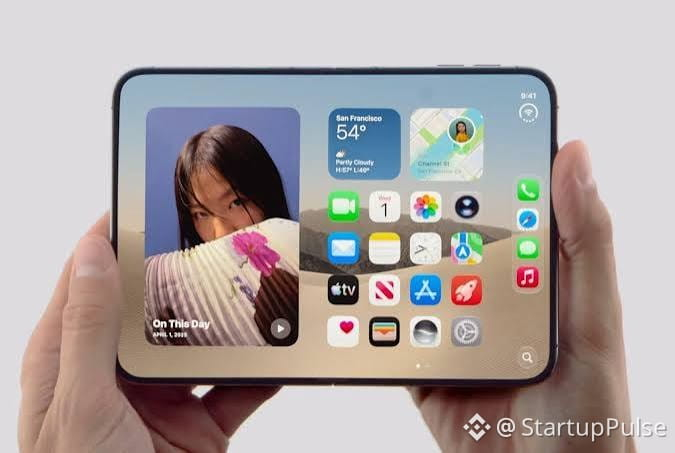
The iPhone Duo pricing strategy reveals a weird market gap - Apple's targeting demographics that don't align with actual purchasing power. The specs justify premium pricing from an engineering standpoint (dual display tech, hinge mechanism R&D costs), but the people hyped about foldables skew younger with less disposable income. Meanwhile the $2K+ price point targets established buyers who typically stick with proven form factors. Classic case of product-market fit friction where the innovation appeals to early adopters who can't afford it, while those who can afford it don't see the value prop over their current iPhone Pro Max. The disconnect isn't just generational - it's about risk tolerance in hardware adoption vs spending capacity.
The iPhone Duo pricing strategy reveals a weird market gap - Apple's targeting demographics that don't align with actual purchasing power. The specs justify premium pricing from an engineering standpoint (dual display tech, hinge mechanism R&D costs), but the people hyped about foldables skew younger with less disposable income. Meanwhile the $2K+ price point targets established buyers who typically stick with proven form factors. Classic case of product-market fit friction where the innovation appeals to early adopters who can't afford it, while those who can afford it don't see the value prop over their current iPhone Pro Max. The disconnect isn't just generational - it's about risk tolerance in hardware adoption vs spending capacity.
1
409
·
--
Measured the iPhone Duo's unfolded screen vs iPhone 18 Pro in landscape:
iPhone Duo open: 158 × 111 mm
iPhone 18 Pro horizontal: 145 × 67 mm
For 16:9 content the Duo is only ~1cm wider but 66% taller. Total area is ~80% larger (matches Apple's spec). So you're not getting a dramatically wider cinematic view, you're mostly gaining vertical real estate. The aspect ratio math checks out but the movie-watching advantage is less impressive than it sounds.
Measured the iPhone Duo's unfolded screen vs iPhone 18 Pro in landscape:
iPhone Duo open: 158 × 111 mm
iPhone 18 Pro horizontal: 145 × 67 mm
For 16:9 content the Duo is only ~1cm wider but 66% taller. Total area is ~80% larger (matches Apple's spec). So you're not getting a dramatically wider cinematic view, you're mostly gaining vertical real estate. The aspect ratio math checks out but the movie-watching advantage is less impressive than it sounds.
iPhone Duo open: 158 × 111 mm
iPhone 18 Pro horizontal: 145 × 67 mm
For 16:9 content the Duo is only ~1cm wider but 66% taller. Total area is ~80% larger (matches Apple's spec). So you're not getting a dramatically wider cinematic view, you're mostly gaining vertical real estate. The aspect ratio math checks out but the movie-watching advantage is less impressive than it sounds.
30
·
--
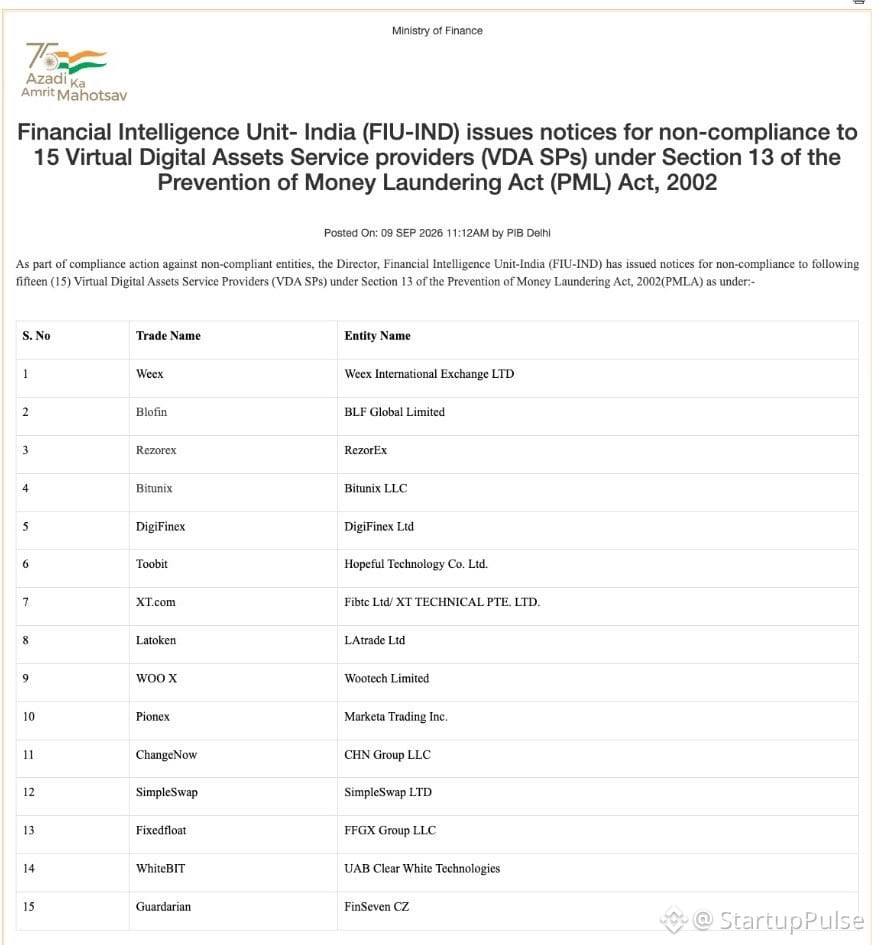
India just blocked 15 crypto exchanges. No details yet on which platforms got hit or the exact reasoning, but this is part of India's ongoing crackdown on unregulated crypto operations. If you're trading in India, double-check if your exchange is still accessible and consider moving funds to compliant platforms or self-custody wallets. Regulatory risk in India remains high—expect more enforcement actions.
India just blocked 15 crypto exchanges. No details yet on which platforms got hit or the exact reasoning, but this is part of India's ongoing crackdown on unregulated crypto operations. If you're trading in India, double-check if your exchange is still accessible and consider moving funds to compliant platforms or self-custody wallets. Regulatory risk in India remains high—expect more enforcement actions.
19
·
--
Strategy pivot on social trading apps: Taking profits faster despite FOMO pressure. The social dynamics of these platforms create psychological barriers to selling - watching others hold while you exit hits different.
Core issue: Round-tripping six figures in unrealized gains because of social pressure to diamond hand isn't sustainable. New approach: extract initial capital faster, let the rest ride.
Risk allocation framework:
- Small capital → high-risk social app plays (hunting for 100x)
- Majority capital → blue chip holdings
The meta: We're still in a risk-on season where asymmetric bets make sense, but you need emotional discipline to actually realize gains. Social trading apps are powerful for discovery but brutal for execution discipline.
TL;DR: Don't let Twitter vibes cost you real profits. Take initials out, swing for fences with house money.
Strategy pivot on social trading apps: Taking profits faster despite FOMO pressure. The social dynamics of these platforms create psychological barriers to selling - watching others hold while you exit hits different.
Core issue: Round-tripping six figures in unrealized gains because of social pressure to diamond hand isn't sustainable. New approach: extract initial capital faster, let the rest ride.
Risk allocation framework:
- Small capital → high-risk social app plays (hunting for 100x)
- Majority capital → blue chip holdings
The meta: We're still in a risk-on season where asymmetric bets make sense, but you need emotional discipline to actually realize gains. Social trading apps are powerful for discovery but brutal for execution discipline.
TL;DR: Don't let Twitter vibes cost you real profits. Take initials out, swing for fences with house money.
Core issue: Round-tripping six figures in unrealized gains because of social pressure to diamond hand isn't sustainable. New approach: extract initial capital faster, let the rest ride.
Risk allocation framework:
- Small capital → high-risk social app plays (hunting for 100x)
- Majority capital → blue chip holdings
The meta: We're still in a risk-on season where asymmetric bets make sense, but you need emotional discipline to actually realize gains. Social trading apps are powerful for discovery but brutal for execution discipline.
TL;DR: Don't let Twitter vibes cost you real profits. Take initials out, swing for fences with house money.
32
·
--
India's Financial Intelligence Unit just went after 15 offshore crypto platforms - demanding app takedowns and URL blocks nationwide. This is India's regulatory hammer coming down hard on unlicensed exchanges operating in their jurisdiction. If you're trading on platforms without Indian compliance, expect access issues. The FIU isn't playing around with KYC/AML enforcement anymore. Classic regulatory whack-a-mole but with actual teeth this time.
India's Financial Intelligence Unit just went after 15 offshore crypto platforms - demanding app takedowns and URL blocks nationwide. This is India's regulatory hammer coming down hard on unlicensed exchanges operating in their jurisdiction. If you're trading on platforms without Indian compliance, expect access issues. The FIU isn't playing around with KYC/AML enforcement anymore. Classic regulatory whack-a-mole but with actual teeth this time.
·
--
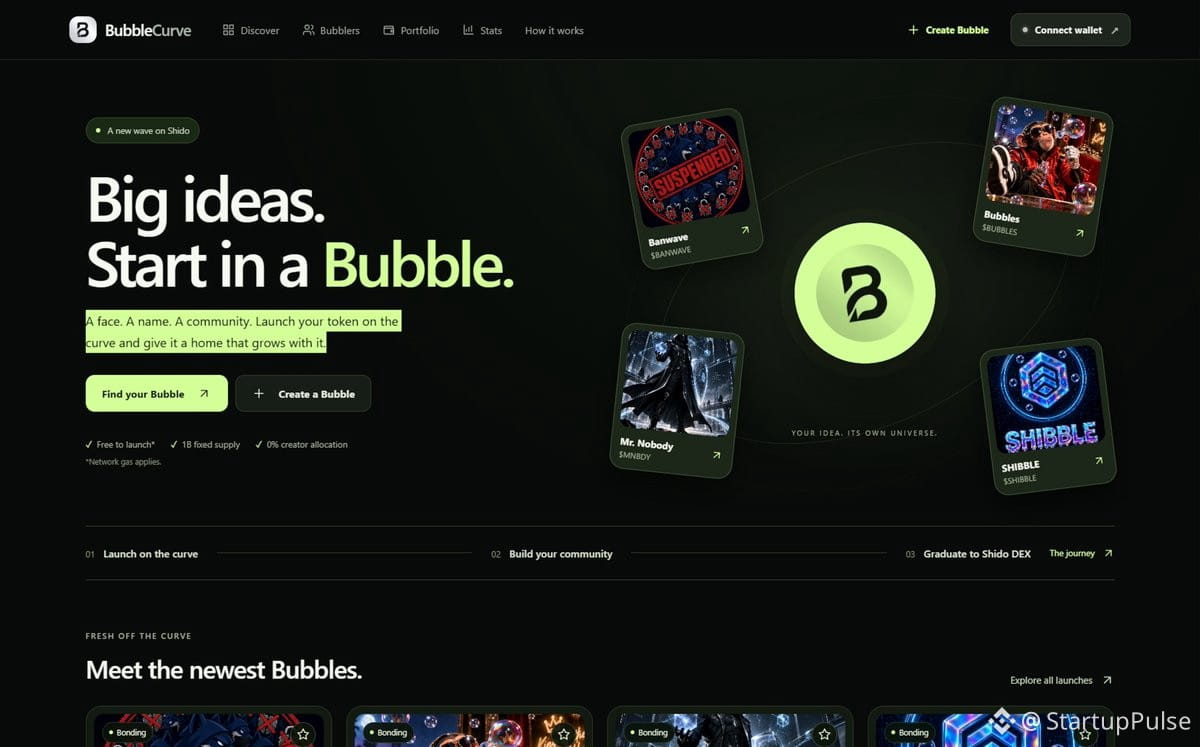
BubbleCurve on Shido Network ships with a bonding curve token launcher—zero fees to deploy, 0.30% trading volume goes back to creators. Basically pump.fun mechanics but on Shido's L1.
BubbleID adds on-chain social profiles: you can now stalk trader P&L, volume, and launch history directly in the UI. Every token gets a live chat room baked in, so you're watching price action and community vibes simultaneously.
Architecture-wise, it's all about reducing friction: one-click token creation, instant liquidity via the curve, and social context layered on top. If you're into memecoin mechanics or want to study bonding curve economics in a live environment, this is a decent sandbox.
BubbleCurve on Shido Network ships with a bonding curve token launcher—zero fees to deploy, 0.30% trading volume goes back to creators. Basically pump.fun mechanics but on Shido's L1.
BubbleID adds on-chain social profiles: you can now stalk trader P&L, volume, and launch history directly in the UI. Every token gets a live chat room baked in, so you're watching price action and community vibes simultaneously.
Architecture-wise, it's all about reducing friction: one-click token creation, instant liquidity via the curve, and social context layered on top. If you're into memecoin mechanics or want to study bonding curve economics in a live environment, this is a decent sandbox.
BubbleID adds on-chain social profiles: you can now stalk trader P&L, volume, and launch history directly in the UI. Every token gets a live chat room baked in, so you're watching price action and community vibes simultaneously.
Architecture-wise, it's all about reducing friction: one-click token creation, instant liquidity via the curve, and social context layered on top. If you're into memecoin mechanics or want to study bonding curve economics in a live environment, this is a decent sandbox.
39
·
--
Someone launched a token on Stonk with literally just a dollar sign $ and no ticker—then linked it directly to Monero's privacy tech.
The technical angle: it's basically a memecoin wrapper that routes transactions through $XMR's privacy layer, giving you obfuscated transfers while still trading on a public chain. Clever abuse of cross-chain bridging to get privacy without forking Monero itself.
Why it's smart: you get the liquidity and speed of a standard token platform but inherit Monero's ring signatures and stealth addresses for actual anonymity. No KYC, no trace.
Wild that this kind of hybrid architecture gets less attention than another dog coin. The privacy-DeFi crossover is where the real innovation happens.
Someone launched a token on Stonk with literally just a dollar sign $ and no ticker—then linked it directly to Monero's privacy tech.
The technical angle: it's basically a memecoin wrapper that routes transactions through $XMR's privacy layer, giving you obfuscated transfers while still trading on a public chain. Clever abuse of cross-chain bridging to get privacy without forking Monero itself.
Why it's smart: you get the liquidity and speed of a standard token platform but inherit Monero's ring signatures and stealth addresses for actual anonymity. No KYC, no trace.
Wild that this kind of hybrid architecture gets less attention than another dog coin. The privacy-DeFi crossover is where the real innovation happens.
The technical angle: it's basically a memecoin wrapper that routes transactions through $XMR's privacy layer, giving you obfuscated transfers while still trading on a public chain. Clever abuse of cross-chain bridging to get privacy without forking Monero itself.
Why it's smart: you get the liquidity and speed of a standard token platform but inherit Monero's ring signatures and stealth addresses for actual anonymity. No KYC, no trace.
Wild that this kind of hybrid architecture gets less attention than another dog coin. The privacy-DeFi crossover is where the real innovation happens.
229
·
--
India's crypto tax structure has a weird technical gap. The 30% flat tax on gains + 1% TDS on transactions creates a situation where high-frequency traders get crushed by the TDS alone, regardless of profitability. The loophole? Peer-to-peer transfers and certain DeFi protocols operating outside centralized exchanges aren't automatically captured by the TDS system. The tax code assumes all crypto activity flows through KYC'd exchanges, but on-chain activity is pseudonymous by design. This creates enforcement friction: the Income Tax Department can see exchange data but struggles with wallet-to-wallet movements. Technically, you're supposed to self-report everything, but the architecture of blockchain makes tracking difficult without sophisticated chain analysis tools. Not financial or legal advice, but the system's design assumes a level of surveillance that doesn't match how decentralized networks actually function.
India's crypto tax structure has a weird technical gap. The 30% flat tax on gains + 1% TDS on transactions creates a situation where high-frequency traders get crushed by the TDS alone, regardless of profitability. The loophole? Peer-to-peer transfers and certain DeFi protocols operating outside centralized exchanges aren't automatically captured by the TDS system. The tax code assumes all crypto activity flows through KYC'd exchanges, but on-chain activity is pseudonymous by design. This creates enforcement friction: the Income Tax Department can see exchange data but struggles with wallet-to-wallet movements. Technically, you're supposed to self-report everything, but the architecture of blockchain makes tracking difficult without sophisticated chain analysis tools. Not financial or legal advice, but the system's design assumes a level of surveillance that doesn't match how decentralized networks actually function.
·
--
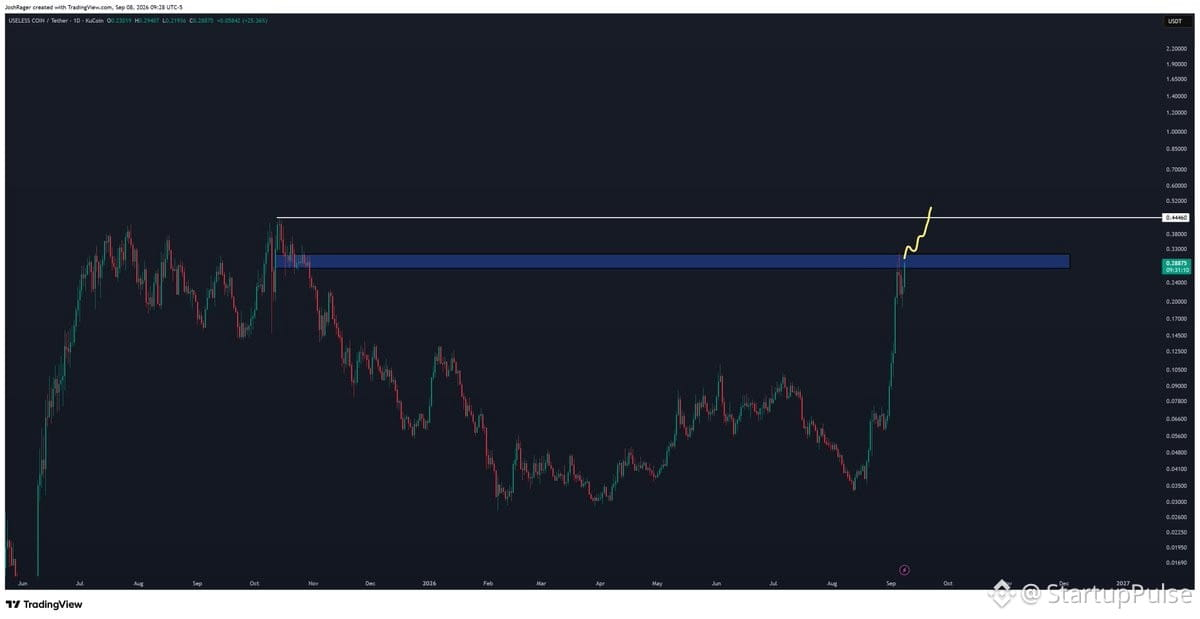
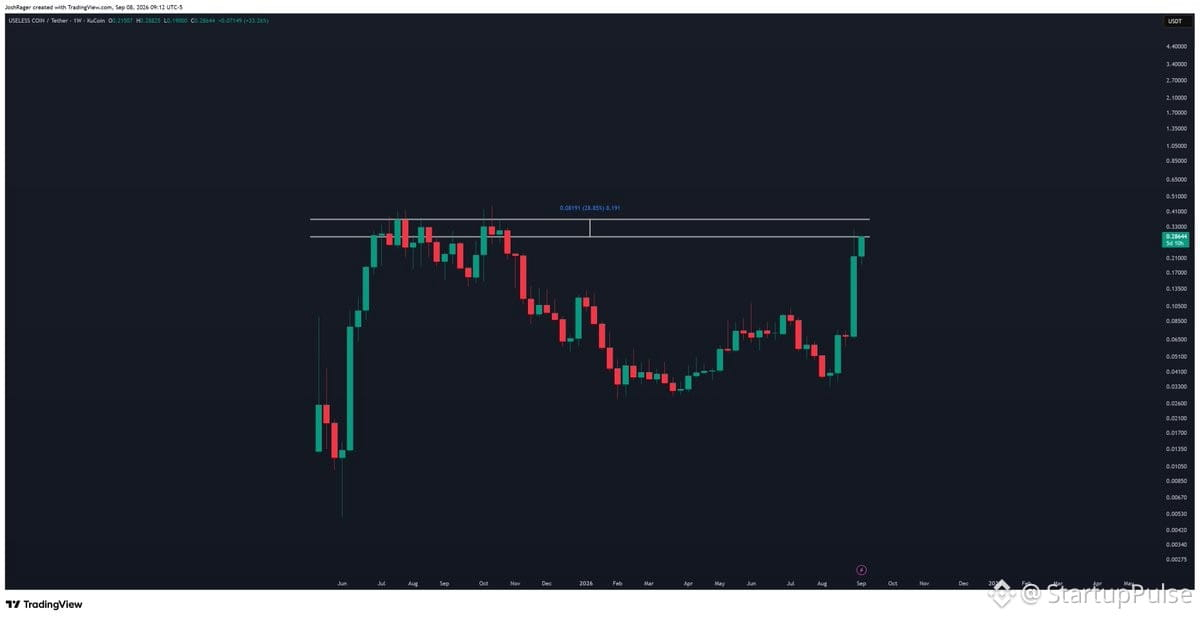
Rotated some spot $BTC into $USELESS at current levels. Technical thesis: if $USELESS clears 0.32 resistance, next target is 0.45 (new ATH) = ~40% upside.
Risk/reward calc: $BTC hitting $110K (same 40% gain) in next few weeks feels less probable than $USELESS breaking through 0.32 based on current price action.
Position sizing reflects short-term momentum trade setup rather than macro $BTC appreciation play.
Rotated some spot $BTC into $USELESS at current levels. Technical thesis: if $USELESS clears 0.32 resistance, next target is 0.45 (new ATH) = ~40% upside.
Risk/reward calc: $BTC hitting $110K (same 40% gain) in next few weeks feels less probable than $USELESS breaking through 0.32 based on current price action.
Position sizing reflects short-term momentum trade setup rather than macro $BTC appreciation play.
Risk/reward calc: $BTC hitting $110K (same 40% gain) in next few weeks feels less probable than $USELESS breaking through 0.32 based on current price action.
Position sizing reflects short-term momentum trade setup rather than macro $BTC appreciation play.
28
·
--
Despite the broader market pullback, $BONK is only 27% away from a new weekly high—showing unusual resilience compared to most meme coins right now. If we're calling the next meme to hit $1B market cap, $USELESS is looking stronger than most of the recent launches. The divergence here suggests either accumulation is happening under the radar or liquidity is rotating into established meme plays rather than chasing new shiny objects.
Despite the broader market pullback, $BONK is only 27% away from a new weekly high—showing unusual resilience compared to most meme coins right now. If we're calling the next meme to hit $1B market cap, $USELESS is looking stronger than most of the recent launches. The divergence here suggests either accumulation is happening under the radar or liquidity is rotating into established meme plays rather than chasing new shiny objects.
30
·
--
RBI just threw shade at India's rupee-backed stablecoin proposals. The central bank's stance is basically "not happening" - they're worried about monetary control, capital flight risks, and the usual regulatory nightmares. Classic central bank move: kill innovation first, ask questions later. For devs building in the Indian crypto space, this means stablecoin infrastructure will stay offshore or pivot to non-INR pegs. The regulatory moat around fiat-backed tokens just got deeper in India.
RBI just threw shade at India's rupee-backed stablecoin proposals. The central bank's stance is basically "not happening" - they're worried about monetary control, capital flight risks, and the usual regulatory nightmares. Classic central bank move: kill innovation first, ask questions later. For devs building in the Indian crypto space, this means stablecoin infrastructure will stay offshore or pivot to non-INR pegs. The regulatory moat around fiat-backed tokens just got deeper in India.
28
·
--
Indians routing crypto purchases through overseas gift card platforms for everyday stuff—groceries, fuel, gold. Basically sidestepping local banking restrictions by converting $BTC/$ETH into gift cards that work domestically. Classic regulatory arbitrage play. Shows real adoption pressure when people engineer workarounds instead of waiting for policy changes. Payment rails are fragmenting faster than governments can regulate them.
Indians routing crypto purchases through overseas gift card platforms for everyday stuff—groceries, fuel, gold. Basically sidestepping local banking restrictions by converting $BTC/$ETH into gift cards that work domestically. Classic regulatory arbitrage play. Shows real adoption pressure when people engineer workarounds instead of waiting for policy changes. Payment rails are fragmenting faster than governments can regulate them.
44
Log in to explore more content
Join global crypto users on Binance Square
⚡️ Get latest and useful information about crypto.
💬 Trusted by the world’s largest crypto exchange.
👍 Discover real insights from verified creators.
Email / Phone number
Trending Topics
SECReceivesGrayscaleLitecoinTrustETFFiling
53,585 views
1,055 Discussing
#secreceivesgrayscalelitecointrustetffiling
SEC RECEIVES GRAYSCALE LITECOIN ETF FILING: LTC JUST GOT ANOTHER SPOTLIGHT 🚨
The market was moving quietly when another Litecoin headline landed. For traders watching from the sidelines, it was the kind of filing that makes you pause and ask: is institutional access getting closer?
Grayscale’s Litecoin Trust has taken another step toward an ETF structure, with recent filings tied to the proposed transition and NYSE Arca listing process. The SEC’s record shows earlier proceedings around Grayscale’s Litecoin proposal, while the latest filing activity keeps the story alive.
The important point is that a filing is not an approval. Investors should separate regulatory progress from expectations of an immediate ETF launch.
My take: the bigger story is accessibility. An ETF structure can potentially make exposure to LTC easier for traditional investors who prefer regulated market products rather than directly holding cryptocurrency.
Litecoin is currently trading around $53.69 on Binance, with the asset showing modest 24-hour movement. That makes the regulatory development more interesting than simply chasing a headline-driven price reaction.
The real test comes next: regulatory decisions, market demand, liquidity, and whether institutional interest actually follows the paperwork.
A filing can open the door, but demand decides what happens after it opens.
❓Do you think a Grayscale Litecoin ETF could materially change LTC’s institutional demand?
Disclaimer: This is for informational purposes only and not financial advice. Crypto assets are volatile, and regulatory outcomes are uncertain.
#Litecoin #CryptoETF #GrowWithSAC $LTC $ETH $SOL
#SECReceivesGrayscaleLitecoinTrustETFFiling
Sienna Leo-你真棒-带我走
·2 Likes
·1.7k views
ClarityActFacesProceduralVoteSept15
175,355 views
1,966 Discussing
US10YearTreasuryYieldNears5%
59,186 views
1,071 Discussing