
老K的比特币行情洞察
1.6k Posts

老K的比特币行情洞察
Report
Block User
推特:@V_Blockchain,油管:老K的比特币行情洞察。
前机构衍生品交易员.8年裸K实战.1万小时链上捕手
6年拆解300项目基本面
精准预判:
· 21年Filecoin崩盘,提前5个月预警.
· 24年AI赛道爆发
日更:1比特及山寨顶底 2机构大额订单流方向解密3变盘警报
订阅获《机构盘口手册 》
Open Trade
High-Frequency Trader
3.2 Years
23 Following
3.5K+ Followers
2.5K+ Liked
Posts
Portfolio
All
Quotes
Videos
Live
·
--
The level at which U.S. stocks would plunge was predicted a month ago. So, when others are fearful, I’m greedy! How do you buy the dip? Should you buy the dip? #纳斯达克100指数下跌6% $NVDAB $QQQB
The level at which U.S. stocks would plunge was predicted a month ago. So, when others are fearful, I’m greedy! How do you buy the dip? Should you buy the dip? #纳斯达克100指数下跌6% $NVDAB $QQQB
317
·
--
Bullish
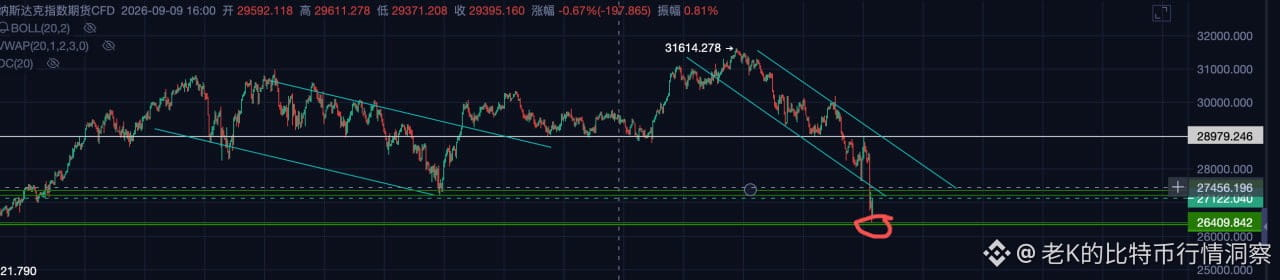
The Nasdaq has hit the target level I’ve been marking for a long time. Panic selling has probably reached a short-term bottom. Remember: be greedy when others are fearful. $QQQB
The Nasdaq has hit the target level I’ve been marking for a long time. Panic selling has probably reached a short-term bottom. Remember: be greedy when others are fearful. $QQQB
618
·
--
Nov 5: The bulls are coming back? Bullshit! The Nasdaq's trend has already shown which way crypto is headed. I made a killing trading the rebound, but now I'm waiting for a chance to short. #比特币走势分析
Nov 5: The bulls are coming back? Bullshit! The Nasdaq's trend has already shown which way crypto is headed. I made a killing trading the rebound, but now I'm waiting for a chance to short. #比特币走势分析
336
·
--
On the morning of November 4, there was liquidity above Bitcoin and support below. The outlook is bearish—the only question is how it will fall. Two possible scenarios are emerging. What’s next for ETH, UNI, NEAR, and ENA? #美国中期选举:市场有哪些期待?
On the morning of November 4, there was liquidity above Bitcoin and support below. The outlook is bearish—the only question is how it will fall. Two possible scenarios are emerging. What’s next for ETH, UNI, NEAR, and ENA? #美国中期选举:市场有哪些期待?
701
·
--

Article
November 4: There’s liquidity above Bitcoin and support below. A drop—it’s just one word; the question is how it will happen. Two possible paths ahead. What’s next for ETH, UNI, NEAR, and ENA?Looking at macro conditions and market signals, the overall market is predominantly bearish. First, ETF data: after a large net outflow of 5,000 coins the day before yesterday, there have now been large net outflows for three consecutive days, with substantial amounts flowing out.
Image
Image
Across asset classes, oil prices have quickly retreated from their highs. There is still plenty of room for prices to move down toward the $87 target, but the drop in oil prices has failed to stop the broader market from declining overall;
Image
Image
However, despite such clear bearish signals, blindly chasing shorts is unwise. The current market setup is extremely nuanced: there is strong structural support below (iron support), while liquidity at higher levels remains uncleared. So, where key support and liquidity overlap, don't rush to chase shorts.
November 4: There’s liquidity above Bitcoin and support below. A drop—it’s just one word; the question is how it will happen. Two possible paths ahead. What’s next for ETH, UNI, NEAR, and ENA?
Looking at macro conditions and market signals, the overall market is predominantly bearish. First, ETF data: after a large net outflow of 5,000 coins the day before yesterday, there have now been large net outflows for three consecutive days, with substantial amounts flowing out.
Image
Image
Across asset classes, oil prices have quickly retreated from their highs. There is still plenty of room for prices to move down toward the $87 target, but the drop in oil prices has failed to stop the broader market from declining overall;
Image
Image
However, despite such clear bearish signals, blindly chasing shorts is unwise. The current market setup is extremely nuanced: there is strong structural support below (iron support), while liquidity at higher levels remains uncleared. So, where key support and liquidity overlap, don't rush to chase shorts.
Image
Image
Across asset classes, oil prices have quickly retreated from their highs. There is still plenty of room for prices to move down toward the $87 target, but the drop in oil prices has failed to stop the broader market from declining overall;
Image
Image
However, despite such clear bearish signals, blindly chasing shorts is unwise. The current market setup is extremely nuanced: there is strong structural support below (iron support), while liquidity at higher levels remains uncleared. So, where key support and liquidity overlap, don't rush to chase shorts.
60
·
--
On the morning of November 3, even a sharp drop in crude oil couldn’t save Bitcoin and the Nasdaq—the sell-off may have only just begun! Historically, how have the Nasdaq, S&P 500, and Bitcoin reacted one week after midterm elections? A reversal in gold may be worth watching.#美国中期选举倒计时,美股博弈窗口已开启?
On the morning of November 3, even a sharp drop in crude oil couldn’t save Bitcoin and the Nasdaq—the sell-off may have only just begun! Historically, how have the Nasdaq, S&P 500, and Bitcoin reacted one week after midterm elections? A reversal in gold may be worth watching.#美国中期选举倒计时,美股博弈窗口已开启?
578
·
--

Article
November 3: A Plunge in Oil Prices Couldn’t Save Bitcoin or the Nasdaq—the Sell-Off May Have Only Just Begun! Historically, how have the Nasdaq, S&P 500, and Bitcoin reacted in the week after midterm elections? A Gold Reversal Could Be in Store.Brent Crude Falls Amid Structural Market Weakness
Recently, Brent crude prices plunged sharply, but this positive development failed to halt the declines in Bitcoin and U.S. stocks as expected—particularly in the Nasdaq semiconductor sector. When oil prices fall, concerns about near-term inflation should ease, in turn reducing expectations of aggressive rate hikes. Yet U.S. stocks and crypto markets continued to move firmly lower. This suggests that the short-term pullback in oil prices cannot fundamentally resolve the structural problems facing the semiconductor sector and Bitcoin.
November 3: A Plunge in Oil Prices Couldn’t Save Bitcoin or the Nasdaq—the Sell-Off May Have Only Just Begun! Historically, how have the Nasdaq, S&P 500, and Bitcoin reacted in the week after midterm elections? A Gold Reversal Could Be in Store.
Brent Crude Falls Amid Structural Market Weakness
Recently, Brent crude prices plunged sharply, but this positive development failed to halt the declines in Bitcoin and U.S. stocks as expected—particularly in the Nasdaq semiconductor sector. When oil prices fall, concerns about near-term inflation should ease, in turn reducing expectations of aggressive rate hikes. Yet U.S. stocks and crypto markets continued to move firmly lower. This suggests that the short-term pullback in oil prices cannot fundamentally resolve the structural problems facing the semiconductor sector and Bitcoin.
Recently, Brent crude prices plunged sharply, but this positive development failed to halt the declines in Bitcoin and U.S. stocks as expected—particularly in the Nasdaq semiconductor sector. When oil prices fall, concerns about near-term inflation should ease, in turn reducing expectations of aggressive rate hikes. Yet U.S. stocks and crypto markets continued to move firmly lower. This suggests that the short-term pullback in oil prices cannot fundamentally resolve the structural problems facing the semiconductor sector and Bitcoin.
137
·
--
Who will rise and fall in the midterm elections? How will different congressional configurations affect the Nasdaq’s trajectory? Will it rebound sharply, and what do historical patterns tell us?#美国中期选举倒计时,美股博弈窗口已开启?
Who will rise and fall in the midterm elections? How will different congressional configurations affect the Nasdaq’s trajectory? Will it rebound sharply, and what do historical patterns tell us?#美国中期选举倒计时,美股博弈窗口已开启?
440
·
--

Article
November 2: Will Bitcoin and the Nasdaq See a Short Squeeze This Week? Will Gold Reclaim Its Breakdown? Will the Midterm Elections Trigger a Major Market Shake-Up?At the Eye of the Macro Storm: The Impact of the U.S. Midterm Elections on Markets and Historical Patterns
In the first half of this week, markets are facing a convergence of multiple macroeconomic forces. Election night for the midterm elections officially begins on November 3, U.S. Eastern Time, with the final results expected to emerge gradually between November 5 and 7, China Standard Time. Because the election involves tallying Senate and House seats across all states—and the Senate race in particular is extremely close—the timing of the results is more uncertain than in a typical presidential election. From a macro perspective, it is highly likely that the Democrats will regain control of the House, while control of the Senate remains uncertain. As we mentioned previously in our public community and VIP previews, historical experience—based on a rough review of nearly 20 midterm elections—suggests that markets often experience sharp volatility around elections. If the Fed does not pursue an aggressive rate-hiking policy in the month after the election results are finalized, markets typically see a rebound as “uncertainty is resolved.” However, if the opposition party ultimately regains control of both the House and Senate, creating a split with the president’s party, that will introduce new uncertainty. We’ll also be publishing a special analysis of U.S. equities—particularly the Nasdaq—after the midterm elections. Stay tuned.
November 2: Will Bitcoin and the Nasdaq See a Short Squeeze This Week? Will Gold Reclaim Its Breakdown? Will the Midterm Elections Trigger a Major Market Shake-Up?
At the Eye of the Macro Storm: The Impact of the U.S. Midterm Elections on Markets and Historical Patterns
In the first half of this week, markets are facing a convergence of multiple macroeconomic forces. Election night for the midterm elections officially begins on November 3, U.S. Eastern Time, with the final results expected to emerge gradually between November 5 and 7, China Standard Time. Because the election involves tallying Senate and House seats across all states—and the Senate race in particular is extremely close—the timing of the results is more uncertain than in a typical presidential election. From a macro perspective, it is highly likely that the Democrats will regain control of the House, while control of the Senate remains uncertain. As we mentioned previously in our public community and VIP previews, historical experience—based on a rough review of nearly 20 midterm elections—suggests that markets often experience sharp volatility around elections. If the Fed does not pursue an aggressive rate-hiking policy in the month after the election results are finalized, markets typically see a rebound as “uncertainty is resolved.” However, if the opposition party ultimately regains control of both the House and Senate, creating a split with the president’s party, that will introduce new uncertainty. We’ll also be publishing a special analysis of U.S. equities—particularly the Nasdaq—after the midterm elections. Stay tuned.
In the first half of this week, markets are facing a convergence of multiple macroeconomic forces. Election night for the midterm elections officially begins on November 3, U.S. Eastern Time, with the final results expected to emerge gradually between November 5 and 7, China Standard Time. Because the election involves tallying Senate and House seats across all states—and the Senate race in particular is extremely close—the timing of the results is more uncertain than in a typical presidential election. From a macro perspective, it is highly likely that the Democrats will regain control of the House, while control of the Senate remains uncertain. As we mentioned previously in our public community and VIP previews, historical experience—based on a rough review of nearly 20 midterm elections—suggests that markets often experience sharp volatility around elections. If the Fed does not pursue an aggressive rate-hiking policy in the month after the election results are finalized, markets typically see a rebound as “uncertainty is resolved.” However, if the opposition party ultimately regains control of both the House and Senate, creating a split with the president’s party, that will introduce new uncertainty. We’ll also be publishing a special analysis of U.S. equities—particularly the Nasdaq—after the midterm elections. Stay tuned.
720
·
--
AI Bubble Series, Part 2: The AI bubble won’t burst in the short term! Boldly buy the dip in stages! Be highly vigilant only if two risks materialize!#ai泡沫 #纳斯达克指数跌1%
AI Bubble Series, Part 2: The AI bubble won’t burst in the short term! Boldly buy the dip in stages! Be highly vigilant only if two risks materialize!#ai泡沫 #纳斯达克指数跌1%
1
483
·
--
Morning, October 30. Blaming another crash on a black swan? Bitcoin's plunge was expected; the Nasdaq's plunge was the real cause. If you don't understand how assets move together and just analyze blindly, the market ahead could be disastrous! #两地址约12.8亿枚USDT遭冻结 #美国中期选举倒计时,美股博弈窗口已开启? $BTC
Morning, October 30. Blaming another crash on a black swan? Bitcoin's plunge was expected; the Nasdaq's plunge was the real cause. If you don't understand how assets move together and just analyze blindly, the market ahead could be disastrous! #两地址约12.8亿枚USDT遭冻结 #美国中期选举倒计时,美股博弈窗口已开启? $BTC
1
950
·
--
On the morning of October 29, have gold and silver reached an ideal buying-the-dip level? Did silver plunge because an ideal substitute was found? Has the bubble fully deflated? Did Bitcoin fall without first taking liquidity? #谷歌财报能否守住基本盘 #白银走势分析 $XAG
On the morning of October 29, have gold and silver reached an ideal buying-the-dip level? Did silver plunge because an ideal substitute was found? Has the bubble fully deflated? Did Bitcoin fall without first taking liquidity? #谷歌财报能否守住基本盘 #白银走势分析 $XAG
517
·
--

Article
October 28: U.S. stocks drive a weak Bitcoin rebound—bulls, don't celebrate blindlyI. The truth behind the market rebound: Bulls, don't celebrate blindly
Bitcoin recently closed with a bullish daily candle and formed a “Morning Star” candlestick pattern. The price then continued to rise. In light of this move, some market participants may be wondering: Has the previously forecast downtrend been invalidated? Has the bearish thesis failed?
The answer is clear: the bearish thesis remains unchanged. Looking back at the analysis on October 27, the market had two possible paths:
Image
Direct drop: After buying pressure is exhausted within the current range, the price continues downward.
October 28: U.S. stocks drive a weak Bitcoin rebound—bulls, don't celebrate blindly
I. The truth behind the market rebound: Bulls, don't celebrate blindly
Bitcoin recently closed with a bullish daily candle and formed a “Morning Star” candlestick pattern. The price then continued to rise. In light of this move, some market participants may be wondering: Has the previously forecast downtrend been invalidated? Has the bearish thesis failed?
The answer is clear: the bearish thesis remains unchanged. Looking back at the analysis on October 27, the market had two possible paths:
Image
Direct drop: After buying pressure is exhausted within the current range, the price continues downward.
Bitcoin recently closed with a bullish daily candle and formed a “Morning Star” candlestick pattern. The price then continued to rise. In light of this move, some market participants may be wondering: Has the previously forecast downtrend been invalidated? Has the bearish thesis failed?
The answer is clear: the bearish thesis remains unchanged. Looking back at the analysis on October 27, the market had two possible paths:
Image
Direct drop: After buying pressure is exhausted within the current range, the price continues downward.
1
324
·
--
On October 28, the Nasdaq surged, and Bitcoin followed with a weak rebound—but bulls shouldn't celebrate just yet. How far will the rebound go? Is the U.S. stock market's correction over? #谷歌财报能否守住基本盘 #比特币突破8.1万美元 $GOOGLB
On October 28, the Nasdaq surged, and Bitcoin followed with a weak rebound—but bulls shouldn't celebrate just yet. How far will the rebound go? Is the U.S. stock market's correction over? #谷歌财报能否守住基本盘 #比特币突破8.1万美元 $GOOGLB
484
·
--
Early on October 26: Whether Bitcoin has broken below support remains to be confirmed. If Ethereum and other altcoins break below support, it’ll be a bottomless abyss! Falling oil prices are good news for a gold rebound, but gold is inevitably headed for $3,900. #比特币跌破8万美元 #以太坊暴跌
Early on October 26: Whether Bitcoin has broken below support remains to be confirmed. If Ethereum and other altcoins break below support, it’ll be a bottomless abyss! Falling oil prices are good news for a gold rebound, but gold is inevitably headed for $3,900. #比特币跌破8万美元 #以太坊暴跌
2
625
·
--
AI Bubble Series, Episode 1: Who’s predicting the AI bubble will burst? Will it really burst? When? Has it already burst? Or is it a case of crying wolf? #ai泡沫
AI Bubble Series, Episode 1: Who’s predicting the AI bubble will burst? Will it really burst? When? Has it already burst? Or is it a case of crying wolf? #ai泡沫
409
·
--
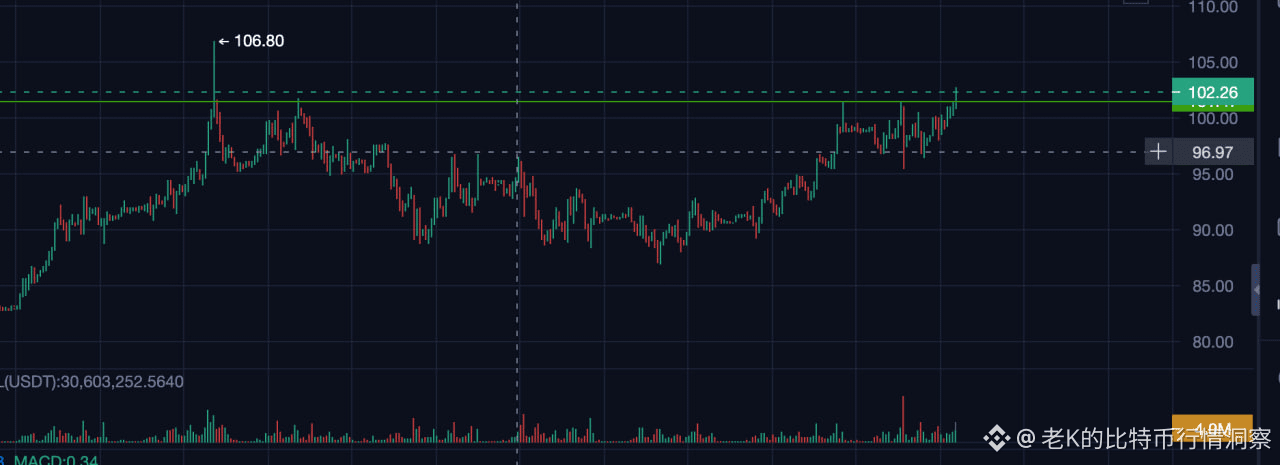
Oil prices have reached an extreme, breaking above the parallel highs for the fourth time. If they fall back below, it would be considered a false breakout and could ease pressure on the U.S. stock and Bitcoin markets. But if prices hold above that level, they could put further pressure on Bitcoin and U.S. stocks. This is a crucial factor to watch.$CL
Oil prices have reached an extreme, breaking above the parallel highs for the fourth time. If they fall back below, it would be considered a false breakout and could ease pressure on the U.S. stock and Bitcoin markets. But if prices hold above that level, they could put further pressure on Bitcoin and U.S. stocks. This is a crucial factor to watch.$CL
994
·
--
Bearish
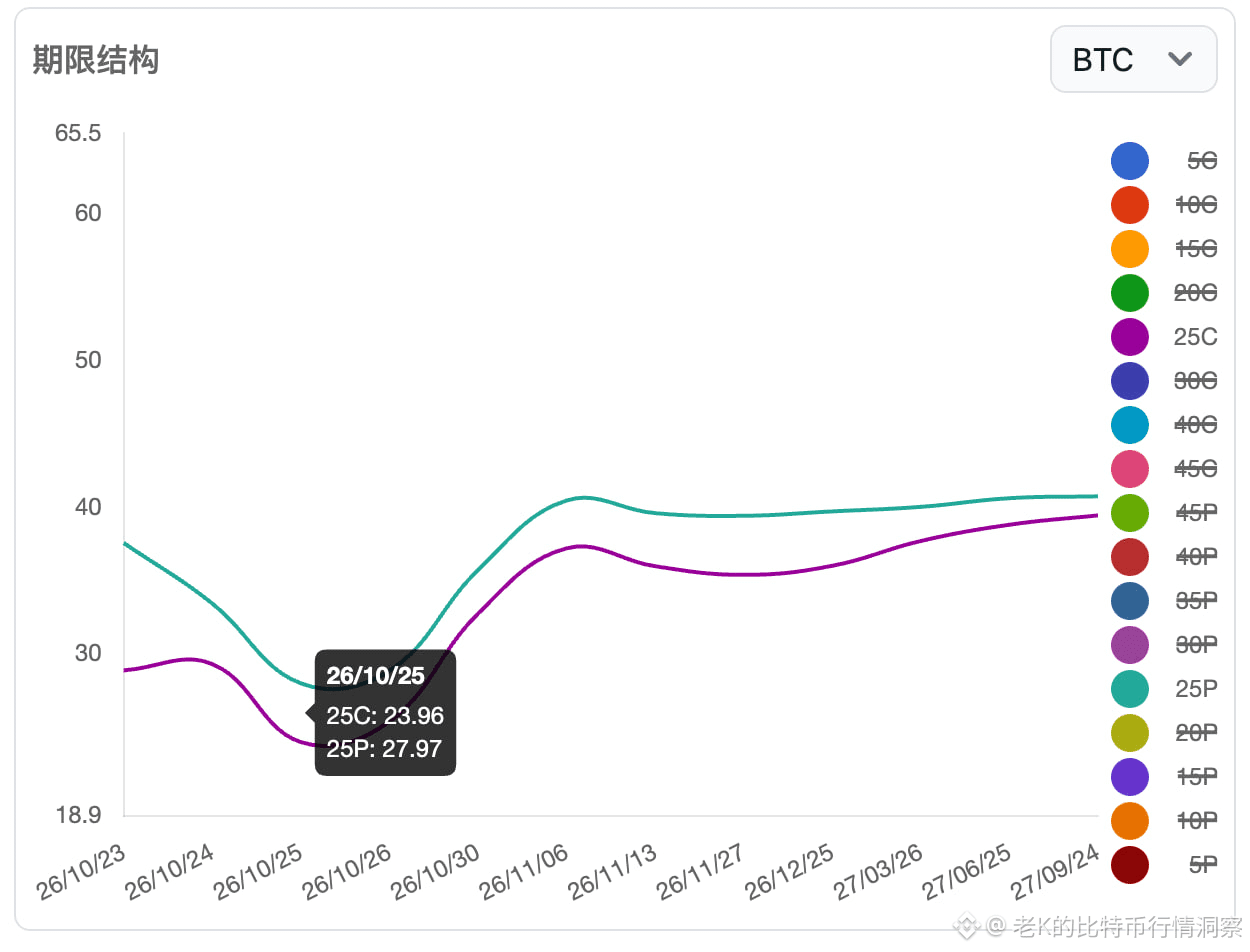
In the options market, risk aversion toward Bitcoin remains high. Over the past week, the gap between puts and calls used to short or hedge Bitcoin has widened further by $BTC .
In the options market, risk aversion toward Bitcoin remains high. Over the past week, the gap between puts and calls used to short or hedge Bitcoin has widened further by $BTC .
191
·
--

Article
Why Is BTC’s Decline on October 23 Only Just Beginning, and Where Can You Get Out? Why Keep Holding Semiconductors (SOXL)? Is There a Short-Selling Opportunity in the Nasdaq? What to Do After Gold Breaks Support?Review and Verification: Accurately Forecasting Market Moves
Our market outlook from previous episodes has now been validated point by point. In our forecast last Saturday, we clearly warned that “a major rebound is just around the corner.” Then, on Monday, we accurately mapped out the path: “a rebound first, followed by a sharp plunge.” All of the targets and moves we identified have now played out.
However, we must emphasize that the current plunge is only the beginning of the macroeconomic and technical correction. On the daily chart, Bitcoin (BTC) has formed a huge bearish candle on exceptionally heavy volume, completely erasing the gains from the previous two days of rebound. This means bearish pressure is accelerating, while bullish resistance is extremely weak.
Why Is BTC’s Decline on October 23 Only Just Beginning, and Where Can You Get Out? Why Keep Holding Semiconductors (SOXL)? Is There a Short-Selling Opportunity in the Nasdaq? What to Do After Gold Breaks Support?
Review and Verification: Accurately Forecasting Market Moves
Our market outlook from previous episodes has now been validated point by point. In our forecast last Saturday, we clearly warned that “a major rebound is just around the corner.” Then, on Monday, we accurately mapped out the path: “a rebound first, followed by a sharp plunge.” All of the targets and moves we identified have now played out.
However, we must emphasize that the current plunge is only the beginning of the macroeconomic and technical correction. On the daily chart, Bitcoin (BTC) has formed a huge bearish candle on exceptionally heavy volume, completely erasing the gains from the previous two days of rebound. This means bearish pressure is accelerating, while bullish resistance is extremely weak.
Our market outlook from previous episodes has now been validated point by point. In our forecast last Saturday, we clearly warned that “a major rebound is just around the corner.” Then, on Monday, we accurately mapped out the path: “a rebound first, followed by a sharp plunge.” All of the targets and moves we identified have now played out.
However, we must emphasize that the current plunge is only the beginning of the macroeconomic and technical correction. On the daily chart, Bitcoin (BTC) has formed a huge bearish candle on exceptionally heavy volume, completely erasing the gains from the previous two days of rebound. This means bearish pressure is accelerating, while bullish resistance is extremely weak.
759
Log in to explore more content
Join global crypto users on Binance Square
⚡️ Get latest and useful information about crypto.
💬 Trusted by the world’s largest crypto exchange.
👍 Discover real insights from verified creators.
Email / Phone number
Trending Topics
BinanceReopensWithdrawalsForHYPE&APT
25,009 views
471 Discussing
Binance Re-Enables Withdrawals for HYPE and APT, Extends List of Restored Assets
Binance News
·18 Likes
·10.5k views
SouthKoreaDraftLawTargets15To20%ShareholderCap
28,658 views
337 Discussing
TradFiForBeginners
137,034 views
1,453 Discussing