
老王说趋势
2.8k Posts

老王说趋势
Report
Block User
微博:同铭 公众号:老王1212
5 Following
130 Followers
259 Liked
Posts
PINNED
·
--
Chat room is opening, you can trade, you can get unstuck!
$BTC #Drift称攻击事件疑为朝鲜黑客策划
$ETH #Claude封杀OpenClaw
$BNB #美国非农就业远超预期
Chat room is opening, you can trade, you can get unstuck!
$BTC #Drift称攻击事件疑为朝鲜黑客策划
$ETH #Claude封杀OpenClaw
$BNB #美国非农就业远超预期
$BTC #Drift称攻击事件疑为朝鲜黑客策划
$ETH #Claude封杀OpenClaw
$BNB #美国非农就业远超预期

2
174
·
--
October 14 Morning Bitcoin Analysis
The short-term moving-average system remains under downward pressure. Although prices held relatively firm and moved sideways during the overnight session, the chart has yet to form any candlestick signal indicating a reversal. There is also a lack of fresh capital actively entering the market. The current action is more likely a temporary consolidation following the sharp drop. The bearish trend structure on the daily chart remains intact, with no change in the nature of the trend so far.
On the 1-hour chart, price has been fluctuating repeatedly within the 83,000–83,700 range. It has tested resistance at 83,700 multiple times but has failed to hold above it. Trading volume has continued to contract during the rebounds, indicating weak bullish follow-through. The Bollinger Bands are gradually narrowing, with volatility significantly compressed—a typical accumulation pattern ahead of a potential breakout. Given the broader bearish trend, this low-volume range-bound movement should be viewed primarily as a setup for a downside break.
Trading suggestion: Go short around 83,800, targeting 82,000.
$BTC #Avalanche称韩国KSD平台将支持其账本
$ETH #比特币突破8.4万美元
$BNB #比特币市占率回升至60%

20
·
--
Don't fear a quiet market; fear a market move coming and not being able to seize it, or even getting trapped by it. It’s okay if you don’t understand—just execute properly, and Lao Wang will help you break through. Strictly take profits and cut losses, and steadily pocket the profit from every trade. Don’t always think about catching the entire move from start to finish; once the target is reached, decisively take profits. Stay calm, keep laying out positions, and let the profits roll in!
$BTC #股票财报季
$ETH #山寨季指数连续五日守稳60上方
$BNB #比特币升破85200美元
$BTC #股票财报季
$ETH #山寨季指数连续五日守稳60上方
$BNB #比特币升破85200美元
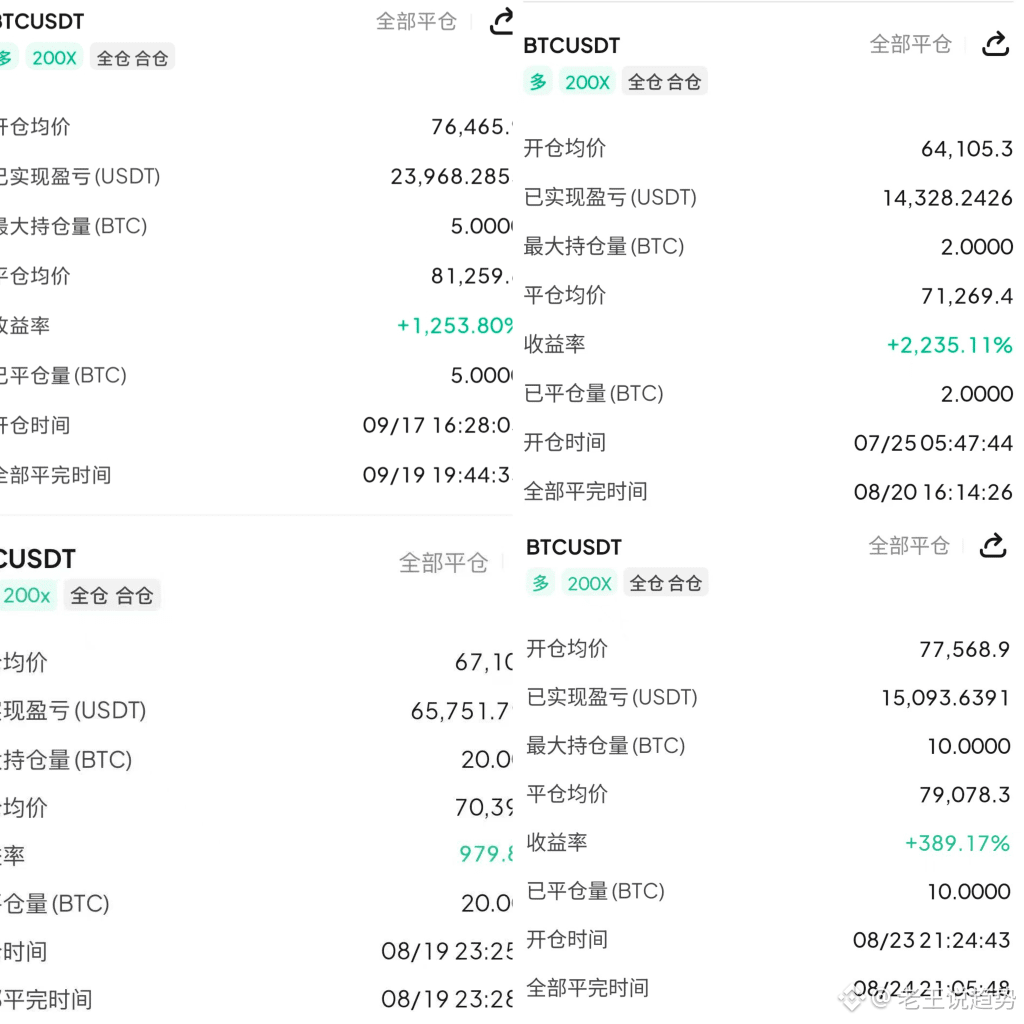
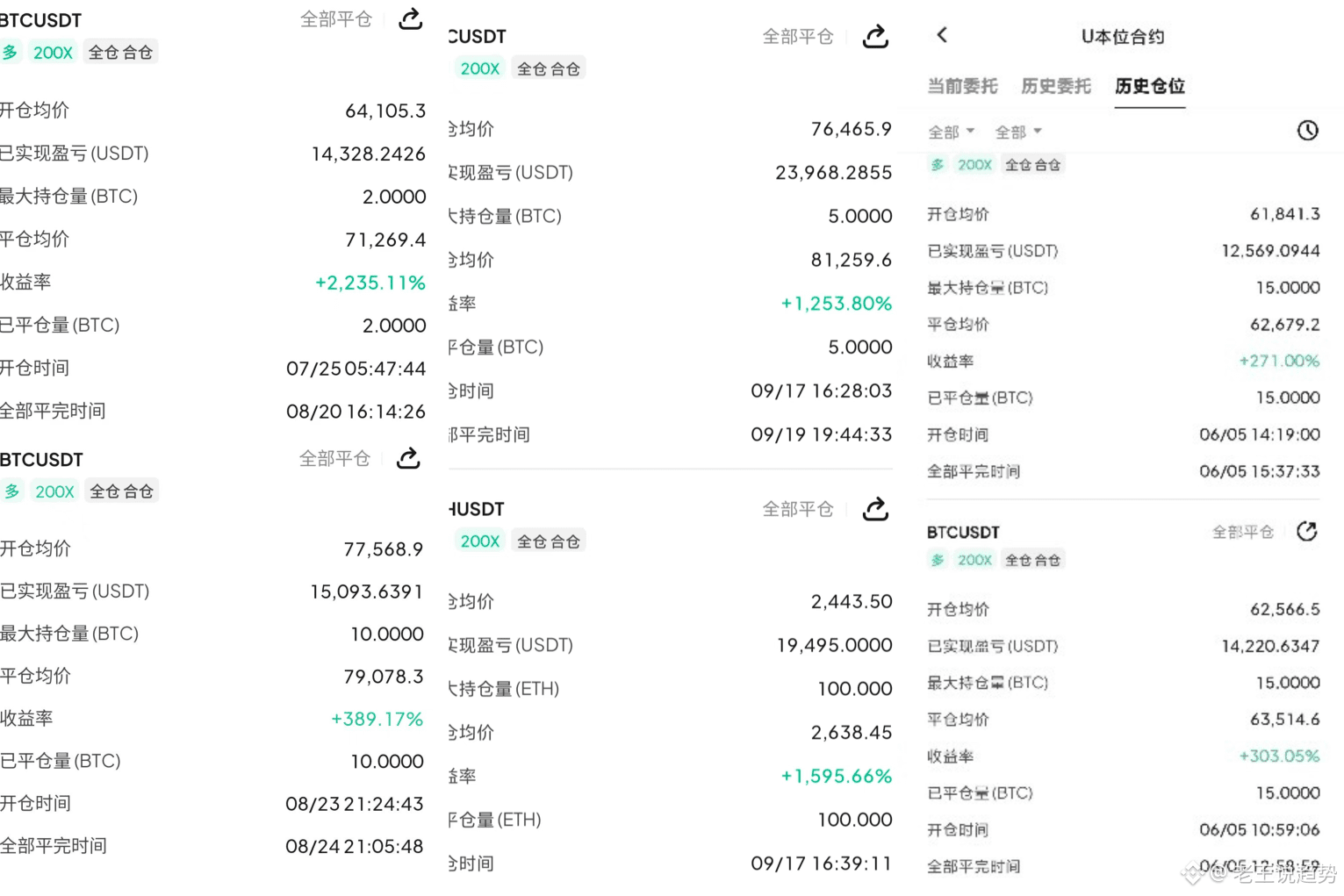
561
·
--
The market never has a perfect rhythm. Stick to your own trading logic, make the right choices, and move forward steadily amid the fluctuations
$BTC #华夏基金完成港元稳定币投资用例
$ETH #越南拟2026年发首批加密牌照
$BNB #以太坊重回2600美元
The market never has a perfect rhythm. Stick to your own trading logic, make the right choices, and move forward steadily amid the fluctuations
$BTC #华夏基金完成港元稳定币投资用例
$ETH #越南拟2026年发首批加密牌照
$BNB #以太坊重回2600美元
$BTC #华夏基金完成港元稳定币投资用例
$ETH #越南拟2026年发首批加密牌照
$BNB #以太坊重回2600美元
304
·
--
I used to be superstitious about technology, but later realized that controlling yourself is more important than understanding the market
I used to be especially obsessed with technical analysis. My computer was filled with all kinds of indicators—MACD, KDJ, Bollinger Bands, trend lines. Every chart was crowded with so many lines. Back then, I always thought the more indicators you had, the clearer you could see, and the easier it would be to make money. Later I realized that the period when I lost the most was exactly the time when I was studying technical analysis the hardest.
Every day I stared at the screen for a dozen hours, afraid of missing a single opportunity. The result was that I never really caught the opportunity, and every loss I made was fully accounted for. After several consecutive big losses, I started to doubt myself—was the market too difficult, or had my direction gone off course?
Later, a trader who had been in the game for many years told me: Most people lose money not because they can’t understand the market, but because they can’t control themselves. I kept that line in my mind for many years.
After that, I started doing “subtraction” for my trading—removing a bunch of useless indicators, no longer guessing the tops and bottoms every day, and no longer fantasizing about buying at the lowest point and selling at the highest. I don’t guess before the price moves out; I don’t bet before the trend is confirmed. Only when a key level is truly broken do I consider following. If the direction is right, I hold; if the direction is wrong, I admit it.
I used to think about turning it around in one shot, but now I care more about how much I can lose on any single trade. To stay alive in trading long-term, it’s not about making money quickly—it’s about keeping losses slow enough. As long as the principal is still there, opportunities are still there.
Being in cash is also part of trading. If you can’t understand, don’t trade. When there’s no opportunity, wait. People who can really make money in the market often use the simplest methods—complexity is easy to get carried away, while simplicity makes it easier to execute consistently over the long run. In the end, trading isn’t about who understands more—it’s about who can execute simple rules for a year, three years, or even five years
$BTC #华夏基金完成港元稳定币投资用例
$ETH #越南拟2026年发首批加密牌照
$BNB #比特币突破8万美元大关
310
·
--
September planning, seeking like-minded partners who share the same理念. We refuse emotion-driven trading and blind-following orders. We reject an operational style based on speculation and gaming—focusing instead on uncovering certain opportunities within trend-driven market conditions.
Tailored trading plans for different capital sizes:
3000U: Primarily short-term arbitrage—flexible entry and exit, efficiently capturing short-term market opportunities.
6000U: Short-term trading combined with swing strategies—suitable for various market environments, with steadily increasing returns.
10000U and above: Focus on long-term trend positioning—grounded in operation across larger timeframes, continuously earning steady returns.
Relying on a well-structured trading system to control the pace, adhering to a prudent and steady principle, helping returns improve steadily over the long term. We are now opening a limited number of collaboration seats—welcome friends with aligned ideas to move forward together.
$BTC #华夏基金完成港元稳定币投资用例
$ETH #越南拟2026年发首批加密牌照
$BNB #比特币突破8万美元大关


47
·
--
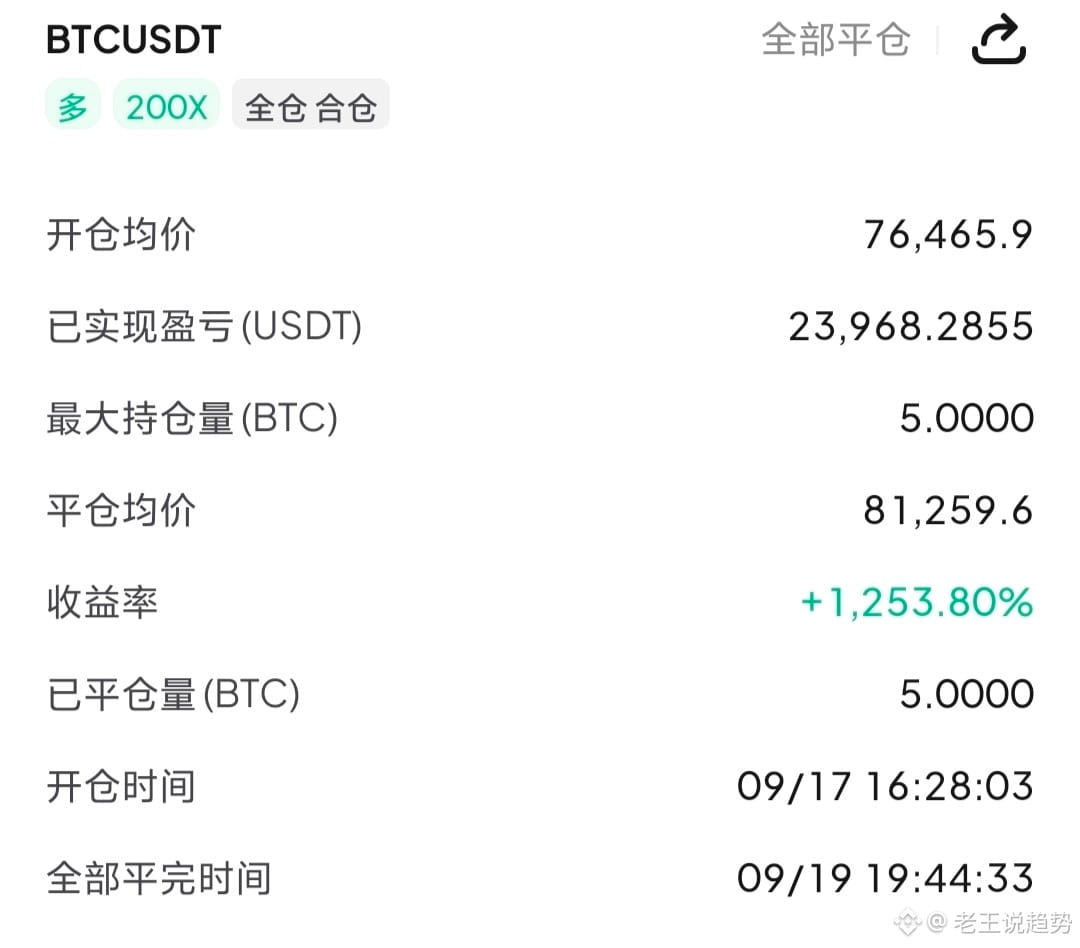
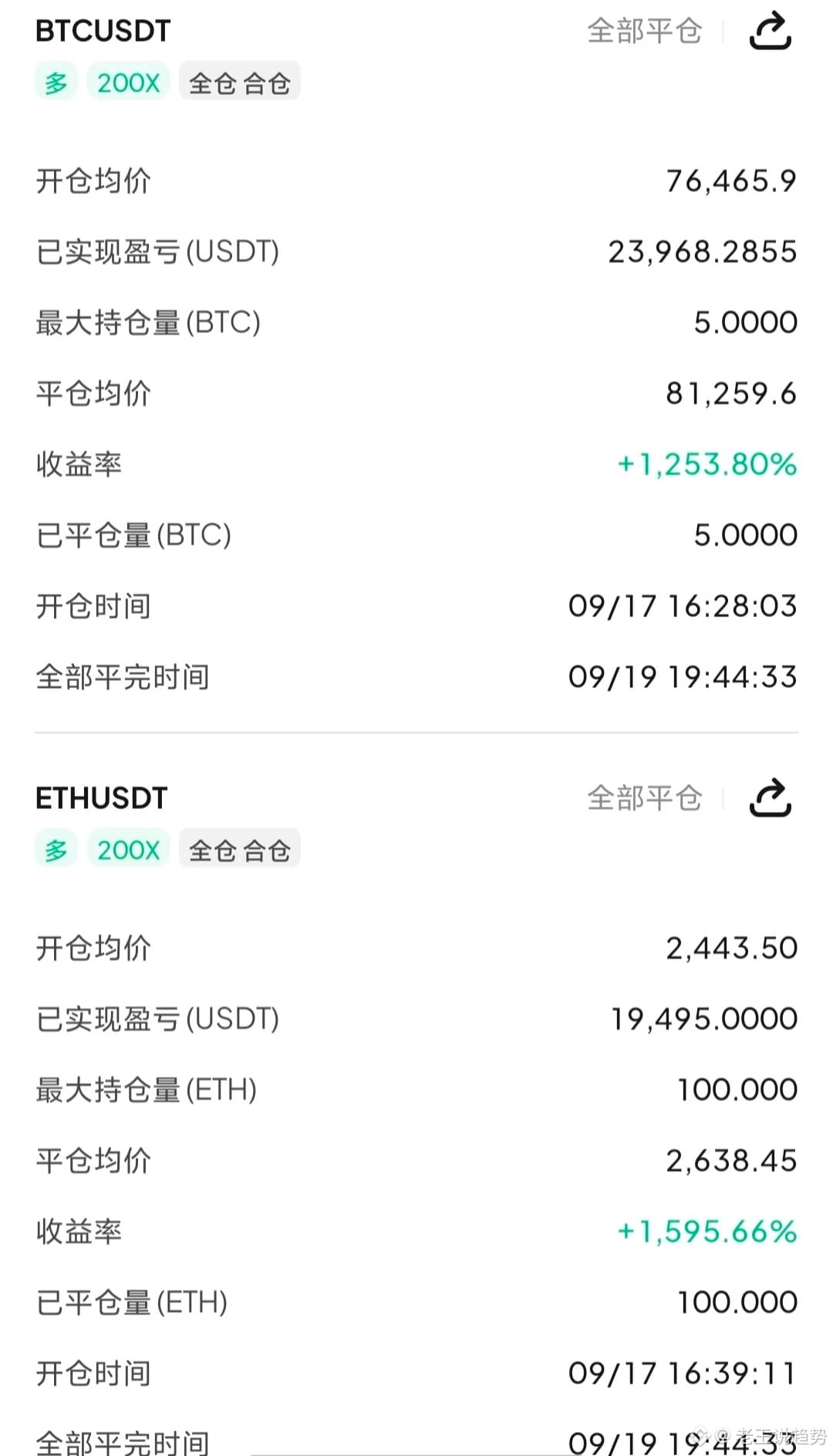
Steady entries, precise exits—never take the last bite; only take the most reliable slice. I’m not a god, but I can help you avoid fewer traps and make more money.
Lao Wang only does real account trading—no hype, no empty promises. He only shares real experiences that help you survive in the market.
$BTC #华夏基金完成港元稳定币投资用例
$ETH #越南拟2026年发首批加密牌照
$BNB #比特币突破8万美元大关
Lao Wang only does real account trading—no hype, no empty promises. He only shares real experiences that help you survive in the market.
$BTC #华夏基金完成港元稳定币投资用例
$ETH #越南拟2026年发首批加密牌照
$BNB #比特币突破8万美元大关
329
·
--
No need to panic when withdrawing—first stabilize your pace
Lately, many fans have asked: they have some profits in their account, but the moment they try to withdraw, they start to panic. They don’t know which route is safer, and they’re afraid that one wrong step could lock their profits. The key is just one sentence: make the path clear, and don’t move too hastily.
Taking the Hong Kong route is essentially a currency-exchange operation, but you must learn and compare more yourself—don’t move too much at once, and don’t use unclear “middle” channels just because they seem convenient. Many problems are caused by trying to save effort.
For the bank route, you can first convert U into USD, then process it through an account that supports receiving foreign currency. The prerequisite is that the account should be prepared in advance. Make sure your documents and intended purpose are clearly stated—don’t wait until the last minute to scramble.
Exchange C2C withdrawal is the most commonly used method for many people. It’s convenient, but sellers must be screened—prioritize the account’s registration time, trading volume, reviews, and historical records. Keep the entire transaction within the platform; don’t keep transferring back and forth outside.
One issue that’s easy to overlook: bank risk controls. A card that’s been inactive for a long time suddenly having large deposits and withdrawals is more likely to be flagged. Accounts with normal spending habits and reasonable transaction flows tend to look more natural overall. In operations, try not to frequently move large amounts in and out quickly, and don’t keep fiddling with funds repeatedly within a single day.
If you really run into risk control, there’s no need to panic. Cooperate with the requirements by explaining the source of the funds. As long as the route is clear and the records are complete, many issues can be handled normally. Don’t always look for shortcuts when withdrawing—compliance, clarity, keeping a trail, and doing it in batches are the keys
$BTC #Ostium贷款纠纷将在纽约联邦法院开庭
$ETH #韩国警方将18名Polymarket用户移送检方
$BNB #美联储SEP预计2026利率4.1%
319
·
--
September 15 Morning Big Cake, Sister Analysis
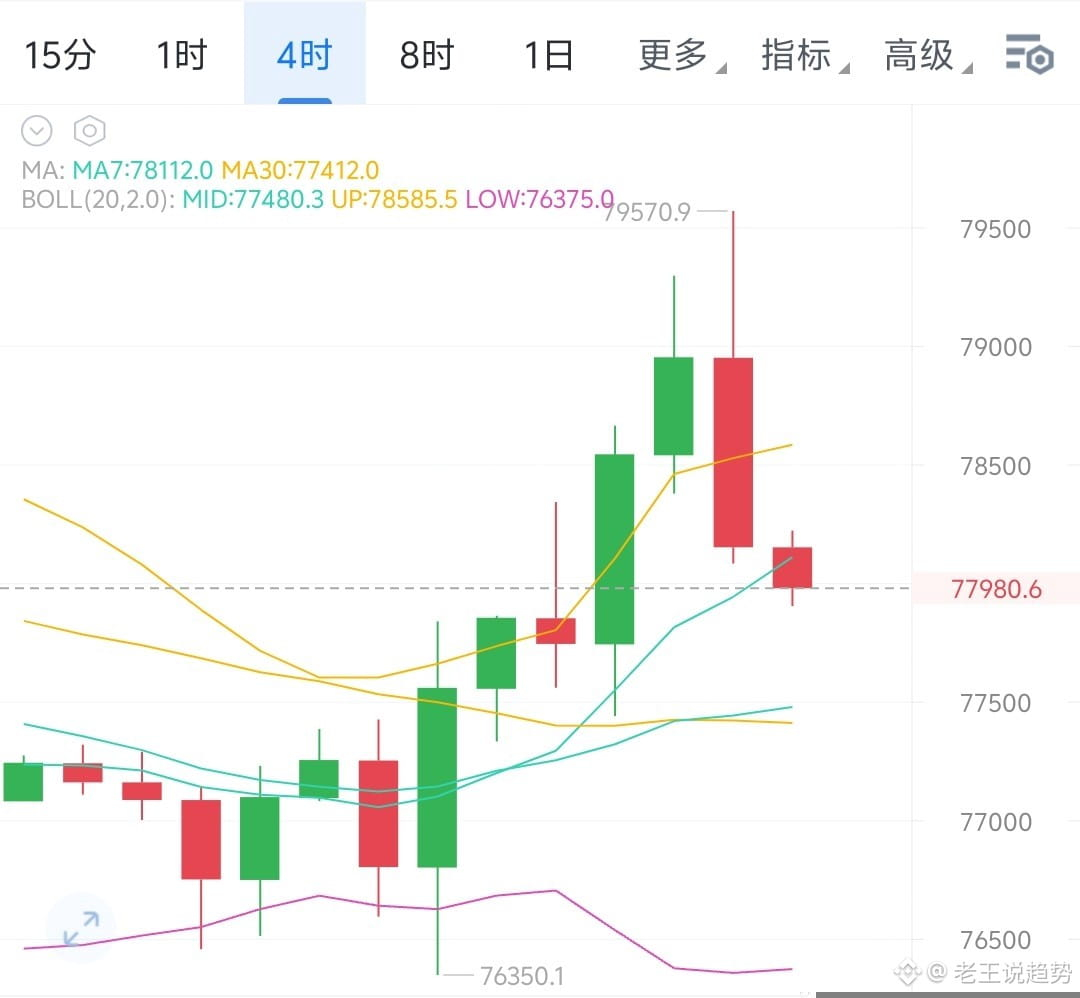
After pushing higher, it pulled back. The current price is 77980, and it has fallen back to above the Bollinger middle band. The Bollinger channel started to open upward after narrowing, which is an expansion of a rebound after a decline. The momentum of the “duck head” has been released in the short term. Since the price rose from the bottom, the short-term MA7 has turned upward quickly and has already crossed above the MA30, forming a golden cross. The short-term moving averages are arranged in a “duck head” configuration.
MA30 has started to turn upward after flattening; the medium-term support is lifting up, and it is the core support line for this rebound. The current price is trading above MA30, and the moving-average structure is leaning toward a “duck head.”
MA30 is an important support. A pullback to the MA30 area that stabilizes there is the “duck head” entry opportunity.
Trading suggestions:
Big Cake: near 77500–77000 for the “duck,” target 79500
Sister: around 2500 for the “duck,” target 2580
$BTC #比特币守稳77000美元上方
$ETH #美联储加息概率升至89%
$BNB #比特币涨1.64%突破78000美元
284
·
--
Old Wang’s hands-on recruitment: let’s find swing trades in market fluctuations, make money in trends, and make “flipping the account” a reality.
For 5,000–8,000 oil: focus on a short-term + volatility dual-strategy. For each trade, control position size to 10%–20%, and enter precisely based on the short-term market rhythm.
For 10k–50k oil: volatility strategy as the core, with short-term strategy as support. Each trade must strictly follow a 10% position-size risk control, balancing returns and risk.
For 50k–100k oil: mainly long-term positioning. Select high-certainty trend opportunities, enter cautiously with only 10% position size per trade to reduce the impact of short-term volatility.
$BTC #比特币守稳77000美元上方
$ETH #美联储加息概率升至89%
$BNB #比特币涨1.64%突破78000美元

210
·
--
Lao Wang’s hands-on recruitment: let’s find swing opportunities in market volatility, and earn money in trends—making a turnaround not a dream.
For 5,000–8,000 oil: focus on a short-term + volatility dual strategy. Recommend controlling 10%–20% of position size per trade, and entering precisely based on the short-term market rhythm.
For 1W–5W oil: volatility strategy as the core, with short-term strategy as support. Execute strict 10% position-size risk control for every trade, balancing returns and risks.
For 5W–10W oil: mainly long-term positioning. Select high-certainty trend opportunities, enter cautiously with only 10% position size per trade to reduce the impact of short-term fluctuations.
$BTC #灰度ZcashETF资产突破5亿美元
$ETH #中国8月CPI同比涨0.8%
$BNB #美军打击霍尔木兹岛及贾斯克目标


176
·
--
Bearish
Analysis of Evening Big Cake (BTC) and Second Cake (ETH) on 9.9
In the early surge-to-high phase, the price pierced above the Bollinger Band upper band, which is an overbought signal. Afterwards, the price pulled back: the upper band began to turn downward, and the upward momentum became exhausted.
When the price rebounded to the Bollinger middle band + the MA30 pressure zone, the KDJ also moved into the high area in parallel. A high-position dead cross formed, which is a standard shorting (selling) signal on the 4-hour timeframe.
Since the KDJ did not enter the overbought zone before turning down, it indicates the rebound strength is extremely weak—short/bear control is dominant, and the probability of continued decline is high.
Trading suggestions:
Big Cake (BTC): short around 79,600–80,000, target 78,000.
Second Cake (ETH): short around 2,520–2,538, target 2,450.
$BTC #灰度ZcashETF资产突破5亿美元
$ETH #中国8月CPI同比涨0.8%
$BNB #美军打击霍尔木兹岛及贾斯克目标

320
·
--
This clown account on the square
has a typical poor-person mentality.
Whoever looks righteous and moral on the surface, whoever looks rich and well-dressed on the surface, is the one who is right. This is a typical blind worship of the rich by the poor, even when the rich are merely well dressed.
I can tell you very responsibly: if you can’t get rid of this mindset, then you are only fit to be a clown account for life, to be a person at the bottom.
If you want to get rich, I can tell you: whether rich or poor, people are fundamentally human.
They are all people who might suddenly yell “what a rip-off” over 100 yuan in parking fees, and they are also people who would be happy after eating a tasty street-stall meal. They all have selfishness, the unsavory side, but also a side that wants to maintain dignity.
If you want to get rich, first recognize that everyone is human, and that everyone will do despicable things for profit, while also having an idealistic side in their heart; that is what a person is.
Only when you see clearly what people are can you get rich 💰
$BTC #IMF称萨尔瓦多购币未用公共资金
$ETH #伊朗称袭击3艘美舰3艘油轮
$BNB #SideSwap暂停Liquid服务

285
·
--
Don’t panic about being trapped in the trade—Old Wang has ways to handle it. Key points for hands-on trapped-position management:
① Don’t be short on patience and don’t panic-cut when bullets (capital) are sufficient. Unrealized losses aren’t real losses yet—wait for a chance when the cycle reverses.
② Rigorously follow your stop-loss. When it hits your level, exit decisively to prevent losses from growing larger the longer you stay trapped.
③ Never hold a position for too long on the short term. If the trend isn’t right, exit with a small loss.
The most important thing when trapped is to stay calm, follow your trading plan, and don’t let market fluctuations throw off your rhythm.
$BTC #美国初请失业金人数升至20.6万
$ETH #众议院促参议院推进CLARITY法案
$BNB #美国10年期国债收益率创2023年11月新高
266
·
--
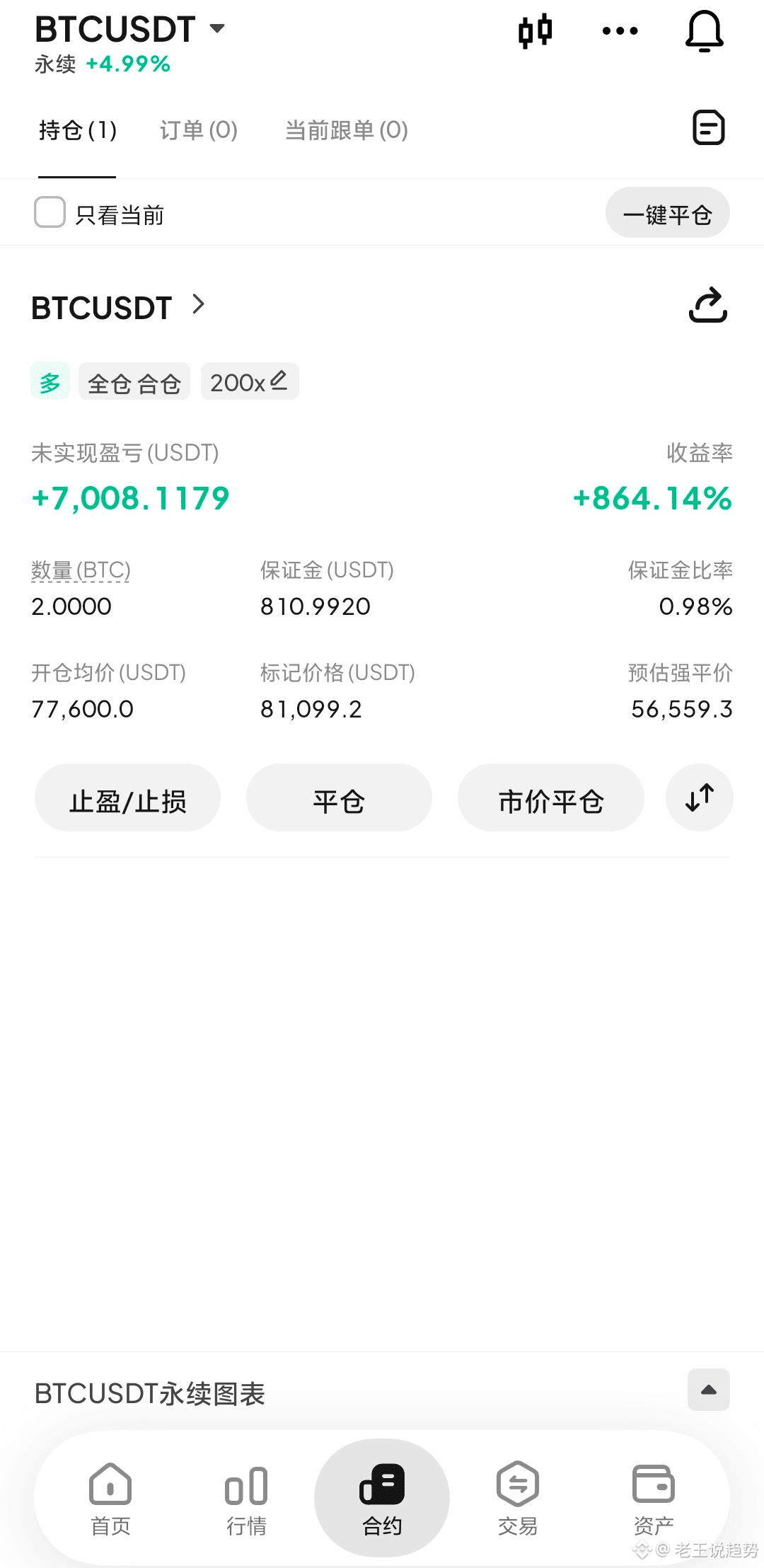
Everyone is trapped in the turbulence of fog, and only the clear-minded dare to go against the current
$BTC #美国初请失业金人数升至20.6万
$ETH #英伟达129亿美元收购HuggingFace
$BNB #雪花公司财报超预期股价涨24%
Everyone is trapped in the turbulence of fog, and only the clear-minded dare to go against the current
$BTC #美国初请失业金人数升至20.6万
$ETH #英伟达129亿美元收购HuggingFace
$BNB #雪花公司财报超预期股价涨24%
$BTC #美国初请失业金人数升至20.6万
$ETH #英伟达129亿美元收购HuggingFace
$BNB #雪花公司财报超预期股价涨24%
1
515
·
--
Unwinding is never achieved by stubbornly enduring
❌ Misconception: just lie still and wait for the market to “give back” your losses
❌ Misconception: buy more the further it drops, and heavily bet on a reversal
✅ Understand the trend: has the logic behind your entry already become invalid?
✅ Set a limit: when it reaches your stop-loss level, cut losses promptly and admit your mistake
✅ Take control: don’t leave your fate to market movements
The market is always full of opportunities
Protect your principal—then you’ll have the chips to turn the tables
$BTC #美国初请失业金人数升至20.6万
$ETH #SEC新规拟吸引加密企业回流美国
$BNB #美国续请失业金人数降至177.9万

1
738
·
--
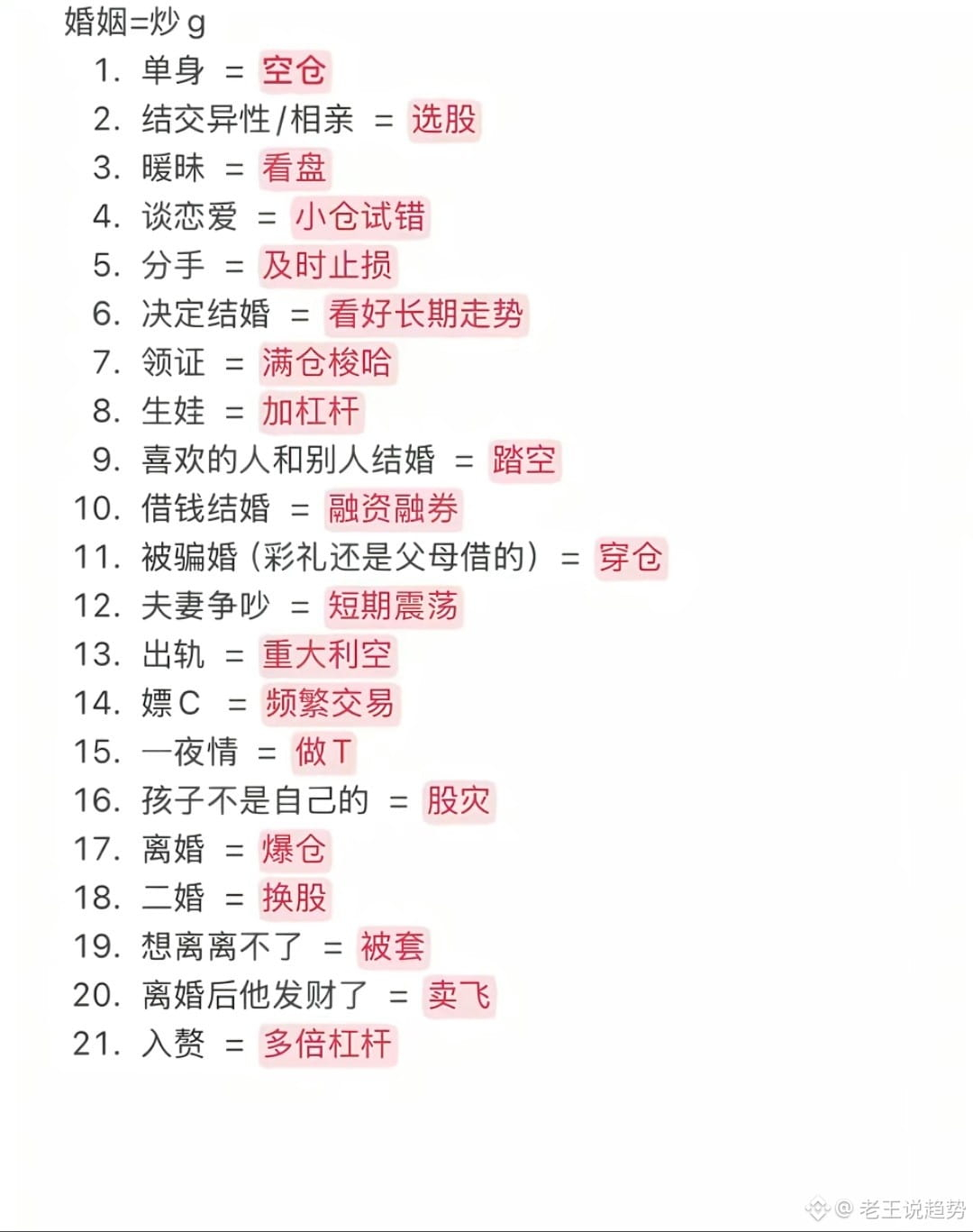
Which step are you still stuck on?
$BTC $ETH $BNB
Which step are you still stuck on?
$BTC $ETH $BNB
$BTC $ETH $BNB
490
·
--
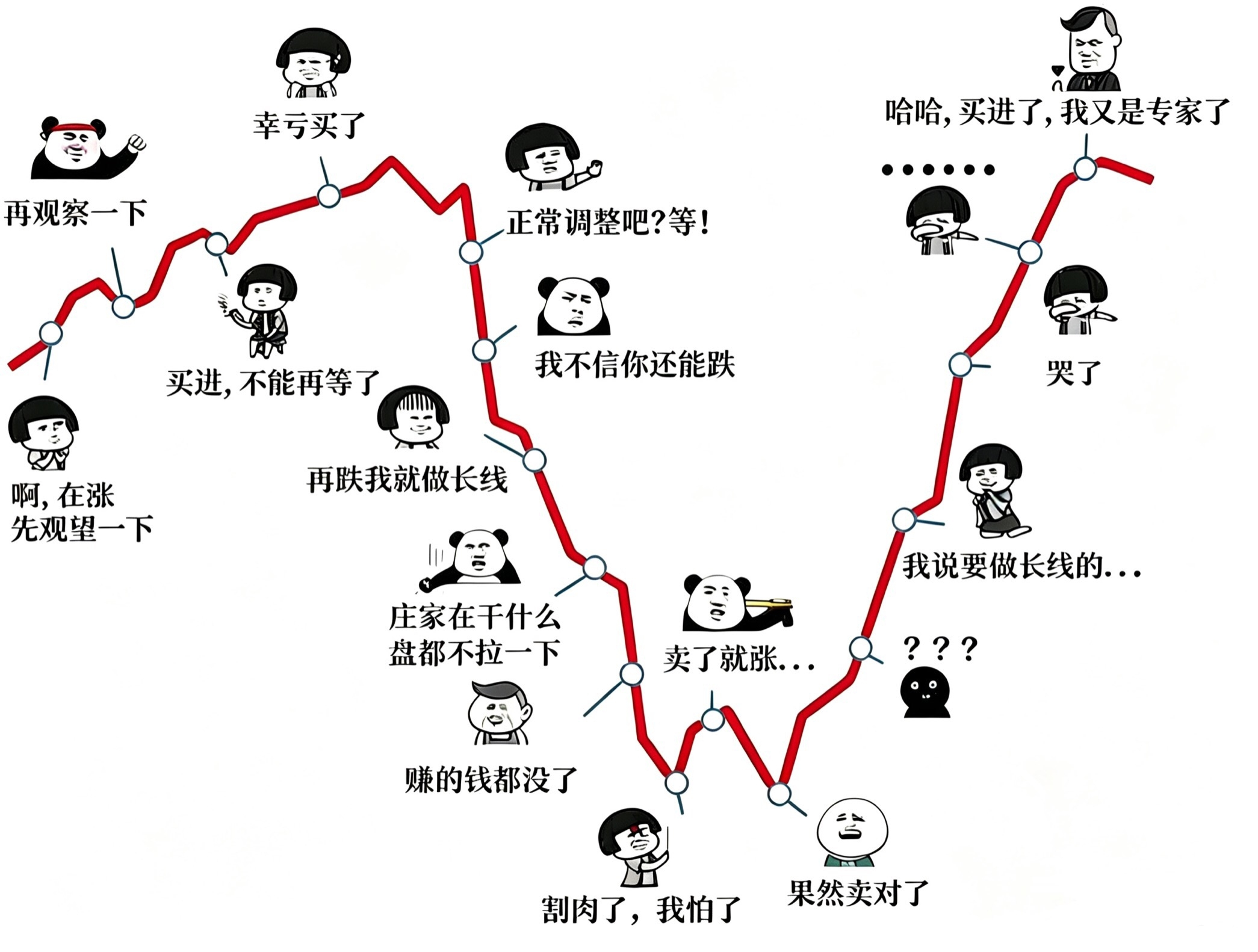
I used to be superstitious about technology, but later realized that controlling your impulses is more important than understanding the market
I was especially obsessed with technical analysis. My computer was packed with all kinds of indicators—MACD, KDJ, Bollinger Bands, trend lines. One chart had so many elements that it looked crowded. Back then, I always thought: the more indicators you have, the clearer it all becomes, and the easier it is to make money. Later I found that the period when I lost the most was exactly when I was studying technicals the hardest.
I spent more than ten hours a day staring at the screen, afraid of missing a single opportunity. In the end, I didn’t catch the opportunities—and I didn’t miss a loss. After a few consecutive big losses, I started doubting myself—was the market just too difficult, or had my direction gone off track?
Later, a trader who had been in the business for many years told me: Most people lose money not because they can’t understand the market, but because they can’t control themselves. I kept this sentence in mind for many years.
Since then, I’ve been simplifying my trading—cutting out a bunch of useless indicators, no longer guessing tops and bottoms every day, and no longer fantasizing about buying at the lowest and selling at the highest. I don’t make guesses before the price action plays out; I don’t bet before the trend is confirmed. Only when a key level truly breaks do I consider following. If the direction is right, I hold. If the direction is wrong, I acknowledge it.
I used to think I just needed one shot to turn it around, but now I care more about how much I can lose on each trade at most. To stay in the game long-term, trading isn’t about making money quickly—it’s about losing slowly enough. As long as your principal is still there, opportunities are still there.
Being in cash is also part of trading. If you can’t understand it, don’t do it. When there’s no opportunity, wait. People who can truly make money in the market often use the simplest methods—complexity is easy to get you emotional, while simplicity makes it easier to execute consistently over the long run. In the end, trading isn’t about who understands more—it’s about who can execute simple rules for a year, three years, or even five
$BTC #美国初请失业金人数升至20.6万
$ETH #SEC新规拟吸引加密企业回流美国
$BNB #美国续请失业金人数降至177.9万
105
·
--
Lao Wang’s hands-on recruiting—let’s find swing opportunities in market turbulence, and make money in trends, so turning the book around isn’t a dream
Oil 5000–8000: Focus on a short-term + volatility dual strategy. For each trade, it’s recommended to keep position size at 10%–20%, and enter precisely based on short-term market timing.
Oil 1W–5W: The volatility strategy is the core, with short-term strategy as a supplement. For every trade, strictly follow 10% position-size risk control to balance returns and risk.
Oil 5W–10W: Emphasize long-term positioning. Select high-certainty trend opportunities. Use only 10% position size per trade to enter steadily and reduce the impact of short-term volatility.
$BTC #美国初请失业金人数升至20.6万
$ETH #SEC新规拟吸引加密企业回流美国
$BNB #美获委内瑞拉石油田控制权

325
·
--
Why doesn’t trading make money? Because there’s a kind of trade that you want to do no matter what. Bruce Lee once said, “I’m not afraid of someone who knows ten thousand kicks. But I am afraid of someone who has practiced one kick ten thousand times.”
When I first started trading, it was the same for me too—I’d try this strategy, then that one, and after a while, I just fell apart. Imagine how a cheetah hunts in the animal world: when it chases an antelope, does it catch one and go all out immediately? Even if other antelopes pass by right next to it, the cheetah doesn’t care—it only stays focused on pursuing one target. Trading is the same.
I like to trade with long-wick candlesticks. When they appear within a trend, I will choose to buy without hesitation, because I’ve studied them thousands of times. What I need to do is simply wait patiently for it to show up.
$BTC #美国初请失业金人数升至20.6万
$ETH #SEC新规拟吸引加密企业回流美国
$BNB #美国续请失业金人数降至177.9万
399
Log in to explore more content
Join global crypto users on Binance Square
⚡️ Get latest and useful information about crypto.
💬 Trusted by the world’s largest crypto exchange.
👍 Discover real insights from verified creators.
Email / Phone number
Trending Topics
USPPIMissMayEaseBTCPressure
43,524 views
745 Discussing
US PPI Rises 6.5% a Year in October, Slightly Below 6.6% Forecast
Binance News
·17 Likes
·17.3k views
BitcoinCoreDisclosesTorTrafficVulnerability
17,062 views
389 Discussing
WhatWillDriveCryptoandStocks’NextRebound?
155,602 views
1,612 Discussing