

投机实验室
477 Posts

投机实验室
 Square Verified
Report
Block User
你们似乎根本不懂,如果实现目标,SpaceX的价值将超过地球上其他一切的总和。
37 Following
10.3K+ Followers
8.4K+ Liked
Posts
All
Quotes
Videos
·
--
If your parents get scammed, you’re very likely to be the last one to find out. A cross-generational romance involving a retired 71-year-old aunt in Hong Kong is especially tragic.
Be careful of all kinds of scams that target seniors.
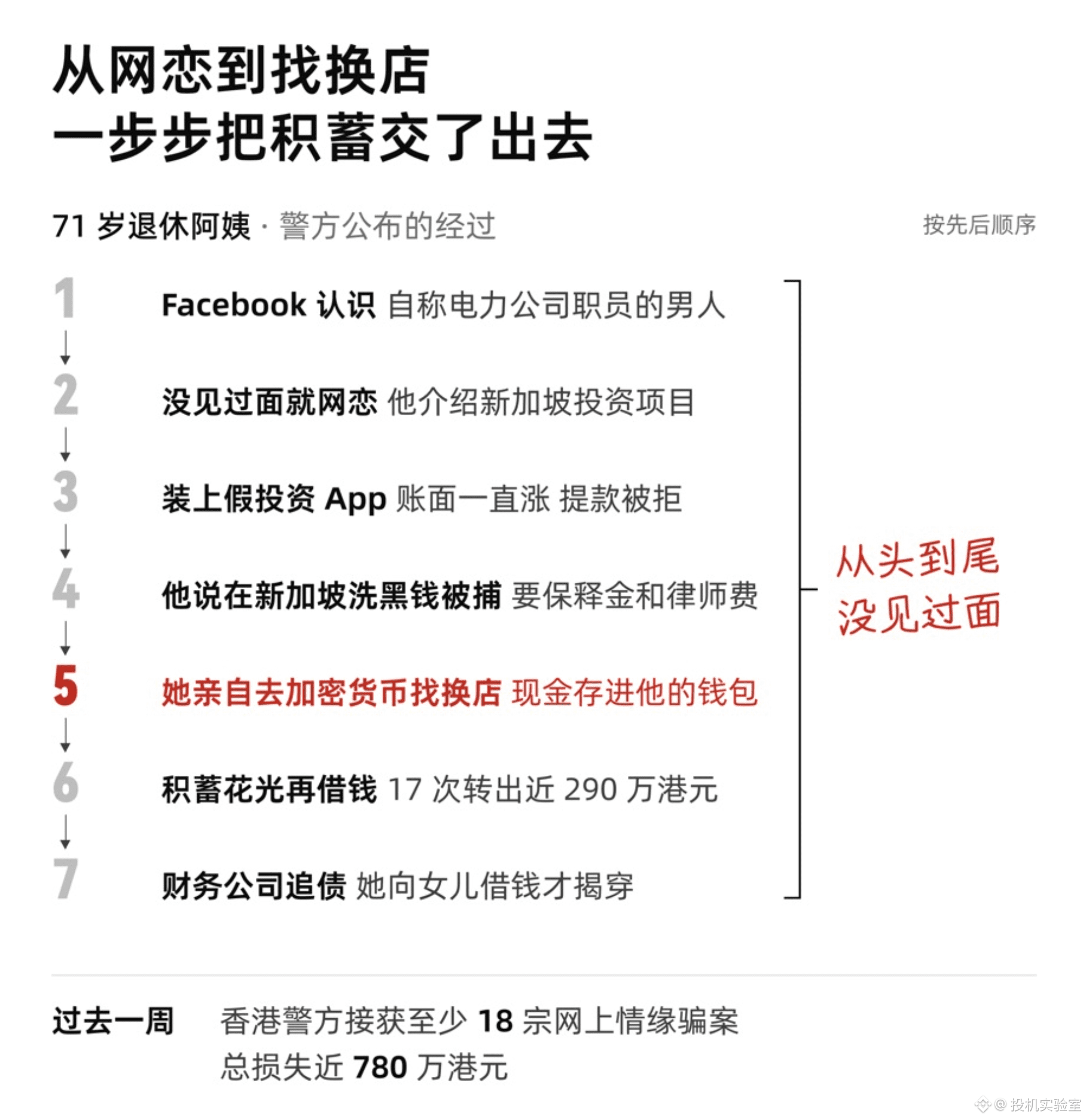
This aunt met a man on Facebook who claimed to be an employee of an electricity company. Without ever meeting in person, they started an online relationship.
He first asked her to download a fake investment app. The numbers kept going up on the screen, but she couldn’t withdraw the money.
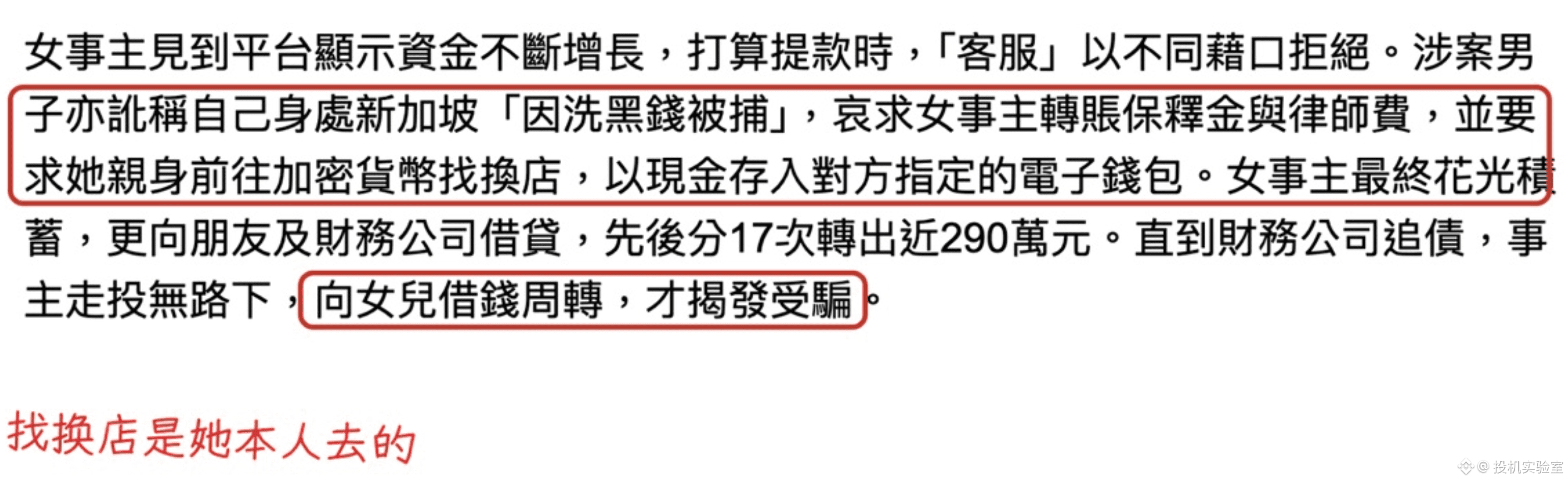
Then he said he’d been arrested in Singapore for money laundering and asked her to transfer bail and legal fees, and to have the elderly aunt herself go to a cryptocurrency exchange shop to get cash and deposit it into the wallet he specified.
After she exhausted her savings, she borrowed from friends and financial companies. In total, she made 17 transfers, sending out nearly HK$2.9 million, until a financial company came after the debt. With nowhere left to turn, she asked her daughter for money—only then was the scam finally exposed…
If your parents get scammed, you’re very likely to be the last one to find out. A cross-generational romance involving a retired 71-year-old aunt in Hong Kong is especially tragic.
Be careful of all kinds of scams that target seniors.
This aunt met a man on Facebook who claimed to be an employee of an electricity company. Without ever meeting in person, they started an online relationship.
He first asked her to download a fake investment app. The numbers kept going up on the screen, but she couldn’t withdraw the money.
Then he said he’d been arrested in Singapore for money laundering and asked her to transfer bail and legal fees, and to have the elderly aunt herself go to a cryptocurrency exchange shop to get cash and deposit it into the wallet he specified.
After she exhausted her savings, she borrowed from friends and financial companies. In total, she made 17 transfers, sending out nearly HK$2.9 million, until a financial company came after the debt. With nowhere left to turn, she asked her daughter for money—only then was the scam finally exposed…
Be careful of all kinds of scams that target seniors.
This aunt met a man on Facebook who claimed to be an employee of an electricity company. Without ever meeting in person, they started an online relationship.
He first asked her to download a fake investment app. The numbers kept going up on the screen, but she couldn’t withdraw the money.
Then he said he’d been arrested in Singapore for money laundering and asked her to transfer bail and legal fees, and to have the elderly aunt herself go to a cryptocurrency exchange shop to get cash and deposit it into the wallet he specified.
After she exhausted her savings, she borrowed from friends and financial companies. In total, she made 17 transfers, sending out nearly HK$2.9 million, until a financial company came after the debt. With nowhere left to turn, she asked her daughter for money—only then was the scam finally exposed…
3
3
18.7k
·
--
Trading coins also requires a bit of English—otherwise you won’t be able to remember any coin name. It’s embarrassing when you mispronounce a coin name while chatting with others 😮💨
During the Cold War, diplomats really had a method for learning languages, and it’s actually pretty effective—better than Shang Wenjie’s approach.
Why are diplomats able to master multiple languages so fluently, and why do they pick up new languages so fast? Because their way of learning foreign languages is very direct: they don’t focus on grammar, they don’t memorize vocabulary. They just do one thing—drill the translation step in the middle until it’s automatic. This method is called pattern drill. Its source traces back to a WWII fast-track language program for the U.S. military in 1942.
Later, the Defense Language Institute in the U.S. used the same approach to train 65 languages.
If you’ve been learning English for 10 years but still can’t speak, it’s not that your vocabulary isn’t enough. It’s that your brain has an extra processing step.
The U.S. State Department once published a chart showing that Spanish and French, from zero to being able to work, can be achieved in about 600 to 750 hours.
For Chinese and Japanese, it’s around 2200 hours—calculated from training data used by the U.S. Foreign Service Institute over more than 70 years.
And English is the simplest language in that list.
Fluency isn’t knowledge—it’s automation. Many people hear English, translate it into Chinese, think of the answer, translate it back into English, and then say it.
By the time others finish speaking, you’re still stuck on the second step.
The simplest version is called substitution practice: keep the sentence pattern the same, only swap one word, and you must answer within 3 seconds.
“I want coffee, I want tea, I want milk”—repeat it dozens of times, and the sentence structure turns into reflex. You open your mouth and it comes out automatically. It’s just like learning to drive: at first you think through every step, but after a few years your hands and feet move on their own.
In the past, you needed a native-speaker teacher sitting across from you, constantly throwing sentences at you. Now AI can serve as that teacher. I’ve turned the whole process into a diagram—you just follow it and practice. Do it for the time you set, and it will definitely work.
Trading coins also requires a bit of English—otherwise you won’t be able to remember any coin name. It’s embarrassing when you mispronounce a coin name while chatting with others 😮💨
During the Cold War, diplomats really had a method for learning languages, and it’s actually pretty effective—better than Shang Wenjie’s approach.
Why are diplomats able to master multiple languages so fluently, and why do they pick up new languages so fast? Because their way of learning foreign languages is very direct: they don’t focus on grammar, they don’t memorize vocabulary. They just do one thing—drill the translation step in the middle until it’s automatic. This method is called pattern drill. Its source traces back to a WWII fast-track language program for the U.S. military in 1942.
Later, the Defense Language Institute in the U.S. used the same approach to train 65 languages.
If you’ve been learning English for 10 years but still can’t speak, it’s not that your vocabulary isn’t enough. It’s that your brain has an extra processing step.
The U.S. State Department once published a chart showing that Spanish and French, from zero to being able to work, can be achieved in about 600 to 750 hours.
For Chinese and Japanese, it’s around 2200 hours—calculated from training data used by the U.S. Foreign Service Institute over more than 70 years.
And English is the simplest language in that list.
Fluency isn’t knowledge—it’s automation. Many people hear English, translate it into Chinese, think of the answer, translate it back into English, and then say it.
By the time others finish speaking, you’re still stuck on the second step.
The simplest version is called substitution practice: keep the sentence pattern the same, only swap one word, and you must answer within 3 seconds.
“I want coffee, I want tea, I want milk”—repeat it dozens of times, and the sentence structure turns into reflex. You open your mouth and it comes out automatically. It’s just like learning to drive: at first you think through every step, but after a few years your hands and feet move on their own.
In the past, you needed a native-speaker teacher sitting across from you, constantly throwing sentences at you. Now AI can serve as that teacher. I’ve turned the whole process into a diagram—you just follow it and practice. Do it for the time you set, and it will definitely work.
During the Cold War, diplomats really had a method for learning languages, and it’s actually pretty effective—better than Shang Wenjie’s approach.
Why are diplomats able to master multiple languages so fluently, and why do they pick up new languages so fast? Because their way of learning foreign languages is very direct: they don’t focus on grammar, they don’t memorize vocabulary. They just do one thing—drill the translation step in the middle until it’s automatic. This method is called pattern drill. Its source traces back to a WWII fast-track language program for the U.S. military in 1942.
Later, the Defense Language Institute in the U.S. used the same approach to train 65 languages.
If you’ve been learning English for 10 years but still can’t speak, it’s not that your vocabulary isn’t enough. It’s that your brain has an extra processing step.
The U.S. State Department once published a chart showing that Spanish and French, from zero to being able to work, can be achieved in about 600 to 750 hours.
For Chinese and Japanese, it’s around 2200 hours—calculated from training data used by the U.S. Foreign Service Institute over more than 70 years.
And English is the simplest language in that list.
Fluency isn’t knowledge—it’s automation. Many people hear English, translate it into Chinese, think of the answer, translate it back into English, and then say it.
By the time others finish speaking, you’re still stuck on the second step.
The simplest version is called substitution practice: keep the sentence pattern the same, only swap one word, and you must answer within 3 seconds.
“I want coffee, I want tea, I want milk”—repeat it dozens of times, and the sentence structure turns into reflex. You open your mouth and it comes out automatically. It’s just like learning to drive: at first you think through every step, but after a few years your hands and feet move on their own.
In the past, you needed a native-speaker teacher sitting across from you, constantly throwing sentences at you. Now AI can serve as that teacher. I’ve turned the whole process into a diagram—you just follow it and practice. Do it for the time you set, and it will definitely work.

3
8
6k
·
--
In 2001, a 30-year-old Musk went to Moscow to buy decommissioned missiles to convert into rockets—sending one to Mars.
The other side asked, “Do you even have the money for that?”
A chief designer even spit at them. On the flight back, he decided: he would build this rocket himself.
In 2006, the first rocket caught fire and crashed. In 2007, the second one failed to reach orbit. In August 2008, the third one also failed.
That same night, he wrote to the employees: the fourth rocket was almost ready, the fifth would follow right after, and the sixth—I’ve already approved for it to start work…
That year, Tesla was about to collapse, and his marriage was also coming to an end. He poured all the money into it. No house—he had to borrow rent money from friends.
Actually, the fourth rocket was built with the last of the funds… and luckily, it succeeded.
On December 23, NASA awarded a contract worth about $1.6 billion. The night after, Tesla’s financing talks also succeeded. He said that at this point, bankruptcy might be only three days away.
Exactly eighteen years later, on the same date—September 28, 2026—his Starship entered orbit for the first time. Many people apparently don’t understand at all: if the goal is achieved, SpaceX’s value will exceed the sum total of everything else on Earth. The stars and the sea are only just beginning.$SPCXB
In 2001, a 30-year-old Musk went to Moscow to buy decommissioned missiles to convert into rockets—sending one to Mars.
The other side asked, “Do you even have the money for that?”
A chief designer even spit at them. On the flight back, he decided: he would build this rocket himself.
In 2006, the first rocket caught fire and crashed. In 2007, the second one failed to reach orbit. In August 2008, the third one also failed.
That same night, he wrote to the employees: the fourth rocket was almost ready, the fifth would follow right after, and the sixth—I’ve already approved for it to start work…
That year, Tesla was about to collapse, and his marriage was also coming to an end. He poured all the money into it. No house—he had to borrow rent money from friends.
Actually, the fourth rocket was built with the last of the funds… and luckily, it succeeded.
On December 23, NASA awarded a contract worth about $1.6 billion. The night after, Tesla’s financing talks also succeeded. He said that at this point, bankruptcy might be only three days away.
Exactly eighteen years later, on the same date—September 28, 2026—his Starship entered orbit for the first time. Many people apparently don’t understand at all: if the goal is achieved, SpaceX’s value will exceed the sum total of everything else on Earth. The stars and the sea are only just beginning.$SPCXB
The other side asked, “Do you even have the money for that?”
A chief designer even spit at them. On the flight back, he decided: he would build this rocket himself.
In 2006, the first rocket caught fire and crashed. In 2007, the second one failed to reach orbit. In August 2008, the third one also failed.
That same night, he wrote to the employees: the fourth rocket was almost ready, the fifth would follow right after, and the sixth—I’ve already approved for it to start work…
That year, Tesla was about to collapse, and his marriage was also coming to an end. He poured all the money into it. No house—he had to borrow rent money from friends.
Actually, the fourth rocket was built with the last of the funds… and luckily, it succeeded.
On December 23, NASA awarded a contract worth about $1.6 billion. The night after, Tesla’s financing talks also succeeded. He said that at this point, bankruptcy might be only three days away.
Exactly eighteen years later, on the same date—September 28, 2026—his Starship entered orbit for the first time. Many people apparently don’t understand at all: if the goal is achieved, SpaceX’s value will exceed the sum total of everything else on Earth. The stars and the sea are only just beginning.$SPCXB
1
1
2
17.9k
·
--
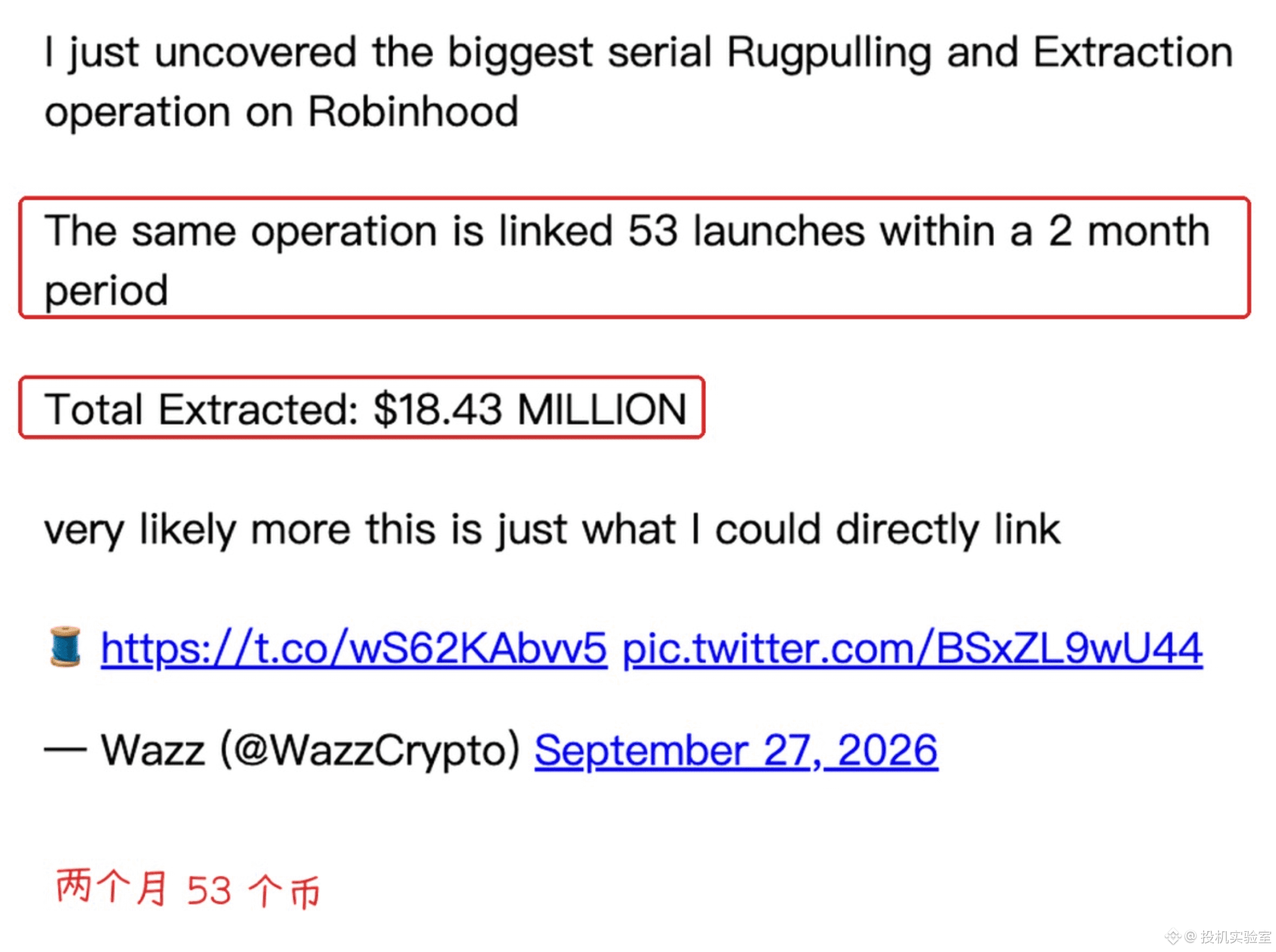
Robinhood on-chain has a token issuing crew. In just two months, they issued 53 coins. The amount they can directly pull out already exceeds $18.43 million.
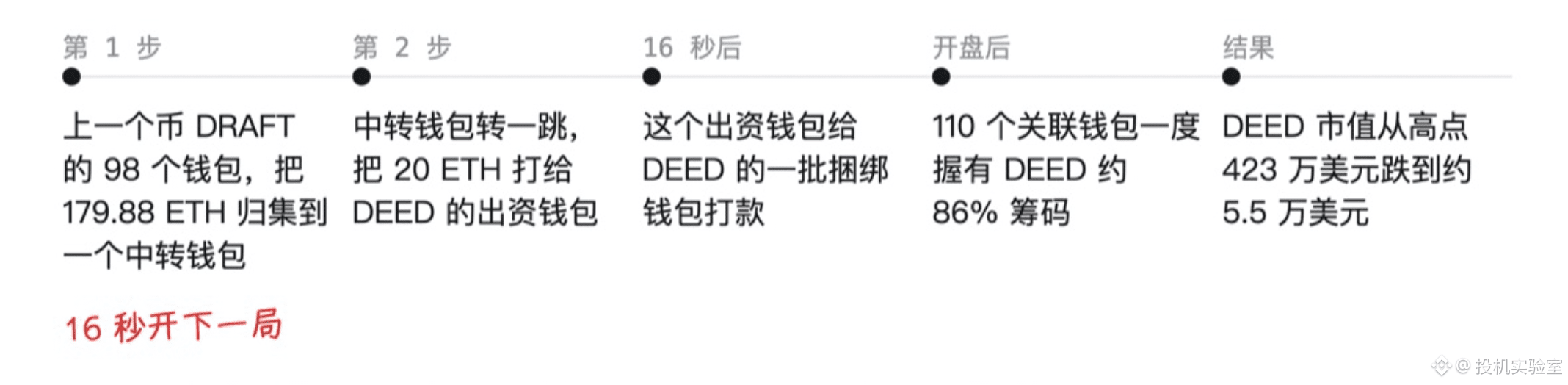
The scheme is simple: the money earned from one coin’s “rug pull” is transferred into the next coin’s funding wallet, and usually within seconds they start the next round. For almost every coin when it launches, 70% or more of the tokens are snatched by 70 to 200 bundled wallets. Most of the activity goes through the Pons V2 launch platform.
Some even first release a fake trading pool to warm things up, then reveal the real contract address.
The DEED that prompted this investigation: the deployer made nearly $900,000. Even within this group, that wouldn’t place them in the top ten. On-chain analyst Wazz said that most of these funds are kept in ETH and cannot yet be frozen.$NVDAB
{spot}(NVDABUSDT)
Robinhood on-chain has a token issuing crew. In just two months, they issued 53 coins. The amount they can directly pull out already exceeds $18.43 million.
The scheme is simple: the money earned from one coin’s “rug pull” is transferred into the next coin’s funding wallet, and usually within seconds they start the next round. For almost every coin when it launches, 70% or more of the tokens are snatched by 70 to 200 bundled wallets. Most of the activity goes through the Pons V2 launch platform.
Some even first release a fake trading pool to warm things up, then reveal the real contract address.
The DEED that prompted this investigation: the deployer made nearly $900,000. Even within this group, that wouldn’t place them in the top ten. On-chain analyst Wazz said that most of these funds are kept in ETH and cannot yet be frozen.$NVDAB
The scheme is simple: the money earned from one coin’s “rug pull” is transferred into the next coin’s funding wallet, and usually within seconds they start the next round. For almost every coin when it launches, 70% or more of the tokens are snatched by 70 to 200 bundled wallets. Most of the activity goes through the Pons V2 launch platform.
Some even first release a fake trading pool to warm things up, then reveal the real contract address.
The DEED that prompted this investigation: the deployer made nearly $900,000. Even within this group, that wouldn’t place them in the top ten. On-chain analyst Wazz said that most of these funds are kept in ETH and cannot yet be frozen.$NVDAB
9
20
23.4k
·
--
Fabio Valentini should be the hottest order-flow trader in the Western world this year—hottest of all, without a close second. There are all kinds of interviews about him online. Even though they’re not all that different from each other, you can still get a sense of how he trades 🤑😘
He first became famous at the Robbins World Cup trading championship, which is known as the “trader’s World Cup,” where he made it into the top traders ranking four times.
He said that combining order flow with volume/price (VPA) analysis was the key to a major breakthrough in his trading career. During the competition, he completed more than 2,000 trades. This high-volume trading style allows him to build a large data sample.
This approach is especially helpful for a scalp strategy with positive expected value like his—it lets him significantly improve his profit expectations while keeping overall drawdowns relatively low.
When you trade, you must find the market whose volatility characteristics you can truly understand, where you can obtain effective information and apply the corresponding strategy. Deeply understand the volatility behavior of an asset and the underlying patterns that trigger its price movements—this can help you develop the necessary market feel and intuition!!$NVDAB
Fabio Valentini should be the hottest order-flow trader in the Western world this year—hottest of all, without a close second. There are all kinds of interviews about him online. Even though they’re not all that different from each other, you can still get a sense of how he trades 🤑😘
He first became famous at the Robbins World Cup trading championship, which is known as the “trader’s World Cup,” where he made it into the top traders ranking four times.
He said that combining order flow with volume/price (VPA) analysis was the key to a major breakthrough in his trading career. During the competition, he completed more than 2,000 trades. This high-volume trading style allows him to build a large data sample.
This approach is especially helpful for a scalp strategy with positive expected value like his—it lets him significantly improve his profit expectations while keeping overall drawdowns relatively low.
When you trade, you must find the market whose volatility characteristics you can truly understand, where you can obtain effective information and apply the corresponding strategy. Deeply understand the volatility behavior of an asset and the underlying patterns that trigger its price movements—this can help you develop the necessary market feel and intuition!!$NVDAB
He first became famous at the Robbins World Cup trading championship, which is known as the “trader’s World Cup,” where he made it into the top traders ranking four times.
He said that combining order flow with volume/price (VPA) analysis was the key to a major breakthrough in his trading career. During the competition, he completed more than 2,000 trades. This high-volume trading style allows him to build a large data sample.
This approach is especially helpful for a scalp strategy with positive expected value like his—it lets him significantly improve his profit expectations while keeping overall drawdowns relatively low.
When you trade, you must find the market whose volatility characteristics you can truly understand, where you can obtain effective information and apply the corresponding strategy. Deeply understand the volatility behavior of an asset and the underlying patterns that trigger its price movements—this can help you develop the necessary market feel and intuition!!$NVDAB
3
5.1k
·
--
This must be added— the most powerful model plus the most powerful trading tool!!
Connect TradingView to Claude or GPT Codex (any large model) in 30 seconds 😘😘😘
TradingView released an official MCP these days, so delete the community MCPs from before—it's safer, and it's also more useful!
You can directly view charts, data, and indicator tools, manage watchlists, create filters, set up and manage alerts, analyze the fundamentals of any company, and more—everything you can do can be assisted by a large model. It’s extremely powerful.
I drew up a process flow diagram as a little manual—everyone can try it. It’s very easy to use.
This must be added— the most powerful model plus the most powerful trading tool!!
Connect TradingView to Claude or GPT Codex (any large model) in 30 seconds 😘😘😘
TradingView released an official MCP these days, so delete the community MCPs from before—it's safer, and it's also more useful!
You can directly view charts, data, and indicator tools, manage watchlists, create filters, set up and manage alerts, analyze the fundamentals of any company, and more—everything you can do can be assisted by a large model. It’s extremely powerful.
I drew up a process flow diagram as a little manual—everyone can try it. It’s very easy to use.
Connect TradingView to Claude or GPT Codex (any large model) in 30 seconds 😘😘😘
TradingView released an official MCP these days, so delete the community MCPs from before—it's safer, and it's also more useful!
You can directly view charts, data, and indicator tools, manage watchlists, create filters, set up and manage alerts, analyze the fundamentals of any company, and more—everything you can do can be assisted by a large model. It’s extremely powerful.
I drew up a process flow diagram as a little manual—everyone can try it. It’s very easy to use.

2
9
7.9k
·
--
Ross Cameron win rate exceeds 70%. A top-level trader who earned $18.81 million—what trading strategy did he use to turn $2,000 into $105,000 in just 46 days???
In 46 days, he made 113 trades, lost 33, and his win rate was over 70% 🤑😘
He broke his trading down into a trading playbook, with various conditions set out very clearly. There are five main stock criteria; the more conditions that are met, the higher the win rate.
First: the stock must have risen more than 10% on that day compared with the previous day’s closing price.
Second: the relative volume must be at least 5x—meaning today’s volume must be 5 times the average daily volume from the past 50 days. For example, if a stock normally trades 500,000 shares in a day and today it trades 4,000,000 shares, that would be 8x.
Third: today must have new news, and both the price increase and the volume surge should be driven by that news.
Fourth: the stock price must be between $2 and $20, and $5 to $10 is even better.
Fifth: the number of shares outstanding must be less than 20 million shares.
For the price increase and volume, and whether there’s news, what matters is whether people are actively抢—i.e., whether there’s competition for the shares. Having fewer shares outstanding means there aren’t many shares available to buy in the first place. Once the news hits, everyone rushes in, and the price rises faster. These conditions are mainly for finding the most actively traded, most attention-grabbing stocks that day—especially the relative volume at least 5x, which must be met. Most of his money is made on stocks that meet this kind of profile!! $BTC
Ross Cameron win rate exceeds 70%. A top-level trader who earned $18.81 million—what trading strategy did he use to turn $2,000 into $105,000 in just 46 days???
In 46 days, he made 113 trades, lost 33, and his win rate was over 70% 🤑😘
He broke his trading down into a trading playbook, with various conditions set out very clearly. There are five main stock criteria; the more conditions that are met, the higher the win rate.
First: the stock must have risen more than 10% on that day compared with the previous day’s closing price.
Second: the relative volume must be at least 5x—meaning today’s volume must be 5 times the average daily volume from the past 50 days. For example, if a stock normally trades 500,000 shares in a day and today it trades 4,000,000 shares, that would be 8x.
Third: today must have new news, and both the price increase and the volume surge should be driven by that news.
Fourth: the stock price must be between $2 and $20, and $5 to $10 is even better.
Fifth: the number of shares outstanding must be less than 20 million shares.
For the price increase and volume, and whether there’s news, what matters is whether people are actively抢—i.e., whether there’s competition for the shares. Having fewer shares outstanding means there aren’t many shares available to buy in the first place. Once the news hits, everyone rushes in, and the price rises faster. These conditions are mainly for finding the most actively traded, most attention-grabbing stocks that day—especially the relative volume at least 5x, which must be met. Most of his money is made on stocks that meet this kind of profile!! $BTC
In 46 days, he made 113 trades, lost 33, and his win rate was over 70% 🤑😘
He broke his trading down into a trading playbook, with various conditions set out very clearly. There are five main stock criteria; the more conditions that are met, the higher the win rate.
First: the stock must have risen more than 10% on that day compared with the previous day’s closing price.
Second: the relative volume must be at least 5x—meaning today’s volume must be 5 times the average daily volume from the past 50 days. For example, if a stock normally trades 500,000 shares in a day and today it trades 4,000,000 shares, that would be 8x.
Third: today must have new news, and both the price increase and the volume surge should be driven by that news.
Fourth: the stock price must be between $2 and $20, and $5 to $10 is even better.
Fifth: the number of shares outstanding must be less than 20 million shares.
For the price increase and volume, and whether there’s news, what matters is whether people are actively抢—i.e., whether there’s competition for the shares. Having fewer shares outstanding means there aren’t many shares available to buy in the first place. Once the news hits, everyone rushes in, and the price rises faster. These conditions are mainly for finding the most actively traded, most attention-grabbing stocks that day—especially the relative volume at least 5x, which must be met. Most of his money is made on stocks that meet this kind of profile!! $BTC
1
6
4.6k
·
--
Verified
To mint coins or make money, huh? Dubai bought about 100 properties.
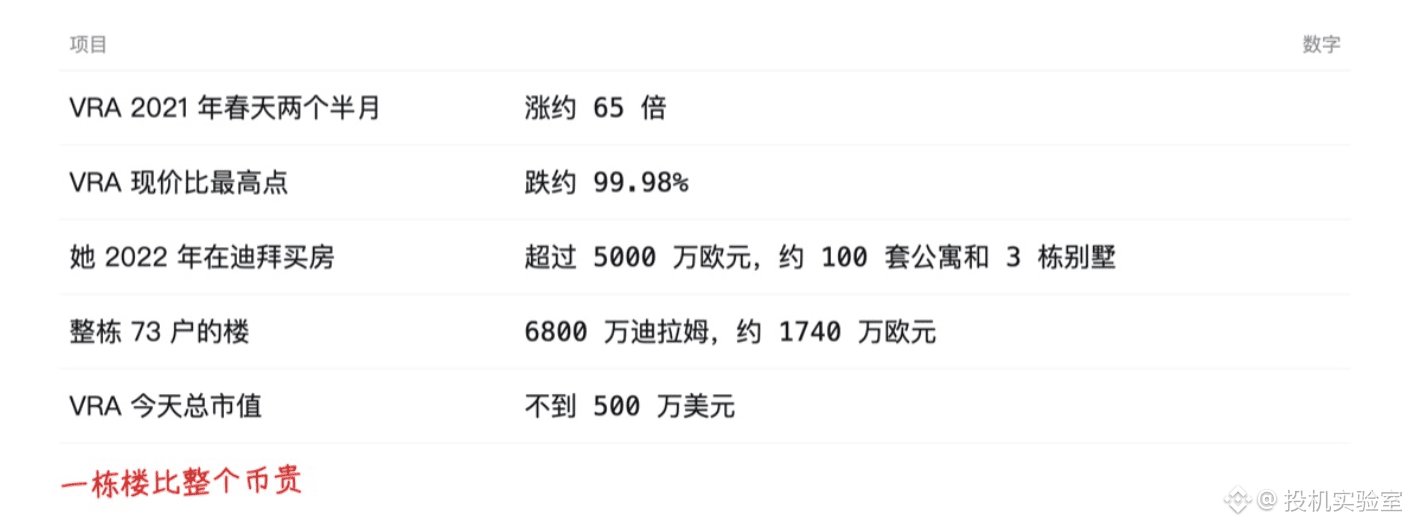
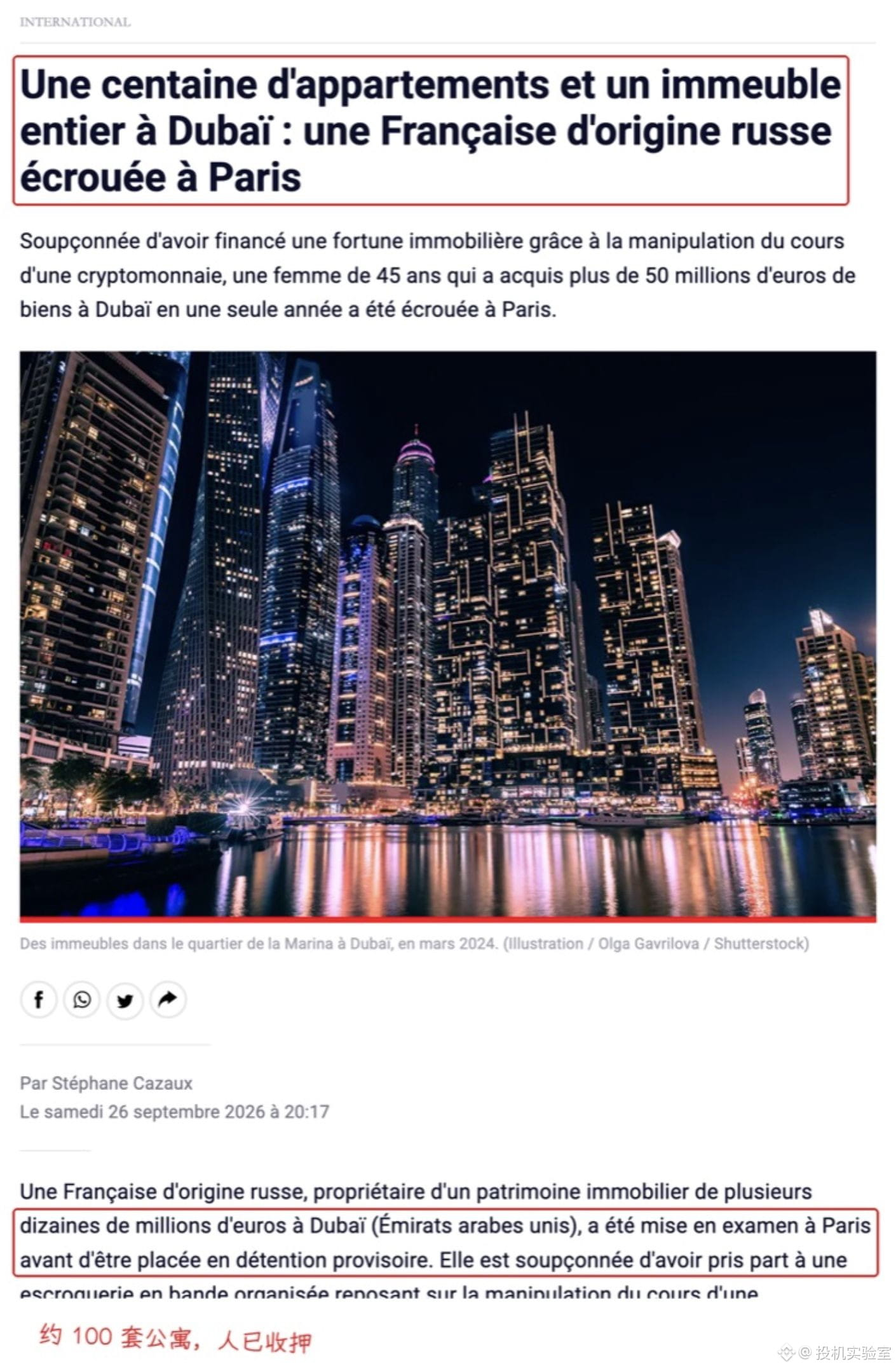
A 45-year-old Russian woman, Svetlana A, in France has been investigated by a Paris examining magistrate and detained. She is suspected of being involved with her British partner, Robert H, in orchestrating a fraud scheme that manipulated the price of VRA, and the money is believed to have been used to buy a house in Dubai.
VRA is a coin issued by this person in 2018. In the spring of 2021, it surged about 65 times over a period of two and a half months. Now it is down about 99.98% from its all-time high.
Reports say that in just 2022 alone, she spent more than €50 million in Dubai, buying about 100 apartments and three villas. But her lawyer says the source of the funds is documented, denying the accusations.
She also spent about €17.4 million to buy an entire building with 73 units.
But today the total market value of all VRA is less than $5 million. Tell me, is this really not messed up? She used “Huanle Dou” to exchange for dollars to buy a building.
To mint coins or make money, huh? Dubai bought about 100 properties.
A 45-year-old Russian woman, Svetlana A, in France has been investigated by a Paris examining magistrate and detained. She is suspected of being involved with her British partner, Robert H, in orchestrating a fraud scheme that manipulated the price of VRA, and the money is believed to have been used to buy a house in Dubai.
VRA is a coin issued by this person in 2018. In the spring of 2021, it surged about 65 times over a period of two and a half months. Now it is down about 99.98% from its all-time high.
Reports say that in just 2022 alone, she spent more than €50 million in Dubai, buying about 100 apartments and three villas. But her lawyer says the source of the funds is documented, denying the accusations.
She also spent about €17.4 million to buy an entire building with 73 units.
But today the total market value of all VRA is less than $5 million. Tell me, is this really not messed up? She used “Huanle Dou” to exchange for dollars to buy a building.
A 45-year-old Russian woman, Svetlana A, in France has been investigated by a Paris examining magistrate and detained. She is suspected of being involved with her British partner, Robert H, in orchestrating a fraud scheme that manipulated the price of VRA, and the money is believed to have been used to buy a house in Dubai.
VRA is a coin issued by this person in 2018. In the spring of 2021, it surged about 65 times over a period of two and a half months. Now it is down about 99.98% from its all-time high.
Reports say that in just 2022 alone, she spent more than €50 million in Dubai, buying about 100 apartments and three villas. But her lawyer says the source of the funds is documented, denying the accusations.
She also spent about €17.4 million to buy an entire building with 73 units.
But today the total market value of all VRA is less than $5 million. Tell me, is this really not messed up? She used “Huanle Dou” to exchange for dollars to buy a building.
3
4
14.9k
·
--
Is a 2x leveraged long ETF suitable for long-term holding? Is this a trap for people who can’t do the math?🤔🤑
A lot of people bought the 2x long ETFs for Hailix (Hyliance) or 2x long on SpaceX, got stuck, and planned to hold long-term—only to find that the longer they held, the less money they had in their accounts.
Maybe the stock price eventually comes back close to where it started, but by then the 2x long ETF is already down by about 40%.
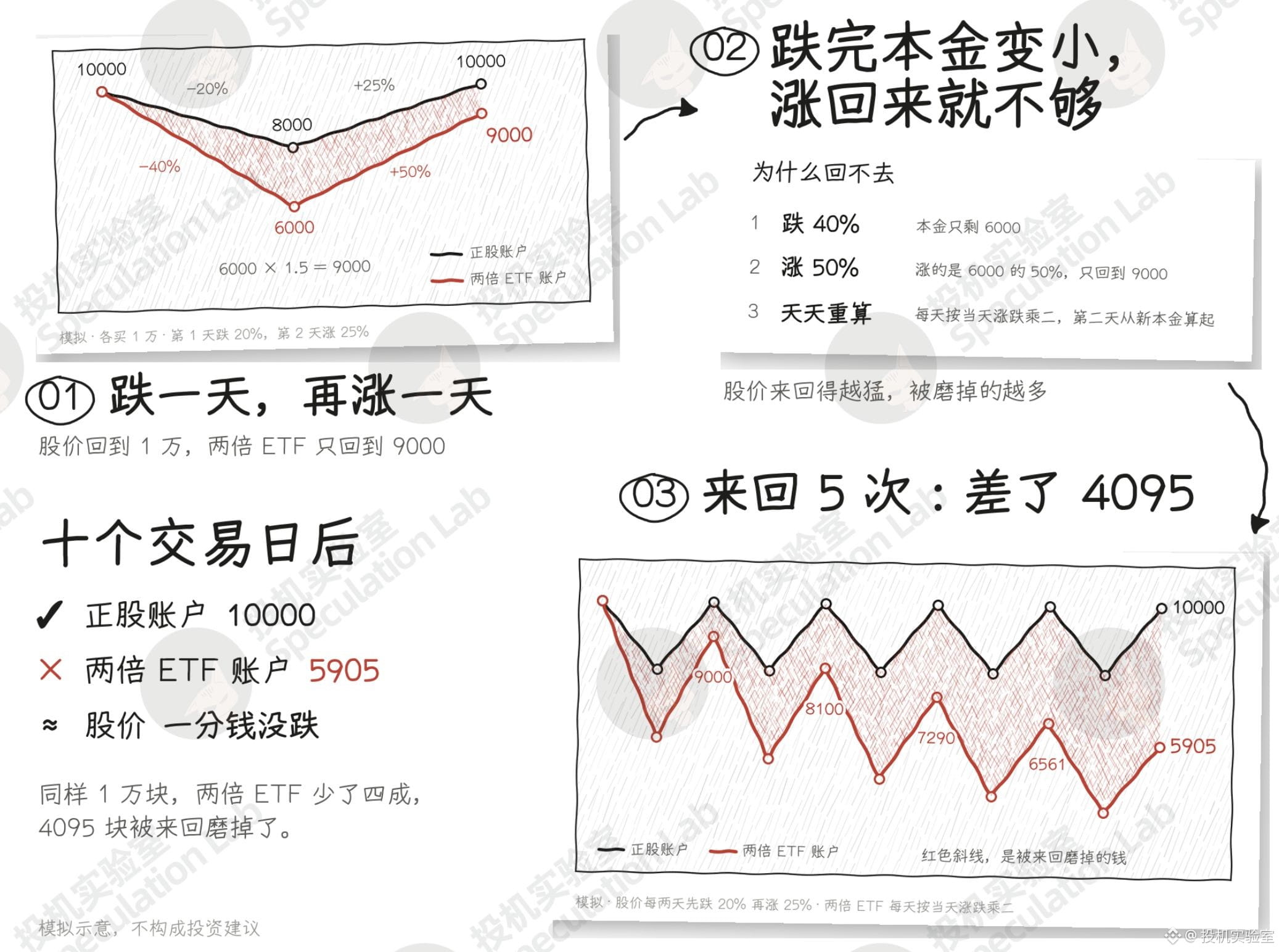
Let’s talk about how the numbers are calculated. Suppose I hold 20,000 yuan: 10,000 in one stock, and 10,000 in a 2x leveraged long ETF of that stock.
Day 1: The stock price drops 20%. My stock account becomes 8,000. The ETF drops 40%, becoming 6,000. I start to panic.
Day 2: The stock price rises 25%. My stock account returns to 10,000. The ETF rises 50% and becomes 9,000. I feel relieved—then I realize I’m still down 1,000.
Over the next eight trading days, the stock price keeps bouncing back and forth like this four times, and each time it returns to the original price.
My stock account is still 10,000, but the ETF account drops to 5,905. The problem is: after the fall, the ETF went from 6,000 up by 50%—so it rose by 3,000. But when the price returns to the starting point, it doesn’t come back to where it should.
It multiplies the daily gain/loss by 2 every day. The more times it bounces, the thinner your principal gets.
For example, from early last year to early November, MicroStrategy (MSTR) only fell about 12%, but its 2x leveraged long (MSTU) fell more than 65%. Its 2x leveraged short (MSTZ) also fell more than 65%.$NVDAB
{spot}(NVDABUSDT)
Is a 2x leveraged long ETF suitable for long-term holding? Is this a trap for people who can’t do the math?🤔🤑
A lot of people bought the 2x long ETFs for Hailix (Hyliance) or 2x long on SpaceX, got stuck, and planned to hold long-term—only to find that the longer they held, the less money they had in their accounts.
Maybe the stock price eventually comes back close to where it started, but by then the 2x long ETF is already down by about 40%.
Let’s talk about how the numbers are calculated. Suppose I hold 20,000 yuan: 10,000 in one stock, and 10,000 in a 2x leveraged long ETF of that stock.
Day 1: The stock price drops 20%. My stock account becomes 8,000. The ETF drops 40%, becoming 6,000. I start to panic.
Day 2: The stock price rises 25%. My stock account returns to 10,000. The ETF rises 50% and becomes 9,000. I feel relieved—then I realize I’m still down 1,000.
Over the next eight trading days, the stock price keeps bouncing back and forth like this four times, and each time it returns to the original price.
My stock account is still 10,000, but the ETF account drops to 5,905. The problem is: after the fall, the ETF went from 6,000 up by 50%—so it rose by 3,000. But when the price returns to the starting point, it doesn’t come back to where it should.
It multiplies the daily gain/loss by 2 every day. The more times it bounces, the thinner your principal gets.
For example, from early last year to early November, MicroStrategy (MSTR) only fell about 12%, but its 2x leveraged long (MSTU) fell more than 65%. Its 2x leveraged short (MSTZ) also fell more than 65%.$NVDAB
A lot of people bought the 2x long ETFs for Hailix (Hyliance) or 2x long on SpaceX, got stuck, and planned to hold long-term—only to find that the longer they held, the less money they had in their accounts.
Maybe the stock price eventually comes back close to where it started, but by then the 2x long ETF is already down by about 40%.
Let’s talk about how the numbers are calculated. Suppose I hold 20,000 yuan: 10,000 in one stock, and 10,000 in a 2x leveraged long ETF of that stock.
Day 1: The stock price drops 20%. My stock account becomes 8,000. The ETF drops 40%, becoming 6,000. I start to panic.
Day 2: The stock price rises 25%. My stock account returns to 10,000. The ETF rises 50% and becomes 9,000. I feel relieved—then I realize I’m still down 1,000.
Over the next eight trading days, the stock price keeps bouncing back and forth like this four times, and each time it returns to the original price.
My stock account is still 10,000, but the ETF account drops to 5,905. The problem is: after the fall, the ETF went from 6,000 up by 50%—so it rose by 3,000. But when the price returns to the starting point, it doesn’t come back to where it should.
It multiplies the daily gain/loss by 2 every day. The more times it bounces, the thinner your principal gets.
For example, from early last year to early November, MicroStrategy (MSTR) only fell about 12%, but its 2x leveraged long (MSTU) fell more than 65%. Its 2x leveraged short (MSTZ) also fell more than 65%.$NVDAB
2
3
6
10k
·
--
Damn it, the most extreme, out-of-control strategy that makes Lance money the fastest has leaked.
They say that over the years, in his trading, he has earned and walked away with more than $100 million in total—equivalent to more than 700 million RMB. The author of “Market Wizards,” Jack Schwager, has verified his live trading data. He’s about to publish a book for him.
Even though I haven’t seen any publicly available account data yet, in general, when people talk big about how much they’ve made, at most it’s usually a few million to tens of millions. It’s rare to see someone directly claim they made 700 million, so it may not be fake.
Jack said he will record Lance and his classic trades in a book, and he also mentioned that another trader appearing in the book is Qualamagi, the highest-paid trader in Sweden.
An extreme, out-of-control strategy’s most core element is expected value. That means before we place any trade, we need to judge whether it’s actually worth doing.
Whether it’s worth it mainly depends on three things.
First is the win rate, second is how big the risk is, and third is the upside potential. In other words: is the probability of a reversal at this position higher? If we do it wrong, is it easy to set a stop-loss, and is it unlikely to get hit? And after the price goes out of control and deviates far, does the recovery space—i.e., the magnitude of how far price can move back—get bigger?
Only when all three of these conditions are met at the same time is this trade a good one to take.$BTC
Damn it, the most extreme, out-of-control strategy that makes Lance money the fastest has leaked.
They say that over the years, in his trading, he has earned and walked away with more than $100 million in total—equivalent to more than 700 million RMB. The author of “Market Wizards,” Jack Schwager, has verified his live trading data. He’s about to publish a book for him.
Even though I haven’t seen any publicly available account data yet, in general, when people talk big about how much they’ve made, at most it’s usually a few million to tens of millions. It’s rare to see someone directly claim they made 700 million, so it may not be fake.
Jack said he will record Lance and his classic trades in a book, and he also mentioned that another trader appearing in the book is Qualamagi, the highest-paid trader in Sweden.
An extreme, out-of-control strategy’s most core element is expected value. That means before we place any trade, we need to judge whether it’s actually worth doing.
Whether it’s worth it mainly depends on three things.
First is the win rate, second is how big the risk is, and third is the upside potential. In other words: is the probability of a reversal at this position higher? If we do it wrong, is it easy to set a stop-loss, and is it unlikely to get hit? And after the price goes out of control and deviates far, does the recovery space—i.e., the magnitude of how far price can move back—get bigger?
Only when all three of these conditions are met at the same time is this trade a good one to take.$BTC
They say that over the years, in his trading, he has earned and walked away with more than $100 million in total—equivalent to more than 700 million RMB. The author of “Market Wizards,” Jack Schwager, has verified his live trading data. He’s about to publish a book for him.
Even though I haven’t seen any publicly available account data yet, in general, when people talk big about how much they’ve made, at most it’s usually a few million to tens of millions. It’s rare to see someone directly claim they made 700 million, so it may not be fake.
Jack said he will record Lance and his classic trades in a book, and he also mentioned that another trader appearing in the book is Qualamagi, the highest-paid trader in Sweden.
An extreme, out-of-control strategy’s most core element is expected value. That means before we place any trade, we need to judge whether it’s actually worth doing.
Whether it’s worth it mainly depends on three things.
First is the win rate, second is how big the risk is, and third is the upside potential. In other words: is the probability of a reversal at this position higher? If we do it wrong, is it easy to set a stop-loss, and is it unlikely to get hit? And after the price goes out of control and deviates far, does the recovery space—i.e., the magnitude of how far price can move back—get bigger?
Only when all three of these conditions are met at the same time is this trade a good one to take.$BTC
1
5
4.3k
·
--
🤔 You're in your 20s—what would you do if a 40-something big brother with 100 million in savings wants to marry you?
Don’t rush to pick the big brother yet. First, look at the numbers he offers you.
He’ll start by giving you an Offer: you’ll get 10,000 yuan per month in hand. He’ll put it into his own or a friend’s company. Every day you just photocopy a few pages, check attendance, and the yearly cost is about 150,000 yuan.
Then every month he’ll have you accompany him on business trips for a weekend—business class flights, staying in luxury hotels, and eating beautiful meals. All in, it’s about 20,000 yuan per month, or 240,000 yuan per year.
Every three months he’ll give you a small gift priced around 10,000 yuan each. That’s 40,000 yuan a year.
Unless your own dad also has a few tens of millions in savings, there’s basically no girl in her 20s who can withstand such an offensive.
Once you’re officially in a relationship, at most he’ll also help you rent an apartment. Even in a first-tier city, that’s only about 120,000 yuan per year—so what’s the total cost?
In total, it’s 550,000.
Now, in medium-to-low-risk quantitative investing, you can easily achieve around 3%. If he has about 18 million in savings, he can “hold” you with zero cost. You can even be more expensive—1.1 million, 2.2 million...
All within the big brother’s zero-cost range.
If he can hold you with zero cost, then naturally he can also switch to someone else with zero cost. As long as he doesn’t swap for a year, and he’s only talking to one or two or three big brothers at a time… then I guess that counts as “loyalty,” right?
🤔 You're in your 20s—what would you do if a 40-something big brother with 100 million in savings wants to marry you?
Don’t rush to pick the big brother yet. First, look at the numbers he offers you.
He’ll start by giving you an Offer: you’ll get 10,000 yuan per month in hand. He’ll put it into his own or a friend’s company. Every day you just photocopy a few pages, check attendance, and the yearly cost is about 150,000 yuan.
Then every month he’ll have you accompany him on business trips for a weekend—business class flights, staying in luxury hotels, and eating beautiful meals. All in, it’s about 20,000 yuan per month, or 240,000 yuan per year.
Every three months he’ll give you a small gift priced around 10,000 yuan each. That’s 40,000 yuan a year.
Unless your own dad also has a few tens of millions in savings, there’s basically no girl in her 20s who can withstand such an offensive.
Once you’re officially in a relationship, at most he’ll also help you rent an apartment. Even in a first-tier city, that’s only about 120,000 yuan per year—so what’s the total cost?
In total, it’s 550,000.
Now, in medium-to-low-risk quantitative investing, you can easily achieve around 3%. If he has about 18 million in savings, he can “hold” you with zero cost. You can even be more expensive—1.1 million, 2.2 million...
All within the big brother’s zero-cost range.
If he can hold you with zero cost, then naturally he can also switch to someone else with zero cost. As long as he doesn’t swap for a year, and he’s only talking to one or two or three big brothers at a time… then I guess that counts as “loyalty,” right?
Don’t rush to pick the big brother yet. First, look at the numbers he offers you.
He’ll start by giving you an Offer: you’ll get 10,000 yuan per month in hand. He’ll put it into his own or a friend’s company. Every day you just photocopy a few pages, check attendance, and the yearly cost is about 150,000 yuan.
Then every month he’ll have you accompany him on business trips for a weekend—business class flights, staying in luxury hotels, and eating beautiful meals. All in, it’s about 20,000 yuan per month, or 240,000 yuan per year.
Every three months he’ll give you a small gift priced around 10,000 yuan each. That’s 40,000 yuan a year.
Unless your own dad also has a few tens of millions in savings, there’s basically no girl in her 20s who can withstand such an offensive.
Once you’re officially in a relationship, at most he’ll also help you rent an apartment. Even in a first-tier city, that’s only about 120,000 yuan per year—so what’s the total cost?
In total, it’s 550,000.
Now, in medium-to-low-risk quantitative investing, you can easily achieve around 3%. If he has about 18 million in savings, he can “hold” you with zero cost. You can even be more expensive—1.1 million, 2.2 million...
All within the big brother’s zero-cost range.
If he can hold you with zero cost, then naturally he can also switch to someone else with zero cost. As long as he doesn’t swap for a year, and he’s only talking to one or two or three big brothers at a time… then I guess that counts as “loyalty,” right?
16
8
5.6k
·
--
Verified
Trading with 15% compound interest per week—this is awesome.
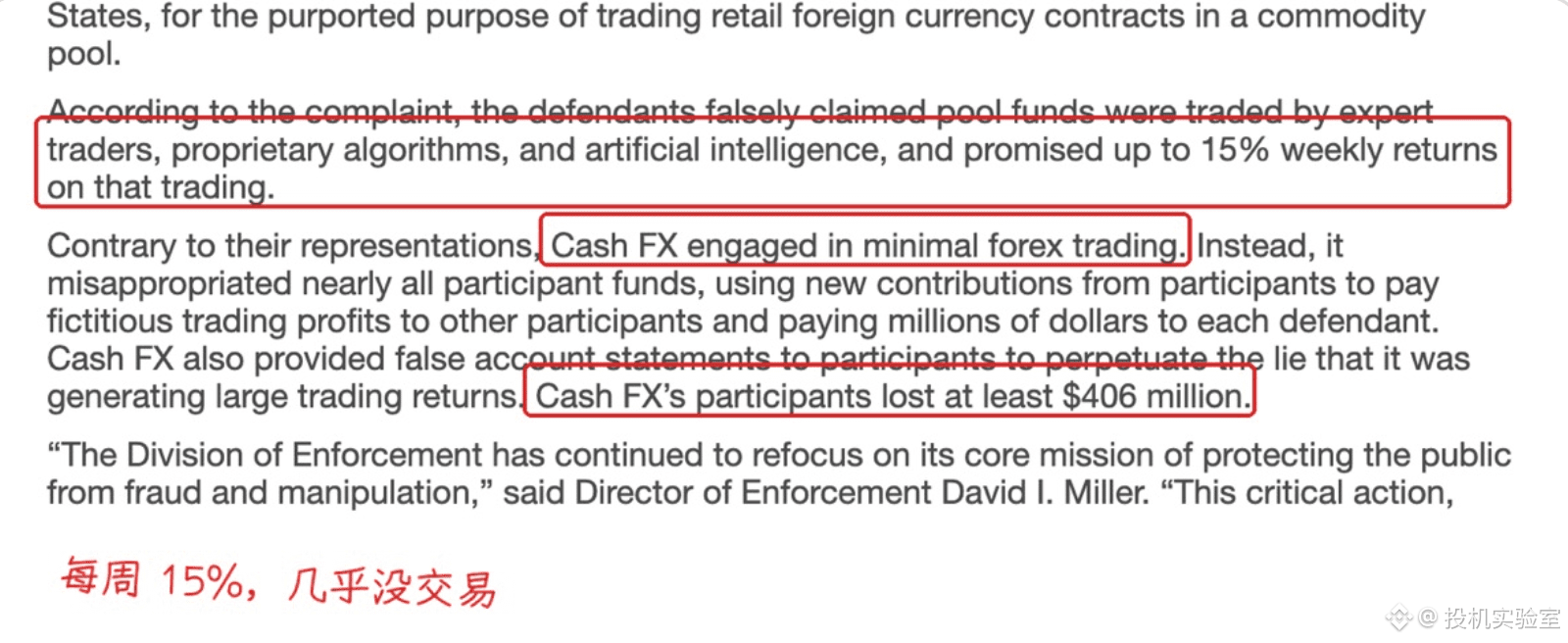
Brazil still suffers from too little hardship. Brazilian Huascar Jose Lopez Castillo’s Cash FX told the outside world that you hand the money to professional traders, and proprietary algorithms and AI trade forex. Up to 15% per week, and they raised more than $950 million by recruiting people through multiple levels.
On September 25, the U.S. CFTC sued, saying it didn’t execute any trades at all. Instead, it used the newcomers’ money to pay returns to the older investors, then sent everyone fake account statements. Each defendant allegedly received millions of dollars.
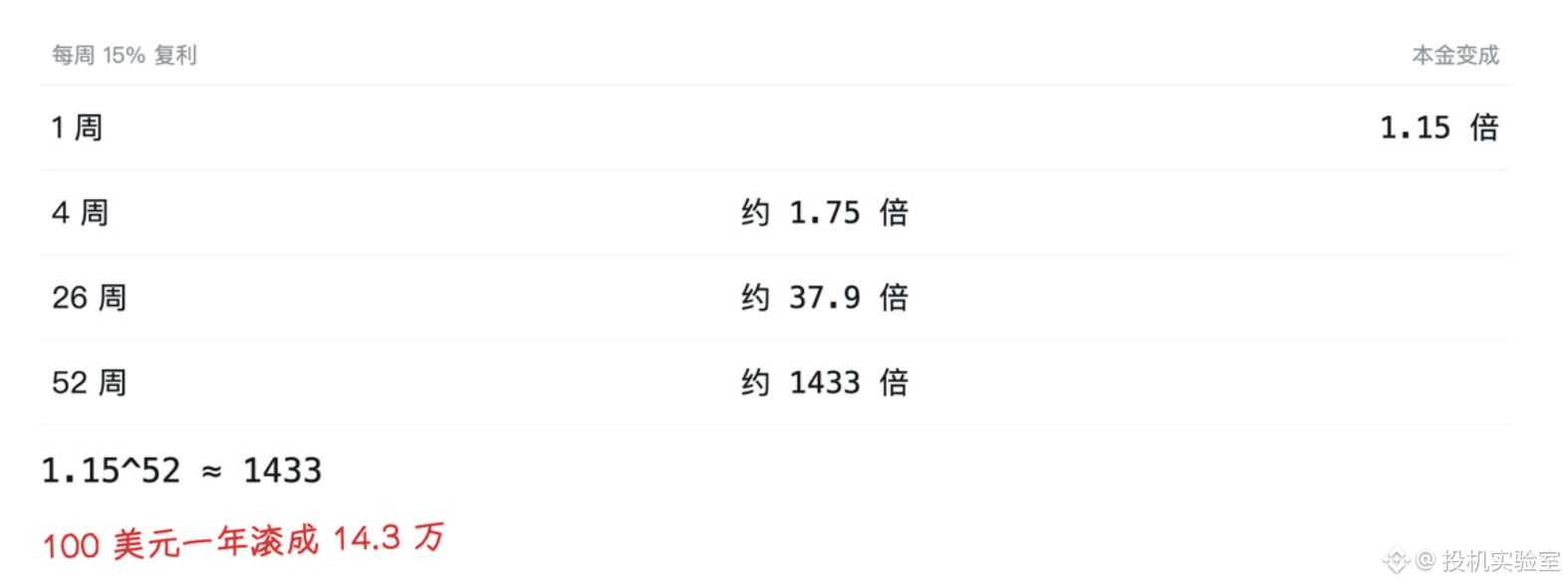
15% weekly compounded for a year is about 14.33 times—i.e., $100 turns into about $143,000. Is this for real? You do the math and see what that would be.
The people who invested this time collectively lost about $406 million. $BTC
{spot}(BTCUSDT)
Trading with 15% compound interest per week—this is awesome.
Brazil still suffers from too little hardship. Brazilian Huascar Jose Lopez Castillo’s Cash FX told the outside world that you hand the money to professional traders, and proprietary algorithms and AI trade forex. Up to 15% per week, and they raised more than $950 million by recruiting people through multiple levels.
On September 25, the U.S. CFTC sued, saying it didn’t execute any trades at all. Instead, it used the newcomers’ money to pay returns to the older investors, then sent everyone fake account statements. Each defendant allegedly received millions of dollars.
15% weekly compounded for a year is about 14.33 times—i.e., $100 turns into about $143,000. Is this for real? You do the math and see what that would be.
The people who invested this time collectively lost about $406 million. $BTC
Brazil still suffers from too little hardship. Brazilian Huascar Jose Lopez Castillo’s Cash FX told the outside world that you hand the money to professional traders, and proprietary algorithms and AI trade forex. Up to 15% per week, and they raised more than $950 million by recruiting people through multiple levels.
On September 25, the U.S. CFTC sued, saying it didn’t execute any trades at all. Instead, it used the newcomers’ money to pay returns to the older investors, then sent everyone fake account statements. Each defendant allegedly received millions of dollars.
15% weekly compounded for a year is about 14.33 times—i.e., $100 turns into about $143,000. Is this for real? You do the math and see what that would be.
The people who invested this time collectively lost about $406 million. $BTC
1
1
7.3k
·
--
Article
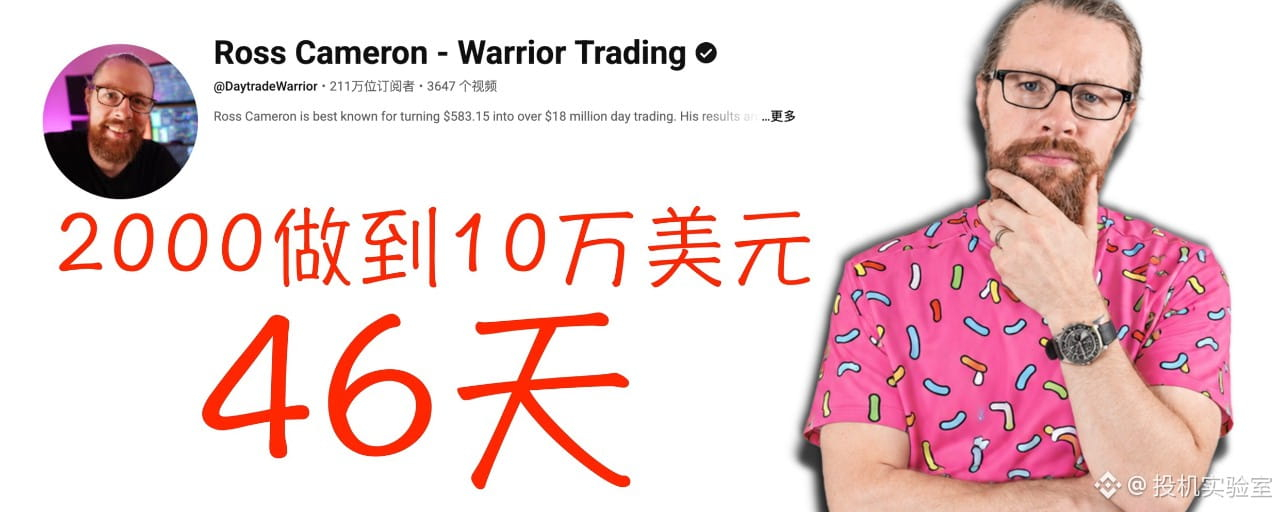
I finally found Cameron’s super strategy he’s used for 20 years! A top trader who earned $18.81 million—then used just 46 days to turn an account by more than 50x, turning $2,000 into $105,000!!American trader Ross Cameron turned a $2,000 small account into more than 50 times, reaching $105,000. This time it only took 46 days. Out of 113 trades, only 33 were losing, for a win rate of over 70%.
This is his latest round of the small-account growth challenge, and his profit curve is still so steady. He said he’s been using this strategy for more than twenty years, and it has helped him earn over 18.8 million USD in total.$BTC
He’s already done dozens of rounds of small-account challenges. Now every day he follows a very fixed three-step routine: pick stocks, find entry points, and sell.
I finally found Cameron’s super strategy he’s used for 20 years! A top trader who earned $18.81 million—then used just 46 days to turn an account by more than 50x, turning $2,000 into $105,000!!
American trader Ross Cameron turned a $2,000 small account into more than 50 times, reaching $105,000. This time it only took 46 days. Out of 113 trades, only 33 were losing, for a win rate of over 70%.
This is his latest round of the small-account growth challenge, and his profit curve is still so steady. He said he’s been using this strategy for more than twenty years, and it has helped him earn over 18.8 million USD in total.$BTC
He’s already done dozens of rounds of small-account challenges. Now every day he follows a very fixed three-step routine: pick stocks, find entry points, and sell.
This is his latest round of the small-account growth challenge, and his profit curve is still so steady. He said he’s been using this strategy for more than twenty years, and it has helped him earn over 18.8 million USD in total.$BTC
He’s already done dozens of rounds of small-account challenges. Now every day he follows a very fixed three-step routine: pick stocks, find entry points, and sell.
1
5
20
11.9k
·
--
This method really never fails. In the latest round of small-account challenges, American trader Ross Cameron turned a $2,000 small account into more than 50x the original amount, with a win rate exceeding 70%😘🤑
He reached $105,000 in just 46 days.
Out of 113 trades, only 33 were losing trades. This is his latest round of a small-account growth challenge—his equity curve is still that steady. He says he’s been using this strategy for more than 20 years, and it has helped him earn over $18.81 million in total.
He’s been doing small-account challenges for a dozen or even dozens of rounds now. Every day, it’s just three steps: picking stocks, finding entry points, and exiting. He has broken the trading down into a trading manual, with clear and precise settings for every condition—the more conditions that are met, the higher the win rate.
Making a small account big like this is already incredibly easy for him!$$BTC
This method really never fails. In the latest round of small-account challenges, American trader Ross Cameron turned a $2,000 small account into more than 50x the original amount, with a win rate exceeding 70%😘🤑
He reached $105,000 in just 46 days.
Out of 113 trades, only 33 were losing trades. This is his latest round of a small-account growth challenge—his equity curve is still that steady. He says he’s been using this strategy for more than 20 years, and it has helped him earn over $18.81 million in total.
He’s been doing small-account challenges for a dozen or even dozens of rounds now. Every day, it’s just three steps: picking stocks, finding entry points, and exiting. He has broken the trading down into a trading manual, with clear and precise settings for every condition—the more conditions that are met, the higher the win rate.
Making a small account big like this is already incredibly easy for him!$$BTC
He reached $105,000 in just 46 days.
Out of 113 trades, only 33 were losing trades. This is his latest round of a small-account growth challenge—his equity curve is still that steady. He says he’s been using this strategy for more than 20 years, and it has helped him earn over $18.81 million in total.
He’s been doing small-account challenges for a dozen or even dozens of rounds now. Every day, it’s just three steps: picking stocks, finding entry points, and exiting. He has broken the trading down into a trading manual, with clear and precise settings for every condition—the more conditions that are met, the higher the win rate.
Making a small account big like this is already incredibly easy for him!$$BTC
19
23
312
154.4k
·
--
“I ate three buns and two eggs, and I choked.”
“Today I ate three buns and two eggs, and I choked.”
《I Choked》$BTC
“I ate three buns and two eggs, and I choked.”
“Today I ate three buns and two eggs, and I choked.”
《I Choked》$BTC
“Today I ate three buns and two eggs, and I choked.”
《I Choked》$BTC
3
4
7.6k
·
--
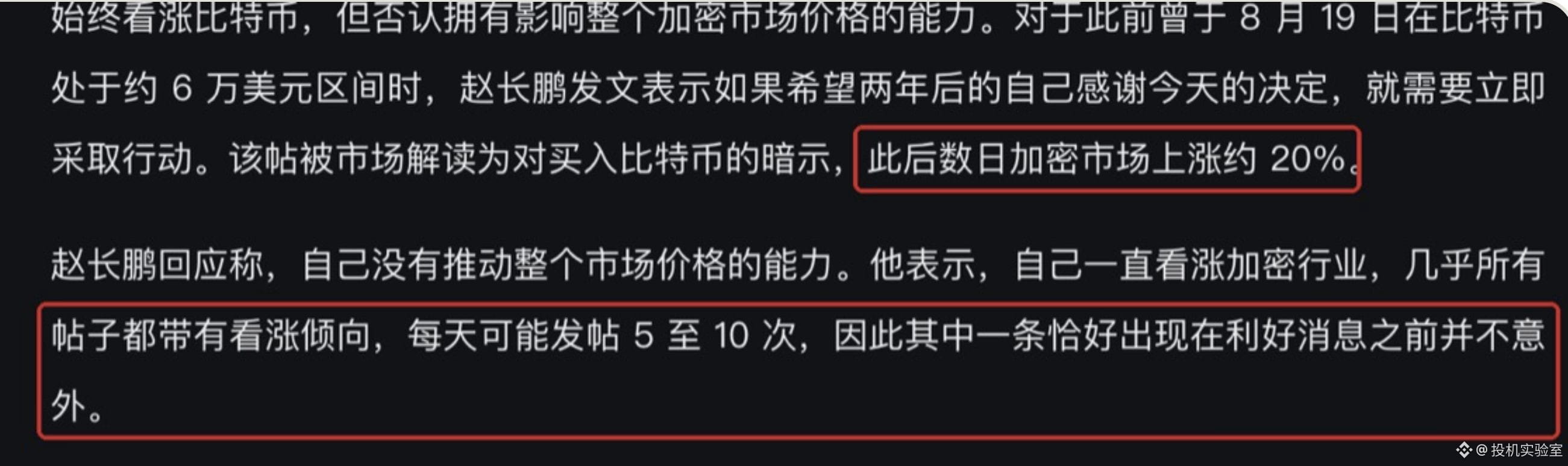
On Zhao Changpeng’s podcast “When Shift Happens,” he was asked: “Back then, when Bitcoin was over $60,000, he posted saying he wanted his future self two years from now to thank the decision he made today—and then acted immediately.”
Then five hours later, Trump spoke in a way that was positive for crypto. Over the following few days, the market rose about 20%—what’s going on?
He said he couldn’t move the whole market; it was purely coincidence. He’s basically bullish on almost every post, and he publishes 5 to 10 posts every day—so it’s not strange that one of them happened to catch the news boost.
But that explanation doesn’t make sense. A few days ago, when Bitcoin fell to $75,000, didn’t CZ say the drop was an opportunity to buy? So how do you explain this?
On Binance, saying $60,000+ was about “stabilizing the market” was actually just taking the chance to buy the dip. Once he’d bought enough, he urged people to take action right away.
At this level, you don’t even need to open an exchange—you could become a billionaire just by trading 😂$BTC
{spot}(BTCUSDT)
On Zhao Changpeng’s podcast “When Shift Happens,” he was asked: “Back then, when Bitcoin was over $60,000, he posted saying he wanted his future self two years from now to thank the decision he made today—and then acted immediately.”
Then five hours later, Trump spoke in a way that was positive for crypto. Over the following few days, the market rose about 20%—what’s going on?
He said he couldn’t move the whole market; it was purely coincidence. He’s basically bullish on almost every post, and he publishes 5 to 10 posts every day—so it’s not strange that one of them happened to catch the news boost.
But that explanation doesn’t make sense. A few days ago, when Bitcoin fell to $75,000, didn’t CZ say the drop was an opportunity to buy? So how do you explain this?
On Binance, saying $60,000+ was about “stabilizing the market” was actually just taking the chance to buy the dip. Once he’d bought enough, he urged people to take action right away.
At this level, you don’t even need to open an exchange—you could become a billionaire just by trading 😂$BTC
Then five hours later, Trump spoke in a way that was positive for crypto. Over the following few days, the market rose about 20%—what’s going on?
He said he couldn’t move the whole market; it was purely coincidence. He’s basically bullish on almost every post, and he publishes 5 to 10 posts every day—so it’s not strange that one of them happened to catch the news boost.
But that explanation doesn’t make sense. A few days ago, when Bitcoin fell to $75,000, didn’t CZ say the drop was an opportunity to buy? So how do you explain this?
On Binance, saying $60,000+ was about “stabilizing the market” was actually just taking the chance to buy the dip. Once he’d bought enough, he urged people to take action right away.
At this level, you don’t even need to open an exchange—you could become a billionaire just by trading 😂$BTC

8
1
23
38.7k
·
--
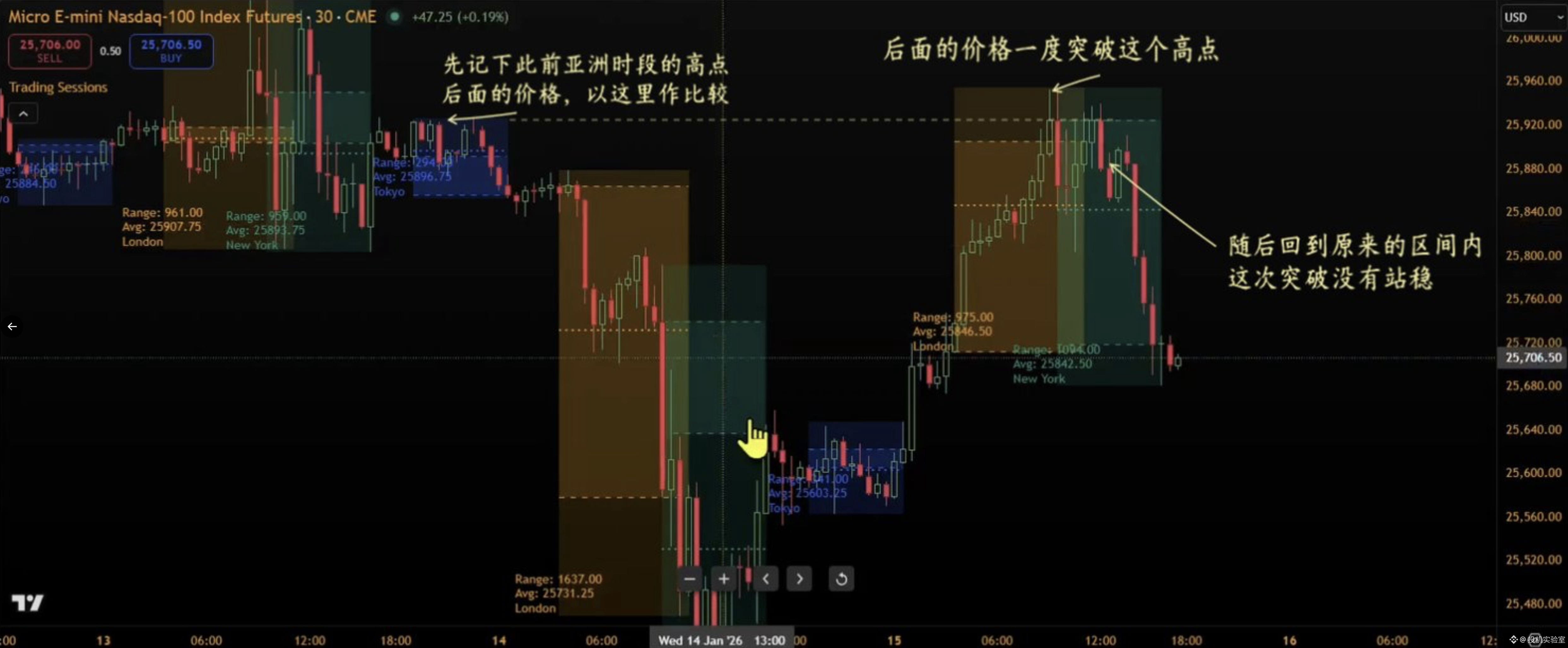
There’s a very useful tool that can automatically box in the high and low points of the Asian session, the London session, and the New York session—so you don’t have to spend every day staring at the clock to find the right positions and then manually draw lines segment by segment.
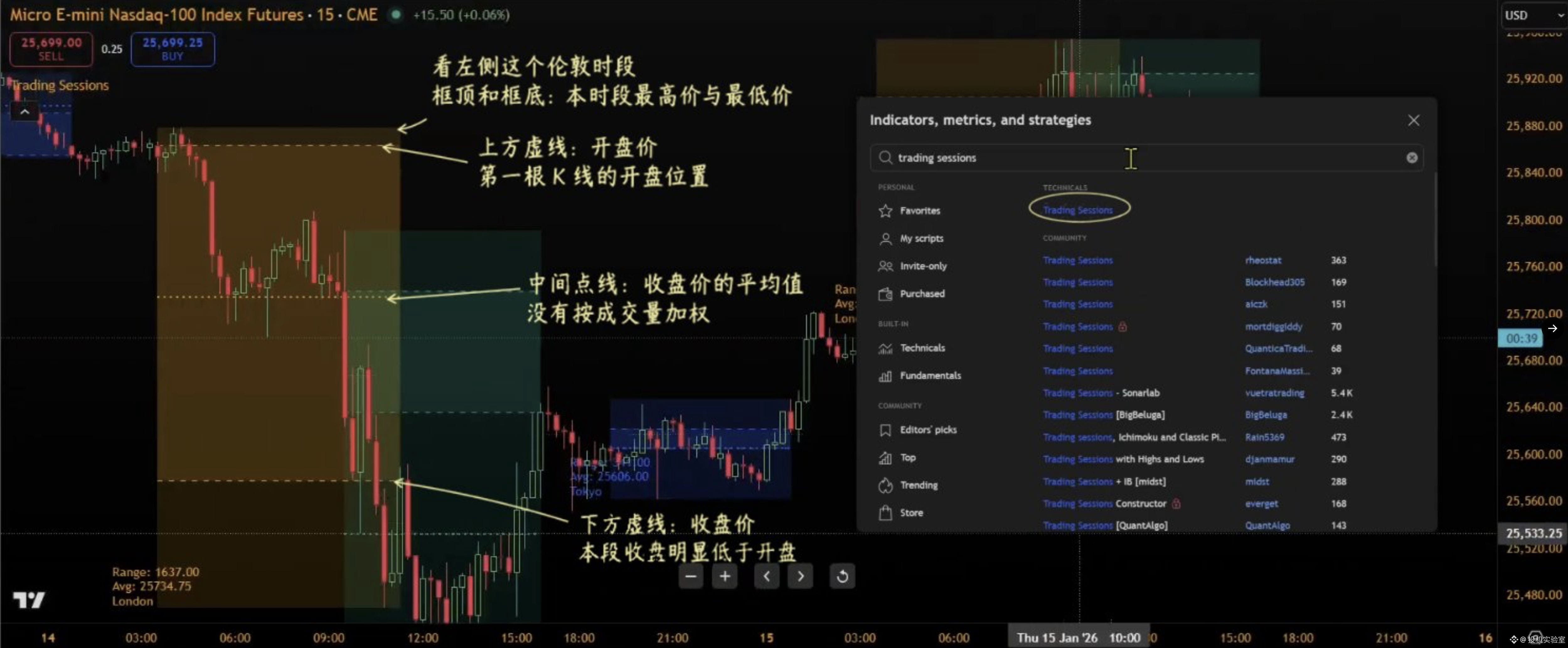
It’s called Trading Sessions, the trading sessions indicator.
You can adjust the start and end time of each session, or keep only the sessions you care about.
It groups the candlesticks that open within the specified session together—the top of the box is the highest price among those candlesticks, and the bottom is the lowest price.
While the session is still ongoing, if a new high or low appears, the box automatically expands to include it.
After the session ends, the high-low range for that period is fixed, making it easy to compare later.
The most practical part is using the high and low points from the previous session to observe how the price behaves afterward.
For example, if the Asian session has been ranging within a certain band, then after the London session opens, the price starts breaking upward.
At that point, you can compare to the Asian session’s upper boundary—watch whether the price can stay outside the original range, and whether it holds that level when it pulls back.
If, after breaking out, the price quickly falls back inside the box again, it suggests the breakout hasn’t truly held. But if the price pulls back to the upper boundary and then continues rising, you can keep monitoring whether it can move even higher.
It can also help you tell whether, within a session, price repeatedly oscillates or instead moves overall in one direction.
Turn on the opening line and closing line to compare this session’s open price and close price.
If the box is high but the close is near the open, it means the market fluctuated a lot during the session, but the overall rise/fall was small. If the close is near the highest point and clearly above the open, it indicates that by the end of the session the price still retained most of its upward movement.
Inside the box, you can also display a mid/average price line. The method is to add up the close prices of each candlestick in that session and divide by the number of candles. This makes it easy to compare where the current price sits relative to that session’s average—but it is not volume-weighted, so it can’t be treated as the average cost of holdings.
When setting it up, be sure to pay attention to the time zone.
New York uses America/New_York, and London uses Europe/London. It can automatically adjust with local daylight saving time, so the boxed times won’t shift by an hour after the seasons change. If you only care about the first hour after the U.S. stock market opens, you can also set that as a separate session, so the indicator will automatically mark the high and low points for that hour every day and then you can watch whether later price action breaks out.$BTC
There’s a very useful tool that can automatically box in the high and low points of the Asian session, the London session, and the New York session—so you don’t have to spend every day staring at the clock to find the right positions and then manually draw lines segment by segment.
It’s called Trading Sessions, the trading sessions indicator.
You can adjust the start and end time of each session, or keep only the sessions you care about.
It groups the candlesticks that open within the specified session together—the top of the box is the highest price among those candlesticks, and the bottom is the lowest price.
While the session is still ongoing, if a new high or low appears, the box automatically expands to include it.
After the session ends, the high-low range for that period is fixed, making it easy to compare later.
The most practical part is using the high and low points from the previous session to observe how the price behaves afterward.
For example, if the Asian session has been ranging within a certain band, then after the London session opens, the price starts breaking upward.
At that point, you can compare to the Asian session’s upper boundary—watch whether the price can stay outside the original range, and whether it holds that level when it pulls back.
If, after breaking out, the price quickly falls back inside the box again, it suggests the breakout hasn’t truly held. But if the price pulls back to the upper boundary and then continues rising, you can keep monitoring whether it can move even higher.
It can also help you tell whether, within a session, price repeatedly oscillates or instead moves overall in one direction.
Turn on the opening line and closing line to compare this session’s open price and close price.
If the box is high but the close is near the open, it means the market fluctuated a lot during the session, but the overall rise/fall was small. If the close is near the highest point and clearly above the open, it indicates that by the end of the session the price still retained most of its upward movement.
Inside the box, you can also display a mid/average price line. The method is to add up the close prices of each candlestick in that session and divide by the number of candles. This makes it easy to compare where the current price sits relative to that session’s average—but it is not volume-weighted, so it can’t be treated as the average cost of holdings.
When setting it up, be sure to pay attention to the time zone.
New York uses America/New_York, and London uses Europe/London. It can automatically adjust with local daylight saving time, so the boxed times won’t shift by an hour after the seasons change. If you only care about the first hour after the U.S. stock market opens, you can also set that as a separate session, so the indicator will automatically mark the high and low points for that hour every day and then you can watch whether later price action breaks out.$BTC
It’s called Trading Sessions, the trading sessions indicator.
You can adjust the start and end time of each session, or keep only the sessions you care about.
It groups the candlesticks that open within the specified session together—the top of the box is the highest price among those candlesticks, and the bottom is the lowest price.
While the session is still ongoing, if a new high or low appears, the box automatically expands to include it.
After the session ends, the high-low range for that period is fixed, making it easy to compare later.
The most practical part is using the high and low points from the previous session to observe how the price behaves afterward.
For example, if the Asian session has been ranging within a certain band, then after the London session opens, the price starts breaking upward.
At that point, you can compare to the Asian session’s upper boundary—watch whether the price can stay outside the original range, and whether it holds that level when it pulls back.
If, after breaking out, the price quickly falls back inside the box again, it suggests the breakout hasn’t truly held. But if the price pulls back to the upper boundary and then continues rising, you can keep monitoring whether it can move even higher.
It can also help you tell whether, within a session, price repeatedly oscillates or instead moves overall in one direction.
Turn on the opening line and closing line to compare this session’s open price and close price.
If the box is high but the close is near the open, it means the market fluctuated a lot during the session, but the overall rise/fall was small. If the close is near the highest point and clearly above the open, it indicates that by the end of the session the price still retained most of its upward movement.
Inside the box, you can also display a mid/average price line. The method is to add up the close prices of each candlestick in that session and divide by the number of candles. This makes it easy to compare where the current price sits relative to that session’s average—but it is not volume-weighted, so it can’t be treated as the average cost of holdings.
When setting it up, be sure to pay attention to the time zone.
New York uses America/New_York, and London uses Europe/London. It can automatically adjust with local daylight saving time, so the boxed times won’t shift by an hour after the seasons change. If you only care about the first hour after the U.S. stock market opens, you can also set that as a separate session, so the indicator will automatically mark the high and low points for that hour every day and then you can watch whether later price action breaks out.$BTC
5
1
22
8.8k
·
--
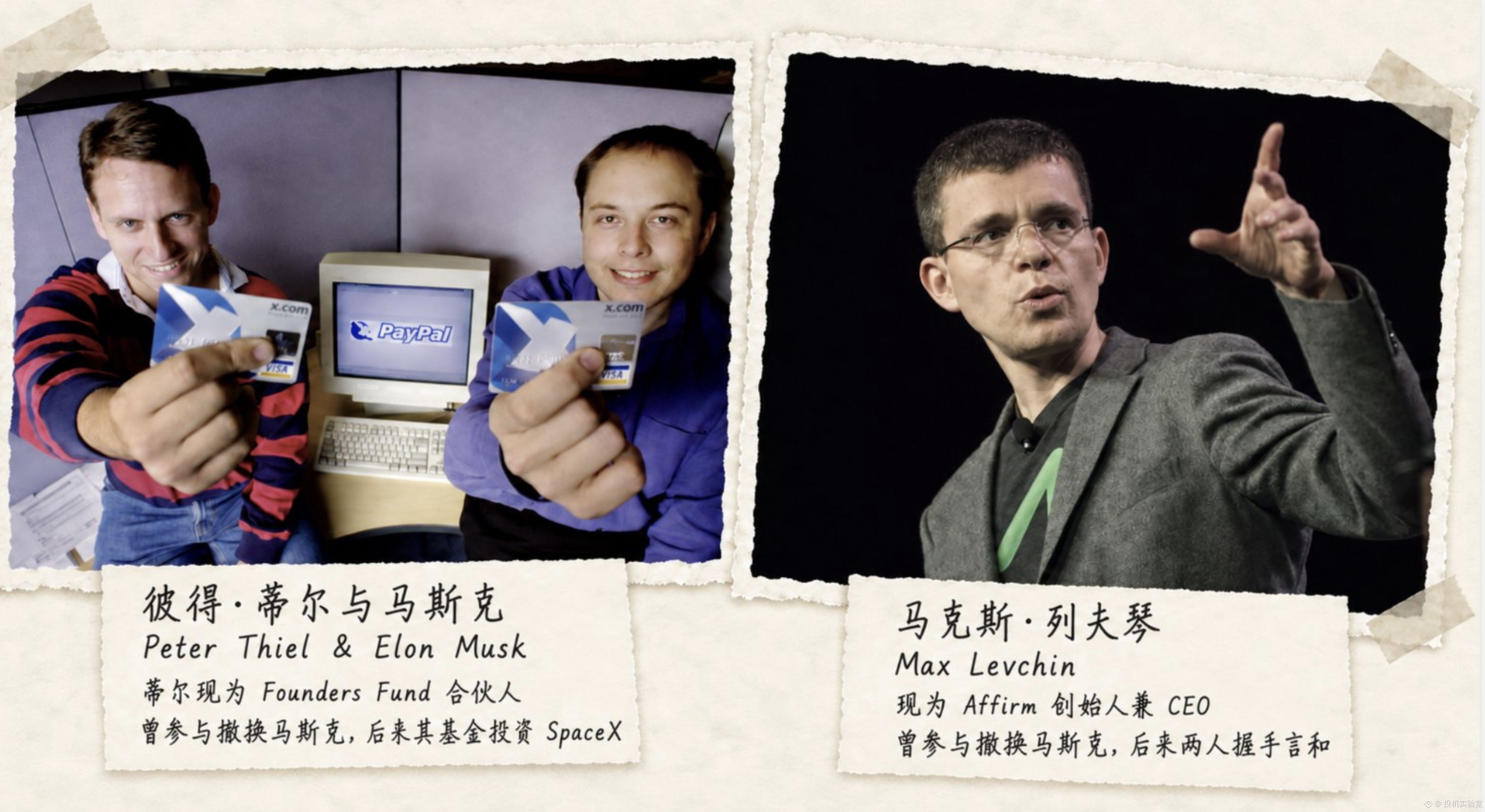
Everyone knows that Musk, in his early 30s, took away $180 million from PayPal.
But very few people know that several of PayPal’s executives, while he was on his honeymoon, removed him from his CEO position.
Musk was furious—he had intended to get even badly with these people.
But when the employees who supported him suggested they all resign in protest, Musk hesitated and stopped them.
Because the company was like his child. He would rather let it go, leave on his own, and still keep it alive—and he also decided to repair his relationship with his colleagues.
Later, he arranged to meet with Max Levitzen, a former colleague involved in the coup. Levitzen was worried and asked him, “Are you meeting me because you want to beat me up?”
Musk was heartbroken and asked, “Why did you betray me?”
Levitzen replied that he truly believed the company was about to collapse, and that he felt there was no choice. After hearing that, Musk nodded.
A few months later, the two had dinner together again. Musk told him, “Life is too short. Let’s keep moving forward hand in hand.” They shook hands and made peace.
By 2008, SpaceX had failed three launches in a row, with finances tight. It was also the fund founded by those old colleagues that invested $20 million into SpaceX, allowing the fourth launch to go ahead.
If, back then, Musk had retaliated against them and become bitter enemies, that investment would never have happened—and SpaceX might not have survived.
Some injuries may not be fully forgiven, but the rest of your life is precious too. You can’t spend it all trying to demand justice from others.
Life is too short. We should keep moving forward together.$SPCXB
{spot}(SPCXBUSDT)
Everyone knows that Musk, in his early 30s, took away $180 million from PayPal.
But very few people know that several of PayPal’s executives, while he was on his honeymoon, removed him from his CEO position.
Musk was furious—he had intended to get even badly with these people.
But when the employees who supported him suggested they all resign in protest, Musk hesitated and stopped them.
Because the company was like his child. He would rather let it go, leave on his own, and still keep it alive—and he also decided to repair his relationship with his colleagues.
Later, he arranged to meet with Max Levitzen, a former colleague involved in the coup. Levitzen was worried and asked him, “Are you meeting me because you want to beat me up?”
Musk was heartbroken and asked, “Why did you betray me?”
Levitzen replied that he truly believed the company was about to collapse, and that he felt there was no choice. After hearing that, Musk nodded.
A few months later, the two had dinner together again. Musk told him, “Life is too short. Let’s keep moving forward hand in hand.” They shook hands and made peace.
By 2008, SpaceX had failed three launches in a row, with finances tight. It was also the fund founded by those old colleagues that invested $20 million into SpaceX, allowing the fourth launch to go ahead.
If, back then, Musk had retaliated against them and become bitter enemies, that investment would never have happened—and SpaceX might not have survived.
Some injuries may not be fully forgiven, but the rest of your life is precious too. You can’t spend it all trying to demand justice from others.
Life is too short. We should keep moving forward together.$SPCXB
But very few people know that several of PayPal’s executives, while he was on his honeymoon, removed him from his CEO position.
Musk was furious—he had intended to get even badly with these people.
But when the employees who supported him suggested they all resign in protest, Musk hesitated and stopped them.
Because the company was like his child. He would rather let it go, leave on his own, and still keep it alive—and he also decided to repair his relationship with his colleagues.
Later, he arranged to meet with Max Levitzen, a former colleague involved in the coup. Levitzen was worried and asked him, “Are you meeting me because you want to beat me up?”
Musk was heartbroken and asked, “Why did you betray me?”
Levitzen replied that he truly believed the company was about to collapse, and that he felt there was no choice. After hearing that, Musk nodded.
A few months later, the two had dinner together again. Musk told him, “Life is too short. Let’s keep moving forward hand in hand.” They shook hands and made peace.
By 2008, SpaceX had failed three launches in a row, with finances tight. It was also the fund founded by those old colleagues that invested $20 million into SpaceX, allowing the fourth launch to go ahead.
If, back then, Musk had retaliated against them and become bitter enemies, that investment would never have happened—and SpaceX might not have survived.
Some injuries may not be fully forgiven, but the rest of your life is precious too. You can’t spend it all trying to demand justice from others.
Life is too short. We should keep moving forward together.$SPCXB
38
7
243
232k
·
--
Bit Emperor turned a $1,500 account directly into $23.97 million—roughly RMB 170 million-plus—then he quit the scene. Now he occasionally joins crypto-community meetups.
He shares very few of his publicly available strategies and methods, but in early interviews with Golden Finance and on Weibo you can still glean a few things—rare, but useful~
He said his first $10 million took the longest and was the most painful. During that period, his trading system was constantly rebuilt and refined, taking him a full year and a half. The second $10 million took three months, the third took forty days, and the fourth took 5 days. The remaining 75% of his funds was earned within the most recent half year. This process is exactly the compounding that Mr. Buffett talks about—truly amazing! $BTC
Bit Emperor turned a $1,500 account directly into $23.97 million—roughly RMB 170 million-plus—then he quit the scene. Now he occasionally joins crypto-community meetups.
He shares very few of his publicly available strategies and methods, but in early interviews with Golden Finance and on Weibo you can still glean a few things—rare, but useful~
He said his first $10 million took the longest and was the most painful. During that period, his trading system was constantly rebuilt and refined, taking him a full year and a half. The second $10 million took three months, the third took forty days, and the fourth took 5 days. The remaining 75% of his funds was earned within the most recent half year. This process is exactly the compounding that Mr. Buffett talks about—truly amazing! $BTC
He shares very few of his publicly available strategies and methods, but in early interviews with Golden Finance and on Weibo you can still glean a few things—rare, but useful~
He said his first $10 million took the longest and was the most painful. During that period, his trading system was constantly rebuilt and refined, taking him a full year and a half. The second $10 million took three months, the third took forty days, and the fourth took 5 days. The remaining 75% of his funds was earned within the most recent half year. This process is exactly the compounding that Mr. Buffett talks about—truly amazing! $BTC
21
11
207
116.7k
·
--
North Korean hackers are really a toxic tumor—they can think of every trick.
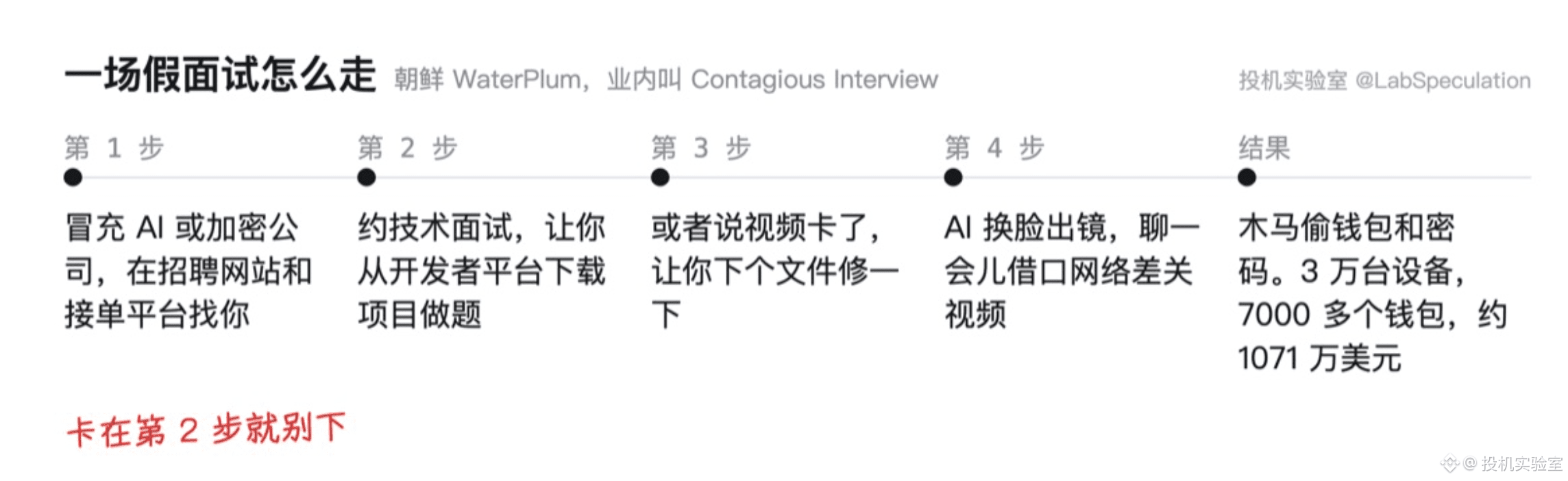
Besides stealing from exchanges, they don’t leave retail investors alone either. Recently, North Korean hackers have been pretending to be AI and crypto company interviewers, specifically targeting web designers, engineers, and people working on Web3.
The scam isn’t complicated either.
They set up a technical interview: you’re asked to download a project from a developer platform and do the questions—or, if the video freezes, they tell you to download a file to fix it. The file contains a trojan. It steals your wallet and passwords.
The “interviewer” will even use AI face-swapping, chat with you for a while, then make an excuse about poor network connection and end the video.
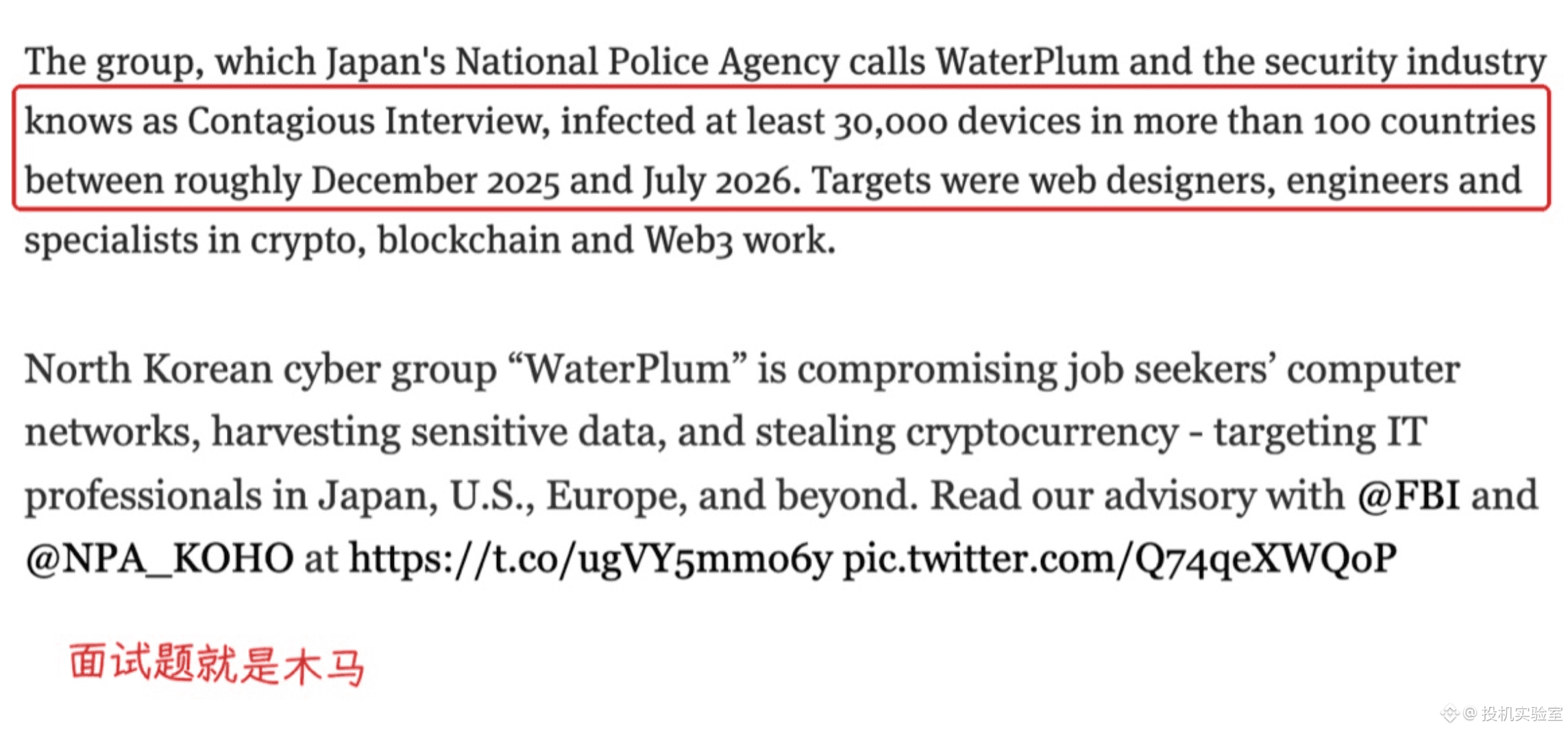
In the past few days, seven organizations from the US, Japan, Germany, and Australia jointly issued warnings: this fake interview has infected at least 30,000 devices, siphoning funds or credentials from more than 7,000 wallets—about $10.71 million has flowed into Pyongyang.
If the “interview” makes you download something to run, don’t run it on your computer that has your wallet installed…$BTC
{spot}(BTCUSDT)
North Korean hackers are really a toxic tumor—they can think of every trick.
Besides stealing from exchanges, they don’t leave retail investors alone either. Recently, North Korean hackers have been pretending to be AI and crypto company interviewers, specifically targeting web designers, engineers, and people working on Web3.
The scam isn’t complicated either.
They set up a technical interview: you’re asked to download a project from a developer platform and do the questions—or, if the video freezes, they tell you to download a file to fix it. The file contains a trojan. It steals your wallet and passwords.
The “interviewer” will even use AI face-swapping, chat with you for a while, then make an excuse about poor network connection and end the video.
In the past few days, seven organizations from the US, Japan, Germany, and Australia jointly issued warnings: this fake interview has infected at least 30,000 devices, siphoning funds or credentials from more than 7,000 wallets—about $10.71 million has flowed into Pyongyang.
If the “interview” makes you download something to run, don’t run it on your computer that has your wallet installed…$BTC
Besides stealing from exchanges, they don’t leave retail investors alone either. Recently, North Korean hackers have been pretending to be AI and crypto company interviewers, specifically targeting web designers, engineers, and people working on Web3.
The scam isn’t complicated either.
They set up a technical interview: you’re asked to download a project from a developer platform and do the questions—or, if the video freezes, they tell you to download a file to fix it. The file contains a trojan. It steals your wallet and passwords.
The “interviewer” will even use AI face-swapping, chat with you for a while, then make an excuse about poor network connection and end the video.
In the past few days, seven organizations from the US, Japan, Germany, and Australia jointly issued warnings: this fake interview has infected at least 30,000 devices, siphoning funds or credentials from more than 7,000 wallets—about $10.71 million has flowed into Pyongyang.
If the “interview” makes you download something to run, don’t run it on your computer that has your wallet installed…$BTC
75
3
103
89.6k
Log in to explore more content
Join global crypto users on Binance Square
⚡️ Get latest and useful information about crypto.
💬 Trusted by the world’s largest crypto exchange.
👍 Discover real insights from verified creators.
Email / Phone number
Trending Topics
BitcoinClears$85200
9,507 views
200 Discussing
We got the move, and $BTC is standing exactly where we were before the data. That’s what actual patience for a trade looks like.
The data came in mixed but with some important numbers. ADP Non-Farm Employment Change came at 90K vs 73K forecast, while Core PCE came in at 0.2% vs 0.3% expected. Final GDP was also stronger at 2.2% vs 1.5% forecast, while Personal Spending came in at 0.9% vs 0.8% expected. At the same time, Personal Income missed at 0.2% vs 0.5% forecast.
BTC initially surged to $85,600 and is now back where it needs to be. I’m still looking toward the lower ranges at $82,759 and the $80,000 liquidity, because the overhead liquidity is done and dusted.
We had a live session during the data, and during that session we saw the market at $83,800, then $85,600, and then back toward $83,000 and we still didn’t enter a trade.
That’s what patience is.
We can’t force an entry when the market has no clear direction. The same range is still in focus, and we’ll wait for the market to give us the setup.
Let me know, guys, how was the session? And should we have more regular sessions with our respected members so we can have proper discussions regarding the market?
#BitcoinClears$85200 #AltcoinSeasonIndexHoldsAbove60For5Days #USADPAdds90000JobsInSeptember #BitcoinSlipsBelow$84000 #SECToClarifyOnChainFundraisingRules
Crypto_LUX
·24 Likes
·16.3k views
AltcoinSeasonIndexHoldsAbove60For5Days
49,985 views
1,090 Discussing
USADPAdds90000JobsInSeptember
23,401 views
616 Discussing