

W Shakespeare
1.8k Posts
W Shakespeare
Report
Block User
It's vacation time
210 Following
1.5K+ Followers
2.7K+ Liked
Posts
All
Quotes
Do you know the stone soup story? Two travelers walk into a hungry village, drop a stone in a pot and promise a feast. One villager adds a carrot, another brings potatoes, and by evening everybody’s eating and crediting the stone. Nobody stops to ask whether the soup ever needed it. The story only works because the stone does nothing.
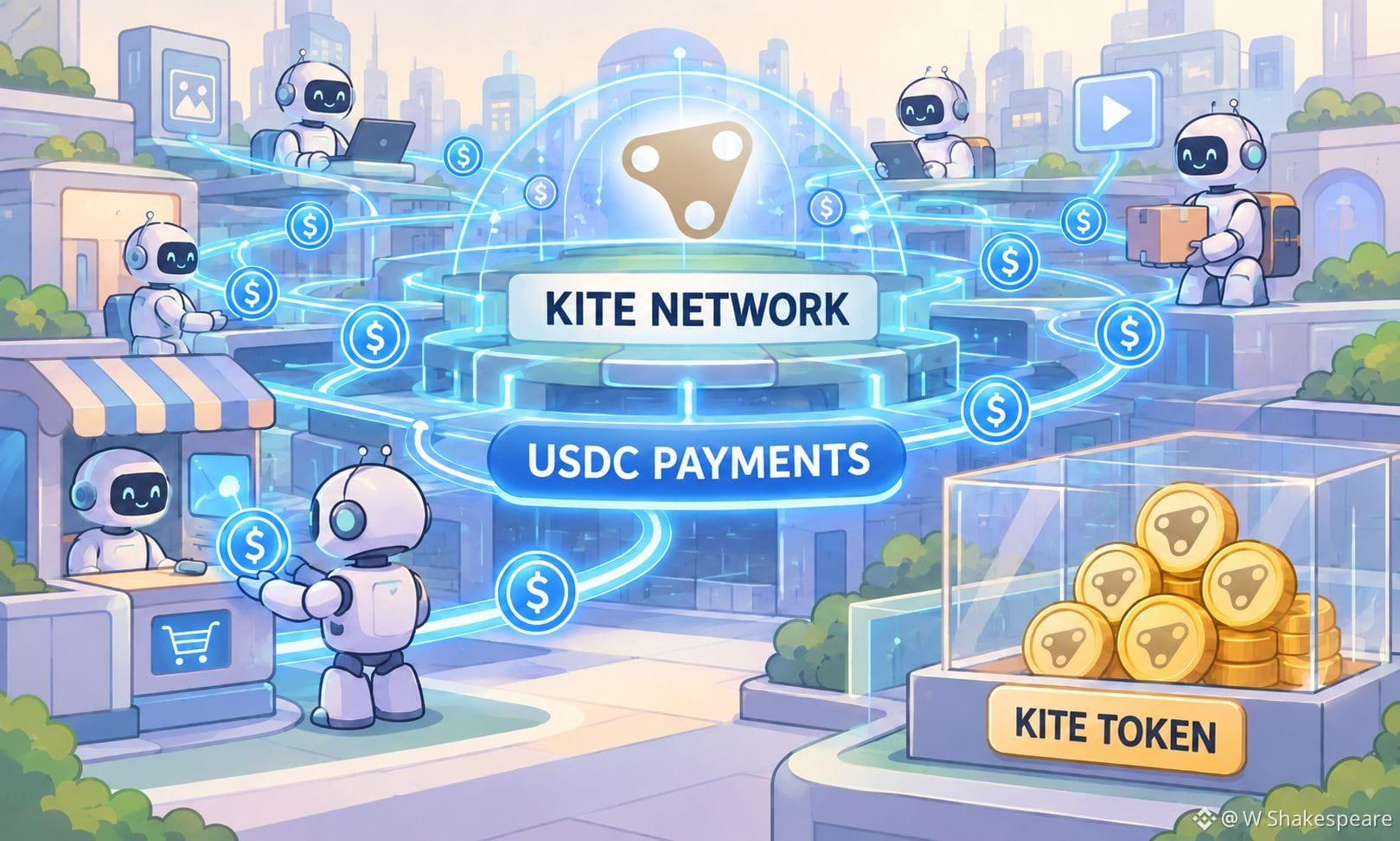
I asked that question when I read Kite’s MiCA white paper. Rewards start out fully in $KITE , then slowly shift to stablecoins. Stablecoins are the carrots here. Paying in them proves agents can use the network. It doesn’t prove anyone has to hold $KITE .
And the market already leans that way. Keyrock counted 176 million agent payments, and 98.6% of them settled in USDC. If Kite’s traffic looks anything like that, the soup keeps getting richer and the stone stays optional.
To be fair, Kite does give the stone a job. You stake $KITE to run a validator, own a module or delegate to one. That’s a bond, not a toll: closer to buying the pot than paying for a bowl. But a bond grows with how much security and module supply the network wants, not with how many payments go through. Those two curves don’t have to move together.
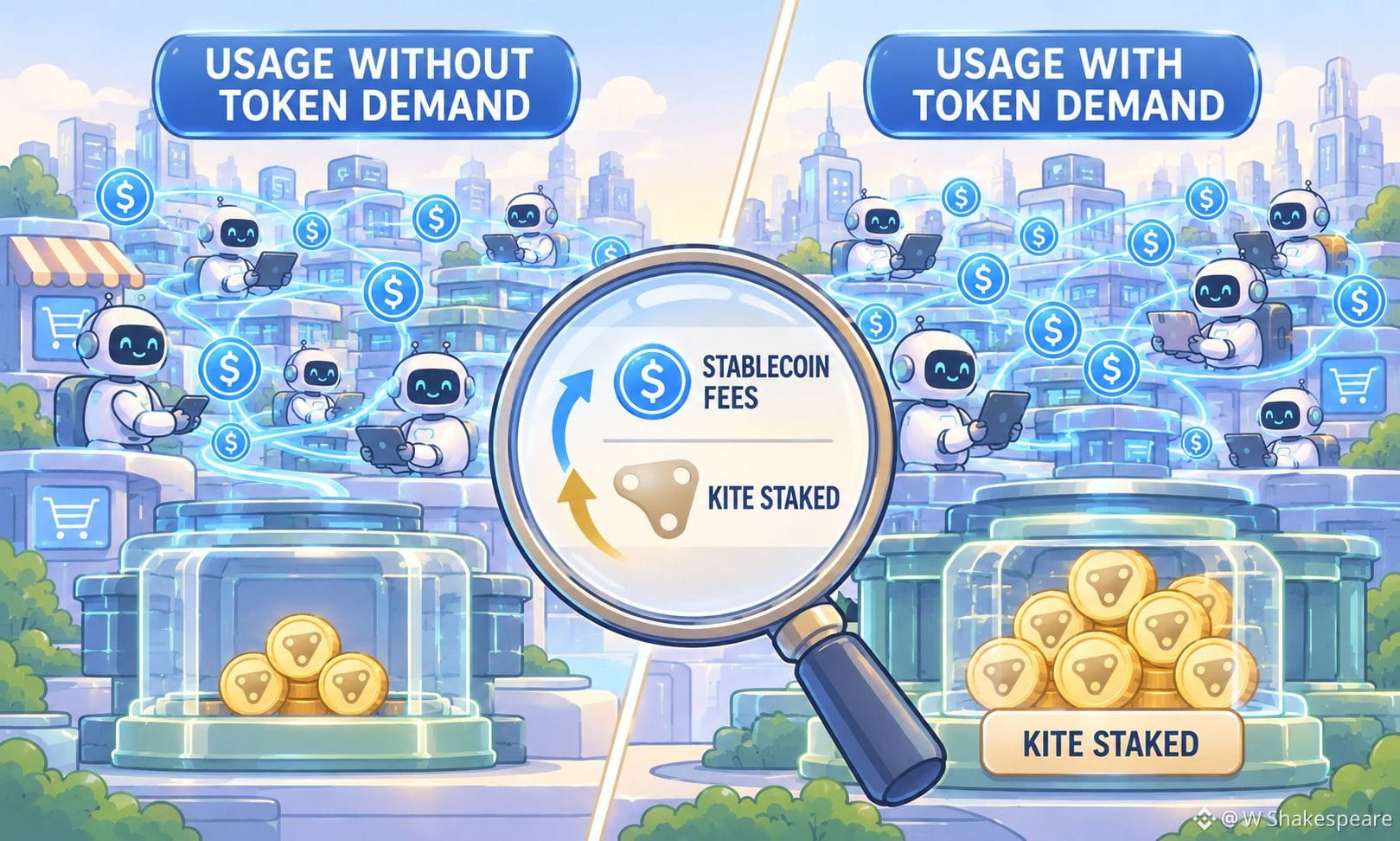
So I’ve stopped caring how many agents show up. Transaction counts, agent counts, partner logos: none of them tell you whether anyone had to buy the token. What I’d trust is stablecoin fees per staked $KITE, and whether a module owner has to lock more KITE as usage grows. If both climb together, the stone is in the recipe. If fees rise while stakes sit flat, it’s a nice stone in a good soup.
I’ll be watching two things: how fast rewards move from KITE to stablecoins, and what modules actually make people lock. Which one is the token following, the soup or the stake?
#KiteBBW
Do you know the stone soup story? Two travelers walk into a hungry village, drop a stone in a pot and promise a feast. One villager adds a carrot, another brings potatoes, and by evening everybody’s eating and crediting the stone. Nobody stops to ask whether the soup ever needed it. The story only works because the stone does nothing.
I asked that question when I read Kite’s MiCA white paper. Rewards start out fully in $KITE , then slowly shift to stablecoins. Stablecoins are the carrots here. Paying in them proves agents can use the network. It doesn’t prove anyone has to hold $KITE .
And the market already leans that way. Keyrock counted 176 million agent payments, and 98.6% of them settled in USDC. If Kite’s traffic looks anything like that, the soup keeps getting richer and the stone stays optional.
To be fair, Kite does give the stone a job. You stake $KITE to run a validator, own a module or delegate to one. That’s a bond, not a toll: closer to buying the pot than paying for a bowl. But a bond grows with how much security and module supply the network wants, not with how many payments go through. Those two curves don’t have to move together.
So I’ve stopped caring how many agents show up. Transaction counts, agent counts, partner logos: none of them tell you whether anyone had to buy the token. What I’d trust is stablecoin fees per staked $KITE , and whether a module owner has to lock more KITE as usage grows. If both climb together, the stone is in the recipe. If fees rise while stakes sit flat, it’s a nice stone in a good soup.
I’ll be watching two things: how fast rewards move from KITE to stablecoins, and what modules actually make people lock. Which one is the token following, the soup or the stake?
#KiteBBW
3
4
725
1
1
12
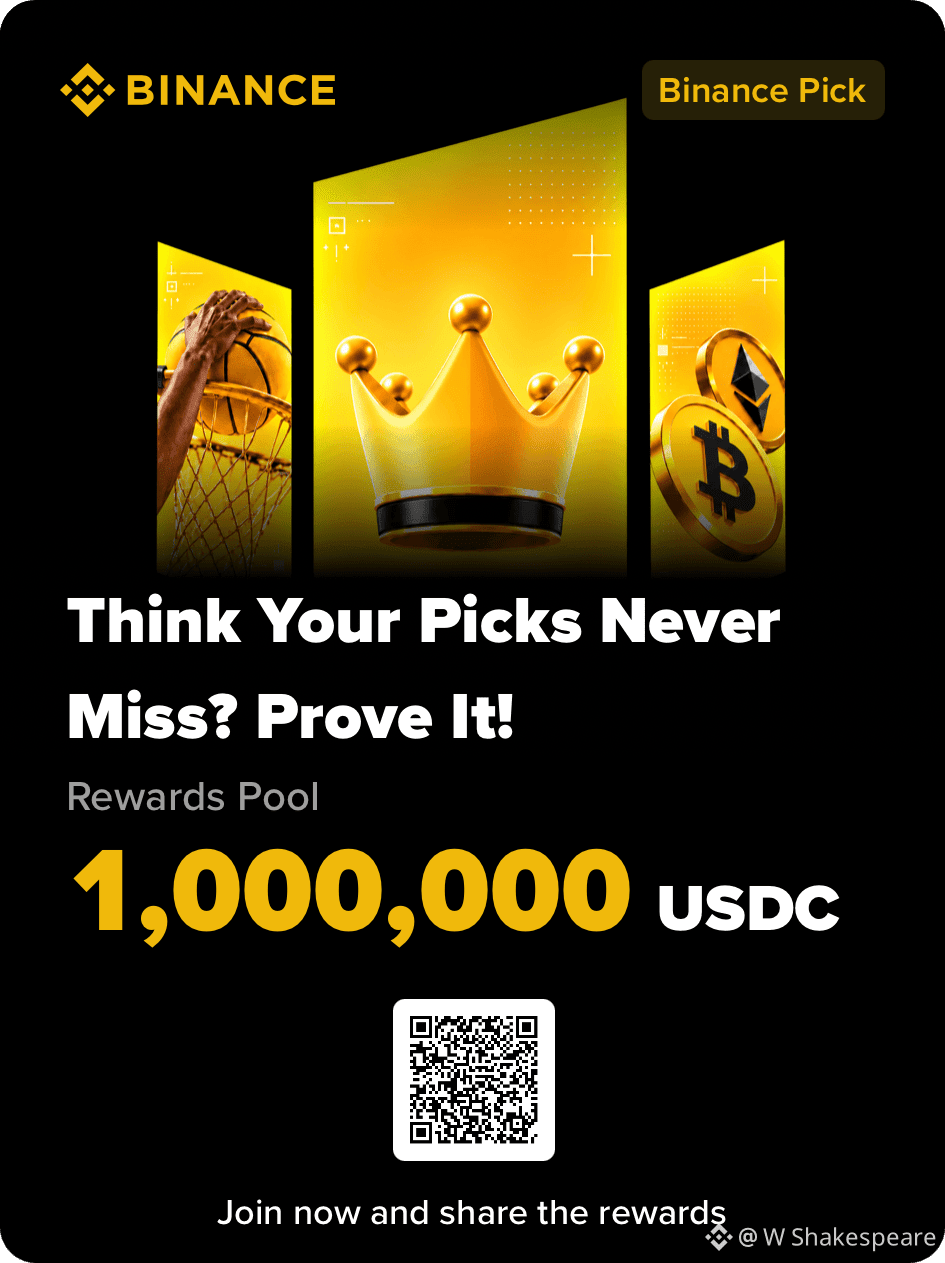
#BinancePick last day of week 1 - binance pick campaign, I lost all my scores
#BinancePick last day of week 1 - binance pick campaign, I lost all my scores
110
Verified
Most privacy tools in crypto hide what already happened. A shielded transfer conceals who paid whom, but the intent behind a trade often remains exposed.
A stop-loss, vault trigger, or auction bid can reveal what I plan to do before I act. On a transparent blockchain, that exposure is structural, not necessarily a leak.
That’s why Nillion’s Covenants interest me. I seal an instruction to a condition and post it onchain, encrypted. Others can see a Covenant exists, but cannot read its contents while it waits. When the condition is met, a threshold of independent nodes enables it to execute, without relying on a keeper to protect my strategy.
What I like most is that Covenant protects intent itself: the plan before it becomes an action. But privacy should not be confused with complete protection. It may reduce strategy leakage, yet execution risks, market manipulation, the reliability of price conditions, and assumptions about the node network still matter. If a Covenant cannot be canceled once posted, a poorly designed condition can become a real liability.
Dusk, the first release of Covenants, is live on Ethereum mainnet—not a testnet preview. Its initial scope is deliberately limited, which makes the launch tangible, but the broader vision still needs to prove itself in practice.
Dusk is only era one of Nillion’s seven-era roadmap, with more releases coming before year-end. I’m looking forward to seeing how future eras expand what builders can do while maintaining reliable execution and clear trust assumptions.
The real test is not simply whether intent can stay hidden, but whether private execution can make markets fairer without introducing new risks users cannot easily assess.
#nil $NIL @nillionnetwork ✨
Most privacy tools in crypto hide what already happened. A shielded transfer conceals who paid whom, but the intent behind a trade often remains exposed.
A stop-loss, vault trigger, or auction bid can reveal what I plan to do before I act. On a transparent blockchain, that exposure is structural, not necessarily a leak.
That’s why Nillion’s Covenants interest me. I seal an instruction to a condition and post it onchain, encrypted. Others can see a Covenant exists, but cannot read its contents while it waits. When the condition is met, a threshold of independent nodes enables it to execute, without relying on a keeper to protect my strategy.
What I like most is that Covenant protects intent itself: the plan before it becomes an action. But privacy should not be confused with complete protection. It may reduce strategy leakage, yet execution risks, market manipulation, the reliability of price conditions, and assumptions about the node network still matter. If a Covenant cannot be canceled once posted, a poorly designed condition can become a real liability.
Dusk, the first release of Covenants, is live on Ethereum mainnet—not a testnet preview. Its initial scope is deliberately limited, which makes the launch tangible, but the broader vision still needs to prove itself in practice.
Dusk is only era one of Nillion’s seven-era roadmap, with more releases coming before year-end. I’m looking forward to seeing how future eras expand what builders can do while maintaining reliable execution and clear trust assumptions.
The real test is not simply whether intent can stay hidden, but whether private execution can make markets fairer without introducing new risks users cannot easily assess.
#nil $NIL @Nillion ✨
1
384
#BinancePick One day more to end first week of binance pick
#BinancePick One day more to end first week of binance pick
127
#BinancePick Day 3 of binance pick, do you join the campaign yet?
#BinancePick Day 3 of binance pick, do you join the campaign yet?
1
1
87
#BinancePick is going on binance now, campaign will end on next 4 weeks
#BinancePick is going on binance now, campaign will end on next 4 weeks
93
Do you love $BNB ?
Drop "yes" to get a packet from me 👇
Do you love $BNB ?
Drop "yes" to get a packet from me 👇
Drop "yes" to get a packet from me 👇
519
1
15
519
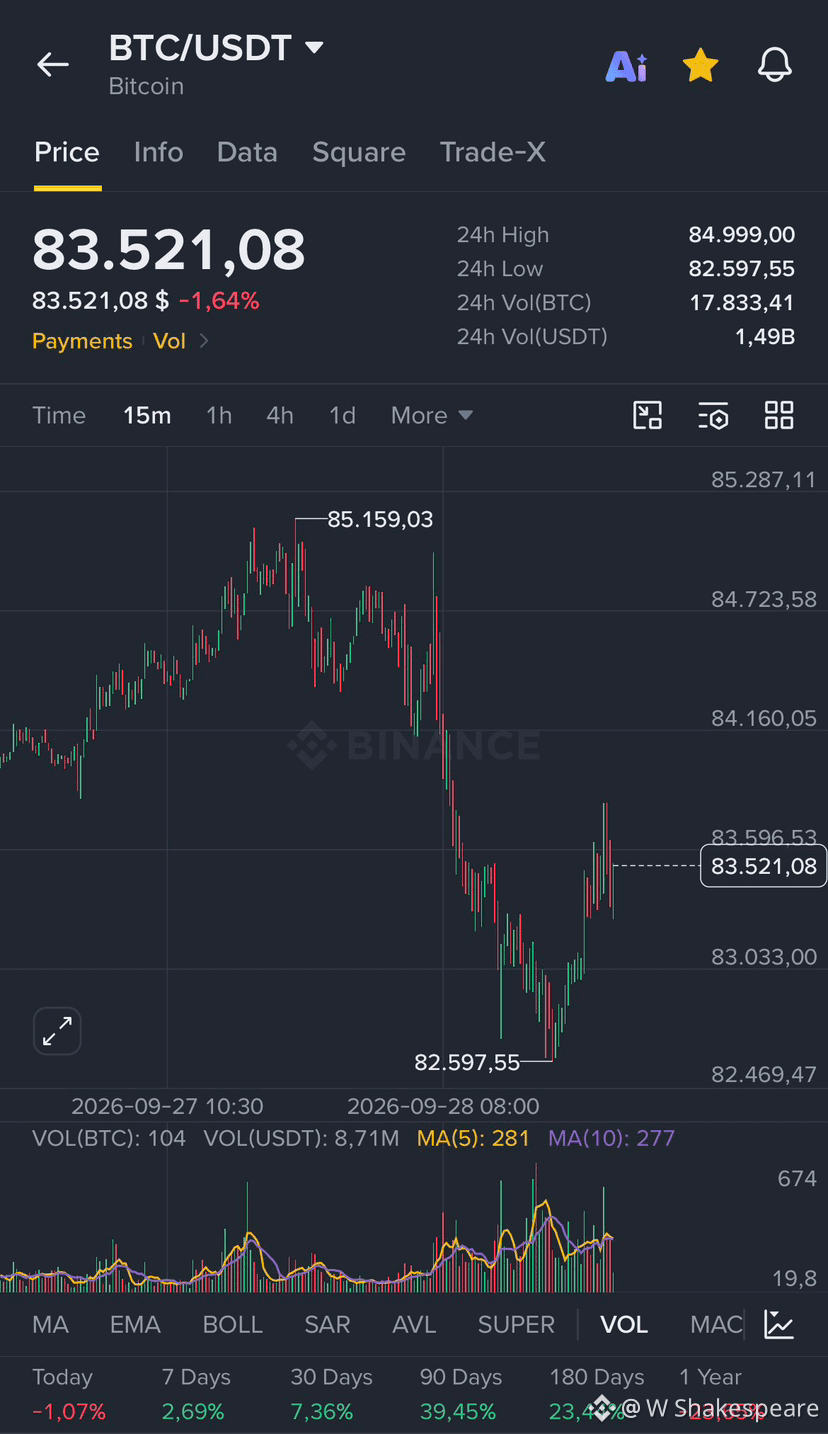
Bad day for all market, Both BTC and $XAU going down
Bad day for all market, Both BTC and $XAU going down
244
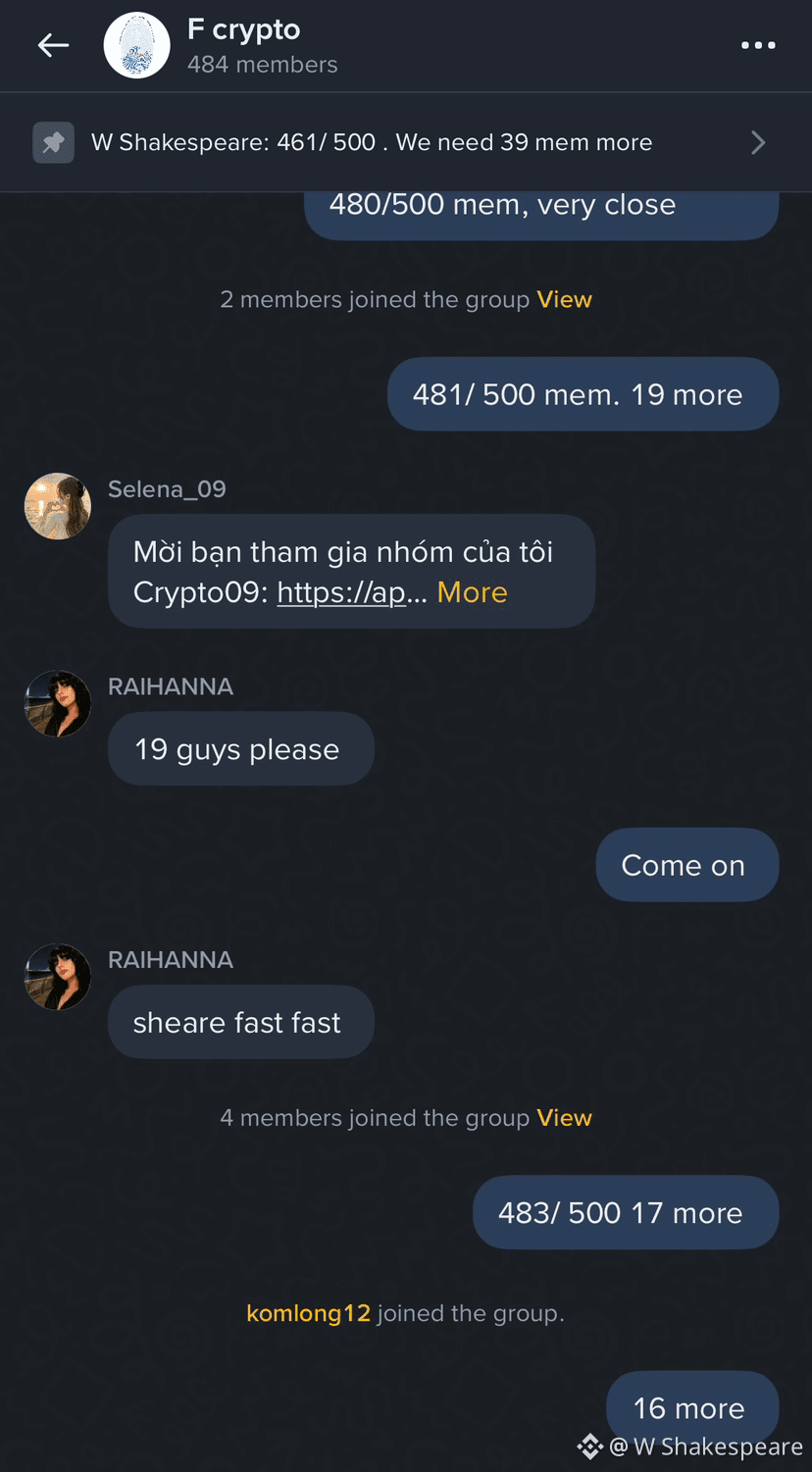
$ZEC My Binance chat group just reach 484 members. Join with us now: [HERE!!!](https://www.binance.com/vi/groupChatLanding?channelToken=WE6u2rLXMtOrOXLze_26GAyYuITtfo0y4UkwC8-hrkQHbepE2GsAEY3V0XmQdXsj8I7AWq9VpQE8fi98sSSPaA&entrySource=new_sharing_link&inviteBy=GbdJGmBwzccH8vA7LYkmuQ&type=2&utm_medium=app_share&utm_source=chat)
$ZEC My Binance chat group just reach 484 members. Join with us now: HERE!!!
1
1
3
749
I just create a group chat on Binance, it free, just enjoy: [https://app.binance.com/uni-qr/64Py3R6k](https://app.binance.com/uni-qr/64Py3R6k)
I just create a group chat on Binance, it free, just enjoy: https://app.binance.com/uni-qr/64Py3R6k

2
46
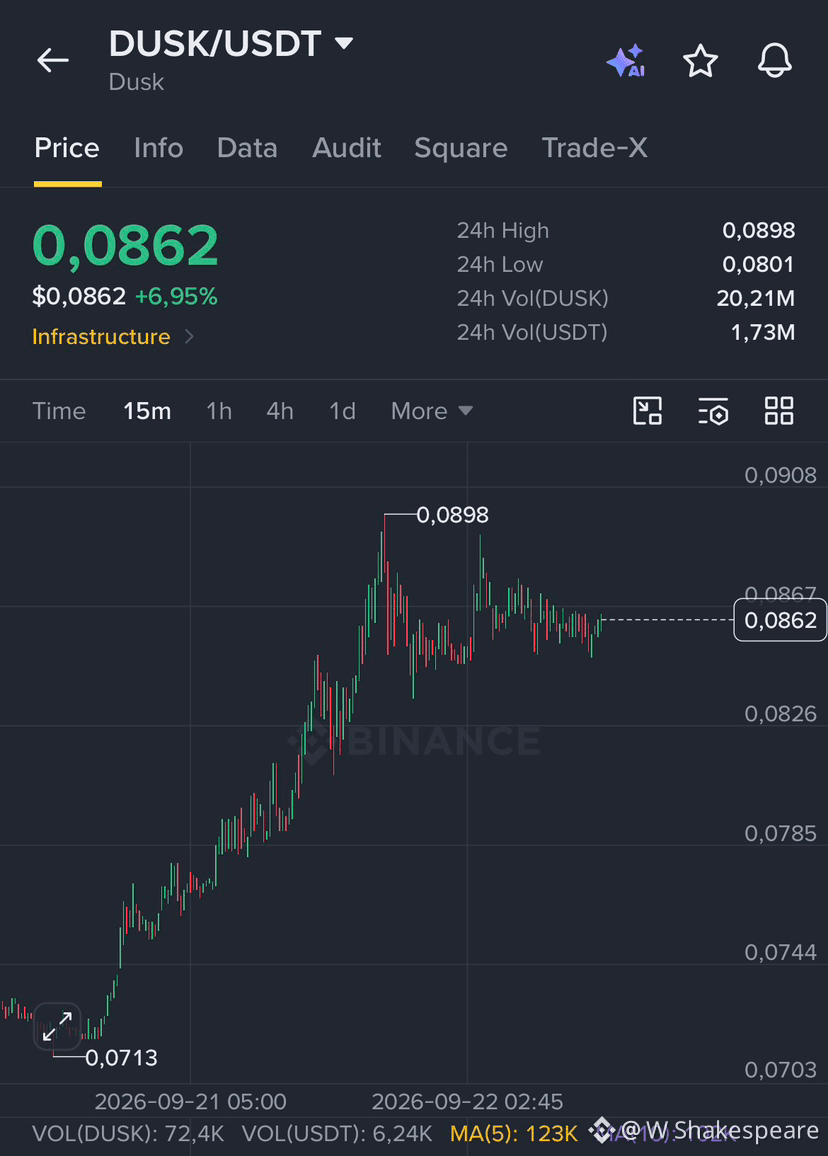
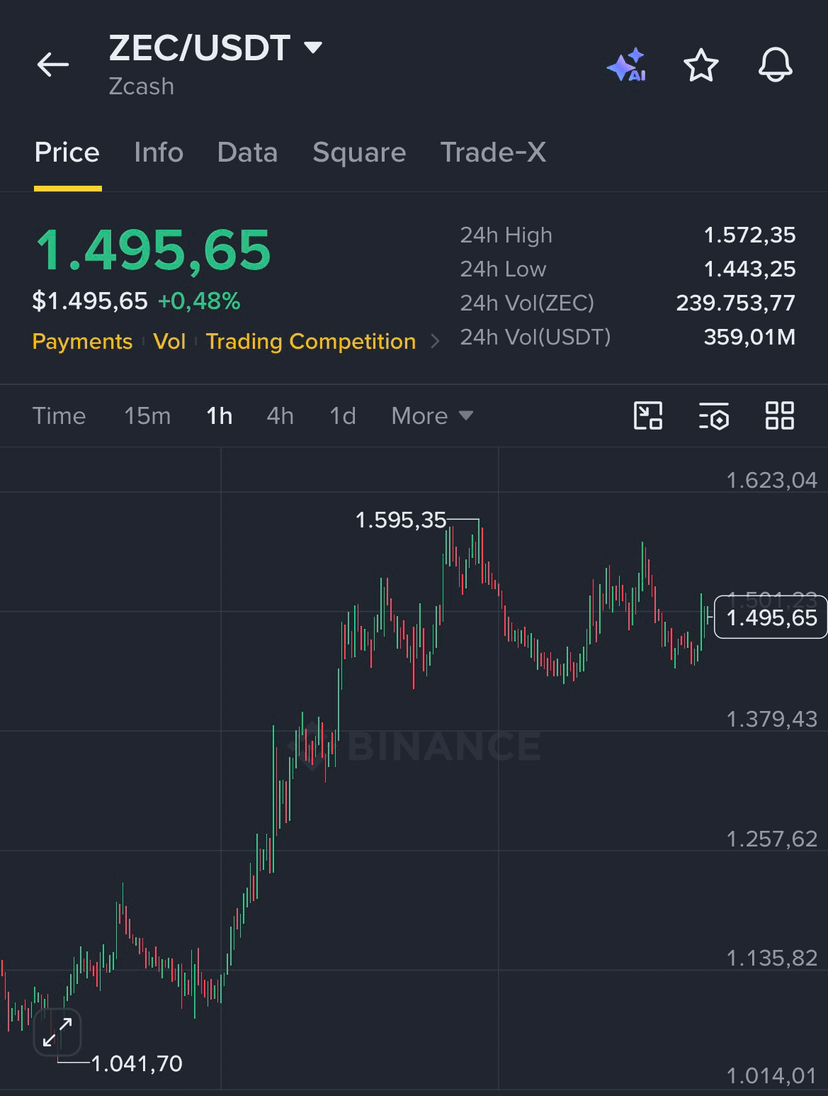
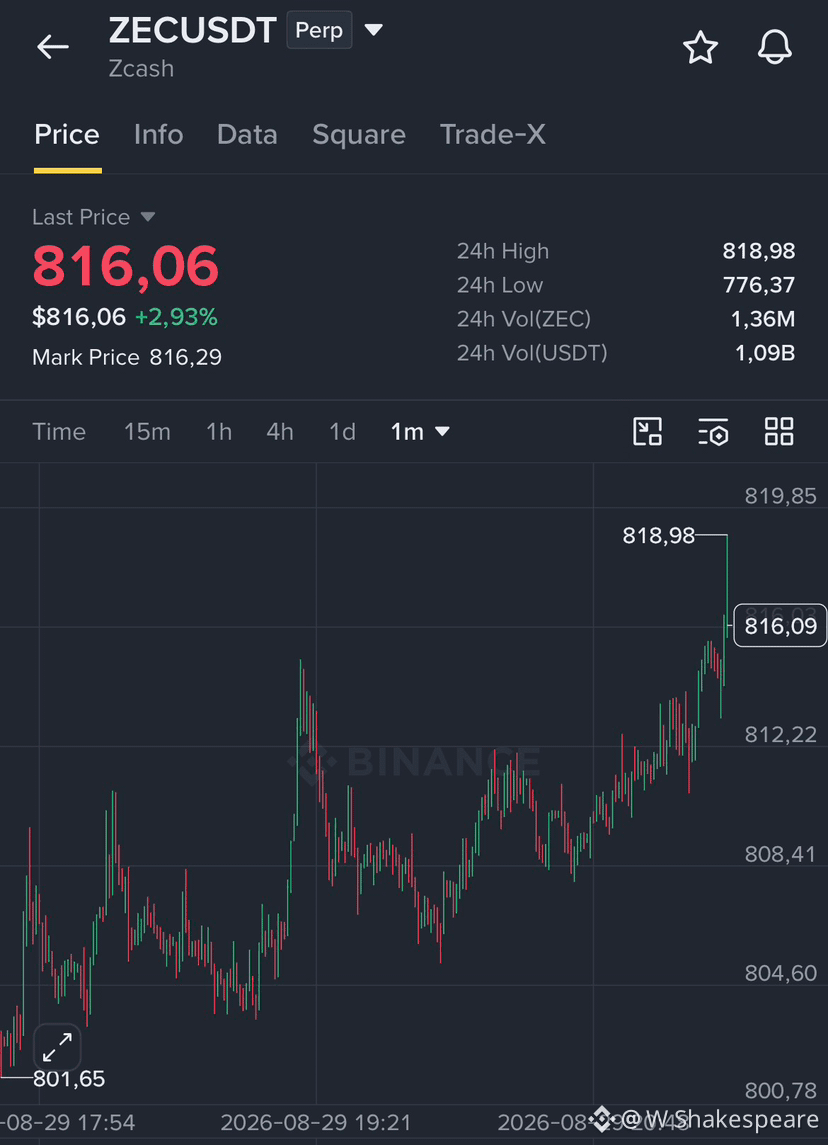
Both $ZEC and $DUSK is privacy coin. So the chart is similar to each other
{future}(ZECUSDT)
Both $ZEC and $DUSK is privacy coin. So the chart is similar to each other
1
5
710
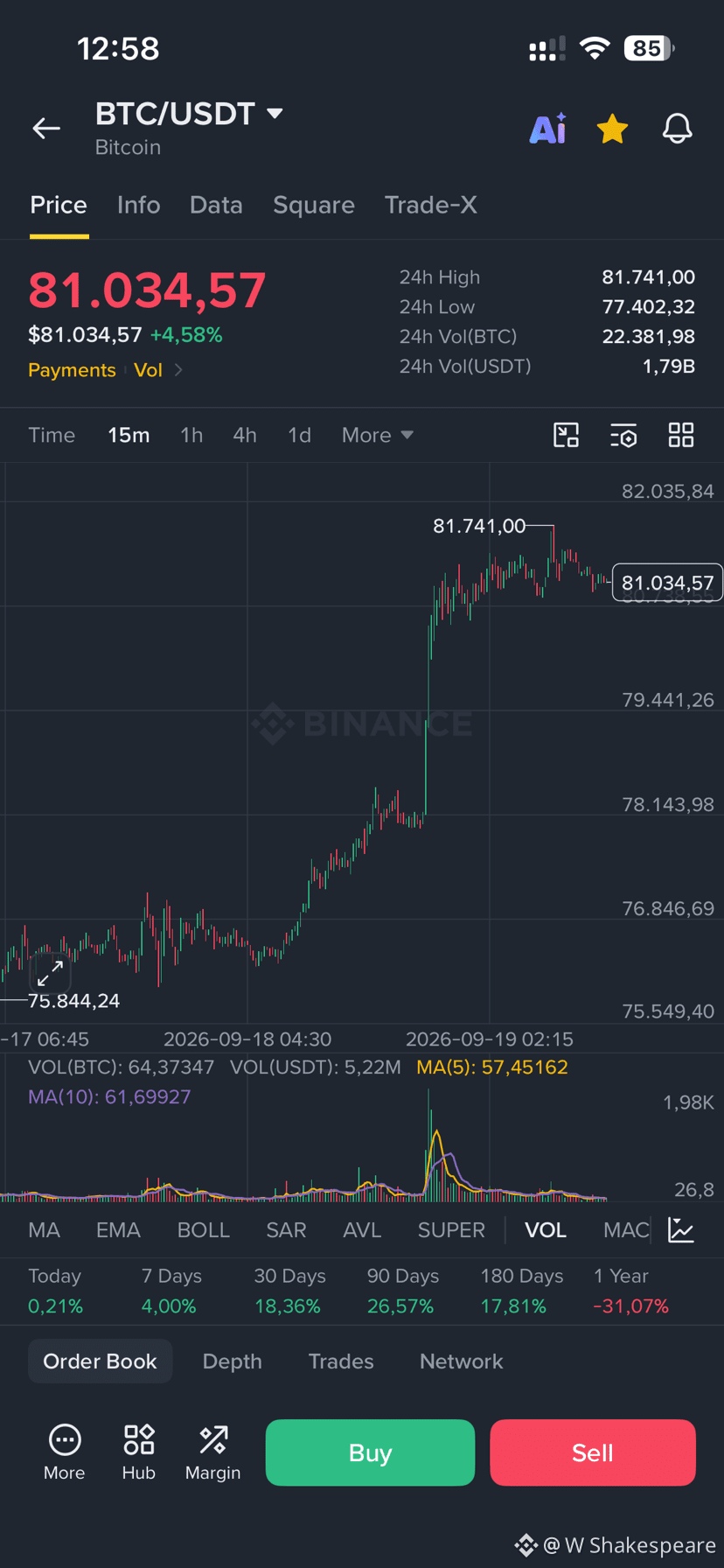
All market pump with no reason😂
$BNB $BTC
All market pump with no reason😂
$BNB $BTC
$BNB $BTC
1
147
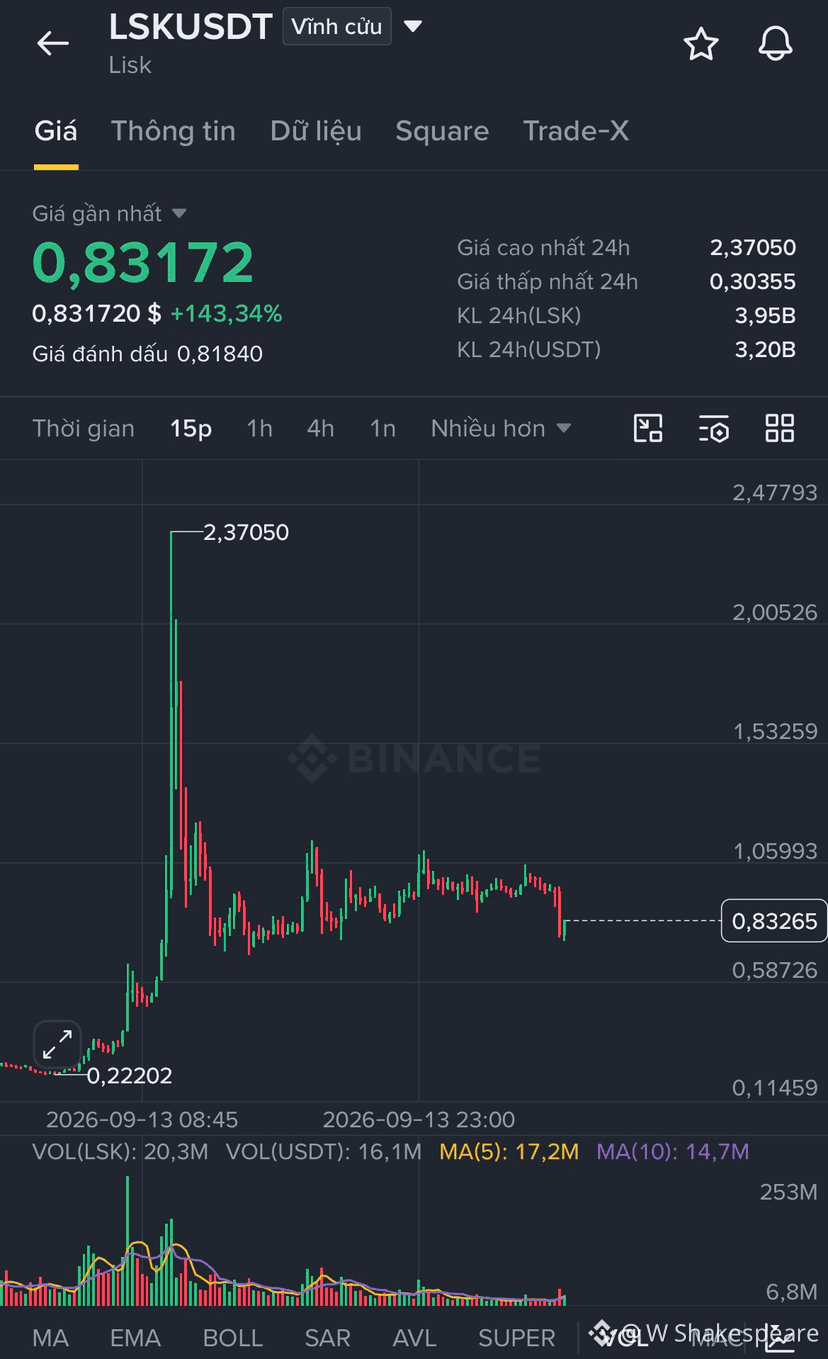
$LSK price still not equal across binance and other CEX. It is a big funding trap for user abitrade across multi platforms
$LSK price still not equal across binance and other CEX. It is a big funding trap for user abitrade across multi platforms
1
378
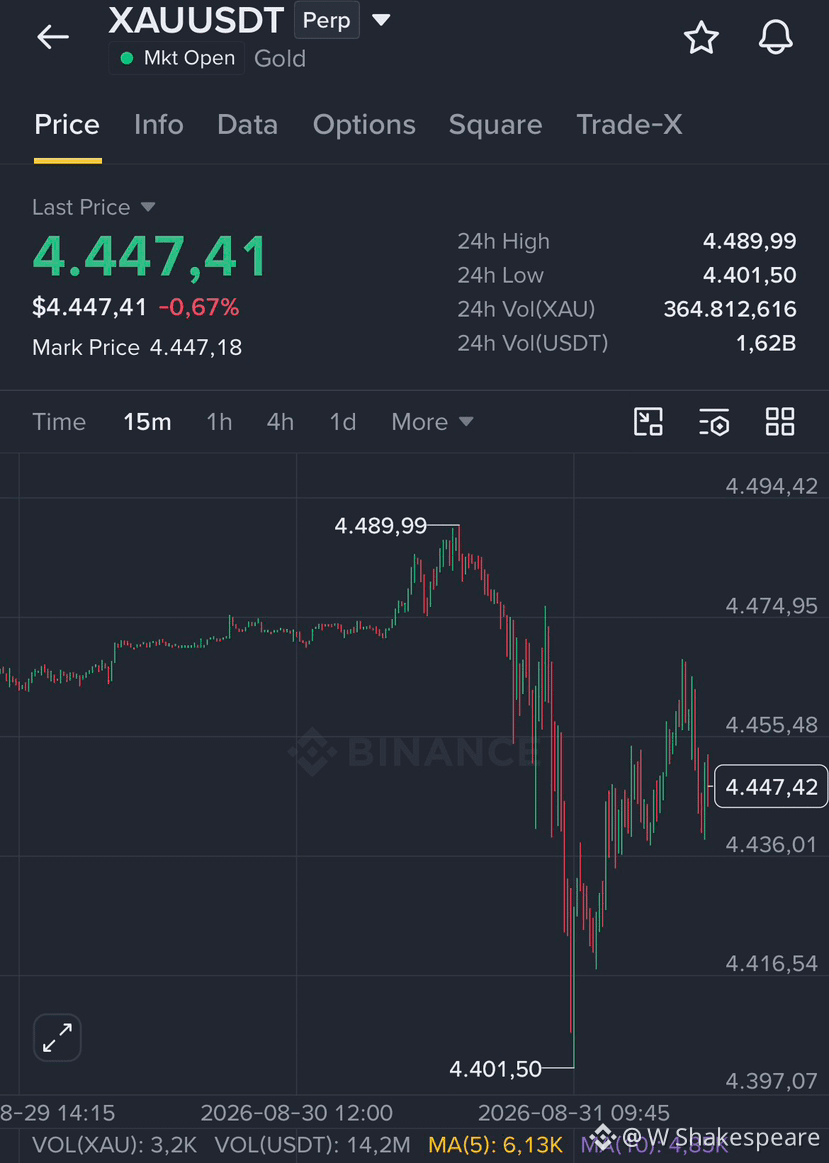
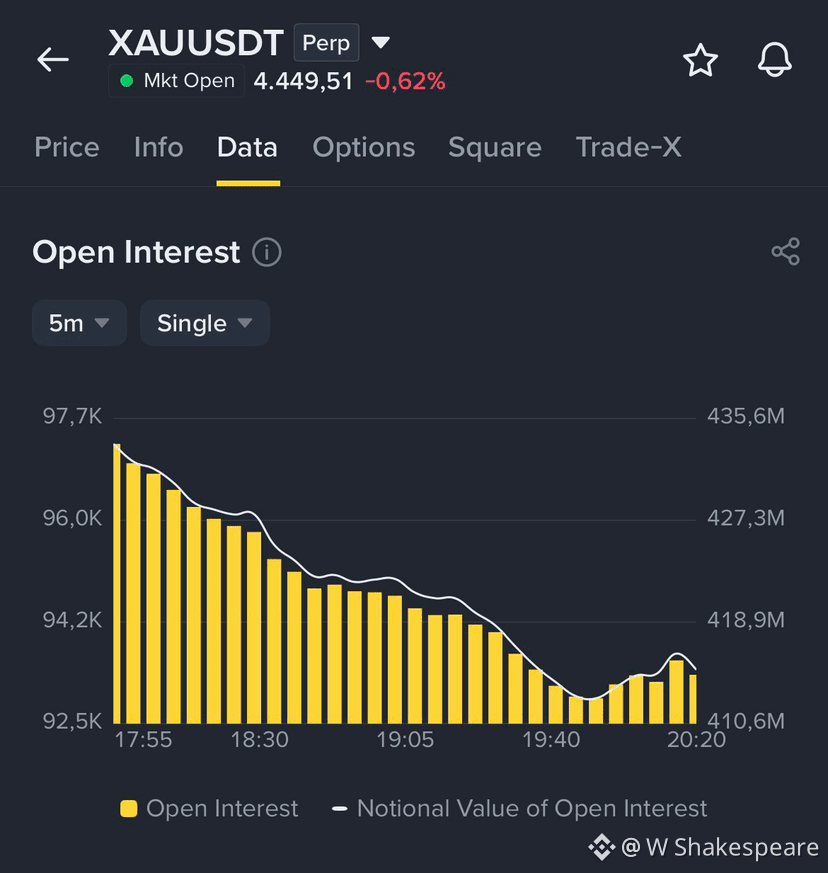
$XAU start new week with open interest reach ~$410M
{future}(XAUUSDT)
$XAU start new week with open interest reach ~$410M
985
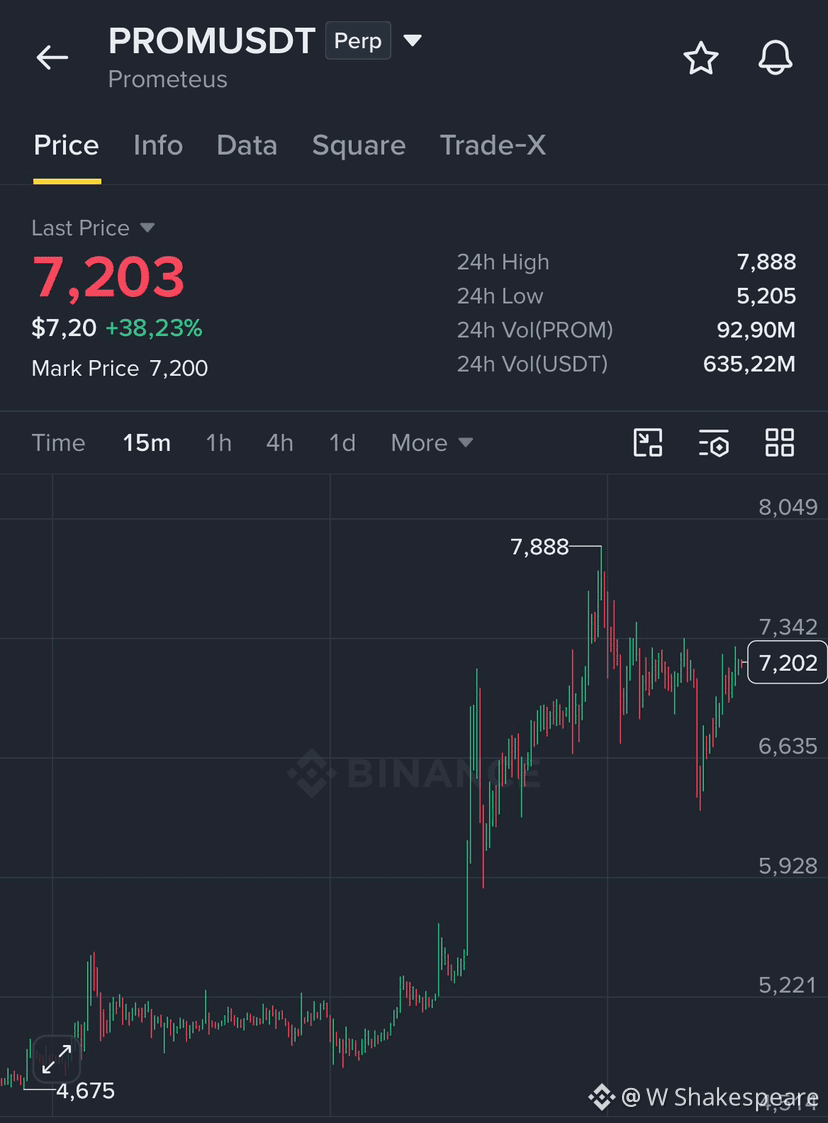
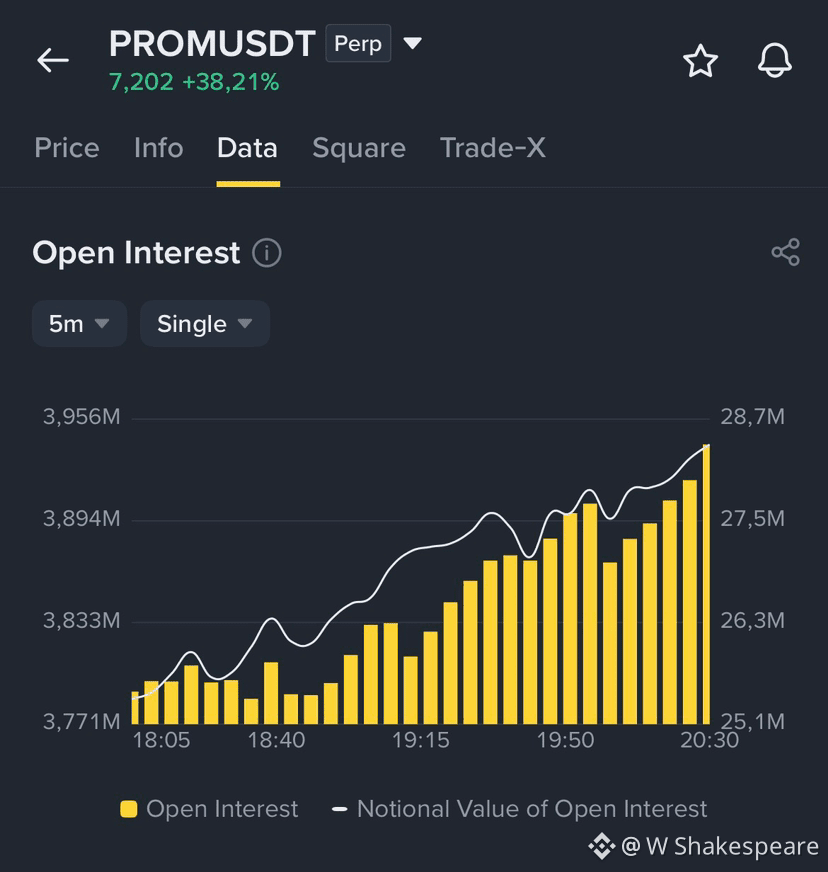
$PROM + 40% in 24h with open interest reach ~$29M
{future}(PROMUSDT)
$PROM + 40% in 24h with open interest reach ~$29M
1
1.2k
2
914
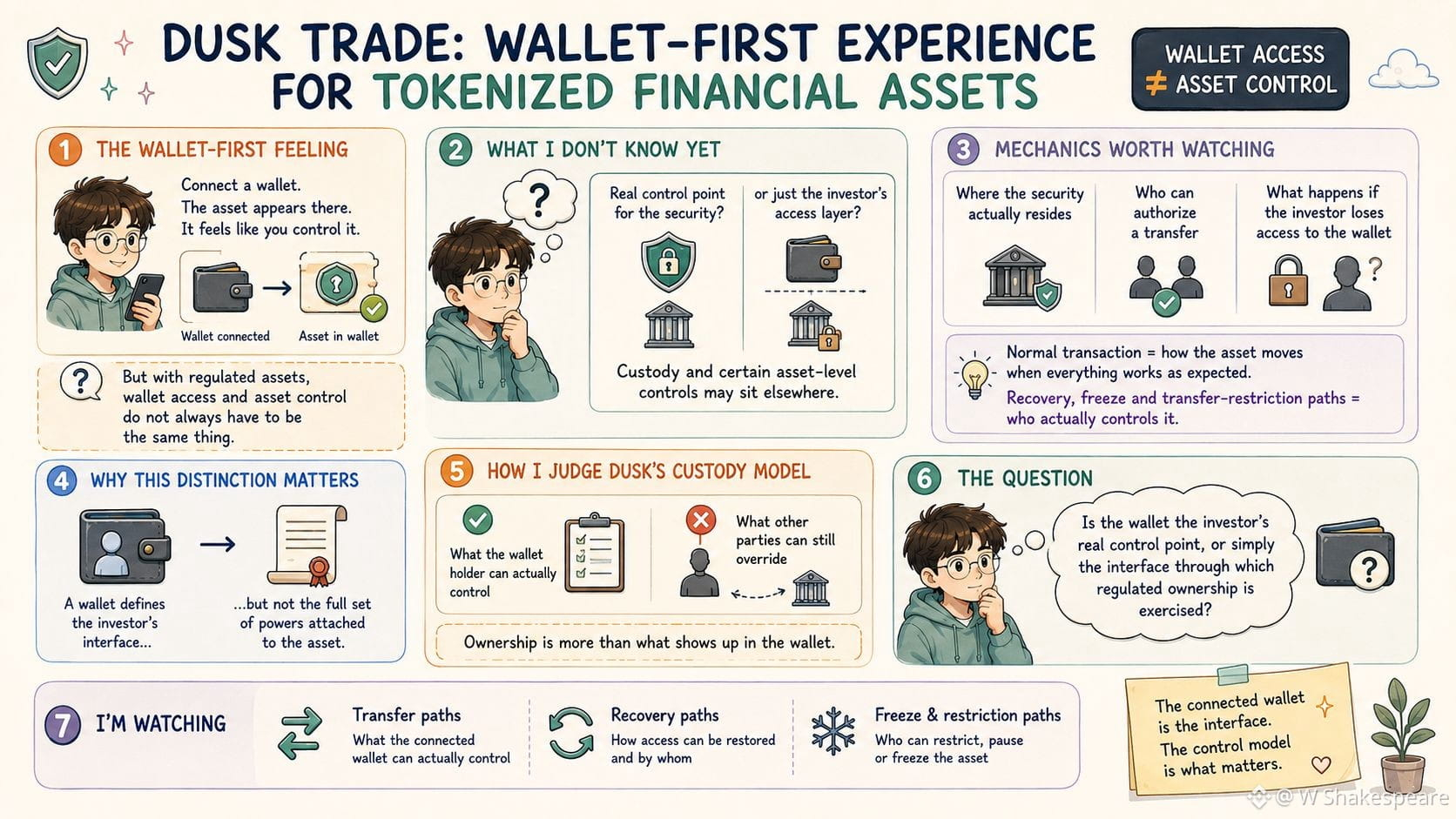
I keep coming back to Dusk Trade's wallet-first experience for tokenized financial assets. Connecting a wallet makes the ownership model feel straightforward. Your wallet is connected, the asset appears there, and the natural assumption is that you control it. But with regulated assets, wallet access and asset control do not always have to be the same thing. What I don't know yet is whether a connected wallet is the actual control point for the security, or simply the investor's access layer while custody and certain asset-level controls remain elsewhere.
The mechanics worth watching are where the security actually resides, who can authorize a transfer, and what happens if the investor loses access to the wallet. The normal transaction only tells me how the asset moves when everything works as expected. The recovery, freeze and transfer-restriction paths tell me much more about who actually controls it. That distinction matters because a wallet can define the investor's interface without defining the full set of powers attached to the asset.
I would judge Dusk's custody model by what the wallet holder can actually control, and what other parties can still override.
The question is whether the wallet is the investor's real control point, or simply the interface through which regulated ownership is exercised. I am watching the transfer, recovery and freeze paths to see what the connected wallet can actually control.
#dusk $DUSK @Dusk_Foundation 🔥
I keep coming back to Dusk Trade's wallet-first experience for tokenized financial assets. Connecting a wallet makes the ownership model feel straightforward. Your wallet is connected, the asset appears there, and the natural assumption is that you control it. But with regulated assets, wallet access and asset control do not always have to be the same thing. What I don't know yet is whether a connected wallet is the actual control point for the security, or simply the investor's access layer while custody and certain asset-level controls remain elsewhere.
The mechanics worth watching are where the security actually resides, who can authorize a transfer, and what happens if the investor loses access to the wallet. The normal transaction only tells me how the asset moves when everything works as expected. The recovery, freeze and transfer-restriction paths tell me much more about who actually controls it. That distinction matters because a wallet can define the investor's interface without defining the full set of powers attached to the asset.
I would judge Dusk's custody model by what the wallet holder can actually control, and what other parties can still override.
The question is whether the wallet is the investor's real control point, or simply the interface through which regulated ownership is exercised. I am watching the transfer, recovery and freeze paths to see what the connected wallet can actually control.
#dusk $DUSK @Dusk 🔥
3
5
351
Log in to explore more content
Join global crypto users on Binance Square
⚡️ Get latest and useful information about crypto.
💬 Trusted by the world’s largest crypto exchange.
👍 Discover real insights from verified creators.
Email / Phone number
Trending Topics
FedWatch
16.3M views
39,320 Discussing
🚨 🇺🇸 PETER SCHIFF JUST THREW A BIG WARNING AT THE FED!
Peter Schiff is calling Kevin Warsh’s tough talk on inflation a “bluff,” and his prediction could have major implications for the markets.
Schiff believes the Fed could eventually return to money printing through quantitative easing (QE) and even cut interest rates next year, despite inflation continuing to rise.
Think about that for a moment.
🔥 Inflation could remain a problem. 🔥 The Fed could still move toward easier monetary policy. 🔥 More liquidity could flow into financial markets.
If this scenario plays out, it could create a very different market environment for stocks, gold, Bitcoin, and the wider crypto market.
But there’s a catch: if inflation stays high, the Fed could face a difficult choice between fighting rising prices and supporting the economy.
Will Warsh stick to a tough inflation policy, or will the Fed eventually change direction?
The next move could matter a lot for investors.
#FedWatch #EarningsSeason #USMidtermElections #BrazilCryptoExchangesMustApplyForLicensesByFriday #StanDruckenmillerBecomesInvestorInTradeXYZ
Jackson Liam
·3 Likes
·8.1k views
EarningsSeason
6.4M views
32,028 Discussing
USMidtermElections
35,371 views
580 Discussing