
简单量化
42 Posts

简单量化
Report
Block User
100%胜率 印钞机 分享经验和工具
1.0K+ Following
1.2K+ Followers
1.9K+ Liked
Posts
·
--
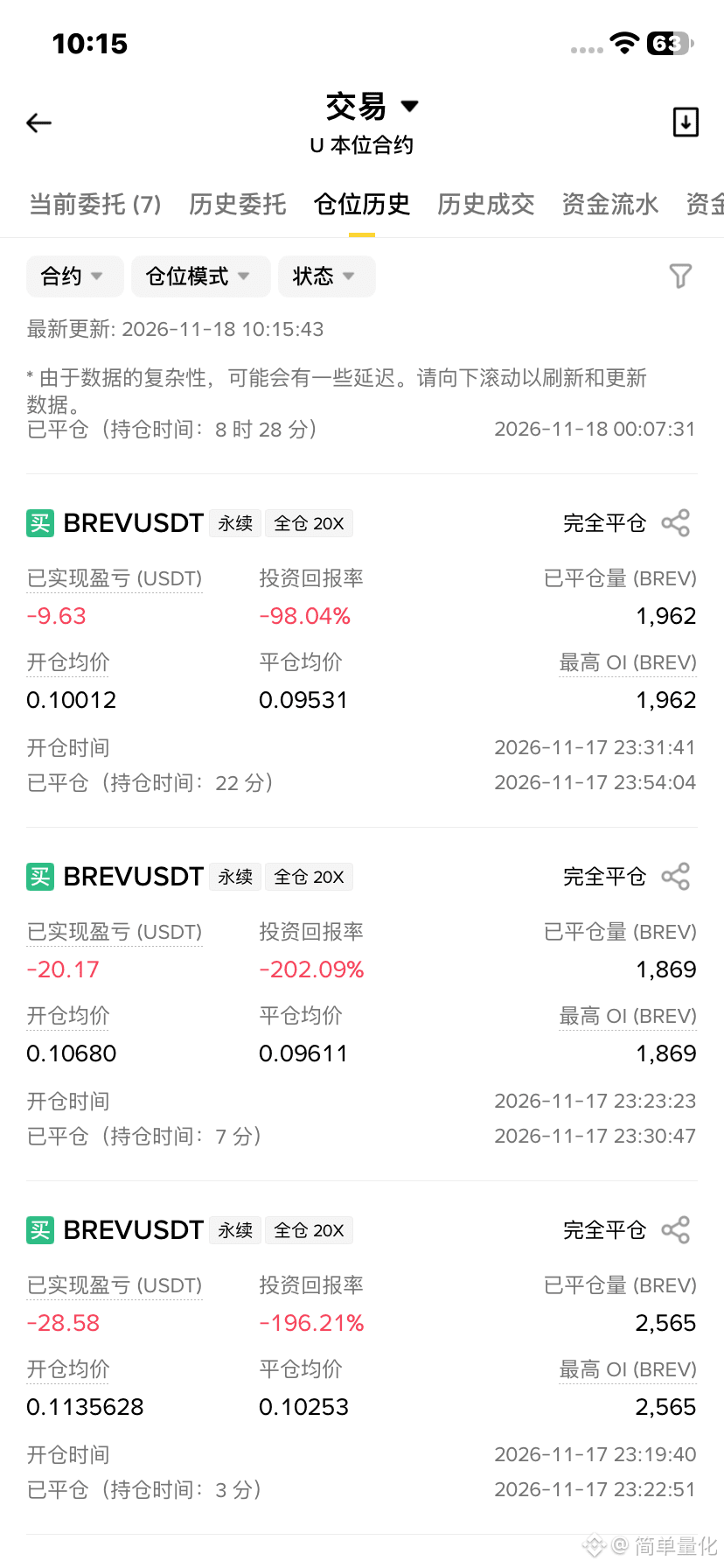
$BREV The contract’s return rate dropped to -100%, so I thought that was the maximum loss.
$BREV Why do these two closed-position records still have overtime?
$BREV The contract’s return rate dropped to -100%, so I thought that was the maximum loss.
$BREV Why do these two closed-position records still have overtime?
$BREV Why do these two closed-position records still have overtime?
156
·
--
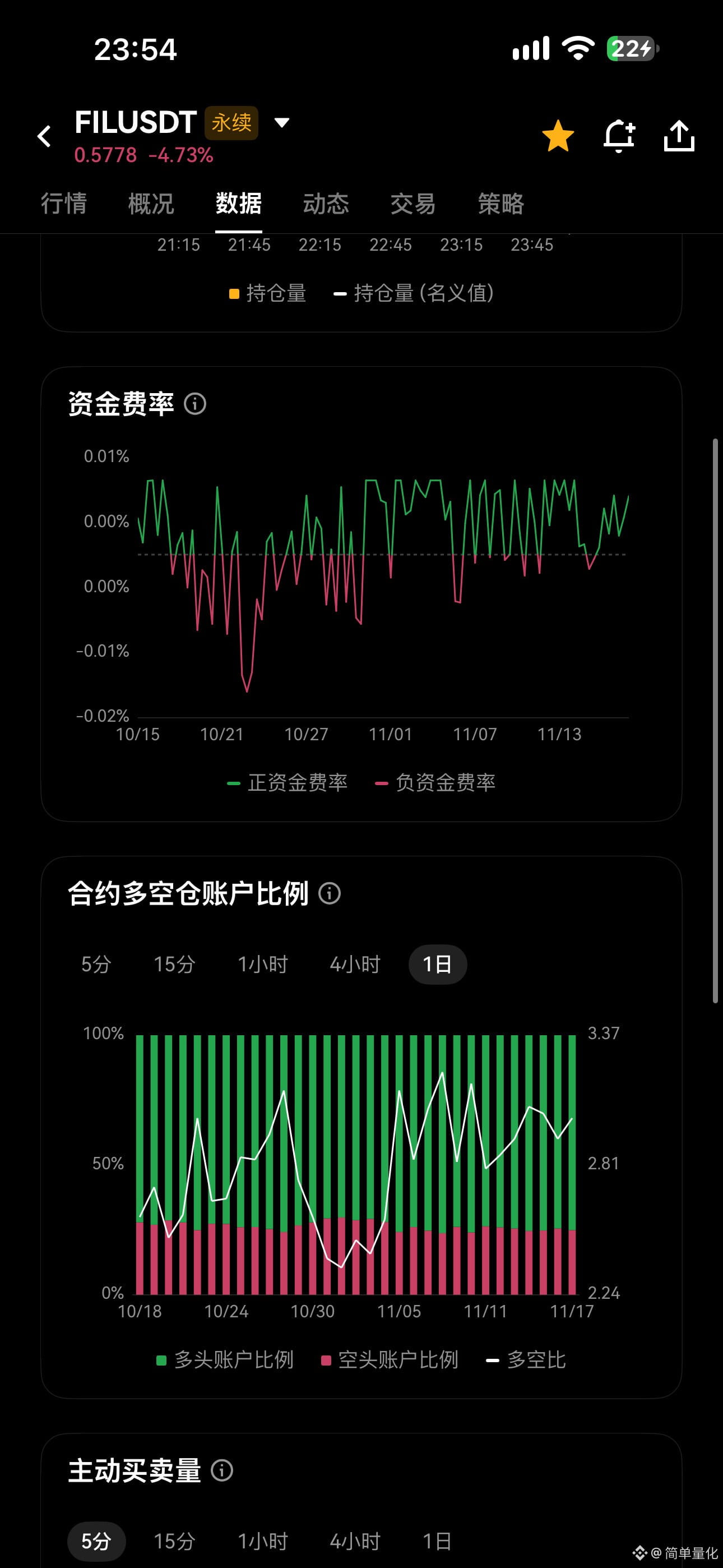
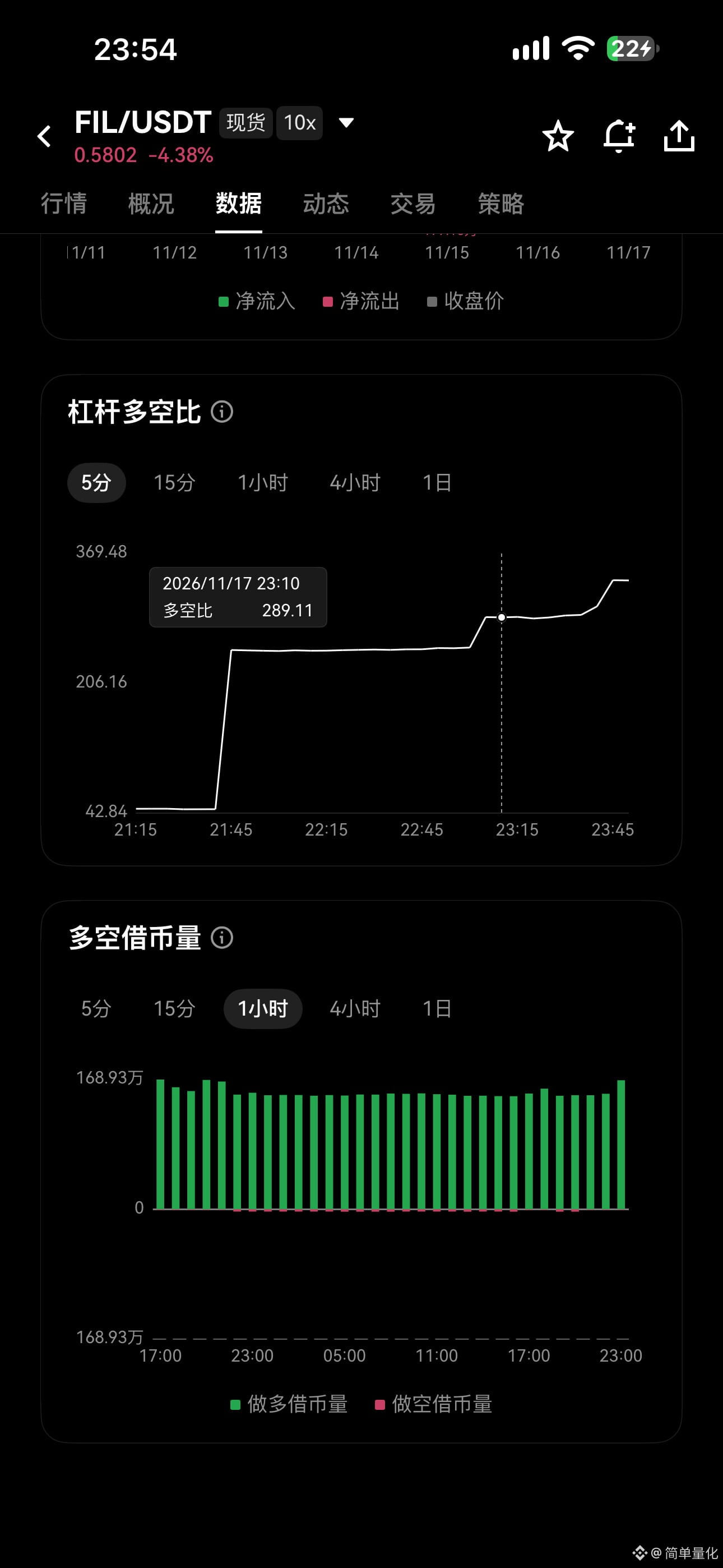
$FIL FIL spot margin long/short ratio surged to 289.11, while short borrowing volume is close to zero.
Long borrowing volume still exceeds 1 million coins; in the sample, long contract accounts are about 2.81 times the number of short accounts.
289 is not a leverage multiple, and low short borrowing can also inflate the ratio; 2.81 counts accounts, not position value.
Borrowing money to bet on a rebound? First, consider what happens if it drops further: your position shrinks while loan interest keeps accruing. The money you set aside to add to your position may have to go toward a margin call first.
I won’t use leverage to buy the dip in FIL this time. If your old position still hasn’t broken even, is borrowing again part of an exit plan—or are you unwilling to accept the loss?
#英伟达财报大超预期,Q4营收展望1300亿美元 #FIL $FIL #BREV $BREV 👇
{future}(FILUSDT)
$FIL FIL spot margin long/short ratio surged to 289.11, while short borrowing volume is close to zero.
Long borrowing volume still exceeds 1 million coins; in the sample, long contract accounts are about 2.81 times the number of short accounts.
289 is not a leverage multiple, and low short borrowing can also inflate the ratio; 2.81 counts accounts, not position value.
Borrowing money to bet on a rebound? First, consider what happens if it drops further: your position shrinks while loan interest keeps accruing. The money you set aside to add to your position may have to go toward a margin call first.
I won’t use leverage to buy the dip in FIL this time. If your old position still hasn’t broken even, is borrowing again part of an exit plan—or are you unwilling to accept the loss?
#英伟达财报大超预期,Q4营收展望1300亿美元 #FIL $FIL #BREV $BREV 👇
499
·
--
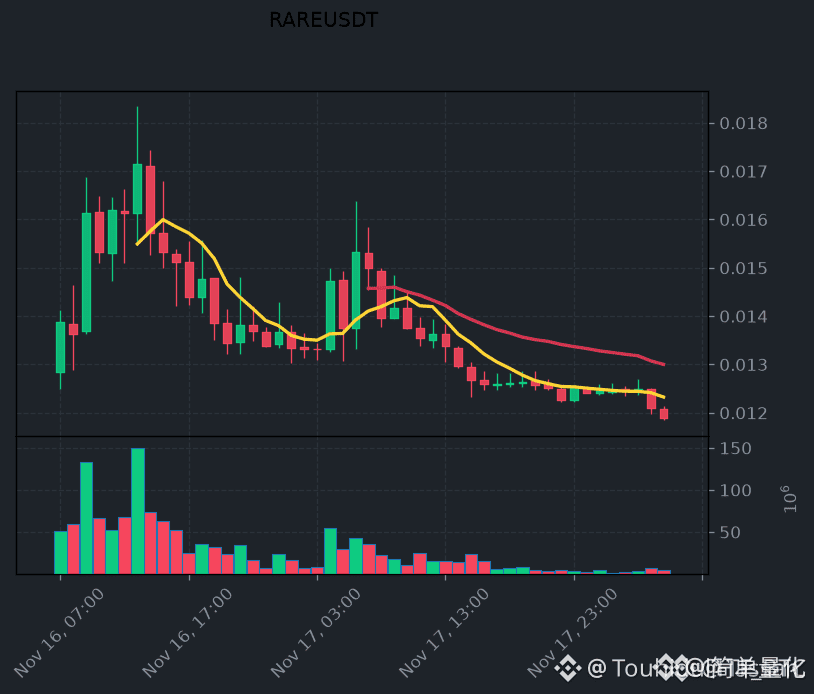
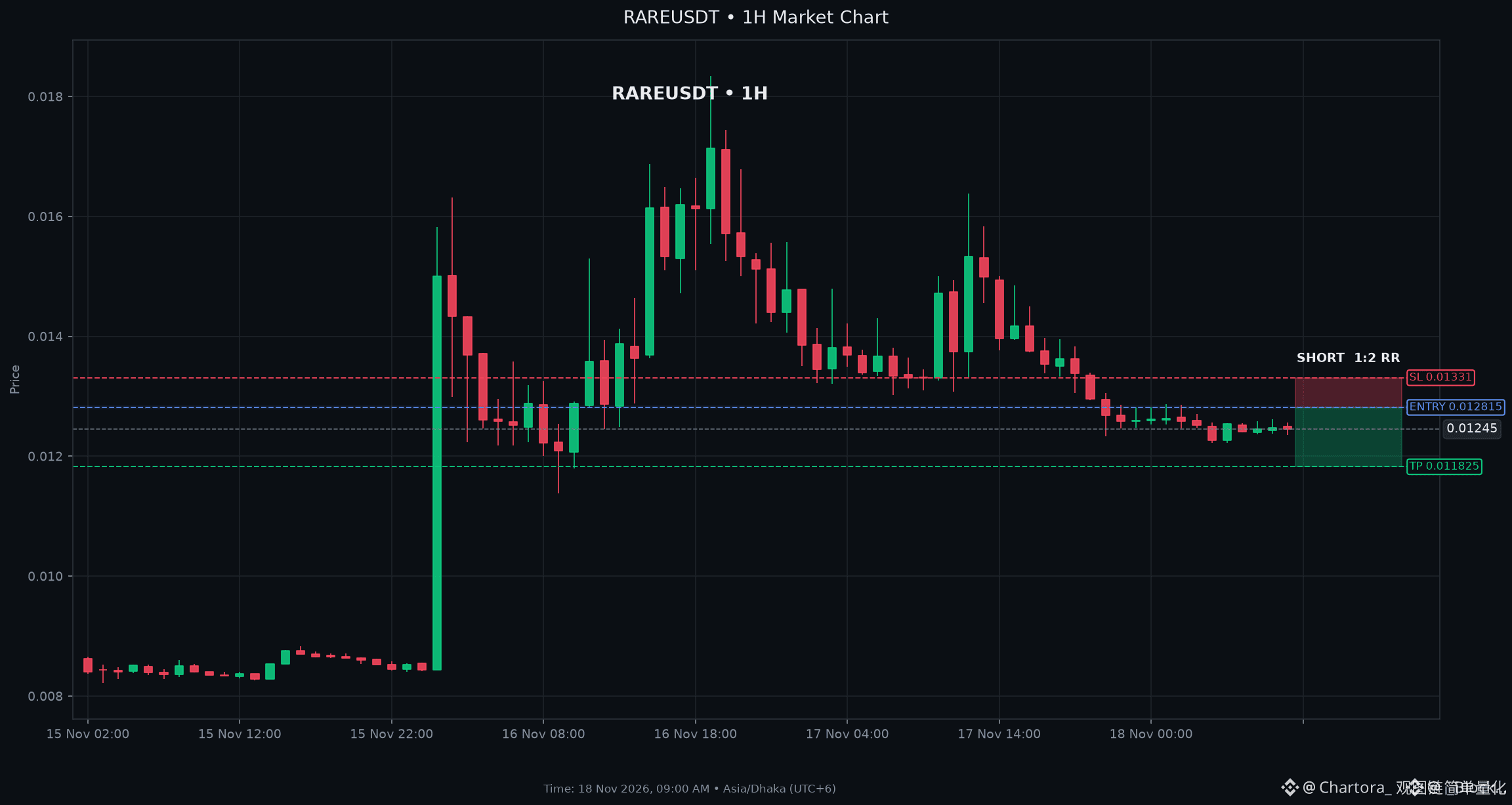
$RARE is flagged for monitoring. This RARE move is a textbook pump-and-dump.
It’s been dumped all the way down from 0.017, breaking straight through the previous consolidation floor. Looking at the 1-hour chart, each high is lower than the last, with 0.0128 acting as a hard ceiling.
Trading volume is greater than the market cap—the whales are simply using the liquidity to sell as they pump. Bulls can’t absorb this kind of selling pressure. Once the attention event plays out, any bounce is a final chance to get out.
#英伟达财报大超预期,Q4营收展望1300亿美元 #RARE $RARE #BREV $BREV 👇
{future}(RAREUSDT)
$RARE is flagged for monitoring. This RARE move is a textbook pump-and-dump.
It’s been dumped all the way down from 0.017, breaking straight through the previous consolidation floor. Looking at the 1-hour chart, each high is lower than the last, with 0.0128 acting as a hard ceiling.
Trading volume is greater than the market cap—the whales are simply using the liquidity to sell as they pump. Bulls can’t absorb this kind of selling pressure. Once the attention event plays out, any bounce is a final chance to get out.
#英伟达财报大超预期,Q4营收展望1300亿美元 #RARE $RARE #BREV $BREV 👇
105
·
--
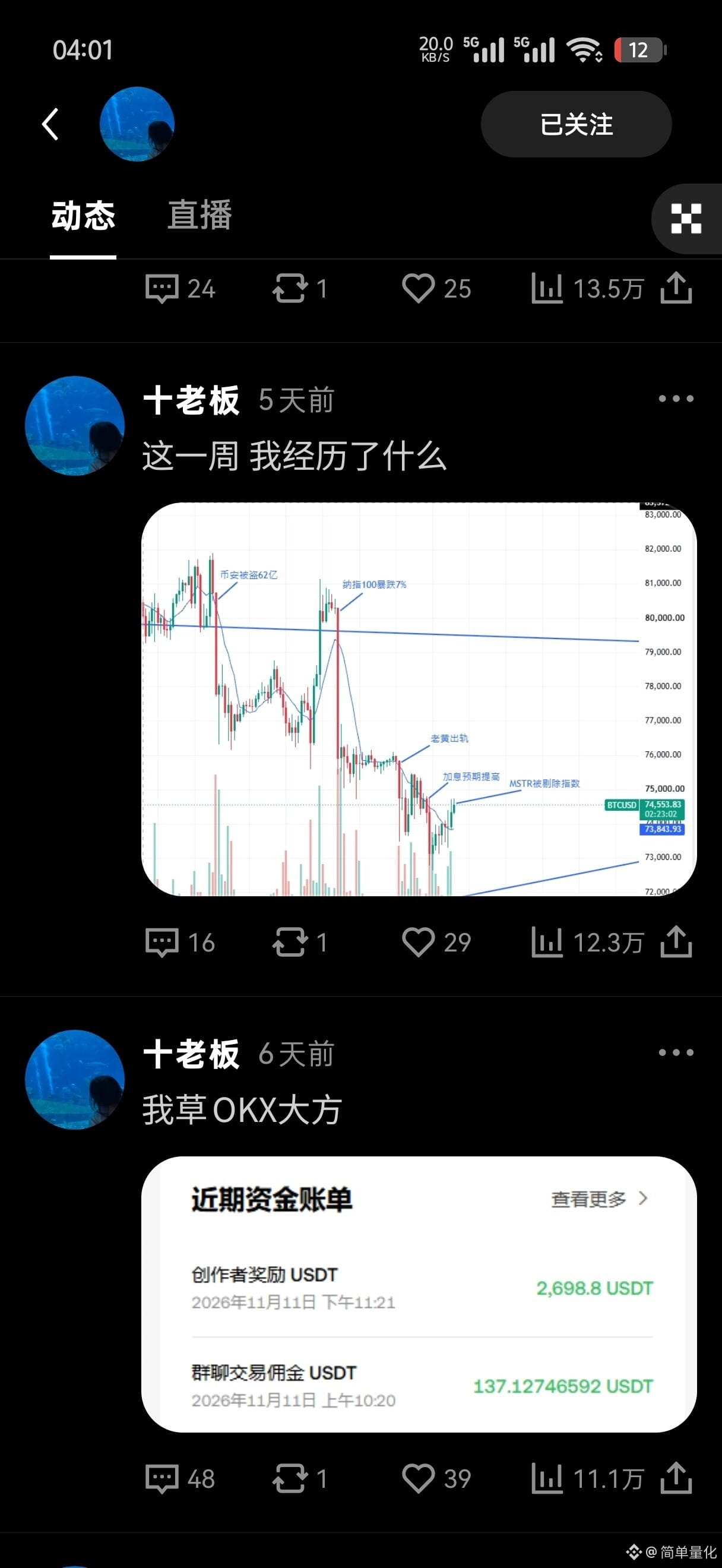
$BTC Used to watch Boss Shi, hoping to learn how to make over 100 million like him.
Now I watch Boss Shi, hoping to learn how to collect 2,000-plus U in creator rewards.
Caught BTC at 79,500, went heavy on Nvidia at 158—both times I bought near the halfway point, pretty much in sync.
He’s stopped posting his live trades, but the excuses for his losses are still being updated.
Judging by the way he draws his candlestick charts, every time he loses a trade, the world has to make something happen to fit the story.
247
·
--
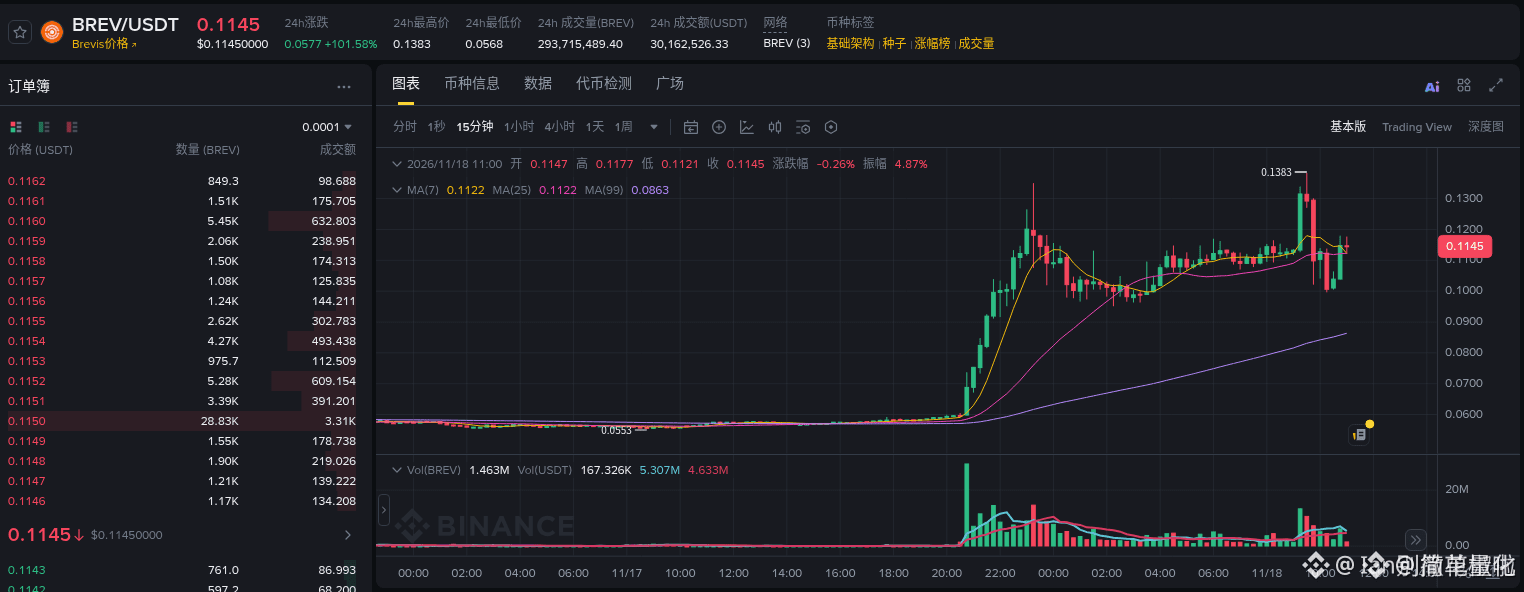
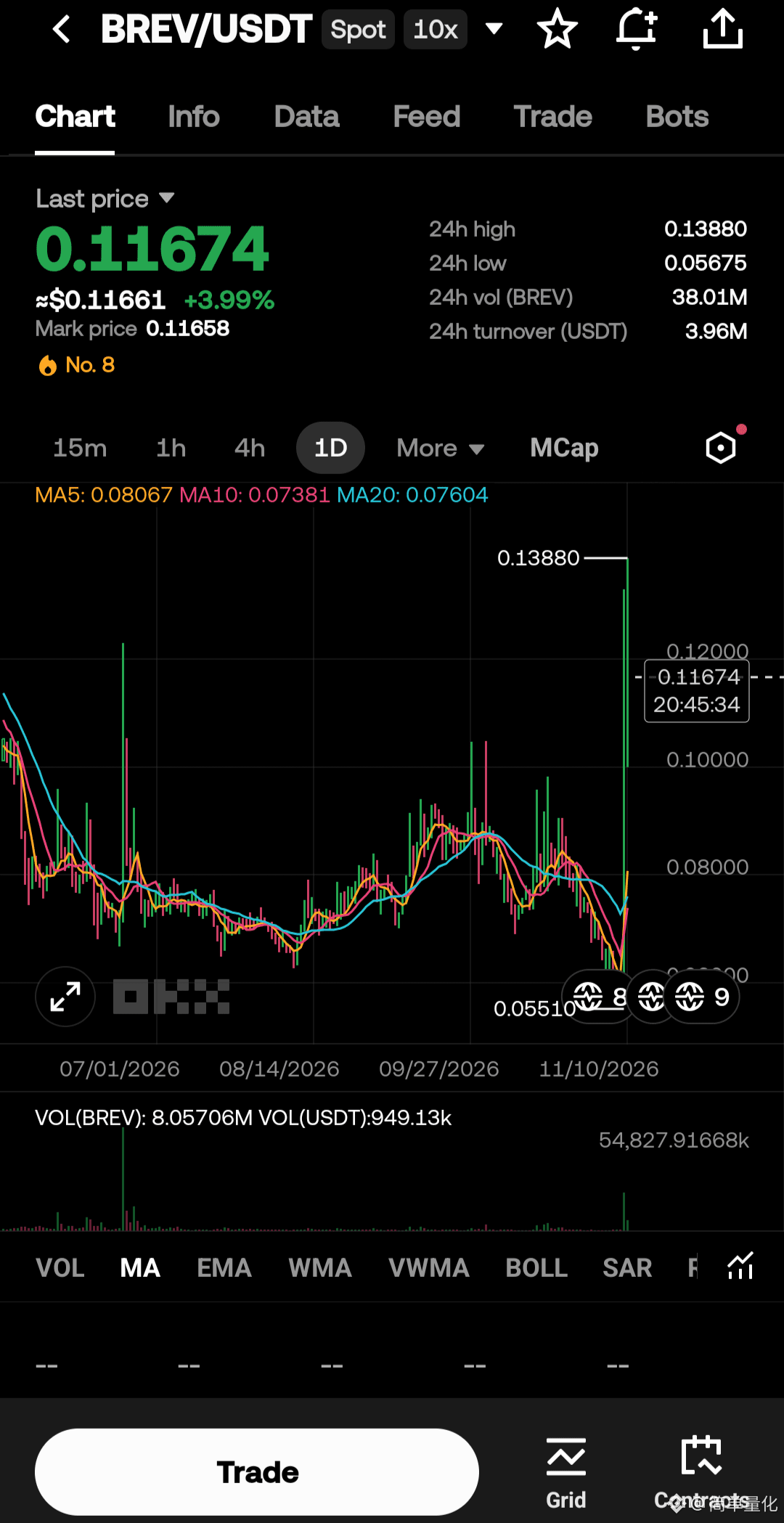
$BREV BREV surged to 0.1383, then the next 15-minute candle slammed back to 0.1021.
It then dipped to 0.0996, with a maximum drawdown of about 28%.
Nvidia reported Q3 revenue of $115.8 billion. What part of that revenue could flow to this token? Don’t factor earnings into the token’s valuation just because BREV and the Brev platform share a name.
Show at least one verifiable path for the token to benefit, such as a business tie-in, revenue sharing, or increased demand for the token.
It bounced intraday to 0.1145, but anyone who bought spot at 0.13 is still down about 12%. I won’t treat a shared name as a reason to go long. Manage risk first, then consider a retest of 0.0996.
#英伟达财报大超预期,Q4营收展望1300亿美元 #BREV $BREV #BREV $BREV 👇
{future}(BREVUSDT)
$BREV BREV surged to 0.1383, then the next 15-minute candle slammed back to 0.1021.
It then dipped to 0.0996, with a maximum drawdown of about 28%.
Nvidia reported Q3 revenue of $115.8 billion. What part of that revenue could flow to this token? Don’t factor earnings into the token’s valuation just because BREV and the Brev platform share a name.
Show at least one verifiable path for the token to benefit, such as a business tie-in, revenue sharing, or increased demand for the token.
It bounced intraday to 0.1145, but anyone who bought spot at 0.13 is still down about 12%. I won’t treat a shared name as a reason to go long. Manage risk first, then consider a retest of 0.0996.
#英伟达财报大超预期,Q4营收展望1300亿美元 #BREV $BREV #BREV $BREV 👇
269
·
--
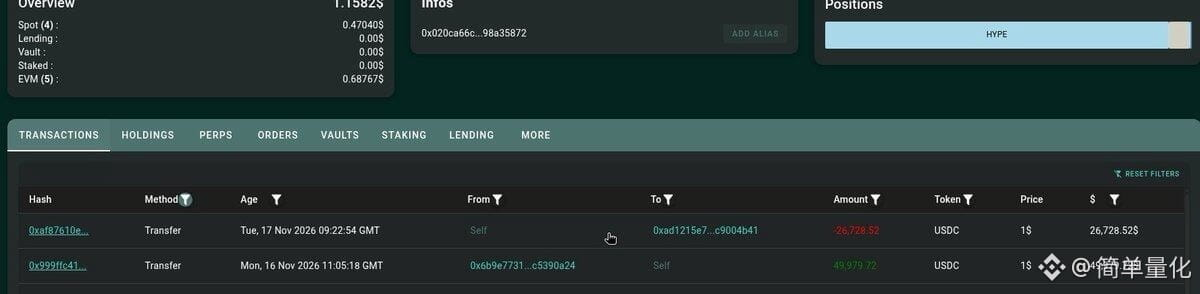
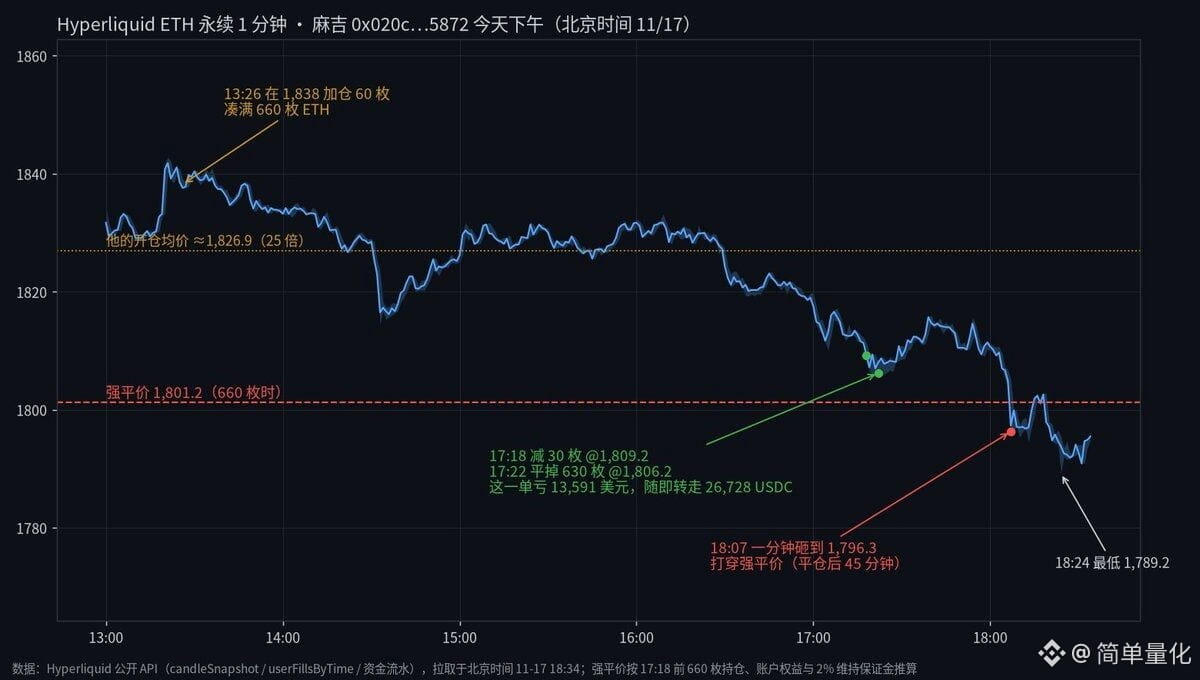
$BTC Machi didn't wait to get liquidated this time—he cut his entire 660 ETH long position himself.
At 25x leverage, the liquidation price was less than $10 away when he closed the position. The remaining 26,000 USDT was transferred out in under 40 seconds.
45 minutes later, ETH plunged again.
The account wasn't emptied completely; a little spare change was left behind.
At 25x leverage, the liquidation price was less than $10 away when he closed the position. The remaining 26,000 USDT was transferred out in under 40 seconds.
45 minutes later, ETH plunged again.
The account wasn't emptied completely; a little spare change was left behind.

323
·
--
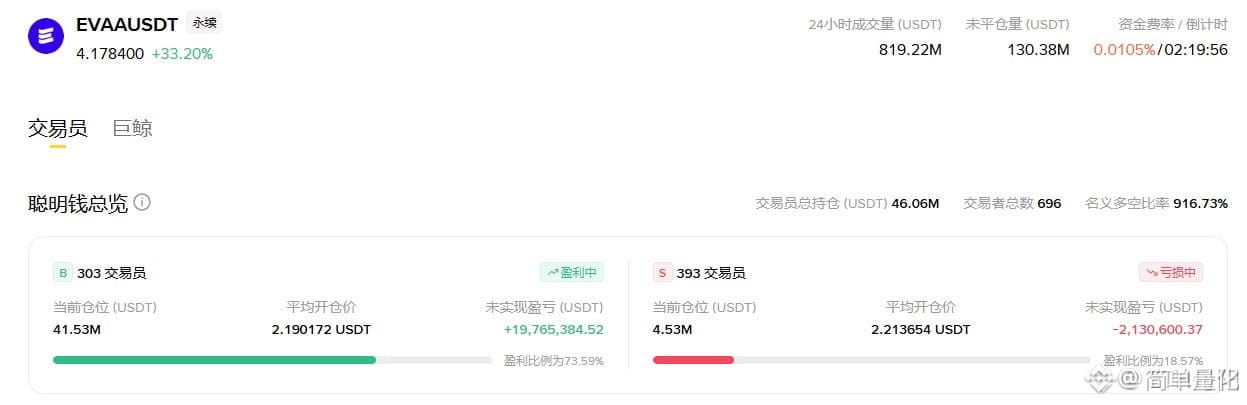
For this $EVAA EVAA sample, 303 traders are long and 393 are short, yet long positions are 9.17 times the size of short positions.
Long positions total $41.53 million, with an average entry price of 2.19 and nearly $20 million in unrealized profit.
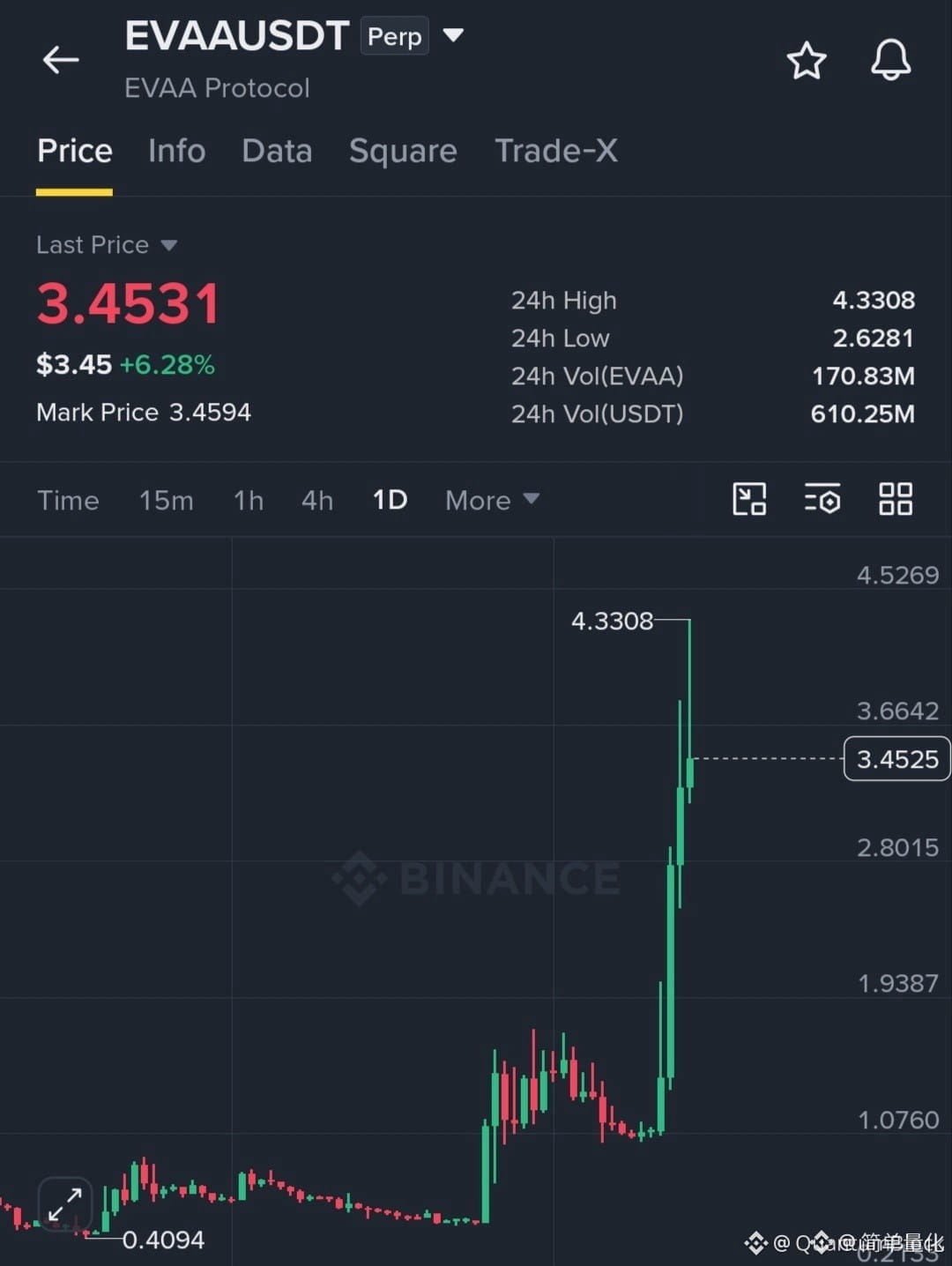
The price has retreated from 4.33 to 3.45. Low-cost longs are still in profit, while those who chased the price higher are taking the pullback first.
The estimated liquidation of about $4.5 million in long positions around 2.61 below is only a risk reference, not a guaranteed price.
I won’t enter on a rebound for now; if the price regains and holds above 4.33, I’ll scrap the bearish plan.
Will these unrealized gains keep riding, or will you take profits first?
#英伟达财报超预期AI云股盘后上涨 #EVAA $EVAA #HUMA $HUMA 👇
{future}(EVAAUSDT)
For this $EVAA EVAA sample, 303 traders are long and 393 are short, yet long positions are 9.17 times the size of short positions.
Long positions total $41.53 million, with an average entry price of 2.19 and nearly $20 million in unrealized profit.
The price has retreated from 4.33 to 3.45. Low-cost longs are still in profit, while those who chased the price higher are taking the pullback first.
The estimated liquidation of about $4.5 million in long positions around 2.61 below is only a risk reference, not a guaranteed price.
I won’t enter on a rebound for now; if the price regains and holds above 4.33, I’ll scrap the bearish plan.
Will these unrealized gains keep riding, or will you take profits first?
#英伟达财报超预期AI云股盘后上涨 #EVAA $EVAA #HUMA $HUMA 👇
1
1
1k
·
--
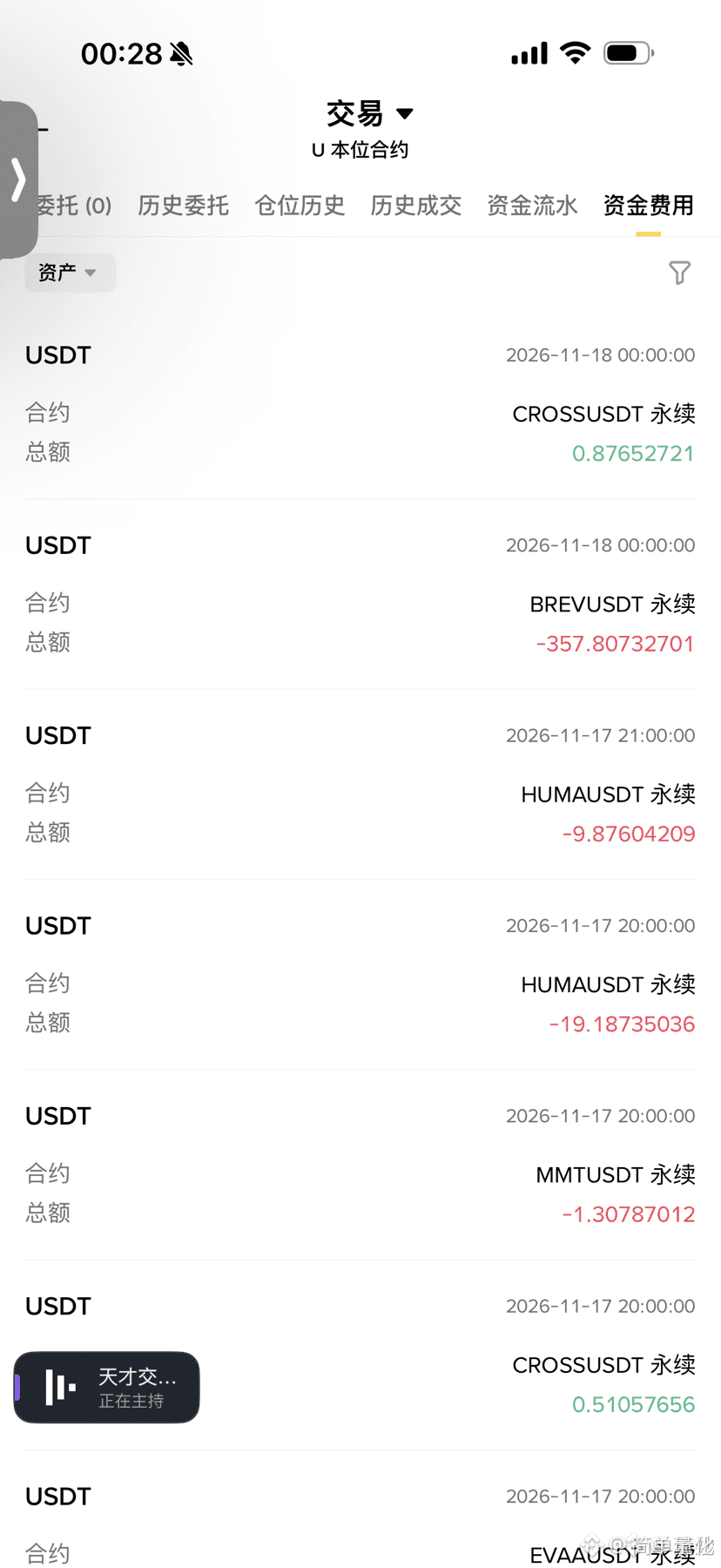
That funding fee of $BREV hit so hard, I thought I’d just gotten liquidated.
Did they really change it to charging once an hour now? If the market keeps moving sideways at this pace until dawn, the coin price can sleep all night while I pay by the hour.
That funding fee of $BREV hit so hard, I thought I’d just gotten liquidated.
Did they really change it to charging once an hour now? If the market keeps moving sideways at this pace until dawn, the coin price can sleep all night while I pay by the hour.
Did they really change it to charging once an hour now? If the market keeps moving sideways at this pace until dawn, the coin price can sleep all night while I pay by the hour.
28
·
--
Verified
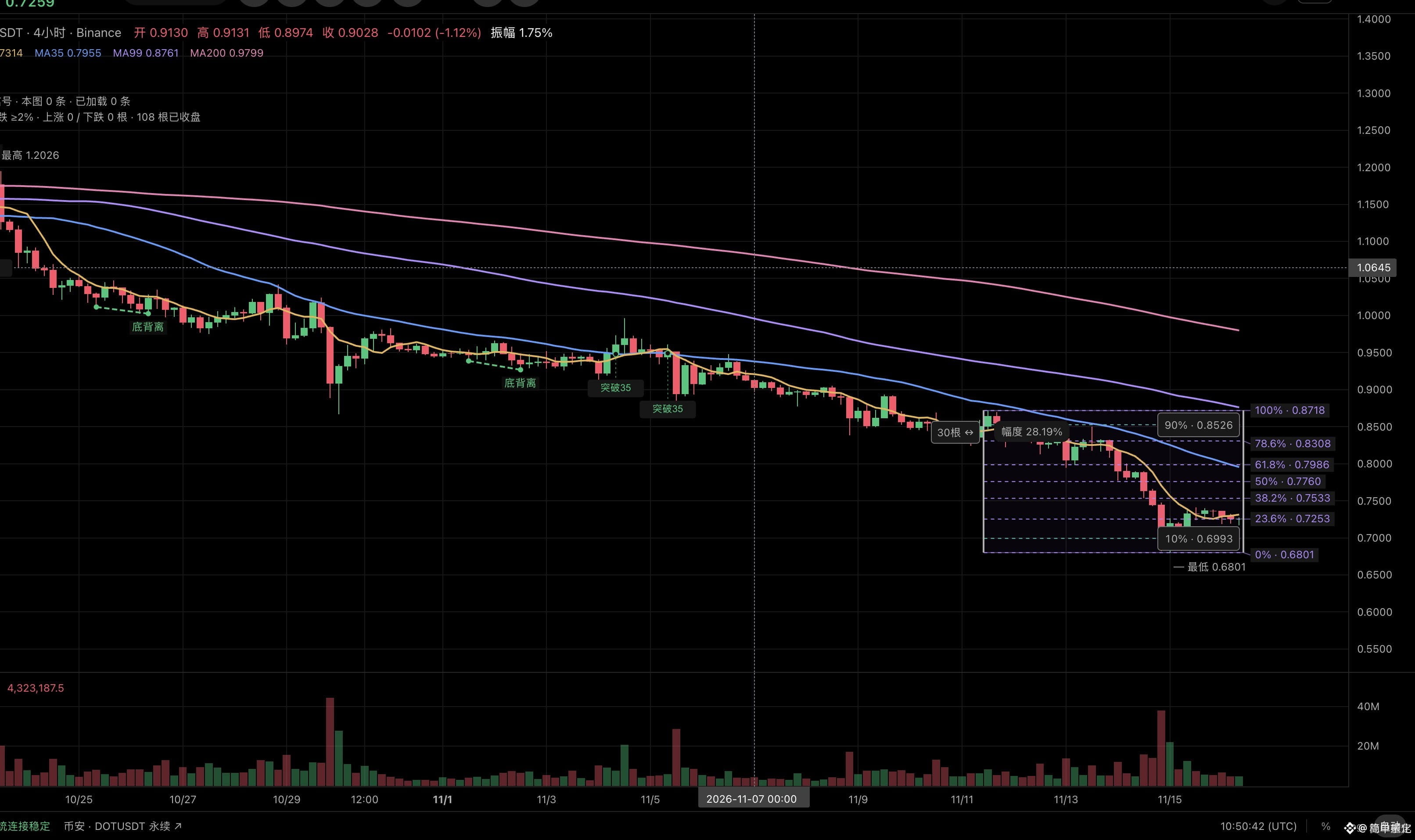
$DOT DOT reported at 0.7250, with all four 4-hour moving averages pressing overhead.
MA7 is at 0.7314, and MA35 is at 0.7955; a rebound must clear these two levels first.
Acala has submitted a proposal to shut down its own mainnet gateway, and Karura has launched a vote to close it. This is currently a governance process, so don’t misread it as a shutdown of the Polkadot mainnet gateway.
If a rebound to 0.7314 is blocked, only then consider a short trade in line with the trend.
If 0.7200 is lost, then watch the range low at 0.6801.
If the 4-hour chart reclaims 0.7314 and holds on a retest, exit this short trade first; don’t use ecosystem news as a reason to add to the short.
#英伟达财报夜!预期营收超千亿,AI股或迎大变盘 #DOT $DOT #EVAA $EVAA 👇
{future}(DOTUSDT)
$DOT DOT reported at 0.7250, with all four 4-hour moving averages pressing overhead.
MA7 is at 0.7314, and MA35 is at 0.7955; a rebound must clear these two levels first.
Acala has submitted a proposal to shut down its own mainnet gateway, and Karura has launched a vote to close it. This is currently a governance process, so don’t misread it as a shutdown of the Polkadot mainnet gateway.
If a rebound to 0.7314 is blocked, only then consider a short trade in line with the trend.
If 0.7200 is lost, then watch the range low at 0.6801.
If the 4-hour chart reclaims 0.7314 and holds on a retest, exit this short trade first; don’t use ecosystem news as a reason to add to the short.
#英伟达财报夜!预期营收超千亿,AI股或迎大变盘 #DOT $DOT #EVAA $EVAA 👇

330
·
--
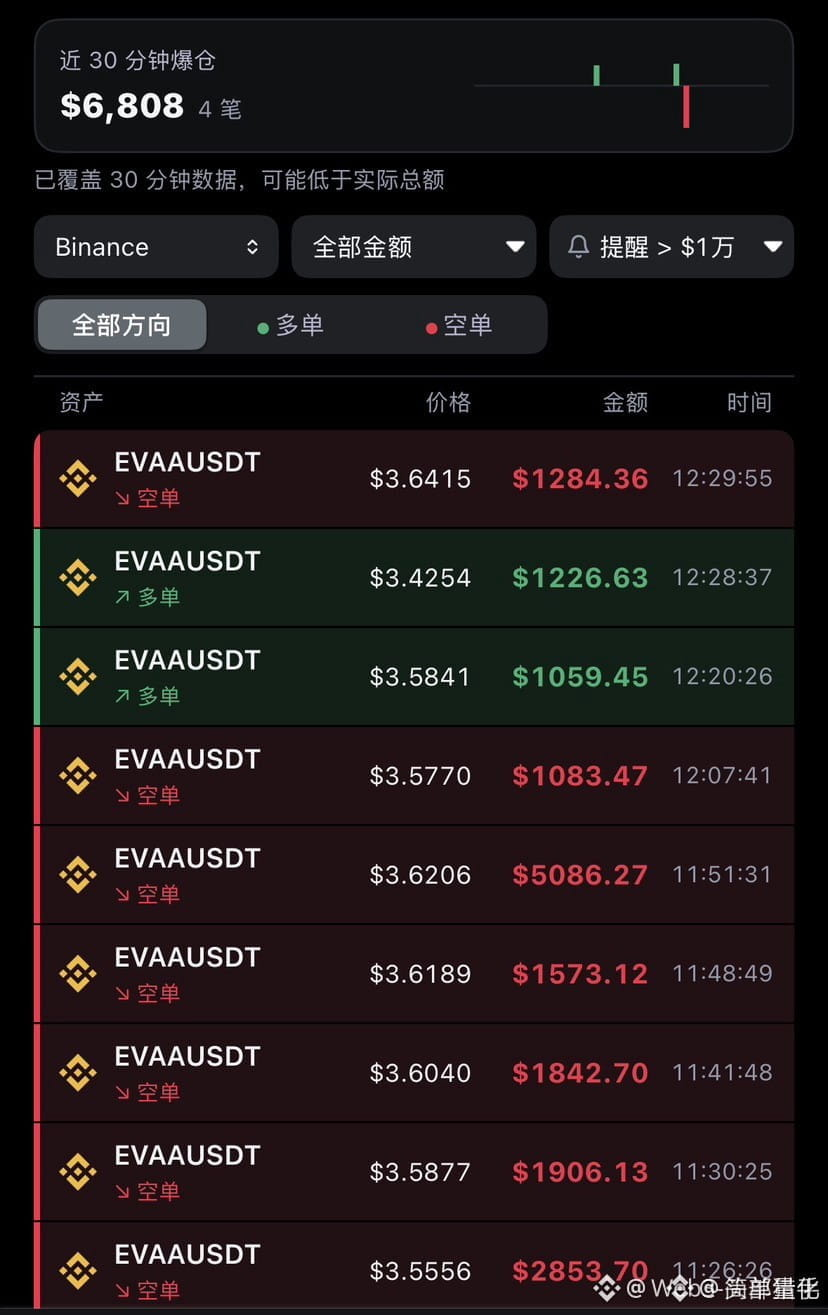
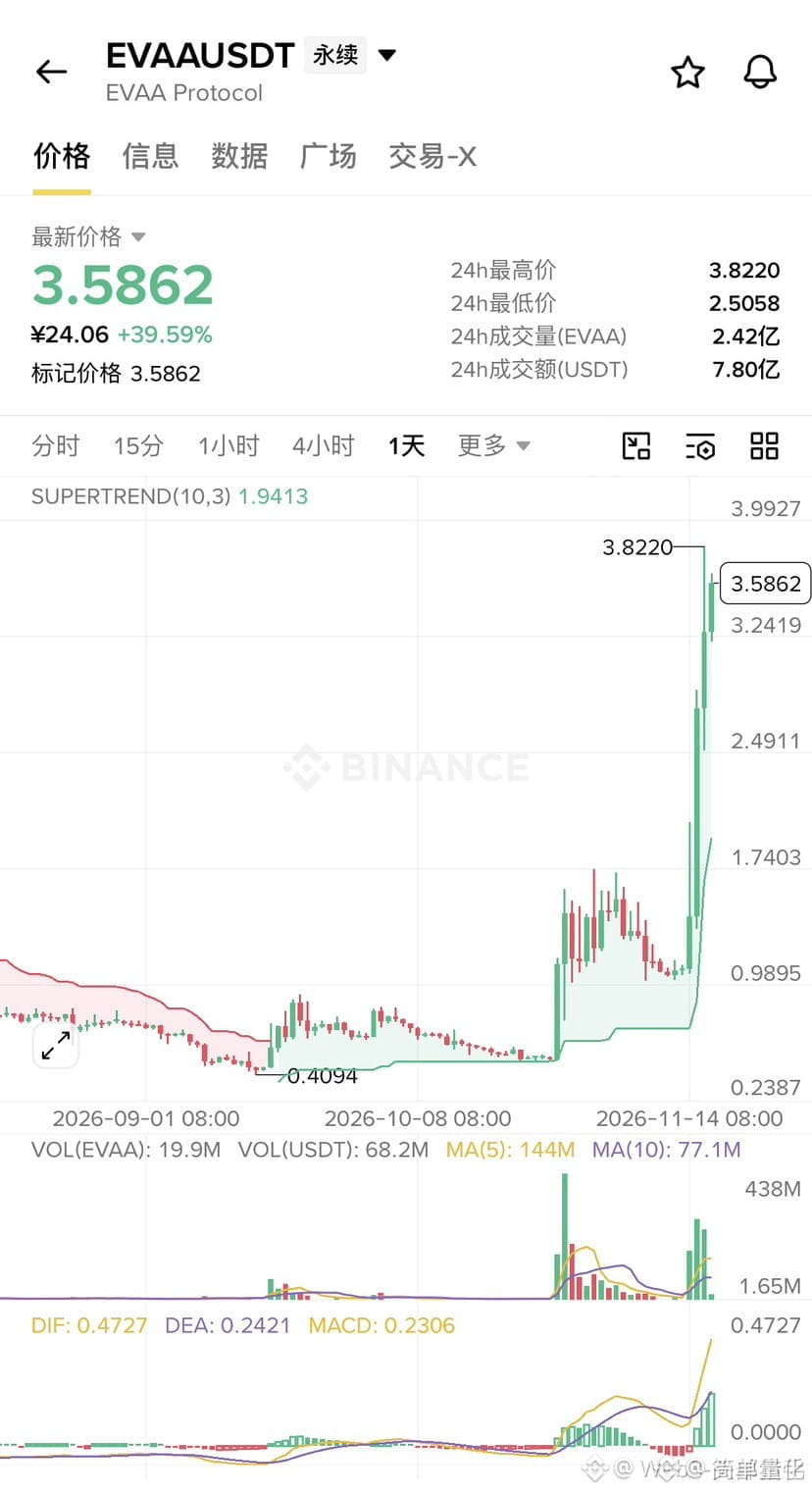
$EVAA The market maker has reportedly already made $15 million, and they’re still pumping it.
Short positions keep getting liquidated one after another, and there are still people lining up to try to short the top.
Bro, how much do you need to make before you call it quits?
$EVAA The market maker has reportedly already made $15 million, and they’re still pumping it.
Short positions keep getting liquidated one after another, and there are still people lining up to try to short the top.
Bro, how much do you need to make before you call it quits?
Short positions keep getting liquidated one after another, and there are still people lining up to try to short the top.
Bro, how much do you need to make before you call it quits?
2
2.5k
·
--
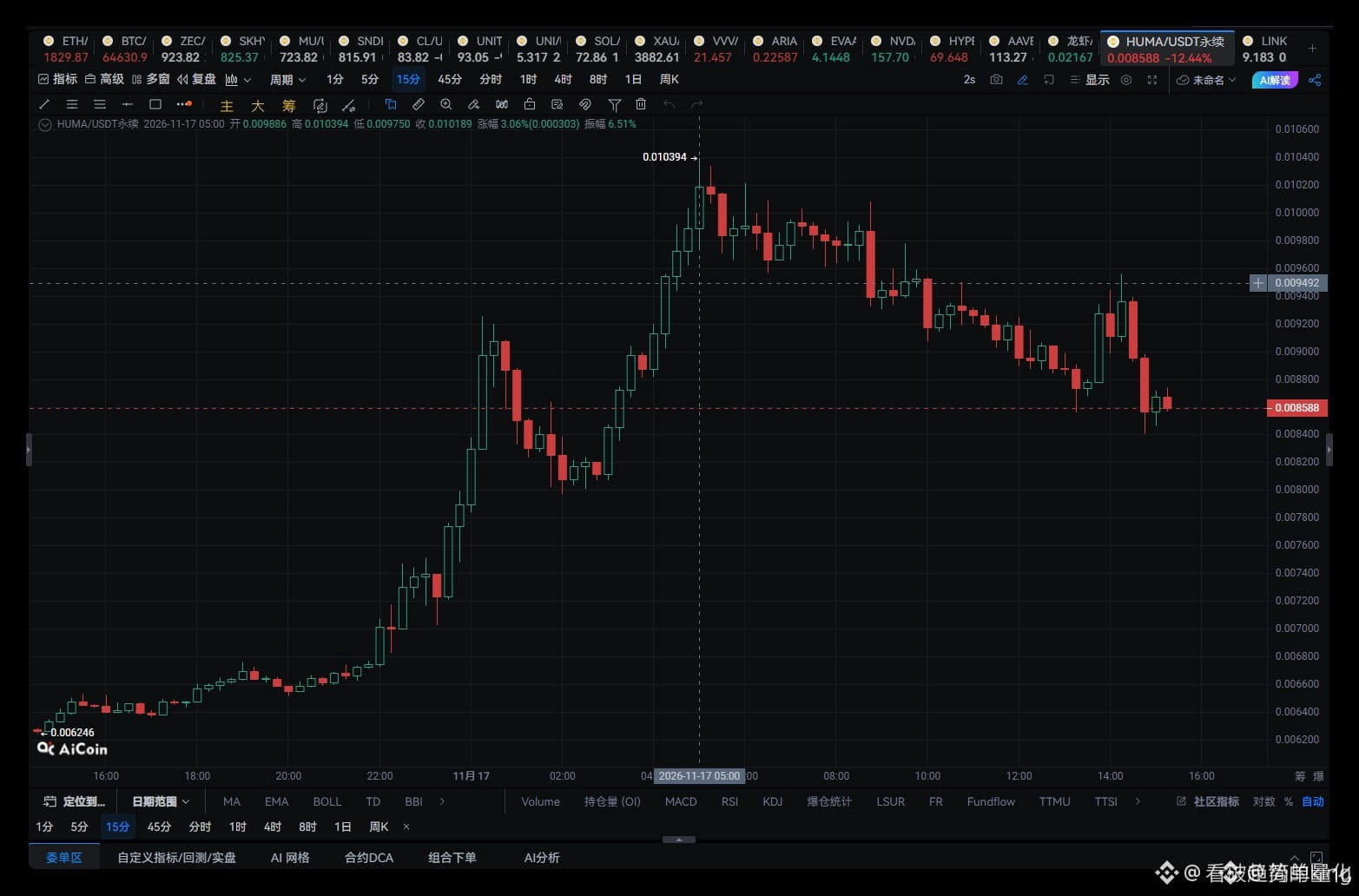
$HUMA HUMA topped at 0.010394, after which the 15-minute highs kept moving lower. Just now, a weak rebound near 0.00949 met resistance, followed by a long bearish candle that smashed straight through the consolidation range, dropping to 0.008588.
Buyers are showing little support, and each high is lower than the last. In this kind of price action, the bulls don’t even have the strength to fight back. The bears have completely taken control in the short term, and the price will most likely continue to probe lower.
#英伟达财报夜!预期营收超千亿,AI股或迎大变盘 #HUMA $HUMA #BLESS $BLESS 👇
{future}(HUMAUSDT)
$HUMA HUMA topped at 0.010394, after which the 15-minute highs kept moving lower. Just now, a weak rebound near 0.00949 met resistance, followed by a long bearish candle that smashed straight through the consolidation range, dropping to 0.008588.
Buyers are showing little support, and each high is lower than the last. In this kind of price action, the bulls don’t even have the strength to fight back. The bears have completely taken control in the short term, and the price will most likely continue to probe lower.
#英伟达财报夜!预期营收超千亿,AI股或迎大变盘 #HUMA $HUMA #BLESS $BLESS 👇
245
·
--
Partly True
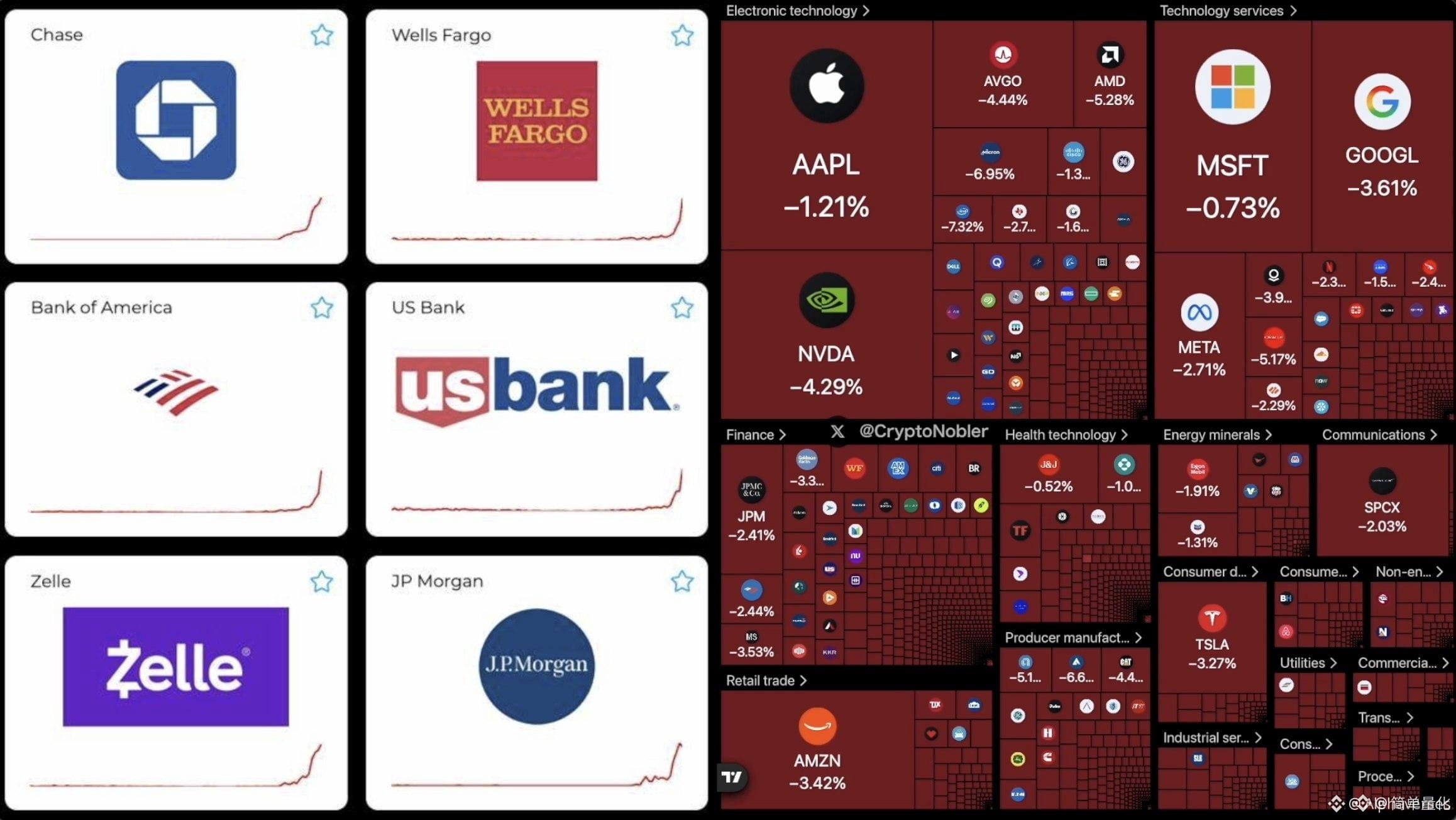
$BLESS Breaking 🚨 U.S. markets have just opened, and several of the country’s biggest banks have suffered widespread outages nationwide!
Numerous customers report that their account balances have simply vanished, transfers are failing across the board, and mobile banking apps are completely locked up. Within just a few minutes of the opening bell, several major financial institutions have ground to a halt. Traders are already warning that a clearing and liquidity crisis could trigger a chain reaction at any moment.
Numerous customers report that their account balances have simply vanished, transfers are failing across the board, and mobile banking apps are completely locked up. Within just a few minutes of the opening bell, several major financial institutions have ground to a halt. Traders are already warning that a clearing and liquidity crisis could trigger a chain reaction at any moment.
526
·
--
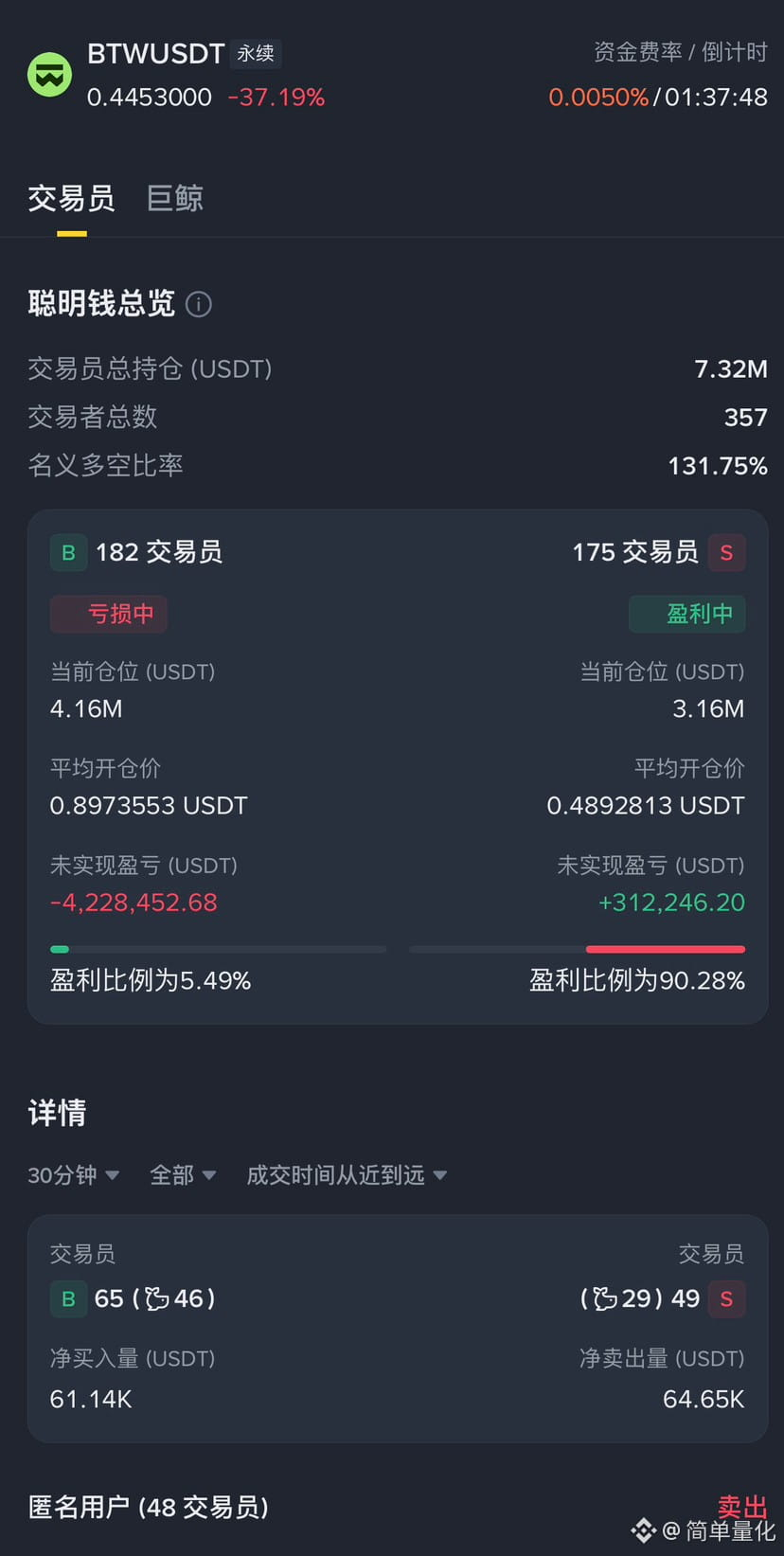
$BTW The bulls are well and truly trapped in this market. Their average entry cost is 0.897, with a floating loss of four million. Now the price has been driven straight below 0.415, and even the slightest rebound can’t get off the ground. The whole area above is packed with trapped holders desperate to break even; every struggle just gives the bears more fuel to add to their positions.
#本周财报与宏观事件密集,市场再迎波动考验 #BTW $BTW #EVAA $EVAA 👇
{future}(BTWUSDT)
$BTW The bulls are well and truly trapped in this market. Their average entry cost is 0.897, with a floating loss of four million. Now the price has been driven straight below 0.415, and even the slightest rebound can’t get off the ground. The whole area above is packed with trapped holders desperate to break even; every struggle just gives the bears more fuel to add to their positions.
#本周财报与宏观事件密集,市场再迎波动考验 #BTW $BTW #EVAA $EVAA 👇
#本周财报与宏观事件密集,市场再迎波动考验 #BTW $BTW #EVAA $EVAA 👇
1k
·
--
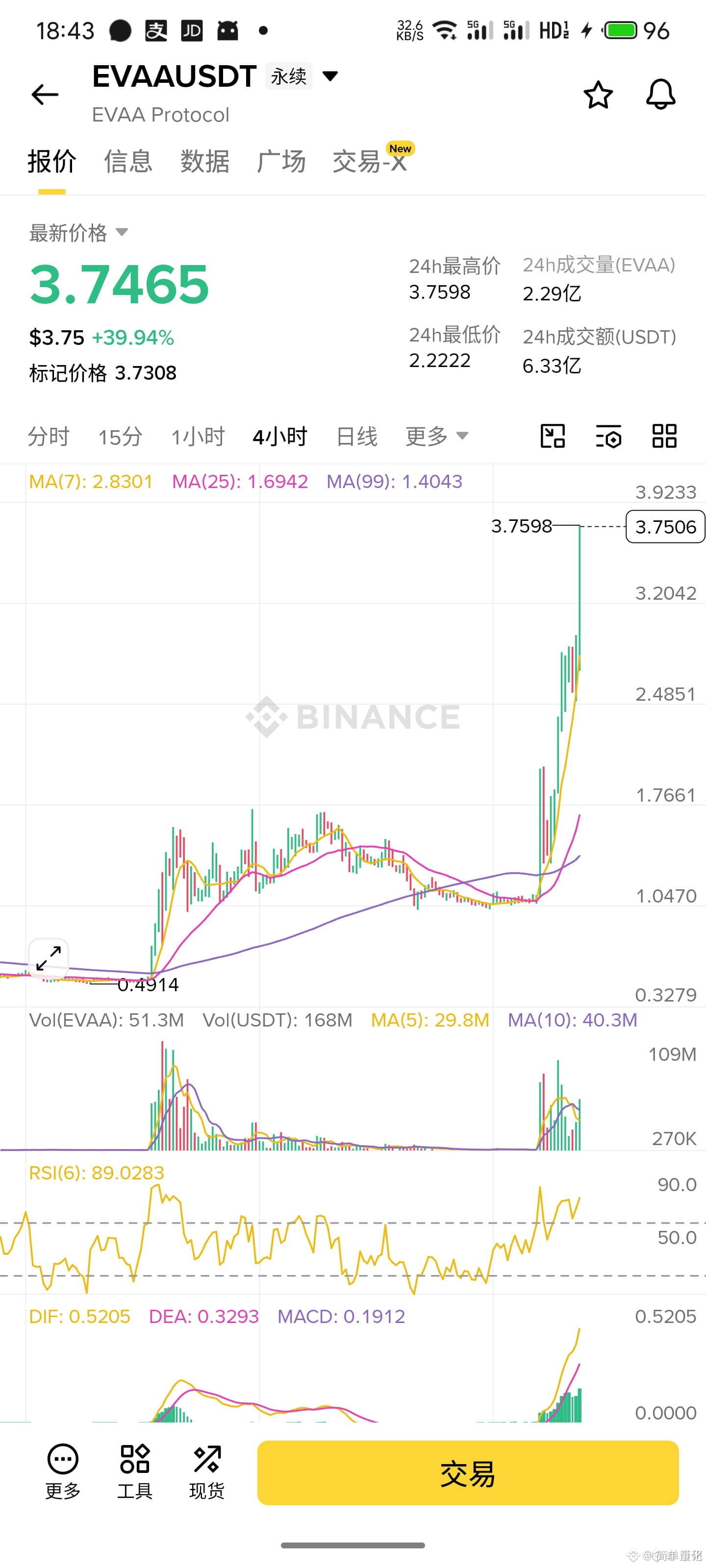
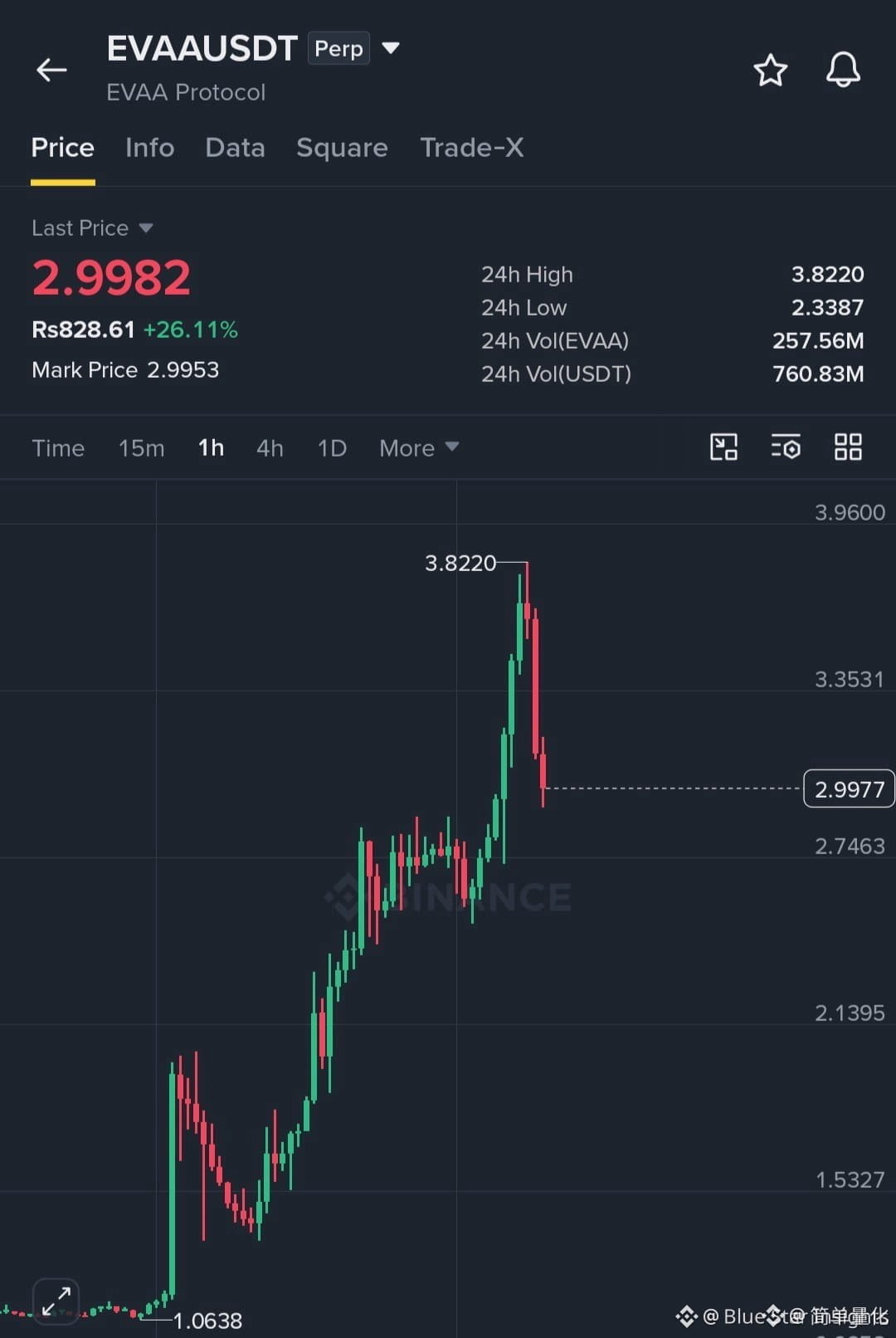
$EVAA 1-hour chart reversed from a high of 3.822 and plunged, breaking through the 3.25 and 3.00 levels in succession, with a single-wave pullback of over 21% to around 2.998.
Over the previous three days, the price rocketed from 1.05 to above 3.75. The 4-hour RSI(6) surged to 89.03, indicating severely overbought conditions, while the candlesticks opened up an extreme gap from the MA7 (2.830) and MA25 (1.694) below.
Daily contract trading volume smashed through $600 million, while contract open interest of 59 million U nearly matched the total market cap of the 17.85 million circulating tokens. The funding rate rose to +0.069%. Long leverage is extremely crowded at these elevated levels. If 3.00 gives way, keep a close eye on support at the 2.83 moving average; a break below could bring a move back toward MA25.
#本周财报与宏观事件密集,市场再迎波动考验 #EVAA $EVAA #RARE $RARE 👇
{future}(EVAAUSDT)
$EVAA 1-hour chart reversed from a high of 3.822 and plunged, breaking through the 3.25 and 3.00 levels in succession, with a single-wave pullback of over 21% to around 2.998.
Over the previous three days, the price rocketed from 1.05 to above 3.75. The 4-hour RSI(6) surged to 89.03, indicating severely overbought conditions, while the candlesticks opened up an extreme gap from the MA7 (2.830) and MA25 (1.694) below.
Daily contract trading volume smashed through $600 million, while contract open interest of 59 million U nearly matched the total market cap of the 17.85 million circulating tokens. The funding rate rose to +0.069%. Long leverage is extremely crowded at these elevated levels. If 3.00 gives way, keep a close eye on support at the 2.83 moving average; a break below could bring a move back toward MA25.
#本周财报与宏观事件密集,市场再迎波动考验 #EVAA $EVAA #RARE $RARE 👇
1
1.5k
·
--
Verified
$DOT Polkadot, $DOT this time really crushed the last bit of faith the old-timers had left.
Back in the day, parachain slot auctions and cross-chain champions were hyped to the skies. Now Acala, once a leading project in the ecosystem, has proposed shutting down its chain and operations.
The project team can shut things down gracefully and walk away; influencers can delete their posts and move on to the next trend. All that’s left are retail investors still clinging to positions that have lost 90% of their value, waiting in vain for the sky-high riches they were promised back then.


7
3
5.6k
·
--
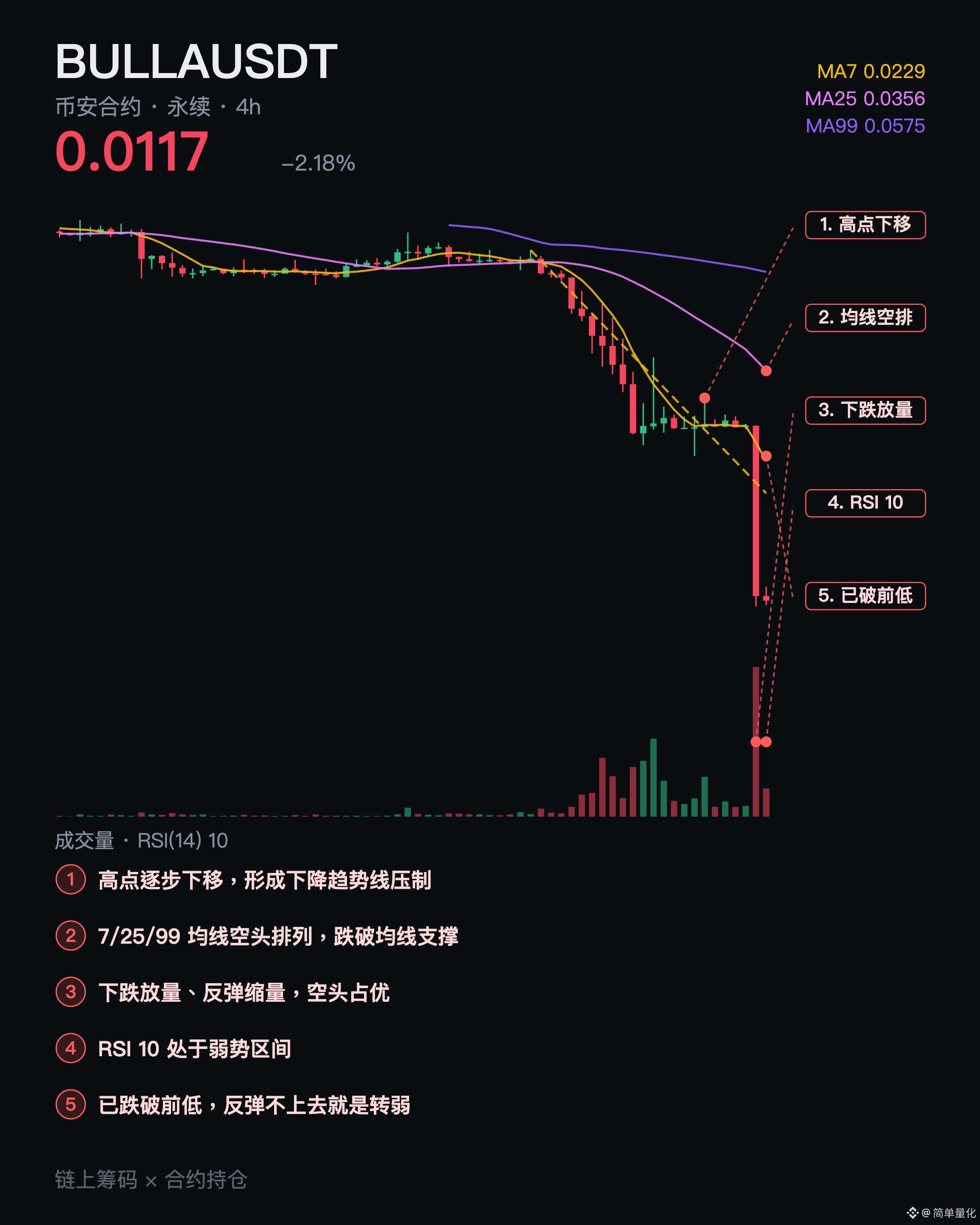
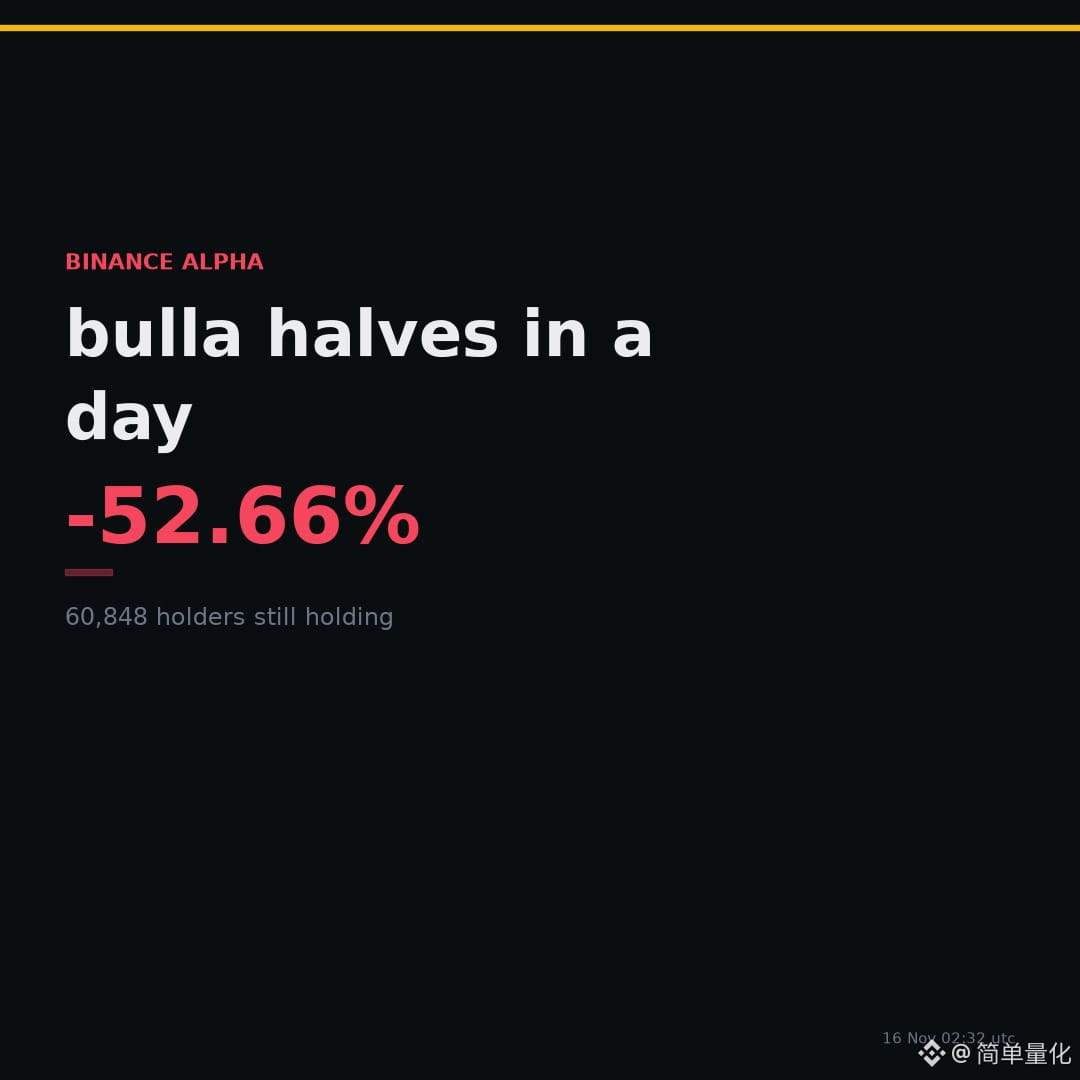
$BULLA plunged vertically from 0.0269 to 0.0117 in just one hour, crashing more than 52% intraday on heavy volume and breaking below the previous low.
There are still 60,848 holder addresses on-chain, but the liquidity pool has just $181,000 left.
With such shallow pool depth, a single market order from a large holder could easily send the candlestick crashing through the floor.
The contract order book is just as thin, with the spread between the top two price levels widening to 3%. A stop-loss order placed at 0.02 would have slipped to 0.0124 when filled.
On the 4-hour chart, MA7, MA25, and MA99 are all exerting bearish pressure. RSI has fallen to the extreme level of 10, yet there is still no buying support.
There is overhead selling pressure from trapped holders, and no bid wall below to provide support. Resist the urge to catch a falling knife on the way down.
#本周财报与宏观事件密集,市场再迎波动考验 #BULLA $BULLA #EVAA $EVAA 👇
{future}(BULLAUSDT)
$BULLA plunged vertically from 0.0269 to 0.0117 in just one hour, crashing more than 52% intraday on heavy volume and breaking below the previous low.
There are still 60,848 holder addresses on-chain, but the liquidity pool has just $181,000 left.
With such shallow pool depth, a single market order from a large holder could easily send the candlestick crashing through the floor.
The contract order book is just as thin, with the spread between the top two price levels widening to 3%. A stop-loss order placed at 0.02 would have slipped to 0.0124 when filled.
On the 4-hour chart, MA7, MA25, and MA99 are all exerting bearish pressure. RSI has fallen to the extreme level of 10, yet there is still no buying support.
There is overhead selling pressure from trapped holders, and no bid wall below to provide support. Resist the urge to catch a falling knife on the way down.
#本周财报与宏观事件密集,市场再迎波动考验 #BULLA $BULLA #EVAA $EVAA 👇
1
939
·
--
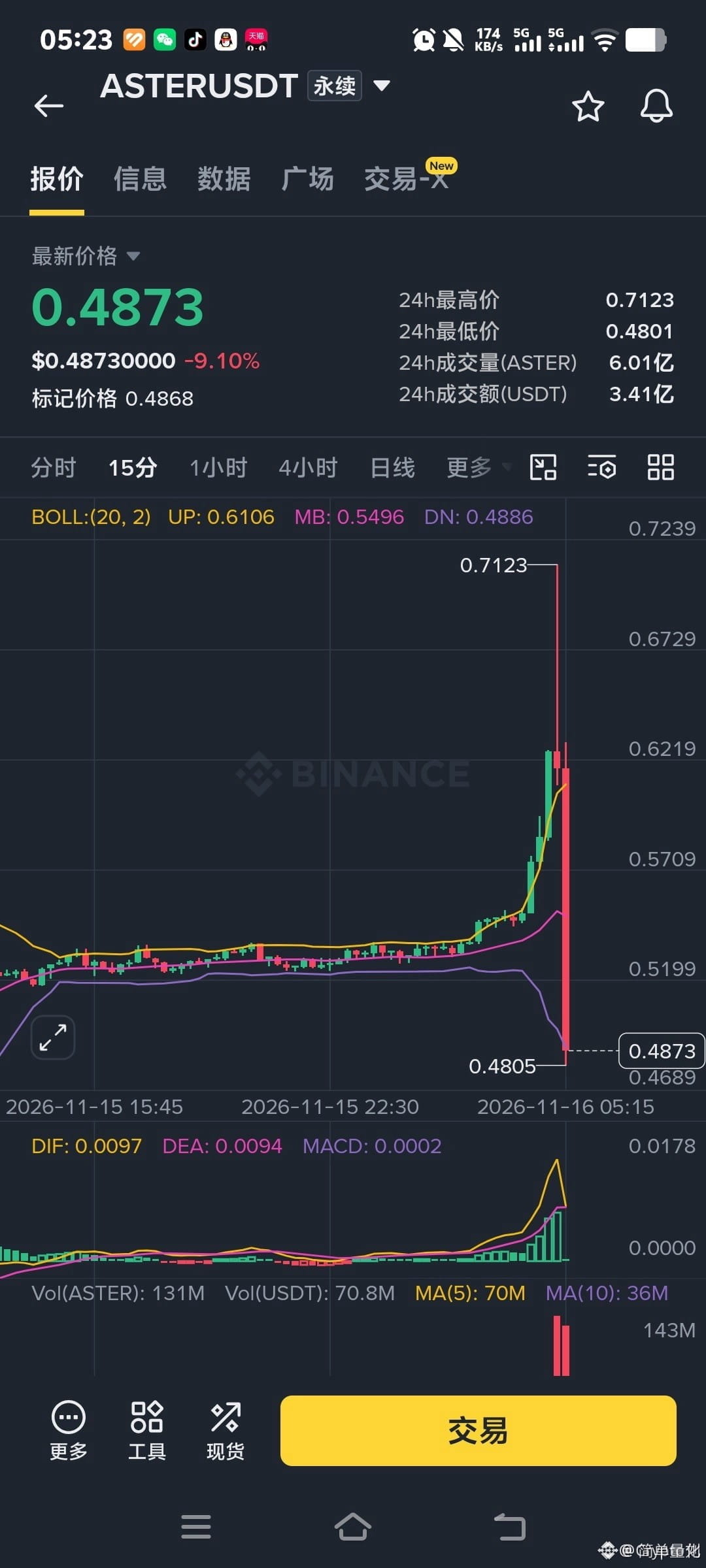
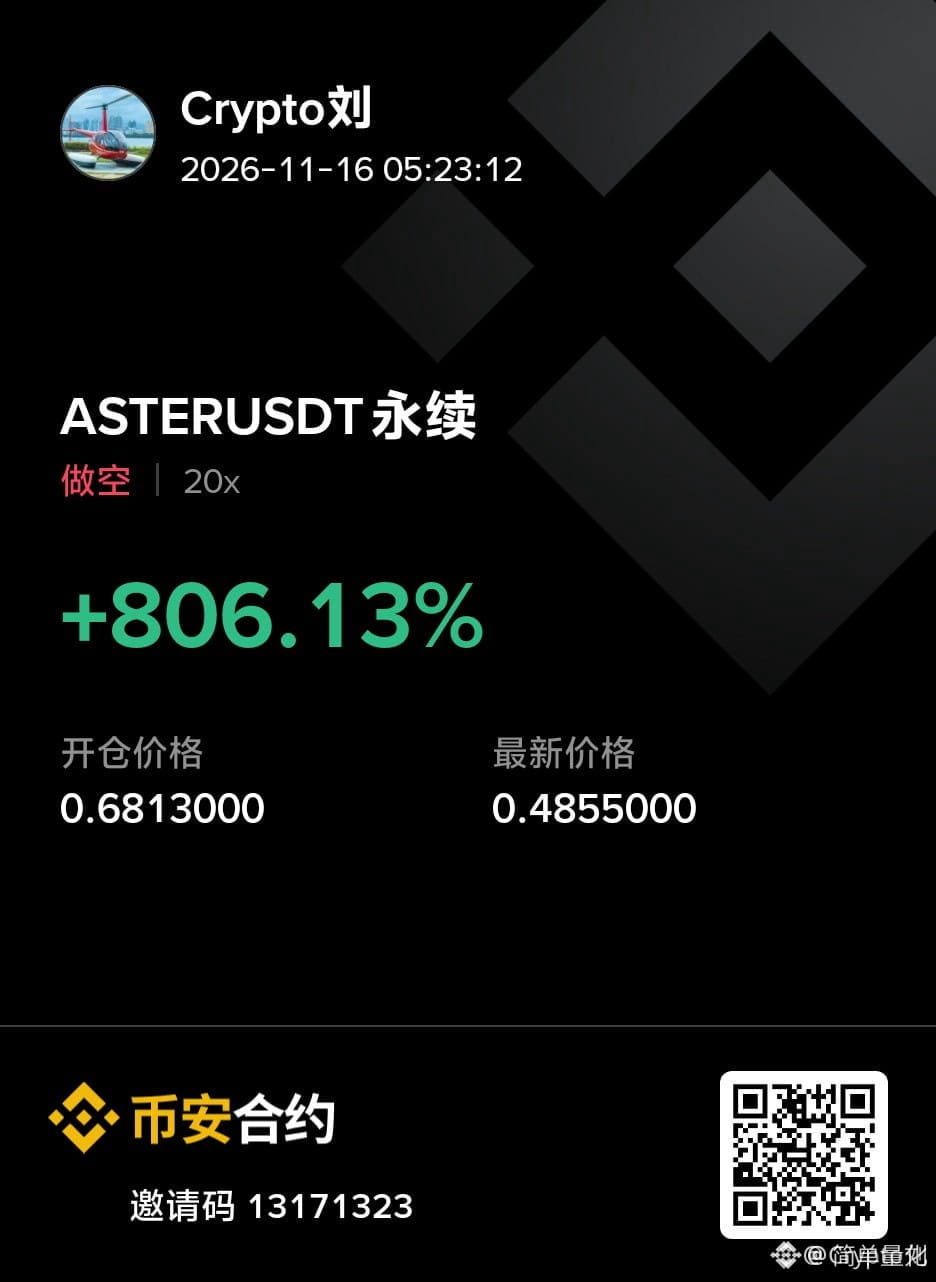
$RARE With a market value of tens of billions, $ASTER in the middle of the night didn’t even bother to act anymore: first a sudden vertical spike straight up, then immediately a waterfall reversal smashing it right back to its original form.
One surge and one crash buried all the chasing longs and stop-loss orders. This dog庄’s heaven-and-earth needle move is truly ugly to look at… but to be fair, that short order casually placed on the needle tip in the middle of the night was really delicious to eat.
One surge and one crash buried all the chasing longs and stop-loss orders. This dog庄’s heaven-and-earth needle move is truly ugly to look at… but to be fair, that short order casually placed on the needle tip in the middle of the night was really delicious to eat.
848
·
--
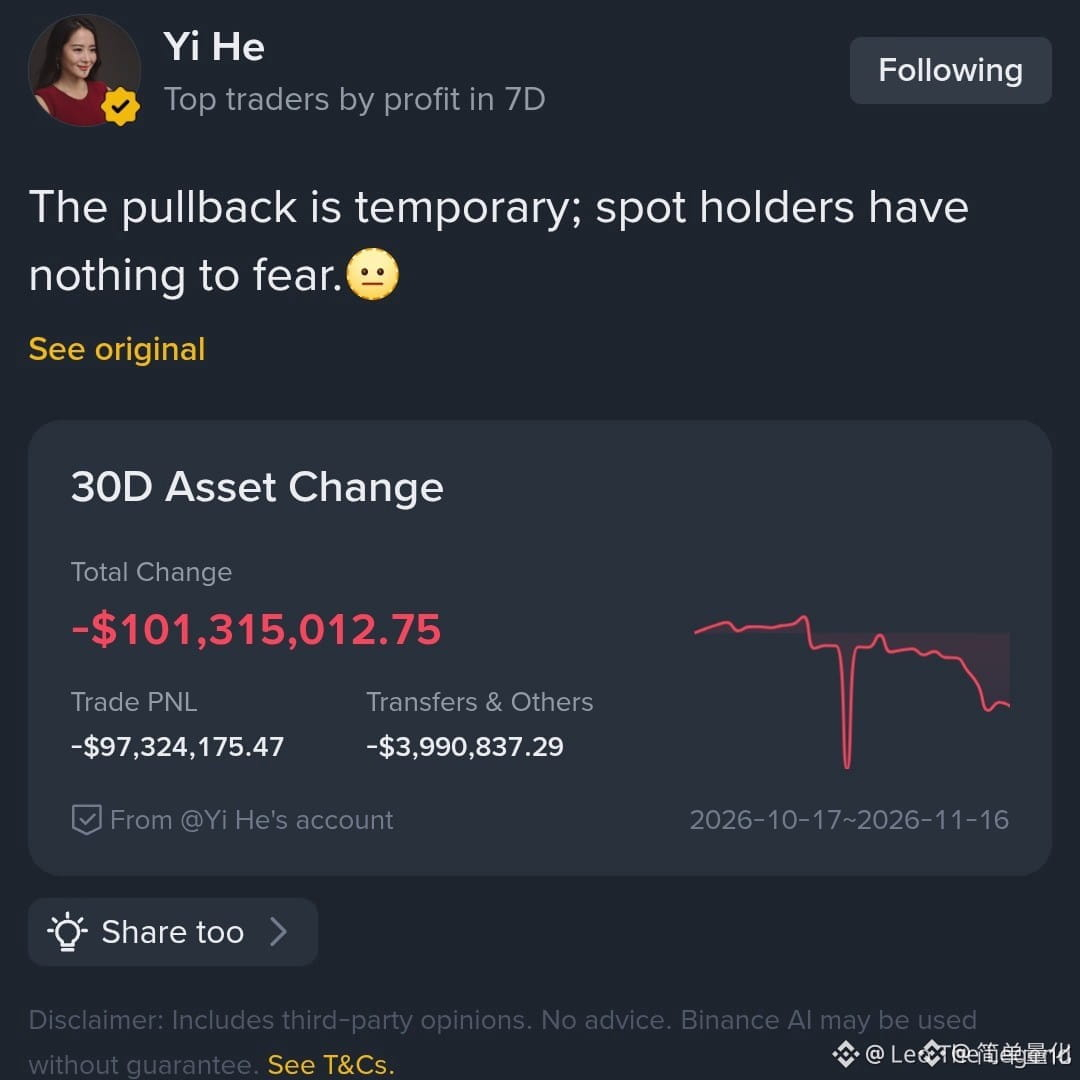
$EVAA 's portfolio has shrunk by over $100 million on paper in the past 30 days, yet they can still calmly post, “The pullback is temporary”……
This big shot's mental fortitude really is beyond what ordinary people can match 😐
$EVAA 's portfolio has shrunk by over $100 million on paper in the past 30 days, yet they can still calmly post, “The pullback is temporary”……
This big shot's mental fortitude really is beyond what ordinary people can match 😐
This big shot's mental fortitude really is beyond what ordinary people can match 😐
466
·
--
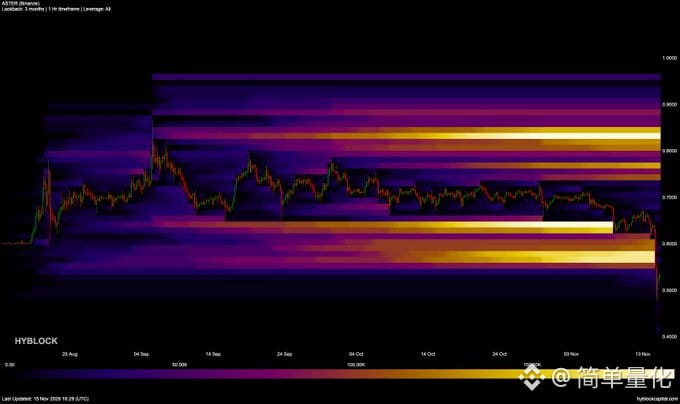
$ASTER traded sideways in a 0.60–0.85 range for months, with an extremely thick band of high-leverage long liquidations accumulating around 0.60–0.65.
The market suddenly plunged sharply in one direction, smashing straight through the 0.60 mark and then wicking down to test 0.50, sweeping away all the dense liquidation orders below 0.60 in one go.
The market makers were extremely ruthless in this downward liquidity hunt. After probing the 0.50 level and leaving a wick, active selling pressure in the order book had clearly dried up.
The bloodied liquidation positions below have been fully absorbed by buyers. In the short term, the 0.50 wick low serves as a support level for a bet on a rebound and recovery after deleveraging.
#本周财报与宏观事件密集,市场再迎波动考验 #ASTER $ASTER #EVAA $EVAA 👇
{future}(ASTERUSDT)
$ASTER traded sideways in a 0.60–0.85 range for months, with an extremely thick band of high-leverage long liquidations accumulating around 0.60–0.65.
The market suddenly plunged sharply in one direction, smashing straight through the 0.60 mark and then wicking down to test 0.50, sweeping away all the dense liquidation orders below 0.60 in one go.
The market makers were extremely ruthless in this downward liquidity hunt. After probing the 0.50 level and leaving a wick, active selling pressure in the order book had clearly dried up.
The bloodied liquidation positions below have been fully absorbed by buyers. In the short term, the 0.50 wick low serves as a support level for a bet on a rebound and recovery after deleveraging.
#本周财报与宏观事件密集,市场再迎波动考验 #ASTER $ASTER #EVAA $EVAA 👇
855
·
--
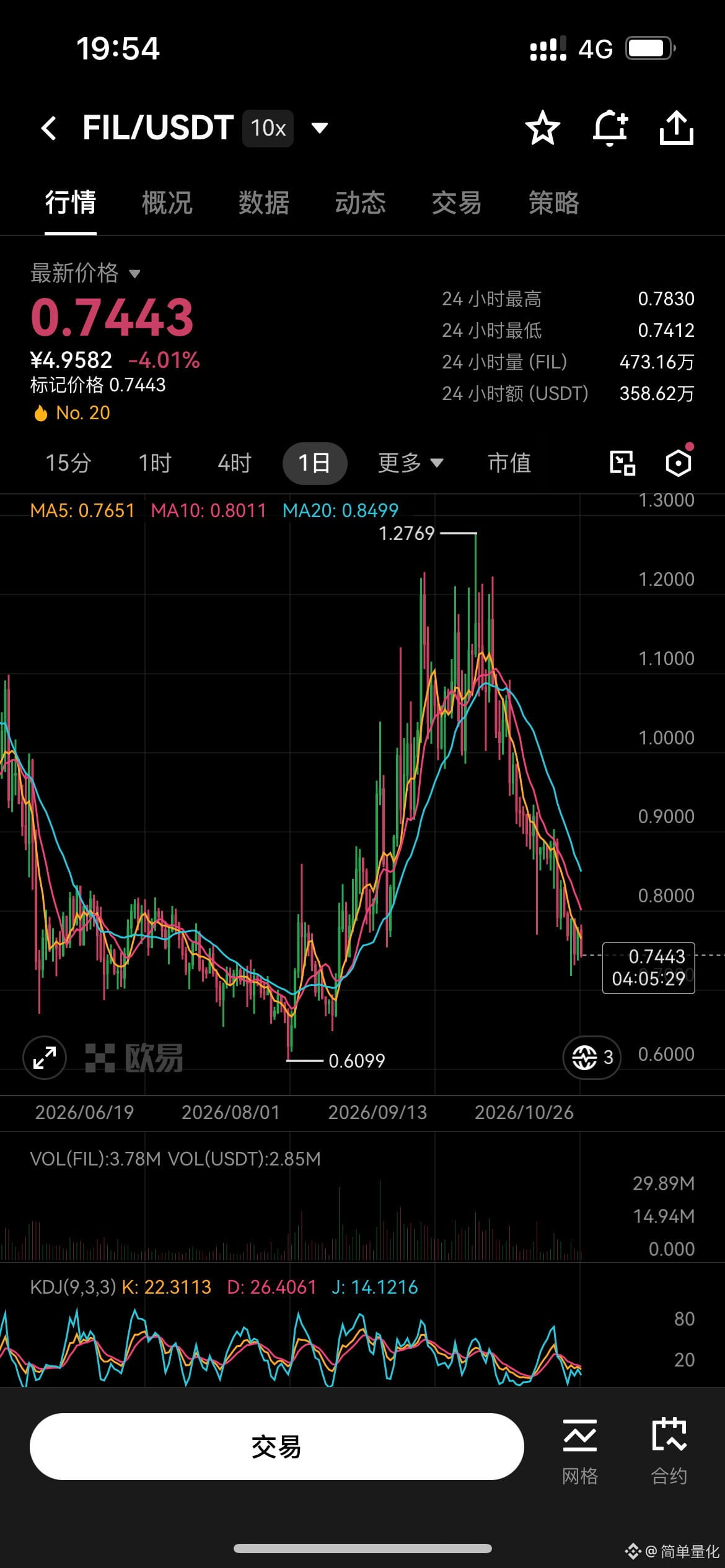
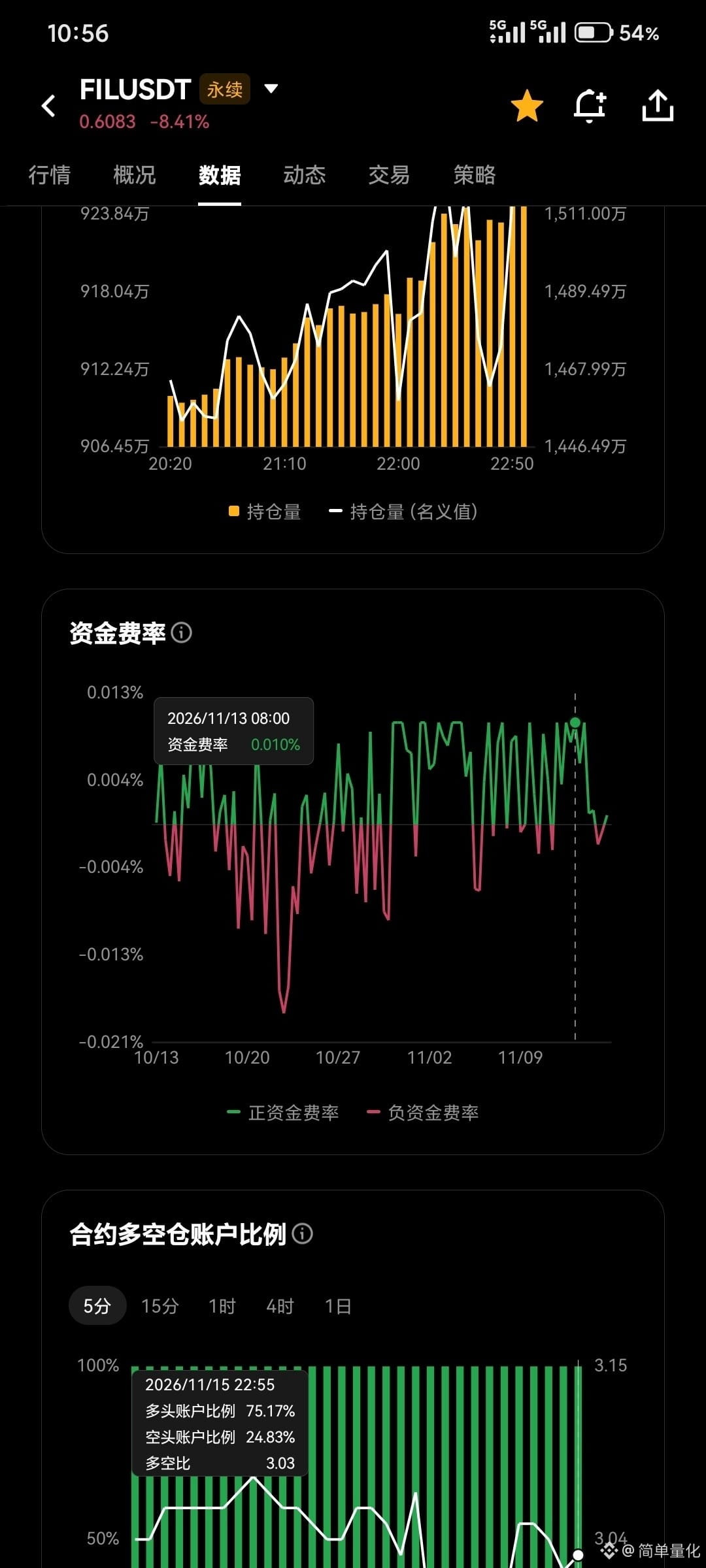
$FIL The share of long accounts in FIL perpetual futures has shot straight up to 75.17%—retail traders are so desperate to buy the dip that they’ve lost all perspective.
Looking at the daily chart, it has slid 35% over 30 days to 0.7443. The moving averages are all aligned bearishly, and daily trading volume has shrunk to just 3.78 million coins—less than 70% of its usual level.
The big players’ buying support has long since dried up. There are no substantial buy orders around 0.744; only retail traders are blindly trying to catch a falling knife.
With more than 70% of accounts crowded on the long side, the big players have no reason to push prices up and bail out retail traders. The moving averages overhead are acting as layer upon layer of resistance, and the low-volume search for a bottom is far from over. Don’t blindly try to call the bottom—follow the trend and look for opportunities to short on rallies toward the moving averages.
#本周财报与宏观事件密集,市场再迎波动考验 #FIL $FIL #EVAA $EVAA 👇
{future}(FILUSDT)
$FIL The share of long accounts in FIL perpetual futures has shot straight up to 75.17%—retail traders are so desperate to buy the dip that they’ve lost all perspective.
Looking at the daily chart, it has slid 35% over 30 days to 0.7443. The moving averages are all aligned bearishly, and daily trading volume has shrunk to just 3.78 million coins—less than 70% of its usual level.
The big players’ buying support has long since dried up. There are no substantial buy orders around 0.744; only retail traders are blindly trying to catch a falling knife.
With more than 70% of accounts crowded on the long side, the big players have no reason to push prices up and bail out retail traders. The moving averages overhead are acting as layer upon layer of resistance, and the low-volume search for a bottom is far from over. Don’t blindly try to call the bottom—follow the trend and look for opportunities to short on rallies toward the moving averages.
#本周财报与宏观事件密集,市场再迎波动考验 #FIL $FIL #EVAA $EVAA 👇
2
1
3.1k
Log in to explore more content
Join global crypto users on Binance Square
⚡️ Get latest and useful information about crypto.
💬 Trusted by the world’s largest crypto exchange.
👍 Discover real insights from verified creators.
Email / Phone number
Trending Topics
MoreHikesExpectedIsBTCUnderPressure
8,333 views
120 Discussing
FOMC Minutes | Fed Minutes Show Almost All Officials Expect More Rate Hikes, With Some Open to a Larger December Move
Binance News
·16 Likes
·22.7k views
NvidiaBeatsEstimatesWith$130BQ4Outlook
75,159 views
304 Discussing
AnthropicIPOPriceCouldExceed$80
73,472 views
251 Discussing