

铭哥讲币圈
1.2k Posts

铭哥讲币圈
Report
Block User
遵循财富的边际和认知是客观的定律,逆袭和跨越阶层需要黄金机遇。公众号 :铭哥讲币圈。聊天室id:1145926838
0 Following
3.0K+ Followers
4.7K+ Liked
Posts
PINNED
·
--

Article
Have you made money in the cryptocurrency world?In the cryptocurrency world, earning 1 million yuan from a few thousand only has one path, and that is to roll the warehouse!
I have been trading cryptocurrencies for over 10 years, since 1986, and I am 38 years old. About 90% of my earnings come from 'trading cryptocurrencies'. I only focus on one MACD pattern, and I have never missed in thousands of trades, achieving financial freedom in just a few years!
When I made my first million, I realized how simple the market is. The market perfectly follows the four basic laws:
1. Trend 2. Inertia 3. Reversion 4. Repetition
By relying on the four major laws, I have earned a wealth in the financial market that most people could never achieve in a lifetime.
Have you made money in the cryptocurrency world?
In the cryptocurrency world, earning 1 million yuan from a few thousand only has one path, and that is to roll the warehouse!
I have been trading cryptocurrencies for over 10 years, since 1986, and I am 38 years old. About 90% of my earnings come from 'trading cryptocurrencies'. I only focus on one MACD pattern, and I have never missed in thousands of trades, achieving financial freedom in just a few years!
When I made my first million, I realized how simple the market is. The market perfectly follows the four basic laws:
1. Trend 2. Inertia 3. Reversion 4. Repetition
By relying on the four major laws, I have earned a wealth in the financial market that most people could never achieve in a lifetime.
186
165
1.3k
217.6k
PINNED
·
--
Doubts within the cryptocurrency community are constant. Some say, "How can it be so easy to recover losses?" others speculate, "Is it just luck?" But these voices are ultimately irrelevant. After all, in this market, the most fundamental thing is to truly help everyone "get back on track," rather than arguing about right or wrong.
Like the fan who contacted Rui Ge at the end of last month, his account was completely devastated. The loss of 23,000 U was glaring. In his own words, "Just looking at the K-line made me sick. I tossed and turned at night, unable to sleep. I've thought several times about deleting the software and leaving the market completely." At that point, he had only 1,000 U of capital left. To call it a "drop in the bucket" would be an understatement. Anyone else would have probably told him to just "buck up."
But Rui Ge never plays by the rules. In the first week after taking over the account, he didn't rush into the market to chase rapidly rising coins. Instead, he carefully analyzed the moving averages, carefully analyzing which ones were true breakouts and which were bull traps. I started by testing the waters with 200U, entering the market when ETH pulled back to $4,600 and decisively taking profits when it reached $4,750. The profit wasn't huge, but every penny was worth it.
In this way, my initial capital of $1,000 snowballed into something bigger. Following Rui Ge's lead, I avoided several altcoin crashes, capitalized on the SOL surge from $120 to $140, and even precisely took profits when DOGE suddenly surged 5%. In less than a month, the account's balance climbed from 1,000 U to over 8,000 U. While still some way from a break-even point, the fan commented in the group chat, "I'm no longer nervous when I look at my account. Rui Ge doesn't offer the illusion of overnight wealth, but the confidence to gradually recover. Only those who have experienced this sense of security know how wonderful it is!"
In fact, anyone who has spent any time in the cryptocurrency world will understand: there are too many people constantly shouting, "I'll help you double your money!" It's the people who take the time to slowly recover your losses that are truly valuable. Ah Gui never brags about his prowess; his strategy and discipline make every profit count. Those skeptical voices pale in comparison to his solid account growth—after all, guiding others toward success is the truest strength.
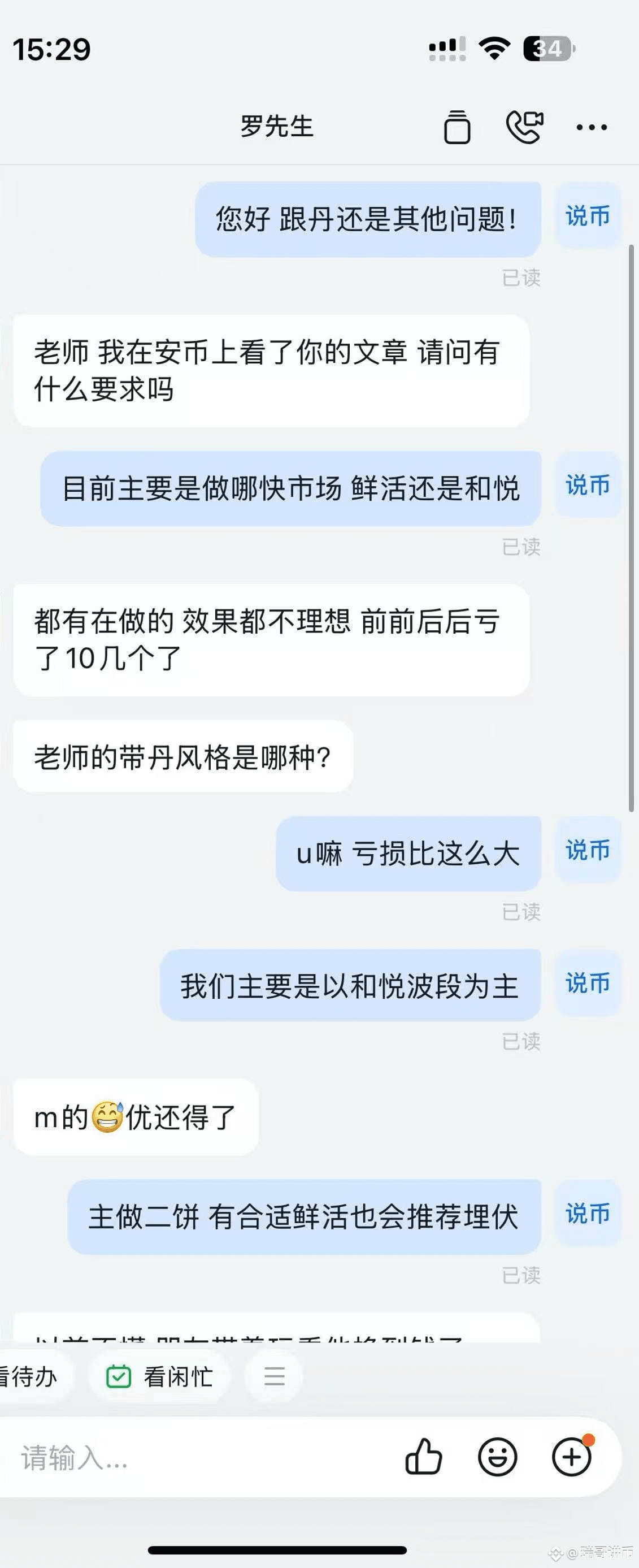
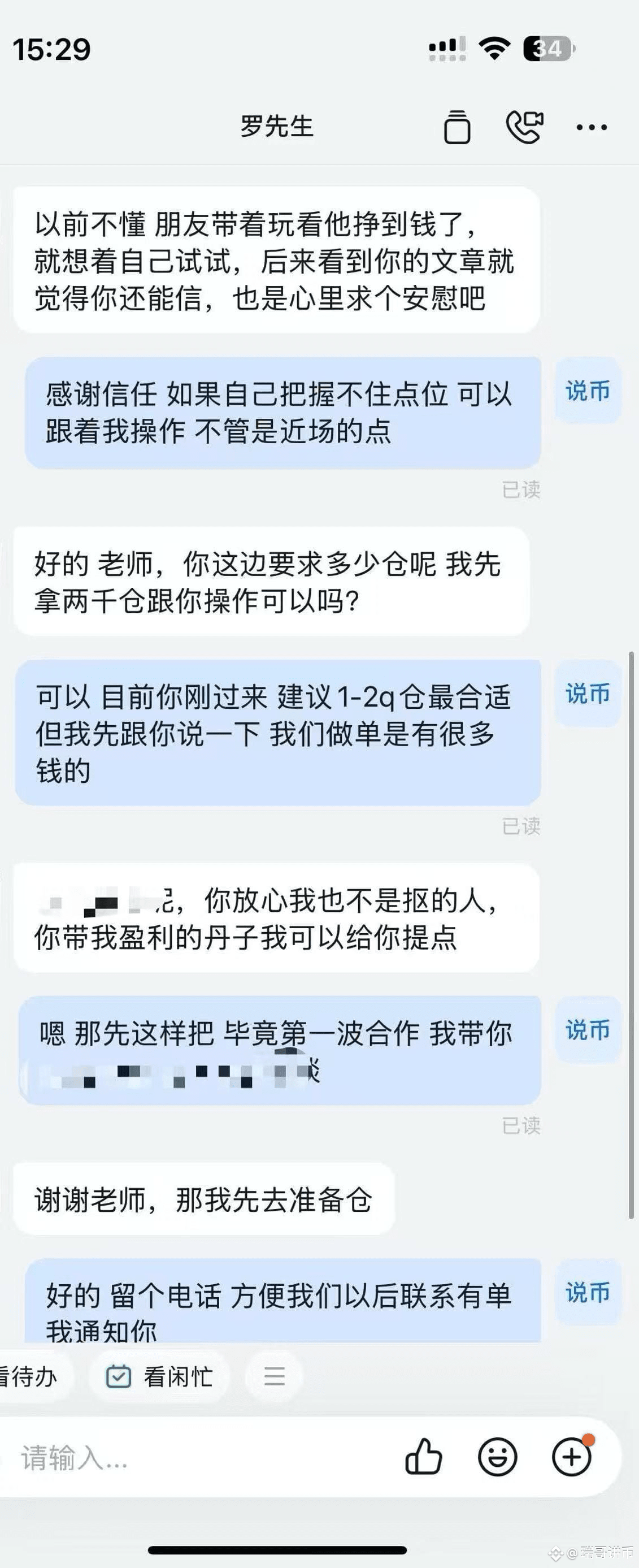

20
17
9
1.4k
·
--
There’s a simple method that can almost guarantee 100% profit! When opening positions and trading, I use this method to make a profit of 2 million per trade!
When the overall market crashes hard, if the coin price only dips slightly, it means there is capital propping up the market. Such coins are worth holding long-term, and the future may bring solid returns.
A simple method for beginners to buy and sell coins: For short-term trading, look at the 5-day moving average—hold if the coin price is above the 5-day line; sell if it breaks below. For medium-term trading, look at the 20-day moving average—hold if the coin price is above the 20-day line; exit if it breaks below. Find a method that fits you and follow it strictly.
The uptrend’s main surge has already formed, and there’s no obvious increase in volume—buy decisively. When there’s volume-increasing price rise, continue holding; when there’s a volume-decreasing pullback but the trend has not changed, continue holding too. If there’s a volume-increasing sell-off and the price breaks the trend, reduce your position.
After a short-term buy, if within three days the coin price doesn’t move, sell it. If the coin price falls by more than 5%, stop loss immediately.
If the coin price drops 50% or more from the high and has been falling for eight straight days, it may be in an oversold condition and could rebound at any time—then you can consider entering.
When trading crypto, choose the leading coins, because they rise the fastest and fall the most resiliently. Don’t blindly buy just because the price is down.
And don’t refuse to buy just because it has already risen a lot. The key is to buy at high levels and sell at even higher levels.
Trade in line with the trend. A lower buy price isn’t necessarily better—you need to find the most suitable entry point.
When prices fall, don’t try to bottom-fish. Give up coins that are performing poorly, and always follow the trend.
Don’t get carried away for short-term gains. You should know that sustained profitability is the hardest part. Do a serious post-trade review.
See whether your profits are luck or skill. Building a trading system that fits you is the key to long-term gains.
Being in cash is also a strategy. Don’t trade impulsively when you don’t have enough confidence. The primary goal of trading is to protect capital,
not to chase huge profits. Successful trading is not about how often you win—it’s about your success rate.
If you’re still repeatedly losing and starting over again,
come and chat with me—I’ll teach you how to make trading simple @RG45454
There’s a simple method that can almost guarantee 100% profit! When opening positions and trading, I use this method to make a profit of 2 million per trade!
When the overall market crashes hard, if the coin price only dips slightly, it means there is capital propping up the market. Such coins are worth holding long-term, and the future may bring solid returns.
A simple method for beginners to buy and sell coins: For short-term trading, look at the 5-day moving average—hold if the coin price is above the 5-day line; sell if it breaks below. For medium-term trading, look at the 20-day moving average—hold if the coin price is above the 20-day line; exit if it breaks below. Find a method that fits you and follow it strictly.
The uptrend’s main surge has already formed, and there’s no obvious increase in volume—buy decisively. When there’s volume-increasing price rise, continue holding; when there’s a volume-decreasing pullback but the trend has not changed, continue holding too. If there’s a volume-increasing sell-off and the price breaks the trend, reduce your position.
After a short-term buy, if within three days the coin price doesn’t move, sell it. If the coin price falls by more than 5%, stop loss immediately.
If the coin price drops 50% or more from the high and has been falling for eight straight days, it may be in an oversold condition and could rebound at any time—then you can consider entering.
When trading crypto, choose the leading coins, because they rise the fastest and fall the most resiliently. Don’t blindly buy just because the price is down.
And don’t refuse to buy just because it has already risen a lot. The key is to buy at high levels and sell at even higher levels.
Trade in line with the trend. A lower buy price isn’t necessarily better—you need to find the most suitable entry point.
When prices fall, don’t try to bottom-fish. Give up coins that are performing poorly, and always follow the trend.
Don’t get carried away for short-term gains. You should know that sustained profitability is the hardest part. Do a serious post-trade review.
See whether your profits are luck or skill. Building a trading system that fits you is the key to long-term gains.
Being in cash is also a strategy. Don’t trade impulsively when you don’t have enough confidence. The primary goal of trading is to protect capital,
not to chase huge profits. Successful trading is not about how often you win—it’s about your success rate.
If you’re still repeatedly losing and starting over again,
come and chat with me—I’ll teach you how to make trading simple @铭哥讲币圈

1
332
·
--
After a follower lost 4,000 USDT, I had him use this technique to achieve turning things around
Last month, a follower reached out: “Bro, in the crypto market I played futures with 4,000 USDT and lost it all— is there any way to save myself?”
I didn’t ask for too many details. I just had him review the reasons for his losses— going all-in, chasing pumps and selling dumps, trying to bottom-fish against the trend... He almost checked off every trading taboo.
Then I shared with him a basic framework for how to open positions when trading futures:
① Buy first with 20%
② If you’re wrong and the loss hits 10%, stop out immediately—the loss amount is 2% of the total position
③ If you’re right and the profit hits 10%, add 20% immediately. Then when price rises another 10%, add another 20%. Finally, add the last 40% directly. Expand the winning outcome. From then on, hold as long as you don’t have a 10% drawdown. Once it drops 10%, close the entire position right away.
The main idea is basically this: reduce risk to the minimum—similar to the “King of Speculators,” Livermore.
Of course, this is just a rough framework. In actual implementation, you’ll definitely run into many uncertainties, because the market is always changing.
I often execute this method during my own trades. Overall, the results so far have been pretty good. But it’s not 100% guaranteed— it’s just a way to reduce risk and improve the win rate.
When trading futures, you must have a method. Otherwise, you’ll only end up as “cabbage”
If you’re still confused about your trades and want to completely bid farewell to losses and make it ashore for good in 2026— with steady profits— then come to the chat room to find me. Let’s go together! @RG45454
After a follower lost 4,000 USDT, I had him use this technique to achieve turning things around
Last month, a follower reached out: “Bro, in the crypto market I played futures with 4,000 USDT and lost it all— is there any way to save myself?”
I didn’t ask for too many details. I just had him review the reasons for his losses— going all-in, chasing pumps and selling dumps, trying to bottom-fish against the trend... He almost checked off every trading taboo.
Then I shared with him a basic framework for how to open positions when trading futures:
① Buy first with 20%
② If you’re wrong and the loss hits 10%, stop out immediately—the loss amount is 2% of the total position
③ If you’re right and the profit hits 10%, add 20% immediately. Then when price rises another 10%, add another 20%. Finally, add the last 40% directly. Expand the winning outcome. From then on, hold as long as you don’t have a 10% drawdown. Once it drops 10%, close the entire position right away.
The main idea is basically this: reduce risk to the minimum—similar to the “King of Speculators,” Livermore.
Of course, this is just a rough framework. In actual implementation, you’ll definitely run into many uncertainties, because the market is always changing.
I often execute this method during my own trades. Overall, the results so far have been pretty good. But it’s not 100% guaranteed— it’s just a way to reduce risk and improve the win rate.
When trading futures, you must have a method. Otherwise, you’ll only end up as “cabbage”
If you’re still confused about your trades and want to completely bid farewell to losses and make it ashore for good in 2026— with steady profits— then come to the chat room to find me. Let’s go together! @铭哥讲币圈

370
·
--
Why does your stop-loss keep getting swept? Because you place it where everyone can see
“Bro, my stop-loss just got swept and the price bounced back right after. Is the smart money watching me?”—I receive messages like this several times a day.
To be honest, with your few hundred USDT position size, the smart money really isn’t interested. The reason your stop-loss gets swept isn’t that someone is targeting you—it’s because you’re placing your stop-loss in the open.
One point below the recent low, one point below a whole-number support level, a little below the moving average—these are exactly how nine out of ten retail traders set theirs. Before the big players lift the price, they can conveniently sweep these “obvious stop-losses.” They collect liquidity while also reducing sell pressure. You’re not being targeted—you’re just stuck in the same pit as most people.
So how should you set it?
Try to hide your stop-loss “outside the crowd.” For example, push it 1%-2% below a key support, or use ATR (Average True Range) to calculate it dynamically. The rules aren’t complicated, but they can help you avoid most stop-loss sweeps. There’s also an even simpler method: time-based stop-loss—after entering, if it doesn’t rise within a certain time window, exit proactively rather than clinging to a single price point.
Starting today, place your stop-loss somewhere else. The deeper you hide it, the longer you’ll survive.
Follow me. I’m not promising you’ll get rich overnight, but steady profits are still very achievable!
Hesitation means missing the opportunity—act now! @RG45454
Why does your stop-loss keep getting swept? Because you place it where everyone can see
“Bro, my stop-loss just got swept and the price bounced back right after. Is the smart money watching me?”—I receive messages like this several times a day.
To be honest, with your few hundred USDT position size, the smart money really isn’t interested. The reason your stop-loss gets swept isn’t that someone is targeting you—it’s because you’re placing your stop-loss in the open.
One point below the recent low, one point below a whole-number support level, a little below the moving average—these are exactly how nine out of ten retail traders set theirs. Before the big players lift the price, they can conveniently sweep these “obvious stop-losses.” They collect liquidity while also reducing sell pressure. You’re not being targeted—you’re just stuck in the same pit as most people.
So how should you set it?
Try to hide your stop-loss “outside the crowd.” For example, push it 1%-2% below a key support, or use ATR (Average True Range) to calculate it dynamically. The rules aren’t complicated, but they can help you avoid most stop-loss sweeps. There’s also an even simpler method: time-based stop-loss—after entering, if it doesn’t rise within a certain time window, exit proactively rather than clinging to a single price point.
Starting today, place your stop-loss somewhere else. The deeper you hide it, the longer you’ll survive.
Follow me. I’m not promising you’ll get rich overnight, but steady profits are still very achievable!
Hesitation means missing the opportunity—act now! @铭哥讲币圈

136
·
--
The Most Common Mistake Beginners Make: Always Want to Squeeze Every Last Dollar Out
Do you often do this? You see a one-minute candlestick spike into a bullish candle, think, “Opportunity’s here!” and rush in; after it dips a bit, you feel, “It’s going down,” and quickly run out. By the end of the day, your total holding time adds up to less than half an hour. You pay a pile of fees, but your account keeps shrinking.
I’m telling you: 90% of market movement is noise. If you try to grab every little move, the market ends up slapping you back and forth.
Real profitable trading isn’t like bees flitting around collecting nectar everywhere—it’s like a sniper lying in wait patiently, until that one most certain target appears. Doing one or two trades a day—or even just one trade in a few days—is far better than making a dozen trades in a single day.
You might say, “I’m afraid of missing out.” But have you considered this: you haven’t missed anything—you just haven’t made a single profitable trade. Missing doesn’t cost money; doing it wrong costs money.
Starting tomorrow, set yourself a rule: Don’t place more than one trade within an hour. When you’re done, close the app—then go do what you need to do.
The crypto market has never lacked opportunities; what it lacks is someone who can give you a hand when opportunities show up.
If you’re still chasing rallies and panic-selling, or you don’t know how to judge entry and exit points, come to the chat room to talk with me.@RG45454
The Most Common Mistake Beginners Make: Always Want to Squeeze Every Last Dollar Out
Do you often do this? You see a one-minute candlestick spike into a bullish candle, think, “Opportunity’s here!” and rush in; after it dips a bit, you feel, “It’s going down,” and quickly run out. By the end of the day, your total holding time adds up to less than half an hour. You pay a pile of fees, but your account keeps shrinking.
I’m telling you: 90% of market movement is noise. If you try to grab every little move, the market ends up slapping you back and forth.
Real profitable trading isn’t like bees flitting around collecting nectar everywhere—it’s like a sniper lying in wait patiently, until that one most certain target appears. Doing one or two trades a day—or even just one trade in a few days—is far better than making a dozen trades in a single day.
You might say, “I’m afraid of missing out.” But have you considered this: you haven’t missed anything—you just haven’t made a single profitable trade. Missing doesn’t cost money; doing it wrong costs money.
Starting tomorrow, set yourself a rule: Don’t place more than one trade within an hour. When you’re done, close the app—then go do what you need to do.
The crypto market has never lacked opportunities; what it lacks is someone who can give you a hand when opportunities show up.
If you’re still chasing rallies and panic-selling, or you don’t know how to judge entry and exit points, come to the chat room to talk with me.@铭哥讲币圈

106
·
--
Treating trading coins like a job, I suddenly stopped panicking. Before, I was just like most people: as soon as I woke up, I checked the charts; before I went to sleep, I was still placing orders. When the price went up, I got excited; when it fell, I grew anxious. I couldn’t sleep well at all. After messing around for half a year, I hadn’t made any real money—I’d even lost half my hair.
Then one day an older guy snapped me out of it: “If you do this every day, what’s the difference between you and those people in a casino who are blinking red-eyed, betting on odds and sizes?”
I froze. He said, “Treat trading coins like a job. If it’s time to work, work; if it’s time to clock out, clock out.”
After that, I changed how I lived. My “work rules” are simple:
First, check the market on schedule, and shut down on schedule. Every morning at 9:00 for one hour, and again at 3:00 in the afternoon for another hour. No staring at charts at night. No placing orders. Miss it if you miss it—there’s always tomorrow.
Second, only trade what you can understand. If you don’t understand the market, don’t get jealous just because other people make money. No certainty, no action—this is the iron rule.
Third, every single trade must include a stop loss. Like doing work at a job—if you make a mistake, you own it. You just lose some performance metrics. Holding on desperately is not work; that’s gambling with your life.
Fourth, take profit first. Withdraw at a fixed time every month, like getting paid. Numbers in your account will move—only what you withdraw to your card is real.
Fifth, don’t borrow money, and don’t go all-in. Your principal is your rice bowl. If you’ve put the whole bowl on the line, what do you eat?
After sticking with it for half a year, I found the account was actually slowly going up. Not getting rich overnight, but every month there’s a surplus. More importantly, I stopped being anxious. I can finally sleep.
Real money-makers aren’t the ones who trade the most often—they’re the ones who can keep themselves in check.
Trading coins isn’t betting on odds and size—it’s a long-term survival game. Treat it like a job, protect your principal, and maintain discipline. Money will come in slowly.
If you’re still lost, feel free to chat. I’m always here—if you want to improve, I’ll walk forward with you. @RG45454
Treating trading coins like a job, I suddenly stopped panicking. Before, I was just like most people: as soon as I woke up, I checked the charts; before I went to sleep, I was still placing orders. When the price went up, I got excited; when it fell, I grew anxious. I couldn’t sleep well at all. After messing around for half a year, I hadn’t made any real money—I’d even lost half my hair.
Then one day an older guy snapped me out of it: “If you do this every day, what’s the difference between you and those people in a casino who are blinking red-eyed, betting on odds and sizes?”
I froze. He said, “Treat trading coins like a job. If it’s time to work, work; if it’s time to clock out, clock out.”
After that, I changed how I lived. My “work rules” are simple:
First, check the market on schedule, and shut down on schedule. Every morning at 9:00 for one hour, and again at 3:00 in the afternoon for another hour. No staring at charts at night. No placing orders. Miss it if you miss it—there’s always tomorrow.
Second, only trade what you can understand. If you don’t understand the market, don’t get jealous just because other people make money. No certainty, no action—this is the iron rule.
Third, every single trade must include a stop loss. Like doing work at a job—if you make a mistake, you own it. You just lose some performance metrics. Holding on desperately is not work; that’s gambling with your life.
Fourth, take profit first. Withdraw at a fixed time every month, like getting paid. Numbers in your account will move—only what you withdraw to your card is real.
Fifth, don’t borrow money, and don’t go all-in. Your principal is your rice bowl. If you’ve put the whole bowl on the line, what do you eat?
After sticking with it for half a year, I found the account was actually slowly going up. Not getting rich overnight, but every month there’s a surplus. More importantly, I stopped being anxious. I can finally sleep.
Real money-makers aren’t the ones who trade the most often—they’re the ones who can keep themselves in check.
Trading coins isn’t betting on odds and size—it’s a long-term survival game. Treat it like a job, protect your principal, and maintain discipline. Money will come in slowly.
If you’re still lost, feel free to chat. I’m always here—if you want to improve, I’ll walk forward with you. @铭哥讲币圈

170
·
--
Recently, many brothers who have just started with contracts have asked me: with only a few hundred U or a few thousand U in hand, what exactly should I do?
My answer has always been very simple: first think about surviving, then think about making money.
The most common mistake small-capital traders make is thinking that with 1,000 U, they can act like they’re operating a 100,000 U account. They jump in with a heavy position, go all-in with high leverage—then once the market moves even slightly, they get liquidated.
If it’s 1,000 U, I’d suggest splitting it into 5 parts for management. Use only about 200 U per trade, and keep leverage between 5 and 10x—it’s enough. Those who talk about using 50x or 100x leverage may look like they’re making big gains, but in reality most of them are paying tuition to the market.
Another very important point: after you incur losses, don’t rush to get back to breakeven.
Many people lose one trade and refuse to accept it—then they increase their position, add more, open trades one after another. In the end, they dig themselves deeper and deeper. I used to walk this road too. Later, I realized that stopping after a loss is more valuable than continuing to trade.
The market offers opportunities every day. Missing a single trade doesn’t matter. What’s truly terrifying is emotional breakdown—taking your whole account down with it.
Also, learn to lock in profits.
For example, if you make 500 U, you can transfer out 300 U first, and only leave part of the profit to keep trading. Only the money that truly ends up in your pocket counts as profit.
I’ve seen too many people with floating gains of several hundred or a few thousand U who couldn’t bear to leave, and then one needle move wipes out all the profit.
Remember: in the contract market, what determines how far you can go is never your win rate—it’s your risk control ability.
My discipline has never changed: when a day’s loss reaches 2% of total funds, start being alert; when it reaches 6%, stop trading immediately. For winning trades, protect the principal first, then consider letting profits run.
For beginners, remember these four words: light position, low leverage, stop-loss, lock in profits.
Don’t think about turning things around overnight. The core of growing your account is always the same: first survive, then slowly roll the snowball.
If you’re still confused, feel free to chat with me. I’ll always be here—if you want to improve, I’ll move forward with you. @RG45454
Recently, many brothers who have just started with contracts have asked me: with only a few hundred U or a few thousand U in hand, what exactly should I do?
My answer has always been very simple: first think about surviving, then think about making money.
The most common mistake small-capital traders make is thinking that with 1,000 U, they can act like they’re operating a 100,000 U account. They jump in with a heavy position, go all-in with high leverage—then once the market moves even slightly, they get liquidated.
If it’s 1,000 U, I’d suggest splitting it into 5 parts for management. Use only about 200 U per trade, and keep leverage between 5 and 10x—it’s enough. Those who talk about using 50x or 100x leverage may look like they’re making big gains, but in reality most of them are paying tuition to the market.
Another very important point: after you incur losses, don’t rush to get back to breakeven.
Many people lose one trade and refuse to accept it—then they increase their position, add more, open trades one after another. In the end, they dig themselves deeper and deeper. I used to walk this road too. Later, I realized that stopping after a loss is more valuable than continuing to trade.
The market offers opportunities every day. Missing a single trade doesn’t matter. What’s truly terrifying is emotional breakdown—taking your whole account down with it.
Also, learn to lock in profits.
For example, if you make 500 U, you can transfer out 300 U first, and only leave part of the profit to keep trading. Only the money that truly ends up in your pocket counts as profit.
I’ve seen too many people with floating gains of several hundred or a few thousand U who couldn’t bear to leave, and then one needle move wipes out all the profit.
Remember: in the contract market, what determines how far you can go is never your win rate—it’s your risk control ability.
My discipline has never changed: when a day’s loss reaches 2% of total funds, start being alert; when it reaches 6%, stop trading immediately. For winning trades, protect the principal first, then consider letting profits run.
For beginners, remember these four words: light position, low leverage, stop-loss, lock in profits.
Don’t think about turning things around overnight. The core of growing your account is always the same: first survive, then slowly roll the snowball.
If you’re still confused, feel free to chat with me. I’ll always be here—if you want to improve, I’ll move forward with you. @铭哥讲币圈

1
1
345
·
--
Why do so many people always buy at the highs and sell at the lows?
Because when they see prices rising, they chase; when they see prices falling, they panic.
Real money-makers look at signals, not emotions.
Here are three market signals I often pay attention to:
1. False breakout
Breaking above the previous high doesn’t necessarily mean the trend has started.
If, at the time of the breakout, the trading volume doesn’t increase noticeably, or it can’t hold key levels, it’s likely just a bull trap.
People who chase in are often the bag-holders.
2. Accumulation phase
Before many big rallies, the price action is often boring.
It moves sideways with no clear direction, and market sentiment is low.
But if you see a long lower shadow quickly pulled back, or a sudden surge in volume after a period of consolidation, it indicates that capital is quietly entering.
Opportunities usually arise when nobody is paying attention.
3. Top signals
Make money by buying, and protect profits by selling.
If long upper wicks appear frequently at high levels, or if the advance slows down noticeably while volume continues to rise, you should be more alert.
Before many major sell-offs begin, signals are often sent out in advance.
Most people chase and sell based on price swings; a few observe structure, manage position sizing, and wait for opportunities.
The market gives chances every day.
Whether you can catch them depends on whether you’re seeing the candlesticks—or the logic behind them.
If you’re still chasing and selling based on momentum, or you don’t know how to judge entry and exit points, come to the chat room to talk with me.@RG45454
Why do so many people always buy at the highs and sell at the lows?
Because when they see prices rising, they chase; when they see prices falling, they panic.
Real money-makers look at signals, not emotions.
Here are three market signals I often pay attention to:
1. False breakout
Breaking above the previous high doesn’t necessarily mean the trend has started.
If, at the time of the breakout, the trading volume doesn’t increase noticeably, or it can’t hold key levels, it’s likely just a bull trap.
People who chase in are often the bag-holders.
2. Accumulation phase
Before many big rallies, the price action is often boring.
It moves sideways with no clear direction, and market sentiment is low.
But if you see a long lower shadow quickly pulled back, or a sudden surge in volume after a period of consolidation, it indicates that capital is quietly entering.
Opportunities usually arise when nobody is paying attention.
3. Top signals
Make money by buying, and protect profits by selling.
If long upper wicks appear frequently at high levels, or if the advance slows down noticeably while volume continues to rise, you should be more alert.
Before many major sell-offs begin, signals are often sent out in advance.
Most people chase and sell based on price swings; a few observe structure, manage position sizing, and wait for opportunities.
The market gives chances every day.
Whether you can catch them depends on whether you’re seeing the candlesticks—or the logic behind them.
If you’re still chasing and selling based on momentum, or you don’t know how to judge entry and exit points, come to the chat room to talk with me.@铭哥讲币圈

156
·
--
Today, I’ve got another follower asking me: when will his short Ethereum position be able to get back to break-even?
Honestly, $ETH has already broken through, and it’s very hard to get your short position out at a low level.
But since you asked, I’ll give some advice—and share it with everyone:
Approach:
1️⃣. First, judge whether you can hold on
- Low leverage + sufficient margin → you have some room to maneuver. You can consider adding margin in batches and then reducing positions when there’s a pullback.
- High leverage + close to liquidation price → don’t fantasize about a “trend reversal.” First, think about saving your life: reduce positions or add margin to lower your leverage.
2️⃣. Hedge with the trend, lock losses to stop the bleeding
- If the trend is clearly moving upward, you can open partial short-term longs in the opposite direction to lock in some of the loss, preventing it from expanding further.
- For example, if you have 10 short contracts, you can open 3–5 contracts of longs. Then, when the price spikes up into a key resistance zone, gradually close those long positions, and at the same time look for opportunities to reduce your shorts.
- Note: locking positions only buys time. It’s not a fundamental solution. You still need to find the pullback levels and reduce the shorts slowly.
3️⃣. Use pullbacks to reduce positions in batches
- A big long-term uptrend doesn’t mean it will rise in a straight line; there will definitely be pullbacks in between.
- Near important resistance levels (for example, pressure zones on the daily chart or 4-hour chart), set short-stop losses/reduce shorts in advance. When the pullback comes, close part of your shorts in batches.
- The weaker the pullback is, the stronger the uptrend. Then you should recognize the loss and exit faster.
4️⃣. Flip with a small position—make profit to cover losses
- Sometimes the most effective way to get out is to admit you’re wrong about the direction.
- Close most of the short positions, release margin, then go long with a small position in the direction of the trend. Use the money earned from the rally to fill the losses from the earlier shorts.
- The key to this method is a tough mindset: don’t think you can make back all the losses at once. Roll it forward slowly.
5️⃣. Cut losses and admit the mistake, then redeploy
- If the trend is already fully confirmed and the upward momentum is strong (for example, after breaking a key resistance level with rising volume), then the best solution is often to stop out and leave. Wait for a reversal signal before entering again.
- This is the most painful, but also the safest, because stubbornly holding against the trend is just waiting for liquidation.
If you’re still confused, feel free to chat. I’m always here. As long as you want to improve, I’ll walk forward with you.@RG45454
Today, I’ve got another follower asking me: when will his short Ethereum position be able to get back to break-even?
Honestly, $ETH has already broken through, and it’s very hard to get your short position out at a low level.
But since you asked, I’ll give some advice—and share it with everyone:
Approach:
1️⃣. First, judge whether you can hold on
- Low leverage + sufficient margin → you have some room to maneuver. You can consider adding margin in batches and then reducing positions when there’s a pullback.
- High leverage + close to liquidation price → don’t fantasize about a “trend reversal.” First, think about saving your life: reduce positions or add margin to lower your leverage.
2️⃣. Hedge with the trend, lock losses to stop the bleeding
- If the trend is clearly moving upward, you can open partial short-term longs in the opposite direction to lock in some of the loss, preventing it from expanding further.
- For example, if you have 10 short contracts, you can open 3–5 contracts of longs. Then, when the price spikes up into a key resistance zone, gradually close those long positions, and at the same time look for opportunities to reduce your shorts.
- Note: locking positions only buys time. It’s not a fundamental solution. You still need to find the pullback levels and reduce the shorts slowly.
3️⃣. Use pullbacks to reduce positions in batches
- A big long-term uptrend doesn’t mean it will rise in a straight line; there will definitely be pullbacks in between.
- Near important resistance levels (for example, pressure zones on the daily chart or 4-hour chart), set short-stop losses/reduce shorts in advance. When the pullback comes, close part of your shorts in batches.
- The weaker the pullback is, the stronger the uptrend. Then you should recognize the loss and exit faster.
4️⃣. Flip with a small position—make profit to cover losses
- Sometimes the most effective way to get out is to admit you’re wrong about the direction.
- Close most of the short positions, release margin, then go long with a small position in the direction of the trend. Use the money earned from the rally to fill the losses from the earlier shorts.
- The key to this method is a tough mindset: don’t think you can make back all the losses at once. Roll it forward slowly.
5️⃣. Cut losses and admit the mistake, then redeploy
- If the trend is already fully confirmed and the upward momentum is strong (for example, after breaking a key resistance level with rising volume), then the best solution is often to stop out and leave. Wait for a reversal signal before entering again.
- This is the most painful, but also the safest, because stubbornly holding against the trend is just waiting for liquidation.
If you’re still confused, feel free to chat. I’m always here. As long as you want to improve, I’ll walk forward with you.@铭哥讲币圈

329
·
--
That line—if a man doesn’t have money, don’t even talk about dating—I really remembered it for a long, long time!
Many people blame getting liquidated on luck, saying the market is being demonized, and the stop-hunts are too brutal.
Let me say something not very nice: the vast majority of liquidations aren’t bad luck—they’re because they don’t know how to operate.
I’ve seen too many people whose trading styles are almost the same:
When the market rises a little, they rush to get out, and the price then surges higher.
When it drops, they frantically add positions, and in the end one spike takes them all out.
They got the direction right, but they still get washed out by a few small pullbacks.
This isn’t a lack of luck—it’s a lack of rhythm.
People who truly know how to do it, their thinking is actually the opposite.
They don’t start by going all-in with a heavy position and fighting for it—they make three things clear in advance:
1. Protect the principal.
2. Add to positions only at the right locations.
3. Only use profits to scale in.
Many people add positions to the wrong places, and the more they add, the more they lose.
The truly effective method is to pyramid in (add gradually from small to larger).
What does that mean?
First, use a small position to test and confirm the signal—then add slowly with profits.
Here’s a simple example:
Suppose your account has 10,000 USDT (U). Step one: only use 500U for the initial trade, with your stop-loss set.
If the market doesn’t give you a signal, don’t move—better to miss the trade than to open one randomly.
If your direction is correct and you’re in floating profit, then take part of that profit to add to the position.
If the market keeps moving and the key level hasn’t broken, then use the remaining profits to add again.
Notice: throughout the whole process, the principal basically doesn’t move.
When the market runs out a big trend and your floating profit exceeds the principal, you should start protecting your profits.
You can lock in profits in batches, or hedge part of the position.
When the market accelerates, then go for the final leg.
Pros don’t rely on one big all-in bet—they keep using profits to expand their advantage.
The fundamental reason people get liquidated isn’t the market—it’s that many people treat trading like gambling from the start.
The market is ruthless, but it’s also fair:
People who follow rules will slowly make money; people without rules will eventually get pushed out.
If you’re still placing trades based on hunches, you’ll be taught by the market sooner or later.
If you’re still repeatedly losing and starting over again and again,
come talk to me—I’ll teach you how to make trading simple @RG45454
That line—if a man doesn’t have money, don’t even talk about dating—I really remembered it for a long, long time!
Many people blame getting liquidated on luck, saying the market is being demonized, and the stop-hunts are too brutal.
Let me say something not very nice: the vast majority of liquidations aren’t bad luck—they’re because they don’t know how to operate.
I’ve seen too many people whose trading styles are almost the same:
When the market rises a little, they rush to get out, and the price then surges higher.
When it drops, they frantically add positions, and in the end one spike takes them all out.
They got the direction right, but they still get washed out by a few small pullbacks.
This isn’t a lack of luck—it’s a lack of rhythm.
People who truly know how to do it, their thinking is actually the opposite.
They don’t start by going all-in with a heavy position and fighting for it—they make three things clear in advance:
1. Protect the principal.
2. Add to positions only at the right locations.
3. Only use profits to scale in.
Many people add positions to the wrong places, and the more they add, the more they lose.
The truly effective method is to pyramid in (add gradually from small to larger).
What does that mean?
First, use a small position to test and confirm the signal—then add slowly with profits.
Here’s a simple example:
Suppose your account has 10,000 USDT (U). Step one: only use 500U for the initial trade, with your stop-loss set.
If the market doesn’t give you a signal, don’t move—better to miss the trade than to open one randomly.
If your direction is correct and you’re in floating profit, then take part of that profit to add to the position.
If the market keeps moving and the key level hasn’t broken, then use the remaining profits to add again.
Notice: throughout the whole process, the principal basically doesn’t move.
When the market runs out a big trend and your floating profit exceeds the principal, you should start protecting your profits.
You can lock in profits in batches, or hedge part of the position.
When the market accelerates, then go for the final leg.
Pros don’t rely on one big all-in bet—they keep using profits to expand their advantage.
The fundamental reason people get liquidated isn’t the market—it’s that many people treat trading like gambling from the start.
The market is ruthless, but it’s also fair:
People who follow rules will slowly make money; people without rules will eventually get pushed out.
If you’re still placing trades based on hunches, you’ll be taught by the market sooner or later.
If you’re still repeatedly losing and starting over again and again,
come talk to me—I’ll teach you how to make trading simple @铭哥讲币圈

1
177
·
--
90% of people in the crypto market lose money the moment they enter—there’s a reason behind it.
When I started out, I only had 3,000 U, just like everyone else: an ordinary retail investor—not some rich second-generation kid.
Now my account has stayed above 1,000,000 U for years.
If you don’t believe it, that’s normal, but this is exactly my real experience.
I never think about making millions in one round; I think about whether this round is even worth entering.
Real wealth growth begins with learning to control your own hands.
Today I’m in a good mood, so I’d like to share some practical tips with everyone:
Phase 1: Position control training
Split 3,000 U into 5 parts—600 U each. For every trade, set a stop loss and a take profit.
Don’t chase pumps, don’t hold through losses, and don’t bet against the trend—trade what you can truly understand.
Phase 2: Reinvest profits and add positions
When the account grows to 10,000 U, control the funds per trade at around 25% of the total.
When the market follows the trend, add positions in batches and capture the middle portion of the trend.
Phase 3: Take profit and extract gains
After the account breaks through 200,000 U, withdraw part of the profits each week.
It’s not because you’re afraid of losing—it’s because you’re afraid you’ll get overconfident. Stay steady if you want to earn long-term.
Most people blow up for these three reasons:
Poor position management and no rules.
No stop loss—keeping the trade open and “holding bags.”
When the direction is right, still getting killed by refusing to exit.
A follower learned from me for one month and went from 1,000 U to 20,000 U. Yesterday, when he withdrew his funds, he was so excited he couldn’t sleep, and he called me for nearly two hours.
Seeing that he can succeed, I’m also really happy.
If you’re still losing over and over and starting again and again,
come talk with me—I’ll teach you how to make trading simple @RG45454
90% of people in the crypto market lose money the moment they enter—there’s a reason behind it.
When I started out, I only had 3,000 U, just like everyone else: an ordinary retail investor—not some rich second-generation kid.
Now my account has stayed above 1,000,000 U for years.
If you don’t believe it, that’s normal, but this is exactly my real experience.
I never think about making millions in one round; I think about whether this round is even worth entering.
Real wealth growth begins with learning to control your own hands.
Today I’m in a good mood, so I’d like to share some practical tips with everyone:
Phase 1: Position control training
Split 3,000 U into 5 parts—600 U each. For every trade, set a stop loss and a take profit.
Don’t chase pumps, don’t hold through losses, and don’t bet against the trend—trade what you can truly understand.
Phase 2: Reinvest profits and add positions
When the account grows to 10,000 U, control the funds per trade at around 25% of the total.
When the market follows the trend, add positions in batches and capture the middle portion of the trend.
Phase 3: Take profit and extract gains
After the account breaks through 200,000 U, withdraw part of the profits each week.
It’s not because you’re afraid of losing—it’s because you’re afraid you’ll get overconfident. Stay steady if you want to earn long-term.
Most people blow up for these three reasons:
Poor position management and no rules.
No stop loss—keeping the trade open and “holding bags.”
When the direction is right, still getting killed by refusing to exit.
A follower learned from me for one month and went from 1,000 U to 20,000 U. Yesterday, when he withdrew his funds, he was so excited he couldn’t sleep, and he called me for nearly two hours.
Seeing that he can succeed, I’m also really happy.
If you’re still losing over and over and starting again and again,
come talk with me—I’ll teach you how to make trading simple @铭哥讲币圈

1
142
·
--
The scene of me talking with a female fan last year is still crystal clear in my mind.
She had previously gotten caught in a coin trading blow-up, losing a full 300,000 U. Her account was left with only 10,000 U. When she found me, she was on the verge of breaking down emotionally—she spoke with tears in her voice, saying she could no longer see any hope of getting back to breakeven and felt it would be very hard to turn things around.
No one expected that just five months later, she came to report good news on her own: she not only made up for all the prior losses, but also turned a profit of another 50,000 U. The trading approach she used isn’t flashy at all; it even looks somewhat conservative. But it happened to grab the very core of how to survive in the crypto market for the long run.
When I reviewed her past execution records, they were full of the traps that traders commonly fall into: whenever the market surged, she’d get hot-headed and chase orders; when it dipped, she wouldn’t exit in time, always hoping for a rebound. She was driven by emotion and would frequently “all-in,” with no trading system at all.
At the time, I told her to pause all trading for a week and focus on reviewing—carefully going through every losing order. After the review, she suddenly understood. Ninety percent of the root causes of her losses came down to just two things: a lack of self-control, leading to frequent impulsive entries; and a lack of trading discipline, where stop-losses were basically useless.
Based on that, I helped her set unbreakable trading rules: the maximum loss per trade must be controlled within 5%, and if total losses in a single day reach 10%, trading must be forcibly stopped and all subsequent opportunities abandoned. At the same time, she adopted a profit-compounding mindset: only rely on key support and resistance levels of major coins like BTC and ETH for positioning. Place stop-losses strictly outside key levels; when a single trade reaches a 5% profit, withdraw the principal first, and only use the profits to continue the game—hold the line on protecting the principal.
In addition, she allocated 2,000 U to split and set up positions in three smaller altcoins. Her selection criteria were very clear: on-chain big holders had stable holdings with no signs of exiting; the platform’s available supply continued to shrink, indicating that the main capital was quietly accumulating.
Mingge has always favored grounded, real-money execution—he doesn’t just talk theory. If you want to avoid market traps and steadily accumulate returns, you don’t have to blindly explore alone. Why not move along with the pace together? @RG45454
The scene of me talking with a female fan last year is still crystal clear in my mind.
She had previously gotten caught in a coin trading blow-up, losing a full 300,000 U. Her account was left with only 10,000 U. When she found me, she was on the verge of breaking down emotionally—she spoke with tears in her voice, saying she could no longer see any hope of getting back to breakeven and felt it would be very hard to turn things around.
No one expected that just five months later, she came to report good news on her own: she not only made up for all the prior losses, but also turned a profit of another 50,000 U. The trading approach she used isn’t flashy at all; it even looks somewhat conservative. But it happened to grab the very core of how to survive in the crypto market for the long run.
When I reviewed her past execution records, they were full of the traps that traders commonly fall into: whenever the market surged, she’d get hot-headed and chase orders; when it dipped, she wouldn’t exit in time, always hoping for a rebound. She was driven by emotion and would frequently “all-in,” with no trading system at all.
At the time, I told her to pause all trading for a week and focus on reviewing—carefully going through every losing order. After the review, she suddenly understood. Ninety percent of the root causes of her losses came down to just two things: a lack of self-control, leading to frequent impulsive entries; and a lack of trading discipline, where stop-losses were basically useless.
Based on that, I helped her set unbreakable trading rules: the maximum loss per trade must be controlled within 5%, and if total losses in a single day reach 10%, trading must be forcibly stopped and all subsequent opportunities abandoned. At the same time, she adopted a profit-compounding mindset: only rely on key support and resistance levels of major coins like BTC and ETH for positioning. Place stop-losses strictly outside key levels; when a single trade reaches a 5% profit, withdraw the principal first, and only use the profits to continue the game—hold the line on protecting the principal.
In addition, she allocated 2,000 U to split and set up positions in three smaller altcoins. Her selection criteria were very clear: on-chain big holders had stable holdings with no signs of exiting; the platform’s available supply continued to shrink, indicating that the main capital was quietly accumulating.
Mingge has always favored grounded, real-money execution—he doesn’t just talk theory. If you want to avoid market traps and steadily accumulate returns, you don’t have to blindly explore alone. Why not move along with the pace together? @铭哥讲币圈

68
·
--
The most dangerous idea to enter the crypto market is borrowing money to get in. That isn’t investing—it’s using your own reputation to pay tuition fees to the market.
Crypto isn’t a casino; it’s an arena that demands discipline and patience.
With less capital, you especially need to stay calm and wait for opportunities.
Last year, I guided a beginner whose account had only 600U. When placing orders, his hands were shaking. I told him: First, put aside the idea of chasing profits; learn to survive by the rules.
After a month, his account grew to 6,000U. Two months later, it reached 18,000U—never once liquidated in between.
First, survive through position splitting—always leave yourself some room.
Split the 600U into three parts: 200U for day trading—take profits of 3%-5% and exit; 200U for trading opportunities at the weekly-trend level; and keep the remaining 200U as “rebirth capital,” never to be touched.
Going all-in like a gambler is a gambler’s approach—splitting positions is the wise choice.
Second, trade only in trends.
Most of the time, the market is in ineffective consolidation. When there’s no signal, stay flat; when there is a signal, act. When you reach a 12% profit, withdraw half immediately.
Real investors know how to wait.
Finally, use rules to control your emotions.
Set a stop loss at 2%. Once it’s hit, leave—no lingering fantasies. Set a take profit at 4%. When it’s triggered, cut the position by half immediately to lock in gains.
When you’re losing, never add to the position—avoid the bad habit of trying to average down.
You can’t accurately predict every time, but you must follow the rules every time.
From 600U to 18,000U isn’t luck—it’s a transformation from a gambler to an investor.
Remember: only those who survive can talk about profitability.
If you’re still losing repeatedly and starting over again and again,
come and chat with me—I’ll teach you how to make trading simple @RG45454
The most dangerous idea to enter the crypto market is borrowing money to get in. That isn’t investing—it’s using your own reputation to pay tuition fees to the market.
Crypto isn’t a casino; it’s an arena that demands discipline and patience.
With less capital, you especially need to stay calm and wait for opportunities.
Last year, I guided a beginner whose account had only 600U. When placing orders, his hands were shaking. I told him: First, put aside the idea of chasing profits; learn to survive by the rules.
After a month, his account grew to 6,000U. Two months later, it reached 18,000U—never once liquidated in between.
First, survive through position splitting—always leave yourself some room.
Split the 600U into three parts: 200U for day trading—take profits of 3%-5% and exit; 200U for trading opportunities at the weekly-trend level; and keep the remaining 200U as “rebirth capital,” never to be touched.
Going all-in like a gambler is a gambler’s approach—splitting positions is the wise choice.
Second, trade only in trends.
Most of the time, the market is in ineffective consolidation. When there’s no signal, stay flat; when there is a signal, act. When you reach a 12% profit, withdraw half immediately.
Real investors know how to wait.
Finally, use rules to control your emotions.
Set a stop loss at 2%. Once it’s hit, leave—no lingering fantasies. Set a take profit at 4%. When it’s triggered, cut the position by half immediately to lock in gains.
When you’re losing, never add to the position—avoid the bad habit of trying to average down.
You can’t accurately predict every time, but you must follow the rules every time.
From 600U to 18,000U isn’t luck—it’s a transformation from a gambler to an investor.
Remember: only those who survive can talk about profitability.
If you’re still losing repeatedly and starting over again and again,
come and chat with me—I’ll teach you how to make trading simple @铭哥讲币圈

122
·
--
Revealing the Trading Volume Codes in the Crypto Market: 3 Volume Secrets the Top Market Makers Fear You’ll Understand
After spending enough time in the crypto world, you’ll find that K-lines are just the surface—real codes are hidden in trading volume. Many beginners only watch the price, but ignore the information behind volume. This is exactly what the market makers want.
To take fewer detours, first learn to “read the volume.” Today I’ll share 3 volume secrets that market makers least want you to understand.
1. Price falling on high volume isn’t an opportunity—it’s a trap
When people see the price dropping, they immediately think it’s a “bargain” moment. But if the drop comes with massive volume, it’s not an opportunity—it’s the market maker dumping to unload.
Real accumulation opportunities often appear when price falls on decreasing volume, and trading activity gradually shrinks. That’s the true bottom after the market maker’s shakeout.
2. Tight-volume sideways trading—the patience game market makers love most
Sideways movement is common, but the meaning changes completely depending on the volume.
Low-volume consolidation means market sentiment is cold, while the market maker silently collects positions.
On the other hand, if during the sideways phase volume is still expanding, it’s often a bull trap (baiting longs) and a sudden sell-off could happen at any time.
3. A breakout on high volume—everything hinges on the second candle
Many people see a breakout with rising volume, then immediately chase it—only to get reversed and trapped by the next candle.
The key is to look for “confirmation.” A real breakout will have a second K-line follow through with continued rising volume. A fake breakout usually concentrates volume in just a brief moment; if momentum can’t continue, it turns into a trap to catch traders.
Trading volume is the key to K-lines. If you only look at price, you’re half-blind. Only by combining volume and price can you see the market maker’s true intent.
Remember this line: volume leads the price, and price follows the volume. If you can read trading volume, you can spot the market maker’s layout half a step ahead.
So many crypto passersby lose their souls—bro only carries those with fate. Smart people and straightforward people. Solo fighting will never beat a team that points you in the right direction. If you want to get to shore, flip the hold—I'm always here. @RG45454
Revealing the Trading Volume Codes in the Crypto Market: 3 Volume Secrets the Top Market Makers Fear You’ll Understand
After spending enough time in the crypto world, you’ll find that K-lines are just the surface—real codes are hidden in trading volume. Many beginners only watch the price, but ignore the information behind volume. This is exactly what the market makers want.
To take fewer detours, first learn to “read the volume.” Today I’ll share 3 volume secrets that market makers least want you to understand.
1. Price falling on high volume isn’t an opportunity—it’s a trap
When people see the price dropping, they immediately think it’s a “bargain” moment. But if the drop comes with massive volume, it’s not an opportunity—it’s the market maker dumping to unload.
Real accumulation opportunities often appear when price falls on decreasing volume, and trading activity gradually shrinks. That’s the true bottom after the market maker’s shakeout.
2. Tight-volume sideways trading—the patience game market makers love most
Sideways movement is common, but the meaning changes completely depending on the volume.
Low-volume consolidation means market sentiment is cold, while the market maker silently collects positions.
On the other hand, if during the sideways phase volume is still expanding, it’s often a bull trap (baiting longs) and a sudden sell-off could happen at any time.
3. A breakout on high volume—everything hinges on the second candle
Many people see a breakout with rising volume, then immediately chase it—only to get reversed and trapped by the next candle.
The key is to look for “confirmation.” A real breakout will have a second K-line follow through with continued rising volume. A fake breakout usually concentrates volume in just a brief moment; if momentum can’t continue, it turns into a trap to catch traders.
Trading volume is the key to K-lines. If you only look at price, you’re half-blind. Only by combining volume and price can you see the market maker’s true intent.
Remember this line: volume leads the price, and price follows the volume. If you can read trading volume, you can spot the market maker’s layout half a step ahead.
So many crypto passersby lose their souls—bro only carries those with fate. Smart people and straightforward people. Solo fighting will never beat a team that points you in the right direction. If you want to get to shore, flip the hold—I'm always here. @铭哥讲币圈

60
·
--
Seven years ago, I entered this market with 50,000 U.
The first time I caught a big run, consecutive profitable trades made me feel like making money was very simple. I even started ignoring risk, believing that every drop would eventually bounce back.
That was until one mistake with a heavy position. In just a few days, I lost everything I had earned over the course of several months.
That incident completely changed the way I do things.
Later, I started over—building up from small capital, one step at a time. Over these years, the reason I’ve been able to keep expanding my capital isn’t based on a single lucky market move. It’s because I set a few principles for myself.
First, don’t put all your funds into a single opportunity. Even if you’re very bullish on a direction, always leave yourself an escape route.
Second, before entering, think clearly about where you’ll exit—not hesitate after losses grow bigger.
Third, when the market gets wild, stay calm. While others chase, I’m more willing to wait for the right position.
Fourth, watch the tempo on the small timeframe, and watch the direction on the larger timeframe. Only act when the two align.
Fifth, protect your profits when you’re making money, and control losses promptly when you’re losing. Don’t let one trade disrupt the plans that follow.
Sixth, reduce meaningless frequent trading. If there isn’t a suitable opportunity, be patient and wait.
I’ve been bringing fans along for so many years. I’ve seen too many people go from a few thousand U to five digits—or even six digits. Their biggest change isn’t that their skills suddenly improved. It’s that they learned to manage their capital and their emotions.
This market never lacks opportunities. Follow me. I won’t promise you’ll get rich overnight, but steady profits with you are still absolutely achievable! Hesitation means missing opportunities—move now!@RG45454
Seven years ago, I entered this market with 50,000 U.
The first time I caught a big run, consecutive profitable trades made me feel like making money was very simple. I even started ignoring risk, believing that every drop would eventually bounce back.
That was until one mistake with a heavy position. In just a few days, I lost everything I had earned over the course of several months.
That incident completely changed the way I do things.
Later, I started over—building up from small capital, one step at a time. Over these years, the reason I’ve been able to keep expanding my capital isn’t based on a single lucky market move. It’s because I set a few principles for myself.
First, don’t put all your funds into a single opportunity. Even if you’re very bullish on a direction, always leave yourself an escape route.
Second, before entering, think clearly about where you’ll exit—not hesitate after losses grow bigger.
Third, when the market gets wild, stay calm. While others chase, I’m more willing to wait for the right position.
Fourth, watch the tempo on the small timeframe, and watch the direction on the larger timeframe. Only act when the two align.
Fifth, protect your profits when you’re making money, and control losses promptly when you’re losing. Don’t let one trade disrupt the plans that follow.
Sixth, reduce meaningless frequent trading. If there isn’t a suitable opportunity, be patient and wait.
I’ve been bringing fans along for so many years. I’ve seen too many people go from a few thousand U to five digits—or even six digits. Their biggest change isn’t that their skills suddenly improved. It’s that they learned to manage their capital and their emotions.
This market never lacks opportunities. Follow me. I won’t promise you’ll get rich overnight, but steady profits with you are still absolutely achievable! Hesitation means missing opportunities—move now!@铭哥讲币圈

86
·
--
Contracts are the fastest shortcut for ordinary people to turn things around—and also the harshest trap where money gets harvested.
Countless people go in with only a few thousand yuan, fantasizing about turning it all around overnight. But within a week or less, the account gets wiped out. Then they start to doubt whether it’s even their fault—whether they were born with bad luck.
I was one of them, too. Back then, my principal was a little over 10,000. I placed several trades in a row, watching my funds shrink to only a few thousand. I almost decided that I just wasn’t cut out for contract trading. But later, I did manage to use a method to roll the capital up little by little and survive the most dangerous stage.
Why do most people die in contract trading?
It’s not that the market is too difficult. It’s that they enter with fantasies:
They think leverage can amplify profits, but they don’t realize leverage amplifies losses just as much;
They think, “As long as I catch one wave, I’ll double,” but they ignore how fees and emotions consume the principal;
Most importantly, they have absolutely no risk awareness—liquidation isn’t an accident. It’s only a matter of time.
Many people don’t understand one simple fact: when your capital loses half, you need to double it to get back to even; when your capital loses 90%, you must reach 9x to recover. The difficulty of losses grows geometrically, not through simple addition and subtraction.
So why was I able to stay alive? It came down to rhythm and a system.
I wasn’t watching dozens of indicators. I just studied the Bollinger Bands (BOLL) thoroughly. Most people treat it as an auxiliary tool, but I use it to judge the opening and closing of trends—setting up positions in advance and exiting in time, so I’m not caught and cut down by the final move. With that alone, I managed to achieve dozens-of-times growth within a month.
Of course, this isn’t superstition, and it’s not luck. The real core is:
First, reduce pointless trading frequency—don’t let short-term temptations pull you away;
Second, before every entry, decide the exit point in advance. If it’s not set, don’t touch the trade;
Third, treat your position like your life. Even if you take a small profit and leave, never give the market a chance to counterattack.
Many people still place orders based on instinct. Then they explode again and again—recovering some losses only to get liquidated once more.
The people who truly turn things around were never gambling with their lives. It’s always discipline and strategy that help you endure.
If you’re also tired of losing repeatedly and you want a stable turnaround, come find me anytime—we’ll execute the method together.@RG45454
Contracts are the fastest shortcut for ordinary people to turn things around—and also the harshest trap where money gets harvested.
Countless people go in with only a few thousand yuan, fantasizing about turning it all around overnight. But within a week or less, the account gets wiped out. Then they start to doubt whether it’s even their fault—whether they were born with bad luck.
I was one of them, too. Back then, my principal was a little over 10,000. I placed several trades in a row, watching my funds shrink to only a few thousand. I almost decided that I just wasn’t cut out for contract trading. But later, I did manage to use a method to roll the capital up little by little and survive the most dangerous stage.
Why do most people die in contract trading?
It’s not that the market is too difficult. It’s that they enter with fantasies:
They think leverage can amplify profits, but they don’t realize leverage amplifies losses just as much;
They think, “As long as I catch one wave, I’ll double,” but they ignore how fees and emotions consume the principal;
Most importantly, they have absolutely no risk awareness—liquidation isn’t an accident. It’s only a matter of time.
Many people don’t understand one simple fact: when your capital loses half, you need to double it to get back to even; when your capital loses 90%, you must reach 9x to recover. The difficulty of losses grows geometrically, not through simple addition and subtraction.
So why was I able to stay alive? It came down to rhythm and a system.
I wasn’t watching dozens of indicators. I just studied the Bollinger Bands (BOLL) thoroughly. Most people treat it as an auxiliary tool, but I use it to judge the opening and closing of trends—setting up positions in advance and exiting in time, so I’m not caught and cut down by the final move. With that alone, I managed to achieve dozens-of-times growth within a month.
Of course, this isn’t superstition, and it’s not luck. The real core is:
First, reduce pointless trading frequency—don’t let short-term temptations pull you away;
Second, before every entry, decide the exit point in advance. If it’s not set, don’t touch the trade;
Third, treat your position like your life. Even if you take a small profit and leave, never give the market a chance to counterattack.
Many people still place orders based on instinct. Then they explode again and again—recovering some losses only to get liquidated once more.
The people who truly turn things around were never gambling with their lives. It’s always discipline and strategy that help you endure.
If you’re also tired of losing repeatedly and you want a stable turnaround, come find me anytime—we’ll execute the method together.@铭哥讲币圈

70
·
--
Have you noticed a strange phenomenon?
Many people lose again and again in contracts. They say, “I won’t touch it anymore,” but the moment the market moves, they can’t resist entering again.
It’s not that they don’t know the risks—it’s that the temptation brought by contracts is simply too strong.
With a relatively small amount of capital, leverage can give you access to much bigger opportunities. If the direction is right, the speed at which your funds grow in a short time can make people mistakenly feel like they’ve found a wealth “code.”
What’s more, no matter whether the market is going up or down, there’s room to participate—making many people feel that there are more opportunities than with ordinary investing.
But behind high returns, the risks are amplified just as quickly.
I’ve been leading my followers for a long time. I’ve seen people who stick strictly to their plan, building their capital step by step from a few thousand USDT. I’ve also seen people who, after several wins in a row, become overly confident and start arbitrarily increasing their positions—only to end up losing the profits accumulated over months in a single day.
What contracts test most isn’t your ability to predict the market—it’s your ability to control your desires.
When you’re making money, can you avoid greed? When you’re losing, can you leave in time? And when there’s no good opportunity, can you wait patiently?
Treat it as a tool that requires discipline, and only then do you have a chance to profit long-term. If you treat it as a shortcut to quickly turn things around, in the end you’ll only be consumed by your own greed.
If you also want to avoid detours and stay steady as you turn things around,
come find me anytime—we’ll put the method into practice together.@RG45454
Have you noticed a strange phenomenon?
Many people lose again and again in contracts. They say, “I won’t touch it anymore,” but the moment the market moves, they can’t resist entering again.
It’s not that they don’t know the risks—it’s that the temptation brought by contracts is simply too strong.
With a relatively small amount of capital, leverage can give you access to much bigger opportunities. If the direction is right, the speed at which your funds grow in a short time can make people mistakenly feel like they’ve found a wealth “code.”
What’s more, no matter whether the market is going up or down, there’s room to participate—making many people feel that there are more opportunities than with ordinary investing.
But behind high returns, the risks are amplified just as quickly.
I’ve been leading my followers for a long time. I’ve seen people who stick strictly to their plan, building their capital step by step from a few thousand USDT. I’ve also seen people who, after several wins in a row, become overly confident and start arbitrarily increasing their positions—only to end up losing the profits accumulated over months in a single day.
What contracts test most isn’t your ability to predict the market—it’s your ability to control your desires.
When you’re making money, can you avoid greed? When you’re losing, can you leave in time? And when there’s no good opportunity, can you wait patiently?
Treat it as a tool that requires discipline, and only then do you have a chance to profit long-term. If you treat it as a shortcut to quickly turn things around, in the end you’ll only be consumed by your own greed.
If you also want to avoid detours and stay steady as you turn things around,
come find me anytime—we’ll put the method into practice together.@铭哥讲币圈

75
·
--
In the past decade in the crypto world, I’ve seen too many people come in—and too many leave.
For those who manage to survive, it’s fewer than one out of ten.
My cousin was almost one of the nine, too.
Three months ago, he came to me with 30,000, looking completely lost.
I gave him ten lines and said, “Just follow them. Don’t overthink.”
He listened.
Three months later, his account was up to 110,000, with zero liquidations.
That day, he asked me: Sis, how did you come up with these ten lines?
I said: It wasn’t that I’m smart—it’s that I was stupid before.
Every liquidation, chasing too high, holding positions you shouldn’t—eventually all gathered into these ten lines.
Writing them down today, I hope they can help you avoid a few traps.
1. When your principal is small, never go all-in
Grabbing the one truly big trend that happens once in a year is enough.
2. Don’t touch what you don’t understand
Many reasons people lose money boil down to getting involved with projects they don’t understand.
3. When good news comes out, stay calm
Sometimes, right when the news lands, it’s actually the start of funds cashing out.
4. Close positions before holidays
At these times, the market often becomes more volatile, with higher risk.
5. For swing/medium-term trades, the key is to leave cash
Take profits high, buy back low—more practical than trying to eat the entire chunk of a move.
6. For short-term trades, trade coins with volume
Without volume, no matter how good the pattern looks, it’s hard to go far.
7. A slow bleed is the most painful
A truly fast rebound usually comes only after panic accelerates.
8. If you buy the wrong thing, admit it and correct it
As long as your principal is still there, opportunities will come again.
9. For short-term trading, watch the rhythm
Many people use 15-minute K-lines to find entry/exit points, but rhythm is what matters most.
10. You don’t need too many trading methods
Find one or two sets of methods that fit you, then refine them through repetition.
In this market, making money isn’t the hardest thing.
The hardest part is being able to keep staying at the table.
Avoiding just one trap can sometimes be more important than making an extra profit.
If you’re still repeatedly losing and starting over again and again,
come talk to me—I’ll teach you how to make trading simple @RG45454
In the past decade in the crypto world, I’ve seen too many people come in—and too many leave.
For those who manage to survive, it’s fewer than one out of ten.
My cousin was almost one of the nine, too.
Three months ago, he came to me with 30,000, looking completely lost.
I gave him ten lines and said, “Just follow them. Don’t overthink.”
He listened.
Three months later, his account was up to 110,000, with zero liquidations.
That day, he asked me: Sis, how did you come up with these ten lines?
I said: It wasn’t that I’m smart—it’s that I was stupid before.
Every liquidation, chasing too high, holding positions you shouldn’t—eventually all gathered into these ten lines.
Writing them down today, I hope they can help you avoid a few traps.
1. When your principal is small, never go all-in
Grabbing the one truly big trend that happens once in a year is enough.
2. Don’t touch what you don’t understand
Many reasons people lose money boil down to getting involved with projects they don’t understand.
3. When good news comes out, stay calm
Sometimes, right when the news lands, it’s actually the start of funds cashing out.
4. Close positions before holidays
At these times, the market often becomes more volatile, with higher risk.
5. For swing/medium-term trades, the key is to leave cash
Take profits high, buy back low—more practical than trying to eat the entire chunk of a move.
6. For short-term trades, trade coins with volume
Without volume, no matter how good the pattern looks, it’s hard to go far.
7. A slow bleed is the most painful
A truly fast rebound usually comes only after panic accelerates.
8. If you buy the wrong thing, admit it and correct it
As long as your principal is still there, opportunities will come again.
9. For short-term trading, watch the rhythm
Many people use 15-minute K-lines to find entry/exit points, but rhythm is what matters most.
10. You don’t need too many trading methods
Find one or two sets of methods that fit you, then refine them through repetition.
In this market, making money isn’t the hardest thing.
The hardest part is being able to keep staying at the table.
Avoiding just one trap can sometimes be more important than making an extra profit.
If you’re still repeatedly losing and starting over again and again,
come talk to me—I’ll teach you how to make trading simple @铭哥讲币圈

143
·
--
Recently, many followers have mentioned that when they first started playing, they didn’t know how to operate. The incoming funds they have are usually within 1,000 USDT (or less). They asked me what good strategies I have. So today I’ll share my advice.
For example, if you have 1,000U, split it into 10 parts. Each time you invest 100U, and the leverage suggestion is 20X. Newcomers shouldn’t use too high of a multiplier—the mindset can’t be controlled.
The remaining 900U should be kept in a wealth-management account. If you lose the 100U, you must not think, “Oh, I can just add more and average down.” If you lose everything, the first thing you should do is reflect and summarize, then rest for 1–2 days. Don’t be afraid of missing the market—Bitcoin’s volatility can happen at any time.
Every month there are big swings. If there are more opportunities depends on whether you have the luck (or “life”) to keep playing. Once you’ve adjusted, divide the remaining 900U by 10 to make each portion 90U, and invest again. This time, be more careful—try to earn this money back. For example, if this time you make a profit of 300U, then leave 100U, and transfer the remaining 200U out completely. That way, your mind will be at ease, and your mindset will be much better. Whatever you do, don’t put all of it in at once.
In the end, if a black swan event happens in the market, then you could lose everything in one go and start over. Objectively speaking, for contract trading, as long as you open at 10X. If you’re on the wrong direction and the price drops 10%, you’ll get liquidated immediately. Even for BTC, a 20% fluctuation in a year is completely normal. If you’re fully invested every time, then no matter how much you earned before, it won’t matter—the end result is still zero. People who stay near the river never know—no one can guarantee being right every time.
A really awesome trader with only a 60% win rate is already very impressive. So position (risk) management is extremely important. Even if you have a 90% win rate, one wrong trade can still ruin you beyond recovery. @RG45454
Recently, many followers have mentioned that when they first started playing, they didn’t know how to operate. The incoming funds they have are usually within 1,000 USDT (or less). They asked me what good strategies I have. So today I’ll share my advice.
For example, if you have 1,000U, split it into 10 parts. Each time you invest 100U, and the leverage suggestion is 20X. Newcomers shouldn’t use too high of a multiplier—the mindset can’t be controlled.
The remaining 900U should be kept in a wealth-management account. If you lose the 100U, you must not think, “Oh, I can just add more and average down.” If you lose everything, the first thing you should do is reflect and summarize, then rest for 1–2 days. Don’t be afraid of missing the market—Bitcoin’s volatility can happen at any time.
Every month there are big swings. If there are more opportunities depends on whether you have the luck (or “life”) to keep playing. Once you’ve adjusted, divide the remaining 900U by 10 to make each portion 90U, and invest again. This time, be more careful—try to earn this money back. For example, if this time you make a profit of 300U, then leave 100U, and transfer the remaining 200U out completely. That way, your mind will be at ease, and your mindset will be much better. Whatever you do, don’t put all of it in at once.
In the end, if a black swan event happens in the market, then you could lose everything in one go and start over. Objectively speaking, for contract trading, as long as you open at 10X. If you’re on the wrong direction and the price drops 10%, you’ll get liquidated immediately. Even for BTC, a 20% fluctuation in a year is completely normal. If you’re fully invested every time, then no matter how much you earned before, it won’t matter—the end result is still zero. People who stay near the river never know—no one can guarantee being right every time.
A really awesome trader with only a 60% win rate is already very impressive. So position (risk) management is extremely important. Even if you have a 90% win rate, one wrong trade can still ruin you beyond recovery. @铭哥讲币圈

100
Log in to explore more content
Join global crypto users on Binance Square
⚡️ Get latest and useful information about crypto.
💬 Trusted by the world’s largest crypto exchange.
👍 Discover real insights from verified creators.
Email / Phone number