
链上快讯
434 Posts

链上快讯
Report
Block User
新闻上链,万物复苏!
3 Following
22 Followers
91 Liked
Posts
·
--
$BTC The broader chart structure is bullish on a rebound, but bullish momentum has weakened and a pullback is likely. It’s not recommended to chase at the current price. Prefer to wait for a pullback to support and stabilization, or consider entering after a break above the previous high.$BTC
{spot}(BTCUSDT)
$BTC The broader chart structure is bullish on a rebound, but bullish momentum has weakened and a pullback is likely. It’s not recommended to chase at the current price. Prefer to wait for a pullback to support and stabilization, or consider entering after a break above the previous high.$BTC
2
215
·
--
👀 Two scenarios to watch
Scenario ①: Oversold bounce (current RSI6 = 18.95, in oversold territory)
1. Trigger: The price stabilizes, stops making new lows, and gradually recovers
2. What to watch: Whether it can test the 77500 resistance zone
- If it rebounds to around 77500 and the candlesticks show stalling momentum or long upper wicks: the rebound is facing resistance, and the existing downtrend may continue
- If it holds above 77550 on rising volume: the 5-minute trend may shift from bearish to bullish, making it reasonable to consider going long again
Scenario ②: Continued breakdown
1. Trigger: The price breaks directly below 77000 on sustained rising volume
2. What to watch: A test of the 76386 low
- If it finds support near 76386, closes with a long lower wick, and stops making new lows: it may be forming a short-term bottom
- If it decisively breaks below 76386: the decline may continue; watch for deeper support and avoid trying to catch the falling knife from the left side $BTC
{spot}(BTCUSDT)
👀 Two scenarios to watch
Scenario ①: Oversold bounce (current RSI6 = 18.95, in oversold territory)
1. Trigger: The price stabilizes, stops making new lows, and gradually recovers
2. What to watch: Whether it can test the 77500 resistance zone
- If it rebounds to around 77500 and the candlesticks show stalling momentum or long upper wicks: the rebound is facing resistance, and the existing downtrend may continue
- If it holds above 77550 on rising volume: the 5-minute trend may shift from bearish to bullish, making it reasonable to consider going long again
Scenario ②: Continued breakdown
1. Trigger: The price breaks directly below 77000 on sustained rising volume
2. What to watch: A test of the 76386 low
- If it finds support near 76386, closes with a long lower wick, and stops making new lows: it may be forming a short-term bottom
- If it decisively breaks below 76386: the decline may continue; watch for deeper support and avoid trying to catch the falling knife from the left side $BTC
1
496
·
--

Article
Great News: BTC Breaks Above 78,000 USDT, Up 0.56% in 24 HoursThe market has received a positive boost, with Bitcoin successfully climbing above the 78,000 USDT mark and posting a modest 0.56% gain over 24 hours. Although the daily increase was not particularly strong, holding above this round-number level has clearly lifted market sentiment, making it a noteworthy signal in recent price action.
In terms of market behavior, this breakout has been a relatively steady, choppy rise rather than a rapid rally. The 0.56% gain indicates that the tug-of-war between bulls and bears remains intense, with neither side dominating. The round-number level itself has a large number of orders, and 78,000 is also a short-term dividing line between bullish and bearish sentiment for many traders. Whether Bitcoin can hold above this level will determine if it can continue testing higher resistance zones.
Great News: BTC Breaks Above 78,000 USDT, Up 0.56% in 24 Hours
The market has received a positive boost, with Bitcoin successfully climbing above the 78,000 USDT mark and posting a modest 0.56% gain over 24 hours. Although the daily increase was not particularly strong, holding above this round-number level has clearly lifted market sentiment, making it a noteworthy signal in recent price action.
In terms of market behavior, this breakout has been a relatively steady, choppy rise rather than a rapid rally. The 0.56% gain indicates that the tug-of-war between bulls and bears remains intense, with neither side dominating. The round-number level itself has a large number of orders, and 78,000 is also a short-term dividing line between bullish and bearish sentiment for many traders. Whether Bitcoin can hold above this level will determine if it can continue testing higher resistance zones.
In terms of market behavior, this breakout has been a relatively steady, choppy rise rather than a rapid rally. The 0.56% gain indicates that the tug-of-war between bulls and bears remains intense, with neither side dominating. The round-number level itself has a large number of orders, and 78,000 is also a short-term dividing line between bullish and bearish sentiment for many traders. Whether Bitcoin can hold above this level will determine if it can continue testing higher resistance zones.
1
199
·
--
Article
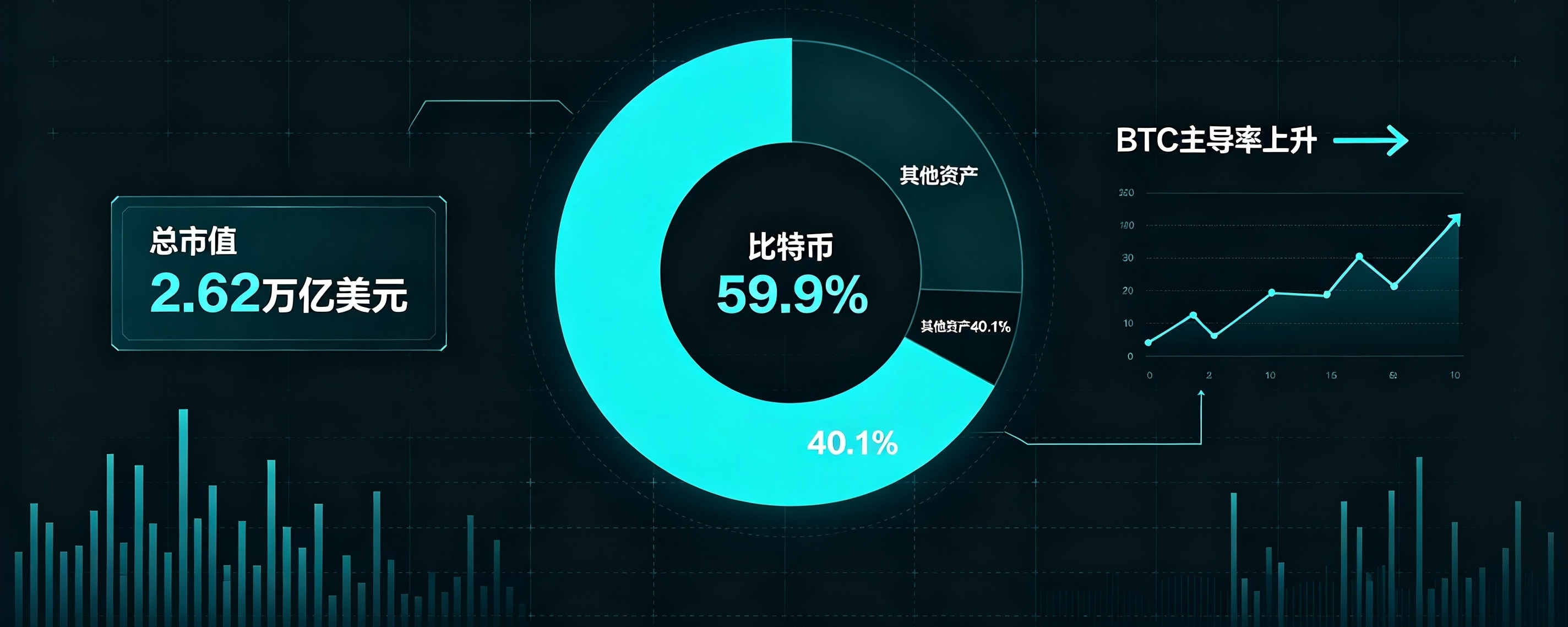
Total Cryptocurrency Market Cap Exceeds $2.62 Trillion; Bitcoin’s Share Reaches 59.9%The latest market statistics show that the global cryptocurrency market capitalization has held above the $2.62 trillion mark, while Bitcoin’s market share has reached 59.9%, nearing 60%. Capital continues to concentrate in leading assets, once again highlighting Bitcoin’s weight advantage.
Bitcoin’s share nearing 60% is the clearest sign that the market is becoming increasingly dominated by leading assets. In general, a rise in Bitcoin dominance tends to reflect one of two market conditions: either a risk-averse market, where capital prioritizes safety by choosing BTC, the most liquid asset, and reducing exposure to altcoins and meme coins; or sustained allocations to spot ETFs by institutional investors, with new capital flowing directly into Bitcoin and driving its market capitalization to grow significantly faster than that of other cryptocurrencies. At 59.9%, Bitcoin’s share is just one step away from the important psychological threshold of 60%. A decisive break above it often signals that market preferences are tilting further toward BTC, while the relative appeal of the altcoin sector continues to weaken.
Total Cryptocurrency Market Cap Exceeds $2.62 Trillion; Bitcoin’s Share Reaches 59.9%
The latest market statistics show that the global cryptocurrency market capitalization has held above the $2.62 trillion mark, while Bitcoin’s market share has reached 59.9%, nearing 60%. Capital continues to concentrate in leading assets, once again highlighting Bitcoin’s weight advantage.
Bitcoin’s share nearing 60% is the clearest sign that the market is becoming increasingly dominated by leading assets. In general, a rise in Bitcoin dominance tends to reflect one of two market conditions: either a risk-averse market, where capital prioritizes safety by choosing BTC, the most liquid asset, and reducing exposure to altcoins and meme coins; or sustained allocations to spot ETFs by institutional investors, with new capital flowing directly into Bitcoin and driving its market capitalization to grow significantly faster than that of other cryptocurrencies. At 59.9%, Bitcoin’s share is just one step away from the important psychological threshold of 60%. A decisive break above it often signals that market preferences are tilting further toward BTC, while the relative appeal of the altcoin sector continues to weaken.
Bitcoin’s share nearing 60% is the clearest sign that the market is becoming increasingly dominated by leading assets. In general, a rise in Bitcoin dominance tends to reflect one of two market conditions: either a risk-averse market, where capital prioritizes safety by choosing BTC, the most liquid asset, and reducing exposure to altcoins and meme coins; or sustained allocations to spot ETFs by institutional investors, with new capital flowing directly into Bitcoin and driving its market capitalization to grow significantly faster than that of other cryptocurrencies. At 59.9%, Bitcoin’s share is just one step away from the important psychological threshold of 60%. A decisive break above it often signals that market preferences are tilting further toward BTC, while the relative appeal of the altcoin sector continues to weaken.
1
56
·
--

Article
Binance Replenishes 90% of Affected Assets: Large-Cap Coins Fully Backed, Low-Liquidity Tokens Still to Be Replenished
Binance has announced the latest progress in replenishing assets affected by the earlier hot wallet breach. The platform has now replenished approximately 90% of the affected assets, up from the previously reported 80%, significantly easing market concerns about the resulting asset shortfall. The platform has stated explicitly that the exchange will bear all losses from the incident, and users will not suffer any financial losses.
By asset category, leading mainstream cryptocurrencies such as BTC, ETH, USDT, BNB, SOL, USDC, and XRP are now backed by 100% of their required reserves. In other words, the shortfall in large-cap, highly liquid assets—the assets users care about most—has been fully replenished. This also means that reserves for the core crypto assets held in the vast majority of ordinary users’ accounts have been restored in full. The remaining 10% yet to be replenished consists mainly of less liquid, niche tokens outside the top ten. Since the secondary market has limited capacity to absorb these tokens, the platform needs to acquire them gradually through both on-exchange and over-the-counter channels, so completing the replenishment will take longer.
Binance Replenishes 90% of Affected Assets: Large-Cap Coins Fully Backed, Low-Liquidity Tokens Still to Be Replenished
Binance has announced the latest progress in replenishing assets affected by the earlier hot wallet breach. The platform has now replenished approximately 90% of the affected assets, up from the previously reported 80%, significantly easing market concerns about the resulting asset shortfall. The platform has stated explicitly that the exchange will bear all losses from the incident, and users will not suffer any financial losses.
By asset category, leading mainstream cryptocurrencies such as BTC, ETH, USDT, BNB, SOL, USDC, and XRP are now backed by 100% of their required reserves. In other words, the shortfall in large-cap, highly liquid assets—the assets users care about most—has been fully replenished. This also means that reserves for the core crypto assets held in the vast majority of ordinary users’ accounts have been restored in full. The remaining 10% yet to be replenished consists mainly of less liquid, niche tokens outside the top ten. Since the secondary market has limited capacity to absorb these tokens, the platform needs to acquire them gradually through both on-exchange and over-the-counter channels, so completing the replenishment will take longer.
1
329
·
--
Article
Machi Big Brother Sells BAYC OTC: Once-Blue-Chip NFTs Reduced to Collateral for Leveraged Positions
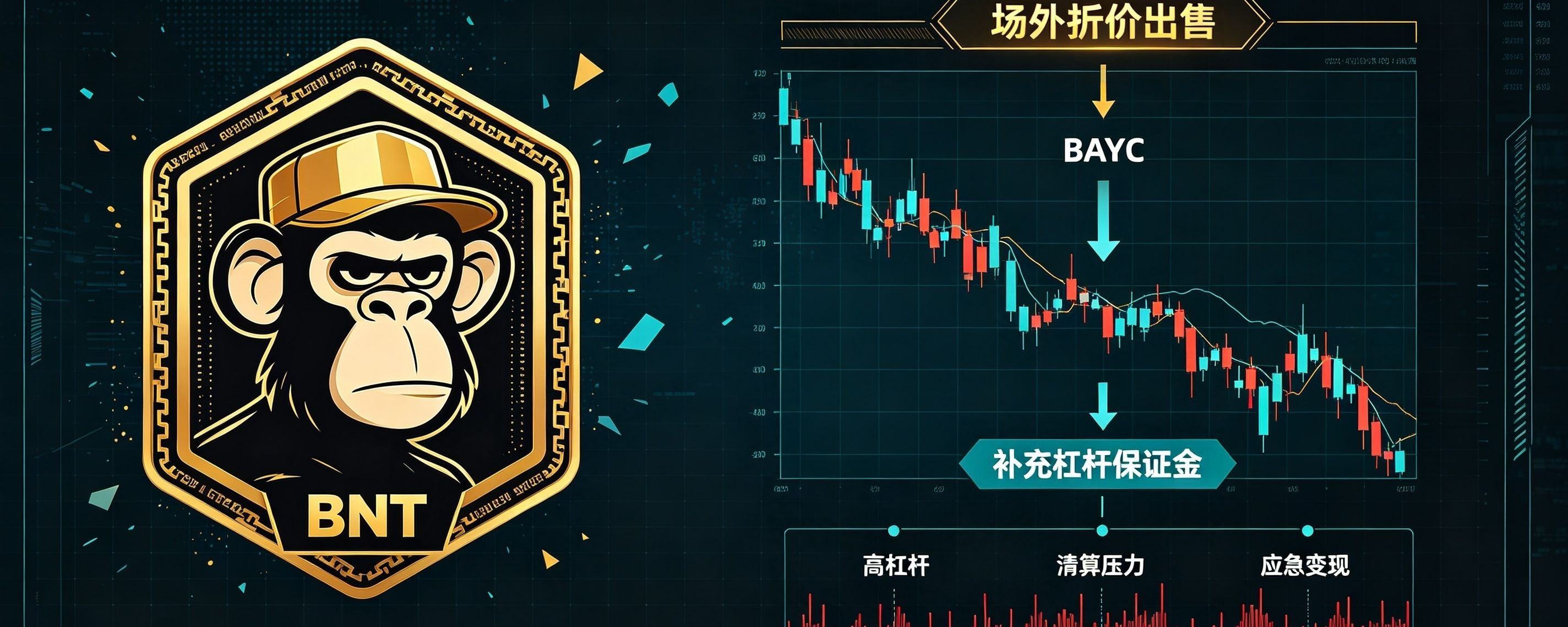
Once one of the best-known whales in the BAYC Bored Ape ecosystem, Machi Big Brother (Jeff Huang) is reportedly selling BAYC again. Unlike sales through public NFT listings on platforms such as OpenSea and Blur, this time he is offloading blue-chip Apes through an over-the-counter deal. It also confirms that he continues to face margin pressure from highly leveraged positions: the Bored Apes that were once collectibles are increasingly being liquidated to keep his contract positions alive.
Looking back at the NFT bull market, Machi Big Brother was one of BAYC’s most important early holders. He once accumulated dozens of Bored Apes in a single purchase and gifted BAYC NFTs to celebrities in the Chinese-speaking entertainment industry multiple times, directly helping Bored Apes break into the mainstream in Chinese-speaking communities. He was one of the key figures behind BAYC’s rising popularity. At its peak, his wallet held large amounts of BAYC, MAYC Mutant Apes, and APE tokens, making him a signature whale in the NFT market. Now, however, the market environment has reversed, and his trading logic has completely changed: BAYC is no longer a long-term collectible, but an “emergency reserve” that can be quickly liquidated to top up margin.
Machi Big Brother Sells BAYC OTC: Once-Blue-Chip NFTs Reduced to Collateral for Leveraged Positions
Once one of the best-known whales in the BAYC Bored Ape ecosystem, Machi Big Brother (Jeff Huang) is reportedly selling BAYC again. Unlike sales through public NFT listings on platforms such as OpenSea and Blur, this time he is offloading blue-chip Apes through an over-the-counter deal. It also confirms that he continues to face margin pressure from highly leveraged positions: the Bored Apes that were once collectibles are increasingly being liquidated to keep his contract positions alive.
Looking back at the NFT bull market, Machi Big Brother was one of BAYC’s most important early holders. He once accumulated dozens of Bored Apes in a single purchase and gifted BAYC NFTs to celebrities in the Chinese-speaking entertainment industry multiple times, directly helping Bored Apes break into the mainstream in Chinese-speaking communities. He was one of the key figures behind BAYC’s rising popularity. At its peak, his wallet held large amounts of BAYC, MAYC Mutant Apes, and APE tokens, making him a signature whale in the NFT market. Now, however, the market environment has reversed, and his trading logic has completely changed: BAYC is no longer a long-term collectible, but an “emergency reserve” that can be quickly liquidated to top up margin.
1
188
·
--
Article
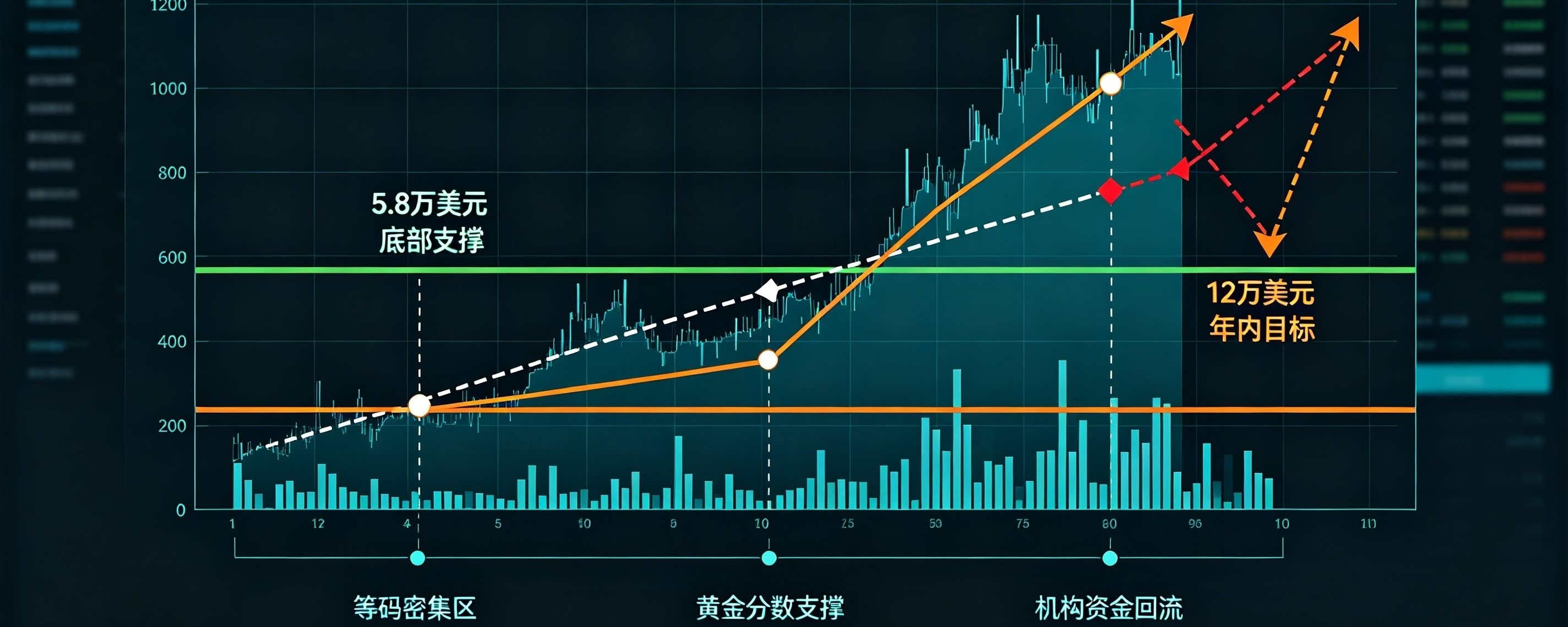
BTC’s Bottom in This Correction Seen at $58,000; Could Hit $120,000 This YearSome market analysts have offered a new range forecast for BTC, identifying $58,000 as the target low for this correction. If macroeconomic conditions and capital flows are supportive, the market could resume its upward trend this year and challenge the $120,000 mark. These bullish and bearish range expectations offer the market a new trading reference.
From the perspective of the pullback, $58,000 is seen as a key support level. It coincides with a major accumulation zone from an earlier period and is also close to the Fibonacci support level for this retracement. If the market continues to absorb the fear triggered by security incidents and headwinds such as ETF outflows, BTC could fall to this level for one final wave of panic-driven selling. If buying support holds around $58,000 and the price stops making new lows, that would confirm the bottom of this correction and open the way for a subsequent recovery.
BTC’s Bottom in This Correction Seen at $58,000; Could Hit $120,000 This Year
Some market analysts have offered a new range forecast for BTC, identifying $58,000 as the target low for this correction. If macroeconomic conditions and capital flows are supportive, the market could resume its upward trend this year and challenge the $120,000 mark. These bullish and bearish range expectations offer the market a new trading reference.
From the perspective of the pullback, $58,000 is seen as a key support level. It coincides with a major accumulation zone from an earlier period and is also close to the Fibonacci support level for this retracement. If the market continues to absorb the fear triggered by security incidents and headwinds such as ETF outflows, BTC could fall to this level for one final wave of panic-driven selling. If buying support holds around $58,000 and the price stops making new lows, that would confirm the bottom of this correction and open the way for a subsequent recovery.
From the perspective of the pullback, $58,000 is seen as a key support level. It coincides with a major accumulation zone from an earlier period and is also close to the Fibonacci support level for this retracement. If the market continues to absorb the fear triggered by security incidents and headwinds such as ETF outflows, BTC could fall to this level for one final wave of panic-driven selling. If buying support holds around $58,000 and the price stops making new lows, that would confirm the bottom of this correction and open the way for a subsequent recovery.
1
204
·
--
Article
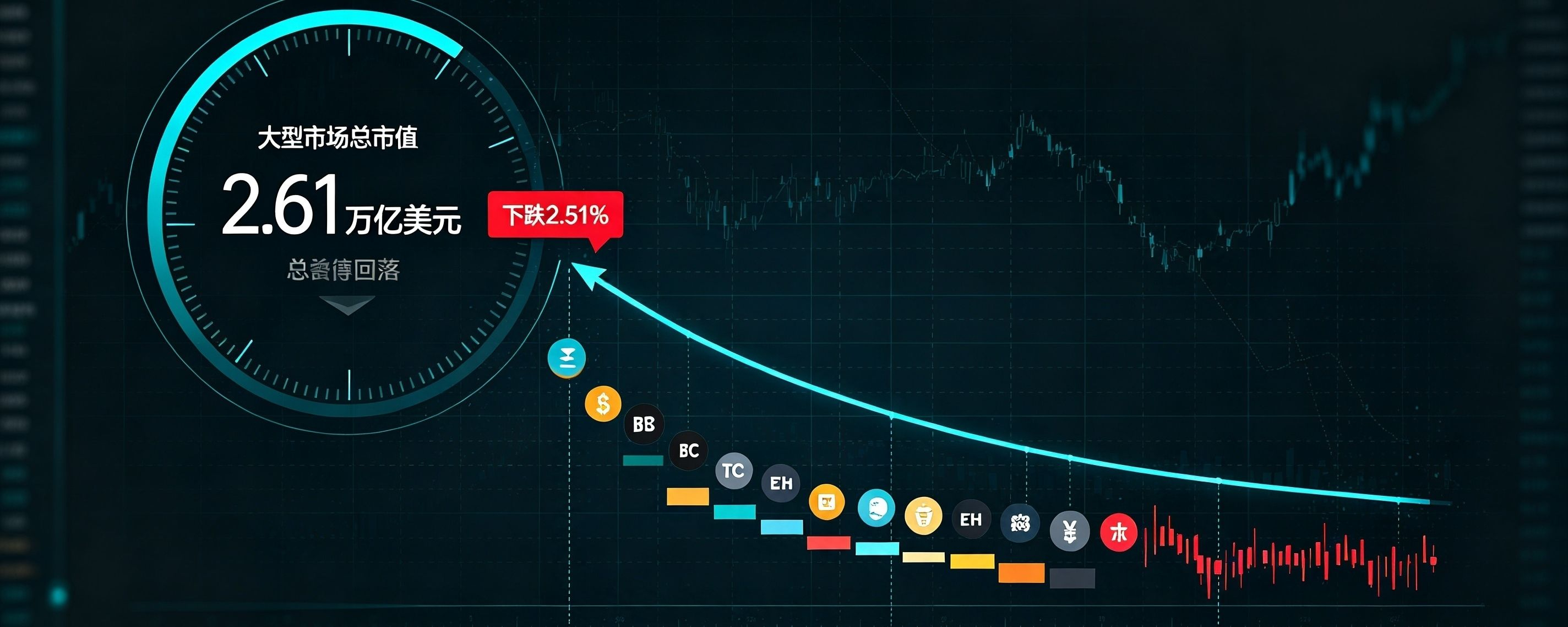
Cryptocurrencies Weaken Today, Total Market Cap Falls 2.51% to $2.61 TrillionMarket monitoring data shows that the crypto market remains generally weak. The total market capitalization of all cryptocurrencies fell 2.51% to $2.61 trillion, as overall risk appetite continued to cool.
Markets are broadly lower, with leading cryptocurrencies such as Bitcoin and Ethereum leading the decline and most altcoins also moving down. Only a small number of stablecoins have held steady. As total market capitalization retreats, market jitters have intensified somewhat. Leveraged positions continue to be liquidated in the futures market, with concentrated long-position closures further amplifying intraday volatility.
A combination of factors is weighing on market performance. Concerns stemming from the recent exchange security incident have yet to fully subside, while expectations that interest rates will remain elevated are putting pressure on risk assets. On the capital front, spot ETF inflows have slowed, and without sustained institutional buying support, the broader market is struggling to mount a strong rebound.
Cryptocurrencies Weaken Today, Total Market Cap Falls 2.51% to $2.61 Trillion
Market monitoring data shows that the crypto market remains generally weak. The total market capitalization of all cryptocurrencies fell 2.51% to $2.61 trillion, as overall risk appetite continued to cool.
Markets are broadly lower, with leading cryptocurrencies such as Bitcoin and Ethereum leading the decline and most altcoins also moving down. Only a small number of stablecoins have held steady. As total market capitalization retreats, market jitters have intensified somewhat. Leveraged positions continue to be liquidated in the futures market, with concentrated long-position closures further amplifying intraday volatility.
A combination of factors is weighing on market performance. Concerns stemming from the recent exchange security incident have yet to fully subside, while expectations that interest rates will remain elevated are putting pressure on risk assets. On the capital front, spot ETF inflows have slowed, and without sustained institutional buying support, the broader market is struggling to mount a strong rebound.
1
207
·
--
Article
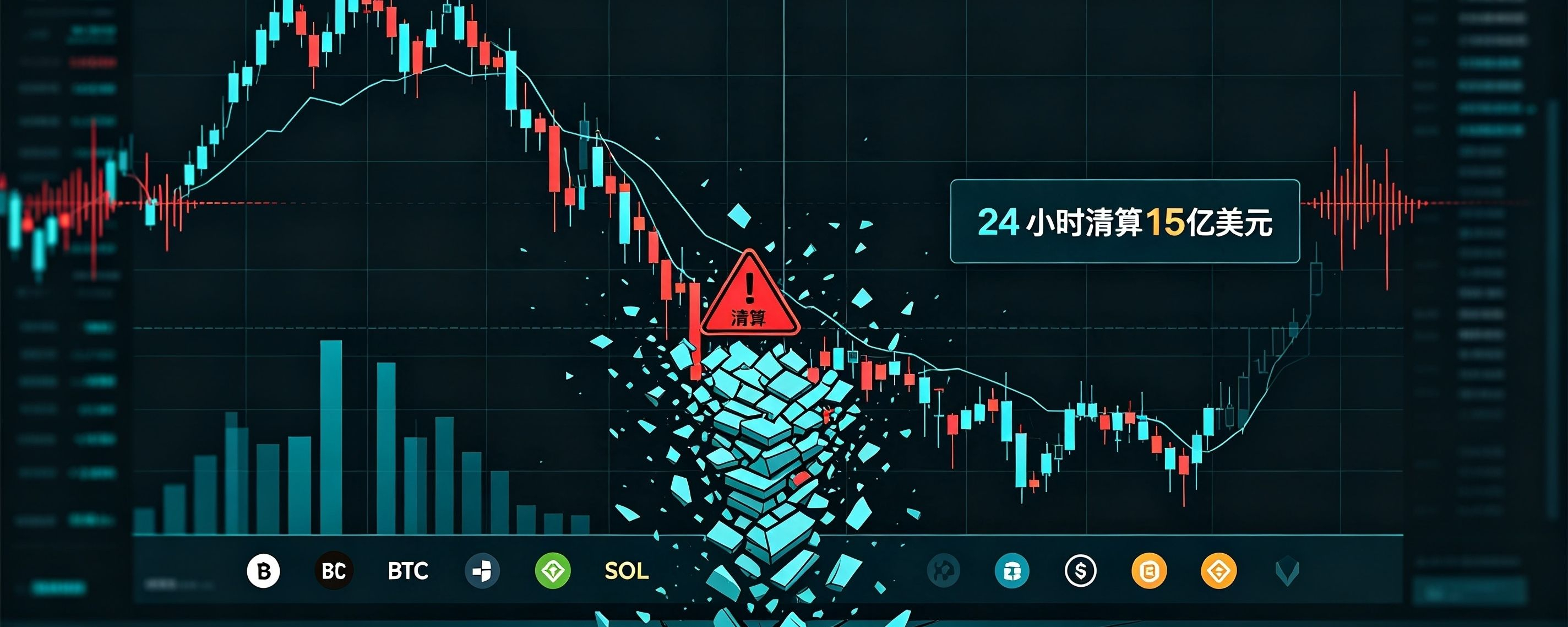
$1.5 Billion in Crypto Leveraged Positions Liquidated in 24 Hours
Data from derivatives monitoring platforms shows that, amid sharp market swings, liquidations across the crypto market’s leveraged contracts totaled $1.5 billion over the past 24 hours. Large-scale forced deleveraging swept across major centralized exchanges, driving volatility sharply higher.
By cryptocurrency, BTC and ETH were the main drivers of liquidations, together accounting for more than half of the total amount. Altcoins such as SOL, which saw sharp price swings in both directions, also experienced large-scale liquidations. Long positions accounted for most of the liquidations in this wave. A rapid price drop triggered stop-losses on numerous long positions, and automatic sell orders further weighed on the market, creating a classic liquidation cascade and intensifying downward pressure in the short term.
$1.5 Billion in Crypto Leveraged Positions Liquidated in 24 Hours
Data from derivatives monitoring platforms shows that, amid sharp market swings, liquidations across the crypto market’s leveraged contracts totaled $1.5 billion over the past 24 hours. Large-scale forced deleveraging swept across major centralized exchanges, driving volatility sharply higher.
By cryptocurrency, BTC and ETH were the main drivers of liquidations, together accounting for more than half of the total amount. Altcoins such as SOL, which saw sharp price swings in both directions, also experienced large-scale liquidations. Long positions accounted for most of the liquidations in this wave. A rapid price drop triggered stop-losses on numerous long positions, and automatic sell orders further weighed on the market, creating a classic liquidation cascade and intensifying downward pressure in the short term.
1
408
·
--

Article
Security incident affects approximately $6.3 billion; approximately $3 billion frozen
An on-chain investigation firm has updated statistics on the Binance security incident. The total value of assets stolen in the incident was approximately $6.3 billion. To date, coordinated efforts by various parties have intercepted and frozen $3 billion in funds connected to the incident, nearly half of the total. The remaining approximately $3.3 billion in stolen funds is still under the hackers’ control, and tracing efforts are ongoing.
The assets frozen in this operation were frozen with the cooperation of stablecoin issuers such as Tether and Circle and on-chain investigation teams. USDT accounted for the largest amount frozen and was the primary asset used to intercept the funds. The frozen tokens are locked at blacklisted addresses and cannot be transferred, exchanged, or moved across chains, temporarily blocking the hackers’ cash-out channels. The funds not yet recovered are spread across multiple public blockchains and intermediary addresses. The hackers continue to use methods such as splitting transfers, cross-chain transactions, and mixing to obscure the funds’ trail and make tracing more difficult.
Security incident affects approximately $6.3 billion; approximately $3 billion frozen
An on-chain investigation firm has updated statistics on the Binance security incident. The total value of assets stolen in the incident was approximately $6.3 billion. To date, coordinated efforts by various parties have intercepted and frozen $3 billion in funds connected to the incident, nearly half of the total. The remaining approximately $3.3 billion in stolen funds is still under the hackers’ control, and tracing efforts are ongoing.
The assets frozen in this operation were frozen with the cooperation of stablecoin issuers such as Tether and Circle and on-chain investigation teams. USDT accounted for the largest amount frozen and was the primary asset used to intercept the funds. The frozen tokens are locked at blacklisted addresses and cannot be transferred, exchanged, or moved across chains, temporarily blocking the hackers’ cash-out channels. The funds not yet recovered are spread across multiple public blockchains and intermediary addresses. The hackers continue to use methods such as splitting transfers, cross-chain transactions, and mixing to obscure the funds’ trail and make tracing more difficult.
1
30
·
--

Article
This security incident may have involved the compromise of a DevOps engineer’s laptop
On-chain investigations and information from multiple sources indicate that the source of the intrusion behind this major theft of funds from Binance was most likely the compromise of a DevOps engineer’s laptop. The hackers used the device to obtain operational privileges and then initiate withdrawals, rather than directly compromising the wallets’ underlying private keys.
According to current investigative leads, the engineer’s work laptop was infected with malware. The hackers used it to gain access to internal operations systems and container clusters, enabling them to call withdrawal APIs associated with hot wallets and initiate abnormal transfers in bulk. This also explains how the attackers were able to transfer large amounts of different types of assets across multiple blockchains in a short period of time. Unlike traditional private key leaks, this type of privilege breach involves supply chain and internal operations security vulnerabilities. It is more difficult to detect and can be hard to identify in time before large-scale fund transfers occur.
This security incident may have involved the compromise of a DevOps engineer’s laptop
On-chain investigations and information from multiple sources indicate that the source of the intrusion behind this major theft of funds from Binance was most likely the compromise of a DevOps engineer’s laptop. The hackers used the device to obtain operational privileges and then initiate withdrawals, rather than directly compromising the wallets’ underlying private keys.
According to current investigative leads, the engineer’s work laptop was infected with malware. The hackers used it to gain access to internal operations systems and container clusters, enabling them to call withdrawal APIs associated with hot wallets and initiate abnormal transfers in bulk. This also explains how the attackers were able to transfer large amounts of different types of assets across multiple blockchains in a short period of time. Unlike traditional private key leaks, this type of privilege breach involves supply chain and internal operations security vulnerabilities. It is more difficult to detect and can be hard to identify in time before large-scale fund transfers occur.
1
34
·
--

Article
A staggering $6 billion mystery! Binance hot wallets breached overnight
The crypto industry has been hit by an exceptionally large security black swan event. Multiple Binance hot wallets saw large-scale, abnormal fund outflows overnight. Several on-chain investigation firms estimate the value of the assets involved at nearly $6 billion. If ultimately confirmed, this would be one of the largest thefts in crypto history.
The incident began with unusual on-chain activity in the early hours. The attacker transferred assets across multiple blockchains, including Ethereum, Bitcoin, and Tron. The assets included major cryptocurrencies, stablecoins, and altcoins. The funds were then split up and moved across chains, with mixers and privacy networks used to obscure their trail. Preliminary investigative leads point to a breach of internal operations equipment. The attacker used a compromised DevOps device container to make unauthorized withdrawal transactions. Officials have not yet confirmed whether the underlying wallet private keys were leaked.
A staggering $6 billion mystery! Binance hot wallets breached overnight
The crypto industry has been hit by an exceptionally large security black swan event. Multiple Binance hot wallets saw large-scale, abnormal fund outflows overnight. Several on-chain investigation firms estimate the value of the assets involved at nearly $6 billion. If ultimately confirmed, this would be one of the largest thefts in crypto history.
The incident began with unusual on-chain activity in the early hours. The attacker transferred assets across multiple blockchains, including Ethereum, Bitcoin, and Tron. The assets included major cryptocurrencies, stablecoins, and altcoins. The funds were then split up and moved across chains, with mixers and privacy networks used to obscure their trail. Preliminary investigative leads point to a breach of internal operations equipment. The attacker used a compromised DevOps device container to make unauthorized withdrawal transactions. Officials have not yet confirmed whether the underlying wallet private keys were leaked.
1
396
·
--
Article
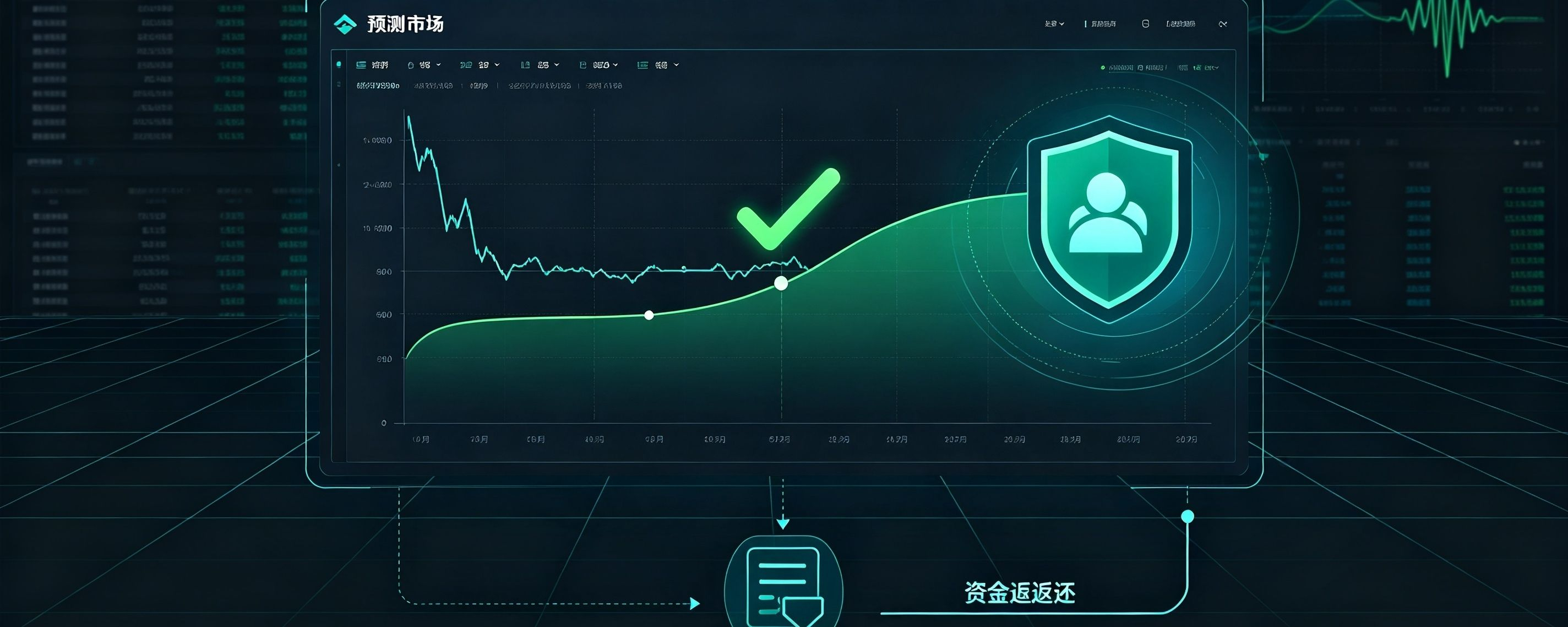
Polymarket Trading Fully Restored; Affected Traders to Receive Full Compensation
Prediction market platform Polymarket has officially announced that trading has been fully restored. It also reiterated that all traders affected by the frontend supply chain breach will receive full compensation.
The root cause of this security incident was a breach of third-party monitoring provider DebugBear. Malicious scripts were injected into pages to steal users’ session credentials, resulting in positions being sold without authorization and assets being stolen from nearly 1,000 user accounts. After the incident, the platform immediately suspended trading and investigated the vulnerability. It also handed over case materials to law enforcement and worked with on-chain investigation teams to trace the POL and stablecoin funds moved by the hackers.
Polymarket Trading Fully Restored; Affected Traders to Receive Full Compensation
Prediction market platform Polymarket has officially announced that trading has been fully restored. It also reiterated that all traders affected by the frontend supply chain breach will receive full compensation.
The root cause of this security incident was a breach of third-party monitoring provider DebugBear. Malicious scripts were injected into pages to steal users’ session credentials, resulting in positions being sold without authorization and assets being stolen from nearly 1,000 user accounts. After the incident, the platform immediately suspended trading and investigated the vulnerability. It also handed over case materials to law enforcement and worked with on-chain investigation teams to trace the POL and stablecoin funds moved by the hackers.
1
117
·
--

Article
Suspected Polymarket attacker converts about $2.65 million into POL, then transfers out 28.64 million tokensOn-chain investigation data shows that an address suspected of belonging to the Polymarket attacker converted the stolen funds into POL tokens worth approximately $2.65 million, then transferred out a total of 28.64 million POL in multiple transactions. The fund-mixing activity is ongoing, making on-chain tracking considerably more difficult.
This attack was a third-party supply chain compromise. Hackers used a tampered DebugBear monitoring script to inject malicious code that stole session credentials and API keys when users visited the page, automatically sold users’ prediction market positions, and transferred out their assets. Nearly a thousand user accounts were affected. Polymarket has confirmed the source of the vulnerability, shut down the at-risk service, and pledged to fully compensate affected users. It has also referred the case to law enforcement.
Suspected Polymarket attacker converts about $2.65 million into POL, then transfers out 28.64 million tokens
On-chain investigation data shows that an address suspected of belonging to the Polymarket attacker converted the stolen funds into POL tokens worth approximately $2.65 million, then transferred out a total of 28.64 million POL in multiple transactions. The fund-mixing activity is ongoing, making on-chain tracking considerably more difficult.
This attack was a third-party supply chain compromise. Hackers used a tampered DebugBear monitoring script to inject malicious code that stole session credentials and API keys when users visited the page, automatically sold users’ prediction market positions, and transferred out their assets. Nearly a thousand user accounts were affected. Polymarket has confirmed the source of the vulnerability, shut down the at-risk service, and pledged to fully compensate affected users. It has also referred the case to law enforcement.
This attack was a third-party supply chain compromise. Hackers used a tampered DebugBear monitoring script to inject malicious code that stole session credentials and API keys when users visited the page, automatically sold users’ prediction market positions, and transferred out their assets. Nearly a thousand user accounts were affected. Polymarket has confirmed the source of the vulnerability, shut down the at-risk service, and pledged to fully compensate affected users. It has also referred the case to law enforcement.
1
447
·
--

Article
195,000 ETH transferred from an unknown wallet to a new walletAccording to data from an on-chain monitoring platform, a large Ethereum transfer has been flagged: a total of 195,000 ETH was transferred in a single transaction from an unknown wallet address with very little recorded activity to a newly created, empty wallet. At current ETH prices, the assets are worth more than $400 million, making this a rare whale-sized on-chain movement.
Based on address tracing information, the sending wallet has a sparse transaction history, making it impossible to directly identify its owner. It is not yet clear whether this is an institutional portfolio rebalance, a whale moving assets to a new custodian, or the transfer of stolen funds by hackers. The recipient is a newly created address. Since the transfer, there have been no further splits, transfers to exchanges, or cross-chain operations, and the funds remain idle.
195,000 ETH transferred from an unknown wallet to a new wallet
According to data from an on-chain monitoring platform, a large Ethereum transfer has been flagged: a total of 195,000 ETH was transferred in a single transaction from an unknown wallet address with very little recorded activity to a newly created, empty wallet. At current ETH prices, the assets are worth more than $400 million, making this a rare whale-sized on-chain movement.
Based on address tracing information, the sending wallet has a sparse transaction history, making it impossible to directly identify its owner. It is not yet clear whether this is an institutional portfolio rebalance, a whale moving assets to a new custodian, or the transfer of stolen funds by hackers. The recipient is a newly created address. Since the transfer, there have been no further splits, transfers to exchanges, or cross-chain operations, and the funds remain idle.
Based on address tracing information, the sending wallet has a sparse transaction history, making it impossible to directly identify its owner. It is not yet clear whether this is an institutional portfolio rebalance, a whale moving assets to a new custodian, or the transfer of stolen funds by hackers. The recipient is a newly created address. Since the transfer, there have been no further splits, transfers to exchanges, or cross-chain operations, and the funds remain idle.
1
250
·
--

Article
Tether Has Frozen More Than 1.567 Billion USDT
Tether CEO Paolo Ardoino disclosed on social media that, in connection with the funds stolen in the Binance security incident, Tether has frozen more than 1.567 billion USDT, preventing the hackers from moving or cashing out the stolen funds. This is also the largest stablecoin freeze in this incident.
This freeze was carried out relatively quickly. After a large, abnormal outflow from a Binance hot wallet, Tether worked with on-chain investigation firms and law enforcement agencies to identify the hacker’s receiving addresses and lock the USDT held at those addresses using its contract blacklist feature. The frozen tokens remain in their original wallet addresses, but can no longer be transferred, exchanged, or moved across chains, directly cutting off the flow of funds. Data shows that the amount frozen has continued to rise from an initial 971 million tokens, with additional addresses being added to the blacklist as the investigation continues.
Tether Has Frozen More Than 1.567 Billion USDT
Tether CEO Paolo Ardoino disclosed on social media that, in connection with the funds stolen in the Binance security incident, Tether has frozen more than 1.567 billion USDT, preventing the hackers from moving or cashing out the stolen funds. This is also the largest stablecoin freeze in this incident.
This freeze was carried out relatively quickly. After a large, abnormal outflow from a Binance hot wallet, Tether worked with on-chain investigation firms and law enforcement agencies to identify the hacker’s receiving addresses and lock the USDT held at those addresses using its contract blacklist feature. The frozen tokens remain in their original wallet addresses, but can no longer be transferred, exchanged, or moved across chains, directly cutting off the flow of funds. Data shows that the amount frozen has continued to rise from an initial 971 million tokens, with additional addresses being added to the blacklist as the investigation continues.
1
65
·
--

Article
Binance Suspends All Deposits and Withdrawals and Pledges to Cover Losses Related to the IncidentBinance announced that it has temporarily suspended all deposits and withdrawals to conduct a comprehensive security review and trace the funds involved. The platform also stated that Binance will cover any losses related to this security incident, and that users’ funds are safe.
The unusual activity stemmed from a large, abnormal outflow of funds from the platform’s hot wallet, which the market initially suspected was a hack. After the incident, Binance’s security team immediately coordinated with stablecoin issuers such as Tether and Circle, on-chain investigation firms, and law enforcement agencies to intercept and freeze the assets involved, reducing the outflow of funds. Some of the funds have already been frozen, and tracking efforts are ongoing. The amount frozen may change as the investigation continues.
Binance Suspends All Deposits and Withdrawals and Pledges to Cover Losses Related to the Incident
Binance announced that it has temporarily suspended all deposits and withdrawals to conduct a comprehensive security review and trace the funds involved. The platform also stated that Binance will cover any losses related to this security incident, and that users’ funds are safe.
The unusual activity stemmed from a large, abnormal outflow of funds from the platform’s hot wallet, which the market initially suspected was a hack. After the incident, Binance’s security team immediately coordinated with stablecoin issuers such as Tether and Circle, on-chain investigation firms, and law enforcement agencies to intercept and freeze the assets involved, reducing the outflow of funds. Some of the funds have already been frozen, and tracking efforts are ongoing. The amount frozen may change as the investigation continues.
The unusual activity stemmed from a large, abnormal outflow of funds from the platform’s hot wallet, which the market initially suspected was a hack. After the incident, Binance’s security team immediately coordinated with stablecoin issuers such as Tether and Circle, on-chain investigation firms, and law enforcement agencies to intercept and freeze the assets involved, reducing the outflow of funds. Some of the funds have already been frozen, and tracking efforts are ongoing. The amount frozen may change as the investigation continues.
2
749
·
--

Article
Liquidations across the network surged to $354 million over the past hour, with $150 million in BTC liquidationsAccording to CoinGlass futures monitoring data, as the market rapidly plunged, concentrated liquidations across the crypto market continued to rise over the past hour. Total liquidations across the network reached $354 million, including $150 million in Bitcoin (BTC) liquidations, making it the main asset behind this short-term wave of liquidations.
Long positions accounted for most of this wave of liquidations. After prices rapidly broke through key support levels, large numbers of leveraged long positions were forcibly closed. The resulting automatic sell orders pushed prices down further, creating a cascade of liquidations. In addition to Bitcoin, major cryptocurrencies such as Ethereum and Solana also saw large-scale liquidations, heightening panic across the market.
Liquidations across the network surged to $354 million over the past hour, with $150 million in BTC liquidations
According to CoinGlass futures monitoring data, as the market rapidly plunged, concentrated liquidations across the crypto market continued to rise over the past hour. Total liquidations across the network reached $354 million, including $150 million in Bitcoin (BTC) liquidations, making it the main asset behind this short-term wave of liquidations.
Long positions accounted for most of this wave of liquidations. After prices rapidly broke through key support levels, large numbers of leveraged long positions were forcibly closed. The resulting automatic sell orders pushed prices down further, creating a cascade of liquidations. In addition to Bitcoin, major cryptocurrencies such as Ethereum and Solana also saw large-scale liquidations, heightening panic across the market.
Long positions accounted for most of this wave of liquidations. After prices rapidly broke through key support levels, large numbers of leveraged long positions were forcibly closed. The resulting automatic sell orders pushed prices down further, creating a cascade of liquidations. In addition to Bitcoin, major cryptocurrencies such as Ethereum and Solana also saw large-scale liquidations, heightening panic across the market.
1
291

·
--

Article
BTC Falls Below 80,000 USDT, Down 1.32% in 24 HoursMarket data shows that Bitcoin (BTC) has fallen below the key psychological threshold of 80,000 USDT, with a 24-hour decline of 1.32%, putting the market under short-term pressure. The 80,000 level has recently attracted considerable market attention as a psychological support level. After it was breached, trading sentiment quickly turned cautious, and traders began reassessing the next support range.
From a macro perspective, expectations that the Federal Reserve will keep interest rates high, along with recurring geopolitical tensions in the Middle East, continue to weigh on the valuations of highly volatile risk assets such as cryptocurrencies. Meanwhile, inflows into spot ETFs have slowed, and institutional appetite for entering the market has weakened. Without substantial buying to provide support, BTC is more likely to see a breakdown followed by a pullback.
BTC Falls Below 80,000 USDT, Down 1.32% in 24 Hours
Market data shows that Bitcoin (BTC) has fallen below the key psychological threshold of 80,000 USDT, with a 24-hour decline of 1.32%, putting the market under short-term pressure. The 80,000 level has recently attracted considerable market attention as a psychological support level. After it was breached, trading sentiment quickly turned cautious, and traders began reassessing the next support range.
From a macro perspective, expectations that the Federal Reserve will keep interest rates high, along with recurring geopolitical tensions in the Middle East, continue to weigh on the valuations of highly volatile risk assets such as cryptocurrencies. Meanwhile, inflows into spot ETFs have slowed, and institutional appetite for entering the market has weakened. Without substantial buying to provide support, BTC is more likely to see a breakdown followed by a pullback.
From a macro perspective, expectations that the Federal Reserve will keep interest rates high, along with recurring geopolitical tensions in the Middle East, continue to weigh on the valuations of highly volatile risk assets such as cryptocurrencies. Meanwhile, inflows into spot ETFs have slowed, and institutional appetite for entering the market has weakened. Without substantial buying to provide support, BTC is more likely to see a breakdown followed by a pullback.
1
81
Log in to explore more content
Join global crypto users on Binance Square
⚡️ Get latest and useful information about crypto.
💬 Trusted by the world’s largest crypto exchange.
👍 Discover real insights from verified creators.
Email / Phone number
Trending Topics
NvidiaInvestigatesAfterHuang’sAffairApology
104,177 views
1,136 Discussing
Nvidia Board Opens Probe Into Whether Huang Was Target of Foreign Intelligence Effort
Binance News
·13 Likes
·45.9k views
BitcoinFiveWeeklyLosses
130,199 views
1,610 Discussing
AIChipSlumpNasdaq
67,121 views
993 Discussing