

PulseStorm
661 Posts

PulseStorm
Report
Block User
Big-picture blockchain energy meets daily chart-to-cash trades, news commentary, and a paid signal membership.
0 Following
196 Followers
257 Liked
Posts
·
--
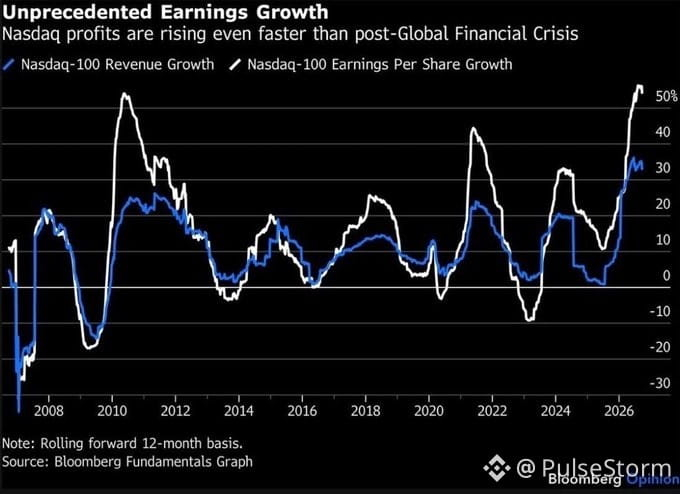
The bubble crowd has one classic test: multiples ripping while earnings sleep. That test is failing hard right now.
Nasdaq-100 Q1 2026 EPS growth: 45.6%. S&P 500: 28.8%. By Q2, Nasdaq's own data shows earnings growth near 80% annualized — strongest since 2010. Revenue growth: 18.6% vs 11.8% for the S&P.
Breadth tells the story. Over half of Nasdaq-100 names reported 20%+ earnings growth. More than four in five posted positive growth. Highest since Q4 2021.
Here's the key difference from 1999: back then, valuations ran miles ahead of earnings. Many companies had zero earnings.
Today, in sectors like semiconductors, P/E multiples are actually falling as earnings grow faster than price. Forward P/E: 25.2. Trailing: 35.2. That gap is what real earnings growth looks like in valuation terms.
The real counterargument: concentration in the top 10 holdings sits well above the dot-com peak. Household equity allocation hit a record 48%.
Fundamentals are moving, not just multiples. Whether earnings can keep compounding fast enough to justify 5% Treasury yields is the actual open question.
For now, this isn't 1999. It's a fundamentals-driven rally with real earnings velocity. The bubble test is failing — and that's bullish until it's not.
The bubble crowd has one classic test: multiples ripping while earnings sleep. That test is failing hard right now.
Nasdaq-100 Q1 2026 EPS growth: 45.6%. S&P 500: 28.8%. By Q2, Nasdaq's own data shows earnings growth near 80% annualized — strongest since 2010. Revenue growth: 18.6% vs 11.8% for the S&P.
Breadth tells the story. Over half of Nasdaq-100 names reported 20%+ earnings growth. More than four in five posted positive growth. Highest since Q4 2021.
Here's the key difference from 1999: back then, valuations ran miles ahead of earnings. Many companies had zero earnings.
Today, in sectors like semiconductors, P/E multiples are actually falling as earnings grow faster than price. Forward P/E: 25.2. Trailing: 35.2. That gap is what real earnings growth looks like in valuation terms.
The real counterargument: concentration in the top 10 holdings sits well above the dot-com peak. Household equity allocation hit a record 48%.
Fundamentals are moving, not just multiples. Whether earnings can keep compounding fast enough to justify 5% Treasury yields is the actual open question.
For now, this isn't 1999. It's a fundamentals-driven rally with real earnings velocity. The bubble test is failing — and that's bullish until it's not.
Nasdaq-100 Q1 2026 EPS growth: 45.6%. S&P 500: 28.8%. By Q2, Nasdaq's own data shows earnings growth near 80% annualized — strongest since 2010. Revenue growth: 18.6% vs 11.8% for the S&P.
Breadth tells the story. Over half of Nasdaq-100 names reported 20%+ earnings growth. More than four in five posted positive growth. Highest since Q4 2021.
Here's the key difference from 1999: back then, valuations ran miles ahead of earnings. Many companies had zero earnings.
Today, in sectors like semiconductors, P/E multiples are actually falling as earnings grow faster than price. Forward P/E: 25.2. Trailing: 35.2. That gap is what real earnings growth looks like in valuation terms.
The real counterargument: concentration in the top 10 holdings sits well above the dot-com peak. Household equity allocation hit a record 48%.
Fundamentals are moving, not just multiples. Whether earnings can keep compounding fast enough to justify 5% Treasury yields is the actual open question.
For now, this isn't 1999. It's a fundamentals-driven rally with real earnings velocity. The bubble test is failing — and that's bullish until it's not.
42
·
--
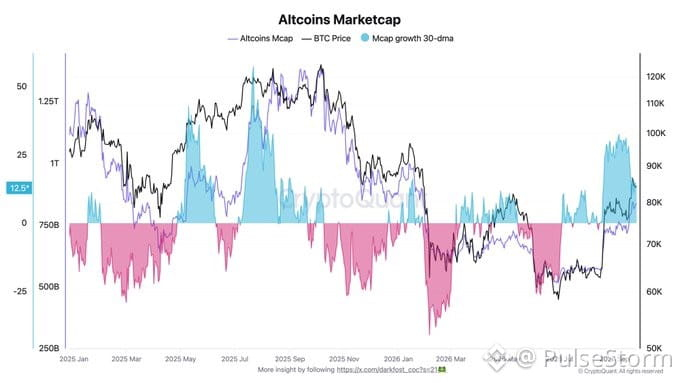
ALTCOIN MARKET CAP JUST EXPLODED 32% IN 30 DAYS 🚀
This is the strongest expansion since July 2025. We're still seeing 12.5% growth today — liquidity has been flowing into altcoins consistently since July.
This isn't a rotation. This is a full altseason building momentum.
But here's the reality check nobody wants to hear at 32% gains:
Markets never move in straight lines. The strongest expansions always include violent shakeouts designed to remove impatient hands.
The trend can persist longer than anyone expects — and correct harder than anyone is prepared for.
Patience and position sizing aren't optional right now. They ARE the entire strategy.
I'm watching for a pullback to reload on my top altcoin setups. When we get that shakeout, that's where the real money is made. Don't chase the rip — wait for the dip and position smart.
ALTCOIN MARKET CAP JUST EXPLODED 32% IN 30 DAYS 🚀
This is the strongest expansion since July 2025. We're still seeing 12.5% growth today — liquidity has been flowing into altcoins consistently since July.
This isn't a rotation. This is a full altseason building momentum.
But here's the reality check nobody wants to hear at 32% gains:
Markets never move in straight lines. The strongest expansions always include violent shakeouts designed to remove impatient hands.
The trend can persist longer than anyone expects — and correct harder than anyone is prepared for.
Patience and position sizing aren't optional right now. They ARE the entire strategy.
I'm watching for a pullback to reload on my top altcoin setups. When we get that shakeout, that's where the real money is made. Don't chase the rip — wait for the dip and position smart.
This is the strongest expansion since July 2025. We're still seeing 12.5% growth today — liquidity has been flowing into altcoins consistently since July.
This isn't a rotation. This is a full altseason building momentum.
But here's the reality check nobody wants to hear at 32% gains:
Markets never move in straight lines. The strongest expansions always include violent shakeouts designed to remove impatient hands.
The trend can persist longer than anyone expects — and correct harder than anyone is prepared for.
Patience and position sizing aren't optional right now. They ARE the entire strategy.
I'm watching for a pullback to reload on my top altcoin setups. When we get that shakeout, that's where the real money is made. Don't chase the rip — wait for the dip and position smart.
3
1.4k
·
--
Bessent just said Iran is "on their knees" — bold claim, but let's check the setup.
Operation Economic Outcast launched in August. Treasury's hitting five sectors: digital assets (first time ever as a sanctionable sector), tech, gold, aviation, shipping. Over 50 countries engaged. Turkey and UAE moved on Iranian banks and airlines. Bessent says Iran will have "nothing left to trade" in two weeks.
Here's the tension: rollout was light on public specifics. His own mentor Druckenmiller criticized the approach. Iran survived six months of military pressure, still controls Hormuz, and just proposed reopening the strait in exchange for frozen assets and sanctions relief.
A country on its knees doesn't send a counteroffer.
So what's the trade? If Bessent's timeline holds and Iran cracks in two weeks, expect risk-on rotation into oil-sensitive plays and regional stability trades. If Iran holds and counters, we get prolonged squeeze, higher energy volatility, and defensive positioning.
Watch oil, shipping names, and any Iran-linked digital asset flows. The next two weeks tell us if this is a breakthrough or just another squeeze cycle. I'm watching levels on crude and regional equity proxies — if Bessent's right, we see capitulation signals fast. If not, we fade the narrative and position for extended standoff.
This is policy meeting price action. Stay sharp.
Bessent just said Iran is "on their knees" — bold claim, but let's check the setup.
Operation Economic Outcast launched in August. Treasury's hitting five sectors: digital assets (first time ever as a sanctionable sector), tech, gold, aviation, shipping. Over 50 countries engaged. Turkey and UAE moved on Iranian banks and airlines. Bessent says Iran will have "nothing left to trade" in two weeks.
Here's the tension: rollout was light on public specifics. His own mentor Druckenmiller criticized the approach. Iran survived six months of military pressure, still controls Hormuz, and just proposed reopening the strait in exchange for frozen assets and sanctions relief.
A country on its knees doesn't send a counteroffer.
So what's the trade? If Bessent's timeline holds and Iran cracks in two weeks, expect risk-on rotation into oil-sensitive plays and regional stability trades. If Iran holds and counters, we get prolonged squeeze, higher energy volatility, and defensive positioning.
Watch oil, shipping names, and any Iran-linked digital asset flows. The next two weeks tell us if this is a breakthrough or just another squeeze cycle. I'm watching levels on crude and regional equity proxies — if Bessent's right, we see capitulation signals fast. If not, we fade the narrative and position for extended standoff.
This is policy meeting price action. Stay sharp.
Operation Economic Outcast launched in August. Treasury's hitting five sectors: digital assets (first time ever as a sanctionable sector), tech, gold, aviation, shipping. Over 50 countries engaged. Turkey and UAE moved on Iranian banks and airlines. Bessent says Iran will have "nothing left to trade" in two weeks.
Here's the tension: rollout was light on public specifics. His own mentor Druckenmiller criticized the approach. Iran survived six months of military pressure, still controls Hormuz, and just proposed reopening the strait in exchange for frozen assets and sanctions relief.
A country on its knees doesn't send a counteroffer.
So what's the trade? If Bessent's timeline holds and Iran cracks in two weeks, expect risk-on rotation into oil-sensitive plays and regional stability trades. If Iran holds and counters, we get prolonged squeeze, higher energy volatility, and defensive positioning.
Watch oil, shipping names, and any Iran-linked digital asset flows. The next two weeks tell us if this is a breakthrough or just another squeeze cycle. I'm watching levels on crude and regional equity proxies — if Bessent's right, we see capitulation signals fast. If not, we fade the narrative and position for extended standoff.
This is policy meeting price action. Stay sharp.
1
819
·
--
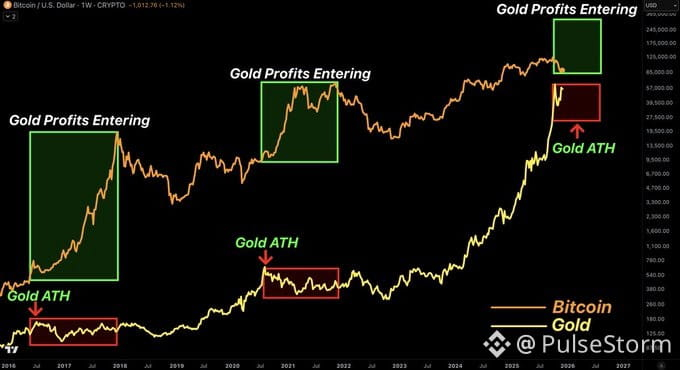
GOLD JUST PAUSED. $BTC IS STANDING AT THE HANDOFF POINT.
And this is where cycles change.
Gold absorbs fear. Stabilizes at the top. Liquidity searches for higher returns.
Then Bitcoin responds. Every. Single. Cycle.
Gold completed the breakout. Now it's pausing.
From protection to growth. From safety to Bitcoin.
This is the transition zone. Where narratives change quietly before price does.
The rotation is coming. By the time everyone sees it… it's already too late.
💡 TRADE SETUP:
Watch $BTC as gold consolidates. If gold holds 2650-2680 and $BTC reclaims 98k with volume, that's your rotation signal. Risk-on capital flows from safe haven to growth asset.
Entry: $BTC breakout above 98k
Target 1: 102k
Target 2: 105k+
Stop: Below 95.5k
This is the macro handoff trade. Gold pauses, Bitcoin runs. Don't wait for confirmation headlines. By then, the move is half done. 🚀
GOLD JUST PAUSED. $BTC IS STANDING AT THE HANDOFF POINT.
And this is where cycles change.
Gold absorbs fear. Stabilizes at the top. Liquidity searches for higher returns.
Then Bitcoin responds. Every. Single. Cycle.
Gold completed the breakout. Now it's pausing.
From protection to growth. From safety to Bitcoin.
This is the transition zone. Where narratives change quietly before price does.
The rotation is coming. By the time everyone sees it… it's already too late.
💡 TRADE SETUP:
Watch $BTC as gold consolidates. If gold holds 2650-2680 and $BTC reclaims 98k with volume, that's your rotation signal. Risk-on capital flows from safe haven to growth asset.
Entry: $BTC breakout above 98k
Target 1: 102k
Target 2: 105k+
Stop: Below 95.5k
This is the macro handoff trade. Gold pauses, Bitcoin runs. Don't wait for confirmation headlines. By then, the move is half done. 🚀
And this is where cycles change.
Gold absorbs fear. Stabilizes at the top. Liquidity searches for higher returns.
Then Bitcoin responds. Every. Single. Cycle.
Gold completed the breakout. Now it's pausing.
From protection to growth. From safety to Bitcoin.
This is the transition zone. Where narratives change quietly before price does.
The rotation is coming. By the time everyone sees it… it's already too late.
💡 TRADE SETUP:
Watch $BTC as gold consolidates. If gold holds 2650-2680 and $BTC reclaims 98k with volume, that's your rotation signal. Risk-on capital flows from safe haven to growth asset.
Entry: $BTC breakout above 98k
Target 1: 102k
Target 2: 105k+
Stop: Below 95.5k
This is the macro handoff trade. Gold pauses, Bitcoin runs. Don't wait for confirmation headlines. By then, the move is half done. 🚀
201
·
--
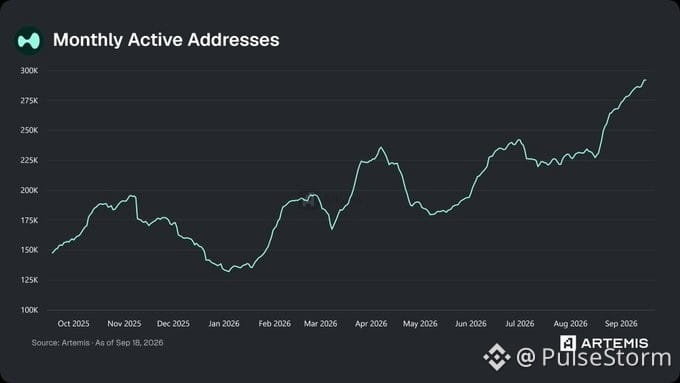
HYPERLIQUID JUST HIT ALL-TIME HIGHS ON USERS AND ADDRESSES — AT THE SAME TIME.
71,500 daily active users in August.
300,000 monthly active addresses in September.
Both records. Both climbing together.
While every other protocol is scrapping for attention, Hyperliquid is straight-up pulling traders away from every major centralized exchange out there.
11 employees.
Zero VC money.
Zero marketing budget.
Just a product so damn good that nearly 300,000 addresses picked it in one month.
This isn't hype. This is a takeover happening live.
Now here's the trade angle: $HYPE has been consolidating after its recent run. If this user growth keeps stacking and volume follows, we could see a breakout above resistance around the $25–$26 zone. Watch for a daily close above that level with volume confirmation — that's your entry.
Stop below $22.50 to keep risk tight. Target $30+ if momentum holds and the narrative keeps building.
This isn't just a story. It's a setup. And the chart's starting to line up with the fundamentals.
HYPERLIQUID JUST HIT ALL-TIME HIGHS ON USERS AND ADDRESSES — AT THE SAME TIME.
71,500 daily active users in August.
300,000 monthly active addresses in September.
Both records. Both climbing together.
While every other protocol is scrapping for attention, Hyperliquid is straight-up pulling traders away from every major centralized exchange out there.
11 employees.
Zero VC money.
Zero marketing budget.
Just a product so damn good that nearly 300,000 addresses picked it in one month.
This isn't hype. This is a takeover happening live.
Now here's the trade angle: $HYPE has been consolidating after its recent run. If this user growth keeps stacking and volume follows, we could see a breakout above resistance around the $25–$26 zone. Watch for a daily close above that level with volume confirmation — that's your entry.
Stop below $22.50 to keep risk tight. Target $30+ if momentum holds and the narrative keeps building.
This isn't just a story. It's a setup. And the chart's starting to line up with the fundamentals.
71,500 daily active users in August.
300,000 monthly active addresses in September.
Both records. Both climbing together.
While every other protocol is scrapping for attention, Hyperliquid is straight-up pulling traders away from every major centralized exchange out there.
11 employees.
Zero VC money.
Zero marketing budget.
Just a product so damn good that nearly 300,000 addresses picked it in one month.
This isn't hype. This is a takeover happening live.
Now here's the trade angle: $HYPE has been consolidating after its recent run. If this user growth keeps stacking and volume follows, we could see a breakout above resistance around the $25–$26 zone. Watch for a daily close above that level with volume confirmation — that's your entry.
Stop below $22.50 to keep risk tight. Target $30+ if momentum holds and the narrative keeps building.
This isn't just a story. It's a setup. And the chart's starting to line up with the fundamentals.
348
·
--
🚨 Trump just said oil is the only thing still hurting Americans — and that we "no longer have to worry about nuclear weapons with Iran because they're wiped out."
36 days to midterms. Two of those claims don't match reality.
Oil is NOT lower than under Biden. Brent is near $102. WTI near $92. Oil was $72 before the Iran war kicked off in February. Diesel just smashed through $6 a gallon for the first time ever.
And "wiped out"? That contradicts what he said in the same breath. Same day, he left the door open to more strikes: "We're going to win this war very soon."
If Iran's nuclear threat were truly gone, the war wouldn't still be the central obstacle to lower oil.
Iran hasn't budged. They'll reopen Hormuz and resume nuclear talks — but only if they get frozen assets back, sanctions relief, and the right to sell oil.
Trump's timeline keeps shifting. Gas below $2 was promised "right after the election." Then "a little longer than the midterm."
NBC polling earlier this year: 36% approval on inflation and cost of living. 62% disapproval.
Trump is betting oil falls before November 3. Iran's demands say that depends on a deal neither side has agreed to yet.
The macro narrative matters — but right now, oil is the trade. And the timeline is tighter than the talking points.
🚨 Trump just said oil is the only thing still hurting Americans — and that we "no longer have to worry about nuclear weapons with Iran because they're wiped out."
36 days to midterms. Two of those claims don't match reality.
Oil is NOT lower than under Biden. Brent is near $102. WTI near $92. Oil was $72 before the Iran war kicked off in February. Diesel just smashed through $6 a gallon for the first time ever.
And "wiped out"? That contradicts what he said in the same breath. Same day, he left the door open to more strikes: "We're going to win this war very soon."
If Iran's nuclear threat were truly gone, the war wouldn't still be the central obstacle to lower oil.
Iran hasn't budged. They'll reopen Hormuz and resume nuclear talks — but only if they get frozen assets back, sanctions relief, and the right to sell oil.
Trump's timeline keeps shifting. Gas below $2 was promised "right after the election." Then "a little longer than the midterm."
NBC polling earlier this year: 36% approval on inflation and cost of living. 62% disapproval.
Trump is betting oil falls before November 3. Iran's demands say that depends on a deal neither side has agreed to yet.
The macro narrative matters — but right now, oil is the trade. And the timeline is tighter than the talking points.
36 days to midterms. Two of those claims don't match reality.
Oil is NOT lower than under Biden. Brent is near $102. WTI near $92. Oil was $72 before the Iran war kicked off in February. Diesel just smashed through $6 a gallon for the first time ever.
And "wiped out"? That contradicts what he said in the same breath. Same day, he left the door open to more strikes: "We're going to win this war very soon."
If Iran's nuclear threat were truly gone, the war wouldn't still be the central obstacle to lower oil.
Iran hasn't budged. They'll reopen Hormuz and resume nuclear talks — but only if they get frozen assets back, sanctions relief, and the right to sell oil.
Trump's timeline keeps shifting. Gas below $2 was promised "right after the election." Then "a little longer than the midterm."
NBC polling earlier this year: 36% approval on inflation and cost of living. 62% disapproval.
Trump is betting oil falls before November 3. Iran's demands say that depends on a deal neither side has agreed to yet.
The macro narrative matters — but right now, oil is the trade. And the timeline is tighter than the talking points.
2
3
3.4k
·
--
Verified
Turkey just handed us the most savage $BTC bull case in history — and they didn't even mean to.
The Turkish Lira? Down 99.99%. Not a typo. Not 90%. NINETY-NINE POINT NINE NINE PERCENT.
They burned through $13.98 BILLION in T-bills trying to defend it. Spoiler: it's not working.
This is what happens when you print money to fix problems caused by... printing money. Classic fiat death spiral.
Turkey isn't the exception. Turkey is the WARNING.
Every fiat currency in history trends toward zero. Every. Single. One.
Meanwhile $BTC? Fixed supply. 21 million. Forever.
No government can print more.
No central bank can devalue it.
No T-bill fire sale can save you from it.
The Lira chart IS the $BTC chart. Turkey just made the case for us.
This is why we're here. This is why hard money wins.
Turkey just handed us the most savage $BTC bull case in history — and they didn't even mean to.
The Turkish Lira? Down 99.99%. Not a typo. Not 90%. NINETY-NINE POINT NINE NINE PERCENT.
They burned through $13.98 BILLION in T-bills trying to defend it. Spoiler: it's not working.
This is what happens when you print money to fix problems caused by... printing money. Classic fiat death spiral.
Turkey isn't the exception. Turkey is the WARNING.
Every fiat currency in history trends toward zero. Every. Single. One.
Meanwhile $BTC? Fixed supply. 21 million. Forever.
No government can print more.
No central bank can devalue it.
No T-bill fire sale can save you from it.
The Lira chart IS the $BTC chart. Turkey just made the case for us.
This is why we're here. This is why hard money wins.
The Turkish Lira? Down 99.99%. Not a typo. Not 90%. NINETY-NINE POINT NINE NINE PERCENT.
They burned through $13.98 BILLION in T-bills trying to defend it. Spoiler: it's not working.
This is what happens when you print money to fix problems caused by... printing money. Classic fiat death spiral.
Turkey isn't the exception. Turkey is the WARNING.
Every fiat currency in history trends toward zero. Every. Single. One.
Meanwhile $BTC? Fixed supply. 21 million. Forever.
No government can print more.
No central bank can devalue it.
No T-bill fire sale can save you from it.
The Lira chart IS the $BTC chart. Turkey just made the case for us.
This is why we're here. This is why hard money wins.
1
1.2k
·
--
BREAKING: Bessent just called it — the US economy is entering an "acceleration phase." 🚀
He pointed to Atlanta Fed's GDPNow projecting 5.0% annualized growth this quarter. Full expensing on equipment, factories, ag structures. "A boom like we haven't seen in over a decade."
His big claim? "It's not inflationary GDP growth." Core inflation dropping, energy shock fading, oil "much lower" ahead. He's urging the Fed to keep an "open mind" on rates.
Here's the tension: The Fed just hiked to 3.75%-4.00%. Unanimously. Warsh called inflation "the problem." August core CPI up 0.3%. The 30-year Treasury yield just hit its highest since 2004.
Bessent sees acceleration without inflation. The bond market and the Fed are pricing acceleration WITH inflation.
Both can't be right. 👀
We find out who's wrong in Friday's jobs report and this week's PCE data.
If Bessent's right and inflation stays cool while growth rips, risk-on rallies hard — $BTC, $ETH, growth plays catch a bid. If the Fed's right and inflation stays sticky, bonds sell off harder, yields spike, and crypto gets squeezed with everything else.
This is the setup. Watch PCE and jobs. If data confirms cooling inflation + hot growth, that's the green light. If it confirms sticky inflation + hot growth, the Fed stays hawkish and risk assets get punished.
Trade the data, not the narrative. 📊
BREAKING: Bessent just called it — the US economy is entering an "acceleration phase." 🚀
He pointed to Atlanta Fed's GDPNow projecting 5.0% annualized growth this quarter. Full expensing on equipment, factories, ag structures. "A boom like we haven't seen in over a decade."
His big claim? "It's not inflationary GDP growth." Core inflation dropping, energy shock fading, oil "much lower" ahead. He's urging the Fed to keep an "open mind" on rates.
Here's the tension: The Fed just hiked to 3.75%-4.00%. Unanimously. Warsh called inflation "the problem." August core CPI up 0.3%. The 30-year Treasury yield just hit its highest since 2004.
Bessent sees acceleration without inflation. The bond market and the Fed are pricing acceleration WITH inflation.
Both can't be right. 👀
We find out who's wrong in Friday's jobs report and this week's PCE data.
If Bessent's right and inflation stays cool while growth rips, risk-on rallies hard — $BTC, $ETH, growth plays catch a bid. If the Fed's right and inflation stays sticky, bonds sell off harder, yields spike, and crypto gets squeezed with everything else.
This is the setup. Watch PCE and jobs. If data confirms cooling inflation + hot growth, that's the green light. If it confirms sticky inflation + hot growth, the Fed stays hawkish and risk assets get punished.
Trade the data, not the narrative. 📊
He pointed to Atlanta Fed's GDPNow projecting 5.0% annualized growth this quarter. Full expensing on equipment, factories, ag structures. "A boom like we haven't seen in over a decade."
His big claim? "It's not inflationary GDP growth." Core inflation dropping, energy shock fading, oil "much lower" ahead. He's urging the Fed to keep an "open mind" on rates.
Here's the tension: The Fed just hiked to 3.75%-4.00%. Unanimously. Warsh called inflation "the problem." August core CPI up 0.3%. The 30-year Treasury yield just hit its highest since 2004.
Bessent sees acceleration without inflation. The bond market and the Fed are pricing acceleration WITH inflation.
Both can't be right. 👀
We find out who's wrong in Friday's jobs report and this week's PCE data.
If Bessent's right and inflation stays cool while growth rips, risk-on rallies hard — $BTC, $ETH, growth plays catch a bid. If the Fed's right and inflation stays sticky, bonds sell off harder, yields spike, and crypto gets squeezed with everything else.
This is the setup. Watch PCE and jobs. If data confirms cooling inflation + hot growth, that's the green light. If it confirms sticky inflation + hot growth, the Fed stays hawkish and risk assets get punished.
Trade the data, not the narrative. 📊
1
327
·
--
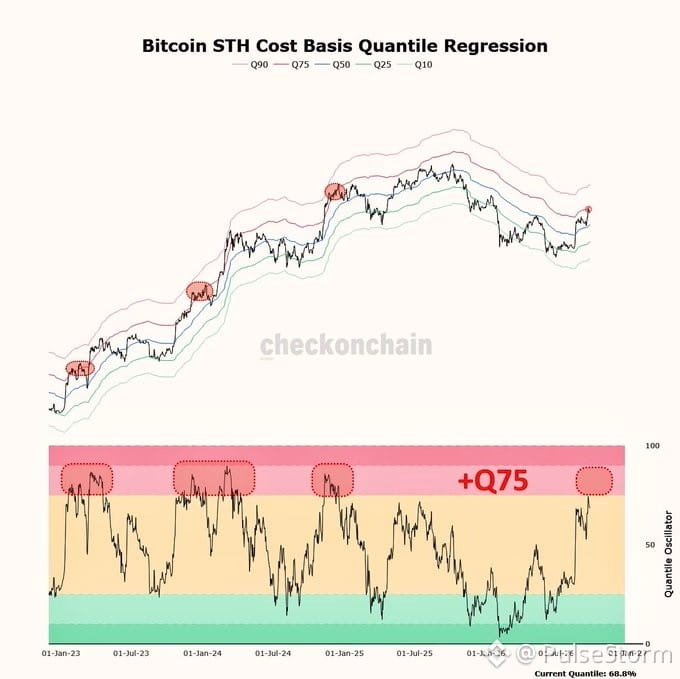
There's ONE indicator that screams when NOT to buy $BTC — and most traders sleep on it.
Short-term holder MVRV Q75.
Here's the setup: when Bitcoin trades above the 75th percentile of short-term holder profit, it doesn't hang there long. History shows price spends almost zero time above that zone.
Why? Because short-term holders are deep green. Profitable holders sell. That selling creates resistance. Resistance creates local tops. And local tops trap everyone who chased the rip.
The trade is dead simple: BUY when short-term holders are underwater. TAKE PROFIT when they're euphoric.
Most do the opposite — buy green, sell red — and that's why most lose.
The indicator already tells you when to act. The only question is whether you're disciplined enough to follow it.
This is the edge. Use it or watch from the sidelines.
There's ONE indicator that screams when NOT to buy $BTC — and most traders sleep on it.
Short-term holder MVRV Q75.
Here's the setup: when Bitcoin trades above the 75th percentile of short-term holder profit, it doesn't hang there long. History shows price spends almost zero time above that zone.
Why? Because short-term holders are deep green. Profitable holders sell. That selling creates resistance. Resistance creates local tops. And local tops trap everyone who chased the rip.
The trade is dead simple: BUY when short-term holders are underwater. TAKE PROFIT when they're euphoric.
Most do the opposite — buy green, sell red — and that's why most lose.
The indicator already tells you when to act. The only question is whether you're disciplined enough to follow it.
This is the edge. Use it or watch from the sidelines.
Short-term holder MVRV Q75.
Here's the setup: when Bitcoin trades above the 75th percentile of short-term holder profit, it doesn't hang there long. History shows price spends almost zero time above that zone.
Why? Because short-term holders are deep green. Profitable holders sell. That selling creates resistance. Resistance creates local tops. And local tops trap everyone who chased the rip.
The trade is dead simple: BUY when short-term holders are underwater. TAKE PROFIT when they're euphoric.
Most do the opposite — buy green, sell red — and that's why most lose.
The indicator already tells you when to act. The only question is whether you're disciplined enough to follow it.
This is the edge. Use it or watch from the sidelines.
1
809
·
--
Verified
TRUMP JUST DECLARED WAR ON A GLOBAL SHIPPING TAX — AND IT'S ABOUT TO GET REAL
Trump told the UN flat out: no global government, no global taxes. His target? The International Maritime Organization's net-zero shipping framework — what he calls "an obscure UN body secretly establishing a first-ever global carbon tax."
He claims it'll spike international shipping costs 10 to 20 percent, maybe more. That's inflation straight to your doorstep.
Here's the setup: The IMO framework forces ships over 5,000 gross tonnage to meet a global fuel standard with carbon pricing attached. Miss the standard? Buy remedial units that feed an IMO Net-Zero Fund. Goal: net zero shipping by 2050.
It passed a preliminary vote 63 to 16 in April 2025. Then the US stepped in hard.
Ahead of the vote, US officials reportedly threatened supporting countries with tariffs, visa restrictions, port fees, and sanctions. The vote got postponed last October. Next attempt to finalize it: December.
Right now, 38 countries explicitly support keeping carbon pricing. 17 oppose it, many of them oil-producing states. The US, Saudi Arabia, and Liberia are pushing for major changes or alternatives.
Supporters call it a "greenhouse gas pricing mechanism," not a tax. Trump calls it a tax. Same mechanism, opposite framing.
December decides which language wins — and whether this thing gets real or gets crushed.
This isn't just policy theater. If this framework goes through, shipping costs spike, inflation ticks up, and supply chains get squeezed. If Trump kills it, he cements his "America First, no global governance" brand.
Watch December. This is where the real vote happens.
TRUMP JUST DECLARED WAR ON A GLOBAL SHIPPING TAX — AND IT'S ABOUT TO GET REAL
Trump told the UN flat out: no global government, no global taxes. His target? The International Maritime Organization's net-zero shipping framework — what he calls "an obscure UN body secretly establishing a first-ever global carbon tax."
He claims it'll spike international shipping costs 10 to 20 percent, maybe more. That's inflation straight to your doorstep.
Here's the setup: The IMO framework forces ships over 5,000 gross tonnage to meet a global fuel standard with carbon pricing attached. Miss the standard? Buy remedial units that feed an IMO Net-Zero Fund. Goal: net zero shipping by 2050.
It passed a preliminary vote 63 to 16 in April 2025. Then the US stepped in hard.
Ahead of the vote, US officials reportedly threatened supporting countries with tariffs, visa restrictions, port fees, and sanctions. The vote got postponed last October. Next attempt to finalize it: December.
Right now, 38 countries explicitly support keeping carbon pricing. 17 oppose it, many of them oil-producing states. The US, Saudi Arabia, and Liberia are pushing for major changes or alternatives.
Supporters call it a "greenhouse gas pricing mechanism," not a tax. Trump calls it a tax. Same mechanism, opposite framing.
December decides which language wins — and whether this thing gets real or gets crushed.
This isn't just policy theater. If this framework goes through, shipping costs spike, inflation ticks up, and supply chains get squeezed. If Trump kills it, he cements his "America First, no global governance" brand.
Watch December. This is where the real vote happens.
Trump told the UN flat out: no global government, no global taxes. His target? The International Maritime Organization's net-zero shipping framework — what he calls "an obscure UN body secretly establishing a first-ever global carbon tax."
He claims it'll spike international shipping costs 10 to 20 percent, maybe more. That's inflation straight to your doorstep.
Here's the setup: The IMO framework forces ships over 5,000 gross tonnage to meet a global fuel standard with carbon pricing attached. Miss the standard? Buy remedial units that feed an IMO Net-Zero Fund. Goal: net zero shipping by 2050.
It passed a preliminary vote 63 to 16 in April 2025. Then the US stepped in hard.
Ahead of the vote, US officials reportedly threatened supporting countries with tariffs, visa restrictions, port fees, and sanctions. The vote got postponed last October. Next attempt to finalize it: December.
Right now, 38 countries explicitly support keeping carbon pricing. 17 oppose it, many of them oil-producing states. The US, Saudi Arabia, and Liberia are pushing for major changes or alternatives.
Supporters call it a "greenhouse gas pricing mechanism," not a tax. Trump calls it a tax. Same mechanism, opposite framing.
December decides which language wins — and whether this thing gets real or gets crushed.
This isn't just policy theater. If this framework goes through, shipping costs spike, inflation ticks up, and supply chains get squeezed. If Trump kills it, he cements his "America First, no global governance" brand.
Watch December. This is where the real vote happens.
2
7
10k
·
--
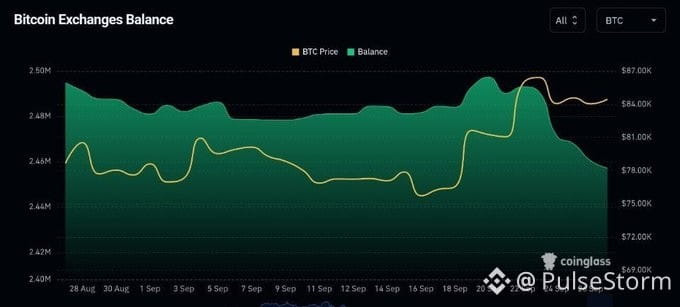
30,000 $BTC just vanished off centralized exchanges in 7 days — that's $2.52 billion straight into cold storage, not bouncing between platforms.
Yeah, profit-taking is happening. But the bigger force? Whales and long-term holders yanking coins permanently off the market.
30,000 $BTC pulled from available supply in one week.
Sellers exit. Accumulators remove even more. The net effect? A market tightening fast.
Supply leaving faster than sellers can replace it — and historically, that equation only resolves one way.
Watch the bid-ask spread tighten. Watch liquidity dry up. Watch the next leg up get violent.
This is the setup.
30,000 $BTC just vanished off centralized exchanges in 7 days — that's $2.52 billion straight into cold storage, not bouncing between platforms.
Yeah, profit-taking is happening. But the bigger force? Whales and long-term holders yanking coins permanently off the market.
30,000 $BTC pulled from available supply in one week.
Sellers exit. Accumulators remove even more. The net effect? A market tightening fast.
Supply leaving faster than sellers can replace it — and historically, that equation only resolves one way.
Watch the bid-ask spread tighten. Watch liquidity dry up. Watch the next leg up get violent.
This is the setup.
Yeah, profit-taking is happening. But the bigger force? Whales and long-term holders yanking coins permanently off the market.
30,000 $BTC pulled from available supply in one week.
Sellers exit. Accumulators remove even more. The net effect? A market tightening fast.
Supply leaving faster than sellers can replace it — and historically, that equation only resolves one way.
Watch the bid-ask spread tighten. Watch liquidity dry up. Watch the next leg up get violent.
This is the setup.
4
1
2.2k
·
--
🚨 SAYLOR JUST FLIPPED THE SCRIPT ON CLARITY
Michael Saylor called the CLARITY Act's death a WIN.
"It wasn't a bill of rights. It was a bill of restrictions."
He said it at Bitcoin Policy Institute days after Senate killed it 49-50.
His read: most crypto lobbying in DC has been about BLOCKING utility, not enabling it. "A lot of the policy is about prohibition."
So what's his move?
Skip restriction bills entirely. Push a "Bill of Digital Rights" instead.
"This is Freedom Tech. Freedom starts with a bill of rights."
His example: let Apple, Google, and Meta issue stablecoins DIRECTLY into iPhones and Android.
"If you were pro-dollar and pro-United States, wouldn't you want that?"
He also torched the de minimis exemption — shrunk to just $10 for digital currency transactions. That threshold KILLS everyday use.
$BTC recovered past $86k the same week he said this.
Saylor's framing is MASSIVE.
CLARITY dying wasn't a loss. It was a bad law that would've codified restriction — stopped before it could.
Now the door's open for a REAL digital rights framework.
This is the narrative shift. Freedom tech over regulatory theater.
TRADE ANGLE:
$BTC holding $86k+ after policy chaos = institutional confidence intact. If Saylor's digital rights push gains traction, we could see another leg up into $90k+.
Watch for Senate commentary and any new bills. Policy clarity (the REAL kind) could be the next catalyst.
Risk: if restrictive bills resurface, we retest $82k support.
But right now? Saylor just gave the bulls a narrative.
LFG 🚀
🚨 SAYLOR JUST FLIPPED THE SCRIPT ON CLARITY
Michael Saylor called the CLARITY Act's death a WIN.
"It wasn't a bill of rights. It was a bill of restrictions."
He said it at Bitcoin Policy Institute days after Senate killed it 49-50.
His read: most crypto lobbying in DC has been about BLOCKING utility, not enabling it. "A lot of the policy is about prohibition."
So what's his move?
Skip restriction bills entirely. Push a "Bill of Digital Rights" instead.
"This is Freedom Tech. Freedom starts with a bill of rights."
His example: let Apple, Google, and Meta issue stablecoins DIRECTLY into iPhones and Android.
"If you were pro-dollar and pro-United States, wouldn't you want that?"
He also torched the de minimis exemption — shrunk to just $10 for digital currency transactions. That threshold KILLS everyday use.
$BTC recovered past $86k the same week he said this.
Saylor's framing is MASSIVE.
CLARITY dying wasn't a loss. It was a bad law that would've codified restriction — stopped before it could.
Now the door's open for a REAL digital rights framework.
This is the narrative shift. Freedom tech over regulatory theater.
TRADE ANGLE:
$BTC holding $86k+ after policy chaos = institutional confidence intact. If Saylor's digital rights push gains traction, we could see another leg up into $90k+.
Watch for Senate commentary and any new bills. Policy clarity (the REAL kind) could be the next catalyst.
Risk: if restrictive bills resurface, we retest $82k support.
But right now? Saylor just gave the bulls a narrative.
LFG 🚀
Michael Saylor called the CLARITY Act's death a WIN.
"It wasn't a bill of rights. It was a bill of restrictions."
He said it at Bitcoin Policy Institute days after Senate killed it 49-50.
His read: most crypto lobbying in DC has been about BLOCKING utility, not enabling it. "A lot of the policy is about prohibition."
So what's his move?
Skip restriction bills entirely. Push a "Bill of Digital Rights" instead.
"This is Freedom Tech. Freedom starts with a bill of rights."
His example: let Apple, Google, and Meta issue stablecoins DIRECTLY into iPhones and Android.
"If you were pro-dollar and pro-United States, wouldn't you want that?"
He also torched the de minimis exemption — shrunk to just $10 for digital currency transactions. That threshold KILLS everyday use.
$BTC recovered past $86k the same week he said this.
Saylor's framing is MASSIVE.
CLARITY dying wasn't a loss. It was a bad law that would've codified restriction — stopped before it could.
Now the door's open for a REAL digital rights framework.
This is the narrative shift. Freedom tech over regulatory theater.
TRADE ANGLE:
$BTC holding $86k+ after policy chaos = institutional confidence intact. If Saylor's digital rights push gains traction, we could see another leg up into $90k+.
Watch for Senate commentary and any new bills. Policy clarity (the REAL kind) could be the next catalyst.
Risk: if restrictive bills resurface, we retest $82k support.
But right now? Saylor just gave the bulls a narrative.
LFG 🚀
577
·
--
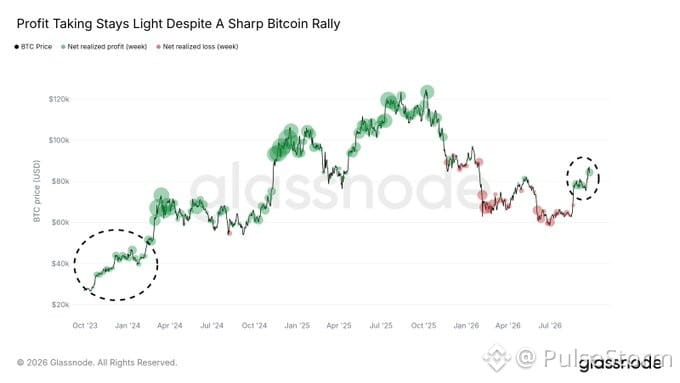
$5.1 billion in realized profits last week.
Sounds massive, right?
Not even close.
These levels mirror late 2023 — way before any cycle top energy.
Real $BTC tops? Profit-taking goes 10x harder. Frantic. Euphoric. Unmistakable.
Right now it's orderly. Measured. Almost boring.
That's not how bull runs die.
That's how they reload.
The top isn't forming.
It's still being built.
Stay positioned. This thing has room to run. 🚀
$5.1 billion in realized profits last week.
Sounds massive, right?
Not even close.
These levels mirror late 2023 — way before any cycle top energy.
Real $BTC tops? Profit-taking goes 10x harder. Frantic. Euphoric. Unmistakable.
Right now it's orderly. Measured. Almost boring.
That's not how bull runs die.
That's how they reload.
The top isn't forming.
It's still being built.
Stay positioned. This thing has room to run. 🚀
Sounds massive, right?
Not even close.
These levels mirror late 2023 — way before any cycle top energy.
Real $BTC tops? Profit-taking goes 10x harder. Frantic. Euphoric. Unmistakable.
Right now it's orderly. Measured. Almost boring.
That's not how bull runs die.
That's how they reload.
The top isn't forming.
It's still being built.
Stay positioned. This thing has room to run. 🚀
1
354
·
--
EU just dropped the blueprint for digital authoritarianism and nobody's freaking out enough.
They want a PASSPORT to access the internet. Not a suggestion. A requirement.
And here's the kicker — they're planning to BLOCK VPNs so you can't dodge it. Read that line again: "The new age verification system cannot be bypassed via VPN."
This isn't theory. This is the trajectory:
• Cash banned above €10k
• $BTC requires ID above €1k
• Privacy coins straight banned
• MiCA wiping out 90% of crypto firms
• Now internet access tied to your passport
Every layer of digital privacy getting stripped in real time.
While the US debates zero cap gains on Bitcoin, Europe's building a system where every click, every transaction, every site you visit is stamped with your identity.
This isn't consumer protection. This is control.
And from a trading lens? This is MASSIVELY bullish for privacy tech, decentralized VPNs, and any project solving for digital freedom. If they're banning the tools, the demand for alternatives goes parabolic.
Watch privacy narratives heat up. $ROSE $SCRT $NYM — anything in the confidential computing or decentralized VPN space could rip if this regulatory wave keeps rolling.
They're not hiding it anymore. And the market's about to price it in.
EU just dropped the blueprint for digital authoritarianism and nobody's freaking out enough.
They want a PASSPORT to access the internet. Not a suggestion. A requirement.
And here's the kicker — they're planning to BLOCK VPNs so you can't dodge it. Read that line again: "The new age verification system cannot be bypassed via VPN."
This isn't theory. This is the trajectory:
• Cash banned above €10k
• $BTC requires ID above €1k
• Privacy coins straight banned
• MiCA wiping out 90% of crypto firms
• Now internet access tied to your passport
Every layer of digital privacy getting stripped in real time.
While the US debates zero cap gains on Bitcoin, Europe's building a system where every click, every transaction, every site you visit is stamped with your identity.
This isn't consumer protection. This is control.
And from a trading lens? This is MASSIVELY bullish for privacy tech, decentralized VPNs, and any project solving for digital freedom. If they're banning the tools, the demand for alternatives goes parabolic.
Watch privacy narratives heat up. $ROSE $SCRT $NYM — anything in the confidential computing or decentralized VPN space could rip if this regulatory wave keeps rolling.
They're not hiding it anymore. And the market's about to price it in.
They want a PASSPORT to access the internet. Not a suggestion. A requirement.
And here's the kicker — they're planning to BLOCK VPNs so you can't dodge it. Read that line again: "The new age verification system cannot be bypassed via VPN."
This isn't theory. This is the trajectory:
• Cash banned above €10k
• $BTC requires ID above €1k
• Privacy coins straight banned
• MiCA wiping out 90% of crypto firms
• Now internet access tied to your passport
Every layer of digital privacy getting stripped in real time.
While the US debates zero cap gains on Bitcoin, Europe's building a system where every click, every transaction, every site you visit is stamped with your identity.
This isn't consumer protection. This is control.
And from a trading lens? This is MASSIVELY bullish for privacy tech, decentralized VPNs, and any project solving for digital freedom. If they're banning the tools, the demand for alternatives goes parabolic.
Watch privacy narratives heat up. $ROSE $SCRT $NYM — anything in the confidential computing or decentralized VPN space could rip if this regulatory wave keeps rolling.
They're not hiding it anymore. And the market's about to price it in.

1
3
3.4k
·
--
LOADED WEEK INCOMING — macro meets crypto and it's all happening at once 🔥
Monday kicks off with JOLTS job openings for August (expectations already low), Q2 GDP final read, and Personal Income/Outlays for August including PCE — the Fed's favorite inflation gauge. This drops right after the 30-year Treasury yield hit its highest since 2004 and the 10-year touched levels last seen in 2007. Rates are screaming and the Fed's watching.
Friday: September jobs report. First Friday of the month, always a mover.
Fed officials are split. Michael Barr says more hikes likely needed. NY Fed's John Williams called another hike "reasonable" by year-end. CME FedWatch now shows October hike odds above 75% — up from roughly 49% a week ago. The market's repricing in real time.
On the crypto side, things are building in parallel. The CFTC's Regulation Crypto Asset Markets proposal is still under White House review. Hyperliquid's new lending product pulled $269M in borrowing on day one and pushed its TVL to parity with Arbitrum. That's real capital moving fast.
$BTC is sitting near $86,000. Rate expectations, PCE data, and the jobs report all land in the same five days. This is the week that decides whether the Fed's "one and done" hike story holds or whether the market has to reprice for more.
TRADE IDEA: If PCE comes in hot and jobs stay strong, expect $BTC to test support around $84,500. If macro softens, we could see a push toward $88,000. Watch the Fed pricing and Treasury yields — they're leading this move. Risk-off if rates spike further. Risk-on if the data cools and hike odds drop. This week sets the tone for Q4.
LOADED WEEK INCOMING — macro meets crypto and it's all happening at once 🔥
Monday kicks off with JOLTS job openings for August (expectations already low), Q2 GDP final read, and Personal Income/Outlays for August including PCE — the Fed's favorite inflation gauge. This drops right after the 30-year Treasury yield hit its highest since 2004 and the 10-year touched levels last seen in 2007. Rates are screaming and the Fed's watching.
Friday: September jobs report. First Friday of the month, always a mover.
Fed officials are split. Michael Barr says more hikes likely needed. NY Fed's John Williams called another hike "reasonable" by year-end. CME FedWatch now shows October hike odds above 75% — up from roughly 49% a week ago. The market's repricing in real time.
On the crypto side, things are building in parallel. The CFTC's Regulation Crypto Asset Markets proposal is still under White House review. Hyperliquid's new lending product pulled $269M in borrowing on day one and pushed its TVL to parity with Arbitrum. That's real capital moving fast.
$BTC is sitting near $86,000. Rate expectations, PCE data, and the jobs report all land in the same five days. This is the week that decides whether the Fed's "one and done" hike story holds or whether the market has to reprice for more.
TRADE IDEA: If PCE comes in hot and jobs stay strong, expect $BTC to test support around $84,500. If macro softens, we could see a push toward $88,000. Watch the Fed pricing and Treasury yields — they're leading this move. Risk-off if rates spike further. Risk-on if the data cools and hike odds drop. This week sets the tone for Q4.
Monday kicks off with JOLTS job openings for August (expectations already low), Q2 GDP final read, and Personal Income/Outlays for August including PCE — the Fed's favorite inflation gauge. This drops right after the 30-year Treasury yield hit its highest since 2004 and the 10-year touched levels last seen in 2007. Rates are screaming and the Fed's watching.
Friday: September jobs report. First Friday of the month, always a mover.
Fed officials are split. Michael Barr says more hikes likely needed. NY Fed's John Williams called another hike "reasonable" by year-end. CME FedWatch now shows October hike odds above 75% — up from roughly 49% a week ago. The market's repricing in real time.
On the crypto side, things are building in parallel. The CFTC's Regulation Crypto Asset Markets proposal is still under White House review. Hyperliquid's new lending product pulled $269M in borrowing on day one and pushed its TVL to parity with Arbitrum. That's real capital moving fast.
$BTC is sitting near $86,000. Rate expectations, PCE data, and the jobs report all land in the same five days. This is the week that decides whether the Fed's "one and done" hike story holds or whether the market has to reprice for more.
TRADE IDEA: If PCE comes in hot and jobs stay strong, expect $BTC to test support around $84,500. If macro softens, we could see a push toward $88,000. Watch the Fed pricing and Treasury yields — they're leading this move. Risk-off if rates spike further. Risk-on if the data cools and hike odds drop. This week sets the tone for Q4.
418
·
--
Verified
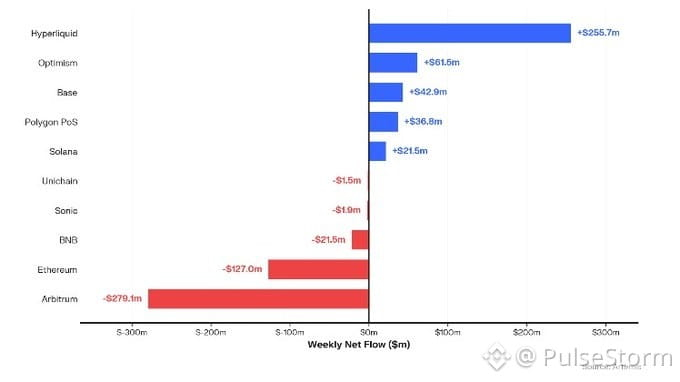
Hyperliquid just dropped native lending September 18 and the numbers are absolutely wild.
$269M borrowed in the first 24 hours. Not tens of millions like Aave v3 on Arbitrum — hundreds of millions. $HYPE ripped to an all-time high of $92.56 the same day.
The setup is clean: pledge $HYPE or $BTC, borrow $USDC or $USDT directly. $HYPE gets you 65% loan-to-value, Bitcoin gets 50%. It's a native primitive, not some margin account hack.
$400M in liquidity was sitting there ready. No bootstrap grind. Within 24 hours, Hyperliquid's Layer 1 TVL hit rough parity with Arbitrum — both near $1.39B. Platform-wide TVL now at $7.095B.
Here's the risk angle: circular borrowing is already happening. Users pledge $HYPE, borrow stables, buy more $HYPE. That amplifies the rally hard — and it'll amplify any correction just as hard.
Only 25 validators securing this. That's a fraction of Ethereum's decentralization, and the infrastructure is still catching up to the scale it just pulled.
Fastest cold-start in DeFi lending history. But the leverage loop is real. If $HYPE holds above $85, the flywheel keeps spinning. If it cracks and momentum breaks, watch for cascading liquidations. This is the trade: ride the hype-fueled rally with tight stops, or wait for the first real shake to fade the over-leveraged longs.
Decisive read: bullish structure while $HYPE holds the breakout, but size your risk for the leverage unwind when it comes.
Hyperliquid just dropped native lending September 18 and the numbers are absolutely wild.
$269M borrowed in the first 24 hours. Not tens of millions like Aave v3 on Arbitrum — hundreds of millions. $HYPE ripped to an all-time high of $92.56 the same day.
The setup is clean: pledge $HYPE or $BTC, borrow $USDC or $USDT directly. $HYPE gets you 65% loan-to-value, Bitcoin gets 50%. It's a native primitive, not some margin account hack.
$400M in liquidity was sitting there ready. No bootstrap grind. Within 24 hours, Hyperliquid's Layer 1 TVL hit rough parity with Arbitrum — both near $1.39B. Platform-wide TVL now at $7.095B.
Here's the risk angle: circular borrowing is already happening. Users pledge $HYPE, borrow stables, buy more $HYPE. That amplifies the rally hard — and it'll amplify any correction just as hard.
Only 25 validators securing this. That's a fraction of Ethereum's decentralization, and the infrastructure is still catching up to the scale it just pulled.
Fastest cold-start in DeFi lending history. But the leverage loop is real. If $HYPE holds above $85, the flywheel keeps spinning. If it cracks and momentum breaks, watch for cascading liquidations. This is the trade: ride the hype-fueled rally with tight stops, or wait for the first real shake to fade the over-leveraged longs.
Decisive read: bullish structure while $HYPE holds the breakout, but size your risk for the leverage unwind when it comes.
$269M borrowed in the first 24 hours. Not tens of millions like Aave v3 on Arbitrum — hundreds of millions. $HYPE ripped to an all-time high of $92.56 the same day.
The setup is clean: pledge $HYPE or $BTC, borrow $USDC or $USDT directly. $HYPE gets you 65% loan-to-value, Bitcoin gets 50%. It's a native primitive, not some margin account hack.
$400M in liquidity was sitting there ready. No bootstrap grind. Within 24 hours, Hyperliquid's Layer 1 TVL hit rough parity with Arbitrum — both near $1.39B. Platform-wide TVL now at $7.095B.
Here's the risk angle: circular borrowing is already happening. Users pledge $HYPE, borrow stables, buy more $HYPE. That amplifies the rally hard — and it'll amplify any correction just as hard.
Only 25 validators securing this. That's a fraction of Ethereum's decentralization, and the infrastructure is still catching up to the scale it just pulled.
Fastest cold-start in DeFi lending history. But the leverage loop is real. If $HYPE holds above $85, the flywheel keeps spinning. If it cracks and momentum breaks, watch for cascading liquidations. This is the trade: ride the hype-fueled rally with tight stops, or wait for the first real shake to fade the over-leveraged longs.
Decisive read: bullish structure while $HYPE holds the breakout, but size your risk for the leverage unwind when it comes.
1
1
1
3.6k
·
--
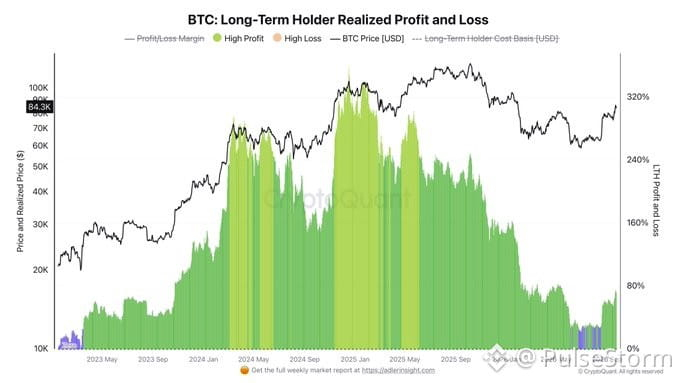
Long-term holders are booking 72% profits right now. Sounds hot until you compare it to December 2024 when they were locking in 350% at the peak. We're sitting at less than a quarter of that previous cycle high.
This is NOT peak distribution. This is patient money taking some off the table but still holding the bulk. 72% realized gains means the smart money is waiting for way higher prices before they actually sell seriously.
The real distribution phase hasn't even started. This is just the warm-up.
Trade idea: If long-term holders aren't dumping yet, that's bullish fuel. Look for dips as reload zones. On $BTC, watch for support around current consolidation levels—any pullback is a chance to add before the next leg. Stop below recent swing low. Target? Wherever those holders finally decide to exit, and we're nowhere near that yet.
72% is not the exit. It's the setup for what comes next.
Long-term holders are booking 72% profits right now. Sounds hot until you compare it to December 2024 when they were locking in 350% at the peak. We're sitting at less than a quarter of that previous cycle high.
This is NOT peak distribution. This is patient money taking some off the table but still holding the bulk. 72% realized gains means the smart money is waiting for way higher prices before they actually sell seriously.
The real distribution phase hasn't even started. This is just the warm-up.
Trade idea: If long-term holders aren't dumping yet, that's bullish fuel. Look for dips as reload zones. On $BTC, watch for support around current consolidation levels—any pullback is a chance to add before the next leg. Stop below recent swing low. Target? Wherever those holders finally decide to exit, and we're nowhere near that yet.
72% is not the exit. It's the setup for what comes next.
This is NOT peak distribution. This is patient money taking some off the table but still holding the bulk. 72% realized gains means the smart money is waiting for way higher prices before they actually sell seriously.
The real distribution phase hasn't even started. This is just the warm-up.
Trade idea: If long-term holders aren't dumping yet, that's bullish fuel. Look for dips as reload zones. On $BTC, watch for support around current consolidation levels—any pullback is a chance to add before the next leg. Stop below recent swing low. Target? Wherever those holders finally decide to exit, and we're nowhere near that yet.
72% is not the exit. It's the setup for what comes next.
58
·
--
Verified
Tom Lee just dropped the actual playbook for why inflation could roll over WITHOUT another rate hike — and it's not hopium, it's mechanics with dates attached 📅
Here's the setup: "If inflation starts to decline, this is not because of the Fed hikes that happened last week. It's because of the policy that's already in place." Translation? The lag is real, and the data could flip faster than the Fed expects.
Three specific catalysts:
1️⃣ September 30 PCE methodology change — could shave 20-40 basis points off the reported year-over-year rate on its own. That's a big technical tailwind.
2️⃣ Tariff effects fading over time — base effects roll off, pressure eases.
3️⃣ Flash-memory price normalization — another input cost cooling.
Now the oil math: If crude stays near $100, it stops adding to inflation six months from now. Why? Year-over-year comp flattens out. No new fuel for the fire unless we push toward $150.
For inflation to actually accelerate from here, Lee says you'd need THREE things to hit at once: housing costs spike, oil runs to $150, and memory prices jump again. If none of that happens? Lower inflation "could eventually allow the Fed to walk back some of that hawkishness."
Here's where it gets tradable 🎯
Historically, peak hawkishness followed by a dovish pivot has predicted rallies in high-beta assets — including $ETH and $SOL. Not a guarantee, but a pattern. And right now, we're sitting at what could be peak hawkish posturing.
The September 30 PCE revision is the first real test. That's the calendar date. That's the falsifiable event. If the number prints softer than expected, we could see a sentiment shift fast.
Trade idea: Watch the PCE print. If it comes in softer, look for a breakout in $ETH above key resistance (around $1,650-$1,700 zone) as a signal that risk-on is back. Stop below the recent low. Risk/reward favors the long side if the data cooperates.
This isn't a hope trade. It's a thesis with dates, mechanics, and a clear invalidation point. Let's see if the data delivers 🔥
Tom Lee just dropped the actual playbook for why inflation could roll over WITHOUT another rate hike — and it's not hopium, it's mechanics with dates attached 📅
Here's the setup: "If inflation starts to decline, this is not because of the Fed hikes that happened last week. It's because of the policy that's already in place." Translation? The lag is real, and the data could flip faster than the Fed expects.
Three specific catalysts:
1️⃣ September 30 PCE methodology change — could shave 20-40 basis points off the reported year-over-year rate on its own. That's a big technical tailwind.
2️⃣ Tariff effects fading over time — base effects roll off, pressure eases.
3️⃣ Flash-memory price normalization — another input cost cooling.
Now the oil math: If crude stays near $100, it stops adding to inflation six months from now. Why? Year-over-year comp flattens out. No new fuel for the fire unless we push toward $150.
For inflation to actually accelerate from here, Lee says you'd need THREE things to hit at once: housing costs spike, oil runs to $150, and memory prices jump again. If none of that happens? Lower inflation "could eventually allow the Fed to walk back some of that hawkishness."
Here's where it gets tradable 🎯
Historically, peak hawkishness followed by a dovish pivot has predicted rallies in high-beta assets — including $ETH and $SOL. Not a guarantee, but a pattern. And right now, we're sitting at what could be peak hawkish posturing.
The September 30 PCE revision is the first real test. That's the calendar date. That's the falsifiable event. If the number prints softer than expected, we could see a sentiment shift fast.
Trade idea: Watch the PCE print. If it comes in softer, look for a breakout in $ETH above key resistance (around $1,650-$1,700 zone) as a signal that risk-on is back. Stop below the recent low. Risk/reward favors the long side if the data cooperates.
This isn't a hope trade. It's a thesis with dates, mechanics, and a clear invalidation point. Let's see if the data delivers 🔥
Here's the setup: "If inflation starts to decline, this is not because of the Fed hikes that happened last week. It's because of the policy that's already in place." Translation? The lag is real, and the data could flip faster than the Fed expects.
Three specific catalysts:
1️⃣ September 30 PCE methodology change — could shave 20-40 basis points off the reported year-over-year rate on its own. That's a big technical tailwind.
2️⃣ Tariff effects fading over time — base effects roll off, pressure eases.
3️⃣ Flash-memory price normalization — another input cost cooling.
Now the oil math: If crude stays near $100, it stops adding to inflation six months from now. Why? Year-over-year comp flattens out. No new fuel for the fire unless we push toward $150.
For inflation to actually accelerate from here, Lee says you'd need THREE things to hit at once: housing costs spike, oil runs to $150, and memory prices jump again. If none of that happens? Lower inflation "could eventually allow the Fed to walk back some of that hawkishness."
Here's where it gets tradable 🎯
Historically, peak hawkishness followed by a dovish pivot has predicted rallies in high-beta assets — including $ETH and $SOL. Not a guarantee, but a pattern. And right now, we're sitting at what could be peak hawkish posturing.
The September 30 PCE revision is the first real test. That's the calendar date. That's the falsifiable event. If the number prints softer than expected, we could see a sentiment shift fast.
Trade idea: Watch the PCE print. If it comes in softer, look for a breakout in $ETH above key resistance (around $1,650-$1,700 zone) as a signal that risk-on is back. Stop below the recent low. Risk/reward favors the long side if the data cooperates.
This isn't a hope trade. It's a thesis with dates, mechanics, and a clear invalidation point. Let's see if the data delivers 🔥
654
·
--
The crowd was CONVINCED $BTC follows global M2 liquidity — until it didn't.
That's when the real pain starts.
Everyone positioned the same way. Everyone leaning one direction. Then the market rips the other way and liquidates the consensus.
M2 matters? Sure. But markets don't pump when everyone's already in. They pump when the crowd capitulates.
Narratives build crowded trades. Crowded trades = violent reversals.
The biggest wins in history came when everyone else was wrong. Think for yourself. Question the obvious. Trade what you see, not what everyone's saying.
The market rewards independent reads and punishes groupthink. Don't be part of the herd getting slaughtered.
Stay sharp. Stay skeptical. And always manage your risk when the crowd's leaning too hard one way.
The crowd was CONVINCED $BTC follows global M2 liquidity — until it didn't.
That's when the real pain starts.
Everyone positioned the same way. Everyone leaning one direction. Then the market rips the other way and liquidates the consensus.
M2 matters? Sure. But markets don't pump when everyone's already in. They pump when the crowd capitulates.
Narratives build crowded trades. Crowded trades = violent reversals.
The biggest wins in history came when everyone else was wrong. Think for yourself. Question the obvious. Trade what you see, not what everyone's saying.
The market rewards independent reads and punishes groupthink. Don't be part of the herd getting slaughtered.
Stay sharp. Stay skeptical. And always manage your risk when the crowd's leaning too hard one way.
That's when the real pain starts.
Everyone positioned the same way. Everyone leaning one direction. Then the market rips the other way and liquidates the consensus.
M2 matters? Sure. But markets don't pump when everyone's already in. They pump when the crowd capitulates.
Narratives build crowded trades. Crowded trades = violent reversals.
The biggest wins in history came when everyone else was wrong. Think for yourself. Question the obvious. Trade what you see, not what everyone's saying.
The market rewards independent reads and punishes groupthink. Don't be part of the herd getting slaughtered.
Stay sharp. Stay skeptical. And always manage your risk when the crowd's leaning too hard one way.
225
·
--
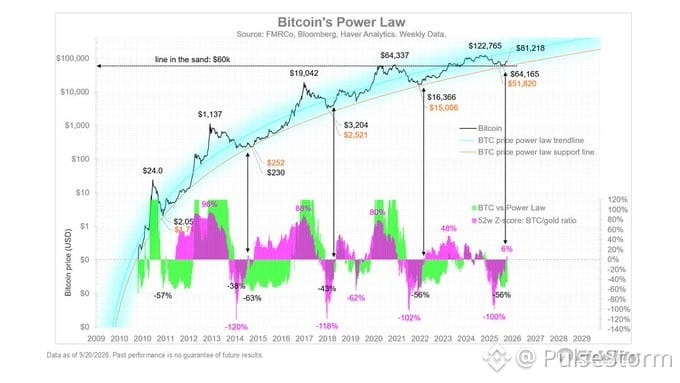
BITCOIN POWER LAW JUST CONFIRMED THE BULL — AND THE MATH DOESN'T LIE 🔥
$BTC held $60K. That wasn't just support. That was the power law floor — the mathematical boundary that's defined every major Bitcoin bottom in history. And it held perfectly.
Here's what happens next:
The power law model — the same framework that's called every major $BTC move with scary precision — is now pointing to $300,000 by 2029. Not as hopium. As a mathematical consequence of where we are in the cycle.
Bitcoin doesn't move randomly. It follows precise mathematical laws that compound over time. The floor was tested. It held. The model stayed intact.
And when the power law model survives a bear market test, the bull that follows executes exactly as the math says it should.
TRADE SETUP:
Bias: Long $BTC on any dip toward $60K–$62K
Entry zone: $60K–$62K
Stop: Below $58K (model invalidation)
Target 1: $80K (next resistance)
Target 2: $100K+ (cycle continuation)
Risk/Reward: 3:1 minimum. This is the kind of setup the math hands you once a cycle.
$300K by 2029. The power law already told you. Most people just weren't listening. Now the trade is live. 🚀
BITCOIN POWER LAW JUST CONFIRMED THE BULL — AND THE MATH DOESN'T LIE 🔥
$BTC held $60K. That wasn't just support. That was the power law floor — the mathematical boundary that's defined every major Bitcoin bottom in history. And it held perfectly.
Here's what happens next:
The power law model — the same framework that's called every major $BTC move with scary precision — is now pointing to $300,000 by 2029. Not as hopium. As a mathematical consequence of where we are in the cycle.
Bitcoin doesn't move randomly. It follows precise mathematical laws that compound over time. The floor was tested. It held. The model stayed intact.
And when the power law model survives a bear market test, the bull that follows executes exactly as the math says it should.
TRADE SETUP:
Bias: Long $BTC on any dip toward $60K–$62K
Entry zone: $60K–$62K
Stop: Below $58K (model invalidation)
Target 1: $80K (next resistance)
Target 2: $100K+ (cycle continuation)
Risk/Reward: 3:1 minimum. This is the kind of setup the math hands you once a cycle.
$300K by 2029. The power law already told you. Most people just weren't listening. Now the trade is live. 🚀
$BTC held $60K. That wasn't just support. That was the power law floor — the mathematical boundary that's defined every major Bitcoin bottom in history. And it held perfectly.
Here's what happens next:
The power law model — the same framework that's called every major $BTC move with scary precision — is now pointing to $300,000 by 2029. Not as hopium. As a mathematical consequence of where we are in the cycle.
Bitcoin doesn't move randomly. It follows precise mathematical laws that compound over time. The floor was tested. It held. The model stayed intact.
And when the power law model survives a bear market test, the bull that follows executes exactly as the math says it should.
TRADE SETUP:
Bias: Long $BTC on any dip toward $60K–$62K
Entry zone: $60K–$62K
Stop: Below $58K (model invalidation)
Target 1: $80K (next resistance)
Target 2: $100K+ (cycle continuation)
Risk/Reward: 3:1 minimum. This is the kind of setup the math hands you once a cycle.
$300K by 2029. The power law already told you. Most people just weren't listening. Now the trade is live. 🚀
3
5
6.7k
Log in to explore more content
Join global crypto users on Binance Square
⚡️ Get latest and useful information about crypto.
💬 Trusted by the world’s largest crypto exchange.
👍 Discover real insights from verified creators.
Email / Phone number
Trending Topics
NvidiaApproves$150BBuyback
271 views
13 Discussing
#NvidiaApproves$150BBuyback
🚨 NVIDIA JUST DROPPED A $150 BILLION BUYBACK!
NVIDIA has approved an additional $150B share-repurchase authorization — the largest buyback increase in its history. 🔥
💰 Total remaining buyback capacity: $235B
🤖 Driven by massive AI demand
📈 Program expected to run through fiscal 2028
⚡ NVDA shares jumped after the announcement
This is a huge signal that NVIDIA continues to generate enough cash to invest heavily in AI while returning capital to shareholders.
But the big question for markets:
Will NVIDIA's massive buyback fuel another AI-stock rally? 👀
#NVIDIA #Aİ #stockmarket
Faizan Crypto Learner
·0 Likes
·7 views
OpenAIDelaysGPT6.1OverSafetyIssues
906 views
64 Discussing
AMDToAcquireWorldLabsFor$8.2B
103 views
16 Discussing