
Oranges-
38 Posts

Oranges-
Report
Block User
一半 Crypto,一半烟火气。关注市场,也关注生活。咖啡、美食、烘焙,偶尔吃瓜。认真思考,随性表达。

BNB Holder
High-Frequency Trader
4.9 Years
49 Following
37 Followers
16 Liked
Posts
·
--
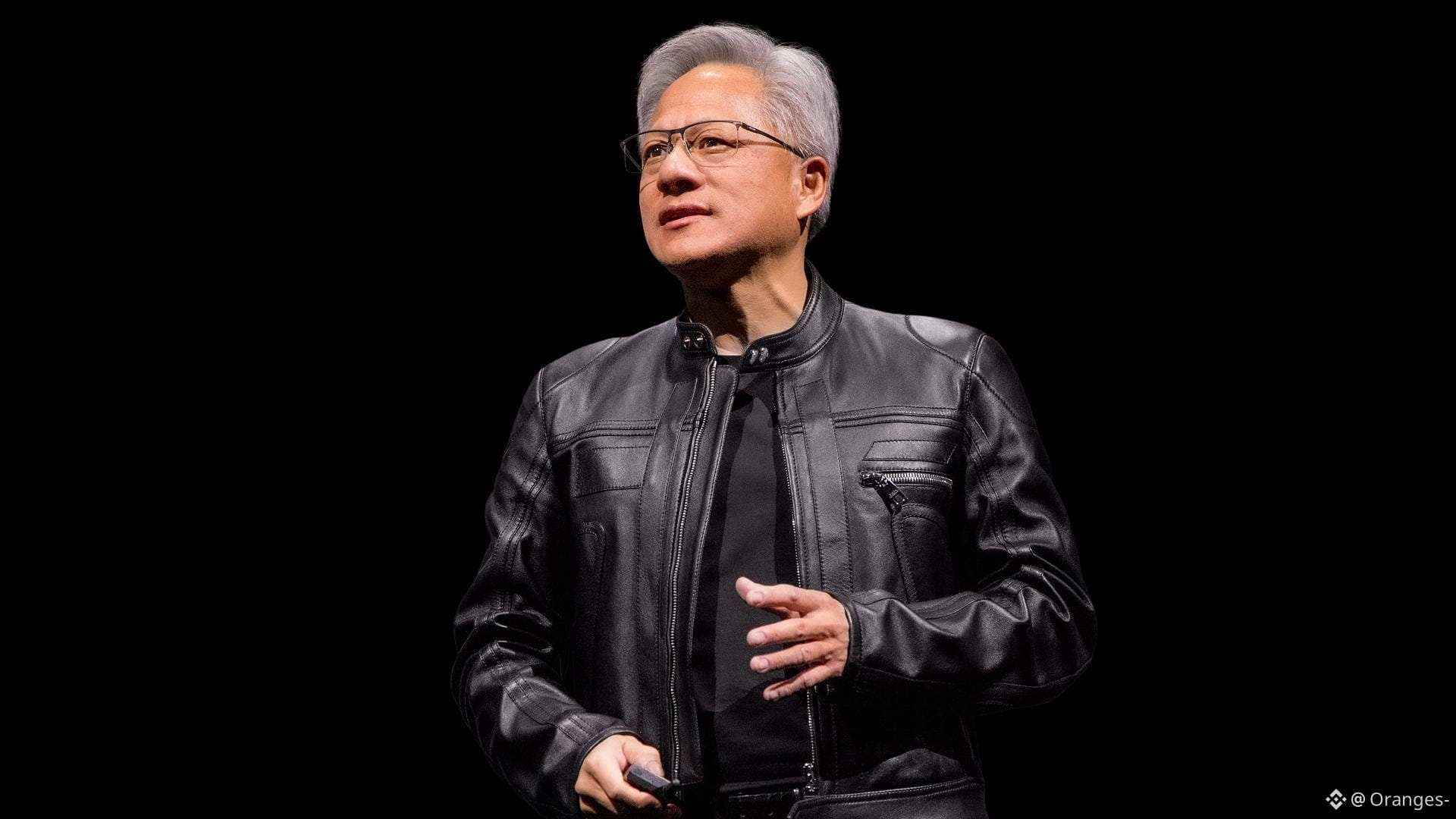
Huang Renxun has resigned, but I believe the real reason he was forced to leave was probably not just an extramarital affair.
On November 12, Nvidia announced that Huang Renxun had resigned as CEO, president, and director, and CFO Colette Kress will temporarily take over.
A person who founded Nvidia with his own hands, led it for 33 years, and brought the company to the pinnacle of the global AI industry leaving in this way is indeed deeply regrettable.
But if we simply reduce it to infidelity, we may be underestimating the complexity of the matter.
Huang Renxun has already admitted marital infidelity, while the foreign intelligence concerns reported by the media, as well as close relationships between superiors and subordinates within the company, are still unverified.
The issue is that Nvidia is not an ordinary company. It controls key technologies in the global AI industry and sits in a sensitive position in the technological competition between China and the United States.
Once the CEO's private relationships may involve trade secrets, national security, or conflicts of interest, they are no longer just family matters.
This also reflects some differences in corporate governance between China and the West.
In China, public opinion often focuses more on entrepreneurs' personal morality, family responsibilities, and whether merits and faults can be evaluated separately.
By contrast, major publicly listed companies in the United States are more likely to assess the risks posed by such private behavior from the perspectives of compliance systems, power relations, board responsibilities, and shareholder interests.
This is not about who is more conservative, but about whether private behavior crosses the boundaries of corporate governance.
Of course, the specific reason for his departure still needs to await the results of the investigation, and unverified accusations cannot be treated as facts.
What I think is most worth considering is this: if someone has contributed enormously to a company, does that mean he can stand above the system?
Huang Renxun's business achievements are beyond doubt. But a company worth trillions of dollars cannot place its future entirely on its founder.
For the board, keeping him is risky; letting him go also comes at a huge cost.
And for investors, rather than continuing to discuss his private life, they should be more concerned about Nvidia's next strategic direction, customer confidence, and management execution.
Great entrepreneurs can create a great company, but a truly great company should be able to endure the departure of its founder.
#黄仁勋 #NVIDIA #英伟达 #Aİ
1
2.4k
·
--
Bullish
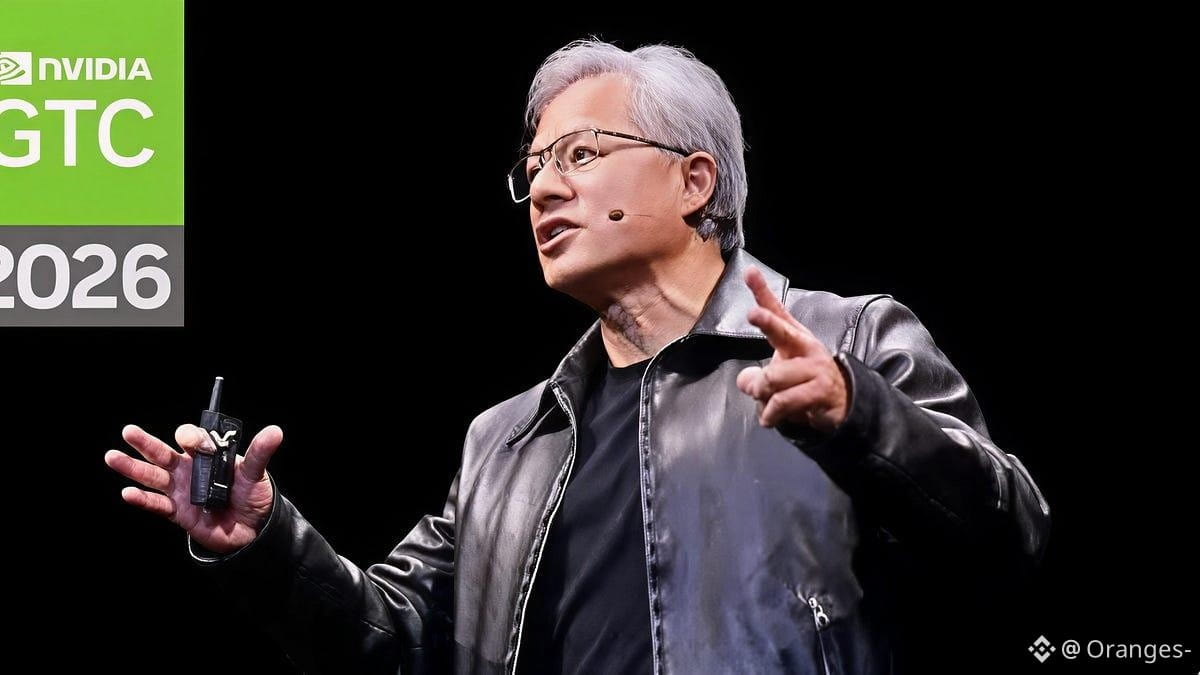
Anthropic is about to go public, but rather than chase the IPO hype, I’m now more bullish on Nvidia.
Anthropic is reportedly targeting an IPO price of $70–$78 per share, implying a valuation close to $1 trillion. That price has made me rethink: Which is more valuable—the potential of model companies, or the profits from computing power that have already materialized?
I personally lean toward the latter:
{future}(NVDAUSDT)
First, the battle among AI models hasn’t been decided, but companies selling computing power are already making money.
Anthropic, OpenAI, and Google are still competing for users and enterprise customers. Models keep improving, while price competition is getting more intense.
Model companies need to keep investing in training and inference, so revenue growth doesn’t necessarily translate into profit growth.
Nvidia, by contrast, has already established a mature business model. No matter which company leads in models, the AI industry will still need massive computing power.
Of course, Google’s TPUs, AMD, and companies developing their own chips are challenging Nvidia. But so far, this competition hasn’t changed Nvidia’s important position in the AI computing market.
Second, Anthropic’s IPO could give the entire AI sector a reason to reassess valuations.
If a model company that has yet to achieve stable profitability can secure a valuation close to $1 trillion, does Nvidia—which has already achieved profitability at scale—still have room for a revaluation?
That’s the question I’m watching.
But we can’t ignore that Nvidia’s market capitalization of around $4 trillion already reflects high growth expectations.
What will really determine its upside isn’t whose valuation is higher, but whether future profit growth can exceed the expectations already priced in by the market.
Third, policy changes following the U.S. midterm elections could further affect how profits are distributed across the AI industry.
AI regulation, restrictions on advanced chip exports, energy supply, and data center construction could all be affected by future policy changes.
Model companies face regulatory pressure and the costs of investing in computing power, while Nvidia faces export policies, customer capital spending, and competition from in-house chips.
Anthropic represents how much value AI could create in the future; Nvidia represents how much profit AI has already generated.
Both companies have potential, and both carry valuation risks.
But at this stage, I personally would rather pay for profits that have already materialized and could continue to grow than pay too much for potential that has yet to materialize.
#Anthropic #NVIDIA #Aİ #美股 #半导体
Anthropic is about to go public, but rather than chase the IPO hype, I’m now more bullish on Nvidia.
Anthropic is reportedly targeting an IPO price of $70–$78 per share, implying a valuation close to $1 trillion. That price has made me rethink: Which is more valuable—the potential of model companies, or the profits from computing power that have already materialized?
I personally lean toward the latter:
First, the battle among AI models hasn’t been decided, but companies selling computing power are already making money.
Anthropic, OpenAI, and Google are still competing for users and enterprise customers. Models keep improving, while price competition is getting more intense.
Model companies need to keep investing in training and inference, so revenue growth doesn’t necessarily translate into profit growth.
Nvidia, by contrast, has already established a mature business model. No matter which company leads in models, the AI industry will still need massive computing power.
Of course, Google’s TPUs, AMD, and companies developing their own chips are challenging Nvidia. But so far, this competition hasn’t changed Nvidia’s important position in the AI computing market.
Second, Anthropic’s IPO could give the entire AI sector a reason to reassess valuations.
If a model company that has yet to achieve stable profitability can secure a valuation close to $1 trillion, does Nvidia—which has already achieved profitability at scale—still have room for a revaluation?
That’s the question I’m watching.
But we can’t ignore that Nvidia’s market capitalization of around $4 trillion already reflects high growth expectations.
What will really determine its upside isn’t whose valuation is higher, but whether future profit growth can exceed the expectations already priced in by the market.
Third, policy changes following the U.S. midterm elections could further affect how profits are distributed across the AI industry.
AI regulation, restrictions on advanced chip exports, energy supply, and data center construction could all be affected by future policy changes.
Model companies face regulatory pressure and the costs of investing in computing power, while Nvidia faces export policies, customer capital spending, and competition from in-house chips.
Anthropic represents how much value AI could create in the future; Nvidia represents how much profit AI has already generated.
Both companies have potential, and both carry valuation risks.
But at this stage, I personally would rather pay for profits that have already materialized and could continue to grow than pay too much for potential that has yet to materialize.
#Anthropic #NVIDIA #Aİ #美股 #半导体


341
·
--
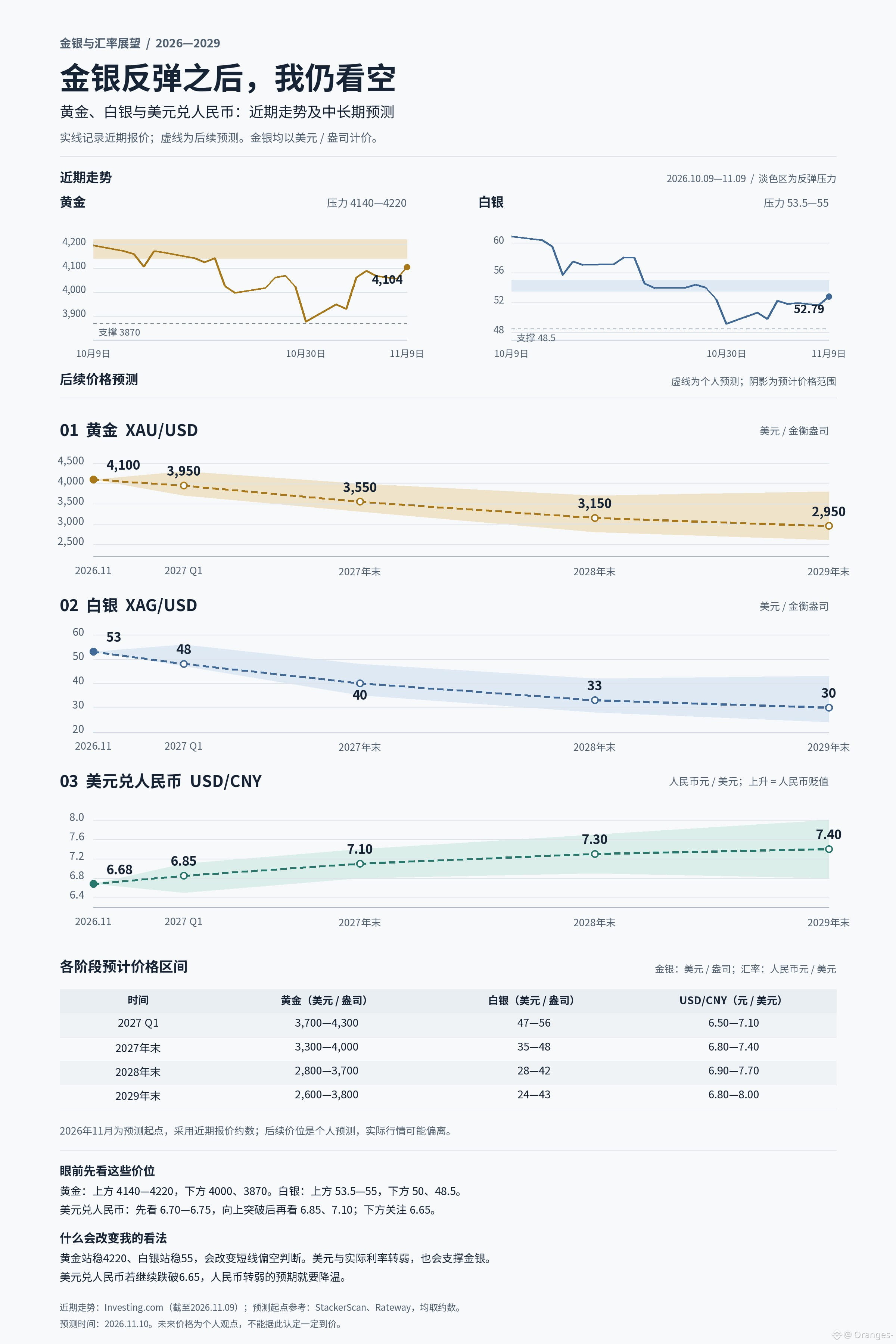
Silver has rebounded to $53, but I’m still bearish. The same goes for gold.
Silver was still at $60.83 on October 9, fell to around $49 at the end of October, and was quoted at $52.79 on November 9. This rebound has recovered some of the losses, but prices are still a long way from their October levels. I’m more inclined to see it as a recovery after the decline.
First, watch $53.5–55 on the upside. If prices can’t break through this area, they could return to around $50 and $48.5. If $48.5 gives way, the next level to watch is $47; if gold also continues to weaken, silver could return to around $40.
Gold’s rebound has been somewhat stronger than silver’s. Its mid-October high was close to $4,220, and it fell to a low of $3,870 at the end of October, before recovering to around $4,104 on November 9. Resistance lies at $4,140–4,220 for now. If gold can’t reclaim this range, I still lean toward $4,000 first, followed by $3,870. If the latter level is breached, the medium-term outlook points toward the $3,500 area.
The gold-silver ratio also rose from about 69 on October 9 to 78 on November 9. Silver has clearly underperformed gold. If gold’s current rebound comes to an end, silver could face greater downward pressure.
Looking back at the charts since 2010, I’m more concerned that the duration of this correction may be underestimated. From 2011 to 2015, gold went through a decline that lasted several years. The current rebound isn’t enough to make me change my view and call this the start of a new bull market.
Looking ahead, the U.S. dollar and real interest rates remain key factors. On October 28, the Fed kept its policy rate at 3.75%–4.00%, with two members still advocating a rate hike. If real returns on U.S. dollar assets remain attractive, the correction in gold and silver could drag on longer.
As for the yuan, I expect it to weaken in the next phase. The dollar is currently around 6.68 yuan. Over the past few months, it fell from around 6.74 to 6.65, meaning the yuan had been appreciating. Next, watch whether the dollar-yuan exchange rate can move back above 6.70–6.75, followed by 6.85 and 7.10. If it continues to fall below 6.65, I’ll temper my expectations for the yuan to weaken.
My current estimates are: for the first quarter of 2027, gold around $3,950, silver around $48, and the dollar-yuan exchange rate at 6.85; by the end of 2027, I expect 3,550, 40, and 7.10, respectively. If the correction continues into 2028–2029, gold could return to around $3,000, silver could fall to $30–35, and the dollar-yuan exchange rate could reach 7.3–7.4.
#黄金 #白银 #美元 #人民币
545
·
--
NVIDIA’s toughest competitor may be its own customer.
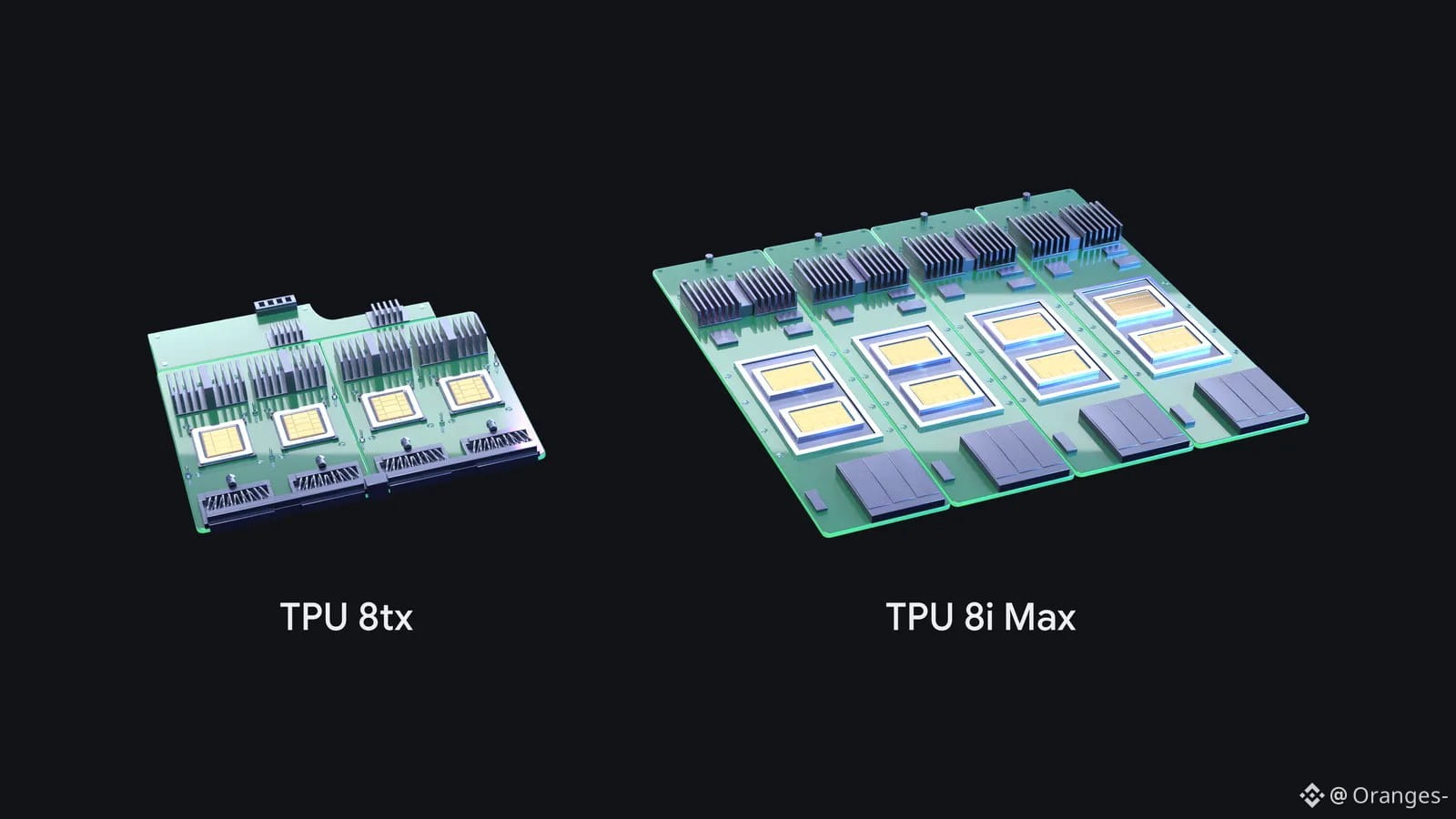
On November 9, Google unveiled two new TPU systems:
🔹 8tx: Designed for confidential computing to protect sensitive data.
🔹 8i Max: Dual-TPU packaging, with twice the computing power, SRAM capacity, and HBM bandwidth of a single 8i.
What really matters isn’t the specs—it’s that Google is evolving from a buyer of AI computing power into a chip designer and supplier.
In the past, tech giants competed to see who could buy more GPUs.
Now, they’re starting to compete to see who can rely less on NVIDIA.
Of course, the CUDA ecosystem remains NVIDIA’s moat.
But its toughest competitors may not be other chip companies—they may be its biggest customers, with plenty of money, technical expertise, and enormous AI needs.
Will the future of AI computing be dominated by GPUs, or will specialized chips flourish?
#AI #Google #NVIDIA #TPU
295
·
--
Why does the same on-chain transfer sometimes complete in seconds, but sometimes take a long time?
When people use blockchain for the first time, they often have a question:
Why is the same kind of transfer sometimes fast, but sometimes takes a long time?
One reason is that blockchain networks have limited transaction-processing capacity.
When many users submit transactions at the same time, the network can become congested.
On some networks that use competitive fee mechanisms, transactions with higher fees may be more likely to be processed first.
But there’s another easily confused issue:
A transaction being included in a block doesn’t necessarily mean that all recipients consider it to have met their final confirmation requirements.
Different blockchains have different consensus mechanisms, finality designs, and transaction confirmation rules.
Exchanges may also set their own deposit confirmation thresholds.
So if a block explorer shows that a transaction succeeded, but your platform balance hasn’t been updated yet, it doesn’t necessarily mean your assets are lost.
First, check the transaction hash, target network, recipient address, and the number of confirmations required by the platform.
The speed of a blockchain transfer isn’t just about how fast the network is; it also depends on how you define “complete.”
#Blockchain #OnChainTransfers
1
71
·
--
The riskiest thing about public Wi-Fi may not be a password that’s too simple
There’s a common misconception when connecting to public Wi-Fi at a café:
If the network has a password, it must be safe.
Not necessarily.
If many customers share the same password, unfamiliar devices may still be able to join the same network.
Fake hotspots with similar names are an even bigger concern.
For example, the real network might be called Coffee_Guest, while someone creates a Coffee_Guest_Free.
You may think you’re connecting to the café’s network, when in fact you could be joining one controlled by an attacker.
That said, modern HTTPS encryption protects much of your regular web traffic. Connecting to public Wi-Fi doesn’t automatically mean your passwords will be stolen.
The habits worth building are checking the network name, not ignoring certificate warnings, and turning off automatic connections you don’t need.
For important accounts, you can also choose a trusted mobile network instead.
#NetworkSecurity #WiFiSecurity #CyberSecurity #Privacy
135
·
--
Why doesn’t the trading volume shown by an exchange equal real buy-side demand?
When a token’s 24-hour trading volume suddenly surges, many people’s first reaction is:
Is a big player entering the market?
But trading volume alone can’t answer that question.
Every trade has both a buyer and a seller.
If someone makes an aggressive market buy, someone else provides the liquidity to sell.
So an increase in trading volume only indicates that trading activity has picked up.
It doesn’t directly prove that there’s a net inflow of funds, nor does it prove that the price will rise.
What’s more, different trading platforms may use different methods to calculate volume, vary in liquidity quality, and differ in their ability to detect abnormal trading.
Trading volume is a thermometer for market activity, not a compass for the direction of funds.
When researching the market, it’s best to look at price movements, order book depth, trade composition, and other information together.
Don’t mistake a single number for the whole market story.
#Cryptocurrency #TradingVolume #Crypto
122
·
--
If a token has a market cap of $1 billion, is it really worth only $1 billion?
When looking at crypto projects, two figures are often confused.
One is circulating market cap, and the other is fully diluted valuation (FDV).
Suppose a token is priced at $10, with 10 million tokens currently in circulation and a total supply of 100 million.
Its circulating market cap is $100 million.
Its FDV, based on the total supply, is $1 billion.
The two figures differ by a factor of 10. That doesn’t mean the price is bound to fall tenfold, but it does remind you that a large number of tokens have yet to enter circulation.
When analyzing a project, you should look beyond the price and understand its supply, unlock schedule, actual demand, and token allocation.
The market won’t automatically offer you tokens at a bargain just because a number looks cheap.
#Cryptocurrency #TokenEconomics #Crypto #Tokenomics
113
·
--
Some people study the principles of making money, while others study the social circles of money-making gurus.
Some people study why businesses succeed, while others study what time successful people wake up every day.
The former seek causes and effects; the latter imitate appearances.
What truly matters has never been what successful people did, but why they did it.
Without understanding the principles, even the most abundant techniques may amount to nothing more than luck.
38
·
--
Tesla driver assistance approved in more European countries
On October 26, Latvia became the 10th country in Europe to approve Tesla’s driver assistance software.
Slovakia also approved it earlier this month.
But a Reuters test-drive report from the region noted one detail:
Drivers still need to take over promptly in some complex road conditions, including when encountering closed roadblocks.
The most misleading thing about driver assistance is that its name can make it sound as though the car can think for itself.
The technology’s progress is encouraging, but the person behind the wheel still needs to stay alert.
Approval in some European countries does not mean the entire EU has fully authorized it.
{future}(TSLAUSDT)
Tesla driver assistance approved in more European countries
On October 26, Latvia became the 10th country in Europe to approve Tesla’s driver assistance software.
Slovakia also approved it earlier this month.
But a Reuters test-drive report from the region noted one detail:
Drivers still need to take over promptly in some complex road conditions, including when encountering closed roadblocks.
The most misleading thing about driver assistance is that its name can make it sound as though the car can think for itself.
The technology’s progress is encouraging, but the person behind the wheel still needs to stay alert.
Approval in some European countries does not mean the entire EU has fully authorized it.
124
·
--
Could chip exports fall by $100 billion?
On October 27, a stress-scenario analysis by the Bank of Korea drew attention.
If U.S. tech giants cut their investment in AI infrastructure next year, South Korea’s semiconductor exports could be $50 billion to $100 billion lower than previously forecast.
Under this pessimistic scenario, South Korea’s GDP growth in 2027 could be reduced by about 0.4 percentage points.
Note that this is a risk simulation, not an export collapse that has already happened.
When the memory chip market is booming, the question most easily overlooked is: if major customers suddenly cut their purchases, who will absorb the new capacity?
62
·
--
Is it really safe to keep important files on just one SSD?
Many people buy a portable SSD and assume their photos and documents are finally safe.
But drives can fail or get lost, and files can also be accidentally deleted or affected by ransomware.
The key thing to remember is the “3-2-1 rule” of backups:
Keep 3 copies of your data.
Use 2 different types of storage media.
Keep at least 1 copy off-site or in a separate location.
Backing up isn’t just copying files somewhere else—it’s making sure you have a fallback if something goes wrong.
This is especially worth doing properly for family photos and important work files.
50
·
--
When paying by card abroad, don’t rush to choose yuan
When you pay by card overseas, some payment terminals may ask:
Would you like to pay in the local currency or convert the amount to yuan?
Many people instinctively choose yuan because the amount seems easier to understand.
But this may trigger dynamic currency conversion (DCC), where the merchant or payment provider sets the exchange rate. The actual cost may not be favorable.
A safer habit: first compare the costs of paying in the local currency.
Also check whether your bank card charges a foreign transaction fee.
One of the easiest ways to spend more than expected while traveling abroad isn’t buying something overpriced—it’s accidentally pressing the wrong option at checkout.
2
2
1.8k
·
--
What’s most likely to make you impulse-buy during Singles’ Day isn’t the price—it’s “limited-time discounts” and “only two hours left.”
Here’s a simple tip:
Check the final price first, then compare it with the recent price of the same item, and finally confirm the shipping costs, freebies, and return policy.
If you spend half an hour figuring out the discount rules and end up paying more than usual, that’s not bargain hunting—it’s a math competition. 😂
61
·
--
Verified
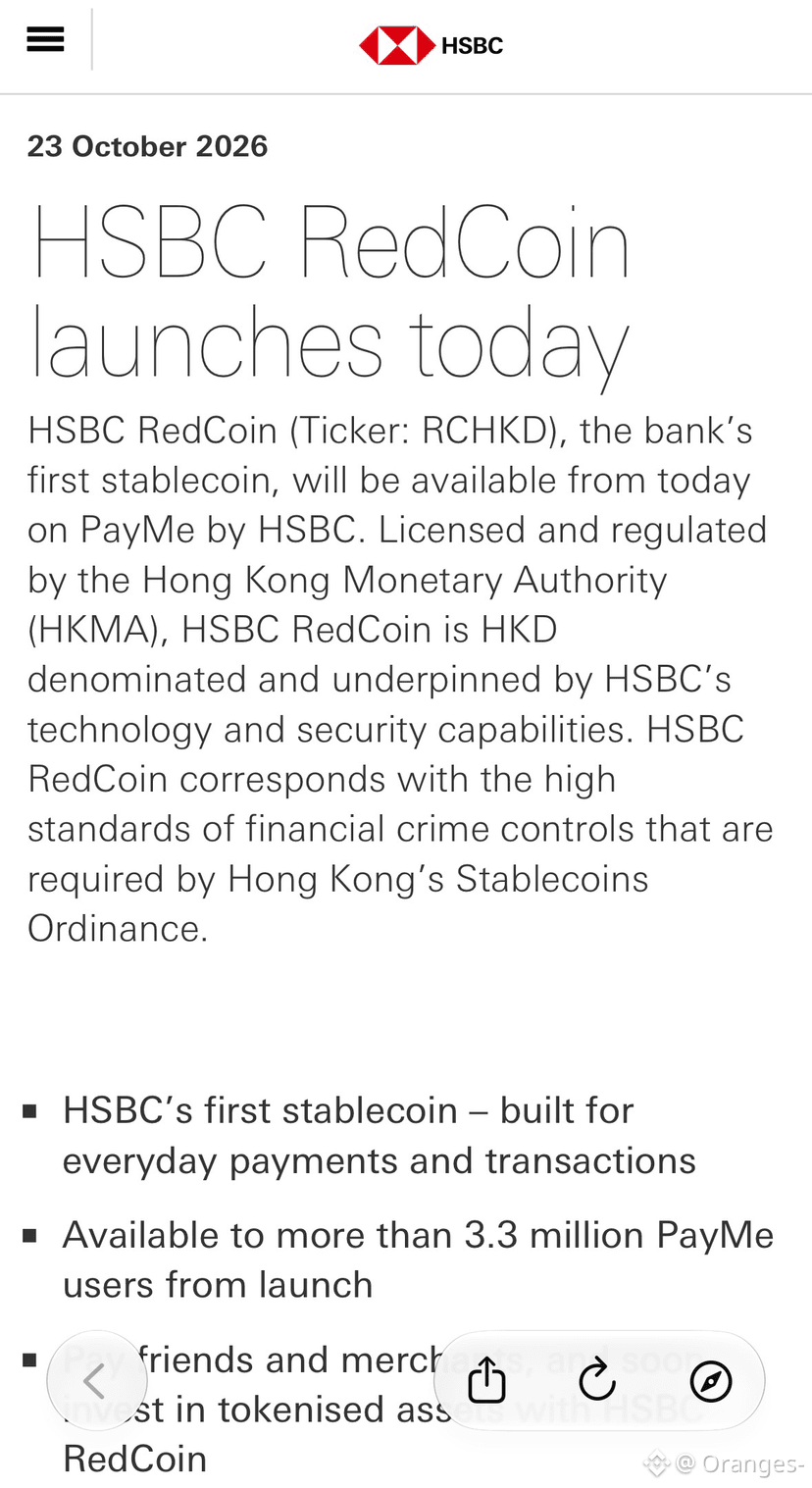
HSBC brings an HKD stablecoin to its payment app
On October 23, HSBC officially launched RedCoin, an HKD stablecoin.
Over the next few days, more than 3.3 million PayMe users will gradually be able to set up wallets for personal transfers and merchant payments.
Stablecoins may go mainstream not by asking everyone to learn Web3 first, but by keeping the payment experience as familiar as possible.
Of course, being issued by a bank does not mean there are no risks.
HSBCUS-1.07%
225
·
--
Nokia to announce earnings on October 22: Third-quarter sales to AI and cloud customers rose 123% year over year.
AI data centers are about more than GPUs and HBM.
The more computing power is concentrated, the more important data transfer between servers becomes.
While everyone is scrambling for compute chips, networking equipment makers aren't sitting idle either.
{future}(NOKUSDT)
Nokia to announce earnings on October 22: Third-quarter sales to AI and cloud customers rose 123% year over year.
AI data centers are about more than GPUs and HBM.
The more computing power is concentrated, the more important data transfer between servers becomes.
While everyone is scrambling for compute chips, networking equipment makers aren't sitting idle either.
AI data centers are about more than GPUs and HBM.
The more computing power is concentrated, the more important data transfer between servers becomes.
While everyone is scrambling for compute chips, networking equipment makers aren't sitting idle either.
59
·
--
SK Hynix announced on October 23 that it had stopped evaluating a U.S. IPO for its NAND and SSD subsidiary Solidigm.
The reason is not that demand for storage has disappeared, but volatility in capital markets and disappointing share-price performance.
The company still needs funds to expand capacity.
Strong demand for AI storage does not mean capital markets are willing to buy in at any time.
{future}(SKHYNIXUSDT)
SK Hynix announced on October 23 that it had stopped evaluating a U.S. IPO for its NAND and SSD subsidiary Solidigm.
The reason is not that demand for storage has disappeared, but volatility in capital markets and disappointing share-price performance.
The company still needs funds to expand capacity.
Strong demand for AI storage does not mean capital markets are willing to buy in at any time.
The reason is not that demand for storage has disappeared, but volatility in capital markets and disappointing share-price performance.
The company still needs funds to expand capacity.
Strong demand for AI storage does not mean capital markets are willing to buy in at any time.
68
·
--
On October 21, the U.S. Office of the Comptroller of the Currency issued a final rule on stablecoin regulation, covering requirements for issuers, reserve assets, redemptions, and risk management.
The rule is scheduled to take effect on January 18, 2027.
This does not prove that stablecoins are now risk-free.
What really matters is the standards issuers will have to meet when managing reserves, and whether users will be able to redeem their stablecoins smoothly.
For crypto to become part of everyday payments, clear rules matter more than loud slogans.

1
80
·
--
Solana has just completed a major upgrade.
On October 21, the Alpenglow consensus protocol was officially activated on mainnet.
According to information released by core development team Anza, the new protocol aims to reduce transaction finality time from around 12.8 seconds to approximately 150 milliseconds.
What does that mean?
150 milliseconds is about 0.15 seconds.
But one thing needs to be made clear:
A transaction being seen by the network does not mean it has reached finality.
Finality means that, under the protocol rules, the likelihood of a transaction being reverted has fallen below the network’s defined finality threshold.
This is especially important for exchange deposits, on-chain payments, and applications that require fast settlement.
However, 150 milliseconds is the new protocol’s target performance. It should not be taken to mean that all transactions, in every network environment, are already consistently reaching that speed.
And faster finality does not mean that network congestion, application failures, or security risks have all disappeared.
I think what’s really worth paying attention to with this upgrade isn’t where the price of SOL will go.
It’s that:
As blockchain finality times enter the millisecond range, the technology has moved a step closer to the kind of responsiveness expected of everyday internet applications.
A technical upgrade is no guarantee of a price increase.
But it could change what developers are willing to build on this chain.
159
·
--
When you see “$1 billion liquidated in 24 hours,” don’t rush to assume someone lost $1 billion
A frightening headline often pops up in crypto news:
“$1 billion liquidated in 24 hours!”
Many people’s first reaction is:
Oh no, the market just lost another $1 billion.
But there’s an easily confused concept here.
The liquidation amount usually refers to the notional value of contracts that were forcibly closed. It is not the same as the traders’ actual losses.
Here’s a simple example.
Someone puts up $1,000 in margin and uses 10x leverage to open a position worth $10,000.
If the entire position is forcibly closed, the notional liquidation amount reported could be $10,000.
But that doesn’t mean they actually lost $10,000 in cash.
Their actual loss depends on the margin, entry price, closing price, fees, and how their other positions are structured.
So when I see huge liquidation figures, I care more about three questions:
Were longs or shorts liquidated?
What methodology was used to calculate the liquidation amount?
Were there consecutive forced liquidations?
The scarier the number, the more important it is to first understand what it’s actually measuring.
The crypto market is never short on excitement.
What’s in short supply are people who can separate excitement from facts.
209
Log in to explore more content
Join global crypto users on Binance Square
⚡️ Get latest and useful information about crypto.
💬 Trusted by the world’s largest crypto exchange.
👍 Discover real insights from verified creators.
Email / Phone number
Trending Topics
HuangExitNvidiaStrategyInFocus
55,485 views
765 Discussing
STOCKS | Nvidia’s Jensen Huang Resigns, Colette Kress Named as Interim CEO
Binance News
·20 Likes
·27.8k views
AnthropicRejectsIPODelayValuationinQuestion
639,607 views
5,051 Discussing
BitMineReports$6.3BNetLossForFiscal2026
6,462 views
94 Discussing