
解夫BTC
560 Posts

解夫BTC
Report
Block User
独立交易员|BTC / 美股 / 黄金白银
看流动性、风险偏好、关键位置和失效点📈
Frequent Trader
2.7 Years
63 Following
860 Followers
733 Liked
Posts
All
Quotes
Live
·
--
Bearish
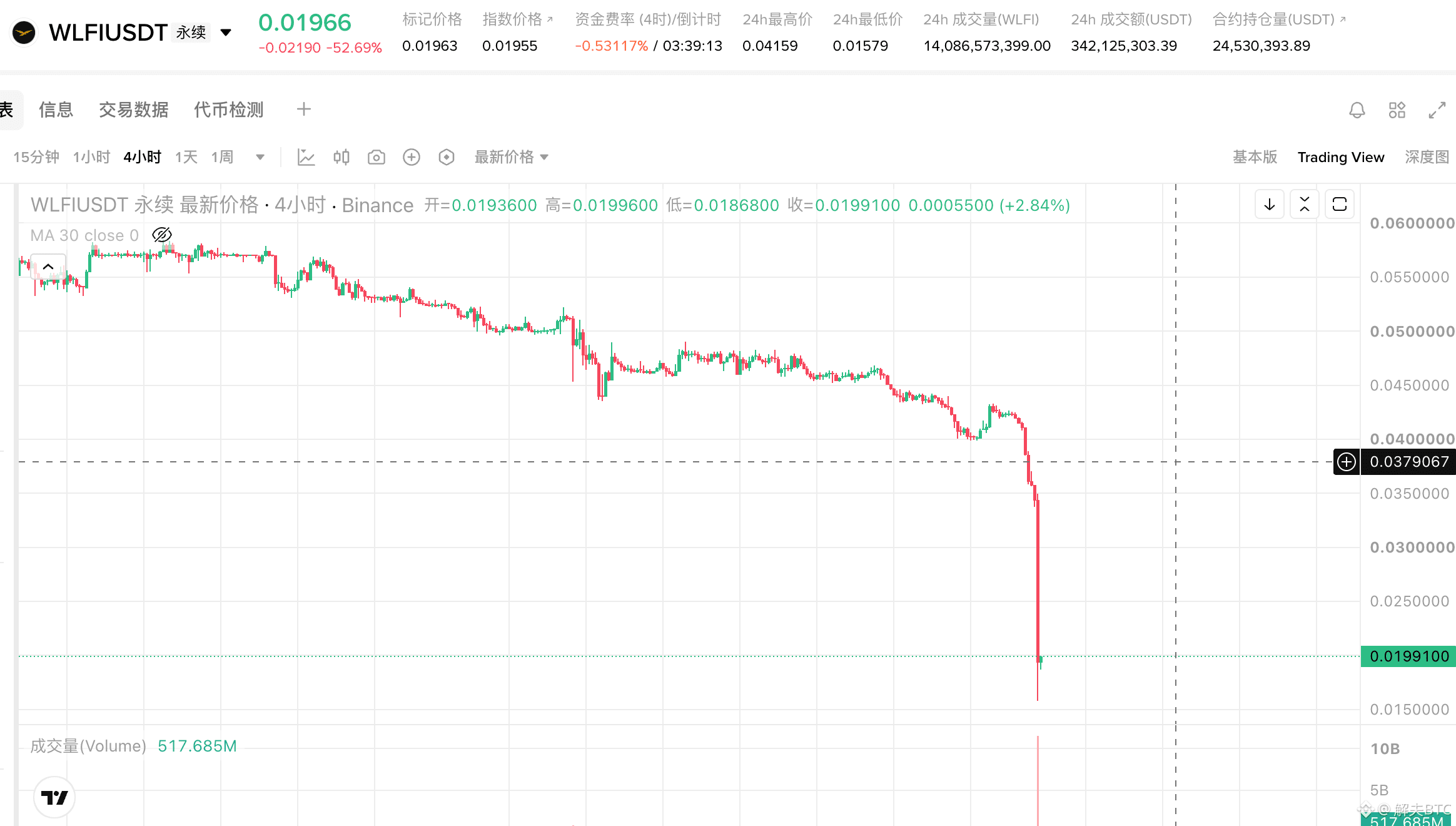
The Trump family's $WLFI was cut in half today, crashing through 0.016. That also sent $USD1 tumbling to a depeg low of 0.94 on Binance, though it has since recovered to around 0.994.
Let’s look at these two things separately—don’t panic and lump them together.
$WLFI ’s drop was no surprise. A wallet linked to its strategic reserve has been dumping $20 million worth of ETH assets, and Justin Sun has jumped in, publicly calling for it to be delisted. Sentiment has completely collapsed. To put it bluntly, this thing is being propped up entirely by its political halo. Once the price weakened, insiders rushed for the exits faster than anyone else, and the people who kept talking about “believing” in it ended up holding the bag.
But USD1’s plunge to 0.94 and rapid recovery to 0.994 had a completely different cause from WLFI’s.
USD1 is backed by U.S. Treasuries and cash held in custody by BitGo, and its market cap is over $2.8 billion. It’s probably not a case of there being no money to redeem it. The problem is the redemption barrier: when ordinary retail investors panic, they can’t go directly to BitGo to exchange it for dollars at a 1:1 rate. Only compliant institutions can redeem it. So when the secondary market panics, the price gets pushed below par—giving institutions with access to the redemption channel a chance to pick up distressed tokens at 0.94 and arbitrage the difference.
Enjoy the drama from the sidelines, but when it comes to your own trading, remember two things.
First, stay away from political celebrity coins when sentiment is completely out of control. And don’t wait until WLFI perpetual funding rates hit -0.53% to belatedly chase a short—a severely crowded short can easily get wiped out by a sharp rebound. Second, when choosing a stablecoin, don’t just look at who’s backing it. Whether retail investors can redeem it smoothly and at low cost is the real safety net in extreme market conditions.
1
1
1.6k
·
--
When I was new to trading, I always thought trading was like going to work on an assembly line: if I didn’t place a couple of trades every day and keep some positions open, it felt like I’d spent the whole day staring at a screen for nothing. Even on weekends, when liquidity was as thin as water, I’d switch to one- or five-minute charts and force myself to find opportunities.
Looking back now, that wasn’t trading at all—it was just itchy fingers costing me money. When you go to the market to buy groceries, you know to pick the fresh stuff. Yet when it came to the charts, even when the candlesticks looked completely lifeless, I’d still force a reason like “it’s fallen so much, surely it’s due for a bounce” and jump in, just to hand over fees.
Most of the time, the market is just dead time. It either chops sideways and wears you down, or spikes up and down a few times, taking out both longs and shorts. The kind of smooth move you can ride for a satisfying stretch comes along only a handful of times a month.
The worst part is that when you trade frequently in those ordinary, choppy conditions, your money isn’t even gone yet before your mindset gets ground to dust. After taking a few stop-outs on false breakouts in a row, your execution starts to fall apart. Then, when the big move you’ve been waiting for finally arrives, either you’ve already spent all your ammo, or the earlier whipsaws have scared you off so badly that you can’t bring yourself to pull the trigger. All you can do is stare while everyone else takes their share.
The longer I do this, the more I realize that what really sets traders apart isn’t who has learned the most advanced indicators, but who can better endure the loneliness of staying flat.
When you understand the chart and price reaches a key level or breaks decisively through the structure, act decisively according to the plan you made in advance, set your stop-loss, and don’t worry about it. When price action is messy and you can’t make sense of it, just minimize your charting software. Eat when it’s time to eat; rest when it’s time to rest.
Doing ten fewer lottery-ticket trades just for the sake of being active is far more useful than staying up late studying twenty new indicators.
Profits on your account don’t come from making your presence felt every day. They come from patiently sitting on your hands until the opportunity you know best is served up, then taking a good, hard bite. $BTC
302
·
--
This is the most frustrating part of trading: when you're losing money, you're bolder than anyone; the moment you make a little, your hands start shaking.
You can sit calmly through a floating loss of ten percent, telling yourself, “Keep the bigger picture in mind and hang on a little longer.” But as soon as a trade is up two or three points, you panic like you're carrying stolen goods in your pocket, afraid it’ll pull back any minute, and rush to close the position and lock in the profit.
In the end, you get seven out of ten trades right, but all you take home is pocket change. The other three losses wipe out half your capital.
A high win rate can be so deceptive: taking small profits and stubbornly holding onto big losses means that no matter how high your win rate is, you're still just paying the exchange's bills.
Cut losing trades decisively according to your rules. When you can't hold onto winning trades, grit your teeth and hold on a little longer. That's the only way your equity curve might start trending upward. $BTC
{future}(BTCUSDT)
This is the most frustrating part of trading: when you're losing money, you're bolder than anyone; the moment you make a little, your hands start shaking.
You can sit calmly through a floating loss of ten percent, telling yourself, “Keep the bigger picture in mind and hang on a little longer.” But as soon as a trade is up two or three points, you panic like you're carrying stolen goods in your pocket, afraid it’ll pull back any minute, and rush to close the position and lock in the profit.
In the end, you get seven out of ten trades right, but all you take home is pocket change. The other three losses wipe out half your capital.
A high win rate can be so deceptive: taking small profits and stubbornly holding onto big losses means that no matter how high your win rate is, you're still just paying the exchange's bills.
Cut losing trades decisively according to your rules. When you can't hold onto winning trades, grit your teeth and hold on a little longer. That's the only way your equity curve might start trending upward. $BTC
503
·
--
Watching the charts until one or two in the morning usually isn’t about spotting opportunities—it’s just looking for an excuse to make an impulsive trade.
If you’re lying in bed in the middle of the night, checking your phone every five minutes to look at the candlesticks, don’t kid yourself that the market is that important. There are only two reasons: either your position is too big, or you haven’t set your stop-loss properly.
The crypto market runs around the clock. Most of the little profit you make during the day is probably handed right back in the middle of the night, when your head isn’t clear.
You don’t need some complicated formula to figure out whether your position is too big. The only standard is whether you can close your eyes and sleep easy.
If a trade is keeping you up at night, cut it in half sooner rather than later. If you hold on until dawn, chances are the market will liquidate you anyway. $BTC
{future}(BTCUSDT)
Watching the charts until one or two in the morning usually isn’t about spotting opportunities—it’s just looking for an excuse to make an impulsive trade.
If you’re lying in bed in the middle of the night, checking your phone every five minutes to look at the candlesticks, don’t kid yourself that the market is that important. There are only two reasons: either your position is too big, or you haven’t set your stop-loss properly.
The crypto market runs around the clock. Most of the little profit you make during the day is probably handed right back in the middle of the night, when your head isn’t clear.
You don’t need some complicated formula to figure out whether your position is too big. The only standard is whether you can close your eyes and sleep easy.
If a trade is keeping you up at night, cut it in half sooner rather than later. If you hold on until dawn, chances are the market will liquidate you anyway. $BTC
2
1
958
·
--
The most dangerous trading habit is making excuses for yourself when the price is near your stop-loss.
Before placing the trade, you draw your levels clearly: if it breaks below this line, you’re out.
But when it actually crashes through, your hand suddenly goes weak, and all you can think is, “Wait a little longer—what if it’s just a wick?”
The market won’t go easy on you. You might get away with holding on through nine out of ten drops, but if you hit just one one-way move that never turns back, you’ll give back every bit of profit you’ve made.
If you don’t cut your losses when you should, whatever the market does afterward is no longer your concern. All you can do is sit in front of the screen and pray to break even.
If you cut too soon, the worst you can do is kick yourself. Holding on is what really sends your principal into the fire.$BTC
{future}(BTCUSDT)
The most dangerous trading habit is making excuses for yourself when the price is near your stop-loss.
Before placing the trade, you draw your levels clearly: if it breaks below this line, you’re out.
But when it actually crashes through, your hand suddenly goes weak, and all you can think is, “Wait a little longer—what if it’s just a wick?”
The market won’t go easy on you. You might get away with holding on through nine out of ten drops, but if you hit just one one-way move that never turns back, you’ll give back every bit of profit you’ve made.
If you don’t cut your losses when you should, whatever the market does afterward is no longer your concern. All you can do is sit in front of the screen and pray to break even.
If you cut too soon, the worst you can do is kick yourself. Holding on is what really sends your principal into the fire.$BTC
1
727
·
--
Bearish
$BTC
{future}(BTCUSDT)
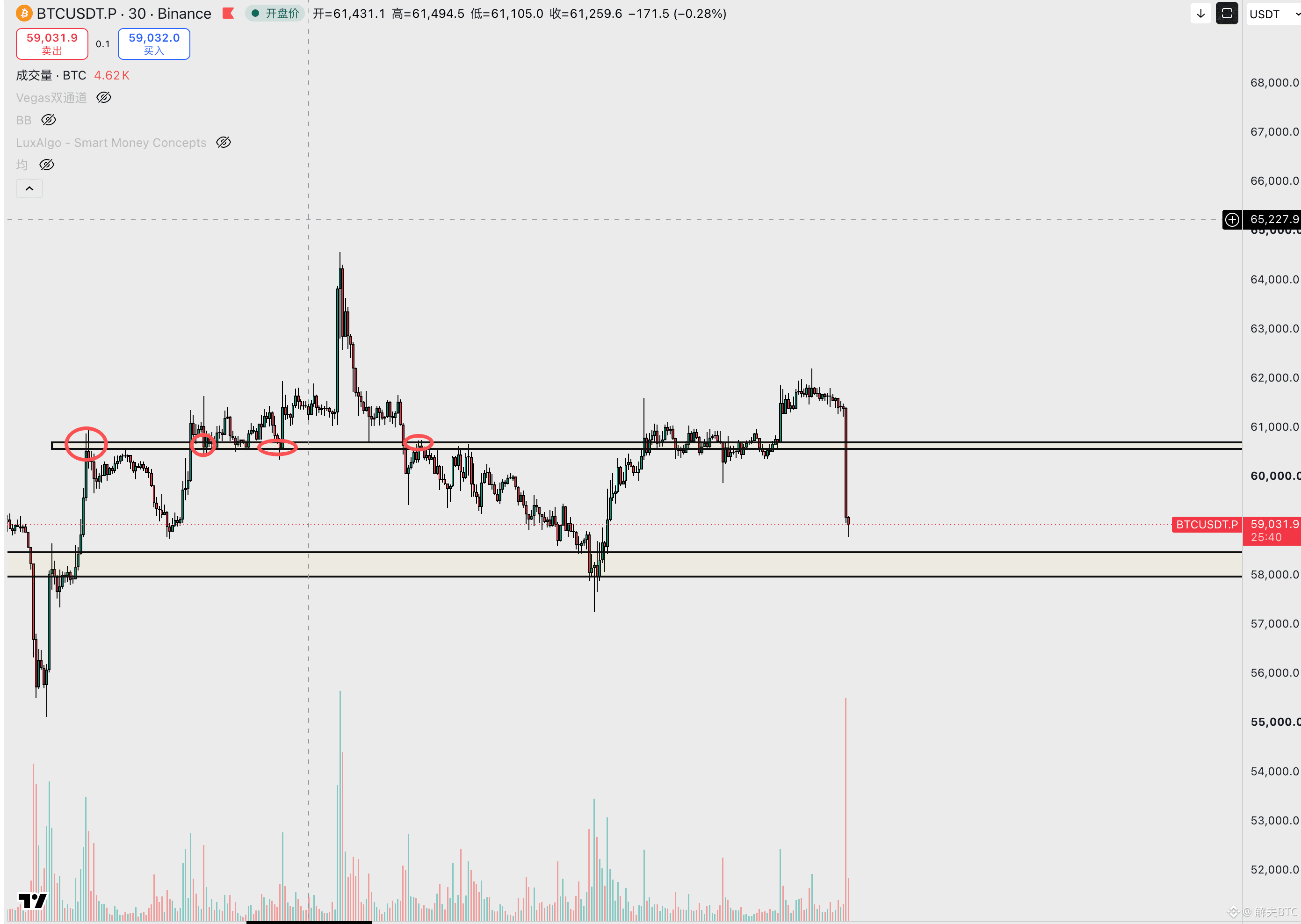
In 30 minutes, 60600 flipped from resistance to support and was decisively breached on heavy volume. This move during the U.S. session has pretty much set the tone.
Looking at the four red-circled spots in the chart, the 60600 area has repeatedly acted as both resistance and support on pullbacks. Normally, whenever the price gets near this level, you’d see a clear pause.
But the volume accompanying that big, solid 30-minute bearish candle just now produced the largest red volume bar since the sell-off from the 64500 high. It left not even a hint of resistance or pause at 60600, plunging straight to around 59030.
My current game plan is clear:
- If the price later bounces back toward 60600 but can’t reclaim it, then turns down under renewed pressure, the overall strategy is to focus on shorts, with no more wishful thinking about going long;
- The invalidation point for the bearish outlook is fixed above 60600, which must be reclaimed on strong volume. Until then, don’t try to catch a falling knife;
- Below, first watch whether the gray support zone at 58000–58450 attracts buyers again.
The key level has shifted from “pause and then choose a direction” to “break straight through.” The momentum has changed, so just follow the price action.
#BTC #比特币
$BTC
In 30 minutes, 60600 flipped from resistance to support and was decisively breached on heavy volume. This move during the U.S. session has pretty much set the tone.
Looking at the four red-circled spots in the chart, the 60600 area has repeatedly acted as both resistance and support on pullbacks. Normally, whenever the price gets near this level, you’d see a clear pause.
But the volume accompanying that big, solid 30-minute bearish candle just now produced the largest red volume bar since the sell-off from the 64500 high. It left not even a hint of resistance or pause at 60600, plunging straight to around 59030.
My current game plan is clear:
- If the price later bounces back toward 60600 but can’t reclaim it, then turns down under renewed pressure, the overall strategy is to focus on shorts, with no more wishful thinking about going long;
- The invalidation point for the bearish outlook is fixed above 60600, which must be reclaimed on strong volume. Until then, don’t try to catch a falling knife;
- Below, first watch whether the gray support zone at 58000–58450 attracts buyers again.
The key level has shifted from “pause and then choose a direction” to “break straight through.” The momentum has changed, so just follow the price action.
#BTC #比特币
2
3.5k
·
--
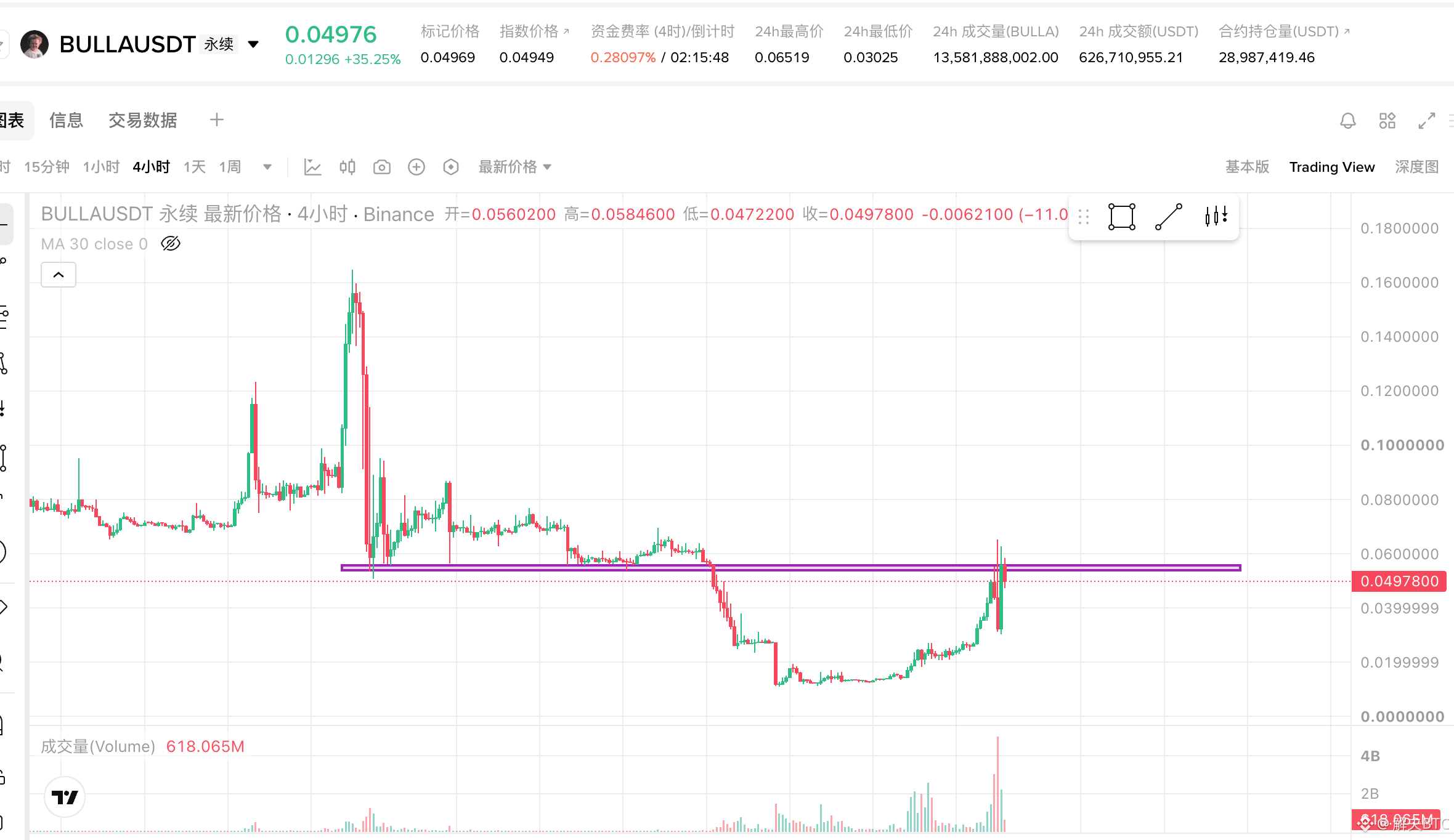
$BULLA After those long wicks in both directions overnight, I’m still keeping a close eye on the key structural zone at 0.054–0.056.
Last night, the price was rejected and pulled back as soon as it touched around 0.0553. In the early hours, it briefly surged on heavy volume, breaking through 0.056 and reaching a high of 0.065, but it couldn’t hold there at all and promptly dropped all the way back to 0.030. Before dawn, it bounced back to 0.0628, but has now slipped back to around 0.050.
The 24-hour trading volume has now reached 620 million U, and the 4-hour funding rate is still above +0.28%. Volatility is high, but for me, the main question isn’t how scary those overnight wicks were—it’s whether the former dense resistance zone at 0.054–0.056 can actually be broken through.
My thinking is clear: unless $BULLA closes firmly above 0.056 with strong volume on the 4-hour timeframe and holds that level on a retest, I won’t consider it a valid breakout, and I definitely won’t chase a trade halfway up.
If it really gets back above 0.056 on strong volume and holds on a retest, then the upside will open up again. On the other hand, if it continues weakening below this level and drops below 0.043, then that early-morning move was most likely a liquidity sweep—a false move.
With highly volatile assets like this, I care more about confirmation at key levels. I’d rather miss the first leg than gamble on whether a wick is real.
So my view on bulla today is: treat 0.056 as resistance until price holds above it; reassess after it holds and successfully retests the level.
Not a trade signal—just a record of my market observations.
$BULLA #PriceAction
解夫BTC
·
--
Bearish$BULLA #Trading Notes
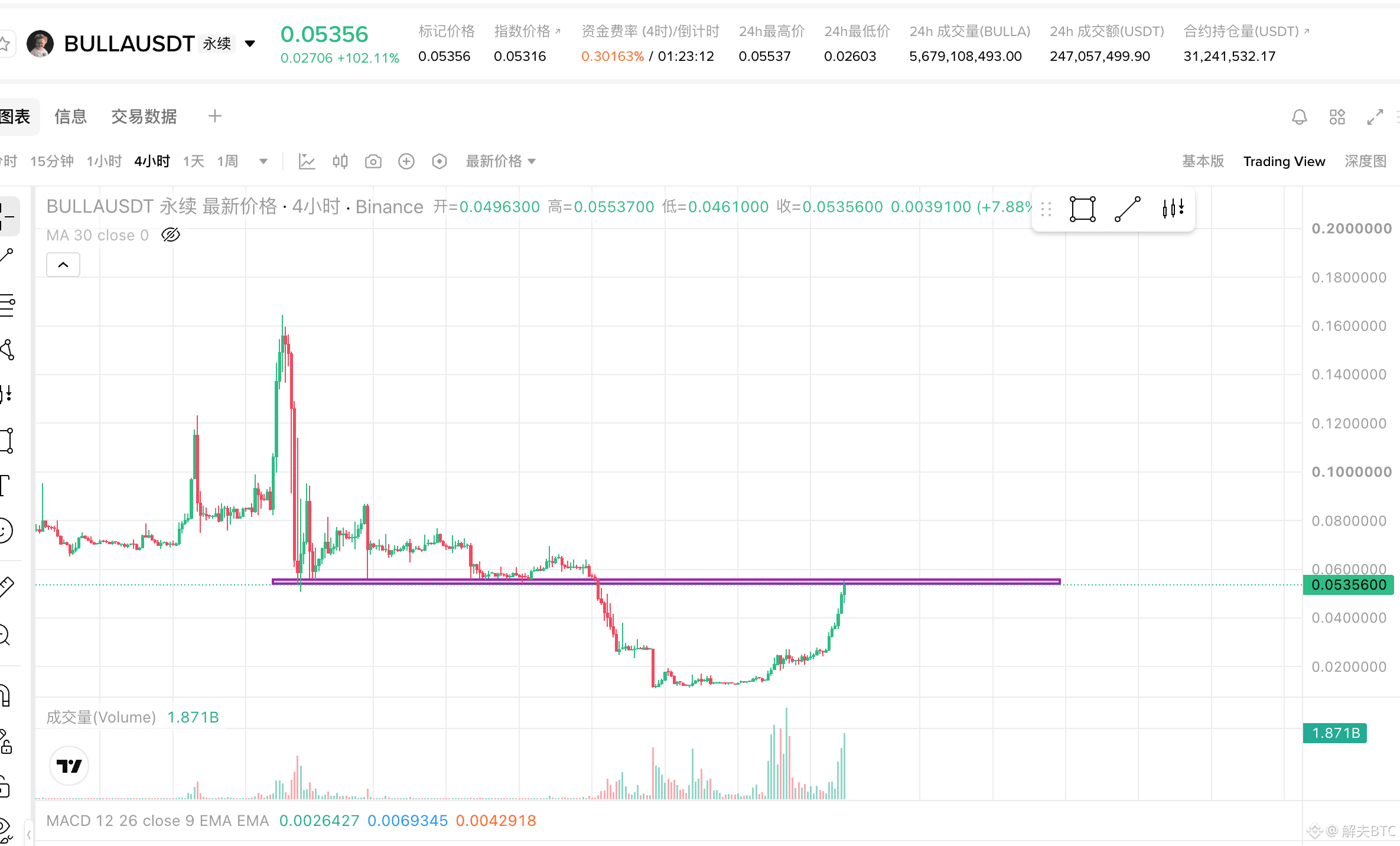
BULLA has doubled in the past 24 hours and is now trading around 0.0539. I’m leaning bearish, but I won’t try to call a top here just yet.
Looking at the 4-hour structure, the purple zone marked on the chart at 0.054–0.056 is the key area to watch. At the end of October, the price first dropped to this zone and formed a short-term low. In early November, it bounced off this level several times, holding until it finally broke below on November 13. Only then did the downside fully open up, sending the price crashing to around 0.011.
After a sharp, twofold rally, the price has now returned to 0.054–0.055, right back to the former support-turned-resistance zone. Meanwhile, the 4-hour funding rate has surged to +0.30%. Short-term wicks around a key level are normal and don’t change my view of the major resistance zone. And because the price has just surged more than 100% on high volume (24-hour trading volume above 240 million USDT), placing a short right at the lower edge of resistance could easily get stopped out by an upward liquidity sweep.
For me, the most reasonable short entry requires confirmation from price action: first, let the price break upward to take out the momentum buyers and stop-losses above 0.056. If it then quickly falls back below the purple zone, I’d enter short in the direction of the move, with a much clearer stop-loss level. Conversely, if the price breaks above 0.056 and then holds steady and consolidates above it without falling back, this bearish setup is invalidated, and I’ll abandon the short trade.
1
584
·
--
Bearish
$BULLA #Trading Notes
BULLA has doubled in the past 24 hours and is now trading around 0.0539. I’m leaning bearish, but I won’t try to call a top here just yet.
Looking at the 4-hour structure, the purple zone marked on the chart at 0.054–0.056 is the key area to watch. At the end of October, the price first dropped to this zone and formed a short-term low. In early November, it bounced off this level several times, holding until it finally broke below on November 13. Only then did the downside fully open up, sending the price crashing to around 0.011.
After a sharp, twofold rally, the price has now returned to 0.054–0.055, right back to the former support-turned-resistance zone. Meanwhile, the 4-hour funding rate has surged to +0.30%. Short-term wicks around a key level are normal and don’t change my view of the major resistance zone. And because the price has just surged more than 100% on high volume (24-hour trading volume above 240 million USDT), placing a short right at the lower edge of resistance could easily get stopped out by an upward liquidity sweep.
For me, the most reasonable short entry requires confirmation from price action: first, let the price break upward to take out the momentum buyers and stop-losses above 0.056. If it then quickly falls back below the purple zone, I’d enter short in the direction of the move, with a much clearer stop-loss level. Conversely, if the price breaks above 0.056 and then holds steady and consolidates above it without falling back, this bearish setup is invalidated, and I’ll abandon the short trade.
1
1
1k
·
--
I came across a post:
“If you got 8,000 a month,
were always the only person in the office,
and had no one to talk to, how long could you stick it out?”
Lots of people in the comments were debating whether they could handle it,
but I just laughed when I read it.
Isn’t that just everyday life for someone who watches the markets full-time?
Every day, staring at the screen, scrolling through candlestick charts and breaking news.
The only difference is that office workers reliably get 8,000 a month,
while traders sometimes have to pay trading fees and stop-losses out of their own pocket.
Still, spend long enough at it and your social skills really do start to atrophy.
A few times, I’ve gone downstairs to buy a coffee,
only to realize it was the first thing I’d said out loud all day.$BTC
{future}(BTCUSDT)
I came across a post:
“If you got 8,000 a month,
were always the only person in the office,
and had no one to talk to, how long could you stick it out?”
Lots of people in the comments were debating whether they could handle it,
but I just laughed when I read it.
Isn’t that just everyday life for someone who watches the markets full-time?
Every day, staring at the screen, scrolling through candlestick charts and breaking news.
The only difference is that office workers reliably get 8,000 a month,
while traders sometimes have to pay trading fees and stop-losses out of their own pocket.
Still, spend long enough at it and your social skills really do start to atrophy.
A few times, I’ve gone downstairs to buy a coffee,
only to realize it was the first thing I’d said out loud all day.$BTC
211
·
--
$BTC #SecurityReminder
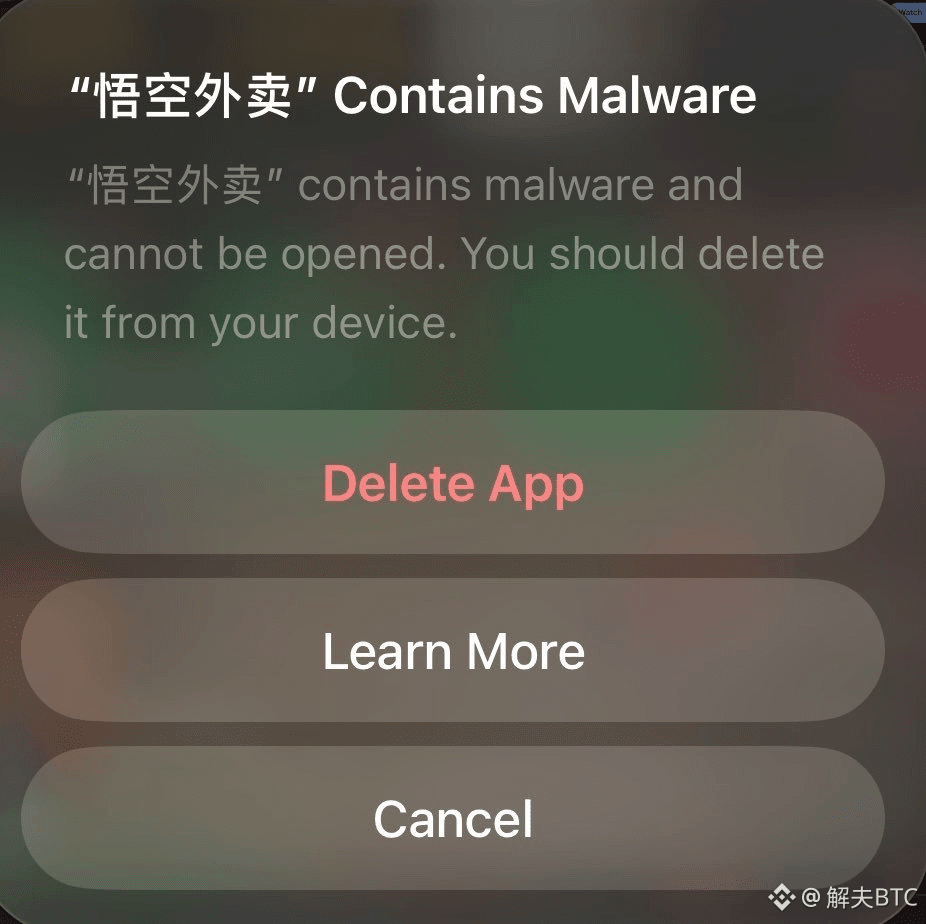
I just saw an alert about a malicious iOS app shared by CZ, reminding everyone in crypto to take a moment to check their phone’s photo permissions.
Apple has just flagged a food delivery app called wukong as malware on iOS. It looks like a normal food-ordering app, but once it gets access to your photo library, it uses OCR in the background to scan through your photos, specifically looking for screenshots of seed phrases and wallet private keys.
Stealing crypto doesn’t always mean tricking you into clicking a phishing link. Plenty of risks are hidden in the “All Photos” permission granted to everyday utility or lifestyle apps we install without thinking. I’ve always written my seed phrase on paper and never keep wallet screenshots in my phone’s photo library, WeChat Favorites, or Notes. When installing third-party apps for everyday use, I only grant access to “Selected Photos” to keep potential risks out of my photo library.
I recommend taking a moment to check photo permissions for the apps you use regularly and delete any old screenshots. For peace of mind, it’s better to delete them sooner rather than later.
1
785
·
--
Bullish
$BTC $SKHYNIX $NVDA #TradFi
Reviewing the market tonight, I saw a few TradFi announcements Binance posted today. Taken together, the signals are pretty clear:
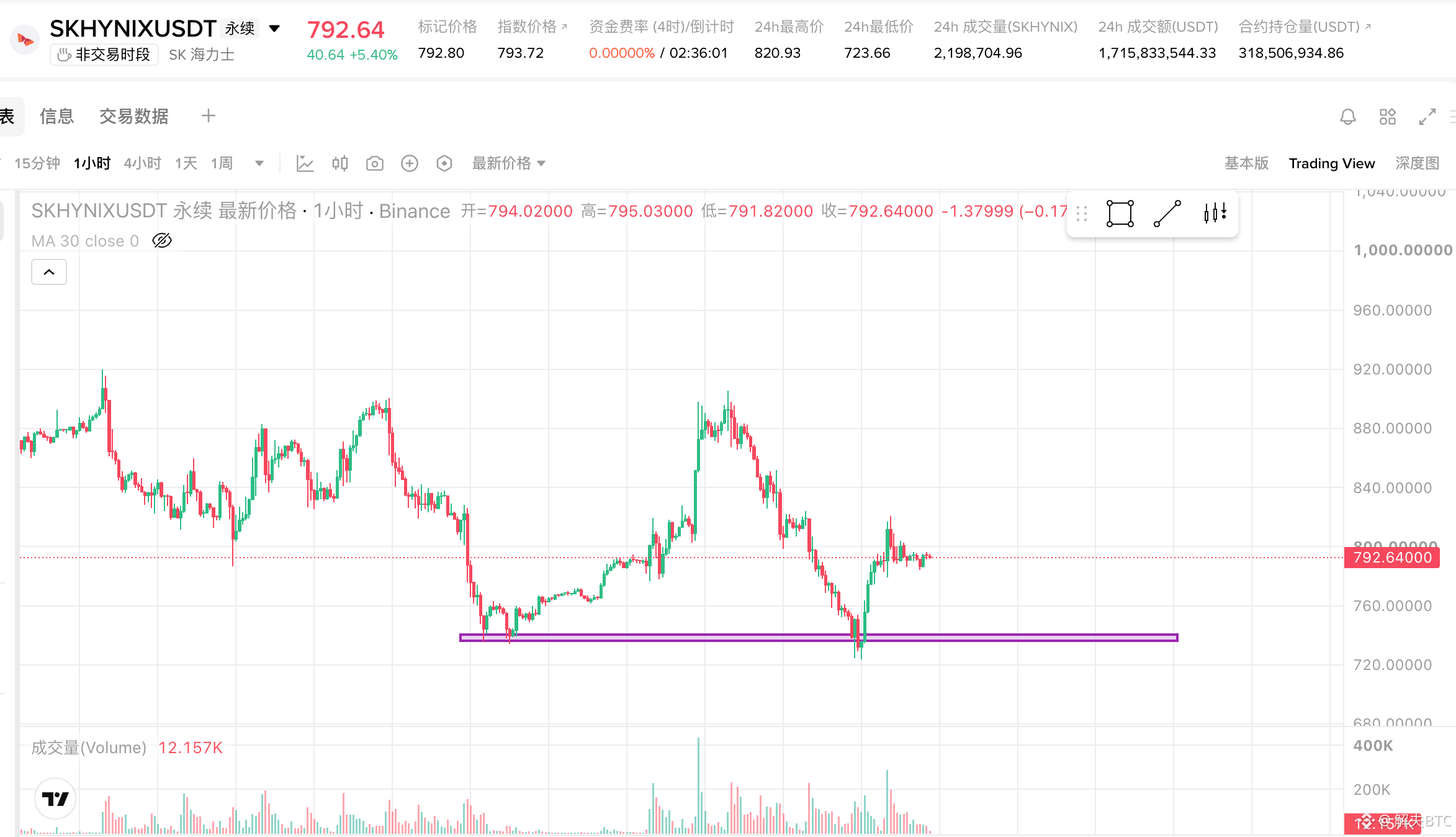
At 17:00, Binance launched cross-platform VIP tier matching. Show proof of your assets or trading volume over the past 30 days on another exchange or with a traditional brokerage, and you can move up a VIP tier on Binance for free for 60 days. Then, 45 minutes earlier, it had posted a dividend adjustment reminder for SK Hynix (SKHYNIXUSDT / SKHYUSDT): tomorrow (11-27) is the ex-dividend date, at 08:00 Korea time (07:00 Beijing time), with a dividend of 20,000 won per share. Tonight, SKHYNIXUSDT is already up more than 5.6%, trading near 792.9, while SKHYUSDT is up more than 6% to 111.67.
The key point is that the announcement explicitly says, “Dividend adjustments are not subject to the standard funding rate limits.” If you’re used to watching only the 8-hour funding rate cap on crypto perpetuals, be sure to check the ex-dividend calendar before holding stock perpetuals through an ex-dividend night.
With U.S. stocks closed tonight, you can also see just how wild thin holiday trading can get: NVDAUSDT, which was knocked down to 148.1 in the afternoon, bounced straight back to 151.2 tonight (+2.67%); BTC, meanwhile, is moving sideways on low volume between 60,500 and 60,900 (currently at 60,808). For a real directional move, we’ll have to wait until overseas markets reopen tomorrow.
When you trade stock perpetuals, do you make a point of avoiding ex-dividend nights? 👇
325
·
--
Verified
$BTC $SKHYNIX #TradFi
I just saw Binance post two TradFi-related announcements within an hour, and the signal is pretty clear when you put them together:
First, at 17:00, it launched cross-platform matching for VIP tiers. If you can provide proof of your assets or trading volume over the past 30 days on another exchange or with a traditional broker, you can upgrade to the next VIP level on Binance for free for 60 days. They’re clearly looking to attract active investors from traditional securities markets.
Second, at 16:15, it issued a dividend adjustment notice for SK Hynix (SKHYNIXUSDT / SKHYUSDT): the stock goes ex-dividend tomorrow (11-27) at 08:00 Korea time (07:00 Beijing time), with a dividend of 20,000 won per share. Today, SKHYNIXUSDT rose nearly 4% to around 791.14, while SKHYUSDT gained over 4.3% to 111.58.
The key point is that the announcement explicitly says this dividend adjustment is not subject to the standard funding rate limits. If you’re used to trading crypto perpetuals and only watch the 8-hour funding rate caps, remember to check ex-dividend dates when holding TradFi perpetuals on US, Korean, or Hong Kong stocks overnight, so you don’t get caught by an unexpected adjustment.
$BTC has edged back to around 60,800. With the US market closed for Thanksgiving, the broader market is still waiting for overseas liquidity to pick up the baton tomorrow.
When you trade stock perpetuals, do you make a point of avoiding overnight positions on ex-dividend dates? 👇
883
·
--
Bullish
Partly True
$NVDA $BTC #USStocksClosed
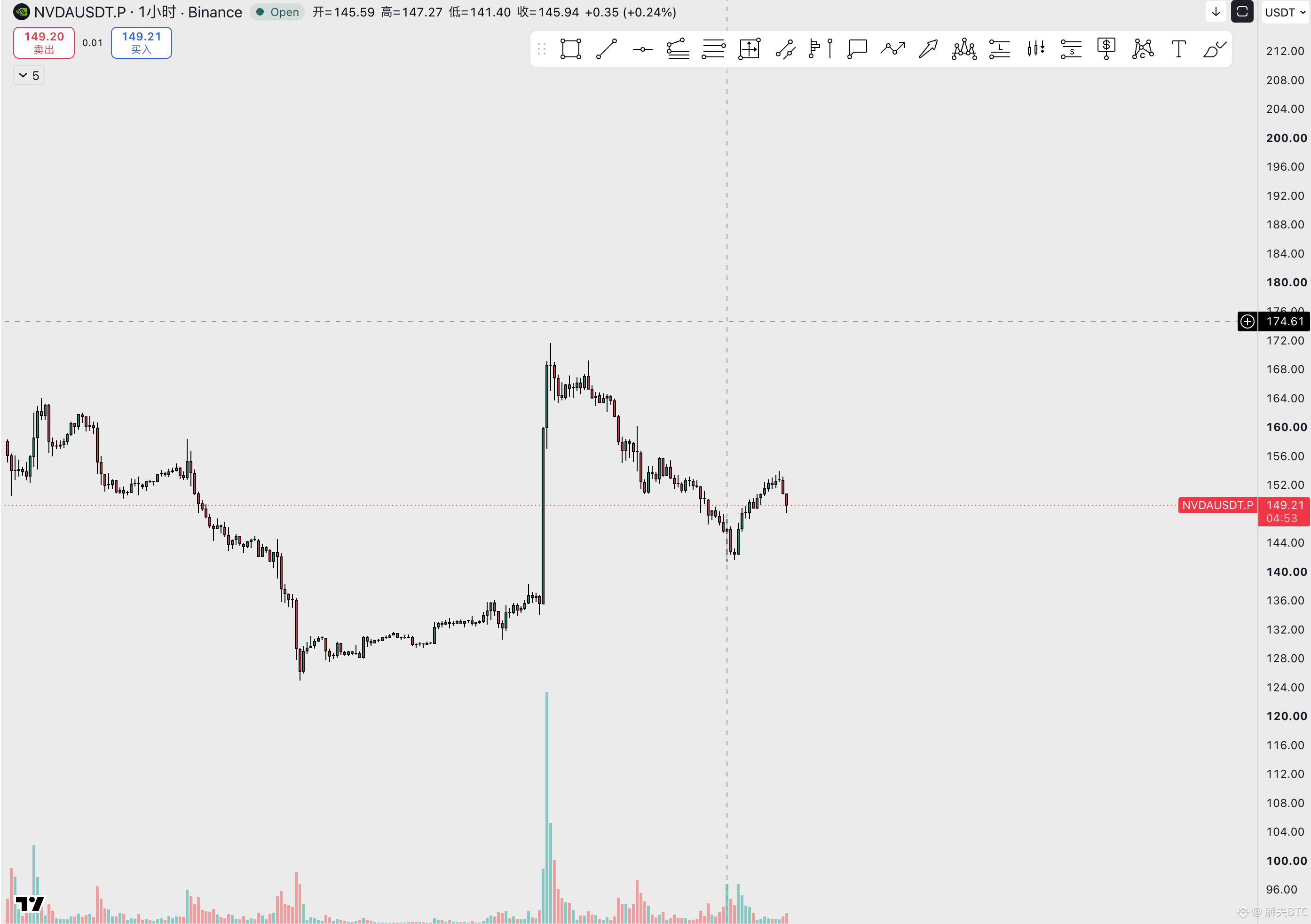
US stocks are closed for Thanksgiving tonight, but US stock perpetuals on Binance are still trading.
After reports at 13:01 that Nvidia had paused shipments to Southeast Asia, NVDAUSDT 1H plunged from 153.91 to 148.10 (a swing of nearly 3.8%), with $134 million in trading volume over two hours. Meanwhile, at 14:15, Binance announced it would list 20x TradFi perpetual contracts, including Xiaomi (1810.HK), tomorrow morning at 10:30 (UTC 02:30).
Two details to keep in mind from a trading perspective:
1. During US and Hong Kong market closures, there is no spot market-maker depth, so breaking news can easily trigger long wicks and sharp spikes;
2. NVDAUSDT funding is currently negative (-0.0518%), as is SOXLUSDT (-0.0841%). Beware of a reverse short squeeze when US stocks open for a half-day tomorrow evening.
$BTC touched 61,622 in the morning session before coming under pressure and falling back to around 60,460. With traditional buyers absent over the holiday, watch the 60,400–59,800 area for support.
During the market closure, would you rather stay flat and wait, or trade swings in 24h TradFi perpetuals?
3.7k
·
--
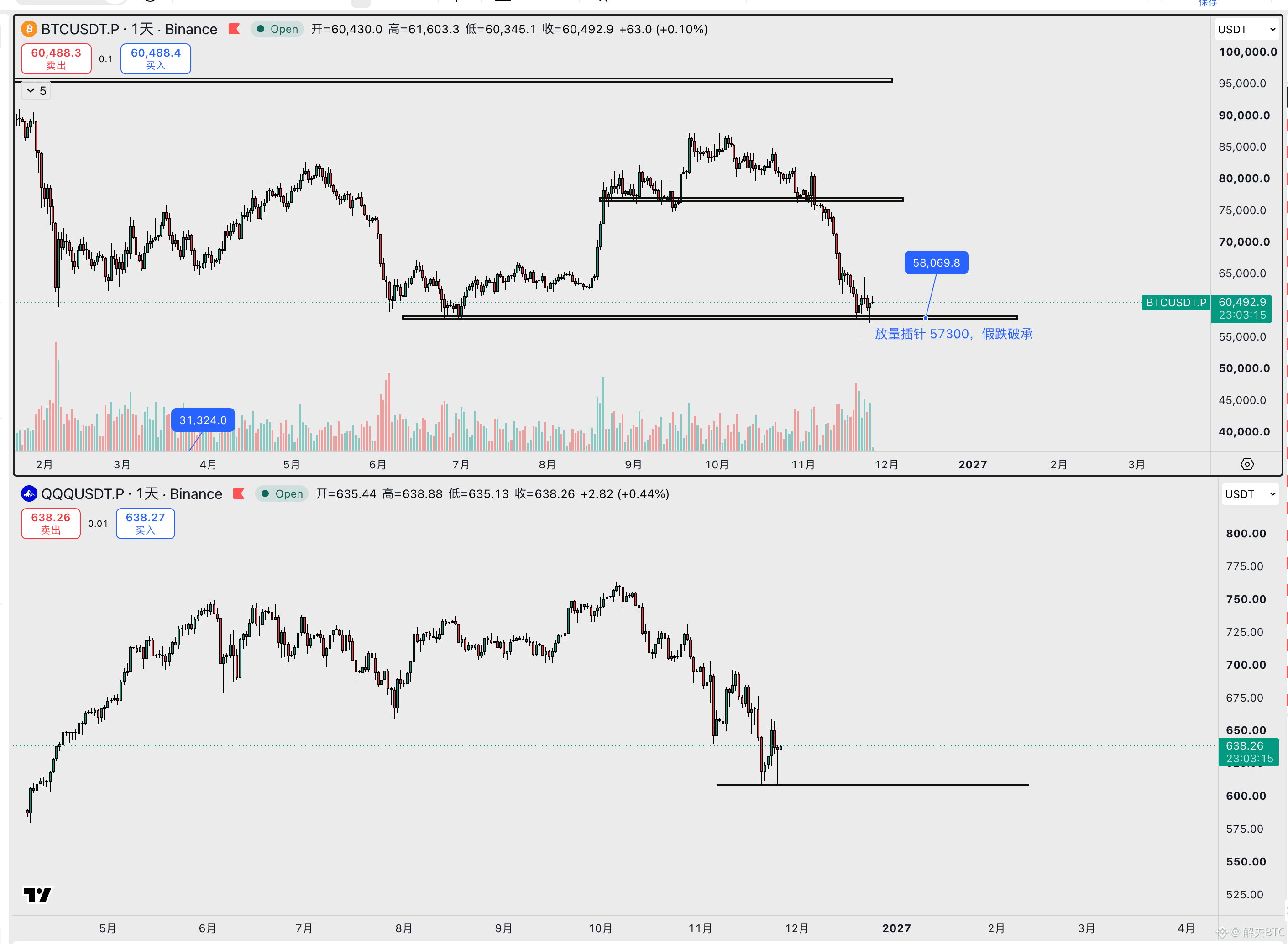
Last night, U.S. stocks led the way in a “Thanksgiving deep V.” Was that a false breakdown marking the bottom, or simply a chance to reduce positions on the rebound?
This morning, everyone saw $SOXL bounce from an intraday low of 24.6 to 32, $NVDA recover from 141.1 to 149.3, and $BTC climb from 57,300 to around 60,500. Sentiment recovered in an instant.
Looking only at last night’s actual price and volume—not guessing at sentiment:
1. There was real buying support
QQQ’s trading volume surged nearly 40% last night, while SOXL traded 527 million shares over the day. Binance BTC spot daily trading volume hit 1.6 billion U yesterday, up from just 1.19 billion U the day before. Buyers really did step in and absorb the panic selling when prices broke below the previous lows.
2. But overall, the S&P was still seeing contracting volume. And with U.S. markets closed today for Thanksgiving and Friday being a half-day, light trading can easily amplify short-term swings. One lower wick isn’t enough to confirm an immediate reversal.
My criteria are clear. I’m sticking to just two scenarios:
✅ Bullish confirmation: If the next pullback comes on clearly lower volume, BTC holds above 58,800–59,300 without making a new low, and U.S. stocks hold the lower half of last night’s big bullish candle after the holiday (QQQ stays above 620), then I’ll look for the uptrend to continue.
❌ Structure invalidated: If the rebound lacks strength, or price falls back below last night’s low (around BTC 57,300) on rising volume, that would show this move was just short covering after stop-losses were triggered. I’d rather stay flat and wait for the next setup than gamble on a rebound.
Trading isn’t about betting on whether you bought the exact low last night; it’s about understanding whether the supply overhang has cleared. What do you make of last night’s false breakdown?
#BTC
713
·
--
Bullish
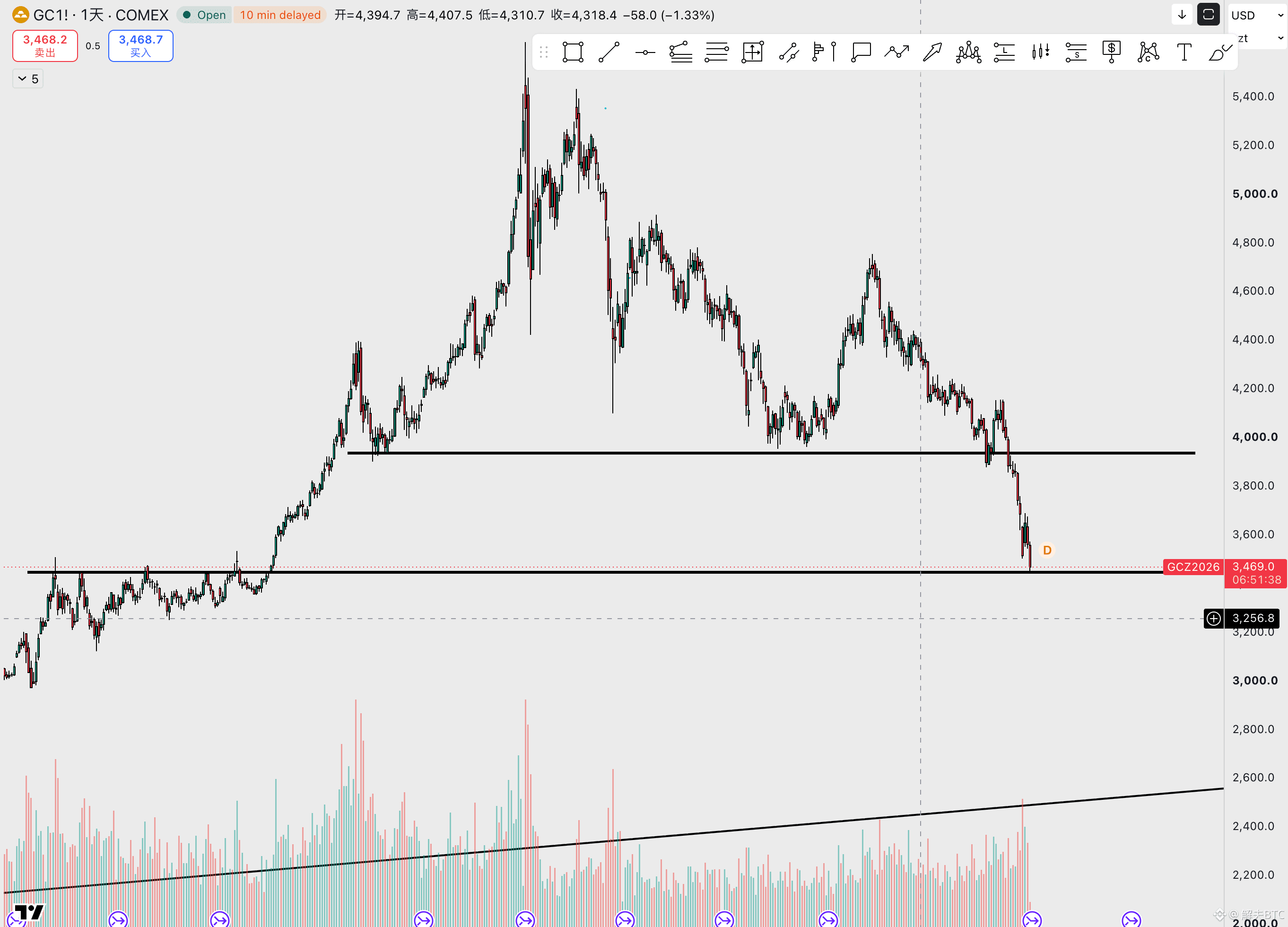
$XAU Gold looks like it may have bottomed out too, right? It should be reasonably safe to start buying gold now.
{future}(XAUUSDT)
$XAU Gold looks like it may have bottomed out too, right? It should be reasonably safe to start buying gold now.
9
1
7.5k
·
--
Verified
#特朗普拟重启关税攻势,比特币和美股再度走弱 Trump’s new Section 301 tariff proposal just landed. Why is the market reacting more calmly than it did last night?
The USTR has just officially announced its Section 301 tariff plan targeting 14 economies (an additional +20% for China and +15% for the EU; Mexico and Norway, two of the 16 economies in the original investigation, are not included for now).
Yesterday, when rumors were flying everywhere, everyone panicked. Now that the cards are on the table, let’s look at two objective details:
- The implementation timeline is a long way off: the proposal is still going through the consultation and hearing process (hearings at the end of January), and it won’t take effect until January 2027 at the earliest. Essentially, it’s still a bargaining chip;
- The market’s actual response: $BTC is still hovering above 58,000, and ETH is around 1,630. Neither has followed the U.S. stock market’s panic by plunging to new lows.
I’m still focused on the price action when trading: don’t chase shorts halfway down over a policy that won’t take effect for more than a year. As long as the previous low of 55,130 doesn’t break on heavy volume, I’ll stick with the plan of watching for a second test on declining volume. If it breaks down, I’ll admit I was wrong.
Now that this round of tariff news is out, do you think the worst is over, or will things continue to escalate tomorrow?
$BTC $ETH #感恩节交易周开启,市场能否迎来修复性反弹?
1
4.3k
·
--
Verified
Bad news hits! Has the U.S. 🇺🇸 gone crazy?!
The U.S. proposes new tariffs on 14 trading partners👇
China: 20% (rising to 40% if the trade truce is violated)
Vietnam: May rise to 35%
India: Up to 25%
South Korea: Up to 25%
Taiwan: Up to 25%
Indonesia: Up to 25%
Malaysia: Up to 25%
Thailand: Up to 25%
Cambodia: Up to 25%
European Union: Up to 20%
Japan: Up to 20%
Switzerland: Up to 20%
Singapore: Up to 20%
Bangladesh: Up to 20%
Brazil: 10% on finished aircraft
Mexico: No new tariffs
Norway: No new tariffs

1
5
13.5k
·
--
Partly True
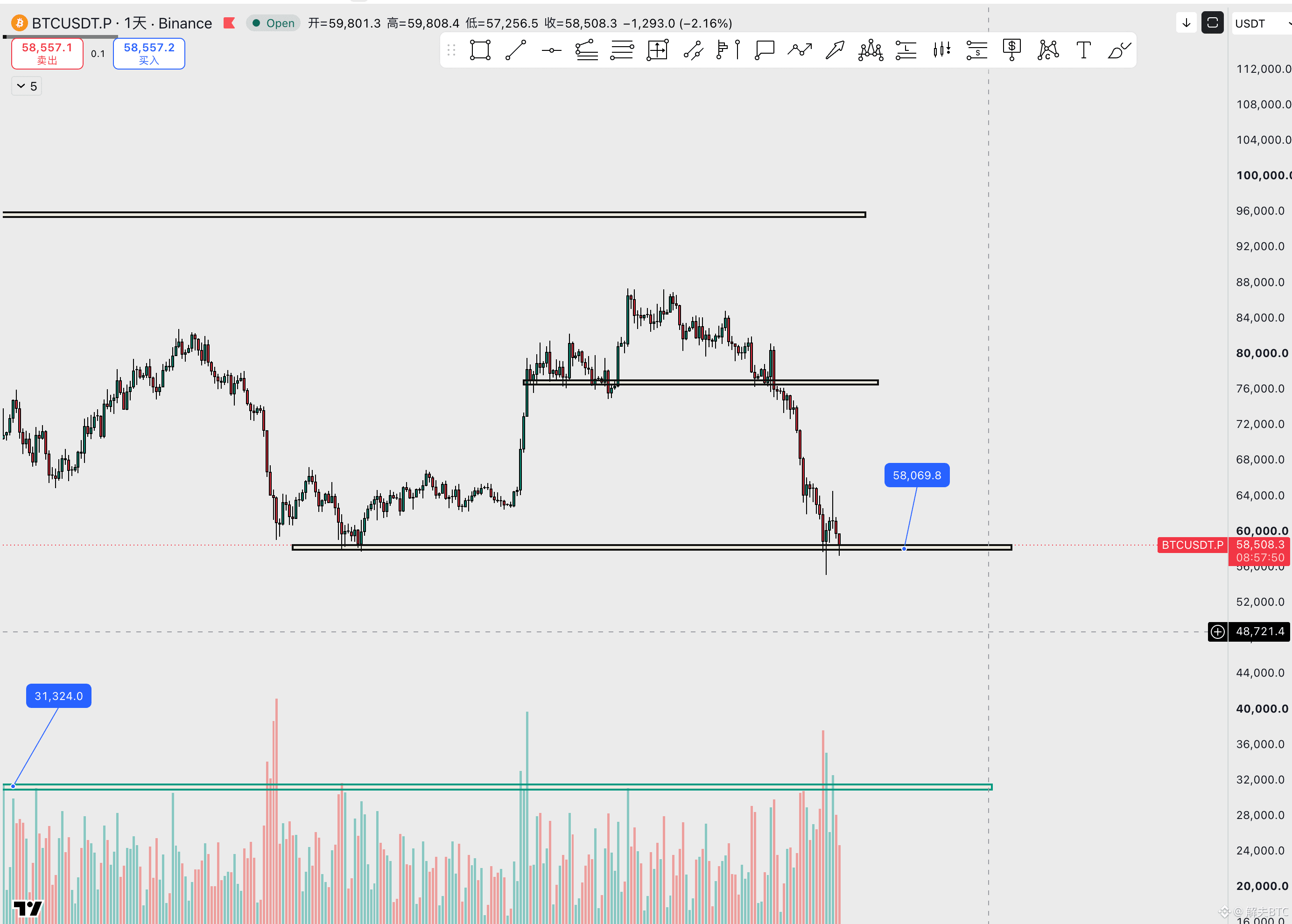
$BTC Core PCE came in at 3.3%, higher than expected. U.S. stocks plunged tonight—why did Bitcoin hold up instead?
U.S. stocks came under heavy selling pressure right from the open tonight: the Nasdaq QQQ fell more than 5%, and $NVDA plunged nearly 12% in a single day. During the day, I was watching $SOXL on the Square; once heavy volume broke through the 30 support level, triggering my invalidation line, it fell all the way to around 25 tonight (a drop of more than 22%).
By comparison, $BTC dipped to a low of 57,300 tonight before recovering to around 58,250. For now, it’s holding up better than U.S. AI-computing stocks, and it hasn’t tested the November 21 low of 55,130 on heavy volume.
U.S. markets will be closed all day tomorrow, Thursday, for Thanksgiving. Liquidity in crypto order books will thin from late tonight through tomorrow. My trading plan is clear:
- Confirmation to watch for: If price later holds above 55,130 on declining volume, or tests lower and then reclaims the level on strong volume, I’ll consider following the move from the right-hand side of the chart.
- Invalidation boundary: I won’t go heavily into a falling knife just because it’s holding up in the short term. If it breaks below 55,130 on heavy volume and can’t reclaim it, the stabilization thesis is invalidated, and I’ll continue to sit on the sidelines.
With this divergence between U.S. stocks and crypto tonight, will you stay flat and watch before the holiday closure, or place orders lower down and wait to catch a wick?
$BTC $NVDA $SOXL #感恩节交易周开启,市场能否迎来修复性反弹?
{future}(BTCUSDT)
$BTC Core PCE came in at 3.3%, higher than expected. U.S. stocks plunged tonight—why did Bitcoin hold up instead?
U.S. stocks came under heavy selling pressure right from the open tonight: the Nasdaq QQQ fell more than 5%, and $NVDA plunged nearly 12% in a single day. During the day, I was watching $SOXL on the Square; once heavy volume broke through the 30 support level, triggering my invalidation line, it fell all the way to around 25 tonight (a drop of more than 22%).
By comparison, $BTC dipped to a low of 57,300 tonight before recovering to around 58,250. For now, it’s holding up better than U.S. AI-computing stocks, and it hasn’t tested the November 21 low of 55,130 on heavy volume.
U.S. markets will be closed all day tomorrow, Thursday, for Thanksgiving. Liquidity in crypto order books will thin from late tonight through tomorrow. My trading plan is clear:
- Confirmation to watch for: If price later holds above 55,130 on declining volume, or tests lower and then reclaims the level on strong volume, I’ll consider following the move from the right-hand side of the chart.
- Invalidation boundary: I won’t go heavily into a falling knife just because it’s holding up in the short term. If it breaks below 55,130 on heavy volume and can’t reclaim it, the stabilization thesis is invalidated, and I’ll continue to sit on the sidelines.
With this divergence between U.S. stocks and crypto tonight, will you stay flat and watch before the holiday closure, or place orders lower down and wait to catch a wick?
$BTC $NVDA $SOXL #感恩节交易周开启,市场能否迎来修复性反弹?
1
1.6k
·
--
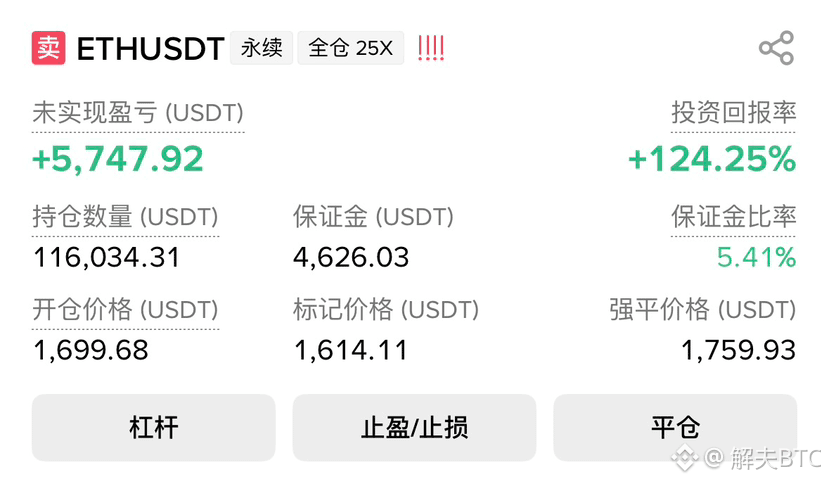
$ETH My gold position is about to be liquidated! Can someone save gold? I didn't buy much Ethereum; can someone save gold?
{future}(ETHUSDT)
$ETH My gold position is about to be liquidated! Can someone save gold? I didn't buy much Ethereum; can someone save gold?
4k
·
--
Anthropic’s stock broke below its IPO price less than a week after going public, and crypto exchanges rushed to roll out short-selling tools overnight.
Just a few days ago, people were hyping it as the biggest AI IPO in history. Then seven co-founders cashed out nearly $2 billion, and the stock promptly fell below its offering price.
Last night, Jensen Huang’s return finally gave the market a moment to catch its breath. But tonight, Nasdaq’s QQQ is down another 3.0% in premarket trading ($638.12 to $618.74).
Even more surreal is the speed of crypto: Bybit just launched ANDDUSDT, which is essentially a “2x short Anthropic ETF,” with up to 25x leverage and the ability to go short anytime, 24/7.
U.S. stocks are still falling in premarket trading, while crypto has already rolled out a 25x, around-the-clock short-selling weapon. Welcome to the cross-market casino.
Do you think this thing is a cash machine for bears, or squeeze fuel waiting to catch bulls off guard? 👇$ANTHROPIC
#美股休市 #Anthropic #crypto
366
Log in to explore more content
Join global crypto users on Binance Square
⚡️ Get latest and useful information about crypto.
💬 Trusted by the world’s largest crypto exchange.
👍 Discover real insights from verified creators.
Email / Phone number
Trending Topics
EvolveAtBinanceBlockchainWeek
2.5M views
20,566 Discussing
Binance Blockchain Week is officially underway! 🌍
On November 28–29, whether you’re in Bangkok or joining from afar, tune in to the livestreams and join the conversation on Binance Square!
Here’s what’s in store 👇
📺 Watch the main stage live
Tune in throughout both days as industry speakers share their perspectives on this year’s theme, “Evolve” From technological innovation to real-world applications, explore what’s next for crypto.
⚔️ Watch two trading competitions
The Aster Open Qualifier and the Binance Trading Master Tournament will both be streamed live. Tune in to follow the traders in action.
🏆 Watch The Blockchain 100 Awards Ceremony
The Blockchain 100 list was selected by the community. Join us in celebrating the creators and the ideas they share!
💬 Join the community conversation
Use #EvolveAtBinanceBlockchainWeek in a post with a photo to share what you’re looking forward to, your views on the industry, or your favorite moments from the event.
The event page is now live! Subscribe to all livestreams with one click so you don’t miss a moment 👏
Binance Blockchain Week
·614 Likes
·952.9k views
WorldLibertyActsToCutLiquidationRisk
34,652 views
356 Discussing
LiquidHackerMoves598BTC
27,584 views
251 Discussing