
ParvezMayar
11.8k Posts

ParvezMayar
 Square Verified+
Report
Block User
Crypto enthusiast | Exploring, sharing, and earning | Let’s grow together!🤝 | X @Next_GemHunter

Traders League Badge Expert
Open Trade
High-Frequency Trader
3 Years
330 Following
46.4K+ Followers
89.3K+ Liked
1 Badges
Posts
Portfolio
All
Quotes
Videos
Live
·
--
Bullish
30D trade $ZEC 5.6K USDT
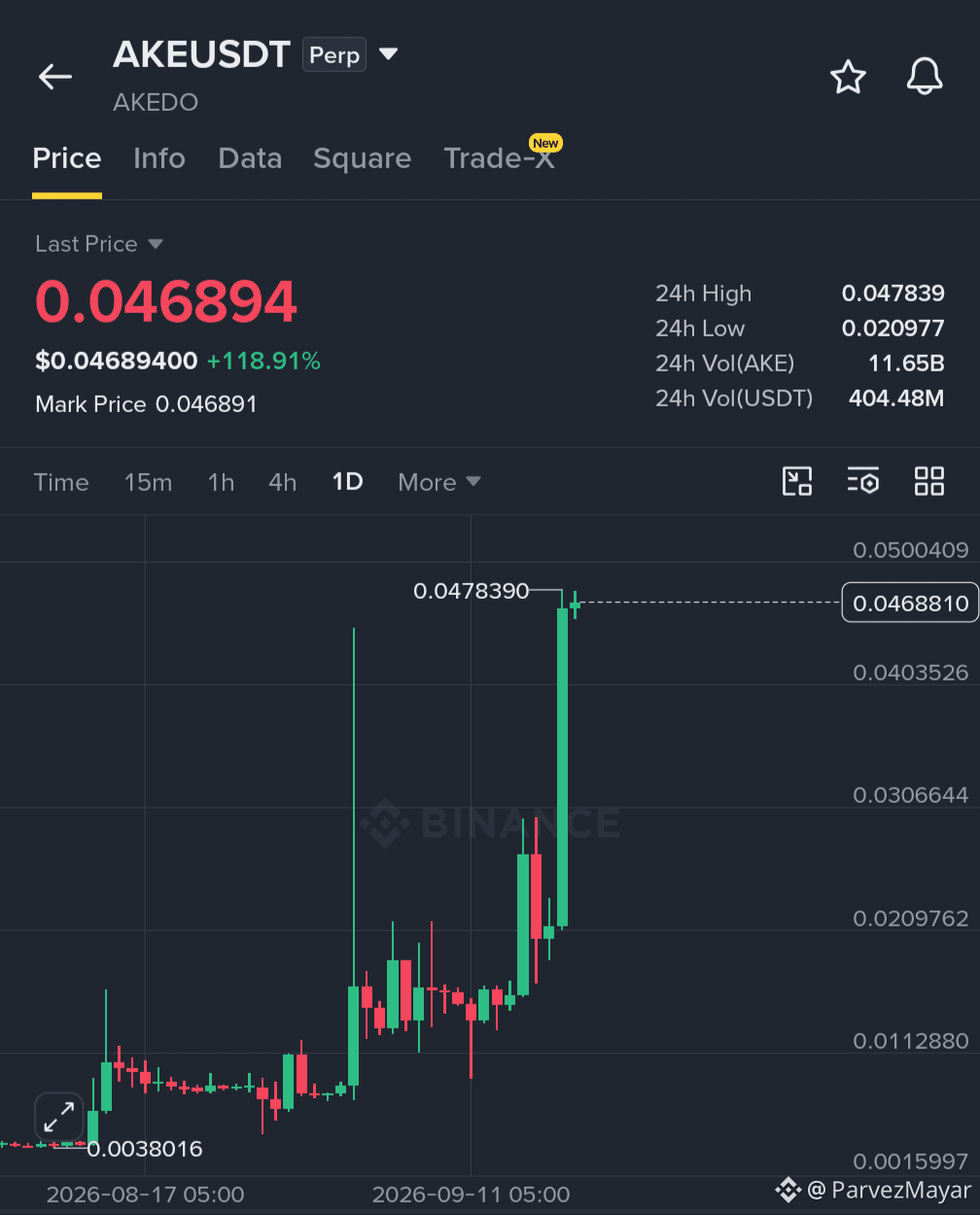
Okay... $AKE once again above $0.047, but this time with a proper calm steady plan and with a +100% move.
Did you already forget what happened last time? AKE pumped towards $0.044+ and immediately dumped hard...
And once again people are treating it like a safe trade after the massive green candle ❓😂
This is peak volatility... not the time to suddenly forget risk management.
Instead of chasing every low cap after +100%, i would rather keep watching stronger coins with deeper liquidity and established markets.
$ZEC is already pushing close to $1,600 after another strong run...
and $SOL finally broke that $110 resistance, touching above $114 💪🏻
Funny how people ignore these coins BEFORE the breakout... then start searching for the next +100% coin after it already pumped.
Don't let green candles make the decision for you.
{future}(AKEUSDT)
{future}(ZECUSDT)
{future}(SOLUSDT)
#ZcashDevelopersTargetNU7MainnetActivationNov5
#BTCBreaks80K
📍 DYOR!
Okay... $AKE once again above $0.047, but this time with a proper calm steady plan and with a +100% move.
Did you already forget what happened last time? AKE pumped towards $0.044+ and immediately dumped hard...
And once again people are treating it like a safe trade after the massive green candle ❓😂
This is peak volatility... not the time to suddenly forget risk management.
Instead of chasing every low cap after +100%, i would rather keep watching stronger coins with deeper liquidity and established markets.
$ZEC is already pushing close to $1,600 after another strong run...
and $SOL finally broke that $110 resistance, touching above $114 💪🏻
Funny how people ignore these coins BEFORE the breakout... then start searching for the next +100% coin after it already pumped.
Don't let green candles make the decision for you.
#ZcashDevelopersTargetNU7MainnetActivationNov5
#BTCBreaks80K
📍 DYOR!
Did you already forget what happened last time? AKE pumped towards $0.044+ and immediately dumped hard...
And once again people are treating it like a safe trade after the massive green candle ❓😂
This is peak volatility... not the time to suddenly forget risk management.
Instead of chasing every low cap after +100%, i would rather keep watching stronger coins with deeper liquidity and established markets.
$ZEC is already pushing close to $1,600 after another strong run...
and $SOL finally broke that $110 resistance, touching above $114 💪🏻
Funny how people ignore these coins BEFORE the breakout... then start searching for the next +100% coin after it already pumped.
Don't let green candles make the decision for you.
#ZcashDevelopersTargetNU7MainnetActivationNov5
#BTCBreaks80K
📍 DYOR!
2
1.2k
·
--
Bullish
Dear #binancians ,look at this mini bull run. 😁
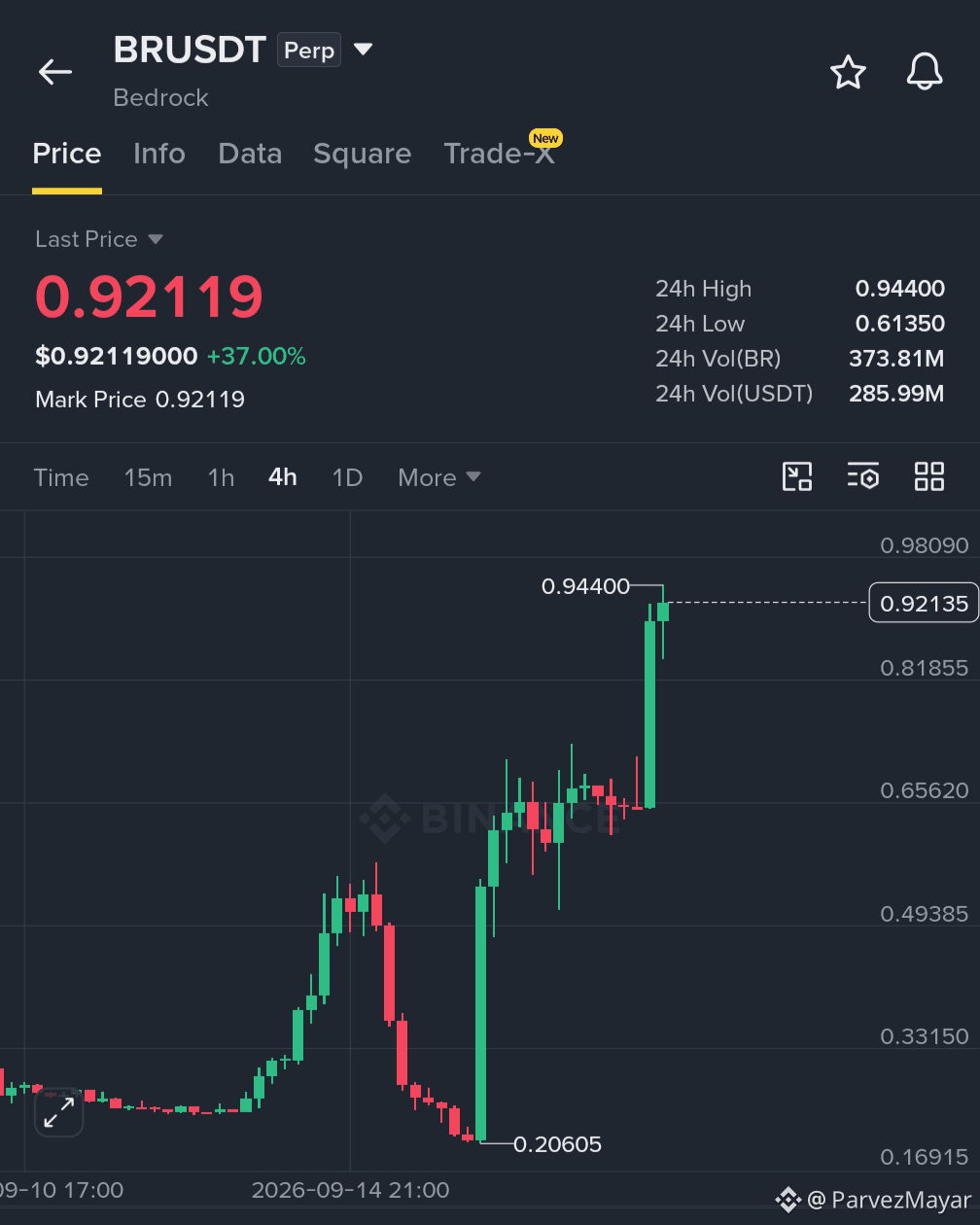
While all the major coins woke up, here i am watching $BR with +37% gains and already knocking near $1 😉
You thought BR to $1 was crazy right? lol.
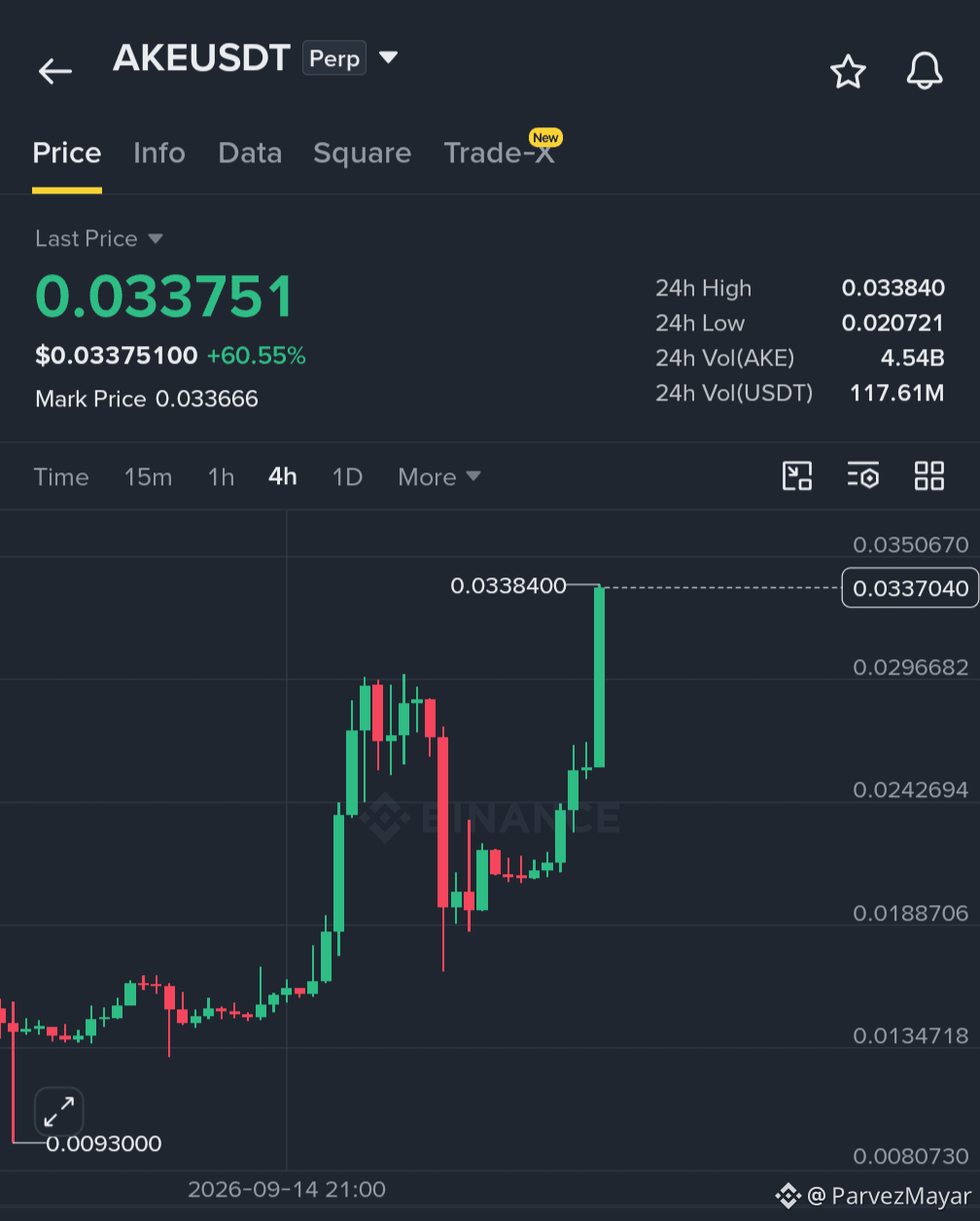
$AKE ... yes, AKEDO is once again up +60% and already above $0.033... impressive right?
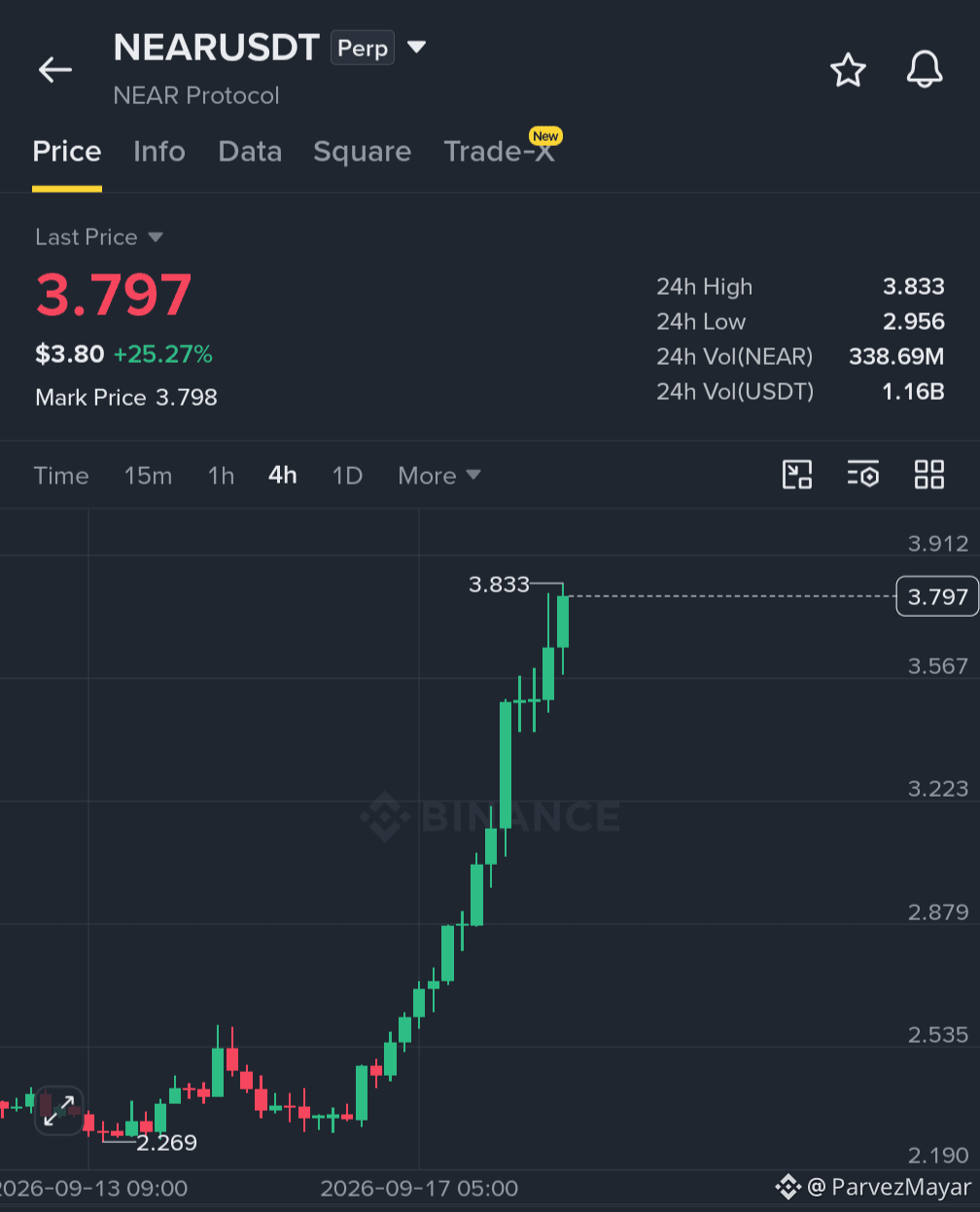
But i am watching $NEAR more closely.
These two low caps can trap anyone after such massive pumps... but if i have to choose something with a stronger ecosystem + real purpose behind it, NEAR Protocol gets my attention more.
NEAR is already +25% around $3.80, with more than $1B 24h volume... momentum is clearly there.
Still... chasing any coin after a vertical move is where people usually turn a good bull run into an expensive lesson 😆
{future}(NEARUSDT)
{future}(AKEUSDT)
{future}(BRUSDT)
#BTCBreaks80K
📍 NFA, DYOR!
Dear #binancians ,look at this mini bull run. 😁
While all the major coins woke up, here i am watching $BR with +37% gains and already knocking near $1 😉
You thought BR to $1 was crazy right? lol.
$AKE ... yes, AKEDO is once again up +60% and already above $0.033... impressive right?
But i am watching $NEAR more closely.
These two low caps can trap anyone after such massive pumps... but if i have to choose something with a stronger ecosystem + real purpose behind it, NEAR Protocol gets my attention more.
NEAR is already +25% around $3.80, with more than $1B 24h volume... momentum is clearly there.
Still... chasing any coin after a vertical move is where people usually turn a good bull run into an expensive lesson 😆
#BTCBreaks80K
📍 NFA, DYOR!
While all the major coins woke up, here i am watching $BR with +37% gains and already knocking near $1 😉
You thought BR to $1 was crazy right? lol.
$AKE ... yes, AKEDO is once again up +60% and already above $0.033... impressive right?
But i am watching $NEAR more closely.
These two low caps can trap anyone after such massive pumps... but if i have to choose something with a stronger ecosystem + real purpose behind it, NEAR Protocol gets my attention more.
NEAR is already +25% around $3.80, with more than $1B 24h volume... momentum is clearly there.
Still... chasing any coin after a vertical move is where people usually turn a good bull run into an expensive lesson 😆
#BTCBreaks80K
📍 NFA, DYOR!
2
926
·
--
Bullish
Holding $SOL 67.6 USDT
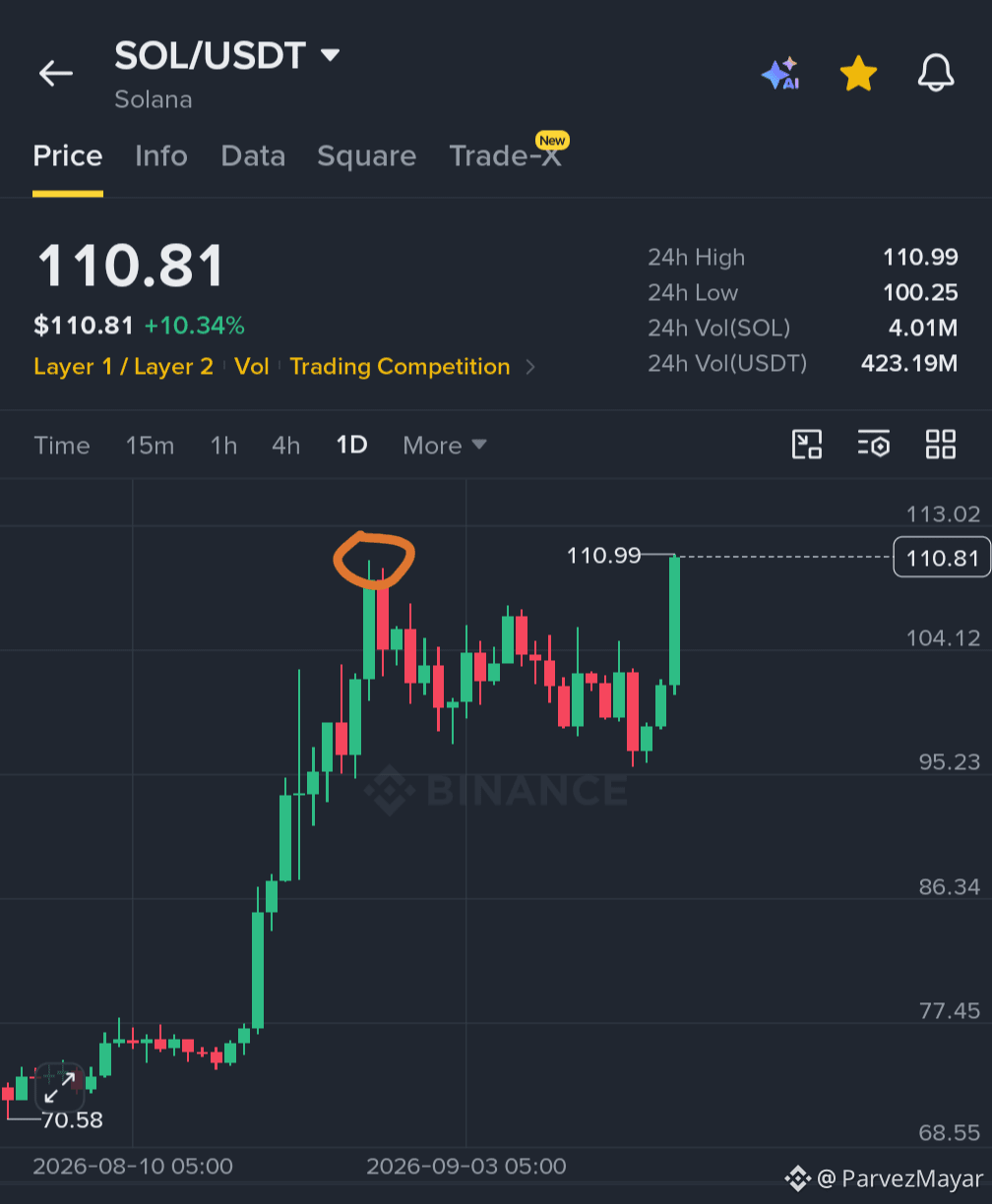
Yes.... $SOL just broke previous long held resistance at $110.60 with 10% pump💪🏻
Bitcoin #BTCBreaks80K too...
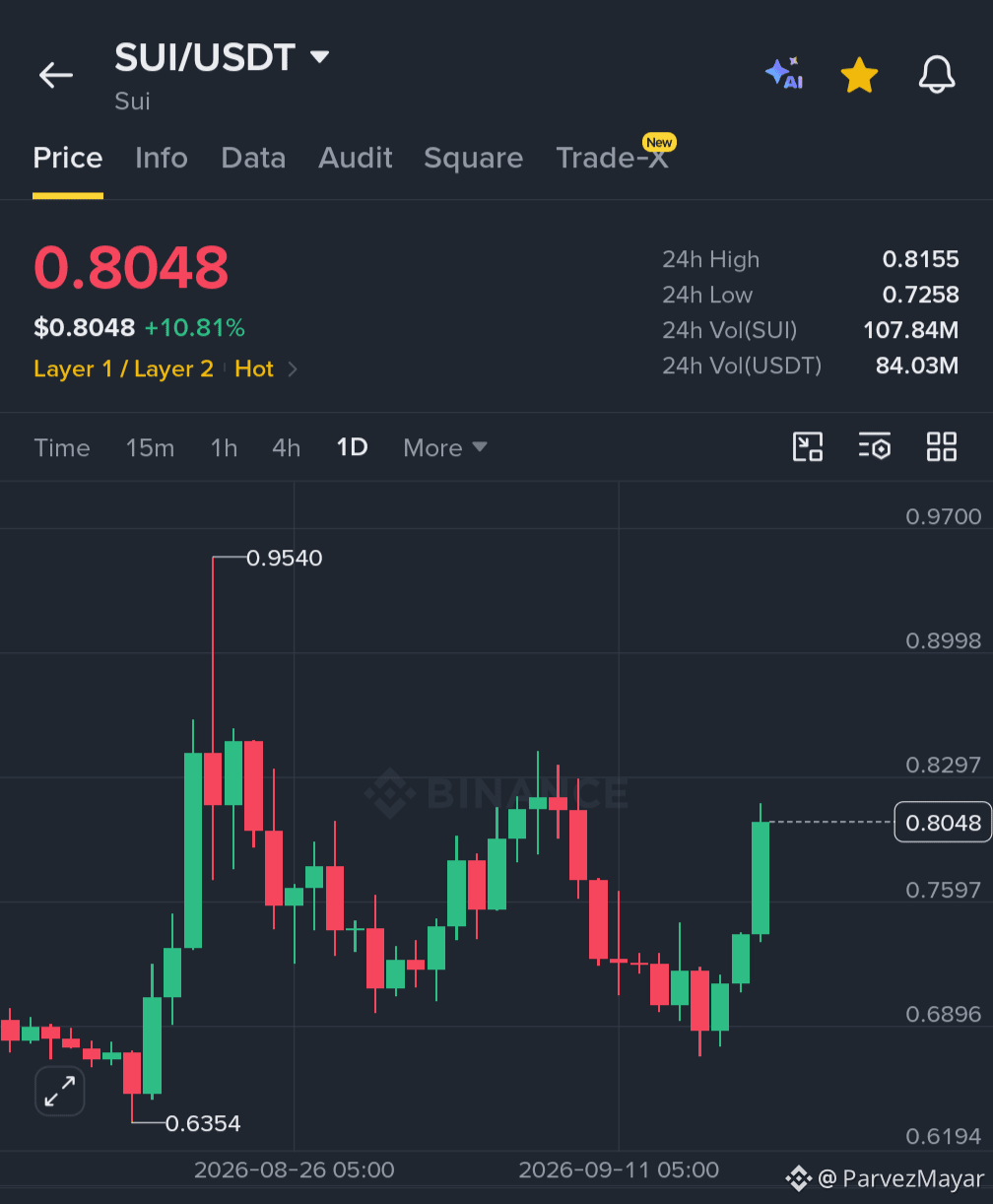
$SUI is also Above $0.8 with 10% gains.
Are we❓
ARE WE FINALLY HEADING TOWARDS MASSIVE BULL SEASON?
I am SO excited 😁
so who's still waiting for one more dump? keep waiting bro 😜
{future}(SUIUSDT)
{future}(SOLUSDT)
{future}(BTCUSDT)
Yes.... $SOL just broke previous long held resistance at $110.60 with 10% pump💪🏻
Bitcoin #BTCBreaks80K too...
$SUI is also Above $0.8 with 10% gains.
Are we❓
ARE WE FINALLY HEADING TOWARDS MASSIVE BULL SEASON?
I am SO excited 😁
so who's still waiting for one more dump? keep waiting bro 😜
Bitcoin #BTCBreaks80K too...
$SUI is also Above $0.8 with 10% gains.
Are we❓
ARE WE FINALLY HEADING TOWARDS MASSIVE BULL SEASON?
I am SO excited 😁
so who's still waiting for one more dump? keep waiting bro 😜
2
3
1.7k
·
--
Bullish
MARKET IS BULLISH ONCE AGAIN 💪🏻
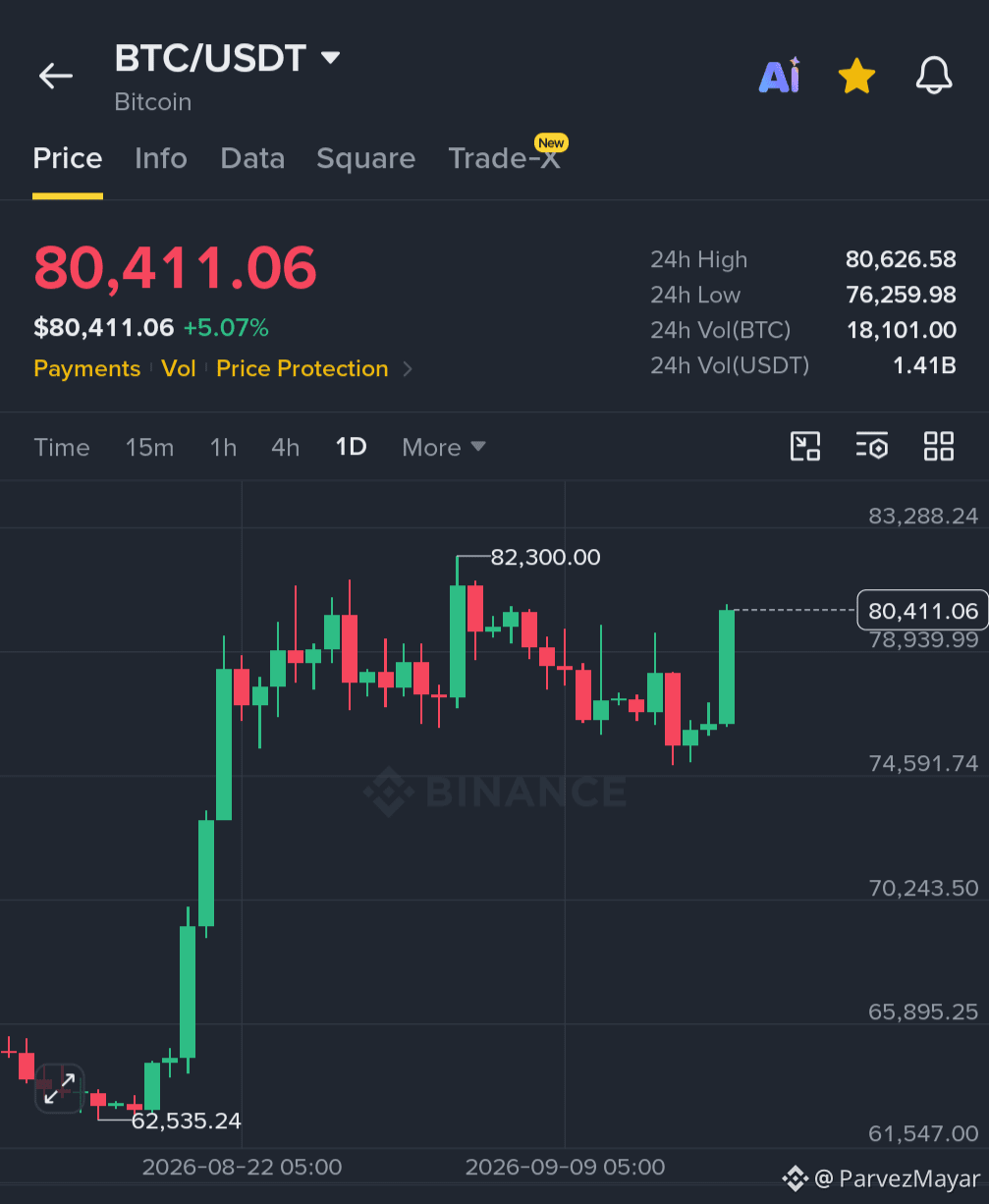
$BTC despite the FED rate hikes went from $76k to $80k.. hopefully this time Bitcoin breaks that $82k range and we finally enter the bull run of the season 😉
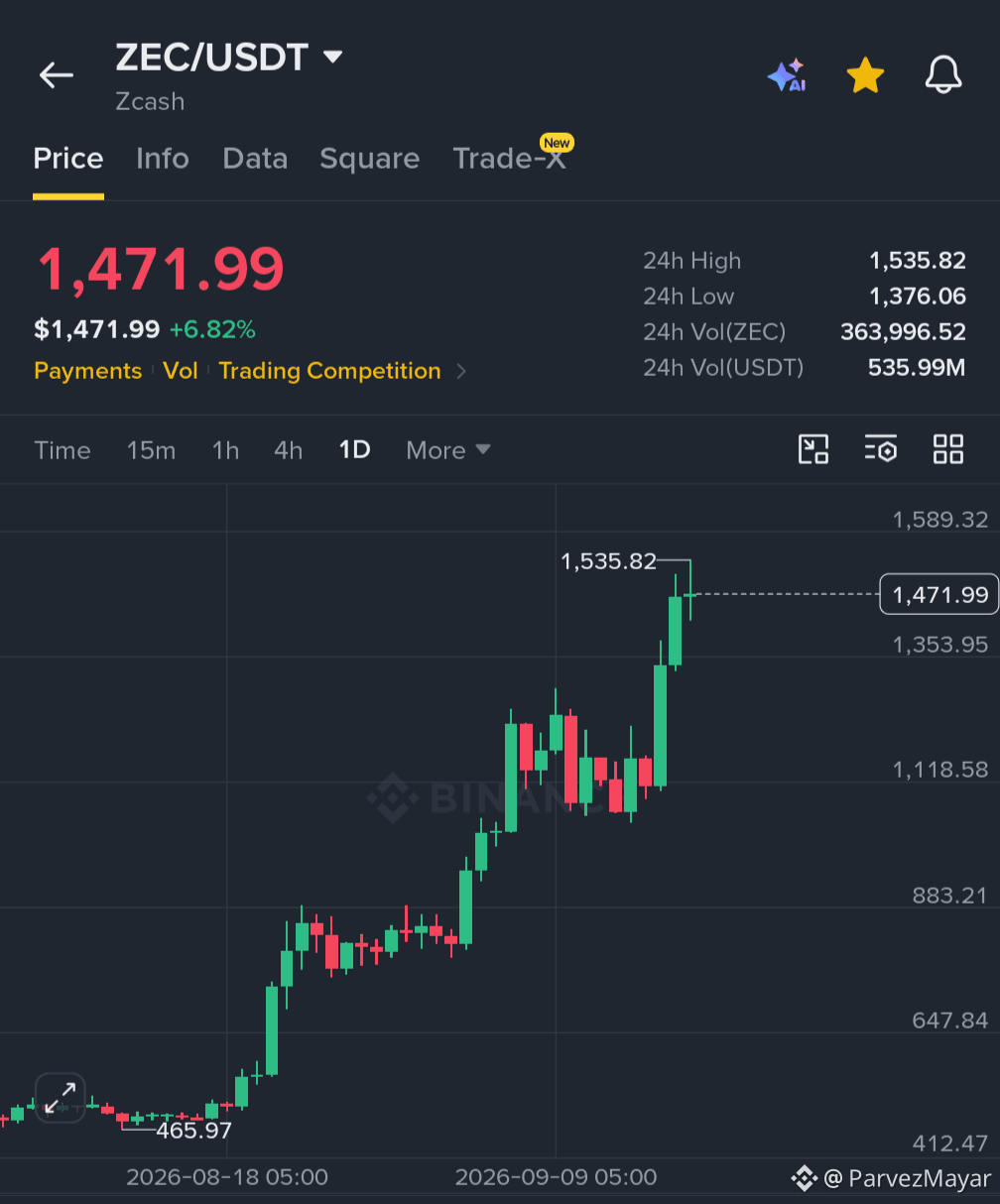
Also Zcash Spot ETF Tops $230M Monthly Inflow and $ZEC at $1,471 with peak at $1,535 😁
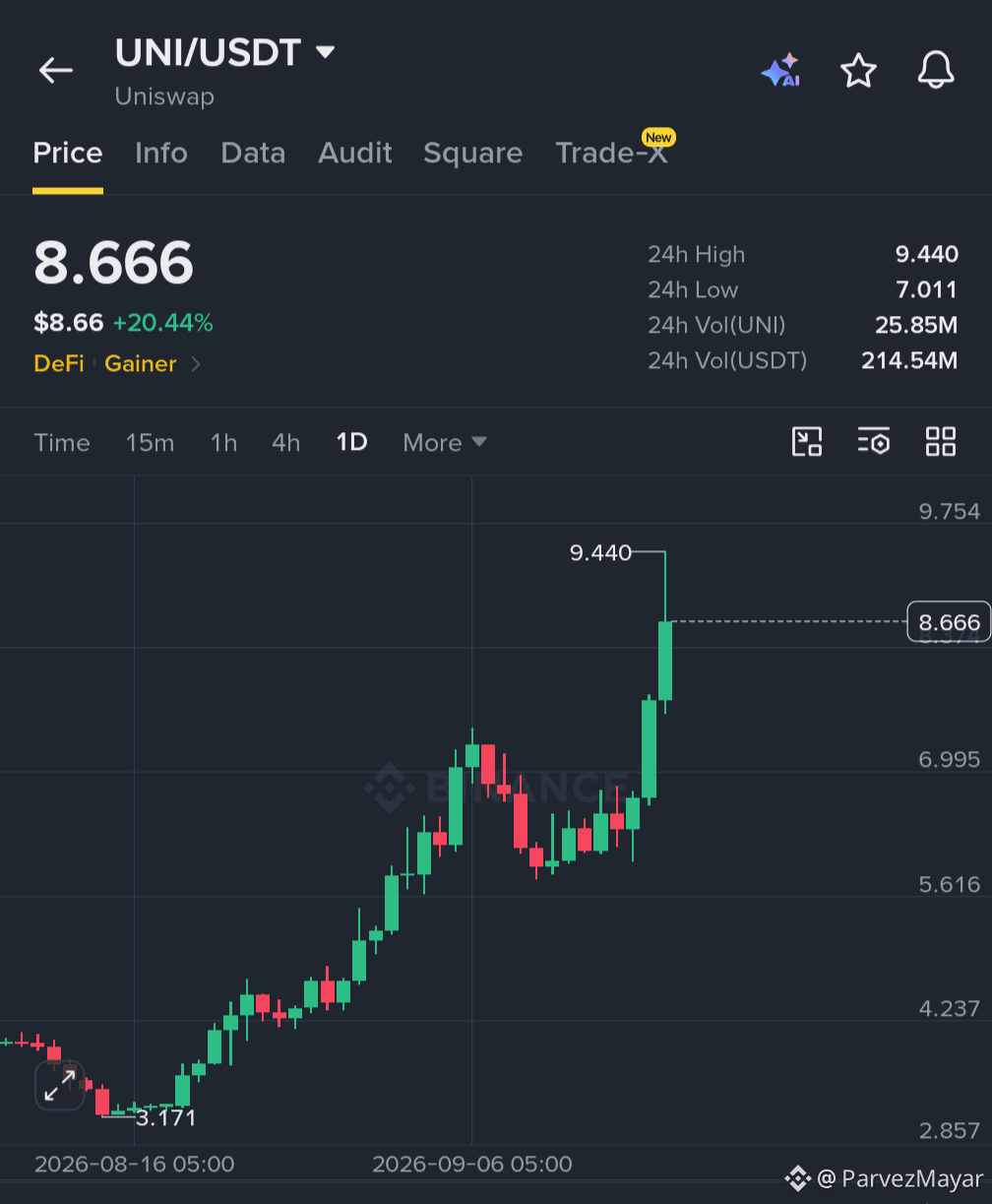
Uniswap the DeFi narrative picked up and $UNI just went all the way above $9 with massive 27% gains in last 24H.
MARKET is showing clear bullish signs with BNB, ETH, SOL etc all up and looking strong.
Don't be late to enter, time to get ready for GREEN portfolios in few months 💛
{future}(ZECUSDT)
{future}(BTCUSDT)
{future}(UNIUSDT)
#ZcashDevelopersTargetNU7MainnetActivationNov5
#BOJHikesRatesTo31YearHigh
#HYPEJumpsOver11%
#ZcashSpotETF
📍 Always DYOR!
MARKET IS BULLISH ONCE AGAIN 💪🏻
$BTC despite the FED rate hikes went from $76k to $80k.. hopefully this time Bitcoin breaks that $82k range and we finally enter the bull run of the season 😉
Also Zcash Spot ETF Tops $230M Monthly Inflow and $ZEC at $1,471 with peak at $1,535 😁
Uniswap the DeFi narrative picked up and $UNI just went all the way above $9 with massive 27% gains in last 24H.
MARKET is showing clear bullish signs with BNB, ETH, SOL etc all up and looking strong.
Don't be late to enter, time to get ready for GREEN portfolios in few months 💛
#ZcashDevelopersTargetNU7MainnetActivationNov5
#BOJHikesRatesTo31YearHigh
#HYPEJumpsOver11%
#ZcashSpotETF
📍 Always DYOR!
$BTC despite the FED rate hikes went from $76k to $80k.. hopefully this time Bitcoin breaks that $82k range and we finally enter the bull run of the season 😉
Also Zcash Spot ETF Tops $230M Monthly Inflow and $ZEC at $1,471 with peak at $1,535 😁
Uniswap the DeFi narrative picked up and $UNI just went all the way above $9 with massive 27% gains in last 24H.
MARKET is showing clear bullish signs with BNB, ETH, SOL etc all up and looking strong.
Don't be late to enter, time to get ready for GREEN portfolios in few months 💛
#ZcashDevelopersTargetNU7MainnetActivationNov5
#BOJHikesRatesTo31YearHigh
#HYPEJumpsOver11%
#ZcashSpotETF
📍 Always DYOR!
2
5
4k
·
--
Bullish
30D trade $BNB 575.3 USDT
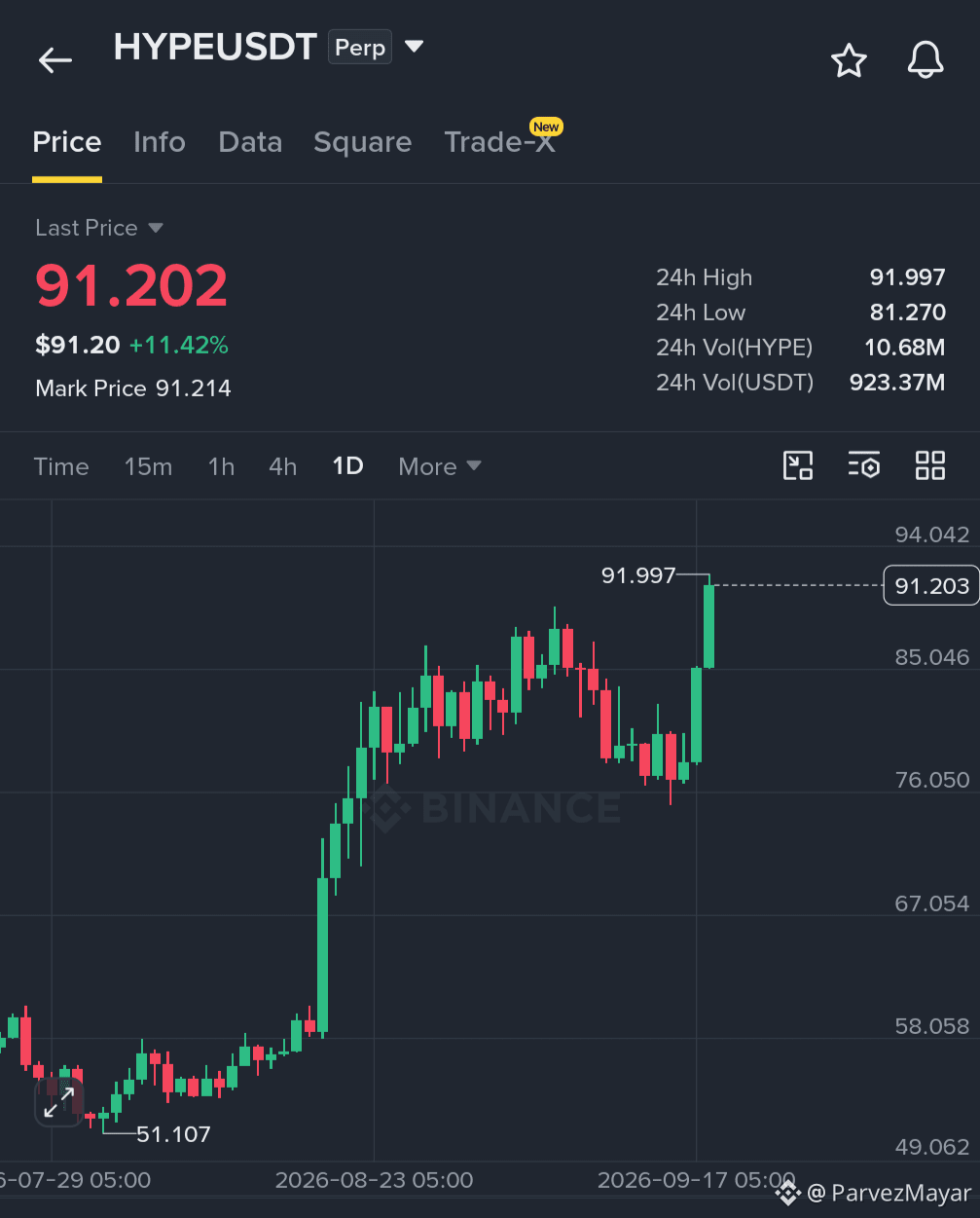
Woww.. $HYPE just hits a new HIGH 😉
HyperLiquid's HYPE is already touching $100, are we looking at another coin like $BNB ❓
DON'T IGNORE $HYPE at any cost... this thing has been on a different level for past couple of months.
{future}(HYPEUSDT)
{future}(BNBUSDT)
#HYPEJumpsOver11%
📍DYOR!
Woww.. $HYPE just hits a new HIGH 😉
HyperLiquid's HYPE is already touching $100, are we looking at another coin like $BNB ❓
DON'T IGNORE $HYPE at any cost... this thing has been on a different level for past couple of months.
#HYPEJumpsOver11%
📍DYOR!
HyperLiquid's HYPE is already touching $100, are we looking at another coin like $BNB ❓
DON'T IGNORE $HYPE at any cost... this thing has been on a different level for past couple of months.
#HYPEJumpsOver11%
📍DYOR!
3
624
·
--
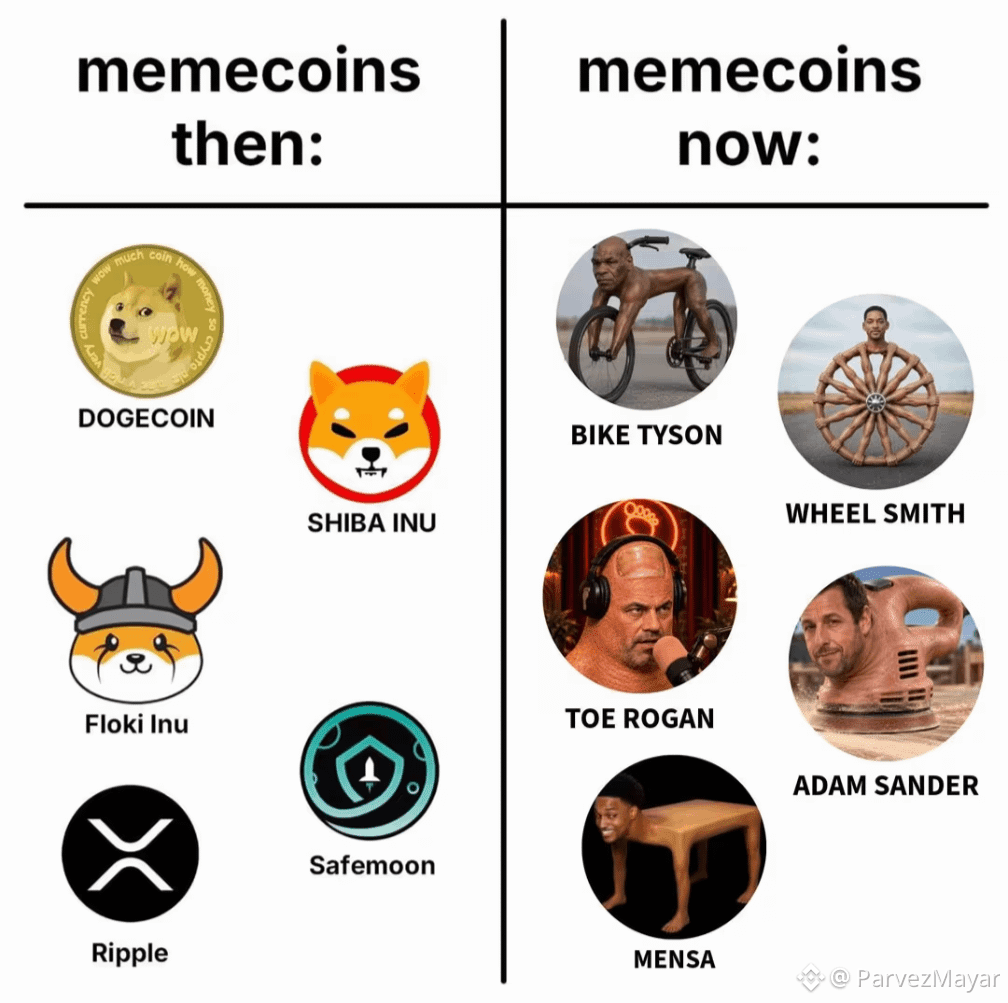
😆 This is so accurate.
We had OG meme coins like $PEPE , $DOGE , $SHIB etc back then.
😆 This is so accurate.
We had OG meme coins like $PEPE , $DOGE , $SHIB etc back then.
We had OG meme coins like $PEPE , $DOGE , $SHIB etc back then.
3
8
5.8k
·
--
Bullish
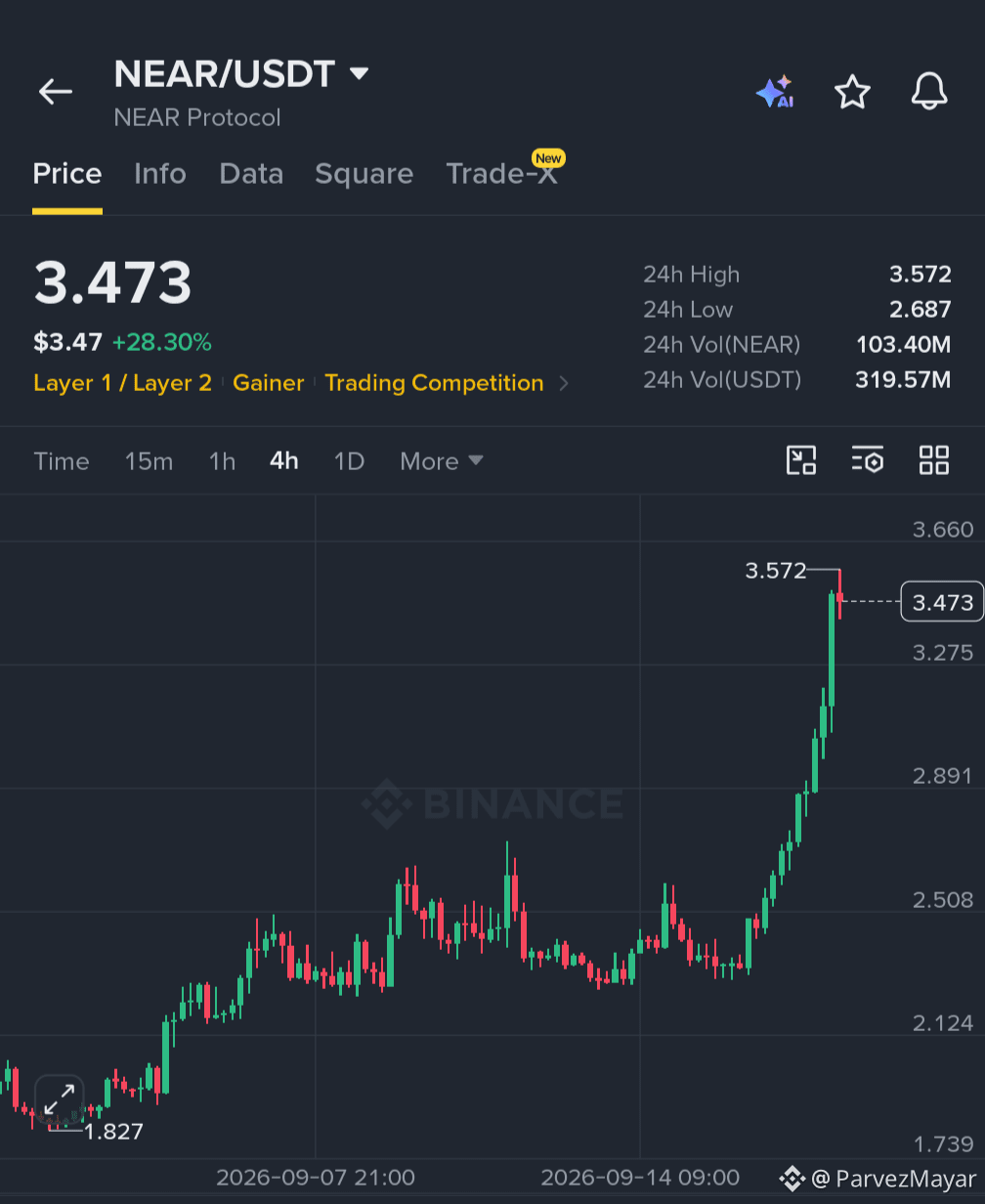
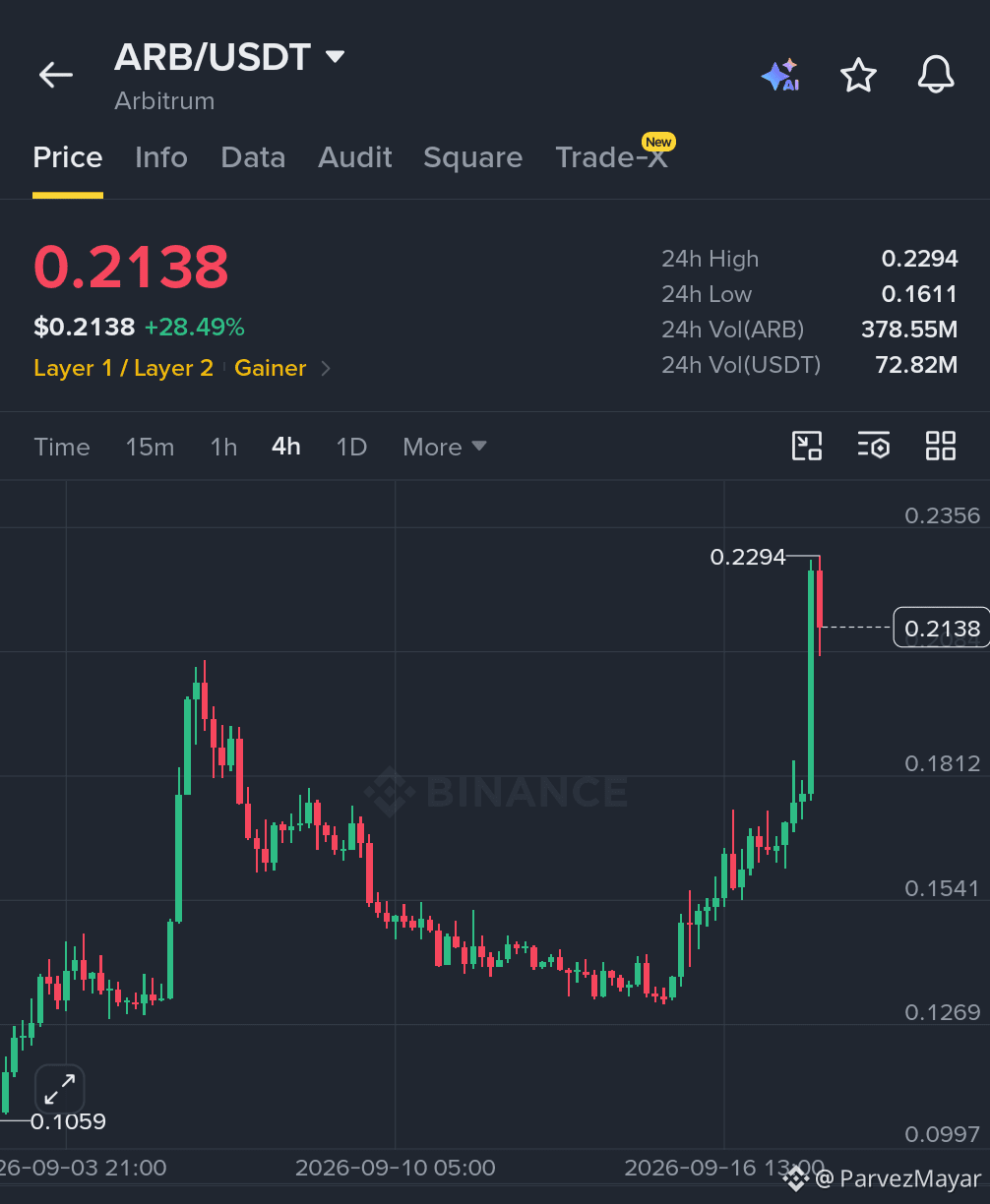
My TOP 3 HOT coins right now 😁🔥
$UNI , $NEAR and $ARB 💪🏻
I told you guys about UNI and NEAR few days ago when nobody was really interested...
Now look 😂
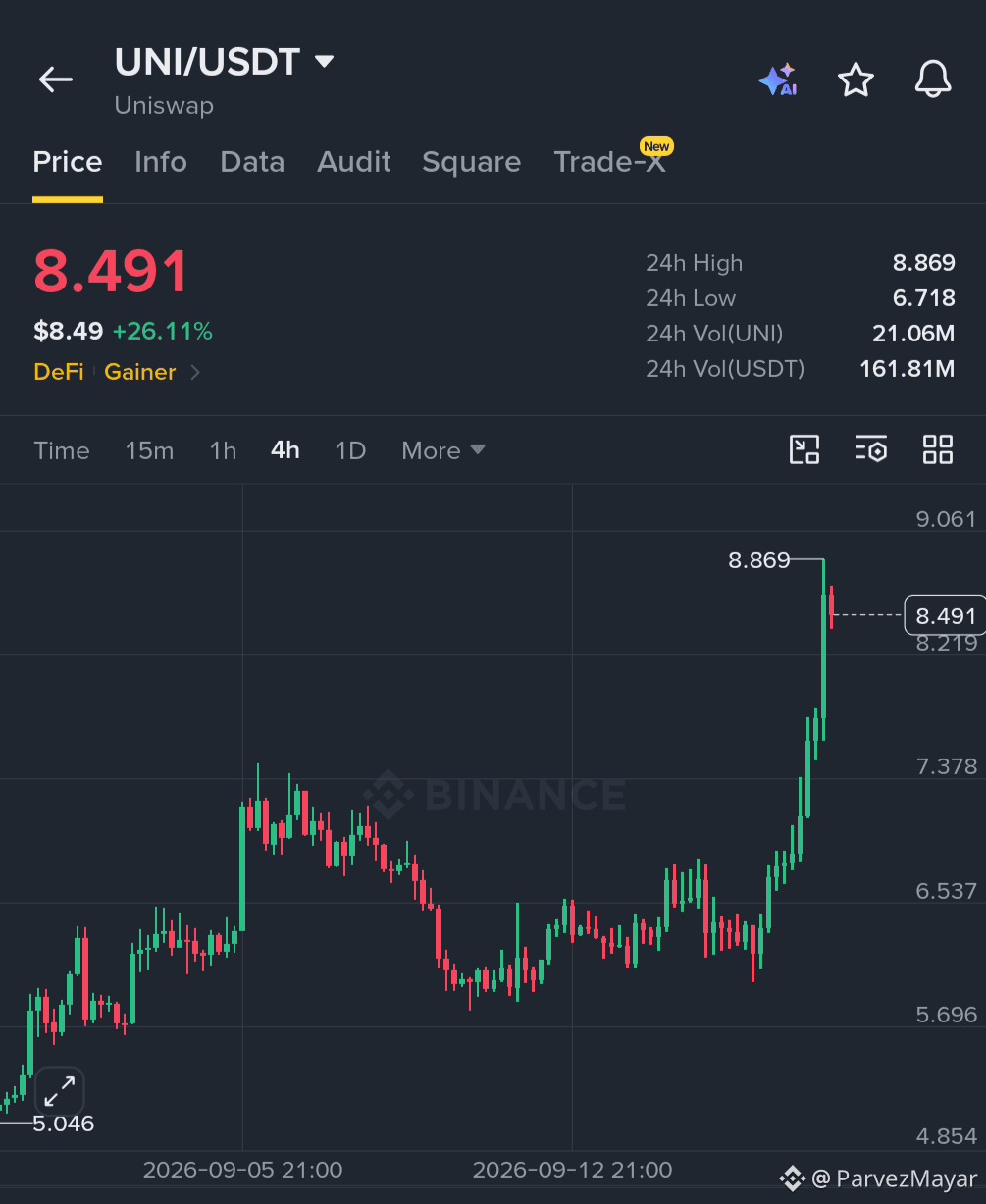
Uniswap +26% near $8.50
Near protocol+28% near $3.50
Arbitrium +28% above $0.21
And honestly... momentum on all 3 is HOT right now.
Don't wait for another +100% move to suddenly discover them 😆
I am watching pullbacks for entries... not chasing these vertical green candles. 👀
{future}(NEARUSDT)
{future}(UNIUSDT)
{future}(ARBUSDT)
#XRPGains3%AsRippleAddsMPPSupport
#ChainlinkPowersBottomlinePaymentPlatform
#Uni
📍DYOR and stay safe 💛
My TOP 3 HOT coins right now 😁🔥
$UNI , $NEAR and $ARB 💪🏻
I told you guys about UNI and NEAR few days ago when nobody was really interested...
Now look 😂
Uniswap +26% near $8.50
Near protocol+28% near $3.50
Arbitrium +28% above $0.21
And honestly... momentum on all 3 is HOT right now.
Don't wait for another +100% move to suddenly discover them 😆
I am watching pullbacks for entries... not chasing these vertical green candles. 👀
#XRPGains3%AsRippleAddsMPPSupport
#ChainlinkPowersBottomlinePaymentPlatform
#Uni
📍DYOR and stay safe 💛
$UNI , $NEAR and $ARB 💪🏻
I told you guys about UNI and NEAR few days ago when nobody was really interested...
Now look 😂
Uniswap +26% near $8.50
Near protocol+28% near $3.50
Arbitrium +28% above $0.21
And honestly... momentum on all 3 is HOT right now.
Don't wait for another +100% move to suddenly discover them 😆
I am watching pullbacks for entries... not chasing these vertical green candles. 👀
#XRPGains3%AsRippleAddsMPPSupport
#ChainlinkPowersBottomlinePaymentPlatform
#Uni
📍DYOR and stay safe 💛
8
4.3k
·
--
Bullish
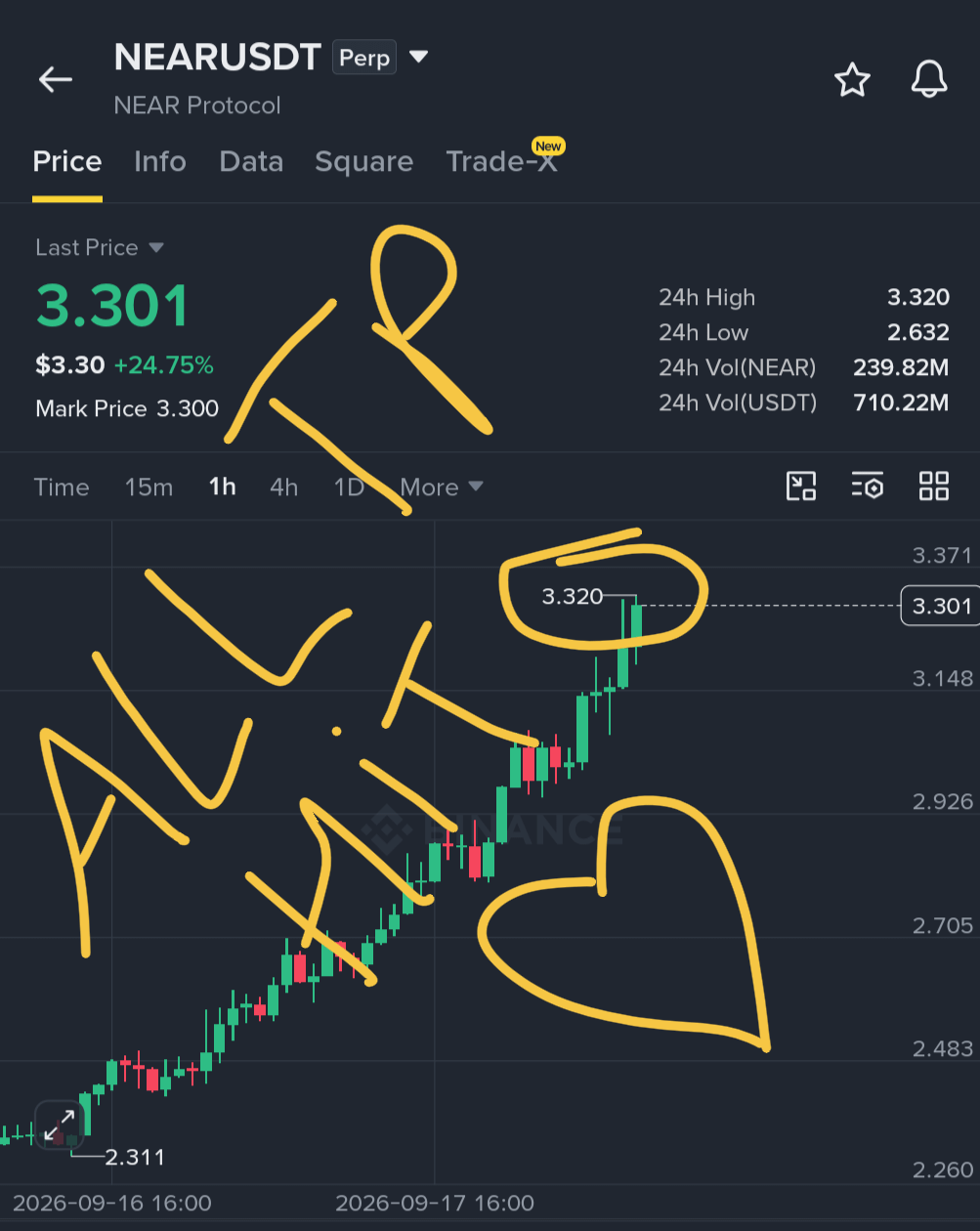
😁💪🏻 Yesterday i shared this $NEAR LONG setup when price was around our $2.62-$2.70 entry zone...
And look at NEAR now... $3.30+ and ALL 3 TARGETS smashed 🔥
Entry: $2.62-$2.70
✅ TP1: $2.85
✅ TP2: $3.05
✅ TP3: $3.30+
Almost +25% today... and the best part? We didn't need some stupid 50X leverage to make this a good trade 😂
We waited for breakout... got our entry and NEAR just kept building higher highs and higher lows all the way toward $3.32.
And remember what i said yesterday about ZEC attention too? 😁
NEAR Intents supports Zcash directly across its multichain infrastructure... so i still don't think NEAR moving while ZEC is getting massive attention is a completely random narrative.
Now after taking profits on the trade... i am looking at NEAR differently for SPOT 💪🏻
📍 NEAR SPOT DCA PLAN
$3.00-$3.15 = first accumulation
$2.70-$2.85 = stronger DCA
$2.45-$2.60 = deeper DCA
$2.20-$2.35 = heavy pullback zone
🎯 Long-term targets: $5 / $7 / $10+
Trade profits are trade profits... take them 😆
But for SPOT i don't need to chase NEAR at +25% today.
Let the market cool... accumulate pullbacks and give the bigger move TIME.
Because somehow people don't want NEAR at $2.50...
Then if it reaches $5, suddenly everybody will ask me where to BUY 😂💪🏻
TRADE HER3 👇🏻
{future}(NEARUSDT)
$ONE
{future}(ONEUSDT)
$UNI
{future}(UNIUSDT)
#SECGrantsInnovationExemptionForTokenizedStocks
#USWeeklyJoblessClaimsFallTo196K
#FCARaidsThreeLondonIllegalCryptoSites
#CLARITYAct
📍 Always DYOR!
😁💪🏻 Yesterday i shared this $NEAR LONG setup when price was around our $2.62-$2.70 entry zone...
And look at NEAR now... $3.30+ and ALL 3 TARGETS smashed 🔥
Entry: $2.62-$2.70
✅ TP1: $2.85
✅ TP2: $3.05
✅ TP3: $3.30+
Almost +25% today... and the best part? We didn't need some stupid 50X leverage to make this a good trade 😂
We waited for breakout... got our entry and NEAR just kept building higher highs and higher lows all the way toward $3.32.
And remember what i said yesterday about ZEC attention too? 😁
NEAR Intents supports Zcash directly across its multichain infrastructure... so i still don't think NEAR moving while ZEC is getting massive attention is a completely random narrative.
Now after taking profits on the trade... i am looking at NEAR differently for SPOT 💪🏻
📍 NEAR SPOT DCA PLAN
$3.00-$3.15 = first accumulation
$2.70-$2.85 = stronger DCA
$2.45-$2.60 = deeper DCA
$2.20-$2.35 = heavy pullback zone
🎯 Long-term targets: $5 / $7 / $10+
Trade profits are trade profits... take them 😆
But for SPOT i don't need to chase NEAR at +25% today.
Let the market cool... accumulate pullbacks and give the bigger move TIME.
Because somehow people don't want NEAR at $2.50...
Then if it reaches $5, suddenly everybody will ask me where to BUY 😂💪🏻
TRADE HER3 👇🏻
$ONE
$UNI
#SECGrantsInnovationExemptionForTokenizedStocks
#USWeeklyJoblessClaimsFallTo196K
#FCARaidsThreeLondonIllegalCryptoSites
#CLARITYAct
📍 Always DYOR!
And look at NEAR now... $3.30+ and ALL 3 TARGETS smashed 🔥
Entry: $2.62-$2.70
✅ TP1: $2.85
✅ TP2: $3.05
✅ TP3: $3.30+
Almost +25% today... and the best part? We didn't need some stupid 50X leverage to make this a good trade 😂
We waited for breakout... got our entry and NEAR just kept building higher highs and higher lows all the way toward $3.32.
And remember what i said yesterday about ZEC attention too? 😁
NEAR Intents supports Zcash directly across its multichain infrastructure... so i still don't think NEAR moving while ZEC is getting massive attention is a completely random narrative.
Now after taking profits on the trade... i am looking at NEAR differently for SPOT 💪🏻
📍 NEAR SPOT DCA PLAN
$3.00-$3.15 = first accumulation
$2.70-$2.85 = stronger DCA
$2.45-$2.60 = deeper DCA
$2.20-$2.35 = heavy pullback zone
🎯 Long-term targets: $5 / $7 / $10+
Trade profits are trade profits... take them 😆
But for SPOT i don't need to chase NEAR at +25% today.
Let the market cool... accumulate pullbacks and give the bigger move TIME.
Because somehow people don't want NEAR at $2.50...
Then if it reaches $5, suddenly everybody will ask me where to BUY 😂💪🏻
TRADE HER3 👇🏻
$ONE
$UNI
#SECGrantsInnovationExemptionForTokenizedStocks
#USWeeklyJoblessClaimsFallTo196K
#FCARaidsThreeLondonIllegalCryptoSites
#CLARITYAct
📍 Always DYOR!
ParvezMayar
·
--
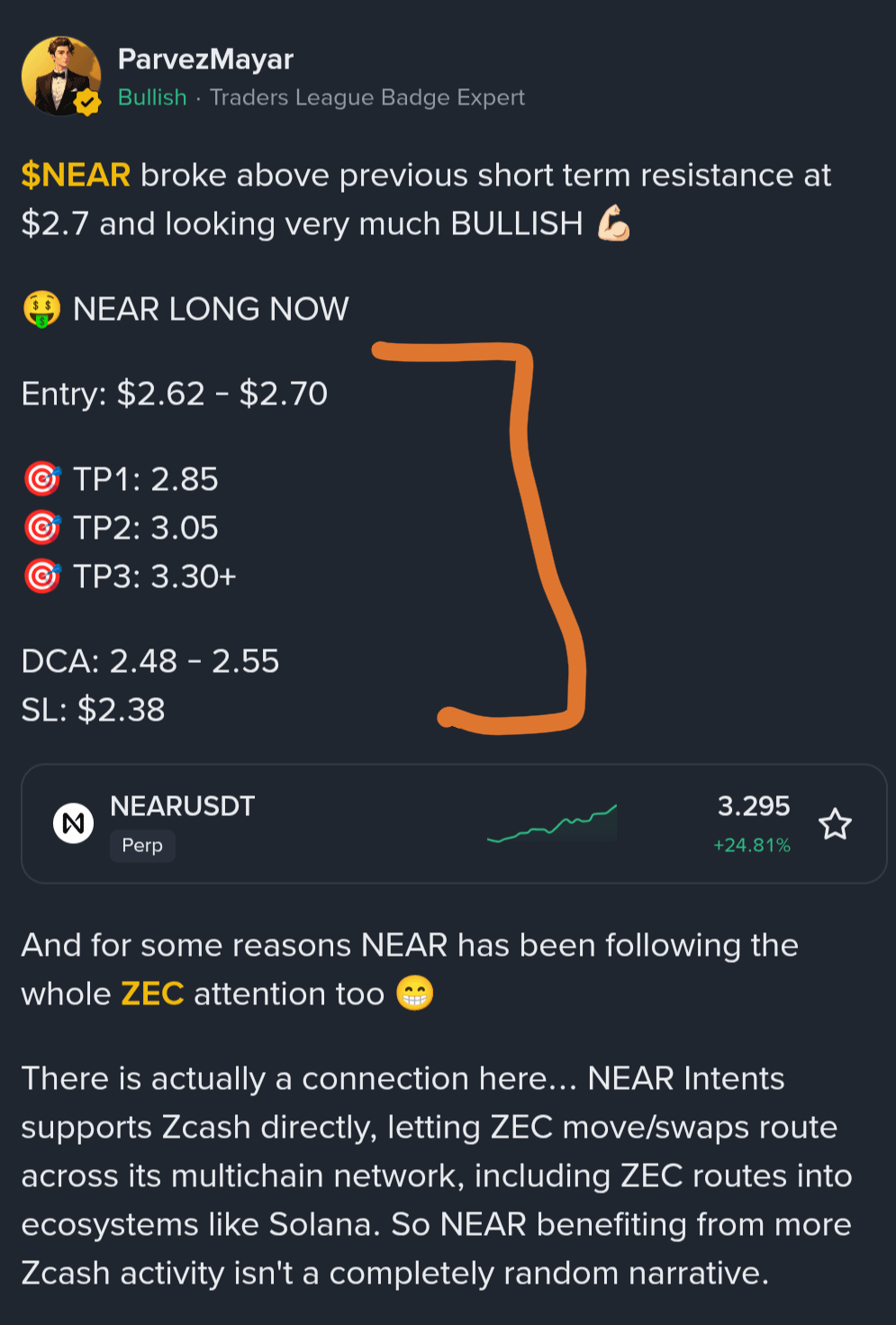
Bullish$NEAR broke above previous short term resistance at $2.7 and looking very much BULLISH 💪🏻
🤑 NEAR LONG NOW
Entry: $2.62 - $2.70
🎯 TP1: 2.85
🎯 TP2: 3.05
🎯 TP3: 3.30+
DCA: 2.48 - 2.55
SL: $2.38
And for some reasons NEAR has been following the whole ZEC attention too 😁
There is actually a connection here... NEAR Intents supports Zcash directly, letting ZEC move/swaps route across its multichain network, including ZEC routes into ecosystems like Solana. So NEAR benefiting from more Zcash activity isn't a completely random narrative.
Apart from that i am also watching $AVA and $MARSCOIN 👀
AVA already did almost +70% today... i would rather wait for a proper SHORTING opportunity instead of chasing that vertical candle.
MARSCOIN around $0.11 is different... watching this one for a SPOT buy point on a good pullback.
Don't force all three trades just because all three charts are moving 😆
#AmazonGetsWarrantsToBuyGeneracStock
#FedSEPProjects2026RateAt4.1%
#FedHikes25BpsUSStocksClose
#USHouseAdvancesBitcoinReserveBill
📍 DYOR!
🤑 NEAR LONG NOW
Entry: $2.62 - $2.70
🎯 TP1: 2.85
🎯 TP2: 3.05
🎯 TP3: 3.30+
DCA: 2.48 - 2.55
SL: $2.38
And for some reasons NEAR has been following the whole ZEC attention too 😁
There is actually a connection here... NEAR Intents supports Zcash directly, letting ZEC move/swaps route across its multichain network, including ZEC routes into ecosystems like Solana. So NEAR benefiting from more Zcash activity isn't a completely random narrative.
Apart from that i am also watching $AVA and $MARSCOIN 👀
AVA already did almost +70% today... i would rather wait for a proper SHORTING opportunity instead of chasing that vertical candle.
MARSCOIN around $0.11 is different... watching this one for a SPOT buy point on a good pullback.
Don't force all three trades just because all three charts are moving 😆
#AmazonGetsWarrantsToBuyGeneracStock
#FedSEPProjects2026RateAt4.1%
#FedHikes25BpsUSStocksClose
#USHouseAdvancesBitcoinReserveBill
📍 DYOR!
1
5
806
·
--
Bullish
Guys... Any chance for $ZEC to $2,500❓
{future}(ZECUSDT)
{future}(NEARUSDT)
{future}(DASHUSDT)
Guys... Any chance for $ZEC to $2,500❓
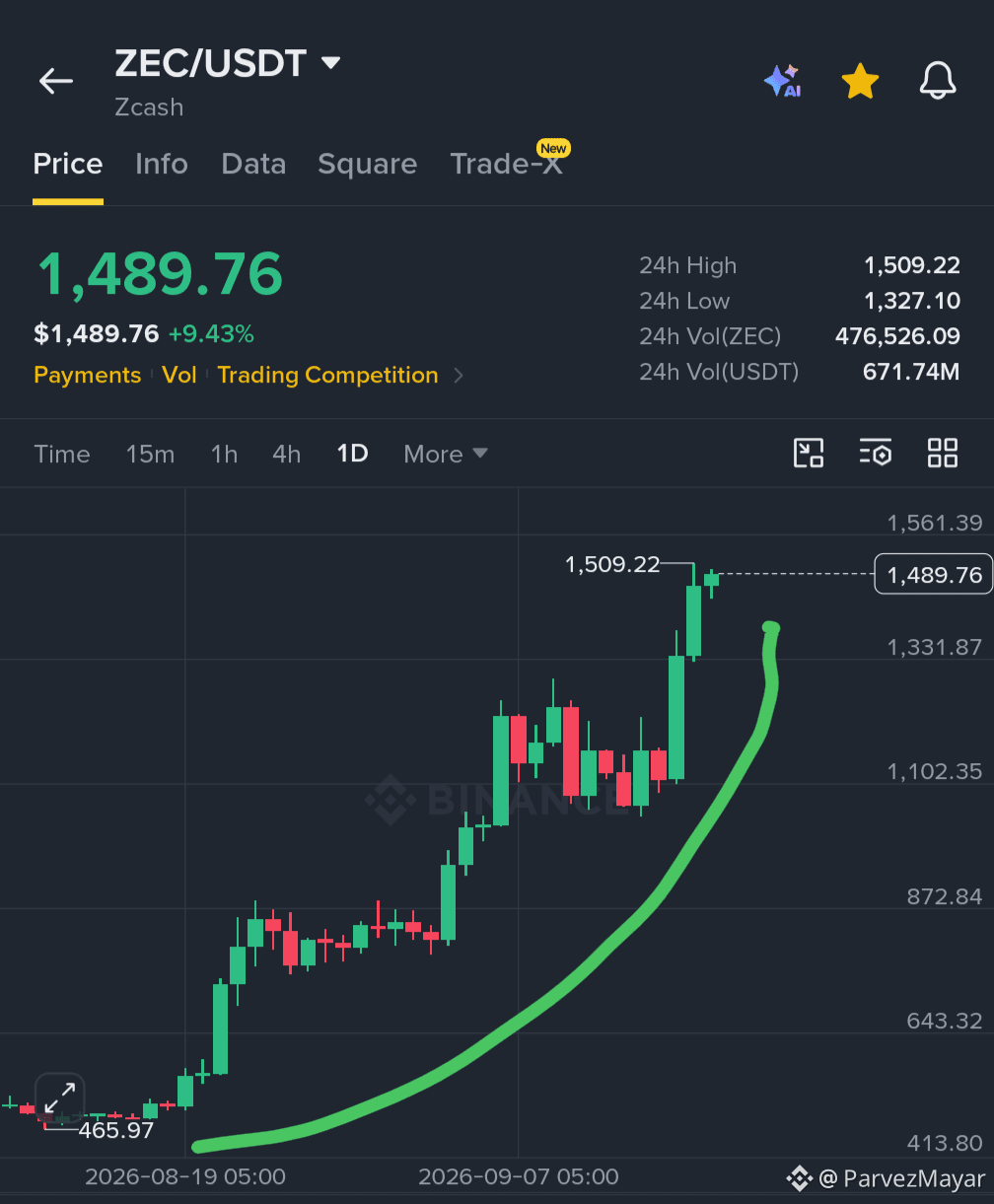
3
21
8.1k
·
--
30D trade $ZEC 3.8K USDT
Okay so... if you ask me my TOP 5 hot choices right now with serious upside potential... even 10X potential if the bigger bull market really opens up 😉
I would say...
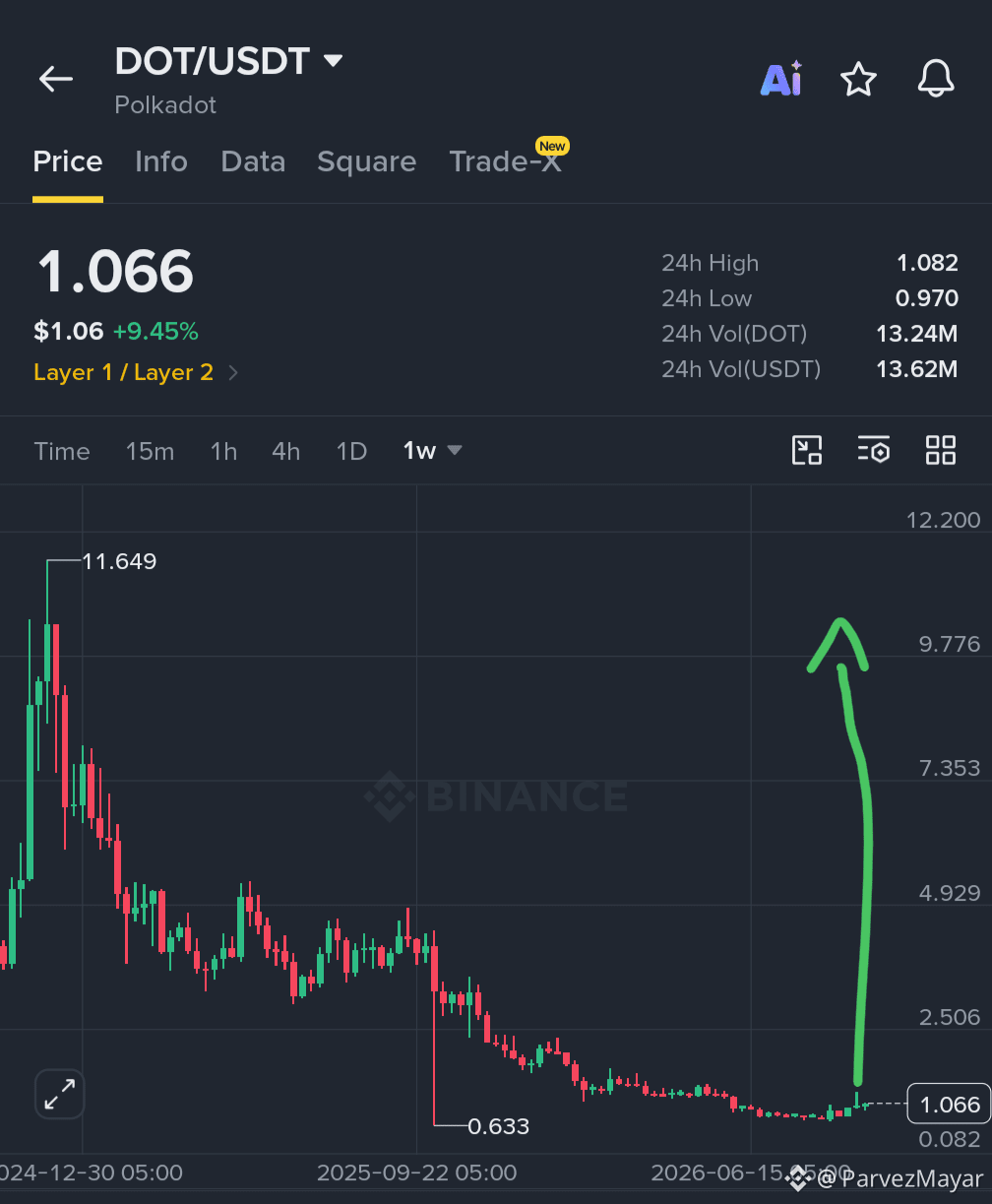
1. $DOT
Around $1 after trading above $10 before... and Polkadot isn't some random low cap created yesterday.
Real ecosystem, interoperability narrative and years of development behind it. 💪🏻
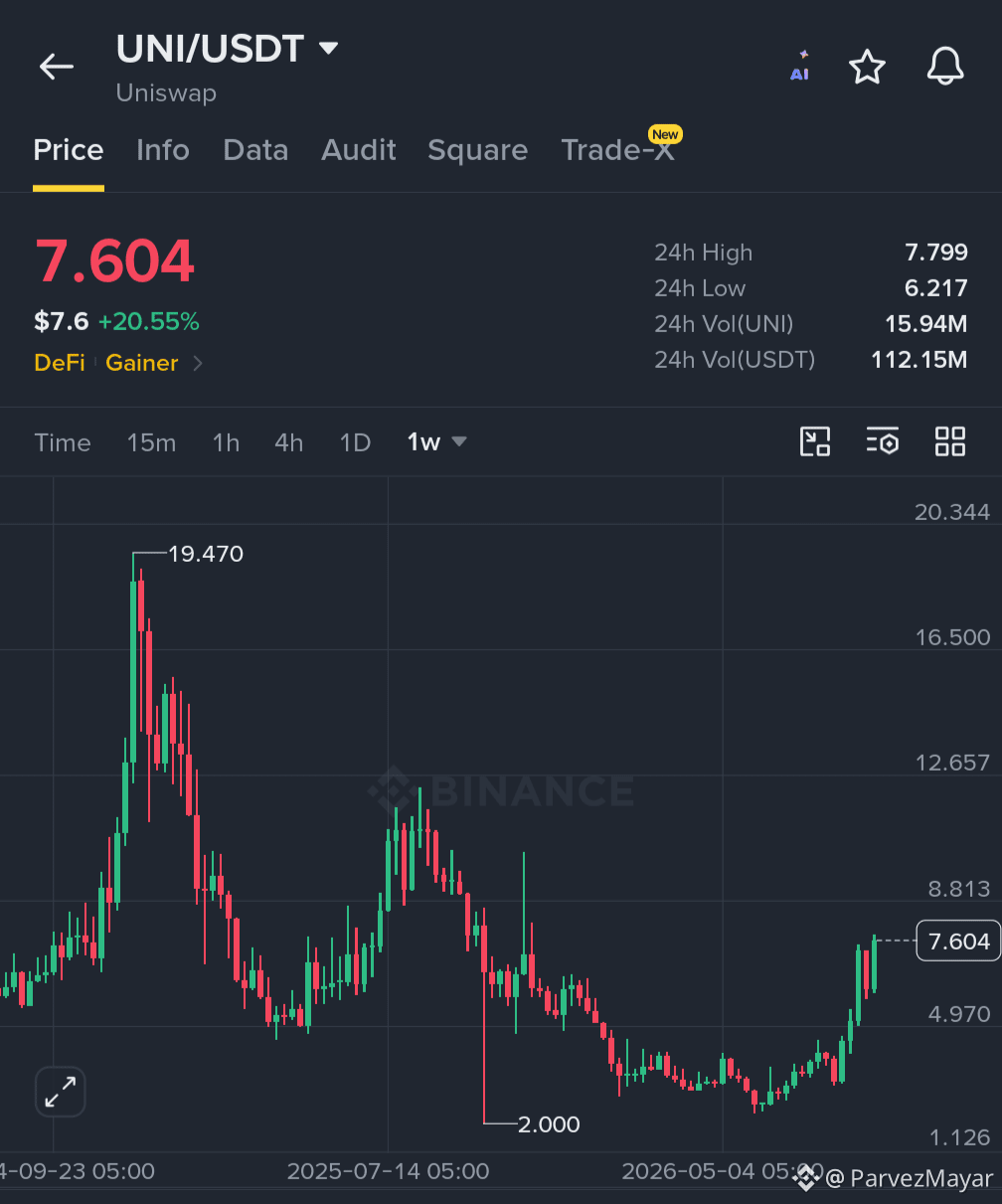
2. $UNI
DeFi is one narrative i absolutely want exposure to.
UNI already moved from around $2 to $7+... strong brand, real usage and infrastructure behind it. I would rather accumulate before everyone starts screaming UNI at $15-$20 😁
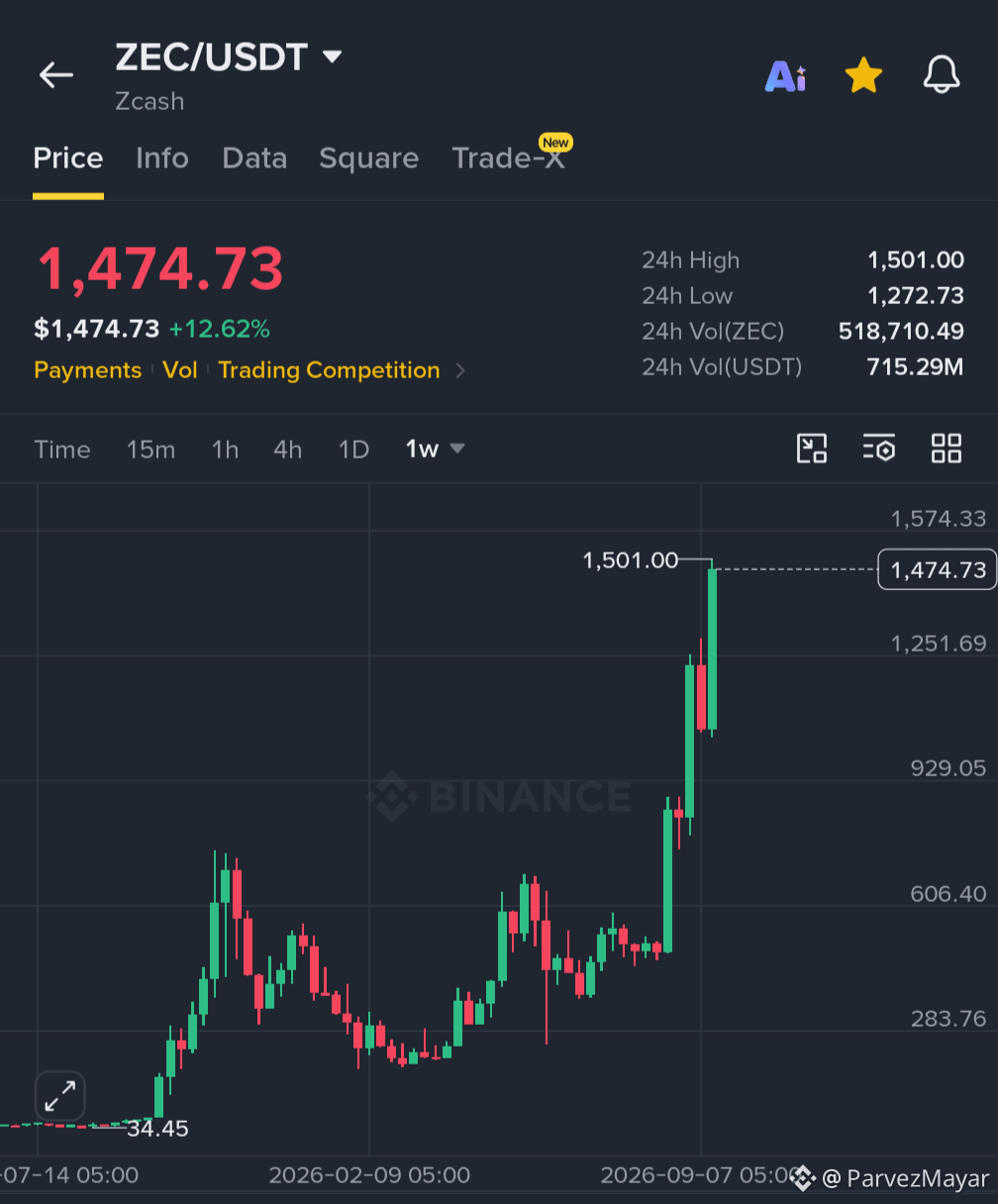
3. $ZEC
Why ZEC??
Actually give me ONE reason why i should NOT have ZEC in my top 5 😆
Privacy narrative is HOT 🔥 Bitcoin-style 21M max supply, halving structure and now institutional access through Grayscale's ZCSH ETF.
Even after the CLARITY Act failed to advance in the Senate on Sept 15, ZEC momentum didn't die... it went ahead and touched $1,500 anyway.
4. $XRP
Payments narrative, huge existing ecosystem and deep liquidity.
XRP is boring until suddenly it isn't... i would rather already have my position BEFORE everyone starts screaming XRP again 😁
5. $DASH
This is where i don't want to repeat the ZEC mistake.
Privacy rotation is already getting attention and DASH is moving... waiting for another +100% before noticing it makes zero sense to me.
And buddies... potential 10X doesn't mean guaranteed 10X.
The bigger thing i am watching is narratives...
Privacy. DeFi. Interoperability. Payments.
Market still has areas calm enough to accumulate instead of chasing whatever already pumped +100%.
Tom Lee has also remained bullish on the setup ahead, saying after this week's Fed decision that the sharp rally he expected was delayed, not cancelled.
People ignored ZEC at $500 and now ask about it near $1,500...
💛 That's exactly why i prefer to BUY slowly... DCA... follow HOT narratives and position BEFORE the crowd arrives.
{future}(DOTUSDT)
{future}(UNIUSDT)
{future}(ZECUSDT)
#USWeeklyJoblessClaimsFallTo196K
📍 DYOR!
Okay so... if you ask me my TOP 5 hot choices right now with serious upside potential... even 10X potential if the bigger bull market really opens up 😉
I would say...
1. $DOT
Around $1 after trading above $10 before... and Polkadot isn't some random low cap created yesterday.
Real ecosystem, interoperability narrative and years of development behind it. 💪🏻
2. $UNI
DeFi is one narrative i absolutely want exposure to.
UNI already moved from around $2 to $7+... strong brand, real usage and infrastructure behind it. I would rather accumulate before everyone starts screaming UNI at $15-$20 😁
3. $ZEC
Why ZEC??
Actually give me ONE reason why i should NOT have ZEC in my top 5 😆
Privacy narrative is HOT 🔥 Bitcoin-style 21M max supply, halving structure and now institutional access through Grayscale's ZCSH ETF.
Even after the CLARITY Act failed to advance in the Senate on Sept 15, ZEC momentum didn't die... it went ahead and touched $1,500 anyway.
4. $XRP
Payments narrative, huge existing ecosystem and deep liquidity.
XRP is boring until suddenly it isn't... i would rather already have my position BEFORE everyone starts screaming XRP again 😁
5. $DASH
This is where i don't want to repeat the ZEC mistake.
Privacy rotation is already getting attention and DASH is moving... waiting for another +100% before noticing it makes zero sense to me.
And buddies... potential 10X doesn't mean guaranteed 10X.
The bigger thing i am watching is narratives...
Privacy. DeFi. Interoperability. Payments.
Market still has areas calm enough to accumulate instead of chasing whatever already pumped +100%.
Tom Lee has also remained bullish on the setup ahead, saying after this week's Fed decision that the sharp rally he expected was delayed, not cancelled.
People ignored ZEC at $500 and now ask about it near $1,500...
💛 That's exactly why i prefer to BUY slowly... DCA... follow HOT narratives and position BEFORE the crowd arrives.
#USWeeklyJoblessClaimsFallTo196K
📍 DYOR!
I would say...
1. $DOT
Around $1 after trading above $10 before... and Polkadot isn't some random low cap created yesterday.
Real ecosystem, interoperability narrative and years of development behind it. 💪🏻
2. $UNI
DeFi is one narrative i absolutely want exposure to.
UNI already moved from around $2 to $7+... strong brand, real usage and infrastructure behind it. I would rather accumulate before everyone starts screaming UNI at $15-$20 😁
3. $ZEC
Why ZEC??
Actually give me ONE reason why i should NOT have ZEC in my top 5 😆
Privacy narrative is HOT 🔥 Bitcoin-style 21M max supply, halving structure and now institutional access through Grayscale's ZCSH ETF.
Even after the CLARITY Act failed to advance in the Senate on Sept 15, ZEC momentum didn't die... it went ahead and touched $1,500 anyway.
4. $XRP
Payments narrative, huge existing ecosystem and deep liquidity.
XRP is boring until suddenly it isn't... i would rather already have my position BEFORE everyone starts screaming XRP again 😁
5. $DASH
This is where i don't want to repeat the ZEC mistake.
Privacy rotation is already getting attention and DASH is moving... waiting for another +100% before noticing it makes zero sense to me.
And buddies... potential 10X doesn't mean guaranteed 10X.
The bigger thing i am watching is narratives...
Privacy. DeFi. Interoperability. Payments.
Market still has areas calm enough to accumulate instead of chasing whatever already pumped +100%.
Tom Lee has also remained bullish on the setup ahead, saying after this week's Fed decision that the sharp rally he expected was delayed, not cancelled.
People ignored ZEC at $500 and now ask about it near $1,500...
💛 That's exactly why i prefer to BUY slowly... DCA... follow HOT narratives and position BEFORE the crowd arrives.
#USWeeklyJoblessClaimsFallTo196K
📍 DYOR!
6
2.2k
·
--
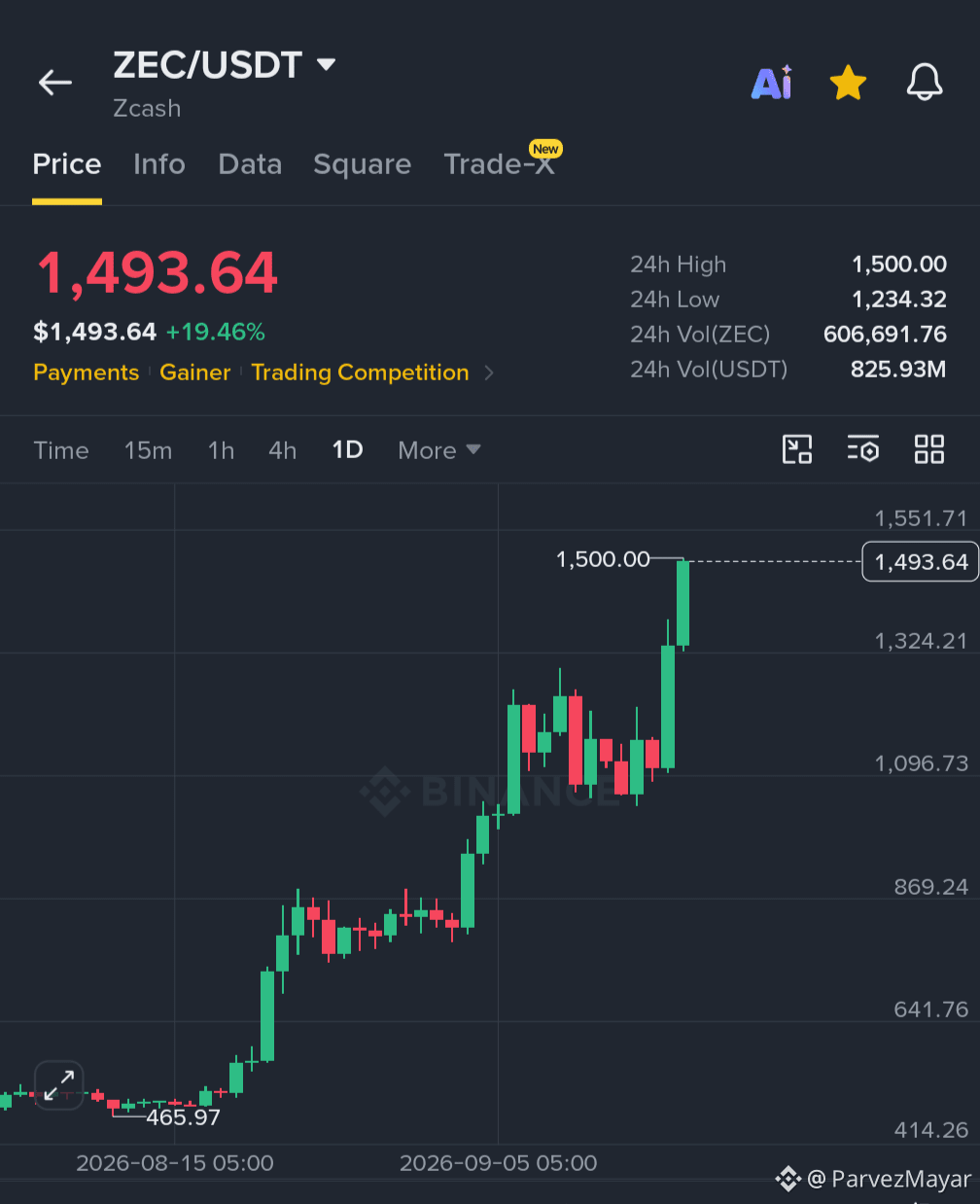
Yes... $ZEC broke another psychological barrier $1,500, first $1,000 now $1,500 within one week after crossing $1k 🔥
This is absolutely mind blowing momentum continuation by ZCASH, are you still waiting for pull back to $450?
Keep waiting... while i am already taking my focus to $DASH and $UNI 💪🏻
Don't wait for another 100% moves, keep accumulating while market is still calm 😉
{future}(ZECUSDT)
{future}(DASHUSDT)
{future}(UNIUSDT)
#USWeeklyJoblessClaimsFallTo196K
#HyperliquidUSDCSupplyOvertakesSolana
#ZECHitsANewAllTimeHigh
#PrivacyCoins
📍 DYOR!
Yes... $ZEC broke another psychological barrier $1,500, first $1,000 now $1,500 within one week after crossing $1k 🔥
This is absolutely mind blowing momentum continuation by ZCASH, are you still waiting for pull back to $450?
Keep waiting... while i am already taking my focus to $DASH and $UNI 💪🏻
Don't wait for another 100% moves, keep accumulating while market is still calm 😉
#USWeeklyJoblessClaimsFallTo196K
#HyperliquidUSDCSupplyOvertakesSolana
#ZECHitsANewAllTimeHigh
#PrivacyCoins
📍 DYOR!
This is absolutely mind blowing momentum continuation by ZCASH, are you still waiting for pull back to $450?
Keep waiting... while i am already taking my focus to $DASH and $UNI 💪🏻
Don't wait for another 100% moves, keep accumulating while market is still calm 😉
#USWeeklyJoblessClaimsFallTo196K
#HyperliquidUSDCSupplyOvertakesSolana
#ZECHitsANewAllTimeHigh
#PrivacyCoins
📍 DYOR!
4
2.3k
·
--
Bullish
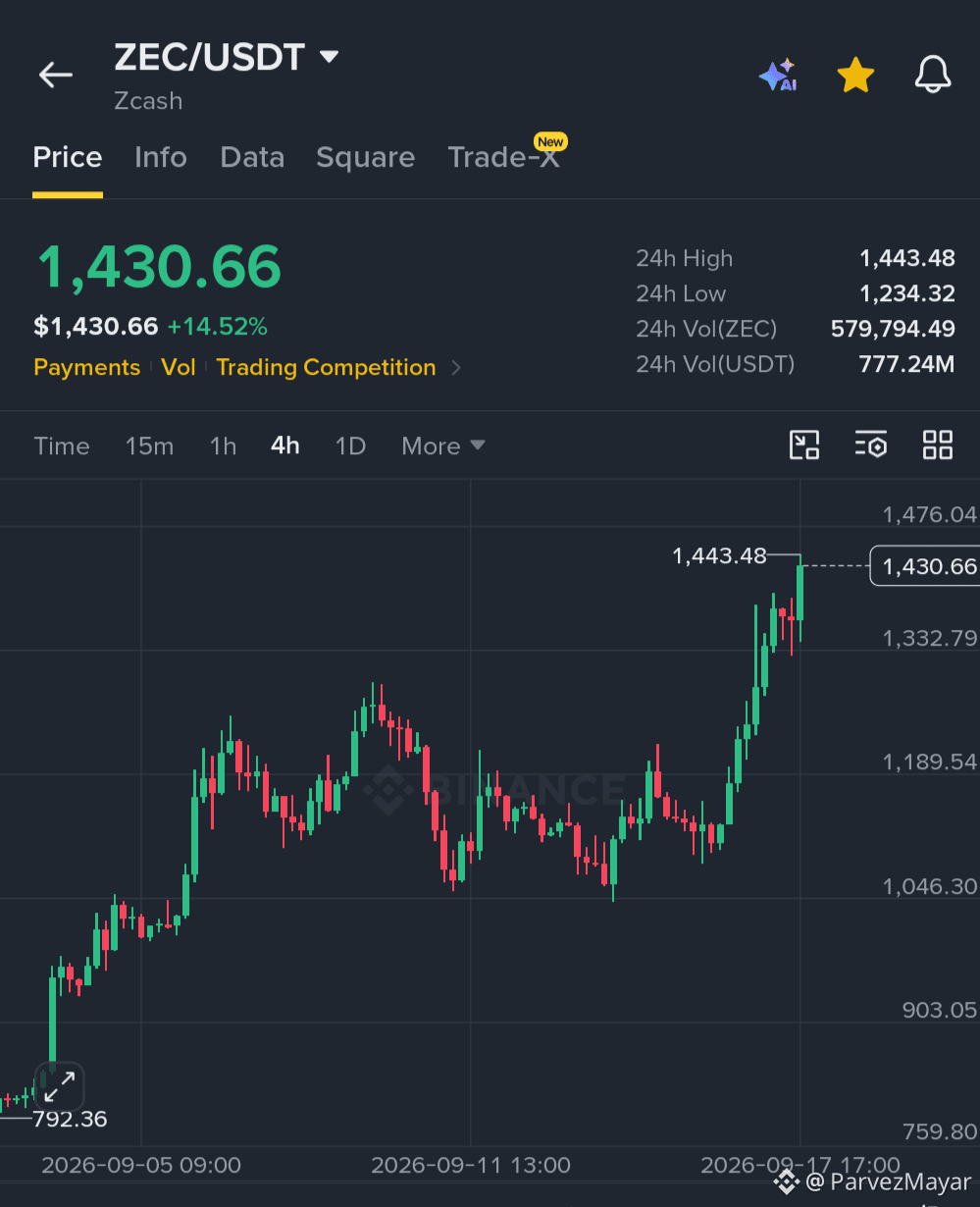
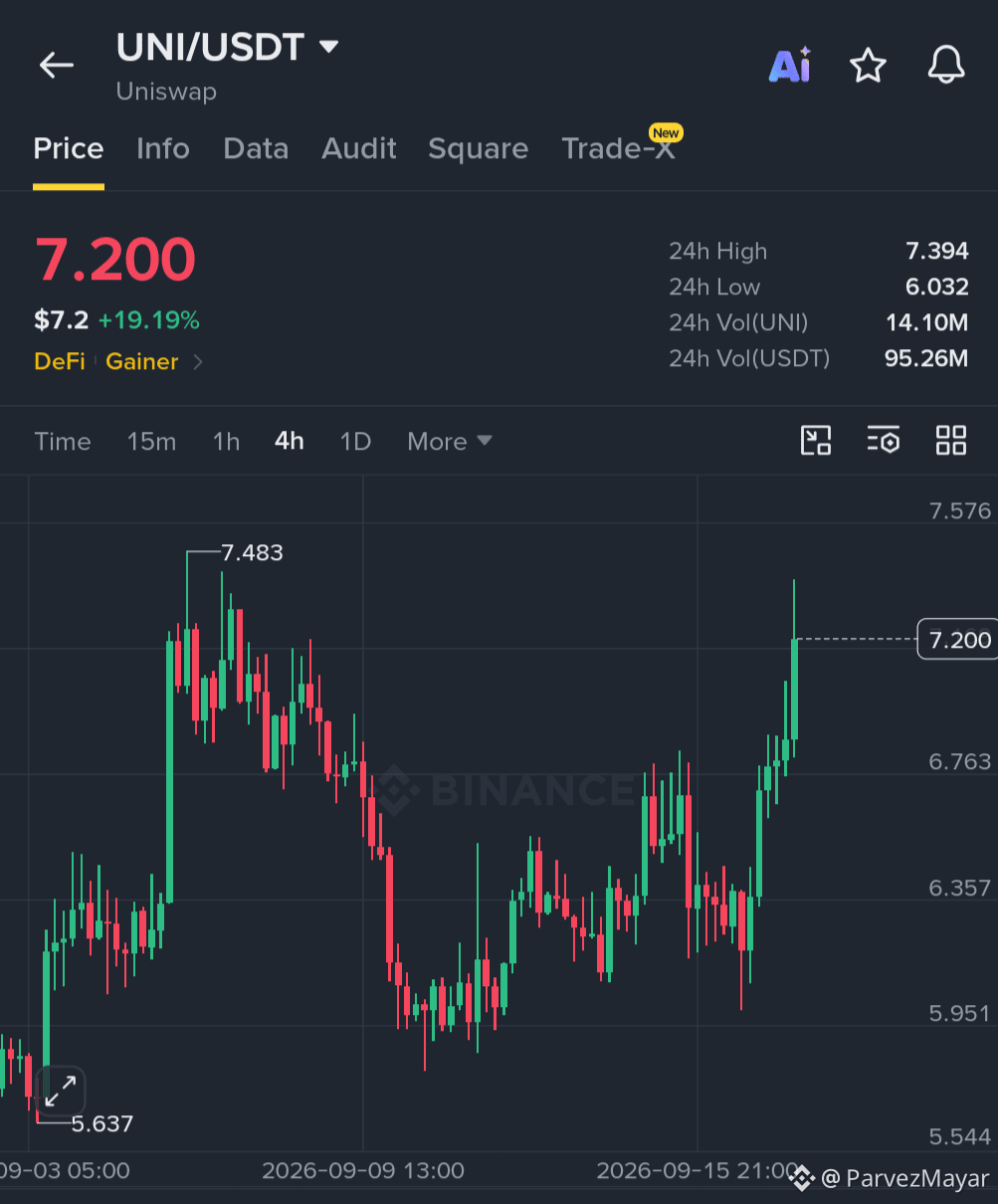
Not long ago... actually YESTERDAY 😆 i told you guys to stop ignoring $XRP , $ZEC and $UNI at these levels.
And look at the prices NOW ❓
ZEC was around $1,200... now already $1,430+ and getting close to $1,500 🔥
UNI was below $7... now above $7.20 with almost +20% move 💪🏻
And XRP is still the one i am looking at as a LONG term gem.
ARE YOU STILL ignoring these three ❓ 😆
This is exactly what i was talking about yesterday...
When prices are low, everyone wants “one more dip.”
Then price goes +20%, +30%... suddenly everyone starts asking where to BUY 😂
I am not saying these will go straight up from here... obviously crypto doesn't work that nicely.
But this is WHY i prefer DCA instead of waiting forever for some magical perfect bottom.
Yesterday people were scared to BUY Zcash around $1,200 and UNI below $7...
Today those same prices already look different.
And if another pullback comes? GOOD... that's what my DCA zones are there for 😁
Don't wait until everything is +100% green to finally become BULLISH.
BUY good opportunities... DCA properly... give your positions TIME.
The market usually gives chances.
Humans are just incredibly talented at recognizing them AFTER they're gone 😂💪🏻
#ZcashETF
#uniswap
#ZECHitsANewAllTimeHigh
#CLARITYAct
📍 Always DYOR!
Not long ago... actually YESTERDAY 😆 i told you guys to stop ignoring $XRP , $ZEC and $UNI at these levels.
And look at the prices NOW ❓
ZEC was around $1,200... now already $1,430+ and getting close to $1,500 🔥
UNI was below $7... now above $7.20 with almost +20% move 💪🏻
And XRP is still the one i am looking at as a LONG term gem.
ARE YOU STILL ignoring these three ❓ 😆
This is exactly what i was talking about yesterday...
When prices are low, everyone wants “one more dip.”
Then price goes +20%, +30%... suddenly everyone starts asking where to BUY 😂
I am not saying these will go straight up from here... obviously crypto doesn't work that nicely.
But this is WHY i prefer DCA instead of waiting forever for some magical perfect bottom.
Yesterday people were scared to BUY Zcash around $1,200 and UNI below $7...
Today those same prices already look different.
And if another pullback comes? GOOD... that's what my DCA zones are there for 😁
Don't wait until everything is +100% green to finally become BULLISH.
BUY good opportunities... DCA properly... give your positions TIME.
The market usually gives chances.
Humans are just incredibly talented at recognizing them AFTER they're gone 😂💪🏻
#ZcashETF
#uniswap
#ZECHitsANewAllTimeHigh
#CLARITYAct
📍 Always DYOR!
And look at the prices NOW ❓
ZEC was around $1,200... now already $1,430+ and getting close to $1,500 🔥
UNI was below $7... now above $7.20 with almost +20% move 💪🏻
And XRP is still the one i am looking at as a LONG term gem.
ARE YOU STILL ignoring these three ❓ 😆
This is exactly what i was talking about yesterday...
When prices are low, everyone wants “one more dip.”
Then price goes +20%, +30%... suddenly everyone starts asking where to BUY 😂
I am not saying these will go straight up from here... obviously crypto doesn't work that nicely.
But this is WHY i prefer DCA instead of waiting forever for some magical perfect bottom.
Yesterday people were scared to BUY Zcash around $1,200 and UNI below $7...
Today those same prices already look different.
And if another pullback comes? GOOD... that's what my DCA zones are there for 😁
Don't wait until everything is +100% green to finally become BULLISH.
BUY good opportunities... DCA properly... give your positions TIME.
The market usually gives chances.
Humans are just incredibly talented at recognizing them AFTER they're gone 😂💪🏻
#ZcashETF
#uniswap
#ZECHitsANewAllTimeHigh
#CLARITYAct
📍 Always DYOR!
ParvezMayar
·
--
BullishOkay so... for how long you guys are going to ignore $XRP , $ZEC and $UNI at these low levels ❓
Not today... but someday same people today ignoring XRP below $1.50, Zcash around $1,200 and UNI below $7 will probably chase them at 2x more price 😆
While you have chance and market has given another chance to BUY lower... everyone is busy chasing low caps already +50%, +100%.
And when real bull momentum hits... YOU should already be ready 💪🏻
🤑 I AM GOING TO BUY MORE AND MORE at these levels.
My long term DCA PLAN AND TARGETS:
📍 ZEC DCA BUY ZONES:
DCA 1: 1,100-1,200
DCA 2: 1,000-1,080
DCA 3: 900-950
🎯 TARGETS: $1,300 / $1,500 / $2,000+
📍 XRP DCA BUY ZONES:
DCA 1: 1.25-1.40
DCA 2: 1.10-1.20
DCA 3: 0.95-1.05
🎯 TARGETS: $2 / $2.50 / $3+
📍 UNI DCA BUY ZONES:
DCA 1: 6.20-6.80
DCA 2: 5.50-6.00
DCA 3: 4.80-5.20
🎯 TARGETS: $10 / $15 / $20+
People always want to BUY after the green candles start... and somehow panic SELL when market finally gives them cheaper prices 😂
That's why patience matters guys.
You don't need to catch exact bottom... BUY in zones, DCA properly and give your positions TIME.
When everything turns green again, don't be the same person paying 2x because you were scared to BUY the red 😁
BUY when fear is high... DCA... PATIENCE... and don't chase the green top. 💪🏻
TRADE HER3 😉👇🏻
#FedRateWatch
#StrategyMarketCapPassesFord
#ClarityActOddsHalveOnPolymarket
#US30YTreasuryYieldTops5.40%
#ZECHitsANewAllTimeHigh
💛 Always DYOR!
Not today... but someday same people today ignoring XRP below $1.50, Zcash around $1,200 and UNI below $7 will probably chase them at 2x more price 😆
While you have chance and market has given another chance to BUY lower... everyone is busy chasing low caps already +50%, +100%.
And when real bull momentum hits... YOU should already be ready 💪🏻
🤑 I AM GOING TO BUY MORE AND MORE at these levels.
My long term DCA PLAN AND TARGETS:
📍 ZEC DCA BUY ZONES:
DCA 1: 1,100-1,200
DCA 2: 1,000-1,080
DCA 3: 900-950
🎯 TARGETS: $1,300 / $1,500 / $2,000+
📍 XRP DCA BUY ZONES:
DCA 1: 1.25-1.40
DCA 2: 1.10-1.20
DCA 3: 0.95-1.05
🎯 TARGETS: $2 / $2.50 / $3+
📍 UNI DCA BUY ZONES:
DCA 1: 6.20-6.80
DCA 2: 5.50-6.00
DCA 3: 4.80-5.20
🎯 TARGETS: $10 / $15 / $20+
People always want to BUY after the green candles start... and somehow panic SELL when market finally gives them cheaper prices 😂
That's why patience matters guys.
You don't need to catch exact bottom... BUY in zones, DCA properly and give your positions TIME.
When everything turns green again, don't be the same person paying 2x because you were scared to BUY the red 😁
BUY when fear is high... DCA... PATIENCE... and don't chase the green top. 💪🏻
TRADE HER3 😉👇🏻
#FedRateWatch
#StrategyMarketCapPassesFord
#ClarityActOddsHalveOnPolymarket
#US30YTreasuryYieldTops5.40%
#ZECHitsANewAllTimeHigh
💛 Always DYOR!
3
2.7k
·
--
Bullish
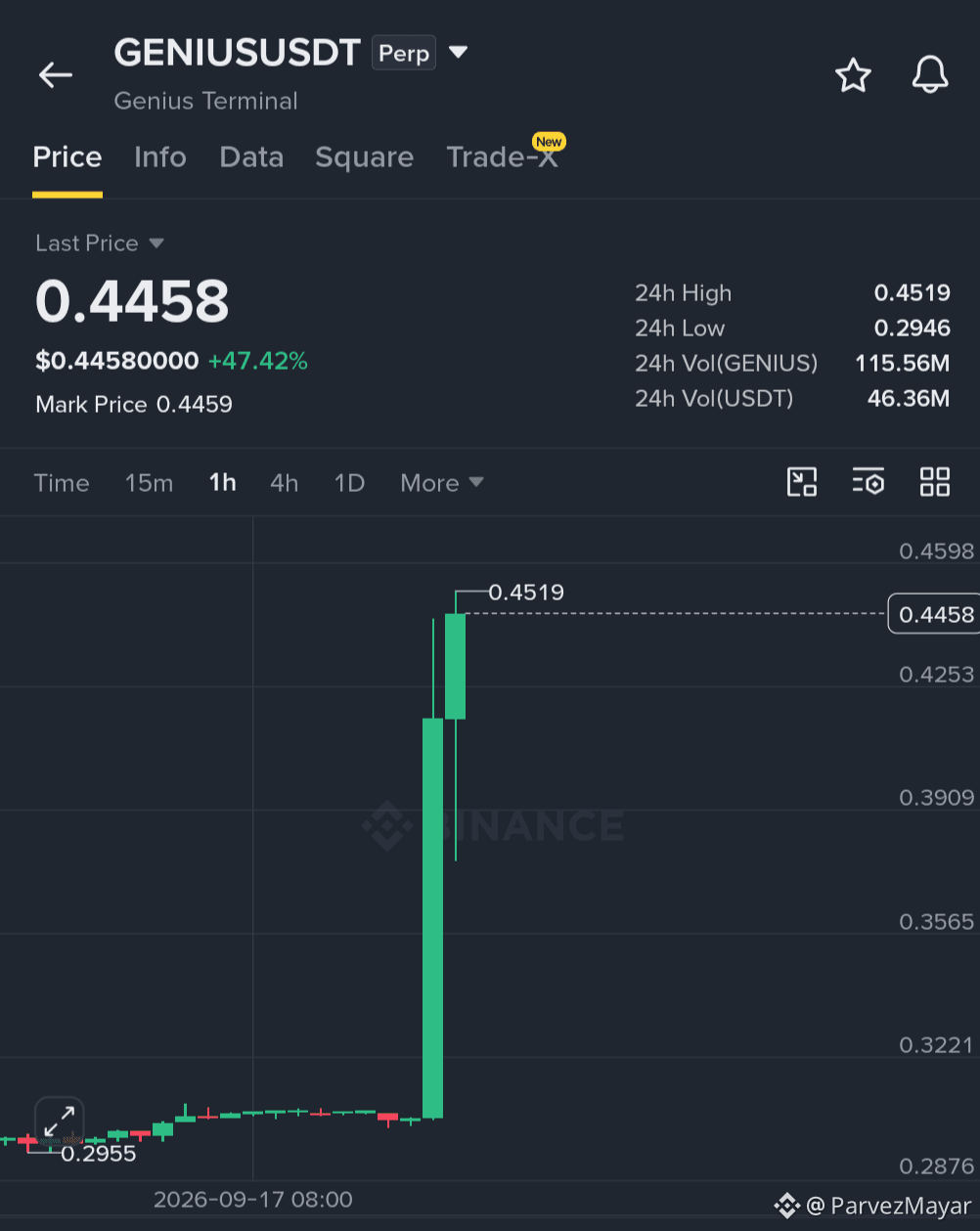
Wait... what was that $GENIUS , from completely silent to suddenly a 50% vertical pump within hours🔥
Did anyone catch this move ❓
I am just shocked seeing GENIUS from $0.3 to $0.45+ with sudden push 😆
TRADE here 👇🏻
{future}(GENIUSUSDT)
$龙虾
{future}(龙虾USDT)
$UAI
{future}(UAIUSDT)
#ElSalvadorBTCHoldingsRiseTo7777
#FedSEPProjects2026RateAt4.1%
#HyperliquidUSDCSupplyOvertakesSolana
📍DYOR!
Wait... what was that $GENIUS , from completely silent to suddenly a 50% vertical pump within hours🔥
Did anyone catch this move ❓
I am just shocked seeing GENIUS from $0.3 to $0.45+ with sudden push 😆
TRADE here 👇🏻
$龙虾
$UAI
#ElSalvadorBTCHoldingsRiseTo7777
#FedSEPProjects2026RateAt4.1%
#HyperliquidUSDCSupplyOvertakesSolana
📍DYOR!
Did anyone catch this move ❓
I am just shocked seeing GENIUS from $0.3 to $0.45+ with sudden push 😆
TRADE here 👇🏻
$龙虾
$UAI
#ElSalvadorBTCHoldingsRiseTo7777
#FedSEPProjects2026RateAt4.1%
#HyperliquidUSDCSupplyOvertakesSolana
📍DYOR!
1
7
5.7k
·
--
30D trade $BR 48.2 USDT
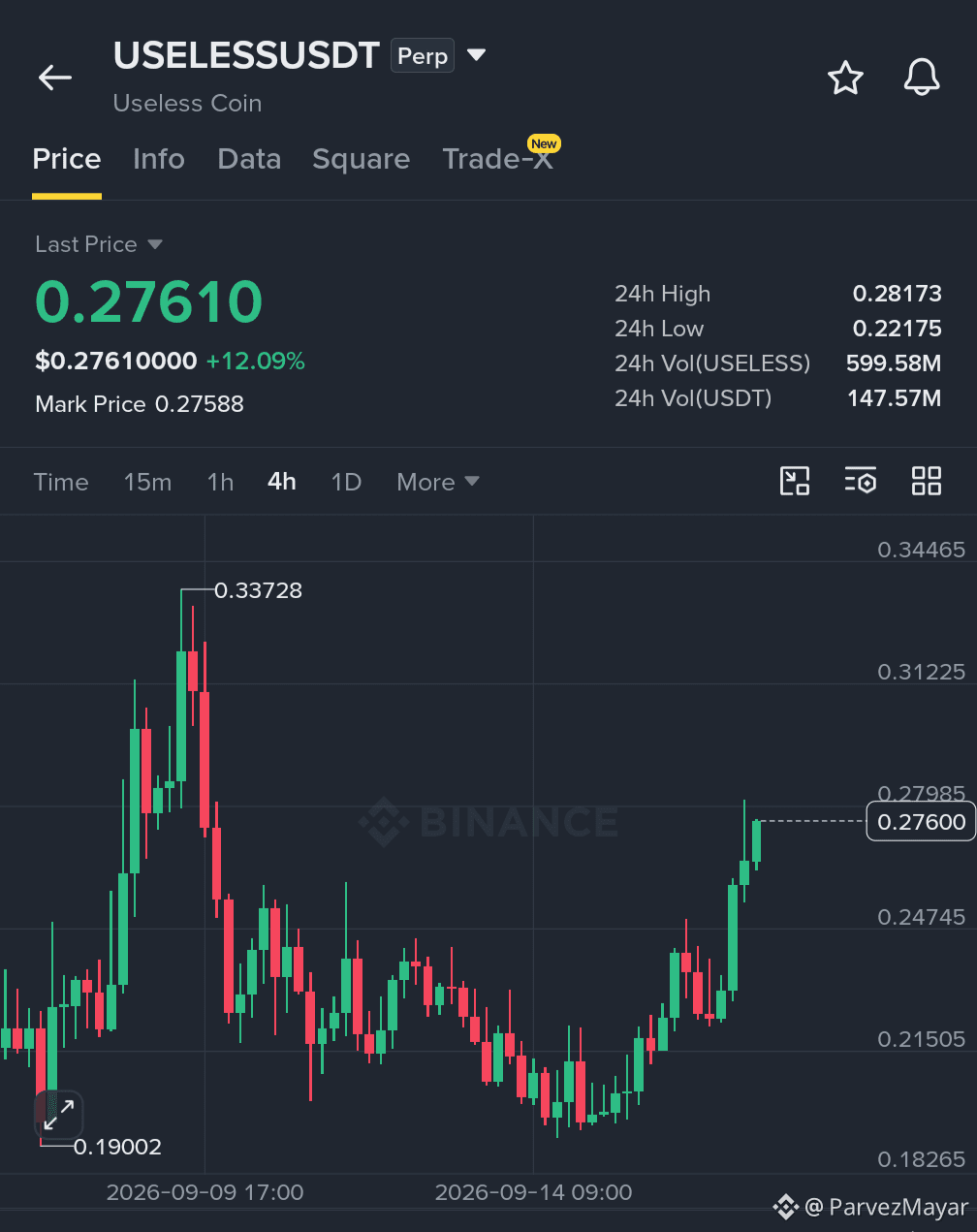
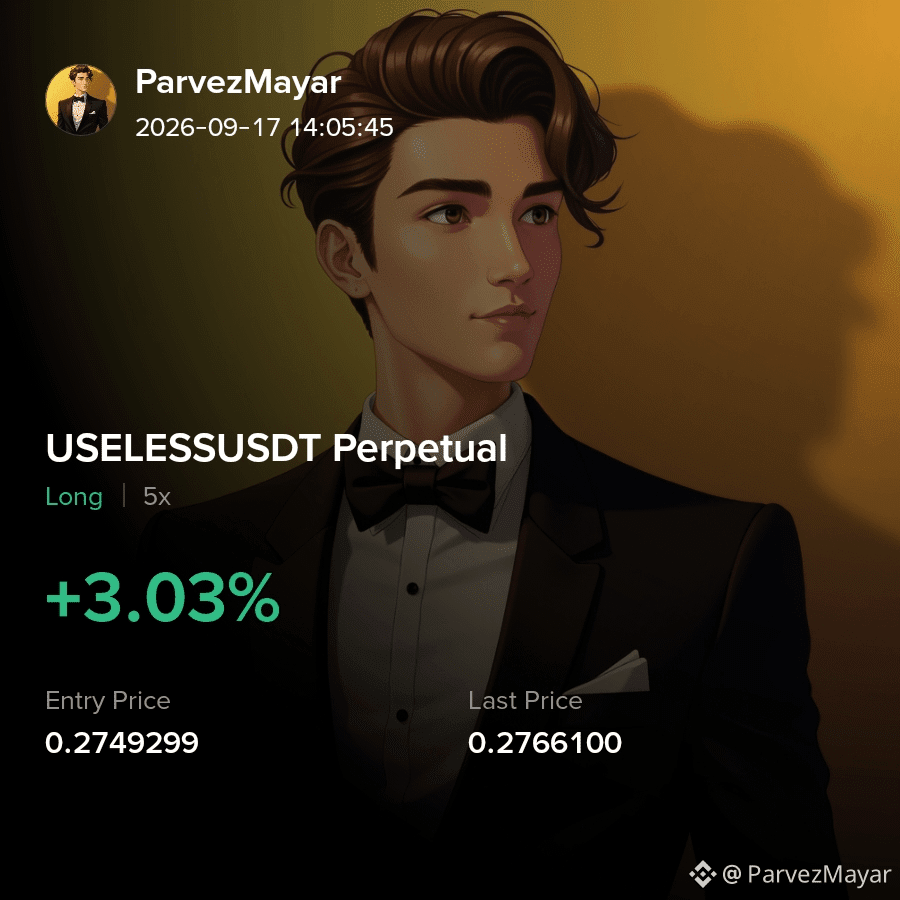
🤑 $USELESS LONG NOW
Entry: $0.270 - $0.277
🎯 TP1: $0.283
🎯 TP2: $0.295
🎯 TP3: $0.325+
DCA: $0.255 - $0.262
SL: $0.244
Momentum still pushing strong on 4H... $0.28 is the first real test for USELESS💪🏻
TRADE HER3:
{future}(USELESSUSDT)
$BR
{future}(BRUSDT)
$BULLA
{future}(BULLAUSDT)
#MemeLaunchpads82%OfArcDayOneVolume
#FedHikes25BpsUSStocksClose
🤑 $USELESS LONG NOW
Entry: $0.270 - $0.277
🎯 TP1: $0.283
🎯 TP2: $0.295
🎯 TP3: $0.325+
DCA: $0.255 - $0.262
SL: $0.244
Momentum still pushing strong on 4H... $0.28 is the first real test for USELESS💪🏻
TRADE HER3:
$BR
$BULLA
#MemeLaunchpads82%OfArcDayOneVolume
#FedHikes25BpsUSStocksClose
Entry: $0.270 - $0.277
🎯 TP1: $0.283
🎯 TP2: $0.295
🎯 TP3: $0.325+
DCA: $0.255 - $0.262
SL: $0.244
Momentum still pushing strong on 4H... $0.28 is the first real test for USELESS💪🏻
TRADE HER3:
$BR
$BULLA
#MemeLaunchpads82%OfArcDayOneVolume
#FedHikes25BpsUSStocksClose
1
7
1.2k
·
--
Bullish
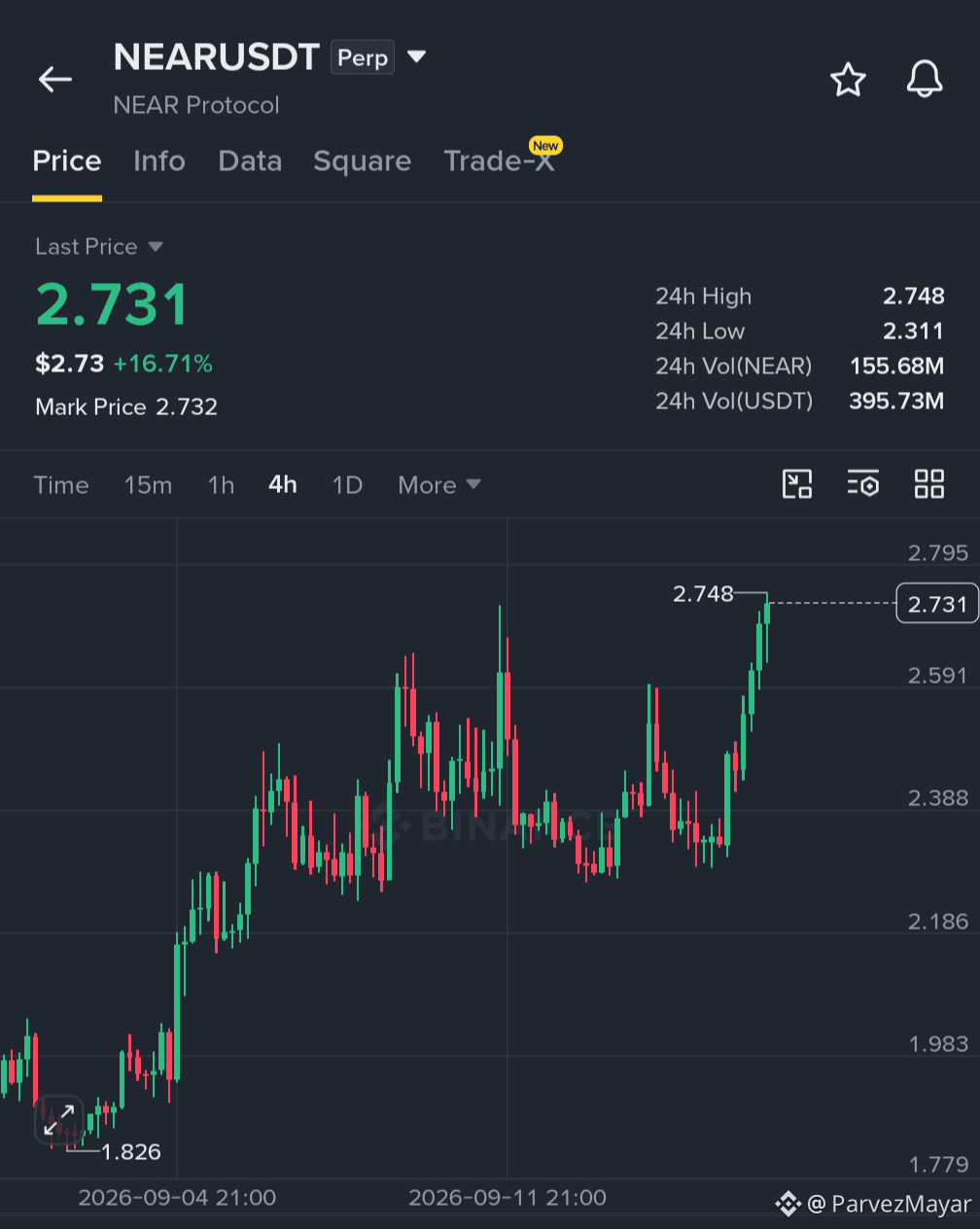
$NEAR broke above previous short term resistance at $2.7 and looking very much BULLISH 💪🏻
🤑 NEAR LONG NOW
Entry: $2.62 - $2.70
🎯 TP1: 2.85
🎯 TP2: 3.05
🎯 TP3: 3.30+
DCA: 2.48 - 2.55
SL: $2.38
{future}(NEARUSDT)
And for some reasons NEAR has been following the whole ZEC attention too 😁
There is actually a connection here... NEAR Intents supports Zcash directly, letting ZEC move/swaps route across its multichain network, including ZEC routes into ecosystems like Solana. So NEAR benefiting from more Zcash activity isn't a completely random narrative.
Apart from that i am also watching $AVA and $MARSCOIN 👀
AVA already did almost +70% today... i would rather wait for a proper SHORTING opportunity instead of chasing that vertical candle.
MARSCOIN around $0.11 is different... watching this one for a SPOT buy point on a good pullback.
Don't force all three trades just because all three charts are moving 😆
{future}(AVAUSDT)
{future}(MARSCOINUSDT)
#AmazonGetsWarrantsToBuyGeneracStock
#FedSEPProjects2026RateAt4.1%
#FedHikes25BpsUSStocksClose
#USHouseAdvancesBitcoinReserveBill
📍 DYOR!
$NEAR broke above previous short term resistance at $2.7 and looking very much BULLISH 💪🏻
🤑 NEAR LONG NOW
Entry: $2.62 - $2.70
🎯 TP1: 2.85
🎯 TP2: 3.05
🎯 TP3: 3.30+
DCA: 2.48 - 2.55
SL: $2.38
And for some reasons NEAR has been following the whole ZEC attention too 😁
There is actually a connection here... NEAR Intents supports Zcash directly, letting ZEC move/swaps route across its multichain network, including ZEC routes into ecosystems like Solana. So NEAR benefiting from more Zcash activity isn't a completely random narrative.
Apart from that i am also watching $AVA and $MARSCOIN 👀
AVA already did almost +70% today... i would rather wait for a proper SHORTING opportunity instead of chasing that vertical candle.
MARSCOIN around $0.11 is different... watching this one for a SPOT buy point on a good pullback.
Don't force all three trades just because all three charts are moving 😆
#AmazonGetsWarrantsToBuyGeneracStock
#FedSEPProjects2026RateAt4.1%
#FedHikes25BpsUSStocksClose
#USHouseAdvancesBitcoinReserveBill
📍 DYOR!
🤑 NEAR LONG NOW
Entry: $2.62 - $2.70
🎯 TP1: 2.85
🎯 TP2: 3.05
🎯 TP3: 3.30+
DCA: 2.48 - 2.55
SL: $2.38
And for some reasons NEAR has been following the whole ZEC attention too 😁
There is actually a connection here... NEAR Intents supports Zcash directly, letting ZEC move/swaps route across its multichain network, including ZEC routes into ecosystems like Solana. So NEAR benefiting from more Zcash activity isn't a completely random narrative.
Apart from that i am also watching $AVA and $MARSCOIN 👀
AVA already did almost +70% today... i would rather wait for a proper SHORTING opportunity instead of chasing that vertical candle.
MARSCOIN around $0.11 is different... watching this one for a SPOT buy point on a good pullback.
Don't force all three trades just because all three charts are moving 😆
#AmazonGetsWarrantsToBuyGeneracStock
#FedSEPProjects2026RateAt4.1%
#FedHikes25BpsUSStocksClose
#USHouseAdvancesBitcoinReserveBill
📍 DYOR!
4
1
3
5.4k
·
--
Bullish
Buddies... Listen carefully 💛
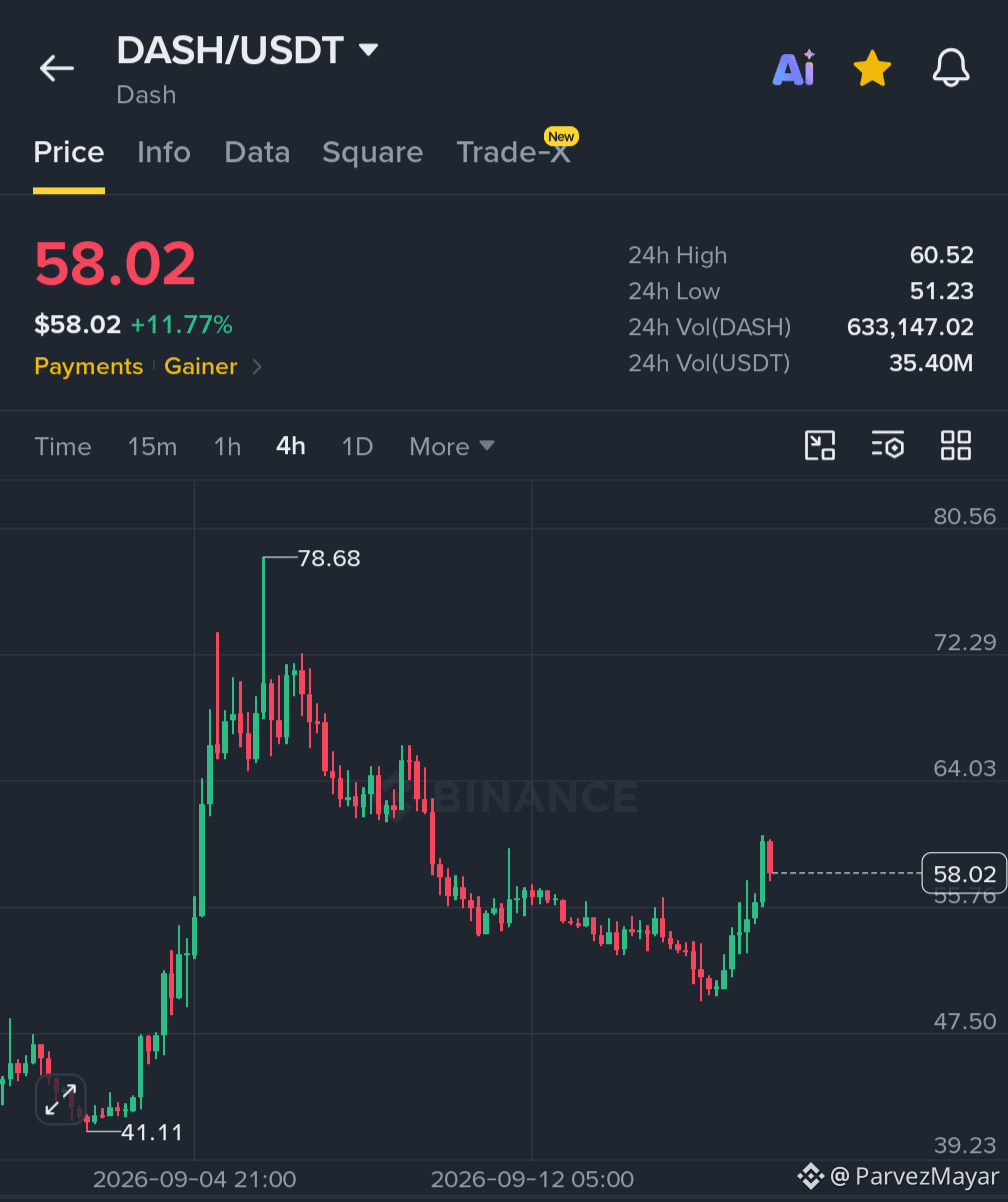
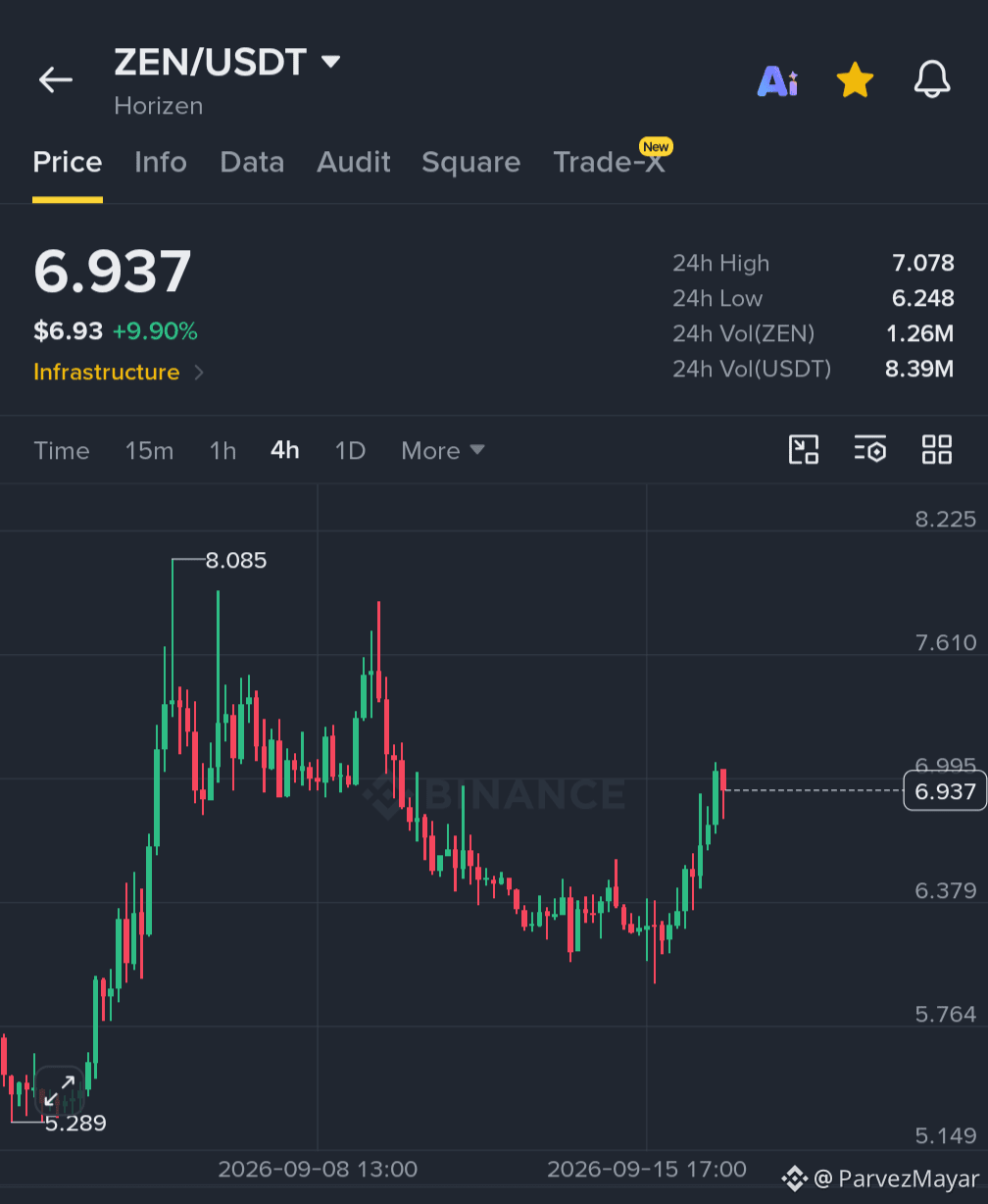
I am not saying $DASH is next ZEC over night, i am not saying $ZEN could be next DASH either 😉
The logic is as simple as that... i m saying don't ignore ZEN and DASH around these levels just like we all ignored Zcash below $30... or even below $500.
Just because the privacy narrative is on peak right now... doesn't mean we should blindly chase everything either.
$ZEC already showed us how quickly attention can rotate into this sector... and DASH moving from around $20 to $50-$60+ is another reminder.
So overall i am just saying... don't think DASH could hit $1K neither ZEN could hit $150 over night 😆
But completely ignoring these privacy coins when the narrative is this strong could also be costly... always with proper plans and RISK management.
Crypto could be sometimes cruel.
My DCA PLANS 👇🏻
📍 ZEC DCA PLAN:
BUY areas: $1,200-$1,250 / $1,100-$1,150 / $1,000-$1,050
🎯 TARGETS: $1,500 / $2,000 / $2,500+
📍 DASH DCA PLAN:
BUY areas: $50-$55 / $45-$48 / $40-$43
🎯 TARGETS: $70 / $100 / $150+
📍 ZEN DCA PLAN:
BUY areas: $6.20-$6.60 / $5.50-$5.90 / $5.00-$5.30
🎯 TARGETS: $10 / $15 / $20+
And this is the psychology part people always mess up...
When something is cheap and boring... nobody wants it.
After another +100% everyone suddenly starts asking “is it still good to BUY?” 😂
Don't chase another 100% move... but always keep an eye on hot narratives instead of jumping into random low caps with stupid volatility.
Go with the trend while it's building... not when everyone already thinks it can only go UP.
TRADE HER3 👇🏻
{future}(DASHUSDT)
{future}(ZENUSDT)
{future}(ZECUSDT)
#FedSEPProjects2026RateAt4.1%
#ZcashRises6%
#ZECHitsANewAllTimeHigh
#PrivacyCoins
📍 This is not a financial or buy/sell advice, always do your own research and stay safe 💛
Buddies... Listen carefully 💛
I am not saying $DASH is next ZEC over night, i am not saying $ZEN could be next DASH either 😉
The logic is as simple as that... i m saying don't ignore ZEN and DASH around these levels just like we all ignored Zcash below $30... or even below $500.
Just because the privacy narrative is on peak right now... doesn't mean we should blindly chase everything either.
$ZEC already showed us how quickly attention can rotate into this sector... and DASH moving from around $20 to $50-$60+ is another reminder.
So overall i am just saying... don't think DASH could hit $1K neither ZEN could hit $150 over night 😆
But completely ignoring these privacy coins when the narrative is this strong could also be costly... always with proper plans and RISK management.
Crypto could be sometimes cruel.
My DCA PLANS 👇🏻
📍 ZEC DCA PLAN:
BUY areas: $1,200-$1,250 / $1,100-$1,150 / $1,000-$1,050
🎯 TARGETS: $1,500 / $2,000 / $2,500+
📍 DASH DCA PLAN:
BUY areas: $50-$55 / $45-$48 / $40-$43
🎯 TARGETS: $70 / $100 / $150+
📍 ZEN DCA PLAN:
BUY areas: $6.20-$6.60 / $5.50-$5.90 / $5.00-$5.30
🎯 TARGETS: $10 / $15 / $20+
And this is the psychology part people always mess up...
When something is cheap and boring... nobody wants it.
After another +100% everyone suddenly starts asking “is it still good to BUY?” 😂
Don't chase another 100% move... but always keep an eye on hot narratives instead of jumping into random low caps with stupid volatility.
Go with the trend while it's building... not when everyone already thinks it can only go UP.
TRADE HER3 👇🏻
#FedSEPProjects2026RateAt4.1%
#ZcashRises6%
#ZECHitsANewAllTimeHigh
#PrivacyCoins
📍 This is not a financial or buy/sell advice, always do your own research and stay safe 💛
I am not saying $DASH is next ZEC over night, i am not saying $ZEN could be next DASH either 😉
The logic is as simple as that... i m saying don't ignore ZEN and DASH around these levels just like we all ignored Zcash below $30... or even below $500.
Just because the privacy narrative is on peak right now... doesn't mean we should blindly chase everything either.
$ZEC already showed us how quickly attention can rotate into this sector... and DASH moving from around $20 to $50-$60+ is another reminder.
So overall i am just saying... don't think DASH could hit $1K neither ZEN could hit $150 over night 😆
But completely ignoring these privacy coins when the narrative is this strong could also be costly... always with proper plans and RISK management.
Crypto could be sometimes cruel.
My DCA PLANS 👇🏻
📍 ZEC DCA PLAN:
BUY areas: $1,200-$1,250 / $1,100-$1,150 / $1,000-$1,050
🎯 TARGETS: $1,500 / $2,000 / $2,500+
📍 DASH DCA PLAN:
BUY areas: $50-$55 / $45-$48 / $40-$43
🎯 TARGETS: $70 / $100 / $150+
📍 ZEN DCA PLAN:
BUY areas: $6.20-$6.60 / $5.50-$5.90 / $5.00-$5.30
🎯 TARGETS: $10 / $15 / $20+
And this is the psychology part people always mess up...
When something is cheap and boring... nobody wants it.
After another +100% everyone suddenly starts asking “is it still good to BUY?” 😂
Don't chase another 100% move... but always keep an eye on hot narratives instead of jumping into random low caps with stupid volatility.
Go with the trend while it's building... not when everyone already thinks it can only go UP.
TRADE HER3 👇🏻
#FedSEPProjects2026RateAt4.1%
#ZcashRises6%
#ZECHitsANewAllTimeHigh
#PrivacyCoins
📍 This is not a financial or buy/sell advice, always do your own research and stay safe 💛
1
7
3.6k
·
--
Verified
$ARB to $10+ really ❓ 😆
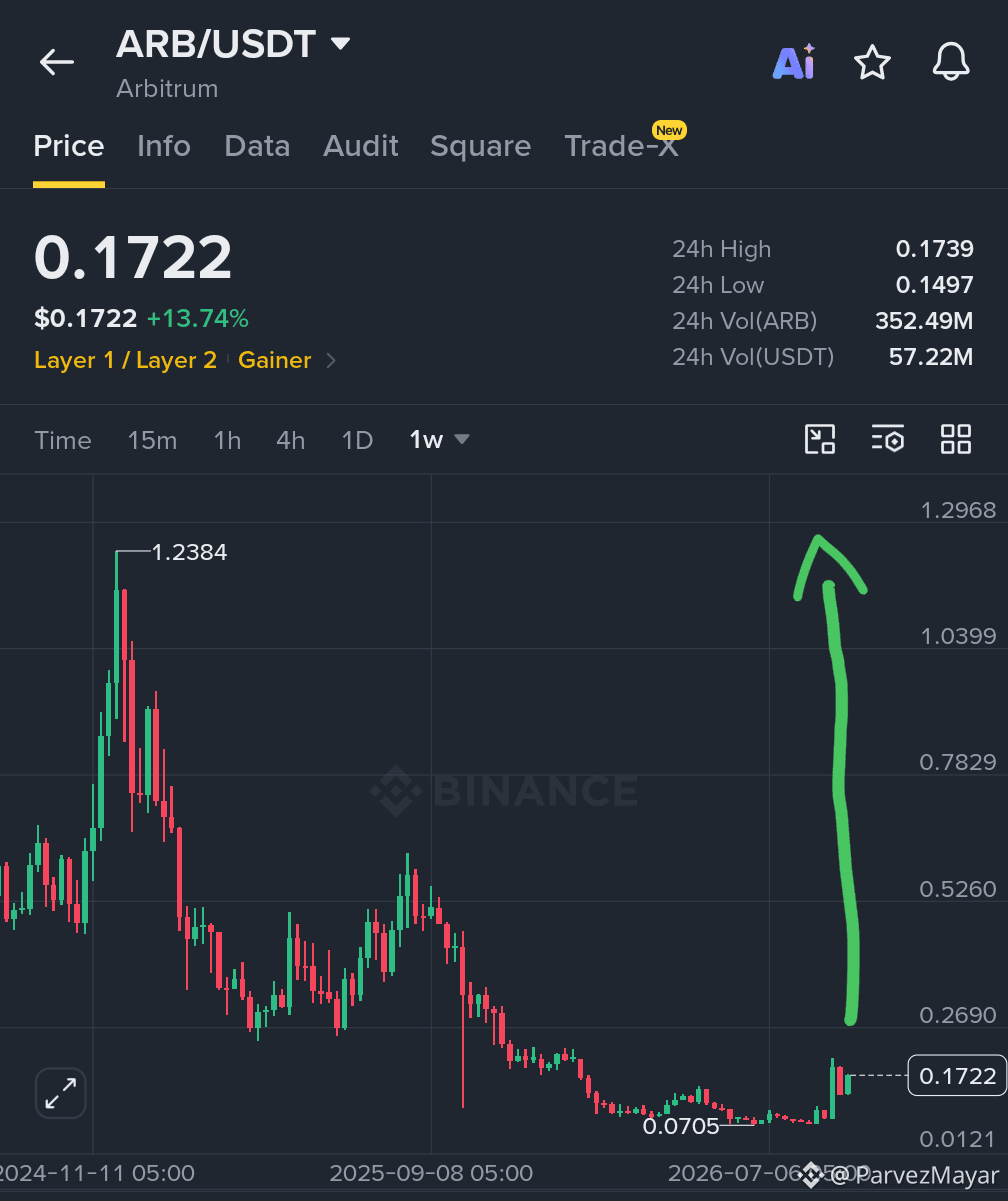
Okay... this prediction sounds absolutely wild when ARB is sitting around $0.17, but there is actually a reason it's suddenly getting this much attention.
Robinhood Chain is built using Arbitrum technology, and Standard Chartered says this institutional-chain model could become a serious revenue source for Arbitrum. Robinhood Chain has already helped push Arbitrum's monthly revenue run rate much higher than before its launch.
And now Standard Chartered has gone completely bullish 😁
Their targets are basically...
$0.50 by end-2026
$1.50 in 2027
$3.50 in 2028
$6.50 in 2029
🎯 $10 by 2030 🤑
That's roughly a 70X prediction from where ARB was when they published the call.
Now $10?? I am definitely NOT betting my house on someone's 2030 prediction 😂
But according to the overall backing, Robinhood Chain connection + ARB recovering from that ugly $0.07 zone...
But Arbitrium waking up from that ugly $0.07 area and getting Robinhood + TradFi/tokenization attention behind it...
I would still believe $1+ is a realistic long-term TARGET to watch if this adoption actually keeps growing 👀
Yeah... this one is worth watching again 👀
TRADE HER3 :
{future}(ARBUSDT)
$BR
{future}(BRUSDT)
$BULLA
{future}(BULLAUSDT)
#RobinhoodToSupportCircleArcNetwork
#CircleOpensArcMainnet
#FedHikes25BpsUSStocksClose
📍 Always do your own research.
$ARB to $10+ really ❓ 😆
Okay... this prediction sounds absolutely wild when ARB is sitting around $0.17, but there is actually a reason it's suddenly getting this much attention.
Robinhood Chain is built using Arbitrum technology, and Standard Chartered says this institutional-chain model could become a serious revenue source for Arbitrum. Robinhood Chain has already helped push Arbitrum's monthly revenue run rate much higher than before its launch.
And now Standard Chartered has gone completely bullish 😁
Their targets are basically...
$0.50 by end-2026
$1.50 in 2027
$3.50 in 2028
$6.50 in 2029
🎯 $10 by 2030 🤑
That's roughly a 70X prediction from where ARB was when they published the call.
Now $10?? I am definitely NOT betting my house on someone's 2030 prediction 😂
But according to the overall backing, Robinhood Chain connection + ARB recovering from that ugly $0.07 zone...
But Arbitrium waking up from that ugly $0.07 area and getting Robinhood + TradFi/tokenization attention behind it...
I would still believe $1+ is a realistic long-term TARGET to watch if this adoption actually keeps growing 👀
Yeah... this one is worth watching again 👀
TRADE HER3 :
$BR
$BULLA
#RobinhoodToSupportCircleArcNetwork
#CircleOpensArcMainnet
#FedHikes25BpsUSStocksClose
📍 Always do your own research.
Okay... this prediction sounds absolutely wild when ARB is sitting around $0.17, but there is actually a reason it's suddenly getting this much attention.
Robinhood Chain is built using Arbitrum technology, and Standard Chartered says this institutional-chain model could become a serious revenue source for Arbitrum. Robinhood Chain has already helped push Arbitrum's monthly revenue run rate much higher than before its launch.
And now Standard Chartered has gone completely bullish 😁
Their targets are basically...
$0.50 by end-2026
$1.50 in 2027
$3.50 in 2028
$6.50 in 2029
🎯 $10 by 2030 🤑
That's roughly a 70X prediction from where ARB was when they published the call.
Now $10?? I am definitely NOT betting my house on someone's 2030 prediction 😂
But according to the overall backing, Robinhood Chain connection + ARB recovering from that ugly $0.07 zone...
But Arbitrium waking up from that ugly $0.07 area and getting Robinhood + TradFi/tokenization attention behind it...
I would still believe $1+ is a realistic long-term TARGET to watch if this adoption actually keeps growing 👀
Yeah... this one is worth watching again 👀
TRADE HER3 :
$BR
$BULLA
#RobinhoodToSupportCircleArcNetwork
#CircleOpensArcMainnet
#FedHikes25BpsUSStocksClose
📍 Always do your own research.
1
7
9.5k
·
--
Bullish
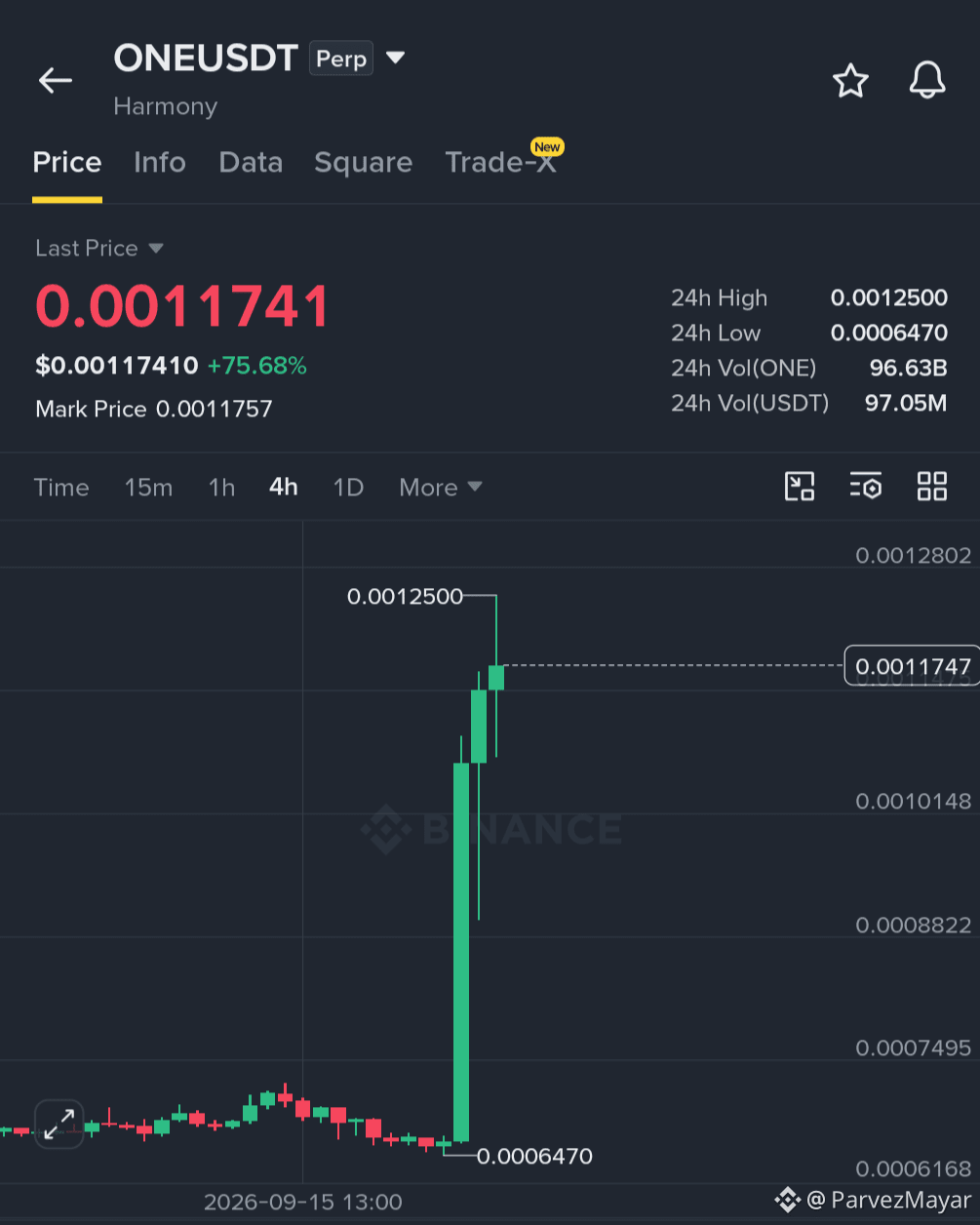
WANT TO SEE SOME REAL VOLATILITY ❓
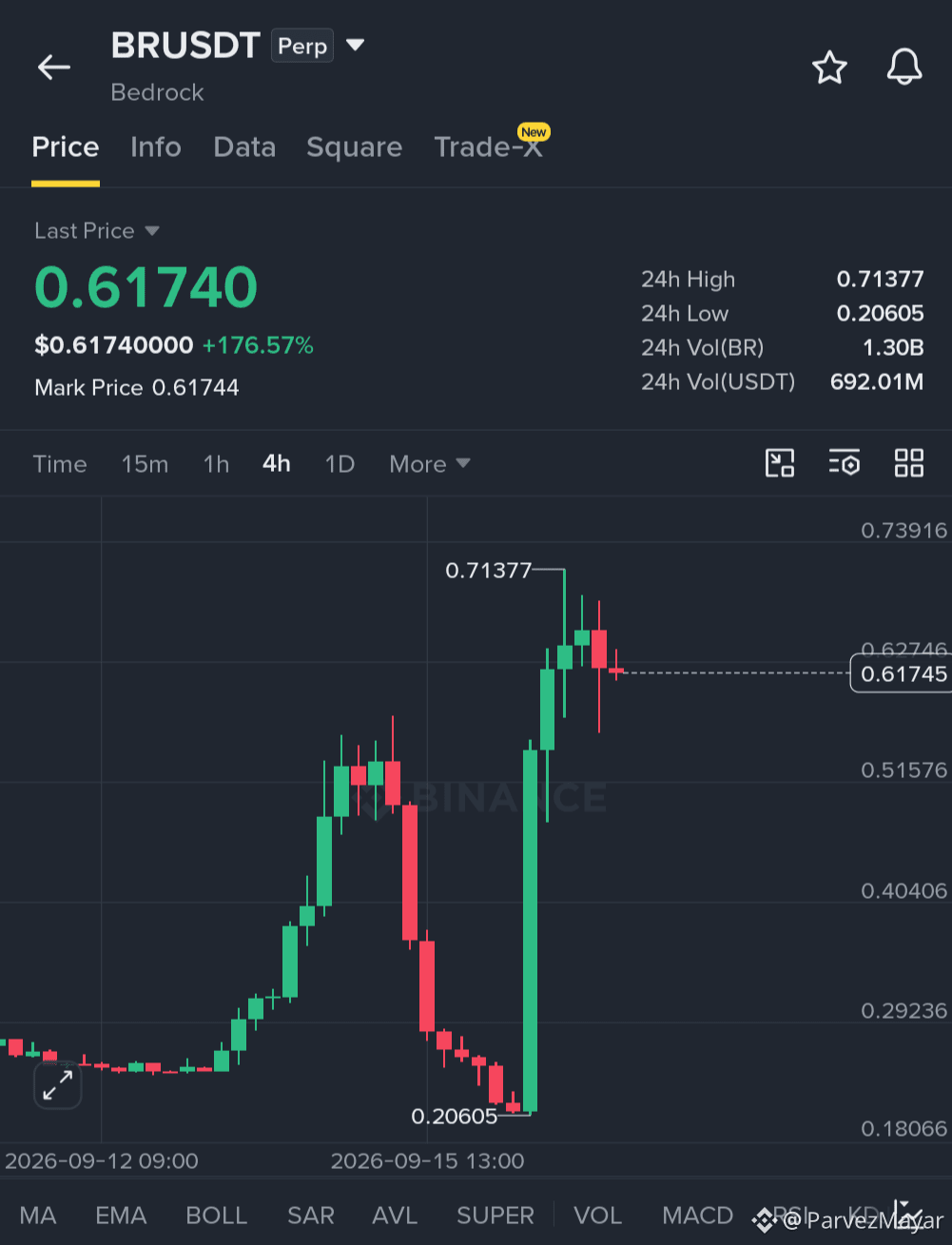
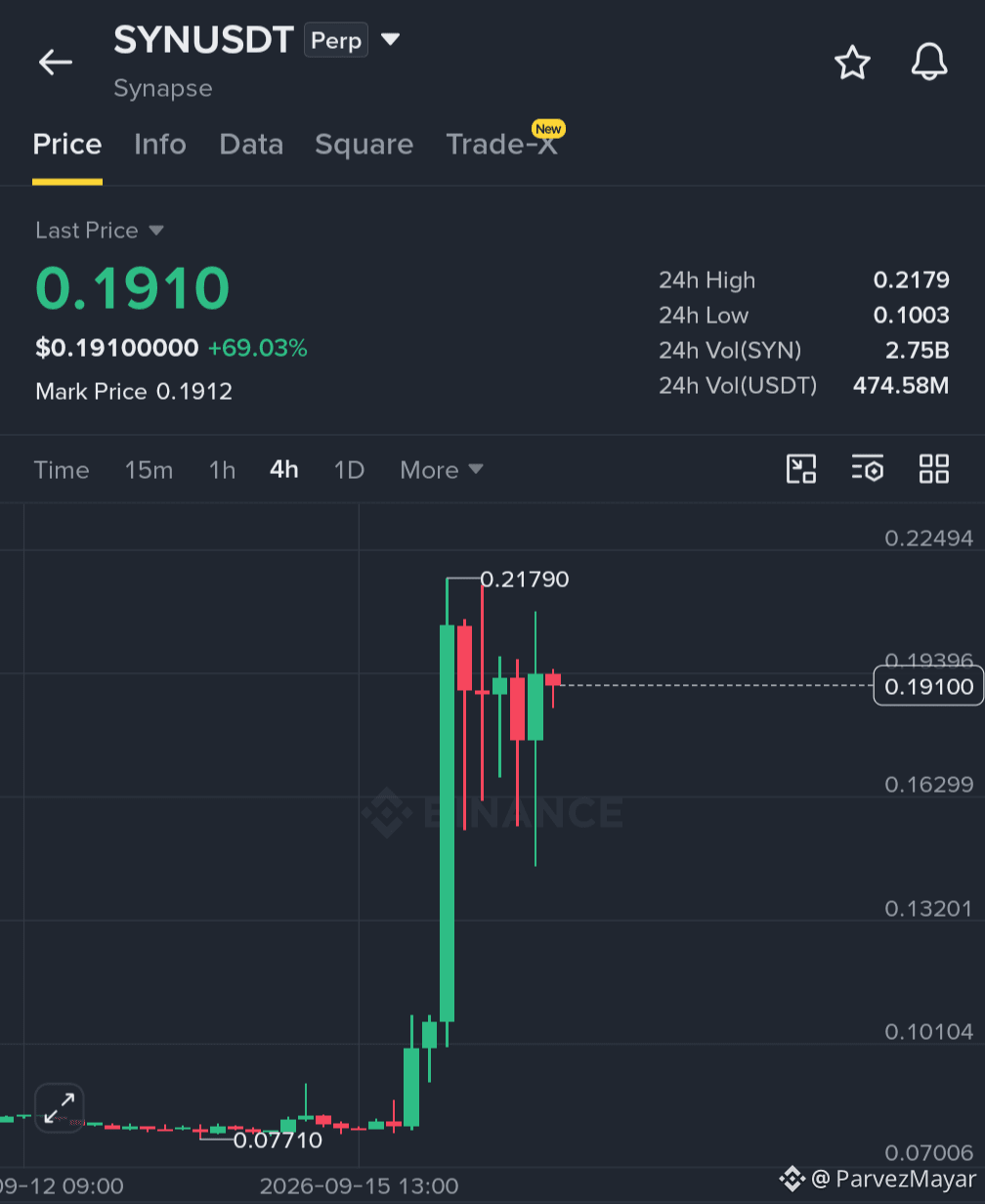
Just check out $BR , $SYN and $ONE 😁
Those tall vertical candles tell the whole story...
BR already did +170% madness, ONE +75% and SYN is still swinging around after that massive breakout 😆
Too scary if you are sitting there looking for SHORTS just because “it already pumped too much.”
I would stay away for now...
Going LONG after these huge pumps is risky... but going SHORT is equally stupid because these low caps can squeeze another 50-100% before you even understand what happened 😂
And honestly... normal technical analysis becomes much less reliable when coins start moving like this. One candle can destroy your whole setup.
Only trade these with SMALL risk and strict SL if you really want that headache 😉
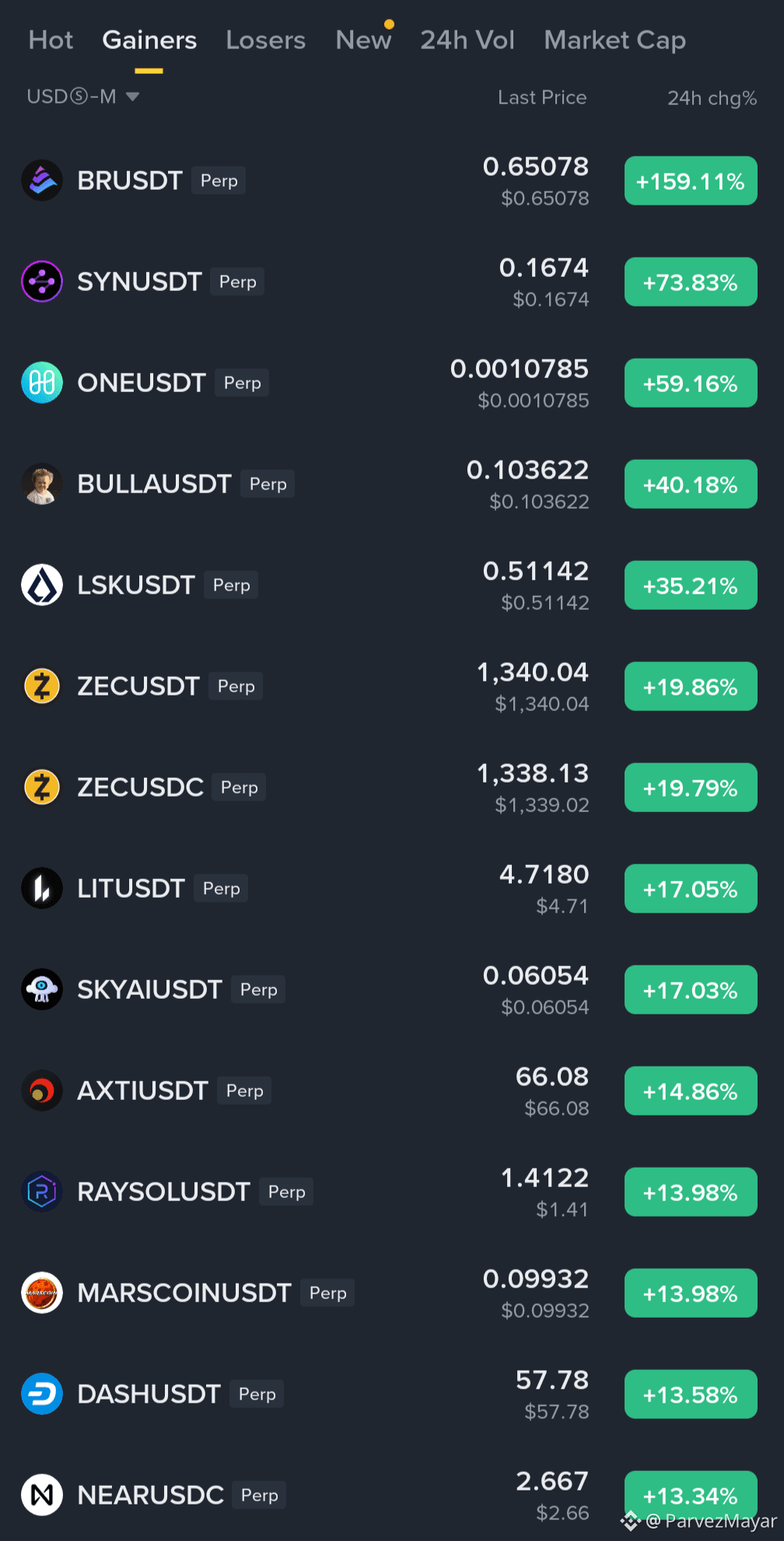
I would rather accumulate ZEC, XRP and DASH on good entries than gamble my portfolio chasing these vertical candles.
Sometimes NOT trading is also a position 💪🏻
CHECK OUT HERE 👇🏻
{future}(BRUSDT)
{future}(SYNUSDT)
{future}(ONEUSDT)
📍 ALWAYS DYOR!
WANT TO SEE SOME REAL VOLATILITY ❓
Just check out $BR , $SYN and $ONE 😁
Those tall vertical candles tell the whole story...
BR already did +170% madness, ONE +75% and SYN is still swinging around after that massive breakout 😆
Too scary if you are sitting there looking for SHORTS just because “it already pumped too much.”
I would stay away for now...
Going LONG after these huge pumps is risky... but going SHORT is equally stupid because these low caps can squeeze another 50-100% before you even understand what happened 😂
And honestly... normal technical analysis becomes much less reliable when coins start moving like this. One candle can destroy your whole setup.
Only trade these with SMALL risk and strict SL if you really want that headache 😉
I would rather accumulate ZEC, XRP and DASH on good entries than gamble my portfolio chasing these vertical candles.
Sometimes NOT trading is also a position 💪🏻
CHECK OUT HERE 👇🏻
📍 ALWAYS DYOR!
Just check out $BR , $SYN and $ONE 😁
Those tall vertical candles tell the whole story...
BR already did +170% madness, ONE +75% and SYN is still swinging around after that massive breakout 😆
Too scary if you are sitting there looking for SHORTS just because “it already pumped too much.”
I would stay away for now...
Going LONG after these huge pumps is risky... but going SHORT is equally stupid because these low caps can squeeze another 50-100% before you even understand what happened 😂
And honestly... normal technical analysis becomes much less reliable when coins start moving like this. One candle can destroy your whole setup.
Only trade these with SMALL risk and strict SL if you really want that headache 😉
I would rather accumulate ZEC, XRP and DASH on good entries than gamble my portfolio chasing these vertical candles.
Sometimes NOT trading is also a position 💪🏻
CHECK OUT HERE 👇🏻
📍 ALWAYS DYOR!
4
1
12
11.6k
·
--
Bullish
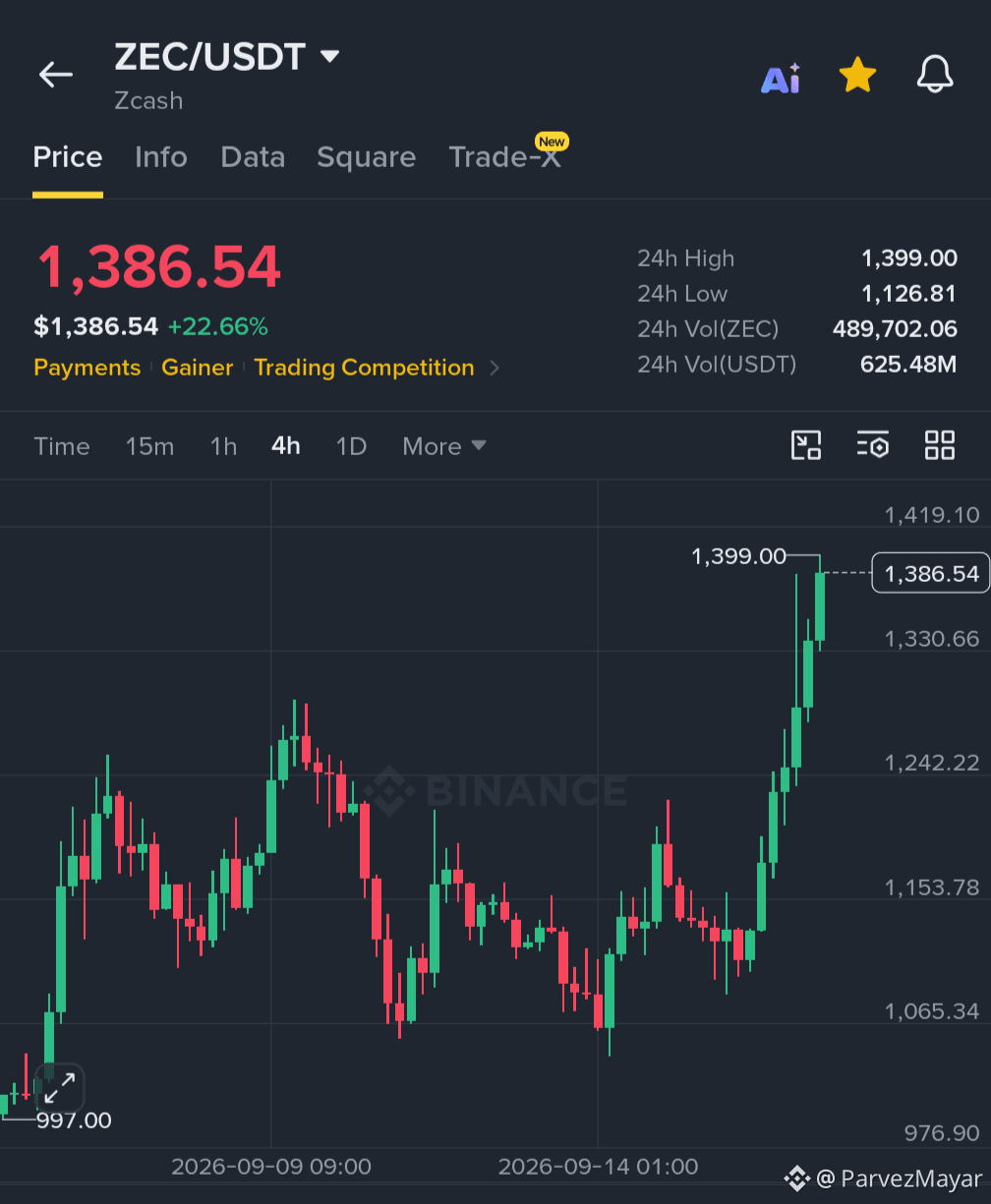
Now that $ZEC is literally touching $1,400... how many times i told you guys❓
I told you to BUY ZEC when it was below $800.
Then again and again on every dump below $1,100... ZEC is still strong, privacy narrative is still alive and now Zcash also has that extra institutional angle through Grayscale's ZCSH.
💛 And here we are... Zcash +22% around $1,386 while everyone who was waiting for $450 is STILL waiting.
Okay so... when ZEC moves we already know which two coins i start watching next.
$DASH and $ZEN .
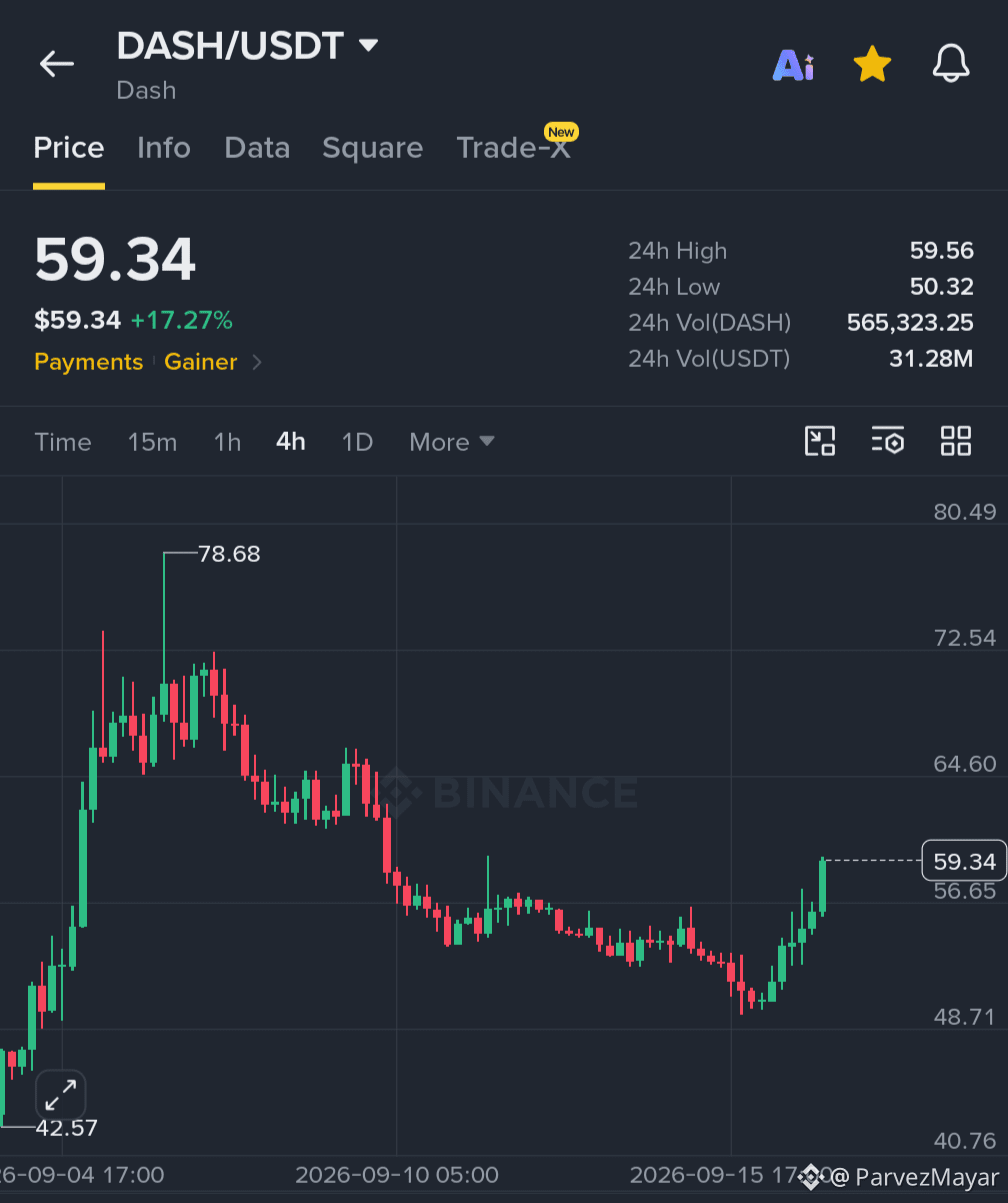
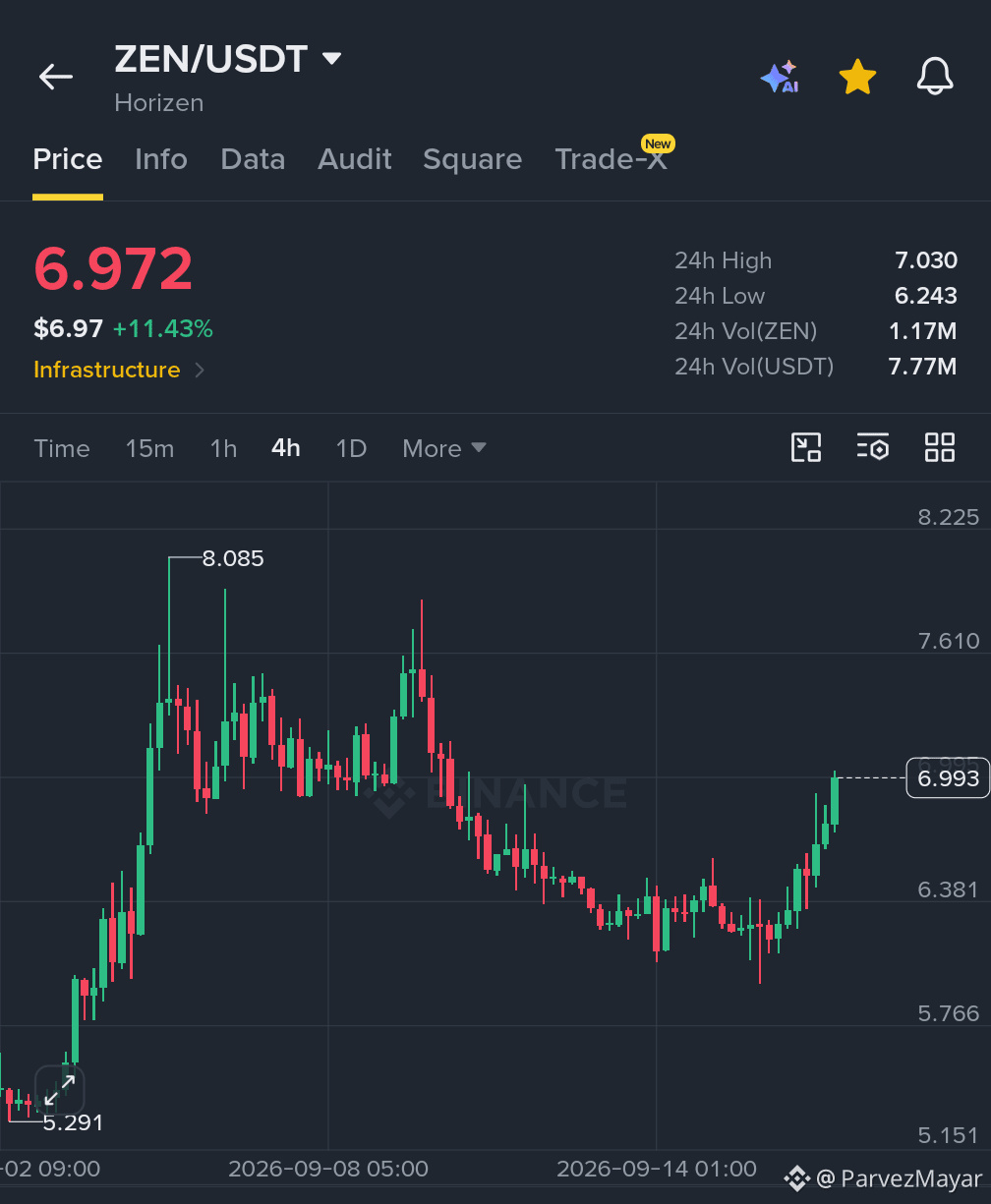
These three have been moving together again... ZEC is leading, DASH already +17% near $60 and ZEN +11% around $7 💪🏻
And this is why i am ACCUMULATING... not waiting for everything to become stupidly green before deciding it's finally safe to buy.
My LONG term TARGETS:
🎯 ZEC -> $2,000-$2,500 🤑
🎯 DASH -> $100-$150+ 🔥
🎯 ZEN -> $15-$20+
People always want another dip when price is cheap...
Then price goes +50%, +100% and suddenly they stop asking for the dip and start CHASING 😂
Don't wait for ZEC at $2,000... DASH at $100... or ZEN at $15 to finally decide these were good buys.
BUY on opportunities... DCA on pullbacks... don't chase green tops.
These three are STILL getting started. 💪🏻
CLICK HERE TO TRADE 👇🏻
{future}(ZECUSDT)
{future}(ZENUSDT)
{future}(DASHUSDT)
#ZcashRises6%
#FedHikes25BpsUSStocksClose
#ZcashHoldersBackNU7Upgrade
📍 Not a financial advice, always DYOR!
Now that $ZEC is literally touching $1,400... how many times i told you guys❓
I told you to BUY ZEC when it was below $800.
Then again and again on every dump below $1,100... ZEC is still strong, privacy narrative is still alive and now Zcash also has that extra institutional angle through Grayscale's ZCSH.
💛 And here we are... Zcash +22% around $1,386 while everyone who was waiting for $450 is STILL waiting.
Okay so... when ZEC moves we already know which two coins i start watching next.
$DASH and $ZEN .
These three have been moving together again... ZEC is leading, DASH already +17% near $60 and ZEN +11% around $7 💪🏻
And this is why i am ACCUMULATING... not waiting for everything to become stupidly green before deciding it's finally safe to buy.
My LONG term TARGETS:
🎯 ZEC -> $2,000-$2,500 🤑
🎯 DASH -> $100-$150+ 🔥
🎯 ZEN -> $15-$20+
People always want another dip when price is cheap...
Then price goes +50%, +100% and suddenly they stop asking for the dip and start CHASING 😂
Don't wait for ZEC at $2,000... DASH at $100... or ZEN at $15 to finally decide these were good buys.
BUY on opportunities... DCA on pullbacks... don't chase green tops.
These three are STILL getting started. 💪🏻
CLICK HERE TO TRADE 👇🏻
#ZcashRises6%
#FedHikes25BpsUSStocksClose
#ZcashHoldersBackNU7Upgrade
📍 Not a financial advice, always DYOR!
I told you to BUY ZEC when it was below $800.
Then again and again on every dump below $1,100... ZEC is still strong, privacy narrative is still alive and now Zcash also has that extra institutional angle through Grayscale's ZCSH.
💛 And here we are... Zcash +22% around $1,386 while everyone who was waiting for $450 is STILL waiting.
Okay so... when ZEC moves we already know which two coins i start watching next.
$DASH and $ZEN .
These three have been moving together again... ZEC is leading, DASH already +17% near $60 and ZEN +11% around $7 💪🏻
And this is why i am ACCUMULATING... not waiting for everything to become stupidly green before deciding it's finally safe to buy.
My LONG term TARGETS:
🎯 ZEC -> $2,000-$2,500 🤑
🎯 DASH -> $100-$150+ 🔥
🎯 ZEN -> $15-$20+
People always want another dip when price is cheap...
Then price goes +50%, +100% and suddenly they stop asking for the dip and start CHASING 😂
Don't wait for ZEC at $2,000... DASH at $100... or ZEN at $15 to finally decide these were good buys.
BUY on opportunities... DCA on pullbacks... don't chase green tops.
These three are STILL getting started. 💪🏻
CLICK HERE TO TRADE 👇🏻
#ZcashRises6%
#FedHikes25BpsUSStocksClose
#ZcashHoldersBackNU7Upgrade
📍 Not a financial advice, always DYOR!
14
29
29.9k
·
--
Bullish
Dears... Those greens look too eye pleasing but here keep your focus on three coins right now 😉
$ZEC , $BR and $DASH ... Not because others are not delivering, but these three can deliver while being bit less swingy than others 🤝
My Targets:
🎯 ZEC $2,000 🤑
🎯 DASH $100 🔥
🎯 BR $1
BUY when it's still early, don't chase another 50% upside move later.
{future}(ZECUSDT)
{future}(BRUSDT)
{future}(DASHUSDT)
#FedRateWatch
#ZcashRises6%
#ZcashHoldersBackNU7Upgrade
#BitcoinFalls4%
📍 DYOR!
Dears... Those greens look too eye pleasing but here keep your focus on three coins right now 😉
$ZEC , $BR and $DASH ... Not because others are not delivering, but these three can deliver while being bit less swingy than others 🤝
My Targets:
🎯 ZEC $2,000 🤑
🎯 DASH $100 🔥
🎯 BR $1
BUY when it's still early, don't chase another 50% upside move later.
#FedRateWatch
#ZcashRises6%
#ZcashHoldersBackNU7Upgrade
#BitcoinFalls4%
📍 DYOR!
$ZEC , $BR and $DASH ... Not because others are not delivering, but these three can deliver while being bit less swingy than others 🤝
My Targets:
🎯 ZEC $2,000 🤑
🎯 DASH $100 🔥
🎯 BR $1
BUY when it's still early, don't chase another 50% upside move later.
#FedRateWatch
#ZcashRises6%
#ZcashHoldersBackNU7Upgrade
#BitcoinFalls4%
📍 DYOR!
5
20
7.4k
Log in to explore more content
Join global crypto users on Binance Square
⚡️ Get latest and useful information about crypto.
💬 Trusted by the world’s largest crypto exchange.
👍 Discover real insights from verified creators.
Email / Phone number
Trending Topics
BTCBreaks80K
118,828 views
1,869 Discussing
$BTC
What price is BTC going to hit in 2026?
Spot is sitting at $80,748. 104 days to go
↑ $90k - 58%
↑ $100k - 24%
↓ $70k dip first - 48%
The bull case floating around the floor:
>August had a proper run from $62,275 up to $81,479 — up 31% bottom to top
>The CLARITY Act flopped its Senate cloture vote 49-50 on 15 Sept. BTC was already sliding well before the vote, touched $74,968 in that hour, and won it all back inside three days
>The Fed hiked rates on 16 Sept — first time since July 2023. Spot is currently floating 7.4% above that day's low
>The altcoins are proper outrunning it. 30-day view: SOL up 38%, XRP up 35%, ETH up 32% versus BTC up 23%
>The timeline is still packed with reasons why this ought to break down — and that’s precisely the wall of worry bull markets tend to climb
>The midterms land on 3 Nov, right smack in the middle of this market window
So, what would you put down for a punt at +24% in 104 days?
$ETH
$SOL
#BTCBreaks80K #solonapumping #ETH🔥🔥🔥🔥🔥🔥 #BullMarket📈
Wealthy bloke
·5 Likes
·5.1k views
比特币突破8万
92,490 views
271 Discussing
SOLJumpsAbout10%
0 views
0 Discussing