
澈澈crypto
330 Posts

澈澈crypto
Report
Block User
High-Frequency Trader
5.5 Years
27 Following
131 Followers
155 Liked
Posts
All
Quotes
·
--
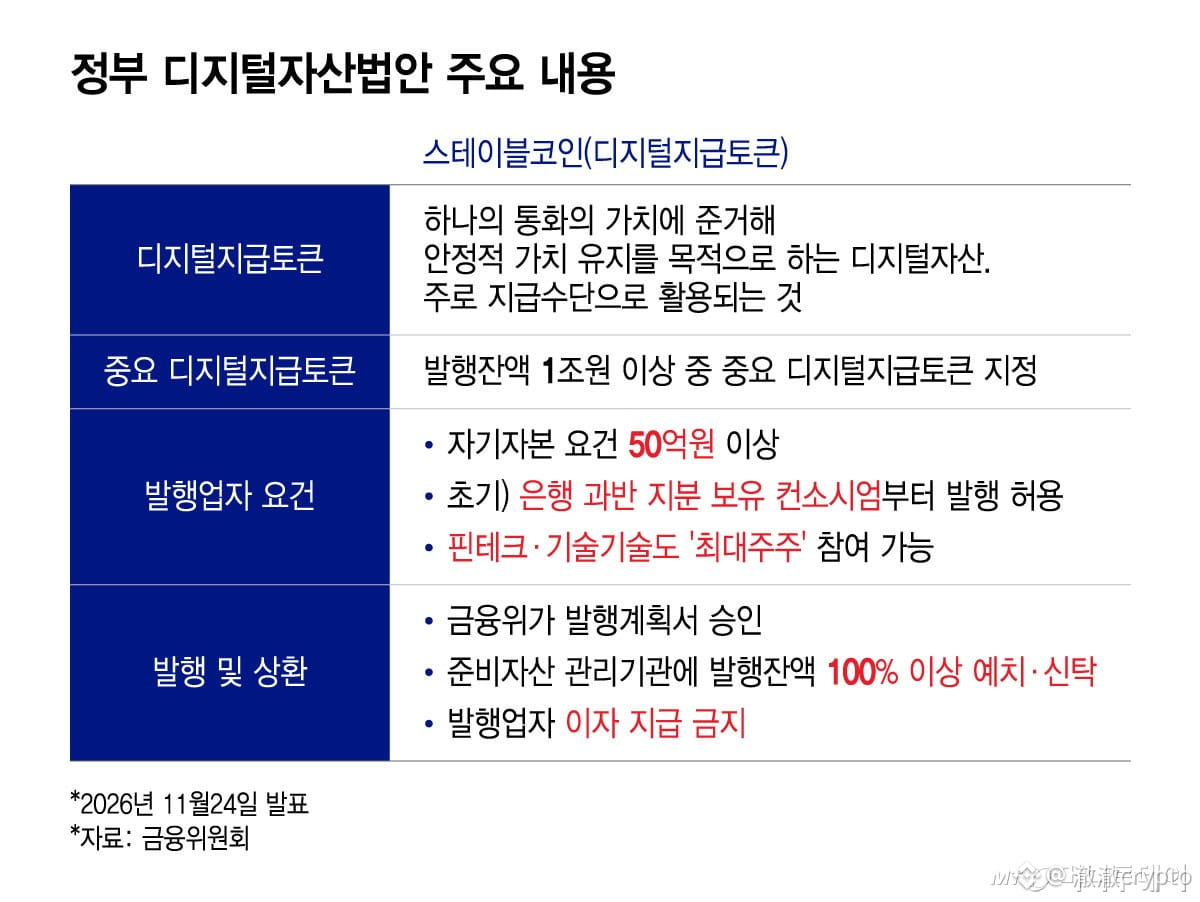
South Korea is getting serious: won stablecoins approved, ICOs unbanned, and exchange major shareholders capped at 20%.
Today (November 24), South Korea’s Financial Services Commission released the government’s draft Digital Asset Industry Act: won stablecoins will initially be issued by consortia dominated by banks. Foreign issuers can also issue them after setting up a branch in Seoul and registering—for example, Circle’s USDC.
Major shareholders of exchanges will generally be capped at a 20% stake, but can hold up to 34% with FSC approval. Upbit and Bithumb will both have to go through the licensing process again.
Domestic ICOs are being unbanned after nine years: issuers must submit a white paper and notify the FSC; they must hold 100% of reserves in banks or government bonds. Platforms must compensate users on a no-fault basis if hackers steal their coins, and violations can incur fines of up to 10% of sales.
At the time of writing, BTC was at $60,516, down 1.56% over 24 hours (Finnhub real-time price).
This is the final direction for South Korea’s second-phase crypto regulation legislation. The approval of won stablecoins and lifting of the ICO ban are genuine liberalization, but the bill still has to pass the National Assembly, so the rollout depends on parliament.
I’m watching two things: the National Assembly’s review progress and the list of the first bank consortia. If the Assembly delays it until next year or tightens the 20% cap further, the upside will be discounted.
With won stablecoins approved and ICOs unbanned, who do you think will benefit first—Upbit or Bithumb—or will the banks claim the seats first?
$BTC $ETH $SOL
#韩国 #WonStablecoin
291
·
--
👀 From $55,081 back up to $61,377—is Bitcoin’s rebound a real recovery or just a dead-cat bounce?
(Data as of 7:17 this morning, source: TradingView)
📌 Market overview: BTC is currently at $61,377, up 0.64% in 24h. On Saturday, it briefly plunged to $55,081 (its lowest level since September 2024), then closed three bullish candles in a row: $60,078 on 11-21 and $61,170 on 11-22. The lows keep getting higher, and some people are quietly buying the dip.
📌 Technicals: RSI(14) is only 28, still hovering near oversold territory—in other words, the drop has been steep enough that there’s room for a rebound. But a wall of moving averages looms overhead: SMA10 at $62,541 and SMA20 at $68,527. The current price is still below the averages. The rebound is real, but the trend hasn’t turned around yet.
📌 Other major coins: ETH $1,714.4 (+0.05%), BNB $556.17 (+0.07%), APT $0.3780 (+0.13%); they’re all plodding along with the broader market.
🔥 Hottest today: SOL at $71.95, up 2.46% in 24h—the biggest gainer among major coins. After being deeply oversold over the weekend, it’s leading the rebound.
💡 My take: Short-term outlook is bullish, and the rebound may have a little more room to run. First target: $64,505 (Monday’s intraday high). A move above $62,541 would be the first sign of a real recovery. If it falls below $58,000, I’ll admit I was wrong and treat this rebound as if it never happened.
One quick risk reminder: Spot BTC ETFs saw another $1.79 billion in net outflows last week, so institutions are still heading for the exits. U.S. PCE data is also due Wednesday, so don’t chase too aggressively.
Are you bullish or bearish today? Share your thoughts in the comments 👇
$BTC $ETH $BNB
For reference only; this is not investment advice.
23
·
--
Verified
🔔Stellar pulled off something big in the middle of the night: its quantum-resistant upgrade, Protocol 30, went live on mainnet
Here’s what happened: Validators voted it through at 1 a.m. Beijing time today, and The Defiant confirmed at 5 a.m. this morning that Protocol 30 was active
Three major features went live at once: contract addresses can carry customer tags, Soroban contracts can verify quantum-resistant ML-DSA signatures, and ledger timestamps are precise to the millisecond
Regular users don’t need to do anything: everyday transfers still use Ed25519 signatures—no migration or address changes needed
XLM is currently at $0.129647, up 2.23% over 24 hours (TradingView Coinbase, checked live at 06:35)
My take: this move isn’t for today; it’s preparation for after 2030. NIST just set a retirement timeline for Ed25519 in October, and Stellar has already laid the groundwork for quantum resistance at the contract layer
What I’m doing: treating this as a smooth upgrade, not expecting it to pump the price directly. If wallet and exchange integrations run into trouble later, I’ll reconsider this view
What do you think—is quantum resistance a real lead for Stellar, or is it just staking out a spot?
$BTC $ETH $SOL
#Stellar #QuantumResistant
590
·
--
A U.S. court extended the freeze order on Binance accounts to December 17, and Binance itself can't lift it.
In case No. 1:26-cv-05425-SKC, Parbas v. Huione, the U.S. District Court for Colorado extended the freeze order to December 17, 2026. A preliminary injunction hearing is scheduled for 8:30 a.m. that same day in Denver.
Binance acknowledged in an official post on November 23 that, under a court order, it had frozen accounts associated with specific deposit addresses. The platform is neither the plaintiff nor the defendant, and lifting the freeze can only be pursued through the court.
Chinese users have already had 332,000 yuan and 400,000 USDT frozen, and contacting customer support hasn't helped.
I think the most frustrating part is that even innocent users have no recourse: on-chain tracing identifies addresses, not people. If an account is linked to a suspicious path, the entire account gets frozen until the court gives the go-ahead.
If your account is frozen, don't waste time in the app. The notice says to contact the plaintiff's lawyer to appeal before November 24. The freeze may only be lifted if the court changes its ruling after the December 17 hearing.
Do you think it's reasonable to freeze an entire account with a single court order, or should only the funds involved in the case be frozen?
$BTC $ETH $SOL
#币安 #CourtFreeze
8
·
--
Verified
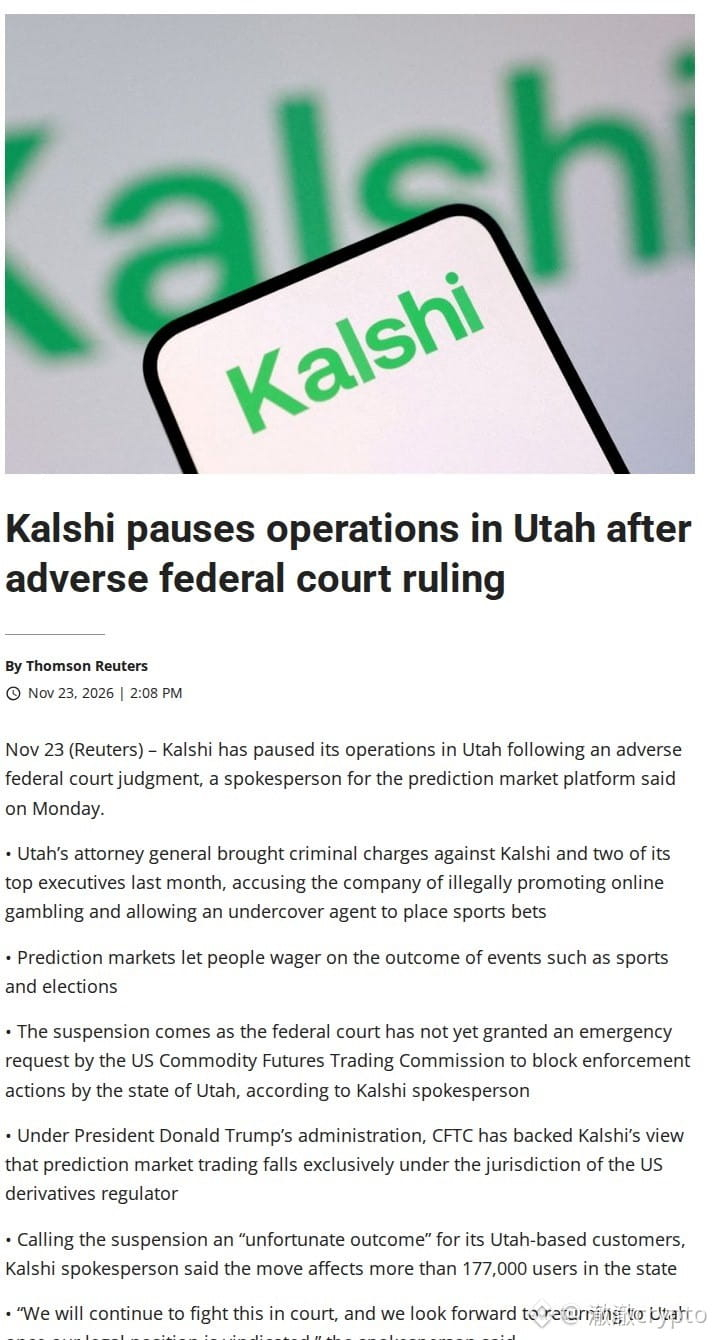
Kalshi takes a major hit in the U.S.: shuts down all operations in Utah, leaving 177,000 users with nothing to do overnight
What happened:
Reuters reported on Nov. 23 that a Kalshi spokesperson confirmed the company had suspended all operations in Utah following an unfavorable federal court ruling
Last month, Utah’s attorney general sued Kalshi and two of its executives, accusing them of operating an unlicensed sports prediction market
A federal court has yet to approve the CFTC’s emergency request to halt Utah’s enforcement action, so Kalshi has had to take a step back for now
My take:
A New York judge just refused to grant Kalshi an injunction, and now it’s shut down in Utah—the same industry, but two states heading in completely opposite directions. The jurisdictional battle is far from over
What I’m watching:
Keep an eye on the first court appearance in the Utah case on Dec. 4 and on the follow-up ruling on the CFTC’s emergency request. If the federal court gives Kalshi the green light, returning to Utah could be just a matter of time; if the Supreme Court takes up the jurisdictional dispute, the entire prediction market industry will have to rethink its strategy
Do you think prediction markets are financial derivatives or betting games?
$BTC $ETH $SOL
#预测市场 #Kalshi
650
·
--
Verified
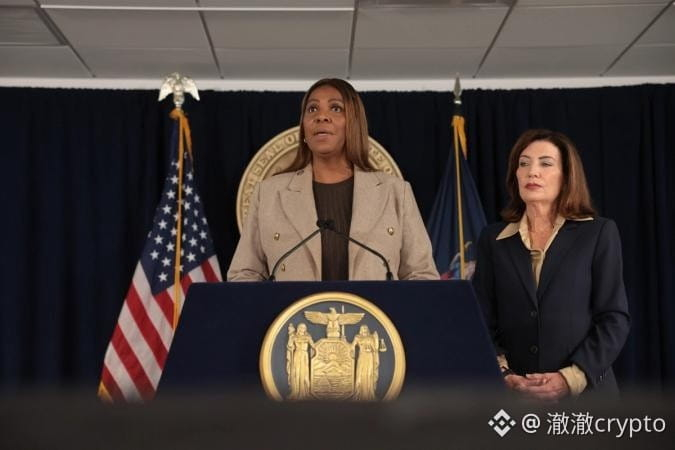
New York judge denies injunction, so Kalshi doesn’t have to shut down for now
What happened:
At Monday’s hearing, New York State Supreme Court Justice Melissa Crane declined to immediately grant the temporary restraining order sought by Attorney General Letitia James
James sued Kalshi on July 31, alleging it operated an unlicensed sports prediction market and seeking about $36 billion in damages. Kalshi said the proposed order would force it to shut down nationwide
The judge ordered both sides to follow an expedited briefing schedule and first reach an arrangement on safeguards for users aged 18–21. A further hearing is tentatively scheduled for next Monday. The status quo remains in place, and Kalshi continues operating as usual
My take:
This was a procedural win, not a ruling on the merits. The judge didn’t say Kalshi is legal; she just thought an injunction that would shut it down nationwide was too drastic, and wants both sides to fully make their case first
What I’m watching:
I’ll be watching next Monday’s hearing and the December 7 deadline for the New Jersey case’s response to the Supreme Court. If the Supreme Court takes up the jurisdictional dispute, the outlook could change in an instant
Do you think prediction markets are financial derivatives or betting games?
$BTC $ETH $SOL
#预测市场 #Kalshi
932
·
--
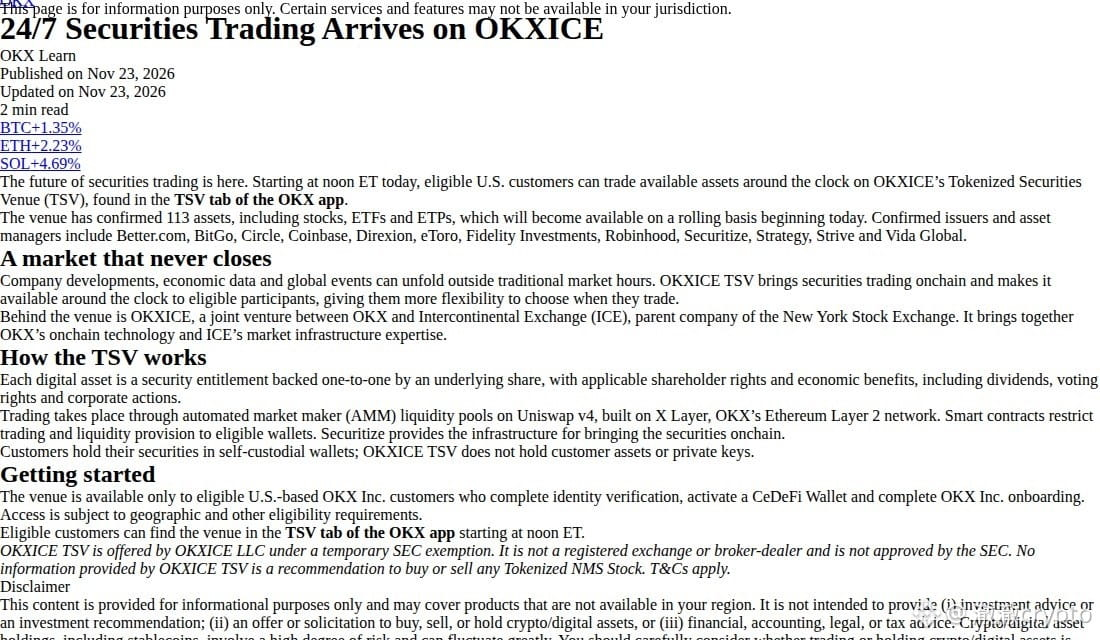
You no longer have to wait for the US market to open: OKXICE, a tokenization platform from OKX and NYSE parent company ICE, is live, with 113 US stocks and ETFs on-chain for 24/7 trading.
It opens at noon ET (1 a.m. Beijing time today). The first 6 are all familiar names in crypto: Coinbase, Circle, Robinhood, Strategy, BitGo, and Securitize.
Tokens are pegged 1:1 to the underlying shares, with dividends and voting rights included. Trading runs through Uniswap v4 pools and OKX’s X Layer. The 113 assets are confirmed to be rolling out in batches; Fidelity, eToro, and Strive have just joined.
But 67 companies have explicitly objected, including Apple, Microsoft, Nvidia, Tesla, and Meta. Nearly 90% of the first 62 said no.
With the NYSE’s parent company getting involved directly, it’s as if a traditional exchange has put its stamp of approval on tokenized stocks.
However, it’s only available to eligible US users, who also need to verify their identity and set up a self-custody wallet. Retail investors buying US stocks in the middle of the night is still a long way off.
For now, keep an eye on pool depth and spreads for the first 6. If they look bad, the hype will fade fast; once volume picks up, the 113 assets will be listed in batches soon enough.
If the SEC tightens its five-year exemption, this path will have to be retraced.
Which of the first 6 are you watching first: Coinbase or Circle?
$BTC $ETH $SOL
#代币化股票 #OKXICE
1
152
·
--
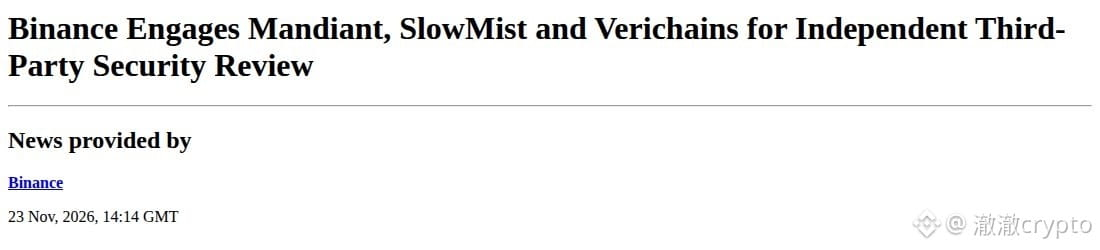
After $6.34 billion was stolen, Binance has finally followed through on its promise to “bring in outsiders to audit its books”—three top security firms are officially on the case
What happened:
On November 23, Binance announced that it had brought in Mandiant (part of Google Cloud), SlowMist, and Verichains to conduct a comprehensive, independent review of its security processes.
This is the independent review promised in the preliminary report on November 3—and the first time the firms have been named.
The October 29 theft affected approximately $6.34 billion. The FBI attributed it to North Korea’s TraderTraitor.
My take:
Who they bring in says more than the review itself—Mandiant is Google Cloud’s premier incident-response team, and SlowMist is a veteran in on-chain security. This lineup doesn’t look like a box-ticking exercise.
But however thorough the review is, it’s still just a review. The real test is whether the findings are made public and whether the problems are fixed.
What I’ll do:
I’ll watch and wait before drawing conclusions. Trust can only return when the findings are made public and the fixes are implemented one by one.
What would change my mind: If the findings take too long to publish, or Binance just says “everything is fine,” then this whole exercise will have been for nothing.
Do you think Binance bringing in outside help to review its security is a genuine effort to fix things, or just a PR stunt?
$BTC $ETH $SOL
#币安 #SecurityReview
30
·
--
👀 On Friday, we were still crying below 55,000; by Monday morning, BTC had climbed back to 60,806. This roller coaster ride has me so dizzy, I might as well not have taken motion sickness pills.
📌 First, the numbers. Data as of 7:13 this morning (TradingView):
BTC $BTC 60,806 dollars, +1.09% in 24 hours; ETH $ETH 1,713.8 dollars, +2.05%; $BNB 555.97 dollars, +1.54%
🔹 Here’s what this rebound means: last Friday, BTC briefly plunged to $55,081, with $2.4 billion in positions liquidated over 24 hours that day. Over the weekend, it clawed its way back up more than 10% from the bottom. For now, it’s managed to get above the $60,000 hurdle.
🔹 But don’t pop the champagne just yet: BTC is still below all its moving averages, with the first major resistance at $63,191. The RSI is only 26, so the drop may have been a bit excessive. There’s room for a short-term breather, but the trend hasn’t turned around yet.
💡 Today’s top mover: CYBER, down 5.14% in 24 hours to $0.203. South Korea’s Upbit and Bithumb have suspended deposits and withdrawals after the project team discovered a suspected unauthorized token mint on Solana. Coins held in the bridge lockup were also transferred out, and the matter is under investigation. If you hold this coin, don’t make any sudden moves—wait for an official update.
⚡️ My take: short-term bullish, but this is a rebound, not a reversal. Only once it holds above $61,565 would I take a closer look; if it falls back below $58,640, pretend I never said anything.
Are you bullish or bearish today? Let me know in the comments 👇
For reference only; this is not investment advice

516
·
--
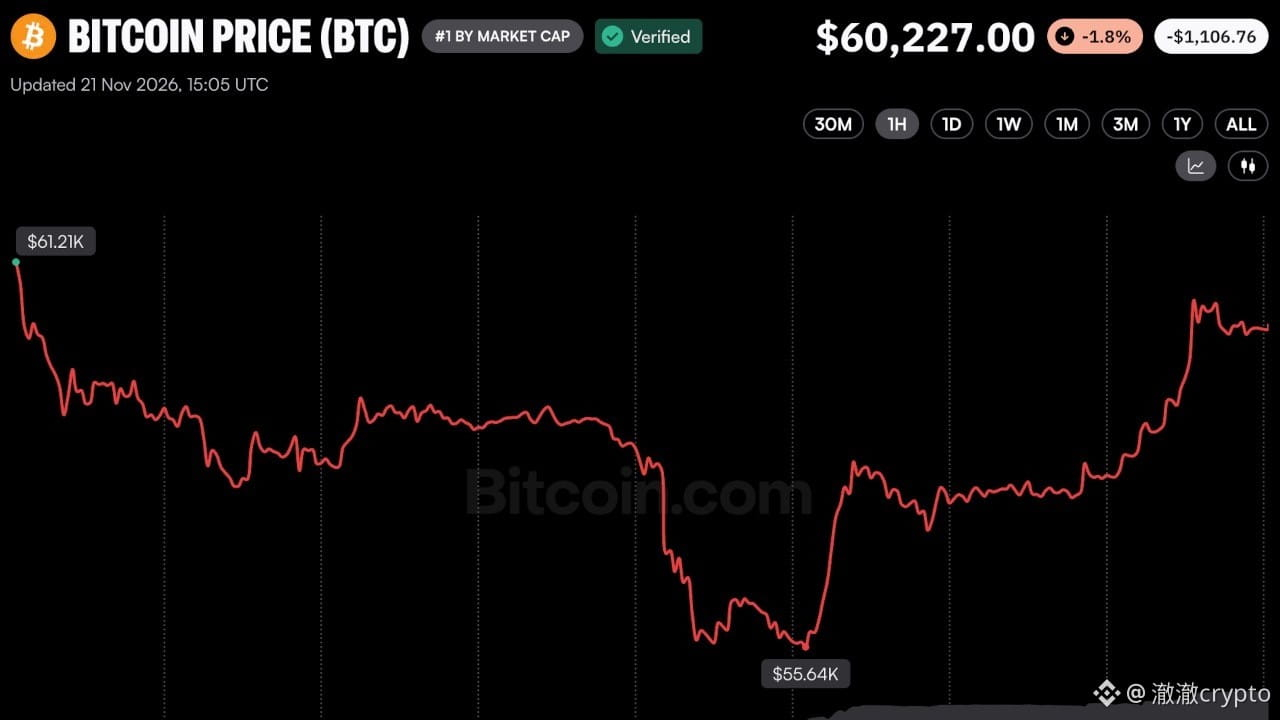
💥 Bitcoin plunged to $55,130 overnight, its lowest in two years, then bounced back to $60,131 this morning
In plain English: This isn’t an ordinary pullback—it’s an accelerated bottoming-out after a 30% drop in a month.
📌 What we’re seeing:
Bitcoin fell to a low of $55,130 early Saturday, its lowest level since September 2024. It’s now down 52% from its peak of $126,080. Total liquidations across the crypto market reached $2.67 billion in 24 hours, with nearly $1.3 billion in Bitcoin liquidations alone.
U.S. spot Bitcoin ETFs saw net outflows of more than $1.25 billion from Tuesday through Friday. Outflows hit $582 million on Thursday alone, with BlackRock’s IBIT accounting for $541 million. In U.S. stocks, the Nasdaq fell 10% in a week, while Nvidia dropped nearly 14% on Friday alone.
🔹 Here’s where things stand:
Bitcoin: $60,131.37 (+1.67%), up 9.07% from its low. But it closed at just $58,951.51 on November 20, down 29.22% over the past month.
Ethereum: $1,679.60 (+3.18%), after dipping as low as $1,538; SOL: $70.26 (+1.12%); BNB: $548.28 (+1.31%); APT: $0.3691 (-0.81%).
💡 My take:
This looks more like an oversold bounce than a reversal—ETFs are still seeing net outflows, and Wintermute has even said Bitcoin could fall to the $50,000 range. First, watch $60,996 (today’s high). Bitcoin needs to hold above $61,000 before we can talk about a bottom; if it can’t, a break below $58,951 could send it back to retest $55,130.
🔥 Standout mover:
Venice Token (VVV) bucked the trend, gaining 21.3% to $24.09. Arthur Hayes singled it out as a favorite and set a $40 price target. It’s also been listed on Poloniex and HTX. While the broader market plunged, it emerged as a leader in the AI sector.
Data as of 07:07 this morning (Beijing time). Sources: Finnhub/Binance, news.bitcoin.com, Coinglass.
Do you think $55,130 was the bottom this time, or just a stop along the way? Let us know in the comments👇
$BTC $ETH $BNB
#比特币 #以太坊 #BNB
For reference only; this is not investment advice
20
·
--
⚖️One sentence from a federal judge, and prediction markets may be in for a shake-up: the CFTC wants to protect Kalshi, but the court won’t.
Here’s what happened: On Friday (November 20), New York federal judge Lorna Schofield denied the CFTC’s emergency motion to halt New York Attorney General Letitia James’s enforcement action against Kalshi, saying the CFTC had not shown that federal law preempts state law.
The day before, another judge had just sent New York’s lawsuit back to state court. James alleges that Kalshi operated an unlicensed prediction market and is seeking up to $36 billion in damages.
At the time of publication, BTC was at $60,085, up 1.95% over 24 hours (live price from TradingView).
My take: This isn’t a minor procedural setback. Three federal appeals courts have ruled that states can regulate Kalshi, while only one has said New Jersey cannot. The deeper the split, the more likely the Supreme Court is to take up the case.
The CFTC itself acknowledged in its filing that if New York takes action, Kalshi could be forced to shut down completely—and its headquarters are in New York.
What I’m doing: Watching Monday’s state court hearing. New York’s own restraining order is still awaiting a ruling; if the state court grants it, Kalshi could be in real trouble in New York. If an appeals court overturns the decision, this will have been a false alarm.
Do you think prediction markets will ultimately be regulated by the states or the federal government?
$BTC $ETH $SOL
#Kalshi #PredictionMarkets
25
·
--
⚖️ One sentence from a federal judge, and Kalshi’s “federal shield” was torn away—the CFTC’s emergency bid to halt New York’s actions failed.
On November 20, Reuters reported that Manhattan federal judge Schofield denied the CFTC’s emergency motion, refusing to temporarily block New York Attorney General James’s case against Kalshi.
The judge’s reasoning was straightforward: the CFTC had failed to show that it was “likely to succeed on the merits.” Federal law could not override the states’ own regulatory rules, and states had the right to require prediction markets to obtain licenses.
Just the day before, another judge had sent the case back to Manhattan state court. The New York attorney general had already filed for an injunction there and was waiting for the judge to rule.
In my view, this isn’t just a problem for Kalshi—it’s a jurisdictional earthquake for the entire prediction market industry. Three appellate courts say states can regulate, while one says they can’t. The wider the split, the more likely the Supreme Court is to take up the issue.
The CFTC itself acknowledged in court filings that if New York halts trading, Kalshi may have to shut down its entire business.
I’m watching what the state court does next: if the injunction is denied, this bearish development will be disproven; if it’s granted, the entire prediction market industry will have to recalculate.
Do you think prediction markets will ultimately be regulated uniformly by the federal government, or will each state regulate them separately?
$BTC $ETH $SOL
#Kalshi #PredictionMarkets
49
·
--
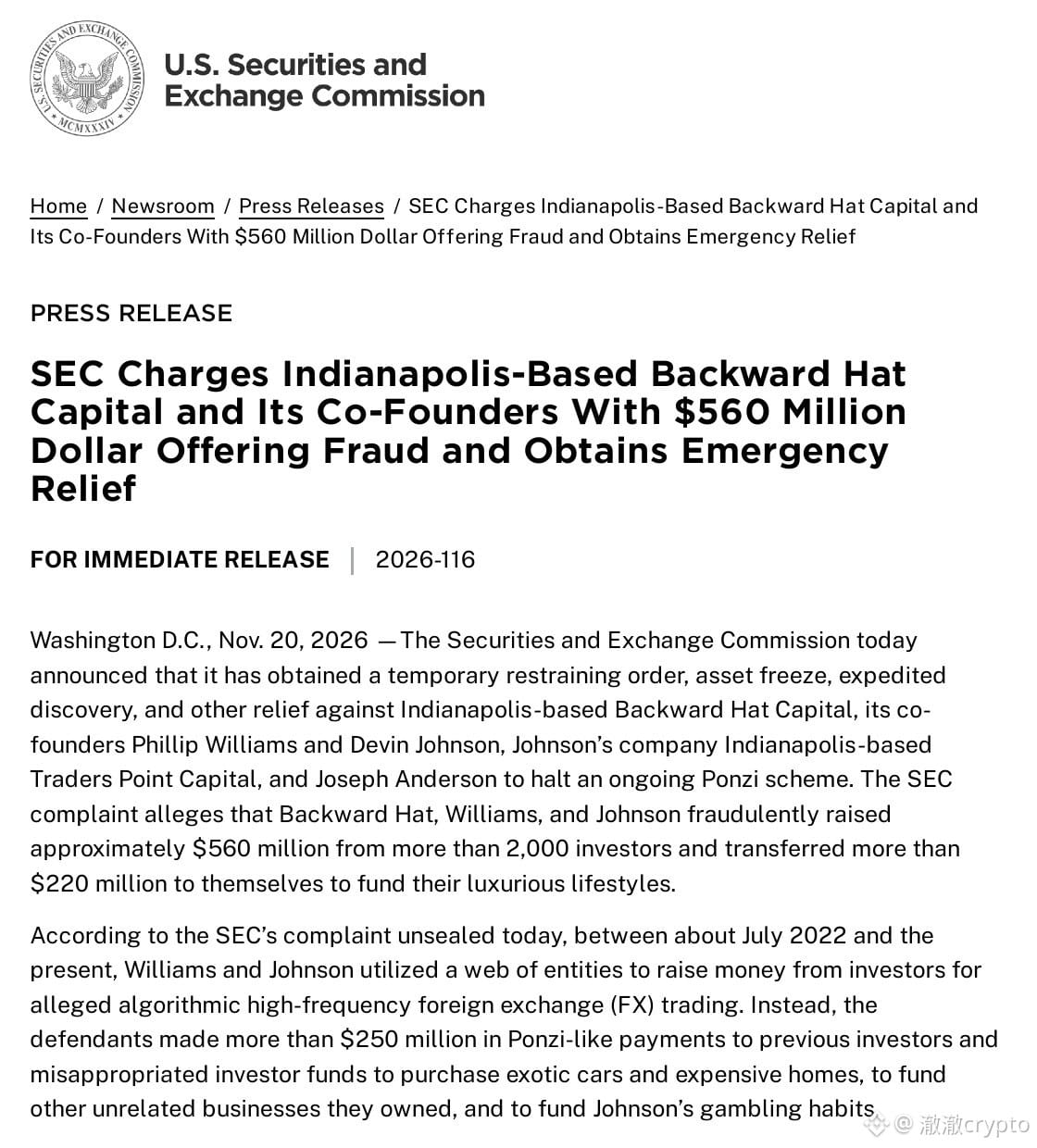
🪤The $560 million scheme has been busted. The pitch: “AI + crypto, guaranteed 6% returns every month”!
SEC press release, November 20: Backward Hat Capital, based in Indiana, and its two founders, Phillip Williams and Devin Johnson, raised about $560 million from more than 2,000 investors starting in July 2022. They promised to convert the money into crypto assets and use “AI-powered” high-frequency forex arbitrage algorithms to earn at least 6% a month.
In reality, more than $250 million went to pay earlier investors, over $220 million went into the two men’s own pockets for luxury cars and mansions, and gambling; the “audit reports” shown to investors were also fake.
The FBI arrested the two men on November 18. Manhattan prosecutors say the alleged fraud exceeds $600 million. The CFTC has also filed suit, and a court has appointed a temporary receiver.
I think “guaranteed 6% returns every month” was the biggest red flag. AI and crypto are just old wine in a new bottle—the Ponzi scheme is still the same old Ponzi scheme.
The key question is how much the receiver can recover: if they recover a lot and secure convictions, schemes like this will have taken a real hit; otherwise, if they only arrest these two, the next one is already on its way.
Have you ever come across an investment group promising “a few percent guaranteed every month”? Do you block them immediately, or take a closer look?
$BTC $ETH $SOL
#SEC #PonziScheme
1
1
770
·
--
Verified
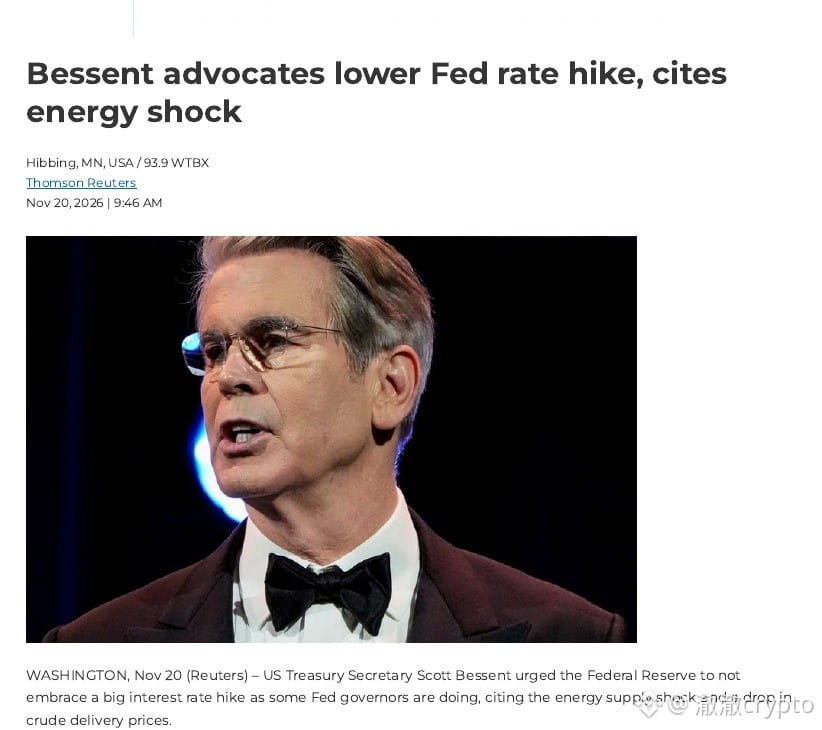
📣Treasury Secretary steps in to rein in the Fed: Don’t hike by 50 basis points in December!
On November 20, Treasury Secretary Bessent publicly weighed in during an interview with CNBC: Inflation right now is being driven by an energy supply shock, crude prices have already pulled back, and the economy’s fundamentals are sound—so a heavy-handed move at this point wouldn’t be appropriate.
He also had a pointed message for the Fed governor who favors a 50-basis-point hike: A year ago, he wanted a rate cut of the same magnitude, and in less than 12 months he’s changed course and is calling for a major hike. “Look forward, not backward.”
For context, the Fed just held rates steady at the end of October, keeping them at 3.75%–4.00%. Waller said that if October’s core CPI rose 0.3% month over month, a 50-basis-point hike should be considered—and it came in at exactly 0.3%. The December 8–9 rate meeting has become a showdown between the bulls and bears. As of November 20, CME FedWatch showed an approximately 89% chance of a December rate hike, but less than an 8% chance of a 50-basis-point hike.
I think the Treasury Secretary’s public pushback is more about reassuring the markets. But the Fed looks at inflation figures, not the Treasury Secretary’s opinion, so his comments may not be enough to stop the Fed from raising rates in December.
Keep an eye on November’s core CPI and the December 8–9 decision: If core CPI rises by 0.3% or more month over month again in November, a 50-basis-point hike really is possible, and Bessent’s comments will have been for nothing. Otherwise, a 25-basis-point hike—or no change—is more likely.
Do you think the Fed will raise rates by 25 basis points in December, or will it really dare to hike by 50?
$BTC $ETH $SOL
#美联储 #Bessent
1
3.7k
·
--
CFTC loses another round: Manhattan judge rejects emergency motion, 3 appellate courts have sided with state governments
As expected: On Friday, November 20, Eastern Time, Manhattan federal judge Lorna Schofield rejected the CFTC’s emergency motion, refusing to let it temporarily halt New York Attorney General Letitia James’s enforcement action against Kalshi.
The judge’s exact words: The CFTC failed to show that it was “likely to succeed on the merits,” and federal law has not taken away the states’ authority to regulate prediction markets.
Just a day earlier, another judge had sent New York’s case back to Manhattan state court. The CFTC’s emergency plea that afternoon failed to stop it.
My take: This string of losses is further weakening the CFTC’s argument for “exclusive jurisdiction.” Three appellate courts have ruled that states can regulate, while only one has said New Jersey cannot. The deeper the split, the more likely the case is to go all the way to the Supreme Court.
For prediction markets, state licensing is a hurdle they won’t be able to get around in the short term.
What I’m watching: First, the November 23 hearing in Louisiana and the TRO ruling in Utah. If both also rule that states can regulate, the CFTC’s position will have all but collapsed. On the other hand, if even one appellate court reverses course, we’ll have to wait and see.
At the time of publication, BTC was at $57,305 (TradingView live reading at 15:35).
Do you think prediction markets will ultimately be regulated by the states or by the CFTC?
$BTC $ETH $SOL
#预测市场 #Kalshi
87
·
--
Federal judge rejects CFTC on the spot; winds shift in Kalshi’s New York case
On Friday, Manhattan federal judge Schofield rejected the CFTC’s emergency request to halt New York State’s enforcement action against Kalshi.
The judge’s exact words: The CFTC had not shown that its central claim—that “federal derivatives law preempts state gambling laws”—was likely to succeed.
A day earlier, another judge had just sent New York State’s lawsuit back to state court. The state court will hold an emergency injunction hearing on Monday at 11:30 a.m. ET.
The tables have turned: Three federal appeals courts have ruled that states can regulate Kalshi, while only one has ruled that New Jersey cannot. The split is clear, and the chances of the Supreme Court taking up the case are rising sharply.
Watch Monday’s hearing: If an injunction is granted, Kalshi has said its New York headquarters and nationwide operations would have to shut down, with 1.2 million New York users bearing the brunt. If not, the state-versus-federal tug-of-war will continue.
Which side are you on: Are prediction markets financial derivatives or gambling?
$BTC $ETH $SOL
#Kalshi #PredictionMarkets
922
·
--
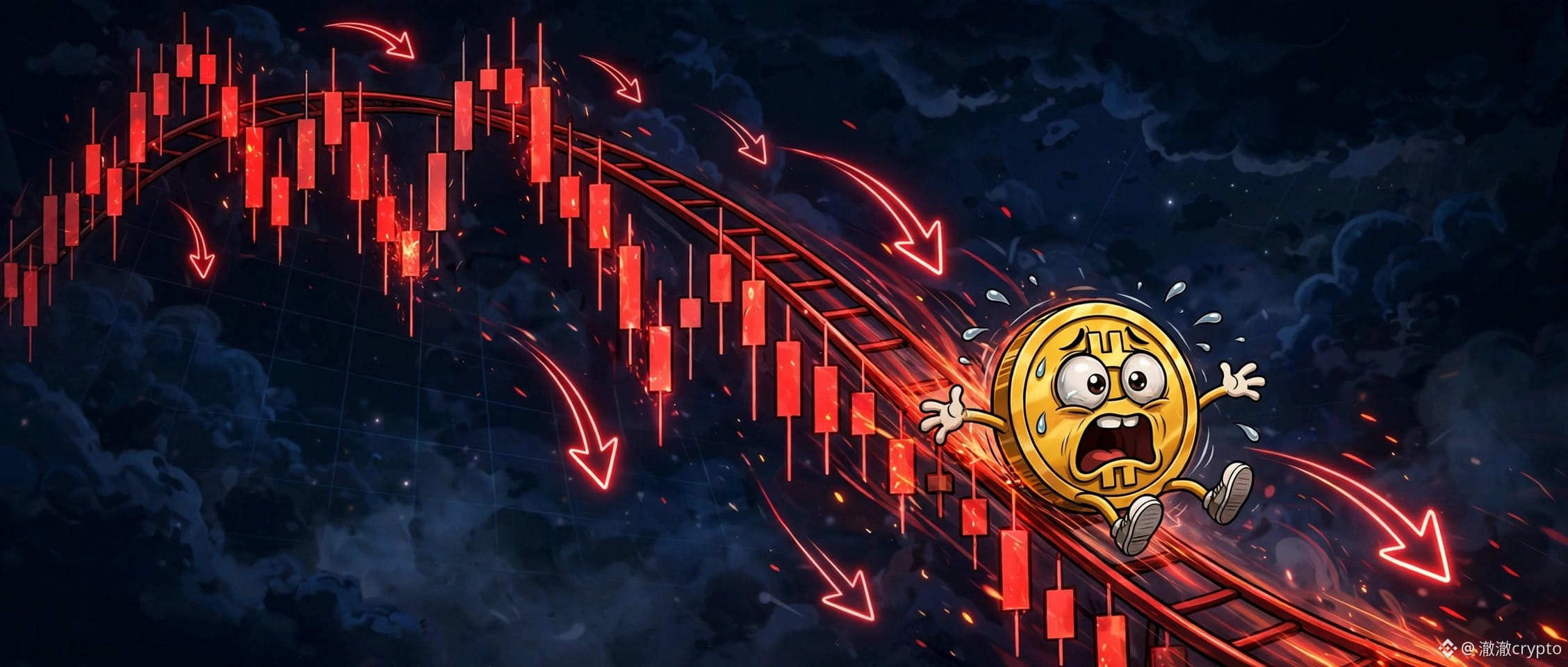
🎢 Bitcoin rode a roller coaster, dipping below $58K before climbing back to $59K in a single day. Thrilling, huh?
📌 Data as of 7:10 this morning (live prices from TradingView):
BTC $59,015, 24h -4.76%
ETH $1,620.5, -7.53%
BNB $540.13, -6.84%
SOL $69.17, -5.17%
APT $0.3708, -9.65%
In plain English: the whole market took a beating yesterday. BTC briefly dropped to around $57.7K. It’s down over 20% so far this November, sliding from $81K at the start of the month—and it’s now more than 50% below October’s $126K high. Spot ETFs saw $3.47 billion in net outflows in November. BlackRock’s IBIT alone had $541 million flow out on the 19th, a record. Over the past 24 hours, 263,000 traders were liquidated, wiping out $1.54 billion—the thing about leverage is, it’s an accelerator on the way up and a meat grinder on the way down.
💡 The lone contrarian: Bitway (BTW). Only 6 of the top 250 coins are up, and it’s leading the pack with a gain of over 10%—a spot of green in a sea of red.
My take: bearish in the short term. BTC has climbed back to $59K, but don’t rush to buy the dip until it gets back above the $60K hurdle. First support to watch is $58K; if that breaks, it could head to $57K. The Fear & Greed Index has fallen to 9—extreme fear. When others are fearful… don’t rush to get greedy just yet. Wait for things to stabilize.
Are you buying the dip today or staying on the sidelines? Let me know in the comments 👇
$BTC $ETH $BNB
For reference only. This is not investment advice.
8
·
--
Verified
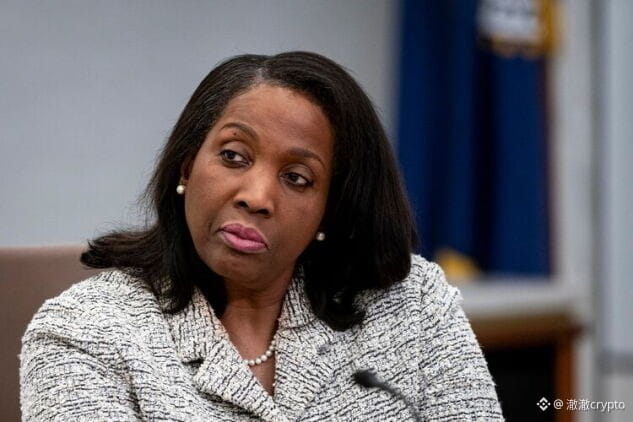
🦅 Fed Governor Cook turns hawkish: Rates are nowhere near high enough; September’s hike wasn’t enough
Here’s what happened:
Cook publicly said in a speech at the Central Bank of Chile’s annual conference on November 20 that current rates aren’t enough to tackle inflation, which she is “very concerned” about. The 25-basis-point hike on September 15–16 was nowhere near enough.
She said inflation has been above the 2% target for five and a half years, and waiting longer would only put policymakers further behind: “The longer you wait, the more you’ll have to raise rates later.”
She was one of two governors who dissented at the October 27–28 policy meeting, arguing then for another 25-basis-point hike.
Markets broadly expect a rate hike at the December 8–9 policy meeting, with more hikes to follow next year.
My take:
Hawks have gone from “floating the idea” to making it explicit. A December hike is basically a foregone conclusion.
What I’m doing:
The firmer rate-hike expectations get, the harder it is for risk assets to stage a major rebound. For now, I’m watching with the assumption that I won’t chase prices higher before the December meeting. If rates are left unchanged in December, this view is out the window.
Pick one: If rates are raised by 25 basis points in December, do you think BTC will fall below $55,000 first or climb back above $65,000 first?
At the time of writing, BTC is at $58,384, down 6.25% over 24 hours (live TradingView Bitstamp price).
$BTC $ETH $SOL
#美联储 #RateHike
1.3k
·
--
Verified
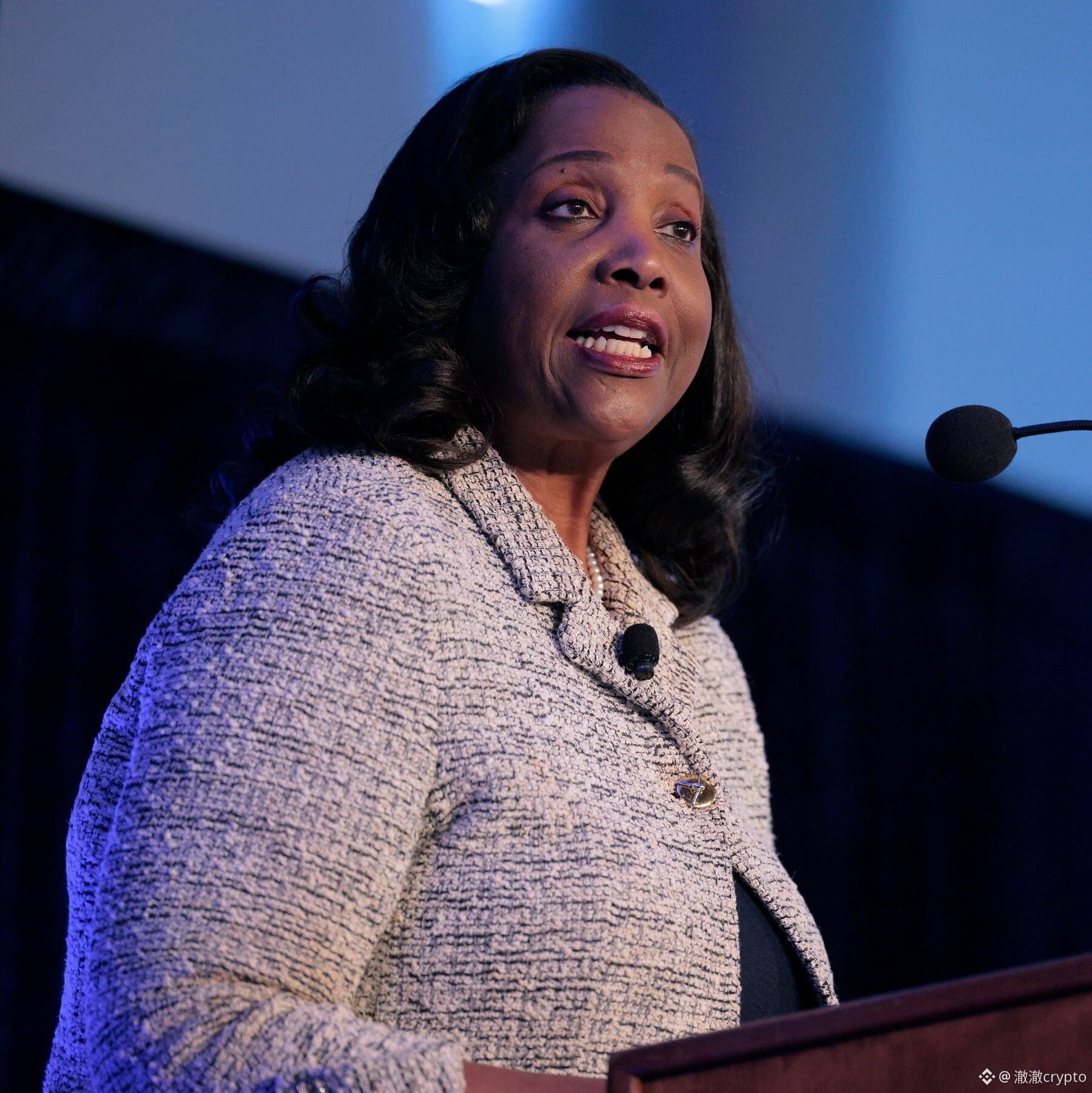
Fed Governor Cook just struck a hawkish tone in Chile: September’s rate hike wasn’t nearly enough—we need to keep raising rates!
Cook said inflation has been above the 2% target for five and a half years, with little evidence of it coming down.
The 25-basis-point (0.25%) hike in September wasn’t enough. She voted against the decision in October, when rates were left unchanged at 3.75%–4.00%.
She said that the longer we wait, the more we’ll be on the back foot—and delaying could mean having to raise rates more and more aggressively.
I think the hawks are serious about taking action this time. Markets are widely betting on another rate hike at the December 8–9 policy meeting.
Bitcoin just fell below $60,000 and is now at $59,146. Rate hike expectations are weighing on the market.
I’ll first watch to see whether any officials try to calm things down before the December meeting. If hawkish voices are coming from all sides, I won’t rush to buy into a short-term rebound.
This view would only be disproved if the November 25 PCE data shows a clear cooling in inflation.
Will a December rate hike mark the end of the bad news, or is the decline just getting started?
$BTC $ETH $SOL
#美联储 #加息 #Bitcoin
1k
·
--
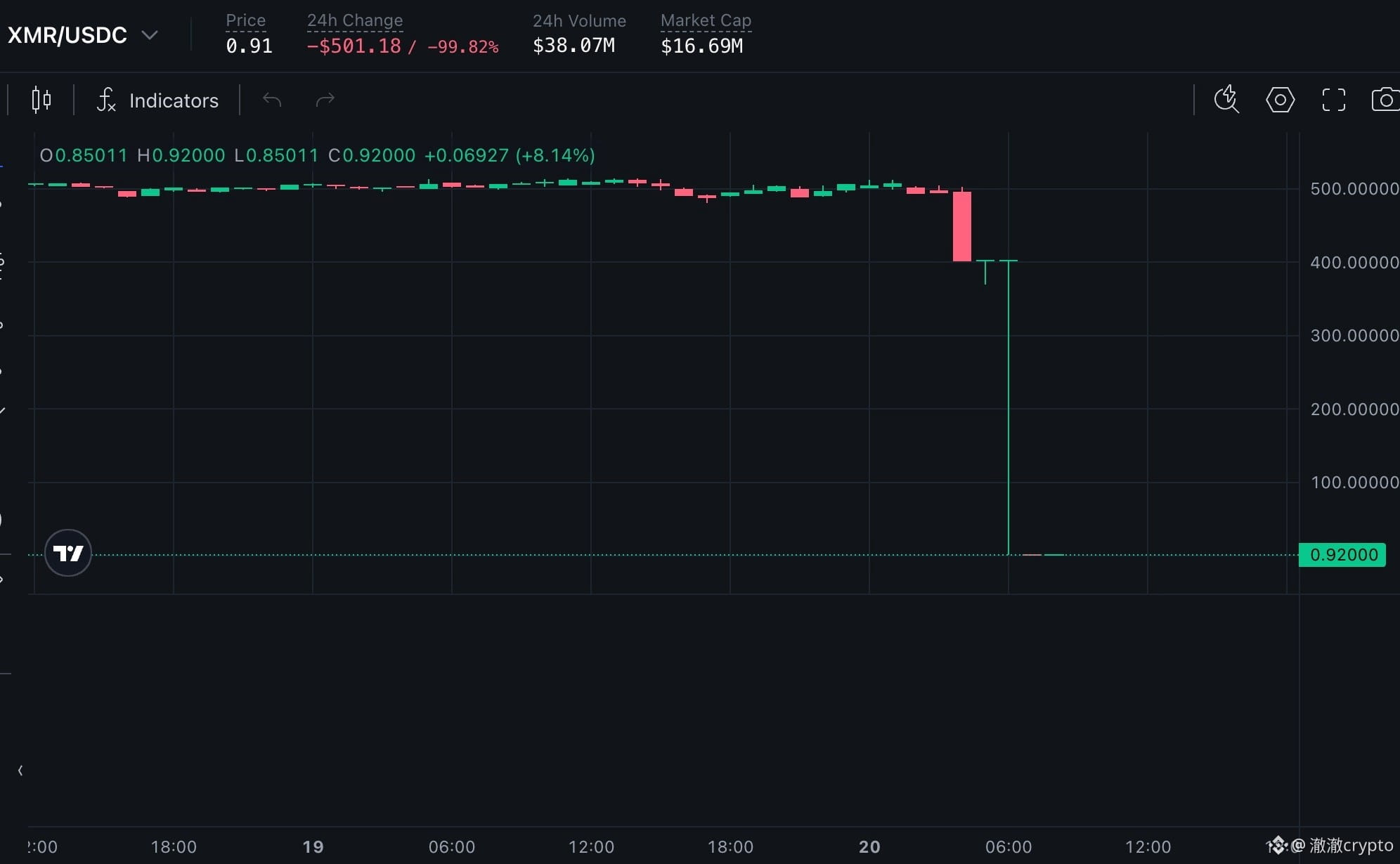
8 hours ago, XMR1 plunged from $494 to $0.91. Now its founder has spoken: the deployment key leaked from an old server that had been deleted.
The attacker transferred 5,200,000 XMR1 from the deployer’s wallet, then dumped it over 35 minutes to cash out $13.22 million in USDC and buy 7,467 ETH.
Founder PerpetualCow posted, accepting responsibility: he’ll personally reimburse everyone who lost money. Wagyu will suspend service for now and relaunch later, but gave no timeline.
At least the claim that it was “stolen” checks out against on-chain records. The deployer’s wallet still holds 13.4 million XMR1, untouched, while Monero itself (XMR) fell only about 5.9%.
But he says the key leaked after hosting provider 1984.hosting was hacked. Icelandic media only confirmed that 1984 went offline that day due to a cyberattack; there’s no hard proof that this is how the key was lost.
First, let’s see whether the compensation actually materializes. Then we can see whether 1984 accepts the blame. If neither side does anything, we can assume those words meant nothing.
Do you believe he can really reimburse everyone out of his own pocket, or do you think this is just a way to buy time?
$BTC $ETH $SOL
#XMR1 #Wagyu
1.2k
Log in to explore more content
Join global crypto users on Binance Square
⚡️ Get latest and useful information about crypto.
💬 Trusted by the world’s largest crypto exchange.
👍 Discover real insights from verified creators.
Email / Phone number
Trending Topics
NVDASoarsOnJensenReturn
529 views
48 Discussing
Jensen Huang Returns, Nvidia Jumps 31%. Can the Rally Hold With the Probes Still Open?
Binance News
·4 Likes
·2.2k views
Bitcoin'sReboundFadesBelow$60K
11,347 views
156 Discussing
NVIDIAReinstatesJensenHuangasCEO
272,368 views
1,795 Discussing