

蜡币小鑫
744 Posts

蜡币小鑫
 Square Verified+
Report
Block User
币圈资深老韭菜,涉及币圈多个领域,长期持有 #BTC#ETH#BNB 推特博主:https://twitter.com/zhuanfgghjnb

Macro KOL
Open Trade
Frequent Trader
5.7 Years
589 Following
33.0K+ Followers
18.3K+ Liked
1 Badges
Posts
Portfolio
All
Quotes
Videos
Live
PINNED
·
--
If I had received 150,000 of $BNB in the 2017 ICO and never sold them... how much would they be worth today?
If I had received 150,000 of $BNB in the 2017 ICO and never sold them... how much would they be worth today?
6
1
12
14.8k
PINNED
·
--
Article
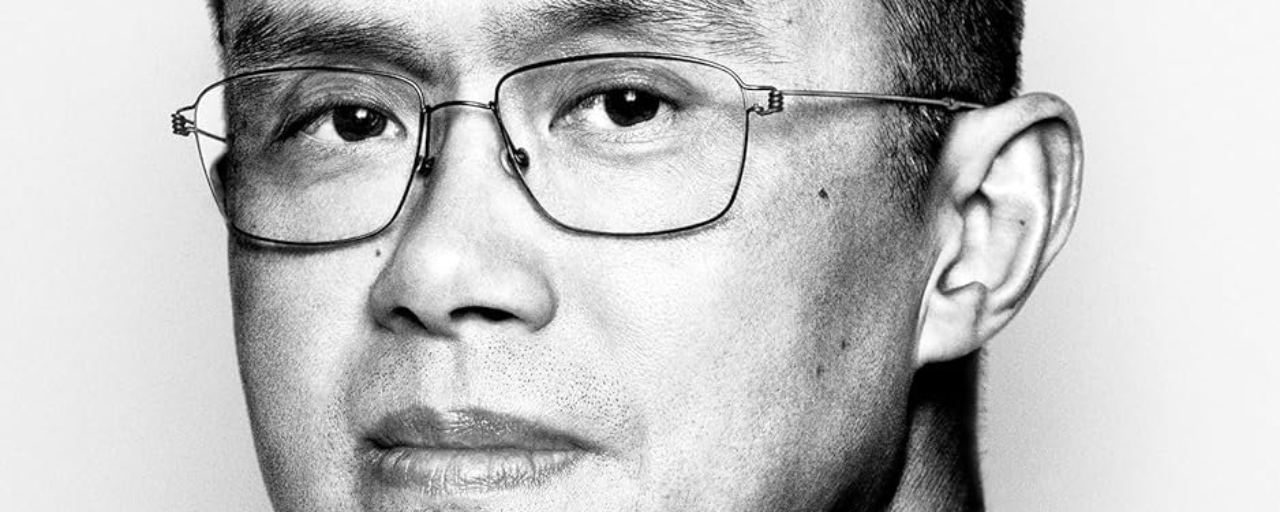
CZ's Life - From Countryside Boy to Becoming a God in the Global Crypto IndustryHow did he go from the countryside to immigration?
From programmer to entrepreneur
From the world's richest list to prison
Writing his life experiences into a book (Binance Life) is not just a record of life, but also turns the detours he has taken and the insights he has gained into wealth that future generations can draw upon.
This is a must-read book for everyone in the crypto industry (Freedom of Money) https://amazon.com/-/zh/dp/B0GVZK8QPG/ref=tmm_hrd_swatch_0
Many entrepreneurial stories like to talk about talent and opportunity
But CZ's story is more like another narrative:
In the crypto industry, no one has experienced such an extreme life curve as Zhao Changpeng @cz_binance:
CZ's Life - From Countryside Boy to Becoming a God in the Global Crypto Industry
How did he go from the countryside to immigration?
From programmer to entrepreneur
From the world's richest list to prison
Writing his life experiences into a book (Binance Life) is not just a record of life, but also turns the detours he has taken and the insights he has gained into wealth that future generations can draw upon.
This is a must-read book for everyone in the crypto industry (Freedom of Money) https://amazon.com/-/zh/dp/B0GVZK8QPG/ref=tmm_hrd_swatch_0
Many entrepreneurial stories like to talk about talent and opportunity
But CZ's story is more like another narrative:
In the crypto industry, no one has experienced such an extreme life curve as Zhao Changpeng @cz_binance:
From programmer to entrepreneur
From the world's richest list to prison
Writing his life experiences into a book (Binance Life) is not just a record of life, but also turns the detours he has taken and the insights he has gained into wealth that future generations can draw upon.
This is a must-read book for everyone in the crypto industry (Freedom of Money) https://amazon.com/-/zh/dp/B0GVZK8QPG/ref=tmm_hrd_swatch_0
Many entrepreneurial stories like to talk about talent and opportunity
But CZ's story is more like another narrative:
In the crypto industry, no one has experienced such an extreme life curve as Zhao Changpeng @cz_binance:
1
5
260
·
--
Messages are flying everywhere, and Binance Square is awash with chatter
Binance Square is calling for submissions, so here I am again, turning in my AI short-video assignment!
One person shouts, “The bull run is back—get in quick!” while another cries, “We’re going straight to zero!” There’s so much information that my head spins before I even make a trade.
This time, I gave the main character a “news filter.” After filtering for ages, it spits out one question: “What’s your source?”
The other person answers confidently: “I’m the source!
Then I look at the machine behind them. It’s printing both upward and downward arrows at the same time… Got it. No matter what happens, they can claim they predicted it all along!
Messages can fly everywhere, but keep your judgment in your own hands.
Check the facts before you get excited.
Trade on Binance. Discuss on Square.
Messages are flying everywhere, and Binance Square is awash with chatter
Binance Square is calling for submissions, so here I am again, turning in my AI short-video assignment!
One person shouts, “The bull run is back—get in quick!” while another cries, “We’re going straight to zero!” There’s so much information that my head spins before I even make a trade.
This time, I gave the main character a “news filter.” After filtering for ages, it spits out one question: “What’s your source?”
The other person answers confidently: “I’m the source!
Then I look at the machine behind them. It’s printing both upward and downward arrows at the same time… Got it. No matter what happens, they can claim they predicted it all along!
Messages can fly everywhere, but keep your judgment in your own hands.
Check the facts before you get excited.
Trade on Binance. Discuss on Square.
Binance Square is calling for submissions, so here I am again, turning in my AI short-video assignment!
One person shouts, “The bull run is back—get in quick!” while another cries, “We’re going straight to zero!” There’s so much information that my head spins before I even make a trade.
This time, I gave the main character a “news filter.” After filtering for ages, it spits out one question: “What’s your source?”
The other person answers confidently: “I’m the source!
Then I look at the machine behind them. It’s printing both upward and downward arrows at the same time… Got it. No matter what happens, they can claim they predicted it all along!
Messages can fly everywhere, but keep your judgment in your own hands.
Check the facts before you get excited.
Trade on Binance. Discuss on Square.
2
511
·
--
It’s been exactly nine years since I entered the crypto industry.
Over those nine years, I’ve experienced almost every sector in crypto.
I got into crypto in 2017, right in the middle of the ICO craze and a major bull market. Binance was also founded that year, and I invested heavily in the BNB ICO.
From taking part in all kinds of ICOs and private sales, to speculating on memes, arbitrage trading, and farming airdrops; from the rise and fall of the NFT era to the age of inscriptions—I’ve weathered just about every storm in crypto.
Of course, I’ve also experienced plenty of ups and downs along the way. But I’m grateful that, over my nine years in crypto, I’ve built something from nothing and gained a lot.
If you could go back to 2017, what would you say to your younger self?
It’s been exactly nine years since I entered the crypto industry.
Over those nine years, I’ve experienced almost every sector in crypto.
I got into crypto in 2017, right in the middle of the ICO craze and a major bull market. Binance was also founded that year, and I invested heavily in the BNB ICO.
From taking part in all kinds of ICOs and private sales, to speculating on memes, arbitrage trading, and farming airdrops; from the rise and fall of the NFT era to the age of inscriptions—I’ve weathered just about every storm in crypto.
Of course, I’ve also experienced plenty of ups and downs along the way. But I’m grateful that, over my nine years in crypto, I’ve built something from nothing and gained a lot.
If you could go back to 2017, what would you say to your younger self?
Over those nine years, I’ve experienced almost every sector in crypto.
I got into crypto in 2017, right in the middle of the ICO craze and a major bull market. Binance was also founded that year, and I invested heavily in the BNB ICO.
From taking part in all kinds of ICOs and private sales, to speculating on memes, arbitrage trading, and farming airdrops; from the rise and fall of the NFT era to the age of inscriptions—I’ve weathered just about every storm in crypto.
Of course, I’ve also experienced plenty of ups and downs along the way. But I’m grateful that, over my nine years in crypto, I’ve built something from nothing and gained a lot.
If you could go back to 2017, what would you say to your younger self?
1
3
673
·
--
Bearish
Partly True
Is there still hope for the A-share market?
Months of consecutive declines have left investors numb.
The ChiNext Index has fallen 42.9% in four months.
The CSI 300 has fallen for 11 consecutive weeks, setting a new record.
The decline has already surpassed that of the 2022 bear market and is about to match the losses seen when the leveraged bull market collapsed in 2015.
Markets have never been short of downturns, but every decline writes a new chapter in history.
Is there still hope for the A-share market?
Months of consecutive declines have left investors numb.
The ChiNext Index has fallen 42.9% in four months.
The CSI 300 has fallen for 11 consecutive weeks, setting a new record.
The decline has already surpassed that of the 2022 bear market and is about to match the losses seen when the leveraged bull market collapsed in 2015.
Markets have never been short of downturns, but every decline writes a new chapter in history.
Months of consecutive declines have left investors numb.
The ChiNext Index has fallen 42.9% in four months.
The CSI 300 has fallen for 11 consecutive weeks, setting a new record.
The decline has already surpassed that of the 2022 bear market and is about to match the losses seen when the leveraged bull market collapsed in 2015.
Markets have never been short of downturns, but every decline writes a new chapter in history.

3
3k
·
--
Deep down, Allen worships Brother Sun.
Just like Sun Yuchen once worshipped Wang Xiaochuan.
He both idolizes him and wants to take a bite out of his idol.
Allen wants to ride Brother Sun’s coattails,
but he doesn’t know that Brother Sun has actually been lying low in the shadows, watching him for a long time.
This nocturnal predator had long since picked out his biggest fanboy, Allen, and was just waiting for the right moment to take a big bite out of him.
Looking at the fresh-faced Allen, Brother Sun remembered how green he himself had been when he met Wang Xiaochuan, awkwardly trying to prove just how green he was.
In the video, Allen has styled his hair to look blond, and is trying hard to show Brother Sun his lean, muscular physique. Just like back in the day, when Brother Sun stood there with his little slicked-back hairstyle and introduced himself to Wang Xiaochuan as Ripple’s head for Greater China.
Brother Sun didn’t bluntly tell him what Wang Xiaochuan had told him back then: “You’re a fraud. You’ll never make it.”
Brother Sun, a veteran of the internet, just smiled: “Right, right. You’re absolutely right.”
The subtext he left for the audience was just like what Wang Sicong once said about Brother Sun: “Isn’t this guy just a fucking idiot?”
Then Brother Sun quickly released a high-status, self-aggrandizing interview video—pre-filmed, pre-edited, and meticulously prepared well in advance.
Guiding the audience to make an instant comparison:
“Oh, so it’s not that Brother Sun lacks ability. Allen’s just a fucking idiot.”
From that point on, Brother Sun’s reputation began to turn around, while he stayed quietly out of the limelight.
His brainless male fans who worship the strong began to go wild: “Wow, Jin Ming is our new male idol!”
From Brother Sun’s perspective: Allen is just a social-media influencer, a one-use employee—use him up and toss him aside.
Jin Ming, on the other hand, is a Hupan classmate. He has valuable connections, social clout, and an athlete’s profile. He can be used to make money, lend his endorsement, and boost each other’s status. He’s the reusable kind of employee.
Sacrifice a one-use employee as a favor, and use him to boost the status of a reusable employee and attract more male fans who worship the strong.
Whether Jin Ming invests or brings people in to trade later as repayment, he’ll funnel the value of all those fans who worship the strong back into Brother Sun’s business.
Brother Sun thought to himself that perhaps this could save his trading business from disaster.
And so, the plan was to use Jin Ming to swallow Allen.
Deep down, Allen worships Brother Sun.
Just like Sun Yuchen once worshipped Wang Xiaochuan.
He both idolizes him and wants to take a bite out of his idol.
Allen wants to ride Brother Sun’s coattails,
but he doesn’t know that Brother Sun has actually been lying low in the shadows, watching him for a long time.
This nocturnal predator had long since picked out his biggest fanboy, Allen, and was just waiting for the right moment to take a big bite out of him.
Looking at the fresh-faced Allen, Brother Sun remembered how green he himself had been when he met Wang Xiaochuan, awkwardly trying to prove just how green he was.
In the video, Allen has styled his hair to look blond, and is trying hard to show Brother Sun his lean, muscular physique. Just like back in the day, when Brother Sun stood there with his little slicked-back hairstyle and introduced himself to Wang Xiaochuan as Ripple’s head for Greater China.
Brother Sun didn’t bluntly tell him what Wang Xiaochuan had told him back then: “You’re a fraud. You’ll never make it.”
Brother Sun, a veteran of the internet, just smiled: “Right, right. You’re absolutely right.”
The subtext he left for the audience was just like what Wang Sicong once said about Brother Sun: “Isn’t this guy just a fucking idiot?”
Then Brother Sun quickly released a high-status, self-aggrandizing interview video—pre-filmed, pre-edited, and meticulously prepared well in advance.
Guiding the audience to make an instant comparison:
“Oh, so it’s not that Brother Sun lacks ability. Allen’s just a fucking idiot.”
From that point on, Brother Sun’s reputation began to turn around, while he stayed quietly out of the limelight.
His brainless male fans who worship the strong began to go wild: “Wow, Jin Ming is our new male idol!”
From Brother Sun’s perspective: Allen is just a social-media influencer, a one-use employee—use him up and toss him aside.
Jin Ming, on the other hand, is a Hupan classmate. He has valuable connections, social clout, and an athlete’s profile. He can be used to make money, lend his endorsement, and boost each other’s status. He’s the reusable kind of employee.
Sacrifice a one-use employee as a favor, and use him to boost the status of a reusable employee and attract more male fans who worship the strong.
Whether Jin Ming invests or brings people in to trade later as repayment, he’ll funnel the value of all those fans who worship the strong back into Brother Sun’s business.
Brother Sun thought to himself that perhaps this could save his trading business from disaster.
And so, the plan was to use Jin Ming to swallow Allen.
Just like Sun Yuchen once worshipped Wang Xiaochuan.
He both idolizes him and wants to take a bite out of his idol.
Allen wants to ride Brother Sun’s coattails,
but he doesn’t know that Brother Sun has actually been lying low in the shadows, watching him for a long time.
This nocturnal predator had long since picked out his biggest fanboy, Allen, and was just waiting for the right moment to take a big bite out of him.
Looking at the fresh-faced Allen, Brother Sun remembered how green he himself had been when he met Wang Xiaochuan, awkwardly trying to prove just how green he was.
In the video, Allen has styled his hair to look blond, and is trying hard to show Brother Sun his lean, muscular physique. Just like back in the day, when Brother Sun stood there with his little slicked-back hairstyle and introduced himself to Wang Xiaochuan as Ripple’s head for Greater China.
Brother Sun didn’t bluntly tell him what Wang Xiaochuan had told him back then: “You’re a fraud. You’ll never make it.”
Brother Sun, a veteran of the internet, just smiled: “Right, right. You’re absolutely right.”
The subtext he left for the audience was just like what Wang Sicong once said about Brother Sun: “Isn’t this guy just a fucking idiot?”
Then Brother Sun quickly released a high-status, self-aggrandizing interview video—pre-filmed, pre-edited, and meticulously prepared well in advance.
Guiding the audience to make an instant comparison:
“Oh, so it’s not that Brother Sun lacks ability. Allen’s just a fucking idiot.”
From that point on, Brother Sun’s reputation began to turn around, while he stayed quietly out of the limelight.
His brainless male fans who worship the strong began to go wild: “Wow, Jin Ming is our new male idol!”
From Brother Sun’s perspective: Allen is just a social-media influencer, a one-use employee—use him up and toss him aside.
Jin Ming, on the other hand, is a Hupan classmate. He has valuable connections, social clout, and an athlete’s profile. He can be used to make money, lend his endorsement, and boost each other’s status. He’s the reusable kind of employee.
Sacrifice a one-use employee as a favor, and use him to boost the status of a reusable employee and attract more male fans who worship the strong.
Whether Jin Ming invests or brings people in to trade later as repayment, he’ll funnel the value of all those fans who worship the strong back into Brother Sun’s business.
Brother Sun thought to himself that perhaps this could save his trading business from disaster.
And so, the plan was to use Jin Ming to swallow Allen.
1
1.8k
·
--
Bullish
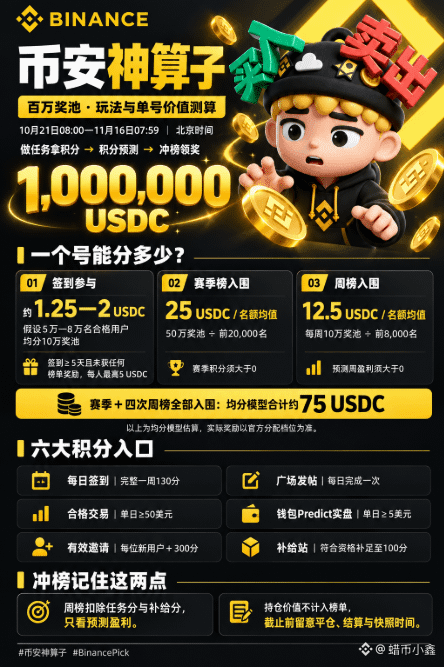
Binance Prediction Master kicks off today, with a 1 million USDC prize pool. How much can one account earn?
Competition period
Beijing time: October 21, 08:00–November 16, 07:59.
How it works: Complete tasks to earn points → use points to make predictions → climb the season and weekly leaderboards.
You can close a prediction early or hold it until settlement. Your points balance will change based on the prediction outcome.
How to earn points
① Early-bird registration: Users who registered in advance received an extra 200 points. Registration is now closed.
② Daily check-in: 10 points per day Monday through Thursday, 20 on Friday, 30 on Saturday, and 40 on Sunday—for a total of 130 points for a full week.
③ Post in Square: Publish an event-related post longer than 20 characters and include
#币安神算子 #BinancePick
. You can complete this task once per day. Remember to check its status.
④ Trading tasks: Make at least $50 in eligible daily trading volume on Spot, Convert, or Futures; or make at least $5 in actual daily trading volume in the Prediction Markets within Binance Wallet
@predictzh
. These also earn daily task points. Zero-fee trading pairs do not count toward the first requirement.
⑤ Invite friends: Earn 300 points for each eligible new user, up to 50 users per season. Friends must register and sign up after the season starts, and complete a first deposit of at least $10.
⑥ Points top-up station: If your points balance is below 100 and you meet the eligibility requirements, you can claim points once a day to bring your balance up to 100.
💰
How much can one account earn?
Based on an estimated 100,000 participants, the overall prize pool works out to about 10 USDC per person. The actual amount depends on the prize tier:
🔹
Check-in participant accounts: Check in on at least 5 days and receive no season leaderboard or weekly leaderboard rewards to qualify for a share of 100,000 USDC. Assuming 50,000–80,000 people qualify and split it equally, that’s about 1.25–2 USDC per account, capped at 5 USDC per person.
🔹Season leaderboard accounts: Finish the season with a positive points balance and rank in the top 20,000. 500,000 USDC ÷ 20,000 means an average of about 25 USDC per winning spot.
Weekly leaderboard accounts: Finish the prediction week in profit and rank in the top 8,000. Each week, 100,000 USDC ÷ 8,000 means an average of about 12.5 USDC per winning spot.
If you qualify for the season leaderboard and all four weekly leaderboards, the total would be about 75 USDC based on the equal-split estimates above.
These figures are estimates based on average prize-pool distribution. Actual rewards per account depend on the official prize tiers.
Binance Prediction Master kicks off today, with a 1 million USDC prize pool. How much can one account earn?
Competition period
Beijing time: October 21, 08:00–November 16, 07:59.
How it works: Complete tasks to earn points → use points to make predictions → climb the season and weekly leaderboards.
You can close a prediction early or hold it until settlement. Your points balance will change based on the prediction outcome.
How to earn points
① Early-bird registration: Users who registered in advance received an extra 200 points. Registration is now closed.
② Daily check-in: 10 points per day Monday through Thursday, 20 on Friday, 30 on Saturday, and 40 on Sunday—for a total of 130 points for a full week.
③ Post in Square: Publish an event-related post longer than 20 characters and include
#币安神算子 #BinancePick
. You can complete this task once per day. Remember to check its status.
④ Trading tasks: Make at least $50 in eligible daily trading volume on Spot, Convert, or Futures; or make at least $5 in actual daily trading volume in the Prediction Markets within Binance Wallet
@predictdotfun-华语
. These also earn daily task points. Zero-fee trading pairs do not count toward the first requirement.
⑤ Invite friends: Earn 300 points for each eligible new user, up to 50 users per season. Friends must register and sign up after the season starts, and complete a first deposit of at least $10.
⑥ Points top-up station: If your points balance is below 100 and you meet the eligibility requirements, you can claim points once a day to bring your balance up to 100.
💰
How much can one account earn?
Based on an estimated 100,000 participants, the overall prize pool works out to about 10 USDC per person. The actual amount depends on the prize tier:
🔹
Check-in participant accounts: Check in on at least 5 days and receive no season leaderboard or weekly leaderboard rewards to qualify for a share of 100,000 USDC. Assuming 50,000–80,000 people qualify and split it equally, that’s about 1.25–2 USDC per account, capped at 5 USDC per person.
🔹Season leaderboard accounts: Finish the season with a positive points balance and rank in the top 20,000. 500,000 USDC ÷ 20,000 means an average of about 25 USDC per winning spot.
Weekly leaderboard accounts: Finish the prediction week in profit and rank in the top 8,000. Each week, 100,000 USDC ÷ 8,000 means an average of about 12.5 USDC per winning spot.
If you qualify for the season leaderboard and all four weekly leaderboards, the total would be about 75 USDC based on the equal-split estimates above.
These figures are estimates based on average prize-pool distribution. Actual rewards per account depend on the official prize tiers.
Competition period
Beijing time: October 21, 08:00–November 16, 07:59.
How it works: Complete tasks to earn points → use points to make predictions → climb the season and weekly leaderboards.
You can close a prediction early or hold it until settlement. Your points balance will change based on the prediction outcome.
How to earn points
① Early-bird registration: Users who registered in advance received an extra 200 points. Registration is now closed.
② Daily check-in: 10 points per day Monday through Thursday, 20 on Friday, 30 on Saturday, and 40 on Sunday—for a total of 130 points for a full week.
③ Post in Square: Publish an event-related post longer than 20 characters and include
#币安神算子 #BinancePick
. You can complete this task once per day. Remember to check its status.
④ Trading tasks: Make at least $50 in eligible daily trading volume on Spot, Convert, or Futures; or make at least $5 in actual daily trading volume in the Prediction Markets within Binance Wallet
@predictdotfun-华语
. These also earn daily task points. Zero-fee trading pairs do not count toward the first requirement.
⑤ Invite friends: Earn 300 points for each eligible new user, up to 50 users per season. Friends must register and sign up after the season starts, and complete a first deposit of at least $10.
⑥ Points top-up station: If your points balance is below 100 and you meet the eligibility requirements, you can claim points once a day to bring your balance up to 100.
💰
How much can one account earn?
Based on an estimated 100,000 participants, the overall prize pool works out to about 10 USDC per person. The actual amount depends on the prize tier:
🔹
Check-in participant accounts: Check in on at least 5 days and receive no season leaderboard or weekly leaderboard rewards to qualify for a share of 100,000 USDC. Assuming 50,000–80,000 people qualify and split it equally, that’s about 1.25–2 USDC per account, capped at 5 USDC per person.
🔹Season leaderboard accounts: Finish the season with a positive points balance and rank in the top 20,000. 500,000 USDC ÷ 20,000 means an average of about 25 USDC per winning spot.
Weekly leaderboard accounts: Finish the prediction week in profit and rank in the top 8,000. Each week, 100,000 USDC ÷ 8,000 means an average of about 12.5 USDC per winning spot.
If you qualify for the season leaderboard and all four weekly leaderboards, the total would be about 75 USDC based on the equal-split estimates above.
These figures are estimates based on average prize-pool distribution. Actual rewards per account depend on the official prize tiers.
4
1.9k
·
--
Bullish
Verified
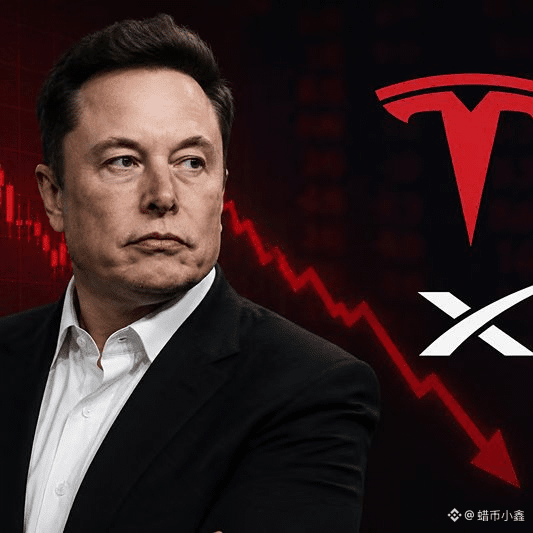
SpaceX reported quarterly net profit of $4.4 billion, beating expectations; its shares rose about 8% after hours.
Then Musk floated the possibility of a merger with Tesla.
$TSLA $SPCX
If they really do merge, the most exciting part would be sharing AI and chip R&D to avoid duplicating investment, combining their robotics technology and manufacturing capabilities to bring products to market faster, and connecting more vehicles and robots through Starlink to expand the range of applications.
From vehicles driving on the ground, to spacecraft flying in the sky, to robots doing the work—Musk seems determined to piece together a whole sci-fi universe 😂
The vision is seriously impressive! But for now, the special committees on both sides are still discussing the deal, and the terms haven’t been finalized. Whether it’s a good deal for shareholders will depend on the stock-swap ratio and the final proposal.
SpaceX reported quarterly net profit of $4.4 billion, beating expectations; its shares rose about 8% after hours.
Then Musk floated the possibility of a merger with Tesla.
$TSLA $SPCX
If they really do merge, the most exciting part would be sharing AI and chip R&D to avoid duplicating investment, combining their robotics technology and manufacturing capabilities to bring products to market faster, and connecting more vehicles and robots through Starlink to expand the range of applications.
From vehicles driving on the ground, to spacecraft flying in the sky, to robots doing the work—Musk seems determined to piece together a whole sci-fi universe 😂
The vision is seriously impressive! But for now, the special committees on both sides are still discussing the deal, and the terms haven’t been finalized. Whether it’s a good deal for shareholders will depend on the stock-swap ratio and the final proposal.
Then Musk floated the possibility of a merger with Tesla.
$TSLA $SPCX
If they really do merge, the most exciting part would be sharing AI and chip R&D to avoid duplicating investment, combining their robotics technology and manufacturing capabilities to bring products to market faster, and connecting more vehicles and robots through Starlink to expand the range of applications.
From vehicles driving on the ground, to spacecraft flying in the sky, to robots doing the work—Musk seems determined to piece together a whole sci-fi universe 😂
The vision is seriously impressive! But for now, the special committees on both sides are still discussing the deal, and the terms haven’t been finalized. Whether it’s a good deal for shareholders will depend on the stock-swap ratio and the final proposal.
2
1.8k
·
--
Bullish
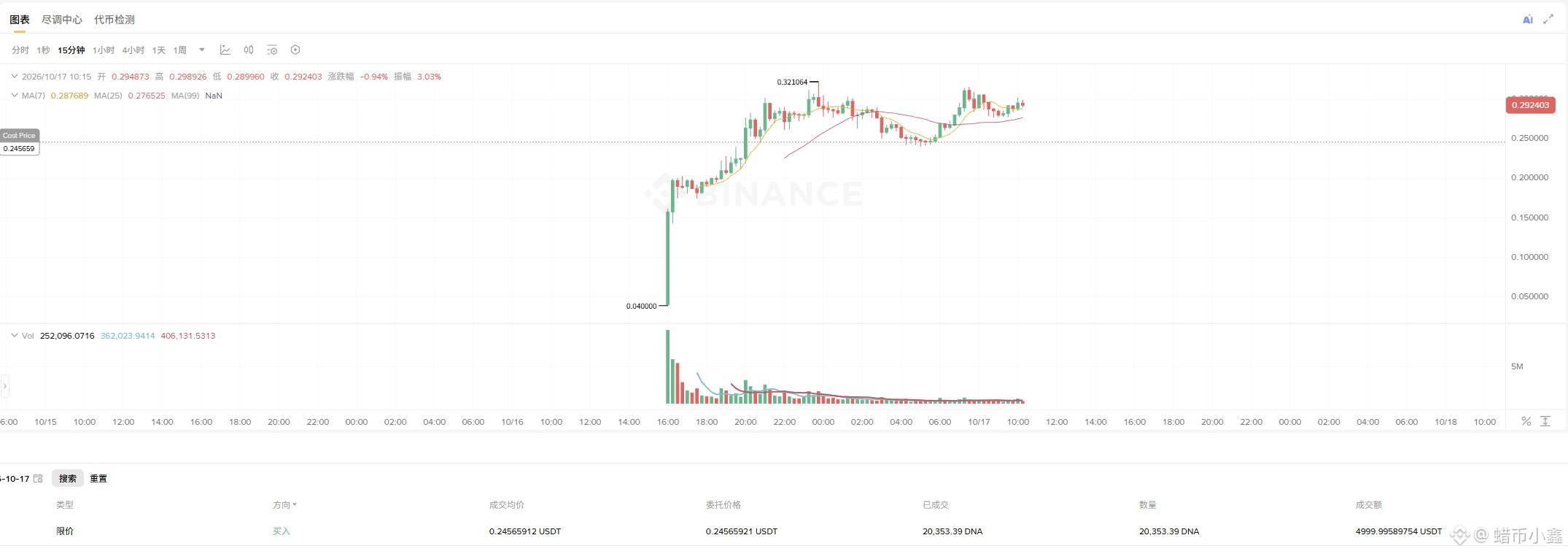
Seeing everyone in the group already getting in, $DNA made a killing
{alpha}(560xa991f61940095aea0724ef54077223b048c5cf7b)
A lot of people bought right at launch, and it’s already doubled or tripled at the highs
I was so anxious I couldn’t sleep half the night, so I took advantage of the pullback and bought in with $5,000 for fun
Seeing everyone in the group already getting in, $DNA made a killing
A lot of people bought right at launch, and it’s already doubled or tripled at the highs
I was so anxious I couldn’t sleep half the night, so I took advantage of the pullback and bought in with $5,000 for fun
A lot of people bought right at launch, and it’s already doubled or tripled at the highs
I was so anxious I couldn’t sleep half the night, so I took advantage of the pullback and bought in with $5,000 for fun
1
1
1.1k
·
--
Musk is seriously impressive—his thinking is always way ahead of its time.
While everyone else is still figuring out how fast cars can go, Musk is already working on making them fly.
The rocket-powered version of Tesla’s new Roadster is officially said to be able to fly.
As a kid, I thought flying cars only existed in movies. Now it feels like they’re getting closer and closer to reality.
Musk is seriously impressive—his thinking is always way ahead of its time.
While everyone else is still figuring out how fast cars can go, Musk is already working on making them fly.
The rocket-powered version of Tesla’s new Roadster is officially said to be able to fly.
As a kid, I thought flying cars only existed in movies. Now it feels like they’re getting closer and closer to reality.
While everyone else is still figuring out how fast cars can go, Musk is already working on making them fly.
The rocket-powered version of Tesla’s new Roadster is officially said to be able to fly.
As a kid, I thought flying cars only existed in movies. Now it feels like they’re getting closer and closer to reality.
1
8
2.4k
·
--
Bullish
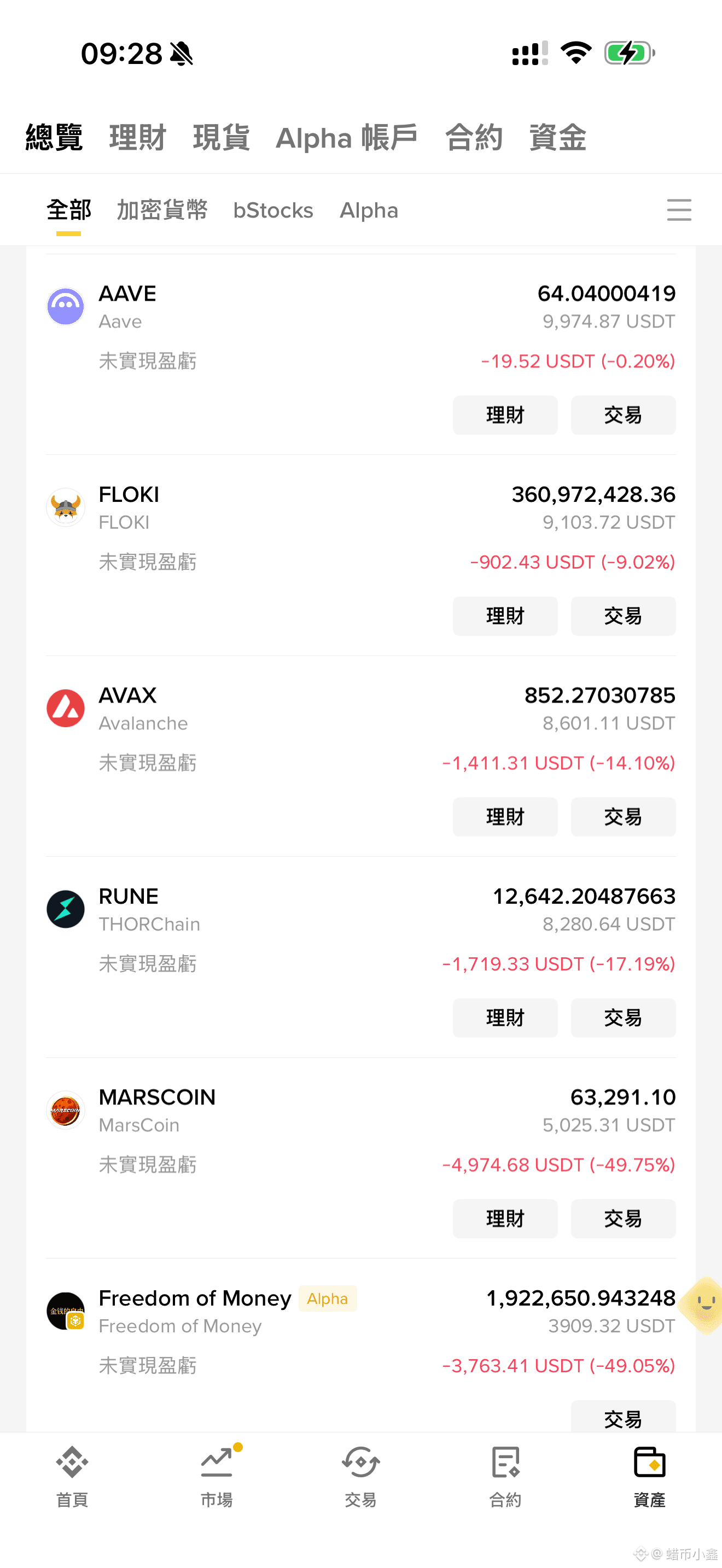
Everything I bought on the secondary market is deeply underwater.
Honestly, my investment account is better—I can see returns every day.
Everything I bought on the secondary market is deeply underwater.
Honestly, my investment account is better—I can see returns every day.
Honestly, my investment account is better—I can see returns every day.
1
4
3.5k
·
--
Bullish
On October 6, Predict officially announced that it was coming Soon.
Afterward, dingaling also mentioned that the points feature could be skipped.
Although the exact TGE date, airdrop allocation, and tokenomics have yet to be determined, the community’s focus has gradually shifted from how to earn points to how much those points will ultimately be worth.
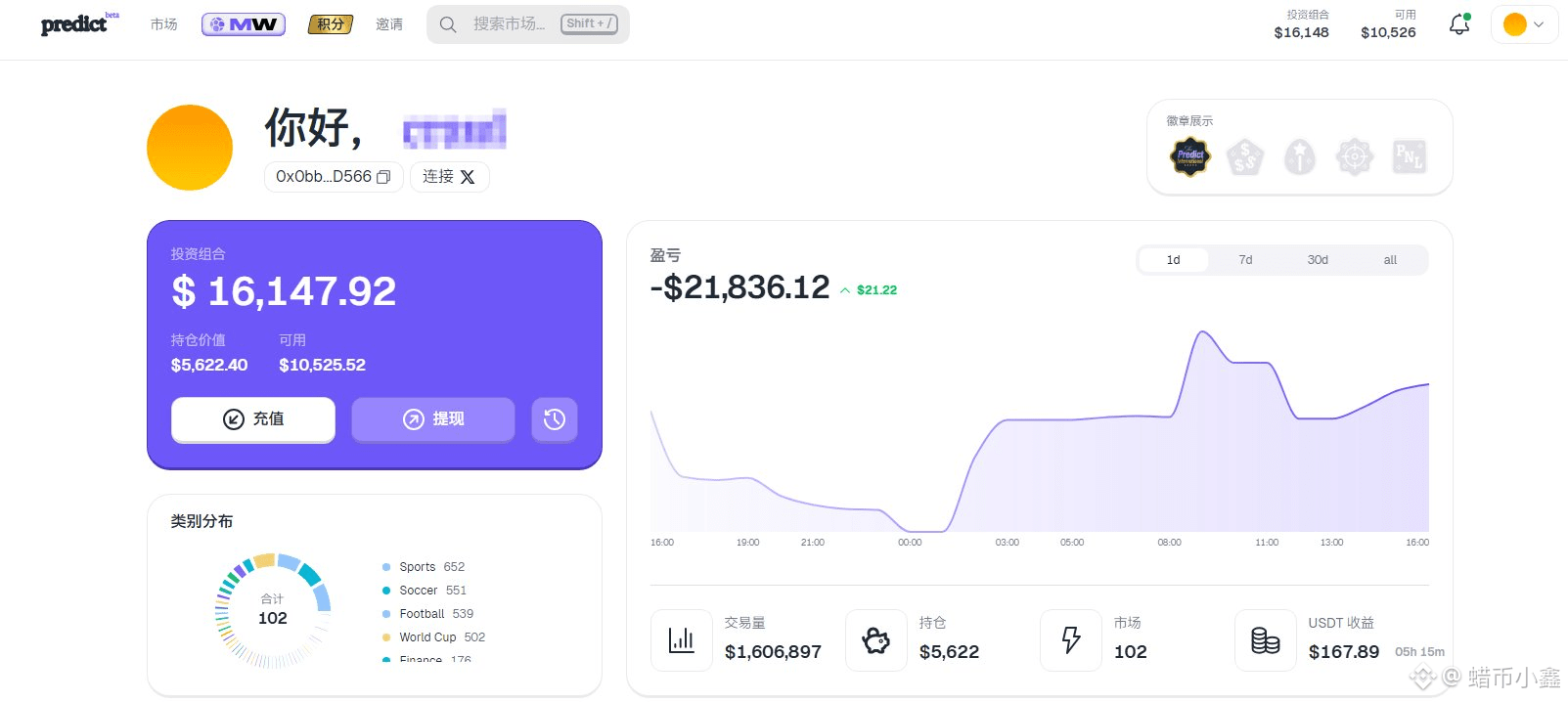
As for my account, my cumulative trading volume has now exceeded $1.6 million. I’ve participated in 102 markets and am down approximately $21,800 overall.
Of course, you can’t count the entire $21,800 as the cost of earning points, since it includes gains and losses from regular trading too. But it does show that earning points through trading has never come without a cost.
What I’m still most hopeful about is the 16% community allocation we discussed earlier.
If the final allocation really is 16%, alongside a valuation of over $1 billion, then the money, time, and trading costs put in over the past few months may have a chance to earn a reasonable return.
After all, everyone’s been grinding away for so long—from figuring out how to optimize order placement at the beginning to calculating the cost of earning points now. In the end, we’re all waiting for that airdrop report card.
I hope Predict doesn’t let down the users who supported the platform with their own money from the very beginning.
What’s your cost per PP right now? Are you still grinding, or are you planning to wait for the TGE?
On October 6, Predict officially announced that it was coming Soon.
Afterward, dingaling also mentioned that the points feature could be skipped.
Although the exact TGE date, airdrop allocation, and tokenomics have yet to be determined, the community’s focus has gradually shifted from how to earn points to how much those points will ultimately be worth.
As for my account, my cumulative trading volume has now exceeded $1.6 million. I’ve participated in 102 markets and am down approximately $21,800 overall.
Of course, you can’t count the entire $21,800 as the cost of earning points, since it includes gains and losses from regular trading too. But it does show that earning points through trading has never come without a cost.
What I’m still most hopeful about is the 16% community allocation we discussed earlier.
If the final allocation really is 16%, alongside a valuation of over $1 billion, then the money, time, and trading costs put in over the past few months may have a chance to earn a reasonable return.
After all, everyone’s been grinding away for so long—from figuring out how to optimize order placement at the beginning to calculating the cost of earning points now. In the end, we’re all waiting for that airdrop report card.
I hope Predict doesn’t let down the users who supported the platform with their own money from the very beginning.
What’s your cost per PP right now? Are you still grinding, or are you planning to wait for the TGE?
Afterward, dingaling also mentioned that the points feature could be skipped.
Although the exact TGE date, airdrop allocation, and tokenomics have yet to be determined, the community’s focus has gradually shifted from how to earn points to how much those points will ultimately be worth.
As for my account, my cumulative trading volume has now exceeded $1.6 million. I’ve participated in 102 markets and am down approximately $21,800 overall.
Of course, you can’t count the entire $21,800 as the cost of earning points, since it includes gains and losses from regular trading too. But it does show that earning points through trading has never come without a cost.
What I’m still most hopeful about is the 16% community allocation we discussed earlier.
If the final allocation really is 16%, alongside a valuation of over $1 billion, then the money, time, and trading costs put in over the past few months may have a chance to earn a reasonable return.
After all, everyone’s been grinding away for so long—from figuring out how to optimize order placement at the beginning to calculating the cost of earning points now. In the end, we’re all waiting for that airdrop report card.
I hope Predict doesn’t let down the users who supported the platform with their own money from the very beginning.
What’s your cost per PP right now? Are you still grinding, or are you planning to wait for the TGE?
2
13
3.7k
·
--
Hearing what these two auto industry bigwigs said side by side is hilarious, hahaha 🤣
Some things sound perfectly fine on their own, but put them together and it’s pure comedy.
All I can say is, the internet never forgets—and boomerangs have GPS.
Hearing what these two auto industry bigwigs said side by side is hilarious, hahaha 🤣
Some things sound perfectly fine on their own, but put them together and it’s pure comedy.
All I can say is, the internet never forgets—and boomerangs have GPS.
Some things sound perfectly fine on their own, but put them together and it’s pure comedy.
All I can say is, the internet never forgets—and boomerangs have GPS.
1
2
2.4k
·
--
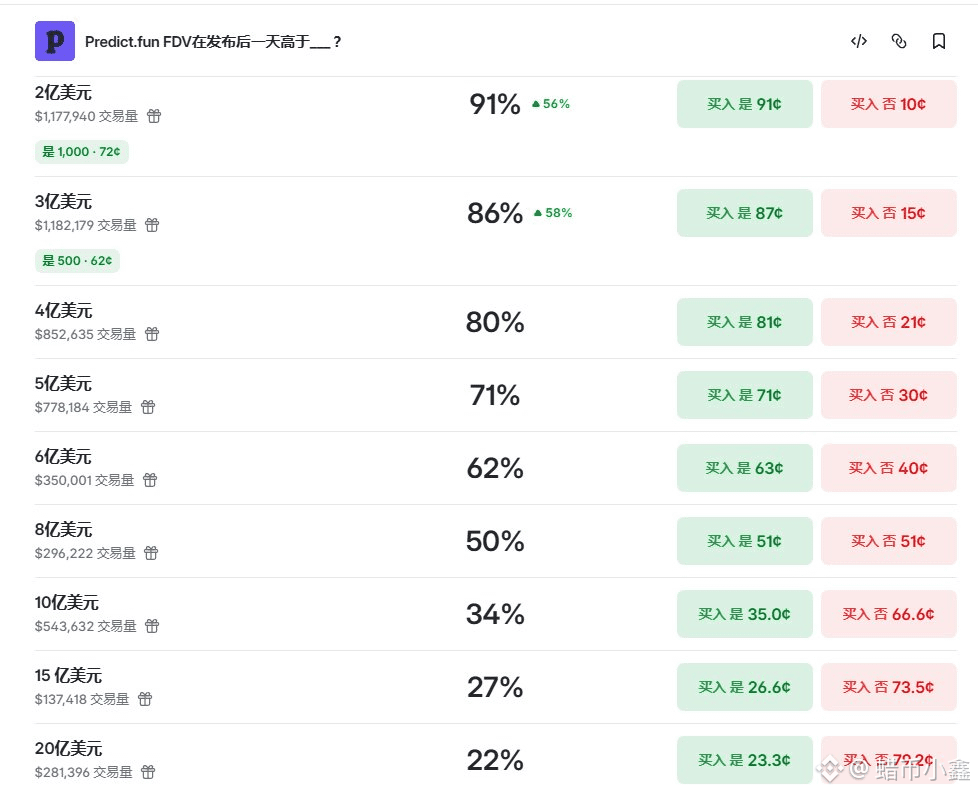
I just took a look at Predict’s FDV prediction market, and it seems pretty interesting.
500M: 71%
800M: 50%
1B: 34%
2B: 22%
There’s still a 34% chance of a $1B FDV, and surprisingly, a 22% chance of $2B.
This suggests that while the market doesn’t see a valuation above $1B as the mainstream expectation, some people are still willing to bet on a high valuation.
Predict shouldn’t be valued like an ordinary prediction market.
CZ has mentioned it publicly several times, it’s a traffic gateway to the Binance ecosystem, the prediction market sector has plenty of room to grow, and Predict already has a points system and user base—all of these are important factors in its future valuation.
The cost of PP is gradually approaching $0.05. If its TGE valuation ends up at only $300M or $500M, those paying a high cost to earn points now will all lose money.
If Predict ultimately reaches an FDV of $1B or more, that would be a pretty good return.
After all, it’s one of the most noteworthy prediction market projects in the Binance ecosystem, backed by traffic, an ecosystem, and a compelling sector narrative.
That said, the market’s median expectation of an $800M FDV is also worth taking seriously.
What do you think Predict will be worth at TGE?
$500M, $800M, $1B, or $2B?
I just took a look at Predict’s FDV prediction market, and it seems pretty interesting.
500M: 71%
800M: 50%
1B: 34%
2B: 22%
There’s still a 34% chance of a $1B FDV, and surprisingly, a 22% chance of $2B.
This suggests that while the market doesn’t see a valuation above $1B as the mainstream expectation, some people are still willing to bet on a high valuation.
Predict shouldn’t be valued like an ordinary prediction market.
CZ has mentioned it publicly several times, it’s a traffic gateway to the Binance ecosystem, the prediction market sector has plenty of room to grow, and Predict already has a points system and user base—all of these are important factors in its future valuation.
The cost of PP is gradually approaching $0.05. If its TGE valuation ends up at only $300M or $500M, those paying a high cost to earn points now will all lose money.
If Predict ultimately reaches an FDV of $1B or more, that would be a pretty good return.
After all, it’s one of the most noteworthy prediction market projects in the Binance ecosystem, backed by traffic, an ecosystem, and a compelling sector narrative.
That said, the market’s median expectation of an $800M FDV is also worth taking seriously.
What do you think Predict will be worth at TGE?
$500M, $800M, $1B, or $2B?
500M: 71%
800M: 50%
1B: 34%
2B: 22%
There’s still a 34% chance of a $1B FDV, and surprisingly, a 22% chance of $2B.
This suggests that while the market doesn’t see a valuation above $1B as the mainstream expectation, some people are still willing to bet on a high valuation.
Predict shouldn’t be valued like an ordinary prediction market.
CZ has mentioned it publicly several times, it’s a traffic gateway to the Binance ecosystem, the prediction market sector has plenty of room to grow, and Predict already has a points system and user base—all of these are important factors in its future valuation.
The cost of PP is gradually approaching $0.05. If its TGE valuation ends up at only $300M or $500M, those paying a high cost to earn points now will all lose money.
If Predict ultimately reaches an FDV of $1B or more, that would be a pretty good return.
After all, it’s one of the most noteworthy prediction market projects in the Binance ecosystem, backed by traffic, an ecosystem, and a compelling sector narrative.
That said, the market’s median expectation of an $800M FDV is also worth taking seriously.
What do you think Predict will be worth at TGE?
$500M, $800M, $1B, or $2B?
1
310
·
--
Wishing everyone a Happy National Day! My wallet assets will soar into the blue skies in October—unstoppable, charging forward; rising step by step, climbing to new heights with every stride, soaring into the sky like an arrow. My future looks bright and promising. I’m the best! I’m the best! I’m the best!
Wishing everyone a Happy National Day! My wallet assets will soar into the blue skies in October—unstoppable, charging forward; rising step by step, climbing to new heights with every stride, soaring into the sky like an arrow. My future looks bright and promising. I’m the best! I’m the best! I’m the best!
1
2
532
·
--
Bullish
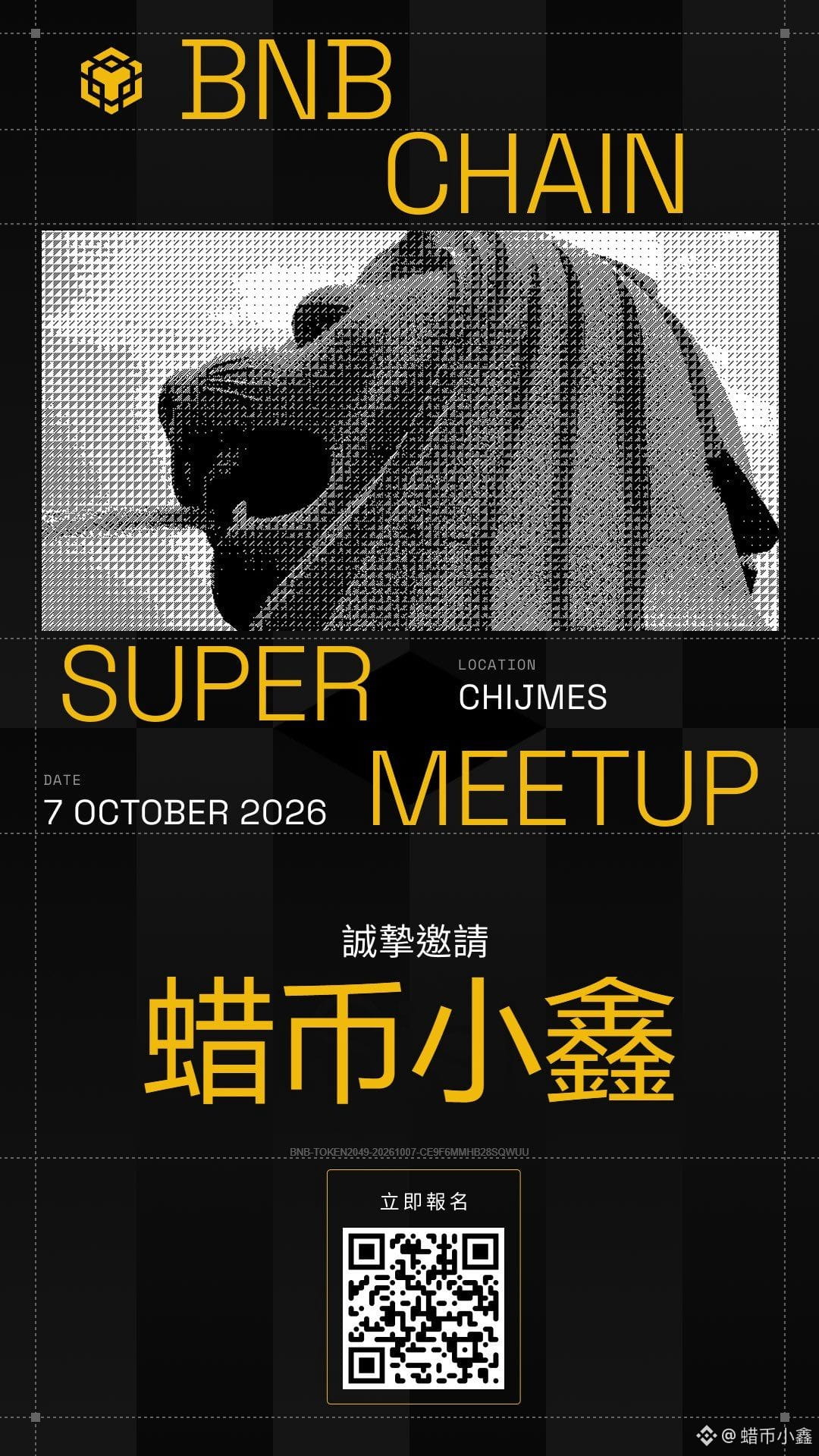
Thanks for inviting Token 2049 by Binance—who’s going?
Looking forward to Binance’s event in SG on October 7
Thanks for inviting Token 2049 by Binance—who’s going?
Looking forward to Binance’s event in SG on October 7
Looking forward to Binance’s event in SG on October 7
1
656
·
--
Bearish
Verified
I didn’t participate in Polymarket, but on Predict, there was an event related to Polymarket that cost me 10,000 U.
As Polymarket’s valuation kept climbing, why could the story of buying it still lead to losses?
Polymarket’s valuation in 2024 was around $350 million for that round; in 2025 it was around $1.2 billion for that round.
Later, ICE took an equity stake, corresponding to a pre-money valuation of about $8 billion;
In the spring 2026 funding round, according to media reports, the valuation was close to $15 billion.
In September, the market also reported a new financing valuation of around $21 billion.
I spent $112 million to acquire the licensed trading venue QCEX and enter the U.S. regulated market;
In addition to investing, ICE also plans to distribute Polymarket’s prediction data to institutions.
DeFiLlama shows that over the past 30 days, on-chain trading volume on the Polygon chain was about $2.21 billion, and U.S. off-chain business was about $2.252 billion; funds locked on-chain are about $361 million.
The issue is on the trading side: people aren’t actually buying the same ticket.
The subscription price for PPOLY was $15.5; when I checked the price, it was about $17.05. On the other side, Aster’s POLYMARKET/USD1 perpetual contract was about $21.58 USD1, which is roughly 26.6% higher than pPOLY.
One is an indirectly exposed token issued by a third party; the other is a perpetual contract. The price gap is right there—so you can’t treat it as risk-free arbitrage.
Now look at the Predict data:
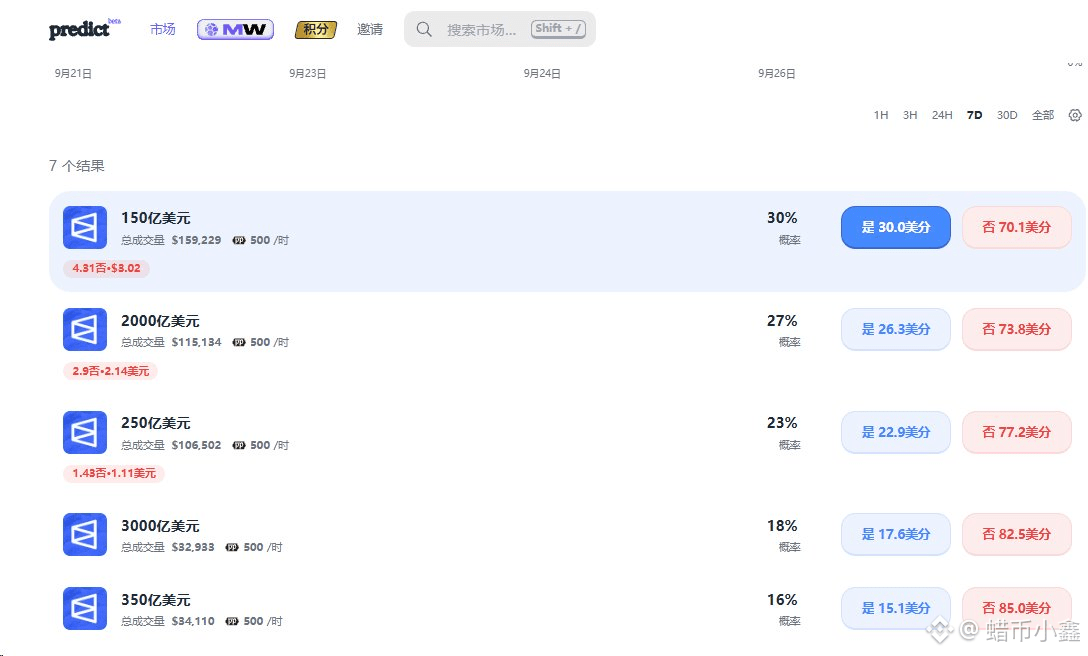
On the first day of the IPO, the closing market value exceeded $15B, $20B, and $25B; the “YES” prices were approximately 30%, 27%, and 23%, respectively.
It’s not just betting on valuation—it’s also betting that Polymarket can IPO before the end of 2027; if it doesn’t get listed by then, all tiers are judged “NO.”
So when the private market talks about $21 billion, it doesn’t mean that buying “over $20 billion” guarantees profits.
Polymarket’s story has already moved from on-chain prediction/guessing to the U.S. market, institutional data, and a possible IPO.
But for those who received the air drop and participated on the secondary market, they’ve already been badly hurt.
In the Chinese-speaking community, no one says Polymarket is good. They hope Predict will use the Binance wallet entry to pin Polymarket to the pillar of shame.
I didn’t participate in Polymarket, but on Predict, there was an event related to Polymarket that cost me 10,000 U.
As Polymarket’s valuation kept climbing, why could the story of buying it still lead to losses?
Polymarket’s valuation in 2024 was around $350 million for that round; in 2025 it was around $1.2 billion for that round.
Later, ICE took an equity stake, corresponding to a pre-money valuation of about $8 billion;
In the spring 2026 funding round, according to media reports, the valuation was close to $15 billion.
In September, the market also reported a new financing valuation of around $21 billion.
I spent $112 million to acquire the licensed trading venue QCEX and enter the U.S. regulated market;
In addition to investing, ICE also plans to distribute Polymarket’s prediction data to institutions.
DeFiLlama shows that over the past 30 days, on-chain trading volume on the Polygon chain was about $2.21 billion, and U.S. off-chain business was about $2.252 billion; funds locked on-chain are about $361 million.
The issue is on the trading side: people aren’t actually buying the same ticket.
The subscription price for PPOLY was $15.5; when I checked the price, it was about $17.05. On the other side, Aster’s POLYMARKET/USD1 perpetual contract was about $21.58 USD1, which is roughly 26.6% higher than pPOLY.
One is an indirectly exposed token issued by a third party; the other is a perpetual contract. The price gap is right there—so you can’t treat it as risk-free arbitrage.
Now look at the Predict data:
On the first day of the IPO, the closing market value exceeded $15B, $20B, and $25B; the “YES” prices were approximately 30%, 27%, and 23%, respectively.
It’s not just betting on valuation—it’s also betting that Polymarket can IPO before the end of 2027; if it doesn’t get listed by then, all tiers are judged “NO.”
So when the private market talks about $21 billion, it doesn’t mean that buying “over $20 billion” guarantees profits.
Polymarket’s story has already moved from on-chain prediction/guessing to the U.S. market, institutional data, and a possible IPO.
But for those who received the air drop and participated on the secondary market, they’ve already been badly hurt.
In the Chinese-speaking community, no one says Polymarket is good. They hope Predict will use the Binance wallet entry to pin Polymarket to the pillar of shame.
As Polymarket’s valuation kept climbing, why could the story of buying it still lead to losses?
Polymarket’s valuation in 2024 was around $350 million for that round; in 2025 it was around $1.2 billion for that round.
Later, ICE took an equity stake, corresponding to a pre-money valuation of about $8 billion;
In the spring 2026 funding round, according to media reports, the valuation was close to $15 billion.
In September, the market also reported a new financing valuation of around $21 billion.
I spent $112 million to acquire the licensed trading venue QCEX and enter the U.S. regulated market;
In addition to investing, ICE also plans to distribute Polymarket’s prediction data to institutions.
DeFiLlama shows that over the past 30 days, on-chain trading volume on the Polygon chain was about $2.21 billion, and U.S. off-chain business was about $2.252 billion; funds locked on-chain are about $361 million.
The issue is on the trading side: people aren’t actually buying the same ticket.
The subscription price for PPOLY was $15.5; when I checked the price, it was about $17.05. On the other side, Aster’s POLYMARKET/USD1 perpetual contract was about $21.58 USD1, which is roughly 26.6% higher than pPOLY.
One is an indirectly exposed token issued by a third party; the other is a perpetual contract. The price gap is right there—so you can’t treat it as risk-free arbitrage.
Now look at the Predict data:
On the first day of the IPO, the closing market value exceeded $15B, $20B, and $25B; the “YES” prices were approximately 30%, 27%, and 23%, respectively.
It’s not just betting on valuation—it’s also betting that Polymarket can IPO before the end of 2027; if it doesn’t get listed by then, all tiers are judged “NO.”
So when the private market talks about $21 billion, it doesn’t mean that buying “over $20 billion” guarantees profits.
Polymarket’s story has already moved from on-chain prediction/guessing to the U.S. market, institutional data, and a possible IPO.
But for those who received the air drop and participated on the secondary market, they’ve already been badly hurt.
In the Chinese-speaking community, no one says Polymarket is good. They hope Predict will use the Binance wallet entry to pin Polymarket to the pillar of shame.
1
1.1k
·
--
Bullish
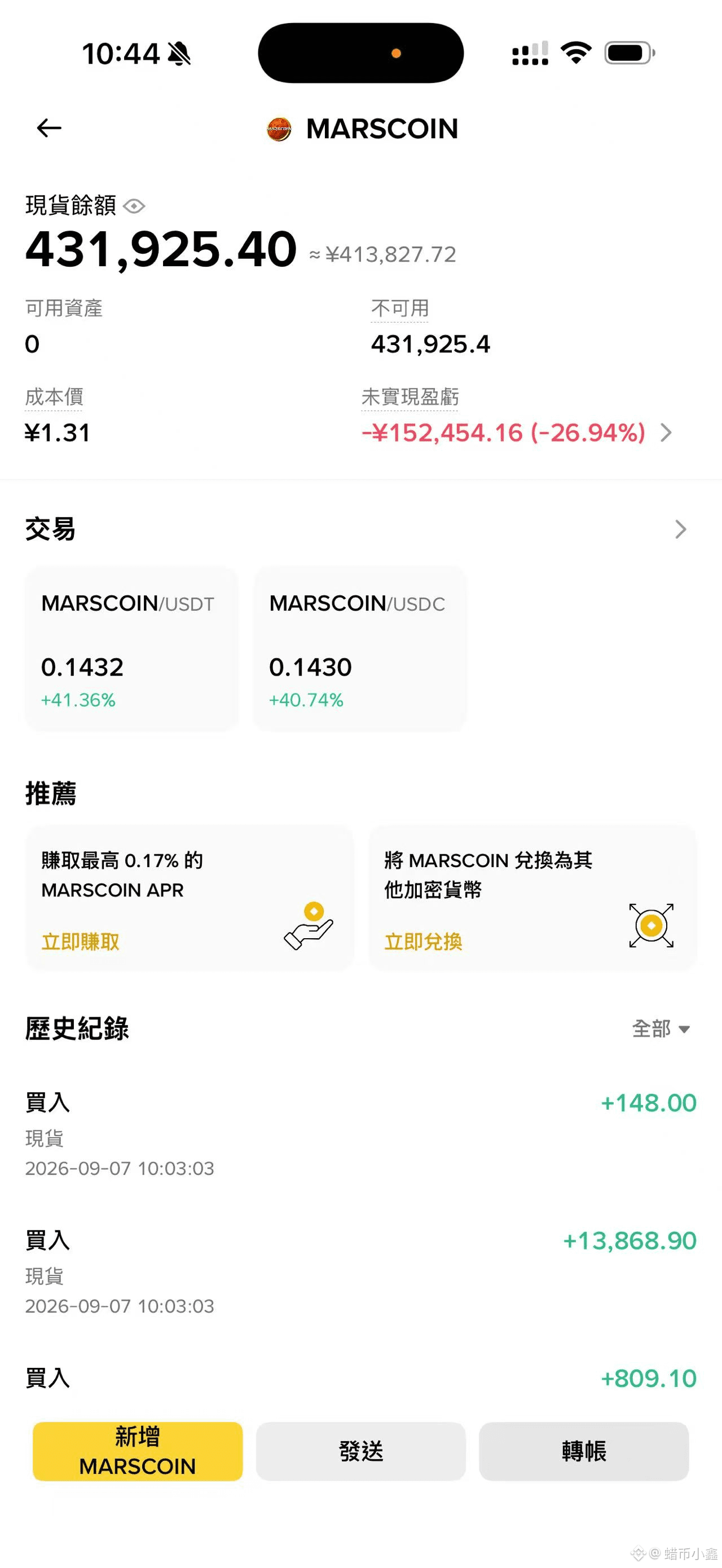
Was ruined by $MARSCOIN , and at night I dreamed of $MARSCOIN
{spot}(MARSCOINUSDT)
It’s breaking new highs
Marscoin—since it got listed on Binance, it dropped three times. It’s really got me trapped, but I haven’t cut my losses
It’s been consolidating for half a month. It’s starting to rise steadily now; this time it has to go to Mars
Was ruined by $MARSCOIN , and at night I dreamed of $MARSCOIN
It’s breaking new highs
Marscoin—since it got listed on Binance, it dropped three times. It’s really got me trapped, but I haven’t cut my losses
It’s been consolidating for half a month. It’s starting to rise steadily now; this time it has to go to Mars
It’s breaking new highs
Marscoin—since it got listed on Binance, it dropped three times. It’s really got me trapped, but I haven’t cut my losses
It’s been consolidating for half a month. It’s starting to rise steadily now; this time it has to go to Mars
5
2.2k
·
--
Bullish
When the market comes, you have to be bold and act
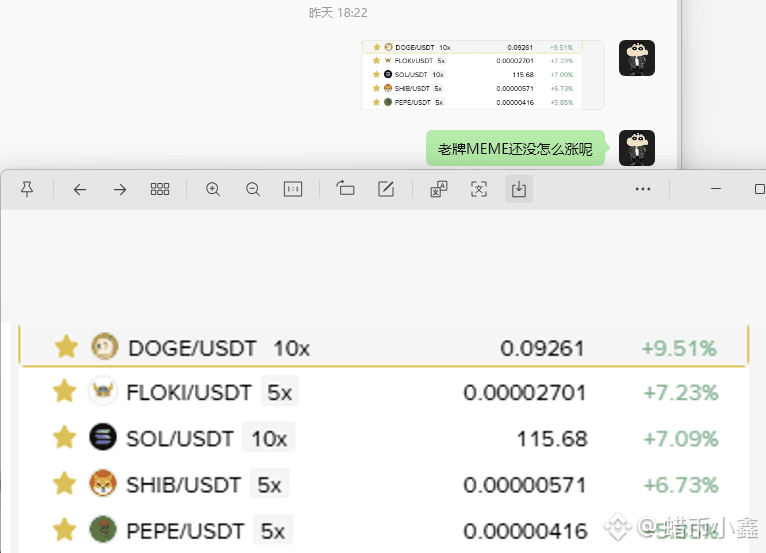
Just yesterday I said that an old-school MEME hadn’t risen yet, and in the middle of the night they all pumped together
When the market moves, sectors will rotate and run up one by one
You might not believe yourself, but you can’t not believe your cousin @CZ
This round of gains has nearly squeezed the bears—shouldn’t it be time to squeeze the bulls too?
When the market comes, you have to be bold and act
Just yesterday I said that an old-school MEME hadn’t risen yet, and in the middle of the night they all pumped together
When the market moves, sectors will rotate and run up one by one
You might not believe yourself, but you can’t not believe your cousin @CZ
This round of gains has nearly squeezed the bears—shouldn’t it be time to squeeze the bulls too?
Just yesterday I said that an old-school MEME hadn’t risen yet, and in the middle of the night they all pumped together
When the market moves, sectors will rotate and run up one by one
You might not believe yourself, but you can’t not believe your cousin @CZ
This round of gains has nearly squeezed the bears—shouldn’t it be time to squeeze the bulls too?
2
3.2k
·
--
Bullish
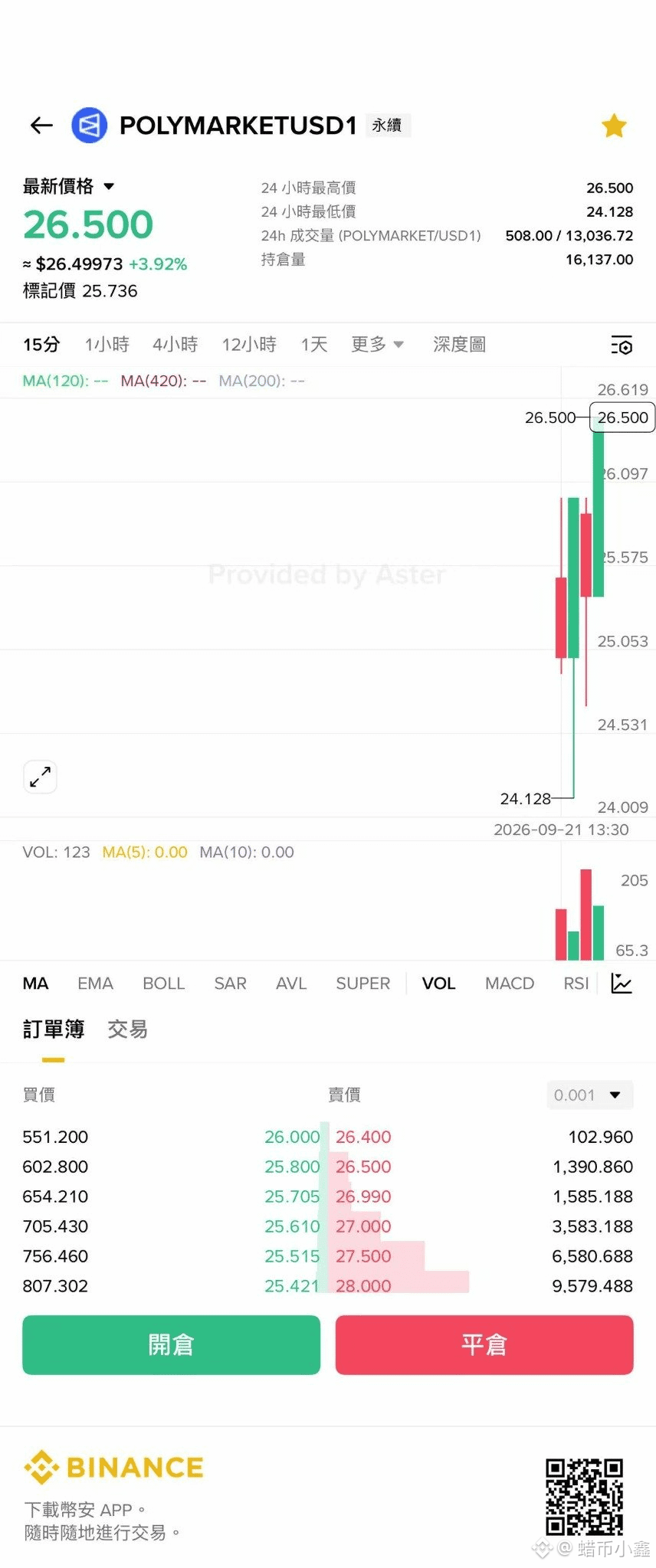
Aster has launched the POLYMARKETUSD1 perpetual contract
In this round of Polymarket funding, the benefits may not be limited to Polymarket itself.
From a sector perspective, I actually think this is a solid win for Predict.
Polymarket’s previous funding valued it at around $12 billion. It later rose to $15 billion, and now the market is even starting to discuss valuations above $20 billion. More importantly, the funding agreement reportedly includes token warrants.
This is good not only for Polymarket, but also for Predict.
Previously, Predict needed to prove to the market first whether prediction markets are a business that can be developed long-term.
Now Polymarket has already completed most of the education for the entire industry.
What Predict needs to prove next is no longer whether the sector has a future, but whether it can capture a portion of users, trading volume, and liquidity from it.
Also, prediction markets are not strictly winner-takes-all.
Users will use multiple platforms at the same time, comparing odds, depth, and settlement efficiency. Price gaps between platforms will also attract arbitrage capital to move back and forth.
The bigger Polymarket gets, the more users and capital it brings in; in the end, some of that will spill over to Predict.
The valuation logic is the same.
When the valuation of the market leader is pushed up to $20 billion, capital will naturally look for targets in the same space with lower valuations and faster growth. At that point, Predict becomes the most direct sector proxy.
So whether it’s Polymarket’s funding or the expectations around token issuance, the impact on Predict is not just competitive pressure.
Polymarket is responsible for taking prediction markets from 0 to 1—boosting the industry’s valuation, doing education, and driving liquidity.
What Predict needs to do is, over the next 1 to N stages, secure its own position.
At least for now, prediction markets no longer need to prove whether they have a future.
Aster has launched the POLYMARKETUSD1 perpetual contract
In this round of Polymarket funding, the benefits may not be limited to Polymarket itself.
From a sector perspective, I actually think this is a solid win for Predict.
Polymarket’s previous funding valued it at around $12 billion. It later rose to $15 billion, and now the market is even starting to discuss valuations above $20 billion. More importantly, the funding agreement reportedly includes token warrants.
This is good not only for Polymarket, but also for Predict.
Previously, Predict needed to prove to the market first whether prediction markets are a business that can be developed long-term.
Now Polymarket has already completed most of the education for the entire industry.
What Predict needs to prove next is no longer whether the sector has a future, but whether it can capture a portion of users, trading volume, and liquidity from it.
Also, prediction markets are not strictly winner-takes-all.
Users will use multiple platforms at the same time, comparing odds, depth, and settlement efficiency. Price gaps between platforms will also attract arbitrage capital to move back and forth.
The bigger Polymarket gets, the more users and capital it brings in; in the end, some of that will spill over to Predict.
The valuation logic is the same.
When the valuation of the market leader is pushed up to $20 billion, capital will naturally look for targets in the same space with lower valuations and faster growth. At that point, Predict becomes the most direct sector proxy.
So whether it’s Polymarket’s funding or the expectations around token issuance, the impact on Predict is not just competitive pressure.
Polymarket is responsible for taking prediction markets from 0 to 1—boosting the industry’s valuation, doing education, and driving liquidity.
What Predict needs to do is, over the next 1 to N stages, secure its own position.
At least for now, prediction markets no longer need to prove whether they have a future.
In this round of Polymarket funding, the benefits may not be limited to Polymarket itself.
From a sector perspective, I actually think this is a solid win for Predict.
Polymarket’s previous funding valued it at around $12 billion. It later rose to $15 billion, and now the market is even starting to discuss valuations above $20 billion. More importantly, the funding agreement reportedly includes token warrants.
This is good not only for Polymarket, but also for Predict.
Previously, Predict needed to prove to the market first whether prediction markets are a business that can be developed long-term.
Now Polymarket has already completed most of the education for the entire industry.
What Predict needs to prove next is no longer whether the sector has a future, but whether it can capture a portion of users, trading volume, and liquidity from it.
Also, prediction markets are not strictly winner-takes-all.
Users will use multiple platforms at the same time, comparing odds, depth, and settlement efficiency. Price gaps between platforms will also attract arbitrage capital to move back and forth.
The bigger Polymarket gets, the more users and capital it brings in; in the end, some of that will spill over to Predict.
The valuation logic is the same.
When the valuation of the market leader is pushed up to $20 billion, capital will naturally look for targets in the same space with lower valuations and faster growth. At that point, Predict becomes the most direct sector proxy.
So whether it’s Polymarket’s funding or the expectations around token issuance, the impact on Predict is not just competitive pressure.
Polymarket is responsible for taking prediction markets from 0 to 1—boosting the industry’s valuation, doing education, and driving liquidity.
What Predict needs to do is, over the next 1 to N stages, secure its own position.
At least for now, prediction markets no longer need to prove whether they have a future.
365
Log in to explore more content
Join global crypto users on Binance Square
⚡️ Get latest and useful information about crypto.
💬 Trusted by the world’s largest crypto exchange.
👍 Discover real insights from verified creators.
Email / Phone number
Trending Topics
BinancePick
2.7M views
143,489 Discussing
Join #EarningsSeason: Predict Earnings on Binance Pick, Share Your Take on Binance Square!
Binance Square Official
·402 Likes
·339.1k views
EarningsSeason
5M views
24,628 Discussing
SouthKoreaReportedlyWeighsFourthCryptoTaxDelay
1,176 views
94 Discussing