
链上阿乐
1.9k Posts

链上阿乐
Report
Block User
QAQ 663446918
Occasional Trader
1.7 Years
22 Following
1.2K+ Followers
1.0K+ Liked
Posts
All
Quotes
Videos
·
--
Bearish
Is there still a bull market for $SOL ? Is there a chance to buy the dip soon? Will it keep grinding down, or has it already found a bottom?
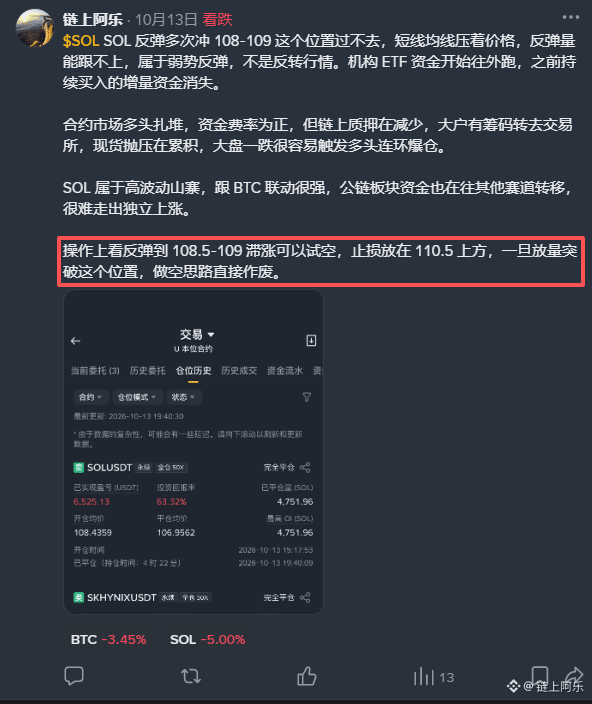
Around the middle of last month, I started calling for a short on $SOL in the plaza, when the market price was around 108–110.
{future}(SOLUSDT)
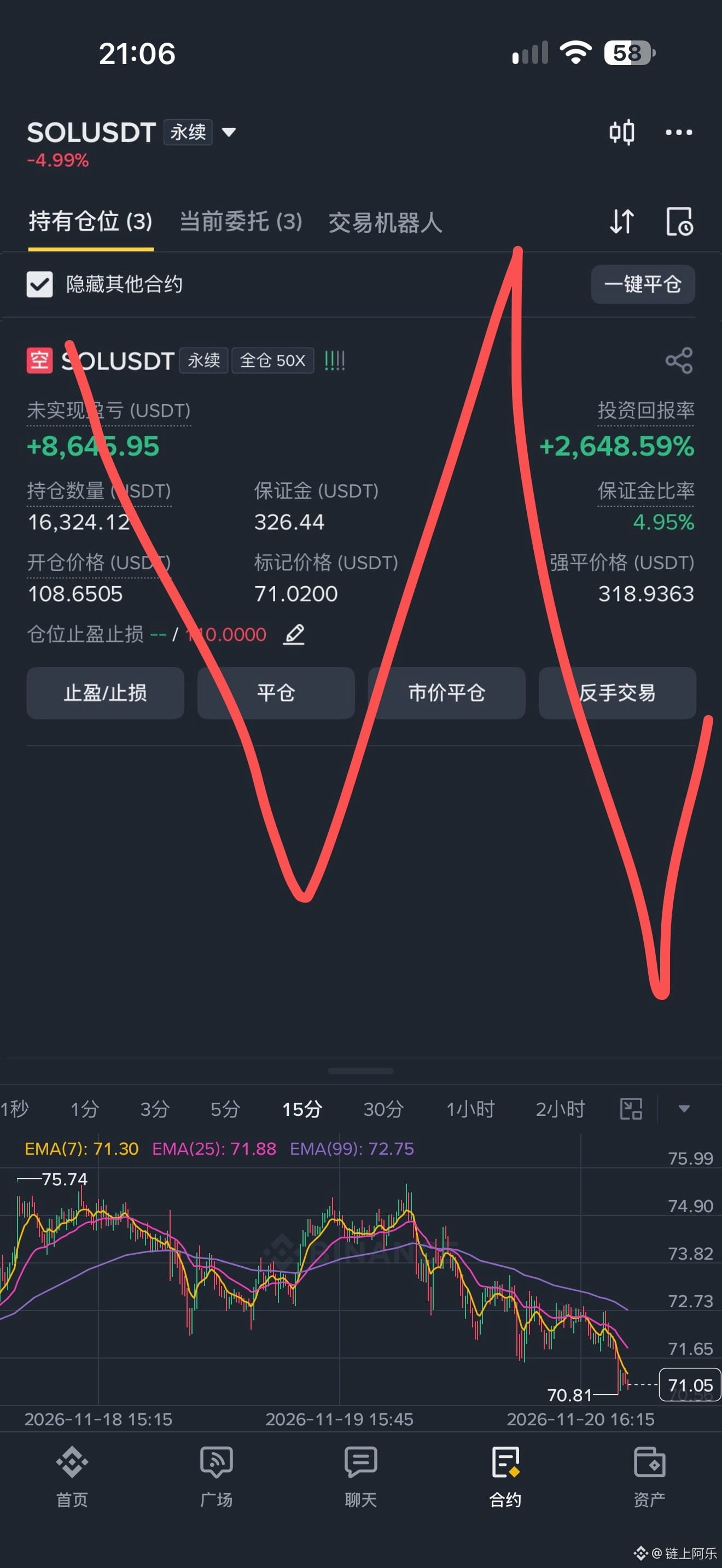
At the time, I had just helped my followers close their short-term positions for a profit of 6525U, then immediately opened a small short position myself. I've held it all the way to the current price of 70. I didn't exit when it plunged to 67 on the 15th, and I'm still holding. In my personal view, the major coins are no longer in a bull market this year, so I'm firmly bearish.
There's no real need to buy the dip right now. The market is mainly moving sideways within a range: it rises two or three points during the day, then resumes its steady decline at night. And the new low of 67.35 is nowhere near holding.
{spot}(SOLUSDT)
My personal forecast is that this downtrend will continue through December or the end of January, and only then will signs of a right-side rebound begin to appear. If you really want to buy the dip, you can scale into spot positions at these three levels: 【60, 50, 35】.
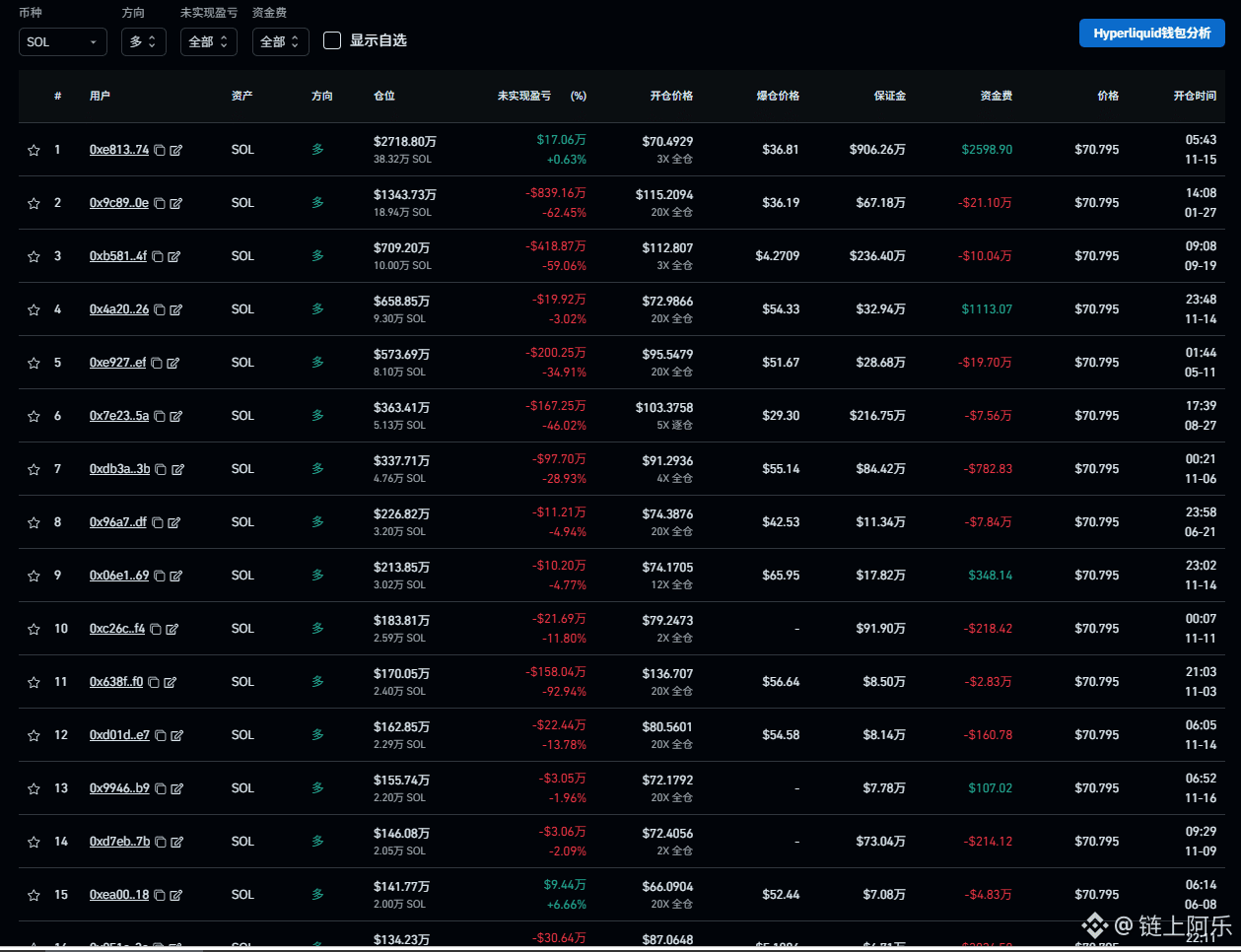
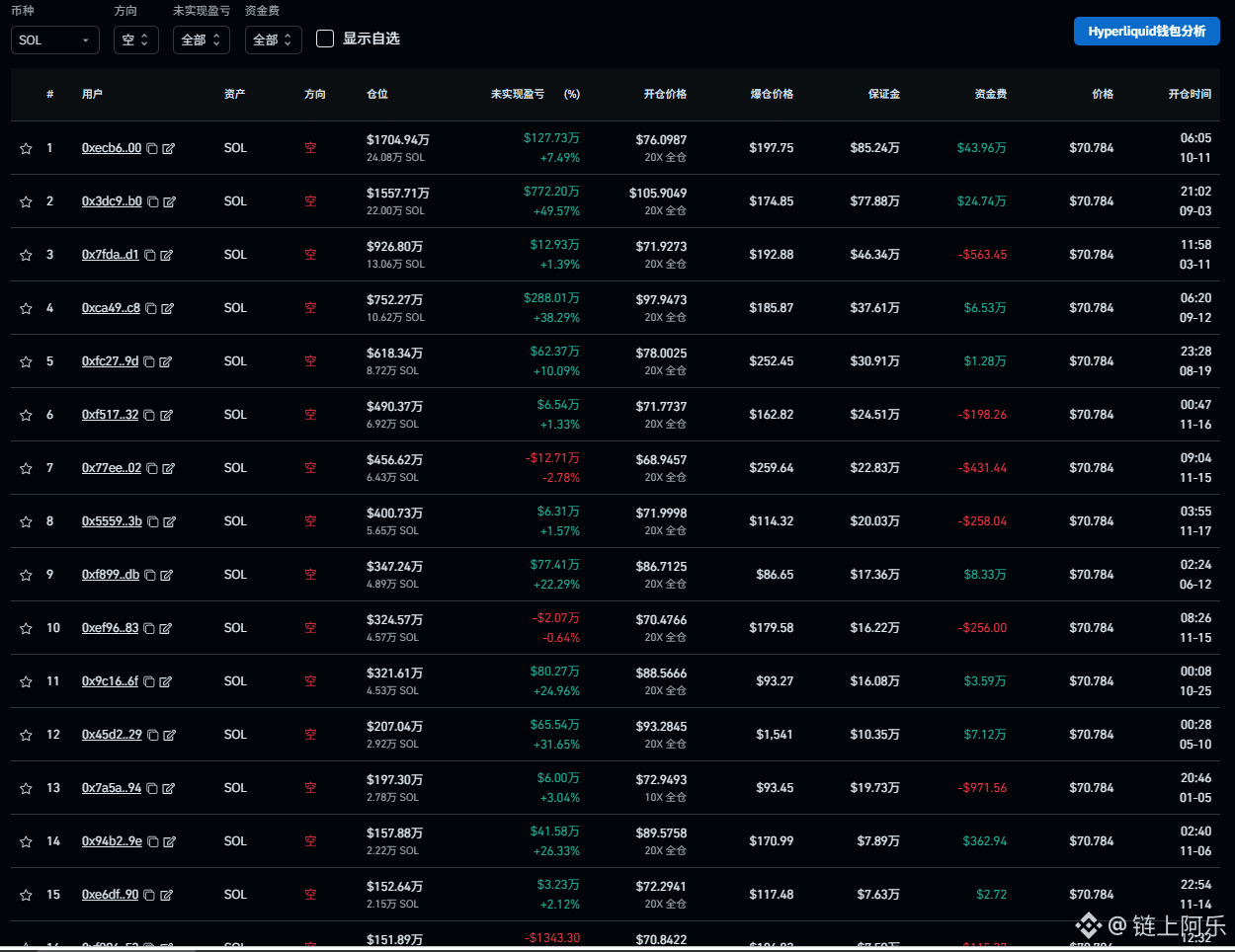
Looking at the current candlesticks, there are still no signs of a bottom. Overall, the market continues to rebound and then grind lower. Also, my on-chain monitoring shows that nearly everyone going long on #solana is sitting on a floating loss, and many of those losses are substantial. Whether retail traders, whales, or institutions, almost everyone who went long had an average entry price between 110 and 80. They were the first wave of dip buyers when the price fell below the 100 mark, and now they're trapped!!!
So Le Ge doesn't recommend that retail traders go long right now. After all, with price fluctuations this small, you really can't get a handle on them.
For intraday trading, keep an eye on EVAA, MMT, NAORIS, and #Anthropic创纪录上市,1.5万亿美元市值合理吗? #加息预期叠加美股分流,比特币跌破6.2万美元
Is there still a bull market for $SOL ? Is there a chance to buy the dip soon? Will it keep grinding down, or has it already found a bottom?
Around the middle of last month, I started calling for a short on $SOL in the plaza, when the market price was around 108–110.
At the time, I had just helped my followers close their short-term positions for a profit of 6525U, then immediately opened a small short position myself. I've held it all the way to the current price of 70. I didn't exit when it plunged to 67 on the 15th, and I'm still holding. In my personal view, the major coins are no longer in a bull market this year, so I'm firmly bearish.
There's no real need to buy the dip right now. The market is mainly moving sideways within a range: it rises two or three points during the day, then resumes its steady decline at night. And the new low of 67.35 is nowhere near holding.
My personal forecast is that this downtrend will continue through December or the end of January, and only then will signs of a right-side rebound begin to appear. If you really want to buy the dip, you can scale into spot positions at these three levels: 【60, 50, 35】.
Looking at the current candlesticks, there are still no signs of a bottom. Overall, the market continues to rebound and then grind lower. Also, my on-chain monitoring shows that nearly everyone going long on #solana is sitting on a floating loss, and many of those losses are substantial. Whether retail traders, whales, or institutions, almost everyone who went long had an average entry price between 110 and 80. They were the first wave of dip buyers when the price fell below the 100 mark, and now they're trapped!!!
So Le Ge doesn't recommend that retail traders go long right now. After all, with price fluctuations this small, you really can't get a handle on them.
For intraday trading, keep an eye on EVAA, MMT, NAORIS, and #Anthropic创纪录上市,1.5万亿美元市值合理吗? #加息预期叠加美股分流,比特币跌破6.2万美元
链上阿乐
·
--
Bearish$SOL SOL has rebounded several times and tried to break through 108–109, but it hasn't been able to get past this level. Short-term moving averages are capping the price, and rebound volume hasn't kept up. This is a weak rebound, not a trend reversal. Institutional ETF funds are starting to flow out, and the incremental buying that had been sustained previously has disappeared.
Long positions are crowded in the futures market, and funding rates are positive. However, on-chain staking is declining, and large holders are moving tokens to exchanges. Spot selling pressure is building, so a market downturn could easily trigger a cascade of liquidations among long positions.
SOL is a highly volatile altcoin that is strongly correlated with BTC. Capital is also shifting from the public-chain sector to other sectors, making it difficult for SOL to rally independently.
As for trading, if a rebound to 108.5–109 stalls, you could consider a short position, with a stop-loss above 110.5. If the price breaks through this level on strong volume, the short thesis is invalidated.
107
·
--
$BTC It's officially a crypto winter now too, with institutions in this space continually getting liquidated.
I think things need to settle for a while longer; don't rush to buy the dip.
$BTC It's officially a crypto winter now too, with institutions in this space continually getting liquidated.
I think things need to settle for a while longer; don't rush to buy the dip.
I think things need to settle for a while longer; don't rush to buy the dip.
151
·
--
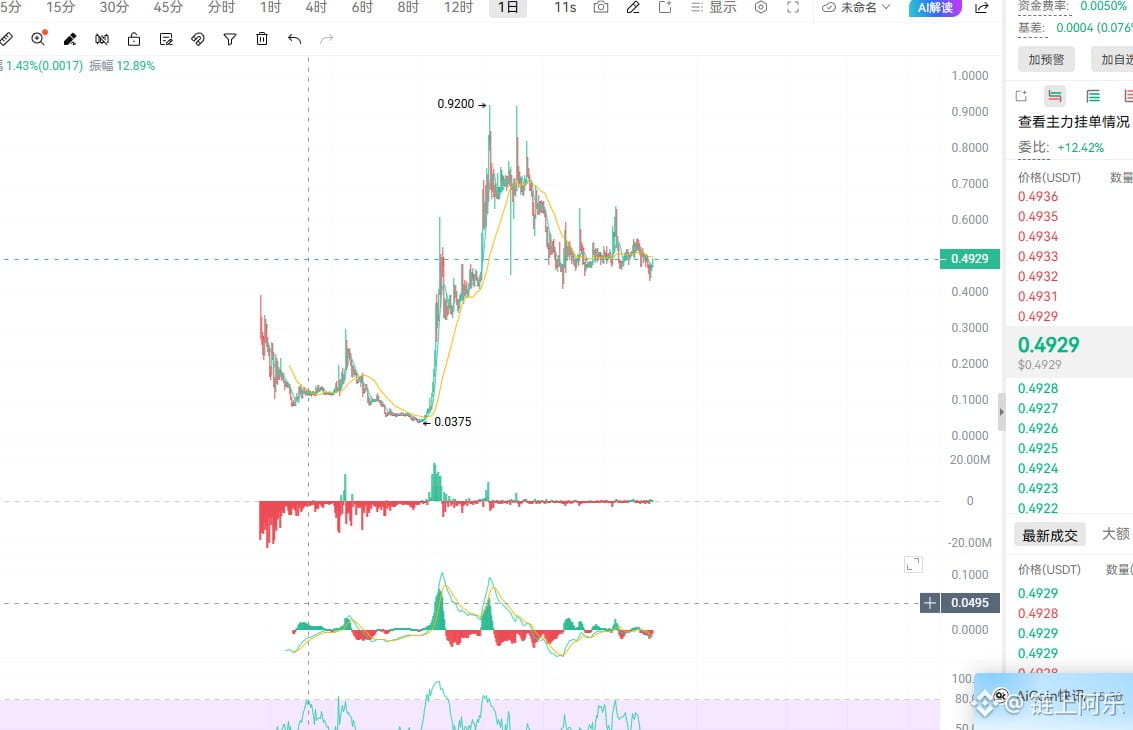
$币安人生 At the time, everyone was saying that $1 was only a matter of time. And sure enough, it was just a little short. So now let’s talk about whether it could still get back to $1.
A fixed supply of 1 billion coins, with no further issuance, is its biggest advantage over other meme coins. Market activity is low right now, and there hasn’t been any good news from Binance either. But A Le has always firmly believed that $1 is within reach.
Now is the best time to build a spot position and get on board. Who’s with me?
{future}(币安人生USDT)
$币安人生 At the time, everyone was saying that $1 was only a matter of time. And sure enough, it was just a little short. So now let’s talk about whether it could still get back to $1.
A fixed supply of 1 billion coins, with no further issuance, is its biggest advantage over other meme coins. Market activity is low right now, and there hasn’t been any good news from Binance either. But A Le has always firmly believed that $1 is within reach.
Now is the best time to build a spot position and get on board. Who’s with me?
277
·
--
Bullish
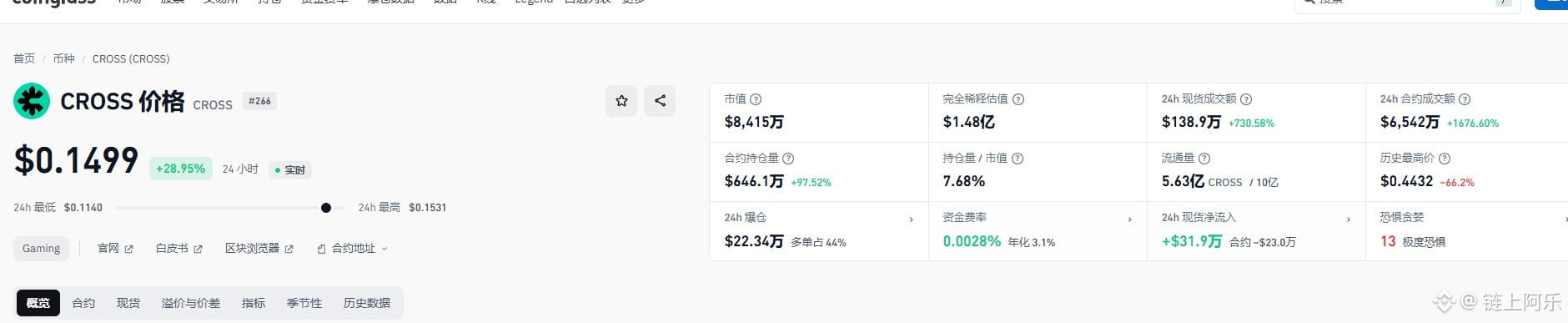
$CROSS Going long is like picking up free money 💵💵💵
Real money is starting to flow in, which shows that the market still has strong buying support. Futures funding rates are still positive, and quite a few people are borrowing money to go long. Many on-chain whales are withdrawing coins from exchanges to their wallets, planning to hold them long term.
Suggestion for going long: target around 0.17, stop-loss at 0.125. Use low leverage and a small position to test the waters.
{future}(CROSSUSDT)
$CROSS Going long is like picking up free money 💵💵💵
Real money is starting to flow in, which shows that the market still has strong buying support. Futures funding rates are still positive, and quite a few people are borrowing money to go long. Many on-chain whales are withdrawing coins from exchanges to their wallets, planning to hold them long term.
Suggestion for going long: target around 0.17, stop-loss at 0.125. Use low leverage and a small position to test the waters.
167
·
--
Bullish
$BLESS The upside potential is still there, so Ale will continue going long.
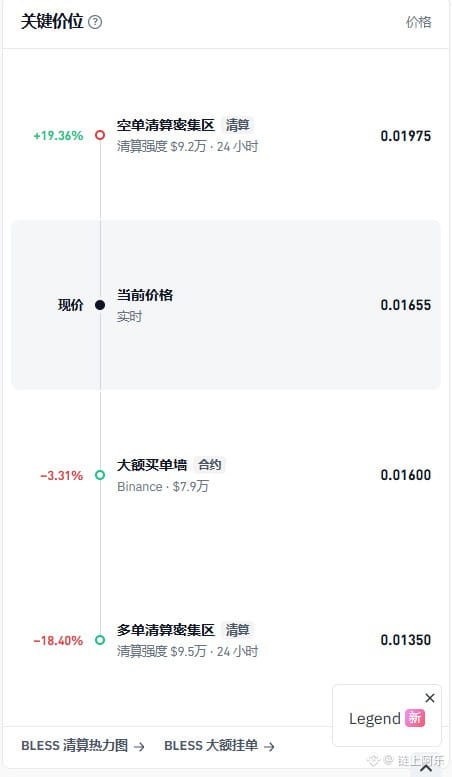
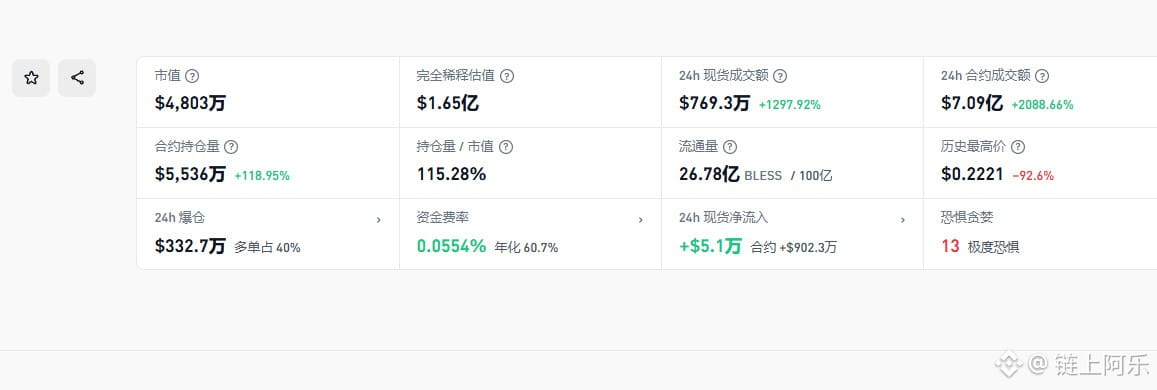
As you can see in the image below, there are still quite a few short positions open. Looking at the capital flows, there has been a steady positive inflow, which is clearly a favorable sign. Another rally to break through to a new high seems quite likely.
Trading suggestion: Continue building long positions, with a target above 0.02.
Join us in the chatroom for more market analysis. Feel free to come in if you're interested.
{future}(BLESSUSDT)
$BLESS The upside potential is still there, so Ale will continue going long.
As you can see in the image below, there are still quite a few short positions open. Looking at the capital flows, there has been a steady positive inflow, which is clearly a favorable sign. Another rally to break through to a new high seems quite likely.
Trading suggestion: Continue building long positions, with a target above 0.02.
Join us in the chatroom for more market analysis. Feel free to come in if you're interested.
251
·
--
Bearish
$ETH Has this wave of declines really hit bottom?
In my personal opinion, it hasn't. There'll be another drop. Here's why:
First, funds keep flowing out of U.S. ETFs, and no new money is coming in to buy the dip.
Second, U.S. inflation came in higher than expected, making near-term rate cuts less likely. High interest rates are weighing on risk assets. With the broader market unstable, it's hard for Ethereum to hold up on its own.
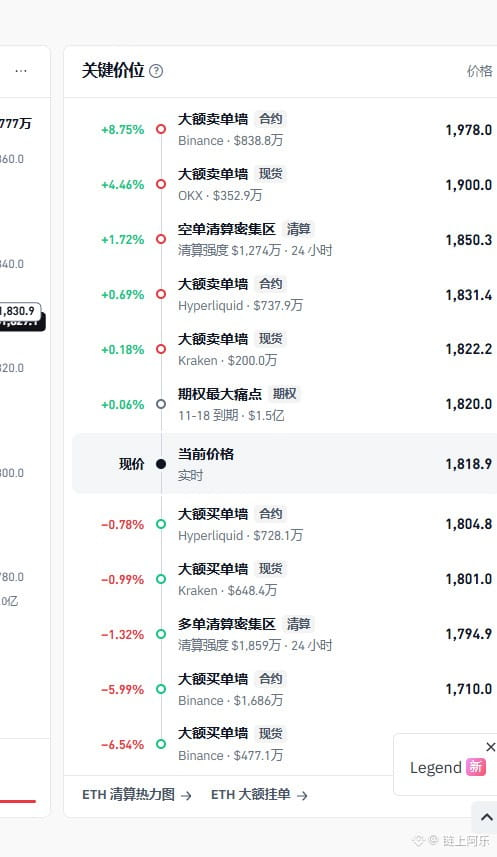
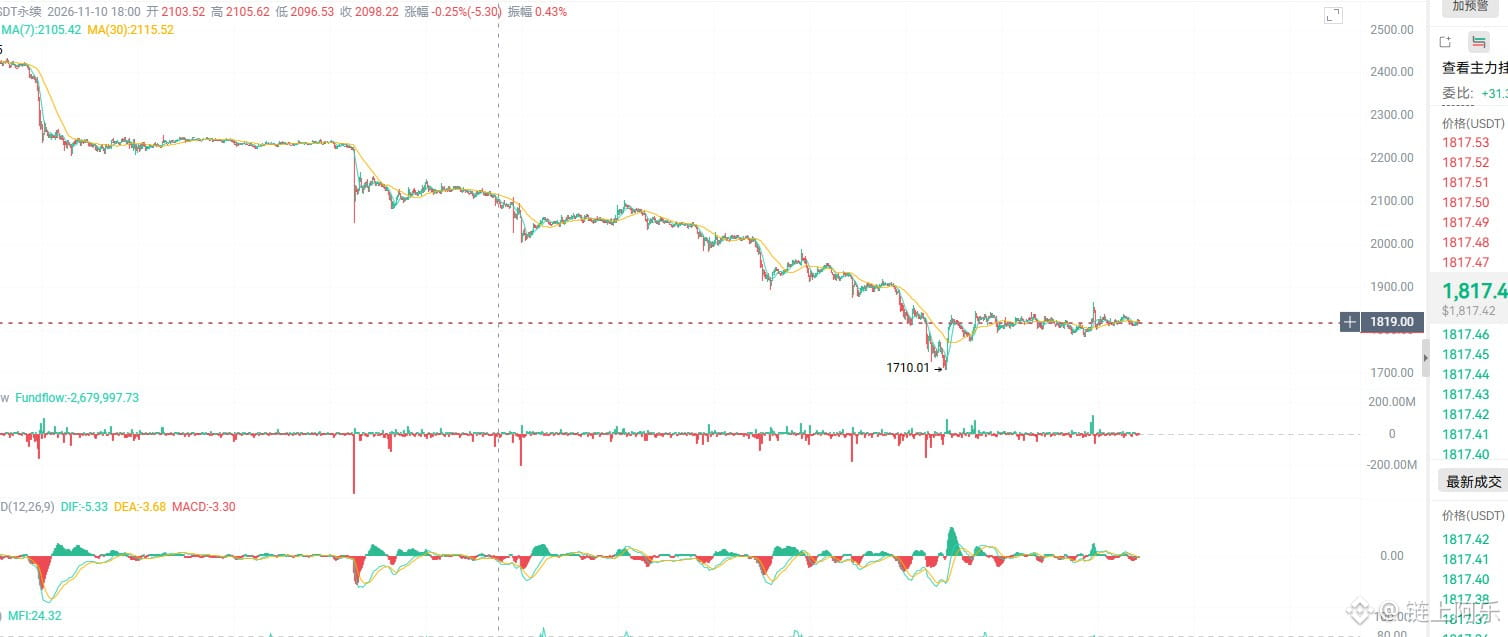
Third, neither price nor volume looks right. Key support is at $1,700–$1,720. The current price near $1,800 is just in the middle. The rebound has been low-volume, selling pressure hasn't cleared, and underwater holders above are still waiting to break even. A real bottom usually comes with massive liquidations. This drop has been fairly subdued, with too few liquidations so far. Market panic hasn't peaked yet.
Fourth, neither supply dynamics nor demand has recovered. The amount of ETH on exchanges is still rising, suggesting some holders are preparing to sell. Whales who bought near $1,900 haven't been pushed to the point of capitulating yet; we haven't reached the "painful enough to leave" stage. On-chain activity hasn't picked up, and there are few real users. Without buyers to step in, it's hard for the price to stabilize.
Trading suggestion: Consider entering a short position around $1,835. The chat room will provide take-profit and stop-loss levels.
{future}(ETHUSDT)
$ETH Has this wave of declines really hit bottom?
In my personal opinion, it hasn't. There'll be another drop. Here's why:
First, funds keep flowing out of U.S. ETFs, and no new money is coming in to buy the dip.
Second, U.S. inflation came in higher than expected, making near-term rate cuts less likely. High interest rates are weighing on risk assets. With the broader market unstable, it's hard for Ethereum to hold up on its own.
Third, neither price nor volume looks right. Key support is at $1,700–$1,720. The current price near $1,800 is just in the middle. The rebound has been low-volume, selling pressure hasn't cleared, and underwater holders above are still waiting to break even. A real bottom usually comes with massive liquidations. This drop has been fairly subdued, with too few liquidations so far. Market panic hasn't peaked yet.
Fourth, neither supply dynamics nor demand has recovered. The amount of ETH on exchanges is still rising, suggesting some holders are preparing to sell. Whales who bought near $1,900 haven't been pushed to the point of capitulating yet; we haven't reached the "painful enough to leave" stage. On-chain activity hasn't picked up, and there are few real users. Without buyers to step in, it's hard for the price to stabilize.
Trading suggestion: Consider entering a short position around $1,835. The chat room will provide take-profit and stop-loss levels.
100
·
--
$FIL The price is low right now, so many people think it’s “fallen enough” and “really cheap,” and want to jump in and buy the dip. But let’s look at the situation realistically: this isn’t like UNI, which was “unfairly punished”—there are still quite a few unresolved issues here.
First, the positives: since the Solstice upgrade, the number of new coins issued has fallen sharply, and most of the large early unlocks are now behind us. Supply-side pressure has indeed eased considerably, and the long-term deflationary thesis is real.
But the key issue is demand: having fewer coins is good, but orders from people actually paying to use it for data storage haven’t kept pace. There still aren’t many paying users for the new services, and real revenue hasn’t taken off. Meanwhile, miners keep selling the coins they produce each day to cover costs, creating ongoing selling pressure. Futures trading volume far exceeds spot volume, which suggests there’s plenty of speculative capital but not enough real buying demand.
The sector is heading in the right direction, and decentralized storage combined with AI has long-term potential. But major players are competing by cutting prices, and industry peers are also fighting for market share, so demand won’t grow overnight.
In short: the positives are playing out, but until the data catches up, don’t rush to “buy the dip.” It’s safer to wait until you see a clear increase in paid orders and sustained inflows of on-chain capital. Don’t mistake “cheap” for “bottomed out.”
{future}(FILUSDT)
$FIL The price is low right now, so many people think it’s “fallen enough” and “really cheap,” and want to jump in and buy the dip. But let’s look at the situation realistically: this isn’t like UNI, which was “unfairly punished”—there are still quite a few unresolved issues here.
First, the positives: since the Solstice upgrade, the number of new coins issued has fallen sharply, and most of the large early unlocks are now behind us. Supply-side pressure has indeed eased considerably, and the long-term deflationary thesis is real.
But the key issue is demand: having fewer coins is good, but orders from people actually paying to use it for data storage haven’t kept pace. There still aren’t many paying users for the new services, and real revenue hasn’t taken off. Meanwhile, miners keep selling the coins they produce each day to cover costs, creating ongoing selling pressure. Futures trading volume far exceeds spot volume, which suggests there’s plenty of speculative capital but not enough real buying demand.
The sector is heading in the right direction, and decentralized storage combined with AI has long-term potential. But major players are competing by cutting prices, and industry peers are also fighting for market share, so demand won’t grow overnight.
In short: the positives are playing out, but until the data catches up, don’t rush to “buy the dip.” It’s safer to wait until you see a clear increase in paid orders and sustained inflows of on-chain capital. Don’t mistake “cheap” for “bottomed out.”
832
·
--
Bullish
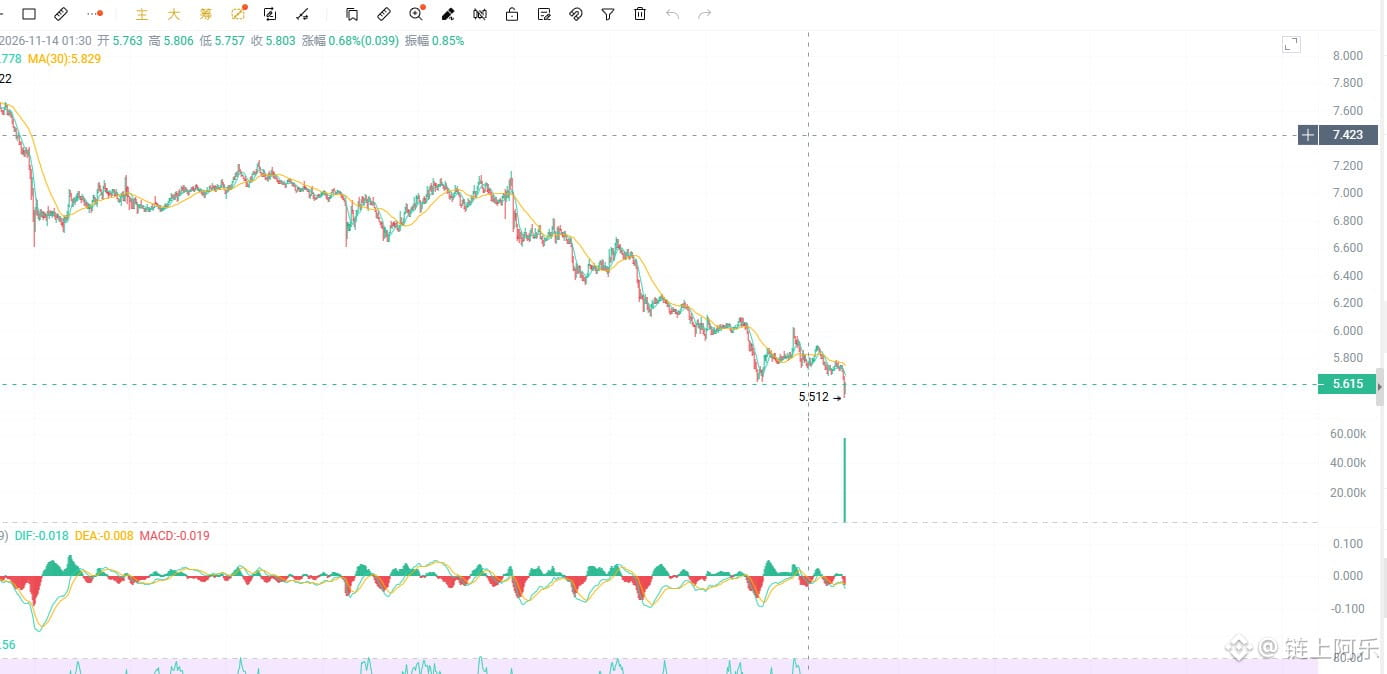
$UNI Personally, I think UNI is the best buy-the-dip opportunity in this downturn.
The market is falling across the board, but UNI is different — others are dropping because their fundamentals have deteriorated, while UNI has simply been dragged down by the broader market. Its fundamentals haven’t changed; they’ve actually gotten stronger. This is a chance to “pick up gold after an unjustified sell-off”!
First: An industry leader with an unshakable position
It’s the world’s largest decentralized exchange, with cumulative trading volume of over $3.7 trillion and more than $6 billion in fees. In a bear market, smaller exchanges might fail, but UNI has scale, an ecosystem, and a moat. “Staying power” is what retail investors should value most.
Second: The deflationary mechanism has just launched, making UNI more “valuable” as it rises
After the new proposal passed, part of the trading fees will go directly toward buying back and burning UNI. In addition, 100 million tokens were burned in a one-time event, equivalent to 10% of the total supply. The higher the trading volume going forward, the more tokens will be burned and the more pronounced the deflation will become. UNI used to offer only “voting rights”; now holders can actually share in platform revenue. Its value proposition has changed completely.
Third: The growth engine is still running, with catalysts piling up
Trading volume in tokenized stocks has exploded, and Uniswap is already a leader in this area, with cumulative volume surpassing $20 billion. CME plans to launch UNI futures, opening up access to institutional capital. The V4 upgrade and the Unichain blockchain are also in development, keeping the long-term growth story alive.
Fourth: This downturn isn’t driven by negative fundamentals — it’s creating an opportunity
The drop is mainly due to weak market sentiment and selling by a few large holders; nothing has gone wrong with the project itself. When a good company is unfairly sold off, it’s being offered to you at a discount. When the market recovers, investors tend to seek out assets with “profits + deflation + leadership,” and these often see the strongest rebounds.
In short: Its leading position remains intact + token burns and deflation + real revenue + growth from new businesses. The headwinds are short-term; the value is long-term. Don’t panic when others do. Look beyond the noise: when quality assets fall, it’s a chance for us to get on board.
{future}(UNIUSDT)
$UNI Personally, I think UNI is the best buy-the-dip opportunity in this downturn.
The market is falling across the board, but UNI is different — others are dropping because their fundamentals have deteriorated, while UNI has simply been dragged down by the broader market. Its fundamentals haven’t changed; they’ve actually gotten stronger. This is a chance to “pick up gold after an unjustified sell-off”!
First: An industry leader with an unshakable position
It’s the world’s largest decentralized exchange, with cumulative trading volume of over $3.7 trillion and more than $6 billion in fees. In a bear market, smaller exchanges might fail, but UNI has scale, an ecosystem, and a moat. “Staying power” is what retail investors should value most.
Second: The deflationary mechanism has just launched, making UNI more “valuable” as it rises
After the new proposal passed, part of the trading fees will go directly toward buying back and burning UNI. In addition, 100 million tokens were burned in a one-time event, equivalent to 10% of the total supply. The higher the trading volume going forward, the more tokens will be burned and the more pronounced the deflation will become. UNI used to offer only “voting rights”; now holders can actually share in platform revenue. Its value proposition has changed completely.
Third: The growth engine is still running, with catalysts piling up
Trading volume in tokenized stocks has exploded, and Uniswap is already a leader in this area, with cumulative volume surpassing $20 billion. CME plans to launch UNI futures, opening up access to institutional capital. The V4 upgrade and the Unichain blockchain are also in development, keeping the long-term growth story alive.
Fourth: This downturn isn’t driven by negative fundamentals — it’s creating an opportunity
The drop is mainly due to weak market sentiment and selling by a few large holders; nothing has gone wrong with the project itself. When a good company is unfairly sold off, it’s being offered to you at a discount. When the market recovers, investors tend to seek out assets with “profits + deflation + leadership,” and these often see the strongest rebounds.
In short: Its leading position remains intact + token burns and deflation + real revenue + growth from new businesses. The headwinds are short-term; the value is long-term. Don’t panic when others do. Look beyond the noise: when quality assets fall, it’s a chance for us to get on board.
1
1
1
911
·
--
Bullish
$ETH Ethereum is currently around $1,960. There is indeed a chance of a short-term rebound. Let’s be clear and straightforward.
First, it has fallen a lot and seems to have stopped falling. It declined steadily for a while, but held above $1,900 several times. This shows strong buying demand at this level and weakening selling pressure—it has “fallen into short-term support.”
Second, investors are quietly buying. ETH holdings on exchanges are declining, while large holders are increasing their positions. This suggests that some buyers are quietly accumulating at these low levels, so the market isn’t as panicked as some might think.
Third, positive developments are adding support. The year-end network upgrade is getting closer, and more people are staking, reducing the amount in circulation over the long term. At the same time, more major institutions are offering ETH trading, creating more regulated channels and making it easier for funds to move in and out.
Of course, keep this in mind: this is a short-term rebound
{future}(ETHUSDT)
$ETH Ethereum is currently around $1,960. There is indeed a chance of a short-term rebound. Let’s be clear and straightforward.
First, it has fallen a lot and seems to have stopped falling. It declined steadily for a while, but held above $1,900 several times. This shows strong buying demand at this level and weakening selling pressure—it has “fallen into short-term support.”
Second, investors are quietly buying. ETH holdings on exchanges are declining, while large holders are increasing their positions. This suggests that some buyers are quietly accumulating at these low levels, so the market isn’t as panicked as some might think.
Third, positive developments are adding support. The year-end network upgrade is getting closer, and more people are staking, reducing the amount in circulation over the long term. At the same time, more major institutions are offering ETH trading, creating more regulated channels and making it easier for funds to move in and out.
Of course, keep this in mind: this is a short-term rebound
214
·
--
Bearish
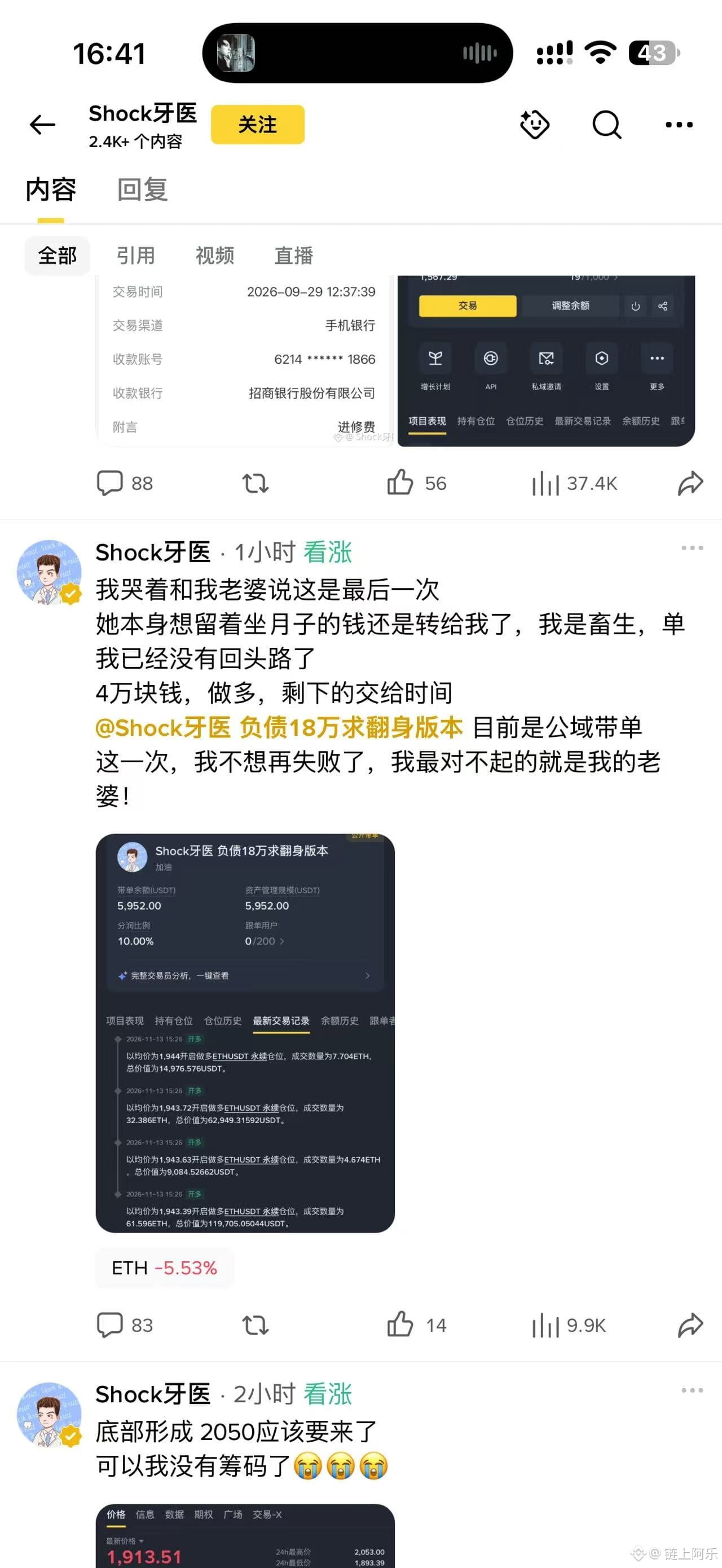
$ETH This private-fund dentist is truly despicable. You’ve pulled this same routine a hundred times, and you still haven’t even changed your talking points. Why hasn’t your wife gone and jumped off a building yet? Then it would all be over, and she wouldn’t have to suffer because of you.
With the market like this, you still want to keep going long? You’ve clearly got rocks in your head. Tech stocks are all falling, and assets are moving away from high-risk investments across the board. You still want to go long on crypto? Who else would get wiped out if not you?
{future}(ETHUSDT)
$ETH This private-fund dentist is truly despicable. You’ve pulled this same routine a hundred times, and you still haven’t even changed your talking points. Why hasn’t your wife gone and jumped off a building yet? Then it would all be over, and she wouldn’t have to suffer because of you.
With the market like this, you still want to keep going long? You’ve clearly got rocks in your head. Tech stocks are all falling, and assets are moving away from high-risk investments across the board. You still want to go long on crypto? Who else would get wiped out if not you?
With the market like this, you still want to keep going long? You’ve clearly got rocks in your head. Tech stocks are all falling, and assets are moving away from high-risk investments across the board. You still want to go long on crypto? Who else would get wiped out if not you?
192
·
--
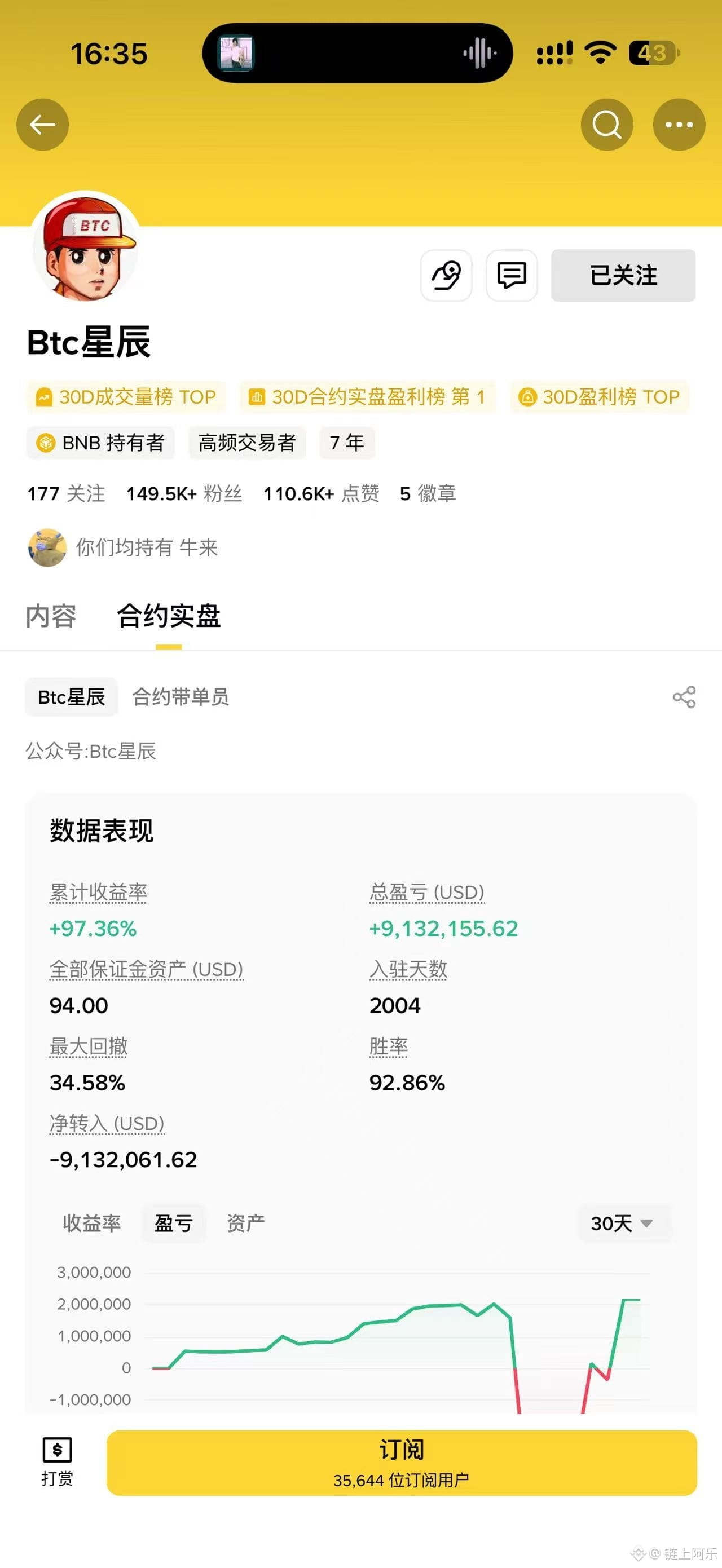
Can anyone in the know explain what happened to Xingchen's account?
His rate of return and win rate are ridiculously high. Why are the amount transferred in and the profits about the same? Or did he just happen to break even and then leave the scene?
Can anyone in the know explain what happened to Xingchen's account?
His rate of return and win rate are ridiculously high. Why are the amount transferred in and the profits about the same? Or did he just happen to break even and then leave the scene?
His rate of return and win rate are ridiculously high. Why are the amount transferred in and the profits about the same? Or did he just happen to break even and then leave the scene?
45
·
--
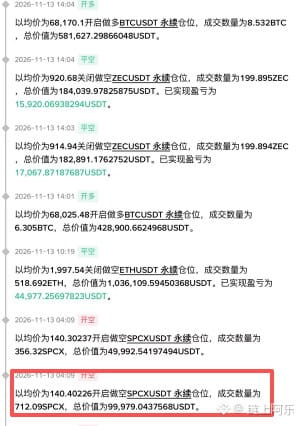
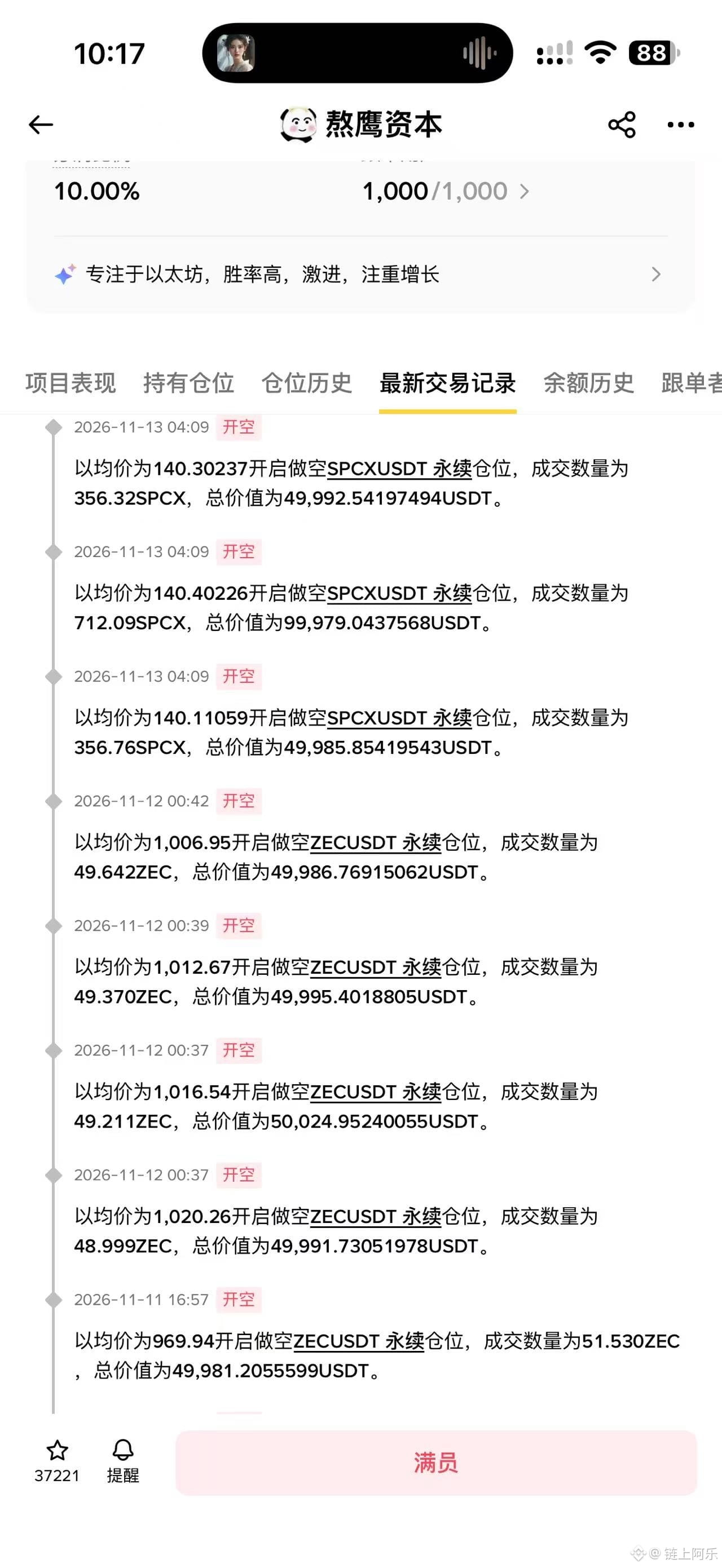
$SPCX Even Eagle-Tamer has gone short too, so this short position looks solid again
The U.S. election results are in, and the Democrats control both chambers of Congress. That puts even more pressure on SPCX and makes the case for shorting it in the near term stronger.
Musk previously bet heavily on the Republicans, who lost. He has effectively placed himself squarely at odds with the new Congress.
Democratic lawmakers have already vowed to closely scrutinize Starlink's operations in Ukraine and SpaceX's government contracts. The bar for NASA and defense contracts will only get higher, and the “protective umbrella” over its core business is less secure than before.
The more immediate blow is in Texas: the new governor has just taken office and already suspended approvals for new data centers to connect to the grid. This is forcing a slowdown in SPCX's massive AI computing capacity buildout, extending the payback period on investments worth tens of billions. The pressure on its already huge negative cash flow is only getting worse. Electricity costs, environmental rules, and land-use oversight are also likely to tighten, adding to costs.
On top of longstanding issues like the looming lockup expiration, high valuation, and reliance on major customers, the company now faces an additional headwind from policy.
If you're still unsure how to read the market, feel free to drop by Ale's chat room anytime to discuss! !
{future}(SPCXUSDT)
$SPCX Even Eagle-Tamer has gone short too, so this short position looks solid again
The U.S. election results are in, and the Democrats control both chambers of Congress. That puts even more pressure on SPCX and makes the case for shorting it in the near term stronger.
Musk previously bet heavily on the Republicans, who lost. He has effectively placed himself squarely at odds with the new Congress.
Democratic lawmakers have already vowed to closely scrutinize Starlink's operations in Ukraine and SpaceX's government contracts. The bar for NASA and defense contracts will only get higher, and the “protective umbrella” over its core business is less secure than before.
The more immediate blow is in Texas: the new governor has just taken office and already suspended approvals for new data centers to connect to the grid. This is forcing a slowdown in SPCX's massive AI computing capacity buildout, extending the payback period on investments worth tens of billions. The pressure on its already huge negative cash flow is only getting worse. Electricity costs, environmental rules, and land-use oversight are also likely to tighten, adding to costs.
On top of longstanding issues like the looming lockup expiration, high valuation, and reliance on major customers, the company now faces an additional headwind from policy.
If you're still unsure how to read the market, feel free to drop by Ale's chat room anytime to discuss! !
71
·
--
Bullish
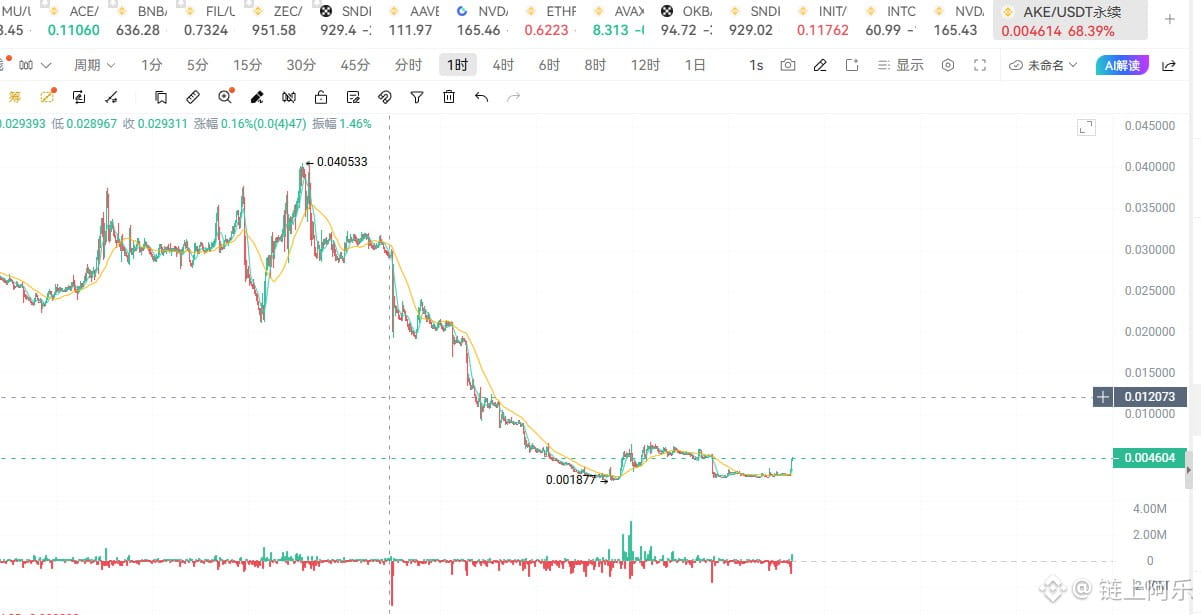
$AKE Not sure if you guys saw my previous post.
The price has already fallen so much since the last unlock, and the market has long since absorbed this wave of bad news.
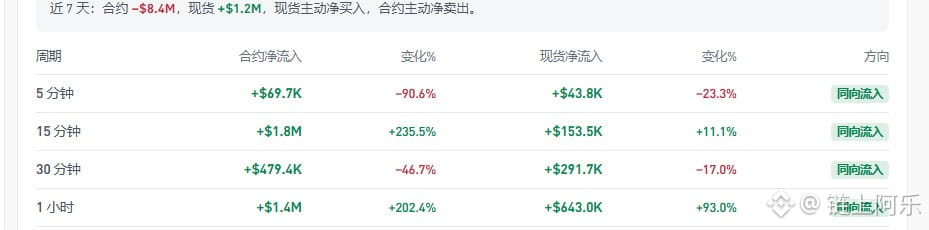
We’re now in the market makers’ cost zone. Quite a few whales have started positioning again, and spot inflows are already
clearly picking up. With trading volume this low, the big money hasn’t even entered yet. The real rally is still
ahead. Go long boldly!!!
877
·
--
Bullish
Verified
$AKE This shitcoin is causing trouble again
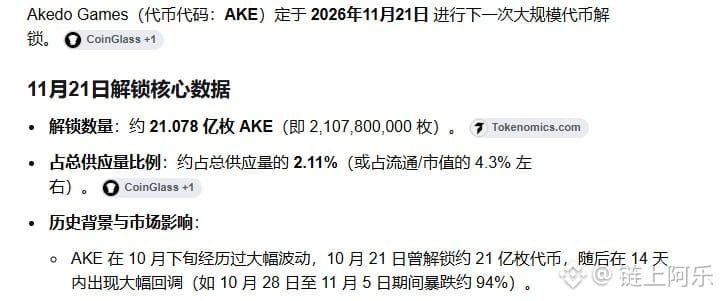
Only fools are shorting it now. A lot of people are worried that the large token unlock on November 21 will create selling pressure, but AKE has already pulled back significantly, and many investors took precautions early. The panic has most likely already been priced in.
By the time the unlock actually happens, those who wanted to sell will have already exited. Most of those still holding are long-term investors, so the actual selling pressure may be lower than expected.
On top of that, AKE's tokens are concentrated in a few hands, giving the whales strong control over the market. They won't let the price plunge below their cost basis. Some investors have already started cautiously building positions at these low levels, waiting for the uncertainty to clear. As long as the price doesn't make a new low after the unlock and holds above key support, A-Le thinks the next few days could mark a fresh wave of upward momentum. What do you guys think?
{future}(AKEUSDT)
$AKE This shitcoin is causing trouble again
Only fools are shorting it now. A lot of people are worried that the large token unlock on November 21 will create selling pressure, but AKE has already pulled back significantly, and many investors took precautions early. The panic has most likely already been priced in.
By the time the unlock actually happens, those who wanted to sell will have already exited. Most of those still holding are long-term investors, so the actual selling pressure may be lower than expected.
On top of that, AKE's tokens are concentrated in a few hands, giving the whales strong control over the market. They won't let the price plunge below their cost basis. Some investors have already started cautiously building positions at these low levels, waiting for the uncertainty to clear. As long as the price doesn't make a new low after the unlock and holds above key support, A-Le thinks the next few days could mark a fresh wave of upward momentum. What do you guys think?
631
·
--
Bullish
Partly True
$FIL First lure you in with promises of “deflation,” then wear you down with a long stretch of sideways trading until you get out
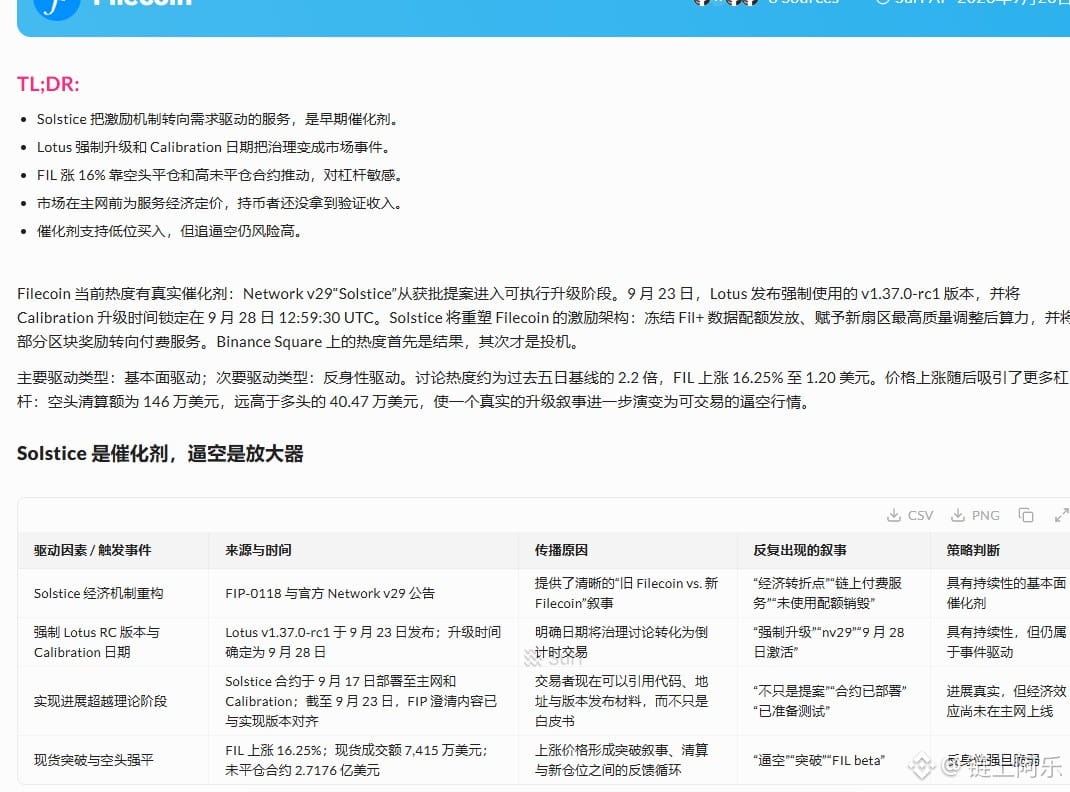
Before the Solstice upgrade, everyone was shouting, “Unlocks are over, token issuance is down 75%, deflation is here!” It got people rushing to buy.
But when the good news actually landed, the price rose by a token 14%, then gradually slid back down—a classic case of “buy the rumor, sell the news.”
The playbook has three steps:
① Hype deflation, AI storage, and token burns to push you to buy quickly;
② Let the price rise a little now and then to keep you hanging on, thinking you’ll win if you just hold;
③ Keep it trading sideways at a few cents for a long time. Everything else rises while it doesn’t; the moment you sell, it bounces—wearing down your resolve.
Here’s the key: deflation is real, but actual paid orders haven’t kept up!
It’s like having less supply but nobody buying. The promise that “there’ll be less in the future” alone can’t support the price. Don’t mistake expectations for reality. Until orders pick up, don’t stubbornly hold on for some pie in the sky!
{future}(FILUSDT)
$FIL First lure you in with promises of “deflation,” then wear you down with a long stretch of sideways trading until you get out
Before the Solstice upgrade, everyone was shouting, “Unlocks are over, token issuance is down 75%, deflation is here!” It got people rushing to buy.
But when the good news actually landed, the price rose by a token 14%, then gradually slid back down—a classic case of “buy the rumor, sell the news.”
The playbook has three steps:
① Hype deflation, AI storage, and token burns to push you to buy quickly;
② Let the price rise a little now and then to keep you hanging on, thinking you’ll win if you just hold;
③ Keep it trading sideways at a few cents for a long time. Everything else rises while it doesn’t; the moment you sell, it bounces—wearing down your resolve.
Here’s the key: deflation is real, but actual paid orders haven’t kept up!
It’s like having less supply but nobody buying. The promise that “there’ll be less in the future” alone can’t support the price. Don’t mistake expectations for reality. Until orders pick up, don’t stubbornly hold on for some pie in the sky!
1
1
3.1k
·
--
Bearish
$ZEC Aoying is seriously awesome—I’d call him the top KOL on the Square!
Ale’s bearish take on this move is exactly the same as Aoying’s.
First came the double bullish news of “privacy ETFs + the NU7 upgrade.” The media hyped it up, and everyone who chased the rally piled in. And then what happened?
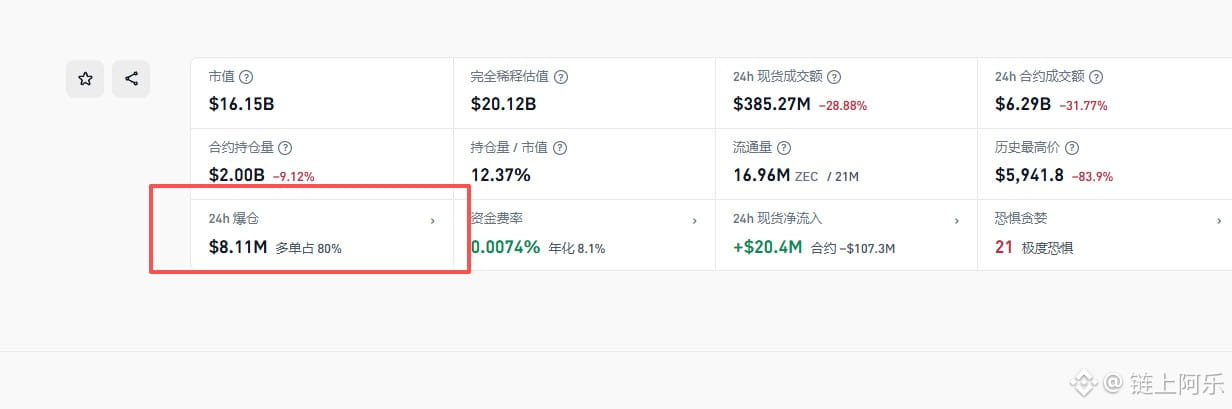
The ETF peaked as soon as it launched. ZCSH has seen continuous net outflows, with nearly $30 million leaving in November alone. Institutions were selling as they pushed the price up.
Then there’s the regulatory risk: the EU plans to restrict privacy coins in 2027, and some platforms have quietly delisted them. Liquidity is getting worse and worse.
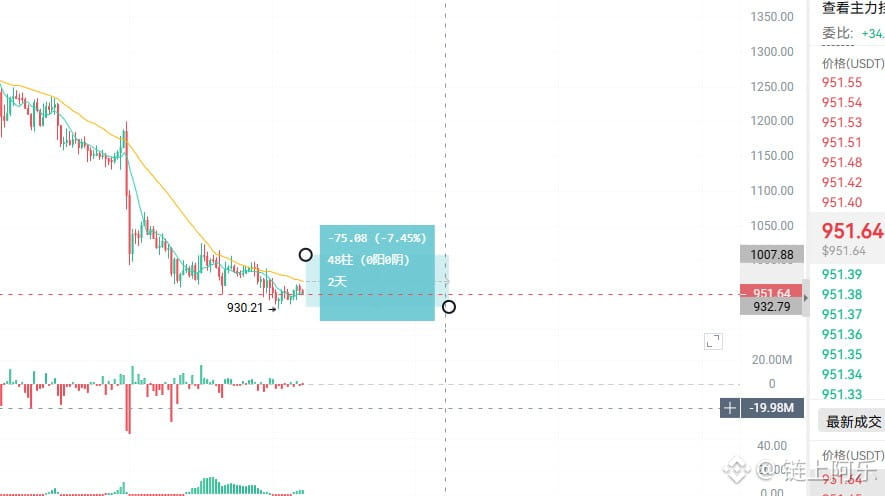
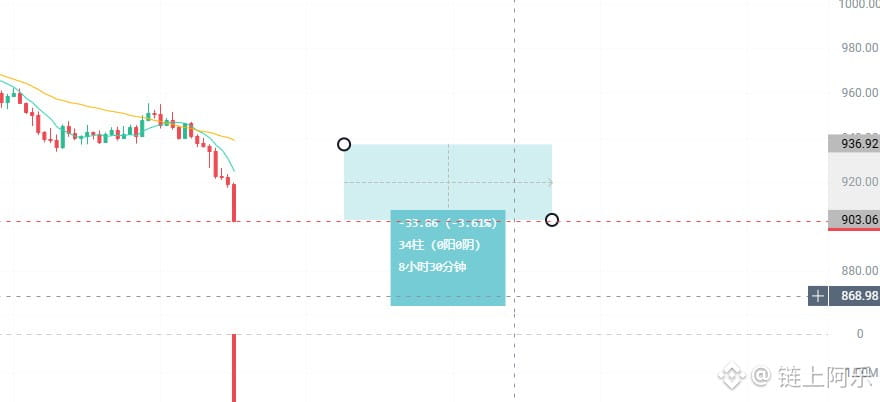
In the sharp drop over the past few days, nearly 90% of liquidations were long positions. Put simply, the big players used the good news to dump their bags on you as you chased the rally, then tanked the market to cash in. Any bounce is just dangling “hope of breaking even” in front of you, so you’re reluctant to cut your losses—and end up more and more trapped.
There’s no new story now, money is flowing out, and regulations are tightening. If you’re not shorting, you’re just waiting to become someone else’s exit liquidity at the top.
If you still don’t have a clear trading strategy, why not join Ale’s chat room!
{future}(ZECUSDT)
$ZEC Aoying is seriously awesome—I’d call him the top KOL on the Square!
Ale’s bearish take on this move is exactly the same as Aoying’s.
First came the double bullish news of “privacy ETFs + the NU7 upgrade.” The media hyped it up, and everyone who chased the rally piled in. And then what happened?
The ETF peaked as soon as it launched. ZCSH has seen continuous net outflows, with nearly $30 million leaving in November alone. Institutions were selling as they pushed the price up.
Then there’s the regulatory risk: the EU plans to restrict privacy coins in 2027, and some platforms have quietly delisted them. Liquidity is getting worse and worse.
In the sharp drop over the past few days, nearly 90% of liquidations were long positions. Put simply, the big players used the good news to dump their bags on you as you chased the rally, then tanked the market to cash in. Any bounce is just dangling “hope of breaking even” in front of you, so you’re reluctant to cut your losses—and end up more and more trapped.
There’s no new story now, money is flowing out, and regulations are tightening. If you’re not shorting, you’re just waiting to become someone else’s exit liquidity at the top.
If you still don’t have a clear trading strategy, why not join Ale’s chat room!
63
·
--
$ETH Absolutely do not buy the dip 🔥🔥🔥
The playbook institutions use to take retail investors for a ride is most obvious with Ethereum: “Every small bounce gives you hope, then you jump in and get trapped immediately.”
📉 ① ETFs have become “drainage pumps”—institutions keep pulling out
The most painful numbers are right in front of us: U.S. spot ETH ETFs have seen net outflows for 6 straight weeks, with another $365 million flowing out in a single week. Total outflows in 2026 have already exceeded $31 billion. BlackRock alone pulled out $1.42 billion in October—not a minor fluctuation, but a sustained withdrawal of capital. Retail investors see a “big drop” and want to buy the dip, while institutions use the bounce to sell. You’re not catching the bottom; you’re taking institutional investors’ bags.
💣 ② The good news has already been priced in, and there’s no new story to take its place
Remember all the excitement around the Dencun upgrade and ETF approval? And what happened? After the positive news came out, the money didn’t follow. Ecosystem activity is declining, gas fees are low, and new-user growth is slow. Vitalik recently admitted that ETH’s value shouldn’t rely solely on burning, indirectly acknowledging that there’s currently no strong narrative to support its price. Put simply: expectations were overblown, and reality hasn’t kept up. Every bounce is a chance to “get out at break-even and run,” not a sign of a reversal.
📊 ③ It follows the market down but not up—and there’s always another support level below
When BTC shakes, ETH falls harder; when BTC rebounds, ETH trudges along and can’t keep up. A few days ago, inflation data came out and ETH plunged straight to around $2,000 before barely recovering. There’s a pile of underwater holders above, and every little rise makes someone want to sell. A big drop doesn’t automatically mean you’ve found the bottom—the bottom comes when the price can’t fall any further, selling pressure is exhausted, and buyers show up. None of those three things has happened yet.
In short: institutions haven’t stopped selling, buyers haven’t returned, and the broader market hasn’t stabilized. Rushing to buy the dip just leaves you stranded halfway down the mountain as a “Good Samaritan.” Wait patiently for all three signals before entering. There’s no rush.
90
·
--
Bullish
$SNDK Caught this move again!!!
Why is this move bearish?
The big players are playing the classic “give you candy, then pull the chair out from under you” trick.
Yesterday it surged 13. Retail investors saw it as “strong,” chased the rally, and thought the breakout was a sure thing. Today it opened sharply lower and kept falling, trapping everyone who chased yesterday at the top.
① First, they drove the price up to grab attention. The media hyped a “supercycle in AI storage” to make you feel you had to get in;
② The earnings report did look good, but next quarter’s guidance was slightly below expectations—that one small flaw was blown way out of proportion;
③ Once the broader market weakened, investors turned around and dumped shares. Those who chased the rally panicked and sold too, triggering a stampede.
{future}(SNDKUSDT)
$SNDK Caught this move again!!!
Why is this move bearish?
The big players are playing the classic “give you candy, then pull the chair out from under you” trick.
Yesterday it surged 13. Retail investors saw it as “strong,” chased the rally, and thought the breakout was a sure thing. Today it opened sharply lower and kept falling, trapping everyone who chased yesterday at the top.
① First, they drove the price up to grab attention. The media hyped a “supercycle in AI storage” to make you feel you had to get in;
② The earnings report did look good, but next quarter’s guidance was slightly below expectations—that one small flaw was blown way out of proportion;
③ Once the broader market weakened, investors turned around and dumped shares. Those who chased the rally panicked and sold too, triggering a stampede.

495
·
--
Bearish
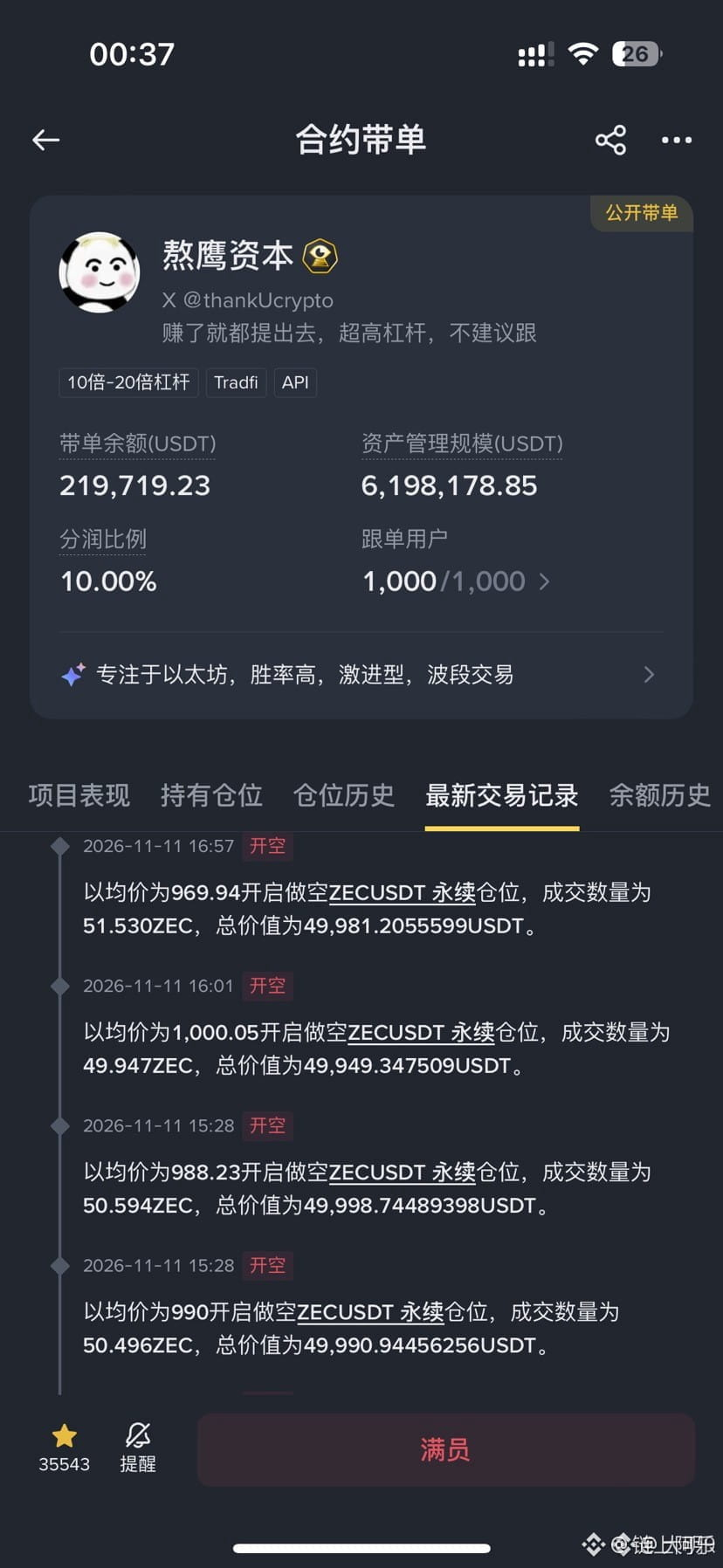
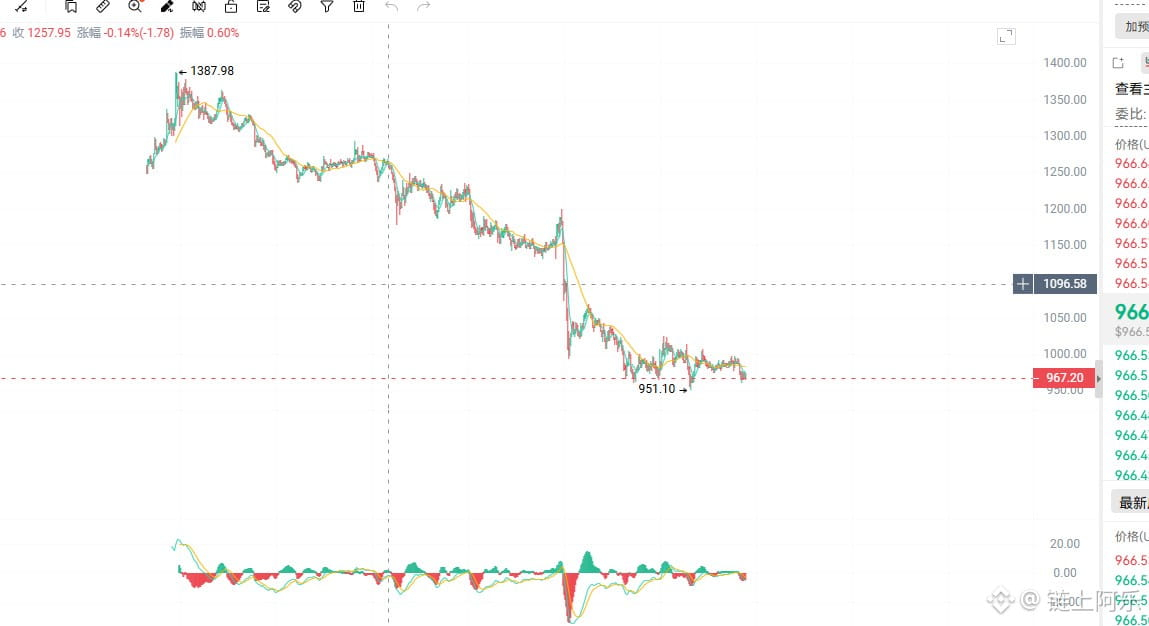
$ZEC The two giants, Aoying and Lord Jiu, have started battling it out on the plaza. Ale, why not share your take on them too!!!
After the NU7 upgrade and the launch of Grayscale ETFs, funds have continued to flow out, and the price has retreated from its highs to around $1,000, with little strength in the rebound.
More importantly, regulatory pressure continues to mount: the EU plans to restrict privacy-coin trading in 2027, and platforms have already begun delisting them, leaving less and less room for compliance.
ETF shares have been shrinking for consecutive periods, suggesting institutional investors don't believe in their long-term value. It's more a case of “sell as soon as the good news lands.”
{future}(ZECUSDT)
$ZEC The two giants, Aoying and Lord Jiu, have started battling it out on the plaza. Ale, why not share your take on them too!!!
After the NU7 upgrade and the launch of Grayscale ETFs, funds have continued to flow out, and the price has retreated from its highs to around $1,000, with little strength in the rebound.
More importantly, regulatory pressure continues to mount: the EU plans to restrict privacy-coin trading in 2027, and platforms have already begun delisting them, leaving less and less room for compliance.
ETF shares have been shrinking for consecutive periods, suggesting institutional investors don't believe in their long-term value. It's more a case of “sell as soon as the good news lands.”
707
·
--
Bullish
$FIL What matters most to watch right now?
First, check whether deflation is real: Early unlocks have largely ended after the upgrade, annual issuance has been cut by about 75%, and service rewards that fail to meet targets will be burned. The key metric is the daily burn amount—high burns and low issuance would indicate genuine deflation, not just talk.
Second, check whether paid orders are growing: Previously, tokens were issued through mining; now, growth depends on customers actually paying to store data. Watch the share of paid storage, whether enterprise partnerships are being implemented, and whether AI storage is seeing real use. Even a sharp supply contraction won’t lift the price if demand doesn’t keep up. This is the most important variable.
Third, check whether key levels are holding: $0.75–0.85 is a core support zone, and a break below it could lead to further declines. When monthly unlocks are limited, the price holding steady—or even closing higher—would show that holders are truly confident. Also, don’t ignore the broader BTC market: when overall liquidity is weak, it’s difficult for FIL to rally on its own.
{future}(FILUSDT)
$FIL What matters most to watch right now?
First, check whether deflation is real: Early unlocks have largely ended after the upgrade, annual issuance has been cut by about 75%, and service rewards that fail to meet targets will be burned. The key metric is the daily burn amount—high burns and low issuance would indicate genuine deflation, not just talk.
Second, check whether paid orders are growing: Previously, tokens were issued through mining; now, growth depends on customers actually paying to store data. Watch the share of paid storage, whether enterprise partnerships are being implemented, and whether AI storage is seeing real use. Even a sharp supply contraction won’t lift the price if demand doesn’t keep up. This is the most important variable.
Third, check whether key levels are holding: $0.75–0.85 is a core support zone, and a break below it could lead to further declines. When monthly unlocks are limited, the price holding steady—or even closing higher—would show that holders are truly confident. Also, don’t ignore the broader BTC market: when overall liquidity is weak, it’s difficult for FIL to rally on its own.
1
828
Log in to explore more content
Join global crypto users on Binance Square
⚡️ Get latest and useful information about crypto.
💬 Trusted by the world’s largest crypto exchange.
👍 Discover real insights from verified creators.
Email / Phone number
Trending Topics
Bitcoin'sReboundFadesBelow$60K
4,838 views
117 Discussing
#Bitcoin'sReboundFadesBelow$60K
$60K Is Not a Floor. Bitcoin Traders, Don't Get Trapped.
$BTC bounced to $64K, then the air came out. $60K is a coin flip, not a floor.
$BTC wicked down to ~$55.3K over the weekend, ripped back toward $64.5K, then sold off again. Now it's chopping around $60K, with a daily close near $60.6K and an intraday low at $59.4K.
That's not a reversal. It's a market catching its breath.
What I'm watching:
Sentiment: Split between fear and dip-buyers. Green candles are short, and nobody is defending them.
Exchange flows: Large $BTC withdrawals from exchanges below $60K point to long-term accumulation or custody. Useful context, but it's slow money. It doesn't stop short-term sellers from hitting every pop.
Resistance: Overhead supply is real. Price keeps stalling near ~$61.5K on the daily, while the $64.5K wick was rejected hard.
Higher targets: Above that, equilibrium sits around $70–72K, with the weekly trend line near ~$79.8K.
Support: $55–59K (weekly demand plus the $55.3K sweep low). A weekly close below this zone makes the structure uglier.
Relief bounce vs. confirmed reversal:
Bounce: Price rises into resistance while volume fades.
Reversal: A strong daily/weekly close above the $64.5K rejection high, expanding volume, and a clean hold on the retest.
We have none of that yet.
Until then, $60K is a magnet, and magnets whipsaw leveraged traders in both directions. Catching the bottom with high leverage here just pays the market to stop you out.
💡 Square Insight: No confirmation, no Futures FOMO. Use limit orders at levels you planned in advance, and split Spot buys (DCA) across the range so one wick doesn't decide your whole position.
❓ Are you accumulating Spot in the $55–60K zone, or waiting for a weekly close above $64.5K first?
NFA / DYOR.
#bitcoin $BTC
TuilaNamKy
·0 Likes
·174 views
NVIDIAReinstatesJensenHuangasCEO
226,342 views
1,614 Discussing
WillMarketsStageAThanksgivingReliefRally?
317,643 views
2,390 Discussing