

Sir Ismail
142 Posts

Sir Ismail
Report
Block User
BP-A6DD7B781409
25 Following
89 Followers
106 Liked
Posts
All
Quotes
PINNED
·
--
Bullish
GM Legends
Good to see $BTC holding well
But the best for me is $DIA today
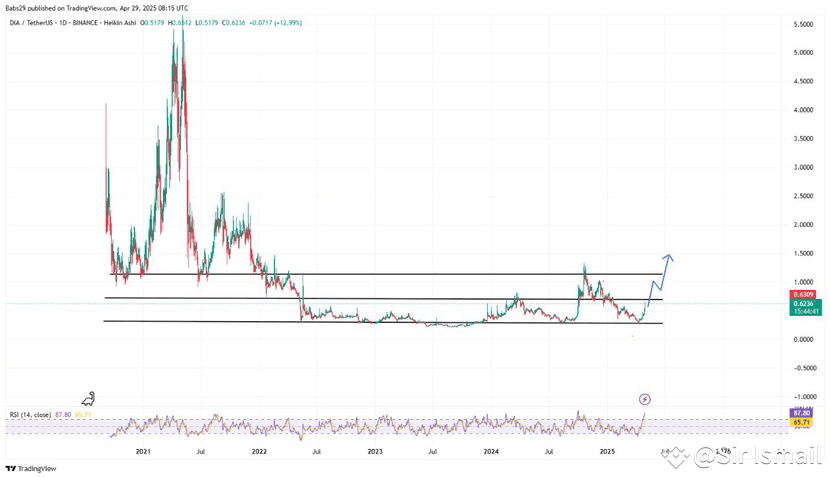
DIA just broke out hard — and this is only the beginning.
✅ RSI exploding
✅ Major resistance flipped
✅ Volume returning
✅ Structure: textbook reversal
RWA narratives are heating up, but DIA isn’t riding the wave — it’s powering it with fully verifiable on-chain data via Lasernet.
This chart is telling you what’s next:
📈 First stop: $1
📈 Then $1.50+ — with potential for full-on price discovery after
“The best time to buy was at support. The second best? When breakout confirms.”
We’re there now.
$DIA is awake.
GM Legends
Good to see $BTC holding well
But the best for me is $DIA today
DIA just broke out hard — and this is only the beginning.
✅ RSI exploding
✅ Major resistance flipped
✅ Volume returning
✅ Structure: textbook reversal
RWA narratives are heating up, but DIA isn’t riding the wave — it’s powering it with fully verifiable on-chain data via Lasernet.
This chart is telling you what’s next:
📈 First stop: $1
📈 Then $1.50+ — with potential for full-on price discovery after
“The best time to buy was at support. The second best? When breakout confirms.”
We’re there now.
$DIA is awake.
Good to see $BTC holding well
But the best for me is $DIA today
DIA just broke out hard — and this is only the beginning.
✅ RSI exploding
✅ Major resistance flipped
✅ Volume returning
✅ Structure: textbook reversal
RWA narratives are heating up, but DIA isn’t riding the wave — it’s powering it with fully verifiable on-chain data via Lasernet.
This chart is telling you what’s next:
📈 First stop: $1
📈 Then $1.50+ — with potential for full-on price discovery after
“The best time to buy was at support. The second best? When breakout confirms.”
We’re there now.
$DIA is awake.
1
2
282
PINNED
·
--
Good Morning Fams
Markets still in correction
Don’t Panick and Sell
Be Patient
$SRM $BTC $ETH $AGATA
Good Morning Fams
Markets still in correction
Don’t Panick and Sell
Be Patient
$SRM $BTC $ETH $AGATA
Markets still in correction
Don’t Panick and Sell
Be Patient
$SRM $BTC $ETH $AGATA
4
2.9k
·
--
Bullish
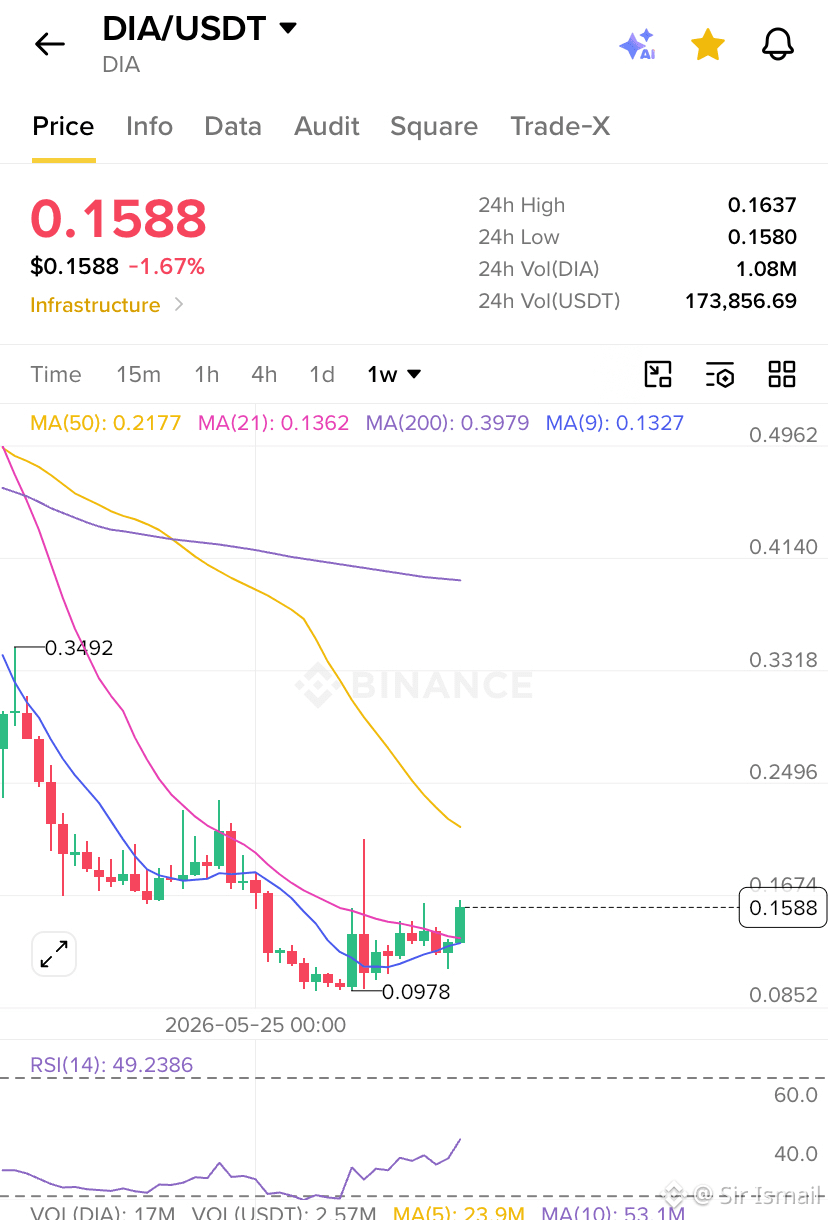
$DIA Weekly Update
Price is around $0.161, after a +22% week.
The week opened near $0.130–0.133, held the $0.114 base from last week, then ran through $0.141 / $0.148 and tagged $0.163–0.164. That’s a full reclaim of the early-September range. Weekly structure flipped from “sell the rip” to higher-low off $0.114.
Key Levels
• Resistance: $0.164, then $0.170–0.175
• Support: $0.154–0.148, then $0.141 / $0.130
Bull Case
Hold $0.154–0.148 and close the week above $0.160. Break $0.164 and $0.170–0.175 is the next magnet.
Bear Case
Lose $0.148. That puts $0.141 back in play, then a deeper retrace toward $0.130.
Best weekly close in a while. Trend is up until $0.148 breaks. $0.164 is the continuation level.
$DIA Weekly Update
Price is around $0.161, after a +22% week.
The week opened near $0.130–0.133, held the $0.114 base from last week, then ran through $0.141 / $0.148 and tagged $0.163–0.164. That’s a full reclaim of the early-September range. Weekly structure flipped from “sell the rip” to higher-low off $0.114.
Key Levels
• Resistance: $0.164, then $0.170–0.175
• Support: $0.154–0.148, then $0.141 / $0.130
Bull Case
Hold $0.154–0.148 and close the week above $0.160. Break $0.164 and $0.170–0.175 is the next magnet.
Bear Case
Lose $0.148. That puts $0.141 back in play, then a deeper retrace toward $0.130.
Best weekly close in a while. Trend is up until $0.148 breaks. $0.164 is the continuation level.
Price is around $0.161, after a +22% week.
The week opened near $0.130–0.133, held the $0.114 base from last week, then ran through $0.141 / $0.148 and tagged $0.163–0.164. That’s a full reclaim of the early-September range. Weekly structure flipped from “sell the rip” to higher-low off $0.114.
Key Levels
• Resistance: $0.164, then $0.170–0.175
• Support: $0.154–0.148, then $0.141 / $0.130
Bull Case
Hold $0.154–0.148 and close the week above $0.160. Break $0.164 and $0.170–0.175 is the next magnet.
Bear Case
Lose $0.148. That puts $0.141 back in play, then a deeper retrace toward $0.130.
Best weekly close in a while. Trend is up until $0.148 breaks. $0.164 is the continuation level.
136
·
--
💰 HOW TO CLAIM FREE $20 FROM BINANCE
It’s pretty simple 👇
→ Open Binance and scroll down to Discover
→ Tap the + button in the bottom-right
→ Open your profile
→ Tap Share and drop your referral link in the comments
→ You need 6 followers to complete this part
→ Once done, head to bpays.fun/claim
→ Switch the language to English
→ Complete the remaining tasks
→ Add your wallet & claim your $20 💰
My Binance link:
[https://app.binance.com/uni-qr/cpro/Ismiles29?l=en&r=NYOTEQ84&uc=app_square_share_link&us=copylink](https://app.binance.com/uni-qr/cpro/Ismiles29?l=en&r=NYOTEQ84&uc=app_square_share_link&us=copylink)
Drop your link in the comments 👇
⚠️ Only use official Binance pages/apps and verify any wallet transaction before signing.
💰 HOW TO CLAIM FREE $20 FROM BINANCE
It’s pretty simple 👇
→ Open Binance and scroll down to Discover
→ Tap the + button in the bottom-right
→ Open your profile
→ Tap Share and drop your referral link in the comments
→ You need 6 followers to complete this part
→ Once done, head to bpays.fun/claim
→ Switch the language to English
→ Complete the remaining tasks
→ Add your wallet & claim your $20 💰
My Binance link:
https://app.binance.com/uni-qr/cpro/Ismiles29?l=en&r=NYOTEQ84&uc=app_square_share_link&us=copylink
Drop your link in the comments 👇
⚠️ Only use official Binance pages/apps and verify any wallet transaction before signing.
It’s pretty simple 👇
→ Open Binance and scroll down to Discover
→ Tap the + button in the bottom-right
→ Open your profile
→ Tap Share and drop your referral link in the comments
→ You need 6 followers to complete this part
→ Once done, head to bpays.fun/claim
→ Switch the language to English
→ Complete the remaining tasks
→ Add your wallet & claim your $20 💰
My Binance link:
https://app.binance.com/uni-qr/cpro/Ismiles29?l=en&r=NYOTEQ84&uc=app_square_share_link&us=copylink
Drop your link in the comments 👇
⚠️ Only use official Binance pages/apps and verify any wallet transaction before signing.
·
--
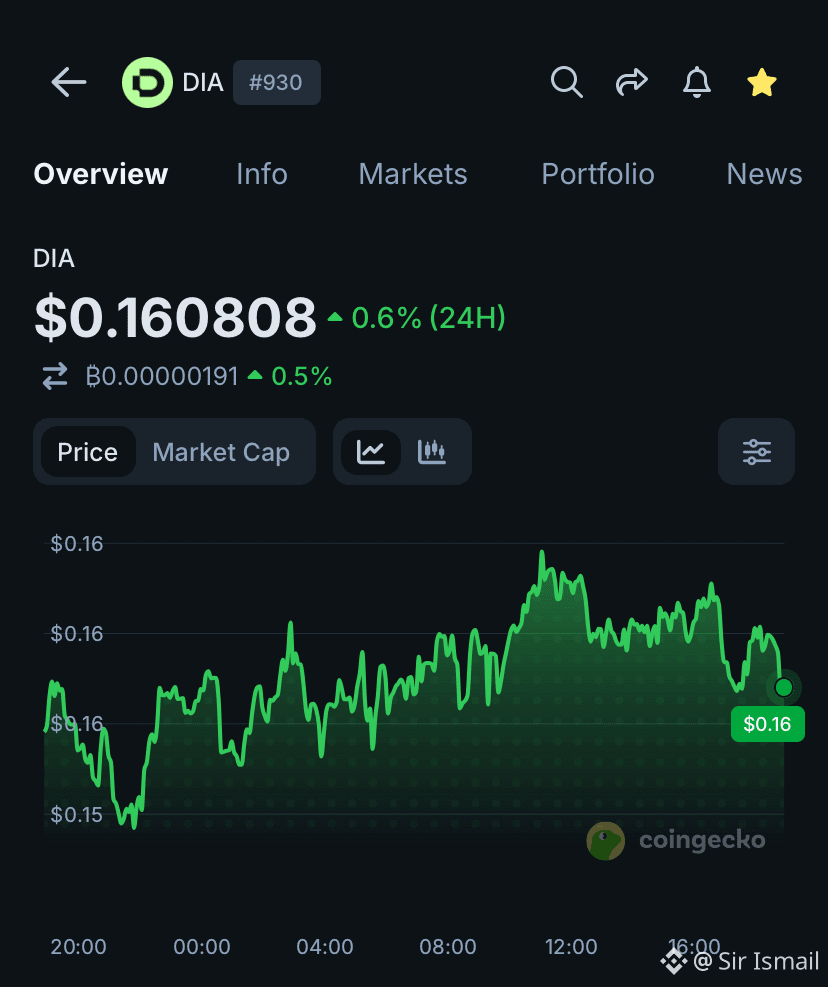
$DIA 4H Update
The $0.114 base printed. Now it’s ~$0.160–0.162.
That’s a clean run: $0.114 → $0.1625, pullback held, then bid back through the old high. 7D is about +23%. Structure is higher highs / higher lows. Prior resistance at $0.148–0.154 is now support.
Bull path from here: hold $0.154–0.157 and break $0.164. Next magnet is $0.170–0.175.
Invalidation for this 4H bid: lose $0.148, then $0.141.
$DIA 4H Update
The $0.114 base printed. Now it’s ~$0.160–0.162.
That’s a clean run: $0.114 → $0.1625, pullback held, then bid back through the old high. 7D is about +23%. Structure is higher highs / higher lows. Prior resistance at $0.148–0.154 is now support.
Bull path from here: hold $0.154–0.157 and break $0.164. Next magnet is $0.170–0.175.
Invalidation for this 4H bid: lose $0.148, then $0.141.
The $0.114 base printed. Now it’s ~$0.160–0.162.
That’s a clean run: $0.114 → $0.1625, pullback held, then bid back through the old high. 7D is about +23%. Structure is higher highs / higher lows. Prior resistance at $0.148–0.154 is now support.
Bull path from here: hold $0.154–0.157 and break $0.164. Next magnet is $0.170–0.175.
Invalidation for this 4H bid: lose $0.148, then $0.141.
53
·
--
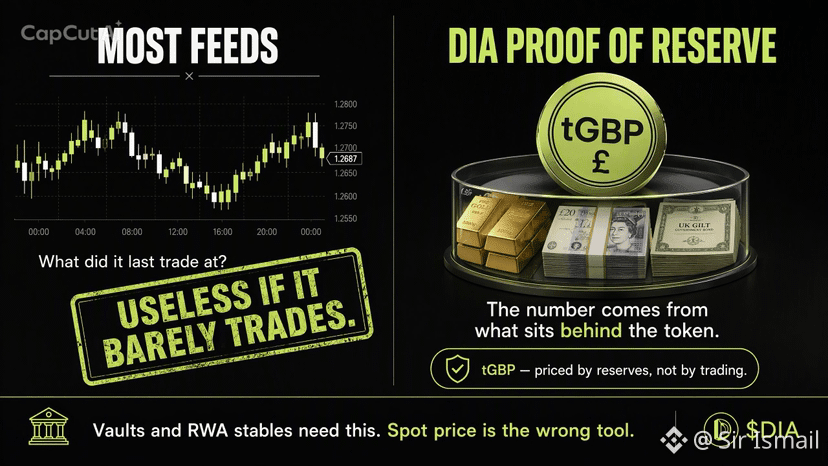
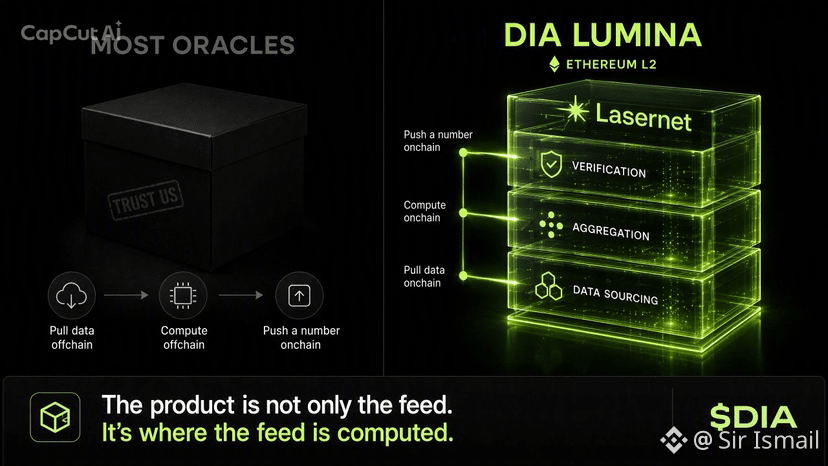
Most feeds answer “what did it last trade at?”
That’s useless if the asset barely trades.
@DIAdata_org also prices by backing.
Proof of Reserve: the number comes from what sits behind the token, not a thin DEX print.
They already did this for tGBP — priced by reserves, not by trading.
Vaults and RWA stables need that. Spot price is the wrong tool.
$DIA
Most feeds answer “what did it last trade at?”
That’s useless if the asset barely trades.
@DIAdata_org also prices by backing.
Proof of Reserve: the number comes from what sits behind the token, not a thin DEX print.
They already did this for tGBP — priced by reserves, not by trading.
Vaults and RWA stables need that. Spot price is the wrong tool.
$DIA
That’s useless if the asset barely trades.
@DIAdata_org also prices by backing.
Proof of Reserve: the number comes from what sits behind the token, not a thin DEX print.
They already did this for tGBP — priced by reserves, not by trading.
Vaults and RWA stables need that. Spot price is the wrong tool.
$DIA
72
·
--
Bullish
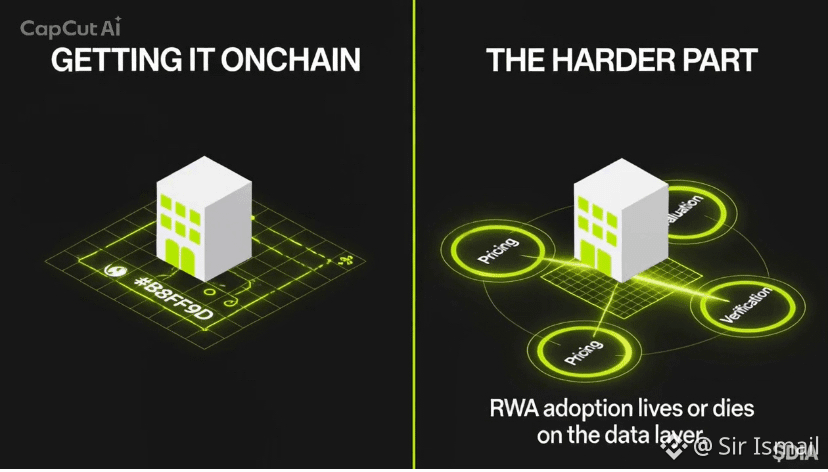
The RWA opportunity is becoming a data opportunity.
Tokenizing an asset is only the first step.
Once it’s onchain, you still need:
→ Reliable pricing
→ Valuation data
→ Collateral data
→ Verification
That’s where $DIA gets interesting.
Real World Assets tokenization needs reliable data infrastructure.
More RWAs onchain → more data requirements → bigger opportunity for the oracle layer.
The RWA opportunity is becoming a data opportunity.
Tokenizing an asset is only the first step.
Once it’s onchain, you still need:
→ Reliable pricing
→ Valuation data
→ Collateral data
→ Verification
That’s where $DIA gets interesting.
Real World Assets tokenization needs reliable data infrastructure.
More RWAs onchain → more data requirements → bigger opportunity for the oracle layer.
Tokenizing an asset is only the first step.
Once it’s onchain, you still need:
→ Reliable pricing
→ Valuation data
→ Collateral data
→ Verification
That’s where $DIA gets interesting.
Real World Assets tokenization needs reliable data infrastructure.
More RWAs onchain → more data requirements → bigger opportunity for the oracle layer.
59
·
--
Bullish
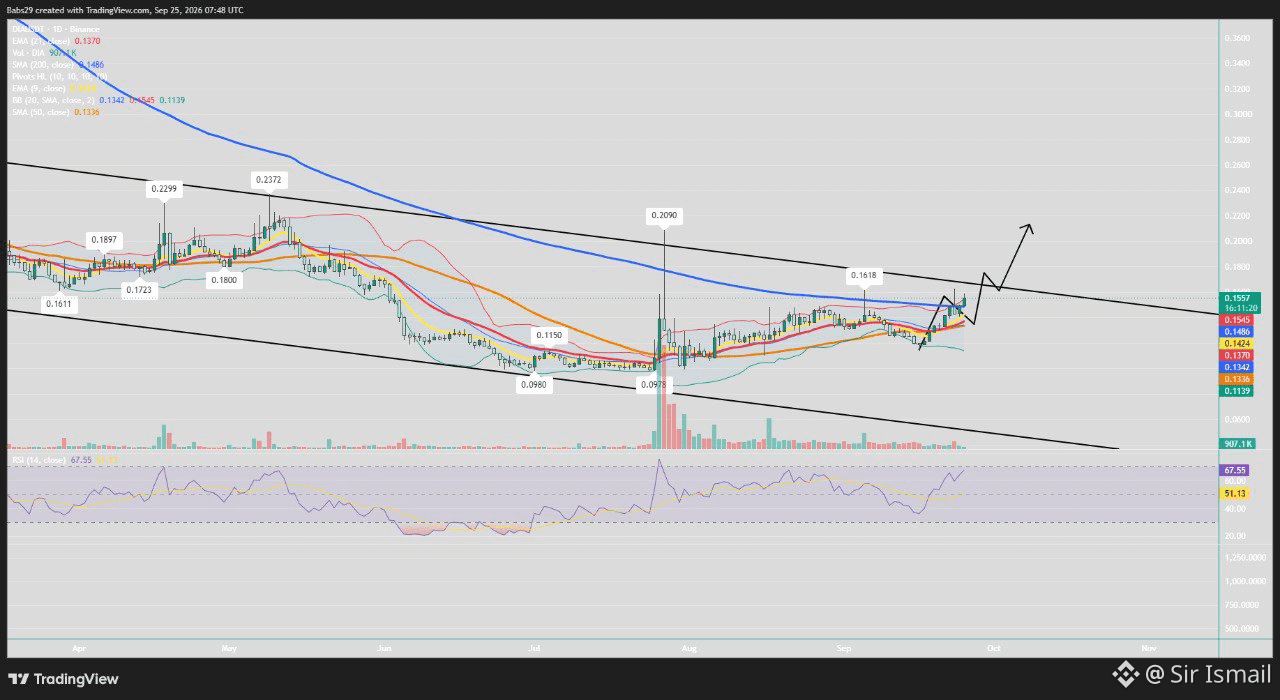
DIA/USDT Daily TA
$DIA is pushing into the $0.156–$0.160 resistance zone.
A clean breakout could open $0.18 → $0.20+.
What makes the setup interesting? DIA isn’t just a chart. Its verifiable oracle infrastructure is built specifically for DeFi and Real World Assets, with feeds for equities, commodities, FX and tokenized assets.
TA + growing RWA utility = interesting setup. 👀
$0.149 remains key support
DIA/USDT Daily TA
$DIA is pushing into the $0.156–$0.160 resistance zone.
A clean breakout could open $0.18 → $0.20+.
What makes the setup interesting? DIA isn’t just a chart. Its verifiable oracle infrastructure is built specifically for DeFi and Real World Assets, with feeds for equities, commodities, FX and tokenized assets.
TA + growing RWA utility = interesting setup. 👀
$0.149 remains key support
$DIA is pushing into the $0.156–$0.160 resistance zone.
A clean breakout could open $0.18 → $0.20+.
What makes the setup interesting? DIA isn’t just a chart. Its verifiable oracle infrastructure is built specifically for DeFi and Real World Assets, with feeds for equities, commodities, FX and tokenized assets.
TA + growing RWA utility = interesting setup. 👀
$0.149 remains key support
83
·
--
Bullish
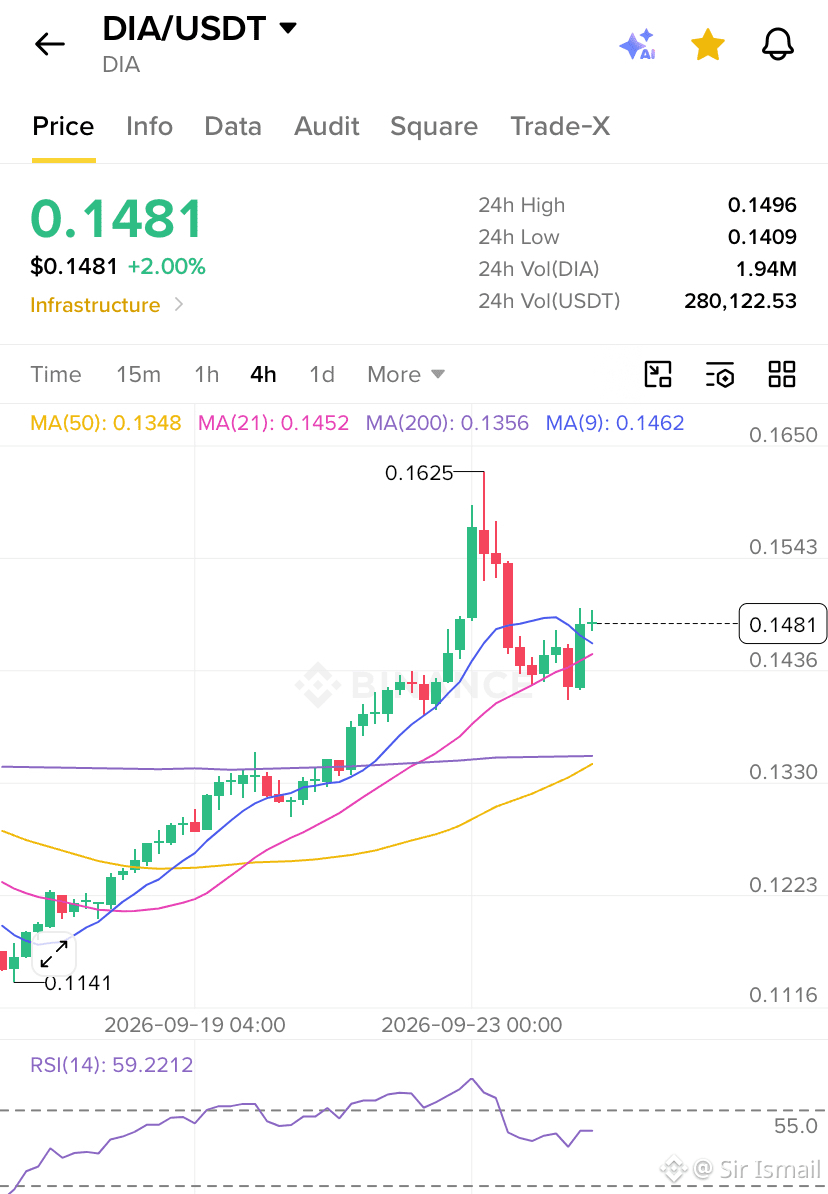
Bullish Af on $DIA right now
$DIA is holding $0.148 after bouncing from the $0.143 area.
• Support: $0.143 → $0.135
• Resistance: $0.154 → $0.1625
• RSI: ~59, bullish momentum returning
A clean break above $0.1625 could open the door toward $0.18+.
Structure still favors the bulls.
Bullish Af on $DIA right now
$DIA is holding $0.148 after bouncing from the $0.143 area.
• Support: $0.143 → $0.135
• Resistance: $0.154 → $0.1625
• RSI: ~59, bullish momentum returning
A clean break above $0.1625 could open the door toward $0.18+.
Structure still favors the bulls.
$DIA is holding $0.148 after bouncing from the $0.143 area.
• Support: $0.143 → $0.135
• Resistance: $0.154 → $0.1625
• RSI: ~59, bullish momentum returning
A clean break above $0.1625 could open the door toward $0.18+.
Structure still favors the bulls.
284
·
--
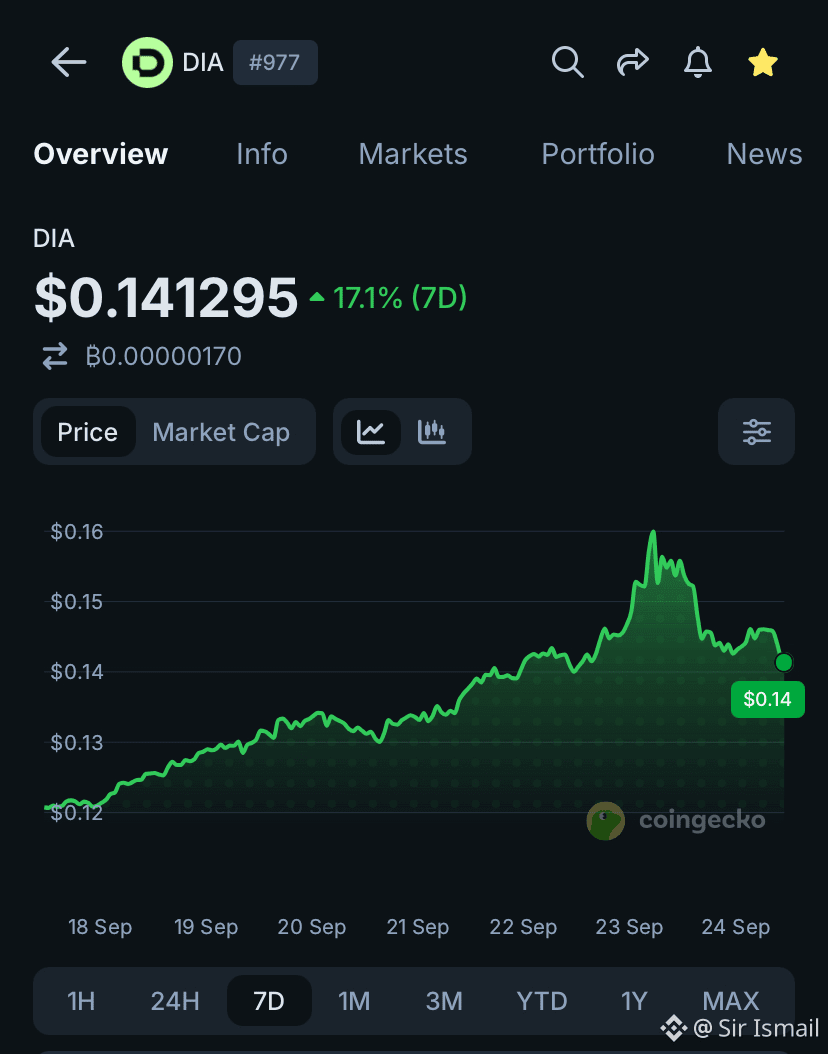
$DIA is quietly in the right spot.
Oracles live on @Arc after it printed $340M TVL in a week.
NAV going onchain with pennyworks_.
Feeds sitting under vaults, RWAs and lending — not just BTC/USD.
The trade isn’t “oracle season.”
It’s more assets onchain that need a number you can verify.
That’s DIA.
$DIA is quietly in the right spot.
Oracles live on @Arc after it printed $340M TVL in a week.
NAV going onchain with pennyworks_.
Feeds sitting under vaults, RWAs and lending — not just BTC/USD.
The trade isn’t “oracle season.”
It’s more assets onchain that need a number you can verify.
That’s DIA.
Oracles live on @Arc after it printed $340M TVL in a week.
NAV going onchain with pennyworks_.
Feeds sitting under vaults, RWAs and lending — not just BTC/USD.
The trade isn’t “oracle season.”
It’s more assets onchain that need a number you can verify.
That’s DIA.
83
·
--
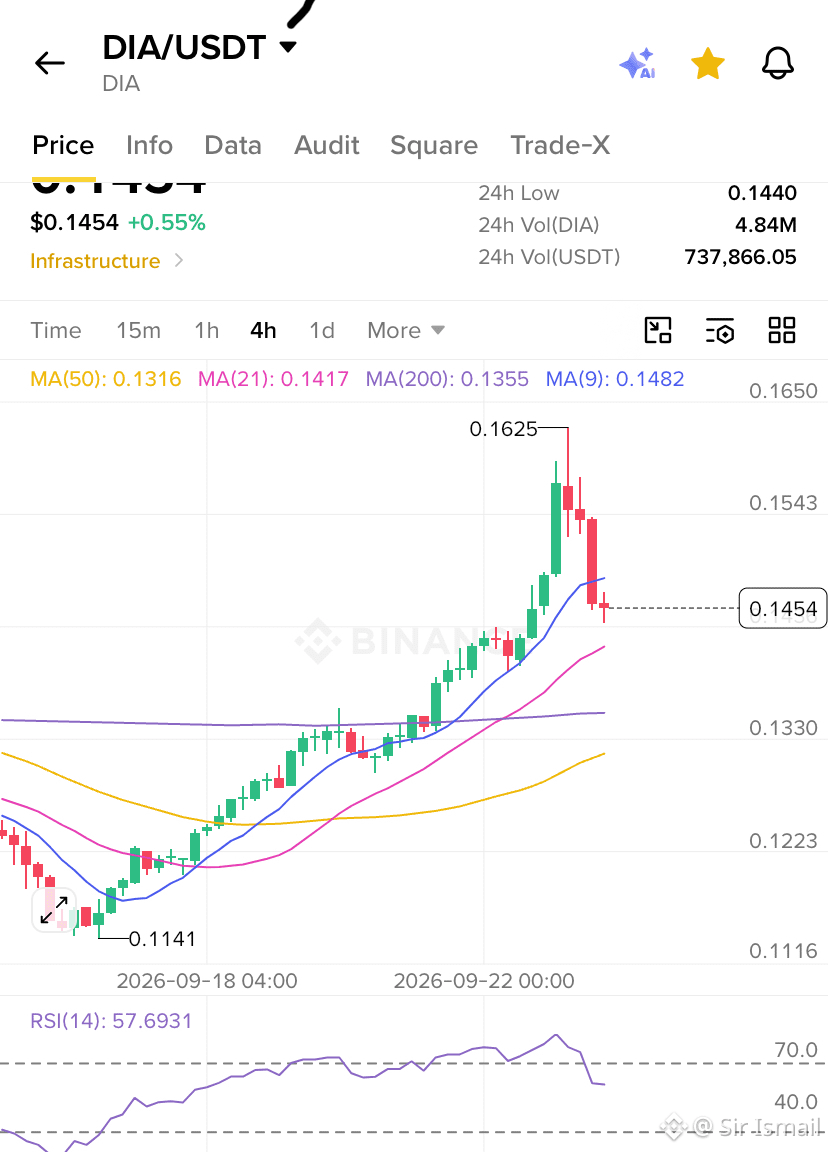
$DIA 4h update
DIA just ran from $0.1141 → $0.1625 and is now cooling off.
Price: $0.1454
MA21: $0.1417
MA50: $0.1316
MA200: $0.1355
RSI: 58
The key point: the trend is still up.
This looks like healthy digestion after a strong impulse, not a confirmed reversal.
Support: $0.1440–$0.1417 → $0.1355
Resistance: $0.1482 → $0.154 → $0.1625
Hold $0.1417–$0.144 + reclaim $0.148–$0.154 → $0.1625 retest comes back into play.
Lose $0.1417 → $0.1355, then potentially $0.132.
$0.1417 is the line. Hold it, and the higher-low structure remains intact. 👀
$DIA 4h update
DIA just ran from $0.1141 → $0.1625 and is now cooling off.
Price: $0.1454
MA21: $0.1417
MA50: $0.1316
MA200: $0.1355
RSI: 58
The key point: the trend is still up.
This looks like healthy digestion after a strong impulse, not a confirmed reversal.
Support: $0.1440–$0.1417 → $0.1355
Resistance: $0.1482 → $0.154 → $0.1625
Hold $0.1417–$0.144 + reclaim $0.148–$0.154 → $0.1625 retest comes back into play.
Lose $0.1417 → $0.1355, then potentially $0.132.
$0.1417 is the line. Hold it, and the higher-low structure remains intact. 👀
DIA just ran from $0.1141 → $0.1625 and is now cooling off.
Price: $0.1454
MA21: $0.1417
MA50: $0.1316
MA200: $0.1355
RSI: 58
The key point: the trend is still up.
This looks like healthy digestion after a strong impulse, not a confirmed reversal.
Support: $0.1440–$0.1417 → $0.1355
Resistance: $0.1482 → $0.154 → $0.1625
Hold $0.1417–$0.144 + reclaim $0.148–$0.154 → $0.1625 retest comes back into play.
Lose $0.1417 → $0.1355, then potentially $0.132.
$0.1417 is the line. Hold it, and the higher-low structure remains intact. 👀
97
·
--
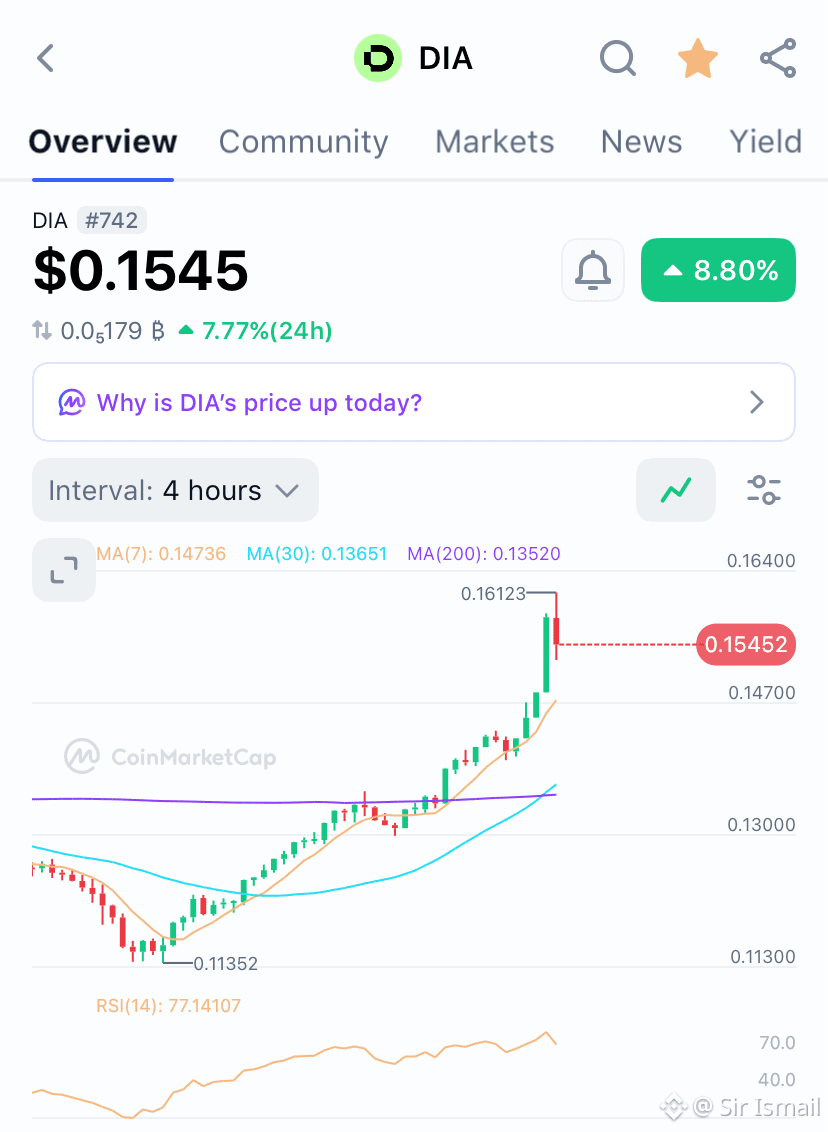
Bullish
I’m still bullish on $DIA and i think in the coming days we move up again
Why I’m watching $DIA 👀
DIA is building more than basic price feeds.
Its model combines oracle infrastructure, RWA data, Fundamental Feeds and verifiable data across 20K+ assets and 65+ blockchains.
More onchain assets → more demand for reliable data.
That’s the business model I’m watching.
| RWA | DeFi | Oracle Infrastructure
I’m still bullish on $DIA and i think in the coming days we move up again
Why I’m watching $DIA 👀
DIA is building more than basic price feeds.
Its model combines oracle infrastructure, RWA data, Fundamental Feeds and verifiable data across 20K+ assets and 65+ blockchains.
More onchain assets → more demand for reliable data.
That’s the business model I’m watching.
| RWA | DeFi | Oracle Infrastructure
Why I’m watching $DIA 👀
DIA is building more than basic price feeds.
Its model combines oracle infrastructure, RWA data, Fundamental Feeds and verifiable data across 20K+ assets and 65+ blockchains.
More onchain assets → more demand for reliable data.
That’s the business model I’m watching.
| RWA | DeFi | Oracle Infrastructure
69
·
--
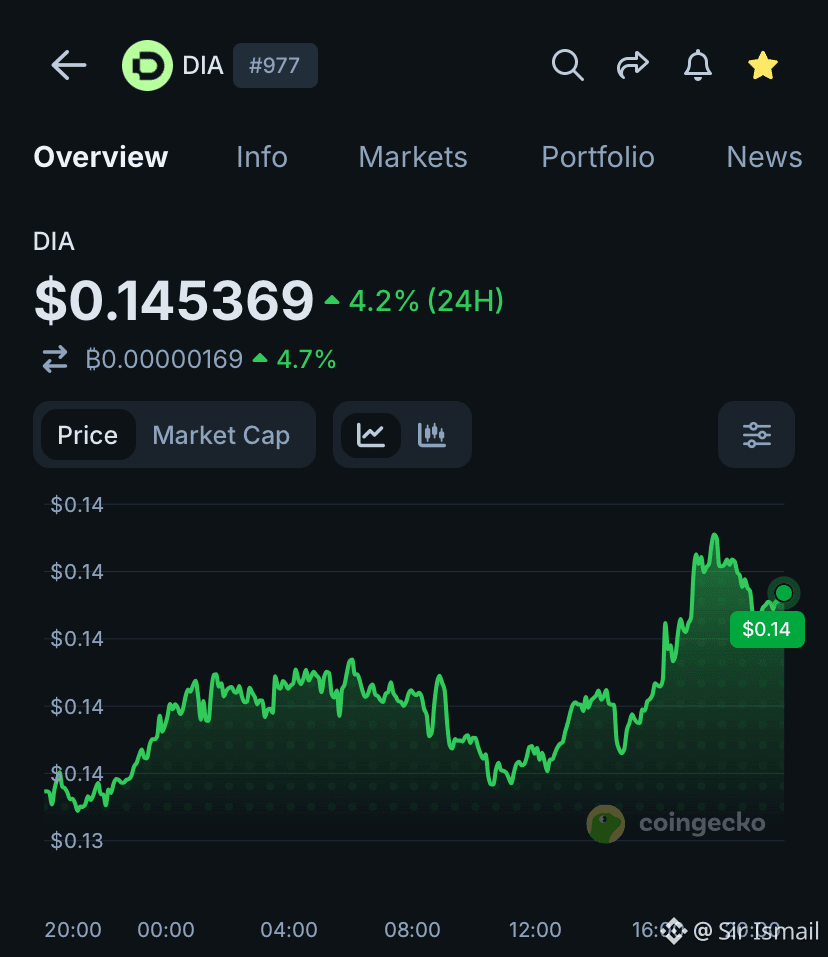
$DIA looks interesting here. 👀
Price is one part of the story.
The bigger thesis is the infrastructure:
RWA data + Fundamental Feeds + verifiable oracles + Lasernet.
If adoption keeps expanding, I think the market can start valuing DIA very differently.
Still watching. Still bullish. 📈 $DIA
$DIA looks interesting here. 👀
Price is one part of the story.
The bigger thesis is the infrastructure:
RWA data + Fundamental Feeds + verifiable oracles + Lasernet.
If adoption keeps expanding, I think the market can start valuing DIA very differently.
Still watching. Still bullish. 📈 $DIA
Price is one part of the story.
The bigger thesis is the infrastructure:
RWA data + Fundamental Feeds + verifiable oracles + Lasernet.
If adoption keeps expanding, I think the market can start valuing DIA very differently.
Still watching. Still bullish. 📈 $DIA
47
·
--
Article
Why DIA’s Business Model Could Be More Interesting Than Its NarrativeWhy I Think DIA Has an Interesting Business Model
In crypto, it’s easy to get excited about a token because of its narrative.
But I think a more important question is:
How does the underlying network create economic value?
That’s one reason I’ve been paying closer attention to DIA.
DIA isn’t simply building another price-feed product. It’s building oracle infrastructure designed to provide verifiable data to onchain applications across DeFi, RWAs and other financial markets. Its current platform supports 20,000+ assets, 65+ blockchains, 100+ data sources and 250+ dApps.
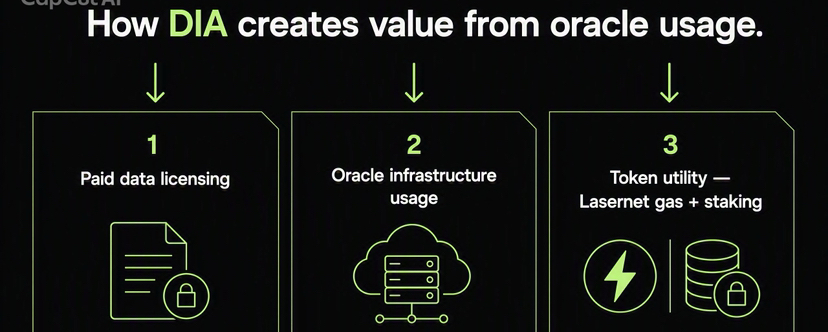
The first part: selling data
DIA has a data-licensing model where customers pay license fees for access to DIA data.
That creates a straightforward commercial relationship:
Customer needs financial data → DIA provides the data → customer pays for usage.
The interesting part is that the potential customer base isn’t limited to crypto.
DIA’s infrastructure covers digital assets as well as stocks, commodities, FX and other RWA-related data.
Then comes the network layer
DIA’s Lasernet is an Ethereum L2 rollup powering its oracle infrastructure.
And $DIA is the native gas token.
Oracle computations, data submissions and transactions on the verification layer consume $DIA as gas.
That creates a direct relationship between network activity and token utility.
More oracle activity means more transactions taking place on the infrastructure.
Then there’s staking
$DIA is also used to secure the oracle network.
Stakers and Feeders lock DIA to participate in the security layer, while Feeders submit data onchain and are rewarded based on performance.
So the token has multiple roles:
Gas → Security → Staking → Governance
That’s more interesting to me than a token whose only purpose is speculation.
And then we get to the RWA opportunity
This is where I think the model could become particularly interesting.
As more financial assets move onchain, applications need increasingly specialized data.
Tokenized stocks need market prices.
Tokenized funds can need NAV data.
Lending protocols need collateral prices.
Stablecoins can need reserve information.
RWA protocols need valuation data.
DIA is building infrastructure across these different data requirements, including RWA price feeds and fundamental asset data.
The potential flywheel
This is the model I’m watching:
More onchain applications
More demand for reliable financial data
↓
More DIA oracle usage
↓
More network activity
↓
More $DIA utility through Lasernet + staking
↓
Potentially more ecosystem growth
Of course, this is an economic model, not a guarantee of future token performance. The important variables are actual customer adoption, oracle usage, fees and continued ecosystem growth.
But that’s exactly why I find DIA interesting.
It’s not just:
“Oracle narrative → token.”
It’s closer to:
Data infrastructure → customers → network usage → token utility → ecosystem growth.
If DeFi, RWAs and tokenized financial markets continue expanding, the demand for reliable data infrastructure could expand with them.
That’s the DIA business model I’m watching
And honestly, that’s what makes $DIA more interesting to me than simply looking at its chart. 👀
Why DIA’s Business Model Could Be More Interesting Than Its Narrative
Why I Think DIA Has an Interesting Business Model
In crypto, it’s easy to get excited about a token because of its narrative.
But I think a more important question is:
How does the underlying network create economic value?
That’s one reason I’ve been paying closer attention to DIA.
DIA isn’t simply building another price-feed product. It’s building oracle infrastructure designed to provide verifiable data to onchain applications across DeFi, RWAs and other financial markets. Its current platform supports 20,000+ assets, 65+ blockchains, 100+ data sources and 250+ dApps.
The first part: selling data
DIA has a data-licensing model where customers pay license fees for access to DIA data.
That creates a straightforward commercial relationship:
Customer needs financial data → DIA provides the data → customer pays for usage.
The interesting part is that the potential customer base isn’t limited to crypto.
DIA’s infrastructure covers digital assets as well as stocks, commodities, FX and other RWA-related data.
Then comes the network layer
DIA’s Lasernet is an Ethereum L2 rollup powering its oracle infrastructure.
And $DIA is the native gas token.
Oracle computations, data submissions and transactions on the verification layer consume $DIA as gas.
That creates a direct relationship between network activity and token utility.
More oracle activity means more transactions taking place on the infrastructure.
Then there’s staking
$DIA is also used to secure the oracle network.
Stakers and Feeders lock DIA to participate in the security layer, while Feeders submit data onchain and are rewarded based on performance.
So the token has multiple roles:
Gas → Security → Staking → Governance
That’s more interesting to me than a token whose only purpose is speculation.
And then we get to the RWA opportunity
This is where I think the model could become particularly interesting.
As more financial assets move onchain, applications need increasingly specialized data.
Tokenized stocks need market prices.
Tokenized funds can need NAV data.
Lending protocols need collateral prices.
Stablecoins can need reserve information.
RWA protocols need valuation data.
DIA is building infrastructure across these different data requirements, including RWA price feeds and fundamental asset data.
The potential flywheel
This is the model I’m watching:
More onchain applications
More demand for reliable financial data
↓
More DIA oracle usage
↓
More network activity
↓
More $DIA utility through Lasernet + staking
↓
Potentially more ecosystem growth
Of course, this is an economic model, not a guarantee of future token performance. The important variables are actual customer adoption, oracle usage, fees and continued ecosystem growth.
But that’s exactly why I find DIA interesting.
It’s not just:
“Oracle narrative → token.”
It’s closer to:
Data infrastructure → customers → network usage → token utility → ecosystem growth.
If DeFi, RWAs and tokenized financial markets continue expanding, the demand for reliable data infrastructure could expand with them.
That’s the DIA business model I’m watching
And honestly, that’s what makes $DIA more interesting to me than simply looking at its chart. 👀
In crypto, it’s easy to get excited about a token because of its narrative.
But I think a more important question is:
How does the underlying network create economic value?
That’s one reason I’ve been paying closer attention to DIA.
DIA isn’t simply building another price-feed product. It’s building oracle infrastructure designed to provide verifiable data to onchain applications across DeFi, RWAs and other financial markets. Its current platform supports 20,000+ assets, 65+ blockchains, 100+ data sources and 250+ dApps.
The first part: selling data
DIA has a data-licensing model where customers pay license fees for access to DIA data.
That creates a straightforward commercial relationship:
Customer needs financial data → DIA provides the data → customer pays for usage.
The interesting part is that the potential customer base isn’t limited to crypto.
DIA’s infrastructure covers digital assets as well as stocks, commodities, FX and other RWA-related data.
Then comes the network layer
DIA’s Lasernet is an Ethereum L2 rollup powering its oracle infrastructure.
And $DIA is the native gas token.
Oracle computations, data submissions and transactions on the verification layer consume $DIA as gas.
That creates a direct relationship between network activity and token utility.
More oracle activity means more transactions taking place on the infrastructure.
Then there’s staking
$DIA is also used to secure the oracle network.
Stakers and Feeders lock DIA to participate in the security layer, while Feeders submit data onchain and are rewarded based on performance.
So the token has multiple roles:
Gas → Security → Staking → Governance
That’s more interesting to me than a token whose only purpose is speculation.
And then we get to the RWA opportunity
This is where I think the model could become particularly interesting.
As more financial assets move onchain, applications need increasingly specialized data.
Tokenized stocks need market prices.
Tokenized funds can need NAV data.
Lending protocols need collateral prices.
Stablecoins can need reserve information.
RWA protocols need valuation data.
DIA is building infrastructure across these different data requirements, including RWA price feeds and fundamental asset data.
The potential flywheel
This is the model I’m watching:
More onchain applications
More demand for reliable financial data
↓
More DIA oracle usage
↓
More network activity
↓
More $DIA utility through Lasernet + staking
↓
Potentially more ecosystem growth
Of course, this is an economic model, not a guarantee of future token performance. The important variables are actual customer adoption, oracle usage, fees and continued ecosystem growth.
But that’s exactly why I find DIA interesting.
It’s not just:
“Oracle narrative → token.”
It’s closer to:
Data infrastructure → customers → network usage → token utility → ecosystem growth.
If DeFi, RWAs and tokenized financial markets continue expanding, the demand for reliable data infrastructure could expand with them.
That’s the DIA business model I’m watching
And honestly, that’s what makes $DIA more interesting to me than simply looking at its chart. 👀
131
·
--
Bullish
Bullish on $DIA all week
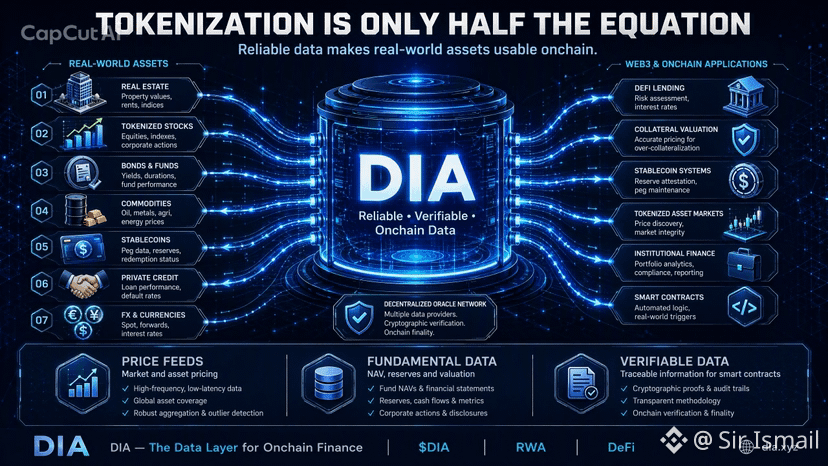
RWA tokenization is only the beginning.
Putting a real-world asset onchain doesn’t automatically tell a smart contract what it’s worth.
You still need reliable data for:
→ Pricing
→ Valuation
→ Collateral
→ Reserves
→ Risk
That’s why the oracle layer matters.
DIA provides RWA price feeds and fundamental data for assets including stocks, commodities and other real-world assets, with transparent, verifiable data flows.
Tokenization puts RWAs onchain.
Reliable data makes them usable.
That’s the part of the RWA thesis I’m watching.
Bullish on $DIA all week
RWA tokenization is only the beginning.
Putting a real-world asset onchain doesn’t automatically tell a smart contract what it’s worth.
You still need reliable data for:
→ Pricing
→ Valuation
→ Collateral
→ Reserves
→ Risk
That’s why the oracle layer matters.
DIA provides RWA price feeds and fundamental data for assets including stocks, commodities and other real-world assets, with transparent, verifiable data flows.
Tokenization puts RWAs onchain.
Reliable data makes them usable.
That’s the part of the RWA thesis I’m watching.
RWA tokenization is only the beginning.
Putting a real-world asset onchain doesn’t automatically tell a smart contract what it’s worth.
You still need reliable data for:
→ Pricing
→ Valuation
→ Collateral
→ Reserves
→ Risk
That’s why the oracle layer matters.
DIA provides RWA price feeds and fundamental data for assets including stocks, commodities and other real-world assets, with transparent, verifiable data flows.
Tokenization puts RWAs onchain.
Reliable data makes them usable.
That’s the part of the RWA thesis I’m watching.
56
·
--
Bullish
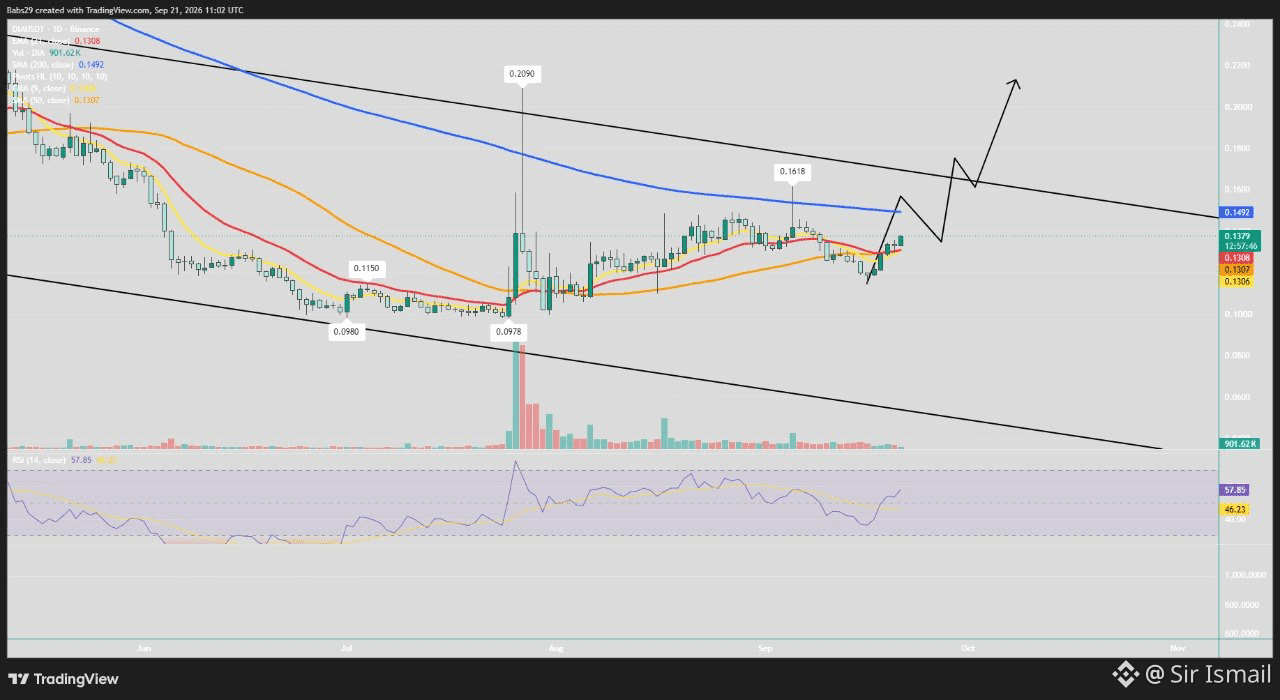
$DIA Daily TA
$DIA is showing a bullish recovery from the $0.098 area.
* Current: ~$0.138
* Support: $0.130–$0.131
* Resistance: $0.149 → $0.162
* RSI: ~58, momentum improving
🟢 Holding above $0.130 keeps the bullish setup alive. A breakout above $0.149 could open the way toward $0.162 → $0.18+.
🔴 Losing $0.130 would weaken the setup and could bring another pullback.
Bulls are gaining momentum.
$DIA Daily TA
$DIA is showing a bullish recovery from the $0.098 area.
* Current: ~$0.138
* Support: $0.130–$0.131
* Resistance: $0.149 → $0.162
* RSI: ~58, momentum improving
🟢 Holding above $0.130 keeps the bullish setup alive. A breakout above $0.149 could open the way toward $0.162 → $0.18+.
🔴 Losing $0.130 would weaken the setup and could bring another pullback.
Bulls are gaining momentum.
$DIA is showing a bullish recovery from the $0.098 area.
* Current: ~$0.138
* Support: $0.130–$0.131
* Resistance: $0.149 → $0.162
* RSI: ~58, momentum improving
🟢 Holding above $0.130 keeps the bullish setup alive. A breakout above $0.149 could open the way toward $0.162 → $0.18+.
🔴 Losing $0.130 would weaken the setup and could bring another pullback.
Bulls are gaining momentum.
2.4k
·
--
Bullish
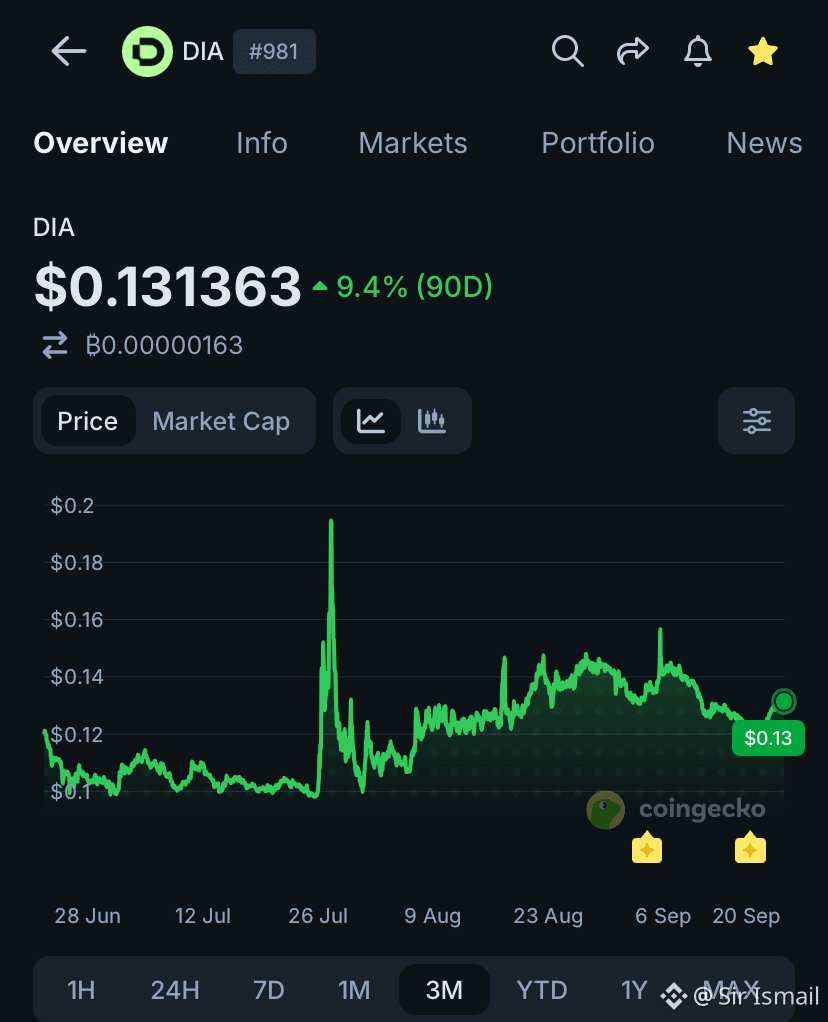
$DIA is starting to wake up again
Sitting around $0.13 and already pushing higher today.
What makes this interesting to me isn’t just the chart.
DIA is building infrastructure around:
→ RWA data
→ Fundamental valuation
→ Verifiable feeds
→ DeFi
→ Tokenized assets
If momentum continues and DIA can reclaim the $0.14–$0.15 area, I’ll be watching closely for the next expansion.
The chart is moving. The infrastructure is growing.
$DIA is starting to wake up again
Sitting around $0.13 and already pushing higher today.
What makes this interesting to me isn’t just the chart.
DIA is building infrastructure around:
→ RWA data
→ Fundamental valuation
→ Verifiable feeds
→ DeFi
→ Tokenized assets
If momentum continues and DIA can reclaim the $0.14–$0.15 area, I’ll be watching closely for the next expansion.
The chart is moving. The infrastructure is growing.
Sitting around $0.13 and already pushing higher today.
What makes this interesting to me isn’t just the chart.
DIA is building infrastructure around:
→ RWA data
→ Fundamental valuation
→ Verifiable feeds
→ DeFi
→ Tokenized assets
If momentum continues and DIA can reclaim the $0.14–$0.15 area, I’ll be watching closely for the next expansion.
The chart is moving. The infrastructure is growing.
50
·
--
Happy weekend $DIA Fam
Week recap on DIA — the stack, not the ticker.
4 things inside DIA that are not “BTC price feed”:
1. Lumina — the oracle stack
2. Lasernet — the L2 where the data is actually computed
3. Feeders — independent nodes sourcing first-party trades
4. $DIA — gas on that L2 + security for the network
That’s the machine.
This week’s live signal on top of it: DIA + @pennyworks_ publishing audit-ready NAV onchain for DeFi funds and curators.
Feeds are the output.
Verified NAV is the new demand.
Stay bullish guys!
Happy weekend $DIA Fam
Week recap on DIA — the stack, not the ticker.
4 things inside DIA that are not “BTC price feed”:
1. Lumina — the oracle stack
2. Lasernet — the L2 where the data is actually computed
3. Feeders — independent nodes sourcing first-party trades
4. $DIA — gas on that L2 + security for the network
That’s the machine.
This week’s live signal on top of it: DIA + @pennyworks_ publishing audit-ready NAV onchain for DeFi funds and curators.
Feeds are the output.
Verified NAV is the new demand.
Stay bullish guys!
Week recap on DIA — the stack, not the ticker.
4 things inside DIA that are not “BTC price feed”:
1. Lumina — the oracle stack
2. Lasernet — the L2 where the data is actually computed
3. Feeders — independent nodes sourcing first-party trades
4. $DIA — gas on that L2 + security for the network
That’s the machine.
This week’s live signal on top of it: DIA + @pennyworks_ publishing audit-ready NAV onchain for DeFi funds and curators.
Feeds are the output.
Verified NAV is the new demand.
Stay bullish guys!
50
·
--
Bullish
Undervalued? ✔️
Momentum?✔️
Innovations? ✔️
$DIA is the most promising oracle gem right now.
DIA Value and DIA ZK are the game changer while Lumina/Lasernet is the engine.
This week they’re publishing NAV onchain with pennyworks
Stay bullish imo
We going much higher in the coming weeks
NFA!
Happy weekend
Undervalued? ✔️
Momentum?✔️
Innovations? ✔️
$DIA is the most promising oracle gem right now.
DIA Value and DIA ZK are the game changer while Lumina/Lasernet is the engine.
This week they’re publishing NAV onchain with pennyworks
Stay bullish imo
We going much higher in the coming weeks
NFA!
Happy weekend
Momentum?✔️
Innovations? ✔️
$DIA is the most promising oracle gem right now.
DIA Value and DIA ZK are the game changer while Lumina/Lasernet is the engine.
This week they’re publishing NAV onchain with pennyworks
Stay bullish imo
We going much higher in the coming weeks
NFA!
Happy weekend
63
·
--
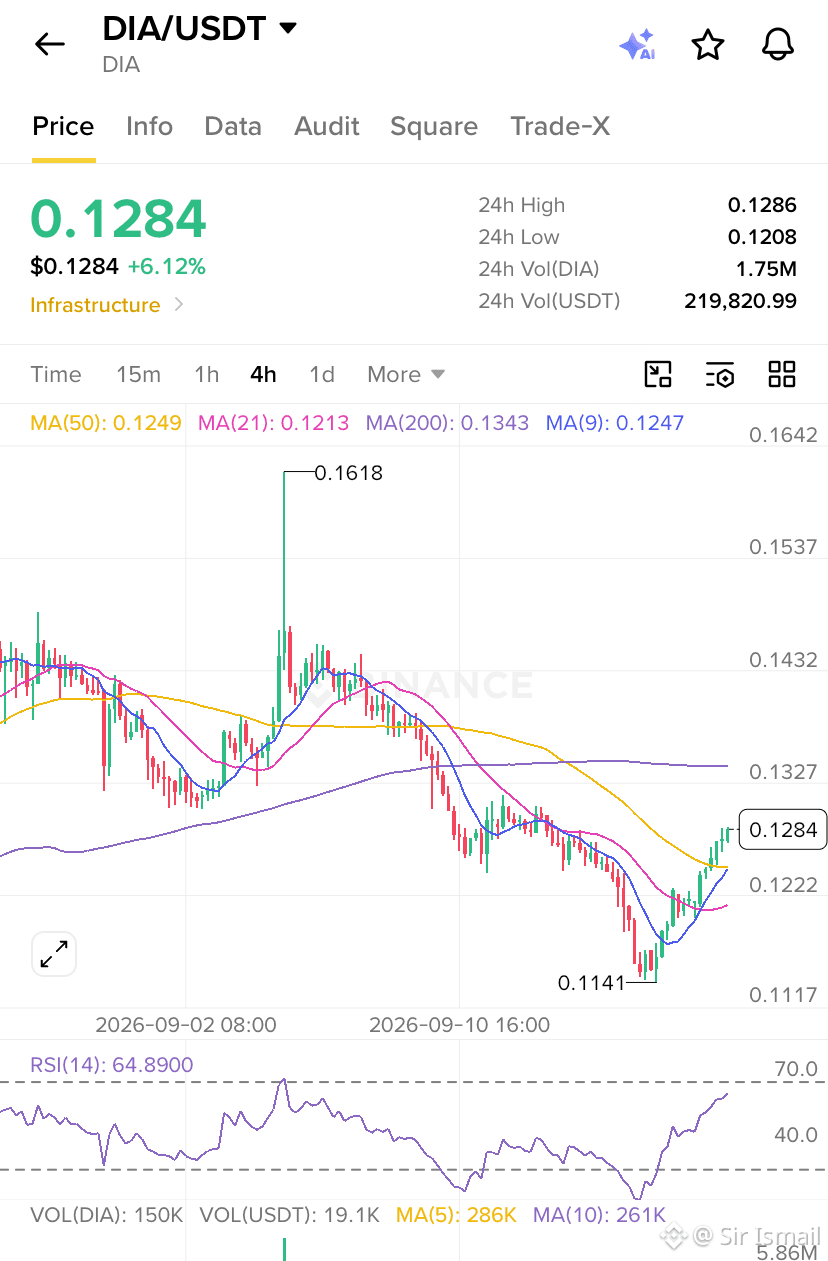
$DIA 4H Update
Held the line.
Bounced from the $0.1166–0.118 zone and pushed back to ~$0.127–0.128.
That’s a clean higher-low off yesterday’s flush. Buyers defended instead of letting it slide to $0.110.
Next job is simple: hold $0.122–0.125 and reclaim $0.129–0.133 (MA9/MA21 area from the daily). If that flips, $0.138 comes back on the table.
Invalidation for this bounce: lose $0.1166.
$DIA 4H Update
Held the line.
Bounced from the $0.1166–0.118 zone and pushed back to ~$0.127–0.128.
That’s a clean higher-low off yesterday’s flush. Buyers defended instead of letting it slide to $0.110.
Next job is simple: hold $0.122–0.125 and reclaim $0.129–0.133 (MA9/MA21 area from the daily). If that flips, $0.138 comes back on the table.
Invalidation for this bounce: lose $0.1166.
Held the line.
Bounced from the $0.1166–0.118 zone and pushed back to ~$0.127–0.128.
That’s a clean higher-low off yesterday’s flush. Buyers defended instead of letting it slide to $0.110.
Next job is simple: hold $0.122–0.125 and reclaim $0.129–0.133 (MA9/MA21 area from the daily). If that flips, $0.138 comes back on the table.
Invalidation for this bounce: lose $0.1166.
134
Log in to explore more content
Join global crypto users on Binance Square
⚡️ Get latest and useful information about crypto.
💬 Trusted by the world’s largest crypto exchange.
👍 Discover real insights from verified creators.
Email / Phone number
Trending Topics
BitwiseFilesFinalNEARSpotETFProspectus
64,292 views
1,232 Discussing
#bitwisefilesfinalnearspotetfprospectus
Can $NEAR REALLY reach $562 with an ETF approval? 🚀
The crypto market is buzzing as Bitwise files its final prospectus for a Spot NEAR ETF (Ticker: NRR on NYSE Arca)! 📊🔥
Is institutional money about to unleash the biggest pump in NEAR’s history? Analysts are throwing around mind-blowing price targets:
🎯 Intermediate Target: $155
🎯 2030 Long-Term Target: $562
💡 Let's do the math:
At $562, $NEAR would sit at roughly a $680 Billion market cap—putting it right up there with Ethereum's potential valuation. With NEAR leading the Chain Abstraction & AI crypto narrative, this might not be as crazy as it sounds!
With SEC regulations turning more crypto-friendly and Wall Street knocking on the door, are you Accumulating or Holding?
👇 Drop your realistic price prediction for $NEAR in the comments! 👇
#BitwiseFilesFinalNEARSpotETFProspectus #Altcoins #CryptoNews #ETF
Doomsday-Trader
·6 Likes
·3.5k views
BitgetHackerMoves$83MStolenXRP
28,267 views
155 Discussing
SOLSpotETFWeeklyInflow$188M
17,210 views
122 Discussing