
index_eH
27 Posts

index_eH
Report
Block User
Open Trade
Frequent Trader
1.8 Years
12 Following
61 Followers
59 Liked
Posts
Portfolio
·
--
zkPass’s Future Direction: A Three-Year Race for the Agent Trust Layer, Institutional Compliance, and Node Decentralization$ZKP Core question: As the window for technical leadership narrows and the token’s valuation falls 70% from its Series A level, where is zkPass most likely—and where should it—go in 2026–2028?
Main thesis: The focus will shift from “proving Web2 data to humans” to “providing AI Agents with verifiable trust and credit”; institutional compliance is the only second revenue stream capable of generating real income within 24 months; node permissionlessness determines the valuation floor.
Technical catch-up: TLS 1.3 coverage, plugin-free mobile proofs, proof aggregation, and IP-block-resistant pools are prerequisites—not optional extras—for entering high-frequency Agent scenarios.
zkPass’s Future Direction: A Three-Year Race for the Agent Trust Layer, Institutional Compliance, and Node Decentralization
$ZKP Core question: As the window for technical leadership narrows and the token’s valuation falls 70% from its Series A level, where is zkPass most likely—and where should it—go in 2026–2028?
Main thesis: The focus will shift from “proving Web2 data to humans” to “providing AI Agents with verifiable trust and credit”; institutional compliance is the only second revenue stream capable of generating real income within 24 months; node permissionlessness determines the valuation floor.
Technical catch-up: TLS 1.3 coverage, plugin-free mobile proofs, proof aggregation, and IP-block-resistant pools are prerequisites—not optional extras—for entering high-frequency Agent scenarios.
394
·
--
Article
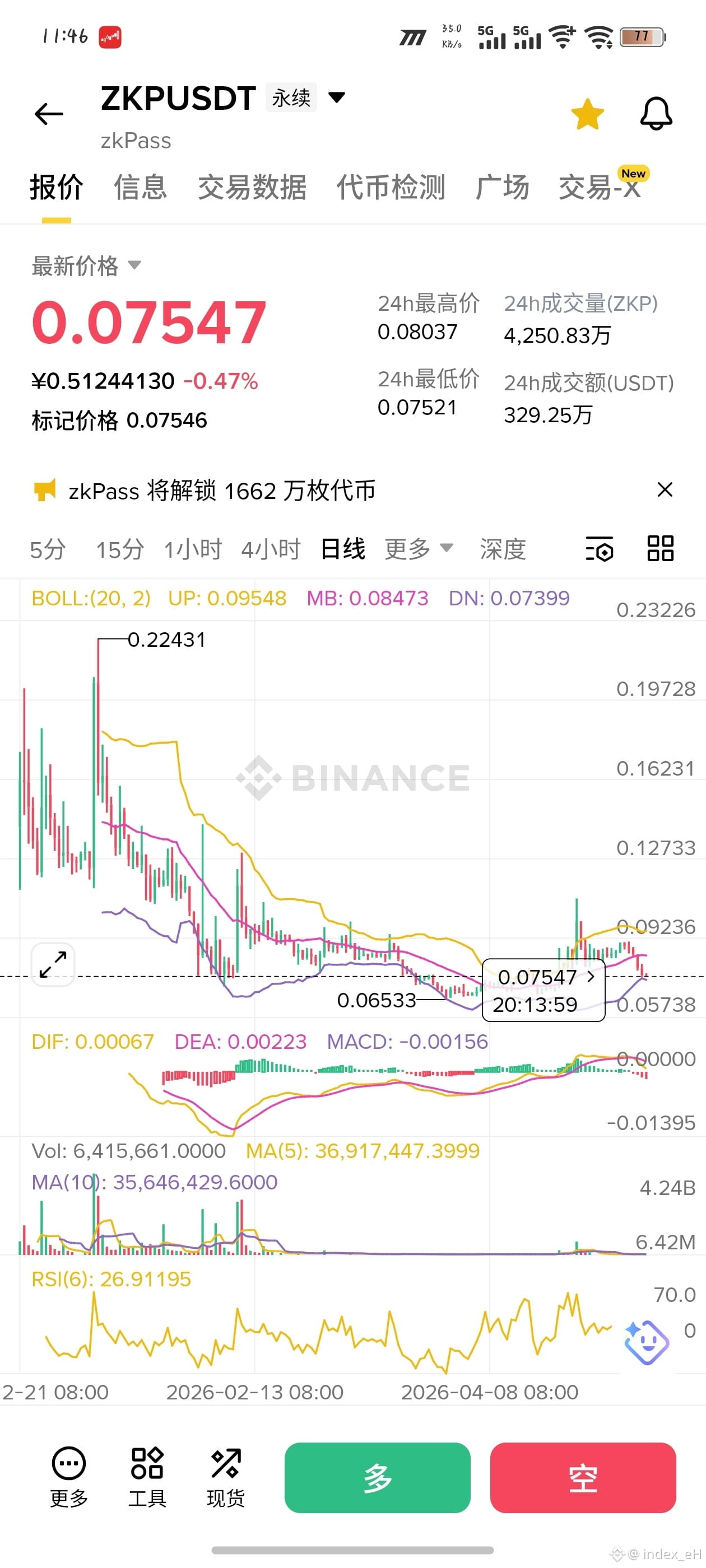
ZKP Market Analysis: Testing Key Support Levels in a Bearish Setup$ZKP
As of September 15, 2026, zkPass (ZKP) is quoted at about $0.041, with a market cap of roughly $9.3 million to $9.5 million, placing it in the lower end of its price range since listing. The 24-hour drop is about 1.94%. Against the backdrop of rising risk-averse sentiment across the market, small-cap tokens are under especially strong pressure.
Technical view: A clear bearish alignment on the daily chart
Bitget’s technical analysis shows that the ZKP daily technical rating is “Sell.” Among the 25 aggregated indicators, sell signals account for a significant majority. Signals across multiple timeframes are conflicted: a buy signal appeared on the 4-hour timeframe, but the sell signals on the daily timeframe are more prominent.
ZKP Market Analysis: Testing Key Support Levels in a Bearish Setup
$ZKP
As of September 15, 2026, zkPass (ZKP) is quoted at about $0.041, with a market cap of roughly $9.3 million to $9.5 million, placing it in the lower end of its price range since listing. The 24-hour drop is about 1.94%. Against the backdrop of rising risk-averse sentiment across the market, small-cap tokens are under especially strong pressure.
Technical view: A clear bearish alignment on the daily chart
Bitget’s technical analysis shows that the ZKP daily technical rating is “Sell.” Among the 25 aggregated indicators, sell signals account for a significant majority. Signals across multiple timeframes are conflicted: a buy signal appeared on the 4-hour timeframe, but the sell signals on the daily timeframe are more prominent.
1
326
·
--
Bearish
$ZKP Incident Deep Dive: BlockDAG, ZKP, Spartans Project Fund Misappropriation Risks
This is a classic case of misappropriation of funds in a crypto project, fraudulent information disclosure, and suspected Ponzi marketing, with the core issues and risks dissected as follows:
1. Core Violations
1. Fundraising Purpose Misrepresentation: During the presale fundraising, BlockDAG Network and ZKP failed to disclose that funds would be used for other businesses. However, on-chain data confirms: approximately $25 million of presale user funds were not used for the project development but were diverted to an online platform to pay KOLs/streamers for promotional fees.
In simple terms: using retail investor money to spend on marketing and subsidizing certain services, completely violating fundraising commitments.
2. Clear On-Chain Path with Solid Evidence: The flow of funds is fully traceable: retail presale wallet → multiple address aggregation → cross-chain bridge → exchange → KOL promotional payment address, which is a typical example of the crypto space's 'scalping' marketing, using investors' money to buy traffic and onboard new bag holders.
2. Risks Involving Projects and Associated Parties
1. Related Parties
Operator: Gurhan Kiziloz (actual controller of the project)
On-chain Sleuth: ZachXBT (a well-known on-chain analyst in the crypto space who has exposed multiple rug pulls)
Involved Projects: BlockDAG, ZKP, Spartans, with interconnected funding flows, belonging to the same operational system.
2. Project Nature Qualitative Assessment
These types of projects are typical of air tokens:
They rely on KOLs and streamer traffic for aggressive marketing, misappropriating funds after fundraising, without any real tech development, using new investors' money for promotions, approaching the essence of a Ponzi scheme where the final outcome usually involves a price crash, project exit, and retail investors losing everything.
3. Warnings for Ordinary Investors
1. ZachXBT explicitly recommends steering clear, and there have been numerous complaints from retail investors regarding fund issues, indicating that the difficulty of seeking rights and recovering funds is immense, with no regulatory protection in cryptocurrency.
2. Any overseas crypto project that excessively relies on KOLs/streamers for aggressive promotion, promises high returns, and has a vague background, is basically a scam.
3. On-chain evidence has solidly confirmed fund misappropriation, meaning the project lacks real revenue-generating ability, relying solely on new users to take over, and a collapse is only a matter of time.
In summary: these three projects are scams where the operators use retail investors' money for marketing and creating a funding scheme, and participation is absolutely not recommended; holders should quickly hedge their positions.
1
486
·
--
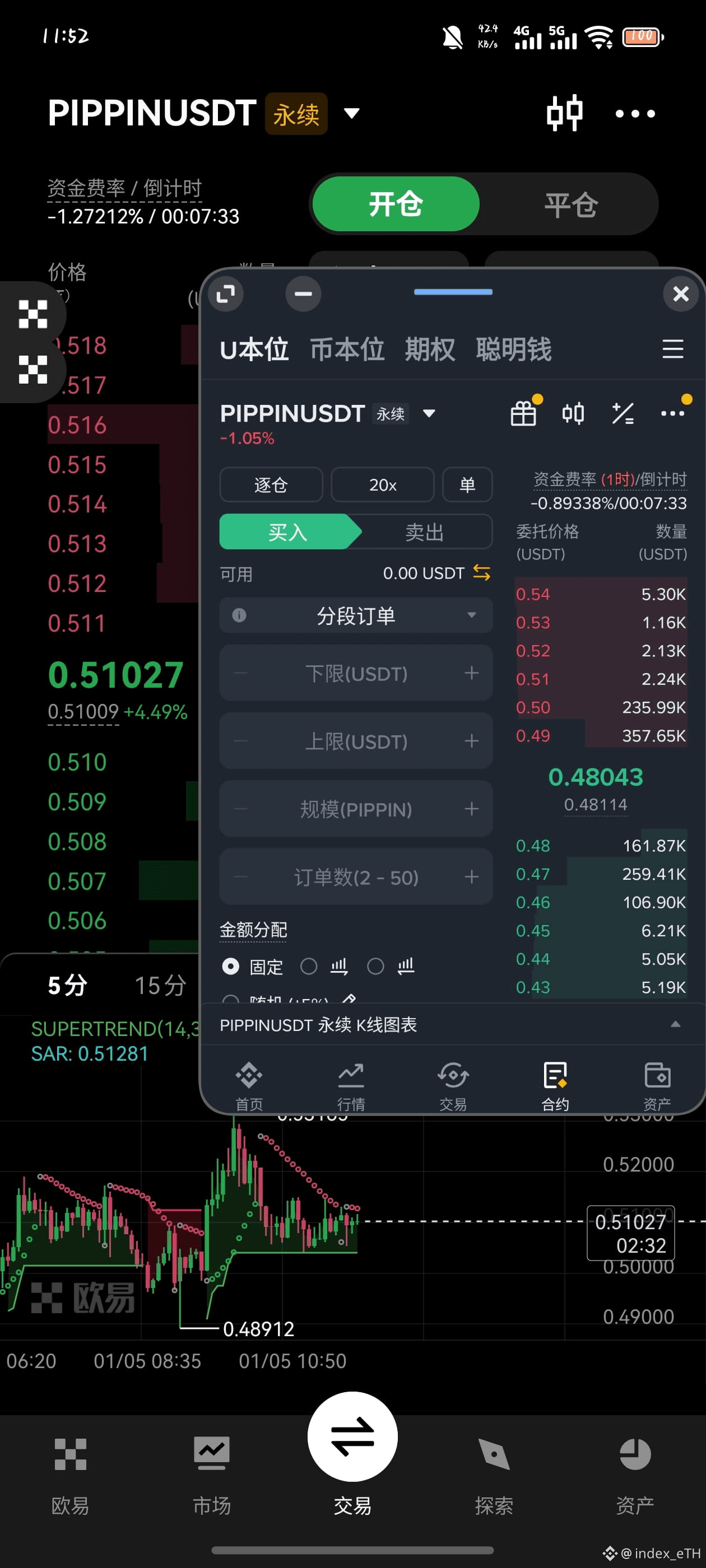
$PIPPIN The price difference and funding rate difference between the two platforms at the same time is outrageous $PIPPIN
{future}(PIPPINUSDT)
$PIPPIN The price difference and funding rate difference between the two platforms at the same time is outrageous $PIPPIN
3
2
2
533
·
--
Bullish
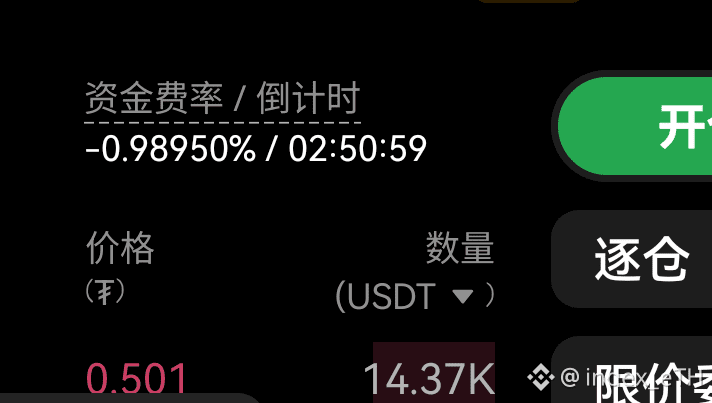
$PIPPIN Funding rate surged again to 1, despite being once every 4 hours $PIPPIN
{future}(PIPPINUSDT)
$PIPPIN Funding rate surged again to 1, despite being once every 4 hours $PIPPIN
5
1
6
4.4k
·
--
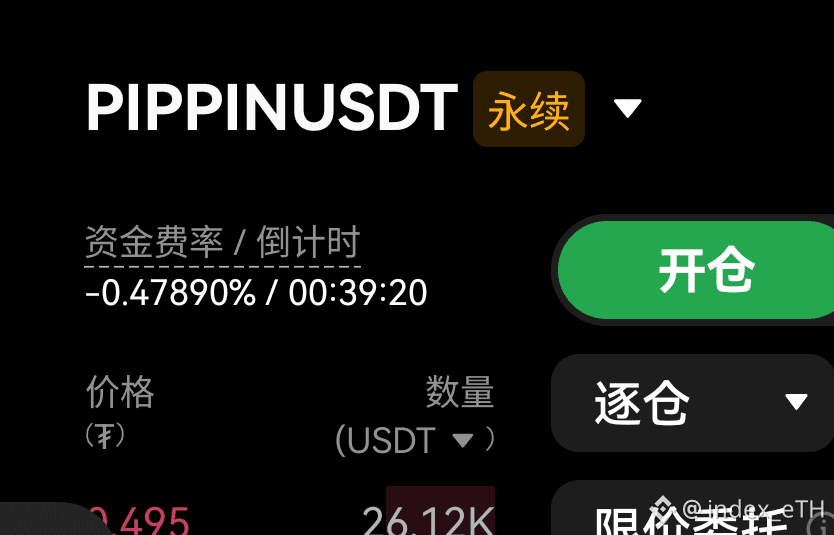
$PIPPIN Next door OK funding fee up to 0.4$PIPPIN
{future}(PIPPINUSDT)
$PIPPIN Next door OK funding fee up to 0.4$PIPPIN
2
5
807
·
--
LIGHT Scam Token$LIGHT
🚨 Incident Qualification: A typical 'Pump and Dump' scheme
According to reports, LIGHT's performance in the past week was a planned 'Pump and Dump' operation:
1. Accumulation Phase: The team's associated wallets extracted millions of tokens from the exchange for concentration before the increase.
2. Pumping Phase: After controlling supply, the price was pushed to soar over 250% in a short time.
3. Shipping Phase: At the peak price (before the crash), a large amount of tokens were deposited into the exchange for sale, causing the price to plummet over 80% within 24 hours.
🔗 Evidence Chain: Mutual Verification of Data and News
LIGHT Scam Token
$LIGHT
🚨 Incident Qualification: A typical 'Pump and Dump' scheme
According to reports, LIGHT's performance in the past week was a planned 'Pump and Dump' operation:
1. Accumulation Phase: The team's associated wallets extracted millions of tokens from the exchange for concentration before the increase.
2. Pumping Phase: After controlling supply, the price was pushed to soar over 250% in a short time.
3. Shipping Phase: At the peak price (before the crash), a large amount of tokens were deposited into the exchange for sale, causing the price to plummet over 80% within 24 hours.
🔗 Evidence Chain: Mutual Verification of Data and News
16
1.3k
·
--
pippin$PIPPIN It is logical to short PIPPIN given the exposure of insiders controlling 80% of the supply. However, one must be aware that this is very likely a “trap” tailored for you.
⚠️ Two real obstacles faced when shorting
Shorting PIPPIN is not simply a matter of “bearish means winning”; you will face two harsh real-world obstacles:
1. Holding costs that are prohibitively high
According to the data from December 10th, the funding rate for PIPPIN perpetual contracts is high. This means that short sellers are essentially using their own capital to subsidize long positions and the controlling parties.
pippin
$PIPPIN It is logical to short PIPPIN given the exposure of insiders controlling 80% of the supply. However, one must be aware that this is very likely a “trap” tailored for you.
⚠️ Two real obstacles faced when shorting
Shorting PIPPIN is not simply a matter of “bearish means winning”; you will face two harsh real-world obstacles:
1. Holding costs that are prohibitively high
According to the data from December 10th, the funding rate for PIPPIN perpetual contracts is high. This means that short sellers are essentially using their own capital to subsidize long positions and the controlling parties.
15
1.7k
Log in to explore more content
Join global crypto users on Binance Square
⚡️ Get latest and useful information about crypto.
💬 Trusted by the world’s largest crypto exchange.
👍 Discover real insights from verified creators.
Email / Phone number
Trending Topics
BTCReboundsAbove$60KAmidWhaleDipBuying
45,059 views
256 Discussing
Abraxas Capital, Other Whales Buy the BTC Dip as Bitcoin Briefly Reclaims $60,000
Binance News
·31 Likes
·56.9k views
SolanaSets2027RoadmapToDoubleComputeCapacity
29,227 views
635 Discussing
CaliforniaNvidiaProbeExaminesPotentialCriminalViolations
7,398 views
91 Discussing