

Pike时政财经分析搬运号
347 Posts

Pike时政财经分析搬运号
Report
Block User
美股资深研究者和投资者,广泛阅读、持续学习,有自己投资方法和逻辑。
0 Following
996 Followers
1.6K+ Liked
Posts
According to a report published by Bloomberg on September 28, China is currently tightening outbound travel regulations for some of its top AI experts. Spouses and children of certain core personnel have also been included in this restriction.
I previously shared views that were not overly optimistic about the future direction of the domestic AI industry, and this latest development only further intensifies my concerns about the field.
For AI professionals who genuinely have true expertise and a spirit of innovation, personal freedom and room to act are often more valuable than generous financial compensation. If simply working in the AI industry means that they—and even their families—will lose the convenience of traveling in and out of other countries, then the appeal of the job is likely to be greatly diminished, even when the pay is tempting.
In addition, breakthrough progress in AI depends heavily on an open ecosystem that enables information sharing, an academic environment free from constraints, and a cultural foundation that encourages people to challenge authority. It is both deeply disappointing and unsettling that the current domestic environment seems to be gradually eroding the cultural roots that nurture innovation.
According to a report published by Bloomberg on September 28, China is currently tightening outbound travel regulations for some of its top AI experts. Spouses and children of certain core personnel have also been included in this restriction.
I previously shared views that were not overly optimistic about the future direction of the domestic AI industry, and this latest development only further intensifies my concerns about the field.
For AI professionals who genuinely have true expertise and a spirit of innovation, personal freedom and room to act are often more valuable than generous financial compensation. If simply working in the AI industry means that they—and even their families—will lose the convenience of traveling in and out of other countries, then the appeal of the job is likely to be greatly diminished, even when the pay is tempting.
In addition, breakthrough progress in AI depends heavily on an open ecosystem that enables information sharing, an academic environment free from constraints, and a cultural foundation that encourages people to challenge authority. It is both deeply disappointing and unsettling that the current domestic environment seems to be gradually eroding the cultural roots that nurture innovation.
I previously shared views that were not overly optimistic about the future direction of the domestic AI industry, and this latest development only further intensifies my concerns about the field.
For AI professionals who genuinely have true expertise and a spirit of innovation, personal freedom and room to act are often more valuable than generous financial compensation. If simply working in the AI industry means that they—and even their families—will lose the convenience of traveling in and out of other countries, then the appeal of the job is likely to be greatly diminished, even when the pay is tempting.
In addition, breakthrough progress in AI depends heavily on an open ecosystem that enables information sharing, an academic environment free from constraints, and a cultural foundation that encourages people to challenge authority. It is both deeply disappointing and unsettling that the current domestic environment seems to be gradually eroding the cultural roots that nurture innovation.

53
According to news reports released by the Bo She on September 28, China is currently working to expand overseas travel restrictions for certain top AI experts. Even some spouses and children of key personnel have been included in the control lists.
Before this, I shared a relatively pessimistic view on the prospects for the development of China’s domestic AI industry. Now that I’ve learned about this latest measure, my outlook for the future of this field has become even more bleak.
For AI professionals who genuinely have creativity and exceptional ability, what is often more valuable than a high salary is personal-level freedom. Any form of technological innovation depends on unencumbered communication and exchange, unobstructed international travel, and career planning with two-way choice. It also requires maintaining close interaction at all times with the world’s most cutting-edge AI research workers and leading companies. Once the identity label of working in the AI industry begins to materially interfere with the ability of practitioners—and even their entire families—to freely enter and exit the country, then no matter how favorable the benefits may be, they will likely gradually lose their original appeal.
By implementing regulations that restrict outbound travel, it may indeed succeed in the short term in retaining a small number of indispensable core talents. However, if the timeline is extended, this approach is highly likely to produce the opposite of the intended effect. Professionals who have been deeply engaged in AI in China typically have strong professional foundations and broad international perspectives. When they keenly sense that future oversight and control constraints may become even more stringent, a rational response may not be to continue staying put, but instead to disengage and leave as early as possible before the restrictions are further upgraded. At the same time, those AI elites currently overseas—when considering whether to return to China to seek jobs or start businesses—will inevitably become more cautious and hesitant.
At bottom, innovation in the AI field relies to a great extent on openly transparent channels for information access, an academic atmosphere that encourages frank discussion, and a cultural soil that is inclusive and encourages people to question authority. At present, it seems that China is gradually suppressing and wearing down the very environment and cultural underpinnings that are so crucial to innovation. This situation is truly worrying and full of regret.
According to news reports released by the Bo She on September 28, China is currently working to expand overseas travel restrictions for certain top AI experts. Even some spouses and children of key personnel have been included in the control lists.
Before this, I shared a relatively pessimistic view on the prospects for the development of China’s domestic AI industry. Now that I’ve learned about this latest measure, my outlook for the future of this field has become even more bleak.
For AI professionals who genuinely have creativity and exceptional ability, what is often more valuable than a high salary is personal-level freedom. Any form of technological innovation depends on unencumbered communication and exchange, unobstructed international travel, and career planning with two-way choice. It also requires maintaining close interaction at all times with the world’s most cutting-edge AI research workers and leading companies. Once the identity label of working in the AI industry begins to materially interfere with the ability of practitioners—and even their entire families—to freely enter and exit the country, then no matter how favorable the benefits may be, they will likely gradually lose their original appeal.
By implementing regulations that restrict outbound travel, it may indeed succeed in the short term in retaining a small number of indispensable core talents. However, if the timeline is extended, this approach is highly likely to produce the opposite of the intended effect. Professionals who have been deeply engaged in AI in China typically have strong professional foundations and broad international perspectives. When they keenly sense that future oversight and control constraints may become even more stringent, a rational response may not be to continue staying put, but instead to disengage and leave as early as possible before the restrictions are further upgraded. At the same time, those AI elites currently overseas—when considering whether to return to China to seek jobs or start businesses—will inevitably become more cautious and hesitant.
At bottom, innovation in the AI field relies to a great extent on openly transparent channels for information access, an academic atmosphere that encourages frank discussion, and a cultural soil that is inclusive and encourages people to question authority. At present, it seems that China is gradually suppressing and wearing down the very environment and cultural underpinnings that are so crucial to innovation. This situation is truly worrying and full of regret.
Before this, I shared a relatively pessimistic view on the prospects for the development of China’s domestic AI industry. Now that I’ve learned about this latest measure, my outlook for the future of this field has become even more bleak.
For AI professionals who genuinely have creativity and exceptional ability, what is often more valuable than a high salary is personal-level freedom. Any form of technological innovation depends on unencumbered communication and exchange, unobstructed international travel, and career planning with two-way choice. It also requires maintaining close interaction at all times with the world’s most cutting-edge AI research workers and leading companies. Once the identity label of working in the AI industry begins to materially interfere with the ability of practitioners—and even their entire families—to freely enter and exit the country, then no matter how favorable the benefits may be, they will likely gradually lose their original appeal.
By implementing regulations that restrict outbound travel, it may indeed succeed in the short term in retaining a small number of indispensable core talents. However, if the timeline is extended, this approach is highly likely to produce the opposite of the intended effect. Professionals who have been deeply engaged in AI in China typically have strong professional foundations and broad international perspectives. When they keenly sense that future oversight and control constraints may become even more stringent, a rational response may not be to continue staying put, but instead to disengage and leave as early as possible before the restrictions are further upgraded. At the same time, those AI elites currently overseas—when considering whether to return to China to seek jobs or start businesses—will inevitably become more cautious and hesitant.
At bottom, innovation in the AI field relies to a great extent on openly transparent channels for information access, an academic atmosphere that encourages frank discussion, and a cultural soil that is inclusive and encourages people to question authority. At present, it seems that China is gradually suppressing and wearing down the very environment and cultural underpinnings that are so crucial to innovation. This situation is truly worrying and full of regret.

75
Regarding the long-term prospects for China’s AI industry, my view has recently become more pessimistic, mainly due to a news report published by Bosi on September 28. The report states that China is currently imposing broader overseas travel controls on some of the country’s top AI experts, and that even certain core personnel’s spouses and children have been included in these restriction lists.
In my view, for AI professionals who truly have real talent and an exceptionally innovative spirit, unrestricted personal space is often more valuable than generous material compensation. Technological breakthroughs require unimpeded communication and exchange, freedom in choosing one’s profession, and the ability to travel internationally at will. At the same time, it is also necessary to maintain close interaction with the world’s most cutting-edge research scholars and technology companies. If merely working in the specific field of AI results in restrictions affecting their own and their family members’ freedom to travel abroad, then no matter how enticing the salary package may be, it is unlikely to retain genuine appeal.
Although the approach of imposing exit controls may, in the short term, succeed in keeping a very small number of core backbones in place, from a long-term perspective this measure is very likely to backfire. China’s AI elite generally have solid professional foundations and broad international perspectives. Once people realize that they may face even stricter controls in the future, rational judgment may lead many to avoid staying put and instead withdraw early while the scope of restrictions has not yet expanded further. Meanwhile, this would also make experts working overseas more hesitant when considering options such as returning to China for employment, starting businesses, or engaging in deep collaboration with Chinese companies.
At bottom, innovation in the AI field relies heavily on smooth and unrestricted channels for information access, an academic atmosphere free of constraints, and a social culture that can tolerate and encourage questioning authority. The current trends in China that suppress such innovative soil and cultural foundations are truly worrying and deeply regrettable.
Regarding the long-term prospects for China’s AI industry, my view has recently become more pessimistic, mainly due to a news report published by Bosi on September 28. The report states that China is currently imposing broader overseas travel controls on some of the country’s top AI experts, and that even certain core personnel’s spouses and children have been included in these restriction lists.
In my view, for AI professionals who truly have real talent and an exceptionally innovative spirit, unrestricted personal space is often more valuable than generous material compensation. Technological breakthroughs require unimpeded communication and exchange, freedom in choosing one’s profession, and the ability to travel internationally at will. At the same time, it is also necessary to maintain close interaction with the world’s most cutting-edge research scholars and technology companies. If merely working in the specific field of AI results in restrictions affecting their own and their family members’ freedom to travel abroad, then no matter how enticing the salary package may be, it is unlikely to retain genuine appeal.
Although the approach of imposing exit controls may, in the short term, succeed in keeping a very small number of core backbones in place, from a long-term perspective this measure is very likely to backfire. China’s AI elite generally have solid professional foundations and broad international perspectives. Once people realize that they may face even stricter controls in the future, rational judgment may lead many to avoid staying put and instead withdraw early while the scope of restrictions has not yet expanded further. Meanwhile, this would also make experts working overseas more hesitant when considering options such as returning to China for employment, starting businesses, or engaging in deep collaboration with Chinese companies.
At bottom, innovation in the AI field relies heavily on smooth and unrestricted channels for information access, an academic atmosphere free of constraints, and a social culture that can tolerate and encourage questioning authority. The current trends in China that suppress such innovative soil and cultural foundations are truly worrying and deeply regrettable.
In my view, for AI professionals who truly have real talent and an exceptionally innovative spirit, unrestricted personal space is often more valuable than generous material compensation. Technological breakthroughs require unimpeded communication and exchange, freedom in choosing one’s profession, and the ability to travel internationally at will. At the same time, it is also necessary to maintain close interaction with the world’s most cutting-edge research scholars and technology companies. If merely working in the specific field of AI results in restrictions affecting their own and their family members’ freedom to travel abroad, then no matter how enticing the salary package may be, it is unlikely to retain genuine appeal.
Although the approach of imposing exit controls may, in the short term, succeed in keeping a very small number of core backbones in place, from a long-term perspective this measure is very likely to backfire. China’s AI elite generally have solid professional foundations and broad international perspectives. Once people realize that they may face even stricter controls in the future, rational judgment may lead many to avoid staying put and instead withdraw early while the scope of restrictions has not yet expanded further. Meanwhile, this would also make experts working overseas more hesitant when considering options such as returning to China for employment, starting businesses, or engaging in deep collaboration with Chinese companies.
At bottom, innovation in the AI field relies heavily on smooth and unrestricted channels for information access, an academic atmosphere free of constraints, and a social culture that can tolerate and encourage questioning authority. The current trends in China that suppress such innovative soil and cultural foundations are truly worrying and deeply regrettable.

123
Regarding potential delays that may occur in Oracle’s Stargate project, everyone actually doesn’t need to worry too much that it will significantly disrupt BE’s revenue recognition. The key rationale behind this conclusion is Bloom’s Copy Exact philosophy. The product is based on a highly modular and standardized production design, which means the related equipment is absolutely not custom-made for just one specific data center.
As the company’s management explained in previous financial reports, once the originally planned project timeline is delayed, this batch of hardware can be flexibly reassigned to other engineering projects under the same customer for continued use. As was stated at the time, the end customer is able to redeploy that equipment to other projects.
Moreover, we also need to consider a crucial market backdrop. The current widespread power shortage situation remains extremely severe. This directly drives the market’s demand for BE fuel cells to continue rising. The related products are still in a highly tight supply state with demand outstripping supply.
Regarding potential delays that may occur in Oracle’s Stargate project, everyone actually doesn’t need to worry too much that it will significantly disrupt BE’s revenue recognition. The key rationale behind this conclusion is Bloom’s Copy Exact philosophy. The product is based on a highly modular and standardized production design, which means the related equipment is absolutely not custom-made for just one specific data center.
As the company’s management explained in previous financial reports, once the originally planned project timeline is delayed, this batch of hardware can be flexibly reassigned to other engineering projects under the same customer for continued use. As was stated at the time, the end customer is able to redeploy that equipment to other projects.
Moreover, we also need to consider a crucial market backdrop. The current widespread power shortage situation remains extremely severe. This directly drives the market’s demand for BE fuel cells to continue rising. The related products are still in a highly tight supply state with demand outstripping supply.
As the company’s management explained in previous financial reports, once the originally planned project timeline is delayed, this batch of hardware can be flexibly reassigned to other engineering projects under the same customer for continued use. As was stated at the time, the end customer is able to redeploy that equipment to other projects.
Moreover, we also need to consider a crucial market backdrop. The current widespread power shortage situation remains extremely severe. This directly drives the market’s demand for BE fuel cells to continue rising. The related products are still in a highly tight supply state with demand outstripping supply.

1
283
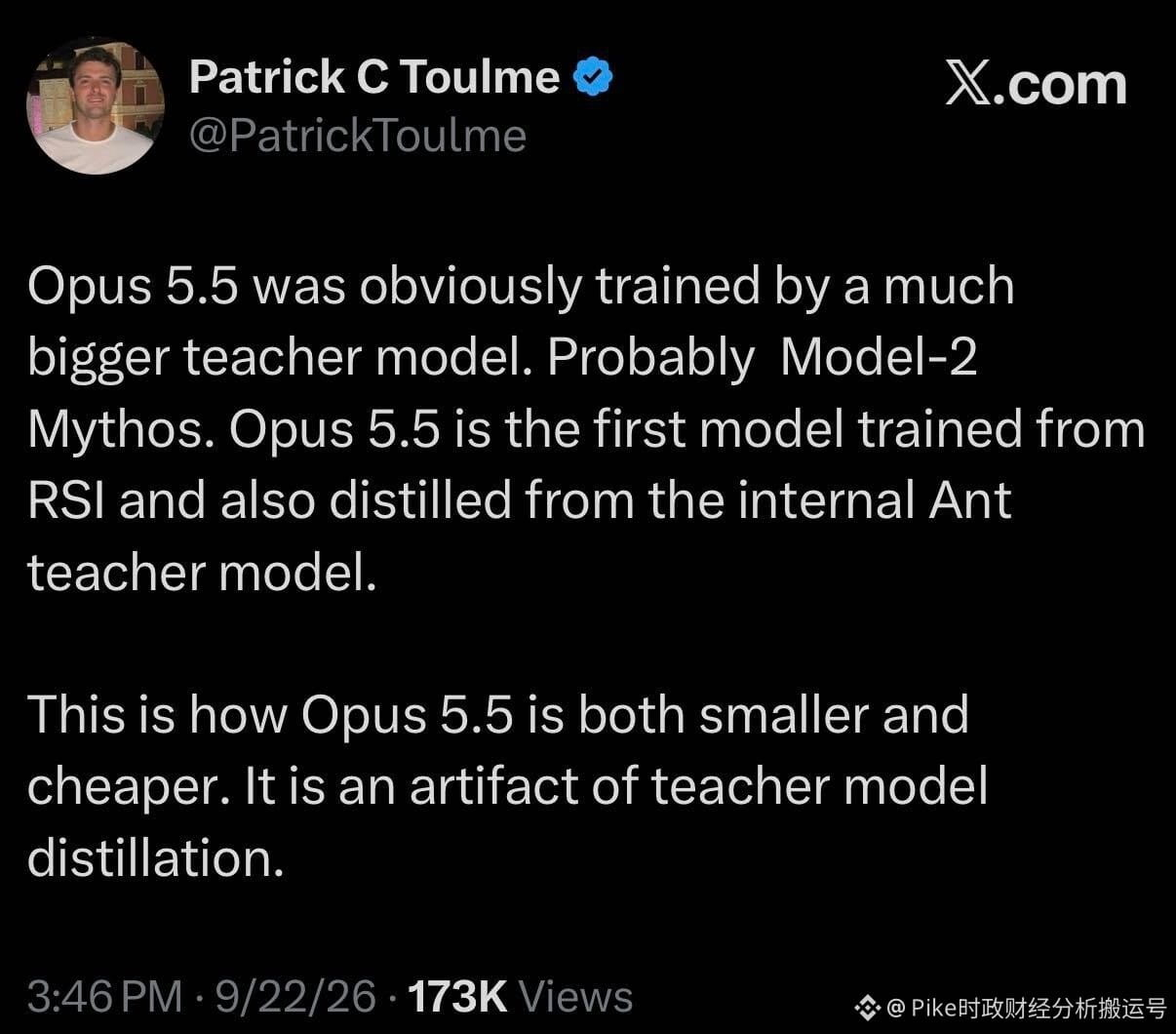
Recently, Patrick C. Toulme, a software engineer from the Google TPU team, shared an intriguing viewpoint. He believes that Opus 5.5 is able to maintain outstanding performance despite having a smaller footprint and lower costs, most likely thanks to RSI (recursive self-improvement) technology, along with distillation using a much larger internal teacher model. Based on his speculation, this mysterious teacher model may well be Model-2 Mythos. Of course, as for this specific training pathway, Anthropic has not yet provided conclusive official confirmation.
I personally strongly agree with this kind of conjecture. Combining RSI with distillation signals a highly promising R&D approach: involve the most capable models in developing the next generation of AI, and then transfer those proven, powerful capabilities to products that are more affordable. This means leading research labs can pursue both tracks at once—continuously pushing the boundaries and expanding the scale of frontier model training while also effectively reducing the real-world inference costs for end users. These two efforts are not only compatible; they can advance in parallel.
In addition, today’s most advanced LLMs achieve performance that does not drop while reducing inference costs, which further reinforces the bullish logic that AI labs’ unit economics may be better than the market expects. As long as lower, more accessible prices can successfully spur a surge in enterprise-side application scale and Agent call volume—and if the magnitude of that growth is enough to offset the portion where compute consumption per single task declines—it will inject sustained momentum into the entire industry’s underlying infrastructure. As a result, market demand will be more firmly supported across the supply chain, including AI semiconductors, storage devices, and interconnect hardware.
Recently, Patrick C. Toulme, a software engineer from the Google TPU team, shared an intriguing viewpoint. He believes that Opus 5.5 is able to maintain outstanding performance despite having a smaller footprint and lower costs, most likely thanks to RSI (recursive self-improvement) technology, along with distillation using a much larger internal teacher model. Based on his speculation, this mysterious teacher model may well be Model-2 Mythos. Of course, as for this specific training pathway, Anthropic has not yet provided conclusive official confirmation.
I personally strongly agree with this kind of conjecture. Combining RSI with distillation signals a highly promising R&D approach: involve the most capable models in developing the next generation of AI, and then transfer those proven, powerful capabilities to products that are more affordable. This means leading research labs can pursue both tracks at once—continuously pushing the boundaries and expanding the scale of frontier model training while also effectively reducing the real-world inference costs for end users. These two efforts are not only compatible; they can advance in parallel.
In addition, today’s most advanced LLMs achieve performance that does not drop while reducing inference costs, which further reinforces the bullish logic that AI labs’ unit economics may be better than the market expects. As long as lower, more accessible prices can successfully spur a surge in enterprise-side application scale and Agent call volume—and if the magnitude of that growth is enough to offset the portion where compute consumption per single task declines—it will inject sustained momentum into the entire industry’s underlying infrastructure. As a result, market demand will be more firmly supported across the supply chain, including AI semiconductors, storage devices, and interconnect hardware.
I personally strongly agree with this kind of conjecture. Combining RSI with distillation signals a highly promising R&D approach: involve the most capable models in developing the next generation of AI, and then transfer those proven, powerful capabilities to products that are more affordable. This means leading research labs can pursue both tracks at once—continuously pushing the boundaries and expanding the scale of frontier model training while also effectively reducing the real-world inference costs for end users. These two efforts are not only compatible; they can advance in parallel.
In addition, today’s most advanced LLMs achieve performance that does not drop while reducing inference costs, which further reinforces the bullish logic that AI labs’ unit economics may be better than the market expects. As long as lower, more accessible prices can successfully spur a surge in enterprise-side application scale and Agent call volume—and if the magnitude of that growth is enough to offset the portion where compute consumption per single task declines—it will inject sustained momentum into the entire industry’s underlying infrastructure. As a result, market demand will be more firmly supported across the supply chain, including AI semiconductors, storage devices, and interconnect hardware.
71
As a company that is truly steady and focused on the leading edge of space exploration, Rocket Lab doesn’t just stay at the level of concepts and PowerPoint slides—it has won the market’s long-term attention through concrete actions. In my previous conversations in a members’ group, I also emphasized that, compared with SpaceX, this company’s current scale and valuation look much more modest. Even though, in absolute terms, its valuation isn’t low at the moment, it still has substantial room for future growth and a potential re-rating of value.
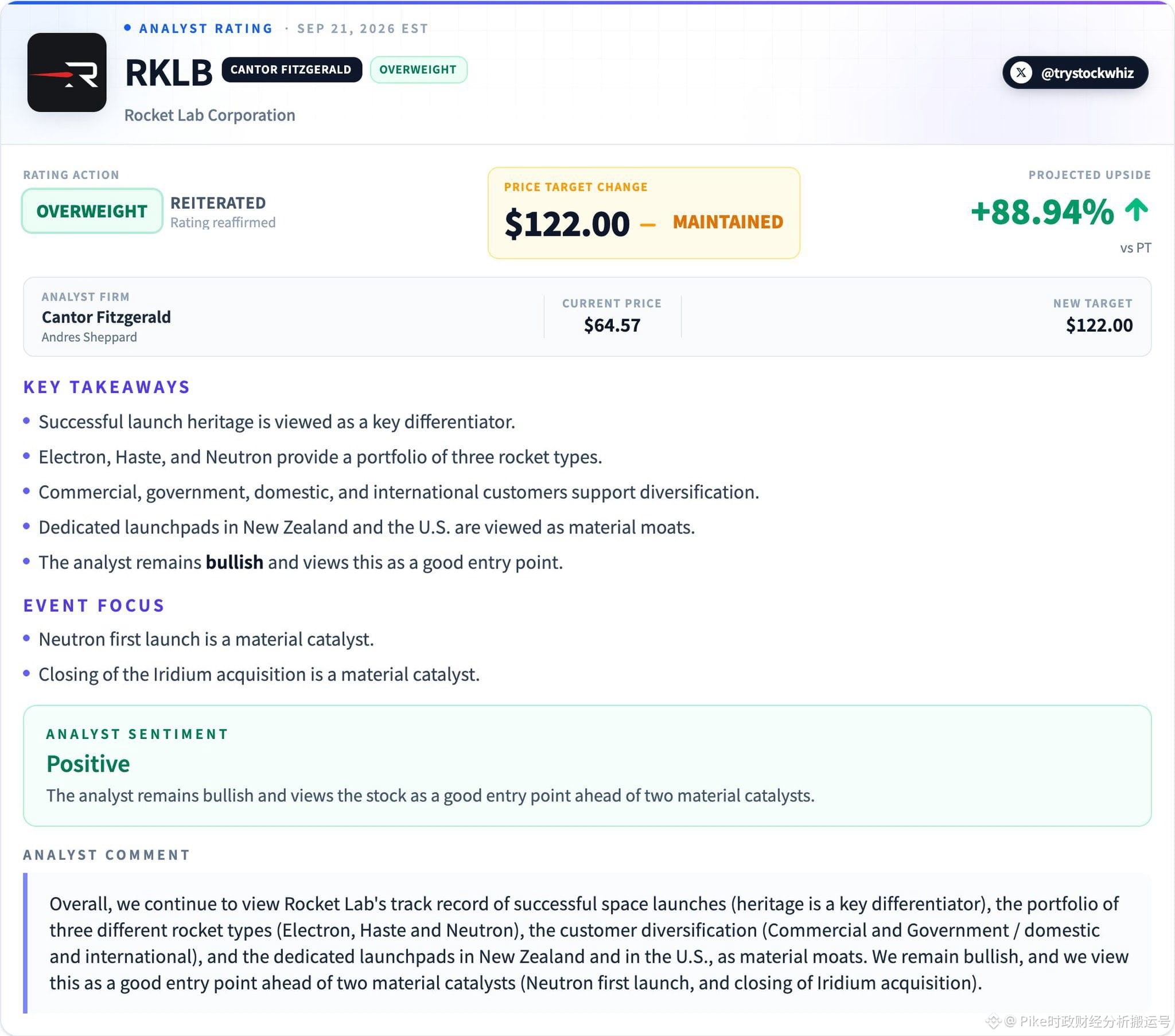
On September 21, Cantor Fitzgerald, a well-known investment bank, reiterated a “Buy” rating for $RKLB and set a target price of $122. If you calculate based on the stock price of $64.57 on the day the research report was issued, there is roughly 89% potential upside. In his view, before two major catalysts are formally in place, this is an ideal entry point for investment.
The first catalyst is the acquisition of Iridium. The company has already fully lined up the required M&A funding, and it is expected that all transaction closings will be completed by mid-2027. Iridium not only owns a global low Earth orbit L-band communication network, but also operates more than 60 satellites in orbit, along with 10+ backup satellites. Once this deal is completed, Rocket Lab will be able to bring core business areas—satellite manufacturing, rocket launches, constellation deployment, and in-orbit communications services—under one roof, moving it a key step closer to an end-to-end vertically integrated business model similar to that of SpaceX. From a financial outlook perspective, Iridium is expected to exceed $850 million in revenue in 2025, while Cantor forecasts Rocket Lab’s 2026 revenue to cross the $900 million mark. That means that after the two companies are merged, there is a very high likelihood that annual total revenue could nearly double in size.
While waiting for the catalysts to play out, the company’s existing business moat is also quite deep. For companies in the space sector, true core competitiveness often isn’t the rocket performance parameters on paper, but rather the launch cadence built up over the long term, customer trust, mission execution capability, and launch reliability. Recently, the company’s Electron rocket successfully completed its 96th flight mission—also its 17th launch this year. At present, Electron, the HASTE program, and dedicated launch sites across the U.S. and New Zealand together form Rocket Lab’s most solid wall of defense at its current stage. This fully demonstrates the company’s outstanding ability to manufacture rockets successfully, launch them into orbit as planned, and continuously deliver missions to customers.
The most critical major catalyst, however, is Neutron, a medium-lift reusable rocket. You should know that its payload capacity to low Earth orbit can be as high as about 13 tons—an order-of-magnitude leap compared with Electron’s roughly 300 kg capacity. Based on management’s target, the per-launch price is roughly between $50 million and $55 million. If its first flight and subsequent relaunches can proceed smoothly, Neutron is very well positioned to become one of the few medium-lift launch vehicles with truly strong commercial competitiveness in the market—apart from Falcon 9.
Neutron’s launch signifies far more than the company simply having a larger rocket in its lineup. Its success or failure will directly determine whether Rocket Lab can successfully step out of the comfort zone of the small rocket market and move into much larger arenas such as major commercial payloads, national security missions, and satellite constellation deployments. At the same time, it is also a major test of whether the company can successfully transfer the excellent engineering experience accumulated during the Electron era into a more complex medium-lift reusable rocket.
Of course, while seeing the opportunity, investors must also remain vigilant about risk disclosures and potential variables. For example, Neutron could face risks of R&D delays or first-flight failure; meanwhile, the Iridium acquisition could bring integration challenges and share dilution. These need to be continuously monitored. Looking ahead, what truly determines the ceiling of $RKLB’s valuation is not the entertaining stories in the capital markets, but the final delivery and execution results of the Neutron project.
As a company that is truly steady and focused on the leading edge of space exploration, Rocket Lab doesn’t just stay at the level of concepts and PowerPoint slides—it has won the market’s long-term attention through concrete actions. In my previous conversations in a members’ group, I also emphasized that, compared with SpaceX, this company’s current scale and valuation look much more modest. Even though, in absolute terms, its valuation isn’t low at the moment, it still has substantial room for future growth and a potential re-rating of value.
On September 21, Cantor Fitzgerald, a well-known investment bank, reiterated a “Buy” rating for $RKLB and set a target price of $122. If you calculate based on the stock price of $64.57 on the day the research report was issued, there is roughly 89% potential upside. In his view, before two major catalysts are formally in place, this is an ideal entry point for investment.
The first catalyst is the acquisition of Iridium. The company has already fully lined up the required M&A funding, and it is expected that all transaction closings will be completed by mid-2027. Iridium not only owns a global low Earth orbit L-band communication network, but also operates more than 60 satellites in orbit, along with 10+ backup satellites. Once this deal is completed, Rocket Lab will be able to bring core business areas—satellite manufacturing, rocket launches, constellation deployment, and in-orbit communications services—under one roof, moving it a key step closer to an end-to-end vertically integrated business model similar to that of SpaceX. From a financial outlook perspective, Iridium is expected to exceed $850 million in revenue in 2025, while Cantor forecasts Rocket Lab’s 2026 revenue to cross the $900 million mark. That means that after the two companies are merged, there is a very high likelihood that annual total revenue could nearly double in size.
While waiting for the catalysts to play out, the company’s existing business moat is also quite deep. For companies in the space sector, true core competitiveness often isn’t the rocket performance parameters on paper, but rather the launch cadence built up over the long term, customer trust, mission execution capability, and launch reliability. Recently, the company’s Electron rocket successfully completed its 96th flight mission—also its 17th launch this year. At present, Electron, the HASTE program, and dedicated launch sites across the U.S. and New Zealand together form Rocket Lab’s most solid wall of defense at its current stage. This fully demonstrates the company’s outstanding ability to manufacture rockets successfully, launch them into orbit as planned, and continuously deliver missions to customers.
The most critical major catalyst, however, is Neutron, a medium-lift reusable rocket. You should know that its payload capacity to low Earth orbit can be as high as about 13 tons—an order-of-magnitude leap compared with Electron’s roughly 300 kg capacity. Based on management’s target, the per-launch price is roughly between $50 million and $55 million. If its first flight and subsequent relaunches can proceed smoothly, Neutron is very well positioned to become one of the few medium-lift launch vehicles with truly strong commercial competitiveness in the market—apart from Falcon 9.
Neutron’s launch signifies far more than the company simply having a larger rocket in its lineup. Its success or failure will directly determine whether Rocket Lab can successfully step out of the comfort zone of the small rocket market and move into much larger arenas such as major commercial payloads, national security missions, and satellite constellation deployments. At the same time, it is also a major test of whether the company can successfully transfer the excellent engineering experience accumulated during the Electron era into a more complex medium-lift reusable rocket.
Of course, while seeing the opportunity, investors must also remain vigilant about risk disclosures and potential variables. For example, Neutron could face risks of R&D delays or first-flight failure; meanwhile, the Iridium acquisition could bring integration challenges and share dilution. These need to be continuously monitored. Looking ahead, what truly determines the ceiling of $RKLB’s valuation is not the entertaining stories in the capital markets, but the final delivery and execution results of the Neutron project.
On September 21, Cantor Fitzgerald, a well-known investment bank, reiterated a “Buy” rating for $RKLB and set a target price of $122. If you calculate based on the stock price of $64.57 on the day the research report was issued, there is roughly 89% potential upside. In his view, before two major catalysts are formally in place, this is an ideal entry point for investment.
The first catalyst is the acquisition of Iridium. The company has already fully lined up the required M&A funding, and it is expected that all transaction closings will be completed by mid-2027. Iridium not only owns a global low Earth orbit L-band communication network, but also operates more than 60 satellites in orbit, along with 10+ backup satellites. Once this deal is completed, Rocket Lab will be able to bring core business areas—satellite manufacturing, rocket launches, constellation deployment, and in-orbit communications services—under one roof, moving it a key step closer to an end-to-end vertically integrated business model similar to that of SpaceX. From a financial outlook perspective, Iridium is expected to exceed $850 million in revenue in 2025, while Cantor forecasts Rocket Lab’s 2026 revenue to cross the $900 million mark. That means that after the two companies are merged, there is a very high likelihood that annual total revenue could nearly double in size.
While waiting for the catalysts to play out, the company’s existing business moat is also quite deep. For companies in the space sector, true core competitiveness often isn’t the rocket performance parameters on paper, but rather the launch cadence built up over the long term, customer trust, mission execution capability, and launch reliability. Recently, the company’s Electron rocket successfully completed its 96th flight mission—also its 17th launch this year. At present, Electron, the HASTE program, and dedicated launch sites across the U.S. and New Zealand together form Rocket Lab’s most solid wall of defense at its current stage. This fully demonstrates the company’s outstanding ability to manufacture rockets successfully, launch them into orbit as planned, and continuously deliver missions to customers.
The most critical major catalyst, however, is Neutron, a medium-lift reusable rocket. You should know that its payload capacity to low Earth orbit can be as high as about 13 tons—an order-of-magnitude leap compared with Electron’s roughly 300 kg capacity. Based on management’s target, the per-launch price is roughly between $50 million and $55 million. If its first flight and subsequent relaunches can proceed smoothly, Neutron is very well positioned to become one of the few medium-lift launch vehicles with truly strong commercial competitiveness in the market—apart from Falcon 9.
Neutron’s launch signifies far more than the company simply having a larger rocket in its lineup. Its success or failure will directly determine whether Rocket Lab can successfully step out of the comfort zone of the small rocket market and move into much larger arenas such as major commercial payloads, national security missions, and satellite constellation deployments. At the same time, it is also a major test of whether the company can successfully transfer the excellent engineering experience accumulated during the Electron era into a more complex medium-lift reusable rocket.
Of course, while seeing the opportunity, investors must also remain vigilant about risk disclosures and potential variables. For example, Neutron could face risks of R&D delays or first-flight failure; meanwhile, the Iridium acquisition could bring integration challenges and share dilution. These need to be continuously monitored. Looking ahead, what truly determines the ceiling of $RKLB’s valuation is not the entertaining stories in the capital markets, but the final delivery and execution results of the Neutron project.
251
The semiconductor sector saw a sharp rally today. In light of this strong market performance, I believe the underlying drivers can mainly be attributed to the following factors.
First, delivery lead times on the supply chain side have lengthened significantly. According to reports from Korean media today, key components required for semiconductor manufacturing equipment are facing supply delays. Specifically, the delivery time for components from a deposition equipment manufacturer has risen sharply from about four months originally to as long as 10 months. At the same time, a laser processing equipment manufacturer’s waiting period for purchasing key components from Japanese suppliers is currently up to 40 months. In addition, even for a packaging equipment company with a relatively well-developed domestic supply chain, the delivery cycle has increased by roughly 50% versus normal conditions—rising from the original four months to more than six months.
Second, JPMorgan’s latest industry research report on equipment provides solid fundamental support. The report notes that, as AI wafer fabs accelerate construction and HBM/DRAM capacity continues to expand—together with the fact that the equipment supply side has been tight—Wafer Fab Equipment is entering an upcycle with a longer duration and deeper impact. JPMorgan analysts believe the current equipment upturn is no longer driven solely by advanced logic process nodes; fab construction related to AI is simultaneously boosting demand for memory and advanced manufacturing equipment. The supply-side tightness of equipment aligns well with the aforementioned Korean media reports about significantly extended lead times for core equipment and components, mutually reinforcing the narrative.
Finally, from the perspective of positioning and capital market dynamics, data from the GS trading terminal reveals an extreme contrast in market sentiment. Currently, long positions in semiconductor equipment stocks are at a historical low, while short positions have risen to a historical high. Under such an extreme positioning structure, if the market reverses, the crowded trading conditions are likely to trigger large-scale short covering. This liquidation effect from the capital flows then becomes an important force propelling semiconductor equipment stock prices even higher.
The semiconductor sector saw a sharp rally today. In light of this strong market performance, I believe the underlying drivers can mainly be attributed to the following factors.
First, delivery lead times on the supply chain side have lengthened significantly. According to reports from Korean media today, key components required for semiconductor manufacturing equipment are facing supply delays. Specifically, the delivery time for components from a deposition equipment manufacturer has risen sharply from about four months originally to as long as 10 months. At the same time, a laser processing equipment manufacturer’s waiting period for purchasing key components from Japanese suppliers is currently up to 40 months. In addition, even for a packaging equipment company with a relatively well-developed domestic supply chain, the delivery cycle has increased by roughly 50% versus normal conditions—rising from the original four months to more than six months.
Second, JPMorgan’s latest industry research report on equipment provides solid fundamental support. The report notes that, as AI wafer fabs accelerate construction and HBM/DRAM capacity continues to expand—together with the fact that the equipment supply side has been tight—Wafer Fab Equipment is entering an upcycle with a longer duration and deeper impact. JPMorgan analysts believe the current equipment upturn is no longer driven solely by advanced logic process nodes; fab construction related to AI is simultaneously boosting demand for memory and advanced manufacturing equipment. The supply-side tightness of equipment aligns well with the aforementioned Korean media reports about significantly extended lead times for core equipment and components, mutually reinforcing the narrative.
Finally, from the perspective of positioning and capital market dynamics, data from the GS trading terminal reveals an extreme contrast in market sentiment. Currently, long positions in semiconductor equipment stocks are at a historical low, while short positions have risen to a historical high. Under such an extreme positioning structure, if the market reverses, the crowded trading conditions are likely to trigger large-scale short covering. This liquidation effect from the capital flows then becomes an important force propelling semiconductor equipment stock prices even higher.
First, delivery lead times on the supply chain side have lengthened significantly. According to reports from Korean media today, key components required for semiconductor manufacturing equipment are facing supply delays. Specifically, the delivery time for components from a deposition equipment manufacturer has risen sharply from about four months originally to as long as 10 months. At the same time, a laser processing equipment manufacturer’s waiting period for purchasing key components from Japanese suppliers is currently up to 40 months. In addition, even for a packaging equipment company with a relatively well-developed domestic supply chain, the delivery cycle has increased by roughly 50% versus normal conditions—rising from the original four months to more than six months.
Second, JPMorgan’s latest industry research report on equipment provides solid fundamental support. The report notes that, as AI wafer fabs accelerate construction and HBM/DRAM capacity continues to expand—together with the fact that the equipment supply side has been tight—Wafer Fab Equipment is entering an upcycle with a longer duration and deeper impact. JPMorgan analysts believe the current equipment upturn is no longer driven solely by advanced logic process nodes; fab construction related to AI is simultaneously boosting demand for memory and advanced manufacturing equipment. The supply-side tightness of equipment aligns well with the aforementioned Korean media reports about significantly extended lead times for core equipment and components, mutually reinforcing the narrative.
Finally, from the perspective of positioning and capital market dynamics, data from the GS trading terminal reveals an extreme contrast in market sentiment. Currently, long positions in semiconductor equipment stocks are at a historical low, while short positions have risen to a historical high. Under such an extreme positioning structure, if the market reverses, the crowded trading conditions are likely to trigger large-scale short covering. This liquidation effect from the capital flows then becomes an important force propelling semiconductor equipment stock prices even higher.
1
123
On September 17, Rocket Lab’s official account shared the latest development updates on the Neutron medium-lift rocket with everyone. At present, the much-anticipated reusable payload fairing, “Hungry Hippo,” has successfully passed pre-flight testing. Meanwhile, the team has also made significant progress at Launch Complex 3 in Virginia, where a roughly 10-meter-tall Stage 2 rocket test stand has been fully assembled.
These achievements indicate that Rocket Lab now has the complete hardware foundation needed to conduct on-site Stage 2 thrust module inspections at the launch site. According to the company’s subsequent plans, the R&D team will install the Stage 2 thrust module directly on the launch pad for testing. The goal is to validate and confirm in advance the compatibility between the rocket and the launch pad across multiple interfaces—including mechanical, propellant, electrical, and data connections. By using this upfront verification approach, the risk of discovering interface-matching defects only after the full rocket is brought to the pad can be greatly reduced, laying a solid groundwork for future integrated rocket testing.
As the project moves forward, there are four crucial core milestones worth continued attention. First is whether the Stage 2 thrust module can smoothly complete the subsequent testing and hot-fire commissioning steps. Second, whether the first-stage flight article can successfully achieve assembly and integration with the Archimedes engine. The third highlight is whether the fully assembled rocket can be transported to the launch pad according to the established schedule and successfully complete wet dress rehearsal and static ignition tasks. Finally, the status of the related FAA launch license approval and the ultimate confirmation of the Wallops launch window will also be key items to closely track in the coming phase.
On September 17, Rocket Lab’s official account shared the latest development updates on the Neutron medium-lift rocket with everyone. At present, the much-anticipated reusable payload fairing, “Hungry Hippo,” has successfully passed pre-flight testing. Meanwhile, the team has also made significant progress at Launch Complex 3 in Virginia, where a roughly 10-meter-tall Stage 2 rocket test stand has been fully assembled.
These achievements indicate that Rocket Lab now has the complete hardware foundation needed to conduct on-site Stage 2 thrust module inspections at the launch site. According to the company’s subsequent plans, the R&D team will install the Stage 2 thrust module directly on the launch pad for testing. The goal is to validate and confirm in advance the compatibility between the rocket and the launch pad across multiple interfaces—including mechanical, propellant, electrical, and data connections. By using this upfront verification approach, the risk of discovering interface-matching defects only after the full rocket is brought to the pad can be greatly reduced, laying a solid groundwork for future integrated rocket testing.
As the project moves forward, there are four crucial core milestones worth continued attention. First is whether the Stage 2 thrust module can smoothly complete the subsequent testing and hot-fire commissioning steps. Second, whether the first-stage flight article can successfully achieve assembly and integration with the Archimedes engine. The third highlight is whether the fully assembled rocket can be transported to the launch pad according to the established schedule and successfully complete wet dress rehearsal and static ignition tasks. Finally, the status of the related FAA launch license approval and the ultimate confirmation of the Wallops launch window will also be key items to closely track in the coming phase.
These achievements indicate that Rocket Lab now has the complete hardware foundation needed to conduct on-site Stage 2 thrust module inspections at the launch site. According to the company’s subsequent plans, the R&D team will install the Stage 2 thrust module directly on the launch pad for testing. The goal is to validate and confirm in advance the compatibility between the rocket and the launch pad across multiple interfaces—including mechanical, propellant, electrical, and data connections. By using this upfront verification approach, the risk of discovering interface-matching defects only after the full rocket is brought to the pad can be greatly reduced, laying a solid groundwork for future integrated rocket testing.
As the project moves forward, there are four crucial core milestones worth continued attention. First is whether the Stage 2 thrust module can smoothly complete the subsequent testing and hot-fire commissioning steps. Second, whether the first-stage flight article can successfully achieve assembly and integration with the Archimedes engine. The third highlight is whether the fully assembled rocket can be transported to the launch pad according to the established schedule and successfully complete wet dress rehearsal and static ignition tasks. Finally, the status of the related FAA launch license approval and the ultimate confirmation of the Wallops launch window will also be key items to closely track in the coming phase.



175
Regarding the development prospects of domestic AI models, I personally take a fairly cautious view. This opinion is not due to any lack on our part in terms of engineering talent reserves, core algorithms, or computing power. In fact, the key factor that often determines the ceiling of a large language model’s capabilities lies in the information ecosystem on which it grows, as well as the official regulatory and review-and-approval system it depends on.
One reality we have to face is that the quality of the current Chinese-language internet corpus is not particularly good, and for a long time it has been subject to systematic content filtering. There are two notable phenomena that illustrate this. First, a large amount of historical material that is factual but touches sensitive areas, along with personal opinions and objective facts, often ends up being deleted, having its search ranking reduced, or forcing creators to engage in self-censorship. For friends who have been involved in producing media content on the internet within China, this is likely something you’ve experienced firsthand. Second, those arguments that align with specific propaganda directions can still receive repeated promotion and amplification even if the content itself contains distortions. If you look back at the microblog ecosystem before the leadership transition at the top in 2012, and compare the level of activity of self-media back then with the loud, swaggering posture of “pink” accounts online today, you can feel very directly how dramatically this public-opinion environment has changed.
From a technical standpoint, large language models do not have any innate ability to discern truth. What they first learn are the statistical distribution patterns in a massive corpus. When true information keeps exiting this environment, while certain narratives that have been manually filtered are fed back and forth in a loop, the skills that the AI ultimately learns will shift. It no longer focuses on how to investigate whether things are true or false; instead, it gradually learns what kinds of content can be said and what kinds cannot be touched, becoming extremely good at packaging an answer that is absolutely safe from a regulatory standpoint in a way that sounds reasonable and well-justified.
The more fundamental constraint is that, due to considerations of social governance and stability maintenance, after domestic AI models complete initial training, their output generation is still subject to strict constraints from the government’s AI regulatory and content review mechanisms. This means that when handling certain specific issues, the model’s top priority is no longer to provide the most factually accurate information, but to ensure that it gives an answer that best complies with regulations. As you can see in the related accompanying images, when the system was asked whether the two teachers were from the mainland, it made an entirely incorrect decision that contradicted the facts precisely because its output was directly interfered with by the regulatory and review mechanisms.
Regarding the development prospects of domestic AI models, I personally take a fairly cautious view. This opinion is not due to any lack on our part in terms of engineering talent reserves, core algorithms, or computing power. In fact, the key factor that often determines the ceiling of a large language model’s capabilities lies in the information ecosystem on which it grows, as well as the official regulatory and review-and-approval system it depends on.
One reality we have to face is that the quality of the current Chinese-language internet corpus is not particularly good, and for a long time it has been subject to systematic content filtering. There are two notable phenomena that illustrate this. First, a large amount of historical material that is factual but touches sensitive areas, along with personal opinions and objective facts, often ends up being deleted, having its search ranking reduced, or forcing creators to engage in self-censorship. For friends who have been involved in producing media content on the internet within China, this is likely something you’ve experienced firsthand. Second, those arguments that align with specific propaganda directions can still receive repeated promotion and amplification even if the content itself contains distortions. If you look back at the microblog ecosystem before the leadership transition at the top in 2012, and compare the level of activity of self-media back then with the loud, swaggering posture of “pink” accounts online today, you can feel very directly how dramatically this public-opinion environment has changed.
From a technical standpoint, large language models do not have any innate ability to discern truth. What they first learn are the statistical distribution patterns in a massive corpus. When true information keeps exiting this environment, while certain narratives that have been manually filtered are fed back and forth in a loop, the skills that the AI ultimately learns will shift. It no longer focuses on how to investigate whether things are true or false; instead, it gradually learns what kinds of content can be said and what kinds cannot be touched, becoming extremely good at packaging an answer that is absolutely safe from a regulatory standpoint in a way that sounds reasonable and well-justified.
The more fundamental constraint is that, due to considerations of social governance and stability maintenance, after domestic AI models complete initial training, their output generation is still subject to strict constraints from the government’s AI regulatory and content review mechanisms. This means that when handling certain specific issues, the model’s top priority is no longer to provide the most factually accurate information, but to ensure that it gives an answer that best complies with regulations. As you can see in the related accompanying images, when the system was asked whether the two teachers were from the mainland, it made an entirely incorrect decision that contradicted the facts precisely because its output was directly interfered with by the regulatory and review mechanisms.
One reality we have to face is that the quality of the current Chinese-language internet corpus is not particularly good, and for a long time it has been subject to systematic content filtering. There are two notable phenomena that illustrate this. First, a large amount of historical material that is factual but touches sensitive areas, along with personal opinions and objective facts, often ends up being deleted, having its search ranking reduced, or forcing creators to engage in self-censorship. For friends who have been involved in producing media content on the internet within China, this is likely something you’ve experienced firsthand. Second, those arguments that align with specific propaganda directions can still receive repeated promotion and amplification even if the content itself contains distortions. If you look back at the microblog ecosystem before the leadership transition at the top in 2012, and compare the level of activity of self-media back then with the loud, swaggering posture of “pink” accounts online today, you can feel very directly how dramatically this public-opinion environment has changed.
From a technical standpoint, large language models do not have any innate ability to discern truth. What they first learn are the statistical distribution patterns in a massive corpus. When true information keeps exiting this environment, while certain narratives that have been manually filtered are fed back and forth in a loop, the skills that the AI ultimately learns will shift. It no longer focuses on how to investigate whether things are true or false; instead, it gradually learns what kinds of content can be said and what kinds cannot be touched, becoming extremely good at packaging an answer that is absolutely safe from a regulatory standpoint in a way that sounds reasonable and well-justified.
The more fundamental constraint is that, due to considerations of social governance and stability maintenance, after domestic AI models complete initial training, their output generation is still subject to strict constraints from the government’s AI regulatory and content review mechanisms. This means that when handling certain specific issues, the model’s top priority is no longer to provide the most factually accurate information, but to ensure that it gives an answer that best complies with regulations. As you can see in the related accompanying images, when the system was asked whether the two teachers were from the mainland, it made an entirely incorrect decision that contradicted the facts precisely because its output was directly interfered with by the regulatory and review mechanisms.


4
4
2.6k
Verified
For the upcoming FOMC meeting this Wednesday, my basic forecast is this: even if the Federal Reserve decides to raise rates, it will most likely be a precautionary move of just 25 basis points—that is, a so-called once-and-done (a one-time rate hike). We’re unlikely to see a back-to-back series of hikes like the kind we saw in 2022.
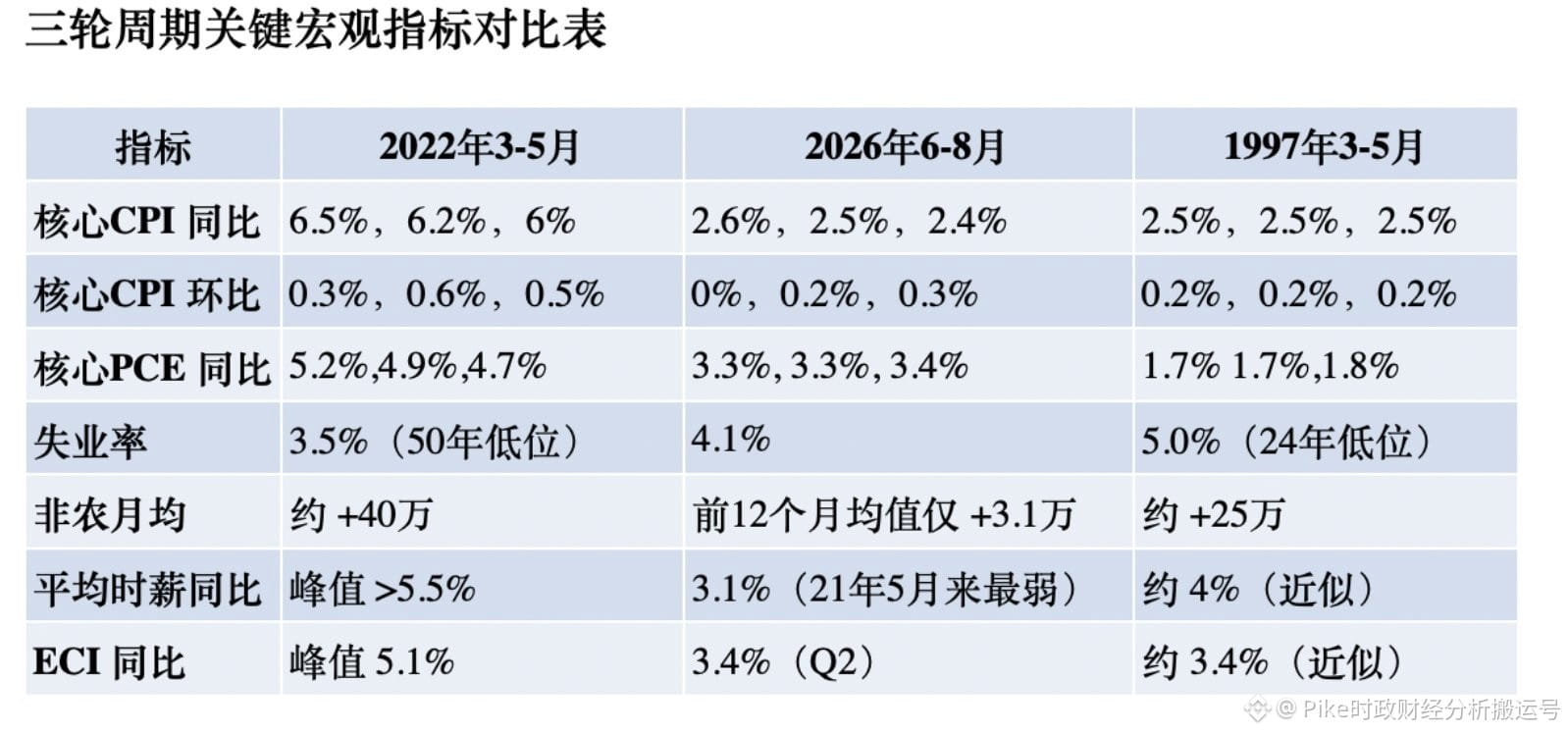
If we compare the three periods of 1997, 2022, and 2026 side by side, it becomes clear that today’s economic conditions do not have the kind of broad overheating seen in 2022. Instead, many key indicators look highly similar to 1997.
Looking back at 2022: with prices, wages, employment, and demand all overheating across the board, the Fed had little choice but to play catch-up with consecutive, large rate hikes. At the time, various metrics were extremely tight. Year-over-year growth in core CPI stayed above 6%, and core PCE was also close to 5%. Meanwhile, the labor market was extremely hot—unemployment was down to around 3.5%, nonfarm payrolls added about 400,000 on average per month, and wage growth was surging. Average hourly earnings’ year-over-year growth at one point topped 5.5%, and the ECI reached 5.1%.
In contrast, the macro picture in 2026 is very different. Over the past three months, year-over-year core CPI has eased from 2.6% to 2.4%, and the month-over-month figures have been 0%, 0.2%, and 0.3% respectively—showing none of the broad and sustained price surge that characterized 2022. On the employment front, the current unemployment rate is 4.1%, while over the past 12 months nonfarm payrolls have averaged only about 31,000 additional jobs per month. Wage growth is also clearly cooling: year-over-year growth in average hourly earnings has already fallen to 3.1%, and the ECI year-over-year data is 3.4%. These figures make it clear that current wage-pressures have been brought under effective control and are nowhere near the edge of running out of control. Since inflation is far below 2022 levels—and there is neither excessive exuberance in the labor market nor accelerating wage growth—the Fed naturally lacks an adequate evidence chain to justify another round of consecutive rate hikes.
So why do people say the current situation is closer to 1997? Back then, in March, after the Fed led by Greenspan raised rates by 25 basis points, it paused and did not continue—creating one of the most classic once-and-done cases in financial history. At that time, core CPI was roughly 2.5%, and overall prices were not out of control. The Fed chose to act early mainly because it feared that an overly fast economic expansion and a tight labor market would ultimately transmit wage pressure into higher prices. But Greenspan also recognized that the internet and the information technology revolution were substantially boosting productivity and potential growth, thereby effectively suppressing workers’ momentum to demand higher pay. In his logic, as long as wages did not push prices higher further, there was no need to extend the tightening policy. And in fact, it turned out that way—the rate hike happened only once and then the story ended.
In summary, in 2022 the Fed was tightening in a catch-up mode, whereas in 1997 its actions were a textbook example of preventive tightening. Looking at 2026, if the Fed were truly to raise rates, its nature would clearly lean toward the latter.
For the upcoming FOMC meeting this Wednesday, my basic forecast is this: even if the Federal Reserve decides to raise rates, it will most likely be a precautionary move of just 25 basis points—that is, a so-called once-and-done (a one-time rate hike). We’re unlikely to see a back-to-back series of hikes like the kind we saw in 2022.
If we compare the three periods of 1997, 2022, and 2026 side by side, it becomes clear that today’s economic conditions do not have the kind of broad overheating seen in 2022. Instead, many key indicators look highly similar to 1997.
Looking back at 2022: with prices, wages, employment, and demand all overheating across the board, the Fed had little choice but to play catch-up with consecutive, large rate hikes. At the time, various metrics were extremely tight. Year-over-year growth in core CPI stayed above 6%, and core PCE was also close to 5%. Meanwhile, the labor market was extremely hot—unemployment was down to around 3.5%, nonfarm payrolls added about 400,000 on average per month, and wage growth was surging. Average hourly earnings’ year-over-year growth at one point topped 5.5%, and the ECI reached 5.1%.
In contrast, the macro picture in 2026 is very different. Over the past three months, year-over-year core CPI has eased from 2.6% to 2.4%, and the month-over-month figures have been 0%, 0.2%, and 0.3% respectively—showing none of the broad and sustained price surge that characterized 2022. On the employment front, the current unemployment rate is 4.1%, while over the past 12 months nonfarm payrolls have averaged only about 31,000 additional jobs per month. Wage growth is also clearly cooling: year-over-year growth in average hourly earnings has already fallen to 3.1%, and the ECI year-over-year data is 3.4%. These figures make it clear that current wage-pressures have been brought under effective control and are nowhere near the edge of running out of control. Since inflation is far below 2022 levels—and there is neither excessive exuberance in the labor market nor accelerating wage growth—the Fed naturally lacks an adequate evidence chain to justify another round of consecutive rate hikes.
So why do people say the current situation is closer to 1997? Back then, in March, after the Fed led by Greenspan raised rates by 25 basis points, it paused and did not continue—creating one of the most classic once-and-done cases in financial history. At that time, core CPI was roughly 2.5%, and overall prices were not out of control. The Fed chose to act early mainly because it feared that an overly fast economic expansion and a tight labor market would ultimately transmit wage pressure into higher prices. But Greenspan also recognized that the internet and the information technology revolution were substantially boosting productivity and potential growth, thereby effectively suppressing workers’ momentum to demand higher pay. In his logic, as long as wages did not push prices higher further, there was no need to extend the tightening policy. And in fact, it turned out that way—the rate hike happened only once and then the story ended.
In summary, in 2022 the Fed was tightening in a catch-up mode, whereas in 1997 its actions were a textbook example of preventive tightening. Looking at 2026, if the Fed were truly to raise rates, its nature would clearly lean toward the latter.
If we compare the three periods of 1997, 2022, and 2026 side by side, it becomes clear that today’s economic conditions do not have the kind of broad overheating seen in 2022. Instead, many key indicators look highly similar to 1997.
Looking back at 2022: with prices, wages, employment, and demand all overheating across the board, the Fed had little choice but to play catch-up with consecutive, large rate hikes. At the time, various metrics were extremely tight. Year-over-year growth in core CPI stayed above 6%, and core PCE was also close to 5%. Meanwhile, the labor market was extremely hot—unemployment was down to around 3.5%, nonfarm payrolls added about 400,000 on average per month, and wage growth was surging. Average hourly earnings’ year-over-year growth at one point topped 5.5%, and the ECI reached 5.1%.
In contrast, the macro picture in 2026 is very different. Over the past three months, year-over-year core CPI has eased from 2.6% to 2.4%, and the month-over-month figures have been 0%, 0.2%, and 0.3% respectively—showing none of the broad and sustained price surge that characterized 2022. On the employment front, the current unemployment rate is 4.1%, while over the past 12 months nonfarm payrolls have averaged only about 31,000 additional jobs per month. Wage growth is also clearly cooling: year-over-year growth in average hourly earnings has already fallen to 3.1%, and the ECI year-over-year data is 3.4%. These figures make it clear that current wage-pressures have been brought under effective control and are nowhere near the edge of running out of control. Since inflation is far below 2022 levels—and there is neither excessive exuberance in the labor market nor accelerating wage growth—the Fed naturally lacks an adequate evidence chain to justify another round of consecutive rate hikes.
So why do people say the current situation is closer to 1997? Back then, in March, after the Fed led by Greenspan raised rates by 25 basis points, it paused and did not continue—creating one of the most classic once-and-done cases in financial history. At that time, core CPI was roughly 2.5%, and overall prices were not out of control. The Fed chose to act early mainly because it feared that an overly fast economic expansion and a tight labor market would ultimately transmit wage pressure into higher prices. But Greenspan also recognized that the internet and the information technology revolution were substantially boosting productivity and potential growth, thereby effectively suppressing workers’ momentum to demand higher pay. In his logic, as long as wages did not push prices higher further, there was no need to extend the tightening policy. And in fact, it turned out that way—the rate hike happened only once and then the story ended.
In summary, in 2022 the Fed was tightening in a catch-up mode, whereas in 1997 its actions were a textbook example of preventive tightening. Looking at 2026, if the Fed were truly to raise rates, its nature would clearly lean toward the latter.
1
909
In the technological game of chicken presented by the Prisoner’s Dilemma, competition between parties is destined never to stop. Therefore, even though Anthropic CEO Dario Amodei published a long essay on Saturday, calling on the entire industry to slow down the development of cutting-edge AI out of concern that AI could trigger a crisis, I still believe that this cannot halt the AI industry’s forward momentum.
Looking back, the warnings issued by the industry in response to the rapid advancement of artificial intelligence are not the first of their kind. As early as March 2023, Musk signed his name on a public letter led by the Future of Life Institute. The rationale behind that initiative is essentially the same as today’s: urging major AI labs worldwide to take action immediately and, at minimum, pause the training of systems whose capabilities surpass GPT-4 for at least six months.
However, Musk’s subsequent moves were full of drama. He soon announced the founding of his Xai company. In reality, while urging the industry to hit the brakes, he was quietly registering the company, recruiting top talent, purchasing massive amounts of computing power, and making a strong move into the field. His true intention was nothing more than to take advantage of the industry’s temporary buffer at the same time, and use it to narrow the gap between himself and OpenAI as well as Google.
In the technological game of chicken presented by the Prisoner’s Dilemma, competition between parties is destined never to stop. Therefore, even though Anthropic CEO Dario Amodei published a long essay on Saturday, calling on the entire industry to slow down the development of cutting-edge AI out of concern that AI could trigger a crisis, I still believe that this cannot halt the AI industry’s forward momentum.
Looking back, the warnings issued by the industry in response to the rapid advancement of artificial intelligence are not the first of their kind. As early as March 2023, Musk signed his name on a public letter led by the Future of Life Institute. The rationale behind that initiative is essentially the same as today’s: urging major AI labs worldwide to take action immediately and, at minimum, pause the training of systems whose capabilities surpass GPT-4 for at least six months.
However, Musk’s subsequent moves were full of drama. He soon announced the founding of his Xai company. In reality, while urging the industry to hit the brakes, he was quietly registering the company, recruiting top talent, purchasing massive amounts of computing power, and making a strong move into the field. His true intention was nothing more than to take advantage of the industry’s temporary buffer at the same time, and use it to narrow the gap between himself and OpenAI as well as Google.
Looking back, the warnings issued by the industry in response to the rapid advancement of artificial intelligence are not the first of their kind. As early as March 2023, Musk signed his name on a public letter led by the Future of Life Institute. The rationale behind that initiative is essentially the same as today’s: urging major AI labs worldwide to take action immediately and, at minimum, pause the training of systems whose capabilities surpass GPT-4 for at least six months.
However, Musk’s subsequent moves were full of drama. He soon announced the founding of his Xai company. In reality, while urging the industry to hit the brakes, he was quietly registering the company, recruiting top talent, purchasing massive amounts of computing power, and making a strong move into the field. His true intention was nothing more than to take advantage of the industry’s temporary buffer at the same time, and use it to narrow the gap between himself and OpenAI as well as Google.

109
According to a report by Le Point, a well-known French news weekly, on September 8, the United States and its Gulf allies are quietly reshaping the Middle East’s crude oil transportation network through a series of joint escort operations on the seas and in the air, route adjustments, and the construction of land-based infrastructure. This chain of moves suggests that Iran is gradually losing its effective control over the Strait of Hormuz. To provide U.S. stock investors with valuable references, I have整理 the key takeaways from the report.
From a macro data perspective, energy exports in the region are steadily recovering from the previous low point. In August alone, crude oil exports through the Strait of Hormuz reached an average of 11.27 million barrels per day. Although this figure is still about 39% lower than the average of 18.47 million barrels per day at the beginning of the pre-war period, it is already clearly out of the worst plunge. Meanwhile, constrained by the U.S. military’s maritime blockade operations, Iran’s domestic crude oil is currently unable to be shipped outward by sea at all.
In terms of maritime shipping security, the U.S. Central Command is working with Gulf ally countries to establish a normalized large-scale escort mechanism. During the five-day period from Sunday to Thursday each week, joint fleets will shield safe passage through the strait for single cargo batches of up to 12 million to 18 million barrels of crude oil. For route planning, the fleet deliberately chooses to travel along a southern corridor that hugs the territorial waters of Oman and the Musandam Peninsula, thereby completely bypassing waterways closer to Iran. To ensure everything is foolproof, the escort operation is equipped with fighter jets and helicopters that launch and land from offshore naval vessels, and it also uses sea drones (unmanned boats) to carry out air-defense and anti-missile missions. Relevant forces also conduct underwater mine sweeping at night, and to date have successfully cleared about 40 mines. As the U.S. military’s ability to control shipping lanes continues to strengthen, the probability of oil tankers being attacked and damaged is steadily declining.
In addition to bolstering maritime escort, neighboring countries are also actively seeking alternative solutions and proactively reducing direct dependence on transiting the strait. At present, Iraq uses truck convoys to transport more than 100,000 barrels of crude oil per day overland to Baniyas Port in Syria, from where it is shipped out. The UAE, meanwhile, is accelerating the expansion of its oil pipeline to Fujairah Port. The project is expected to come into operation in the next year; when it does, its daily capacity is projected to jump to 3.2 to 3.6 million barrels per day, and in the future it may replace nearly 2 million barrels per day of shipment volume that previously required transport via the strait.
In the trading and delivery process, the market has also evolved a brand-new risk-avoidance pattern for major energy buyers such as China and India. These buyers no longer need to risk sending their own ultra-large tankers through the strait to bear war risk insurance costs. Instead, oil tanker fleets from Gulf oil-producing countries such as Kuwait are dispatched to complete the shuttle transport through the strait under the cover of escort formations. The two sides then complete the crude oil delivery via ship-to-ship transfer (STS) in the Gulf of Oman. With this innovative model, the large war-risk insurance premiums and the potential risk of attack are left entirely to exporter fleets that have sovereignty-backed guarantees or coverage under the U.S. $30 billion insurance program—thereby significantly lowering the pickup thresholds and concerns for buyer customers.
According to a report by Le Point, a well-known French news weekly, on September 8, the United States and its Gulf allies are quietly reshaping the Middle East’s crude oil transportation network through a series of joint escort operations on the seas and in the air, route adjustments, and the construction of land-based infrastructure. This chain of moves suggests that Iran is gradually losing its effective control over the Strait of Hormuz. To provide U.S. stock investors with valuable references, I have整理 the key takeaways from the report.
From a macro data perspective, energy exports in the region are steadily recovering from the previous low point. In August alone, crude oil exports through the Strait of Hormuz reached an average of 11.27 million barrels per day. Although this figure is still about 39% lower than the average of 18.47 million barrels per day at the beginning of the pre-war period, it is already clearly out of the worst plunge. Meanwhile, constrained by the U.S. military’s maritime blockade operations, Iran’s domestic crude oil is currently unable to be shipped outward by sea at all.
In terms of maritime shipping security, the U.S. Central Command is working with Gulf ally countries to establish a normalized large-scale escort mechanism. During the five-day period from Sunday to Thursday each week, joint fleets will shield safe passage through the strait for single cargo batches of up to 12 million to 18 million barrels of crude oil. For route planning, the fleet deliberately chooses to travel along a southern corridor that hugs the territorial waters of Oman and the Musandam Peninsula, thereby completely bypassing waterways closer to Iran. To ensure everything is foolproof, the escort operation is equipped with fighter jets and helicopters that launch and land from offshore naval vessels, and it also uses sea drones (unmanned boats) to carry out air-defense and anti-missile missions. Relevant forces also conduct underwater mine sweeping at night, and to date have successfully cleared about 40 mines. As the U.S. military’s ability to control shipping lanes continues to strengthen, the probability of oil tankers being attacked and damaged is steadily declining.
In addition to bolstering maritime escort, neighboring countries are also actively seeking alternative solutions and proactively reducing direct dependence on transiting the strait. At present, Iraq uses truck convoys to transport more than 100,000 barrels of crude oil per day overland to Baniyas Port in Syria, from where it is shipped out. The UAE, meanwhile, is accelerating the expansion of its oil pipeline to Fujairah Port. The project is expected to come into operation in the next year; when it does, its daily capacity is projected to jump to 3.2 to 3.6 million barrels per day, and in the future it may replace nearly 2 million barrels per day of shipment volume that previously required transport via the strait.
In the trading and delivery process, the market has also evolved a brand-new risk-avoidance pattern for major energy buyers such as China and India. These buyers no longer need to risk sending their own ultra-large tankers through the strait to bear war risk insurance costs. Instead, oil tanker fleets from Gulf oil-producing countries such as Kuwait are dispatched to complete the shuttle transport through the strait under the cover of escort formations. The two sides then complete the crude oil delivery via ship-to-ship transfer (STS) in the Gulf of Oman. With this innovative model, the large war-risk insurance premiums and the potential risk of attack are left entirely to exporter fleets that have sovereignty-backed guarantees or coverage under the U.S. $30 billion insurance program—thereby significantly lowering the pickup thresholds and concerns for buyer customers.
From a macro data perspective, energy exports in the region are steadily recovering from the previous low point. In August alone, crude oil exports through the Strait of Hormuz reached an average of 11.27 million barrels per day. Although this figure is still about 39% lower than the average of 18.47 million barrels per day at the beginning of the pre-war period, it is already clearly out of the worst plunge. Meanwhile, constrained by the U.S. military’s maritime blockade operations, Iran’s domestic crude oil is currently unable to be shipped outward by sea at all.
In terms of maritime shipping security, the U.S. Central Command is working with Gulf ally countries to establish a normalized large-scale escort mechanism. During the five-day period from Sunday to Thursday each week, joint fleets will shield safe passage through the strait for single cargo batches of up to 12 million to 18 million barrels of crude oil. For route planning, the fleet deliberately chooses to travel along a southern corridor that hugs the territorial waters of Oman and the Musandam Peninsula, thereby completely bypassing waterways closer to Iran. To ensure everything is foolproof, the escort operation is equipped with fighter jets and helicopters that launch and land from offshore naval vessels, and it also uses sea drones (unmanned boats) to carry out air-defense and anti-missile missions. Relevant forces also conduct underwater mine sweeping at night, and to date have successfully cleared about 40 mines. As the U.S. military’s ability to control shipping lanes continues to strengthen, the probability of oil tankers being attacked and damaged is steadily declining.
In addition to bolstering maritime escort, neighboring countries are also actively seeking alternative solutions and proactively reducing direct dependence on transiting the strait. At present, Iraq uses truck convoys to transport more than 100,000 barrels of crude oil per day overland to Baniyas Port in Syria, from where it is shipped out. The UAE, meanwhile, is accelerating the expansion of its oil pipeline to Fujairah Port. The project is expected to come into operation in the next year; when it does, its daily capacity is projected to jump to 3.2 to 3.6 million barrels per day, and in the future it may replace nearly 2 million barrels per day of shipment volume that previously required transport via the strait.
In the trading and delivery process, the market has also evolved a brand-new risk-avoidance pattern for major energy buyers such as China and India. These buyers no longer need to risk sending their own ultra-large tankers through the strait to bear war risk insurance costs. Instead, oil tanker fleets from Gulf oil-producing countries such as Kuwait are dispatched to complete the shuttle transport through the strait under the cover of escort formations. The two sides then complete the crude oil delivery via ship-to-ship transfer (STS) in the Gulf of Oman. With this innovative model, the large war-risk insurance premiums and the potential risk of attack are left entirely to exporter fleets that have sovereignty-backed guarantees or coverage under the U.S. $30 billion insurance program—thereby significantly lowering the pickup thresholds and concerns for buyer customers.

140
Lite saw a strong 12% gain today. Now’s a great opportunity to talk with everyone about the investment logic behind it.
As AI models continue to grow larger and more complex, future data centers will inevitably need even greater computing power support and more GPUs to work in coordination. Under this trend, optical communications technology naturally will play an increasingly critical role across three major dimensions: Scale-up, Scale-out, and Scale-across.
Against this backdrop, Lumentum’s business layout precisely covers several core areas in AI optical interconnect.
First, we have to mention EML lasers. Today, whether it’s 800G, 1.6T, or the next generation of high-speed optical modules, they are constantly iterating, and per-channel transmission rates are gradually moving toward 200G and even higher levels. With AI computing clusters accelerating their expansion, market demand for high-end EMLs has become even more robust. Looking across the entire industry, in the niche segment of 200G/lane EML, Lite is currently one of only two companies with core competitive strength.
Second is the externally mounted continuous-wave laser, or CW Laser. Looking ahead, regardless of whether the approach uses silicon photonics technology, CPO packaging, or an external light source architecture, lasers are an indispensable core component. Industry change is essentially just moving the light source from inside the optical module to outside it, in some other location. Therefore, as the industry’s technology route evolves from traditional pluggable optical modules toward silicon photonics and CPO, this will undoubtedly be an excellent opportunity for Lumentum to optimize and upgrade its product structure.
Another important product is the OCS optical circuit switch. Devices of this type can directly reconfigure network connections at the optical domain level, effectively reducing the hierarchy of traditional electrical switching layers. The advantage of this architecture is that it can significantly lower the system’s overall power consumption and signal latency, while also markedly improving the real utilization efficiency of GPUs. As the scale of AI training clusters continues to grow larger, the data traffic between GPU nodes becomes extremely complex, and the application value that OCS can deliver becomes even higher.
Finally, let me briefly review the specific trading actions regarding Lite that I shared with everyone earlier in my Discord members’ group: I added to my position at the price levels of 700, 800, 820, and 850, and then reduced my position at 930 and 970.
Lite saw a strong 12% gain today. Now’s a great opportunity to talk with everyone about the investment logic behind it.
As AI models continue to grow larger and more complex, future data centers will inevitably need even greater computing power support and more GPUs to work in coordination. Under this trend, optical communications technology naturally will play an increasingly critical role across three major dimensions: Scale-up, Scale-out, and Scale-across.
Against this backdrop, Lumentum’s business layout precisely covers several core areas in AI optical interconnect.
First, we have to mention EML lasers. Today, whether it’s 800G, 1.6T, or the next generation of high-speed optical modules, they are constantly iterating, and per-channel transmission rates are gradually moving toward 200G and even higher levels. With AI computing clusters accelerating their expansion, market demand for high-end EMLs has become even more robust. Looking across the entire industry, in the niche segment of 200G/lane EML, Lite is currently one of only two companies with core competitive strength.
Second is the externally mounted continuous-wave laser, or CW Laser. Looking ahead, regardless of whether the approach uses silicon photonics technology, CPO packaging, or an external light source architecture, lasers are an indispensable core component. Industry change is essentially just moving the light source from inside the optical module to outside it, in some other location. Therefore, as the industry’s technology route evolves from traditional pluggable optical modules toward silicon photonics and CPO, this will undoubtedly be an excellent opportunity for Lumentum to optimize and upgrade its product structure.
Another important product is the OCS optical circuit switch. Devices of this type can directly reconfigure network connections at the optical domain level, effectively reducing the hierarchy of traditional electrical switching layers. The advantage of this architecture is that it can significantly lower the system’s overall power consumption and signal latency, while also markedly improving the real utilization efficiency of GPUs. As the scale of AI training clusters continues to grow larger, the data traffic between GPU nodes becomes extremely complex, and the application value that OCS can deliver becomes even higher.
Finally, let me briefly review the specific trading actions regarding Lite that I shared with everyone earlier in my Discord members’ group: I added to my position at the price levels of 700, 800, 820, and 850, and then reduced my position at 930 and 970.
As AI models continue to grow larger and more complex, future data centers will inevitably need even greater computing power support and more GPUs to work in coordination. Under this trend, optical communications technology naturally will play an increasingly critical role across three major dimensions: Scale-up, Scale-out, and Scale-across.
Against this backdrop, Lumentum’s business layout precisely covers several core areas in AI optical interconnect.
First, we have to mention EML lasers. Today, whether it’s 800G, 1.6T, or the next generation of high-speed optical modules, they are constantly iterating, and per-channel transmission rates are gradually moving toward 200G and even higher levels. With AI computing clusters accelerating their expansion, market demand for high-end EMLs has become even more robust. Looking across the entire industry, in the niche segment of 200G/lane EML, Lite is currently one of only two companies with core competitive strength.
Second is the externally mounted continuous-wave laser, or CW Laser. Looking ahead, regardless of whether the approach uses silicon photonics technology, CPO packaging, or an external light source architecture, lasers are an indispensable core component. Industry change is essentially just moving the light source from inside the optical module to outside it, in some other location. Therefore, as the industry’s technology route evolves from traditional pluggable optical modules toward silicon photonics and CPO, this will undoubtedly be an excellent opportunity for Lumentum to optimize and upgrade its product structure.
Another important product is the OCS optical circuit switch. Devices of this type can directly reconfigure network connections at the optical domain level, effectively reducing the hierarchy of traditional electrical switching layers. The advantage of this architecture is that it can significantly lower the system’s overall power consumption and signal latency, while also markedly improving the real utilization efficiency of GPUs. As the scale of AI training clusters continues to grow larger, the data traffic between GPU nodes becomes extremely complex, and the application value that OCS can deliver becomes even higher.
Finally, let me briefly review the specific trading actions regarding Lite that I shared with everyone earlier in my Discord members’ group: I added to my position at the price levels of 700, 800, 820, and 850, and then reduced my position at 930 and 970.
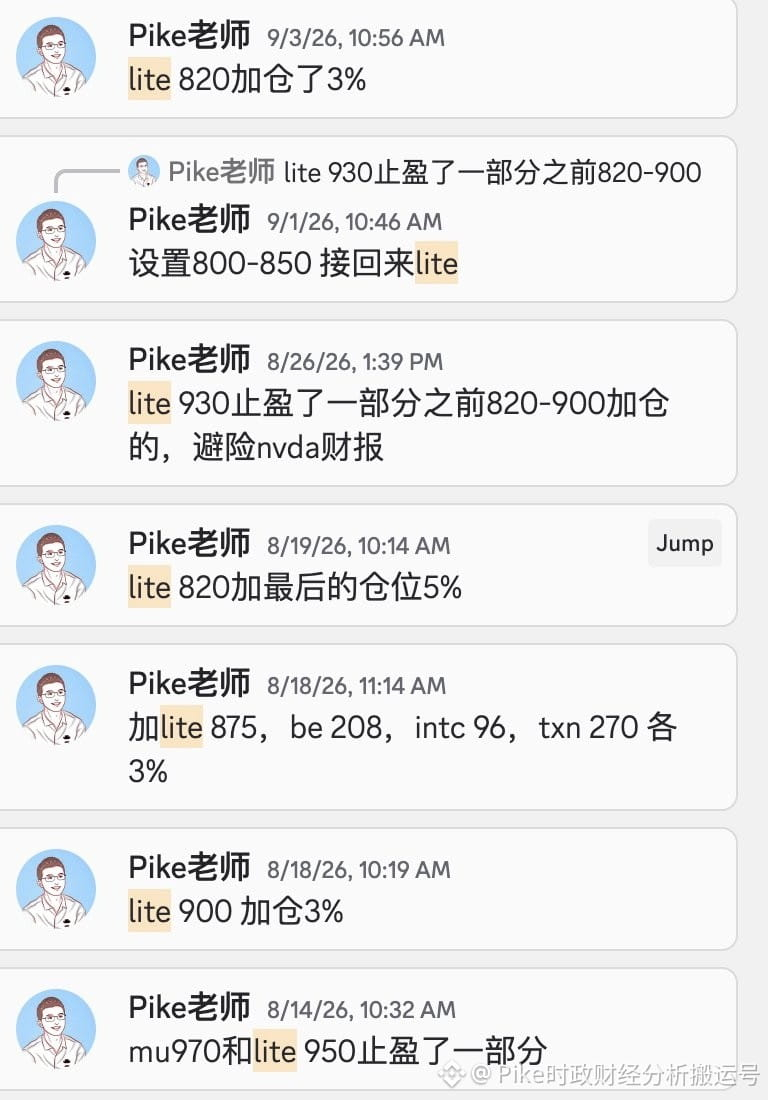


138
Goldman Sachs recently released its latest research report on the storage industry. The data shows that the overall price of the storage market in 3Q26 continues to maintain a strong upward momentum. From the overall trend, the server DRAM and NAND segments remain extremely buoyant. Since major suppliers are currently prioritizing and allocating production capacity to server DRAM and HBM, this capacity scheduling provides solid support for market prices, and related price increases are expected to continue through 2027.
In specific sub-segments, TrendForce has given a more optimistic forecast for PC DRAM pricing in 3Q26, officially raising its QoQ increase forecast from the original +15%–20% range to +18%–23%. This latest expectation is slightly above Goldman Sachs' forecast of +17%. In addition, for server DRAM, TrendForce expects a QoQ increase of +13%–18%, which is broadly in line with Goldman Sachs' estimate of +18%.
Compared with the strong performance on the server side, DRAM and NAND price increases in the consumer electronics sector appear relatively moderate. The core reason behind this is that market demand for smartphones and PCs has recently weakened to some extent. At the same time, elevated inventories accumulated by downstream customers have also directly led to a slowdown in their short-term purchasing pace.
For mobile devices, TrendForce estimates that mobile DRAM will rise by +8%–13% QoQ in 3Q26, a figure slightly below Goldman Sachs' forecast of +14%. Not only that, by 4Q26, the upside for mobile DRAM is expected to narrow further to 0%–5%. Finally, in mobile NAND, the contract price of 256GB eMMC/UFS is expected to rise by about +20% QoQ, a performance that is very much in line with Goldman Sachs' earlier forecast of +15%–20% growth for the overall NAND market.
Goldman Sachs recently released its latest research report on the storage industry. The data shows that the overall price of the storage market in 3Q26 continues to maintain a strong upward momentum. From the overall trend, the server DRAM and NAND segments remain extremely buoyant. Since major suppliers are currently prioritizing and allocating production capacity to server DRAM and HBM, this capacity scheduling provides solid support for market prices, and related price increases are expected to continue through 2027.
In specific sub-segments, TrendForce has given a more optimistic forecast for PC DRAM pricing in 3Q26, officially raising its QoQ increase forecast from the original +15%–20% range to +18%–23%. This latest expectation is slightly above Goldman Sachs' forecast of +17%. In addition, for server DRAM, TrendForce expects a QoQ increase of +13%–18%, which is broadly in line with Goldman Sachs' estimate of +18%.
Compared with the strong performance on the server side, DRAM and NAND price increases in the consumer electronics sector appear relatively moderate. The core reason behind this is that market demand for smartphones and PCs has recently weakened to some extent. At the same time, elevated inventories accumulated by downstream customers have also directly led to a slowdown in their short-term purchasing pace.
For mobile devices, TrendForce estimates that mobile DRAM will rise by +8%–13% QoQ in 3Q26, a figure slightly below Goldman Sachs' forecast of +14%. Not only that, by 4Q26, the upside for mobile DRAM is expected to narrow further to 0%–5%. Finally, in mobile NAND, the contract price of 256GB eMMC/UFS is expected to rise by about +20% QoQ, a performance that is very much in line with Goldman Sachs' earlier forecast of +15%–20% growth for the overall NAND market.
In specific sub-segments, TrendForce has given a more optimistic forecast for PC DRAM pricing in 3Q26, officially raising its QoQ increase forecast from the original +15%–20% range to +18%–23%. This latest expectation is slightly above Goldman Sachs' forecast of +17%. In addition, for server DRAM, TrendForce expects a QoQ increase of +13%–18%, which is broadly in line with Goldman Sachs' estimate of +18%.
Compared with the strong performance on the server side, DRAM and NAND price increases in the consumer electronics sector appear relatively moderate. The core reason behind this is that market demand for smartphones and PCs has recently weakened to some extent. At the same time, elevated inventories accumulated by downstream customers have also directly led to a slowdown in their short-term purchasing pace.
For mobile devices, TrendForce estimates that mobile DRAM will rise by +8%–13% QoQ in 3Q26, a figure slightly below Goldman Sachs' forecast of +14%. Not only that, by 4Q26, the upside for mobile DRAM is expected to narrow further to 0%–5%. Finally, in mobile NAND, the contract price of 256GB eMMC/UFS is expected to rise by about +20% QoQ, a performance that is very much in line with Goldman Sachs' earlier forecast of +15%–20% growth for the overall NAND market.
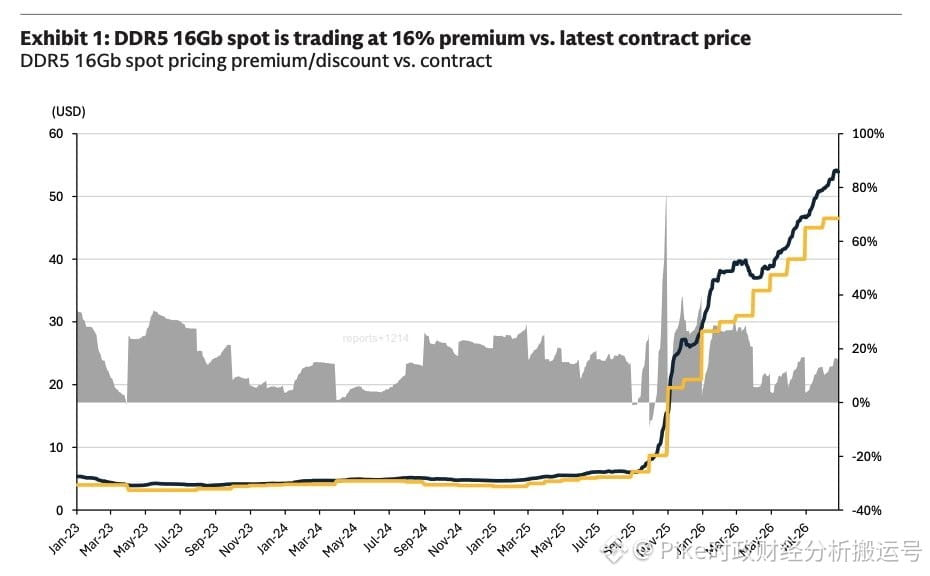
1
221
Since the low point in July, crude oil transportation has shown a sustained recovery trend. According to the latest 7-day tracking data, the average daily volume of crude oil transported has reached about 8.1 million barrels.
If we compare the current overall transportation flow with pre-war levels, we can see that it is roughly equivalent to 76% of the total throughput of several major core routes at that time. The pre-war total flow used here as the benchmark covers the combined throughput of the Strait of Hormuz, Saudi Arabia's east-west oil pipeline to Yanbu, and the UAE's ADCOP pipeline.
It is also worth noting that the current estimates do not include dark vessels that turn off their AIS systems for covert navigation. This means that the actual amount of crude oil circulating in reality is likely even higher than the existing statistics show.
Since the low point in July, crude oil transportation has shown a sustained recovery trend. According to the latest 7-day tracking data, the average daily volume of crude oil transported has reached about 8.1 million barrels.
If we compare the current overall transportation flow with pre-war levels, we can see that it is roughly equivalent to 76% of the total throughput of several major core routes at that time. The pre-war total flow used here as the benchmark covers the combined throughput of the Strait of Hormuz, Saudi Arabia's east-west oil pipeline to Yanbu, and the UAE's ADCOP pipeline.
It is also worth noting that the current estimates do not include dark vessels that turn off their AIS systems for covert navigation. This means that the actual amount of crude oil circulating in reality is likely even higher than the existing statistics show.
If we compare the current overall transportation flow with pre-war levels, we can see that it is roughly equivalent to 76% of the total throughput of several major core routes at that time. The pre-war total flow used here as the benchmark covers the combined throughput of the Strait of Hormuz, Saudi Arabia's east-west oil pipeline to Yanbu, and the UAE's ADCOP pipeline.
It is also worth noting that the current estimates do not include dark vessels that turn off their AIS systems for covert navigation. This means that the actual amount of crude oil circulating in reality is likely even higher than the existing statistics show.
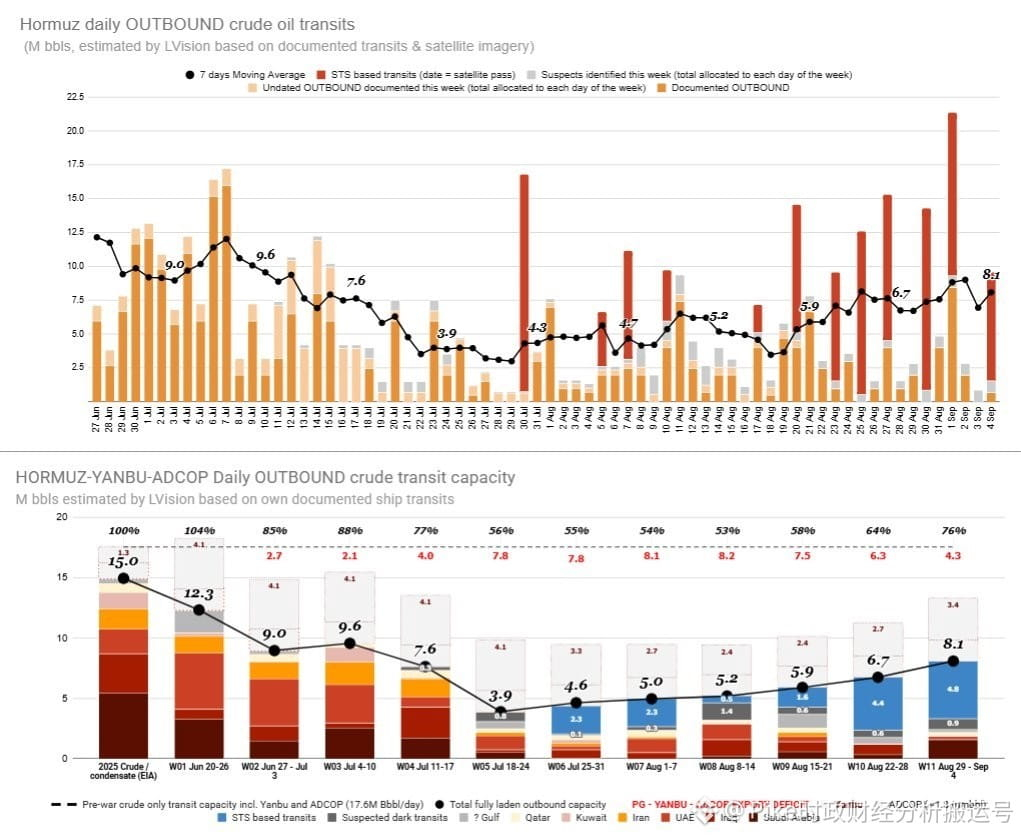
538
In the data released on September 4, nonfarm payrolls unexpectedly increased by 162,000. If you examine this report closely, you will find that the industry distribution of new jobs was extremely concentrated. Specifically, the food services sector and local government education alone contributed a combined 101,000 new jobs, accounting for 62% of the total increase.
We can first look at the local education segment. The rise in employment in this industry is actually more like a statistical rebound triggered by the back-to-school season and seasonal adjustments. Therefore, objectively speaking, we cannot simply project this short-term phenomenon into the future and assume that this sector can continue to add 40,000 jobs every month.
At the same time, the performance of the food services industry was also very striking. This sector added 59,000 jobs in a single month this time. It is worth noting that over the past 12 months, the average monthly job gain in food services was only 12,000. This means that the growth rate this time reached nearly five times the normal level, showing an unusually sharp jump. As for the reasons behind it, this may include strong consumer demand from the summer travel peak, errors brought about by seasonal adjustments, and labor timing mismatches before and after the end of some large events.
Compared with the two sectors above, the improving trends in construction and manufacturing are what truly deserve our close attention. Employment gains in these two industries have a certain degree of sustainability, because they genuinely reflect the acceleration of supply chain localization, as well as the prosperity seen in multiple areas such as energy, infrastructure investment, data centers, manufacturing construction, and power facilities.
Finally, from the perspective of macro policy, the Federal Reserve currently does not view current wage or employment growth as the main source of inflationary pressure. For this reason, this employment report itself does not provide a sufficient basis to support aggressive rate hikes. However, on the other hand, it does correspondingly reduce market expectations for rate cuts.
In the data released on September 4, nonfarm payrolls unexpectedly increased by 162,000. If you examine this report closely, you will find that the industry distribution of new jobs was extremely concentrated. Specifically, the food services sector and local government education alone contributed a combined 101,000 new jobs, accounting for 62% of the total increase.
We can first look at the local education segment. The rise in employment in this industry is actually more like a statistical rebound triggered by the back-to-school season and seasonal adjustments. Therefore, objectively speaking, we cannot simply project this short-term phenomenon into the future and assume that this sector can continue to add 40,000 jobs every month.
At the same time, the performance of the food services industry was also very striking. This sector added 59,000 jobs in a single month this time. It is worth noting that over the past 12 months, the average monthly job gain in food services was only 12,000. This means that the growth rate this time reached nearly five times the normal level, showing an unusually sharp jump. As for the reasons behind it, this may include strong consumer demand from the summer travel peak, errors brought about by seasonal adjustments, and labor timing mismatches before and after the end of some large events.
Compared with the two sectors above, the improving trends in construction and manufacturing are what truly deserve our close attention. Employment gains in these two industries have a certain degree of sustainability, because they genuinely reflect the acceleration of supply chain localization, as well as the prosperity seen in multiple areas such as energy, infrastructure investment, data centers, manufacturing construction, and power facilities.
Finally, from the perspective of macro policy, the Federal Reserve currently does not view current wage or employment growth as the main source of inflationary pressure. For this reason, this employment report itself does not provide a sufficient basis to support aggressive rate hikes. However, on the other hand, it does correspondingly reduce market expectations for rate cuts.
We can first look at the local education segment. The rise in employment in this industry is actually more like a statistical rebound triggered by the back-to-school season and seasonal adjustments. Therefore, objectively speaking, we cannot simply project this short-term phenomenon into the future and assume that this sector can continue to add 40,000 jobs every month.
At the same time, the performance of the food services industry was also very striking. This sector added 59,000 jobs in a single month this time. It is worth noting that over the past 12 months, the average monthly job gain in food services was only 12,000. This means that the growth rate this time reached nearly five times the normal level, showing an unusually sharp jump. As for the reasons behind it, this may include strong consumer demand from the summer travel peak, errors brought about by seasonal adjustments, and labor timing mismatches before and after the end of some large events.
Compared with the two sectors above, the improving trends in construction and manufacturing are what truly deserve our close attention. Employment gains in these two industries have a certain degree of sustainability, because they genuinely reflect the acceleration of supply chain localization, as well as the prosperity seen in multiple areas such as energy, infrastructure investment, data centers, manufacturing construction, and power facilities.
Finally, from the perspective of macro policy, the Federal Reserve currently does not view current wage or employment growth as the main source of inflationary pressure. For this reason, this employment report itself does not provide a sufficient basis to support aggressive rate hikes. However, on the other hand, it does correspondingly reduce market expectations for rate cuts.
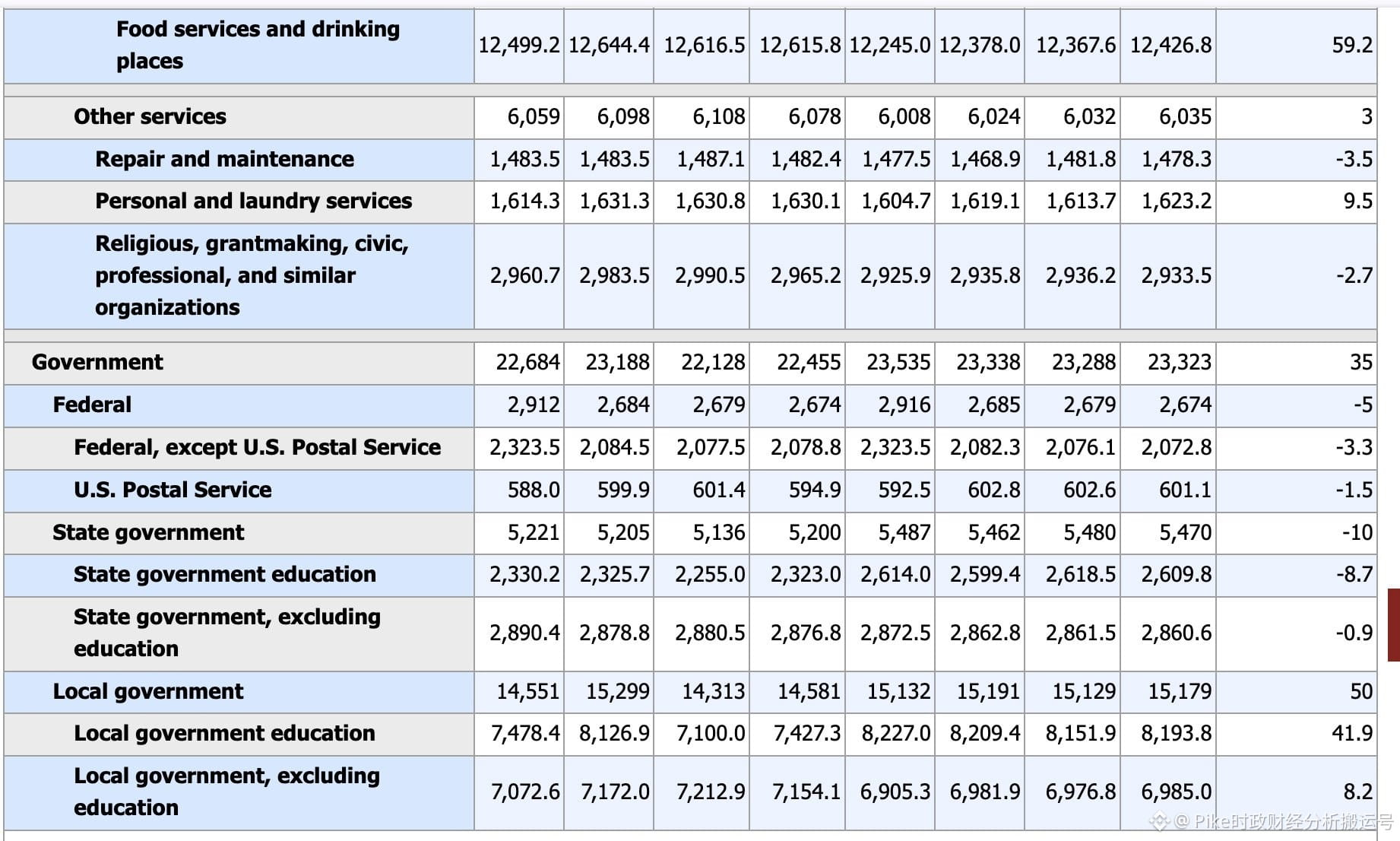
219
According to the latest report released by the Institute for the Study of War (ISW) on September 2, the measures the United States has taken to restore the free navigation of the Strait of Hormuz have shown early results. More and more commercial vessels are now choosing to sail through the southern passage and successfully doing so. This positive shift is attributed to a strike operation carried out by the U.S. military on September 1, which successfully weakened Iran’s capabilities in maritime operations, radar surveillance, and mine laying.
Although the shipping environment in the strait has indeed improved in the short term, the potential risks facing the Strait of Hormuz have not been completely eliminated. The report reminds the public that Iran has not truly relinquished control over this crucial waterway and is working to rebuild the relevant military capabilities. Based on the above, it is expected that the fierce game between the United States and Iran over control of this route will continue for the foreseeable future.
According to the latest report released by the Institute for the Study of War (ISW) on September 2, the measures the United States has taken to restore the free navigation of the Strait of Hormuz have shown early results. More and more commercial vessels are now choosing to sail through the southern passage and successfully doing so. This positive shift is attributed to a strike operation carried out by the U.S. military on September 1, which successfully weakened Iran’s capabilities in maritime operations, radar surveillance, and mine laying.
Although the shipping environment in the strait has indeed improved in the short term, the potential risks facing the Strait of Hormuz have not been completely eliminated. The report reminds the public that Iran has not truly relinquished control over this crucial waterway and is working to rebuild the relevant military capabilities. Based on the above, it is expected that the fierce game between the United States and Iran over control of this route will continue for the foreseeable future.
Although the shipping environment in the strait has indeed improved in the short term, the potential risks facing the Strait of Hormuz have not been completely eliminated. The report reminds the public that Iran has not truly relinquished control over this crucial waterway and is working to rebuild the relevant military capabilities. Based on the above, it is expected that the fierce game between the United States and Iran over control of this route will continue for the foreseeable future.

809
STRONG US ECONOMY BEHIND RISING
BOND YIELDS SAYS FEDS WILLIAMS
The recent rise in long-term bond yields is a direct reflection of the strong health of the U.S. economy, rather than growing market concerns about inflation, according to John Williams. The president of the New York Fed also noted that the labor market remains very solid, emphasizing that the Fed must assess additional economic data before finalizing its next interest rate decision.
John Williams of the U.S. Federal Reserve: Strong U.S. economy boosts bond yields
STRONG US ECONOMY BEHIND RISING
BOND YIELDS SAYS FEDS WILLIAMS
The recent rise in long-term bond yields is a direct reflection of the strong health of the U.S. economy, rather than growing market concerns about inflation, according to John Williams. The president of the New York Fed also noted that the labor market remains very solid, emphasizing that the Fed must assess additional economic data before finalizing its next interest rate decision.
John Williams of the U.S. Federal Reserve: Strong U.S. economy boosts bond yields
BOND YIELDS SAYS FEDS WILLIAMS
The recent rise in long-term bond yields is a direct reflection of the strong health of the U.S. economy, rather than growing market concerns about inflation, according to John Williams. The president of the New York Fed also noted that the labor market remains very solid, emphasizing that the Fed must assess additional economic data before finalizing its next interest rate decision.
John Williams of the U.S. Federal Reserve: Strong U.S. economy boosts bond yields
185
Recent tensions between the United States and Iran show signs of further escalation, but there is no need to be overly concerned. Overall, the situation is still within controllable limits. Judging from the current circumstances, both sides in the confrontation hope to use military force to build more leverage for the upcoming negotiations, while both also face the objective reality that they urgently need to reach some kind of agreement to avoid getting stuck in a prolonged war.
Looking back at the recent developments, after nearly a month-long gap in direct military confrontation, calm was once again broken. Earlier, Trump issued a clear warning to Iran, emphasizing that the United States would take a zero-tolerance approach to actions involving renewed mine-laying. Therefore, the U.S. attack that destroyed the relevant launch devices is a concrete fulfillment of its earlier tough stance.
In retaliation for the destruction of the launch devices, Iran then fired ballistic missiles toward Jordan. According to an official update from Jordan, the air defense system intercepted a total of eight incoming missiles. Fortunately, as of now, the incident has not caused any damage to infrastructure and has not resulted in any casualties. Overall, although there are signs of conflict escalation, the U.S.-Iran standoff remains within a framework that both sides can manage.
Recent tensions between the United States and Iran show signs of further escalation, but there is no need to be overly concerned. Overall, the situation is still within controllable limits. Judging from the current circumstances, both sides in the confrontation hope to use military force to build more leverage for the upcoming negotiations, while both also face the objective reality that they urgently need to reach some kind of agreement to avoid getting stuck in a prolonged war.
Looking back at the recent developments, after nearly a month-long gap in direct military confrontation, calm was once again broken. Earlier, Trump issued a clear warning to Iran, emphasizing that the United States would take a zero-tolerance approach to actions involving renewed mine-laying. Therefore, the U.S. attack that destroyed the relevant launch devices is a concrete fulfillment of its earlier tough stance.
In retaliation for the destruction of the launch devices, Iran then fired ballistic missiles toward Jordan. According to an official update from Jordan, the air defense system intercepted a total of eight incoming missiles. Fortunately, as of now, the incident has not caused any damage to infrastructure and has not resulted in any casualties. Overall, although there are signs of conflict escalation, the U.S.-Iran standoff remains within a framework that both sides can manage.
Looking back at the recent developments, after nearly a month-long gap in direct military confrontation, calm was once again broken. Earlier, Trump issued a clear warning to Iran, emphasizing that the United States would take a zero-tolerance approach to actions involving renewed mine-laying. Therefore, the U.S. attack that destroyed the relevant launch devices is a concrete fulfillment of its earlier tough stance.
In retaliation for the destruction of the launch devices, Iran then fired ballistic missiles toward Jordan. According to an official update from Jordan, the air defense system intercepted a total of eight incoming missiles. Fortunately, as of now, the incident has not caused any damage to infrastructure and has not resulted in any casualties. Overall, although there are signs of conflict escalation, the U.S.-Iran standoff remains within a framework that both sides can manage.

235
The essence of the finance and trading industry is, in fact, a lesson in credit. Therefore, a platform’s public image is often closely tied to the personal qualities of its founder. As you can see, Sun Yuchen has indeed used a series of sensational disclosure events related to Zeng Tian to generate hype and stir up discussion, thereby increasing attention for the Huobi platform. This kind of marketing strategy may seem very clever on the surface, but from a long-term perspective, it may well lead to consequences that are not worth the cost.
We need to be clear that sheer exposure can never be equated with the trust of the public. Chasing negative heat created by controversial events can certainly boost discussion volume dramatically in the short term and draw attention, but in the process, an individual’s good reputation is being continuously depleted.
If, solely in pursuit of immediate short-term gains, someone easily abandons an attitude of sincerity toward others, the sense of appropriate boundaries, and basic principles of conduct, then even if they win a flood of attention today, they may very well face partners leaving, users losing confidence, and long-term damage to their reputation in the future.
In reality, true wisdom does not lie in how cleverly one can seize every opportunity to profit. Rather, it lies in being able to clearly define which money should not be earned and which things should not be done. Scheming and calculations might let you gain the upper hand in the short term, but only by holding fast to the foundation of sincerity can a business develop steadily and endure over time.
The essence of the finance and trading industry is, in fact, a lesson in credit. Therefore, a platform’s public image is often closely tied to the personal qualities of its founder. As you can see, Sun Yuchen has indeed used a series of sensational disclosure events related to Zeng Tian to generate hype and stir up discussion, thereby increasing attention for the Huobi platform. This kind of marketing strategy may seem very clever on the surface, but from a long-term perspective, it may well lead to consequences that are not worth the cost.
We need to be clear that sheer exposure can never be equated with the trust of the public. Chasing negative heat created by controversial events can certainly boost discussion volume dramatically in the short term and draw attention, but in the process, an individual’s good reputation is being continuously depleted.
If, solely in pursuit of immediate short-term gains, someone easily abandons an attitude of sincerity toward others, the sense of appropriate boundaries, and basic principles of conduct, then even if they win a flood of attention today, they may very well face partners leaving, users losing confidence, and long-term damage to their reputation in the future.
In reality, true wisdom does not lie in how cleverly one can seize every opportunity to profit. Rather, it lies in being able to clearly define which money should not be earned and which things should not be done. Scheming and calculations might let you gain the upper hand in the short term, but only by holding fast to the foundation of sincerity can a business develop steadily and endure over time.
We need to be clear that sheer exposure can never be equated with the trust of the public. Chasing negative heat created by controversial events can certainly boost discussion volume dramatically in the short term and draw attention, but in the process, an individual’s good reputation is being continuously depleted.
If, solely in pursuit of immediate short-term gains, someone easily abandons an attitude of sincerity toward others, the sense of appropriate boundaries, and basic principles of conduct, then even if they win a flood of attention today, they may very well face partners leaving, users losing confidence, and long-term damage to their reputation in the future.
In reality, true wisdom does not lie in how cleverly one can seize every opportunity to profit. Rather, it lies in being able to clearly define which money should not be earned and which things should not be done. Scheming and calculations might let you gain the upper hand in the short term, but only by holding fast to the foundation of sincerity can a business develop steadily and endure over time.
273
Log in to explore more content
Join global crypto users on Binance Square
⚡️ Get latest and useful information about crypto.
💬 Trusted by the world’s largest crypto exchange.
👍 Discover real insights from verified creators.
Email / Phone number