
福禄寿炒币版
847 Posts

福禄寿炒币版
 Square Verified
Report
Block User
牛熊现货周期信仰者,一定能炒币致富!
95 Following
10.2K+ Followers
9.6K+ Liked
Posts
All
Quotes
Videos
Live
·
--
I rarely recommend coins, because behind a simple “I’m bullish” there may be other people’s real trust backed by hard-earned money. This year I recommended UNI and LIT and didn’t miss, but I’m still ashamed—I couldn’t hold onto them. During the downturn I even swapped everything into BTC. I made the right choice, but didn’t make the money—that’s not a market issue; it’s because my practice isn’t enough.
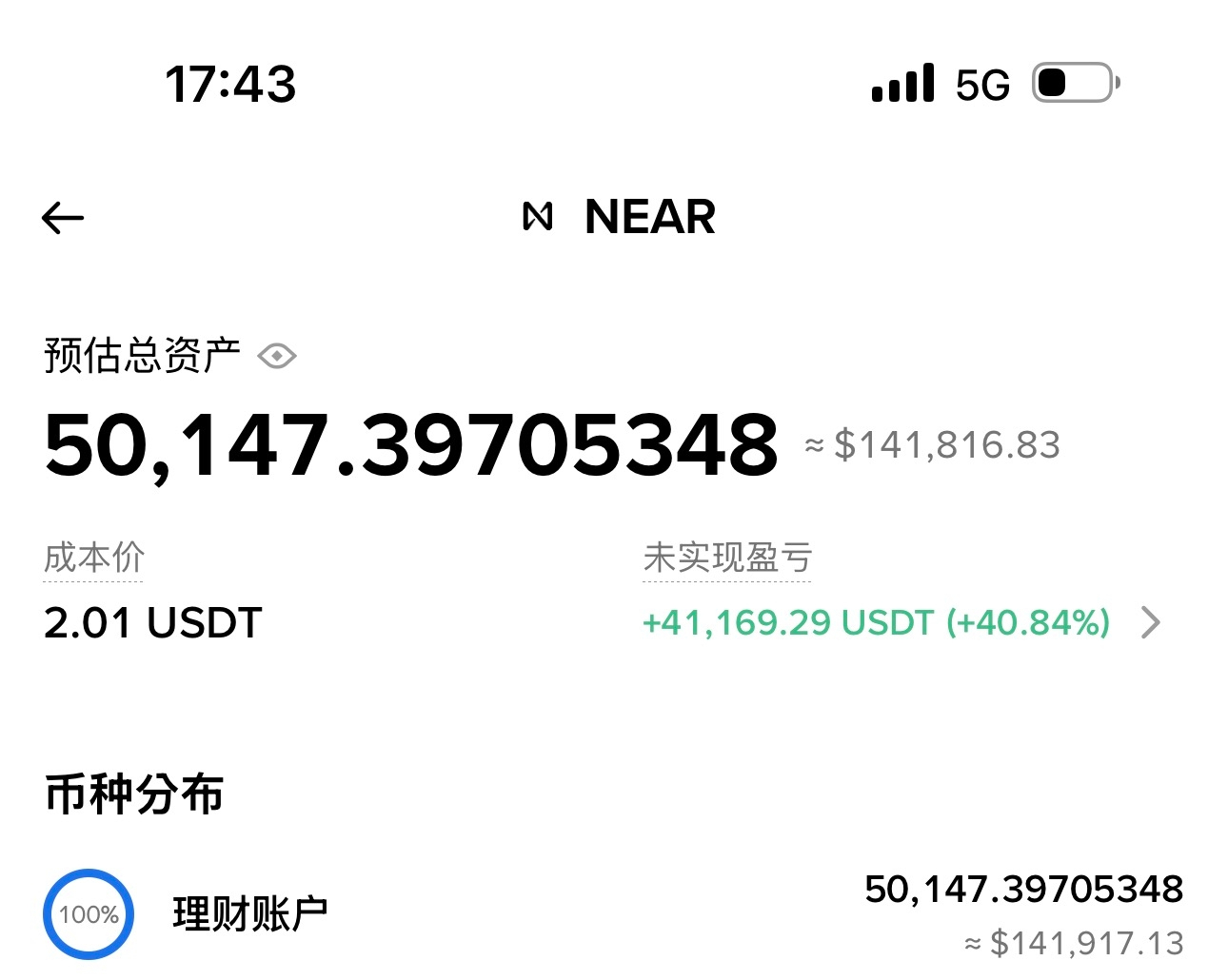
After that, I recommended NEAR. For long-term holding, I only bought a small amount—10WU5W units—and right now I’m up 40%. Recently, my tweets about trading coins have been trying to express my philosophy and experience, so that more traders with dreams of building wealth can avoid detours. May we all be able to get through the cycles and the noise, and achieve the results we want.$NEAR
{spot}(NEARUSDT)
I rarely recommend coins, because behind a simple “I’m bullish” there may be other people’s real trust backed by hard-earned money. This year I recommended UNI and LIT and didn’t miss, but I’m still ashamed—I couldn’t hold onto them. During the downturn I even swapped everything into BTC. I made the right choice, but didn’t make the money—that’s not a market issue; it’s because my practice isn’t enough.
After that, I recommended NEAR. For long-term holding, I only bought a small amount—10WU5W units—and right now I’m up 40%. Recently, my tweets about trading coins have been trying to express my philosophy and experience, so that more traders with dreams of building wealth can avoid detours. May we all be able to get through the cycles and the noise, and achieve the results we want.$NEAR
After that, I recommended NEAR. For long-term holding, I only bought a small amount—10WU5W units—and right now I’m up 40%. Recently, my tweets about trading coins have been trying to express my philosophy and experience, so that more traders with dreams of building wealth can avoid detours. May we all be able to get through the cycles and the noise, and achieve the results we want.$NEAR
5
6
6k
·
--
Many people predicted that the CLARITY Act would pass, and that it was impossible for rate hikes this year—they were all wrong. Actually, none of that matters that much. The most important thing is your position control. When bodies are strewn everywhere, if you still have the nerve to buy in with USDT, then you win. After 312 and 519, anyone who dared to buy the dip is already financially free, right? In an uptrend, you keep holding positions, and then you take profits. After all, those who know how to buy are disciples—those who know how to sell are the master. Be less greedy and more patient; be less impulsive and more calm. Simple truths lead to the simplest path. In this stage, half in spot and half in U will keep you on the winning side.
Many people predicted that the CLARITY Act would pass, and that it was impossible for rate hikes this year—they were all wrong. Actually, none of that matters that much. The most important thing is your position control. When bodies are strewn everywhere, if you still have the nerve to buy in with USDT, then you win. After 312 and 519, anyone who dared to buy the dip is already financially free, right? In an uptrend, you keep holding positions, and then you take profits. After all, those who know how to buy are disciples—those who know how to sell are the master. Be less greedy and more patient; be less impulsive and more calm. Simple truths lead to the simplest path. In this stage, half in spot and half in U will keep you on the winning side.
1
1
2.7k
·
--
After experiencing a deep drawdown in my spot trading account in the first half of the year—nearly halving—and only then truly completed a reconfiguration of my investment mindset. Before that, years of consecutive profitability made me mistakenly treat cyclical tailwinds as trading ability. Now I’ve become more patient, calmer, and more prudent; with every step, I have clear goals. I’m increasingly convinced that investing isn’t about who can make money faster, but about who can stay in the game longer. The fundamental truth of investing is to always remain on the trading table. If you can earn, you must also learn to protect what you’ve earned. I feel like I’ve achieved mastery ^_^
After experiencing a deep drawdown in my spot trading account in the first half of the year—nearly halving—and only then truly completed a reconfiguration of my investment mindset. Before that, years of consecutive profitability made me mistakenly treat cyclical tailwinds as trading ability. Now I’ve become more patient, calmer, and more prudent; with every step, I have clear goals. I’m increasingly convinced that investing isn’t about who can make money faster, but about who can stay in the game longer. The fundamental truth of investing is to always remain on the trading table. If you can earn, you must also learn to protect what you’ve earned. I feel like I’ve achieved mastery ^_^
4
16
4.4k
·
--
Yesterday, the CLARITY Act failed to secure the 60 votes needed in the Senate. This is not the end-of-days for the crypto industry—the CLARITY Act becoming law is only a matter of time. Besides, since BTC was born, it has already gone through seventeen years. It was never driven forward by any single piece of legislation. Even without the CLARITY Act, Bitcoin has its own road ahead. Ignore all noise and hold on to your own Bitcoin.$BTC
{spot}(BTCUSDT)
Yesterday, the CLARITY Act failed to secure the 60 votes needed in the Senate. This is not the end-of-days for the crypto industry—the CLARITY Act becoming law is only a matter of time. Besides, since BTC was born, it has already gone through seventeen years. It was never driven forward by any single piece of legislation. Even without the CLARITY Act, Bitcoin has its own road ahead. Ignore all noise and hold on to your own Bitcoin.$BTC
1
2
1.8k
·
--
Yesterday, a friend in the crypto community we talked about in the group suddenly passed away. Many people in the coin market are used to staying up late, so I want to remind a few basics: pulling an all-nighter and then sleeping only through the morning during the day can’t fully make up for it; even things like polygonatum (huangjing), goji berry concentrated juice, and various liver-protecting health supplements definitely can’t cancel the long-term damage caused by chronic lack of sleep.
For the sake of life and to make money, it may sometimes be unavoidable to sacrifice your health, but don’t drain your body and then deceive yourself by relying on supplements. Especially after staying up through the night, your body needs several days to recover slowly—during this period, many people will blindly do high-intensity workouts, which is a big no!
Yesterday, a friend in the crypto community we talked about in the group suddenly passed away. Many people in the coin market are used to staying up late, so I want to remind a few basics: pulling an all-nighter and then sleeping only through the morning during the day can’t fully make up for it; even things like polygonatum (huangjing), goji berry concentrated juice, and various liver-protecting health supplements definitely can’t cancel the long-term damage caused by chronic lack of sleep.
For the sake of life and to make money, it may sometimes be unavoidable to sacrifice your health, but don’t drain your body and then deceive yourself by relying on supplements. Especially after staying up through the night, your body needs several days to recover slowly—during this period, many people will blindly do high-intensity workouts, which is a big no!
For the sake of life and to make money, it may sometimes be unavoidable to sacrifice your health, but don’t drain your body and then deceive yourself by relying on supplements. Especially after staying up through the night, your body needs several days to recover slowly—during this period, many people will blindly do high-intensity workouts, which is a big no!
7
2
4
7.3k
·
--
Musk called on AI companies to slow down cutting-edge development last weekend and believes China’s advantages in the field of AI could pose a national security risk to the United States.
Today, China’s Foreign Ministry spokesperson Guo Jiakun presided over a regular press conference and responded to Musk’s remarks about China:
The development of artificial intelligence is related to the common well-being of all humanity. All sides should work together to promote open, inclusive, affordable, and beneficial AI. Spreading all kinds of threat narratives, stirring confrontation, and engaging in malicious competition will only disrupt the global AI governance process and does not serve the interests of any side.
Musk called on AI companies to slow down cutting-edge development last weekend and believes China’s advantages in the field of AI could pose a national security risk to the United States.
Today, China’s Foreign Ministry spokesperson Guo Jiakun presided over a regular press conference and responded to Musk’s remarks about China:
The development of artificial intelligence is related to the common well-being of all humanity. All sides should work together to promote open, inclusive, affordable, and beneficial AI. Spreading all kinds of threat narratives, stirring confrontation, and engaging in malicious competition will only disrupt the global AI governance process and does not serve the interests of any side.
Today, China’s Foreign Ministry spokesperson Guo Jiakun presided over a regular press conference and responded to Musk’s remarks about China:
The development of artificial intelligence is related to the common well-being of all humanity. All sides should work together to promote open, inclusive, affordable, and beneficial AI. Spreading all kinds of threat narratives, stirring confrontation, and engaging in malicious competition will only disrupt the global AI governance process and does not serve the interests of any side.
1
2.1k
·
--
Trump finally relented on the issue of conflicts of interest, accepting roughly 80% of the moral provisions. The revised CLARITY Act also adopted more than 120 changes proposed by Democrats. The bill, which had been on the verge of falling apart, is now being kept on track for passage.
On Tuesday, it cleared the Senate’s first hurdle with 60 votes. Passing this step doesn’t mean the bill is already enacted, but it does indicate that the most critical procedural threshold has been cleared. Since many key provisions were negotiated in advance, the final Senate vote, House confirmation, and Trump’s signature are expected to be completed faster. Once the CLARITY Act is passed, it is sure to give long-floundering crypto markets a way out of a tight spot.
Trump finally relented on the issue of conflicts of interest, accepting roughly 80% of the moral provisions. The revised CLARITY Act also adopted more than 120 changes proposed by Democrats. The bill, which had been on the verge of falling apart, is now being kept on track for passage.
On Tuesday, it cleared the Senate’s first hurdle with 60 votes. Passing this step doesn’t mean the bill is already enacted, but it does indicate that the most critical procedural threshold has been cleared. Since many key provisions were negotiated in advance, the final Senate vote, House confirmation, and Trump’s signature are expected to be completed faster. Once the CLARITY Act is passed, it is sure to give long-floundering crypto markets a way out of a tight spot.
On Tuesday, it cleared the Senate’s first hurdle with 60 votes. Passing this step doesn’t mean the bill is already enacted, but it does indicate that the most critical procedural threshold has been cleared. Since many key provisions were negotiated in advance, the final Senate vote, House confirmation, and Trump’s signature are expected to be completed faster. Once the CLARITY Act is passed, it is sure to give long-floundering crypto markets a way out of a tight spot.
4
5
3.8k
·
--
Verified
Didn’t expect that with the midterm election approaching, Trump would corner himself over the Iran issue, leaving him with no good options. Expanding military action further could cause oil prices and inflation to spiral out of control; backing down would mean that the tough pressure previously placed on Iran has failed. Either way, he will have to pay a political price.
Brent crude has already been trading above $100 for four straight days, and the impact of Trump’s verbal remarks on the market is also becoming increasingly weaker. In the interest-rate meeting a few days from now, whether to raise rates may only affect short-term fluctuations. What truly determines the direction of risk assets is whether tensions in the Middle East can cool and whether oil prices can retreat. If high oil prices persist, inflation, interest rates, and economic growth will all come under simultaneous pressure—and a weakening in risk assets is only a matter of time.
Didn’t expect that with the midterm election approaching, Trump would corner himself over the Iran issue, leaving him with no good options. Expanding military action further could cause oil prices and inflation to spiral out of control; backing down would mean that the tough pressure previously placed on Iran has failed. Either way, he will have to pay a political price.
Brent crude has already been trading above $100 for four straight days, and the impact of Trump’s verbal remarks on the market is also becoming increasingly weaker. In the interest-rate meeting a few days from now, whether to raise rates may only affect short-term fluctuations. What truly determines the direction of risk assets is whether tensions in the Middle East can cool and whether oil prices can retreat. If high oil prices persist, inflation, interest rates, and economic growth will all come under simultaneous pressure—and a weakening in risk assets is only a matter of time.
Brent crude has already been trading above $100 for four straight days, and the impact of Trump’s verbal remarks on the market is also becoming increasingly weaker. In the interest-rate meeting a few days from now, whether to raise rates may only affect short-term fluctuations. What truly determines the direction of risk assets is whether tensions in the Middle East can cool and whether oil prices can retreat. If high oil prices persist, inflation, interest rates, and economic growth will all come under simultaneous pressure—and a weakening in risk assets is only a matter of time.
9
2
4.8k
·
--
From the macro environment, it will be difficult for risk assets this year to break away from a persistent trend of a favorable run. However, I won’t reduce my position either—I’ll still hold half in spot positions and half in U. If there is a black swan event, I will add to my position in batches. For example, if BTC sees a brief spike downward and drops below $10,000, or if it breaks below $50,000. I don’t guess where prices will go; I control my position size and patiently wait for the market to show a direction.
{spot}(BTCUSDT)
From the macro environment, it will be difficult for risk assets this year to break away from a persistent trend of a favorable run. However, I won’t reduce my position either—I’ll still hold half in spot positions and half in U. If there is a black swan event, I will add to my position in batches. For example, if BTC sees a brief spike downward and drops below $10,000, or if it breaks below $50,000. I don’t guess where prices will go; I control my position size and patiently wait for the market to show a direction.
1
2
2.5k
·
--
Verified
The previous core business of NEAR was selling block space—attracting projects to issue tokens and develop applications, and then supporting token value via Gas fees and staking. The problem is that there are too many competing L1 chains. No matter how high the performance is, it’s hard to establish real barriers.
Now NEAR is starting to pivot toward “multi-chain infrastructure.” It is no longer fixated on monopolizing users and capital on the NEAR chain. Instead, it helps different blockchains with account control, transaction matching, cross-chain settlement, and privacy execution. More importantly, product revenue has already begun to be used for buying back NEAR tokens, meaning business growth can finally translate into token value.
So the biggest change for NEAR isn’t its technical parameters, but its business model: in the past it competed with all other public chains for users, but now it’s trying to become the service provider behind all chains. Whether this path can work still needs to be watched, but at least it’s no longer living off the old playbook from the previous cycle.
{spot}(NEARUSDT)
The previous core business of NEAR was selling block space—attracting projects to issue tokens and develop applications, and then supporting token value via Gas fees and staking. The problem is that there are too many competing L1 chains. No matter how high the performance is, it’s hard to establish real barriers.
Now NEAR is starting to pivot toward “multi-chain infrastructure.” It is no longer fixated on monopolizing users and capital on the NEAR chain. Instead, it helps different blockchains with account control, transaction matching, cross-chain settlement, and privacy execution. More importantly, product revenue has already begun to be used for buying back NEAR tokens, meaning business growth can finally translate into token value.
So the biggest change for NEAR isn’t its technical parameters, but its business model: in the past it competed with all other public chains for users, but now it’s trying to become the service provider behind all chains. Whether this path can work still needs to be watched, but at least it’s no longer living off the old playbook from the previous cycle.
Now NEAR is starting to pivot toward “multi-chain infrastructure.” It is no longer fixated on monopolizing users and capital on the NEAR chain. Instead, it helps different blockchains with account control, transaction matching, cross-chain settlement, and privacy execution. More importantly, product revenue has already begun to be used for buying back NEAR tokens, meaning business growth can finally translate into token value.
So the biggest change for NEAR isn’t its technical parameters, but its business model: in the past it competed with all other public chains for users, but now it’s trying to become the service provider behind all chains. Whether this path can work still needs to be watched, but at least it’s no longer living off the old playbook from the previous cycle.
4.3k
·
--
Verified
Don’t get worked up! Before the CPI is released tonight, there’s still one last variable as to whether there will be a rate hike in September. And a single 25bp move isn’t that frightening—after the market has been pricing it in for so long, once it actually happens, it may not be as big of a negative surprise as people think.
The AI trend won’t be over just because of a single 25bp hike either. What we’re most worried about now is oil prices. Brent has already been pushing toward $110. If the increase is only a short-term shock caused by the war, then later oil prices may ease, inflation cools off, and the Fed has no reason to keep hiking indefinitely.
But if oil stays above $100 for a few months, and that reignites inflation, then it’s a completely different story. Then we really would be back in a continuous rate-hike cycle—that would be seriously disastrous.
Don’t get worked up! Before the CPI is released tonight, there’s still one last variable as to whether there will be a rate hike in September. And a single 25bp move isn’t that frightening—after the market has been pricing it in for so long, once it actually happens, it may not be as big of a negative surprise as people think.
The AI trend won’t be over just because of a single 25bp hike either. What we’re most worried about now is oil prices. Brent has already been pushing toward $110. If the increase is only a short-term shock caused by the war, then later oil prices may ease, inflation cools off, and the Fed has no reason to keep hiking indefinitely.
But if oil stays above $100 for a few months, and that reignites inflation, then it’s a completely different story. Then we really would be back in a continuous rate-hike cycle—that would be seriously disastrous.
The AI trend won’t be over just because of a single 25bp hike either. What we’re most worried about now is oil prices. Brent has already been pushing toward $110. If the increase is only a short-term shock caused by the war, then later oil prices may ease, inflation cools off, and the Fed has no reason to keep hiking indefinitely.
But if oil stays above $100 for a few months, and that reignites inflation, then it’s a completely different story. Then we really would be back in a continuous rate-hike cycle—that would be seriously disastrous.
1
4
4.1k
·
--
Verified
Not long ago, the yield on the 30-year U.S. Treasury broke through 5.3%, reaching the highest level since 2007; now the 10-year yield has risen to 4.85%, the highest in nearly three years. Before the Federal Reserve has even started a new round of rate hikes, the bond market has already priced in one.
The market is simultaneously repricing inflation stickiness, the prospect that interest rates will stay elevated for the long term, and an increase in U.S. Treasury supply. The rise in the 30-year yield signals market worries about U.S. fiscal conditions and long-term debt; now that pressure is shifting to the 10-year yield. Mortgage rates, corporate financing, and even U.S. stock valuations will all come under pressure. If the U.S. wants to keep borrowing, it can only do so by paying higher interest.
So tonight’s PPI is important, and tomorrow night’s CPI is even more of a decisive factor. If inflation cools, the Fed would still have room to stand pat or even cut rates; if oil prices and inflation remain high while the economy is weighed down by high interest rates, the U.S. could move toward stagflation. At that point, the choice would be to either maintain tight policy and accept a downturn, or loosen policy to rescue the economy—effectively paying the price with higher inflation and currency depreciation.
Not long ago, the yield on the 30-year U.S. Treasury broke through 5.3%, reaching the highest level since 2007; now the 10-year yield has risen to 4.85%, the highest in nearly three years. Before the Federal Reserve has even started a new round of rate hikes, the bond market has already priced in one.
The market is simultaneously repricing inflation stickiness, the prospect that interest rates will stay elevated for the long term, and an increase in U.S. Treasury supply. The rise in the 30-year yield signals market worries about U.S. fiscal conditions and long-term debt; now that pressure is shifting to the 10-year yield. Mortgage rates, corporate financing, and even U.S. stock valuations will all come under pressure. If the U.S. wants to keep borrowing, it can only do so by paying higher interest.
So tonight’s PPI is important, and tomorrow night’s CPI is even more of a decisive factor. If inflation cools, the Fed would still have room to stand pat or even cut rates; if oil prices and inflation remain high while the economy is weighed down by high interest rates, the U.S. could move toward stagflation. At that point, the choice would be to either maintain tight policy and accept a downturn, or loosen policy to rescue the economy—effectively paying the price with higher inflation and currency depreciation.
The market is simultaneously repricing inflation stickiness, the prospect that interest rates will stay elevated for the long term, and an increase in U.S. Treasury supply. The rise in the 30-year yield signals market worries about U.S. fiscal conditions and long-term debt; now that pressure is shifting to the 10-year yield. Mortgage rates, corporate financing, and even U.S. stock valuations will all come under pressure. If the U.S. wants to keep borrowing, it can only do so by paying higher interest.
So tonight’s PPI is important, and tomorrow night’s CPI is even more of a decisive factor. If inflation cools, the Fed would still have room to stand pat or even cut rates; if oil prices and inflation remain high while the economy is weighed down by high interest rates, the U.S. could move toward stagflation. At that point, the choice would be to either maintain tight policy and accept a downturn, or loosen policy to rescue the economy—effectively paying the price with higher inflation and currency depreciation.
1
2.6k
·
--
This morning, Brent crude jumped to $99.67, and $100 is basically within reach. Tomorrow’s PPI (the 10th) and the CPI on the 11th—if both data releases come in hotter than expected again, then a September rate hike would be only natural. Oil prices also directly affect inflation, and expectations for another hike in December have started to heat up as well.
Whether the market can withstand even one rate hike is still questionable. If the Fed raises rates twice consecutively this year, U.S. Treasury yields would likely keep pushing higher, and risk assets like U.S. stocks and BTC won’t feel comfortable either. For the remaining months of this year, market conditions will likely look grim.
This morning, Brent crude jumped to $99.67, and $100 is basically within reach. Tomorrow’s PPI (the 10th) and the CPI on the 11th—if both data releases come in hotter than expected again, then a September rate hike would be only natural. Oil prices also directly affect inflation, and expectations for another hike in December have started to heat up as well.
Whether the market can withstand even one rate hike is still questionable. If the Fed raises rates twice consecutively this year, U.S. Treasury yields would likely keep pushing higher, and risk assets like U.S. stocks and BTC won’t feel comfortable either. For the remaining months of this year, market conditions will likely look grim.
Whether the market can withstand even one rate hike is still questionable. If the Fed raises rates twice consecutively this year, U.S. Treasury yields would likely keep pushing higher, and risk assets like U.S. stocks and BTC won’t feel comfortable either. For the remaining months of this year, market conditions will likely look grim.
1
2.3k
·
--
Now it’s really that every Tom, Dick, and Harry celebrity wants to come into the crypto world and take a slice. Hunter Biden, the son of former U.S. President Joe Biden, will launch the meme coin LAPTOP on the Base network on September 9. Pretty good at playing the game—he’s specifically setting aside a portion of the tokens to air-drop to people who bought TRUMP and lost money.
The project’s disclosure documents even state it clearly: no real utility, no development roadmap, no governance rights, no rights to earnings or dividends—the token’s value depends entirely on community sentiment and market hype. Sigh! Zhou Yu playing Huang Gai—one wants to fight and the other is willing to take the beating.
Now it’s really that every Tom, Dick, and Harry celebrity wants to come into the crypto world and take a slice. Hunter Biden, the son of former U.S. President Joe Biden, will launch the meme coin LAPTOP on the Base network on September 9. Pretty good at playing the game—he’s specifically setting aside a portion of the tokens to air-drop to people who bought TRUMP and lost money.
The project’s disclosure documents even state it clearly: no real utility, no development roadmap, no governance rights, no rights to earnings or dividends—the token’s value depends entirely on community sentiment and market hype. Sigh! Zhou Yu playing Huang Gai—one wants to fight and the other is willing to take the beating.
The project’s disclosure documents even state it clearly: no real utility, no development roadmap, no governance rights, no rights to earnings or dividends—the token’s value depends entirely on community sentiment and market hype. Sigh! Zhou Yu playing Huang Gai—one wants to fight and the other is willing to take the beating.
1
6
3.5k
·
--
Bearish
U.S. Army Secretary Dan Driscoll resigned on August 31. In April this year, the Defense Secretary, Huxes, also abruptly removed the Army Chief of Staff, Randy George. In less than half a year, the top U.S. Army civilian and military leadership were replaced, and the timing also coincided with the escalation of the Iran war, making it hard not to speculate. It is still not certain that the two were dismissed for opposing a ground invasion, but at the very least it suggests that Trump and Huxes are clearing dissenting voices within the armed forces.
U.S. Army Secretary Dan Driscoll resigned on August 31. In April this year, the Defense Secretary, Huxes, also abruptly removed the Army Chief of Staff, Randy George. In less than half a year, the top U.S. Army civilian and military leadership were replaced, and the timing also coincided with the escalation of the Iran war, making it hard not to speculate. It is still not certain that the two were dismissed for opposing a ground invasion, but at the very least it suggests that Trump and Huxes are clearing dissenting voices within the armed forces.
1
3.2k
·
--
Verified
ARB rose more than 40% again today, and the core story is still the Robinhood Chain narrative. Robinhood Chain uses Arbitrum technology and returns 10% of net protocol revenue to the Arbitrum ecosystem, with 8% going into the DAO treasury.
Recently, Robinhood Chain’s daily revenue once reached $1.92 million, and the Arbitrum DAO’s peak daily share was about $176,000. In the first half of the year, Arbitrum processed 478 million transactions and generated $6.19 million in DAO revenue, showing that this technology is finally no longer just a story—it has truly started to make money.
However, these revenues currently only go into the DAO treasury, with no clear plan for buybacks, burns, or distributions to token holders; Gas on Arbitrum One is also paid in ETH, and ARB remains mainly a governance token. The positive developments for the chain and technology are real, but they have not yet fully flowed through to the ARB token. This rally is more about trading expectations of future empowerment, combined with low liquidity, momentum chasing, and a short squeeze.
{future}(ARBUSDT)
{spot}(ARBUSDT)
ARB rose more than 40% again today, and the core story is still the Robinhood Chain narrative. Robinhood Chain uses Arbitrum technology and returns 10% of net protocol revenue to the Arbitrum ecosystem, with 8% going into the DAO treasury.
Recently, Robinhood Chain’s daily revenue once reached $1.92 million, and the Arbitrum DAO’s peak daily share was about $176,000. In the first half of the year, Arbitrum processed 478 million transactions and generated $6.19 million in DAO revenue, showing that this technology is finally no longer just a story—it has truly started to make money.
However, these revenues currently only go into the DAO treasury, with no clear plan for buybacks, burns, or distributions to token holders; Gas on Arbitrum One is also paid in ETH, and ARB remains mainly a governance token. The positive developments for the chain and technology are real, but they have not yet fully flowed through to the ARB token. This rally is more about trading expectations of future empowerment, combined with low liquidity, momentum chasing, and a short squeeze.
Recently, Robinhood Chain’s daily revenue once reached $1.92 million, and the Arbitrum DAO’s peak daily share was about $176,000. In the first half of the year, Arbitrum processed 478 million transactions and generated $6.19 million in DAO revenue, showing that this technology is finally no longer just a story—it has truly started to make money.
However, these revenues currently only go into the DAO treasury, with no clear plan for buybacks, burns, or distributions to token holders; Gas on Arbitrum One is also paid in ETH, and ARB remains mainly a governance token. The positive developments for the chain and technology are real, but they have not yet fully flowed through to the ARB token. This rally is more about trading expectations of future empowerment, combined with low liquidity, momentum chasing, and a short squeeze.
2
1
17
13.1k
·
--
Verified
Trump has started ramping up pressure on the Fed to cut interest rates again, saying that if the Fed doesn’t cut rates, he will sever trade ties with countries that have a trade surplus with the United States.
In fact, Trump and Waller want completely different things right now. Trump wants growth and cheap money: lower rates would make government borrowing cheaper, corporate financing cheaper, and U.S. stocks and the economy more likely to rise. Waller wants to protect the dollar’s purchasing power and the Fed’s credibility. The more aggressively Trump speaks, the less easily Waller can back down; otherwise, the market may start to question whether the Fed still has any independence.
What is most awkward is that Trump is urging rate cuts while also waging a trade war and using force against Iran. Tariffs may push up the prices of goods, and war is driving oil prices above $90, which is basically Trump pressuring Waller to cut rates with words while his own actions keep making rate cuts harder.
That is why the importance of the September 11 CPI report has already been fully elevated. Bloomberg expects headline CPI to rise 3.4% year over year, and core CPI to rise 2.4% year over year. If core inflation continues to cool significantly, the Fed will still have a reason to treat high oil prices as a supply shock and wait until September; if CPI comes in above expectations again, combined with strong nonfarm payrolls and high oil prices, a September rate hike will become increasingly logical, and the market may even start pricing in a second rate hike in December directly.
Trump has started ramping up pressure on the Fed to cut interest rates again, saying that if the Fed doesn’t cut rates, he will sever trade ties with countries that have a trade surplus with the United States.
In fact, Trump and Waller want completely different things right now. Trump wants growth and cheap money: lower rates would make government borrowing cheaper, corporate financing cheaper, and U.S. stocks and the economy more likely to rise. Waller wants to protect the dollar’s purchasing power and the Fed’s credibility. The more aggressively Trump speaks, the less easily Waller can back down; otherwise, the market may start to question whether the Fed still has any independence.
What is most awkward is that Trump is urging rate cuts while also waging a trade war and using force against Iran. Tariffs may push up the prices of goods, and war is driving oil prices above $90, which is basically Trump pressuring Waller to cut rates with words while his own actions keep making rate cuts harder.
That is why the importance of the September 11 CPI report has already been fully elevated. Bloomberg expects headline CPI to rise 3.4% year over year, and core CPI to rise 2.4% year over year. If core inflation continues to cool significantly, the Fed will still have a reason to treat high oil prices as a supply shock and wait until September; if CPI comes in above expectations again, combined with strong nonfarm payrolls and high oil prices, a September rate hike will become increasingly logical, and the market may even start pricing in a second rate hike in December directly.
In fact, Trump and Waller want completely different things right now. Trump wants growth and cheap money: lower rates would make government borrowing cheaper, corporate financing cheaper, and U.S. stocks and the economy more likely to rise. Waller wants to protect the dollar’s purchasing power and the Fed’s credibility. The more aggressively Trump speaks, the less easily Waller can back down; otherwise, the market may start to question whether the Fed still has any independence.
What is most awkward is that Trump is urging rate cuts while also waging a trade war and using force against Iran. Tariffs may push up the prices of goods, and war is driving oil prices above $90, which is basically Trump pressuring Waller to cut rates with words while his own actions keep making rate cuts harder.
That is why the importance of the September 11 CPI report has already been fully elevated. Bloomberg expects headline CPI to rise 3.4% year over year, and core CPI to rise 2.4% year over year. If core inflation continues to cool significantly, the Fed will still have a reason to treat high oil prices as a supply shock and wait until September; if CPI comes in above expectations again, combined with strong nonfarm payrolls and high oil prices, a September rate hike will become increasingly logical, and the market may even start pricing in a second rate hike in December directly.
1
3
3.2k
·
--
Stick to your investment plan! In August, I started building a position in $NEAR . On August 30, I also posted about NEAR’s development roadmap: cross-chain finance + default privacy + AI Agent. With a small initial position, I can hold through both gains and losses. The goal is to turn these 10WU into 100WU within the bull market cycle.
{future}(NEARUSDT)
{spot}(NEARUSDT)
Stick to your investment plan! In August, I started building a position in $NEAR . On August 30, I also posted about NEAR’s development roadmap: cross-chain finance + default privacy + AI Agent. With a small initial position, I can hold through both gains and losses. The goal is to turn these 10WU into 100WU within the bull market cycle.

5
15
11.7k
·
--
This year, my investments included $UNI and $LIT , both of which went up—nice (I kept holding all along and they’ve both doubled+). Unfortunately, during the downturn, after I cut my losses, I converted everything into Bitcoin. I reviewed and thought it through for a long time. The root cause is that on X, the views and noise around me are too much—when I’m losing money, it’s easy to get affected and I don’t stick to my trading plan. From this moment on, I won’t make these mistakes again. No matter how things turn out in the future, I will stay true to myself!
{future}(LITUSDT)
{spot}(UNIUSDT)
This year, my investments included $UNI and $LIT , both of which went up—nice (I kept holding all along and they’ve both doubled+). Unfortunately, during the downturn, after I cut my losses, I converted everything into Bitcoin. I reviewed and thought it through for a long time. The root cause is that on X, the views and noise around me are too much—when I’m losing money, it’s easy to get affected and I don’t stick to my trading plan. From this moment on, I won’t make these mistakes again. No matter how things turn out in the future, I will stay true to myself!
6
5
10.8k
·
--
In the past 24 hours, BTC has surged from around $77,000 to a high that has broken above $82,000. The key driver is the easing of macro expectations: Vice President Vance has openly called for the Federal Reserve to cut rates, and Waller also said that as long as the upcoming inflation data doesn’t bounce back, the September FOMC meeting would lean toward holding steady.
Cooling rate-hike expectations, a pullback in U.S. Treasury yields, and short-covering all worked together to amplify BTC’s rally. But whether the momentum can continue will depend on next week’s CPI data. If the data is mild, expectations of a pause in rate hikes will be further reinforced; if inflation rebounds, the recent gains over these days could quickly unwind.
There’s also the risk from Iran: if oil prices rise, inflation expectations may be reignited again. I just hope Trump stays out of the spotlight recently and doesn’t add more obstacles for the market.
In the past 24 hours, BTC has surged from around $77,000 to a high that has broken above $82,000. The key driver is the easing of macro expectations: Vice President Vance has openly called for the Federal Reserve to cut rates, and Waller also said that as long as the upcoming inflation data doesn’t bounce back, the September FOMC meeting would lean toward holding steady.
Cooling rate-hike expectations, a pullback in U.S. Treasury yields, and short-covering all worked together to amplify BTC’s rally. But whether the momentum can continue will depend on next week’s CPI data. If the data is mild, expectations of a pause in rate hikes will be further reinforced; if inflation rebounds, the recent gains over these days could quickly unwind.
There’s also the risk from Iran: if oil prices rise, inflation expectations may be reignited again. I just hope Trump stays out of the spotlight recently and doesn’t add more obstacles for the market.
Cooling rate-hike expectations, a pullback in U.S. Treasury yields, and short-covering all worked together to amplify BTC’s rally. But whether the momentum can continue will depend on next week’s CPI data. If the data is mild, expectations of a pause in rate hikes will be further reinforced; if inflation rebounds, the recent gains over these days could quickly unwind.
There’s also the risk from Iran: if oil prices rise, inflation expectations may be reignited again. I just hope Trump stays out of the spotlight recently and doesn’t add more obstacles for the market.
3
2.1k
Log in to explore more content
Join global crypto users on Binance Square
⚡️ Get latest and useful information about crypto.
💬 Trusted by the world’s largest crypto exchange.
👍 Discover real insights from verified creators.
Email / Phone number
Trending Topics
BitcoinSurpasses$77000
4,341 views
85 Discussing
$BTC is ripping higher despite it all. 🚀
Today marked the first rate hike in over 3 years, while the CLARITY Act stalled again yesterday.
Setup big long again - thank me later
Entry : $75500 - $76500
Stoploss : $74900
Take profit : $77000 - $78000
Get ready for a crazy growth cycle. 🔥
TF_bnb
·15 Likes
·6.3k views
ParadigmDisclosesZECHolding
6,920 views
259 Discussing
BitcoinETFsShed$450M
15,774 views
148 Discussing