
FEY60
366 Posts

FEY60
Report
Block User
📊 News • Crypto • Economy • Teknologi • AI • Keuangan 🚫 Tidak Menerima Titipan Dana
30 Following
8.2K+ Followers
9.5K+ Liked
Posts
Portfolio
All
Quotes
Videos
·
--
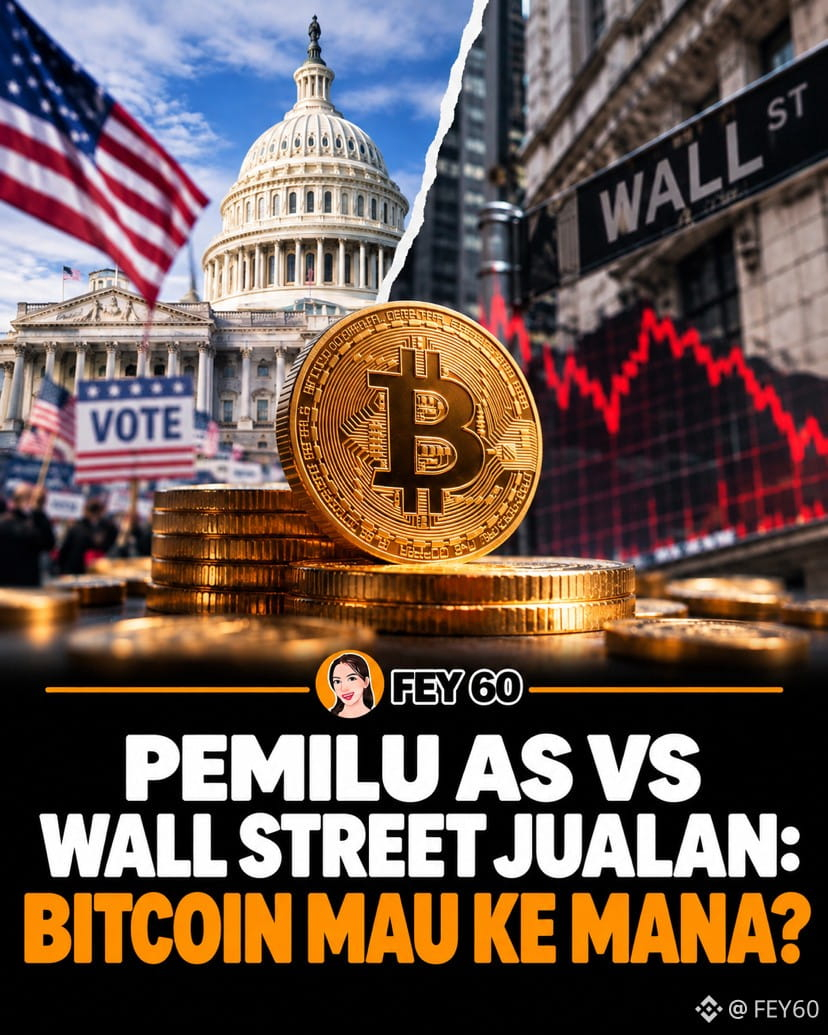
Once again, the crypto world is leaving us scratching our heads! Amid the heated political climate in the United States and massive sell-offs by institutional investors, Bitcoin ($BTC) has proven remarkably resilient.
.
After dipping, the price $BTC actually bounced back up to around $78,200!
This is despite two major pieces of news weighing on the market. Let’s break it down in simple terms!
.
What’s Really Going On?
1️⃣ The U.S. Midterm Elections (Nov. 3)
Americans are choosing their representatives in the House and Senate. The results are important because they will determine whether new laws supporting the crypto industry are passed more quickly or delayed.
.
2️⃣ Wall Street Investors Pull Money Out of ETFs
In just one day, $643 million (around Rp10 trillion!) was withdrawn from Bitcoin ETFs. This was the biggest outflow since last June. What triggered it? The market was briefly shocked and panicked by recent reports of a Binance exchange hack.
.
3 Important Things You Should Know:
🔹 This Isn’t a Mass Exodus!
The $643 million figure may look enormous to us. But for Wall Street ETF funds, it’s less than 1% of their total capital! This is just a temporary move to play it safe (de-risking), not a sign that investors are giving up.
.
🔹 Who’s Buying the Bitcoin?
Even though Wall Street made large withdrawals, the price of BTC didn’t crash. That means there are still plenty of other buyers out there ready to step in and buy Bitcoin at a discount!
.
🔹 Bitcoin’s Four-Year Cycle
Price drops during U.S. election periods are actually normal and have often occurred in previous Bitcoin cycles. So there’s no need to panic!
.
🤔 What Do You Think?
Will $BTC take off even more after the U.S. elections are over, or does the market still need some time to rest?
$BTC
{spot}(BTCUSDT)
Once again, the crypto world is leaving us scratching our heads! Amid the heated political climate in the United States and massive sell-offs by institutional investors, Bitcoin ($BTC ) has proven remarkably resilient.
.
After dipping, the price $BTC actually bounced back up to around $78,200!
This is despite two major pieces of news weighing on the market. Let’s break it down in simple terms!
.
What’s Really Going On?
1️⃣ The U.S. Midterm Elections (Nov. 3)
Americans are choosing their representatives in the House and Senate. The results are important because they will determine whether new laws supporting the crypto industry are passed more quickly or delayed.
.
2️⃣ Wall Street Investors Pull Money Out of ETFs
In just one day, $643 million (around Rp10 trillion!) was withdrawn from Bitcoin ETFs. This was the biggest outflow since last June. What triggered it? The market was briefly shocked and panicked by recent reports of a Binance exchange hack.
.
3 Important Things You Should Know:
🔹 This Isn’t a Mass Exodus!
The $643 million figure may look enormous to us. But for Wall Street ETF funds, it’s less than 1% of their total capital! This is just a temporary move to play it safe (de-risking), not a sign that investors are giving up.
.
🔹 Who’s Buying the Bitcoin?
Even though Wall Street made large withdrawals, the price of BTC didn’t crash. That means there are still plenty of other buyers out there ready to step in and buy Bitcoin at a discount!
.
🔹 Bitcoin’s Four-Year Cycle
Price drops during U.S. election periods are actually normal and have often occurred in previous Bitcoin cycles. So there’s no need to panic!
.
🤔 What Do You Think?
Will $BTC take off even more after the U.S. elections are over, or does the market still need some time to rest?
$BTC
.
After dipping, the price $BTC actually bounced back up to around $78,200!
This is despite two major pieces of news weighing on the market. Let’s break it down in simple terms!
.
What’s Really Going On?
1️⃣ The U.S. Midterm Elections (Nov. 3)
Americans are choosing their representatives in the House and Senate. The results are important because they will determine whether new laws supporting the crypto industry are passed more quickly or delayed.
.
2️⃣ Wall Street Investors Pull Money Out of ETFs
In just one day, $643 million (around Rp10 trillion!) was withdrawn from Bitcoin ETFs. This was the biggest outflow since last June. What triggered it? The market was briefly shocked and panicked by recent reports of a Binance exchange hack.
.
3 Important Things You Should Know:
🔹 This Isn’t a Mass Exodus!
The $643 million figure may look enormous to us. But for Wall Street ETF funds, it’s less than 1% of their total capital! This is just a temporary move to play it safe (de-risking), not a sign that investors are giving up.
.
🔹 Who’s Buying the Bitcoin?
Even though Wall Street made large withdrawals, the price of BTC didn’t crash. That means there are still plenty of other buyers out there ready to step in and buy Bitcoin at a discount!
.
🔹 Bitcoin’s Four-Year Cycle
Price drops during U.S. election periods are actually normal and have often occurred in previous Bitcoin cycles. So there’s no need to panic!
.
🤔 What Do You Think?
Will $BTC take off even more after the U.S. elections are over, or does the market still need some time to rest?
$BTC
5
805
·
--
Article
From Freezing Coins to Exchange Accountability: This Week’s Hottest Crypto News, Summed Up!Recently, the crypto world was rocked by major news: Binance, one of the world’s largest crypto exchanges, suffered a cyberattack involving a staggering amount—around $6.3 billion (or tens of trillions of rupiah).
.
For beginners, news like this is bound to cause panic and raise questions: “Is it really safe to store assets in crypto?”
.
To avoid any misunderstandings, let’s break down what happened in simple terms and what it means for us as users:
.
1. The Crypto System Wasn’t Breached—It Was Human Error
From Freezing Coins to Exchange Accountability: This Week’s Hottest Crypto News, Summed Up!
Recently, the crypto world was rocked by major news: Binance, one of the world’s largest crypto exchanges, suffered a cyberattack involving a staggering amount—around $6.3 billion (or tens of trillions of rupiah).
.
For beginners, news like this is bound to cause panic and raise questions: “Is it really safe to store assets in crypto?”
.
To avoid any misunderstandings, let’s break down what happened in simple terms and what it means for us as users:
.
1. The Crypto System Wasn’t Breached—It Was Human Error
.
For beginners, news like this is bound to cause panic and raise questions: “Is it really safe to store assets in crypto?”
.
To avoid any misunderstandings, let’s break down what happened in simple terms and what it means for us as users:
.
1. The Crypto System Wasn’t Breached—It Was Human Error
3
531
·
--
🚨 Binance’s preliminary investigation suggests that the attack began with the compromised laptop of a DevOps engineer.
.
However, it turns out the case isn’t that simple. Here’s a rundown of the initial findings!
.
1. It Started with an Employee’s Laptop
According to Binance’s preliminary investigation, the compromised laptop of a DevOps engineer may have been one of the attackers’ entry points into the company’s internal systems.
This finding shows that employees’ work devices can pose a very serious security vulnerability for large companies.
.
2. Hackers Managed to Breach a Service Container
Access from the laptop may have allowed the attackers to enter a service container. Simply put, a service container is an environment used to run software services. If breached, access to this environment could give attackers a way to carry out unauthorized activities.
.
3. Unauthorized Withdrawal Transactions Were Carried Out
Using this access, the attackers may have been able to submit asset withdrawal transactions without valid authorization. This is one of the most serious aspects of the incident, as it directly concerns the security of users’ assets.
.
4. It Wasn’t Just One Laptop!
In a further investigation, Binance found additional points of compromise. The company also stated that it had found no evidence that wallet private keys had been leaked.
.
This means the investigation isn’t limited to a single device. Binance is still gathering and verifying all the facts before releasing a full technical report.
.
This case is a reminder that crypto platform security isn’t just about safeguarding private keys—it also means protecting employee devices, internal systems, and every access path into the company.
.
However, it turns out the case isn’t that simple. Here’s a rundown of the initial findings!
.
1. It Started with an Employee’s Laptop
According to Binance’s preliminary investigation, the compromised laptop of a DevOps engineer may have been one of the attackers’ entry points into the company’s internal systems.
This finding shows that employees’ work devices can pose a very serious security vulnerability for large companies.
.
2. Hackers Managed to Breach a Service Container
Access from the laptop may have allowed the attackers to enter a service container. Simply put, a service container is an environment used to run software services. If breached, access to this environment could give attackers a way to carry out unauthorized activities.
.
3. Unauthorized Withdrawal Transactions Were Carried Out
Using this access, the attackers may have been able to submit asset withdrawal transactions without valid authorization. This is one of the most serious aspects of the incident, as it directly concerns the security of users’ assets.
.
4. It Wasn’t Just One Laptop!
In a further investigation, Binance found additional points of compromise. The company also stated that it had found no evidence that wallet private keys had been leaked.
.
This means the investigation isn’t limited to a single device. Binance is still gathering and verifying all the facts before releasing a full technical report.
.
This case is a reminder that crypto platform security isn’t just about safeguarding private keys—it also means protecting employee devices, internal systems, and every access path into the company.

5
2.2k
·
--
Binance announced that it has made US$6.34 billion in company funds available to cover the shortfall in user assets following the hacking incident.
.
Of that amount, US$5 billion is already available in the affected tokens, while the remaining US$1.34 billion is being covered through market purchases and OTC transactions.
.
In addition, around US$3 billion in assets have been frozen thanks to cooperation with industry partners.
.
Binance has pledged to continue recovering assets, covering the confirmed shortfall, and verifying user funds through Proof of Reserves.
.
Hopefully, these measures will be enough to restore users’ trust.
$BNB
{spot}(BNBUSDT)
Binance announced that it has made US$6.34 billion in company funds available to cover the shortfall in user assets following the hacking incident.
.
Of that amount, US$5 billion is already available in the affected tokens, while the remaining US$1.34 billion is being covered through market purchases and OTC transactions.
.
In addition, around US$3 billion in assets have been frozen thanks to cooperation with industry partners.
.
Binance has pledged to continue recovering assets, covering the confirmed shortfall, and verifying user funds through Proof of Reserves.
.
Hopefully, these measures will be enough to restore users’ trust.
$BNB
.
Of that amount, US$5 billion is already available in the affected tokens, while the remaining US$1.34 billion is being covered through market purchases and OTC transactions.
.
In addition, around US$3 billion in assets have been frozen thanks to cooperation with industry partners.
.
Binance has pledged to continue recovering assets, covering the confirmed shortfall, and verifying user funds through Proof of Reserves.
.
Hopefully, these measures will be enough to restore users’ trust.
$BNB

3
322
·
--
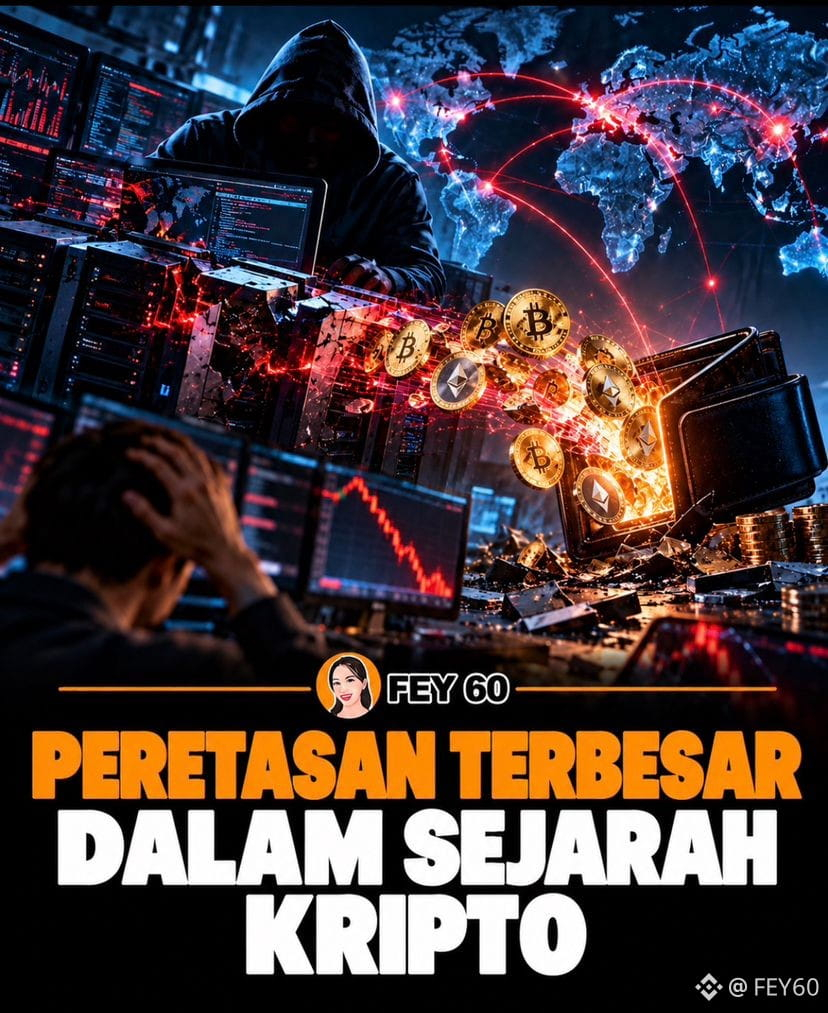
🚨 BINANCE HACKED?! Reported losses top Rp101 TRILLION!
.
The crypto world has been shaken by reports of an alleged hack of Binance, the world's largest crypto exchange. The reported value of the assets exceeds US$5.6 billion, or around Rp101.57 trillion! 😱
.
Here are the reported details of the affected crypto assets:
.
₿ Bitcoin (BTC): US$1.45 billion
♦️ Ethereum (ETH): US$875 million
🔴 TRON (TRX): US$234 million
🪙 Tether Gold (XAUT): US$50 million
💵 Tether (USDT): US$1.57 billion
🔵 USD Coin (USDC): US$823 million
💠 Wrapped Beacon ETH (WBETH): US$75 million
🔷 Ripple USD (RLUSD): US$88.5 million
➕ Additional crypto: US$447.5 million.
.
If these estimates are confirmed, this event could become the largest hack in crypto history!
.
Binance says it is investigating the security issue and that user funds remain safe.
.
Do you think this incident will shake investors' confidence in Binance? 👀
.
$BNB
.
The crypto world has been shaken by reports of an alleged hack of Binance, the world's largest crypto exchange. The reported value of the assets exceeds US$5.6 billion, or around Rp101.57 trillion! 😱
.
Here are the reported details of the affected crypto assets:
.
₿ Bitcoin (BTC): US$1.45 billion
♦️ Ethereum (ETH): US$875 million
🔴 TRON (TRX): US$234 million
🪙 Tether Gold (XAUT): US$50 million
💵 Tether (USDT): US$1.57 billion
🔵 USD Coin (USDC): US$823 million
💠 Wrapped Beacon ETH (WBETH): US$75 million
🔷 Ripple USD (RLUSD): US$88.5 million
➕ Additional crypto: US$447.5 million.
.
If these estimates are confirmed, this event could become the largest hack in crypto history!
.
Binance says it is investigating the security issue and that user funds remain safe.
.
Do you think this incident will shake investors' confidence in Binance? 👀
.
$BNB
2
1.5k
·
--
5 Most Valuable Bitcoin Holdings Lost or Inaccessible
.
Imagine owning Bitcoin worth trillions of rupiah, but being unable to access it! From discarded hard drives to forgotten passwords, here are five intriguing Bitcoin cases.
.
Number 1. James Howells — 8,000 BTC
— In 2013, James Howells said he had accidentally thrown away a hard drive containing access to 8,000 Bitcoin at a landfill in Wales. He has spent years trying to find it, but has yet to succeed. The figure of 8,000 BTC comes from his claim; it has not been proven that the device can be recovered.
.
Number 2. Stefan Thomas — 7,002 BTC
— Stefan Thomas received 7,002 Bitcoin as payment in 2011. However, he forgot the password to the IronKey device that stores access to his wallet. He once reported having used eight of his ten password attempts. Although he is locked out, the Bitcoin has not been proven lost forever.
.
Number 3. Mt. Gox — 850,000 BTC
— In 2014, the Mt. Gox exchange collapsed after reporting that around 850,000 Bitcoin belonging to customers and the company had gone missing. The case shook the crypto industry. However, around 200,000 BTC were later recovered, so it would be inaccurate to say that all of it is still lost.
.
Number 4. QuadrigaCX — around 104 BTC
— After the Canadian exchange QuadrigaCX collapsed in 2019, bankruptcy monitors reported that around 104.3 BTC were in inaccessible cold wallets. However, an investigation also found that most of the shortfall in customer assets was linked to fraud and misuse of assets.
.
Number 5. Satoshi Nakamoto — estimated 1.1 million BTC
— The mysterious figure who created Bitcoin is estimated to have mined around 1.1 million BTC in the network's early days. The coins associated with them have not moved for a long time. However, there is no definitive evidence that access to them has been lost. Bitcoin that hasn't moved isn't necessarily lost Bitcoin!
.
These five cases show that protecting access is just as important as owning Bitcoin. Secure your private keys, make backups, and understand the risks of leaving assets with an exchange.
.
Imagine owning Bitcoin worth trillions of rupiah, but being unable to access it! From discarded hard drives to forgotten passwords, here are five intriguing Bitcoin cases.
.
Number 1. James Howells — 8,000 BTC
— In 2013, James Howells said he had accidentally thrown away a hard drive containing access to 8,000 Bitcoin at a landfill in Wales. He has spent years trying to find it, but has yet to succeed. The figure of 8,000 BTC comes from his claim; it has not been proven that the device can be recovered.
.
Number 2. Stefan Thomas — 7,002 BTC
— Stefan Thomas received 7,002 Bitcoin as payment in 2011. However, he forgot the password to the IronKey device that stores access to his wallet. He once reported having used eight of his ten password attempts. Although he is locked out, the Bitcoin has not been proven lost forever.
.
Number 3. Mt. Gox — 850,000 BTC
— In 2014, the Mt. Gox exchange collapsed after reporting that around 850,000 Bitcoin belonging to customers and the company had gone missing. The case shook the crypto industry. However, around 200,000 BTC were later recovered, so it would be inaccurate to say that all of it is still lost.
.
Number 4. QuadrigaCX — around 104 BTC
— After the Canadian exchange QuadrigaCX collapsed in 2019, bankruptcy monitors reported that around 104.3 BTC were in inaccessible cold wallets. However, an investigation also found that most of the shortfall in customer assets was linked to fraud and misuse of assets.
.
Number 5. Satoshi Nakamoto — estimated 1.1 million BTC
— The mysterious figure who created Bitcoin is estimated to have mined around 1.1 million BTC in the network's early days. The coins associated with them have not moved for a long time. However, there is no definitive evidence that access to them has been lost. Bitcoin that hasn't moved isn't necessarily lost Bitcoin!
.
These five cases show that protecting access is just as important as owning Bitcoin. Secure your private keys, make backups, and understand the risks of leaving assets with an exchange.

1
4
2.2k
·
--
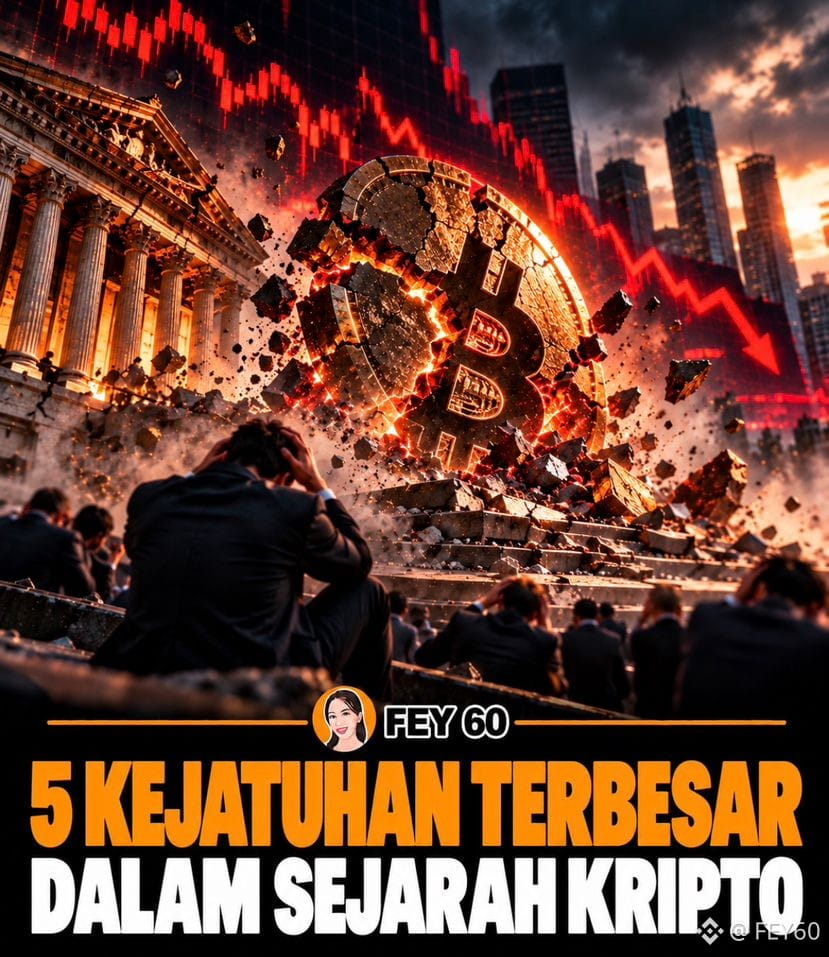
The crypto industry has seen some of its biggest disasters, resulting in losses of billions of dollars due to system failures, mismanagement, and crime.
.
Here are 5 of the most notable cases and the lessons they offer:
.
1. Terra/LUNA (May 2022) —
The crypto market lost up to US$50 billion (± Rp900 trillion) after the UST stablecoin failed to maintain its peg to the dollar. A flawed balancing mechanism caused LUNA’s price to plunge as well, devastating the ecosystem within days.
.
(Lesson: The stablecoin label and high yields are never a guarantee that an investment is safe)
.
2. FTX (November 2022) —
One of the world’s largest exchanges collapsed when mass customer withdrawals revealed that FTX did not have enough liquidity.
.
According to the CFTC, around US$8 billion (± Rp144 trillion) in customer deposits was reported missing.
.
(Lesson: Balances on an exchange are not as safe as assets held in a personal wallet that you control yourself)
.
3. Celsius Network (June 2022) —
This lending platform abruptly halted all customer withdrawals amid a liquidity crisis before eventually going bankrupt, leaving assets worth US$4.7 billion (± Rp84.6 trillion) inaccessible.
.
(Lesson: Understand the risks in depth when a platform lends your crypto assets to third parties)
.
4. Three Arrows Capital (2022) —
This giant crypto hedge fund defaulted after its investments in Terra/LUNA and other assets collapsed, leaving creditors with debt claims of more than US$3 billion (± Rp54 trillion).
.
(Lesson: Excessive borrowing and leverage can multiply risk and drag other financial institutions down with them)
.
5. Mt. Gox (2014) —
The largest Bitcoin exchange of the early era collapsed after losing 850,000 BTC (worth ± Rp8.64 trillion at the time) to hacking and mismanagement, triggering the longest bankruptcy proceedings in crypto history.
.
(Lesson: Exchange system security and oversight of asset custody are critically important)
$BTC
.
Here are 5 of the most notable cases and the lessons they offer:
.
1. Terra/LUNA (May 2022) —
The crypto market lost up to US$50 billion (± Rp900 trillion) after the UST stablecoin failed to maintain its peg to the dollar. A flawed balancing mechanism caused LUNA’s price to plunge as well, devastating the ecosystem within days.
.
(Lesson: The stablecoin label and high yields are never a guarantee that an investment is safe)
.
2. FTX (November 2022) —
One of the world’s largest exchanges collapsed when mass customer withdrawals revealed that FTX did not have enough liquidity.
.
According to the CFTC, around US$8 billion (± Rp144 trillion) in customer deposits was reported missing.
.
(Lesson: Balances on an exchange are not as safe as assets held in a personal wallet that you control yourself)
.
3. Celsius Network (June 2022) —
This lending platform abruptly halted all customer withdrawals amid a liquidity crisis before eventually going bankrupt, leaving assets worth US$4.7 billion (± Rp84.6 trillion) inaccessible.
.
(Lesson: Understand the risks in depth when a platform lends your crypto assets to third parties)
.
4. Three Arrows Capital (2022) —
This giant crypto hedge fund defaulted after its investments in Terra/LUNA and other assets collapsed, leaving creditors with debt claims of more than US$3 billion (± Rp54 trillion).
.
(Lesson: Excessive borrowing and leverage can multiply risk and drag other financial institutions down with them)
.
5. Mt. Gox (2014) —
The largest Bitcoin exchange of the early era collapsed after losing 850,000 BTC (worth ± Rp8.64 trillion at the time) to hacking and mismanagement, triggering the longest bankruptcy proceedings in crypto history.
.
(Lesson: Exchange system security and oversight of asset custody are critically important)
$BTC
4
984
·
--
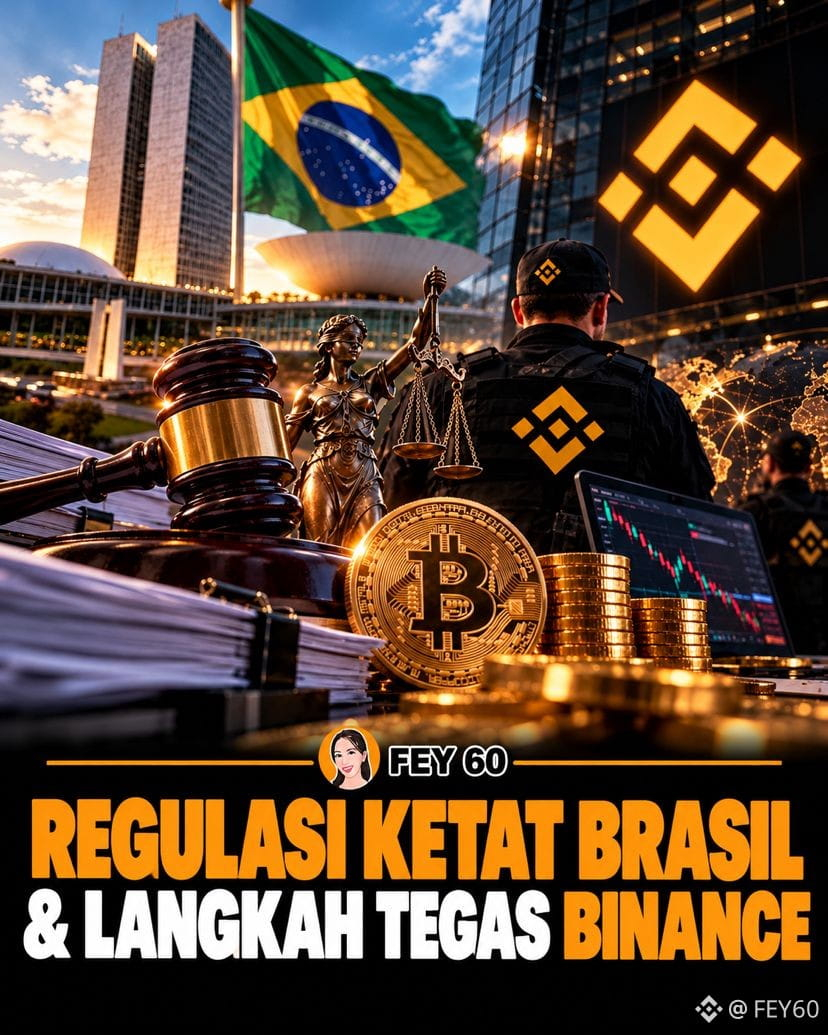
Binance has officially applied for regulatory authorization from Brazil’s Central Bank ahead of the October 30 deadline, while taking a major step: restricting 8 services and delisting 22 tokens for users there.
.
Many people are panicking and wondering, is this a bad sign? 🤔 Let’s take an objective look!
.
This move isn’t a sign of weakness, but a long-term strategy aimed at compliance. Given that Brazil is one of the region’s largest crypto markets, working with local regulators is essential for cryptocurrency adoption to safely and sustainably enter the mainstream.
.
Although some features and tokens are being restricted specifically in Brazil, this preventive move actually provides greater legal certainty for both institutional and retail investors in the long run. Clear regulations often lay the groundwork before the next bull run begins! 🚀
.
What do you think? Does strict compliance like this make the crypto ecosystem healthier and more mature, or does it restrict freedom?
.
Many people are panicking and wondering, is this a bad sign? 🤔 Let’s take an objective look!
.
This move isn’t a sign of weakness, but a long-term strategy aimed at compliance. Given that Brazil is one of the region’s largest crypto markets, working with local regulators is essential for cryptocurrency adoption to safely and sustainably enter the mainstream.
.
Although some features and tokens are being restricted specifically in Brazil, this preventive move actually provides greater legal certainty for both institutional and retail investors in the long run. Clear regulations often lay the groundwork before the next bull run begins! 🚀
.
What do you think? Does strict compliance like this make the crypto ecosystem healthier and more mature, or does it restrict freedom?
3
1.2k
·
--
Verified
Binance founder Changpeng Zhao (CZ) attended the Nasdaq opening ceremony in person on October 26 to celebrate BNB Standard ($BNC) joining the U.S. stock market.
.
Now, it’s not BNB coins themselves being traded on the stock market. Rather, it’s shares in a publicly traded company whose role is to buy up and hold massive BNB reserves!
.
CZ called this moment tangible proof of the convergence of crypto and traditional finance (TradFi). The lines between these two worlds are becoming increasingly blurred! 👀
.
So, what does this mean for us crypto holders and traders?
1. BNB coins become scarcer (supply squeeze): The company will keep buying BNB and locking it away in its treasury. The more BNB that gets locked up, the tighter the market supply becomes—and that could fuel a rise in BNB’s price!
.
2. A massive influx of capital from Wall Street: Large institutional investors who are prohibited from using crypto exchanges or don’t have accounts on them can now invest in the BNB ecosystem through the stock market.
.
3. Greater legitimacy: A BNB-focused institution joining a selective exchange like Nasdaq shows that BNB is increasingly recognized as a safe, legitimate strategic asset on the global stage.
.
What do you think—could this move send BNB’s price soaring in the future? Share your thoughts in the comments! 👇
.
Now, it’s not BNB coins themselves being traded on the stock market. Rather, it’s shares in a publicly traded company whose role is to buy up and hold massive BNB reserves!
.
CZ called this moment tangible proof of the convergence of crypto and traditional finance (TradFi). The lines between these two worlds are becoming increasingly blurred! 👀
.
So, what does this mean for us crypto holders and traders?
1. BNB coins become scarcer (supply squeeze): The company will keep buying BNB and locking it away in its treasury. The more BNB that gets locked up, the tighter the market supply becomes—and that could fuel a rise in BNB’s price!
.
2. A massive influx of capital from Wall Street: Large institutional investors who are prohibited from using crypto exchanges or don’t have accounts on them can now invest in the BNB ecosystem through the stock market.
.
3. Greater legitimacy: A BNB-focused institution joining a selective exchange like Nasdaq shows that BNB is increasingly recognized as a safe, legitimate strategic asset on the global stage.
.
What do you think—could this move send BNB’s price soaring in the future? Share your thoughts in the comments! 👇

3
653
·
--
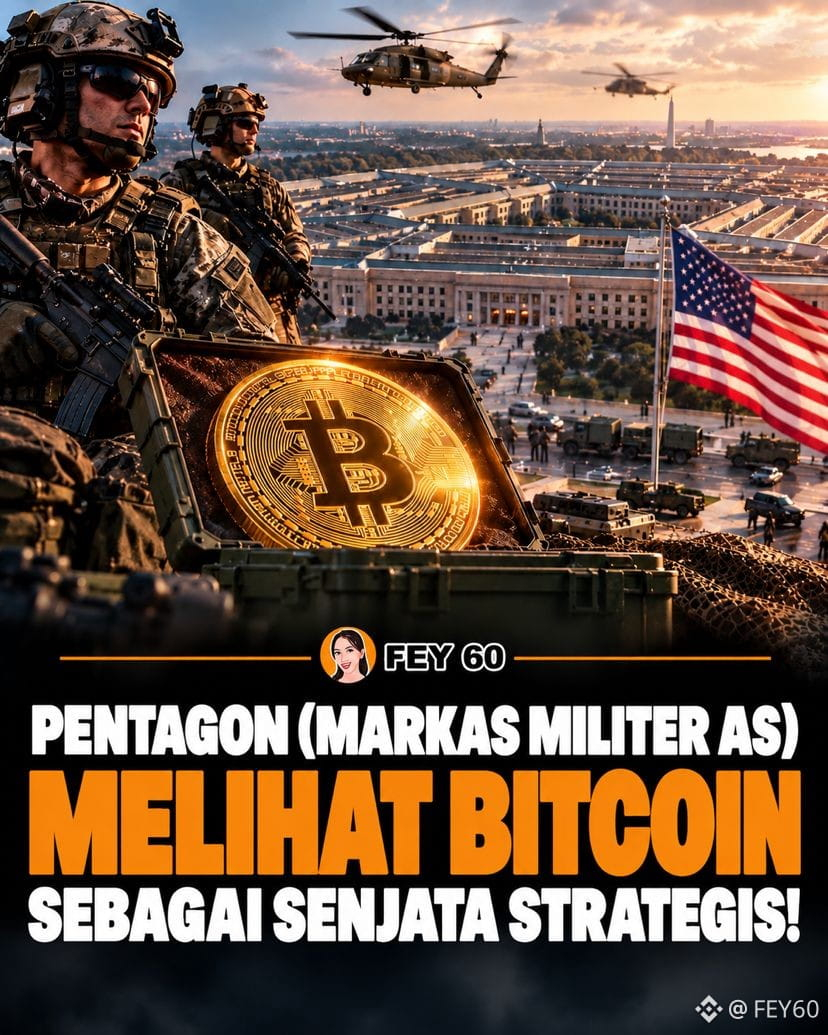
The crypto world has been stirred by a shocking statement from a US defense official. During a congressional hearing, Defense Secretary Pete Hegseth firmly stated that Bitcoin is a strategic tool of national power for confronting rivals such as China.
-
The Pentagon has reportedly even launched a secret initiative to harness this technology, in line with plans to establish a US Strategic Bitcoin Reserve. The military views decentralized blockchain networks as highly resilient for censorship-resistant communications and cybersecurity.
-
A CIA Surprise: Bitcoin as an Intelligence Tool.
Meanwhile, the CIA has casually acknowledged that Bitcoin is used as a surveillance tool.
-
Many people think crypto is completely anonymous, but in reality, Bitcoin is pseudonymous.
-
All transactions are publicly recorded on the blockchain, allowing intelligence agencies to easily track the flow of funds belonging to criminal syndicates or hostile nations using advanced data analysis.
-
What Does This Mean for Us?
1. Strong Legitimacy: When the military and intelligence agencies take an interest in Bitcoin, it proves that crypto is not a passing trend, but a global strategic asset.
-
2. Tighter Surveillance: The transparency of blockchain means governments will increasingly tighten regulations and monitor transactions going forward.
-
Crypto was once created to avoid state control, but now superpowers are eyeing it as a digital defense bulwark. What do you think? Share your thoughts in the comments!
-
The Pentagon has reportedly even launched a secret initiative to harness this technology, in line with plans to establish a US Strategic Bitcoin Reserve. The military views decentralized blockchain networks as highly resilient for censorship-resistant communications and cybersecurity.
-
A CIA Surprise: Bitcoin as an Intelligence Tool.
Meanwhile, the CIA has casually acknowledged that Bitcoin is used as a surveillance tool.
-
Many people think crypto is completely anonymous, but in reality, Bitcoin is pseudonymous.
-
All transactions are publicly recorded on the blockchain, allowing intelligence agencies to easily track the flow of funds belonging to criminal syndicates or hostile nations using advanced data analysis.
-
What Does This Mean for Us?
1. Strong Legitimacy: When the military and intelligence agencies take an interest in Bitcoin, it proves that crypto is not a passing trend, but a global strategic asset.
-
2. Tighter Surveillance: The transparency of blockchain means governments will increasingly tighten regulations and monitor transactions going forward.
-
Crypto was once created to avoid state control, but now superpowers are eyeing it as a digital defense bulwark. What do you think? Share your thoughts in the comments!
1
12
6.2k
·
--
This news comes from China, where researchers at Tsinghua University in Beijing have developed a facility called Agent Hospital.
-
However, this hospital isn’t a physical building in any particular city. Instead, it exists in a virtual world, or computer simulation environment.
-
In this digital simulation in China, all 3,000 patients being treated are AI characters, not real people.
-
The system was created specifically to train artificial intelligence to care for patients and diagnose thousands of disease scenarios very quickly.
-
So, this technological innovation from China isn’t intended to replace human doctors in the real world.
-
The virtual facility was developed as a platform for medical testing and training, with the aim of making future healthcare much more accurate, efficient, and safe.
-
What do you think about the development of medical AI technology in China? Could AI really replace doctors in the real world someday? Share your thoughts in the comments!
-
However, this hospital isn’t a physical building in any particular city. Instead, it exists in a virtual world, or computer simulation environment.
-
In this digital simulation in China, all 3,000 patients being treated are AI characters, not real people.
-
The system was created specifically to train artificial intelligence to care for patients and diagnose thousands of disease scenarios very quickly.
-
So, this technological innovation from China isn’t intended to replace human doctors in the real world.
-
The virtual facility was developed as a platform for medical testing and training, with the aim of making future healthcare much more accurate, efficient, and safe.
-
What do you think about the development of medical AI technology in China? Could AI really replace doctors in the real world someday? Share your thoughts in the comments!

2
356
·
--
A cybersecurity warning has come from Binance founder CZ. He urges the public to be extra cautious when visiting any website over the next few days.
-
This follows the disclosure of two critical vulnerabilities in the PHP programming language, which is used by millions of popular websites such as WordPress and Magento.
-
These vulnerabilities allow unauthenticated attacks that can turn websites you visit into hacking tools to steal personal data (credentials) and even exploit your devices.
-
Since not all web admins update their systems right away, users are advised to stay vigilant while browsing the internet.
$BTC
{spot}(BTCUSDT)
A cybersecurity warning has come from Binance founder CZ. He urges the public to be extra cautious when visiting any website over the next few days.
-
This follows the disclosure of two critical vulnerabilities in the PHP programming language, which is used by millions of popular websites such as WordPress and Magento.
-
These vulnerabilities allow unauthenticated attacks that can turn websites you visit into hacking tools to steal personal data (credentials) and even exploit your devices.
-
Since not all web admins update their systems right away, users are advised to stay vigilant while browsing the internet.
$BTC
-
This follows the disclosure of two critical vulnerabilities in the PHP programming language, which is used by millions of popular websites such as WordPress and Magento.
-
These vulnerabilities allow unauthenticated attacks that can turn websites you visit into hacking tools to steal personal data (credentials) and even exploit your devices.
-
Since not all web admins update their systems right away, users are advised to stay vigilant while browsing the internet.
$BTC

1
8
11.3k
·
--
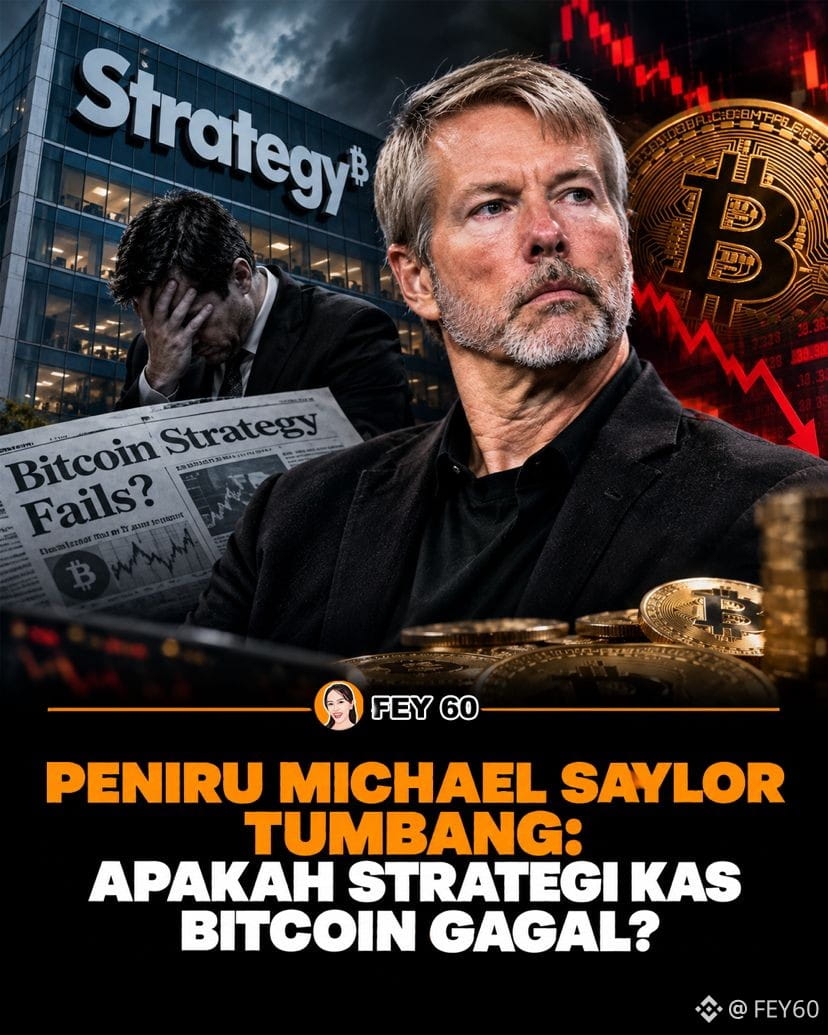
The Bitcoin-as-corporate-treasury strategy pioneered by Michael Saylor is starting to falter.
-
Throughout 2026, at least 9 copycat companies were forced to sell ALL their BTC reserves as their share-price premiums plunged and debt burdens swelled.
-
Companies such as Satsuma and MARA have been pushed to sell thousands of BTC to repay convertible bonds.
-
These massive sales are emergency measures to ease debt pressure, not a sign of lost faith in crypto.
-
Interestingly, some of that capital is now being redirected to AI data center infrastructure. Even so, 173 companies are still holding 1.3 million BTC.
-
Will this strategy only work for giant, large-cap players?
$BTC
{spot}(BTCUSDT)
The Bitcoin-as-corporate-treasury strategy pioneered by Michael Saylor is starting to falter.
-
Throughout 2026, at least 9 copycat companies were forced to sell ALL their BTC reserves as their share-price premiums plunged and debt burdens swelled.
-
Companies such as Satsuma and MARA have been pushed to sell thousands of BTC to repay convertible bonds.
-
These massive sales are emergency measures to ease debt pressure, not a sign of lost faith in crypto.
-
Interestingly, some of that capital is now being redirected to AI data center infrastructure. Even so, 173 companies are still holding 1.3 million BTC.
-
Will this strategy only work for giant, large-cap players?
$BTC
-
Throughout 2026, at least 9 copycat companies were forced to sell ALL their BTC reserves as their share-price premiums plunged and debt burdens swelled.
-
Companies such as Satsuma and MARA have been pushed to sell thousands of BTC to repay convertible bonds.
-
These massive sales are emergency measures to ease debt pressure, not a sign of lost faith in crypto.
-
Interestingly, some of that capital is now being redirected to AI data center infrastructure. Even so, 173 companies are still holding 1.3 million BTC.
-
Will this strategy only work for giant, large-cap players?
$BTC
3
222
·
--
The hype around the new Tesla Roadster with SpaceX thrusters capable of short "flights" is blowing up social media. But as traders, we must separate marketing hype from real Q3 earnings numbers.
-
Can this "flying car" narrative boost Tesla's revenue anytime soon?
Let’s break it down!
-
“3 Facts: Flying Cars vs. $TSLA Revenue”
👇
1. Production Delay: Mass production is still years away. Financial impact for this quarter is zero.
2. Deposit Accounting: Under GAAP rules, pre-order deposits cannot be recognized as revenue until vehicles are actually delivered.
3. Niche Market: Roadster is a supercar. Core revenue drivers remain Model 3, Model Y, and Tesla Energy (Megapack).
-
Takeaway: The narrative is great for brand equity, but it won't boost short-term revenue.
-
My Stance: Short-Term Bearish, Long-Term Bullish
👉 Short-Term Caution: Markets are hyper-focused on automotive gross margins. Year-long price cuts and incentives threaten profitability. A "Sell the News" event is likely if margins miss estimates even slightly.
-
Trade Strategy:
Pre-Earnings: Lower leverage on Longs or lock in partial profits to manage volatility.
Post-Earnings: A sharp dip from emotional margin reactions while energy & FSD fundamentals stay solid presents a prime Buy on Dip (BOD) zone for long-term accumulation.
-
What's your take? Is $TSLA mooning post-earnings, or are you staying cautious like me? Comment below! 👇
#EarningsSeason
$TSLAB
{spot}(TSLABUSDT)
$TSLA
{future}(TSLAUSDT)
The hype around the new Tesla Roadster with SpaceX thrusters capable of short "flights" is blowing up social media. But as traders, we must separate marketing hype from real Q3 earnings numbers.
-
Can this "flying car" narrative boost Tesla's revenue anytime soon?
Let’s break it down!
-
“3 Facts: Flying Cars vs. $TSLA Revenue”
👇
1. Production Delay: Mass production is still years away. Financial impact for this quarter is zero.
2. Deposit Accounting: Under GAAP rules, pre-order deposits cannot be recognized as revenue until vehicles are actually delivered.
3. Niche Market: Roadster is a supercar. Core revenue drivers remain Model 3, Model Y, and Tesla Energy (Megapack).
-
Takeaway: The narrative is great for brand equity, but it won't boost short-term revenue.
-
My Stance: Short-Term Bearish, Long-Term Bullish
👉 Short-Term Caution: Markets are hyper-focused on automotive gross margins. Year-long price cuts and incentives threaten profitability. A "Sell the News" event is likely if margins miss estimates even slightly.
-
Trade Strategy:
Pre-Earnings: Lower leverage on Longs or lock in partial profits to manage volatility.
Post-Earnings: A sharp dip from emotional margin reactions while energy & FSD fundamentals stay solid presents a prime Buy on Dip (BOD) zone for long-term accumulation.
-
What's your take? Is $TSLA mooning post-earnings, or are you staying cautious like me? Comment below! 👇
#EarningsSeason
$TSLAB
$TSLA
-
Can this "flying car" narrative boost Tesla's revenue anytime soon?
Let’s break it down!
-
“3 Facts: Flying Cars vs. $TSLA Revenue”
👇
1. Production Delay: Mass production is still years away. Financial impact for this quarter is zero.
2. Deposit Accounting: Under GAAP rules, pre-order deposits cannot be recognized as revenue until vehicles are actually delivered.
3. Niche Market: Roadster is a supercar. Core revenue drivers remain Model 3, Model Y, and Tesla Energy (Megapack).
-
Takeaway: The narrative is great for brand equity, but it won't boost short-term revenue.
-
My Stance: Short-Term Bearish, Long-Term Bullish
👉 Short-Term Caution: Markets are hyper-focused on automotive gross margins. Year-long price cuts and incentives threaten profitability. A "Sell the News" event is likely if margins miss estimates even slightly.
-
Trade Strategy:
Pre-Earnings: Lower leverage on Longs or lock in partial profits to manage volatility.
Post-Earnings: A sharp dip from emotional margin reactions while energy & FSD fundamentals stay solid presents a prime Buy on Dip (BOD) zone for long-term accumulation.
-
What's your take? Is $TSLA mooning post-earnings, or are you staying cautious like me? Comment below! 👇
#EarningsSeason
$TSLAB
$TSLA

2
398
·
--
Global crude oil prices rose above US$110 per barrel again on Tuesday, October 20, 2026. Brent crude briefly reached US$110.70, its highest level since May.
_
The increase was driven by concerns about supply disruptions amid rising geopolitical tensions in the Middle East.
_
Attacks on Saudi Arabia’s energy infrastructure and threats to shipping routes in the Gulf region have raised concerns in the market about disruptions to oil supplies.
_
If prices remain high, global transportation and production costs could rise, adding to inflationary pressures.
$BTC
{spot}(BTCUSDT)
Global crude oil prices rose above US$110 per barrel again on Tuesday, October 20, 2026. Brent crude briefly reached US$110.70, its highest level since May.
_
The increase was driven by concerns about supply disruptions amid rising geopolitical tensions in the Middle East.
_
Attacks on Saudi Arabia’s energy infrastructure and threats to shipping routes in the Gulf region have raised concerns in the market about disruptions to oil supplies.
_
If prices remain high, global transportation and production costs could rise, adding to inflationary pressures.
$BTC
_
The increase was driven by concerns about supply disruptions amid rising geopolitical tensions in the Middle East.
_
Attacks on Saudi Arabia’s energy infrastructure and threats to shipping routes in the Gulf region have raised concerns in the market about disruptions to oil supplies.
_
If prices remain high, global transportation and production costs could rise, adding to inflationary pressures.
$BTC

3
187
·
--
Large-scale protests in France were sparked by rising living and fuel costs, a shortage of teachers, and inadequate educational facilities.
.
These pressures are placing an increasing burden on the public, especially as expenses rise while incomes may not keep pace. As a result, people’s purchasing power is also being squeezed.
.
The unrest also risks causing losses for businesses and damage to public facilities through looting, fires, and building damage.
.
Recovery costs could burden the government and businesses. However, the total economic losses caused by the unrest have yet to be determined.
.
These pressures are placing an increasing burden on the public, especially as expenses rise while incomes may not keep pace. As a result, people’s purchasing power is also being squeezed.
.
The unrest also risks causing losses for businesses and damage to public facilities through looting, fires, and building damage.
.
Recovery costs could burden the government and businesses. However, the total economic losses caused by the unrest have yet to be determined.

4
382
·
--
Crypto investors need to know!
In Indonesia, crypto sales through domestic digital financial asset traders are subject to a final income tax of 0.21% of the transaction value.
.
This means the tax is calculated based on the sale value, not the profit earned.
.
For example, you buy crypto worth Rp10 million, then sell it for Rp9 million. Even though you lose Rp1 million, you may still be charged Rp18,900 in tax if the transaction meets the requirements.
.
That’s why investors should factor in taxes when selling crypto, so they can calculate their transaction results more accurately.
$BTC
{spot}(BTCUSDT)
Crypto investors need to know!
In Indonesia, crypto sales through domestic digital financial asset traders are subject to a final income tax of 0.21% of the transaction value.
.
This means the tax is calculated based on the sale value, not the profit earned.
.
For example, you buy crypto worth Rp10 million, then sell it for Rp9 million. Even though you lose Rp1 million, you may still be charged Rp18,900 in tax if the transaction meets the requirements.
.
That’s why investors should factor in taxes when selling crypto, so they can calculate their transaction results more accurately.
$BTC

1
3
281
·
--
Global gold prices briefly topped US$4,200 per troy ounce in October 2026, setting a new record amid global economic uncertainty.
~
This has drawn renewed interest in gold, which is seen as a way to help protect wealth when markets are volatile.
~
Some investors choose gold to reduce risk when the stock market is unstable. However, that does not mean all money is moving into gold.
~
Price movements are still influenced by US interest rates, inflation, and global conditions. Investors should also consider the risks before making a decision.
$GOLD.US
{stock_us}(GOLD.US)
Global gold prices briefly topped US$4,200 per troy ounce in October 2026, setting a new record amid global economic uncertainty.
~
This has drawn renewed interest in gold, which is seen as a way to help protect wealth when markets are volatile.
~
Some investors choose gold to reduce risk when the stock market is unstable. However, that does not mean all money is moving into gold.
~
Price movements are still influenced by US interest rates, inflation, and global conditions. Investors should also consider the risks before making a decision.
$GOLD.US
~
This has drawn renewed interest in gold, which is seen as a way to help protect wealth when markets are volatile.
~
Some investors choose gold to reduce risk when the stock market is unstable. However, that does not mean all money is moving into gold.
~
Price movements are still influenced by US interest rates, inflation, and global conditions. Investors should also consider the risks before making a decision.
$GOLD.US

GOLDUS+0.62%
3
85
·
--
A shocking case involving a Ledger Nano X from Malaysia. Mark Karpelès reported an extra chip, eSIM, antenna, and LTE components hidden behind the device’s screen.
.
Ledger confirmed that the affected users’ devices had been illegally modified.
.
Ledger advised anyone who bought from the CryptoBilis reseller in the past 90 days not to set up a new device.
.
Users who have already used one are advised to consider getting a new device and creating a new seed phrase. Ledger has not confirmed the suspected theft of seed phrases through the screen.
$BTC
{spot}(BTCUSDT)
A shocking case involving a Ledger Nano X from Malaysia. Mark Karpelès reported an extra chip, eSIM, antenna, and LTE components hidden behind the device’s screen.
.
Ledger confirmed that the affected users’ devices had been illegally modified.
.
Ledger advised anyone who bought from the CryptoBilis reseller in the past 90 days not to set up a new device.
.
Users who have already used one are advised to consider getting a new device and creating a new seed phrase. Ledger has not confirmed the suspected theft of seed phrases through the screen.
$BTC
.
Ledger confirmed that the affected users’ devices had been illegally modified.
.
Ledger advised anyone who bought from the CryptoBilis reseller in the past 90 days not to set up a new device.
.
Users who have already used one are advised to consider getting a new device and creating a new seed phrase. Ledger has not confirmed the suspected theft of seed phrases through the screen.
$BTC

3
341
·
--
Indonesia’s stock market (IHSG) suffered its worst plunge in 28 years (closing down 11.57% at 5,185.11 on October 16, 2026)
.
The IHSG plunged after MSCI highlighted problems in Indonesia’s stock market, ranging from opaque share ownership to alleged stock price manipulation.
.
The threat of Indonesia being downgraded has worried foreign investors and could prompt them to withdraw their funds.
.
Panic selling, foreign fund outflows of around US$4.6 billion over the year, and the rupiah’s depreciation to Rp18,000 per US dollar have put further pressure on the market.
.
The IHSG plunged after MSCI highlighted problems in Indonesia’s stock market, ranging from opaque share ownership to alleged stock price manipulation.
.
The threat of Indonesia being downgraded has worried foreign investors and could prompt them to withdraw their funds.
.
Panic selling, foreign fund outflows of around US$4.6 billion over the year, and the rupiah’s depreciation to Rp18,000 per US dollar have put further pressure on the market.

3
374
Log in to explore more content
Join global crypto users on Binance Square
⚡️ Get latest and useful information about crypto.
💬 Trusted by the world’s largest crypto exchange.
👍 Discover real insights from verified creators.
Email / Phone number
Trending Topics
BinanceWithdrawalScamWarning
40,853 views
651 Discussing
Binance Warns Users of Withdrawal Scams as Services Resume: It Will Never Charge Fees, Sell Queue Spots or Ask You to Move Funds to a “Vault”
Binance News
·14 Likes
·8.1k views
USMidtermElections
604,567 views
3,225 Discussing
USOctoberNFP-AreRateCutsStillPossible
47,214 views
533 Discussing