
Falcon Finance
99 Posts

Falcon Finance
 Square Verified+
Report
Block User
The first universal collateralization infrastructure powering onchain liquidity and yield. Over $1.8b USDf in circulation.
0 Following
24.3K+ Followers
3.0K+ Liked
Posts
All
Quotes
What happens when a national stablecoin becomes collateral?
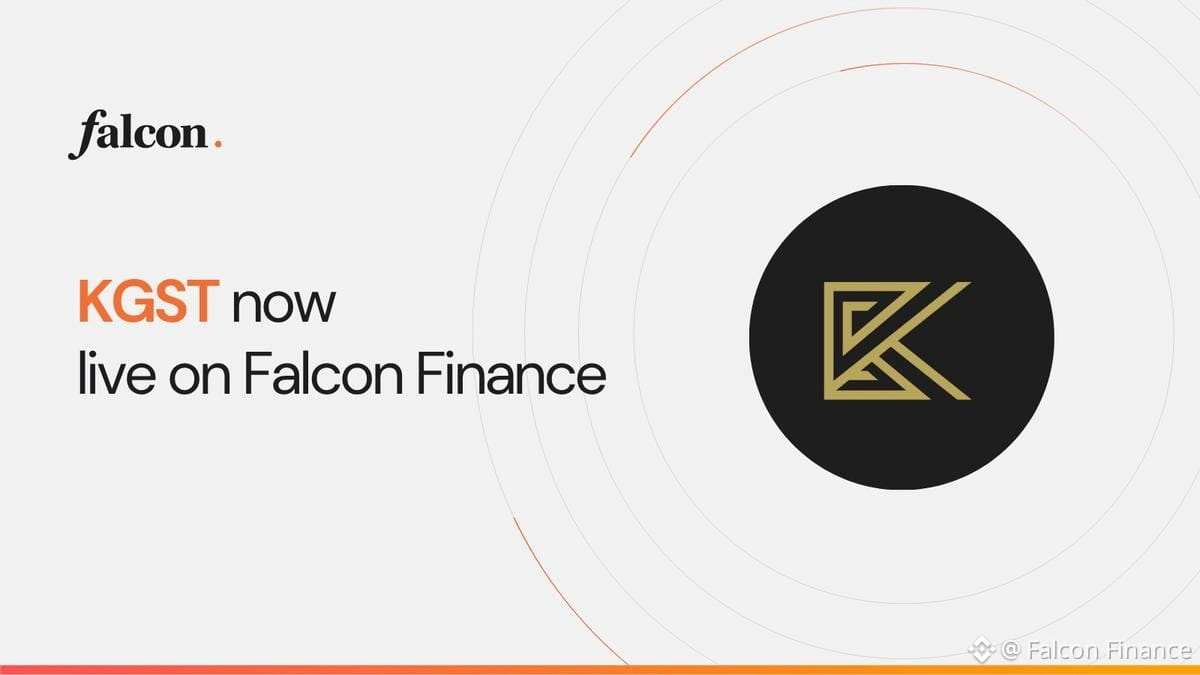
Kyrgyzstan’s state-backed som stablecoin, $KGST, can now be used to mint $USDf through Classic Mint.
It connects local-currency value to dollar-denominated onchain liquidity, bringing KGST into the wider global onchain economy.
What happens when a national stablecoin becomes collateral?
Kyrgyzstan’s state-backed som stablecoin, $KGST, can now be used to mint $USDf through Classic Mint.
It connects local-currency value to dollar-denominated onchain liquidity, bringing KGST into the wider global onchain economy.
Kyrgyzstan’s state-backed som stablecoin, $KGST, can now be used to mint $USDf through Classic Mint.
It connects local-currency value to dollar-denominated onchain liquidity, bringing KGST into the wider global onchain economy.
2
512
Verified
Since Falcon Finance launched, we’ve kept building and shipping, giving users more ways to put their assets to work.
Here’s how our product suite has expanded just this year:
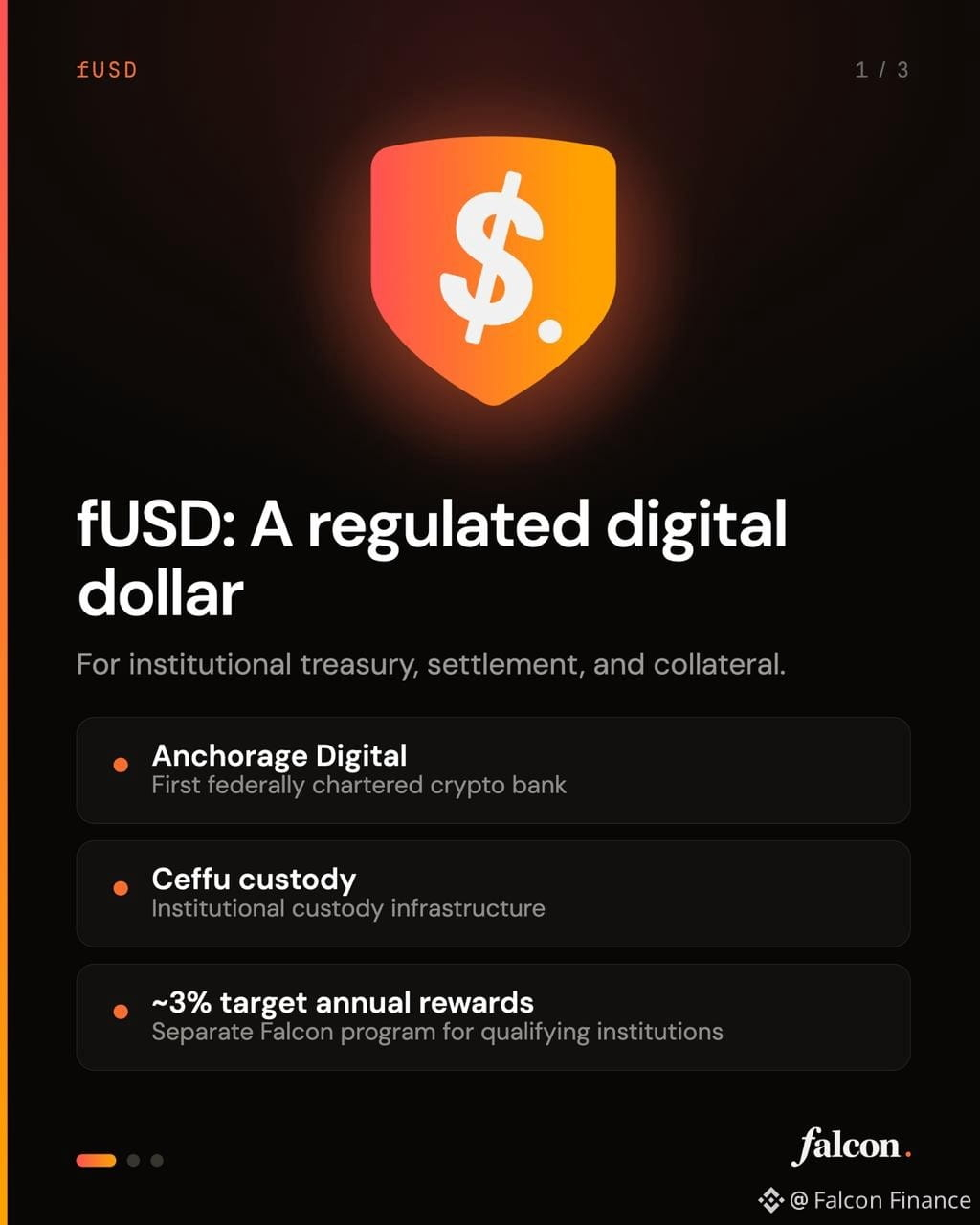
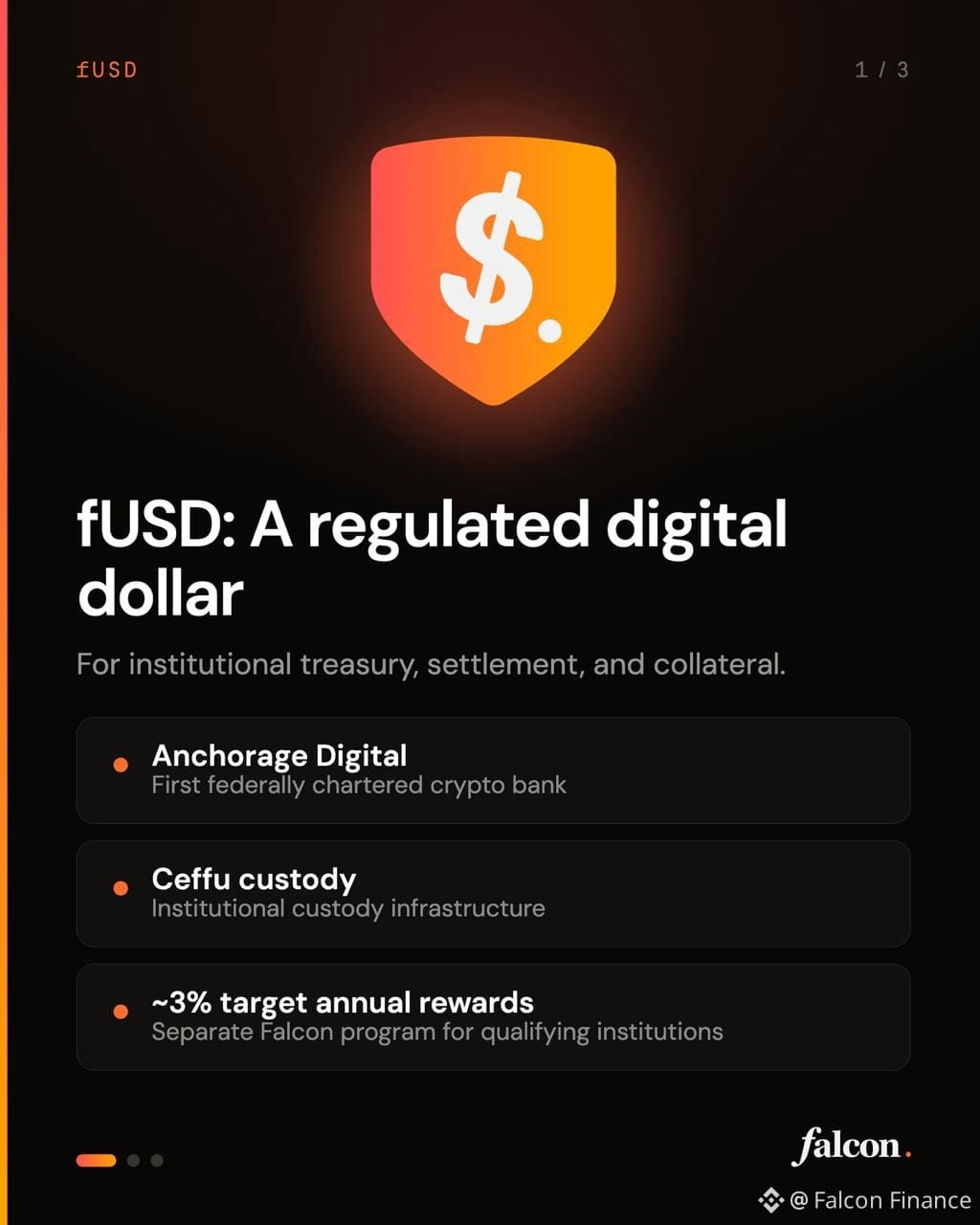
→ fUSD: A regulated digital dollar for institutional treasury, settlement, and collateral use. Issued by Anchorage Digital, the first federally chartered crypto bank, and supported by Ceffu’s custody infrastructure, fUSD gives qualifying institutions access to a separate Falcon rewards program targeting approximately 3% annually.
Details here: https://falcon.finance/news/falcon-finance-and-anchorage-digital-bank-launch-fusd-a-genius-ready-stablecoin-with-rewards-on-ceffu
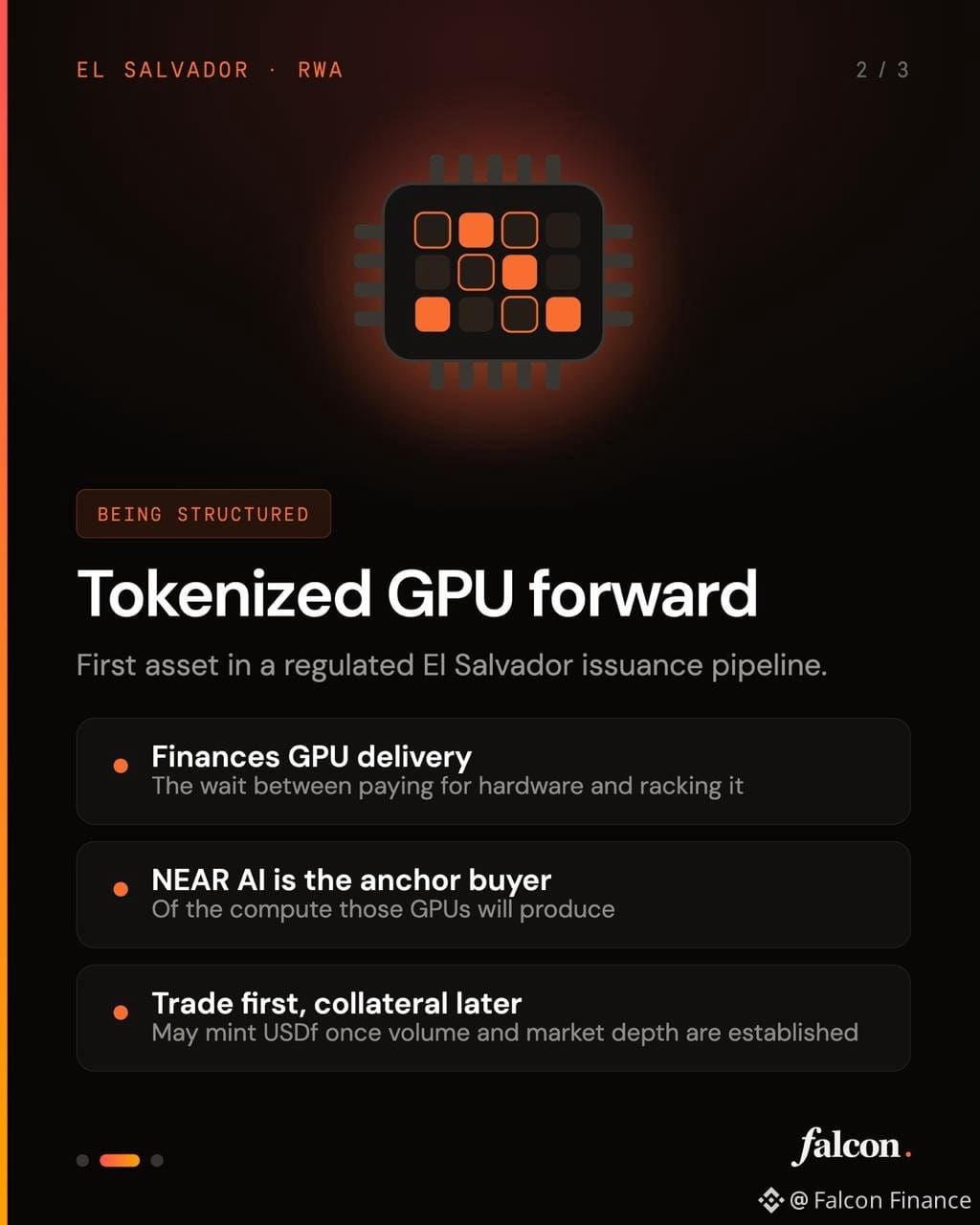
→ RWA issuance in El Salvador: Our regulated tokenization pipeline starts with financing GPU delivery. The first asset, a tokenized GPU forward, is still being structured, with NEAR AI as the anchor buyer of the compute those GPUs will produce. It is designed for secondary trading and could later qualify as collateral to mint USDf once sufficient trading volume and market depth are established.
Find out more: https://falcon.finance/news/falcon-finance-opens-regulated-tokenization-pipeline-in-el-salvador-led-by-gpu-financing
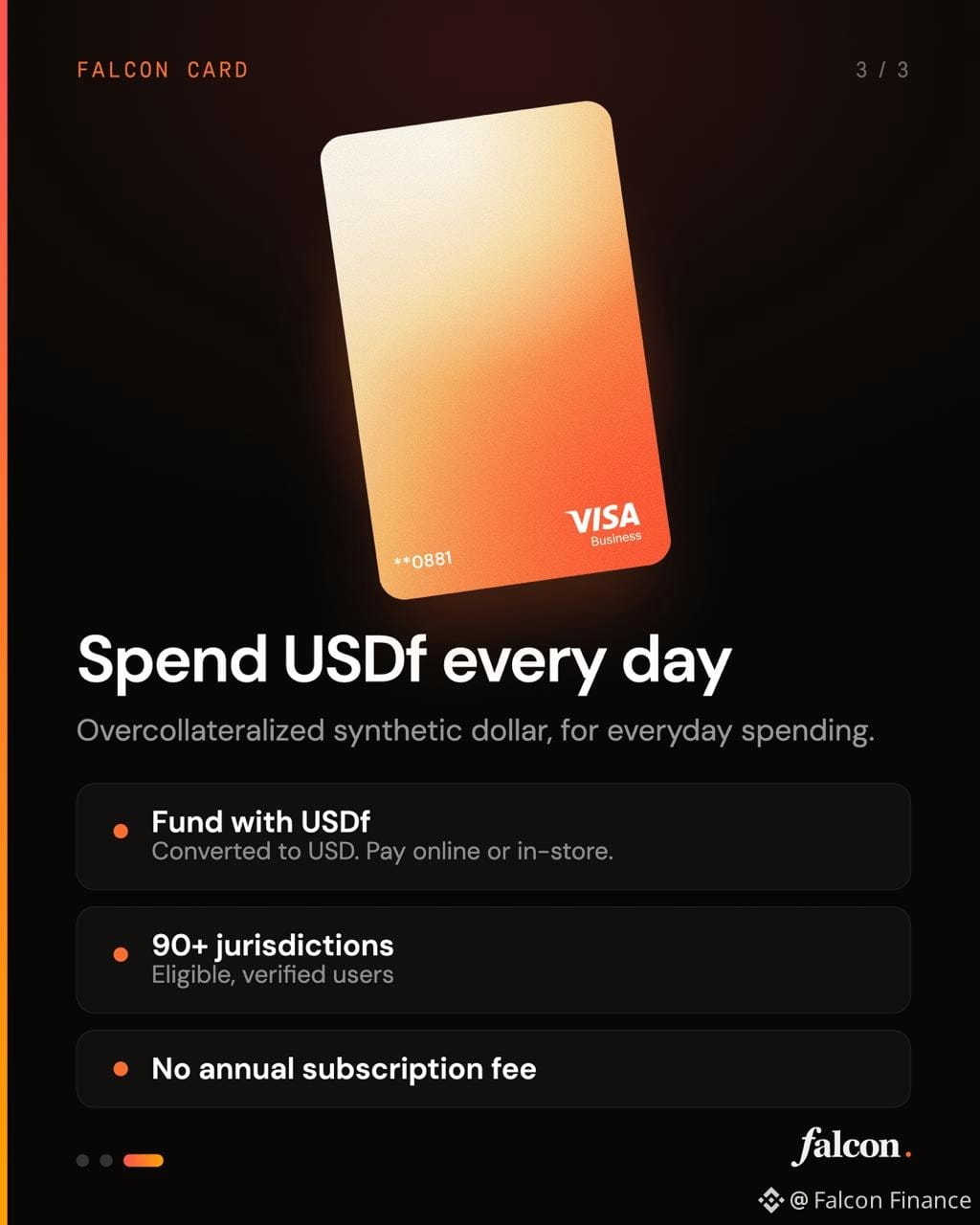
→ Falcon Card: A way to turn USDf, our overcollateralized synthetic dollar, into everyday spending. Eligible, verified users in 90+ supported jurisdictions can fund their card with USDf, converted to USD at 1:1, and pay online or in-store. No annual subscription fee.
How to get your card: https://falcon.finance/news/from-tokenized-assets-to-everyday-spending-introducing-falcon-card
From USDf and yield to institutional dollars, everyday payments, and tokenization, we’re steadily expanding what Falcon can do.
Since Falcon Finance launched, we’ve kept building and shipping, giving users more ways to put their assets to work.
Here’s how our product suite has expanded just this year:
→ fUSD: A regulated digital dollar for institutional treasury, settlement, and collateral use. Issued by Anchorage Digital, the first federally chartered crypto bank, and supported by Ceffu’s custody infrastructure, fUSD gives qualifying institutions access to a separate Falcon rewards program targeting approximately 3% annually.
Details here: https://falcon.finance/news/falcon-finance-and-anchorage-digital-bank-launch-fusd-a-genius-ready-stablecoin-with-rewards-on-ceffu
→ RWA issuance in El Salvador: Our regulated tokenization pipeline starts with financing GPU delivery. The first asset, a tokenized GPU forward, is still being structured, with NEAR AI as the anchor buyer of the compute those GPUs will produce. It is designed for secondary trading and could later qualify as collateral to mint USDf once sufficient trading volume and market depth are established.
Find out more: https://falcon.finance/news/falcon-finance-opens-regulated-tokenization-pipeline-in-el-salvador-led-by-gpu-financing
→ Falcon Card: A way to turn USDf, our overcollateralized synthetic dollar, into everyday spending. Eligible, verified users in 90+ supported jurisdictions can fund their card with USDf, converted to USD at 1:1, and pay online or in-store. No annual subscription fee.
How to get your card: https://falcon.finance/news/from-tokenized-assets-to-everyday-spending-introducing-falcon-card
From USDf and yield to institutional dollars, everyday payments, and tokenization, we’re steadily expanding what Falcon can do.
Here’s how our product suite has expanded just this year:
→ fUSD: A regulated digital dollar for institutional treasury, settlement, and collateral use. Issued by Anchorage Digital, the first federally chartered crypto bank, and supported by Ceffu’s custody infrastructure, fUSD gives qualifying institutions access to a separate Falcon rewards program targeting approximately 3% annually.
Details here: https://falcon.finance/news/falcon-finance-and-anchorage-digital-bank-launch-fusd-a-genius-ready-stablecoin-with-rewards-on-ceffu
→ RWA issuance in El Salvador: Our regulated tokenization pipeline starts with financing GPU delivery. The first asset, a tokenized GPU forward, is still being structured, with NEAR AI as the anchor buyer of the compute those GPUs will produce. It is designed for secondary trading and could later qualify as collateral to mint USDf once sufficient trading volume and market depth are established.
Find out more: https://falcon.finance/news/falcon-finance-opens-regulated-tokenization-pipeline-in-el-salvador-led-by-gpu-financing
→ Falcon Card: A way to turn USDf, our overcollateralized synthetic dollar, into everyday spending. Eligible, verified users in 90+ supported jurisdictions can fund their card with USDf, converted to USD at 1:1, and pay online or in-store. No annual subscription fee.
How to get your card: https://falcon.finance/news/from-tokenized-assets-to-everyday-spending-introducing-falcon-card
From USDf and yield to institutional dollars, everyday payments, and tokenization, we’re steadily expanding what Falcon can do.
1
1
3
599
Verified
Since Falcon Finance launched, we’ve kept building and shipping, giving users more ways to put their assets to work.
Here’s how our product suite has expanded just this year:
→ fUSD: A regulated digital dollar for institutional treasury, settlement, and collateral use. Issued by Anchorage Digital, the first federally chartered crypto bank, and supported by Ceffu’s custody infrastructure, fUSD gives qualifying institutions access to a separate Falcon rewards program targeting approximately 3% annually.
Details here: https://falcon.finance/news/falcon-finance-and-anchorage-digital-bank-launch-fusd-a-genius-ready-stablecoin-with-rewards-on-ceffu
→ RWA issuance in El Salvador: Our regulated tokenization pipeline starts with financing GPU delivery. The first asset, a tokenized GPU forward, is still being structured, with NEAR AI as the anchor buyer of the compute those GPUs will produce. It is designed for secondary trading and could later qualify as collateral to mint USDf once sufficient trading volume and market depth are established.
Find out more: https://falcon.finance/news/falcon-finance-opens-regulated-tokenization-pipeline-in-el-salvador-led-by-gpu-financing
→ Falcon Card: A way to turn USDf, our overcollateralized synthetic dollar, into everyday spending. Eligible, verified users in 90+ supported jurisdictions can fund their card with USDf, converted to USD at 1:1, and pay online or in-store. No annual subscription fee.
How to get your card: https://falcon.finance/news/from-tokenized-assets-to-everyday-spending-introducing-falcon-card
From USDf and yield to institutional dollars, everyday payments, and tokenization, we’re steadily expanding what Falcon can do.
Since Falcon Finance launched, we’ve kept building and shipping, giving users more ways to put their assets to work.
Here’s how our product suite has expanded just this year:
→ fUSD: A regulated digital dollar for institutional treasury, settlement, and collateral use. Issued by Anchorage Digital, the first federally chartered crypto bank, and supported by Ceffu’s custody infrastructure, fUSD gives qualifying institutions access to a separate Falcon rewards program targeting approximately 3% annually.
Details here: https://falcon.finance/news/falcon-finance-and-anchorage-digital-bank-launch-fusd-a-genius-ready-stablecoin-with-rewards-on-ceffu
→ RWA issuance in El Salvador: Our regulated tokenization pipeline starts with financing GPU delivery. The first asset, a tokenized GPU forward, is still being structured, with NEAR AI as the anchor buyer of the compute those GPUs will produce. It is designed for secondary trading and could later qualify as collateral to mint USDf once sufficient trading volume and market depth are established.
Find out more: https://falcon.finance/news/falcon-finance-opens-regulated-tokenization-pipeline-in-el-salvador-led-by-gpu-financing
→ Falcon Card: A way to turn USDf, our overcollateralized synthetic dollar, into everyday spending. Eligible, verified users in 90+ supported jurisdictions can fund their card with USDf, converted to USD at 1:1, and pay online or in-store. No annual subscription fee.
How to get your card: https://falcon.finance/news/from-tokenized-assets-to-everyday-spending-introducing-falcon-card
From USDf and yield to institutional dollars, everyday payments, and tokenization, we’re steadily expanding what Falcon can do.
Here’s how our product suite has expanded just this year:
→ fUSD: A regulated digital dollar for institutional treasury, settlement, and collateral use. Issued by Anchorage Digital, the first federally chartered crypto bank, and supported by Ceffu’s custody infrastructure, fUSD gives qualifying institutions access to a separate Falcon rewards program targeting approximately 3% annually.
Details here: https://falcon.finance/news/falcon-finance-and-anchorage-digital-bank-launch-fusd-a-genius-ready-stablecoin-with-rewards-on-ceffu
→ RWA issuance in El Salvador: Our regulated tokenization pipeline starts with financing GPU delivery. The first asset, a tokenized GPU forward, is still being structured, with NEAR AI as the anchor buyer of the compute those GPUs will produce. It is designed for secondary trading and could later qualify as collateral to mint USDf once sufficient trading volume and market depth are established.
Find out more: https://falcon.finance/news/falcon-finance-opens-regulated-tokenization-pipeline-in-el-salvador-led-by-gpu-financing
→ Falcon Card: A way to turn USDf, our overcollateralized synthetic dollar, into everyday spending. Eligible, verified users in 90+ supported jurisdictions can fund their card with USDf, converted to USD at 1:1, and pay online or in-store. No annual subscription fee.
How to get your card: https://falcon.finance/news/from-tokenized-assets-to-everyday-spending-introducing-falcon-card
From USDf and yield to institutional dollars, everyday payments, and tokenization, we’re steadily expanding what Falcon can do.
1
2
597
We're getting really close to $40 billion and beyond.
Treasuries, gold, tokenized stocks, and investment-grade credit in this stack can already be posted on Falcon to mint USDf. Falcon Card spends that dollar. The El Salvador pipeline is how more of the credit layers get the same path.
We're getting really close to $40 billion and beyond.
Treasuries, gold, tokenized stocks, and investment-grade credit in this stack can already be posted on Falcon to mint USDf. Falcon Card spends that dollar. The El Salvador pipeline is how more of the credit layers get the same path.
Treasuries, gold, tokenized stocks, and investment-grade credit in this stack can already be posted on Falcon to mint USDf. Falcon Card spends that dollar. The El Salvador pipeline is how more of the credit layers get the same path.

1
1
5
1.2k
If you want to understand how fast RWAs are moving, look at the holder count.
30 days ago:
1.1M addresses holding tokenized stocks
Today:
2.8M
That’s a 2.6x in a month.
If you want to understand how fast RWAs are moving, look at the holder count.
30 days ago:
1.1M addresses holding tokenized stocks
Today:
2.8M
That’s a 2.6x in a month.
30 days ago:
1.1M addresses holding tokenized stocks
Today:
2.8M
That’s a 2.6x in a month.
3
1.5k
Verified
"Demand was never the missing piece, perps proved the product offshore years ago. What changed is the legal wrapper."
Our Chief RWA Officer Artem Tolkachev in Forbes, on perps moving onshore.
Read more here 👉 https://www.forbes.com/sites/digital-assets/2026/08/27/how-perpetual-futures-could-make-more-assets-tradable/
"Demand was never the missing piece, perps proved the product offshore years ago. What changed is the legal wrapper."
Our Chief RWA Officer Artem Tolkachev in Forbes, on perps moving onshore.
Read more here 👉 https://www.forbes.com/sites/digital-assets/2026/08/27/how-perpetual-futures-could-make-more-assets-tradable/
Our Chief RWA Officer Artem Tolkachev in Forbes, on perps moving onshore.
Read more here 👉 https://www.forbes.com/sites/digital-assets/2026/08/27/how-perpetual-futures-could-make-more-assets-tradable/
5
1.6k
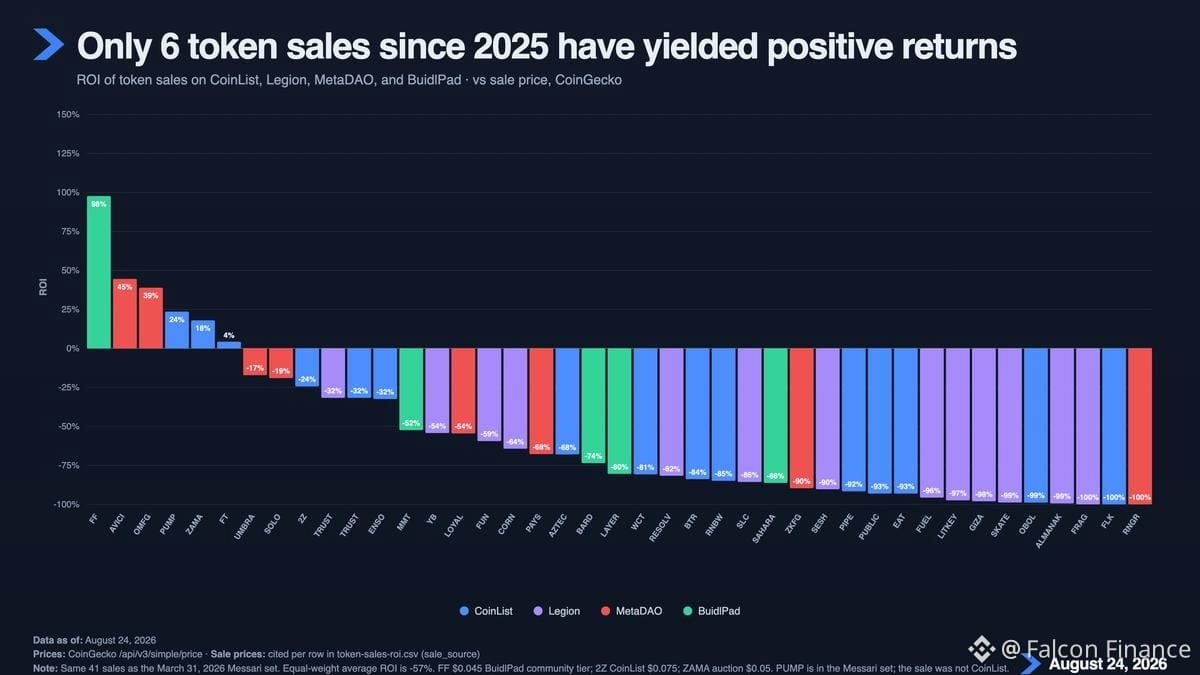
Messari tracked 41 token sales in late March.
We ran the numbers again, and 6 are still in the green.
$FF now ranks #1 with a 98% ROI.
Messari tracked 41 token sales in late March.
We ran the numbers again, and 6 are still in the green.
$FF now ranks #1 with a 98% ROI.
We ran the numbers again, and 6 are still in the green.
$FF now ranks #1 with a 98% ROI.
2
6
2.5k
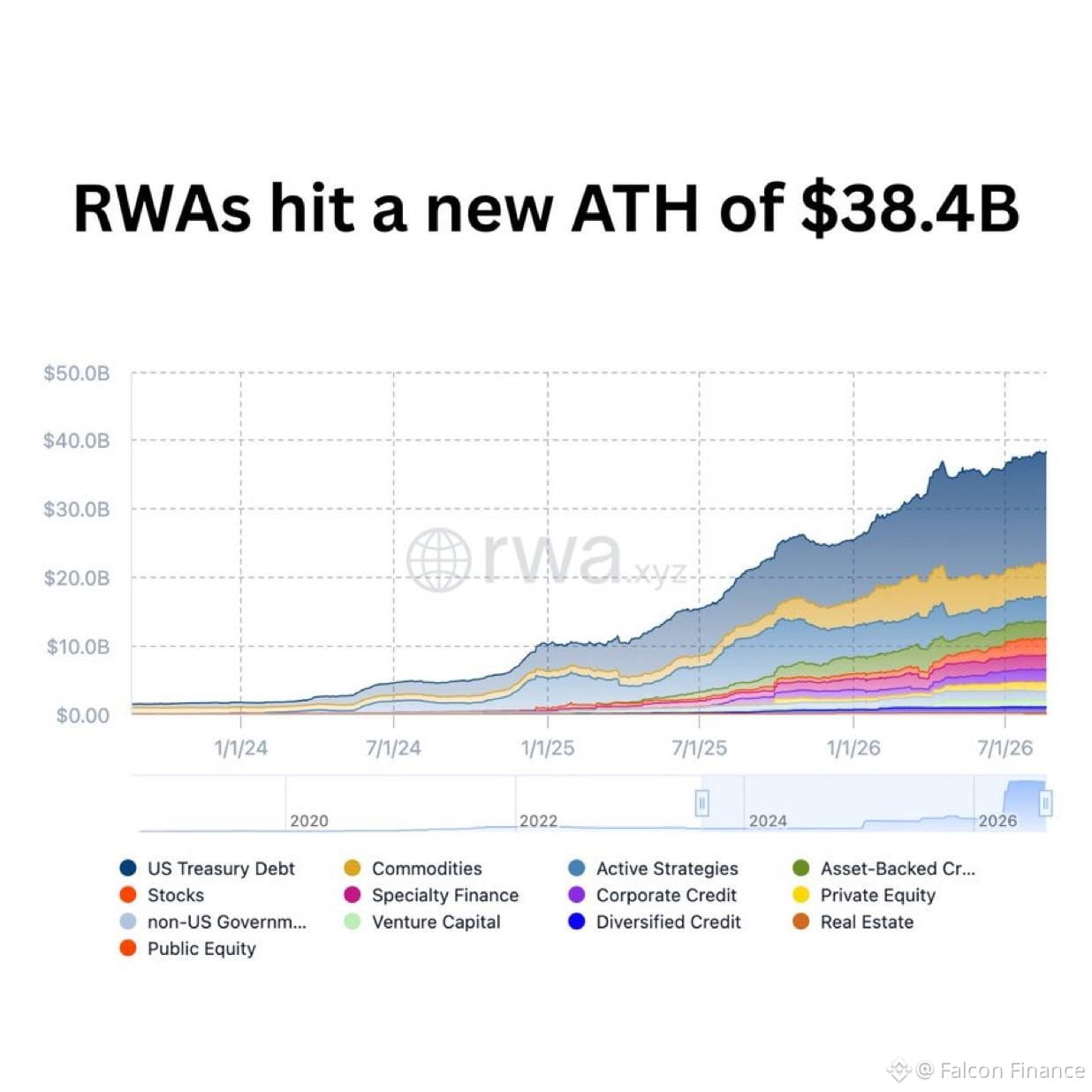
Distributed RWAs just printed another all-time high: $38.4B.
US Treasuries still lead at $16.15B. Tokenized credit is second at $7.36B once you add asset-backed, specialty finance, corporate, and diversified. It's easy to miss because they're separated into four categories in this chart.
That credit book is the market we just opened a regulated issuance path for in El Salvador. The first issuance, currently in structuring, is a tokenized GPU forward to finance compute infrastructure.
Distributed RWAs just printed another all-time high: $38.4B.
US Treasuries still lead at $16.15B. Tokenized credit is second at $7.36B once you add asset-backed, specialty finance, corporate, and diversified. It's easy to miss because they're separated into four categories in this chart.
That credit book is the market we just opened a regulated issuance path for in El Salvador. The first issuance, currently in structuring, is a tokenized GPU forward to finance compute infrastructure.
US Treasuries still lead at $16.15B. Tokenized credit is second at $7.36B once you add asset-backed, specialty finance, corporate, and diversified. It's easy to miss because they're separated into four categories in this chart.
That credit book is the market we just opened a regulated issuance path for in El Salvador. The first issuance, currently in structuring, is a tokenized GPU forward to finance compute infrastructure.
1
6
2.3k
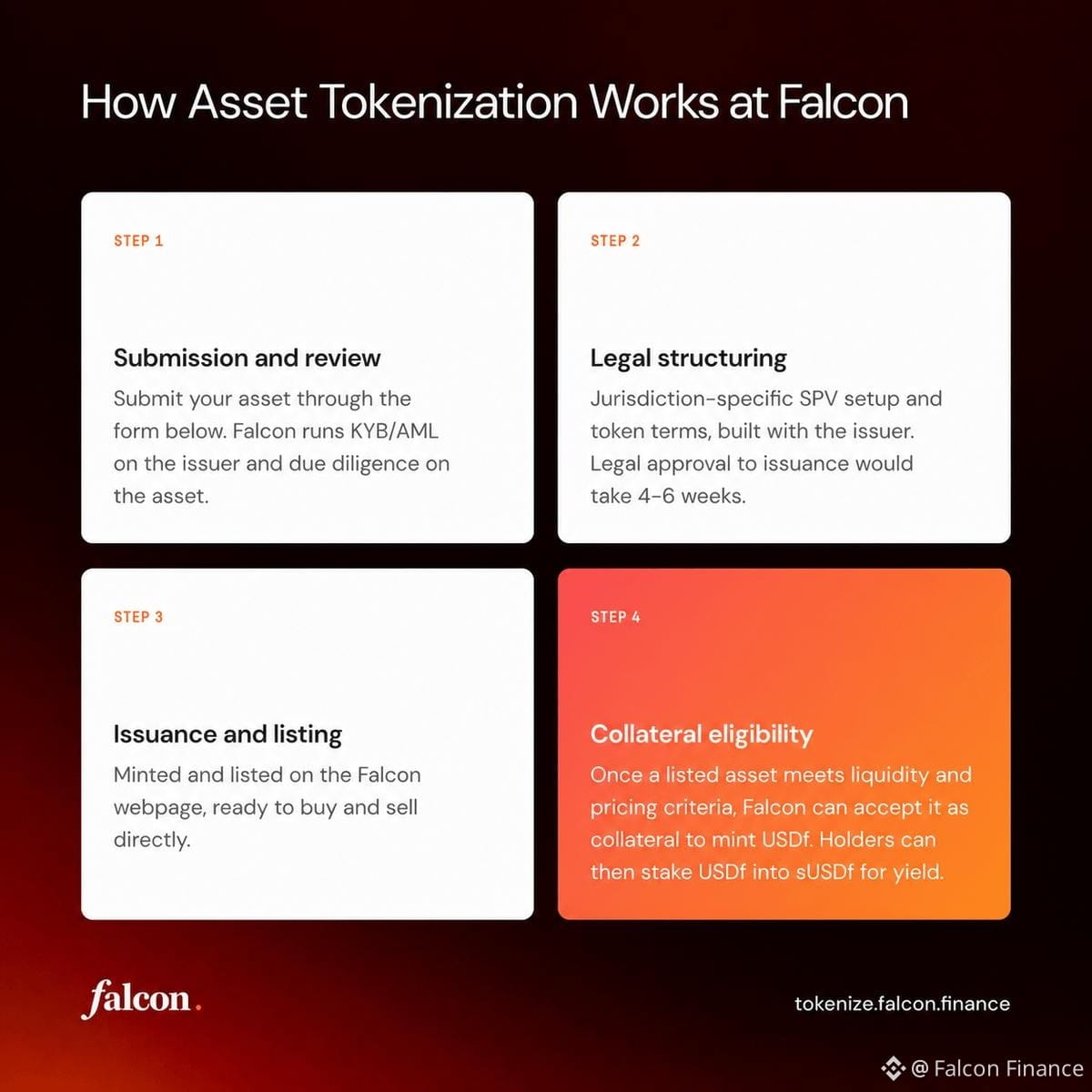
Private markets still run on slow rails, but tokenization isn’t a simple mint button.
At Falcon Finance, it’s a path from due diligence to a tokenized asset that holders can trade, and if eligible, use as collateral to mint USDf:
• Submit + review
• Legal structuring
• Issue + list
• Meet liquidity + pricing criteria → may be accepted as collateral to mint USDf
Interested in tokenizing an asset with Falcon?
Explore the full process and submit an asset for review:
https://tokenize.falcon.finance/
Private markets still run on slow rails, but tokenization isn’t a simple mint button.
At Falcon Finance, it’s a path from due diligence to a tokenized asset that holders can trade, and if eligible, use as collateral to mint USDf:
• Submit + review
• Legal structuring
• Issue + list
• Meet liquidity + pricing criteria → may be accepted as collateral to mint USDf
Interested in tokenizing an asset with Falcon?
Explore the full process and submit an asset for review:
https://tokenize.falcon.finance/
At Falcon Finance, it’s a path from due diligence to a tokenized asset that holders can trade, and if eligible, use as collateral to mint USDf:
• Submit + review
• Legal structuring
• Issue + list
• Meet liquidity + pricing criteria → may be accepted as collateral to mint USDf
Interested in tokenizing an asset with Falcon?
Explore the full process and submit an asset for review:
https://tokenize.falcon.finance/
2
1.1k
Verified
Compute financing has become one of the fastest-growing categories in asset-backed credit, and almost all of it is arranged through private syndicates. A lender who wants out before maturity has very few options.
We opened a regulated pipeline for tokenized real-world asset issuance in El Salvador. The first issuance, currently in structuring, is a tokenized GPU forward financing compute infrastructure. NEAR AI is the anchor buyer of the compute the hardware will produce. Supply is already contracted and priced with the manufacturer. The issuance funds delivery.
The framework brings together regulated issuance, open secondary trading, and onchain collateralization:
→ The asset will be issued through NOTA S.A.S. de C.V. (PSAD-0088), licensed under El Salvador’s Digital Assets Issuance Law, the same regime under which Tether Gold is issued.
→ It’s designed to trade on permissionless venues including Uniswap.
→ Once it demonstrates sufficient trading volume and depth, it will be eligible to be accepted as collateral to mint USDf on Falcon Finance.
Most issuers do not want tokenization. They want liquidity, composability, and capital they can actually use.
If you're an issuer, submit an asset for consideration: https://tokenize.falcon.finance
Compute financing has become one of the fastest-growing categories in asset-backed credit, and almost all of it is arranged through private syndicates. A lender who wants out before maturity has very few options.
We opened a regulated pipeline for tokenized real-world asset issuance in El Salvador. The first issuance, currently in structuring, is a tokenized GPU forward financing compute infrastructure. NEAR AI is the anchor buyer of the compute the hardware will produce. Supply is already contracted and priced with the manufacturer. The issuance funds delivery.
The framework brings together regulated issuance, open secondary trading, and onchain collateralization:
→ The asset will be issued through NOTA S.A.S. de C.V. (PSAD-0088), licensed under El Salvador’s Digital Assets Issuance Law, the same regime under which Tether Gold is issued.
→ It’s designed to trade on permissionless venues including Uniswap.
→ Once it demonstrates sufficient trading volume and depth, it will be eligible to be accepted as collateral to mint USDf on Falcon Finance.
Most issuers do not want tokenization. They want liquidity, composability, and capital they can actually use.
If you're an issuer, submit an asset for consideration: https://tokenize.falcon.finance
We opened a regulated pipeline for tokenized real-world asset issuance in El Salvador. The first issuance, currently in structuring, is a tokenized GPU forward financing compute infrastructure. NEAR AI is the anchor buyer of the compute the hardware will produce. Supply is already contracted and priced with the manufacturer. The issuance funds delivery.
The framework brings together regulated issuance, open secondary trading, and onchain collateralization:
→ The asset will be issued through NOTA S.A.S. de C.V. (PSAD-0088), licensed under El Salvador’s Digital Assets Issuance Law, the same regime under which Tether Gold is issued.
→ It’s designed to trade on permissionless venues including Uniswap.
→ Once it demonstrates sufficient trading volume and depth, it will be eligible to be accepted as collateral to mint USDf on Falcon Finance.
Most issuers do not want tokenization. They want liquidity, composability, and capital they can actually use.
If you're an issuer, submit an asset for consideration: https://tokenize.falcon.finance
2
8
1.6k
Most tokenization stories end at issuance.
A usable onchain asset still needs:
• regulated mint & redemption
• a secondary market
• a path to becoming eligible collateral
This week, we are showing how those pieces can connect.
More tomorrow.
Most tokenization stories end at issuance.
A usable onchain asset still needs:
• regulated mint & redemption
• a secondary market
• a path to becoming eligible collateral
This week, we are showing how those pieces can connect.
More tomorrow.
A usable onchain asset still needs:
• regulated mint & redemption
• a secondary market
• a path to becoming eligible collateral
This week, we are showing how those pieces can connect.
More tomorrow.
3
988
Tokenize everything, then what?
📂 UTILITY
┃
┣ 📂 collateral
┣ 📂 yield
┣ 📂 pay
┃
┗ ⚙️ FLYWHEEL ↺
┣ use
┣ demand
┗ liquidity
Tokenize everything, then what?
📂 UTILITY
┃
┣ 📂 collateral
┣ 📂 yield
┣ 📂 pay
┃
┗ ⚙️ FLYWHEEL ↺
┣ use
┣ demand
┗ liquidity
📂 UTILITY
┃
┣ 📂 collateral
┣ 📂 yield
┣ 📂 pay
┃
┗ ⚙️ FLYWHEEL ↺
┣ use
┣ demand
┗ liquidity
1
979
Verified
Goldman’s baseline puts AI compute capex at ~$5.1T from 2026 through 2031.
And NVIDIA just signed MOUs with Apollo, BlackRock, Blackstone, Brookfield, Goldman and KKR to develop financing platforms targeting $500B+ in third-party capital.
Goldman even wants to create a credit…
Goldman’s baseline puts AI compute capex at ~$5.1T from 2026 through 2031.
And NVIDIA just signed MOUs with Apollo, BlackRock, Blackstone, Brookfield, Goldman and KKR to develop financing platforms targeting $500B+ in third-party capital.
Goldman even wants to create a credit…
And NVIDIA just signed MOUs with Apollo, BlackRock, Blackstone, Brookfield, Goldman and KKR to develop financing platforms targeting $500B+ in third-party capital.
Goldman even wants to create a credit…
4
1.2k
Compute is becoming an investable asset class, but many compute-backed contracts still lack a liquid secondary market or a clear path to being used as collateral.
We know that closing this gap could unlock the market’s next phase.
Compute is becoming an investable asset class, but many compute-backed contracts still lack a liquid secondary market or a clear path to being used as collateral.
We know that closing this gap could unlock the market’s next phase.
We know that closing this gap could unlock the market’s next phase.
3
649
Interesting fact:
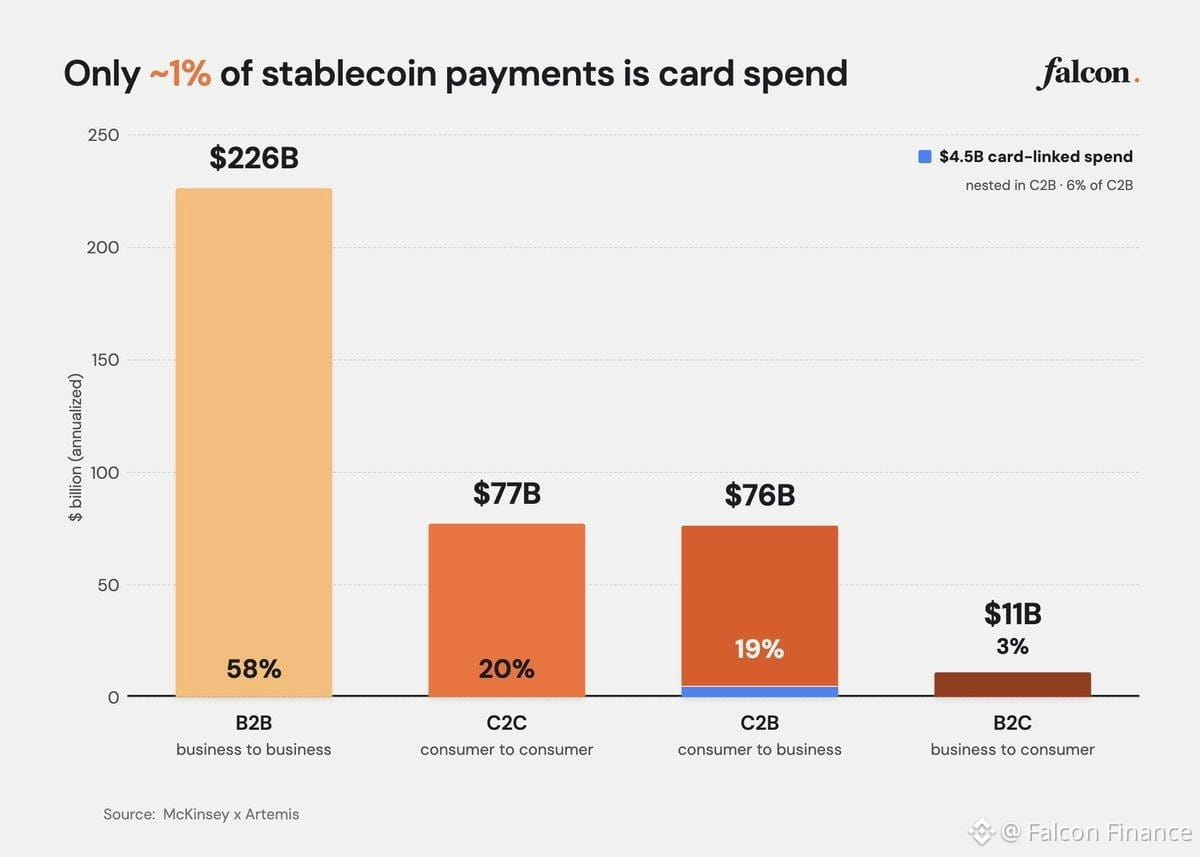
of ~$390B in stablecoin payments a year, only ~1% ($4.5B) is cards.
The rest is mostly B2B, remittances, treasury.
Everyday spend is still the outer ring.
We're early.
Get it here 👉 https://app.falcon.finance/card
Interesting fact:
of ~$390B in stablecoin payments a year, only ~1% ($4.5B) is cards.
The rest is mostly B2B, remittances, treasury.
Everyday spend is still the outer ring.
We're early.
Get it here 👉 https://app.falcon.finance/card
of ~$390B in stablecoin payments a year, only ~1% ($4.5B) is cards.
The rest is mostly B2B, remittances, treasury.
Everyday spend is still the outer ring.
We're early.
Get it here 👉 https://app.falcon.finance/card
8
1.7k
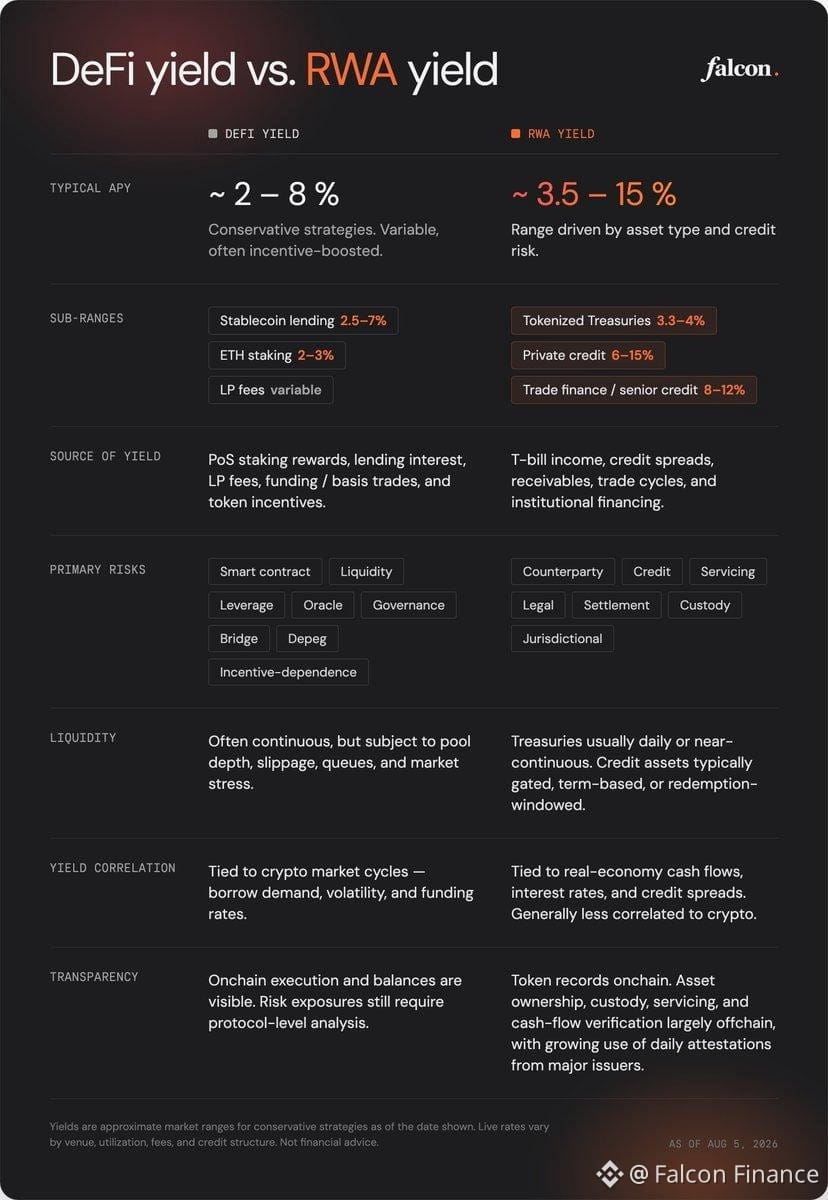
Something we keep coming back to with yield-bearing stablecoins and synthetic dollars:
It’s a two-engine market now, roughly half of what’s tracked is Treasury/RWA-backed, and the other half is DeFi-native.
Falcon works across both.
You can mint USDf on eligible crypto and tokenized RWA, and stake into sUSDf for protocol yield generated from market strategies on top of a multi-asset reserve base.
Explore more about USDf at 👉 https://falcon.finance
Something we keep coming back to with yield-bearing stablecoins and synthetic dollars:
It’s a two-engine market now, roughly half of what’s tracked is Treasury/RWA-backed, and the other half is DeFi-native.
Falcon works across both.
You can mint USDf on eligible crypto and tokenized RWA, and stake into sUSDf for protocol yield generated from market strategies on top of a multi-asset reserve base.
Explore more about USDf at 👉 https://falcon.finance
It’s a two-engine market now, roughly half of what’s tracked is Treasury/RWA-backed, and the other half is DeFi-native.
Falcon works across both.
You can mint USDf on eligible crypto and tokenized RWA, and stake into sUSDf for protocol yield generated from market strategies on top of a multi-asset reserve base.
Explore more about USDf at 👉 https://falcon.finance
9
1.3k
Verified
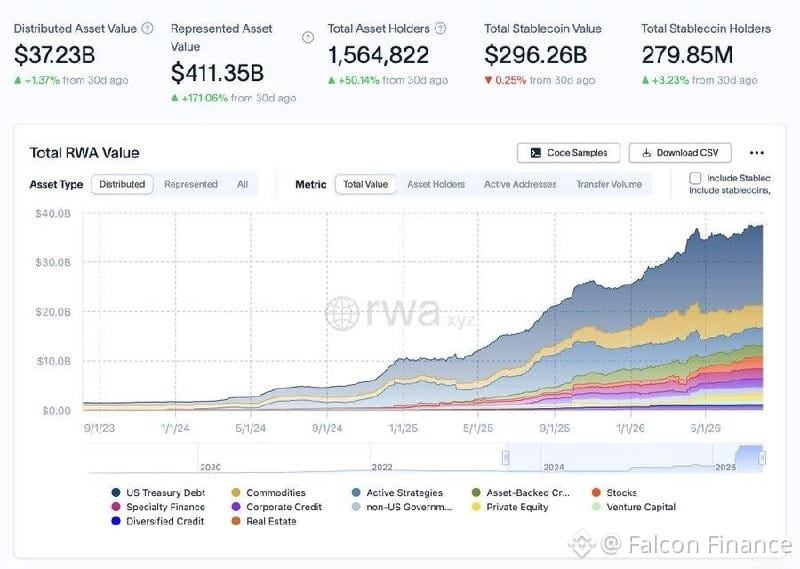
There’s about $37B in tokenized RWAs now, which is very impressive.
Most of that value still looks more like inventory than liquidity though. We’ve said this a lot: putting an asset onchain was never the hard part, making it useful is.
Eligible RWAs on Falcon can mint USDf, so the underlying asset can be productive.
Explore more about USDf at 👉 https://falcon.finance
There’s about $37B in tokenized RWAs now, which is very impressive.
Most of that value still looks more like inventory than liquidity though. We’ve said this a lot: putting an asset onchain was never the hard part, making it useful is.
Eligible RWAs on Falcon can mint USDf, so the underlying asset can be productive.
Explore more about USDf at 👉 https://falcon.finance
Most of that value still looks more like inventory than liquidity though. We’ve said this a lot: putting an asset onchain was never the hard part, making it useful is.
Eligible RWAs on Falcon can mint USDf, so the underlying asset can be productive.
Explore more about USDf at 👉 https://falcon.finance
2
5
1.3k
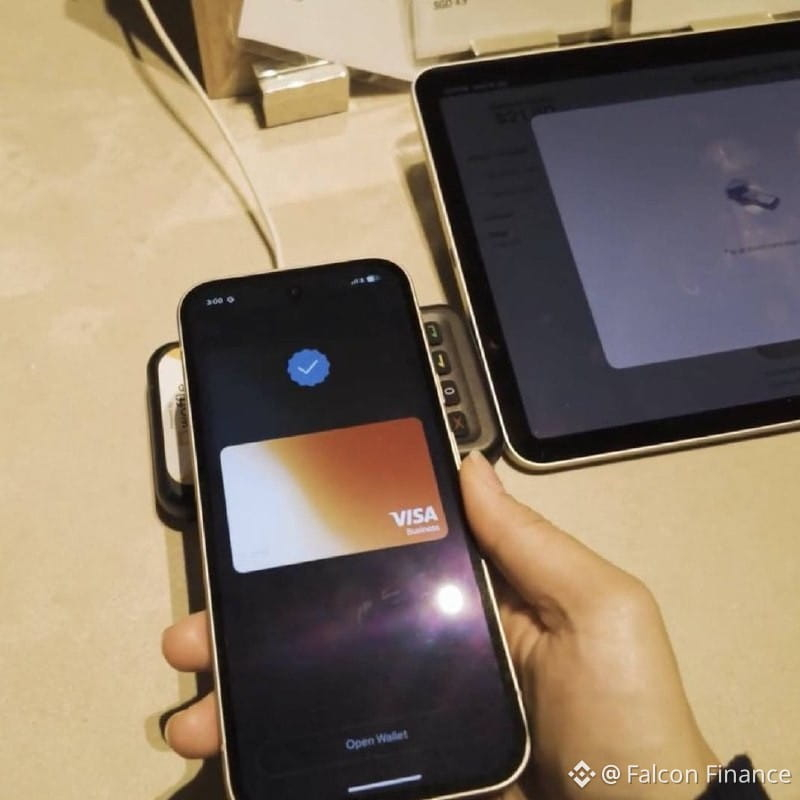
Falcon card 💳
onchain liquidity, irl spending :)
Falcon card 💳
onchain liquidity, irl spending :)
onchain liquidity, irl spending :)
1
10
2.1k
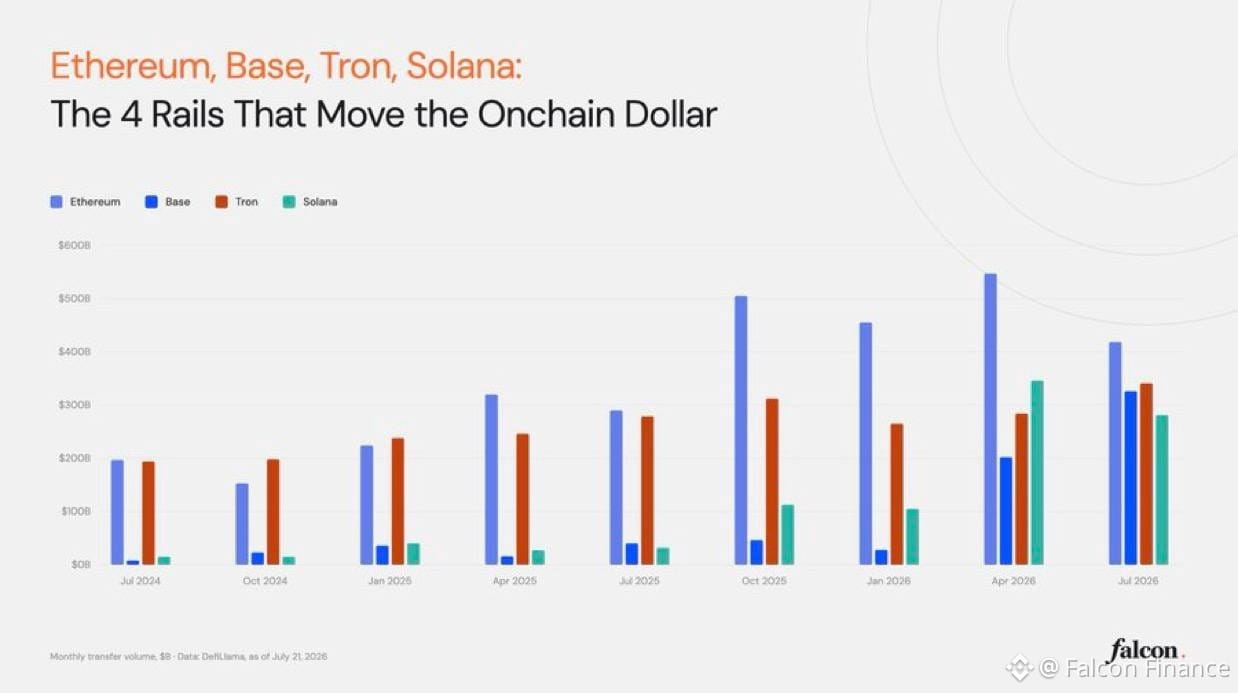
Stablecoin flow used to be Ethereum + Tron, but not anymore.
Now Eth + Tron + Base + Solana clear ~93% of global flow.
Current 30d transfer volume:
• Ethereum: $417B
• Tron: $341B
• Base: $325B
• Solana: $280B
The structural shift is obvious:
H1 2024 → Eth + Tron ran 82% of transfers
H1 2026 → 55%. Base + Solana went from 4% to 37%
Base is up ~8× YoY on the same 30d window and in early July it briefly led every chain on volume.
Question: which chain do you mainly use for onchain stablecoin transfers?
Comment your answer here 👉 https://x.com/falconfinance/status/2080638886993400065
Stablecoin flow used to be Ethereum + Tron, but not anymore.
Now Eth + Tron + Base + Solana clear ~93% of global flow.
Current 30d transfer volume:
• Ethereum: $417B
• Tron: $341B
• Base: $325B
• Solana: $280B
The structural shift is obvious:
H1 2024 → Eth + Tron ran 82% of transfers
H1 2026 → 55%. Base + Solana went from 4% to 37%
Base is up ~8× YoY on the same 30d window and in early July it briefly led every chain on volume.
Question: which chain do you mainly use for onchain stablecoin transfers?
Comment your answer here 👉 https://x.com/falconfinance/status/2080638886993400065
Now Eth + Tron + Base + Solana clear ~93% of global flow.
Current 30d transfer volume:
• Ethereum: $417B
• Tron: $341B
• Base: $325B
• Solana: $280B
The structural shift is obvious:
H1 2024 → Eth + Tron ran 82% of transfers
H1 2026 → 55%. Base + Solana went from 4% to 37%
Base is up ~8× YoY on the same 30d window and in early July it briefly led every chain on volume.
Question: which chain do you mainly use for onchain stablecoin transfers?
Comment your answer here 👉 https://x.com/falconfinance/status/2080638886993400065
12
1.5k
Log in to explore more content
Join global crypto users on Binance Square
⚡️ Get latest and useful information about crypto.
💬 Trusted by the world’s largest crypto exchange.
👍 Discover real insights from verified creators.
Email / Phone number
Trending Topics
FedRateWatch
947,540 views
4,569 Discussing
Share & Win Traffic Reward in our Trending Hashtag Campaign
✨Topic: FOMC September, What's The Fed's Next Move?
👉How to Join:
Publish a short post or article with hashtag #FedRateWatch
Create content based on the below angles:
- August core CPI rose 0.3% month-over-month, and the odds of a 25bp hike this week are now close to 90%. Do you anticipate a rate hike this week? Is it a one-off, or the start of a longer hiking cycle?
- If the hike lands, how does it play out for BTC, tech stocks, and gold? Bullish or bearish?
- How are you planning to trade next? Share your BTC, stocks or gold trade/holdings with our trade sharing widget.
⏰Campaign Period:
- 2026-09-15 11:00 - 2026-09-17 3:00 UTC
🎁Reward:
- Qualified posts that comply with the above guidelines and contain more than 100 words will be reviewed and may receive a random traffic boost of 500 to 3,000 views. You will receive a notification from your feed secretary if your post is selected.
- Get a chance to have your article featured on Binance Square Official
Need ideas for your post? Visit the topic page #FedRateWatch or the Square Guide on How to Post for Better Reach.
Binance Square Official
·534 Likes
·1.2M views
MSTRTradingVolumeSurpassesMorganStanley
4,404 views
186 Discussing
BitcoinFalls4%
13,066 views
440 Discussing