
Renaudh
152 Posts

Renaudh
Crypto content creator. Clear information and useful analysis to follow the market.
Occasional Trader
7.9 Years
7 Following
59 Followers
85 Liked
Posts
All
Quotes
Verified
NVIDIA : the post-results scenario changes
→ After its results, Nvidia first fell to 206 $
→ The stock then jumped to 219 $ before stabilizing at 218.10 $, i.e. +4.03 % in after-hours.
→ A first in 4 quarters: Nvidia finishes higher after reporting its results.
→ The run of 7 consecutive sessions of decline is also over.
Two signals reverse the same evening: the stock’s recent trend and its reaction to the results.
Now to watch → NVIDIA’s behavior at the open and its ability to hold on to this gain. $NVDAB $NVDA.US #Write2Earn
→ After its results, Nvidia first fell to 206 $
→ The stock then jumped to 219 $ before stabilizing at 218.10 $, i.e. +4.03 % in after-hours.
→ A first in 4 quarters: Nvidia finishes higher after reporting its results.
→ The run of 7 consecutive sessions of decline is also over.
Two signals reverse the same evening: the stock’s recent trend and its reaction to the results.
Now to watch → NVIDIA’s behavior at the open and its ability to hold on to this gain. $NVDAB $NVDA.US #Write2Earn
NVDAB+7.45%
NVDAUS+8.14%
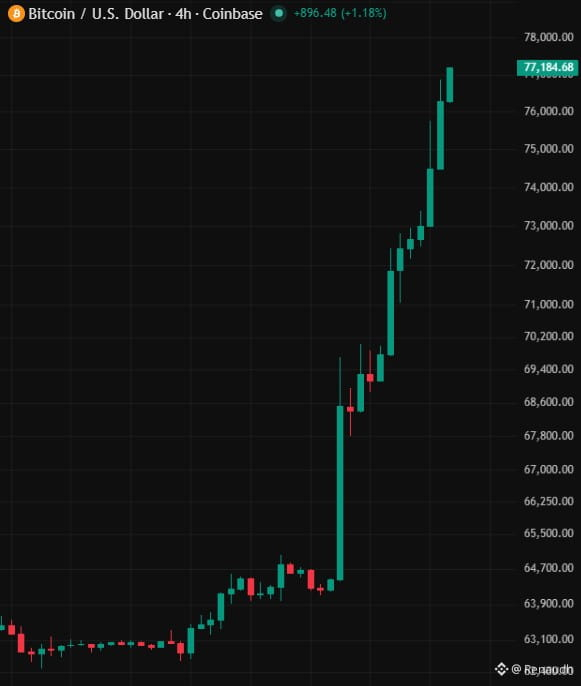
► BITCOIN : A HISTORIC ACCELERATION
→ $BTC has just strung together a spectacular rally, up +14% in four days according to recent market data, reaching a 12-week high around $75,700.
→ The move is especially notable because it comes while major stock indexes are falling back: Bitcoin is therefore moving with dynamics that are relatively independent of Wall Street.
► The comparison with the S&P 500
→ Historically, the S&P 500 has delivered an average annual return of about 10% since its launch in 1957.
→ Bitcoin has therefore produced in just a few days a return that the average stock investor normally takes several months to achieve.
→ However, be careful: saying that BTC is moving « 140 times faster » is an illustrative comparison, not a measure of equivalent performance. The S&P 500 is a much less volatile investment, while Bitcoin can make swings of several tens of percent in just a few days in both directions.
► The takeaway signal
→ $BTC has above all once again demonstrated its ability to compress enormous performance into an extremely short time frame.
→ After such an acceleration, the risk of volatility and profit-taking also increases.
→ Bitcoin can recoup months of losses in just a few days. That’s precisely what makes it strong… and risky.
→ Educational analysis only, not financial advice.#Write2Earn!
→ $BTC has just strung together a spectacular rally, up +14% in four days according to recent market data, reaching a 12-week high around $75,700.
→ The move is especially notable because it comes while major stock indexes are falling back: Bitcoin is therefore moving with dynamics that are relatively independent of Wall Street.
► The comparison with the S&P 500
→ Historically, the S&P 500 has delivered an average annual return of about 10% since its launch in 1957.
→ Bitcoin has therefore produced in just a few days a return that the average stock investor normally takes several months to achieve.
→ However, be careful: saying that BTC is moving « 140 times faster » is an illustrative comparison, not a measure of equivalent performance. The S&P 500 is a much less volatile investment, while Bitcoin can make swings of several tens of percent in just a few days in both directions.
► The takeaway signal
→ $BTC has above all once again demonstrated its ability to compress enormous performance into an extremely short time frame.
→ After such an acceleration, the risk of volatility and profit-taking also increases.
→ Bitcoin can recoup months of losses in just a few days. That’s precisely what makes it strong… and risky.
→ Educational analysis only, not financial advice.#Write2Earn!
► BITCOIN : COULD A NEW WAVE OF LIQUIDATIONS ARRIVE?
→ The market has already just gone through a massive purge of short positions: nearly 3 billion $ crypto positions were liquidated in 24 hours, including about 2.74 billion $ shorts.
→ Bitcoin also broke above $70,000, fueling a powerful short squeeze.
► And now, the $80,000 $ level?
→ If BTC continues its climb to $80,000, the short positions still open at that level could be forced to cover.
→ This could trigger a chain mechanism:
BTC ↑ → shorts liquidated → forced buybacks → demand ↑ → BTC ↑
→ But beware: a short liquidation is not new organic demand. Once the positions are closed, this mechanical effect disappears. The market will then need new buyers to sustain the uptrend.
► The key level: $80,000
→ A breakout accompanied by high spot volume + new ETF inflows + a rise in open interest would be far more convincing than a move driven only by liquidations.
→ So the question is no longer just: “how many shorts can be liquidated?”
→ But: “who will buy after they’re liquidated?”
→ Educational analysis only, not financial advice.#Write2Earn!
→ The market has already just gone through a massive purge of short positions: nearly 3 billion $ crypto positions were liquidated in 24 hours, including about 2.74 billion $ shorts.
→ Bitcoin also broke above $70,000, fueling a powerful short squeeze.
► And now, the $80,000 $ level?
→ If BTC continues its climb to $80,000, the short positions still open at that level could be forced to cover.
→ This could trigger a chain mechanism:
BTC ↑ → shorts liquidated → forced buybacks → demand ↑ → BTC ↑
→ But beware: a short liquidation is not new organic demand. Once the positions are closed, this mechanical effect disappears. The market will then need new buyers to sustain the uptrend.
► The key level: $80,000
→ A breakout accompanied by high spot volume + new ETF inflows + a rise in open interest would be far more convincing than a move driven only by liquidations.
→ So the question is no longer just: “how many shorts can be liquidated?”
→ But: “who will buy after they’re liquidated?”
→ Educational analysis only, not financial advice.#Write2Earn!
► PPI US: producer inflation slowing, employment slightly weaker
→ Headline PPI: 4.7% YoY, versus 4.9% expected.
→ Core PPI: 4.2% YoY, in line with expectations.
→ Unemployment benefit claims: 209,000, versus 202,000 expected.
► Why is this important for markets?
→ PPI is slowing more than expected, while unemployment claims slightly beat expectations.
→ This combination could reduce pressure in favor of further monetary tightening, even if the US labor market remains broadly solid.
→ For $BTC, tech stocks and rate-sensitive assets: the signal is therefore potentially positive if expectations for monetary policy continue to ease.
► The next thing to watch: the Fed
→ Softer PPI + a job market showing some signs of cooling = more attention to the September decision.
→ Cooling inflation, slightly weaker employment: the rate outlook is gradually becoming more favorable for risk assets.
→ Educational analysis only, not financial advice.#Write2Earn #Write2Earn!
→ Headline PPI: 4.7% YoY, versus 4.9% expected.
→ Core PPI: 4.2% YoY, in line with expectations.
→ Unemployment benefit claims: 209,000, versus 202,000 expected.
► Why is this important for markets?
→ PPI is slowing more than expected, while unemployment claims slightly beat expectations.
→ This combination could reduce pressure in favor of further monetary tightening, even if the US labor market remains broadly solid.
→ For $BTC, tech stocks and rate-sensitive assets: the signal is therefore potentially positive if expectations for monetary policy continue to ease.
► The next thing to watch: the Fed
→ Softer PPI + a job market showing some signs of cooling = more attention to the September decision.
→ Cooling inflation, slightly weaker employment: the rate outlook is gradually becoming more favorable for risk assets.
→ Educational analysis only, not financial advice.#Write2Earn #Write2Earn!

► NASDAQ ACCELERATES ON CRYPTO OPTIONS
→ While the CLARITY Act remains blocked in Congress, Nasdaq continues to move forward on the infrastructure of crypto markets.
→ A Nasdaq proposal aims to evolve the framework applicable to options linked to crypto ETFs. Official documents already show a desire to expand and standardize access to options across several crypto products.
→ The idea is important: offering more regulated tools so investors can gain exposure, hedge their positions, and manage their risk on digital assets.
► Why is this important for crypto?
→ Wall Street doesn’t necessarily wait for the CLARITY Act to keep building financial infrastructure around digital assets.
→ The more crypto ETFs, options, and derivatives integrate into traditional markets, the easier institutional access becomes.
→ The message is simple: while regulation advances slowly in Congress, market infrastructures keep evolving.
→ Educational analysis only, not financial advice.#Write2Earn
→ While the CLARITY Act remains blocked in Congress, Nasdaq continues to move forward on the infrastructure of crypto markets.
→ A Nasdaq proposal aims to evolve the framework applicable to options linked to crypto ETFs. Official documents already show a desire to expand and standardize access to options across several crypto products.
→ The idea is important: offering more regulated tools so investors can gain exposure, hedge their positions, and manage their risk on digital assets.
► Why is this important for crypto?
→ Wall Street doesn’t necessarily wait for the CLARITY Act to keep building financial infrastructure around digital assets.
→ The more crypto ETFs, options, and derivatives integrate into traditional markets, the easier institutional access becomes.
→ The message is simple: while regulation advances slowly in Congress, market infrastructures keep evolving.
→ Educational analysis only, not financial advice.#Write2Earn
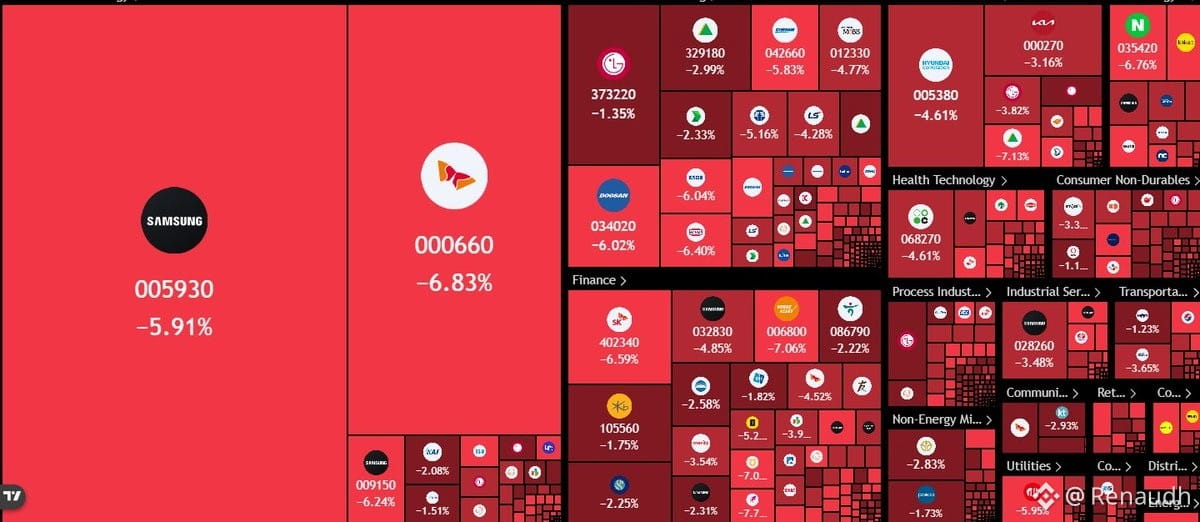
⚡️CRASH:
₩202,000,000,000,000 has been wiped out from the Korean stock market today.
This follows statements from Trump indicating that the US will continue to strike Iran for the next 2-3 weeks.
If this situation escalates, the Strait of Hormuz is expected to remain mostly closed, which could significantly impact oil supply in Asian countries.
#Write2Earn #Write2Earn
₩202,000,000,000,000 has been wiped out from the Korean stock market today.
This follows statements from Trump indicating that the US will continue to strike Iran for the next 2-3 weeks.
If this situation escalates, the Strait of Hormuz is expected to remain mostly closed, which could significantly impact oil supply in Asian countries.
#Write2Earn #Write2Earn
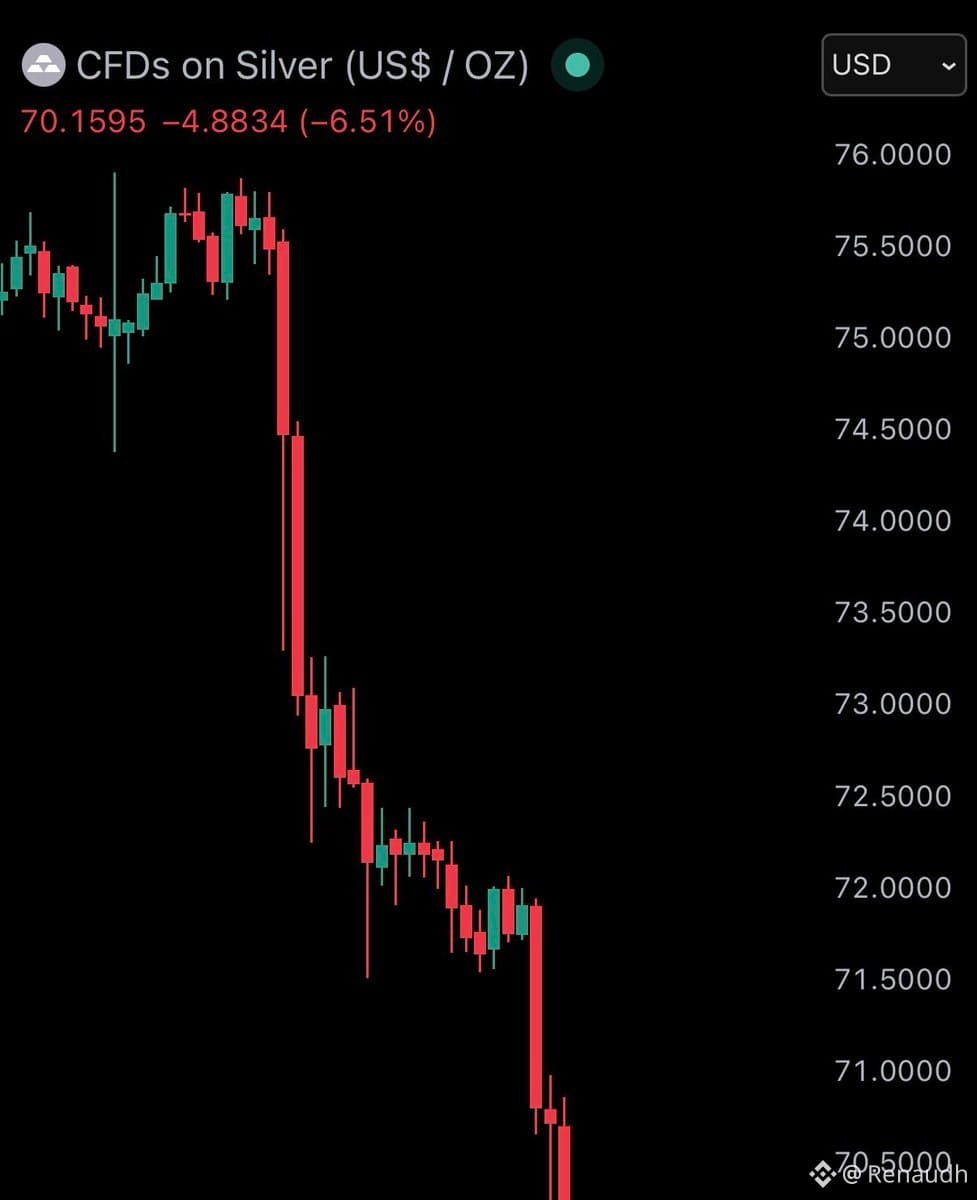
⚡️ Silver just crashed -8% and dropped below $70, wiping out nearly $350 billion today.
The significant drop in silver's price has triggered major market reactions.
This decline emphasizes the volatility in precious metal markets and its impact on overall financial stability.
$XAG
#Write2Earn
The significant drop in silver's price has triggered major market reactions.
This decline emphasizes the volatility in precious metal markets and its impact on overall financial stability.
$XAG
#Write2Earn
⚡️ Metaplanet just bought $338 million worth of Bitcoin, becoming the 3rd largest Bitcoin treasury company in the world.
They’re buying this dip.
#DriftProtocolExploited #ADPJobsSurge
They’re buying this dip.
#DriftProtocolExploited #ADPJobsSurge

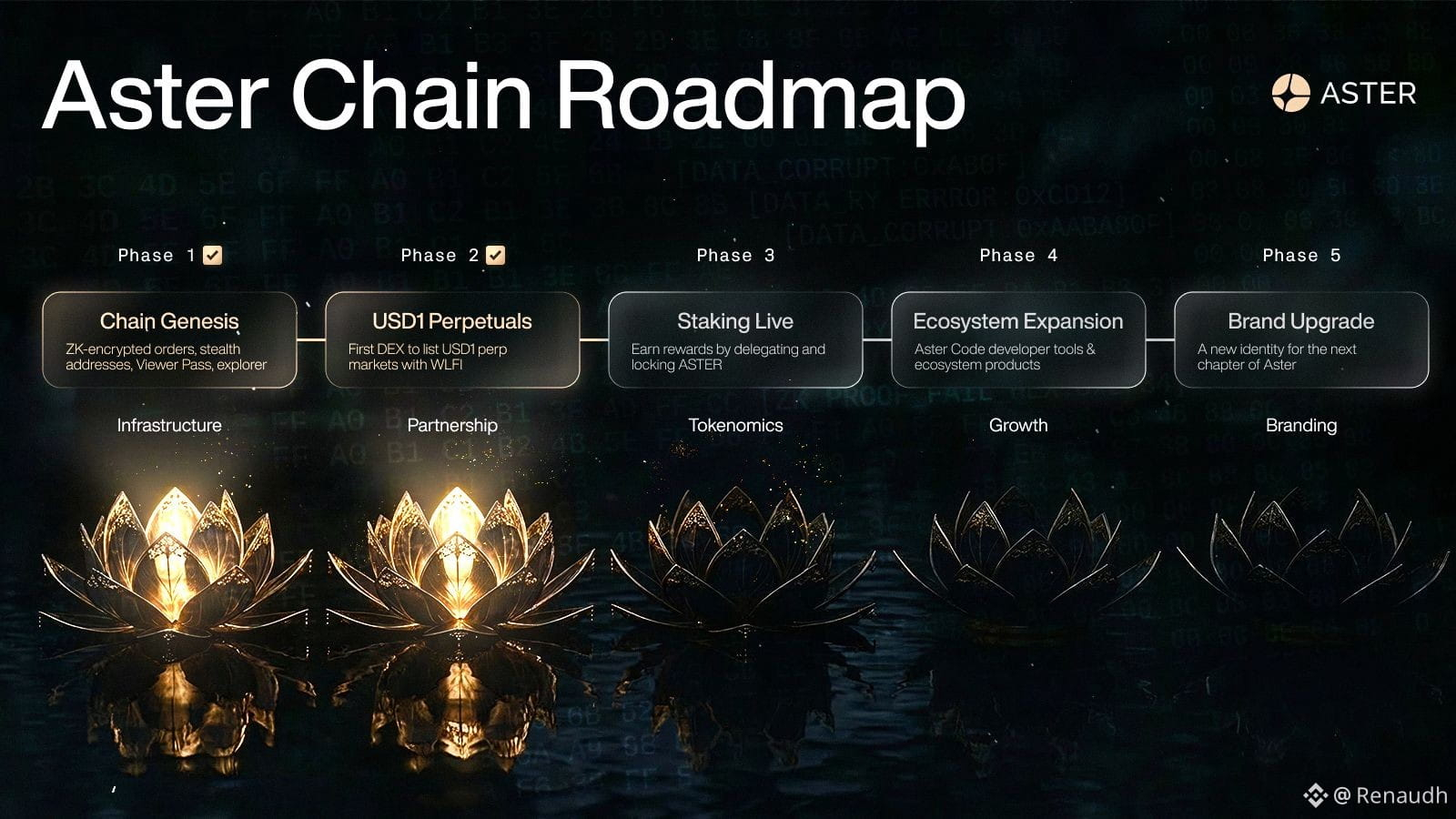
Most people will ignore this roadmap… and regret it later.
The Aster Chain is quietly building something serious.
Let’s break it down ↓
Phase 1 — Chain Genesis ✓
→ ZK-encrypted orders
→ Stealth addresses
→ On-chain privacy infrastructure
→ Foundation is already in place.
Phase 2 — USD1 Perpetuals ✓
→ First DEX listing USD1 perp markets
→ Integration with WLFI
→ Liquidity + real trading use case unlocked.
Phase 3 — Staking Live
→ Delegate & lock ASTER
→ Earn rewards
→ Tokenomics starts to matter.
Phase 4 — Ecosystem Expansion
→ Developer tools
→ New products
→ This is where projects scale.
Phase 5 — Brand Upgrade
→ New identity
→ New narrative
→ This is where attention explodes.
This isn’t just a roadmap. It’s a strategy.
Every strong ecosystem follows the same path:
→ Infrastructure
→ Liquidity
→ Incentives
→ Expansion
→ Attention
And Aster is following it perfectly.
The question is simple:
Are you watching
or positioning early?
What do you think about ASTER
→ early gem
→ or just another project?
$ASTER
#Write2Earn
The Aster Chain is quietly building something serious.
Let’s break it down ↓
Phase 1 — Chain Genesis ✓
→ ZK-encrypted orders
→ Stealth addresses
→ On-chain privacy infrastructure
→ Foundation is already in place.
Phase 2 — USD1 Perpetuals ✓
→ First DEX listing USD1 perp markets
→ Integration with WLFI
→ Liquidity + real trading use case unlocked.
Phase 3 — Staking Live
→ Delegate & lock ASTER
→ Earn rewards
→ Tokenomics starts to matter.
Phase 4 — Ecosystem Expansion
→ Developer tools
→ New products
→ This is where projects scale.
Phase 5 — Brand Upgrade
→ New identity
→ New narrative
→ This is where attention explodes.
This isn’t just a roadmap. It’s a strategy.
Every strong ecosystem follows the same path:
→ Infrastructure
→ Liquidity
→ Incentives
→ Expansion
→ Attention
And Aster is following it perfectly.
The question is simple:
Are you watching
or positioning early?
What do you think about ASTER
→ early gem
→ or just another project?
$ASTER
#Write2Earn
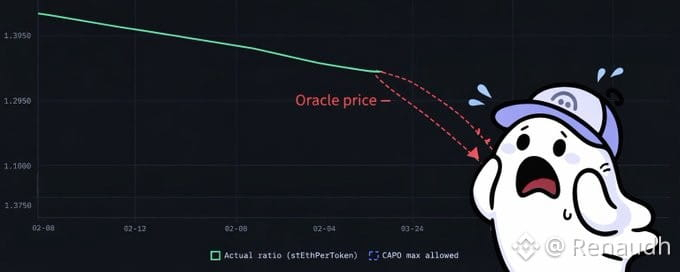
🟣 $27 million liquidated on $AAVE : a simple bug... or a real DeFi risk?
The DeFi platform Aave recorded nearly $27 million in liquidations in 24 hours.
The cause: a temporary malfunction in the oracle used to value collateral.
The problem affected wstETH, the token representing ETH staked via Lido.
During the incident:
• the oracle valued wstETH at around 1.19 ETH
• the market valued it at closer to 1.23 ETH
This price discrepancy was enough to trigger automatic liquidations on certain positions.
According to several analyses, the cause was a misconfiguration of the CAPO risk oracle, linked to unsynchronized exchange rate parameters in a smart contract.
💡
Even in advanced DeFi, dependence on oracles remains a critical issue. A simple data discrepancy can trigger millions of cascading liquidations.
❓
Do you think DeFi protocols should integrate multiple oracles or additional security systems to prevent this type of incident? 👇
$ETH
$AAVE
#OilPricesSlide
The DeFi platform Aave recorded nearly $27 million in liquidations in 24 hours.
The cause: a temporary malfunction in the oracle used to value collateral.
The problem affected wstETH, the token representing ETH staked via Lido.
During the incident:
• the oracle valued wstETH at around 1.19 ETH
• the market valued it at closer to 1.23 ETH
This price discrepancy was enough to trigger automatic liquidations on certain positions.
According to several analyses, the cause was a misconfiguration of the CAPO risk oracle, linked to unsynchronized exchange rate parameters in a smart contract.
💡
Even in advanced DeFi, dependence on oracles remains a critical issue. A simple data discrepancy can trigger millions of cascading liquidations.
❓
Do you think DeFi protocols should integrate multiple oracles or additional security systems to prevent this type of incident? 👇
$ETH
$AAVE
#OilPricesSlide
🚨 Are retail investors really taking control of Bitcoin?
The average order volume on Bitcoin futures shows a clear change in market structure.
Recently:
• Increase in activity among small investors
• Significant decrease in volumes among large players
In other words, retail traders are currently dominating activity, especially around sensitive price levels.
💡
Historically, when the market is mainly driven by retail, this can precede more volatile movements, especially if institutional investors remain on the sidelines.
❓
In your opinion, can retail really push BTC higher on its own, or do institutional investors need to return to launch the next real rally? 📈👇
$BTC
#UseAIforCryptoTrading
The average order volume on Bitcoin futures shows a clear change in market structure.
Recently:
• Increase in activity among small investors
• Significant decrease in volumes among large players
In other words, retail traders are currently dominating activity, especially around sensitive price levels.
💡
Historically, when the market is mainly driven by retail, this can precede more volatile movements, especially if institutional investors remain on the sidelines.
❓
In your opinion, can retail really push BTC higher on its own, or do institutional investors need to return to launch the next real rally? 📈👇
$BTC
#UseAIforCryptoTrading

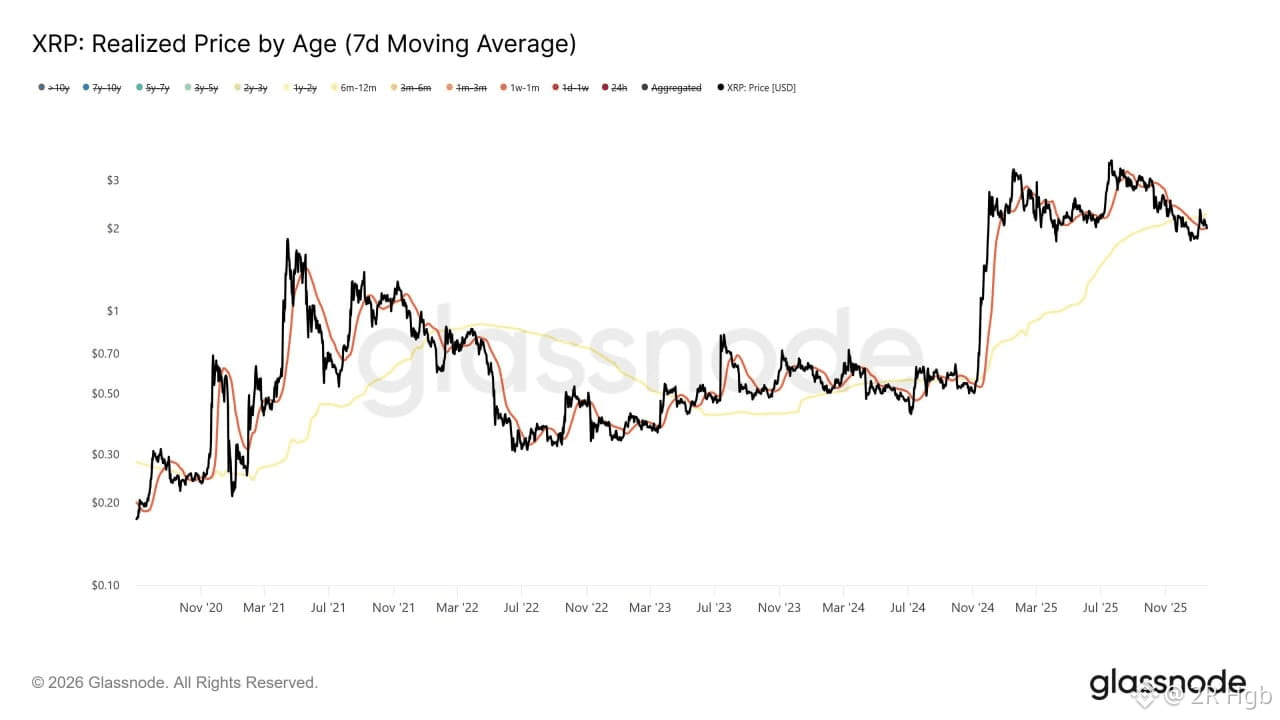
🚨XRP STRUCTURE MIRRORS FEBRUARY 2022
Short-term holders are accumulating below long-term cost bases, steadily increasing pressure on top buyers. This is a setup that historically precedes a downside move.
Short-term holders are accumulating below long-term cost bases, steadily increasing pressure on top buyers. This is a setup that historically precedes a downside move.
🇧🇲BERMUDA PARTNERS WITH COINBASE AND CIRCLE
Bermuda's government is partnering with Coinbase and Circle to pilot stablecoin payments, expand $USDC merchant use, and push tokenization across the economy.
Bermuda's government is partnering with Coinbase and Circle to pilot stablecoin payments, expand $USDC merchant use, and push tokenization across the economy.

🔥POLYMARKET PRICES US–GREENLAND BET AT ATH
🇬🇱Odds of the United States acquiring Greenland this year have hit a new all-time high, with Polymarket now with 22% chance.
🇬🇱Odds of the United States acquiring Greenland this year have hit a new all-time high, with Polymarket now with 22% chance.


JUST IN: 🇬🇧🇺🇸 Britain at risk of recession from £22,000,000,000 Trump tariff hit - Telegraph.

$TRX update — momentum delivering 📈
Up +15% since our call, and price is shaping a potential cup & handle reversal.
A clean break above the $0.325 neckline could open the path toward $0.37 🚀$TRX
Up +15% since our call, and price is shaping a potential cup & handle reversal.
A clean break above the $0.325 neckline could open the path toward $0.37 🚀$TRX
Wish me luck
Binance Founder CZ says “if you are going to ape into every meme coin people create based on my random tweets, you are almost guaranteed to lose money.”
BREAKING: 🇺🇸 Supreme Court will decide on President Trump's tariffs next Wednesday!
Log in to explore more content